Categories
Essay

The Bauls of Bengal

Aruna Chakravarti writes of the Bauls (wandering minstrels) of Bengal and the impact their syncretic thought, music and life had on Tagore
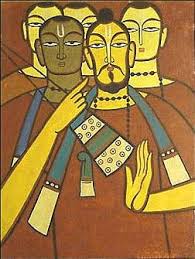
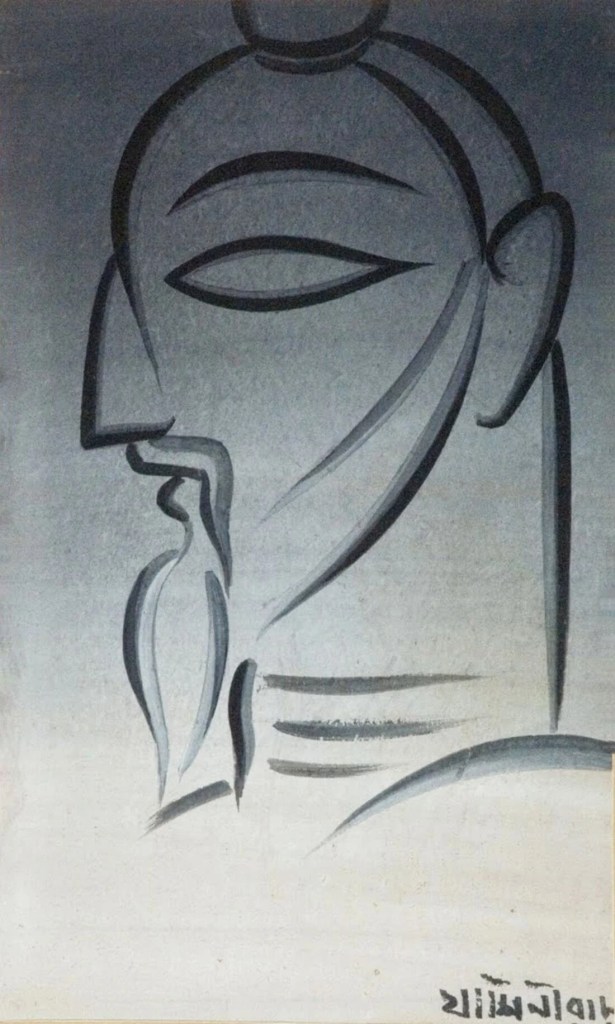
Religious movements such as Bhakti and Sufi have spanned time and territory and entered Bengal, in successive waves, creating a syncretic culture in which music and poetry are amalgamated. One of the forms in which these movements find creative expression is Baul Gaan —the singing of itinerant minstrels.

Universally recognised as foremost among the oralities of Bengal, the Baul Sampradai is a community for whom singing is synonymous with worship. The Baul expounds a philosophy of humanism which rejects religious orthodoxies and stresses human equality irrespective of caste, class, religion and gender. The Baul sets himself on a spiritual journey, lasting a lifetime, towards discovering his moner manush (man within the heart) thereby alienating the notion of seeking the Divine in external forms such as mosques, temples, images and sculptures. Since God is believed to reside within man, the human body is viewed as the site of the ultimate truth –that which encompasses the entire universe. This tenet of Baul philosophy is known as deha tatwabad—the belief that the soul being pure the body that houses it, together with all its functions, is pure and holy.

Concentrated mostly in Kushthia, Shilaidaha and Sajadpur in East Bengal (now Bangladesh) and Murshidabad and Birbhum in West Bengal, the Baul tradition, though drawing elements from Tantra, Shakta and Sahajiya[1], stems from two main sources — Muslim Sufi and Hindu Vaishnav. Hence the simultaneous presence of Hindu and Muslim bauls in the villages of Bengal and great composers from both streams—Lalon Fakir, Duddu Shah, Madan Baul, Gagan Harkara and Fakirchand. Rejecting religious codes such as Shariat and Shastras, caste differences, social conventions and taboos, which they see as barriers to a true union with God, they sing of harmony between man and man. “Temples and mosques obstruct my path,” the Baul sings, “and I can’t hear your voice when teachers and priests crowd around me.”

Refusing to conform to the conventions of religion and caste ridden Bengali society, Bauls (the word is sourced from the middle eastern bawal meaning mad or possessed) are wandering minstrels who sing and dance on their way to an inner vision. Essentially nomadic in nature walking, for them, is a way of life. “No baul should live under the same tree for more than three days” — the saying seems to stem from the Sufi doctrine of walking an endless path (manzil) in quest of the land where the Beloved (the Divine) might be glimpsed. Bauls live on alms which people give readily. In return the Baul sings strumming his ektara[2] with dancing movements. The songs are rich with symbolism, on the one hand, and full of ready wit and rustic humour on the other. The Baul rails against the hypocrisy of religion and caste and takes sharp digs at the clergy but totally without rancour.

Many of the composite forms found in an older culture of Bengal have become sadly obscured in the present scenario of identity politics. But the one that has not only survived but is gaining in recognition day by day, is the Baul tradition. This is, in no small measure, owing to the intervention and interest taken by Rabindranath Tagore. In his Religion of Man Rabindranath tells us that, being the son of the founder of the Adi Brahmo Samaj, he had followed a monotheistic ideal from childhood but, on gaining maturity, had sensed within himself a disconnect from the organised belief he had inherited. Gradually the feeling that he was using a mask to hide the fact that he had mentally severed his connection with the Brahmo Samaj began tormenting him. And while in this frame of mind, travelling through the family estates in rural Bengal, he heard a Baul sing. The singer was a postal runner by the name of Gagan Harkara and the song was “Ami kothai paabo tare/ amaar moner manush je re[3].”

“What struck me in this simple song,” Rabindranath goes on to say, “was a religious expression that was neither grossly concrete, full of crude details, nor metaphysical in its rarefied transcendentalism… Since then, I’ve often tried to meet these people and sought to understand them through their songs which are their only form of worship.” In his Preface to Haramoni[4], Rabindranath makes another reference to this song. Quoting some lines from the Upanishads—   Know him whom you need to know/ else suffer the pangs of death— he goes on to say, “What I heard from the mouth of a peasant in rustic language and a primary tune was the same. I heard, in his voice, the loss and bewilderment of a child separated from its mother. The Upanishads speak of the one who dwells deep within the heart antartama hridayatma[5]and the Baul sings of the moner manush. They seem to me to be one and the same and the thought fills me with wonder.”
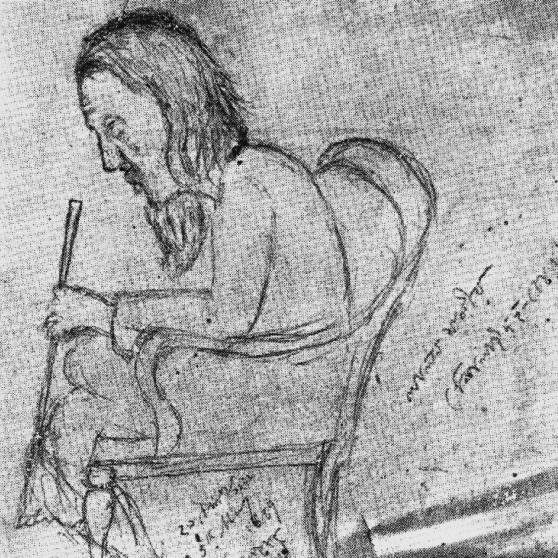
A Portrait of Lalon Fakir sketched by Jyotindranath Tagore(1849-1925)

Lalon Fakir’s commune was located in the village of Chheurhia which fell within Rabindranath’s father’s estates. Though there is no authentic record of a meeting between the two, it is a fact that the poet was the first to recognise Lalon’s merit which had the quality of a rough diamond. His inspiration was powerful and spontaneous but, lacking in clarity of expression, lay buried in obscurity till Rabindranath brought it out into the open. Publishing some of the songs in some of the major journals of the time, Rabindranath took them to the doors of the educated elite. Not only that. They gained in popularity from the fact that he, himself, often used Baul thought and melody in his own work. “In some songs,” he tells us in his Manush er Dharma[6], “the primary tunes got mixed up with other raags – raaginis which prove that the Baul idiom entered my sub conscious fairly early in life. The man of my heart, moner manush, is the true Devata[7]. To the extent that I’m honest and true to my knowledge, action and thought — to that extent will I find the man of my heart. When there is distortion within, I lose sight of him. Man’s tendency is to look two ways — within and without. When we seek him without — in wealth, fame and self- gratification — we lose him within.”

But it wasn’t only in his compositions that Rabindranath disseminated Baul ideology. It went deeper than that. The primitive simplicity and freedom of Baul thought and living charmed him so completely that he started imbibing them in his own lifestyle. He grew his hair long, kept a flowing beard and wore loose robes. He created Baul like characters in his plays and dance dramas and enacted the roles himself. And, as he grew older, a restlessness; an inability to stay in one place took hold of him. Leaving the ancestral mansion of Jorasanko he relocated to Santiniketan but even there he could not stay in the same house for more than two months. In the last two and half decades of his life, a tremendous wanderlust seized him. He travelled extensively both within the country and without, earning for himself the sobriquet of ‘roving ambassador for India’.

Perhaps, the most powerful testimony of the evolution of Rabindranath from a princely scion of the Tagores of Jorasanko to the man he finally became is found in Abanindranath’s portrait of his uncle. It depicts an old man with flowing white locks and beard, wearing a loose robe and holding an ektara high above his head. The limbs are fluid in an ecstatic dance movement. It is a significant fact that the painting is titled Robi Baul.
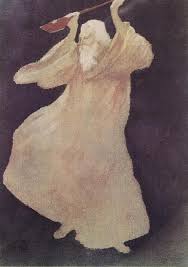
Robi Baul (1916): Painting by Abanindranath Tagore (1871-1951). From Public Domain

[1] Different schools of philosophy and religion. The Sahajiya is a philosophy that embrace nature and the natural way of life.

[2] String instrument

[3] Translates from Bengali to: “Where will I find Him — He who dwells within my heart”

[4] The Haramoni (Lost Jewels) is 13-volume collection of Baul songs compiled by Mansooruddin to which Tagore wrote the preface for the first volume published in 1931

[5] Translates to ‘innermost part of the heart and soul’

[6] Collection of Lectures by Tagore in Bengali, published in 1932

[7] Translates to “God’

Aruna Chakravarti has been the principal of a prestigious women’s college of Delhi University for ten years. She is also a well-known academic, creative writer and translator. Her novels, JorasankoDaughters of JorasankoThe Inheritors, Suralakshmi Villa and The Mendicant Prince have sold widely and received rave reviews. She has two collections of short stories and many translations, the latest being Rising from the Dust. She has also received awards such as the Vaitalik Award, Sahitya Akademi Award and Sarat Puraskar for her translations.

.

PLEASE NOTE: ARTICLES CAN ONLY BE REPRODUCED IN OTHER SITES WITH DUE ACKNOWLEDGEMENT TO BORDERLESS JOURNAL 

Click here to access the Borderless anthology, Monalisa No Longer Smiles

Click here to access Monalisa No Longer Smiles on Kindle Amazon International
Categories
Slices from Life

From Diana to Daayan

Rajorshi Patranabis shares the philosophy and lore of Wiccans

What, if I say that 68% of the universe is dark? Well, this is not my statement. This is a scientifically proven fact. What is there inside the darkness? Sceptics will say, let science find it out. The spirituals will say there’s mysticism. A Wiccan will say there’s mystical magic. Magic, as in common parlance is entertainment, in Wiccan philosophy, it’s the basis of existence. Magic can be best explained as something that’s occurs yet cannot be fathomed.

The term, Wicca, came was popularised by Gerald Gardiner with his books. Many said, it was misogynistic. To be fair to him, 1925 was not as open as it is today, as far as societal norms were concerned. It is more accepted today. I, a practicing Wiccan, follow a way that is more open, more aligned to nature, supernature and the supernatural. What I follow was introduced into India by Ma’am Ipsita Roy Chakraverti.

While this movement may well be termed as historically the first ever feminist movement, the pagan practices involved are more than a thousand years old. Ritualistic worshipping of nature is seamlessly integrated into Wiccan practices. The ancient knowledges that had trickled down through generations are put together in the modern Wiccan practices. Wicca is a philosophy, and I detest calling it a religion. Here, we don’t believe, we seek. We use the knowledge to try and to unfathom mysteries that lie within the dark spheres of nature. Albeit, a miniscule bit, but we do delve into that 68% of darkness, once in a while.

From shamanism to voodoo, from the ancient Egyptian ways of healing to the 64 yoginis, this school covers every way by which the human soul and body can be healed. They say the basic apothecary of life is to align oneself to the directions given by nature. Manifestation of the female power of nature (shakti) forms the essence of this philosophy. The mind, the body and the soul form the complete sphere of the universe. Wicca believes that nothing is inanimate and that everything has a consciousness draped in a veil of conscience.

Everything that’s around us has been derived from this planet, and if this planet is living, Mother Earth is living, then, everything that comes out of it is also living. As the Law of Conservation of Energy says, the total energy is constant, it can neither be created, nor be destroyed. Hence, the body might change, the forms change but the energy remains. Energy is eternal. The metamorphic energy inside a human body that has derived its form mostly from the magnetic or the electric energies of this planet is called the soul. The soul thinks and decides with the mind and the body giving them a presence. A purified soul is the spirit and when this spirit raises itself to survive in unison with the nature, we call that person spiritual.

Chakraverti says every strong woman is a witch. The word ‘witch’ comes from the old English word ‘wik’, which means wise. A female spirit is more nuanced, stubborn, flexible and erudite. A witch is that wise woman who takes on her challenges head on. A witch or a wizard work on the same footing of aligning mankind to the deluges of nature to heal the spirit, the mind, which in turn takes care of the body. Historically, a Wiccan considers Joan of Arc, Robin Hood, Noor Jehan as witches / wizards. Witches were killed at a point due to patriarchal fears of powerful women. These women had been portrayed as negative women in many of the kindergarten folklores.

The Greek goddess, Diana, was worshiped by Wiccan by Budapest Wiccans. Did she metamorphose to Dayaan[1], when she travelled east? Dayaans were to be feared, to be killed if possible. We have come a long way, no doubt, but sporadic news of such killings are still rampant.

There are also certain myths about witches, one being, flying on the broom. The broom is symbolic of cleanliness — cleaning a society of the cobwebs of false beliefs and weak minds. Broom becomes synonymous with power. Flight is of the spirit. A potent spirit reaches places in such time that the body can never think of. There are innumerable examples of saints and sages being spotted at two or more places at the same time. Advanced Wicca philosophy is inclusive of the powers of Hatyoga and Tantra.

Wiccans are the worshippers of the mother Goddess Isis of Egypt. She’s the moon Goddess and the wife of Lord Osiris, the lord of the dark world. She’s the quintessential witch, the Goddess of magic, the Goddess of strength. Indian Wiccans are influenced by forms of Shakti known as Kamala and the Bhubaneswari.  The most ancient traces of worship of the raw female power of nature can be found in Kali.  Wiccans are also influenced by the Tibetan Tara and the concept of Dakini (the divine witch).

The basic Wiccan principle of worship is through sound vibrations. Chants take the centre stage. Chants of Buddhism are also regularly practiced as are those of Vodun faith with drumbeats. Healing is practiced with chants, as was a common practice in ancient Egypt. The sound of the singing bowl is potent in helping heal.

They have tools that help focus energies of the Earth. Some sound like falling rain. Then there are stones, as in a crystal, a rose quartz, an obsidian, the lapiz lazuli and so on. But the most important tool is the Athame. This is a blunt long knife that is charged and is used to tap the powers of the nature.

One of the oft asked questions is do Wiccans delve into the ‘other dimension’? Physicists have claimed for long, the existence of a celestial plane. Scientists have even said, that, there is a time difference between the celestial and the terrestrial plane. Dreams are said to be in the celestial plane, and hence, time moves differently in dreams. But in effect all humans would have had a brush with the two worlds through dreams. Wiccans believe the veil between the two worlds becomes very thin in autumn. Thus we have All Soul’s Day, Halloween, Bhoot Chaturdashi (holy night of the ghosts) all around the same time, in the autumn of the Northern hemisphere.

I would like to share a few supernatural experiences that I have had myself. These are all first-hand experiences, and I share them with no intention to influence the readers.

A psychic expedition at the Rabindra Sarovar Lake in Kolkata at around 9.30 am on a November morning revealed a figure in my camera. The lake was the psychiatric hospital for the American Soldiers during the 2nd world war. The spirit communicated with us and what could generally be fathomed was, ‘ 1942, Michael James, Death nail through my heart’.

Another time, I rode in an e-rickshaw with someone who had crossed over 20 years before. The driver was very much in congruence with my story when he said, he takes a ride every other evening. This place is a traditionally haunted village in East Midnapore district of West Bengal, India. And yet again, at one of the famous 5-star hotels in Delhi, I could feel someone removing the sacred thread[2] from my body.

I can go on and on. But when it’s Wicca, it’s the strength of  Isis that needs to be manifested for healing. And as a true Wiccan, I take leave with, Tebua Netr Anset (You’re the Isis, we know).

.

[1] Witch in Hindi

[2] A thread worn by Brahmins after they go through an initiation ceremony in their teens.

Rajorshi Patranabis is a poet, critic, reviewer and translator. A Wiccan by philosophy and belief, he is a food consultant by profession with 10 books of poetry and 4 books of translation.

.

PLEASE NOTE: ARTICLES CAN ONLY BE REPRODUCED IN OTHER SITES WITH DUE ACKNOWLEDGEMENT TO BORDERLESS JOURNAL. 

Click here to access the Borderless anthology, Monalisa No Longer Smiles

Click here to access Monalisa No Longer Smiles on Kindle Amazon International

Categories
Review

Of Ghosts and Tantriks

Book review by Basudhara Roy

Title: Taranath Tantrik and Other Tales from the Supernatural

Author: Bibhutibhushan

Translator: Devalina Mookerjee

Publisher: Speaking Tiger Books

The book decides to arrive on a crisp Friday morning, its sunshine so keen and abundant that any thoughts of the supernatural can only be merrily chuckled over. The cover, however, is strangely disconcerting. It takes me time to mark that the brilliant art on it actually depicts skulls. Not ordinary enough to be dismissed as mere biological specimens, the skulls seem to represent, in their complexity, vibrancy and the silhouette of birds that haunt them on every side, a text that is both hauntingly familiar and eerily not so. Bibhutibhushon’s short stories exploring the supernatural and tantra, a practice associated with dark forces and the Goddess Kali, translated by Devalina Mookerjee from Bengali — could not, perhaps, have been showcased better.

Bibhutibhushan (1894-1950) was an eminent Bengali writer whose best known works are his novels, Pather Panchali (Song of the Road) and Aparajito – both immortalised into films by Satyajit Ray,  Chander Pahar (Moon Mountain) Aranyak (Of the Forest). Some of these books can be found in translation.To one even remotely acquainted with Bibhutibhushan’s oeuvre, his stories offer a definite assurance of being in good company. In reading , Taranath Tantrik and Other Tales from the Supernatural, however, what the reader might fail to bargain for is the almost complete obliteration of the physical world by the world of the book, and by the time the journey through the nine translated stories therein has been made, one is no longer sure where one world ends and the other begins.

It takes time to step out of the frame and to express admiration for the conduit that has led to this extraordinary experience in fiction – the translator. To transcend spatiality and temporality and conjure these tales again for an entirely different readership in an entirely different language is likely to have been a project fraught with its own pointed challenges. Mookerjee, however, seems to have successfully met them all, so much so that in the context of the English language, these spooky, unsettling tales offer not the slightest semblance of foreignness, even when they deal thematically with something as acutely local and specialised as tantra. The language is sparklingly contemporary and in its inflections, energy and dreaminess to allow these nine narratives to carve their own particular niches. The pace of the collection stays heady throughout and the atmosphere is completely overpowering.

Of special significance is Mookerjee’s nuanced and insightful twenty-seven paged ‘Introduction’ to the collection that calls upon the reader to visualise concrete connections between social justice and the genre of the supernatural. Mookerjee writes: “Seen against the background of what people are capable of doing to each other, stories of ghost may be seen as corrective mechanisms in the scales of justice. A person who has been wronged returns to tell their story, perhaps to wreak havoc on their tormentors. A disbeliever sits in a séance for which the medium is clearly not prepared, and chaos ensues. We have a word for this already. We call it karma.”

The ‘Introduction’ serves, also, as a brave attempt to place Bibhutibhushan’s writing in current socio-cultural perspective, and to bridge the disparate worlds of rural Bengal that birthed these stories and that of the contemporary English reader of these tales who could belong to almost any geographical space on the global map.

The first two stories of the collection are centred around the protagonist after who the book has been named, a dabbler in the dark arts, Taranath Tantrik. The remaining seven stories are each unique in their own ways as they chart their individual journeys into the terrain of the invisible and the occult with remarkable skill and clarity. “Human beings have historically shown very little need of support from the otherworld to behave in perfectly horrible ways with other people. This is the point at which the darkness of the uncanny and the darkness of people converge,” avers Mookerjee, pointing out how the surreal is often only another dimension of the real revealed in a disjointed spatial-temporality.

Not all of the nine stories strike with equal power. If ‘The Ghosts of Spices’ appears quite facile and juvenile in its description of a march-past of spice sacks on the deserted nocturnal streets, ‘A Small Statue’ appears rather simplistically cinematic in its  dream presentation of the tableau of the monk, Dipankar’s life. In the most evocative stories of the collection like ‘Maya’, ‘The House of His Foremothers’, ‘Arrack’ and ‘The Curse’, however, the quiet, intricate weaving of setting, psychology and idea dazzles in its brilliance, leaving behind a sense of both fracture and healing.

Bibhutibhushan’s poignancy is at its unsurpassable best in his delineation of place and in his exploration of links between physical place and human placed-ness. His most unforgettable stories are those in which people and places interact with each other organically and without inhibitions, creating a documented identity of both being-in-place and place-in-being. In ‘Maya’ for instance, the house acquires an identity of its own as its past inhabitants gently draw its present dweller/s into the folds of its mystery and inexplicable self-sufficiency. In ‘The House of His Foremothers’ similarly, the ghost-girl Lokkhi mourns for the bereft house more than her lost family and consistently haunts its silences in the hope of resurrection for the house which, unlike her, still lives across the family’s generational lifetimes.

To allow one’s imagination to be overpowered by these stories is to experience a strange welding of the probable and the improbable into the arc of the possible — to be awakened to a new dimension of being in which while vision remains at par, the other senses experience a heightened participation with what is positively undefinable but utterly undeniable.

Taranath Tantrik and Other Tales from the Supernatural, by thus placing the reality in the larger context of a world that still evades the cartography of reason, becomes a portal to a widened, heightened and more enlightened worldview. It helps remind of the intersections between our own human finitude and the infinite world with its geo-historical consciousness incapable of forgetting and thoroughly unable to forgive.

.

Basudhara Roy teaches English at Karim City College affiliated to Kolhan University, Chaibasa. Drawn to gender and ecological studies, her four published books include a monograph and three poetry collections. Her recent works are available at Outlook India, The Dhaka Tribune, EPW, Madras Courier and Live Wire among others.

.

Click here to read the book excerpt from Taranath Tantrik

PLEASE NOTE: ARTICLES CAN ONLY BE REPRODUCED IN OTHER SITES WITH DUE ACKNOWLEDGEMENT TO BORDERLESS JOURNAL