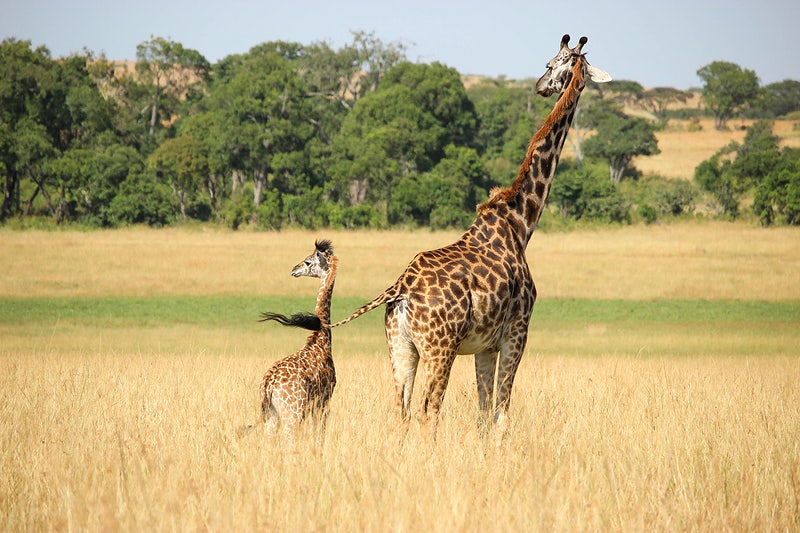
Tagore wrote humorous verses too. Giraffer Baba (Giraffe’s Dad) was published by him in 1937 in a collection called Khapchara (Eccentric).
GIRAFFE'S DAD

Giraffe’s Dad said,
“Son, looking at your body
My feelings for you ebb
For with so high a head
And so small a back
How do you walk at all?”

Giraffe’s son said,
 “Did you ever
Look at yourself dad?
Why mother loves you
No one can figure out at all!”
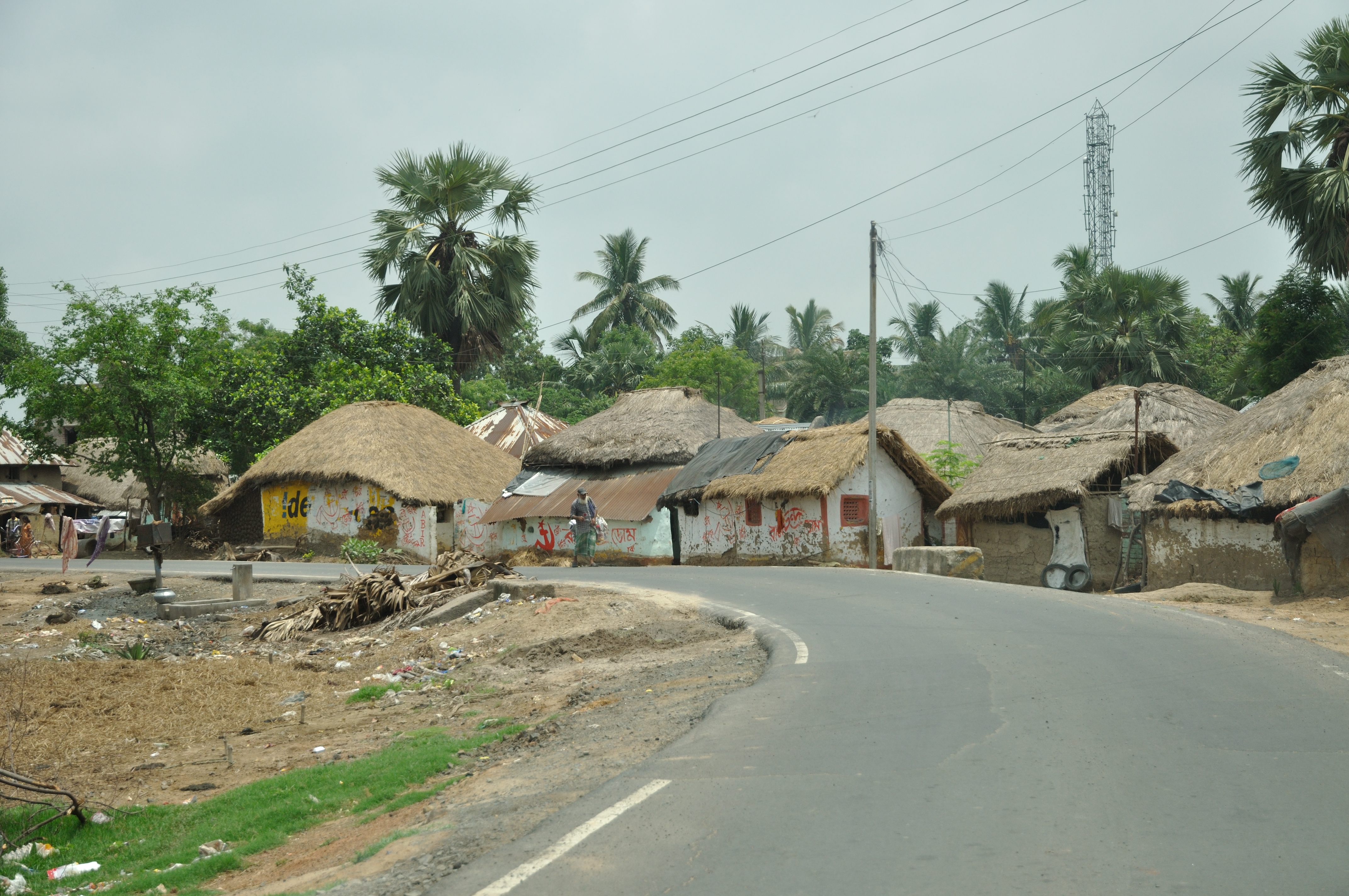
Tagore empathised with the suffering of humankind. Out of it was born Sriniketan, a project that hoped to initiate a slow merger of differences and reduce human suffering. Ebar Phirao More (Take me back) was a poem he wrote in 1894 on the plight of villagers steeped in poverty, servitude and ignorance. Tagore regarded his ‘life work’ as that of restoring the dignity and the economy of villages, deftly showcased in Professor Uma Das Gupta’s A History of Sriniketan, Rabindranath Tagore’s Pioneering work in Rural Reconstruction. Here, we present to you a transcreation/ translation of the poem.
Gateway to the Srijani Shilpagram, SriniketanSurul: A village under the Sriniketan projectCourtesy: Creative Commons
TAKE ME BACK

While the world moves busily
You play the flute, like a truant boy,
Leaning under a shady tree in a field with
The fragrance of the forest floating on
A tired breeze. O, arise — there is a fire!
Who plays the conch to awaken
The world? Whose cries resound in space?
What dark shackles imprison the orphan
Asking for support? The burden of insults
heaped on the shoulders of the helpless
sup of their blood. The self-centred

Mock unjustly. Oppressed, scared slaves
Hide in disguise. There they stand with
Heads bowed, silent — centuries of pitiful
Exploitation written on their pallid faces.
As their shoulders are plied with growing
burdens, they move slowly till their last breath—
Then, their progeny inherit generations of this load.
They are not invisible, have no memory of criticism.
They do not blame humans, nor do they have pride.
They only look for a few grains of food to survive.
When their food is snatched away, when they are
Exploited, they do not know where to go for justice.
They call out to the God of the poverty stricken, then
Die silently. These silent souls need to be given a
Voice — their suffering souls have to be roused
With hope — a clarion call has to be given —
As of now, raise your heads, unite. The person
Who you fear is more of a coward than you.
When you awake to confront him, he will flee.
When you stand up to him, he will be terrified
To retreat, like a stray dog. In God’s court,
He will have no support as swollen with
False pride, he will know only contempt
In his heart.

   Poet, come forward — if you have only life,
Then get that with you, and dedicate that today.
With immense pain, sorrow, the deprived
Suffer hardships, weakness, death and darkness.
They need food to live, light to find the breeze of freedom.
They need strength, health, a bright happy future
Courage, guts. Amidst this poverty, O poet,
Inspire a vision of trust that creates a heaven.
Imagination, I bid your colours to take me back
To the edge of civilisation. Do not distract me with
The soft breeze, the waves and alluring illusions.
Do not let me stay steeped in lonely depression
In the shade of a bower. Day ends. Dusk sets in.
The direction is lost in darkness. The woods
Cry In hopeless despair. I step out
To be under the open skies, on the grey road that
Leads to the common man. Where do you go?
O traveler, I do not know you. Turn and look at me.
Tell me your name. Do not distrust me.
I have lived alone in this strange world
For many days and nights. That is why my
Garb is amazing. I am different — my eyes
Dream, my heart is hungry. When I returned to this world,
Why did you, o mother, give me this playful flute?
Over long days and long nights, mesmerised by
My own tunes, I have wandered far from the
Limitations imposed by civilisation. If the tunes that
I have learnt can inspire with exultation the
Music-less exhausted, if even for a moment, my
Music can instil life—giving hope in the lives of the
Hapless, if touched by the manna from heaven
they voice their sadness, the sleeping thirst is
Roused from deep within — then my song will be
Blessed, my dissatisfaction appeased to find nirvana.

What is sung or heard? Happiness are lies.
Sorrows are lies. A self-centred individual
has not learnt to live in a larger world.
With Truth as the guiding star, run fearlessly,
Dancing in unison with the waves of cosmic life.
There is no fear of death. The tears of poverty
Will rain on my head — in the midst of that,
I will go for a tryst with the person to whom
I dedicate my life forever. Who is that? I do not know —
I only know this— that he is the wayfarer through ages
Trudging in the darkness of the the night, amidst
Thunder and lightening, carrying a flickering lamp.
I only know he has heard the invocation and fearlessly
Come to help the needy, rejecting civilisation’s dictates,
He has embraced the cries of the tortured to his heart
Like a favourite tune. Burnt by flames,
Pierced by spears, pieced by an axe, he has
Gathered all his belongings and
Sacrificed all his desires through his life —
He has shredded his heart as an offering
With devotion for the repayment of his birth.
He has given up his life to serve the masses.
Influenced by him, the prince wears rags,
Disgusted with his wealth, akin to a beggar.
The great soul tolerates all tortures and derisions.
The intellectuals sneer in disbelief.
Loved ones mock at him. Close acquaintances are
Contemptuous while he silently forgives them all
with his merciful eyes. He is incomparable and

Beautiful. For him, the proud have forsaken
Their pride, the rich their wealth, the brave
Their lives. For his ideals, the poet has written
Poetry and spread it across the globe. I know
Praise for him is whispered by the breeze,
The seas. Paeans sung by dear ones soar
Across the land and the vibrant blue skies
To celebrate his victory, perfection, love
And kindness. I just know that he will
Sacrifice his own petty needs for the love of
Humankind. He will transcend all insults.
He will stand with his progressive head held high.
Fearlessness is inscribed across his forehead.
The dust of slavery has not contaminated him.
Internalise him. Move forward alone
On the thorny path of life, wipe away precious
Tears, face sorrows with patience,
Work relentlessly to please. When weary,
Worn with exhaustion at the end of the long
Journey of life, there will be an abode of
Peace and contentment. The celestial will
Smile and garland the devotee. At this abode,
There will be peace, relief from all grief,
All misfortune. Tears will cleanse all
Past anguishes. Embroidering hope,
Plead for mercy for life’s disabilities.
Maybe, the despondencies will dwindle and
Eternal love will quench life’s thirsts for ever.
(The poem has been translated for Borderless Journal by Mitali Chakravarty with editorial comments from Anasuya Bhar.)
.
PLEASE NOTE: ARTICLES CAN ONLY BE REPRODUCED IN OTHER SITES WITH DUE ACKNOWLEDGEMENT TO BORDERLESS JOURNAL
The Universe reverberates with celestial ecstasy

The Universe reverberates with celestial ecstasy.
Days and nights overflow with ambrosia in the limitless sky.
The moon revels sipping nectar from her cupped palms—
The eternal light that never fades shimmers forever—
Illuminating our daily lives with its aura.

Why do you sit in isolation,
Dwelling on self-centred issues?
Look around you and expand your heart.
Petty sorrows are insignificant.
Fill your vacant life with love for humanity.
The Universe reverberates with celestial ecstasy.
These lyrics seem to capture not just the distance between Tagore’s own ecstatic experience of the natural universe and the self-centred pettiness that afflict those who continue to remain disconnected from the poet’s euphoria but also his attempts to help humanity discover the same joyful reverberations. Such emotions seem to find an echo in his letters later as found in Uma Dasgupta’s A History of Sriniketan. In 1915, Tagore wrote to an estate worker who was part of his work at Sriniketan (a project to upgrade villages): “I have something else to urge upon you. A note of joy has to be sounded in all your work. Village life has become very dull. The dryness of the heart has to be banished. All welfare work ought to be turned as far as possible into an occasion of festive joy.” Is he doing just that in this song?
Here we present the song beautifully rendered by the legendary singer who was groomed in Tagore’s school at Santiniketan, Kanika Bandopadhyay during his times. Kanika Bandopadhyay was a contemporary of Mahasweta Devi who wrote of her as Mohor in her memoir on Santiniketan (translated by Radha Chakravarty) where she explained the ambience that existed, “But during my time in Santiniketan, how forceful was the torrent of energy that flowed from the source the river of creativity descending from the snowcapped mountain peak!”
(The song has been translated for Borderless Journal by Mitali Chakravarty, edited by Anasuya Bhar. Tagore’s words used here have been translated by Uma Dasgupta in A History of Sriniketan (2022) and Mahasweta Devi’s by Radha Chakravarty in Mahasweta Devi, Our Santiniketan (2022) )
.
PLEASE NOTE: ARTICLES CAN ONLY BE REPRODUCED IN OTHER SITES WITH DUE ACKNOWLEDGEMENT TO BORDERLESS JOURNAL
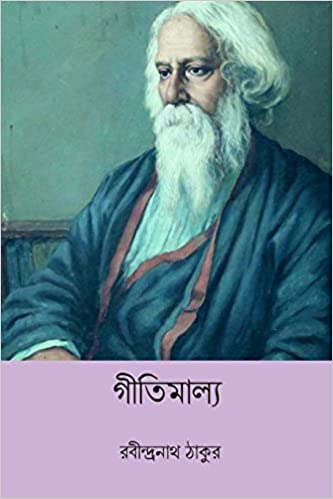
Written in 1910 (15 Ashwin 1317) in Santiniketan, Raatri Eshe Jethay Mesheor where the night comes to mingle was a part of his collection calledGitimalya( A garland of Songs) first published in 1914.
Gitimalya
WHERE THE NIGHT COMES TO MINGLE

You and I met at the confluence when
Night came to mingle with the ocean of day.
There, the shades of black and white formed dark and light —
There, the waves rushed from bank to bank.
A baritone rang amidst the silence of the skies,
The gold line rose out of the deepest of darkness.
My dreams mingled with tears as I awoke
Searching for contentment in vain.
Here is a rendition of the song in Bengali by Dwijen Mukherjee (1927-2018) a renowned singer from the past. His voice seems to capture the cadence of the song and colours it with the freshness of dawn.
.
.
(Trans-created for Borderless Journal by Mitali Chakravarty with editorial support from Sohana Manzoor and Anasuya Bhar.)
.
PLEASE NOTE: ARTICLES CAN ONLY BE REPRODUCED IN OTHER SITES WITH DUE ACKNOWLEDGEMENT TO BORDERLESS JOURNAL
A Bengali Rendition of the song by Debabrata Biswas
ON THIS AUSPICIOUS DAY

On this auspicious day, let us go to our
Father’s heavenly abode.
Let us go. Let us go, you and I.

The level of contentment in His blissful
Home is unfathomable to us.

The three worlds are in ecstasy with
Festivities that spill over with joy.

Let us join the celestials singing in praise of him
Let us go there. Let us go, you and I.
Tagore like his father and grandfather was a Brahmo. The Brahmo festival, Maghotsav, is celebrated at the end of January, by the Bengali calendar on the 11th of Magh. Brahmo Samaj grew out of Brahmo Sabha. These were attempts at a reform movement on Hinduism initiated in the early part of the nineteenth century Calcutta by Raja Ram Mohan Roy and Dwarakanath Tagore, the poet’s grandfather.
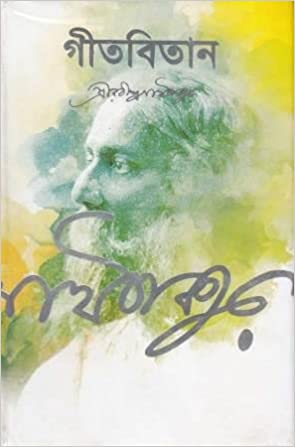
Rangiye Diye Jao (Colour the World) written in 1927 by Tagore is a part of Gitabitan, the maestro’s largest compendium of songs. It has been trans-created by Ratnottama Sengupta.
Colour the World

Colour the world before you bid adieu --
Before you go
Dye the world in your hues,
In your notes,
In the youthful verve
Of your smiles...
Colour the world before
Bidding adieu...

May those hues steep my soul,
May the hues stay in my heart --
To colour every action henceforth,
To light up the path when darkness falls,
To stay awake when slumber engulfs...

Dye the Earth with this melody of yours,
Bathe it in tears but
Make it recall --
The joyous ring that wrapped us all.
Dye the Earth before you go...
Colour it, before bidding adieu --

Wake me up before you leave,
Let my bloodstream
Ripple to your name --
Like the stars that
Shine through night,
Like the stream that
Breaks free of rocks,
Like the bolt that
Rips the clouds,
Like the rhythm that throbs
The axis of the world...
Rock me gently with your hands
Before bidding adieu --
Rabindranath Tagore (1861 to 1941) was a brilliant poet, writer, musician, artist, educator – a polymath. He was the first Nobel Laureate from Asia. His writing spanned across genres, across global issues and across the world. His works remains relevant to this day.
Ratnottama Sengupta, formerly Arts Editor of The Times of India, teaches mass communication and film appreciation, curates film festivals and art exhibitions, and translates and write books. She has been a member of CBFC, served on the National Film Awards jury and has herself won a National Award.
.
PLEASE NOTE: ARTICLES CAN ONLY BE REPRODUCED IN OTHER SITES WITH DUE ACKNOWLEDGEMENT TO BORDERLESS JOURNAL
A translation of Purano Sei Diner (1885), Tagore’s youthful adaptation of Robert’s Burn’sAuld Lang Syne(1788) to an Indian context.
Can Old Days Ever be Forgot?

Can old days ever be forgot, O my friend!
The things we saw, we shared together, can they be forgot?
Come, my friend, come once again into my heart.
We’ll talk of our joys and sorrows, and we’ll relax.
We have swung, picked flowers in the dawn,
Played the flute, sung together under the bokul*.
Oh, we parted in between, scattered here and there.
Now that we’ve met again, my friend, come into my hearth.

*Bokul is a tree with fragrant flowers, commonly known as medlar in English.
Tagore’s song sung by Bengali legendary singer, Debabrata Biswas
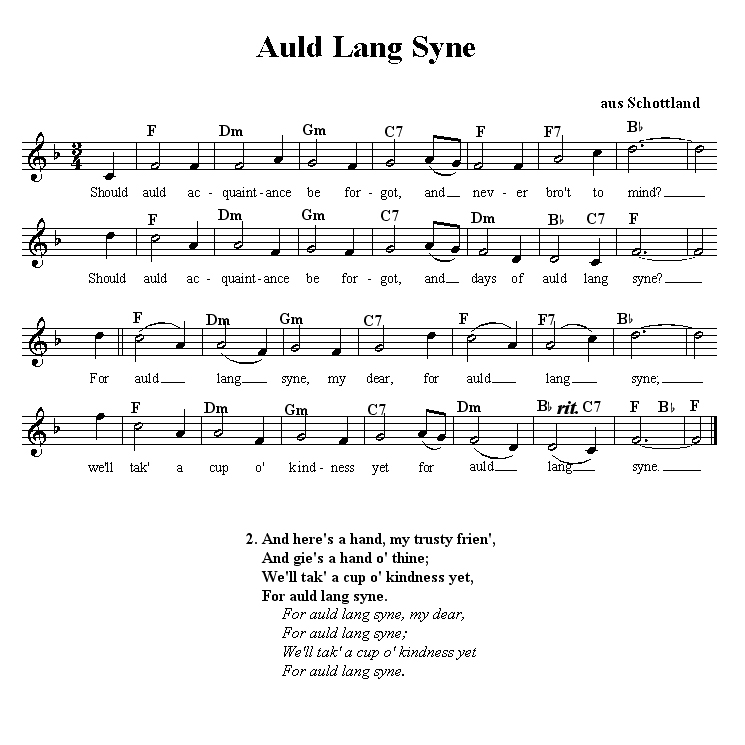
We present here the version created by Robert Burns based on an old Scottish song. It is popularly sung during the new year.
Auld Lang Syne
By Robert Burns

Should auld acquaintance be forgot,
And never brought to mind?
Should auld acquaintance be forgot,
And auld lang syne!

     Chorus:
For auld lang syne, my dear,
     For auld lang syne.
     We'll tak a cup o' kindness yet,
     For auld lang syne.

And surely ye'll be your pint stowp!
And surely I'll be mine!
And we'll tak a cup o' kindness yet,
For auld lang syne.

     Chorus

We twa hae run about the braes,
And pou'd the gowans fine;
But we've wander'd mony a weary fit,
Sin' auld lang syne.

     Chorus

We twa hae paidl'd in the burn,
Frae morning sun till dine;
But seas between us braid hae roar'd
Sin' auld lang syne.

     Chorus

And there's a hand, my trusty fere!
And gie's a hand o' thine!
And we'll tak a right gude-willie waught,
For auld lang syne.

     Chorus
Auld Lang Syne in Scottish and English
(Translated for Borderless Journal by Mitali Chakravarty, edited by Sohana Manzoor and Anasuya Bhar.)
.
PLEASE NOTE: ARTICLES CAN ONLY BE REPRODUCED IN OTHER SITES WITH DUE ACKNOWLEDGEMENT TO BORDERLESS JOURNAL
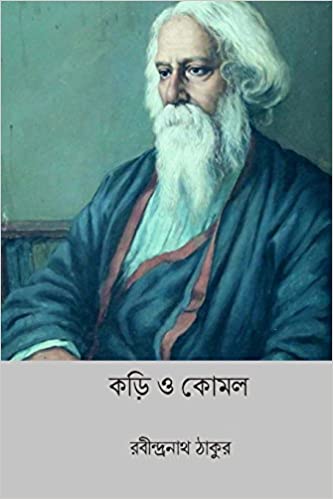
Morichika or ‘Mirage’ is one on Tagore’s early poems. It was first published in 1886 in a collection called Kori O Komal (Sharp and Flat).
Kori O Komal(Sharp & flat) Bengali edition‘Morichika or Mirage’ in Bengali
Mirage
Come, leave your bed of flowers, O friend —
Beat the hard ground with your foot.
How long will you isolate yourself weaving
Dreams of starry blooms in an unreal sky!
Look, a storm is brewing in the distance —
Your world will be washed away with tears.
Flames of God’s lightning jinx will ignite the
Fires of purity to arouse you from stupor.
Come let us both go and live with people,
Enlightened by their joys and sorrows —
Let us share their laughter and sadness
Holding hands, stay fearless when in doubt.
Let us not dwell in this redolent mirage as
It terrorises with its transient evanescence.
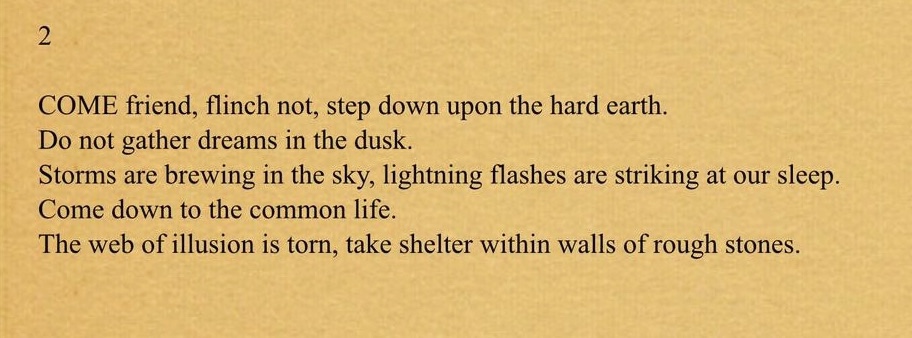
Tagore’s translation on ‘Morichika’ in Poems. Source: Bichitra
Later Tagore translated this poem to English himself. That was published in 1942 by a collection entitled Poems edited by Krishna Kripalalni, Amiya Chakravarty, Nirmal Chandra Chattopadhyay and Pulinbehari Sen published after his death by Visva Bharati.
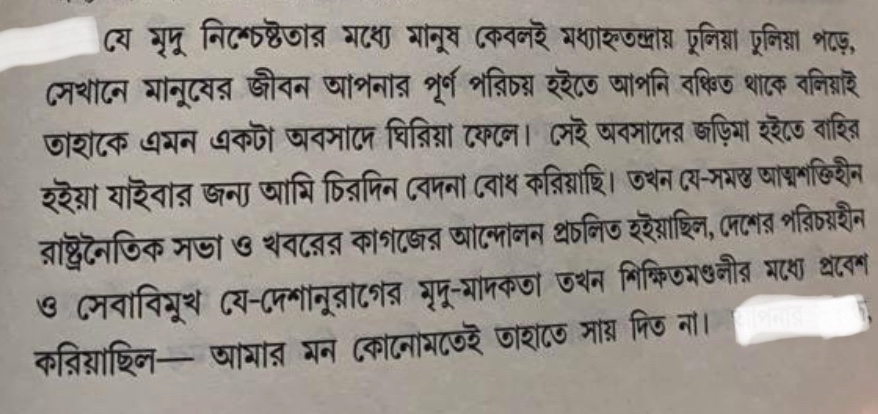
Here is an excerpt of what Tagore wrote about Kori O Komal in his Jibonsmriti (1912, autobiographical memoirs by the poet) which reflects his outlook and the mood of the poem.
Translation: Man falls into a stupor when due to his own reluctance to make an effort, he can neither understand himself nor face reality. I have always struggled to emerge out of this stupor. I cannot reconcile myself to the current situation where nameless intellectuals are inebriated with patriotism and are involved in spineless political rallies and news campaigns which exhibit both the lack of a national identity and concern for mass welfare. (Excerpted from a screenshot of Jibonsmriti sent by Anasuya Bhar)
(These translations for Borderless Journal are by Mitali Chakravarty, edited by Sohana Manzoor and Anasuya Bhar. Also, thanks to Anasuya Bhar for the images from Bichitra and Jibonsmriti and the extensive research on the poem.)
.
PLEASE NOTE: ARTICLES CAN ONLY BE REPRODUCED IN OTHER SITES WITH DUE ACKNOWLEDGEMENT TO BORDERLESS JOURNAL
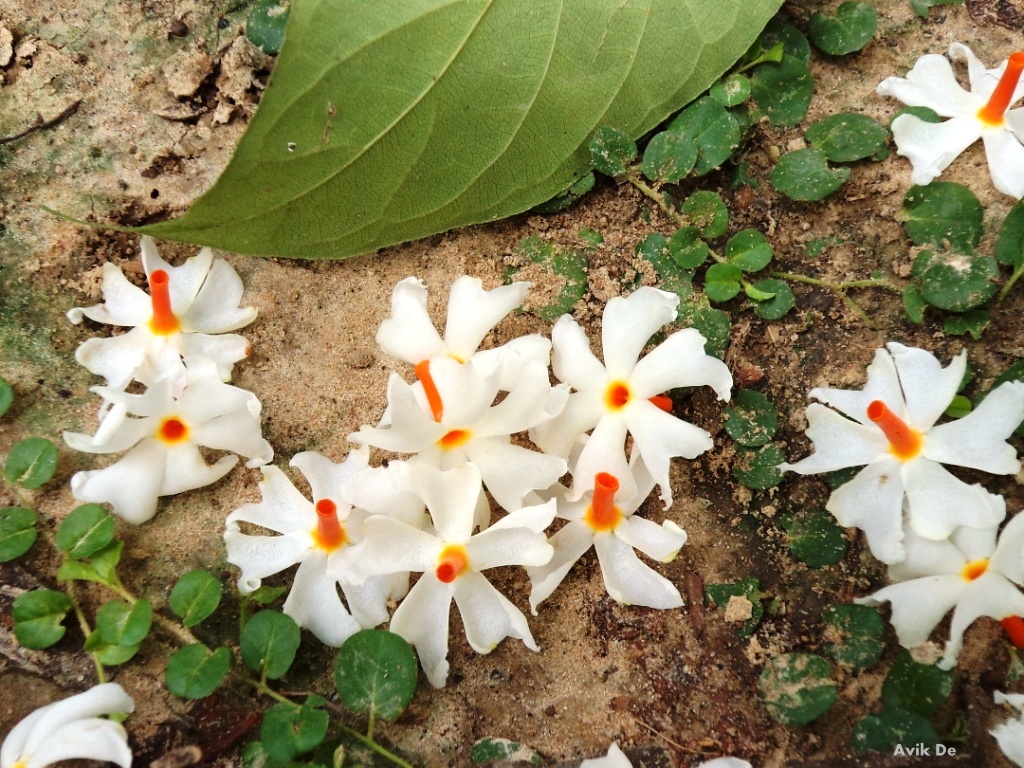
Written in 1908 in Shantiniketan, the lyrics of Amar Nayan Bhulano Ele (Wonder fills my senses) describe what is traditionally known as the sarat season ( or early autumn) when the festival of Durga Puja is celebrated. It appeared as a part of the collection called Geetanjali (Songs of Offering).
The Song of Advent

Wonder fills my senses.
My heart yearns for your presence.
Your dawn-coloured foot falls under the shiuli bowers
On dew strewn grass carpeted with fallen flowers.
Wonder fills my senses.
Light and shade play hide-and-seek in the woods, like lace.
What do the blooms say as they gaze awestruck at your face!
Shed your veil so that we can welcome you,
Remove the wisp of cloth with both your hands.
Sylvan nymphs blow on melodious conches from their doorways.
The universe welcomes your advent with music from celestial strings.
Within my being, I sense the tinkling of gold anklets.
All thoughts, all tasks are eased by the nectar of your presence —
Wonder fills my senses.
The woman welcomed in the poem is the Goddess Durga who descends from heaven for a five-day-long celebration. Interestingly, Tagore’s family were proponents of Brahmoism, a reform on Hinduism which adopted more Christian doctrines and rejected idol worship.
Suchitra Mitra’s rendition of the Rabindrasangeet in Bengali
(This poem has been translated for Borderless Journal by Mitali Chakravarty, edited by Sohana Manzoor and Anasuya Bhar.)
.
PLEASE NOTE: ARTICLES CAN ONLY BE REPRODUCED IN OTHER SITES WITH DUE ACKNOWLEDGEMENT TO BORDERLESS JOURNAL
Translated from the original Bengali by Somdatta Mandal
Translator’s Note
The earliest journeys of Rabindranath Tagore (1861 – 1941) were in his mind and he has left us accounts of these as well as of the later physical journeys in various travel writings – letters, diaries, poems, songs, and essays. Right from his childhood he made innumerable trips both within India and abroad. Apart from his regular full-fledged travelogues, we find many lesser known but interesting experiences of his travel. Included below are four such entries. The first essay is a trip to Hazaribagh with his nephew and niece. The second entry is a hilarious letter about his second visit to Darjeeling. The third a letter that narrates his trip to Satara in Maharashtra State, one of the towns where his elder brother Satyendranath Tagore served in the Civil Service. The last one is from Balia in Uttar Pradesh where Rabindranath complains that he is tired of travelling and wants to settle down peacefully as a bird in its nest.
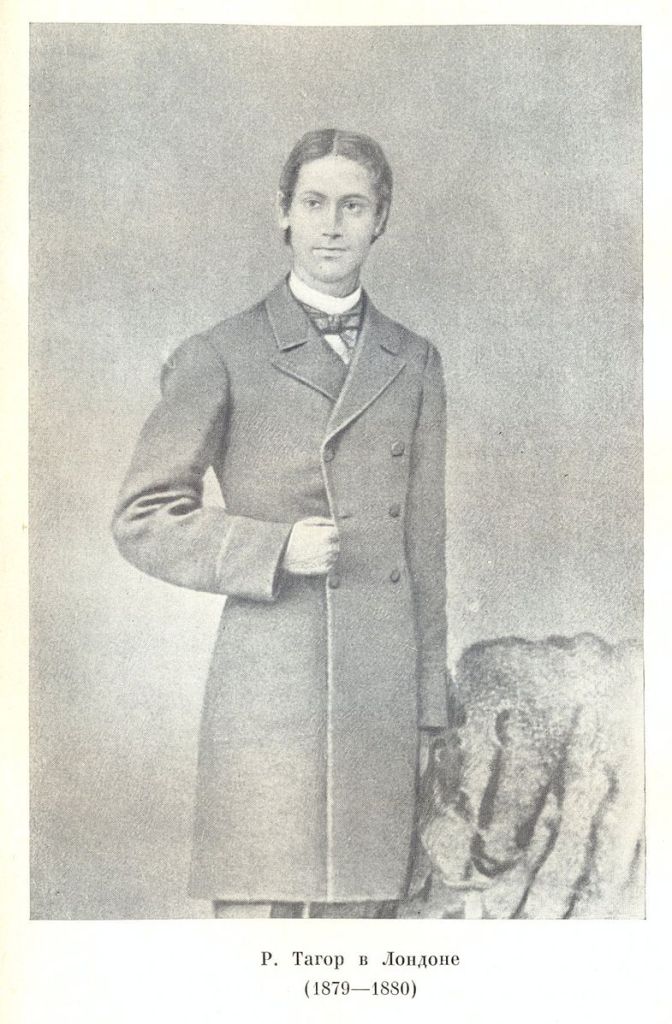
Tagore in London, 1879. Courtesy: Creative Commons
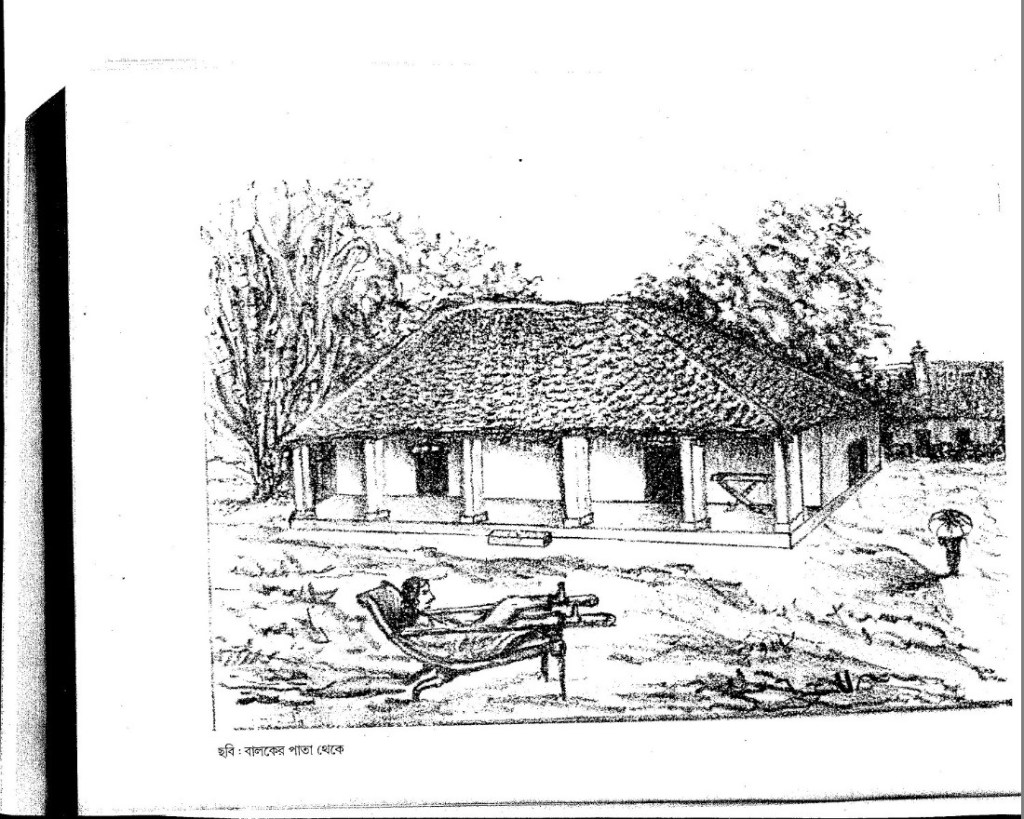
In 1885, under his sister-in-law Jnanadanandini’s editorial venture, a children’s magazine called Balak was published from the Tagore household in Calcutta. Though the life-span of this magazine was less than a year and only eleven issues were totally published, it contained different writings of the young Rabindranath, who would handle a lot of things for the publication. This magazine was later merged with Bharati and edited by his elder sister Swarnakumari Devi. Among the different entries that Rabindranath contributed for Balak and published in Vol. 3, Ashar 1292 B.S. (July-August 1885) was an essay called “Dus Diner Chhuti” (Ten Days’ Holiday) that narrates his trip to Hazaribagh that year during the school holidays. The two children referred to in this article were Surendranath and Indira, son and daughter of his elder brother Satyendranath and Jnadadanandini Devi. The sketch of the bungalow below is also done by him.
An illustration accompanying the essay ‘Dus Diner Chhuti’ (Ten Days’ Holiday). First published in Balak magazine. Somdatta Mandal suggests it could be the handiwork of the Kobiguru.
Trip to Hazaribagh – First published in Balak Magazine
Two children have made me homeless in this summer heat! Their school has been closed for ten days but that’s not just the reason. There would not be so much chaos in the house even if twelve suns appeared on the horizon. The older brother blunted the tips of all the pens he found within his reach, drew pictures on whatever paper he found; tried out the sharpness of a knife on his existing thigh; took out the machine from the watch he found and tried to rectify it; undid the bindings of all the books within his reach; climbed up on my shoulders if he found the opportunity – and so on! He moved on parapet walls in places where there were stairs for climbing; though everyone in the whole world believed in getting out of a car only when it stopped, he thought it was his only duty to jump out of a running car.
Everyone accepted the fact that the sun was too hot during the summer but the human child that I am talking about probably did not differentiate much between sunshine and moonlight. So during the school vacation, the difference in belief and behaviour between him and other ordinary people created a sort of revolution in the neighbourhood. The news that recently the elder brother has got leave for ten days spread everywhere. People were not so overwhelmed even when they received the news of the English-Russian war.
In the meantime, his younger sister came to me off and on and demanded – “Uncle–.” It would be nice if he called me ‘Uncle’ but I would receive new names at least three times in a day – names which were not heard in any civilized country. These naughty children also scattered and turned my own possessions upside down. My own name also did not have a proper address. I could not make them understand that my own name was my personal possession. Anyhow, the small girl (not that she was too small) came and pleaded, “Uncle, come with us to Hazaribagh.” After a lot of thought I did not say anything else and ventured out on this summer day.
One cannot see much in a vacation of eight or ten days but at least we can peek at nature outside. At least one can stand beneath the open expanse of the blue sky and the vast open green fields for a few seconds and feel free. We live in the city and occasionally it becomes essential to prove that the world is not built entirely with bricks, wood and mortar. So, four of us began our journey. I have already acquainted you with the boy and the girl. I need to introduce the other person. He was a fat, round and simple man. He was older than all of us but even younger than these children. His fair and stout figure was full of humour and he seemed like a ripe and juicy fruit. Just like the bubbles in a huge pot of rice being cooked, his humour came out from his nose and eyes. There are some people who resembled the ‘sandesh’ – the sweetmeat without a covering, without anything hard inside, without thorns – just a smooth, juicy blend of cottage cheese and sugar. Our innocent and harmless companion was that kind of a very edible man.
We boarded the train at Howrah at night. The swaying of the train confused one’s sleep – the sleeping conscience and the dream and waking up all got mixed up. There were occasional series of lights, sound of gongs, shouting, and calling the name of a station in a strange intonation. Again after three strikes of a gong all the sounds would subside within a few seconds and everything would become dark and quiet except for the continuous sound of the train wheels moving in the dark. Keeping in tune with that sound all the strange dreams would keep on dancing in my head all night. We had to change trains at Madhupur Station at four o’clock in the morning. As the darkness faded away, I sat at the train window and looked outside at the early morning light. This was a new country! It seemed that due to some disturbance our flat land had cracked and was torn apart. It was rough, broken and full of big and small sal trees and there were high and low undulations everywhere. There were plenty of sal trees but they did not endear each other as they did in Bengal. Each tree stood independently on its own soil. In Bengal all the trees, plants and creepers entwined each other in a familial bonding, but I did not notice that in this hard soil here. Maybe the people here were also like that. We did not notice much habitation. Only occasionally one or two huts stood friendless here and there. In the wet and salubrious climate of Bengal, trees and plants, men and men, houses and houses all stick to each other, but here in this rough and dry place everything seemed to be standing independently on their own.
The train moved on continuously. In the cracked fields one could sometimes see the sand of dry river beds and in those river beds huge black rocks and stones lay like skeletons of the earth. Sometimes a few hills stood up like severed heads. The hills in the distance were dark blue in colour. The blue clouds in the sky that came to play with the earth seemed to get caught up here. They had raised their wings to fly back to the sky but could not do so because they were tied up. The maidens from the sky came and embraced them. I saw one dark man with a broad face, with his wild hair tied up in a knot, standing there with a stick in his hand. The plough was attached to the back of two buffaloes; they had not begun tilling yet, and they stood still looking at the train. Occasionally there were some clear plots of land encircled with fencing made of ghritakumari plants and with a brick well that was constructed in the centre. The whole region looked very dry. The thin, tall and white dry grass looked like grey hair. The short leafless berry plants were shriveled, dry, and dark. In the distance a few palm trees stood with their small heads and one long leg. Occasionally a peepul or a mango tree was also visible. A lone old roofless cottage with its broken frame stood in the middle of the dry land and looked at its own shadow. Nearby there was a stump of a huge burnt tree.
We reached Giridih station at six o’clock in the morning. There were no more train lines after that and so we had to take carriage drawn by human beings from here. Could we call this a car? It was a small cage over four wheels. As we began our journey in the morning, the four of us started chirping inside it like four fledglings. The young brother and sister began to talk about many things and also pester me with joy. Our stout companion mingled with the children and turned into such a child that by just looking at them my own age was reduced by fourteen years and eight months. At first we went to the Giridih Dak Bungalow and refreshed ourselves. There was no sign of grass anywhere as far as we could see. There were a few trees in between and waves of red earth everywhere. A lean pony was tied under the tree; after looking all around it didn’t know what to eat. Having nothing to do it stood scratching its back on the wooden post. A goat was tied to another tree with a long rope and after a lot of research it stood breaking a sort of green plant with ease.
We resumed our journey from here. There were coal mines in Giridih but we could not see it due to lack of time. The road was hilly. We could see a great distance both in front and behind us. The long and winding road lay on the dry and empty terrain like a serpent basking in the sun. The car was pushed on the uphill road with a lot of effort and then it would slide smoothly downhill. As we went along we saw hills on the way. There were tall and thin sal trees, termite heaps, stumps of trees that had been cut down. At certain places some hills were covered with only tall, thin and leafless trees. The starving trees seemed to spread their lean dry fingers towards the sky and the mountains seemed as if they had been pierced by hundreds of arrows like the bed of arrows on which Bhisma rested on the battlefield of Kurukshetra. The sky was overcast and it began to drizzle. The coolies were letting out loud shouts while pulling the carriage and when their steps occasionally hit pebbles on the road, the carriage would suddenly shake up. Somewhere on the way the road ended and we saw a huge bed of sand with a narrow river in the distance. On asking the coolies we were told that it was the Barakar River. The carriage was pulled across the river and taken to the road on the other side. There were shallow ponds on both sides of the road and four or five buffalos leaning their heads on one another, dipped half their bodies in the water to relaxed themselves and gave us very casual glances.
When evening descended we got down from the carriage and went walking for the rest of the way. We saw two hills in the distance and the road went up and down through them. Whichever way we looked, there were no people, no human habitation, no grains, no tilled land. On all sides the undulated earth stood silent and barren like a hard ocean. The golden hue of dusk in the horizon cast dark shadows on us. Though there were no human beings or animals around us, there was a feeling that this huge earth was preparing for a huge person to come and sleep on its bosom. Like a sentinel someone was guarding the place with fingers on his lips and so everyone felt scared to breathe. The shadow of a traveller with luggage on his horseback came along from a distance and gradually crossed our path.
The night somehow passed between sleep and waking and tossing and turning sides. Upon waking up we saw a thick forest on the left hand side. There were creepers on the trees and the ground was covered with different kinds of shrubs. Above the forest we could see the blue peaks of distant hills. There were huge rocks and among their crevices were a few trees, their hungry roots growing long and spreading out on all sides. It seemed as if they wanted to break the rock in search of food and grasp it with their strong grip. Where did the forest on the left disappear all on a sudden?
There were fields stretching at a distance. Cows were grazing. They looked as small as goats. Farmers were tilling their land with the plough attached to bovine shoulders. Sometimes, they twisted the cows’ and buffaloes’ tails. The tilled lands rose like steps on the hills. We had come close to Hazaribagh. One or two of the hills stood as relics of some great natural revolution.
We reached the dak bungalow at Hazaribagh at three o’clock in the afternoon. The town of Hazaribagh looked very clean amidst the wide landscape. There was no city-centric ambience here – no narrow lanes, dirt, drains, jostling, commotion, traffic, dust, mud, flies or mosquitoes. Amid the fields, trees and hills the town was absolutely clean. The giant houses in Kolkata are proud as stone – they stand treading the earth below, but here it was different. Here the clean and small thatched roof houses stand quietly in friendship with nature; they do not have glamour, they don’t exert might. The town seemed to be like a nest in the trees. There was deep silence and peace everywhere. We hear that even the Bengalis who live here do not quarrel among themselves. If this was true, then there would be no enmity between the crow and the eagle or between the cat and the dog.
One day was gone. It was afternoon now. I sat alone quietly in a couch on the verandah of the dak bungalow. The sky was blue. Two thin pieces of clouds sailed by. A mild breeze blew an earthy, grassy smell. There was a squirrel on the roof of the verandah. Two shalik birds (mynahs) were hopping about on the verandah and shaking their tails. I could hear the sound of cow bells as they from the adjacent road. People were moving in different ways. Some carried luggage on their shoulders and walked with open umbrellas on their heads; some were chasing a couple of cows, and some moved slowly riding on the back of a pony. There was no commotion, no hurry, and no sign of worry on their faces. It seemed that human life here did not pant rapidly like a fast railway engine or move with screeching noises emanating from the wheels of a heavily laden bullock cart. Life here moved in the manner of a gentle breeze blowing beneath the shade of trees.
The courthouse was in front of us. But even the court was not that rigid here. While the two lawyers in their black coats fought with each other inside, two papaya birds sat outside on the peepul tree and conversed among themselves constantly. The people who came here seeking justice sat in a group in the shade of the mango tree and laughed loudly among themselves. I could hear them. Sometimes, the midday gong started ringing in the courthouse. Its sound seemed very serious in this leisurely ambience and slow rhythm of life. The occasional sound of the gong was a reminder that time did not flow by in the casual slow cadence of life here. Standing in between it seemed to pronounce in its iron tone, “I am awake, even if others are not.” But the writer’s condition was not exactly the same. I felt sleepy. It was not a deep sleep. I realised that though the all-pervading stillness of nature and beauty encircled me with great care, my senses were failing to capture the details.
I spoke whatever I had to say about Hazaribagh (some might be thinking that I could have spoken much less) except that I did not mention that we became newly acquainted with the children of one of my friends. Upen Babu read the Akshanmanjari so we had to treat him with respect. I had mistakenly confused the alphabet sequence and he had instantly corrected it. That is why I was grateful to him. But in spite of many entreaties his sweet-looking naughty sister did not speak to us. I threatened to write an article and take revenge on her, so according to that promise I am spreading the word today letting the whole world know about her shy and coy words, and how she would run away whenever guests came to her house. I also cannot keep it a secret how we had received sweet sandesh and even sweeter welcome from our friend.
In order to save time on our return journey we came down in a two-wheeled small carriage. If nothing else happened, at least it reduced our longevity as the whole body got shaken up with the bones and the joints fighting against each other. As the body went on jerking and dancing like mad, the five elements with which it was composed gave us a tough time. I could hold it together somehow but nothing much beyond that. With so much of revolution in the whole body, I could not hold books in my hands, the cap on my head, the spectacles on my nose, food in my stomach. To add to all that was the scorching heat of the sun. I had left home with the full sixteen annas of my body intact but when I returned, I could not even account for twelve annas of it. The ten days’ holiday is over. Ah!!
More Humour: Letters from Tagore
I
Darjeeling
September 1887
Here we have reached Darjeeling. On the way Be_____ behaved very well. Didn’t cry much. Shouted a lot, created commotion, made various noises with her mouth, turned her wrists and even called birds, though we couldn’t see birds anywhere. There was a lot of trouble in boarding the steamer at Sara_____ Ghat. It was ten o’clock at night – hundreds of pieces of luggage, a few coolies, five women and only one man[1]. After crossing the river, we boarded a small train – in it there were four berths and we were six people. The ladies along with their luggage were put up in the ladies’ compartment. Though it sounds pretty simple, the actual process wasn’t so. There was a lot of calling, shouting, and running around but even then Na___ said that I did nothing. That means that the image of a terribly annoyed grown up human being was the only one suitable for a man. But no gentleman of twenty-six years has done what I have done in the last two days – opened so many boxes and closed them, pushed them under the benches, again pulled them out from there, run here and there behind so many boxes and bundles, so many boxes and bundles have chased me like a curse, so many have been lost, so many regained, so many not found and so much attempt made to recover the lost ones. I am surely suffering from box-phobia – my teeth start chattering whenever I see boxes.
When I look all around me, I see boxes, just boxes – small, big, medium, light and heavy, made of wood, tin, leather, and cloth—one below me, one above me, one next to me and one behind me – then all my natural strength to call, shout and run around totally disappears. And then my blank look, dry face and poor countenance makes me seem like a mere coward; so whatever Na____r have said about me is correct. Anyhow, let it be. After that I went and slept in another coach.
Two other Bengalis were there in that coach. They were coming from Dhaka; one of them was almost totally bald and his language was very different. He asked me whether my father was in Darjeeling. If Lakshmi was around she would have replied to him in his incorrect Bangla but I did not have such an instantaneous answer.
The way from Siliguri to Darjeeling was filled with continuous exciting comments from S_____: “Oh my god!”, “How strange,” “How wonderful!” – She kept on nudging me and saying: “R_____ look, look.” What to do, I had to look at whatever she pointed out – sometimes trees, sometimes clouds, sometimes an indomitable flat-nosed girl from the hills, sometimes such things which passed by because the train was moving forward and S______ lamenting that R_____ could not see them. The train kept on moving. Gradually there was cold, then clouds, then running noses, then sneezing, then shawls, blankets, quilts, thick socks, chilly feet, cold hands, blue faces, sore throats and just after that Darjeeling. Again those boxes, those bags, those beddings, and those bundles! Luggage upon luggage, coolies after coolies! It took me about two hours to retrieve our luggage from the brake-van, identify them, put them upon the heads of coolies, show the receipts to the sahib, have arguments with him, unable to find some things and then make necessary arrangements to retrieve them.
II
Calcutta
June 1889
As soon as the train departed Be___ looked all around and sat seriously thinking from where we arrive in this world, where we move, what the intention of life was. Thinking about all these issues I saw her yawning frequently and after a little while she put her head on the ayah’s lap, spread out her legs and went to sleep. I too kept on thinking both about pleasant as well as unpleasant ideas about life but could not sleep. So I started humming the Bhairavi raga on my own. Once you hear the melody of the Bhairavi raga, you develop a strange attitude towards life. It seems as if a routine mechanical hand is constantly winding the organ and from that pain of friction a deep and sad raga emerges from the centre of the whole world. The light of the early morning sun seems to fade. the trees listen quietly as the sky seems to be engulfed by a world full of tears. In other words, if one looks at the distant sky, it seems as if a pair of tearful blue eyes are staring at you.
Near the backyard of the station we saw our sugarcane fields, lines of trees, the tennis field, houses with glass windows; for a few moments my heart felt sad. This was really strange! When I lived here, I did not have much sympathy for this house – I cannot even say that I was very emotional when I left it. But when I saw it for a split second from the window of the running train, the way the lonely house was standing with its playground and empty rooms, then my entire heart went and pounced upon that house – a sound inside my chest from left to right – the train passed by quickly, the sugarcane field disappeared, everything ended, only the strings of the heart got fixed on a lower scale. But the engine of the train didn’t bother much about these things; it went on moving at the same speed over the rails; it doesn’t have the time to notice who was going where. It only drank water, belched smoke, gave loud shouts and went on rolling. Its movement could be beautifully compared to the motion of life, but it was so old and hackneyed that I just mentioned it and stopped. Once we came near Khandala the sky was full of clouds and rain. The mountain tops looked blurred because of the clouds – as if someone had drawn some mountains and then later rubbed them with an eraser – a few outlines were visible and in some places the pencil marks had got smudged.
At last, the bell rang for the train to leave. From a distance one could see its sleepless red eyes; the earth started quivering, the people working at the station emerged with their shoes and sandals from different rooms — their decorative jackets and round caps with metallic labels on their heads; the huge lantern in their hands radiated light in all directions; the servants stood alert taking care of all their belongings. Be____ went on sleeping. We boarded the train. Be____ started being restless for no reason. Though there was no sunshine, we started feeling hot as the day advanced. But time didn’t seem to move. It seemed that we had to touch every minute and push it forward. Fortunately, after travelling for some time it started raining heavily. Shutting the windows all around us, it was a pleasant experience to watch the clouds and the rain through the glass panes. At one place I was amazed to see the activities of the river in this monsoon season. It had swelled up and ran at full speed, digging its head on the stones, encircling them, then flowing over them and creating a sort of commotion. I hadn’t seen such wildness anywhere else. In the afternoon when we came and had our food at Sohagpur, the rain had stopped by then. When the train started again, the sun with its bright redness was setting among the clouds. I thought that all the other passengers were spending their time quite comfortably by eating, gossiping playing or reading and therefore were not bothered about the existence of time at all; whereas I was swimming upon time, its entire expanse was hitting me on my face and body … The train reached Howrah in due time. One by one we saw different people – first the sweeper of our house, the Jo___, after that Sa___. After that we dumped the rolled up luggage, my dented tin suitcase and a big basket (which contained milk bottle, different utensils, tin pot, bundles etc.) on the roof of the second class carriage, we reached home.
A commotion, gathering of people, salute of the durwans, obeisance of the servants, the greetings of the clerks, all the contradictory opinions about who had reduced and who had gained weight among us, the exuberance that S___ and company had with Be___, people surrounding the table during tea, bath, food, etc.
III
Balia
Tuesday, February 1893
I do not feel like travelling any more. I really wish to sit down in one quiet corner in a relaxed mood of adda. India has two parts – one part is domestic, and the other ascetic; some do not move out from the corner of their house at all, and some are totally homeless. I have both these parts of India within me. The nook at home pulls, and the outside world also beckons me. I wish to travel a lot and see everything and again my perturbed and tired mind gets lured by a nest. The feelings are like that of a bird. It has a small nest to live in and the huge open sky to fly. I love the nook only to pacify my mind. Within my mind I feel a desire to work untiringly and I am perturbed when it gets deterred at every step in such a way when I am among people — it keeps on constantly hurting me from within a cage. It can think freely in solitude, it can look all around, and express all its feelings in a satisfactory manner. It wants eternal rest day and night. Just as the creator is alone within his own creation, it also wants to live alone in its world of emotions.
[1] The people in this trip included Rabindranath, Mrinalini Devi, Madhurilata, Soudamini Devi, Swarnakumari Devi, Hironmoyee Devi, Sarala Devi and a maidservant. This was his second trip to Darjeeling. He had started for Darjeeling for the first time on 19th October 1882. The details of this travel are found in Swarnakumari Devi’s article “Darjeeling Patra” published in Bharati and Balak.
Rabindranath Tagore (1861 to 1941) was a brilliant poet, writer, musician, artist, educator – a polymath. He was the first Nobel Laureate from Asia. His writing spanned across genres, across global issues and across the world. His works remains relevant to this day.
Somdatta Mandal is a critic and translator and a former Professor of English at Visva-Bharati, Santiniketan, India.
.
PLEASE NOTE: ARTICLES CAN ONLY BE REPRODUCED IN OTHER SITES WITH DUE ACKNOWLEDGEMENT TO BORDERLESS JOURNAL





 Borderless