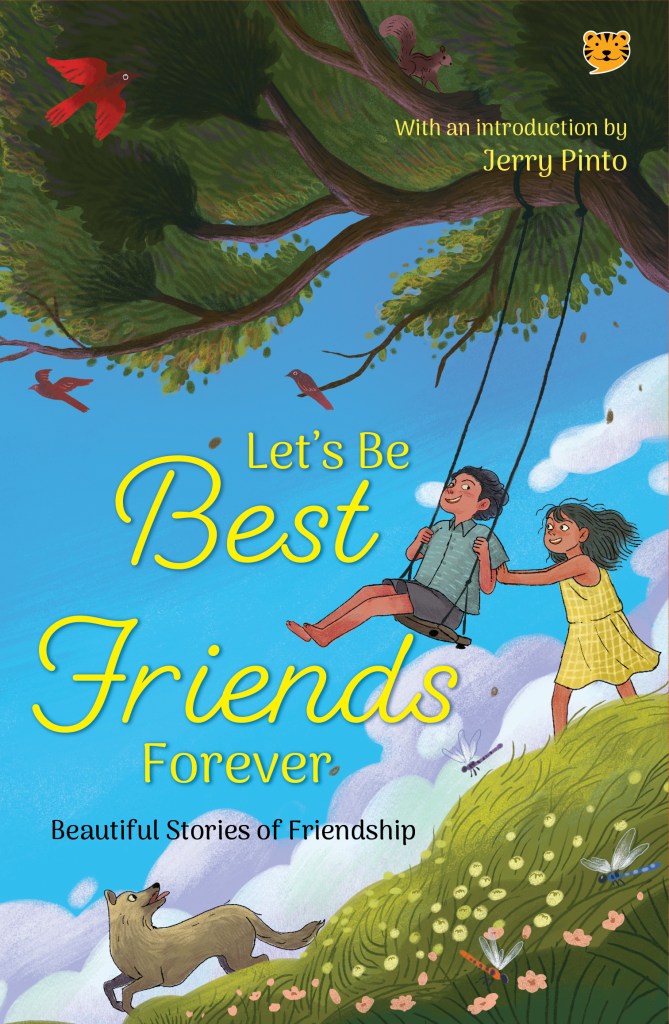
Title:Let’s Be Best Friends Forever: Beautiful Stories of Friendship
Publisher: Talking Cub, Speaking Tiger Books
From ‘The Tunnel of Friendship’ by Ruskin Bond
I had already started writing my first book. It was called Nine Months, but had nothing to do with a pregnancy; it referred merely to the length of the school term, the beginning of March to the end of November, and it detailed my friendships and escapades at school and lampooned a few of our teachers. I had filled three slim exercise books with this premature literary project, and I allowed Azhar to go through them. He was my first reader and critic. ‘They’re very interesting. But you’ll get into trouble if someone finds them,’ was his verdict.
We returned to Shimla, having won our matches against Sanawar, and were school heroes for a couple of days. And then my housemaster discovered my literary opus and took it away and read it. I was given six of the best with a Malacca cane, and my manuscript was torn up. Azhar knew better than to say ‘I told you so’ when I showed him the purple welts on my bottom. Instead, he repeated the more outrageous bits he remembered from the notebooks and laughed, till I began to laugh too.
‘Will you go away when the British leave India?’ Azhar asked me one day.
‘I don’t think so,’ I said. ‘My stepfather is Indian. My mother’s family have lived here for generations.’
‘Everyone is saying they’re going to divide the country. I think I’ll have to go away.’
‘Oh, it won’t happen,’ I said glibly. ‘How can they cut up such a big country?’
‘Gandhi will stop them,’ he said.
But even as we dismissed the possibility, Jinnah, Nehru and Mountbatten and all those who mattered were preparing their instruments for major surgery.
Before their decision had any effect on our life, we found a little freedom of our own—in an underground tunnel that we discovered in a corner of the school grounds. It was really part of an old, disused drainage system, and when Azhar and I began exploring it, we had no idea just how far it extended. After crawling along on our bellies for some twenty feet, we found ourselves in complete darkness. It was a bit frightening, but moving backwards would have been quite impossible, so we continued writhing forward, until we saw a glimmer of light at the end of the tunnel. Dusty, a little bruised and very scruffy, we emerged at last on to a grassy knoll, a little way outside the school boundary. We’d found a way to escape school!
The tunnel became our beautiful secret. We would sit and chat in it, or crawl through it just for the thrill of stealing out of the school to walk in the wilderness. Or to lie on the grass, our heads touching, reading comics or watching the kites and eagles wheeling in the sky. In those quiet moments, I became aware of the beauty and solace of nature more keenly than I had been till then: the scent of pine needles, the soothing calls of the Himalayan bulbuls, the feel of grass on bare feet, and the low music of the cicadas.
World War II had just come to an end, the United Nations held out the promise of a world living in peace and harmony, and India, an equal partner with Britain, would be among the great nations…
But soon we learnt that Bengal and Punjab provinces, with their large Muslim populations, were to be bisected. Everyone was in a hurry: Jinnah and company were in a hurry to get a country of their own; Nehru, Patel and others were in a hurry to run a free, if truncated, India; and Britain was in a hurry to get out. Riots flared up across northern India.
At school, the common room radio and the occasional newspaper kept us abreast of events. But in our tunnel Azhar and I felt immune from all that was happening, worlds away from all the pillage, murder and revenge. Outside the tunnel, there was fresh untrodden grass, sprinkled with clover and daisies, the only sounds the hammering of a woodpecker, and the distant insistent call of the Himalayan barbet. Who could touch us there?
‘And when all wars are done,’ I said, ‘a butterfly will still be beautiful.’
‘Did you read that somewhere?’ Azhar asked.
‘No, it just came into my head.’
‘It’s good. Already you’re a writer.’
Though it felt good to hear him say that, I made light of it. ‘No, I want to play hockey for India or football for Arsenal. Only winning teams!’
‘You’ll lose sometimes, you know, even if you get into those teams,’ said wise old Azhar. ‘You can’t win forever. Better to be a writer.’
One morning after chapel, the headmaster announced that the Muslim boys—those who had their homes in what was now Pakistan—would have to be evacuated. They would be sent to their homes across the border with an armed convoy.
It was time for Azhar to leave, along with some fifty other boys from Lahore, Rawalpindi and Peshawar. The rest of us—Hindus, Christians, Buddhists, Sikhs and Parsis—helped them load their luggage into the waiting British Army trucks that would take them to Lahore. A couple of boys broke down and wept, including our departing school captain, a Pathan who had been known for his unemotional demeanour. Azhar waved to me and I waved back. We had vowed to meet again some day. We both kept our composure.
The headmaster announced a couple of days later that all the boys had reached Pakistan and were safe. On the morning of 15 August 1947, we were marched up to town to witness the Indian flag being raised for the first time. Shimla was still the summer capital of India, so it was quite an event. It was raining that morning. We were in our raincoats and gumboots, while a sea of umbrellas covered the Mall.
(Extracted from Let’s Be Best Friends Forever: Beautiful Stories of Friendship, with an introduction by Jerry Pinto. Published by Talking Cub, the children’s imprint of Speaking Tiger Books.)
ABOUT THE BOOK
An Afghan trader and a young Bengali girl form a touching connection that transcends cultural barriers in Rabindranath Tagore’s classic story ‘The Kabuliwala’. Jo March and Laurie from Little Women meet at a dull party and become companions for life. L. Frank Baum’s timeless characters Dorothy and Toto adventure around Oz forging magical bonds of friendship.
The brave queen of Jhansi and her ally Jhalkaribai come together to fight for freedom and dignity; Jesse Owens narrates an inspiring tale of sportsmanship and solidarity from his Olympic days; and twelve-year-old Kamala and her friends, Edward, Amir and Amma, endure the Partition riots together in Bulbul Sharma’s heart-warming story.
In these pages you will also meet Nimmi and her best pal, Kabir, whose school misadventures include spirited debates; Sunny, whose love for books leads to a new friendship on a trip to Darjeeling; Cyril and Neil, who face life’s challenges with inventive word games, and Siya, who discovers that true friends can come in the most unexpected forms—even as a cherished doll.
Animal lovers will delight in the escapades of Gillu, the charming squirrel, Harold, the handsome hornbill, Rikki-tikki-tavi, the loyal mongoose, Hira and Moti, the powerful oxen, and Bagheera, the brave panther who looks after the young boy Mowgli.
With stories from beloved and popular authors—Ruskin Bond, Rudyard Kipling, Mahadevi Varma, Jerry Pinto, Shabnam Minwalla, and many more—Let’s Be Best Friends Forever is an enchanting collection that celebrates the universal power and beauty of friendship.
.
PLEASE NOTE: ARTICLES CAN ONLY BE REPRODUCED IN OTHER SITES WITH DUE ACKNOWLEDGEMENT TO BORDERLESS JOURNAL
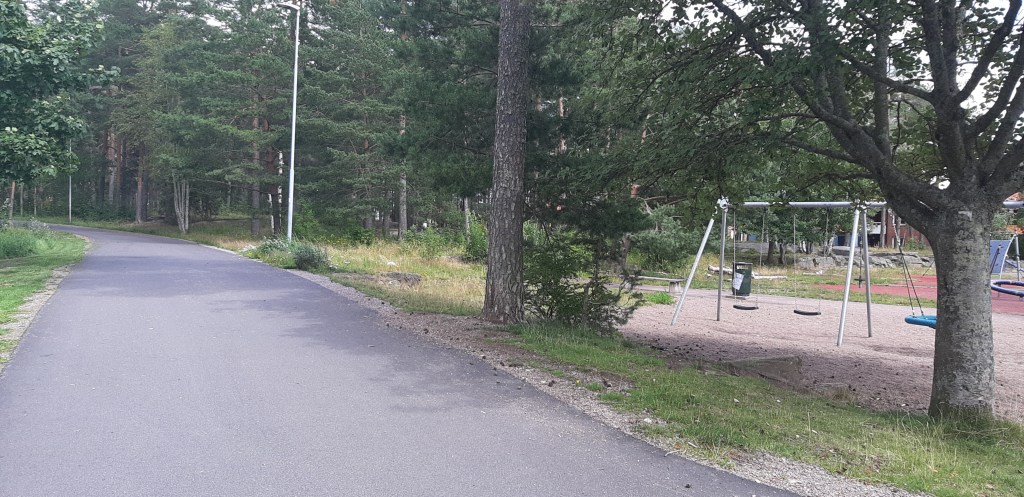
I walked down the forest path in Karlstad, Sweden, wondering how best I could ensure that a box of 36 colour pencils (used to different degrees), when given away could continue to be used so that they could fulfil the purpose they were fabricated for, as completely as possible. I recalled a tarot reader having said that ideas do not come to us when we think, but rather when we have stopped doing so. They come unbeckoned from somewhere beyond the astral realm. I stopped the train of thought in its tracks, to let the engine cool down a bit, and surrendered to the divine process of ideation and inspiration.
The next day, I was walking down the very same path – this was a routine after a couple of surgeries, for the purpose of recovery and regaining strength in my lower torso – when I saw two little girls (less than 6 years old, perhaps) playing in the garden to my left. An idea bubbled up. I hastened to my apartment, fetched the box of colour pencils and rushed down to the garden where I had seen the little girls. They were still there, on the swings. I walked up casually, making sure not to scare them (my bearded foreign face told me that I need to be careful here), and called out from a distance, in Swedish – “Hallo, vill ni gärna ha den? (Hello, would you like to take this?)”
The younger of the two came a bit closer, looked at the box in my hands, and asked curiously – “Vad är det? (What is it?)”
I explained that it was a box of 36 colour pencils, some used more than the others, and that I wished to gift it away to them. As more and more questions were hurled at me, I could not help but smile and recollect Rudyard Kipling’s poem:
I keep six honest serving-men
   (They taught me all I knew);
Their names are What and Why and When
   And How and Where and Who.
The elder of the two girls then came down to brass-tacks, and asked, “Är det verkligen gratis? (Is it really for free?)”
I said yes, and she took it from my hands.
As I was about to turn around and walk away, I heard some murmured whispers behind me. I thought they would have opened the box, started counting and marvelling at the various shades of blue, red, green and yellow in there.
“Vänta, vänta…(Wait, wait).”
I turned and they came running towards me. The younger one was now holding the box of pencils in her hand.
“Vi vill gärna betala dig (We would like to pay you for this).”
I repeated that it was a gift and one does not have to pay for gifts.
“Nej, nej…vänta (No, no, wait).”
The older one then started searching in the little pouch she had around her waist, and fished out a 2 SEK coin. Summertime in Sweden, and little kids are provided with some money by their parents, which they carry around in these mobile piggy-banks strapped around their waists. Once they have accumulated enough, they spend the money on purchasing ice-cream or chocolates or candies.
“Här, (Here),” she said proudly with a smile across her face. “Den är för dig (This is for you).”
I accepted it with a smile, which hid mixed feelings. I did not wish to deprive the little one of the feeling of pride which she was experiencing – of having put aside money to ‘buy’ this gift from a stranger.
What it was that triggered the desire to monetarily compensate me for the gift I gave them, I would never know. I would also not wish to know. Maybe because I was a stranger to them, who also looked a bit bedraggled after the surgery. Maybe it made them feel good to also give me something in return for what I had given them. That would be another thing I would surrender to the realm of ideas, which had played a part in bringing these two little girls momentarily into my life that day – the invisible hand of God, of ideas floating around in the ether ready to inspire those who are fit to receive them.
Photo Courtesy: G Venkatesh
G Venkatesh is an Associate Professor in Karlstad University, Sweden. E-mail: Venkatesh_cg@yahoo.com
PLEASE NOTE: ARTICLES CAN ONLY BE REPRODUCED IN OTHER SITES WITH DUE ACKNOWLEDGEMENT TO BORDERLESS JOURNAL
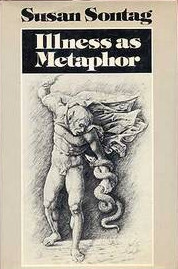
In her seminal work, Illness as Metaphor, Susan Sontag delves into the intricate realm of disease metaphors and presents evidence from the literary field that has employed metaphors for human illness, especially tuberculosis and cancer. Sontag draws on a rich literary history, referencing the works of Stendhal, Karl Menninger, Thomas Mann, Charles Dickens, Thomas Wolfe, Franz Kafka and others, to illustrate how metaphors for diseases have been ingrained in our cultural psyche. The two diseases, TB and cancer, discussed at length in the essay, are viewed from innumerable literary points of view. Fictional and real-life views of people surrounding these diseases have been put forward, which betray a cacophony of contrasting and similar ideas.
Sontag astutely dissects the contrasting metaphors associated with tuberculosis and cancer. Tuberculosis, she argues, has been romanticised and considered more socially acceptable and often viewed as a glamorous affliction. “Having TB was imagined to be an aphrodisiac and to confer extraordinary power of seduction. Cancer is considered to be de-sexualizing.” Sontag describes the tumour as “a foetus with its own will”. She further states that TB is a disease of poverty and deprivation, whereas cancer is a disease of middle-class life. She adds that cancer is associated with affluence, with excess. The metaphors associated with the diseases, she contends, not only affect the body but also shape societal perceptions and cultural narratives. The metaphorical attributions of TB and cancer in literature and society echo broader societal perceptions of class and status.
Published in 1978Susan Sontag (1933-2004)
There is an aphorism by Heraclitus that men have devised gods in their own images, and as Sontag states, the nomenclature of ‘cancer’ is derived from the Greek- karkinos and the Latin- cancer, both of which mean crab. She clarifies by quoting Galen that since the external tumour’s swollen veins resembled a crab’s legs, that is how it got its name. This tendency to associate unfamiliar things with familiar ones is common; people often perceive shapes in clouds, drawing comparisons to known objects. Similarly, diseases are often viewed through familiar frameworks. Since diseases afflict and weaken us, they are often seen as adversaries. Thus, labelling the experience of battling cancer as a fight imbues individuals with a sense of hope, suggesting the possibility of victory amidst adversity.
Sontag, betraying the nature of cancer as a slowly progressing disease that suddenly manifests without any warning, presents the earliest evidence where it was first used metaphorically by Wyclif in 1382. “The word of hem crepith as a kankir”.She assembles the different metaphors associated with Cancer, which are as diverse as the number of human illnesses. For her, Cancer is a source for topological metaphors: “spreads”, “proliferates”, “diffused”, and “excised”.
The essay examines the mythologies and superstitions associated with these diseases and how metaphors sometimes wear the cloak of superstition, too. But metaphors make the understanding of the disease more manageable. Metaphors are a means of understanding the meaning of things. That which cannot be explained as such can be explained by metaphors. In his books, The Doors of Perception and Heaven and Hell, Aldous Huxley states: “It is difficult, it is all but impossible, to speak of mental events except in similes drawn from the more familiar universe of material things. If I have made use of geographical and zoological metaphors, it is not wantonly out of a mere addiction to picturesque language. It is because such metaphors express very forcibly the essential otherness of the mind’s far continents, the complete autonomy and self-sufficiency of their inhabitants.” The metaphors will exist, and educating the masses is the only way to stop them from becoming a stigma or superstition against that disease.
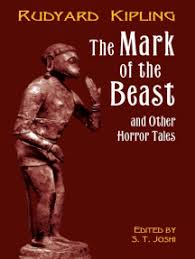
Published in 1954Published in 1956
Quite possibly, the doctors refraining from revealing the true nature of disease inherently to the patient might reflect the notion of fear of death. The diseased person might perhaps think that death will come to everyone but him. Revealing his cancer to him might imply the idea of the inevitable approaching death. Thus, employing the metaphor of ‘battling’ with cancer provides a sense of relief to the patient of emerging victorious in the battle. A diseased man on the bed is akin to a newborn baby, with the only difference being that in one, the river of life has begun to flow, whereas, in the other, it is on the verge of drying. An afflicted man is as helpless as a baby. He craves for care. In this vulnerable state, directly discussing the illness may be too distressing, necessitating the use of metaphors to convey the situation. The patient’s understanding is limited. The only truth he has made a pact with is the slipping of time and the approach of death.
Regardless of how one has lived, everyone desires a death with dignity. Yet, why is it that some illnesses seem to afford this dignity while others do not? What criteria determine whether an illness is seen as favourable? Is it pain or time? The dilemma is akin to choosing between jumping into a well or off a cliff―Death awaits at both ends. As Susan Sontag herself ‘battled’ breast cancer, one cannot help but wonder whether the book would have been different had her affliction been tuberculosis instead. The essay appears biased, elevating tuberculosis and its sufferers while diminishing the dignity of cancer patients. It only examines these diseases from a personal perspective. TB has been presented as a glorified disease, whereas cancer is something that rots the body. Only briefly does the essay touch on the societal perceptions that label tuberculosis as a disease of poverty and cancer as a disease of affluence.
It is not only cancer and TB that have attracted metaphors or have been known to be identified with them. In fact, every other disease and illness is accompanied by metaphors, like an object and its shadow. And it must be noted that some diseases, apart from being associated with metaphors, are linked with gods and deities.
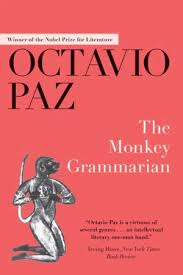
I recall a passage from the book The Monkey Grammarian in which the author, Octavio Paz, describes a scene inside the ‘Temple of Galta’ which is also known as ‘The Monkey Temple’ in Rajasthan: “The children leap about and point to the stone, shouting ‘Hanuman, Hanuman!’ On hearing them shouting, a beggar suddenly emerges from the rocks to show me his hands eaten away by leprosy. The next moment, another mendicant appears, and then another and another.”
When I first read this passage, I was immediately reminded of the story ‘The Mark of The Beast’ by Rudyard Kipling and a paper that I had read related to the story titled ‘Recognizing the Leper: Hindu Myth, British Medicine, and the Crisis of Realism in Rudyard Kipling’s The Mark of the Beast’. The author of the paper had woven the interconnectedness and drawn parallels between the story, the leprosy affected character and Hanuman-lila. In ‘The Mark of The Beast’, an Englishman named Fleete, in the company of his two friends, desecrates a statue of Hanuman inside a temple with his cigar and declares it as ‘the mark of the beast’ but is soon embraced by a “mewing” leper who emerges from behind the statue following which, Fleete begins to develop skin discolourations and starts exhibiting animal-like behaviour. In the paper, the author establishes a connection between Hanuman and leprosy to justify why the Hindu monkey god is often called ‘sankat-mochan’ or ‘liberator from distress’. Drawing reference from the study of Hanuman lore by Philip Lutgendorf, the author argues how Kipling’s story resonates with a specific Hanuman-lila that relates his manifestation as a leper before the 16th-century saint Tulsidas.
“Instead, he [the tree ghost] told Tulsidas to seek the grace of Hanuman and revealed that the latter came every evening to a certain ghat in the form of an old leper to listen to the narration of Rama's story; he sat at the back of the crowd and was always the last to leave. That night, Tulsidas surreptitiously followed the leper, who led him deep into the forest before the poet finally fell at his feet, hailing him as the Son of the Wind. As the ghost had predicted, the leper "denied a thousand times" that he was anything other than a sick old man, but Tulsidas persisted in his entreaties. Eventually, Hanuman manifested his glorious form. Raising one hand over his shoulder to point southwest, he said, "Go to Chitrakut," and placing the other hand over his heart, added, "I promise you will see Rama.”
Illness as Metaphor should not be considered a caution about metaphors in their relation to illness but rather a critique of their misapplication, where these metaphors can morph into stigmas that persist in people’s consciousness. “Illness is the night-side of life, a more onerous citizenship. Everyone who is born holds dual citizenship in the kingdom of the well and in the kingdom of the sick. Although we all prefer to use only the good passport, sooner or later, each of us is obliged, at least for a spell, to identify ourselves as citizens of that other place,” Sontag states in the opening lines of her book-length essay. But, unless one is born in the mythical Shangri-La, and as long as humanity exists, illnesses and their accompanying metaphors will persist, evolving with each new malady that emerges. Today, it is cancer, just as yesterday, it was tuberculosis and COVID-19. Tomorrow will inevitably bring new illnesses, accompanied by a fresh set of metaphors that shape our collective understanding of the ever-present shadow of illness in the human experience.
Satyarth Pandita is a Junior Research Fellow at the National Institute of Mental Health and Neurosciences, Bengaluru. He completed his dual degree of Bachelor of Science and Master of Science in Biological Sciences (major) and Humanities and Social Sciences (minor) from the Indian Institute of Science Education and Research Bhopal (IISERB).
Links to Satyarth’s published works, email address and social media handles can be found here.
.
PLEASE NOTE: ARTICLES CAN ONLY BE REPRODUCED IN OTHER SITES WITH DUE ACKNOWLEDGEMENT TO BORDERLESS JOURNAL
Exotic journeys to far distant climes begin to take shape in the realm of the imagination. We roam verdant savannas, cut our way through savage jungles, climb into eagle’s nests on mountain crags, cross parched Mongolian deserts, and ply on ancient vessels across vast oceans, all in search of new sights and sounds, new pathways into the unknown, new visions into the future, anything that will take us far from our humdrum lives. Ah, how the imagination works overtime and takes us there, takes us where we want to go, offers up an experience we would not have savoured otherwise. The imagination opens doors for travelers to pack their bags and see other worlds not of their making, worlds that become a reality with the first step taken along the road of a fresh journey into the realm of the unknown.
A recent trip to Myanmar, formerly the much beloved and written about country of Burma of the 19th century, ended up fulfilling my wayward dreams of an adventure and experience that would take me out of myself and into another time and place. Indeed, the title of this adventure says it all, once upon a time in Burma, a country that once entered, will not leave us alone and will wrap the traveler up in its loving embrace. With all geo-political interests and concerns put aside for a moment, it is the people, the culture, the craftsmanship, the ancient land that we wish to know and experience, the lapping of lazy rivers, the sky-mirrored brilliance of expansive lakes, the shadowy curves of rugged mountains, the lush and verdant plains and paddy fields that fill the soul of the traveler to such exotic lands with the peace and serenity of its ancient way of life. Regimes, corruption, injustice, indeed political leaders come and go; it is the land that endures and the spirit of a people that will never die.
Whose heart will not be stirred by the name of Mandalay, immortalized by the British poet, Rudyard Kipling, whose poem, “Mandalay” still echoes resoundingly down through the corridors of time with its lush verses of charm and enchantment. It is this memory that leads me bravely onward as I plan my well-earned winter holiday in a brief respite from my duties as a writing professor at a new university on the outskirts of Kuwait, a city of sky-scraping towers wishing to be iconic and smoky oil fields wishing to be productive. I am now, in the world of Rudyard Kipling, “on the road to Mandalay // where the flyin’-fishes play // an’ the dawn comes up like thunder outer China ‘cross the bay.”
I never tire of flying into a new country that is totally unknown to me and yet soon to be less of a mystery, soon to be known. As I gaze down upon the scene below my comfortable perch on the plane, I see that we are entering a land seemingly lost to time. The blackened highlands turn to rugged mountains with nary a tree to see. The mountains themselves seem to cradle the surrounding land like a mother cradles her child, and a sense of balance and harmony prevails as I gaze upon this landscape of primordial nature, as if lifted from some remote paradise from another planet, captured out of time for the 21st century traveler such as myself to see. Already my expectant heart begins to stir as I eagerly await our arrival.
I am once again travelling with my Slovenian friend, Peter, and a better traveling companion one could never hope for. They say that if you want to really get to know people, you have only to take a trip with them to find out what they are really like. No truer words were ever spoken. My smart, brave, thoughtful, selfless friend would never let me down, brought his own unique approach to travelling with him, took delight in planning and doing background research about a place, and was able to monitor the number of steps (my three to his two giant strides) on our daily trails with his fashionable Garnett geo-watch (when it worked!).
We entered the subdued arrivals hall in Mandalay only to realise a half-hour time difference from Bangkok where we had met up from our different locations the night before.
“That can’t be right,” Peter knowingly quipped. “But it is,” I quickly responded, knowing how he liked to impose his will on things.
“Goa, on the west coast of the Indian Subcontinent is an hour and a half ahead of Dubai.” I added as supporting evidence of what I said.
We had easily arranged e-visas done online beforehand and quickly passed through customs control without a hitch. “Let’s change money,” I suggested. “But you get a better rate in town,” Peter countered. “We won’t get into town without local money,” I murmured, knowing he couldn’t counter-argue that. Indeed, at roughly 1,500 kyat to the dollar, after changing a mere $100, we walked away with 150,000 kyat. Hmm, that should get us into town, I thought to myself.
I won’t belabour the point, but the exchange rate of the currency turned out to be an interesting element in our economic calculations. When you are dealing in the thousands of any currency, it can be confusing. We all know what a dollar or euro values at, but what about 150,000 kyat and how much would it buy locally. Seems like a lot, yet it is only ten dollars in value, about the price of a sandwich and a zero coke on the streets of Manhattan. Now through immigration and customs and with local money in hand, the ever-intrepid researcher, Peter, marched over to the information booth to inform himself about getting into the town center where we had booked our hotel. While there were traditional taxis available for about 15,000 kyat (roughly $10), we learned that we could take a local bus outside the airport terminal that would take us directly to our hotel for about 3,000 kyat for the two of us (roughly a dollar each!). That won’t break the bank, I chirped to Peter. He agreed with a toothy grin and off we went on our great adventure.
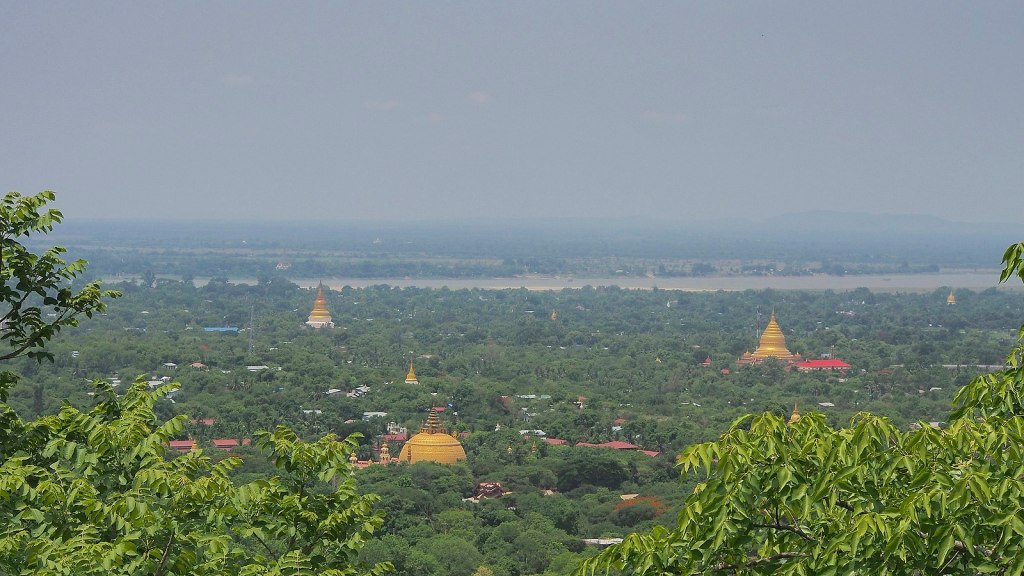
The ride into town was uneventful, but long, leisurely and fascinating. I was beginning to experience the sense of laid-back calm and serenity that would follow me throughout my days of travel through this exotic, ancient land. In the distance, through the myriad lush and wind-blown trees that lined the side of the make-shift highway into town, a rough patch of roadway if there ever was one, we could glimpse the golden spires of pagodas upon hilltops extended clear to the horizon, a vision that would become the iconic characteristic to mark the bucolic setting of this rural landscape with its timely sense of spirituality.
“The trees,” I kept remarking to my friend Peter, “look at the variety and lushness of the grand, old trees. Have you ever seen the like of them?” Over an hour later in a place where time really had no meaning but that it could be filled with miracle and wonder, we were deposited at our more than adequate three-star hotel where we were greeted with timid smiles, folded hands and a humble bow.
Once unpacked and his geo-watch turned on, Peter exulted, “Let’s explore the town, the old palace isn’t far off.” I have traveled before with Peter and have come to realise that “not far off” doesn’t mean the same to him as it does to most other people. Nevertheless, I was game and still do my own 8-km run three times a week to keep fit and, in the running, as it were. Once outside, Peter tends to walk ahead in great strides, and I follow three steps to his two; but I didn’t mind. He faced the brunt of the chaotic traffic that came up, down and toward him in every which way, including the ever-present motorbikes that never follow the rules and seem to have license to come and go as they please. “Remember Peter,” I shouted to him over the din of dust and horns, “they drive British-style here, on the other side of the road, so take care where you look to cross.” Yet Peter strode confidently onward, like a giant amid pygmies, ready to brush aside any vehicle or motorbike that may dare to come his way. Indeed, the traffic seemed to have a rhythm of its own, despite the noise, and flowed like a river around his colossal bulk.
Well forward at the end of the main street of the town, again lined amid the grand cacophony of shops and workshops with multiple trees blocking the pathway along the side of the road and forcing us time and again out onto the perilous danger of the streets, we beheld the inner sanctum of a walled palace surrounded by an extensive, medieval moat. Up close, when we finally arrived at the historic premises, we gazed across the extensive mote nearly a half kilometer in width at the heightened red brick wall, periodically adorned with brick latticework and towers featuring ferocious fang-filled mouths of animals out of which lotuses hung out like tongues. On the Google map, the palace walls that now house the military Myanmar government formed a perfect square. From where we stood, we could hardly see to the end of the first line of wall that we stood before. Undaunted, Peter started to walk the outside of the moat for about a kilometer until we found a little embellished wooden 19th century bridge that led across the extensive moat up to the face of the outer wall of the former palace that now up close towered over us, even over Peter.
The Mandalay Palace itself was constructed between the years 1857 and 1859 and housed the last Burmese monarchy, in honor of King Mindon’s founding of the new royal capital city of Mandalay. The palace itself was the center of the citadel and faced East. Built of teak wood in the traditional Burmese design, it rested inside a walled fort surrounded by a moat. The complex ceased to be a royal residence and seat of government in 1885 when, during the third Anglo-Burmese War, the British entered the palace and captured the royal family. To this day, the Mandalay Palace stands as the primary symbol of the once enchanted city of Mandalay, in another time and in another place now gone by.
As we perilously neared the gate to the military enclosure, a guard slumped on a metal chair in the shade of an awning looked up at Peter towering over him as he pointed his finger in the opposite direction and shook his fist to make his point. “Oh hello, my little friend,” Peter said ingratiatingly in a sugar-sweet ironic tone that the poor fellow would never pick up, even if Peter thought he might. I cringed and headed in the direction where the soldier was pointing, so as not to offend. The guy was smiling and trying to be friendly. “But I want to go there,” Peter asserted glancing in the opposite direction, as if looking at a tidbit. “We need to go this way,” I shouted back to Peter over my shoulder, “Where the restaurants were indicated on the map.” That did the trick and at the thought of food, Peter was soon striding far in front of me, like a giant panda intent on his destination, his money (and mobile) belt tightly secured around his waist. No one was going to come near that!
Peter finally found a young, presentable fellow who looked like he knew something, especially English, to ask about a restaurant. “Yes, yes,” the fellow obliged. It turned out he was actually from India but had lived in Myanmar many years. “Restaurant very good,” he affirmed. “I will be going there later with my family.”
Indeed, I thought. What a strange coincidence. Peter soon tracked the restaurant down on the map on his mobile (I still don’t have one, I am waiting for the hand-held technology to give way to something more sophisticated), a small place open to the street with tables spilling invitingly out onto the sidewalk. This promised to be our first meal in Mandalay and Peter was not taking any changes on eating unhealthy and/or getting sick with stomach trouble.
“We will eat here,” he announced although I wasn’t especially impressed and it was a little early, just around sunset, to be eating to my taste. When one travels alone, one may feel lonely, but if travelling with a companion, one has to make compromises. I did the menu test and with a quick scrutiny found little that inspired me. Also, the stools at the tables had no backs. Not exactly the leisurely environment I was anticipating for evening dinner, our one main meal of the day when travelling.
I grumbled and mumbled to no avail. Peter had already ensconced himself on the tiny stool with a big grin on his face, looking forward to eating. He expected me to extract the best of the savoury delights from the menu, and after some time was able to come up with various curry and vegetables dishes that seemed promising from the little photos that accompanied the text. The prices were also note-worthy, 2,000 to 3,000 kyat for the main courses (let me remind my readers that 1,500 kyat equals one dollar at the time of our visit!). We can afford that I chuckled to myself. As we waited in the open-air restaurant in the dust and heat sipping our cool fruit drinks, the cars and motorcycles made their mad dashes to God knows where in such a hurry, and the mosquitoes suddenly came alive in the twilight hush!
I sat there feeling tired and dreamy after the long day and the long walk around the palace walls, but Peter suddenly seemed uncomfortable and agitated. “What’s the matter, Peter,” I asked, as he swatted his hands in front of his face and slapped his naked legs. “Mosquitoes,” he cried, “they are biting me.” Welcome to the tropics, I thought, but kept quiet until I couldn’t help but launch into the story of dengue fever that some mosquitoes can transmit. Admittedly, it’s a long shot, but I couldn’t help but make fun of my friend who had been so insistent about eating in this restaurant at this time. From then on, we took much more care in planning our evening meals as we travelled throughout the country heading south from Mandalay to Yangon (formerly Rangoon).
The next morning, we were promptly met by out little guide whose name was Swan. We would later come to know that Burmese names were different and unique. Peter in particular always got a kick out of asking Swan questions, but always addressing him by name. “Swan, why do the women wear powder on their faces (a natural product to protect against the sun)? Swan, how many motorbikes are there in this town (far too many to my reckoning)? Swan do you have brothers and sisters (he had a younger brother that he spoke fondly of)?” True enough, when you travel with a guide, the guide, if you are lucky, becomes a kind of father, brother, son. They are there as a font of knowledge, the shipmaster on a voyage into the unknown, a protector and a stranger turned friend in a stranger than strange land. Swan was all of those things and much more. When we came to learn that as we moved south, he would be replaced by another guide. Both Peter and I felt disappointed and when eventually we did say goodbye to him, knowing we would never see him again, we felt sad and at a loss. When I shook his hand, the thousands of kyat I left behind didn’t seem enough.
For the time being, Swan was with us at every temple, stupa and pagoda. “What’s the difference?” Peter wondered aloud, giving voice to my own question.
“You can enter a temple,” Swan patiently replied, as if he had never been asked that question before. Indeed, the trick of a new guide leads the tourists in his charge to believe that everything is fresh and new, questions, statements, explanations that had never been uttered before and may never be uttered again. “The pagoda is there in commemoration and as a gift or charity that could bring merit and blessing. But you cannot enter inside as it is a solid structure pointing heavenward. A stupa is a domed or bell-shaped monument traditionally used to store religious relics of the Buddha.” Whether temple of worship, stupa or pagoda, to enter its confines, we were required to take off our shoes and socks. In the land of a thousand pagodas/stupas, tourists end up taking off their shoes perhaps more than they would like. I kept silent, but Peter grumbled and complained as we wandered in and around these sacred places during our 10-day tour, Peter meticulously cleaning off his sizable feet with the moist wipes provided every time by the guide. I simply brushed off the sand and grit and re-socked my feet until it was time to enter the next temple, thinking that traveler dust is well earned.
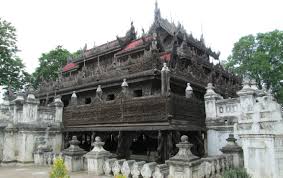
After ambling through the chaotic fruit and vegetables markets of Mandalay, we made our way with our guide, Swan, to our first memorable site, the Shwenandaw Monastery, located at the foot of the Mandalay Hill overlooking the city and countryside. The monastery was speckled with trees, golden domes and bell-shaped towers gleaming in the winter sunlight. The intrepid guide explained everything in great detail, and perfect English I might add. I remember asking Swan how he had learned English, but never got a satisfactory answer to account for the ease with which he spoke.
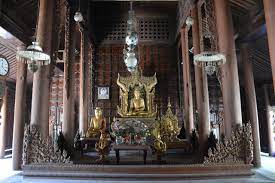
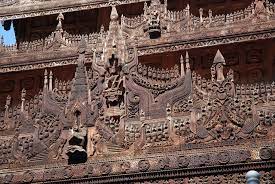
The monastery was built in 1878 by King Thibaw Min, who dismantled and rebuilt the inner apartments formerly occupied by his father, King Mindon Min, believing the premises to be haunted by the spirit of his dead father. The entire structure was made of teak wood in the traditional style and heavily gilded with gold and glass mosaic work. The monastery is also known for its teak carvings of Buddhist myths, which adorn the walls and roofs in all their intricate, exquisite detail. As we roamed around the eerie premises, we came to see the commemorative preservation of a former royal way of life, particularly the colossal inner room where the king was known to have performed ritual meditation. We were even able to observe the meditation couch upon which he sat, creating in my mind dreamy reflections of a world I would never know, but had come to learn about in my travels.
The time of sunset was not far off. We made our way in the car midway up the Mandalay Hills into a parking lot and from there were able to take a series of escalators to the top of the hillside that provided fabulous views in every direction of the once enchanted city of Mandalay below, now a bustling metropolis that from the distance still held its mystical lure although up close, the 21st century left its mark of noise and pollution. The rolling hills and flattened plain leading to the city below provided the perfect backdrop for the flaming sunset that soon followed, bestowing upon the fabled city below the streaming golden light of twilight.
John Herlihy, travel writer and poet, has published two collections of travel essays, Journeys with Soul and his more recent Distant Islands and Sealight, available at online booksellers and Amazon.
.
PLEASE NOTE: ARTICLES CAN ONLY BE REPRODUCED IN OTHER SITES WITH DUE ACKNOWLEDGEMENT TO BORDERLESS JOURNAL
Rakhi Dalal reviews translated short stories of Nabendu Ghosh, which not only bring to life history as cited in his Bangiya Sahitya Parishad Lifetime Achievement award but also highlights his ‘love for humanity‘
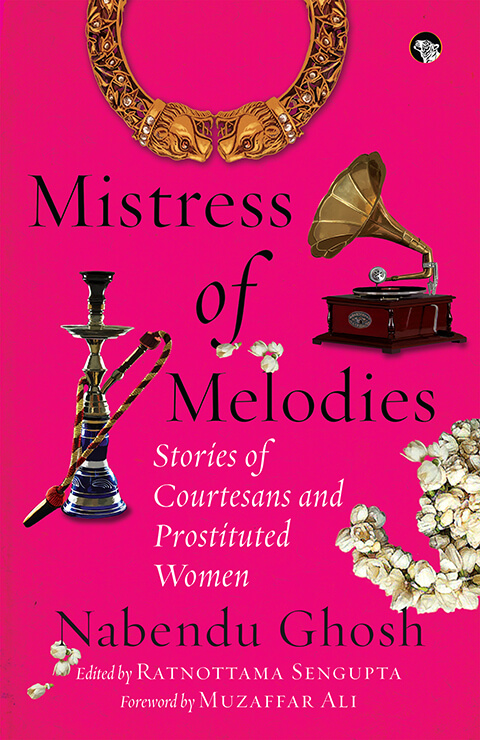
Title: Mistress of Melodies: Stories of Courtesans and Prostituted Women
Author: Nabendu Ghosh
Publisher: Speaking Tiger Books, 2020
Mistress of Melodies:Stories of Courtesans and Prostituted Womenis acollection of six stories by Nabendu Ghosh in translation. It includes three translations by the editor Ratnottama Sengupta (Market Price, Dregs and Song of a Sarangi) and one each by Padmaja Punde (It Happened One Night) and Mitali Chakravarty (Anchor). The titular story was originally written in English by the author for a screenplay.
In the editorial note, Ratnottama Sengupta reflects upon the origin of the word prostitute from Latin word “prostitus” and asserts that its interpretation as “to expose publicly” or as “thing that is standing” does not have the abusive association usually identified with it. She refers to Rudyard Kipling’s short story, ‘On the City Wall’, for the denigrating connotation that the phrase “oldest profession”, a euphemism for the word prostitute, acquired later.
Treated as courtesans, as connoisseurs of arts, the women engaged in this oldest profession enjoyed high social standing in Mughal and Pre-Mughal era. Immensely trained in the fields of classical singing and dancing, their mannerism set a hallmark of etiquettes in society. It was only with the arrival of British that their institution gradually collapsed. The Sepoy Mutiny of 1857 rang the death knell for courtesans’ art. With their wealth seized and places plundered, they were punished for their involvement in the rebellion. The coming of British crown further brought Victorian ideas of morality and women chastity, thereby pushing the courtesans to the lowest rungs of society.
‘Song of a Sarangi’, set in nineteenth century Calcutta some years subsequent to Sepoy Mutiny, effectively brings forth the world of ‘baijis’ (courtesans) who had set up their kothas (business cum residence) in some neighbourhoods and enjoyed patronage of rich seths and babus of the city. Theirs was a world brought to life every evening with thumris sung and dances performed on the thaap of tabla tuned to harmonium and sarangi. Though their art was appreciated during the times, their sustenance in society hanged by the delicate threads tugged in the hands of their patrons. Nabendu Ghosh, through the character of Hasina Bai of Chitpore, places to the forefront the struggle and subsequent misery of a mother after she auctions her adolescent daughter to the highest bidder and plunges straight into a nightmare which upturns her life.
The story ‘Market Price’ illustrates the misery of a young widow Chhaya, who is allured into a fake marriage and betrayed after she willingly gives away her fortune to the man she trusts. Her story against the backdrop of city of Kashi also symbolically represents the ordeal of being a widow in the society. In the story ‘It Happened One Night’, we witness Tagar, a woman forced into the profession, trying to make as much money as she can till she isn’t worn out. For, she cannot end up like ailing Radha who pushes herself to the edge of death to earn little that she could to feed herself. Through this story, the author also focuses on the issue of sleep deprivation and illness, which is a price the women engaged in prostitution pay for their living.
‘Dregs’, written in first person narrative, while chronicling the life of Basana who enters the profession due to hardships that she faced, also very convincingly portrays the detestation which women engaged in prostitution are subjected to in a social system. Set in the 1940s in Calcutta, the story navigates the life cycle of brave Basana who succumbs to the destitution she confronts when her paramour abandons her after she becomes a mother. On the other hand, it also takes the reader through the mind of narrator, revealing his revulsion for Basana which is not only due to her profession but also a result of his own sense of deprivation, originating from his poor circumstances. He desires her but cannot have her so he is repulsed by her presence. It is only towards the end when she appears wretched, that he feels pity for her. This conflict, as experienced by the narrator, is rendered with such subtlety that it allows for an effortless transition of the distinct emotions, leaving the reader spellbound by the sheer brilliance of author’s skill.
In the story ‘Anchor’, Fatima resorts to the profession in order to provide for her son but cannot bring herself to give in to a stranger. Her defiance springs from her strong sense of self respect which she guides with all her might after her husband’s death. Rustam, who comes to Fatima in desperation, lets her go when he notices her helplessness. Here in sketching his character, the author also brings to reader’s attention the sufferings endured by countless people in the aftermath of Bengal famine.
‘Mistress of Melodies’ is written on the life of famous Gauhar Jaan of Calcutta. The author wrote this in English as the first draft of a fuller screenplay. He was captivated by the larger than life persona of first Indian diva of Armenian origin, who was immortalised in the annals of history by being the first ever person to sing for a gramophone record in the country. A highly accomplished woman in the field of classical singing and dancing, Gauhar Jaan enjoyed a privileged life. The author writes about her celebrated life and about the love which left her aching, after the death of her beloved Nimai Sen, till the very end of her life.
These stories of courtesans, of those engaged in prostitution as well as of those pushed to the verge in a society, are not merely the stories of their struggles, sufferings or helplessness but are also accounts of their faith in love and in the inherent goodness of people. It is love which compels Hasina Bai to start life anew with Uday Moinuddin and make Tagar dream of a new life with Shashi, his pimp. It lets Rustam, a wanderer, to finally attempt new beginnings with Fatima, their common grief the anchor which brings them closer.
Remembering Nabendu Ghosh, on his birthday i.e. on 27 March in 2019, renowned writer of Bengali Literature, Shirshendu Mukhopadhyay said:
“I wish I had more Nabendu Ghosh novels back then, in 1940s, for he has written on almost every upheaval of that period: the Bengal Famine, the tram strike, the rationing of clothes, the Direct Action riots, rehabilitation of Partition victims… This was perhaps because he considered Literature to be a way of tackling all that is destructive in society, in life. He was writing out of love for humanity.”
And indeed the stories in this collection, emphatically proffer a testimony of his love for humanity. A love which compelled him to write about the women engaged in the ‘oldest profession’. He wrote to address the many woes that afflicted not only forlorn prostituted women but also well-off Courtesans. With his stories, he portrays the predicament of women dragged into the clutches of prostitution and also paints a world throbbing to the surs of ragas and taals of Kathak whose custodians were also the upholders of culture and its mores in the times bygone. Through these stories perhaps, their legacies and their contribution to culture will be remembered for times to come.
Nabendu Ghosh (1917-2007) was a dancer, novelist, short-story writer, film director, actor and screenwriter. His oeuvre of work includes thirty novels and fifteen collections of short stories, including That Bird Called Happiness: Stories, edited by Ratnottama Sengupta (Speaking Tiger, 2018). As scriptwriter, he penned cinematic classics such as Devdas, Bandini, Sujata, Parineeta, Majhli Didi and Abhimaan. And, as part of a team of iconic film directors and actors, he was instrumental in shaping an entire age of Indian cinema. He was the recipient of numerous literary and film awards, including the Bankim Puraskar, the Bibhuti Bhushan Sahitya Arghya, the Filmfare Best Screenplay Award and the National Film Award for Best First Film of a Director.
Ratnottama Sengupta, formerly Arts Editor of The Times of India, teaches mass communication and film appreciation, curates film festivals and art exhibitions, and write books. Daughter of Nabendu Ghosh, she has written Krishna’s Cosmos, a biography of the pioneering printmaker Krishna Reddy, and also entries on Hindi films for the Encyclopaedia Britannica. She has been a member of CBFC, served on the National Film Awards jury and has herself won a National Award. In 2017, she directed And They Made Classics, a documentary about Nabendu Ghosh. She has recently edited That Bird Called Happiness (2018/ Speaking Tiger), Me And I (2017/ Hachette India), Kadam Kadam (2016/ Bhashalipi), Chuninda Kahaniyaan: Nabendu Ghosh (2009/ Roshnai Prakashan).
Rakhi Dalal is an educator by profession. When not working, she can usually be found reading books or writing about reading them. She writes at https://rakhidalal.blogspot.com/ . She lives with her husband and a teenage son, who being sports lovers themselves are yet, after all these years, left surprised each time a book finds its way to their home.
.
PLEASE NOTE: ARTICLES CAN ONLY BE REPRODUCED IN OTHER SITES WITH DUE ACKNOWLEDGEMENT TO BORDERLESS JOURNAL.
I have an instinctive abhorrence for blood-sports. I can remember when many years ago Woman’s Hour on BBC’s Radio 4 misjudged its audience and promoted a female bullfighter in a spirit of misguided equality and was roundly condemned.
So, you might find it surprising that one of my favourite Kipling stories is about a bull-fight. ‘The Bull That Thought’, from the 1926 collection, Debits and Credits – home of several favourites, including the clever ‘The Eye of Allah’, and the poignant ‘The Gardener’ — is one of those Kipling stories that stands out, not merely from his own work but from just about anything else one might have read.
A framed story, like many Kipling stories, it is one of those told to its first person narrator, in this case in the presence of the reader, by one of those “men on steamers and trains” who Kipling reminds us in that much earlier tale Preface, which seems both tale and preface, is where stories come from The tale is told over a magnum (or probably larger) of fine old champagne, “between fawn and topaz, neither too sweet nor too dry”, by a Monsieur Voiron.
The eponymous bull is called Apis, and in Voiron’s youth was itself a calf. Voiron has been brought up on a cattle farm among herdsmen, and bulls, in The Crau and the Camargue regions of France. Retired after a life in the Colonial Service, and returned to his family farm, Voiron recounts the tale of Apis, who far from being a mindless beast has brought intelligence to the games of bull-fighting that were played in the yards and fields of his homeland.
In fact, Apis has shown himself to be an exceptional tactician, and a “natural murderer” — “almost indecent but infallibly significant”. The ownership of the bull passes into the hands of Christophe, a peasant herdsman on the estate, and he sells the bull to Spaniards, who fight their bulls, not with padded horns, but to death of either bull or matador. Voiron tells how he and Christophe travel across the border to see what must be Apis’ first and final fight.
Slightly more than half of this fourteen-page story is devoted to the description of that fight. All the tricks and turns that the bull has learned in his youth – leading to the death of horses and other bulls – is put to the test as Apis faces Villamarti, a local matador out to show his prowess. The bull destroys the forces sent against him, tricking them into errors, killing both horses and men, yet managing too, to convince the crowd, at least to begin with, that he is making merely clumsy mistakes, rather than clever ambushes. Finally, having destroyed Villamarti’s reputation, he is left in a bullring which, traditionally he cannot be allowed to leave alive. Already the Guardia Civile are handling their carbines.
Salvation comes in the shape of Christo, who like Christophe is a peasant herdsman at heart. He is also the oldest, wisest, and dullest of the matadors against whom the bulls have been pitted. He alone recognises the cleverness, and value of Apis, and the bull recognises him too. The two of them put on a marvellous display, edging nearer to the gate from which no bull has exited the arena under its own steam. Finally, Christo’s cloak thrown over the bull’s back, the old matador demands the gate be opened for him and his friend. Amazingly it is. The bull has spared him, and he has saved it. Both know the game they have played and won.
Finishing his tale, Voiron confesses that he and Christophe did not see the next bull – “an unthinking black Andalusian” — killed, for they were weeping like children. He ends the story by proposing a toast ‘to her’, and Kipling phrases it with just a hint of ambiguity as to just who that ‘her’ might be.
It’s not simply the story of the underdog winning that I like. Apis is hardly the underdog, even when outnumbered in the bullring! It’s what the story reminds me of about Kipling. Because of his enthusiasm for Empire, and the association of that Empire, despite its Britishness, with England, we can be fooled into thinking of Kipling as an English writer. But in reality, he was much broader than that.
His British soldiers, of the ‘Soldiers Three’ stories, are stereotypes of working-class voices from several regions of Britain, but none of them have Kipling’s voice. They seem as foreign to him as the Muslim and Hindu ayahs, servants and soldiers of his India, perhaps even more so. And in the story ‘An Habitation Enforced’, it’s tempting to see the American and his wife who become nouveau Lords of the Manor in the English village to which they have moved as proxies for Kipling and his Sussex house, Batemans. In ‘The Village That Voted The Earth Was Flat’, and ‘They’, Kipling’s narrators slip easily into the identity of the British Establishment, but the English are always seen from the outside by this writer.
The writer, any writer, is likely to be to some extent an outsider, an observer, even when his or her readers perceive them to be insiders, and Kipling seems to be at a similar distance, or proximity to most of his characters, even those whom he calls “mine own people”.
In The Bull That Thought, Kipling’s narrator is a car-owning, continental travelling ‘Englishman’, which puts him in a very tiny minority of the British population. But the story allows us to see another aspect of Kipling’s identity, for he was a lover of France, and can present his French raconteur with absolute credibility, perhaps even authenticity.
The tale within a tale is a common technique and was used by many storytellers. Coppard used it, and he is about as far as you can get from Kipling where English identities are concerned, and so did and so do many others. Sometimes, the primary narrator simply introduces the tale and lets the secondary narrator carry on. Sometimes the frame is completed with the outer narrator appearing at the end to tie things up. Here, Kipling keeps a conversation between the two going, his primary narrator intervening to remind us who is talking to whom, and that both of them are setting into that enormous champagne bottle! “Monsieur Voiron replenished our glasses…”
Occasionally, as if to drive the narrative on, he asks questions: “Why did you want to send him to Arles?”And once he even has to bring Voiron back to the subject in hand as the old man veers off onto another train of thought:
“‘…Now, as compared with our recent war, Soult’s campaign andretreat across the Bidassoa–’
“‘But did you allow Christophe just to annex the bull?’ I demanded”
The opening frame takes up more than a page of the story, as the narrator recalls his trip to “westward from a town by the Mouth of the Rhone’”and his plan to road test the speed of his motor car on “thirty kilometres as near as might be” of a road “mathematically straight”. Voiron, a guest at the same Hotel takes an interest, and after the event suggests the celebratory meal during which he will tell his story. Though we get a fairly full account of Voiron’s history, we also get a subtle nudge about the narrator’s, for he has with him a Mr Leggat “who had slipped out to make sure” and “reported that the road surface was unblemished”. Leggat is our traveller’s chauffeur/mechanic. The purpose of such a frame is to let us know what sort of person we are listening to, and by extension, how to judge those to whom he is talking, and who he will suffer to talk to us.
And at the end, it is Voiron to whom he gives the closing words. That leaves us with Kipling’s narrator when the telling ends. There is no comment either from Kipling’s narrator or himself. We make of it what we make of it, and it’s more, I think, that what we might expect our narrator, or his storyteller, or the author himself to believe about the practice of bullfighting.
The nature of the fight that Apis wages against his tormentors, both as a young calf and as a full grown bull, and Voiron’s attitude to it, and to him, and to the outcome of that final battle, can be seen as an examination of attitudes to war and violent conflict in the wider sense. Voiron has “supervised Chinese woodcutters who, with axe and dynamite, deforested the centre of France for trench-props”, and he drifts into talking about Soult’s Napoleonic War campaign in Spain. In short stories, and especially in ones by masters of the genre as Kipling was, there are no drifts into irrelevancy, only the illusion of them. Voiron draws a specific parallel just after he has described Apis as a “natural murderer”: “One knows the type among beasts as well as among men.”
The date of publication, of 1926, falls well within the deep and long shadow thrown by the first ‘Great’ war of the twentieth century, and Kipling knew well the cost of it. In the stories ‘Mary Postgate’ and ‘The Gardener’ which bracket, by publication this one, he confronts directly both the private and the public grief, but here, might there be an oblique critique as well? Yet not of the cleverness of the tactics as shown by Apis, so much as the attitude of those who live to tell the tale and of the outcome they long for. That “type among beasts” and men, Voiron asserts, “possesses a curious truculent mirth”.
Does the calculated brutality of the bull, and its sense of honour and of humour echo qualities that Kipling observed in those who fought in the trenches for which Voiron’s Chinese workers “deforested France”?
Mike Smith lives on the edge of England where he writes occasional plays, poetry, and essays, usually on the short story form in which he writes as Brindley Hallam Dennis. His writing has been published and performed. He blogs at www.Bhdandme.wordpress.com








 Borderless