Categories
Conversation

‘Home has been a Process of Lifelong Search’

In Conversation with Kirpal Singh

Dr Kirpal Singh

 “Singapore is intimately linked with home and, yet for me, home has always been a process of lifelong search. Partly because of the early months of my birth. The record says I was born in March 1949, but the time was not certain as I do not have a birth certificate. My father forgot to register my birth,” reminisces Dr Kirpal Singh, an internationally recognised scholar. Born in the Straits Settlement of Singapore, before the island emerged as an independent entity, he has lived through much of history. He tells a story of multi-racial, multi-cultural growth that the island afforded him.  

His father, he tells us, was “well known throughout Malaya — Jeswant Singh nicknamed as ‘Just One’ — a boxer who would knock people down with his left hook. In 1954, he left boxing when he killed someone during a match.” His mother, a Jewish Scot who he cannot recollect, he tells us, “ might have been David Marshall’s sister according to my stepsister but no one else has said that.”  Marshall[1] was the first Chief Minister of Singapore from 1955 to 1956 and then Singapore’s Ambassador to France, Portugal, Spain, and Switzerland 1978 to 1993. He is the founder of the Worker’s Party. His parents had emigrated from Baghdad to Singapore in 1908 according to current resources.

How did Singh’s parents come to be in Singapore? Were they immigrants or colonials?

He responds with what he knows: “My grandfather and grandmother came to Singapore on board a ship in 1900. They left Jullunder, Punjab, in 1899. By the time they reached Singapore, it was the end of 1900. They left to seek their fortune. They were from the farming community. My grandfather was only sixteen and my grandmother was about twelve. They were in transit in Penang for six months. They came to Singapore in 1901. Actually, it was all Malaya — Singapore was part of the Straits Settlement. They came to Singapore by train. Trains were just starting out. It was around August 1901.
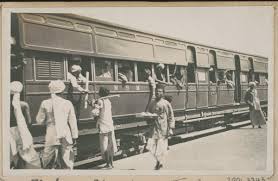
Trains in Malaya

“My uncle was conceived during this journey. They halted in Singapore for only two or three weeks. My grandfather’s cousin was in Perak[2], in Malaya. So, he wanted to be with his cousin. His cousin had cattle. Most of the Sikhs were cattle farmers. They settled in Pahang[3], an area which eventually became a nuclear dump[4] for Australia. It is closed to public now. There was a stone that proclaimed the land was a nuclear dump when I went with my son a few years ago.

“My father moved to Singapore as his prospects were better here as a boxer. This is where he met my mother. I was born here. He actually met mum because my mother’s two brothers had invited her to come from Glasgow. My mother is Scottish, from an industrial background. Her brothers came to the Far East to make money.  She finished her school leaving exams and came to visit her brothers during her vacation. She would go with her bothers to watch boxing, where she saw my father, the champ. She was only fifteen or sixteen. The next thing the brothers knew was she was pregnant with me.”

Jeswant Singh was popular with colonials. Kirpal Singh tells us: “Some Europeans saw him box and offered him a job then in the Base Ordinance Depot. This was the British Military camps in the Far East. There were three bases in Singapore: the naval base, Kranji and one in the South. He worked there for thirty years and retired after that. In 1972[5], after the final British withdrawal from Singapore, dad’s formal employment status ended. After that he just did odd jobs, ending up as a security guard, looking after the factories in Jurong, earning about two to three hundred dollars a month.”

Kirpal Singh spent his childhood with his grandmother and uncle. Before he started schooling, his father left him with his grandmother and divorced his mother in favour of a new bride. Dr Singh tells us the story of how he returned to Singapore: “I was basically in Perak with my grandmother. My uncle, who was the first Sikh to become a Christian in Southeast Asia, left home because his father gave him a beating for changing his religion. My uncle was an Anglican. His conversion saved him from the Great Depression as the clergy was very well looked after. From 1929 to 1933, the church looked after him because he was the priest in Seramban. My father was still young. My uncle was born in 1911 and my dad in 1923. My grandmother bore eighteen children. Five of the infants passed away before they were one month old. But thirteen survived. She passed away at 95… I knew when I left for my doctorate programme in Adelaide that that was the last time I would see her. I had a hunch and was crying on the plane. Six weeks later, I got a letter with the news of her death.”

He adds: “Dad was in not in a position to look after me. The responsibility fell on his brother William. His full name was William Massa Singh s/o Deva Singh. He had studied at the Ipoh Chinese school, topped the school, eventually worked as an insurance agent. He was very good in English. The principal of his school, a New Zealander, arranged for my uncle to move to Singapore. Then my father moved there too. Singapore was the metropolis even then. It was the centre of English education. Penang was the other one. In 1956, I was sent to Singapore from Perak on a train — a one-and-a-half-day journey to my uncle.”

His grandmother joined them within a few months as his uncle was, he says, “more interested in aiding Lee Kuan Yew get rid of the colonials. Lee Kuan Yew was a self-made man. He met Goh Keng Swee[6] and Rajaratnam[7] as students in England. They became buddies and wanted to move out of colonial rule and be independent.”

Then, how did a young child survive? Dr Singh tells us: “I used to earn my pocket money from age five six by watering gardens. I have had very interesting experiences. When I was in primary two, I used to give tuition to primary one students. With enough gumption, you can survive in this world.”

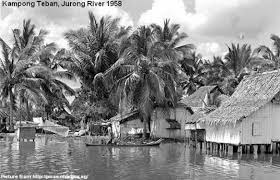
“I grew up with my uncle’s wards, who were brought home to be educated. There was even one who was a Chinese-Japanese mix. So, I grew up being familiar cross-cultural marriages and in a multicultural home. I grew up in the kampong with a Chinese boy and we became friends from the age of seven-and-a-half when we were in primary two. His name is Tan Jwee Song — I call him Jwee, ‘my good saint’.  He told me after O-levels he would support me to study further and took to teaching. At that time, you could become a teacher after completing your O level. I joined Raffles late during my time in high school because it was too expensive for me. I taught in night classes started by Lee Kuan Yew and studied. I owed Jwee $80,000 dollars and I wanted to pay his widow back — but she would not accept it. When I graduated in 1973 with an honours’ degree, I was $44 thousand in debt. Then, I was given a scholarship.”

And slowly, Kirpal Singh came to his own. When television came into being, he tells us: “I was often on TV in 1970s — days of early television — debates and interviews as a guest.” Kirpal Singh grew into an intellectual of repute as he worked and studied with the support of the many races and many people who, often like him, were migrants to Singapore.

As time moves forward, these stories — that are almost as natural as the sand, the wind and the sea — ask to be caught in words and stored for posterity, stories from life that show how narrow borders drawn by human constructs cannot come in the way of those with ‘gumption’.

(Written by Mitali Chakravarty based on a face to face conversation with Kirpal Singh. Published with permission of Kirpal Singh)

[1] https://www.roots.gov.sg/stories-landing/stories/david-marshall/story

[2] Now in Malaysia

[3] Now in Malaysia

[4] https://buletinonlines.net/v7/index.php/lynas-radioactive-waste-to-be-dumped-in-pahang-tax-free-while-australia-gets-a18-million-in-taxes-2/

[5] The British armed forces were scheduled to withdraw from Singapore by 1971. https://eresources.nlb.gov.sg/infopedia/articles/SIP_1001_2009-02-10.html#:~:text=On%2018%20July%201967%2C%20Britain,Singapore%27s%20defence%20and%20economic%20security.

[6] Deputy Prime Minister of Singapore, 1973-1980, one of the founding members of the ruling PAP (People’s Action Party) https://www.roots.gov.sg/stories-landing/stories/goh-keng-swee/story

[7] Deputy Prime Minister of Singapore from 1980 to 1985, one of the founding members of the ruling PAP https://www.roots.gov.sg/stories-landing/stories/sinnathamby-rajaratnam/story

PLEASE NOTE: ARTICLES CAN ONLY BE REPRODUCED IN OTHER SITES WITH DUE ACKNOWLEDGEMENT TO BORDERLESS JOURNAL. 

Click here to access the Borderless anthology, Monalisa No Longer Smiles

Click here to access Monalisa No Longer Smiles on Kindle Amazon Internation
 

Categories
Interview Review

Festivities Celebrating Loneliness: The World of Isa Kamari

An introduction and a conversation with Isa Kamari, a celebrated Singaporean writer

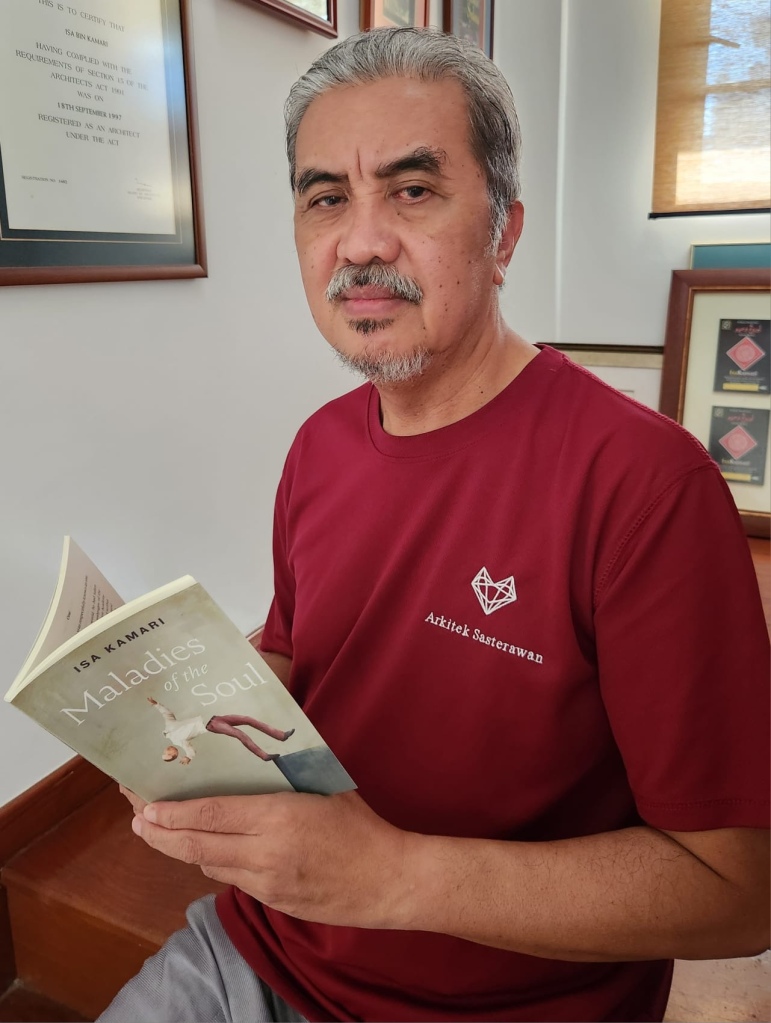
Isa Kamari

Isa Kamari is a well-known face in the Singapore literary community. He has won numerous awards — the Anugerah Sastera Mastera, the SEA Write Award and the Singapore Cultural Medallion, the Anugerah Tun Seri Lanang. He has been part of university curriculums and has written for the television. With 11 novels, nine of which have been translated from Malay to English — and some into more languages like Arabic, Mandarin, Urdu and Turkish, French, Russian Spanish — three poetry books, plays and one novella written in English by him, one can well see him as a leading voice in literature on this island that seems to have grown into a gateway for all Asia.

Kamari’s writings dip into his own culture to integrate with the larger world. The most remarkable thing about his works, for me has been the way in which he has brought the history of Singapore from the Malay perspective into novels and made it available for all readers. The most memorable of these actually gives the history of the time around which the Treaty of Singapore was signed between the British and the indigenous ruler in 1819, handing over the port to Raffles, the treaty that was crucial to the founding of modern Singapore. The novel is named after the year of the treaty.

Other novels like Song of the Wind , Rawa and Tweet — all bring into perspective how the local Orang Seletar integrated into the skyscrapers of Singapore. We can see in his writings how the indigenous moved to be integrated into a larger whole of a multi-racial, multi-religious accepting modern city. One of his novels, One Earth (1999), is like an interim almost, set during the Japanese occupation in Singapore. The narrative dwells on the intermingling of races in the island historically. Kiswah and Intercession are novels that cry out for reforms on the religious front.

He also has novels that delve into individual journeys to glance into the maladies of the modern-day world. Whether it is faith, or career, he brings into focus the need to heal. Recently, Kamari has brought out a book of short stories, Maladies of the Soul, to focus on just this. His fifteen short stories centre around the issue mentioned in the title. In the first ten stories, he writes of old age, of mental stress, of compromises made to achieve success, of anxieties just as the title suggests. These are internal conflicts of people in a country where most have enough to eat, a house to live in and access to education for their offsprings. Then in the last five stories, he moves towards not just showcasing such maladies but also resolving, using narratives that are almost surrealistic, or poetic. They are not happy but reflective with the ability to make one think, look for a resolution. They are discomfiting narratives.

One of the last stories is given from the perspective of a silkworm — a powerful comment on the need for freedom to survive. Another has the iconic Singapore Merlion emote to an extent. The writing escapes the flaw of being didactic by its sheer inventiveness. One is reminded that this is a book by an author from a city-state which has resolved problems like poverty to a large extent. That the journey was arduous and full of struggle can be seen in Kamari’s earlier novels. But now, that people have enough to eat and live by, he takes the next step that is necessary. His stories demand not just being familiar with the issues they faced in the past, but also suggest a movement towards resolving the social problems that in a developed country can warp individuals to make them non-functional and make the society lose its suppleness to adapt and progress.

One of the stories like his earlier novel, The Tower, reflects the climb of a careerist, an architect, up a tower he has built, while recalling the compromises made. The interesting thing is the conclusions have a similar impact. And then, there is yet another story that is almost Kafkaesque in its execution, where a man turns into a bull — a comment on stock trading or people’s obsession with money and to compete?

The book needs to be read sequentially to get the full impact of his message. For, he is a writer with a message, a message that hopes to heal the world by integrating the spiritual with modernisation. In this conversation, he discusses his new book and his journey as a writer.

What makes you write? What moves you to write? Why do you write?

I need to be disturbed by events, issues and thoughts before thinking of writing anything. I would then ponder and research on the topics at hand. Only when I have my own tentative resolution of the conflicting elements, I would begin to write. Most often, my views and positions will change as I write further. In that sense writing is a form of discovery and therapy for me.

Tweet in Spanish

Do you see yourself as a bi-lingual writer or a Malay writer experimenting in English? You had written your novella, Tweet, in English. Later it was translated to more languages. How many languages have you been translated into? Do you feel the translations convey your text well into the other language?

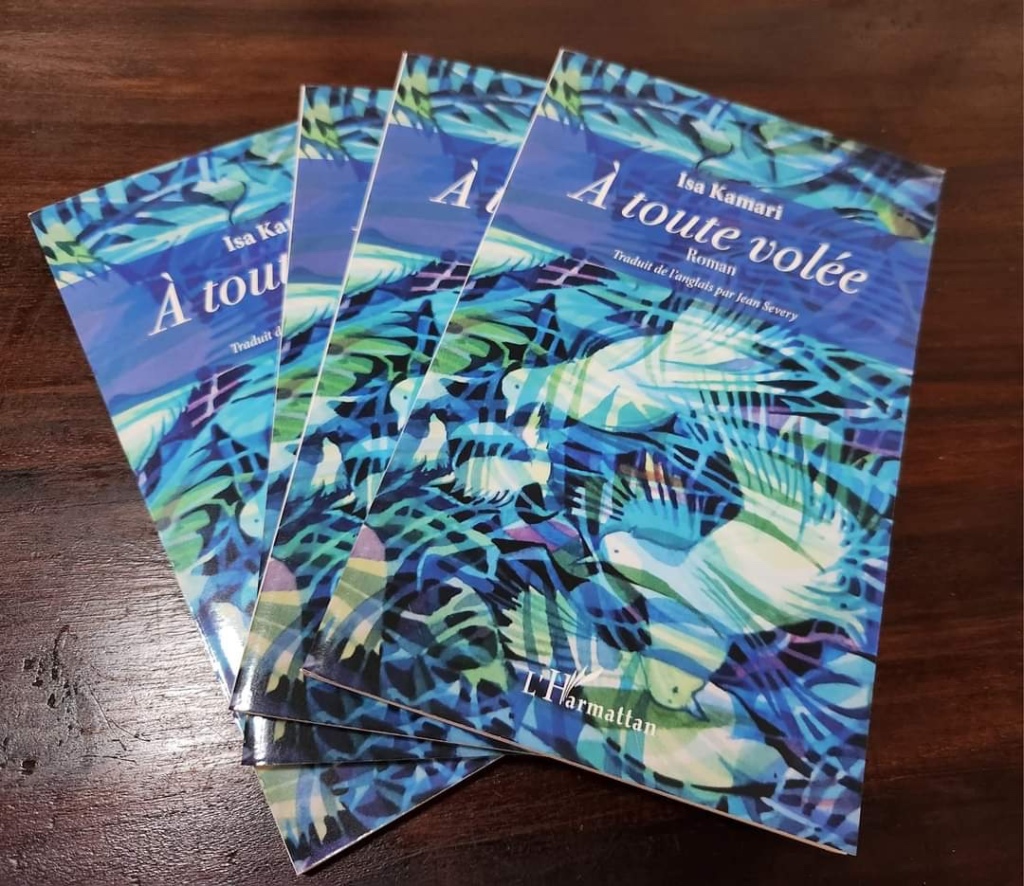
Culturally, I think in Malay. English is a language of instruction for me. When I attempt to translate my Malay works into English, the writing sounds and feels Malay. Tweet is a result of a challenge I imposed upon myself to write creatively in English. The result is not bad. Tweet has been translated into Malay, Arabic, Russian, French, Spanish, Azerbaijan and Korean. I wouldn’t know how well the novella has been translated because I do not know those languages. I trust the translators whom I choose carefully.

The stories of Maladies of the Soul first appeared in Malay. Now in English. Did you translate them yourself, being a bi-lingual writer? Tell us your experience as a translator of the stories. Did you come across any hurdles while switching the language? What would you say is the difference in the Malay and English renditions?

Yes, I translated all the stories in the book. I had to overcome my own fear that the stories might end up too Malay in expression and feel. But I told myself to be true to my own voice and not be inhibited by language structure and convention. I would not know exactly the difference between the two renditions. I was just interested to tell the stories.

Is this your first venture into a full-length short story book? Tell us how novels and short stories vary as a genres in your work. How do you use the different genre to convey? Is there a difference in your premise while doing either?

I have produced just one collection of short stories. In each of the short stories, I had to be focussed on expressing concepts and philosophies on a single problem of the human condition. In my novels the concepts and philosophies are varied, expanded, more complex and layered but yet interrelated and weaved around dynamic human experiences facing common predicaments or challenges of an era.

One of the things I noticed about the book was that the stories would convey your premise better if read in order. Is that intentionally done or is it a random occurrence?

The short stories can be weaved into a novel. There is a central spine, which is my observation and philosophy of life which bind them all. The intrinsic sequence or order is not intentional, but perhaps it is the psychological thread and latent articulation of the storyteller.

Some of the stories seem to have echoes in your novels, like Kiswah and Intercession, both of which deal with crises in faith. Did your earlier novels have a direct bearing on your short stories?

I used to transform my poems into short stories, and from those write novels. The genres are just tools for me to express my thoughts and feelings. I use whatever works. I have even experimented on weaving short stories and poems in a novel. I wanted to create prose that are poetic, and poems that are capable of conveying a narrative. My latest novel, The Throne, is a result of this experiment.

Some of your stories touch on the metaphorical, especially the last five. Some of the earlier ones describe unusual or even the absurd situations we face in life. As a conglomerate, they explore darker areas of the human psyche, unlike your novels which were in certain senses more hopeful, especially Tweet. What has changed to bring the darker shades into your writing? Please elaborate.

The stories in Maladies of the Soul have a common theme of alienation in various facets and dimensions of life. As such the expected feeling after reading them is that of gloom and hopelessness. That is intentional as a revelation of the deeper and hidden fallacy of modern life that appears organised and bright on the surface. I wanted my readers to be shaken or at least moved to ponder and reflect on our current, shallow and fractured human condition. There is a better life if we were to look the other way and be more mindful and caring of each other and our environment.

I still recall a phrase from your novel, The Tower, “Festivities celebrating loneliness”. Would you say your short stories have moved towards that?

Exactly.

Why did you choose short stories over giving us a longer narrative like a novel?

It is like giving my readers bite sizes of my exploration and philosophy of life. I leave it to the readers to weave the stories into a whole, and reflect upon their own experiences, thoughts and feelings, perhaps in a more integrated and holistic manner.

What are the influences on your writing?

Life itself. Like I mentioned earlier I do not write in a vacuum. I engage life in my writing as a way of validating my ever-changing existence. I want my life and writing to be authentic and significant. Hopefully, meaningful to others too.

What can your readers look forward from you next?

I have just completed a draft of a novel in Malay, Firasat. As in all my novels, I offer a window towards healing by embracing a rejuvenated Malay philosophy called firasat which is an intuitive, integrated, balanced, lucid, harmonious and holistic way of life.

Thank you for sharing your time and your writings with us.

(The online interview has been conducted by emails by Mitali Chakravarty)

PLEASE NOTE: ARTICLES CAN ONLY BE REPRODUCED IN OTHER SITES WITH DUE ACKNOWLEDGEMENT TO BORDERLESS JOURNAL. 

Click here to access the Borderless anthology, Monalisa No Longer Smiles

Click here to access Monalisa No Longer Smiles on Kindle Amazon International