Categories
The Lost Mantras

A Song of the Wind & Other Poems by Isa Kamari

A SONG OF THE WIND 

I surrender my body and soul
to smoke, steam, and mist,
which I gather with one last fibre of strength.
Listen to this lonesome song,
for the sun is envious of my existence.
This life yearns for separation;
frailty is only human.
Ballads after ballads you would know.
An honest young man is always chided for his age.
The unending love of parents
sometimes makes them act as dictators.
If you feel life as silkworms
dreaming of freedom,
just remember your wings have broken
the moment you willingly accept
the smoothness of silk.
If the clouds are too heavy
for the roof of your home,
call the wind, summon the earth.
Then you would taste the sweetness of charity.
But remember,
a barren land sometimes is best left barren,
for art also seeks justice.
Proclaim, but do not claim,
for your worth is still in a balance.
As life is a bountiful gift,
be discreet in giving alms,
but you must be brave to challenge,
although it means
you have to burn a piece of love letter.
For God is closer than your jugular vein.
I come to you from a dusty journey
where I gather smiles from smoke, steam, and mist.
Listen to this lonesome song for a while,
for I am envious of the ensuing dusk.

MOTHER

Oh, Allah,
I know of your Love
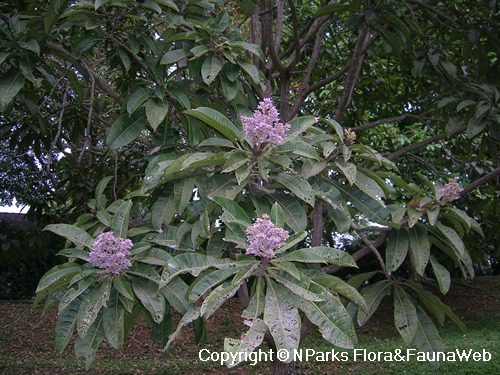
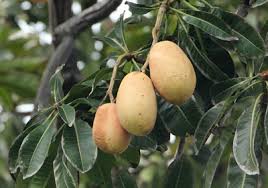
from the binjai which she craved for—
a slice from the only fruit plucked by a neighbour.
I know of your Mercy
from the warmth of the womb that protects a soul,
a frail presence in want of a mouthful of rice mixed
with soy sauce and fried fish,
under the thick foliage of the tree of Time,
offering shade to the unfolding age.
The moment she left to meet You,
the tree of Hope fell;
the kingdom of the Hereafter shook in my soul.
Parting will ultimately lead to meeting again.
Only to You I surrender,
begging for your love for Mother—
a straight path tracing her footsteps;
asking for your mercy for Mother—
which overrides your wrath over my life astray;
seeking your gentle affection,
as warm as Mother’s fingers.

TWEET

The chirping has escaped the cage.
The chirping is free; the trap is empty.
The chirping is returned and received.
The chirping is delirious on the rotten branch.
Your tail searches for the nest,
Your claws clench the twigs,
Your wings sift the wind,
Your beak catches the worm,
Your eyes survey the rainbow.
Hey you, the bird which has escaped!
Hey you, the bird which is free!
You bring along the cage in your flight.
The trap awaits your return.
If your tail is not guided by faith,
If your claws are not holding on to good deeds,
If your wings are not spreading grace,
If your beak is not chirping gratitude,
If your eyes are not seeking redemption—
Your song is a caged cry,
Your tweet is a prisoned anguish.
The resplendent feathers that you show off
are hiding a sadness as wide as the sky.

THE TRAIN

The door will close.
If religion is the track,
it does not determine
the path and destination for commuters.
They board and alight at different stations,
not the one, not the only one, not the same always.
Religion is like a map;
it does not make life boring,
does not block a journey,
shows the path anywhere you go,
not the one, not the only one, not the same always.
We are not carriages
that do not have choices.
Just make sure the meandering path is fun and secure,
the last stop safe and peaceful.
The door will close.
The One awaits there,
wherever it is.
The inside of a binjai mango. From Public Domain

Isa Kamari has written 12 novels, 3 collections of poetry, a collection of short stories, a book of essays on Singapore Malay poetry, a collection of theatre scripts and lyrics of 3 music albums, all in Malay. His novels have been translated into English, Turkish, Urdu, Arabic, Indonesian, Jawi, Russian, French, Spanish, Korean, Azerbaijan and Mandarin. Several of his essays and selected poems have been translated into English. Isa was conferred the S.E.A Write Award from Thailand (2006), the Singapore Cultural Medallion (2007), the Anugerah Tun Seri Lanang (2009) from the Singapore Malay Language Council, and the Mastera Literary Award (2018) from Brunei Darussalam.

He obtained a BArch (Hons) from the National University of Singapore in 1989, an MPhil (Malay Letters) from Universiti Kebangsaan Malaysia in 2008 and is currently pursuing a PhD programme at the Academy of Islamic Studies, Univeristi Malaya. His area of research is on the problem of alienation and the practice of firasat (spiritual intuition) in selected Singapore Malay novels.

The Lost Mantras is a collection that blends spirituality, Malay cultural heritage, and universal human experience. First published as part of Menyap Cinta (Love Greetings, 2022, Nuha Books KL), these poems are like a bridge between mysticism and everyday life, where traditional images (betel, jasmine, kris[1], oil lamps, setanjak[2]) are woven with Qur’anic echoes, prayers, and existential questioning. The collection carries a Sufi resonance—always circling back to longing, humility, surrender, and beauty as signs of God. The poems are not only lyrical but also function as cultural memory: they preserve Malay traditions, communal practices, and village life, while situating them in a cosmic framework of faith, sin, and redemption. The use of Malay customs, rituals, and objects is powerful: it asserts that spirituality is not abstract but embedded in heritage. This makes the collection uniquely Southeast Asian despite its universal in appeal.

[1]A dagger

[2] Malay headgear

PLEASE NOTE: ARTICLES CAN ONLY BE REPRODUCED IN OTHER SITES WITH DUE ACKNOWLEDGEMENT TO BORDERLESS JOURNAL

Click here to access the Borderless anthology, Monalisa No Longer Smiles

Click here to access Monalisa No Longer Smiles on Kindle Amazon International
Categories
Musings

Quiet Flows the Gomti: A Monument of Tranquility 

By Prithvijeet Sinha

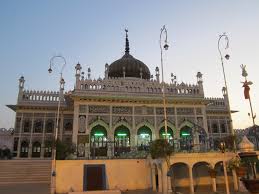
Chota Imambara. from Public Domain

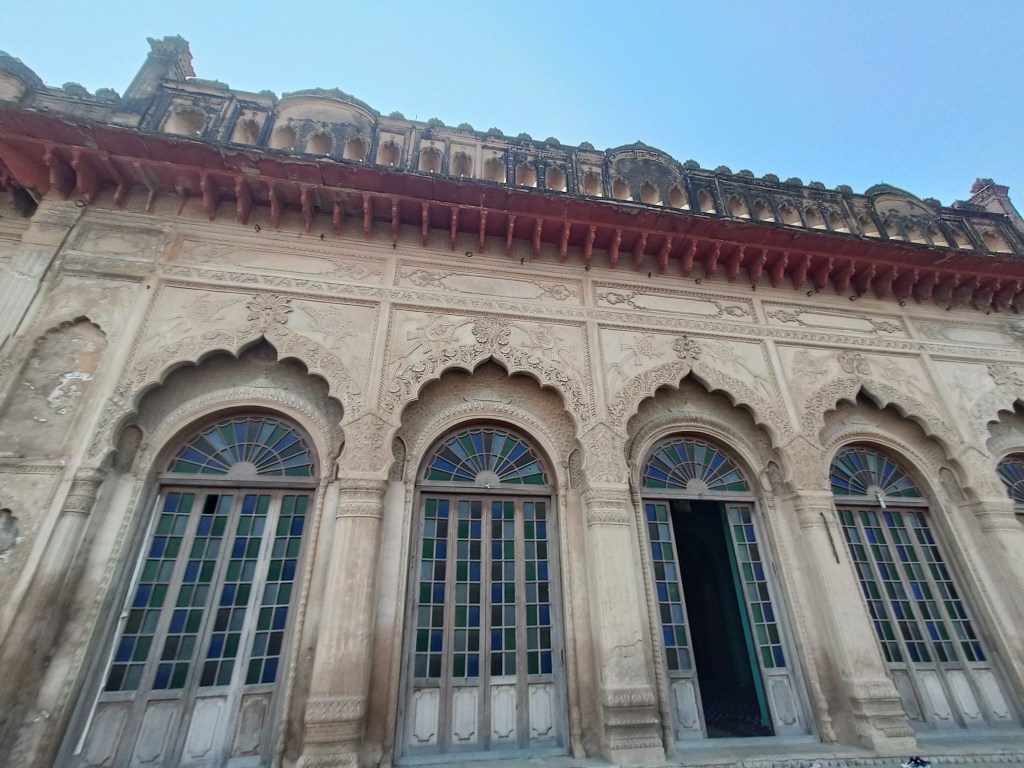
A land known and globally recognised for its mannerisms, poetry and an old-world graciousness that never seem to be at odds with the churning that defines our supercilious modern lives, Lucknow is exuberant and mildly attuned to the speed of hurtling motions. Amidst its chaotic hustle of life, the Chota Imambara is like a syncretic island of serenity in the tumult that thrives around it.

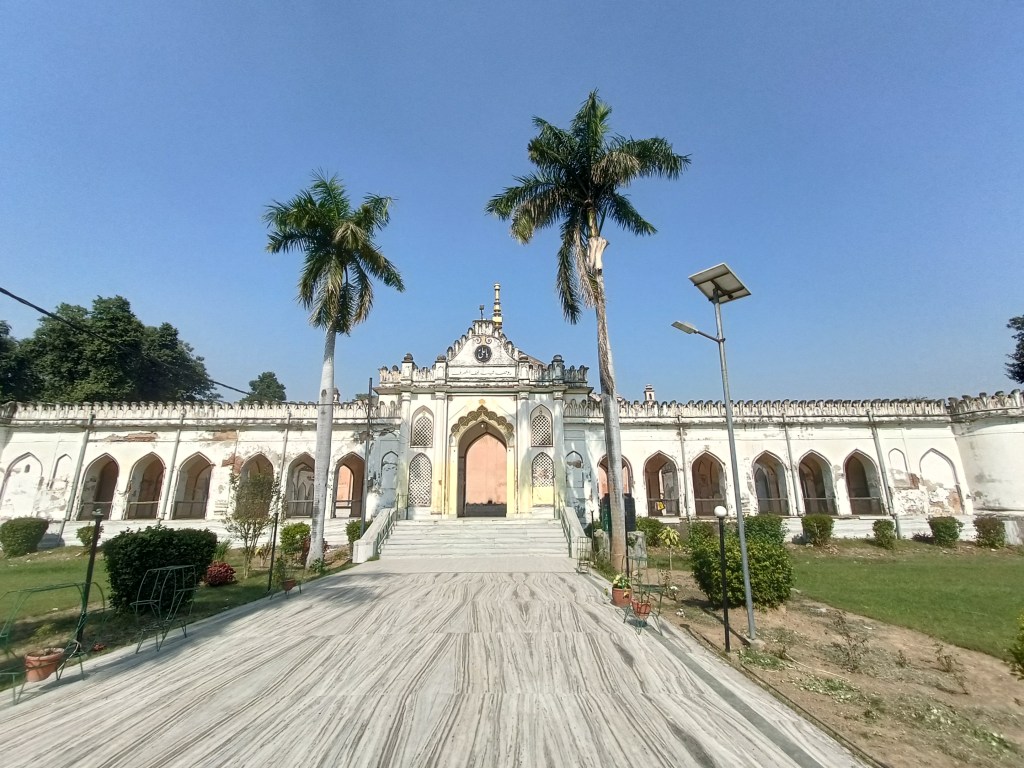
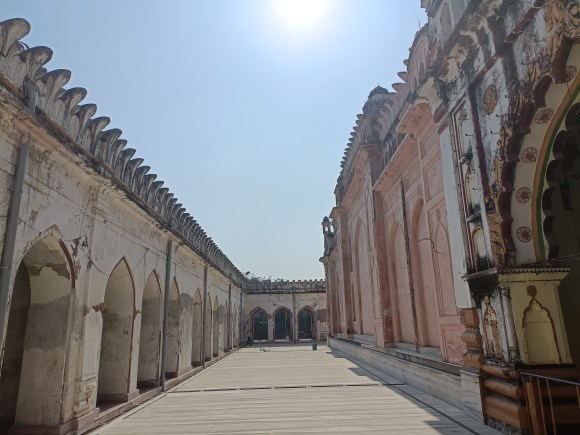
Built by Mohammad Ali Shah[1] around 1838 as a religious congregation site, it is both a mausoleum and a monument. This spirited inter-dependence often springs forth from Lucknow’s erstwhile Nawabi realm as in the Chota Imambara. But above all, it offers a tranquility that verges on the sublime, in no small part because of its architecture. A mere five minute walk from the inimitable Bara Imambara, it is adorned with Quranic verses in impeccable calligraphy on its outer walls. Sunlight beams through its surface against the silvery backdrop like a revelation to the senses; the eyes trained to its humble beauty are no less transfixed by it than the other sites on its way, the historic expanse of the Hussainabad corridor converging in this final corner. The historic Hussainabad corridor is the crown of Lucknow as it’s suffused with natural beauty that is visible and transcendent. The cobble stone roads, erstwhile havelis (mansions), gateways, a picture gallery, the iconic Clock tower and bridges with characteristic craftsmanship, Teele Wali Masjid (the iconic mosque on a hill) and ancient temples invite instant awe, a continuum for those who dwell within the city to avidly become guides for the uninitiated.

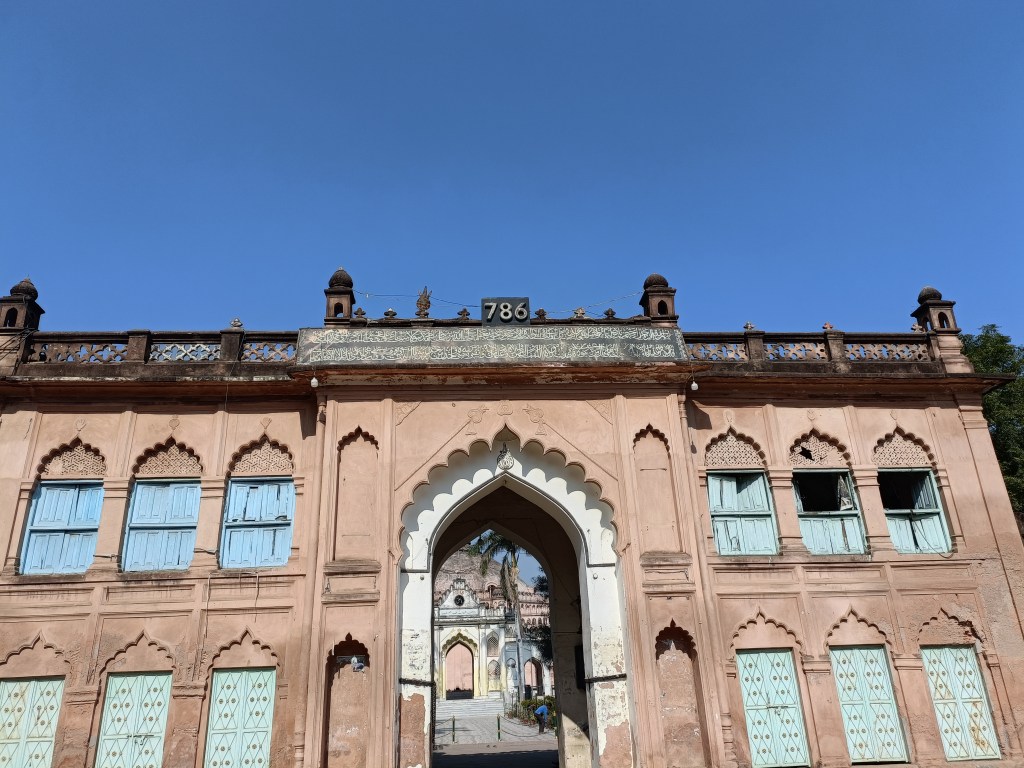
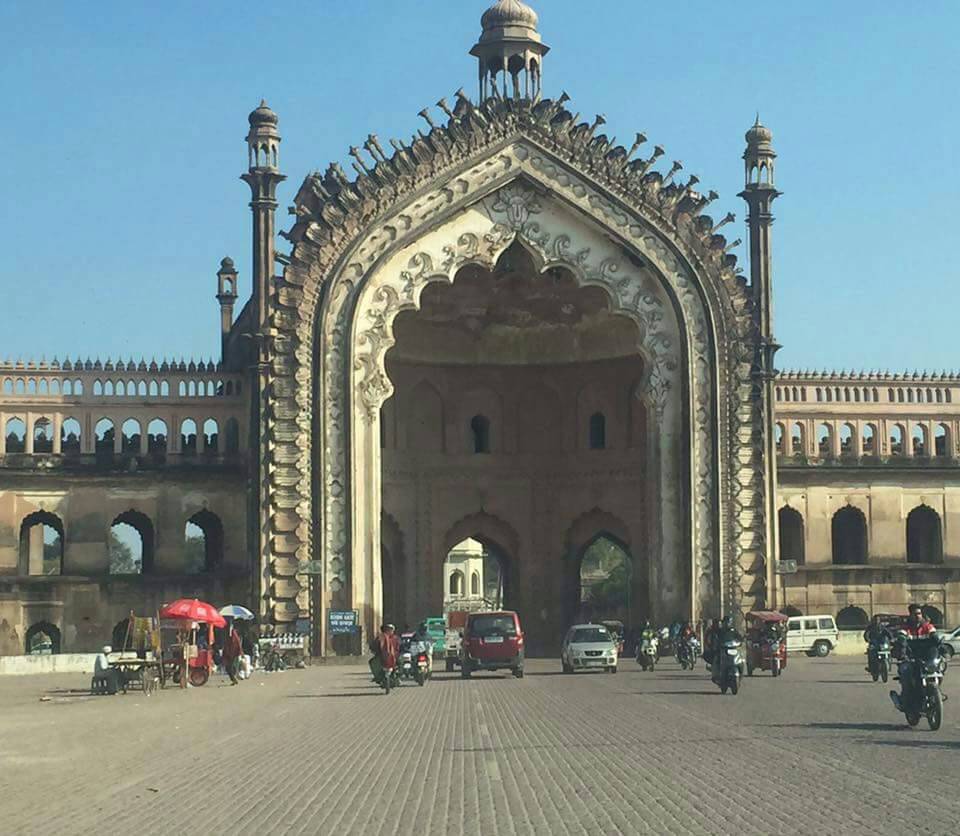
When you look at this mausoleum in the afternoon shaded by the sun, the turrets and intricate design of its gateway welcome you first as if receiving a weary traveller, offering him reprieve from the heat and the crowds that have preceded his journey to the Bara Imambara and Rumi Gate, the legendary doorway that is a sight for sore eyes. There’s a beauty to the colour of the Chota Imambara’s gateway, the golden anemometer(a geographical instrument used to indicate the wind’s direction) in the shape of the fish and an Anglicised statue in the middle of this compound that’s startling and comforting. Then there are the pond and the fountains further ahead. Something about the water, especially shimmering during hot summer days, already prepares one for the holy glint there is in the entire structure or in the Taj Mahal styled miniatures on both sides, one of which bears Muhammad Ali Shah’s beloved daughter Asiya Begum’s tomb. The symmetry of the place hence doesn’t overwhelm but is subdued in subtle colours and muted moods of light and shadows.

*

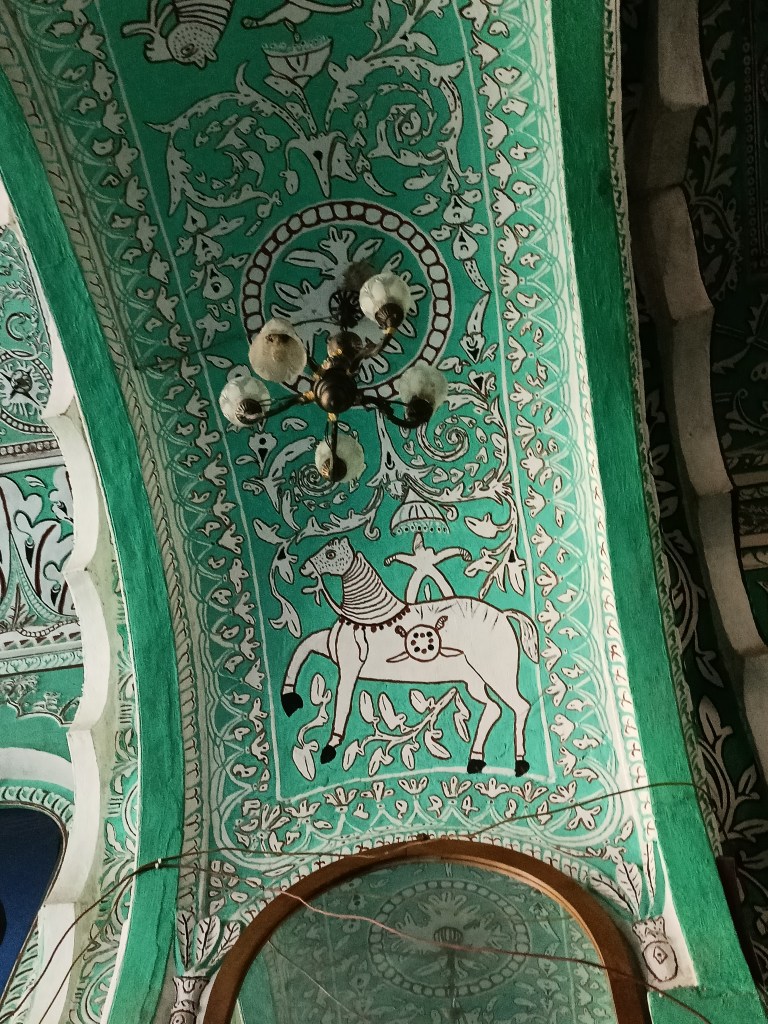
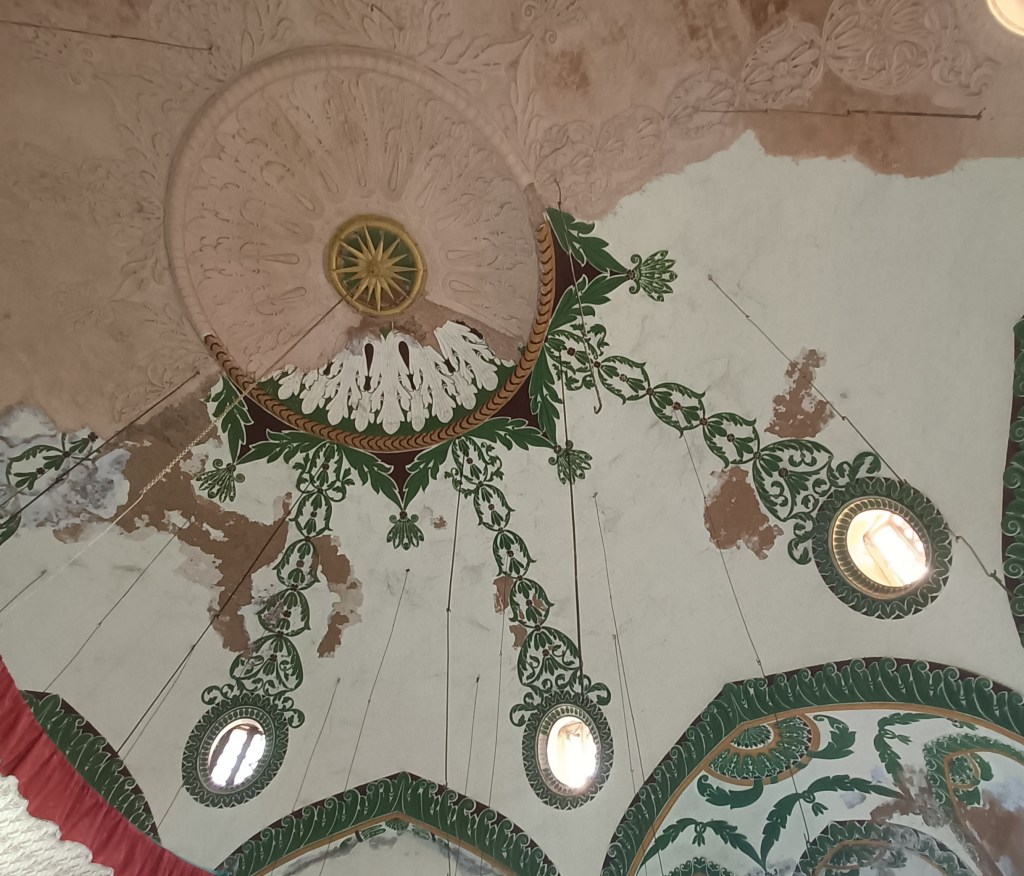
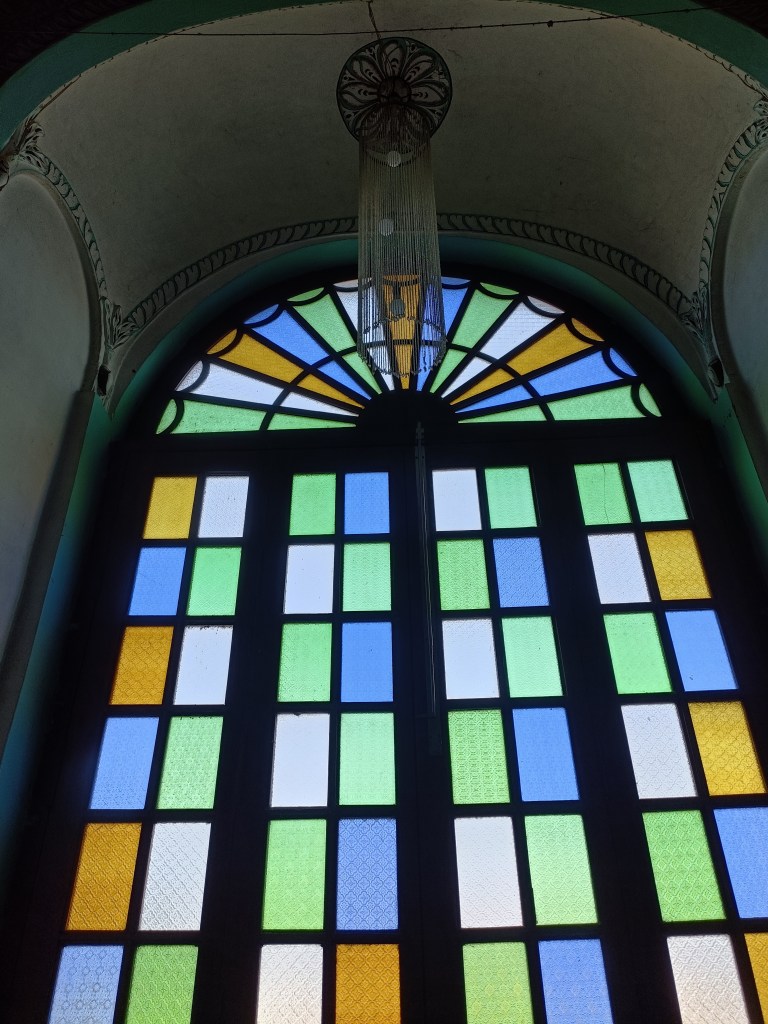
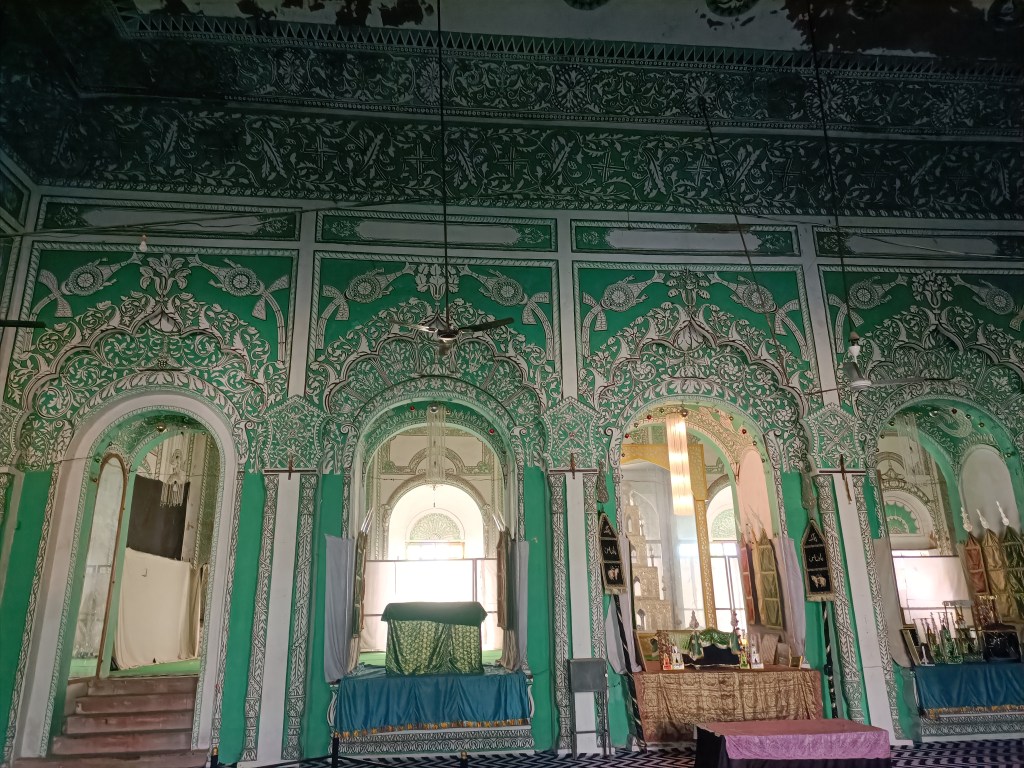
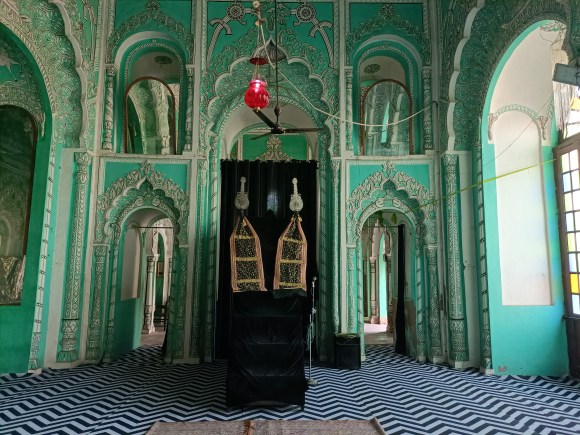
It’s the inner part of the Imambara that is a burst of red, green, yellow, blue and white, their variations dazzling and sensuous on account of the distinctive placement of Belgian chandeliers and tazias (religious processional items of great significance especially during Muharram). Both attest to a paradox- of luxury and faith coalescing. Both come draped in these bold colour schemes that delight the onlooker who soon beholds them. There’s also a throne and mirrors in this hall — indicating a rich past and illusions of grandeur that have now become mists, the air filled with memories yet redolent of individual stakes.

*

In essence, the Chhota Imambara maintains its privacy at the further end of Lucknow and when looking at its almost moon-like silver glow, the promise of Sham-e- Awadh ( fabled evenings of the city) gets more romanticised. These evenings where food, cultural activities, long walks and conversations with animated strangers and friends alike take centre stage  diffuse its historic community where boundaries of faith and personal beliefs blur into a beautiful embroidered fabric.

 The Chhota Imambara’s peculiarity is that despite so many elements to its structure including a hamam (bath) in the outer realm, there’s a simplicity to it all. Nothing screams out for attention. Each aspect invites individual perspectives shorn of tacky symbolism or a mishmash of styles. Every colour, every inch ultimately soothes.

It’s all about the aesthetics of grace and charm which is particularly unique to Lucknow. At the end of the day, there’s no humungous historical backstory behind Chhota Imambara or a grave precedent to its place in the Awadhi pantheon, Awadhi relating to both the region within which Lucknow stands and which it shapes ceaselessly into joyful forms. But it has always been here, rescuing itself from elusive murmurs and forgetfulness daily. Yet never adhering to overexposure. That is its greatest gift to the city and its loyal custodians.

Every visitor is a beholder here and his spirit becomes as free and unburdened like the pigeons finding home in this structure’s spires and dome, a picture of harmony.

[1] Nasser-ud-daula Mu’in ad-Din Muhammad Ali Shah(1774 –1842), was the ruler of Awadh, the former name of Lucknow.

Prithvijeet Sinha  is an MPhil from the University of Lucknow, having launched his prolific writing career by self-publishing on the worldwide community Wattpad since 2015 and on his WordPress blog An Awadh Boy’s Panorama. Besides that, his works have been published in several journals and anthologies. 

PLEASE NOTE: ARTICLES CAN ONLY BE REPRODUCED IN OTHER SITES WITH DUE ACKNOWLEDGEMENT TO BORDERLESS JOURNAL

Click here to access the Borderless anthology, Monalisa No Longer Smiles

Click here to access Monalisa No Longer Smiles on Kindle Amazon International