Categories
Conversation

Peregrinations of a Diplomat’s Wife

Ratnottama Sengupta converses with Reba Som

Reba Som

“If Washington goes to Dhaka, there’s a chance that Paris might make it to Stockholm. And of course Moscow would be moved to Geneva!?”

Sounds like gibberish? But this is a piece of the speculative conversation on transfers and postings that is regular in the drawing rooms of embassies and consulates, Dr Reba Som found out on her very first posting after her marriage with Himachal Som.

Both were Presidency graduates pursuing higher careers — he in Foreign Service, she on the threshold of a doctorate. But life as the wife of an ambassador wasn’t only about glamour postings, fancy holidays and brush with celebrities. It was a mixed bag of blessings, as the woman who had grown up in Kolkata with a grounding in Tagore’s music would soon conclude. For, there were the dark clouds of life away from ageing parents and school going children; from the comfort of familiar food and mastered language; from developing your potential and crafting your own identity in the world out there.

In recent years we have read accounts of retired ambassadors and career diplomats’ experiences in diplomatic life. In her memoirs, Hop, Skip and Jump; Peregrinations of a Diplomat’s Wife, Dr Som’s is a woman’s voice, abounding in stories and observations about how the spouses keep a brave front in alien surroundings to hold up the best image of her country. In this conversation, she voices outmore about her encounters with racism, with political emergencies and exigencies. In short, about her lessons in a borderless world of multicoloured humanity.

You went to Brazil (1972), then to Denmark (1974), then Delhi (1976), Pakistan (1978), New York (1981), Dhaka (1984), then Ottawa (1991), Laos (1994), Italy (2002). Please share your gleanings from these lands.

The roller coaster ride was a saga of discovery. Travelling across expanses of the planet earth that we had seen only on the pages of geography books and atlases was a great learning experience. I gained an understanding of diverse cultures, imbibed social customs, became proficient in languages, and was exposed to exotic cuisines. At the same time I faced homesickness. Each posting entailed the challenge of uprooting oneself, finding schools for children, and reinventing oneself every time.

A large part of this life was in the years that had no mobile phones, no video calls, no social media, no internet communication. What did you thrive on?

Continents and hemispheres away from home, the only link with family and friends then was the diplomatic bag. The weekly mail service ferried across oceans by the ministry in Delhi contained letters and parcels from home. We were asked to judiciously use the weight allowed to bring spices, tea, condiments, clothing and other necessities. It became a ritual to write long letters and send them weekly by the diplomatic bag to Delhi from where they would be posted to respective destinations throughout India.

Along with letters would come bundles of magazines and newspapers. These brought us news of home from which we were truly cut off. With no television or internet or phone calls, we were in the dark about all news, be it political, social or entertainment. Every week on the bag day we waited anxiously to receive the newspapers – and the letters, which had instructions, news, recipes, advice, gossip. All of these were crucial for nurturing our souls.

One telegram from my father in 1973 carried the cryptic message: ‘Reba, solitary First class.’ These were the MA results of Calcutta University which were out after a delay of two years.

I was most taken up by the understated humour of some of your encounters in your memoir. Please recount some of them.

On our very first posting, to Brazil, not only our unaccompanied baggage but also our accompanied baggage did not arrive. Eventually when the lost luggage showed up, Himachal’s ceremonial bandhgala[1]was steeped brown — in the colour of the gur[2] my mother had lovingly packed in!

In Brazil, we found the people to be fun loving but too flamboyant. They made tall claims that their institutions were the biggest in the world. But reality often proved the claims to be hollow. Such was the Presidential bid to make the tallest flag pole in the world in Brazil’s new capital, Brasilia. A very tall flag mast was indeed built but the huge flag atop it was torn to shreds since the engineers had not factored in the wind speed at that height. Brazilians mirthfully called it the President’s erection!

And at Denmark. we were surprised by a sudden news of our posting to Mozambique. We had long realised that we were mere players on the chessboard of postings – we could be shunted off across continents at the whims of the powers that be. By the same token, a couple of phone calls by the newly arrived ambassador undid the mischief. We were happy to unpack and settle down again. The only guilt I felt was when I met the owner of Anthony Berg chocolates: I had in no time demolished the entire carton of chocolates he had sent as farewell gift!

You are among the few I know who have mothered in different continents. So how different is it to become a mother away from India?

I always felt that the best way to get to know certain nuances of a country’s cultural tradition was to have babies in them. My elder son, Vishnu was born in Copenhagen and Abhishek, the younger one, in New York — and my experiences each time couldn’t be more different.

In Copenhagen, a social democrat country, hospital visits for full term pregnant women were fixed on a certain day of the week. On the preceding day they had to collect their urine in a jerry can and present it for lab examination. I was confounded and not a little embarrassed to meet other mothers-to-be, swinging their jerry cans like designer bags without fail on the appointed day. I learnt only later that, from the urine examination doctors would note the condition of the placenta and not unnecessarily rush patients into childbirth with caesarean and surgical intervention!

In NY, on the day of my discharge, the hospital staff were highly excited because Elizabeth Taylor had come in for one of her facelifts. I could not forgive them their magnificent obsession when, along with a goodbye hamper, they wheeled in a bassinet with a different baby. On my protestation the nurse rudely shouted, “Can’t you read… the tag says Som Junior?” Shocked by the implication I said, I could not only read but also see! And it was not my child. While everyone was looking on in disbelief another nurse wheeled in my little one. The babies had their diapers changed and were put back in the wrong bassinet.

Years later, we discovered in an informal meeting with an American ambassador that Abhishek was indeed an American citizen. Because, at the time of the child’s birth Himachal was posted not to the embassy in Washington but to the consulate in New York. Only consulate children were given the privilege. This discovery, rechecked by State Department Records, gave our son the US passport. It was a windfall as Abhishek went on to graduate summa cum laude from a prestigious management school in the US and enter Wall Street as an investment banker.

I must also share another truth about birthing away from India. Before Vishnu’s birth, my parents had come to Copenhagen. When I was discharged from the hospital I received their care and being fed Ma’s cuisine was the best gift I could have. So, when phone calls came from hospital, followed by visits enquiring about my state of depression, I was totally confused. I realised how many mothers suffered from postpartum depression in a society bereft of nurturing family care.

How could you master languages as removed as Portuguese from Lao and Italian from Urdu? Is a flair for languages the key to this proficiency or the training imparted before each posting?

 I enjoy learning languages. My stint at learning French at Ramakrishna Mission Golpark stood me in good stead in grasping Portuguese in Brazil, French in Ottawa and Italian in Rome — all Latin languages. But there was also the hazard of mixing up some phrases and words, so similar yet so different! Like Bon Appetit in French and Bueno Appetito in Italian. Or Amor in Portuguese; amore in Italian and amour in French.

Sometimes though, I accidentally learnt how language travels. My mother had packed in many petticoats to match with my saris but without their cord. We went to a store that promised to hold all we need but all my sign language did not bring what I needed. “Phita is obviously not available here,” I told Himachal, preparing to leave. Suddenly the storekeeper perked up. ‘Fita, si senhora!” he said and produced bundles of cord.

In due time I found out that janala, kedara and chabi – Bengali for window, chair and keys – had travelled from India to become janela, cadeira and chavi.

What did Dhaka mean to one raised in West Bengal – per se the Ghoti-Bangal[3]divide, your roots  or the cultural side with Firoza Begum and Nazrul Geeti?

Dhaka was a great posting in so many ways. It was a hop, skip and jump away from my home town Kolkata, with the same language and culture and yet was a foreign posting with foreign allowances!

As you know, there’s a subtle cultural difference in East and West Bengal. Both speak Bengali but in East Bengal, it’s a colloquial rustic dialect while West Bengal speaks its refined cultural form. This formed the infamous ‘Ghoti-Bangal’ divide: Urban Calcuttans looked askance at their country cousins from the East.

The difference extended to the palate. East Bengalis flavoured their dishes with more chillies and West Bengalis, with a pinch of sugar. For the fish loving people, the two iconic symbols are Hilsa and Prawns, for East and West. Emotions soared high in Kolkata when the supporters of the football teams, East Bengal and Mohun Bagan, clashed, after intensely fought matches that spurred deadly arguments and bets.

Given this background, Himachal created a minor storm by announcing to his parents from Chinsurah, Hooghly in West Bengal that he would marry a girl whose parents were from Dhaka and Faridpur in East Bengal.  Ghoti-Bangal feud remained the subject of much friendly banter between Himachal and me until we were posted in Dhaka. There, in a diplomatic turnaround, Himachal played down his Ghoti background to announce that his mother’s family was from Chittagong and he was born in the principal’s bungalow in Daulatpur, Khulna, where his grandfather was posted.

To give a bit of Himachal’s family background: Dr Pramod Kumar Biswas, the first Indian doctorate in Agricultural Sciences from Hokkaido University in Japan, had settled in Dhaka as principal of the Agricultural College. His charming daughter Kana won the heart of Dr Rabindranath Som, a veterinarian who weathered the predictable Ghoti Bangal storm to win her hand in marriage. 

When my parents Jyotsnamay and Manashi Ray visited us, we couldn’t visit Patishwar in Rajshahi district, where my maternal grandfather Atul Sen had worked with Rabindranath Tagore before he was arrested for revolutionary activities with Anushilan Samiti, and exiled to Kutubdia, an isolated island in the Bay of Bengal. As a headmaster, he had given shelter to Jatirindranath Mukherji, popularly known as Bagha Jatin[4].

It was a breezy day when my octogenarian father revisited Faridpur Zilla School. The colonial bungalow had acquired a fresh coat of terracotta paint. Finding his way to the headmaster’s room, he announced with a lump in his throat that history had been rewritten, boundaries redefined and new national identities forged since 1923, the year he had matriculated.

The headmaster, delving through yellowing files, fished out the matriculation results for that year. My father’s face was that of an excited school boy impatient to show off his prowess: “Look at my maths marks! Oh yes, my English scores were a trifle lower than expected because I had a touch of fever, but look at Jasimuddin’s marks in English! Thank God, he passed it.” We looked around in hushed surprise. This isn’t The Jasimuddin, the beloved poet of Bangladesh? “But of course,” my father responded. “Jasim’s weakness in English was my strength!”

Dhaka was also personally fulfilling as my doctoral studies, which I had carried across three continents, found fruition at last! On another front, I met with success in gaining the confidence and blessings of Firoza Begum, the legendary exponent of Nazrul Geeti.

The songs of Kazi Nazrul Islam were a great favourite of my father. He often hummed those made famous by Firoza Begum. Since I had trained in Tagore songs from age five, I never aspired to master the distinctly different style of rendition. A chance encounter with the golden voice revived this desire. Firoza Begum bluntly refused. When I persisted, she wanted to hear me sing a few Tagore songs.

One morning I mounted three flights of steps, harmonium on my driver’s shoulder, to enter her flat with apprehension. At her bidding, I sang four songs of Tagore. She heard me without any comment, then she asked why I hadn’t been singing for Bangladesh television. My relief was palpable! I had passed her test.

Over the next two years, my weekly classes with her extended well beyond the music lessons to serious discussions on life itself and the meaning of religion. What began as a guru-shishya[5]relationship, transcended to deep friendship. She declined any remuneration and dearly wished that I should cut a disc. This wish of hers came true only when Debojyoti Mishra heard me and decided to record my Nazrul-songs for Times Music in 2016.

Food is perhaps the first face of culture. So please share with us some of your culinary adventures. Or should I say ‘fishy’ stories?

Adventures? I could talk about the chapli kebabs in Pakistan, or about putting samosas in Bake Sales. I could tell you about making rasgullas from powder milk. I could even tell you about our gardener in Laos who merrily collected every scorpion and caterpillar that came his way, “for snacks,” he told me. But let me focus on fish.

The very first party I hosted at home in Brazil led me to seek substitutes for Indian ingredients. Fish of course had to be on the menu, mustard fish at that. I had already learnt from the Brazilian ambassador in Delhi that surubim, being boneless, was the most suited for curries. So surubim it was for months until the day I had to go to the fishmongers – and found it was a monster of a whale!

In Pakistan, traversing the arid countryside of Sind, the train would stop at stations where fillets of pala were being shallow fried on large skillets. Savouring its delicate flavour we went into a discussion on the merits of pala versus hilsa. Both have a shiny silver body with thin bones, both swim upstream against current. The taste of hilsa steam-cooked in mustard sauce is a super delight in both Dhaka and Kolkata. There of course the discussions are on the merits of the hilsa from Padma and Ganga respectively.

In Laos I once called the plumber to ease the draining of the bathtub since the pipe had got clogged. He arrived with a live fish in a plastic bag and promptly emptied it into the pipe. It would eat through the slush as it travelled through the pipe, he assured me!

Post retirement, Himachal settled to honing his culinary skills. Cooking, which he had started in Ottawa, became his lasting hobby. He would shop for fish in C R Park or INA Market[6]. He would pore over cookbooks and plot innovative recipes. “Cooking,” he was quoted in Outlook magazine, “is art thought out with palate.” And his piece de resistance was the salmon baked whole.

Which was your most cherished, or striking, brush with celebrities in world history?

At one of the finest dinners in Copenhagen I found myself seated next to a countess. She invited me to visit her since she lived in the neighbourhood. The next day a liveried man arrived to escort us to an imposing manor house. We were welcomed with sherry and we had to select a card from a silver salver with the name of our partner for the dinner. I was escorted by a handsome young man who floored me when we exchanged names. He was the descendent of Count Leo Tolstoy!

Another memorable encounter was with a person straight out of the history books. I was strolling in a forested park outside Copenhagen. I noticed with a shock that I was looking into a glass topped coffin. The aristocratic face inside had an aquiline nose and a goatee that lent a refinement to the visage that still sported a faint smile. The starched lace collar was held in place by a jewelled button that showed impeccable taste. But the elegant hands tapered off to skeletal fingers, and the feet too had become skeletal.

The plaque at the bottom of the coffin informed us that this was James Hepburn, the Earl of Bothwell, with whom Mary, Queen of Scots had fallen in love. It was a fatal attraction since both were married. But soon her husband, Lord Darnley, the father of her son James, the future king of Scotland and England, was mysteriously burnt down in a manor, and Bothwell was granted a divorce. However, their marriage incensed Catholic Europe, so Mary gave herself up to buy the release of Bothwell, who fled to Denmark.

‘Whoever marries your mother is your father’: this dictum defines the acceptance of whatever political dispensation you are forced to live with, at home or abroad. So how did you cope with a turmoil like Emergency or antagonism in Islamabad? 

We had returned to Delhi in the midst of Emergency. We felt some relief to see trains running on time and punctuality being maintained in government offices. Corrupt officers were being hauled up and over-population being addressed. But the atmosphere was sombre and conversations hushed. The deep scar left by the Emergency saw Indira Gandhi being swept out of power the following year.

In Islamabad tension had mounted when I arrived over the imminent execution of Zulfiqar Ali Bhutto[7]. Our residence had become the favourite watering hole for Indian and international journalists who knew Himachal from his Delhi days. Animated discussions over drinks were followed by quick despatches typed out on my rickety typewriter. Unending speculations on the unfolding drama had kept us on tenterhooks. Then one morning in April 1979, the phone rang to say, “It’s done.” [8]

How did Italy change your life?

Italy was easily the best posting of my life in embassies, not only because of its rich history. There I found Italian artists painting inspired by Tagore’s lyrics, and singers like Francesca Cassio singing Alain Danielou’s translations. What made them take it on? The question led me to rediscover Tagore.

My singing of Rabindra Sangeet also found recognition in Rome. My first CD album was released there. I was in many concerts. It was so fulfilling when my translation of Tagore’s lyrics into English found appreciation. Tagore himself believed that his songs were ‘real songs’ with emotions that speak to all people. I began translation in earnest. And that led me to write Rabindranath Tagore: The Singer and his Song (Penguin 2009). The book, with my translation of 50 Tagore songs, was considered very useful to many performing artistes who could understand and represent Tagore better in their art forms.

Please tell us about growing up with Tagore.

Like many girls in Kolkata I began learning Rabindra Sangeet from the age of five. Over the years the songs grew on me. The unique lyrics conveying a gamut of emotions spoke to me when I was far away on postings abroad. I continued my practice of the music through the years and felt vindicated when I got the opportunity to perform to appreciative audiences abroad and back in India.

Why did you work on his songs rather than his poems or stories?

There’s something compelling about Tagore songs. Remember that Gitanjali, which won him the Nobel, was a collection of ‘Song Offerings.’ Songs had given Tagore the strength to ride over the tragedies that had beset his life. They not only helped him express his grief over the deaths and suicides in his family, they were also his mode of expressing his frustration over the political situation that obtained then. And he felt his songs would help others too. “You can forget me but not my songs,” he had written.

Did you ever feel the need to jazz up the songs for Western audiences?

Tagore’s songs are like the Ardhanariswar[9] – the lyrics and the music are inseparable. The copyright restrictions that prevailed after this death did not allow translations. And that was a handicap since his music cannot be appreciated without comprehending his lyrics which are an expression of his creative thoughts.

I would say his songs have near-perfect balance between evocative lyrics, matching melody and rhythmic structure. And the incredible variety of his musical oeuvre touches every emotion felt by any human soul, without jazzing up.

Tagore’s songs are the national anthem of India and Bangladesh, and have also inspired that of Sri Lanka. But will his internationalism hold up with the change of order indicated by the recent developments on the subcontinent?

Tagore was known to be anti-nationalistic. He believed no man-made divisions can keep people segregated. He did not agree with the Western concept of ‘nation,’ he was an internationalist who accepted the ideals of democracy – ‘aamra sabai raja[10], of gender equality – ‘aami naari, aami mohiyoshi[11]; indeed, in equality of humans. What he wrote in lucid Bengali suited every mood. Georges Clemenceau, who was the Prime Minister of France for a second time from 1917 to 1920, had turned to Gitanjali when he heard that World War I had broken out. Even today people can relate to what he wrote.

How did all the hop skip and jump shape the feminist within Reba Som?

The wives of Foreign Service officers are often seen as decorative extensions of their spouses. People only saw the glamour we enjoyed on postings abroad, not the heartbreaks and disappointments we battled. Despite their qualifications the wives were not allowed to work abroad. Instead they had to be perfect hostesses: clad in colourful Kanjeevarams they had to prepare mounds of samosas and gulab jamuns.

But there was little recognition, appreciation or compensation by the Ministry of External Affairs of all the hard work and struggle they put in. To settle down in different postings in rapid succession. To host representational parties where they had to conjure Indian delicacies with improvised ingredients. To raise disgruntled children on paltry allowances.

Once, as the Editor of our in-house magazine, I had floated a questionnaire to all the missions abroad asking about the changing perceptions of the Foreign Service wives. That had opened a Pandora’s Box. Eventually in response to our requests the Ministry relaxed service conditions and allowed the wives to work abroad if they had the professional qualifications and received the host country’s permission. This was a veritable coup!

My own act of rebellion was accepting the Directorship of the Tagore Centre ICCR Kolkata (2008-13) after we returned to Delhi on Himachal’s retirement. It became a challenge for me to try and get the Tagore Centre on the cultural map of Kolkata, proving to myself and my disbelieving family in Delhi that it was possible!

[1] Somewhat like a Chinese collared coat

[2] Molasses

[3] Ghoti – People from West Bengal state in India
Bangal – People from Bangladesh

[4] Bagha Jatin or Joyotinadranth Mukherjee (1879-1915) was a famous name in the Indian Independence struggle

[5] Teacher-student

[6] Markets in Delhi

[7] Zulfikar Ali Bhutto(1928-1979) was the fourth president of Pakistan and later he served as the Prime Minister too.

[8] Bhutto was executed on 4th April 1979

[9] Half man half woman

[10] We are all kings

[11] I am a woman, noble and great

Ratnottama Sengupta, formerly Arts Editor of  The Times of India, teaches mass communication and film appreciation, curates film festivals and art exhibitions, and translates and write books. She has been a member of CBFC, served on the National Film Awards jury and has herself won a National Award. 

.

PLEASE NOTE: ARTICLES CAN ONLY BE REPRODUCED IN OTHER SITES WITH DUE ACKNOWLEDGEMENT TO BORDERLESS JOURNAL

Click here to access the Borderless anthology, Monalisa No Longer Smiles

Click here to access Monalisa No Longer Smiles on Amazon International

Categories
Poetry

Nature Poems by George Freek

NIGHT AT WONDER LAKE 

Clouds like pillows
smother the moonlight,
as waves beat the shore,
as if it were a door
they’re unable to open.
Like a moving circus
the cosmos passes over my head,
and I still have no idea,
who I am,
or why I’m even here.


EVENING AT WEST LAKE 

The years pile up
like snow on the roof.
The moon looks trapped
like an insect
in the branches of a tree.
A dove beckons
to his unheeding mate.
I think he’s too late. 
In frustration the dove
abandons his tree,
as life moves on.
What will be, will be.

George Freek’s poetry has recently appeared in The Ottawa Arts Review, Acumen, The Lake, The Whimsical Poet, Triggerfish and Torrid Literature.

PLEASE NOTE: ARTICLES CAN ONLY BE REPRODUCED IN OTHER SITES WITH DUE ACKNOWLEDGEMENT TO BORDERLESS JOURNAL

Click here to access the Borderless anthology, Monalisa No Longer Smiles

Click here to access Monalisa No Longer Smiles on Kindle Amazon International

Categories
Essay

T.S Eliot’s The Waste Land: Finding Hope in Darkness

By Dan Meloche

One hundred years ago, T.S Eliot wrote ‘The Waste Land’ to find meaning in troubled times. As we wrestle with trouble in our own times, an examination of Eliot’s paean to chaos can prove instructive. Horrified by the return of war in Europe, disturbed by the looming threat of environmental collapse, and fatigued by over two years of a resilient pandemic, we crave relief and inklings of hope. In Eliot’s poem, relief does not come without tarrying with the darkness. In his 433-line poem, slivers of hope are crowded by the ubiquitous memento mori, the constant reminders of death. With his own hope compromised by a series of personal crises, Eliot’s fractured self mirrored a Europe fractured by the incomprehensibility of the millions sacrificed on European battlefields. To heal the fracturing, the poem represents a therapeutic exercise not only for the poet, but also a generation. After the questionably named Great War, cultural revisions produced modernism, representing a significant departure from traditional poetic sensibilities. 

Before World War I, war retained a nobility exemplified in the “six hundred” of Tennyson’s ‘Light Brigade‘ (1854). After World War I, Tennyson’s sentiment of “Theirs not to reason why, / Theirs but to do and die” no longer reflected the misery and absurdity of millions sacrificed for a few acres of mud. As the world changes, so does its art. To restore both a fractured mind and a fractured generation, ‘The Waste Land’ assembles meaning from ruins and conflated mythologies to spring hope. Rife with allusions, sometimes obvious, often obscure, Eliot’s poem aligns with modernist principles as multiple narrative voices range freely across landscapes of time and memory.

In the poem’s opening section, hope does not sing forth as in a Dickinson (1830-1886) poem, but lays disassembled in the ruins of desolate imagery. A spark of hope is initiated by a female narrative voice recalling an idyllic childhood tobogganing episode: “In the mountains, there you feel free.” The pleasant recollection shifts dramatically into the middle of a land of “stony rubbish,” “broken images,” and a “dead tree (that) gives no shelter, the cricket no relief”. In a parenthetical note, a whispering narrator offers a hint to relief: “Only there is shadow under this red rock, (Come in under the shadow of this red rock).” The secret told in that shadow comes in the following four lines:

"And I will show you something different from either 
Your shadow at morning striding behind you 
Or your shadow at evening rising to meet you: 
I will show your fear in a handful of dust."

What you leave behind is the past and what rises to meet you is the future. The “something different” is what lies between: the eternal present. In ‘The Waste Land’, our reckoning with death produces a despair that can only be relieved by moving meditatively out of time.

In 1922, the war has ended, yet trauma echoes within the workers who return to re-ignite the engine of economic growth. In the final stanza of the opening section, the poet gives us London’s financial district (The City) and a crowd flowing over London Bridge. Emotionally wrought automatons, the men carry a despair that manifests their drudgery: “Sighs, short and infrequent, were exhaled, / And each man fixed his eyes before his feet”. Within this crowd, the narrator recognises his comrade and calls to him: “Stetson! / You were with me in the ships at Mylae!” He does not recognise him from Passchendaele or the Somme, but from the first Punic War between Rome and Carthage in 330 B.C. Whether in modern Europe or ancient Rome, war is inevitable, and solace is often elusive. The dead, “planted” and sustained in our collective memory, can serve to assuage our despondency: “That corpse you planted last year in your garden, / Has it begun to sprout? Will it bloom this year?” April is indeed “the cruellest month” as the lilacs bred “out of the dead land” are fertilised by dead soldiers. Such is the dubious shape of hope in the aftermath of industrial scale war.

To conjure further hope, Eliot assembles mythologies and merges fragments with references to the Hindu Upanishads, Shakespeare, and the myth of the Fisher King. In the poem’s final section, reference to the Upanishads serves as an incantation to “controlling hands” of a governing Thunder that gives, sympathizes, and controls. Like a “broken Coriolanus”, we are compelled to surrender on the path of cruel iniquities that lead to our “obituaries”. Without surrender, we may suffer the same fate as Coriolanus, whose excess pride cost him his life. As Thunder exhorts humility, Eliot, as narrator, assumes the place of the Fisher King, the wounded sovereign who governs his barren lands: “I sat upon the shore / Fishing, with the arid plain behind me”.  In ‘The Waste Land’, will a hero fulfill the myth of the Fisher King by arriving to restore both the wounded king and the “arid plain”? Eliot’s answer comes with the rhetorical question, “Shall I at least set my lands in order?” A hero will not come, and the fracturing of both Eliot and his generation endures as aridity persists. In the worst times, the only way to elicit hope comes with adjusting our expectations. For Eliot, his “fishing” is the resumption of his creative endeavours despite the prevailing aridity. To carry on, we must make peace with the circumstances of our time. Eliot invokes this in his final line with the chant that ends each Upanishad: “Shantih     shantih     shantih.”

In his notes on the poem, Eliot equates this final line with Philippians 4:7 and the “peace that passeth all understanding”. Sifting through the ashes of a destroyed Europe or diagnosing the causes of psychological fracture will not yield peace. Peace comes not from understanding why the trauma happened, but from reaching outside the chaos to a higher order. Eliot’s final allusion marks a harbinger to his conversion to Anglicanism in 1927, wherein he found community and peace for the rest of his life.

As the war continues in the Ukraine, memories of the dead live on in the trauma of the living. To cope with that trauma, hope sustains those huddled in the Kyiv metro stations. Below the missile bursts above, Ukrainians singing traditional songs and the national anthem will not bring back the dead, but it will limit the fracturing: “The glory and freedom of Ukraine has not yet perished.”

.

Dan Meloche is a full-time professor at Algonquin College in Ottawa. When he isn’t teaching English, social psychology, and economics, he reads widely and writes reviews and personal account essays.

Click here to access the Borderless anthology, Monalisa No Longer Smiles

PLEASE NOTE: ARTICLES CAN ONLY BE REPRODUCED IN OTHER SITES WITH DUE ACKNOWLEDGEMENT TO BORDERLESS JOURNAL

Categories
Essay

A Modern-day Animal Fable with Twists

Dan Meloche visits a contemporary Canadian novel written as an animal fable to draw an unexpected inference

Apologues, or animal fables, deepen our understanding of aspects of the human experience. In both Richard Adams’s Watership Down and George Orwell’s Animal Farm, the authors’ anthropomorphised rabbits and farm animals struggle with class division, malevolent leadership, and violence. Mirroring current or historical political realities, these books remain popular as cautionary tales. Similarly cautionary, Andre Alexis’s award-winning novel,  Fifteen Dogs: An Apologue (2015), provides a twist to the typical apologue genre. Alexis’s animals are not attributed human qualities but become human-like when transformed with human consciousness. Less politically and more philosophical, Alexis’s apologue highlights each dog’s response to the dubious gift of human consciousness and intelligence:

“‘I’ll wager a year’s servitude,’ said Apollo, ‘that animals – any animal you choose – would be even more unhappy than humans are, if they had human intelligence.

An earth year? I’ll take that bet, said Hermes, but on condition that if at the end of its life, even one of the creatures is happy, I win.’”

Only three dogs embrace the gift of human consciousness that leads to a “new language flowered within them”. This new language is most significantly embraced by Prince, the only dog that is happy at the end of his life. Throughout the novel, Alexis traces Prince’s journey and the path that leads to his happiness. His path begins with exile after defying pack leadership by refusing to curb his desire for language expansion and poetic expression. Also separated from the pack are two other human consciousness embracers, Benjy and Majnoun. When Benjy and Majnoun die, Prince becomes the lamplighter of their endangered language. Until his death, Prince carries with him Hermes warning: “if you die, your way of speaking dies with you.” By passing on his poetry, Prince abides the warning, saves the language, and ensures his happiness in his darkest hour.

At the outset, Prince revels in his expanded consciousness in the face of threatening forces. Following their escape from the veterinarian clinic, the dogs gather in a coppice to begin the sorting out of dogs wishing to stay “dog” and dogs willing to explore their new expanded consciousness., Atticus, the “crumpled-face” and “natural hunter of small animals,” assumes pack leadership and encourages his fellow canines to stay “dog” and deny the gift of human consciousness. For Atticus and his sycophants, denying human consciousness means denying language development and other ‘non-dog’ behaviour. According to Atticus, dogs already have a language of barks and growls sufficient to communicate basic need and social standing. To Prince, who “entirely embraced the change in consciousness,” language expansion is necessary to express the “new way of seeing, an angle that made all that he had known strange and wonderful.”

Overwhelmed by the wonder of his heightened consciousness, Prince moves beyond his old ‘dogness’ to declare his expanded awareness and express himself in verse:

“The grass is wet on the hill.

The sky has no end.

For the dog who waits for his mistress,

Madge, noon comes again.”

In the last line, Prince plays on the name of his friend Majnoun, a similarly awoken dog. This connection with Majnoun affirms Prince’s poetic spirit and establishes fidelity to the new language. However, Atticus’s henchmen Max, Frick, and Frack are more interested in affirming pack order and want to tear Prince to pieces. Oblivious to Frack and Frick’s menacing postures, Prince, encouraged by from Athena, Bella, and Majnoun, indulges his small audience with more verse:

“Beyond the hills, a master is

who knows our secret names.

With bell and bones, he’ll call us home,

winter, fall, or spring.”

With his cryptic suggestion of a new order of things, Prince’s words are enlightening to some and enraging to others. This second poem entrenches the pack’s two camps: those wanting more poetry, thereby embracing the gift of consciousness, and those unsettled by the “strange talk.” Threatened by Prince’s poetry, the latter camp acts to secure pack order.

After a murderous pack cleansing, Prince escapes into exile to revel in his expanded consciousness. With that comes more poetry, more language. Yet, what good is a language in solitude? Rambling through Toronto’s urban expanse, Prince craves reunion with his pack mates: “But what am I without those who understand me?” Also exiled, Majnoun and Benjy remain psychically connected to Prince. Inspired by Prince and his artful musings on his expanded consciousness, Majnoun tries his hand at poetic expression. Despite its curious subject, Majnoun’s verse is presented as love poetry to his master Nira:   

“In China, where wild dogs are eaten,

I am dismayed to be in season.

I curse men who think of me as food

and dream of rickshaws, and lacquered wood.”

Also inspired by the poet dog, Benjy draws on Prince’s courage to ponder what is seen through their new human lens. Looking across the limitless expanse of Lake Ontario, Benjy wonders: “Why should this bluish, non-land be? And how far did it extend?” Benjy’s philosophical rumination then causes the poet dog, Prince, to magically appear.

Overcome with joy and “tongue lolling out,” Prince revels in his delight in seeing Benjy. Mostly, Prince is happy to affirm that their pack language lives on in at least one other dog. With hope renewed, Prince circles the embarrassed Benjy: “It was as if he were chasing the delight that animated him.” His animation is quickly deflated when Benjy tells Prince of the pack’s obliteration in the Garden of Death. For Prince, the dwindling pack size threatens preservation of the pack’s language: “And his cries were such an unfettered expression of grief that even the humans in the distance stopped to listen.” To affirm the language’s vibrancy, Prince offers a poem as balm:     

“With one paw, trying

the edges of the winter pond,

finding it waters solid,

he advances, nails sliding,

still far from home.”

Nonplussed, Benjy shows no interest in Prince’s description of a dog’s tenuous existence: “He knew no word for boredom, but the feeling was accompanied by a nearly palpable desire to have Prince stop talking.” Less interested in the pack language, Benjy is more interested in reciting Vanity Fair to his master. For Benjy, this party trick secures home and comfort better than a dying language. When Benjy brings Prince home with him, the English speaking, literature quoting Benjy receives an enthusiastic reception while Prince is shown the curb: “In this way, as suddenly as he’d regained a pack mate, Prince lost the dog he believed was the last to share his language.” As the three remaining dogs approach death, the fate of their pack language moves closer to extinction.

While Prince dies happy, his consciousness embracing counterparts, Benjy and Majoun, share crueler fates. After killing off most of the pack (Atticus, Rosie, Frick and Frack) by leading them to a “garden of death,” Benjy invokes a retributive Zeus. Fulfilling Atticus’s final wish, Zeus punishes Benjy with a horrific death: “as if a fire were moving deliberately through the den of his body”. In his moment of death, Benjy “conjures hope” for a place where a just world establishes “balance, order, right and pleasure”. Although Hermes pleads his case that hope is a manifestation of happiness, Apollo dismisses hope as “a dimension of the mortal, nothing more.”

After a five-year vigil pining for his missing master, Majnoun approaches death heavy with the ravages of unreciprocated love. Tormented with more than just a broken heart, Majnoun struggles with unresolvable questions: “What, he wondered, did it mean to be human?” As Hermes tried to explain to Majnoun, a dog will never understand love the same way as a human. Unable to square his canine-human experience, Majoun rests uneasily “adrift between species.” Bearing witness to Majnoun’s philosophical torments, Zeus strong arms the Fates to mercifully cut short the thread of the lovestruck dog’s life.  Heart-broken, philosophically perplexed and, consequently, unhappy, Majnoun makes his transition.

How, then, is Prince’s response to consciousness different from the experiences of his awoken confederates? Benjy’s final appeal for a just world can only be followed with the unhappiness that results from recognising that such a thing is impossible. Also given to unreasonable expectations, Majnoun cannot find happiness as he’s unable to neither bridge the canine-human divide, nor mend his broken heart. While Benjy and Majnoun base their happiness on things over which they have no control (the entire world and Nira’s love), Prince’s goal is to preserve the pack language: “There was at least one thing he loved, one thing that would be with him always; his pack’s language.”

By saving the pack language, Prince saves himself from misery. In his death throes, Prince loses his sight. Fearing the same fate for his language, “in a heroic effort to preserve his language, Prince began to speak his poems to the woman.” When Prince hears his human guardian repeat his poetry, happiness comes: “Somewhere, within some other being, his beautiful language existed as a possibility, perhaps as a seed.”

For Hermes and Apollo, that seed represents access to the eternal. As they both agree to the indisputability of Prince’s happiness prior to death, the sons of Zeus acknowledge the notion claimed by all immortals that “all true poetry existed in an eternal present, eternally new, its language undying.” By preserving the language and passing on his poetry, Prince gains access to the eternal. As his poetry exists eternally, so will he, thus overcoming the greatest fear of those governed by human consciousness. In a uniquely human way, Prince’s happiness comes from realising that the surest antidote to the fear of death is the most transcendent and eternal of emotions: “In his final moment on earth, Prince loved and knew that he was loved in return.”

Dan Meloche is a full-time professor at Algonquin College in Ottawa. When he isn’t teaching English and economics, he reads widely and writes literary criticism, reviews, poetry, and personal account essays.

.

PLEASE NOTE: ARTICLES CAN ONLY BE REPRODUCED IN OTHER SITES WITH DUE ACKNOWLEDGEMENT TO BORDERLESS JOURNAL

Categories
Essay

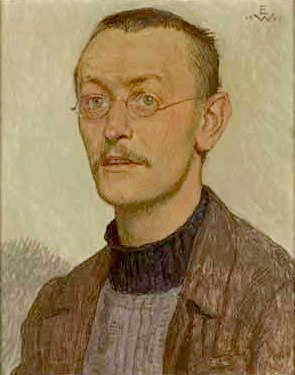
Hesse’s Siddhartha: Towards a Shadowless Present

Dan Meloche revisits a hundred-year-old classic by Herman Hesse that is based on Buddhist lore

He who binds to himself a joy 
Does the winged life destroy
But he who kisses the joy as it flies 
Lives in eternity's sunrise. 
– Eternity, William Blake(1757-1827)

Blake challenges his readers to move beyond everyday existence and delve “out of time” into the eternal presence of a moment. In Hermann Hesse’s novel published a hundred years ago, Siddhartha (1922), the titular character embarks on a similar quest to break the bonds of temporality and move towards eternity and spiritual awakening. The bonds that tie him to the temporal include relations with family, friends, a lover, a business associate, and holy men. The latter include Brahmins, Samanas, and the Buddha: all of whom provide unsatisfactory direction with knowledge that, ultimately, becomes useless and distorted by time’s passage. For Siddhartha, relying on temporally bound advice, from temporally bound humans serves no advantage when aspiring to the eternal.

Early in the novel, a dream suggests Siddhartha’s aspiration. Whereas Blake symbolises the eternal with a sunrise, Hesse uses the vast, ever-flowing permanency of a river: “Dreams and restless thoughts came flowing to him from the river.” Called by the river to the eternal, Siddhartha begins to detach from all relationships that bind him to history and time. To experience the eternal present, Siddhartha must unbind from both his father and son, suggestive, respectively, of past and future.  With these, and other detachments, Siddhartha untethers from the temporal attachments to produce the “readiness of soul” necessary to experience the eternal present.

In the opening chapter, Siddhartha’s spiritual restlessness evokes its most profound exhortation in his defiance of his father, a holy Brahmin. By leaving home, Siddhartha separates himself from his past and rejects a life pledged to holy books and learning. More than youthful rebellion, Siddhartha’s defiance represents a repudiation of book learning and the Brahmins as “they did not know the one important thing.”  As they anchor knowledge in the past, books and learning have no use to Siddhartha, who seeks to transcend the time continuum.  Unbound from the twin anchors of his past, his father and the Brahmins, Siddhartha joins a group of ascetics, the Samanas, with his friend Govinda.

Continuing his journey to the eternal, Siddhartha pores himself into the experiential exercises associated with asceticism: thinking, waiting, and fasting. With seeming ease, Siddhartha perfects his practice. Yet, he rejects practices that serve only as a “temporary palliative” that could be learned “more quickly and easily in every inn in a prostitute’s quarter, amongst the carriers and dice players.”

Produced and subsequently distorted in the temporal realm, the Samanas knowledge is insufficient to produce the awakening Siddhartha craves. Further, were he to heed the wisdom of holy men and ascetics, he would only further bind himself to the temporal realm from which he seeks escape.

Leaving the Samanas, Siddhartha fortifies his belief in the uselessness of knowledge. Not even Govinda’s enthusiasm to see a charismatic spiritual leader can dissuade Siddhartha from his well-formed belief. When the Buddha’s popularity grows, Govinda’s interest to hear the Illustrious One is met with Siddhartha’s resignation. Uninterested in learning from holy men, Siddhartha confronts the Buddha by stating that “nobody finds salvation through teachings.”  That is, the Buddha’s awakening is an incommunicable event experienced outside of time which cannot be taught or duplicated. Therefore, trying to explain “in time” that which occurred “out of time” is futile. In addition to rejecting the Buddha’s teachings, Siddhartha further unbinds himself from his past by leaving his friend, Govinda, as he bids him well: “May you travel this path to the end.”

Limited by temporal bonds, Govinda’s path to wisdom and knowledge has a reachable end. However, for Siddhartha, such confinements represent obstacles to moving outside of time. Parting from Govinda, Siddhartha further detaches from his personal history and associations to time. Only by releasing himself from the temporal can he prepare himself for communion with the eternal. Continuing alone, Siddhartha avails himself of a spiritual moment and is transfixed by the permanency of nature. This meditative glimpse of the eternal anticipates his goal: communion with the unity of all things.

However, the path to enlightenment is rarely straight as sexual desire stalls Siddhartha’s journey towards timelessness.  Powerless to the charms of the beautiful courtesan Kamala, Siddhartha loses all yearnings for spiritual ascendancy and returns to temporality and the material world. To pay for his tutelage in the sexual arts, Siddhartha masters commercial trade to generate income. Disdainful of the mastery and accrual of money, Siddhartha attaches no value to his gains as he squanders his wealth gambling. Burdened by temporality, Siddhartha wears a discontent wrought by unhealthy attachments: “the soul sickness of the rich crept over him.”

Mastery of the sexual arts leads to a comparable weariness as the limitation of his passion with Kamala is mutually understood: “People like us cannot love.” In their loveless union, Siddhartha and Kamala desperately try “to extract the last sweet drop of fleeting pleasure.” As pleasure evaporates, so does Siddhartha’s desire to remain committed to the temporally bound pursuit of love. Feeling spiritually deprived by the pursuits of sex, money, and possessions, Siddhartha clearly sees the absurdity of time-bound relationships. Just as his loveless romance withers, his possessions of a mango tree and a garden are also deflating. To Siddhartha, how can nature, the image of eternity, be possessed?

Spurred by a dream of a dead bird, Siddhartha leaves everything to sit by a river and evaluate his life’s worth and considers a permanent unbinding from the suffering associated with temporal existence: “He looked down and was completely filled with a desire to let himself go and be submerged in the water.” Unfulfilled by all temporal desires, Siddhartha gambles with higher stakes: the desire for death. Having tried, and even mastered, engagement in the temporal domain, Siddhartha found it to be “a troubled spring of deep water”. In his moment of crisis, Siddhartha finds no solace in holy words, but is restored by the wordless, echoed distillation of the eternal, the universe’s vibration, the Om. The troubled waters of temporality then become the life-giving force of an eternally flowing river. Siddhartha recognises the river as his portal to the eternal: a place he “would not leave it again so quickly”.

On his way to the permanent harbour by the river, Siddhartha finds the ferryman, Vasudeva. The humble, taciturn ferryman becomes Siddhartha’s spiritual guide. Although Siddhartha claimed after meeting the Buddha, “no other teachings will attract me,” he finds in Vasudeva a teacher who directs rather than preaches. Vasudeva’s singular precept: “Love this river, stay by it, learn from it.” Sharing ferrying duties, Siddhartha permanently settles at the river’s edge to receive Vasudeva’s help with unbinding from one final temporal link.

After the Kamala’s death, Vasudeva returns to the ferrymen’s hut with Siddhartha’s son, who reacts with tantrums and runs away. Unnaturally loquacious, Vasudeva recounts Siddhartha’s life and experience and points out that to find home, one must leave home. Unpursued, the boy leaves Siddhartha with a “burning wound”. To extinguish this fiery pain, Siddhartha needs direction from Vasudeva, who becomes less man and more deity: “that this motionless man was the river itself, that he was God himself, that he was the eternal itself.” Carrying on with his ferrying duties, Siddhartha witnesses the love between others and feels jealous. This vanity compels him “one day, when the wound burned violently”, to follow his desire to find and make up with his son. Before binding himself again to temporality, Vasudeva instructs Siddhartha to seek counsel with the river. Standing before the river, ready to be relieved of his suffering, Siddhartha receives the river’s unequivocal response: “It laughed! It laughed clearly.” From the river’s eternal perspective, individual desire and suffering have little consequence to the limitless expanse of experience that comprises the unity of all things.

Further instructed to look into the river, Siddhartha not only sees images of his father, his lover, and his friend, but hears the multitude of sorrows, yearning, and suffering of humankind that coalesce into the “song of a thousand voices.” This song, representing “all things” beyond the temporal blends into the eternal perfection that is Om. With the extinguishing of Siddhartha’s “burning wound,” his final bind to the temporal is broken. Emptying all his pain and history into the river, Siddhartha is fully unbound from temporal existence thereby liberating his soul to the eternal.

In the novel’s final chapter, Siddhartha reunites with his friend, the still questing Govinda, who has sought out the mysterious wise man by the river. Siddhartha convinces his old friend that time is not real. Inspired by Siddhartha’s peacefulness, Govinda solicits inspirational advice. Unwilling to limit explanation with mere words, Siddhartha offers to share with Govinda a glimpse into the eternal. As Govinda bows to kiss Siddhartha’s forehead, he witnesses the parade of humankind (babies, murderers, and lovers) in the thousand-fold permutations of love, hate, birth, and death.

Authenticated by the experience of sharing the eternal present with Govinda, Siddhartha represents a fully awakened being. Whereas Govinda had been confounded by seeking a specific end goal, Siddhartha focused on the readiness of soul that comes with unbinding from temporal relationships, riches, and knowledge. Released from the time-bound continuum, Siddhartha releases his suffering into the channel of eternity that the river represents. Only by experiencing the suffering associated with temporal existence can Siddhartha then unbind to move outside the shadows of both the past and future into the eternal shadowless present.

Dan Meloche is a full-time professor at Algonquin College in Ottawa. When he isn’t teaching English, social psychology, and economics, he reads widely and writes reviews and personal account essays

.

PLEASE NOTE: ARTICLES CAN ONLY BE REPRODUCED IN OTHER SITES WITH DUE ACKNOWLEDGEMENT TO BORDERLESS JOURNAL