Categories
Review

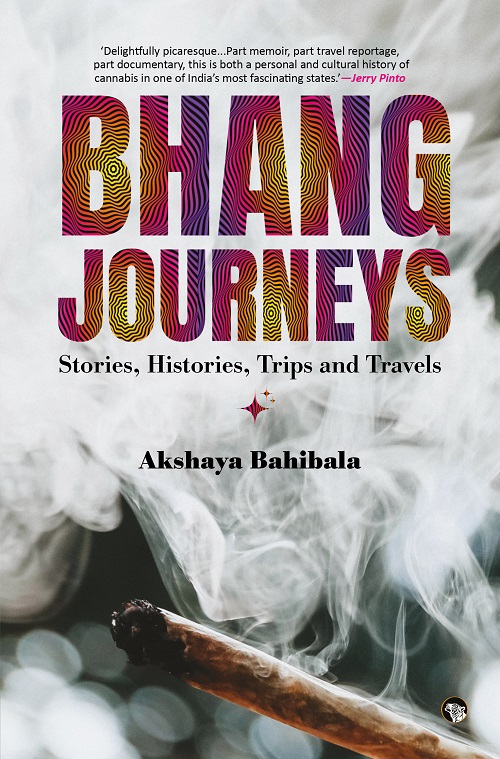
Bhang Journeys: Stories, Histories, Trips and Travels

Book Review by Bhaskar Parichha

Title: Bhang Journeys: Stories, Histories, Trips and Travels

Author: Akshaya Bahibala

Publisher: Speaking Tiger Books

Akshaya Bahibala is a poet, bookseller, publisher, and library advocate. He is the co-founder of Walking Book Fairs, an independent bookstore and publishing company, as well as one of the most beloved bookmobiles in India, having journeyed over 35,000 kilometres through 20 states to promote a love of literature. Bahibala has authored four books in Odia. This book marks his debut in English. This captivating book is full of unexpected twists and turns, offering a unique blend of memories, adventures, and intriguing facts about a well-known substance. It serves both as an exploration and a cautionary tale.

Bhang Journeys: Stories, Histories, Trips and Travels by Akshaya Bahibala is an eye-witness account of the cannabis in one part of India – Odisha. Quite a bit of research and ideation seems to have gone into the book. This book is truly captivating due to its exploration of a controversial subject — bhang or cannabis..

Reads the blurb: “For ten years, from 1998 to 2008, Akshaya Bahibala was in the grip of bhang, of ganja—drinking it, smoking it, experiencing the highs and lows of an addict on Puri’s beaches with hippies, backpackers and drop-outs from France and Japan, Italy and Norway. Then he drew back from the edge and tried to make a life, working as a waiter, a salesman, a bookseller. He starts this journal-cum-travel book with startling, fragmented memories of his lost decade. From these, he moves to stories about people across Odisha whose lives revolve around ganja-bhang-opium.”

Bahibala commences the book by recounting his experiences of indulging in bhang and ganja on the shores of Puri. He also spends time with a considerable number of foreigners — Caucasian men and women who appear to visit Puri for the purpose of getting high. The author mingles with Japanese, German, French, Italian, and Israeli tourists, sharing meals, borrowing money, exchanging bhang-infused biscuits, occasionally engaging in fights, all while listening to Bob Marley’s soulful rendition of “No Woman, No Cry” in a state of intoxication.

The book has some interesting details like how the owner of a government-approved bhang shop prides himself on selling the purest bhang available, claiming it can make people as forgiving and non-violent as Jesus. Another story is about how an opium cutter, learnt how to massage a lump of opium with mustard oil and carve it into tablets as a boy. There is a heart wrenching narrative of a girl who survived cholera by licking opium and became a lifelong addict. Yet another, is about the yearnings of a goldsmith with an opium de-addiction card for 20 grams a month, but he longs for more — atleast 25 grams. There is also the story of the ganja farmer who flies to Puri from Punjab in a helicopter.

The hallucinations induced by the drug are reflected in the case study of a young man, suffering from ganja-and-bhang-fuelled paranoia, convinced that Indian and American spies are after him makes for an interesting yet concerning read. Descriptions are given of angry villagers indulging in violence against excise department officials who try to destroy ganja plantations.

Alongside these narratives, are official data on opium production, seizures, and destruction; UN reports on the medicinal benefits of cannabis and a veteran’s recipes for bhang laddoos and sherbets. The author delves into the process of creating bhang, highlighting its complete legality in India (unlike charas and ganja, which are prohibited under the country’s 1985 Narcotic Drugs and Psychotropic Substances Act). Additionally, there is a subtly humorous account of a Brahmin bhang shop owner who offers intriguing insights into the procurement and sale of bhang. Bahibala also discusses opium (referred to as afeem locally) cutters and government-operated facilities where opium is manufactured. He sheds light on opium addicts, for whom the government provides a de-addiction program.

The author concludes the book on a rather melancholic tone, discussing the current state of affairs in Puri and the significant changes that have occurred over the past two decades. The absence of foreign tourists on Beach Road, the police cracking down on public marijuana use, the proliferation of hotels and restaurants, and the eagerness of owners to expand and construct more establishments are all highlighted. Additionally, the author reflects on the individuals he once knew during his youth, noting that some have relocated to other countries while others remain in the area.

This book offers a comprehensive perspective on the bhang/charas/ganja culture in India, covering aspects such as production, sale, purchase, and consumption under peer pressure. The author’s personal experiences and lessons learnt add depth to the narrative, making it a captivating read. It is a liberating and unfiltered account, unconcerned with conforming to political correctness and yet, there is his own story, where he feels he ‘lost’ a decade of his life to addiction.

Bhaskar Parichha is a journalist and author of UnbiasedNo Strings Attached: Writings on Odisha and Biju Patnaik – A Political Biography. He lives in Bhubaneswar and writes bilingually. Besides writing for newspapers, he also reviews books on various media platforms.

.

PLEASE NOTE: ARTICLES CAN ONLY BE REPRODUCED IN OTHER SITES WITH DUE ACKNOWLEDGEMENT TO BORDERLESS JOURNAL

Click here to access the Borderless anthology, Monalisa No Longer Smiles

Click here to access Monalisa No Longer Smiles on Amazon International

Categories
Bhaskar's Corner

Chittaranjan Das: A Centenary Tribute

By Bhaskar Parichha

Chittaranjan Das (1923-2011)

In the contemporary world, with its multiple environmental crises, conflicts, and violence, persisting poverty, and social exclusion, the question about the role of arts in general, and of literature specifically, must inevitably arise. Do they have any positive role other than entertainment and distraction, or are they merely the icing on a rapidly decaying and disintegrating cake?

Without naming the problem in exactly this way, much of Chittaranjan Das’s work was devoted to implicitly answering this question, for he clearly recognised that a merely functionalist approach to trying to identify the role of the arts in society would be totally inadequate and theoretically shallow. Rather, to answer the question more fully, we should ask what constitutes a society’s self-understanding, its modes of self-representation, and its internal hermeneutics, and how, methodologically speaking, we can gain access to this deep cultural grammar of a society. Das’s original professional career was as a rural sociologist and teacher of the subject in Agra and elsewhere. As a sociologist he would have been aware that such questions arise not only in the sociology of the arts, but equally in relation to such intractable subjects as religion, suicide, and the emotions.[1]

The year 2023 is the centennial birth anniversary[2] of the thinker, educationist, critic, pioneer of Odia non-fiction writing and one of the finest translators, Professor Chittaranjan Das. Chittabhai — as he was known throughout Odisha — was the most prolific writer, with numerous diaries, essays, reviews, autobiographies, memoirs, columns, textbooks, and monographs.

Many eminent writers were born in Bagalpur village in Jagatsinghpur district. Chittaranjan Das was one of them. He was the third child of five brothers and three sisters. He attended Punang School after schooling in his native village. Afterwards, he attended Ranihat Minor School and Ravenshaw Collegiate School. In 1941, he passed the matriculation examination and enrolled at Ravenshaw College, Cuttack, for higher education. However, he became involved in the independence movement. His inspiration came from Manmohan Mishra[3]

During his Ravenshaw student days, he was an active member of the Communist Party of India. In 1942, he joined the Quit India Movement and was imprisoned. During his jail term, Das  acquired many skills, including learning languages, particularly French. In 1945, he was released from prison and attended Santiniketan. During his academic career, he was exposed to a wide variety of intellectuals, thinkers, and writers. He was deeply influenced by their works.

His studies in psychology, sociology, and cultural anthropology continued in Europe and abroad in the years that followed. He was trained in clinical psychology at the Vienna School established by Sigmund Freud. It was here that he met philosopher Martin Buber. He continued his studies at Santiniketan and later at Copenhagen University, Denmark.

He returned to Odisha in 1954 and joined the Jibana Bidyalaya, a school inspired by Gandhi’s ideals on education, established by Nabakrushna Choudhury and Malati Devi. Later on, he became the headmaster of this institution. He left after four years and took a teaching assignment near Agra.

Sri Aurobindo’s philosophy drew Das to the revered sage’s teachings. Upon returning to Odisha, he taught at the Institute of Integral Education in Bhubaneswar, based on Sri Aurobindo’s values. This was in 1973. While he did not stay for long, he remained associated with this movement until his death in 2011.

Das considered the whole world to be his home. He was proficient in a wide range of languages, including Hindi, Urdu, Bengali, Assamese, Sanskrit, Danish, Finnish, French, Spanish, and English. His vast studies covered many areas of social and human sciences like philosophy, psychology, religious studies, and linguistics as well as school studies. His knowledge is reflected in 250 books he wrote or translated into Odia.

He was a regular contributor to newspapers and his columns appeared in major Odia dailies like Dharitri, Pragativadi, Sambad, Samaja and more. These short pieces have been compiled into books that give insight into his views on contemporary issues. His first writing was an article in a school magazine. The article ‘Socrates’ appeared in 1937 in the Ravenshaw Collegiate magazine, Sikshabandhu.

Das travelled widely around the world. During his travels, he closely examined the social, cultural, and political life of the countries he visited. He wrote books describing his impressions. He has translated many books into Odia from countries he visited. His translation work is vast. His understanding of the topic and the translation of the books make for a pleasant reading experience.

He was an excellent diary writer. These captured his feelings about many incidents. The autobiographical diary entries have been published as Rohitara Daeri[4], a series of over 20 volumes. His love for the mother tongue was unparalleled. Despite excellent command of more than a dozen languages, including German, Danish and Finnish, as well as Sanskrit, Pali, Urdu and Bengali, he wrote mostly in his mother tongue, Odia.

His contribution to Odia literature was huge because he translated the works of many prominent writers — Bengali writer Ashapurna Devi, polymath Albert Schweitzer, French novelist François Mauriac, British-Indian anthropologist Verrier Elwin, Danish poet Karl Adolph Gjellerup, French writer Antoine de Saint-Exupéry, Lebanese-American poet and writer Kahlil Gibran, Russian poet Boris Pasternak, former President of India Sarvepalli Radhakrishnan and the iconic Mahatma Gandhi. Sri Aurobindo’s principal philosophic work, a theory of spiritual evolution culminating in the transformation of man from a mental into a supramental being and the advent of a divine life upon earth, Life Divine, is Chittranjan Das’s significant work.

Many awards have come his way. In 1960, for his essay ‘Jeevana Vidyalaya’[5], he was awarded by the Odisha Sahitya Akademi. He was given the Sarala Award in 1989 for his essay ‘Odisha O Odia’. He was conferred with the Sahitya Akademi Award in 1998 for his book Biswaku Gabakhya [6]. He bagged more accolades from Prajatantra Prachar Samiti, Gangadhar Rath Foundation, Utkal Sahitya Samaj and Gokarnika.

Chittaranjan Das’s works incorporate both creative experimentation and a transformative philosophy. He has worked in education, literature, cultural creativity and artistic criticism. During his lifetime, he was instrumental in the growth and development of numerous social action and development groups. Throughout his writings, he discussed self-development, social change, and mankind’s evolution. His Odia autobiography Mitrasya Chakhusa  [7]is an extraordinary work in the genre.

A scholar of eminence, literary commentator and author of numerous books in Odia and English, he was known as ‘Socrates of Odisha.’

.

[1] John Clammer (The Essays of Chittaranjan Das on Literature, Culture, and Society/Ed. Ananta Kumar Giri and Ivan Marquez)

[2] The Odia writer lived from 1923-2011.

[3] A revolutionary writer and poet who lived from 1917 to 2000.

[4] Rohit’s Diary

[5] School of life

[6] Window to the World

[7] Through the eyes of a Friend

Bhaskar Parichha is a journalist and author of UnbiasedNo Strings Attached: Writings on Odisha and Biju Patnaik – A Political Biography. He lives in Bhubaneswar and writes bilingually. Besides writing for newspapers, he also reviews books on various media platforms.

.

PLEASE NOTE: ARTICLES CAN ONLY BE REPRODUCED IN OTHER SITES WITH DUE ACKNOWLEDGEMENT TO BORDERLESS JOURNAL

Click here to access the Borderless anthology, Monalisa No Longer Smiles

Click here to access Monalisa No Longer Smiles on Kindle Amazon International

Categories
Bhaskar's Corner

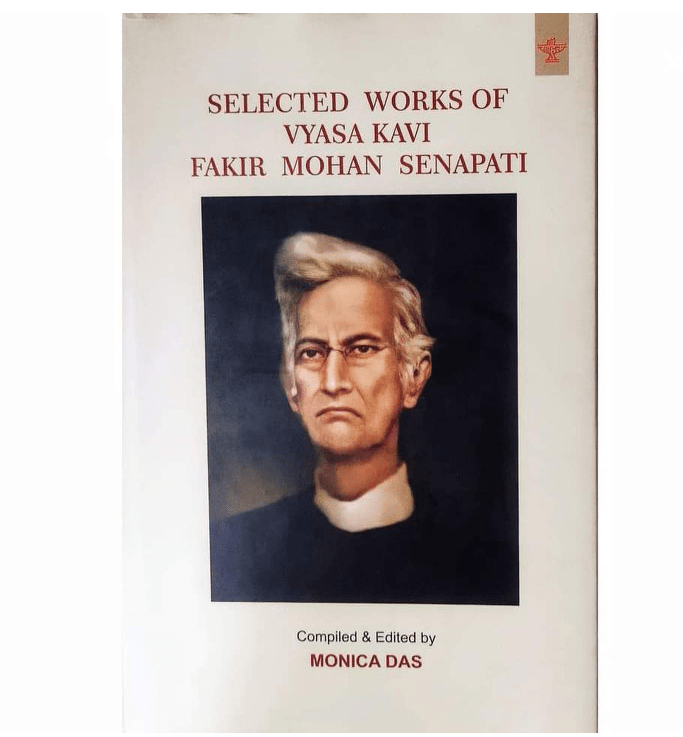
Fakir Mohan: A Tribute

By Bhaskar Parichha

Fakir Mohan Senapati. Courtesy: Creative Commons

The 19th century Oriya novelist Fakir Mohan Senapati was a most oblique writer — he hardly said or meant anything in a straightforward manner. Much of his work is ironical and satirical, and of course irony and satire work through indirection, by way of the meaningful glance rather than the plainspoken word. Yet irony, while aiming to surprise, can sometimes be applied too predictably, and then it becomes as unsubtle as the more homespun narrative mode it disdains. Thankfully, this is not the case with Senapati: he worked with a very light and delicate hand.

-Chandrahas Choudhury (Author of ‘My Country is Literature–Adventures in the Reading Life’)

Father of modern Odia literature, Fakir Mohan Senapati’s birth anniversary is around the festival of Makar Sankranti (mid-January) every year. There are a bevy of festivals by various names celebrated across India during this period.

As a novelist, short story writer, poet, philosopher, social reformer and forerunner of Odia nationalism, Senapati (1843-1918) played a foremost role in establishing the distinct Odia identity. But for his sweat over a lifetime, Odia — which is today India’s sixth Classical language — wouldn’t have survived the onslaught by adjoining vernaculars. The life of Fakir Mohan is undeniably the story of the “resurgence” in Odia literature. He protected the Odia language from near extinction.  

Mallikashpur village of Balasore district neighbouring West Bengal is where Senapati began his formal education — when he was nine years old. Since he could not pay for his tutoring, he is said to have even worked at his teacher’s house to pay the fee. Balasore’s Mission School was his Alma Mater, and he went to become a teacher where he served until 1871. Still later, he rose to become the headteacher. Around this time, he started teaching Odia to the Balasore Collector John Beames. 

Fakir Mohan learnt English all by himself with the help of a dictionary. He readto read several famous classics — Arabian Nights, Robinson Crusoe, the English Bible, and Bengal Peasant Life by Lal Behari De — he started learning English at twenty-three. Fakir Mohan’s instinctive wisdom was recognised even by foreigners. 

The early life of Fakir Mohan was one of courage and dexterity.  His accomplishments were amazing. A multi-tasker, Fakir Mohan, even worked as a labourer in a port. He ventured into the wood and paper business having worked in a press only to become an editor. Besides being a teacher, Fakir Mohan became a dewan of Athagarh and later of Tekkali in Srikakulam district of Andhra Pradesh.

In the second phase of his life, Fakir Mohan worked as administrator in the princely states of Nilgiri, Dampada, Dhenkanal, Daspalla, Pallahara and Keonjhar. As a manager, Fakir Mohan was very efficient and successful. During Keonjhar Praja Meli (people’s agitation against the feudal lord), he escaped cleverly writing a symbolic letter to the king. 

Mayadhar Mansingh, another celebrated, Odia called Fakir Mohan the ‘Thomas Hardy of Odisha’. He had the ability and expertise in whatever arena he laid his hand on. These prodigious abilities were reflected in his later-day writings as well. Although Senapati translated from Sanskrit, wrote poetry, and tried numerous forms of literature, he is known primarily as the father of modern Odia fiction. His four novels, written between 1897 and 1915, mirror the socio-cultural conditions of Odisha during the eighteenth and the nineteenth centuries.

The time in which Fakir Mohan lived was the darkest period in the history of modern Odisha. The infamous ‘Naanka’ Famine of 1866 — which one third of the region’s population — hurt the economic and social condition of Odisha beyond recovery. The deprivation during this period has been documented in many of his stories and novels. In course of time, he emerged as a novelist of rare caliber not only in Odia but also in a pan-Indian setting.

Senapati’s Rebati (1898) – recently translated into thirty-six Indian and foreign languages — is widely recognised as the first Odia short story. It is the tale of a young innocent girl ‘Rebati’ whose desire for education in the context of a backward conservative society went beyond the ordinary. The village where the protagonist lived was hit by the killer epidemic, cholera. Rebati’s grandmother – the last survivor — believed that it was the craving for education that brought misfortune to the family. In fact, ‘Rebati’ was one of the earliest stories in the realm of world pandemic literature.

‘Randipua Ananta’ is a story of a very notorious, errant youth who in the end transforms himself. While the flood water entered the village through a hole of the river-embankment, Ananta pulled the wooden door of his house and covered the hole standing as the supporting pillar and asked villagers to pile soil onto it. Gradually, his body heaped-up up and at last he was buried. Ananta dedicated his life to the welfare of the village and was a rare character in the Odia short story genre. 

Dak Munshi (The PostMaster), ‘Sabhya Zamindar‘ (The Educated Feudal Lord), ‘Patent Medicine’, ‘Adharma Bitta‘ (The Ill-gotten Money) are the other famous stories for which Senapati is known far and wide. But, it is the   three novels — Chha Mana Atha Guntha  (Six and a third Acres,1902), Mamu (Maternal Uncle, 1913)and Prayaschita (Penance, 1915) — which have made  Senapati immortal because they explored the realities of community life in its manifold dimensions.

Chha Mana Atha Guntha is the first Indian novel to deal with the exploitation of landless peasantry by the feudal system. The importance of this novel is that it was written much before the October revolution and even before the emergence of Marxist ideas in India. Set in Orissa in the 1830s, it is about village politics, caste oppression, social malpractices, and land-grabbing under the zamindari system in colonial Odisha. Both a literary work and a historical document this novel provided a unique ‘view from below’ of Indian village life under colonial rule. Ten years after this novel came Mamu.

Prayaschita was the last of Fakir Mohan Senapati’s  ‘trilogy of crime and justice’ novels — to use the epithet coined by the eminent Senapati scholar John Boulton. It was published just three years before the death of Fakir Mohan. The novel is unique because it sheds light on Senapati’s increasingly dark and tragic perception of colonialism. The novel was a defender of the traditional values and the Hindu way of life which the writer saw was gravely threatened by an alien value system of the British which had made huge inroads into Indian society.

Lachhama is another novel by Senapati dealing with the anarchic conditions of Odisha in the wake of Maratha invasions during the eighteenth century. It narrates the historical romance of Rajput lady Lachhama and her husband Badal Singh, in the backdrop of the political disturbances between the Mughals and Marathas to gain supremacy in Odisha. The story is set in a period of early advent of the British in India during which Nawab Alivardi Khan was Governor of Bengal. The depiction of love, honor, courage and revenge of the woman protagonist Lachamma is significant.

Fakir Mohan also wrote the first-ever autobiography in Odia – Atma Jeevan Charita. It gives a socio-cultural account of Odisha along with the novelist’s own life spanning over half a century and makes for prodigious reading.

Senapati wrote a long poem, Utkal Bhramanam, in 1892. Literally meaning Tour of Odisha, this poem is not a travelogue but a commentary on the state of affairs of that time, written satirically. He has also translated the Mahabharata, the Gita, the Ramayana and Boudhavatar Kavya into simple Odia verse.

Fakir Mohan’s innovative technique, ineradicable characters, humour, imaginativeness, and the insights into the rural milieu had few parallels. His contribution to Odia language and its revival was immense.  

Senapati was a great genius, a versatile personality and an ardent literary artist who breathed his last on June 14, 1918, when Odisha hadn’t become a separate province for which Senapati fought relentlessly. He is unsurpassed and commands great respect among the authors. In the words of Dr. J.V. Boulton, Fakir Mohan is the Gorky of Odisha. The  Dhammapada estate conferred on him the enviable title Saraswati. He was also endowed with the title of Katha Samrat (Emperor of Fiction) and is rightly called Vyasakavi

His fiction and short stories reflected the theme of social realism, societal reform, and preservation of cultural values. Fakir Mohan dedicated his whole life to the development of the native language in the late 19th and changed the course of Odia literature.

Fakir Mohan is to Odia what Prem Chand is to Hindi and Rabindranath Tagore is to Bengali literature.

.

Bhaskar Parichha is a journalist and author of UnbiasedNo Strings Attached: Writings on Odisha and Biju Patnaik – A Political Biography. He lives in Bhubaneswar and writes bilingually. Besides writing for newspapers, he also reviews books on various media platforms.

.

PLEASE NOTE: ARTICLES CAN ONLY BE REPRODUCED IN OTHER SITES WITH DUE ACKNOWLEDGEMENT TO BORDERLESS JOURNAL