I have struggled all my life To keep my dreams alive. They have held sway over me, Those that consoled me And those I learned to disdain.
But in the darkness of time, None, not even my thoughts, Stood aligned with me. The fire Once ignited in my dreams Left me blind, barely
Clinging to the timber of my bed. These dreams, like faded stars, Have drifted awfully far, too far To cast me still beneath their spell. Yet I doubt. All is not ash.
Embers lie in slumber. In storm or in calm, I must tread Deftly as a whisper, lest a dying ember Shriek its way from the clutter And ignite my life into flames.
Pramod Rastogi is an Emeritus Professor at the EPFL, Switzerland. He is a poet, academician, researcher, author of nine scientific books, and a former Editor-in-chief (1999-2019) of the international scientific journal, Optics and Lasers in Engineering. He was an honorary Professor at the IIT Delhi between 2000 and 2004. He was a guest Professor at the IIT Gandhinagar between 2019 and 2023. He is presently an honorary adjunct Professor at the IIT Jammu.
.
PLEASE NOTE: ARTICLES CAN ONLY BE REPRODUCED IN OTHER SITES WITH DUE ACKNOWLEDGEMENT TO BORDERLESS JOURNAL
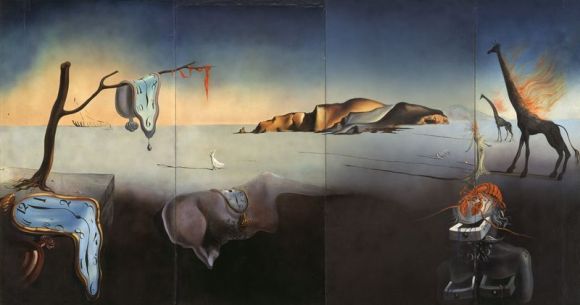
The Dream of Venus by Salvador Dali (1904-1989). From Public Domain
MY STILLBORN DREAMS

Clouds have hovered above me
For as long as I can recall.
Perhaps it was their destiny
To shadow me upon every path.

Of all the dreams I once beheld,
None became a rallying call
For those that came thereafter —
So many, yet their hymns elude me.

Beneath the ceaseless drought of light,
None could bloom or bear my name,
None to endure through centuries,
None to crown me with esteem.

A poet haunted by tavern walls,
I have spent a lifetime digging graves
For my stillborn, fleeting dreams,
Lined like bottles along the bar.

A fervent poet I remain, though still
My hands fall short of the desire
To etch a metaphor for each tomb.
Yet those I buried, I cherish as my own.
Pramod Rastogi is an Emeritus Professor at the EPFL, Switzerland. He is a poet, academician, researcher, author of nine scientific books, and a former Editor-in-chief (1999-2019) of the international scientific journal, Optics and Lasers in Engineering. He was an honorary Professor at the IIT Delhi between 2000 and 2004. He was a guest Professor at the IIT Gandhinagar between 2019 and 2023. He is presently an honorary adjunct Professor at the IIT Jammu.
.
PLEASE NOTE: ARTICLES CAN ONLY BE REPRODUCED IN OTHER SITES WITH DUE ACKNOWLEDGEMENT TO BORDERLESS JOURNAL.
O clouds of loneliness,
I beckon your shadowed embrace.
Drift gently into the seams of my heart,
And rain, soft as whispered sorrows.

Sweep away the filth and dust,
The clinging residue of ceaseless strife,
Etched by life's restless tumult,
And leave behind a moment's quiet clarity.

But, O clouds, be but a fleeting guest,
Do not settle as my abiding home.
The deeper you linger,
The heavier grows your weight.

You threaten to rend from me
The final thread of self,
A fragile anchor to light and hope,
Swept away in torrents of despair.
Pramod Rastogi is an Emeritus Professor at the EPFL, Switzerland. He is a poet, academician, researcher, author of nine scientific books, and a former Editor-in-chief (1999-2019) of the international scientific journal “Optics and Lasers in Engineering”. He was an honorary Professor at the IIT Delhi between 2000 and 2004. He was a guest Professor at the IIT Gandhinagar between 2019 and 2023. He is presently an honorary adjunct Professor at the IIT Jammu.
.
PLEASE NOTE: ARTICLES CAN ONLY BE REPRODUCED IN OTHER SITES WITH DUE ACKNOWLEDGEMENT TO BORDERLESS JOURNAL.
Every night, beneath the veil of stars, I feel your love, mother, As vast as the ocean, Its depths whispering calm paradise.
Your eyes, golden pools of tenderness, Once held my fears, Turned tears into sweetness, And wrapped my heart in peace.
Though time has drawn you away, I find you in the quiet, In the light that lingers on the horizon, In the bosom of memories woven into my soul.
You are the warmth beneath the cold, The golden thread binding my days, The eternal whisper of love That lives within me, Undimmed by the passage of time.
In this stillness, I carry you, Guardian of my heart, A light that will never fade, A love that even the night cannot steal.
Pramod Rastogi is an Emeritus Professor at the EPFL, Switzerland. He is a poet, academician, researcher, author of nine scientific books, and a former Editor-in-chief (1999-2019) of the international scientific journal “Optics and Lasers in Engineering”. He was an honorary Professor at the IIT Delhi between 2000 and 2004. He was a guest Professor at the IIT Gandhinagar between 2019 and 2023. He is presently an honorary adjunct Professor at the IIT Jammu.
.
PLEASE NOTE: ARTICLES CAN ONLY BE REPRODUCED IN OTHER SITES WITH DUE ACKNOWLEDGEMENT TO BORDERLESS JOURNAL.
Wake, my cherished daughter,
And see who waits at your door.
Step forward, welcome it warmly --
This dawn, a guest meant for your heart.

Dawn is a dense foliage, alive with its flame.
Look how it rushes to embrace you.
Pluck it from the sky, let its glow
Fill the vase of your waiting soul.

Inhale the sacred scent it offers,
A divine aroma to ease your sorrow.
Exhale your grief into the morning light,
For your heart -- steadfast and jewelled -- endures.

Through every shadow, my love remains,
A constant light to ease your pain.
No trial too heavy, no wound too deep,
My arms are here, your fears to keep.

Fairy tales are not birthed in heaven.
They do not spring from the void.
Remember, they are our creation,
And you, my dear, bring them to life.

Your father held you once in his arms,
Steadying you to explore new paths.
Be not despondent; time will mend the scars.
Dreams with edges are dreams that endure.
Pramod Rastogi is an Emeritus Professor at the EPFL, Switzerland. He is a poet, academician, researcher, author of nine scientific books, and a former Editor-in-chief (1999-2019) of the international scientific journal “Optics and Lasers in Engineering”. He was an honorary Professor at the IIT Delhi between 2000 and 2004. He was a guest Professor at the IIT Gandhinagar between 2019 and 2023. He is presently an honorary adjunct Professor at the IIT Jammu.
.
PLEASE NOTE: ARTICLES CAN ONLY BE REPRODUCED IN OTHER SITES WITH DUE ACKNOWLEDGEMENT TO BORDERLESS JOURNAL
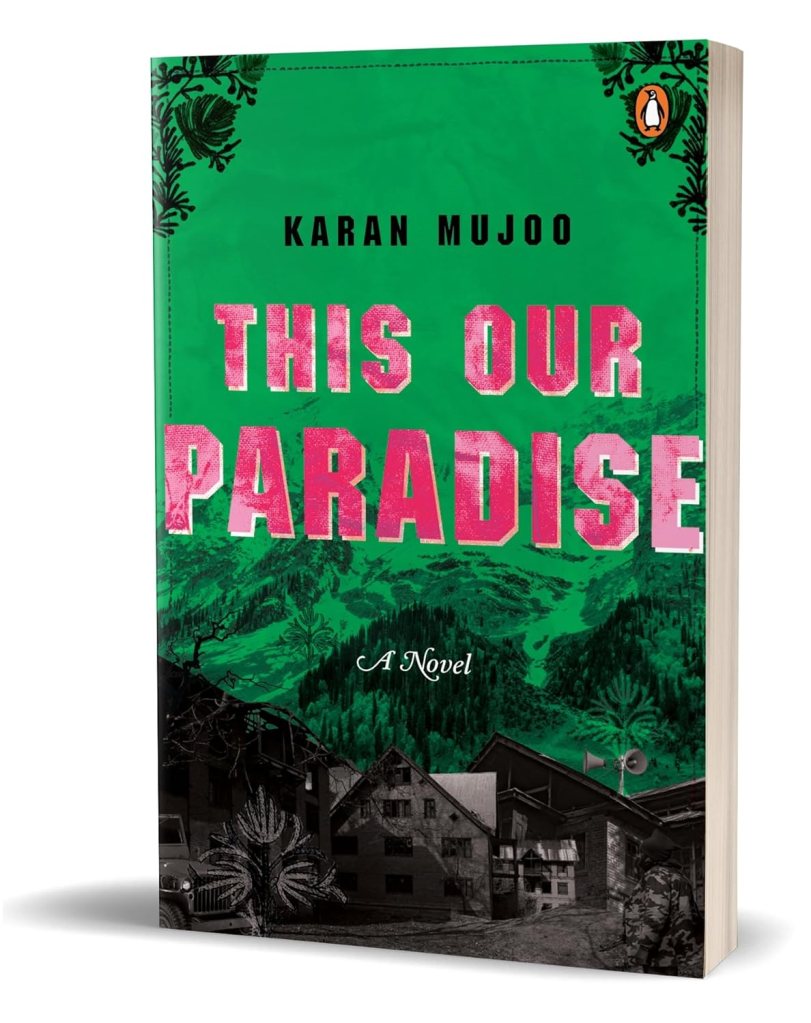
Publisher: Ebury Press (an imprint of Penguin Random House)
“A debilitating symptom of exile is unfamiliarity with your homeland” – Karan Mujoo
For ages, Kashmir had been defined as a paradise on earth. However, with the advent of insurgency, political unrest, strife, bloodshed, terrorism and insecurity for the past several decades, this picture of the ideal and beautiful place has been largely shattered. This debut novel by a person of Kashmiri origin, now settled near Delhi, is a moving tale of the ground realities that have been taking place in this region for a long time. Adding the suffix of “A Novel” to the title, the author obviously wants to steer clear of all the controversies that might arise because as he himself states in the “Author’s Note” at the end, “the names and places in this book are a mix of the real and the imaginary… Certain incidents in the novel are based on real events. But their details have been imagined. Hence the names of victims and perpetrators have been changed or tweaked.”
The author was acutely aware of the fact that Kashmir is too large a canvas to be contained in a single book or movie, and so he tells the story of two Kashmiri families, one Hindu and the other Muslim. The stories of both families intertwine tragically in the end. In both cases, the boys are at the mercy of forces much larger than them. Both lose their Kashmir, in different ways. The first story is of a Kashmiri Pandit family who, when the narrative begins, is moving half-heartedly from their house in Bagh-i-Mehtab in Srinagar to their new home in Talab Tillo in Jammu, which was just a dilapidated 12×12 foot hovel with a tin roof and crumbling walls. The patriarch Papaji is a clerk in a food cooperative and his wife Byenji is a homemaker. He is very optimistic that all this is a temporary affair. He still believed in the inherent goodness of people, in ties built over generations and that things would soon turn for the better. The narrator is their eight-year-old grandson who is one of the thousands of children of exile who had nothing to do, nowhere to go. He spent his days playing cricket and climbing the tangkul[1]in the garden. Everything is rosy till 1989. But then, propelled by ISI and the Jamaat, a secessionist movement rises and changes everything. There was gun culture everywhere. For the media, too, Kashmiri Pandits became disposable footnotes in a far greater struggle. Slowly they joined the ranks of the forgotten and became a tragedy that could not be prioritised. At the end of the novel, we find that the idea of exile which harboured within it the hope of return, did not apply to them anymore. They were truly displaced.
Mujoo juxtaposes the earlier story with the story of a Muslim family, set in Zogam, a small village in Lolab Valley. There, after years of prayers, a boy named Shahid is born to Zun and her husband in 1968. Quarantined from everyone else in the village, Sahid’s days passed listening to tales and making them up. As a result, he slowly developed into a shy, quiet boy who found it difficult to mingle with others and liked being with nature. Compared to the slick city dwellers, the people of Zogam seemed like wretched beings with no dreams and ambitions. They were content with their lot because they were not exposed to the luxuries and opportunities life held. Sahid gradually grew up in a society where corruption and unemployment were rife. He made friends with Rashid, who believed that the system had to be dismantled. The trajectory of his life changes when he meets Syed Sahab ― an Islamic theologian and rabble-rouser, who wants to overthrow the Indian state. He brainwashes the young boys into believing that the day they made Sharia their lives, their lives would become Jannat[2]. He preached that Jihad[3] was coming to the Valley soon, and everyone should be ready for it.
The next section takes us back once again to the Pandit protagonists and their life story. The year is 1968 and our young narrator gradually turns worldly-wise when he is taken to different places by his young uncle, Vicky, including the Dal Lake and the Sheikh Colony – a settlement of sweepers, scavengers and tanners who were reviled by all Kashmiris. Believing that education would relieve them of all penury and social ostracisation, Vicky becomes their temporary teacher. Without the knowledge of his parents, he gradually gets enmeshed within other radical ideas and different military groups that had emerged in the city. On the other hand, Shahid realised he could either be a clerk and part-time Jamaat[4]sympathiser or a full-time Jamaat worker. In the end, he opts for the latter and believes that he was no longer a poor farmer’s son from Zogam whose life and death were insignificant.
An interesting section of the narrative told in minute details is how the young jihadis[5] are escorted over the difficult mountain terrain by a Gujjar guide and clandestinely taken across the border to makeshift and rudimentary Pakistani camps in Muzaffarabad. The aim was to indoctrinate the boys in orthodox Islamic ideology and impart basic military training. They were brainwashed into believing that the most important thing was to attack all symbols of India: blow up government banks and offices, kill army and police personnel, murder judges, bureaucrats, teachers, politicians, cripple the state, silence all the voices who oppose the Tehreek[6] and instill the fear of Allah in the hearts of all unbelievers. After they are once again brought back to the Indian side, the boys turn into hardcore terrorists and Sahid is no exception. No matter how hard his parents tried, he had simply become one of the thousands of boys who were ready to fight for the cause.
Without giving out further details of the parallel storylines, we can conclude by stating that through this book Karan Mujoo has tried to ask some fundamental questions. How does a boy become a terrorist? How does society crumble? What forces a family to go into exile? To serve this need, to create a picture of these chaotic years, he has attempted a certain sort of distillation. He only hopes that the illusion has been marginally successful. Through the vividly drawn characters whose lives intersect with one another, each navigating their own paths through love and life, the author successfully captures the essence of human experience and the eternal yet illusive search for paradise.
We have been reading fictional and non-fictional accounts of the problems in Kashmir for a long time, but the painstaking way in which this debut novelist has tried to give us the entire scenario in a nutshell is praiseworthy. The book is strongly recommended for all readers who would find the universal quest for happiness really moving, and how the author has blended fact and fiction with remarkable ease.
An introduction to Ratna Magotra’sWhispers of the Heart: Not Just a Surgeon (Konark Publishers) and a conversation with the doctor who took cardiac care to the underprivileged.
“I slept and dreamt that life was joy. I awoke and saw that life was service. I acted and behold, service was joy?”— Tagore, Whispers of the Heart: Not Just a Surgeonby Ratna Magotra
“There are at least five estimates of the number of poor people in India, which put the number of poor in India between 34 million (equivalent to the population to Kerala) to 373 million (more than four times the population of West Bengal). This puts the number of the poor between 2.5% of the population to 29.5%, based on different estimates between 2014 and 2022.”
How are the healthcare needs of the poverty stricken met in a country with a vast number who are unable to foot their daily food, housing, and potable water needs? This has been a question that confronts every doctor in cities where labourers who build housing for the middle class are themselves homeless just like the street side immigrants who beg. Even dwellers of shanties that spring up around colonies of the well-to-do to provide informal labour to the affluent are hardly any better off. Few in the medical profession move towards finding solutions to bridge this gap.
Dr Ratna Magotra, who moved from Jammu to find a career in healthcare in Mumbai, is one such person. Recently, she wrote an autobiography which has consolidated the work being done by cardiologists to bridge this gap. In her book, Whispers of the Heart: Not Just a Surgeon, while identifying this divide, she writes: “Poverty, inequality, deficient primary healthcare, unequal access, and the escalating commercialisation of medical care were causing an angst that I found difficult to make peace with. As medical practitioners, our expertise lies in providing treatment, but we often overlook the broader social factors underlying ill health. It might escape the attention of a surgeon performing intricate heart surgery that a child who survived a complex heart surgery could succumb to diarrhoea due to the lack of access to clean drinking water. Issues like malnutrition, skin infections, superstitious beliefs, and poverty may be the harsh realities in the patient’s actual living conditions beyond the confines of sanitised medical environment. /Medical training, regrettably, seldom includes the connection between poverty and disease.”
The land reforms laws that followed post-Partition[1] led to her family losing their wealth. But Magotra bears no ill-will or scars that have crippled her ability to contribute to a world that needs to heal — of taking healthcare to those who can’t afford it. She starts her biography with vignettes from her childhood: “I recall that the agricultural land we owned in our village in Jammu was considered very fertile with the best Basmati rice grown there. Though I was very young, I have faint memories of the house amidst lush paddy fields and a small stream that we had to cross to enter the village. It was very close to the international border between India and Pakistan. The way my mother was respected reflected the high esteem that villagers had for my father. Though their tenant status had changed to that of being landowners, the villagers visited the house as they did before and received generous gifts from her. /They would indulge us children with home-made sweets made of peanuts, jaggery and spices. Rolling in heaps of post-harvest grains piled up in open fields was great fun.”
She lost all that and her father. But with supportive family and friends, drawn to healthcare, she became a doctor in times when women doctors were rare. If they at all specialised, it was mainly in gynaecology. She chose cardiac surgery trained in UK and US. She made friends where she went and with a singular dedication, found solutions to access the underprivileged. She elaborates: “The quantum leap in India’s healthcare sector occurred during the 1990s following the economic reforms and the liberalisation of the economy. The end of the licence raj system facilitated the imports of advanced technology and medical equipment. Specialists, who had long settled abroad, began contemplating a return to India.”
While she attended an International Course in Cardiac Surgery at Sicily to update her skills, she tells us: “During our interactions, some German surgeons raised questions about the rationale behind a developing country like India engaging in an expensive speciality like cardiac surgery. I realised how biased opinions can be formed and spread, though rooted in ignorance. /By this point, however, I had grown accustomed to explaining the paradox — why it was essential for India to advance in specialised care alongside its priorities in basic healthcare and poverty alleviation.”
She cites multiple instances of cases that she dealt with from the needy rural population, for who to pay prohibitive costs would mean an end to their family’s meals. Magotra writes, “I had seen numerous poor heart patients who suffered not only from the ailment itself but also from financial burden of the treatment. The medical expenses incurred for a single family member affected the well-being of entire household, depleting their limited resources and savings. Unfortunately, medical education does not include health economics as a subject. As a result, doctors, especially specialists, trained in a reductionist approach to diseases tend to move away from a holistic perspective. They readily embrace new technological advances, often neglecting proven and cost-effective treatment options. This, in turn, drives up healthcare costs and makes it unaffordable for the common man.”
Living through a series of historical upheavals, she brings to light some interesting observations. She came in contact with Jinnah’s personal physician while looking for a placement in Mumbai. There she mentions that many wondered if the Partition of India could have been averted if this doctor had shared the information that Jinnah had limited life expectancy as he had advanced tuberculosis. She has lived through floods in Mumbai and riots and wondered: “I was staring at the blood on my clothes, which had come from multiple patients. In that quiet moment, I couldn’t help but wonder if there was a ‘test’ to distinguish between a Hindu blood and a Muslim blood.” She joined the anti-corruption movement started by Anna Hazare and fasted! She has travelled and watched and collected her stories and she jotted these down during the pandemic to share her world and her concerns with all of us. In the process, recording changes in health care systems over the years… the historic passing of an era that documents the undocumented people’s needs.
Dr Ratna Magotra
An award-winning doctor for the efforts she has made to connect with people across all borders and use her experience, she talks to us in this interview about her journey and beliefs.
What made you write this book? Who were the readers you wanted to reach out to?
I had asked myself the same questions before I started and even while I was writing: Why and for whom?
Some younger friends and family members would find the anecdotes and stories, I would relate to them from time to time, interesting. They would often prod me to write about these. People, situations, my travels to places — not the usual popular tourist destinations, invoked further curiosity in them to know more about my life. As such I like to write my thoughts (usually for myself) and have been contributing small articles to newspapers, magazines, and Bhavan’s Journal for their special Issues. The pandemic provided me an opportunity to contemplate further when I seriously considered about writing an autobiographical narrative.
As I progressed with my account, I envisaged a wider readership outside the medical community as multiple facets emerged about places, people and events of varying interests.
What were the hurdles you faced while training as a doctor — in terms of gender and attitudes of others?
Fortunately, I can’t recall any specific hurdle or adverse experience because of my being a woman. Studying for MBBS degree at Lady Hardinge Medical College (LHMC), made it a normal affair as LHMC was an all-women medical college.
The struggle that I faced in getting PG admission in Bombay also had nothing to do with gender. The problem was being an outsider in Bombay when number of seats were limited. Students from local medical colleges and rest of Maharashtra had first preference for selection to PG courses. Anyone in my place would have had to go through a similar grind as I did.
Once PG admission was secured, it was smooth sailing through training and working alongside male colleagues! I asked for no concessions being a woman and worked as hard as they did or may be little more. We had a very close and harmonious working relationship with healthy mutual respect leading to lasting friendships.
What made you choose cardiac surgery over other areas of specialisation?
The decision to become a doctor and a surgeon was firmed very early in life. Interest in Cardiac surgery was acquired much later when I started working with Dr Dastur in Bombay. Seeing and touching a beating heart was fascinating and at the same time very challenging at that time. I was tempted to take it up for further specialisation. And yes, it was a very glamorous specialty at that time with names like Denton Cooley[2] and Christiaan Barnard [3]making waves in mainstream conversations!
Cardiac surgery was perceived by some as the forte of the rich, but you have shown how many villagers also had the need for the same specialised care. So, what was it that made you realise that? What could be seen as the incident that made you move towards closing social gaps in your horizon?
Heart disease affects the rich as also the poor. In fact, in earlier times when lifestyle diseases were not as common, it was the poor who suffered more from many afflictions including heart disease. Rheumatic heart disease was the bane of the underprivileged, living in overcrowded spaces with repeated streptococcal throat infections that eventually ravaged their heart valves. Congenital heart disease was common though not diagnosed as often. While the rich and affluent could afford to travel abroad to get treatment, in turn costing precious foreign exchange to the nation, others had to make do with whatever was available. Indian surgeons stretched their resources, skills and imagination to fill the gaps in the infrastructure.
Working in teaching hospitals, I saw the suffering and helplessness of the poor from very close. Inadequacies in healthcare stared at us every day. Moreover, those days cardiac surgery was being performed only in 4-5 teaching hospitals in the country.
I tried looking beyond the patient, connecting their illness with the social and economic environment they came from. Their personal courage, resilience and faith in overcoming difficult moments of life stirred something inside me. One such incidence involved a patient, Ahir Rao, from interiors of Maharashtra. His surgery at KEM and my subsequent visit to his home opens the chapter on ‘Reaching the Unreached’ in my book.
Ironically flip side of development and changing economic status, is that lifestyle diseases like hypertension, diabetes and heart disease are affecting less affluent even more. Lack of awareness about diet, and rapidly adopting urban fads have changed the rural-urban spectrum of heart disease.
The prejudices and biases of the developed countries influenced many in the country also to question a developing country like India from investing in super-specialty like cardiac surgery instead of focussing on providing basic amenities to the people.
It was amusing to see the BBC presenters asking the chronic questions as recently as the landing of Chandrayaan on moon in August 2023 — whether India should have space missions? Persistence of same mind set exposed their ignorance about the benefits the technology and the science bring to common man as also reluctance to accept the progress India has made!
How did your travels to other countries impact your own work and perspectives?
Traveling is a great education to broaden one’s horizon. My travels in India and to different countries contributed towards my personal growth by helping me connect to the geography, nature as also the people belonging to different cultures and sensibilities. Different foods, attires or attitudes but with one common underlying bond of humanity with similar aspirations.
Professionally, going to advanced centres exposed me to a work culture that was very different from ‘chalta hai’[4] attitude back home. Staying ahead with the best research, better working conditions, new technology were just the stimulants I needed in doing better for our patients.
There were many people you have mentioned who impacted you and your work. Who would you see as the persons/organisations who most inspired and led you to realise your goals?
I owe so much to so many people, whom I met at different stages of my life and who influenced my thinking, values and my work. It is difficult to pick one or two, however, if asked to narrow down to three or four most important individuals, these would be my mother and Prof Rameshwar in early years, and Dr K. N Dastur in my professional choice and career. However, biggest influence in my later life has been my Guru, Swami Ranganathananda — who imparted the wisdom of practical vedanta giving ultimate message of oneness and freedom of thought and action for universal good as propagated by Swami Vivekananda.
Why did you join Anna Hazare and his organisation? How did it impact you? What were your conclusions about such trysts?
I had heard of Anna Hazare as an anti-corruption crusader and had met him once at his village while accompanying Dr Antia. It was very admirable the way he had motivated the village people to participate voluntarily in the economic and social development making Ralegaon Siddhi a model village. This simple rustic person could stand up to the high and mighty and often made news in local newspapers; the politicians took his protests seriously at least in Maharashtra. When India Against Corruption (IAC) came into existence in 2011, I didn’t think twice before joining the unique coming together of civil society to fight corruption in the highest corridors of power. I was personally convinced that corruption had eroded and marred the dream of India keeping the common people poor and backward even as the corrupt flourished. As an individual, one could not do much beyond complaining and paying a price for a principled life. It required the civil society to stand up collectively to oppose the corrupt who were (are) actually very powerful!
There was nothing personal to gain by joining the protest but only lend my voice to the common objective of checking, if not eradicating, the menace of corruption.
The experience, highs and lows of the movement form a chapter in my book. The movement becoming political and losing the momentum of a countrywide movement was a big disappointment.
What would be the best way of closing the divides in healthcare?
There has been some forward movement in healthcare at grass root levels in last two decades or so. These gains need to be streamlined as at present we have islands of excellence with vast areas of dismal healthcare — the imbalance needs correction.
Increased spending by the State for healthcare, forward looking national health policy keeping in mind the diverse needs of such a vast country, rural urban realities are the way forward. Investment in medical and nursing education, primary health care, paramedics, rational use of appropriate technologies — all these need to be considered in totality and not in isolation.
Lot of the healthcare work is bridged by NGOS as per your book. Do you think a governmental intervention is necessary to bring healthcare to all its citizens?
My narrative belongs to the eighties and nineties when NGOs were vital in taking basic medical services to remote places where none existed. These organisations did a herculean task and several continue to be a significant provider even as the governments, both at the Centre and State level, have initiated many schemes that include healthcare besides general rural development. I personally think that the NGOs too need to retune their earlier approach of being stand-alone providers seeking funding from government and foreign donors to remain relevant. NGOs, though a vital link between the governments and the communities, have traditionally taken adversarial position to the governments. While keeping their independence of work, maybe they should strive to avoid duplication of services; provide authentic data, and create awareness. These along with constructive criticism and cooperation would benefit the communities and the stakeholders alike. Health education, women empowerment, strengthening the delivery of healthcare integrated with holistic rural development are best done by NGOs working at ground level.
What reform from the government would most help bridge these gaps and can these reforms be made a reality?
The question has been partially answered as above. Increase in budgetary allocation and intent are the prime requirement with focus on nutrition, clean drinking water, sanitation (end of open defecation, provision of toilets, is a major reform) and clean cooking fuel impact public health at grassroots substantially, especially that of women and children. These alone should reduce the load of common diseases and prevent 70 to 80 percent of maladies in a community. This is similar to what Dr Antia used to advocate — “People’s health in People’s hands”. No medical specialists are required, and community health workers would be fully capable of taking care of routine illness. The gains would need to be evaluated periodically to see the impact by way of reduced infant mortality, maternal health, reduction in school dropouts and increase in rural household incomes. Use of technology is an important tool to connect the masses with healthcare centres for more advanced care.
More thought is necessary for specialist oriented medical care. I am aware that we have some very wise and thinking people at the top deciding on national medical policy that should actually map the number of specialised centres and the doctors in each specialty and super specialities (SS) required over say next 10 years. The number of training programmes should be tailored accordingly. It is saddening to know that so many seats for post-doctoral training continue to remain vacant. It is specially so in surgical SS like cardiovascular, pediatric, and neurosurgery that are seeing less demand with interventional treatment making roads in treatment.
The change in the attitudes of administration as also the medical community is important. The benefits should be harvested with honest appraisals for course correction where needed for better planning in consultations with doctors, civil society, and the NGOs working in the rural areas.
Another idea close to my heart has been to motivate or even incentivise the senior medical practitioners to serve the rural areas for 2-3 years prior to their retirement from active service. They would carry experience and wisdom to manage medical needs even with limited resources as compared to enforced bonds for fresh graduates who are short of practical experience, anxious about their future and that of the families. Seniors on the other hand have fulfilled their responsibilities and may be really looking forward to satisfaction of giving back to the society. Having secured their future and relatively in good health, can be very useful human resource for the governments and the communities. This should be entirely out of volition and not under any pressure from the authorities.
Now that you have retired, what are your future plans?
Life is unpredictable at my age. I would, however, wish to remain in reasonable health to be able to be a useful citizen. I have no firm plans and will go where the life takes me like I have done so far.
I am aware that the age would no longer allow me to continue with specialised and highly technical profession I am trained for. Modern communication has narrowed the distances and made it possible to stay connected. I should be satisfied if I can provide any meaningful inputs, retain the attitude of service and remain contended in my personal being.
Eminent film journalist, Ratnottama Sengupta, in conversation with legendary actress Deepti Naval, on her penchant for words at the unveiling of her memoir, A Country Called Childhood, at an international literary festival in Shimla, India.
Ratnottama Sengupta in conversation with Deepti Naval at the Simla Literary Festival. Photo courtesy: Ratnottama Sengupta
“Where’s the session?”
That was the question on every lip as I entered the beautifully restored Gaiety Theatre – the Gothic architecture that was designed 135 years ago by an English architect following examples of Victorian Britannia, to be the Opera in the Town Hall complex built for the British rajas who’d shift the capital from Delhi to Shimla to escape the oppressive Indian summer.
It was the second day of Unmesh[1], and I was to conduct a conversation with Deepti Naval whose appearance on the Hindi screen with Shyam Benegal’s Junoon[2](1978) had given every young girl like me a new icon – one we could readily identify with, since the doe-eyed beauty was so Indian! Not overwhelmingly dolled up, not westernised, not running around trees mindlessly, the personas she essayed were so close to life! If anything, here was an actor who’d come back from the US armed with a training in Fine Art – but spoke like us.
The literary face of Deepti Naval is not so well known, though. In fact, some of the youngsters in the audience – which was studded with stars of Indian Cinema like Sai Paranjpye, Goutam Ghose and Atul Tiwari – didn’t expect the actress to be there, in the International Festival of Literature organised by the Sahitya Akademi, and hosted by the Ministry of Culture to mark 75 Years of Independence. “Who’s this writer? The actor Deepti Naval? Didn’t know that!”
So, although I cherish every memory of Miss Chamko in Chashme Baddoor (1981, As Far be the Evil eye); of Sandhya Sabnis in Katha (1982, Stories); of Mahatmain in Damul (1985, Bonded Until Death); of Ek Aur Panchavati (1986, One More Panchavati[3]) where she acted with my father, Nabendu Ghosh; of Memories in March (2010) and Listen..Amaya (2013), I decided to ignore the actress and bring to the fore the writer Deepti Naval, of whom Gulzar wrote in the Preface to Black Wind and Other poems (2004), her poetry collection: “She has her brains in her heart, or her heart in her head. She lives the experience twice. First, when she actually lands in a situation and takes the full experience of life. The second, when she filters it, takes the essence in a poem and relives it.”
RS: I’ve heard some of your poems on YouTube; I’ve read some of your stories, and though we don’t have the visa yet, we will soon have entry into that country when your memoirs are launched: A Country Called Childhood — I love the name!
All your stories and certainly your poems come out of your lived life. Is it always your own life or does your aesthetics sometimes follow what happened to another person? I know you’ve directed a television serial, so – d’you sometimes become the camera and simply watch the characters in action?
Deepti: Yes, all my stories come from real life. Most of the stories are my own experience and the rest either happened to friends or I heard the story, perhaps three sentences, that has stayed with me for some reason. It has registered and never left me. So, when I got down to writing, I thought, ‘Why don’t I recreate what could have happened?’
Obviously, there’s an element of imagination in recreating the stories but they’re real episodes that have happened to real people. There’s only one story – The Morning After – which is completely fictional. The rest of the stories are all somebody’s or the other’s experience.
RS: Just taking up on that expression — completely fiction: Does ‘fiction’ come out of the air or does it come out the soil?
Deepti: Always from somewhere — in life, in this world. Something has got rooted in your mind, and you feel that you can develop it. If you write about it, you can share.
RS: I know at least one story that I read – ‘Thhulli’[4]– has come out of the homework you did for a film that probably never happened.
Deepti: No, the film never got made. The film, Red Light, was to come out of a script that was given to me by Vijay Tendulkar. It was about a girl who stands under the lamppost in a red-light district, and then whatever happens… I was to play that girl. So, I felt I should do some homework.
Actors love to indulge in things like that. So, I went to a red-light district with three of my colleagues. And that experience, of that one night in Kamathipura, the red-light district of Bombay, what happened that whole night… How I met this girl called Thhulli, up in one of the brothels. How I pursued her — I wanted her to give me time. I wanted to sit and chat with her, and that was managed. I got that space with her — until things got a little rough. The whole ambience became very tense, and I had to be salvaged from that situation into getting out. It was an eye-opener.
RS: The portion that first grabbed me was your first encounter with Kamathipura.
Deepti: Yes, I’m particularly drawn to this one experience. It was a dark monsoon night when we first stepped into that area. And you know what the monsoon in Bombay is like — if it starts to pour, it is unending. So, it was one of those nights and we’re in my Ambassador car. We were just cruising along the red-light district. You don’t see many people because it’s pouring, and it’s very late in the night.
Reading from ‘Thulli’ by Deepti Naval
The street we had now entered was completely dark, the only source of visibility being the headlights of our car. It was an eerie feeling driving through a lane where you could see nothing, just the sense of something not being right. We drove slowly into the uncanny silence of the waterlogged avenue, broken only by the sound of ripples caused by the whirring of car tyres.
‘Something tells me we should turn back,’ Tanvir spoke gravely. No one said a word. Inayat drove cautiously up to the end of the lane, then switched gears. Slowly the Ambassador started to swerve, heavy with the water in its wake. This is when I began to get my bearings.
Thrown suddenly into the floodlights as the car made a gurgling U-turn, on both sides of the street, were women – standing behind the bars, their powdered-to-white faces alternately Illuminating in the shifting light. They were neither soliciting customers nor bargaining. They just stood there, languid, confined within their cages, each occupying a separate, dark world.
“Why are they locked behind bars?” — I spoke under my breath, not believing what I saw.
“These are cages,” answered Tanvir. “Women here are not allowed to get out.’
‘They’d be killed if they did,” declared Inayat.
“My God! So, they do exist, the famous Cages of Falkland Road!”
Excerpted from The Mad Tibetan: Stories from Then and Now
RS: But let me read a few lines from the portion where you’re recognised as an actress. That must be quite a common experience for you…
Reading from ‘Thulli’ by Ratnottama Sengupta
“No, no more Ikkey! Go…go! No more! The girls are tired and sleeping. I cannot wake them up now.”
“It is not a customer Thhulli!” he said in a hushed tone, then moved aside to reveal me standing nervously behind him. The woman saw me, and for a moment there was in her eyes… not instant recognition, as I had expected, but disbelief.
She suddenly looked perplexed. “She is… she is…”
“She is a film star…” and he whispered my name to her, bending real low, as if he was the only person who knew about my dark secret.
“She wants to talk to you. They want to make a film on your life.”
I shot a glance at him — a clever little fellow, I thought.
“At this time?”
“Just for a few minutes…” I quickly pleaded, the ‘please’ carried forward with my eyes.
The woman relented. The man stepped aside allowing me to enter through the half gate. “Yeh Thhulli hai!” he said, introducing me formally to the woman from the window.
The greater part of the room was in darkness. I walked into my grim surroundings, grateful for being let in at this unearthly hour.
I looked about the room. It was just a single room, very small, cramped with two giant sized wooden beds with bright coloured curtains hanging around them. Underneath the beds, sprawled all over the floor were girls. Nine of them, Thhulli informed me as she asked me to follow her.
She adroitly crossed over to the other side; I hesitated a bit, looking at the bare legs zigzagging the floor. Knees jutting into knees, hair enmeshed with hair, the girls slept soundly, huddled into each other. I followed Thhulli avoiding placing my foot on braids collaged against the burnt grey cement floor.
Suddenly, I stood face to face with a distorted version of myself in the huge mirror tilted against the green wall. Appearing strange in this setting, I saw myself slanted in the mirror — a cotton stole wrapped around my head, blue jeans and a white top, wearing my trekking shoes, the old olive Timberlands that refuse to wear out. A low night lamp turned to lime green the corner where the cupboard was cemented into the wall. Both of us now stood in the only space left in the room — the window.
“Baitho[5],” said Thhulli, looking around for something for me to sit on.
From under a heap of bedsheets she pulled a red plastic stool spilling sleazy magazines about the floor. I tried not to look. She dusted the stool with it, then fixing her own hair in the mirror, moved down on the floor, gracefully. I looked at the stool at first, then, decided to sit down on the floor next to Thhulli — at the window.
Thhulli curled up and smiled, the innocent smile of a child. A woman of thirty or so, she looked older than her years. Her face had great beauty, I could see, with clear skin and gentle features. “Assamese?” I inquired. “No, Nepali,” she replied, her legs pulled up against her chest.
For a long awkward moment we looked at each other, then she spoke in awe, “You are very famous.” Her Hindi had a falling forward tilt to it. “I have seen you,” she said gently.
“In a film?” I asked, my hopes rising. This was my chance of connecting with her instantly.
“No, not in film. On the wall, on a poster… and on that!” She pointed towards a small television set, a grimy fourteen-inch B&W[6] perched on a heap of aluminium trunks at the other end.
“You were singing,” she said shyly.
“Singing?” I tried to restrict my voice to a whisper.
“Yes, under a waterfall… with… with Mithoon Chakraborthy… your song Uthaile ghunghata… chand dekh le!” [7]
“Oh my God! You watch that stuff!”
“The girls watch it all the time! They love that song. They love seeing films. We get to watch them in the afternoons. The minute they wake up, they switch on the TV set. I let them… they are young.”
“And you don’t go to the cinema hall?”
“We hardly go out!” Thhulli became quiet almost as soon as she said that. Dressed in a lungi and kurta, her knees pulled up on one side, she was far from the pan-spitting, hard faced kaddak madams of kothas[8] that we see in Hindi films. This was a face you would never expect to see in a brothel. I quickly revised my pre-conceived notion of prostitutes.
Excerpted from The Mad Tibetan: Stories from Then and Now
RS: The rest of it is also full of sensitive moments. And this is a story that we would not hear if she were not an actor. The amazing thing is this seems timeless! Recently we saw a similar situation in Gangubai Kathiawadi, which is set at least half a century ago, in Nehru’s time. There too the girl says, “We see the actors only on the posters, because we are never allowed to go out.”
Deepti: That’s a hard-hitting reality. They Are Behind Bars… and never allowed to go out!
RS: Deepti you’ve travelled widely, across the globe. After your studies you came back to Mumbai. You’ve travelled across India. You’ve also travelled through the arts. You’ve studied Fine Art in New York, you’ve seriously done photography, you’ve been in films, you’ve taken to writing. Lamha Lamha (Moment to Moment), your first book of Hindi poems, came out almost 40 years ago?
Of course, I’m going to ask you to recite one of your poems. Again, I won’t ignore the actress all together. In fact, one of my favourites is about Smita and you. It’s again an experience that you can share only with another actor.
Deepti: Smita and I? That’s from my second book of poems, Black Wind[9]. By the time it came out, I had lived life. Lamha Lamha was all about romantic ideas about life, about love, those tender feelings you have before you really start living the harsher realities of life. And Black Wind came out in 2004 – it was a dark period, when things were not going well. So, the poems turned out… a bit dark (smiles). But there’s this nice poem addressed to my friend Smita Patil. It kind of describes Smita’s and my relationship. I wrote this poem after she was gone.
SMITA AND I

Always on the run,
Chasing our dreams…
We met each time
At baggage claim
VIP lounges
Check-in counters.
Stood a while together
Among gaping crowds.
Spoke unspoken words.
Yearning to share
Yet afraid,
Afraid of ourselves.
All around us people
Cheering, leering…
And we, like spectacles
Amidst the madness.
Trying to live a moment,
A glance, a touch,
A feeling to hold on to –
And move on…
The last time we sat together
Waiting for a flight,
I remember I'd said,
“There must be another way
Of living this life!”
For a long time you remained silent.
Then,
Without blinking,
Without turning,
Said,
“There isn't.”
Today
You're gone
And I’m still running…
Still trying
To prove you wrong.
R.S Deepti, you’re a woman. And by that very definition you’re an artist. An artist who speaks in many voices. Do you still do photography?
Deepti: That’s taken a back seat since writing took over. But painting I still do, yes.
RS: So, in the title story of the collection, The Mad Tibetan, you’re relating your experience of travelling in Ladakh with the camera. You’re looking at your protagonist through the camera aren’t you?
Deepti: When I first went to Ladakh in 1993 there weren’t too many Indians there. Leh was full of foreigners. It was as if I’m in Europe. As a photographer it had fascinated me. About four years later, I wanted to see that landscape during winter. In summer you see these patches of green, a cultivated green patch between two houses. I thought, let me see how the landscape changes in winter, how it turns grey and brown and black.
So, after a Film Festival at Siri Fort [Delhi] I got onto a flight with some faujis – military men flying there from Jammu. Then I looked for a taxi. In summer I’d seen many tourists – foreigners toh bhare pade thhe[10]. But now I didn’t see a soul, taxis too were difficult to come by. So one fauji said, “Ma’am you wait here, we’ll organise a vehicle for you. Where d’you want to go?” “Leh,” I said. But Leh was deserted. No hotels in sight, the streets were deserted. I knew one co-actor, Phunsook Ladakhi, lived in Stok, some 13 kms away. I asked if they could take me there.
Phunsook was not there but his wife, her sister and a child were there. I stayed with them. They didn’t speak Hindi and I didn’t speak their language, but we could communicate. There I would take my camera, take some rajma — kidney beans — rolled in a dry roti in the pocket of my parka jacket, and go around Stok and Choglamsar. There I saw this Tibetan man in an open tent by the river Indus. I found it fascinating that a man was living in a tent that didn’t have a roof – it was tied down with bamboo poles but had no roof! ‘This is weird’ I thought and started taking photos. Pictures of him. A few kids were playing around him, calling out ‘Nyonba! Nyonba!’ – the word means crazy.
Meanwhile it started to snow. I was taking pictures – and I realised that in that wide open, with the kids gone, I was alone with the camera and this man! He was then posing for me with animated gestures, and I thought, “Wow! What a study for a photographer!” Then, once I realised that there was something off with the man, I started to retreat and get back on the tar road which is the old highway. And he ran after me for quite a bit. But he ran up to the point where there was a barbed wire. Perhaps that was symbolic: I managed to pull it up, got under it and came out on the tar road. He stayed there, and his expression was one of a child. Like, ‘Now you were playing with me, and now you’re running away! Game over?’
In the night, in the place I was staying in Stok, I could hear some sound: Ta-tar-tar-ta… It was a scary sound that I’d been hearing over the past couple of nights. I came down and didn’t see the women or the kids. I knocked on their door and got no response. There was no sign of life. And the sound had come really close. So, I said to myself, “No good being scared.” So at three at night, I opened the window and tried to confront the source of the strange sound. “Who’s there, trying to bother me?” I called out.
And then I see this Nyonba. The mad Tibetan had strung together a whole lot of Coca Cola cans and was dragging them on the tar road like a rattle – going this way and then going that way…!
It was an amazing sight, and sound. I ran for my camera, but it was nighttime, there was hardly any light on the road, and I was on the first floor. So, I said, forget the camera, let me just be in this moment. The camera cannot capture all the beauty that we experience!
RS: Sometimes we don’t have the time – or the opportunity – to read but the experience is shared when the screenwriter narrates it so vividly like you just did. And clearly you have the eye for details. We see this in all your stories. Also, as I have already mentioned, most of your stories are about women – as was the series you directed, Thoda Sa Aasman[11].
I was touched by the story, ‘Sisters’, about the two pre-teen siblings who live with their alcoholic father because their mother has left them. And the father decides to shave off their hair because it’s full of lice. And the agony the loss of hair causes – only a woman can realise what it is to be forcefully deprived of their hair! It’s not vanity, it’s something deeper, it’s the crowning glory of an Indian woman.
Deepti: Yes, this story is set in Joginder Nagar, a small place in remote Himachal Pradesh where my mother had lived. When the father shaves off all their hair, and they have to walk back bald-headed, they are so embarrassed. Everybody is staring at them, the other kids are jeering at them. These Pahari women had beautiful long hair and now they were takla munda, a shining bald pate! The humiliation of being heckled at, the agony, is too much.
RS: But even at that tender age, and in such a disturbed state, the girls are so sensitive! They plan to leave their father and go away to the city where he won’t find them…
Deepti: They try to take the last train at night and get away from the misery of facing their neighbours after the unbearable loss. But then they think of their father, so forlorn without them. One of them gets on the train, but the other says, “Wait… what if mother comes back?” So, they both stay back!
RS: But Deepti, there’s at least one story – ‘Bombay Central[12]’ – which is entirely from the male perspective. It’s also happening primarily between two men. It’s not only a man’s point of view, it is a masculine experience too. How did you come by it? It was also the first story I read because, being born and bred in Bombay, I was lured by the title – I expected to see some of my city in it.
Deepti: I’d heard the story from an Assistant Director(AD) during one of my film projects. We were talking about who came to Bombay – now Mumbai — from where and how. This AD told me later, “I couldn’t bring it up in front of everyone, but I was only fifteen when I came to Bombay. And something strange happened…”
This boy was on the train coming from some place in Madhya Pradesh. Sitting across him in a starched white kurta-pyjama was this very proper slim man who kept looking at him, as if sizing him up. “Why is he staring away at me?” the boy started to wonder. As the train approached the Bombay Central station, the man started to make small talk with the boy. The conversation continued and when they alighted at the station, he brought the boy home.
The boy gets his first glimpse of Bombay, its downtown area, and is struck by it, and the house where he lands up. And through the night he spends there, he realises that he was brought home by the man for his wife! It so happens that she kind of seduces him – and he is made to sleep with her while the man is in the verandah across, lying on charpoy with his face the other way while the full thing happens here! The boy realises that he is probably impotent, but he loves his wife so much that he doesn’t want her to leave him… so he brought home a naïve young person who wouldn’t fight!
When I heard this, I felt I had to write it. I wrote some of it from imagination, building some of the description on what I was told – whatever he had conveyed to me… Yes, it is a male story!
RS: But as I finished reading it, I thought to myself, what if we change the gender? Would anyone be surprised if an elderly woman takes home a naïve young girl for her husband? I think we’ve all heard some such thing happening, being experienced so many years back and perhaps even now. But this was so startling, it reminded me of Roald Dahl.
I must mention two other things about the story. First, this is also happening on a monsoon night – the boy decides to stay in the man’s house because it is pouring when he arrives in a new city late in the night…
Deepti: Yeah! My stories are full of the Bombay monsoon! The rest are all in the pahar, mountains…
RS: The other thing is that the boy was also lured to the city by the moving images of the tinsel town on the silver screen. Of course, this guy was not coming to be an actor…
Deepti: No, he was coming to assist in filmmaking, to learn to eventually be a director and make his own movies…
RS: And what was the final resolution in life? Did he achieve his dream?
Deepti: Yeah, he became a filmmaker and made three-four decent films (laughs).
RS: Wonderful to know that Tinsel Town is not always heartbreaking, full of shattered dreams! Now, with A Country Called Childhood, we are in Amritsar…
Deepti: Yes, we will go there but before that – I will go back to my book of poems, Black Wind and Other Poems. There’s a section here called The Silent Scream. This came out of my curiosity, and deep interest in psychology and the aberrations of the so-called sane mind.
While I was writing these poems, I was also writing a script called Split. This was about an actor who gets a script where she has to play a mentally disturbed woman. I wrote about how the actor goes into that role for which she’s shooting in Ranchi. How she goes to the asylum, spends time in the women’s ward, comes to know some of them and imbibes all that into her work. But eventually her own ghosts start popping out from the closet – and in a cathartic moment she breaks down in front of the camera.
Yes, it turned out to be a dark script. Nobody wanted to put in money on a subject like this – so that got shelved. But what happened is that despite writing that script, there were many images that were floating around in my head, “this hasn’t been woven in… that too got left out…” Those came out in the form of these 22 poems.
What happened was, when I was shooting Hip Hip Hurray for Prakash (ex-husband Prakash Jha) I came to know that there’s a very big mental institution there – Ranchi Mansik Arogyashala.
At this time, I was offered a role by Amol Palekar in Ankahee where I play a girl who is slightly off the rocker. I told Amol, “I can’t do the scene – hallucinating, convulsing and all that. I need to see how some of the patients behave.” Amol said, “No no don’t – you’ll come up with all kinds of strange ideas.” But since I was in Ranchi, I decided to go. On one occasion, I went with Goutam Ghose – I wanted him to direct the film.
I went in planning to go there 2-3 days, and I spent 23 days. After the first four hours I spent there, I was so zapped, so enervated! I felt, “My god! Just one visit and I’m feeling so drained – what if I were to do an entire 30 days of shoot! What would it do to me as a person? And if an actor has to stay for 30 days in that character’s state of mind, would she remain unaffected? That was the seed of the script Split. The mirror image, but there’s a split.
So, I took permission and spent the whole day inside the ward, on the verandah with all the women. I came to know them at close quarters and ended up with a deeper understanding of their minds. Some of the women were clinically not even mad, but if someone came and wrote “her mind is not stable,” they can put you there. He can go frolicking and nobody comes to take the girls back. They can be excluded from property and everything, totally discarded. There were so many girls like that.
So, here’s a girl I used to watch every night. I’d be sitting in the verandah and she’d come out – I could see her trying to deal with herself…
OUT ALONE

She stands at one end of the verandah,
A naked bulb glows at the other end
Staining the dark floor with dull yellow light.
Beyond the empty ward
Drag echoes of the autumn night.
From pillar to pillar, in severe silence
Skulk slithering shadows.
Out alone in the cold she stands
Night after night
Fighting her demons!
Her body, frail and brittle,
Flaps leaf-like, on two glass feet.
The torched face, broken
Then tacked together, so bluntly
The ragged joints show.
Hounded eyes that do not blink
Frozen in a deathlike glaze.
Her fragile spirit, splintered.
These are not the features
She was born with.
This is the face we gave her.
Another poem is about a girl who’s different from the rest of us. She’s different, but delightfully confident. She has this flight of mind which the world doesn’t easily accept…
GODDESS

‘I’m DURGA! I’m KALI!
The GODDESS!
No one can conquer me!’
She pulled the crown off the idol’s head
And wore it on herself.
The crowds were aghast!
They swore at her,
Chased her with sticks, stones, screams…
But she slipped into the wilds
Flying beyond their reach.
At the magic hour
When sun and rain dazzle the earth,
She danced and skipped,
Jumped and leaped,
Chasing a single rainbow…
Light-footed, she glided
Through the celestial landscape
Wearing her cheap silver crown
She tripped the light, luminous.
“I am DURGA! I am KALI!”
A frog leapt in the slush –
She lunged towards it, caught it!
Croaky frog twitching in her left hand
Stick in the right,
A tinsel crown aslant her forehead
She was one with the elements.
With earth, with sky, with slush,
With trees, with breeze…
Dancing! Mesmerising her Gods!
Her laughter gurgled in the wind
Her feet spinning the good earth.

And then the villagers got her.
Caught her by her feet
Dragged her through the sludge.
Frog, stick, crown dragged behind,
Straggled on the muddy track.
‘She’s too dangerous to be left free!’
They signed on a piece of paper,
Dumped her in the loony bin,
Wiped the vermilion off her forehead
Chopped the long black hair
Razed it to scalp
Locked her behind the solid grill.
Left her squalling, on the cold dank floor.
Now, when the sky is overcast
And the earth is wet and brown,
She walks down the courtyard,
Blue-templed and dead-eyed,
The cardboard crown trails behind her,
None make a sound.
There’s another aspect to this. I was working on the script, taking notes, talking to the women. And there was one girl, she was mad on seeing me there. She was livid, she just didn’t want me there. She would come up and tell me, “Chiriya ghar hai kya? Is this a zoo? Ka dekhne aaye ho, tamasa? Have you come to see a spectacle?”
I knew what she was feeling. She thought – and it wasn’t tamasha, people just walk in to see us, “What are we? Creatures to be stared at?” She would confront me whenever she got a chance. Her state of mind I have tried to put down in this poem which is addressed to me – the so-called sane world.
THE STENCH OF SANITY

There’s something rotten inside of you.
In your flesh, the stench of sanity!
It breathes in your eyes, this thing…
Something decadent in your flesh
Decaying…
It will be too late,
You will die of it.
This thing that sleeps with you
Night after night,
Like an ageing wanton woman,
Spent, but not quite spent.
And she waits for you to dump her
In some dark street corner.
Yet she follows you, drunken whore!
There’s no getting away for you
You will die of it,
This thing, that breathes…
Inside of you, in your flesh
The stench of sanity!
The anthology Black Wind got its name from the lovely poem of that name. That was at a time when everything I was going through was dark. Between 1990 and 1995, I was going through depression, and suicidal attacks. It’d come every 20-25 days and I had to fight it. And I did!
Deepti Naval recites a poem from Black Wind
One has gone through all kinds of ups and downs in personal life, so my poems are autobiographical. There’s not much to hide – nothing that I am embarrassed of, nothing that needs camouflage. What I was reluctant to talk about, that is also in this new book, so I’m very comfortable with myself now.
RS: So now it is time for celebration… We’re about to enter A Country Called Childhood. What made you think of this title?
Deepti: I was writing and sharing my chapters with my editor, David Davidar of Aleph Book Company. Somewhere I’d written a sentence that these were the sound, the smell, the feel of a country where I grew up, a country called ‘Childhood’. He caught on to that phrase and said, “This will be the title of your book.”
Yes, childhood is a country where we’ve all been and at some point, we leave that country – ‘that museum of innocence’, as Goutam Ghose just mentioned – for good. And we leave with no return ticket! We only live with the memories of that place.
Deepti Naval and Goutam Ghose at the Simla Literary Festival. Photo credit: Ratnottama Sengupta
RS: Surely your childhood was in an actual geographical landscape?
Deepti: My entire childhood was spent in Amritsar. That’s where I was till I turned 19, then I went to America. But all the 18 years until then had been spent in Amritsar and growing up there left vivid imprints in my mind. The rest of it I’m a little vague. Sometimes a colleague says, “Arre we were there in such-n-such festival, together we did this, or that.” And I think, “This person remembers all this so distinctly, but I don’t!” But my childhood I remember.
The first four chapters were written 20 years ago, and since then I’ve been jotting down even the smallest incident that comes back at odd moments. Later on, I would recall it and write it the way I remember it.
Then of course there was this whole element of research. Because family history se jo suni-sunai baat hai — all that I’d heard or was part of family lore — had to be cross-checked to make sure they have a foothold on the ground. There was a lot on the Partition, there was the Japanese Invasion of Burma during WWII when my mother’s family walked over the Assam Hills and came into India over months. All these stories rooted in historical events needed cross checking.
And looking for photographs! From whichever source I could think of, any relative I met, I’d say, “Aunty you must be having some pictures? Please look for them!” “Y-e-s, there are some lying somewhere upstairs!” I’d coax them and chase them and get them to bring down the suitcase from the attic or wherever, dust it, tease them out of envelopes… And if I saw anything that was of interest to me, I’d plead, “Give this to me, I’ll get it professionally scanned… and cleaned!”
This went on endlessly. Off and on, I was also involved in [film] shootings. Only when the publisher came into the picture some five years ago that I said to myself, “Now this is a project, I have to complete it before I do anything else.” I did a couple of web series and a film too, but these were a distraction for me. I was dying to get back to the book. Because when you’re writing, if you do anything else, it takes so much more effort to pick up from where you left. Woh wapas itni aasani se nahin hota — it’s not easy to get back to the same state of mind. It’s a discipline I have to learn from people like Atul (Tiwari) here. Sai (Paranjpye) also has written her memoirs — A Patchwork Quilt, is a wonderful book. Sai’s the sole reason for people knowing me as Miss Chamko – that’s why my writing has been overshadowed by my on-screen essays (smiles).
RS: Is there anything on Sai in A Country Called Childhood?
Sai Paranjpye with Deepti at the Simla Literary Festival. Photo credits: Ratnottama Sengupta
Deepti: No, my next book will have a huge chunk on Sai. This is only about my childhood. I started to write it as a homage to my parents. But it took me so long to finish this book, they have both gone. That’s the only thing that’ll hurt me about this book.
RS: Are you a single child?
Deepti: No, I have an older sister and a younger brother in America.
RS: So what will you read out to us today?
Deepti: Let me read the opening of my book. I’ve tried to recreate my childhood as vividly as possible, the way I remember it visually. And I want the reader to come with me… through my childhood.
Prologue — Reading by Deepti Naval
Memory rushes back. At times it pulls me by my finger, eggs me on, saying, “Come, let’s go inside those dark chambers where you stood in the light, rejoicing a life yet to unfold.”
It’s getting dark in the city of Amritsar. Shops are shutting down, street lamps come on, casting dim, yellow light. Rickshaws and bicycles hustle to make their way home. A handcart loaded with gunny bags wobbles down the street. Even Dwarka’s wine shop is closing. The old salwar tailor pulls his rickety shutter down, gets on his bicycle and paddles away. Shahani’s voice can be heard – she’s urging her buffaloes home. Grubby little boys, the mochis[13], play outside in the gully and behind the threshold of the phatak, the big iron gate, two little sister, Bobby and Dolly go about their lives…
This scene seems like it is from hundreds of years ago but it actually dates back to the year 1956. It’s one of my earliest memories, in which I’m almost four years old. It’s the street I remember the most, the street on which I lived.
So now I go into third person and I see myself there.
A litte girl darts out of a house, crying, “I want to go to my Mamma.”
“Your Mamma has gone to the cinema. You get in here at once.”
“I will also go to the cinema,” she retorts and runs down the street.
Suddenly something stirs in the air. There’s a muffled grunt in the sky and the breeze changes. The sky turns red. Tin sheds begin to flap and rattle. The smell of wind on earth. It’s a dust storm. Stray pieces of paper littering the ground outside the book binders shop fly up and float in the air. Bicycles fall in a slow, studied motion along the wall of the cinema hall. The wooden shutter of Gyan Halwai’s[14]shop tilts and slips out of its clamp. He stands with his arms outstretched, holding it with all his malai lassi strength against the wind, his lungi threatening to fly off. A rickshaw puller pedals backwards and sideways. The world seems to slant at the edges. Dust storms the streets.
My Sardi’s voice cuts through the mayhem. “Stop, I say. Get back girl. It’s dark!” she yells.
The girl is not coming back. She runs all the way to the end of the street and suddenly finds herself in the middle of Katra Sher Singh Chowk in front of the Regent Talkies, surrounded by huge cinema posters. The posters begin to tear from the whiplash of the wind. Sarr… sarr… sarr… faces of actors and actresses fold up and slap against the dry whitewash of the decrepit cinema.
Unable to keep her eyes open from the dust, wind and tears, the little girl hides her face in her sleeve. At her feet swirl particles of dust-torn scraps of paper; bright orange and pink trimmings from the tailor’s shop gather momentum. She stands still for a while, watching the little merry-go-round go around her dotted booties, until her eyes fall upon something.
Across the street, the Plotwala is doing a Tandav[15]. He’s the skinny man who sells little leaflets with the plot and songs of Hindi films printed on them. A strong gust wisps away the sepia-coloured leaflets from his hands and flings them into the wind. They soar in the air, going up and up in circles, dodging the poor man’s attempts to retrieve them. Tossed into the wind, the yellowed sheets somersault, now diving to his feet, now rising as if in sudden applause. He leaps and plunges by the side of the road, flapping his arms around, hurling himself at the musical notes. One leap slips into two and two into four till the songs dance above his gaunt, lanky frame. He dances with the songs, the poor Plotwala, trying in vain to hang on to his only means of livelihood as it slips away into grainy air.
No one notices the little girl as she stands in the middle of the road, enthralled by the dance of songs. Her large eyes filled with tears but she forgets to cry.
“There you are Marjani!” – my Sardi steps forward, scoops me…Now I’m back to first person: … scoops me in one sweeping movement, lodges me onto her hip, strides down the street, puts me back inside the house where I belong.
As we enter, my grandmother rises from a chair, pointing a finger at me, “No little girls from good homes go out to cinemas on the street.”
Excerpted from A Country Called Childhood by Deepti Naval
RS: One question in the mind of those who’ve been hearing you: Is poetry closer to your heart, than prose/ fiction?
Deepti: Writing is close to my heart. I look at life through both. I’m always looking for the little things that make life so interesting. At the end of the day, I would like to be known as an artist. Somebody who just felt compelled to express herself any which way, whichever form comes in front of me. Work is joyous, interesting work more so.
RS: One of our listeners here feels that the actor in you is talking when you are writing – because your writing is very vivid and visual. Does it come from your experience as an actor? Do you pay greater attention to details in life because you have to act?
Deepti: I think being an actor does train us to observe life. And when you notice something, you grab that and keep it somewhere in your emotional reservoir – perhaps for future use! But as a child too, I was very observant. I used to observe my mother very keenly. So yes, looking into the shadows helps me be Miss Chamko, and definitely it helps me in my writing.
RS: So which expression is more satisfying to the artist in you – acting or writing?
Deepti: It is immensely satisfying for me to put down something in writing. Because, as an actor I’m carrying to the audience a concept that is the director’s, and the writer’s. Then there’s an editor there who has put it together in the best way to take the emotion of the moment to the audience. I’m a tool in chiseling the portrait – Miss Chamko – that people love…
But we – artists — continually interpret life through our work. Even acting. Acting isn’t a camouflage either, you have to bare yourself, your inner self. There’s no work that is not autobiographical. Writing is perhaps more so.
Deepti Naval and Ratnottama Sengupta at the launch. Photo credit: Ratnottama Sengupta
[1] Translates from Hindi as ‘Awakening’. This is the name of the festival in Simla in June where Deepti Naval’s book was launched in 2022 June.
[2] Film based on Ruskin Bond’s A Flight of Pigeons (1978), set in 1857 against the backdrop of the revolt.
[3] The forest where Rama built a hut and stayed during his exile in Ramayana
Ratnottama Sengupta, formerly Arts Editor of The Times of India, teaches mass communication and film appreciation, curates film festivals and art exhibitions, and translates and write books. She has been a member of CBFC, served on the National Film Awards jury and has herself won a National Award. Ratnottama Sengupta has the rights to translate her father, Nabendu Ghosh.
.
PLEASE NOTE: ARTICLES CAN ONLY BE REPRODUCED IN OTHER SITES WITH DUE ACKNOWLEDGEMENT TO BORDERLESS JOURNAL





 Borderless