Categories
Essay

A Doctor’s Diary: Syncretic Festivities

By Ravi Shankar

I fondly remember my first place of work after graduation and the lessons it taught me. My education and house surgency had prepared me well for medical practice. I was removed from the cocoon of my alma mater and learned to practice medicine in the community. I have not visited the place after I left, and the ensuing three decades must have brought about a lot of changes. Unsure if any of my colleagues are still working at the hospital.  I owe a debt of gratitude to the nurses, fellow resident doctors, specialists and others who got me started on the long road toward independent medical practice!

I recall… in the 1990s, the time was after two in the afternoon when I reached Perumpaddapa in Malappuram district of Kerala state in India. I had used public transport. Public transport in Kerala is mainly provided by private buses. I was happy to meet two of my seniors working at the KMM hospital as medical officers. The hospital had advertised a resident medical officer (RMO) post in local dailies, and I had travelled to apply for the position.

Coincidentally, two seniors both had the same name as me — Ravi, and they strongly recommended me for the position. The Medical Superintendent was a paediatrician. Based on my academic records and my friends’ recommendations, I was offered the position. The hospital was a busy one and it was my first job after graduation and house surgency. Soon we had three Ravis as RMOs at the hospital. The other two RMOs were named Abdul Ghafoor.

The hospital was next to the famous Puthenpalli (new mosque in Malayalam) and was located at the Southern border of Malappuram district. There was a strong influence from the neighbouring district of Thrissur where I did my undergraduate medical degree. The nearest town was Kunnamkulam. I had frequented the town many times before. We, the RMOs were posted in different departments, and had to take emergency duty in turns. There was an emergency duty room. We spent the evening and night there while on duty. The hospital had a psychiatry department and a coronary care unit (CCU). These were not common in the 1990s. In the evening, we accompanied the psychiatrist and the internal medicine specialist on their rounds in the psychiatry ward and the CCU. The hospital was not built to a central plan, and buildings had been added as per need leading to a warren of buildings and structures.

During the mornings I worked in the Paediatrics outpatient department (OPD) and assisted the Paediatricians. Our lead child specialist was very popular in the region and had a lot of patients. Most doctors working in the hospital did private practice in the afternoon and evenings. On my non-duty days, I would be free by around two in the afternoon. I stayed in a quarter provided by the hospital. The quarter was a two-story building surrounded by swaying coconut and betel nut trees. I was on the top floor and my apartment had a small sit out, a living room and a bedroom and a kitchen. There were two quarters on the top floor while the ground floor only had one large quarter occupied by our orthopaedic surgeon. There were two buildings in proximity.

The rooms had basic furniture —  armchairs, cots and beddings. There were no curtains and old fashioned open wooden cupboards fitted into the walls. These consisted of wooden planks and frames recessed into the wall. These are often depicted in older Malayalam movies.

I occasionally made house calls. The region had a lot of individuals working in the ‘Gulf’. Remittances had made the region prosperous.   

It was a short three-minute walk to the hospital. Puthenpalli was a popular place for pilgrimage. The mosque contains the maqbara (grave) of a renowned Sufi saint, Sheik Kunjahmed Musaliyar. Devotees believe that his blessings keep the place safe and radiant. The consecrated water at the mosque is believed to have divine healing powers.
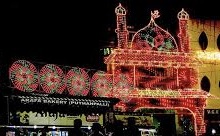
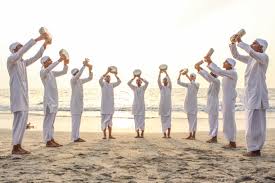
Puthenpalli Nercha[1] was the annual festival and drew pilgrims from far and wide. Ghee rice was distributed to the pilgrims and the needy. Ghee rice is a popular delicacy in the Malabar region. The flavour was largely syncretic as the festival was in December around Christmas and it catered to all communities irrespective of religious inclinations. A grand procession involving elephants and traditional musical performances like Chenda Melam using the traditional drums of Kerala and Mapila Pattu… dances like Kol Kali and Duffu Muttu followed.
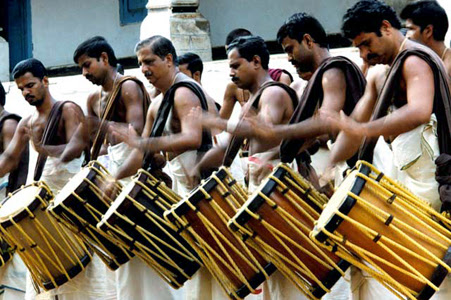
It is typical of Kerala that religious festivals have both a religious and a community purpose. Over centuries, different religions have co-existed in harmony. Elephant processions are common in Hindu temple festivals and are also increasingly used in church and mosque celebrations.

In the olden days these festivals were also important locations for commerce as various stalls were set up selling a variety of goods. Today with online shopping sites and home delivery this may be less important though the shopping attraction still exists. These festivals enable people to forget the challenges of daily life and be transported to a different world for a few days. The Hindu festivals are called Poorams or Velas, the Christian ones are termed Perunnal and the Muslim ones are called either Nercha or Perunnal. Puthenpalli Nercha also boasted a mesmerising fireworks display at night.

The mosque committee served the community by running a school and an orphanage.

We were provided with food from the school hostel. The food was usually par boiled rice and sardines. We were provided with both spicy sardine curry and sardine fries. Two sardines in the curry and two or three well fried and crispy ones for both lunch and dinner. Eating the same food day after day could get a bit boring though! There would also be a vegetable that used to vary daily. And Kerala papadam. The Kerala fish curry used plenty of coconut and tamarind. A coconut and chilly paste was coated on the sardine and it was then deep fried in coconut oil before being part of the curry. Shallots, Kashmiri chillies and curry leaves are common ingredients. I discovered as you travelled up the Malabar coast toward Mangalore, the coating became less spicy.

The emergency department was busy during the evenings, but things usually quietened down at night. I always found night duty tiring as it took me a long time to go back to sleep after attending to a case. Injuries were common and we also received psychiatric patients for admission to the psychiatry ward and cardiac patients as we had an CCU. We were not sufficiently trained to handle aggressive patients. We did have a security person on duty outside the emergency. There were also other security personnel on duty at the entrance to the CCU and at different outpatient departments.     

The hospital was surrounded by village homes, and we often walked along the quiet by lanes. The quarter next to me on the top floor was occupied by a lab technician and he was good company and had a wealth of stories to tell. The buses were usually very crowded.

The coast was not far, and you could also walk on the beach and watch the fishermen set out in their boats. The mosque was usually crowded. There were no academic activities at the hospital, and we learned by doing. We would get a break after finishing our night duty and I used to combine my leaves and spend two or three days with my uncle in Palakkad once every two months. KMM hospital was a good place to work. I eventually left to join a small hospital and clinic at Areacode further north in the same district.

[1] The Perumpadappu Puthen Palli Nercha is a Muslim festival that celebrates Marhoom Kunji Mohammed Musaliar. https://www.keralatourism.org/1000festivals//assets/uploads/pdf/1515486704-0.pdf

.

Dr. P Ravi Shankar is a faculty member at the IMU Centre for Education (ICE), International Medical University, Kuala Lumpur, Malaysia. He enjoys traveling and is a creative writer and photographer.

.

PLEASE NOTE: ARTICLES CAN ONLY BE REPRODUCED IN OTHER SITES WITH DUE ACKNOWLEDGEMENT TO BORDERLESS JOURNAL

Click here to access the Borderless anthology, Monalisa No Longer Smiles

Click here to access Monalisa No Longer Smiles on Kindle Amazon International
Categories
Slices from Life

The Pearl of the Indian Ocean

By Ravi Shankar

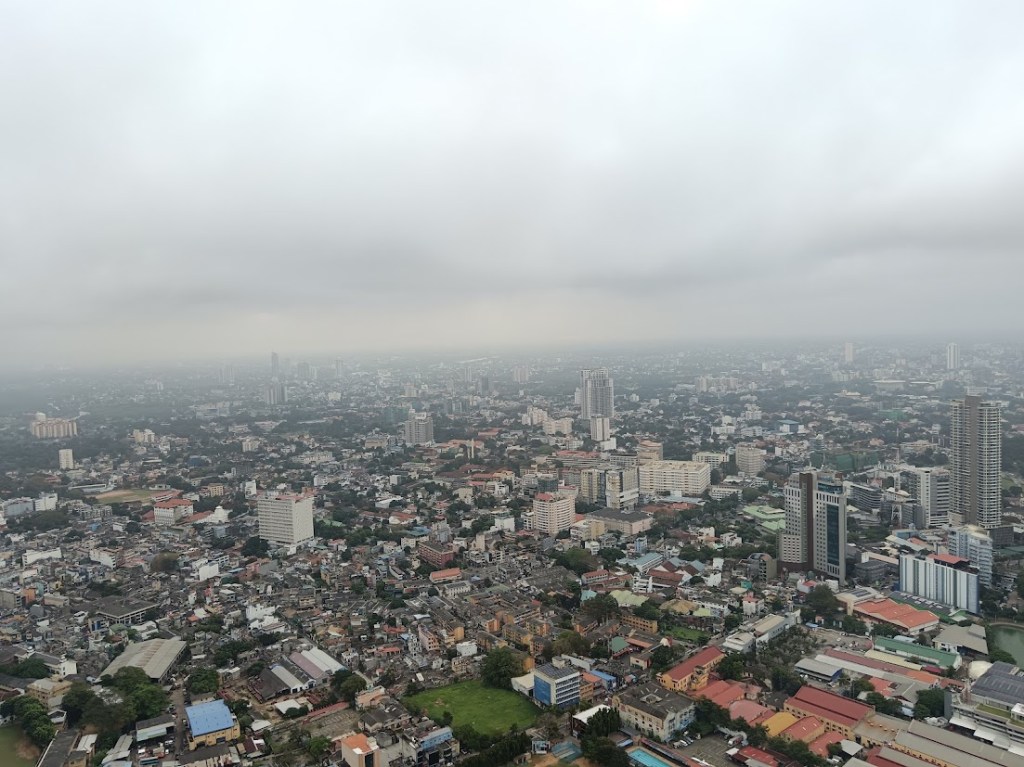
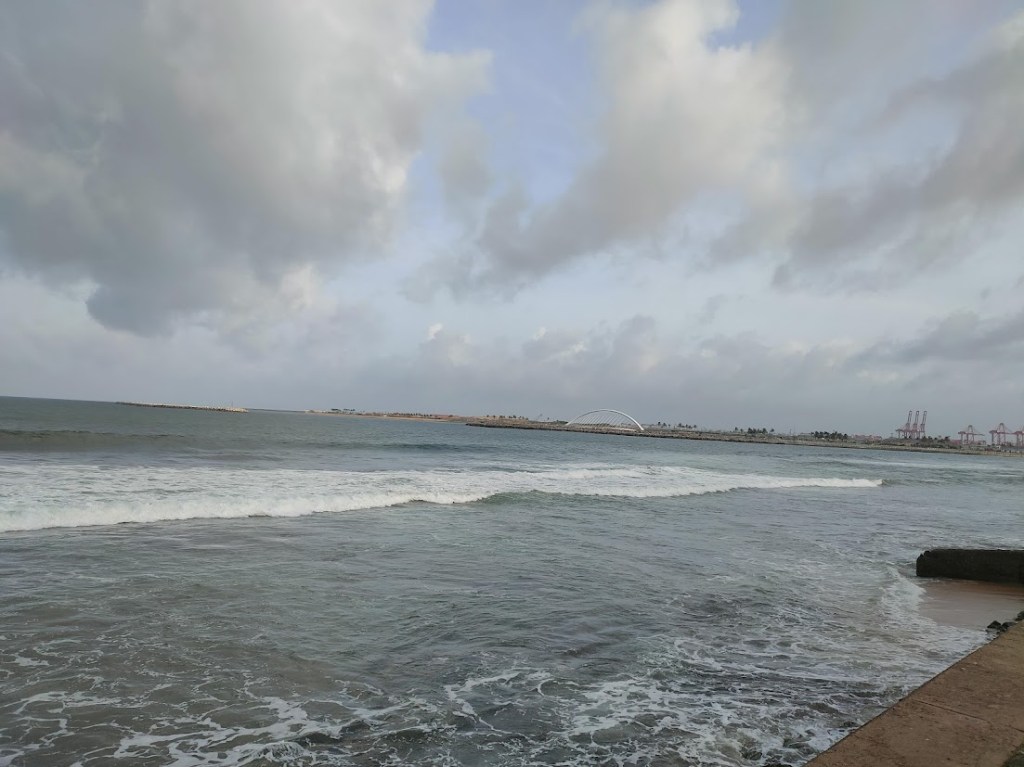
A panoramic view of Colombo. Photo courtesy: Ravi Shankar

My impressions of Colombo and Sri Lanka were positive. I was aware of the high human development indicators of the island nation, progress in access to essential medicines and the civil war. Sri Lanka shares many similarities with the state of Kerala in Indian in terms of topography, culture, food habits, high human development, outmigration, militant trade unions and a passion for egalitarian development. I also remembered the recent violent uprising against the former president and the image of the public frolicking in the pool at the presidential palace.

I was happy to receive an invitation to travel to Colombo in July 2023. I was invited to The Colombo Medical School, which was established by the British in 1870 and is one of the older schools in South Asia. It is the premier medical school of the country, and a new tower block has been constructed. The twenty-story tower is spacious and houses various departments. the humanities. The school was the first to start a Department of Medical Humanities (using art in the education of doctors) in South Asia. The physiology department has created a museum consisting of old instruments and apparatus that are no longer used. This is an excellent idea, and you remain in touch with the history of medicine.

The hotel where I stayed was located on Galle Face Road with the beach and the Galle Face green on the other side of the road. The beach was clean, and the park was originally laid out in 1859 by the British Governor General Sir Henry Ward. The Dutch had placed the cannons facing the ocean as a defence against the Portuguese. Sri Lanka had changed hands multiple times among the different colonial powers.

One of the striking features of Colombo is its cleanliness. The buses may be old and crowded but they are colourful. There are also rickshaws in a variety of colours, mainly green and red though yellow ones were less common. The kittul jaggery harvested from the fishtail palm or the jaggery palm is famous and I loved the gingelly rolls made with this jaggery. My second visit was in early January this year. The apartment where I stayed was attached to an old Sri Lankan house. The location was near to all conveniences but away from the noise and traffic.

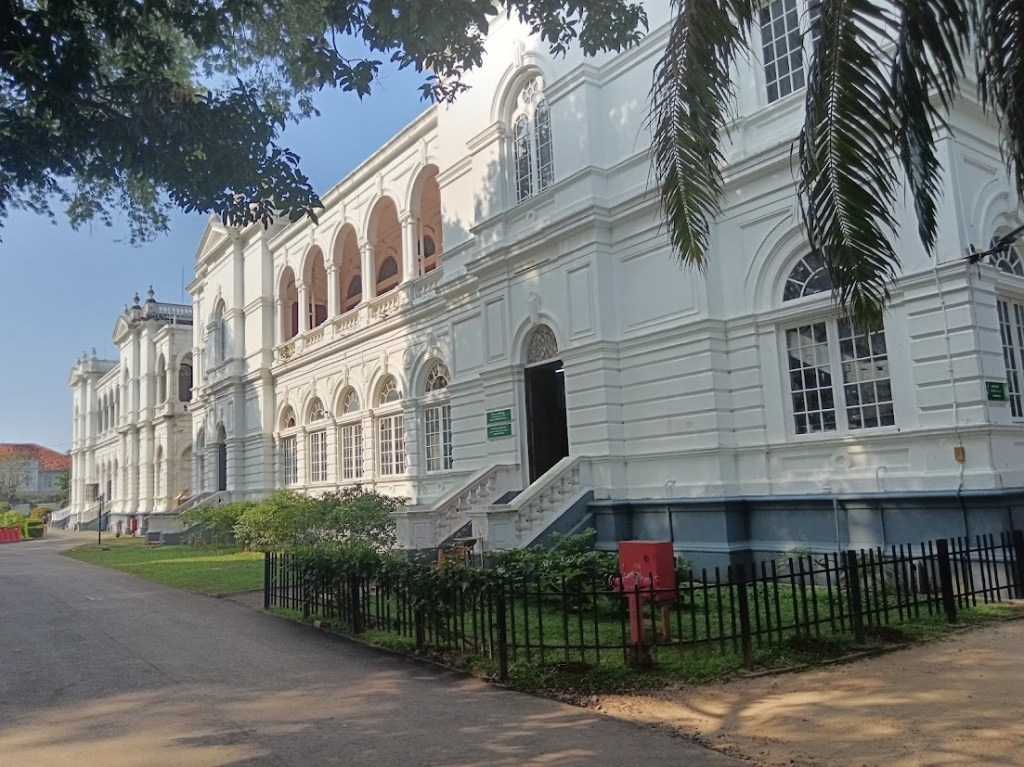
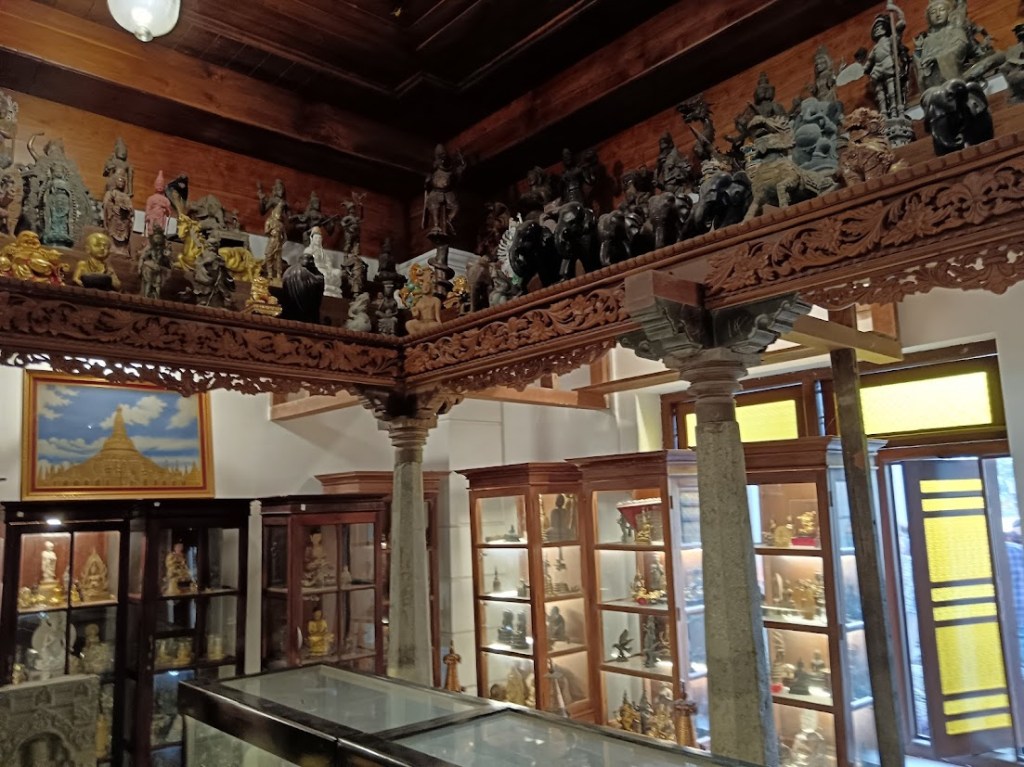
I visited the Sri Lankan national museum, the largest in the country. It was established by Sir Gregory, the British governor of Ceylon (as Sri Lanka was then called) in 1877. The museum is housed in a white, neo-Baroque building and offers a fascinating glimpse into Sri Lanka’s past. The museum is well maintained though it is not air conditioned. The humidity is a constant presence in Colombo. The collection of antiques at the museum is extraordinary.

On my last evening in Colombo, I did some sightseeing. We went to the Gangaramaya temple, the most important one in Colombo. The architecture is a mix of Sri Lankan, Indian, Thai, and Chinese styles. The temple was started by the famous scholar monk Hikkaduwe Sri Sumangala Nayaka Thera in the late 19th Century. The temple has a rich collection of Buddha statues and huge collections of ivory that must be worth millions if not billions. Our next stop was the Lotus tower at 351.5 metres, the largest self-supported structure in South Asia. The lotus is a symbol of purity. view of Colombo city from the observation tower at the top is excellent. I could see the Galle Face Road where I had stayed during my last visit. We could see the Sri Lankan railway depots and stations.

Colombo is a fascinating city. There is plenty to see and do. Recent economic events have hit the island hard. During my subsequent visit I plan to explore other parts of this magical country. Serendip/Serendib was the ancient Persian/Arab name for the country. The name is believed to be derived from the Sanskrit Simhaladwipa (dwelling place of Lion’s Island). The lion occupies a prominent place on the Sri Lankan flag.

The three princes of Serendip in an ancient story had the knack of making unexpected discoveries and is the root of the word serendipity in English. Visit Colombo and Sri Lanka, who knows what serendipitous discoveries await you?

Photo Courtesy: Ravi Shankar

Dr. P Ravi Shankar is a faculty member at the IMU Centre for Education (ICE), International Medical University, Kuala Lumpur, Malaysia. He enjoys traveling and is a creative writer and photographer.

.

PLEASE NOTE: ARTICLES CAN ONLY BE REPRODUCED IN OTHER SITES WITH DUE ACKNOWLEDGEMENT TO BORDERLESS JOURNAL

Click here to access the Borderless anthology, Monalisa No Longer Smiles

Click here to access Monalisa No Longer Smiles on Kindle Amazon International
Categories
Essay

My Love Affair with (Printed) Books

By Ravi Shankar

The last two years have been especially sad ones for printed books and magazines. Toward the end of 2023, the iconic magazine, National Geographic stopped selling its print issues. And in April 2024, Reader’s Digest stopped publishing. Many other print magazines have also downed their shutters though the online version continues.

I grew up with the Reader’s Digest. My father subscribed to the magazine and each month a copy wrapped in a brown envelope arrived at our door. The envelope partially covered the magazine inside, and you could see the top and bottom of the magazine. The size was small, and this made for easy handling. Reader’s Digest was a magazine you could read comfortably in bed. During the festival of Diwali, there was a special wrapping for the magazine. We had several magazines in our house when I was growing up. My mother used to read many magazines in Malayalam (our mother tongue).

Reader’s Digest provided shortened versions of stories and articles that had been published elsewhere. Their skill was in condensing the material while still retaining the interest. There was a rich collection of reading material. There were also advertisements for other books published by Reader’s Digest. Unfortunately, these were beyond our family budget. I wanted to purchase these when I grew up and became financially stronger. My neighbour who was a scientist had some of these books that I occasionally borrowed.

Another favourite of mine was the National Geographic. My father was a faculty member at a banker’s training college in Mumbai and their library subscribed to National Geographic. He often brought the magazine home. I was mesmerised by the articles and the photos in the magazine. The artistic quality of the photos was superb. The magazine had only three or four articles in an issue but addressed these at great depth. I travelled to faraway places, to the bottom of the ocean, to within the human body and to outer space with the magazine. Later, National Geographic started a television channel, and I would watch the documentaries in the nineties.

We also subscribed to the Illustrated Weekly of India. This was in a large format and again had very good photographs. I still remember the column by the journalist Khushwant Singh titled ‘With malice towards one and all’. I was also a fan of the comics section of the magazine. I had a huge collection of comics and my father purchased both Amar Chitra Katha and Indrajal Comics. Amar Chitra Katha introduced me to the rich history of India. Indrajal comics had superheroes like Phantom, Mandrake, and Flash Gordon. I used to eagerly await new issues. Most of my comics were lost when we shifted houses.   

When the news magazine, India today, made an appearance, we subscribed to it and to Outlook and The week (Indian news magazines). During my school days in May, I used to eagerly await the new textbooks and notebooks for the next class following the results. I used to go with my mother to purchase these from a stationery store near the railway station. The smell of the new paper and the fresh ink was mesmerising. I loved to read some of the easier chapters in these books. Covering the notebooks with brown paper was another major activity. Our school year started with the rains in June.  

My good friend, Sanjay Mhatre had a good library and loved to collect books. I loved to borrow from his vast collection. His collection on physics and cosmology were extensive. In those days, the erstwhile Soviet Union used to have cheap books of high quality for Indian readers. I remember the publishers Mir and Progress and I had several of their collections on science. The Soviet publishers used to hold exhibitions in our college. For twenty or thirty rupees, you could purchase high quality hard bound books. My introduction to quantum mechanics and to chemistry was through one such book.

At Thrissur in Kerala most of our medical textbooks were western and predominantly from the United Kingdom. There used to be an English Language Book Society (ELBS) that published cheaper versions of textbooks for developing countries. With our limited resources purchasing textbooks was a challenge. The two major textbooks published from the United States were those of Anatomy and Pathology. Those days we did not have online textbooks and online sources and were limited to the printed word.   

I used to write for our medical college magazine and eagerly waited for the annual issue to be published. During my residency days at PGI, Chandigarh I was the literary secretary and was very involved in bringing out the annual magazine, The Resident. We also introduced a newsletter, ARDent Voice, with ARD standing for the Association of Resident Doctors.

At Pokhara, Nepal the college library had a good collection of general books and novels in addition to medical books. I used to read a lot of novels and the author, Frederick Forsyth was one of my favourites. His meticulous research blurred the lines between fact and fiction. Sidney Sheldon was another bestselling author. Novels enabled me to travel vicariously to different places and through varied situations.

Today reading has become less common among the younger generation. Reading strengthens creativity and the imagination as you must imagine in your mind’s eye the situation the author is creating. Is it not magical that the author can communicate with you, the reader through squiggles on a page across the boundaries of space and time?

I started writing during my MBBS days. I still remember the versification competition I took part in and won the first prize. I used to participate in different literary events at my college. In Nepal, I combined my triple loves of writing, photography and hiking with articles for the newly started newspaper, The Himalayan Times. I met my writing guru, Don through the magazine, ECS Nepal. Don was the editor of the magazine and a powerful writer with a deep knowledge of Nepal. I learned a lot from his comments and suggestions and the workshops he conducted. I also used to write a medical column for ECS Nepal. ECS Nepal was a beautifully produced magazine with great photographs. Unfortunately, it stopped publishing around the beginning of the pandemic.

Other travel and lifestyle magazines were also published from Nepal but could not sustain themselves. In the Caribbean Island of Aruba, I used to write off and on for a daily newspaper published in English. Again, the newspaper ceased publishing. During the last two decades several print magazines have ceased to exist. I feel it is a great loss.

I do not read much on paper these days. Most of my reading is done online on computers, laptops and tablets. I also have a Kindle reader. Kindle screen mimics the appearance of paper closely, but it is not the same as reading a printed page. You can no longer feel the smoothness of glazed paper, the smell of fresh ink and the vivid colours of photographs. With the closure of the print version of Reader’s Digest, an era in print publishing has ended. The demise was sadly expected. Without printed books, our (my) world may never be the same again!

.

Dr. P Ravi Shankar is a faculty member at the IMU Centre for Education (ICE), International Medical University, Kuala Lumpur, Malaysia. He enjoys traveling and is a creative writer and photographer.

.

PLEASE NOTE: ARTICLES CAN ONLY BE REPRODUCED IN OTHER SITES WITH DUE ACKNOWLEDGEMENT TO BORDERLESS JOURNAL

Click here to access the Borderless anthology, Monalisa No Longer Smiles

Click here to access Monalisa No Longer Smiles on Kindle Amazon International
Categories
Slices from Life

No Film? No Problem

By Ravi Shankar

The studio room was ill ventilated. The bright lights were making things hotter! We were at a photo studio in Bhandup, Mumbai, trying to take a family photograph. The photographer was trying his best to arrange us in a pleasing and photogenic composition. The process was however, taking longer than expected and my youngest brother was getting scared. He was beginning to cry and soon was bawling his head off. My mother has a knack of soothing and calming crying children, but this time even her efforts were not successful.

I was reminiscing on this episode recently and was thinking on how easy it has now become to capture photographs and video. For a long time, you had to use film to capture photographs. Photography was an expensive proposition then. Initially, you only had black and white films. Later colour films became widely available. The cost of films, of processing and printing photographs all added up.

Films were also only invented in only 1889, but they were highly flammable. ‘Safety films’ were introduces only in the last century in 1908. Before 1889, photographers had to lug around heavy glass photographic plates. The process of capturing images on film also took a long time. When taking portraits people had to stay still for minutes at a time. The older generation of cameras were bulky and heavy and difficult to carry around. Photography was a significant advance in human history. Before 1802, we had to depend on painters and portraitures to depict everyday scenes and special occasions.

The Eastman Kodak company invented flexible film to capture photographs and for several decades the company was a world leader in photography. Unfortunately, they were not able to fully adapt to the change to a digital format and after filing for bankruptcy the company is now back with commercial printing, film stills and movie production. The Japanese were the world leaders in cameras for several decades. Yashica, Minolta, Nikon, Canon, Pentax, Olympus are legendary names. For a long time during my student days and early medical career photography was an expensive hobby to indulge in. My first purchase was an Olympus. A small and compact camera that captured great images. The camera came with a remote and a timer. Olympus made great cameras and usually the lens was integrated into the body and could not be removed and changed.

My good friend, Sanjay Mhatre in Mumbai, is an architect with wide-ranging interests. He was the one who informed me about large format cameras and the Hasselblad series. Large format is especially important in architecture. Another major German brand was Leica. These were very expensive. Dr Unnikrishnan PS was my batch mate and hostel mate during the MBBS course. He had a keen interest in painting and has now switched to photography. Recently he has opened a museum dedicated to photography, Photomuse (https://photomuse.in/) in Thrissur district in Kerala. This is India’s first museum dedicated to photography.

My first single lens reflex (SLR) camera was a Pentax. I had purchased this from New Road in Kathmandu in 2000. A SLR is a camera that has a mirror in front of the film and when the shutter is clicked the mirror moves up and the film is exposed. The mirror otherwise helps photographers see what they are about to click through the view finder. The view finder was very important as you did not have screens that showed you what you were about to click. These came much later. With the advent of screens showing the scene in front of you, view finders began becoming less common.  

Himalayas — shot using the Pentax, Photo courtesy: Ravi Shankar

Kathmandu is a very photogenic city with ancient monuments and temples, and I tested out my new buy under a variety of conditions. I had to wait to get the film developed before I could see how my photos turned out. One had to be creative and resourceful as immediate feedback was lacking. I also invested in a polarizing filter, and this was very useful in highlighting the contrast between the snow-clad mountains and the deep blue sky.   

The camera was heavy and weighed around 1.2 kg but came with its own bag making it easier to carry. The camera accompanied me on most of my treks in Nepal. I was able to capture great images of the spectacular country. While hiking the hills, you had to stop, take the camera out of the bag, focus it, adjust the polarizer, compose the scene, and then click. Someone said that photography provided the sahibs with an excuse to rest and catch their breath during steep hikes. Karna Shakya is a famous Nepalese traveller and photographer who later he founded the Kathmandu Guest House in Thamel, Kathmandu. He has written about photography during his treks (in his books and articles) and the difficulty he faced while looking for colour films and developing the same in the 1970s in Kathmandu.

The cameras on mobile phones started becoming better from 2010 onwards. I had a Samsung mobile phone with me in Aruba that took good pictures. Aruba is a picturesque place with nice beaches and turquoise blue waters.

Aruba Coastline — shot using a Samsung Mobile. Photo courtesy: Ravi Shankar

I eventually graduated to an Oppo smart phone with a better camera. This smart phone accompanied me on my travels in Peru. In late 2019, Realme introduced a new smart phone with a 64 Megapixel sensor.  

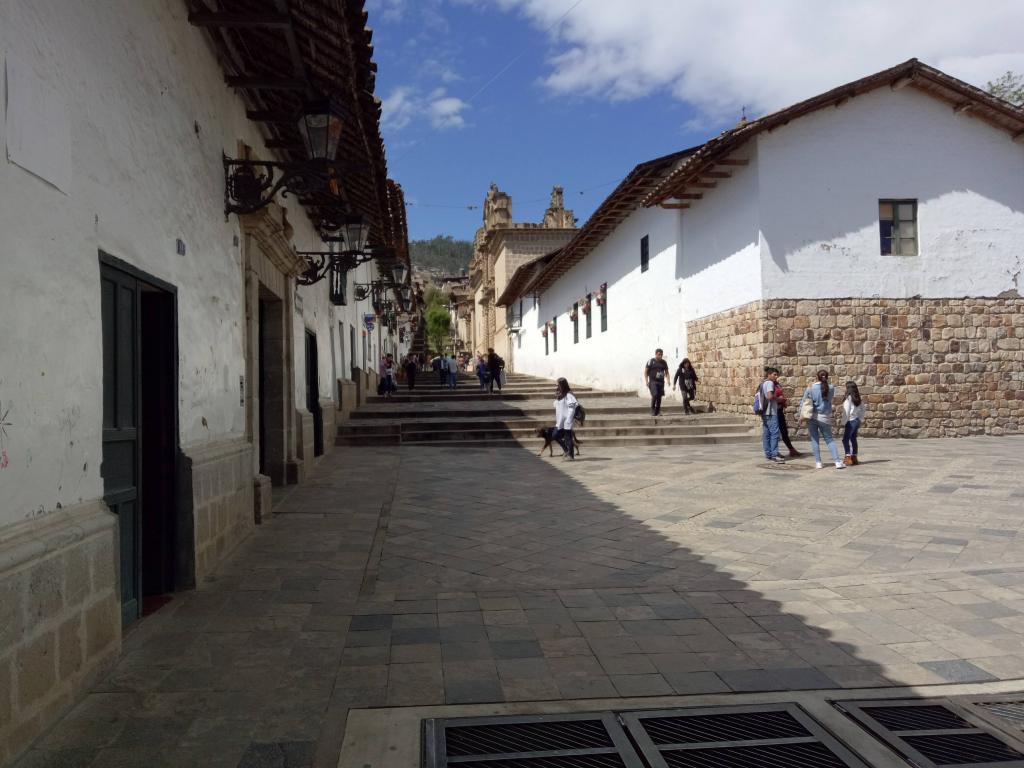
Cusco Peru – Shot using an Oppo. Photo courtesy: Ravi Shankar

Mobile phone manufacturers are constantly upgrading their cameras. The mobile camera war is hotting up. The image sensors started getting larger and cheaper. Samsung and Sony started investing in sensor research and development. Some mobile manufacturers collaborated with camera makers like Hasselblad and Leica to bring these cameras to mobiles. Around late 2023, I was looking to upgrade my smart phone and wanted a more powerful camera. There was a wide choice available. 200 MP sensors were available on some phones while others had 120 and 100 MP cameras. I did some research and found that most phones only shoot images of around 32 MP at the maximum. Usual photos are taken at a much lower resolution.

I eventually purchased an Honor phone with a 100 MP camera. I have used this widely during my travels and gives excellent results especially in good lighting conditions. Mobile phones are lighter and less obtrusive compared to a SLR. Most SLRs have also now shifted to digital sensors rather than film. With a mobile phone it may be easier to capture people in their natural situations. The trend today is to have one device that can do it all. Play videos, check emails, make online bookings, call, chat, capture images and video.

Capturing video has also become easier and many phones have image stabilisation and allow you to shoot in HD and 4K formats. There are a variety of software that integrate images from different sources and can edit and polish a video. Taking a photograph is no longer regarded as something special. Taking a video and posting it on social media is also very common. Many people earn their livelihoods through creating and posting videos on platforms like YouTube and TikTok. We have come a long way from dressing up in our best formals and going to a studio to get our photographs taken to capturing images, selfies and videos using our mobile phones. Only a very brave person can predict what the next hundred years will bring!

Dr. P Ravi Shankar is a faculty member at the IMU Centre for Education (ICE), International Medical University, Kuala Lumpur, Malaysia. He enjoys traveling and is a creative writer and photographer.

.

PLEASE NOTE: ARTICLES CAN ONLY BE REPRODUCED IN OTHER SITES WITH DUE ACKNOWLEDGEMENT TO BORDERLESS JOURNAL

Click here to access the Borderless anthology, Monalisa No Longer Smiles

Click here to access Monalisa No Longer Smiles on Kindle Amazon International
Categories
Essay

Where Eagles Soar

Narratives and photographs by Ravi Shankar

Langkawi

Most passengers got down from the bus at Alor Setar, Kedah, north Malaysia. Binaya, my travel companion, shifted to the front seat of the double decker and later I followed him. It was after eight thirty in the evening and the road had become narrower. After driving on the six lane E1 expressway for most of the day, the narrower road looked confining. Traffic had also reduced. We got an excellent driver’s eye view of the road. One of the benefits of a double decker is the opportunity that you can pretend to be the driver. Malaysia’s northern most state of Perlis seemed different from the larger ones to the South. It was around nine-thirty at night when we reached the Kuala Perlis bus terminal. It was a short walk to our hotel near the jetty.

The Deepavali holidays had just begun and the exodus from Kuala Lumpur to various hometowns was in full swing. The expressway was packed with cars and our drive north was a slow crawl. The InterCity bus service (a private bus operator) used a double decker for this trip though the lower deck had been stripped of seats and used only for luggage and cargo. The seats were comfortable and the drive smooth though extremely slow due to the traffic.

Next morning, we had a traditional Malay breakfast of nasi lemak (rice cooked in coconut milk), fried anchovies and kueh (traditional cakes) along with teh tarikh (boiled and frothed tea). Pouring tea from a great height from one mug to another is a traditional South Indian way of cooling the drink and generating a thick head of foam. Tea shops do this with an extravagant flourish. We walked around the jetty and waited for our midday ferry to Langkawi.

The process of boarding the ferry was smooth and organised. We were seated right at the front. Roro ferries that could carry cars were approaching Kuala Perlis from Langkawi. The sea was calm, and the islands of Langkawi appeared after half an hour. The ferry went round the island and eventually approached the town of Kuah. Kuah is the district headquarters of Langkawi. There is the iconic Langkwai eagle statue near the jetty. The jetty was modern, and we took a taxi to our hotel located near Cenang Beach (Pantai Cenang in Malay).

Cenang Beach

The main island of Langkawi is surprisingly large, and taxis are the main means of transport. Cenang beach is popular with travellers. We were staying at the Cenang Langkwai House near Cenang beach. The room was spacious and well-equipped. Considerable thought had gone into the arrangements, and we had a pleasant stay. The first day I had noodles with prawns for lunch, and I was pleasantly surprised by their freshness and taste. Sea food was plentiful and enjoyable. Binaya was not comfortable with sea fish and preferred freshwater delicacies. I could understand his perspective as I always preferred sea fish and found freshwater fishes not very much to my liking. We dined in a large restaurant that was a few minutes’ walk from our hotel. One evening I tried mussels (delicious) while on another occasion I had laksa (Laksa is a spicy noodle dish popular in Southeast Asia. Laksa consists of various types of noodles, most commonly thick rice noodles, with toppings such as chicken, prawn, or fish).

My good friends, Naveen and Sunil, had recommended that we take the island-hopping tour. We booked the tour for the next morning. Langkawi is also famous for duty-free shopping and Binaya wanted to purchase a suitcase. The prices, however, were not lower than those in KL. Eventually I ended up purchasing some excellent chocolates at the Cenang Mall. Our stay was made sweeter!

Early next morning we walked down to the main thoroughfare to have roti canai is a South Indian flatbread dish popular in Malaysia). We waited on the white sands of Cenang Beach for our transportation to the tour jetty. Each boat had about 24 passengers and was well organised. Everyone had to wear life jackets while on the boat. We had our photos taken and this was our introduction to this Langkawi custom. The tour lasts for around four hours and covers three main islands south of the main island. Our first stop was the Pulau Dayang Bunting, where we entered a geopark to hike up the hills to a lake. The trail was well maintained. Humidity was the main problem. After the mandatory photo, we continued to the lake. The tiles on the water, like elsewhere in Langkawi, were made of a floating material stays afloat on lakes and seas but depresses slightly under your weight. Both of us were quiet and we were missing the energy and dash of Sunil, our friend from Monash University, Malaysia.    

Island Hopping

We continued to Pulau Singa Besar to watch eagles feed from boats. Pulau means island in Malay though it brought images of the fragrant rice dish to our minds. We continued to Pulau Beras Basah and the sandy beaches and the turquoise waters took me back in time to one happy island, Aruba. There were colourful beach huts and paragliding was available for more adventurous souls. The ride back to the main island was short and we could see a docked cruise ship in the distance. Our photo had been converted into a souvenir (a small plate on which the photo was printed). We had lunch at our morning restaurant. Binaya had nasi goreng (fried rice) while I had the all-day breakfast. This was a good deal and consisted of two pieces of toast with butter, two fried eggs, a chicken sausage, and baked beans. Binaya tried out different geographical varieties of nasi goreng from Pattaya to Cina to USA.

After lunch we went to the Underwater World. The aquarium has themed sections like tropical rain forest, subantarctic climate, and marine life sections among others. The main attractions were the seal show and the penguins. The seal performed a variety of tasks and received a treat after completing each successful task. This is mentioned as the largest aquarium in Malaysia. The one at KL has a spectacular underwater tunnel and you can watch marine life swim by all around you.

Langkawi means reddish brown eagle in the Malay language and is believed to be the place of Garuda. The islands have been a part of the Kedah sultanate for over two millennia. The islands have a geological history going back to over 550 million years. Langkawi is thought to have been cursed for seven generations in the early 18th century by Mahsuri, a woman who was falsely accused of adultery and executed unjustly. Langkawi was occupied by the Kingdom of Siam and became a part of Malaysia after the Anglo-Siam treaty. The islands were a sleepy backwater and were developed into a major tourist destination by Dr Mahathir Mohamed.

The next morning, we travelled to the cable car toward the north of the island. The Deepavali holidays brought many to the island. The tourist infrastructure’s good, and we did not experience crowds and long waiting times. The Langkawi sky cab provides an aerial link from the Oriental Village at Teluk Burau to the peak of Gunung Machinchang, which is the location of the Langkawi Sky Bridge. The total length is 2.2 km, with a journey time from the base to the top of around 15 minutes. It was officially opened in 2003. We were comparing this to the Manakamana cable car in Nepal. This one is longer and steeper. The elevation between the base and the middle station is said to be the steepest in the world. There were delightful views of the bay and the surrounding islands as we moved slowly toward the top. The Skybridge is a major attraction and is among the longest free span and curved bridge in the world. There are a few glass sections that allow you to look down into the valley. The views were majestic, and the bridge is around 660m above sea level. There is also a sky glide option with a comfortable cabin style vehicle that carries visitors from the top station to the sky bridge.

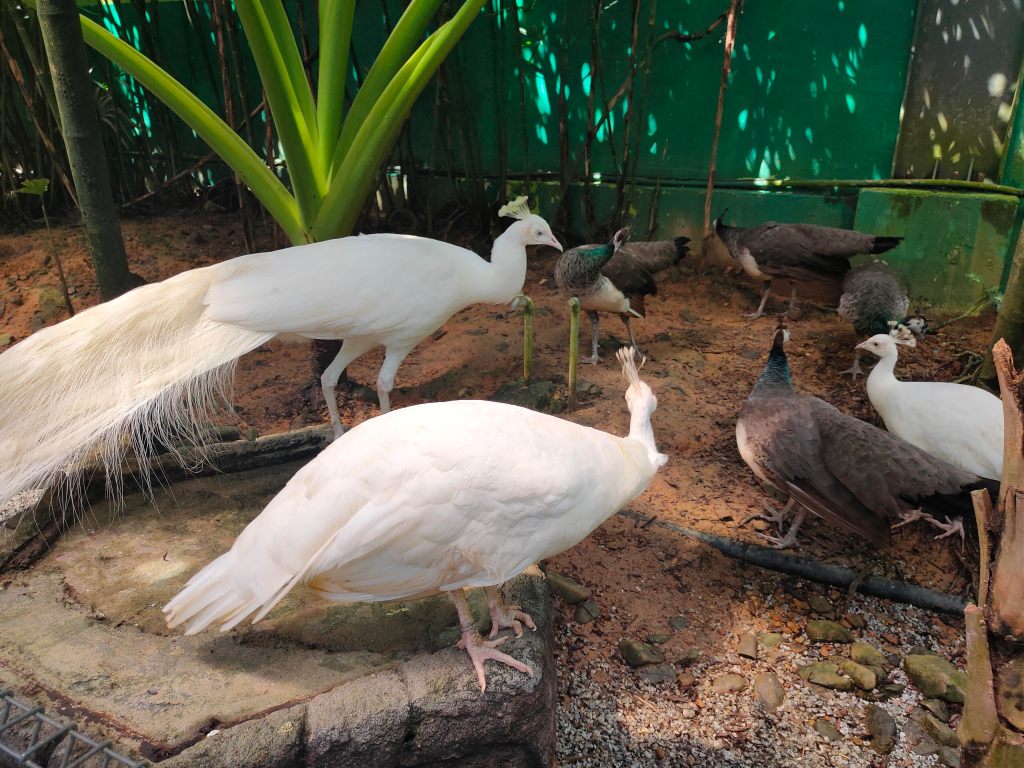
We took a taxi to the Langkawi Wildlife Park. Malaysia has some delightful animal parks and the one at Langkawi offers close encounters with animals. The animals are used to visitors and there are plenty of opportunities to touch, pet and feed them. Trained handlers were at hand. I was reminded of ‘Farm in the City’ at KL constructed around a similar theme. The covered walking path meanders through animal enclosures and the peafowls reminded me of the KL Bird Park. Feeding the small birds, the tortoises, deer, and the rabbits is a highlight of the visit. Like at other attractions there is a mandatory photo, and the exit is always through a duty-free shopping complex. That evening we had a spectacular thunderstorm. Being to the north the rains may be more seasonal at this tropical paradise.

The next morning, we had to depart back to routine life. We reached very early for our flight back to KL. We watched passengers boarding Air Asia, Malaysian Airlines and Scoot flights to Penang, KL and Singapore. Air Asia is a dominant player in the Southeast Asian market. The flights are cheap and usually fly on time. The aircrafts, however, may be older and the leg space is limited.

We had a pleasant break at one of Malaysia’s major tourist destinations. There are many attractions here that we are yet to experience. Time was limited and we did not want to rush ourselves from attraction to attraction during a leisurely break. We plan to return one day to the oldest land in Malaysia, 550 million years in the making as proudly proclaimed by the site Naturally Langkawi!

Dr. P Ravi Shankar is a faculty member at the IMU Centre for Education (ICE), International Medical University, Kuala Lumpur, Malaysia. He enjoys traveling and is a creative writer and photographer.

.

PLEASE NOTE: ARTICLES CAN ONLY BE REPRODUCED IN OTHER SITES WITH DUE ACKNOWLEDGEMENT TO BORDERLESS JOURNAL

Click here to access the Borderless anthology, Monalisa No Longer Smiles

Click here to access Monalisa No Longer Smiles on Kindle Amazon International

Categories
Nostalgia

My Hostel Days

By Ravi Shankar

The air was getting colder. There was an early morning chill. I wrapped my cotton blanket more tightly around me. January is one of the colder months of the year in Thrissur, Kerala, India. During winter and summer, I had taken to sleeping on the terrace of the men’s hostel. More peaceful and soothing. You can watch the twinkling stars and the clouds. A few other kindred souls did the same. Though it did rain on occasions and then we had to beat a hasty retreat with our bed rolls. The terrace also attracted students who studied using their table lamps till the small hours of the morning.

I stayed at the same hostel room throughout my undergraduate medical (MBBS) course and the first month of my internship. I still remember my entry into the men’s hostel. I had a big suitcase, a bedding roll, a table lamp, a plastic bucket, a mug, and a few daily necessities. We were allotted the first floor of the C Block called the C’ block. We were the sixth batch of the institution and the last one to enjoy the privilege of being allotted rooms together in a single block. Of the twelve rooms in C’ all except three were allotted to our batch.

Ragging was still going strong though strong anti-ragging efforts were also ongoing. We had security guards posted at the entrance to our block and our seniors screaming abuse at us. Gradually after the first few weeks, things quietened down. Reminiscing about those days, I am struck by the simplicity of our lives. Each room had two windows, a ceiling fan, three wooden tables with three wooden chairs, three wooden cots, three metallic cloth hangers, and concrete wall shelves. There was also a ventilator opening into the corridor. Each room was shared by three students. The older medical college hostels had high roofs and did not always have a ceiling fan.

The men’s hostel was located at the edge of the vast campus of the Medical College, Thrissur. There were three blocks (A, B and C) with each block spread over two floors. There was a big portico in front with a phone room and a phone boy. There were bigger rooms (with attached baths) for the tutors and a TV room on the first floor. We had an improvised gym on the ground floor. A room for indoor games was on the first floor next to the TV room and the hostel mess was on the ground floor. In those days there were no cell phones and subscriber trunk dialling (STD) was not yet available. Trunk calls had to be booked manually. The newspaper and magazines room were right at the hostel entrance.  

The mess was a simple affair with eight wooden tables and wooden stools and chairs. The chairs had to be strong enough to withstand frequent abuse from the students. There was a serving window, and the main kitchen was inside. Mornings were busy as the clinical students had to board the college buses to reach the hospitals in the town. We had a varied menu for breakfast. This could be masala dosa (a flat bread of rice and lentil flours stuffed with vegetables) puttu (steamed cylinders of ground rice, layered with coconut shavings and fillings), idli (a savoury rice cake), upma (a thick porridge made from rice flour or semolina), noolputtu (called string hoppers in Sri Lanka), bread with jam and butter and something that we called the fractional test meal (FTM). FTM consisted of a glass of warm milk, two boiled plantains and two hard boiled eggs. Quite nutritious and filling. Lunch was usually a hurried affair except on Sundays. Afternoon tea or coffee was one of my favourite repasts. Kerala has a rich and varied selection ranging from different types of vadas (savoury fried snacks), adas (fresh coconut and jaggery wrapped in a dough made of rice) steamed in banana leaf, cutlets, pazhampori (fried banana fritters) and something we called the grenade. The grenade was shaped like one, was mildly sweet and required some effort eating. Neither the mess tea nor coffee were remarkable.   

Hostel mess. Photo courtesy: Ravi Shankar

The quality of dinner varied greatly. On the menu could be chappati (unleavened flat bread), Kerala parotta (layered bread), biryani, plain rice among others. People from the central parts of the state were fond of kanji (a rice gruel). Each month we selected three mess secretaries to oversee the mess. Later we started having a dinner feast toward the end of the month with a grand menu. I still fondly remember the biryani and the lime juice. Lime juice is a specialty of the area with a beautiful blend of sourness and sweetness. We had the Indian Coffee House (ICH) run the college canteen off and on. They closed and reopened a number of times. The crowd we had was not enough for their operation? They served masala dosas with a stuffing of beetroot and potatoes, cutlets, and strong rich coffee. Economics restricted this outing to may be once a week. I survived on a monthly money order from my family.

We also had a local tea shop run by an old people a five-minute walk from the hostel. We used to drop in there during the evening for tea, coffee, and snacks. They also occasionally served lunch. The lunch was served on banana leaves and consisted of papadam, injipulli (dark brown sweet-sour and spicy curry made of ginger, tamarind, green chillies and jaggery), vegetables, sambar (a lentil-based vegetable stew), rasam (a spicy South Indian soup-like dish) and fish curry and fish fry as an extra. The fish was mackerel coated in a spicy rich coconut coating and deep fried in coconut oil. During the early days the mess had frequent financial difficulties resulting in closure and we had to hunt for food outside. Luckily there were a few local tea shops around the campus though this often required a long walk. This was challenging especially at night. Eventually the situation stabilized, and closures, luckily became rare. We also had water problems before we were connected to the main water supply. We were dependent on a small pond, which used to dry up during the summer. The mess had a huge water storage container placed near the wash basins in case the taps run dry.    

The medical college campus was the old TB sanatorium. The sanatorium was established several decades ago far away from human habitations. The campus was vast, and the soil rocky. There were a lot of cashew trees on the sprawling campus. Soon campus roads were constructed, and we could walk move about more easily amidst nature. The basketball and the badminton courts were closed to the hostel and were packed during the evenings. Summers were hot though the temperature was usually below 40 Celsius. Now summer temperatures are routinely over 40 degrees throughout much of Kerala. The state is facing the full brunt of global warming.

We organised a hostel day only once during the time I was at the college. That was a grand affair with music and dancing and several courses of food. The ground in front of the hostel was converted into a fairyland with twinkling lights and decorations. We had a system of ‘late mess’ where dinner was stored for us till 10 pm. We often used this service when we went to watch movies in Thrissur town. The bus fare then was below two rupees and now it is around twenty rupees.

We used to enjoy long walks in the sprawling campus and through the by lanes of surrounding villages. Life was very stressful with assignments, submissions, and frequent examinations. We had to find creative means to relax and recharge. I still remember my last week at the hostel. I was doing my posting in the hospital at Thrissur town and decided to shift to a lodge at the town outskirts. I had accumulated several medical textbooks during my study years, and these were heavy and had to be transported safely. Carrying these around required brute physical effort. You had to be physically strong to be a doctor. I developed close links with my room mates and my floor mates during my stay at the Men’s Hostel (MH). These are nurtured and maintained through our batch WhatsApp group. At my alma mater each batch is named after a famous personality in medicine. As I read more about Osler and his stellar contributions to medicine I felt justly proud that our batch carry his illustrious name. MH, Medical College, Trichur you have left an indelible mark on me and my fellow hostelers. MH tujhe salam[1]!    

[1] Salute to you.

Dr. P Ravi Shankar is a faculty member at the IMU Centre for Education (ICE), International Medical University, Kuala Lumpur, Malaysia. He enjoys traveling and is a creative writer and photographer.

.

PLEASE NOTE: ARTICLES CAN ONLY BE REPRODUCED IN OTHER SITES WITH DUE ACKNOWLEDGEMENT TO BORDERLESS JOURNAL

Click here to access the Borderless anthology, Monalisa No Longer Smiles

Click here to access Monalisa No Longer Smiles on Kindle Amazon International
Categories
Slices from Life

The Death of a Doctor

By Ravi Shankar

Zhi-Khro mandala, a part of the Bardo Thodol’s collection, a text known in the West as The Tibetan Book of the Dead, which comprises part of a group of bardo teachings which originated with guru Padmasambhava in the 8th Century. Courtesy: Creative Commons

My friend, Dr Ramesh Kumaran first shared the shocking news with me on WhatsApp. Along with a recent photo, the caption mentioned ‘Mourning the sudden and untimely of our dear Joseph Francis (6th batch). May his soul rest in peace. 6th October 2022.’ I felt sick in the pit of my stomach. This was the first mortality among our MBBS batch mates. One of our friends died when he was studying for MBBS, but he had left the course and was suffering from a prolonged illness. Some of our batch mates had close encounters with death during the ongoing COVID-19 pandemic.   

I was reminded of my own mortality and the fact that we often forget that our time on earth is limited. None of us know when exactly or how we will die. This I believe is a good thing. Movies have explored the sad state of people who knew or supposed they knew when and how they would die. Humans stride through life assuming their immortality. We kill fellow humans indiscriminately. We learn to hate each other. We pursue wealth and power. When we leave our material existence on Earth, we can take none of the accumulated wealth and power with us. The ancient Egyptians believed otherwise and buried their Pharaohs with all they would need in the afterlife. Ordinary people had no such privileges. We do not know much about the afterlife. Here science ends and we enter the realm of religion.

I facilitated a module on Death and Dying for medical and other students and our ignorance about death is profound. Modern medicine has the motto of preserving life regardless of its quality. We have not been trained to let go and make a person’s remaining time on Earth worthwhile. This is slowly changing but change is slow. We do not live life assuming that any moment can be our last on Earth. The Tibetan Book of the Dead (Bardo Thodol) tells us to live each moment in a spiritually fulfilling manner and mentions that we all have the potential to break free from the cycle of reincarnation and become spiritually enlightened beings.

I first met Joseph when I joined the Men’s hostel and the undergraduate medical (MBBS) course at Thrissur, Kerala, India. Our seniors were prowling around our floor abusing us and one of my friends was crying as he had just been forced to take off his moustache. Ragging still exists in India and students who were abused by their seniors wait for the new intake to take revenge. You are not able to take revenge on the powerful, so you take out your anger on the powerless. We see this all around in the modern world.   

Joseph stayed in a room near mine, and we became friends though not extremely close. One of the things I still remember about him is that he used to write with a fountain pen and used black ink. Even in those days when writing was still common most of us used ballpoint pens. He had impeccable handwriting. Joseph was always a perfect gentleman and willing to help others. I believe we did a few of our internship postings together. We collaborated on skits and other presentations during the college day celebrations. I still remember our college trip to Trivandrum Medical College for the Intermedicos festival and we stayed and slept in the badminton court inside the Men’s hostel. Life was simpler in those days. We were beginning to see the end of the MBBS doctor and specialisation, and super specialisation was becoming common. I feel this is a sad development and an MBBS doctor is competent to treat most illnesses. In fact, evidence shows that most illnesses can be handled by a trained paramedic. In most European countries, care is mostly delivered by general physicians while in the United States care is mostly provided by specialists. The amount spent and the health status of these countries/regions tell their own story.  

During those days, failure in MBBS examinations was common. Anatomy at the end of the first MBBS and Medicine at the end of the Final MBBS had the maximum casualties. Grading was arbitrary and there were no clear rubrics to guide the scoring. I was lucky to have squeaked through the anatomy dissection and the medicine courses. Joseph was unlucky and mentioned this often as due to his failures, he could not appear for the entrance exam of PGIMER[1], Chandigarh, one of the top postgraduate institutes in the country. One could not appear for the entrance exams failing the MBBS. A lot of effort has gone globally into changing the assessment system in MBBS and making it fairer and more objective.

Joseph used to join us for an occasional game of basketball. I next met him at Ollur, near Thrissur, when I was doing my post-graduation. St Vincent de Paul hospital was a multi-specialty hospital. I had come down to Kerala for a few days and stayed with Job and Joseph, both medical officers with who I shared a large apartment.

Over the years I lost touch with Joseph, and I next interacted with him in 2018 when I joined a WhatsApp group of my classmates. Joseph was very active in the group and was working as an anaesthesiologist in the United Kingdom. Many of my batchmates were working in National Health Service (NHS) and they often would mention how the NHS is being steadily starved of funds. The COVID pandemic hit the medical community hard. Doctors in practice seem to be especially vulnerable. We discussed this and postulated that it could be because they are exposed to repeated doses of the virus in high concentrations from multiple patients. Many doctors had lost their lives; many others I know were in the Intensive Care Unit for prolonged periods of time. Two of my classmates in the UK had serious illnesses requiring hospitalisation and prolonged intensive care.       

I next interacted with Joseph when I was unable to make a bank transfer to the UK to pay for membership fees of a professional organisation. The transfer was not going through and eventually, I asked Joseph if he could do the transfer from his account in the UK, and I would deposit the money in his account in India. He readily agreed. Joseph was always very helpful. During the last two years, I have lost several friends. Two academic collaborators, one in Malaysia and the other in Yemen passed away. Colleagues I knew in Nepal died due to COVID complications.

Death can be a celebration of a person’s life. An Irish wake is one last party to honour the deceased. Unknown diseases plagued the Irish countryside causing a person to appear dead. Hence a person would be waked in the deceased’s home for at least one night. I had the exact fear while certifying death. What if the person then woke up and disputed my certification? I was very careful and meticulous while writing out a death certificate.     

These deaths have underscored my own mortality. As someone once said, death and taxes are inevitable. Accepting one’s own mortality and coming to terms with our eventual demise makes you aware of the folly of chasing power and glory and can contribute toward a gentler, more decent world. Climate change is a testament to human greed and folly. We are still uncertain how liveable Earth will be during the next hundred years. As Mahatma Gandhi said, we can satisfy human needs, but we cannot satisfy human greed!  

.

[1] Postgraduate Institute of Medical Education and Research

.

Dr. P Ravi Shankar is a faculty member at the IMU Centre for Education (ICE), International Medical University, Kuala Lumpur, Malaysia. He enjoys traveling and is a creative writer and photographer.

.

PLEASE NOTE: ARTICLES CAN ONLY BE REPRODUCED IN OTHER SITES WITH DUE ACKNOWLEDGEMENT TO BORDERLESS JOURNAL

Categories
Stories

Captain Andi is in love

By Dr. P Ravi Shankar

The bubbly lyrics of Bobby McFerrin’s song ‘Don’t worry be happy’ filled the room. Andi was awakened from his slumber and slowly opened his eyes. He glanced at the clock by the bedside. Five a.m. Still dark outside. He had a virtual clinical exam later that morning. Early to bed and early to rise in the good old armed forces tradition was always mentioned by his mentor. Though with the heavy course workload and multiple assignments on most days he did not hit the bed before 11 pm.

His artificial intelligence (AI) mentor carefully monitored his academic progress. He was a straight A student and had done very well through the duration of the course, which was partially done. He was doing an accelerated curriculum and was expected to graduate in about two years. After his morning ablutions, his home robot came with a steaming hot cup of coffee. Dark and strong just the way he liked it. The robot checked his physical parameters. There were several sensors implanted in his body monitoring in real-time his physical parameters. Everything seemed normal and there was no cause for alarm.

He was one of the twenty students who had joined the undergraduate medical program at the Armed Forces medical school a year ago. He was inducted at the rank of Captain. Now the army and other organisations did not require many doctors. AI systems did most of the work of diagnosing and treating patients. AI was ubiquitous and omnipresent. Systems drove trucks, public transportation, private transportation, flew planes, did all menial jobs, carried out all secretarial and clerical jobs and took care of and educated human children. He had a special interest in human history and recalled the history lessons he had taken at school. During the mid-twenty-first century AI began to dominate life and most humans had slowly but steadily lost their jobs. Some were able to retrain and readapt and started helping in building and educating AI systems. The wars and the heating of the planet had reduced the liveable land. Human population steadily decreased for the first time in several centuries.

Frequent pandemics had become a regular part of life. Or rather was it the same pandemic which never really went away? A certain degree of control and protection was afforded by vaccines, but the virus had become endemic. Humans were resilient and had adapted to the new normal. New strains were isolated regularly, and these required a new set of vaccines to be developed and another round of vaccination. Luckily vaccines were edible these days and incorporated in tasty fruits like bananas.

Maya was his classmate. A perky and slender dark-haired girl, she never failed to cheer him up. He would be meeting her in about an hour. He read through his notes and prepared for the day ahead. He had a special interest in cyborgs and in enhancement of human function. Medicine had developed so much since the Middle Ages. He would be having a class on the ethics of incorporating AI systems in medicine in the morning by Prof Kim. He enjoyed Prof Kim’s sessions. All sessions these days were virtual except the ones on clinical skills. Most patients interacted with their doctors virtually. The sensors implanted on each human meant changes could be identified early and diseases addressed at the incipient stage. He and his fellow students and the teacher interacted virtually using a mix of extended reality and holographic images. The world had shifted online.

The world was a huge web. The internet of things. Devices and persons communicated constantly. Life was good, was it not? Why did he get the creepy feeling that he was being monitored all the time? Was he ever really alone? His father had made a fortune building sea walls and protecting coastal cities from the rising seas. The sea level had risen by over two feet and sea walls were a necessity. The Dutch were the masters and had made a huge fortune keeping the world from drowning. Human germ cell DNA editing was routine — both to eliminate deadly genetic diseases and to enhance human capabilities.  

Nearly everyone had some sort of enhancements done to their body to improve their hearing, vision, physical endurance, and immunity among other things. Surviving in the hostile world without an enhanced immune system was impossible. Occasionally he got together physically with his batchmates in the informal learning spaces the college provided. They were an even split. Ten humans with enhancements and ten living AI machines. Life had taken on a whole new meaning with the advent of machine life.

Machine life had several advantages. They were stronger, had almost superhuman powers and were immune to the viruses and other microbes in the air. Occasionally some parts needed to be replaced or some enhancements carried out. They did not need to sleep, and neither were they ever bored and unfocused. In medicine the machines had anthropomorphic features. They looked like humans and from their external appearance only it had become difficult to know if someone was a machine or a human.

Humankind was pursuing immortality. Most lived nearly three hundred years. Rich individuals could download their memories into AI systems and become immortal. The memories could be slowly downloaded at intervals into a developing human and a person could live life both in the virtual and the real worlds. Dr Cerson was a famous surgeon of the twentieth century, and his memories were being slowly downloaded into Captain Andi. Cerson’s ‘soul’ had passed through several human bodies during the ensuing centuries learning and adapting to the brave new world in the process. Surgery today was fully robotic and used an army of micro and nano-bots to carry out the procedure precisely and with nearly no tissue damage.

Maya was a humanoid — machine life. He recalled the day she had told him about herself in the college cafeteria. She knew he was developing tender feelings for her. Machines were built to detect and respond to human emotions. Human-machine intimate relationships were not expressly forbidden but neither were they encouraged by the government. There were a host of problems though the machines were built to be empathetic and kind to humans. The machines did not require sleep, no babies resulted from the relationship and one of the partners was immortal. He had given a lot of thought to these issues but eventually decided to go ahead with his relationship with Maya. He would be moving into her house in a week so that they could sync forces and optimise performance. He started humming the opening lyrics of the classic love song sung by George Benson ‘Nothing’s gonna change my love for you’ as he got dressed for his trip to the college cafeteria and coffee with Maya.

.

Dr. P Ravi Shankar is a faculty member at the IMU Centre for Education (ICE), International Medical University, Kuala Lumpur, Malaysia. He enjoys traveling and is a creative writer and photographer.

.

PLEASE NOTE: ARTICLES CAN ONLY BE REPRODUCED IN OTHER SITES WITH DUE ACKNOWLEDGEMENT TO BORDERLESS JOURNAL