Based on an interview with the Amitabh Prashar, the maker of a BBC documentary on female infanticide, Aparna Vats shares a spine-chilling narrative about crimes that were accepted in the past but are now under reform.
Aparna Vats
The Female Infanticide Protection Act was enacted in India 1870, 154 years ago. However, female infanticides continued to haunt some areas of Bihar well into 1990s. The number given out by a government of India report for 2019 is 36 in the whole year, with none reported in Bihar. A journalist called Amitabh Prashar came out with a new BBC documentary on this issue in 2024 after investigations carried out over thirty years in Bihar, called The Midwife’s Confession. Prashar, wrote in a BBC article of a 1995 report: “If the report’s estimates are accurate, more than 1,000 baby girls were being murdered every year in one district, by just 35 midwives. According to the report, Bihar at the time had more than half a million midwives. And infanticide was not limited to Bihar.”
Basing his coverage on the confession by dais or midwives, this film unveils the terrifying practise of female infanticide in Bihar. The documentary begins by screening the confession video of Dharmi Devi who stoically confesses to how many children she and her accomplice had killed and buried in the forest.
Prashar started his investigations when he read of a case of female infanticide near his village in Purnia, Kathiaar district. In the documentary, he explained how a news clip that came out in the Hindustan Times of Purnia, a village in Bihar, motivated him. It was a report of a father choking his infant daughter to death and was recorded as the first case of infanticide in the area. He had visited Bihar for the sake of the story as the father had been arrested and the mother was under societal pressure to withdraw the case. Through his interactions with a Non-Governmental Organisation (NGO) working in the area and the midwives in 1995-96, he realised that the occurrence was not an isolated case. Unmarried and a novice in this field, Parashar said he took the risk to return to Delhi and rent a camera at Rs 4500 per day to start his exploration.
He admitted getting the midwives them confess was a major struggle but an understanding of the interviewee’s personal lives helped him understand their society and circumstances better. Certain key findings were that the infants were killed by the midwives, as the families considered the girl-child a financial liability, especially for arranging dowries. The midwives were themselves struggling to arrange dowries for their own daughters.
In the documentary, Hakiya, a midwife, was the first to confess how post birth, the men of the family used to threaten the midwives with sticks and offer money to them to kill the child as the cost of care, that was primarily dowry (‘Tilak-Pratha’) for them, weighed heavier than the barbarism of this sin. Filing a police report was out of the question. The repetition of this crime had forced these women to accept this carnage. Siro Devi, a midwive who Prashar had been in touch with from 1996, confessed: “Dekhiye sir, aurat ke haath mein marna, aurat ke haath mein jeewan dena (Sir, it is in the hands of women to kill or to give birth).”
Prashar set out to uncover more. He interviewed Anila Kumari, the owner of an NGO who worked with these midwives. Bihar suffered a state of economic crisis in the 1990s when the per capita income was growing at a mere 0.12%. The sheer state of economic desolation and social oppression coerced these women to kill more than 1000 girls in a year in Kathiaar alone, claimed Prashar.
Prashar explained this story is not exhaustive in its list of injustices. Often the sole earners post-marriage, these midwives were recruited sometimes at the young age of ten. It was a customary practice passed on from generation to generation. Their remuneration was conditional to the happiness felt by the families when the child was born which was estimated as per the sex. Unsurprisingly, a girl-child rendered lesser payment.
Kumari started working with the midwives to stop the practice of female infanticide. Families trusted midwives more than doctors. The rescued children were brought to the NGO in life-threatening states and were either registered for adoption or raised by them. One of the adopted girls called Monica was put in focus in the documentary.
Prashar said in the interview that the midwives were from the backward castes and extremely poor. A deeper analysis of the inter-community relations reveal that they were themselves victimised. They also felt guilty for their actions. Rani, a midwife, who was not featured in the documentary due to time related constraints, was such a person. She was herself struggling to get her daughters married while languishing in the guilt of having killed other’s daughters. Some of the midwives were arrested. Parashar said he visited Bihar a few days prior to the release of the arrested midwives to ensure that they did not get into legal hurdles or come under societal pressure.
Mr. Parashar confessed he was but a commoner for the people and visited Purnia at least twice a year for reasons that were unrelated to the documentary. After some initial interactions, the villagers lost interest in his activities and for a documentarian, that was the best scenario. “When characters start to ignore, that is the best thing a director can think of,” he said. He self-funded his project in which shots stretched 200 hours.
The documentary starts with joggers rescuing an abandoned girl child. And then, it plunges exploring darker aspects of this attitude that sees the girl child as a burden leading not only to abandonments but also to female infanticides brought to light by the midwives. The film concludes with a heartwarming interview with the adoptive parents of the girl child rescued by the joggers and their happy eight-month-old ward.
Reference:
Aparna Vats is a student from Bangalore.
.
PLEASE NOTE: ARTICLES CAN ONLY BE REPRODUCED IN OTHER SITES WITH DUE ACKNOWLEDGEMENT TO BORDERLESS JOURNAL
Disclaimer: The opinions expressed are solely that of the author and not of Borderless Journal.
There is a large grey wave painted in the middle of the canvas. It is falling over a large group of people standing on the edge of a seashore. Many men wear skullcaps. The women have black burkas. The group has widened eyes and open mouths. Some have turned their backs to flee. Others have raised their arms and clenched their fists, as if they are about to break into a run.
At the bottom of the canvas, on the left, there is another group of people. They are also standing on another seashore, with windswept hair. There is a woman with a large sindoor in the middle parting of her hair. A young man, in jeans, has a necklace with a gold crucifix. A boy stands with a placard showing a dove with a leaf in its beak. The words, ‘Let’s all live in peace,’ are written in bold, red letters. Others raise placards with slogans like ‘Say No to communalism’, ‘Syncretism is in our DNA’, and ‘We are all brothers and sisters in this great nation’.
Painter Ashraf Mahmood steps back and stares at the image. A slight smile plays on his lips. He had woken up that morning and this image had come floating into his mental screen. Ashraf kept staring at it, eyes closed, lying on his back. His wife had got up and gone to the kitchen. Alia liked to make her tea using Tata Gold. He preferred Brooke Bond Red Label. So they made separate cups.
When he entered his studio on Mira Road, in Mumbai, at 9 am, he got down to work, using an easel and grey paint.
He worked steadily. It was silent inside. But Ashraf did register the outside sounds of a typical Mumbai street. The horns blowing. Tendrils of smoke from exhaust pipes floated in through the window. His nose twitched as he noticed a foul smell. It seemed as if somebody had thrown garbage on the street. Ashraf closed his nose with the tip of his fingers for a few seconds. “The crazy smells of Mumbai,” he thought.
He grew up near Mandvi Beach in Ratnagiri (343 kms from Mumbai). The air was fresh, and the wind blew constantly. The only sound was the roar of the waves and the beautiful sight of seagulls making circles as they flew above the sea. Ashraf’s father, Mohammed, was a government school teacher. His mother was a homemaker. He had two elder brothers and three sisters. Ashraf was the youngest. He displayed artistic talent from his school days.
Unlike most fathers, Mohammed encouraged his son. His father took him to an art teacher, who taught him how to draw and paint. Ashraf’s major breakthrough happened when he got admitted to the JJ School of Art in Mumbai. After that, there was no looking back…
It was evening when he finished the work. His soles ached. Ashraf had been standing for hours.
This image reflected all that he felt. The grey resembled the growing intolerance towards Muslims. This seemed to be overwhelming especially in places like Uttar Pradesh and Madhya Pradesh. There was the rise of majoritarianism. And the fracturing of relations between people of different communities. And yet, Ashraf felt that the DNA of the people over centuries was syncretic. A ready acceptance of people of all faiths.
It was only the hate campaigns, through speeches, social media, and songs, that had swayed the people. He was sure the fever would die one day. Syncretism would rise again. “After all,” he thought, “throughout human history, love always conquered hate. But it took time.”
Ashraf wanted to tell the viewers of his work not to lose hope. And hence the pigeon and the symbol of peace. For the title, he used a quote by the Greek philosopher, Aristotle, “Hope is the dream of a waking man.”
Ashraf rubbed his chin a few times and walked to a table on one side. A packet of fresh buns lay on the table. Ashraf opened a fridge. He took out a container which contained butter and a bottle of strawberry jam. He sliced the bun into half with a stainless steel knife, placed butter and jam in between, and began eating it. These were fresh buns from a nearby bakery. Ashraf had bought them when he had stepped out for lunch. He made tea on the gas stove. Then he sat on a stool near the table and sipped it.
This was his 35th year as a painter. Now, at 55, he could look back with reasonable pride. He took part in regular exhibitions and won a few awards and grants. Profiles of him appeared in the newspapers and on social media. His paintings sold, thanks to his realistic and simple style. An art sensibility was only gradually building up among the people. Ashraf knew that images drawn from his unconscious mind had a pulling power. Why this was so, he did not know. He remembered how one art critic described a David Hockney painting as having a ‘psychological charge’. Hockney was a renowned English painter. Ashraf realised that art needed to have a psychological charge if it had to have an impact.
But Alia had already made an impact on him. He met her when she came to view his exhibition one day at the Jehangir Art Gallery. She was slim and tall, with curves that were accentuated by the chiffon saree she wore. Like Ashraf, she came from a small town. Through grit and perseverance, she passed competitive exams and got a government job. They went for dates. Ashraf was smitten. Within a year, he proposed and they got married.
Alia was a superintendent in the sales tax department. She would earn a pension once her career got over. She had another ten years to go. Their two daughters had married and settled down in Aligarh and Delhi. Both had two children each, a boy and a girl.
Alia wanted Ashraf to earn more money. But he was not a hustler or a man who liked to build a network. If a buyer came and offered a decent price, he sold it. Most of the time, he remained isolated. Sometimes, he met other artists at exhibitions and art seminars. He would chat with them. But that was all.
He was not keen on extramarital flings or experimenting with drugs or drinking too much. Ashraf led a steady life. In many ways, he was happy with the way his life had turned out.
He washed the cup and the pans. Ashraf placed the cup on a hook which hung on a wall. He had yet to finish the bun.
He made his way back to the painting. It was 5.30 p.m. In half an hour, he would close his studio and walk back to his house, fifteen minutes away. The couple owned their apartment. Alia, with help from Ashraf, had cleared the bank loan over 15 years.
At this moment, he heard a murmur of voices from outside the door. Ashraf wondered what it was. The sound arose. “Was there an emergency?” he thought. “Is the building on fire?”
He came to the door. Ashraf saw that the lock was coming under strain. It seemed to be bulging backwards towards him. Somebody gave a violent kick and the door sprang open. Ashraf moved to one side.
A group of young men rushed in. Some wore red bandanas. Many were in T-shirts and trousers. Some had thick, muscular arms. They were shouting. It seemed like slogans. In his shocked state, Ashraf could not register the words. They rushed to the canvas on the easel. One man, using a long knife, sliced the canvas into two. He pushed the easel. It fell with a clattering sound to the floor.
There were a bunch of finished canvases placed on one side. Ashraf had been doing work to showcase in an upcoming solo exhibition. The group spotted it. They rushed there, pushed the canvases to the floor, and began ripping them one by one with their knives. Within a few minutes, the work of several months lay ripped out. Ashraf remained by the side of the door. He had not moved.
“Hey you Muslim kutta (dog),” one of them said. “We will come again if you carry on working. No art for Muslims. Clean the sewers. That’s the only job you are good at.”
Ashraf half-expected one of them to stab him. But they didn’t. They left as quickly as they came.
Ashraf felt as if a large, round ball had settled at the base of his throat. He could not swallow it nor could he spit it out.
He blinked many times. Ashraf wasn’t sure whether this event had actually happened. It took place so fast. But there was no doubt about the ripped canvases lying all over the floor.
He felt a pain in his heart. Ashraf rubbed the area. “I hope I am not having a heart attack,” he thought to himself, as he took in lungfuls of air to calm himself down. Employees from other offices on the same floor came to the door. They entered. Most had goggle-eyes.
“Sir, what happened?” one young man said.
Ashraf shook his head.
“I don’t know,” he said.
“Who were these people?” a woman said.
“No idea,” Ashraf said, as he surveyed the damage.
“Sir, you will have to call the police,” another man said.
“Yes, I will,” said Ashraf.
A couple of men shook his hand.
All of them surveyed the damage silently. Work was calling them. “All chained to their desks,” thought Ashraf. “At least, that way, I am free. No boss on top of me. No attendance marking every day. No targets to meet. No one shouting at me. But then, no steady income. And no camaraderie. Large amounts of time spent alone.”
Then he returned to the stool, returned to the present, and placed his head in his hands.
‘What’s happening to this country?’ he thought. ‘‘There seems to be a collective madness. Indians attacking Indians. And these young people were ruining their lives by working for political leaders. They will be used and discarded.”
He had not seen them before in the locality. They might have come from some other area. Was it a deliberate ploy to send a shock wave through him and the community? Who knew how they thought?
What should he do now?
Ashraf realised he had to think rationally. He stood up and went to the door. He realised immediately, he could not do anything immediately. A carpenter would have to be called tomorrow.
He called Alia and informed her about what had happened. She said she would come directly to the studio from the office. Ashraf called up his media contacts, both in the print and visual media. They said they would arrive with their photographers and cameramen. Ashraf took several photos and videos on his mobile phone, documenting the damage.
He would have to report the attack at the police station and file an FIR.
Ashraf realised his work had been ruined, but he would recreate it. He had photos of all the canvases.
To prove to himself, he had returned to normality, he went back to the table and finished the rest of the bun. He put the butter and the jam back into the fridge. He washed the plate and the knife.
Fifteen minutes later, Alia arrived.
In silence, she stared at the canvases lying on the floor. Ashraf saw her press her hand against her open mouth. He realised it was a silent scream.
In the end, she came up to Ashraf and said, “They have tried to violate your dignity as an artist and a person.”
The couple hugged.
After a while they broke away.
“Don’t keep the canvases here anymore,” she said.
Ashraf rubbed his chin with his fingers.
Finally, he nodded.
“There was something strange about the attack,” he said. “They didn’t overturn the table or the fridge. And for some reason, they did not assault me. It seemed to me they had to leave in a hurry. So I got saved.”
Alia said, “They are keeping a watch on everybody.”
“Yes, I read online there is a pervasive deep state,” said Ashraf. “In every neighbourhood there are spies who report about all that is happening.”
“What is the next step?” she said.
“I am waiting for the media to come. After that, I will file the FIR,” he said.
At that moment, a few print and TV journalists arrived.
Ashraf spoke to the reporters. The photographers and cameramen began recording all that had happened.
They left after half an hour.
The couple then shut the door, as best as they could. But there was a small gap at one side. They went to the police station. The police allowed an FIR to be filed against ‘unknown persons’. He faced no hindrances because, as Ashraf surmised, the police were aware of his reputation as an artist.
The couple took an autorickshaw and returned to their apartment.
Alia changed into a nightgown. She washed her face, and informed their daughters about what had happened on her mobile phone.
Ashraf changed into a T-shirt and shorts. He made a glass of whisky mixed with water for himself. Every night he had one peg.
As he sat on the sofa, nursing his drink and staring at the TV screen, he felt the pain arise in him. It was an ache in the middle of the chest. To see his work treated in such a callous manner was a calamity. He wondered whether he would ever overcome this fear that had come into him. Work on a piece the whole day and in the evening, somebody could come in and rip it up.
Closed doors did not offer any protection. It was a time of lawlessness. People with criminal behaviour could operate with impunity. Leaders wanted to instil fear in people.
And would he be able to recreate these ripped-up paintings with the same intensity? He was not sure.
On the screen, some leader was having his say. His eyes enlarged, he made violent movements with his hand, and spoke with a loud voice. “Horrific,” thought Ashraf. “How do you create art in this environment?”
Yes, indeed, how do you?
But it did not take long for him to tell himself, “But we must, whatever be the cost. Art is the candle that brings light to the darkness.”
.
Shevlin Sebastian has worked for magazines like Sportsworld, belonging to the Ananda Bazar Patrika Group in Kolkata, The Week, belonging to the Malayala Manorama Group, in Kochi, the Hindustan Times in Mumbai, and the New Indian Express in Kochi. He has also briefly worked in DC Books at Kottayam. He has published about 4500 articles on subjects as varied as films, crime, humour, art, human interest, psychology, literature, politics, sports and personalities. Shevlin has also published four novels for children.
.
PLEASE NOTE: ARTICLES CAN ONLY BE REPRODUCED IN OTHER SITES WITH DUE ACKNOWLEDGEMENT TO BORDERLESS JOURNAL.
A conversation with Gajra Kottary, focusing on her new short-story collection, Autumn Blossoms, published by Om Books International.
Gajra Kottary is an eminent screenplay writer on Indian television. She has had many awards and accolades for teleplays that ran into a few thousand episodes, including the very popular Astitva Ek Prem Kahani (Existence: A Love Story, 2002-2006). Trained as a journalist, she turned into a screenplay writer, and now, she opts to go back to writing books.
Her collection of fifty stories in Autumn Blossoms bloom through five hundred pages with an epigraphic verse at the start of each story summing up the intent of the narrative. The focus group of the content is mainly upper middle-class women in India—people who have studied in privileged schools and colleges, though there is a story about a tribal woman who “evolves” to be a leader. The language flows capturing the nuances of her characters, replete with their values, biases, and attitudes. The stories, like her tele series, bring to light not only societal issues but also the interactions between different economic and social strata within the country. They give a glimpse of the world she inhabits.
Forwarded by Anupam Kher, a well-known actor, director and producer, the narratives despite being women-centric are not feminist in intent. There is a story about a girl who while opposing the patriarchy of her married home, runs away to that of her guru only to discover he lives by even more stringent rules and has an extremely gifted wife who practically gave up her life to look after the needs and career of her husband. The turn of events is such that the protagonist returns home, changed in her outlook. The story in a way upends the current norms towards concepts like patriarchy and yet, it dwells on the strength that can be found among common women, women who are housewives and ostensibly live in the shadows of men. The character of the guru’s wife brings to mind Scarlett O Hara’s mother in Margaret Mitchell’s original novel, Gone with the Wind (1936).
The plots of the stories are involved. And each story takes you through a different world. It’s like you have lived the lives of umpteen women within the social constructs of India. You live through murders, weddings, divorces, parties, terrorist kidnappings and even revolutions! In the centre of it all, are the stories of all humanity with their varied moods and flavours, their loves, compassion, happiness, grief, disappointments, and achievements.
In her ‘Afterthought’ — what in common parlance would be afterword — Kottary tells us the name, Autumn Blossoms, is the “generic descriptions of the stories” in the collection. She contends she is “a firm believer in the fact that women, and for that matter men too, bloom and discover strength in the autumn of their lives. As do many protagonists in these stories, where autumn stands as much for the vagaries of age as for what they are experiencing in life which gives them a new perspective.”
There is a story behind the book told in the afterword… how all the stories were curated into this collection. Some of the stories from her earlier collections were redone by the writer to suite her current needs. As there were many stories, she tells us the editor, Shantanu Ray Chaudhuri, “suggested that we categorise them into three sections”. She further elucidates: “The first would be the section about women’s relationships with men. The second section would be women’s relationships with other women. The third would be about women’s relationships with themselves, by far the most complex of them all. Of course, there are bound to be overlaps – these categories have permeable boundaries, so that it is possible for one story in one category to resonate in another. That too provides a sort of unity to the entire collection – apart from the overarching commonality of women being at the centre of each narrative.”
We invite you here to read what the queen of screenplay has to share with us about her journey as a writer and also on her current book, Autumn Blossoms.
Since when have you been writing? Tell us about your writerly journey.
I have been writing ever since I learned to write – quite literally. Ironically as a kid, like many silly things kids do, it was about trying to connect thoughts and make them rhyme in poems. I went to a convent school but more than my English poetry, it was my Hindi writing that got noted. I edited the Hindi section of our school magazine and I always knew I would end up with some sort of career in writing. Then in college, I tried my hand at writing middles and short journalistic pieces for The Times of India, Hindustan Times and some evening papers and women’s magazines. I was emboldened when they got published. So I did the next best thing for those times. I enrolled for a journalism diploma at the Indian Institute of Mass Communications. The course was great, but when I got down to brass tacks, I didn’t enjoy myself at all – reporting and subbing were not my scene at all. I did it for a while, but then took a motherhood break since I had married by then. My break and the quietude it brought helped me to analyse where I was going, helped me find my true calling within writing … which was fiction.
Short stories, published in 2003Novel , published in 2014
Starting with two short-story collections, I soon moved to writing for film and television and it consumed me completely for more than a decade. Until I realised that I also needed to write purely for myself too. I wrote my first novel in 2011 and have written three more after that, simultaneously with my TV work. The former has no deadlines beyond the self-imposed, while TV is all about deadlines so it’s a great mix.
What gets your muse going?
Random thoughts triggered by happenings around … whether it’s in the news or through people’s conversations around. Basically the ‘what ifs’ part of any incident or happening is what triggers the chain of a story in my mind. There is a lovely term in Hindi called ‘udhed-boon’. By now my mind is attuned to churning the thoughts around the ‘what ifs’ to design it into a tale. One has learnt to also decide to design the idea around as a story for a TV show or a short story or a novel. For most of the time, the idea itself speaks in a manner that can be easily identified or slotted. For example, when I read about the phenomena of bride buying in Haryana, I knew I could write a whole TV show around it – so Molkkiwas born. Similarly the concept of age difference in marriages … it’s thematic and therefore lends itself to exploration of its myriad aspects and nuances through a long-format series like Astitva and Na Umr Ki Seema Hodid. Similarly, most of the short stories in Autumn Blossoms are short tales that can’t be stretched very long, or else they would lose their punch.
A soap that focussed on the hunt for a woman’s identity (2002-2006)A TV series centred around exploring Molkki, an Indian tradition that involves marrying off poor girls to a wealthy man in exchange for money (2020-2022)
Tell us briefly what made you opt towards moving back towards books when you are a well-known screenplay writer?
That’s my favourite question to answer. When you write for the screen you train to be collaborative. To cooperate, convince and compromise. Since the ownership of the final product is going to be shared, democracy is the need of the medium.
Published in 2011
But it is important for a writer to be in touch with their solo voice to know what it sounds like, apart from coping with the cacophony of many voices involved in screenwriting. In fact I don’t really understand why more scriptwriters don’t feel this urge to have their individual voices heard and write for print too. It is a most empowering and self-affirming thing to do, but maybe scriptwriting is so tiring that inertia creeps in.
As far as I am concerned, I desperately needed to hear my own voice after more than a decade of collaborative writing, although I started writing short fiction way before scriptwriting. So, I finally wrote my first novel in 2011. I really loved the process though it was an edgy and confusing one all through. Once I had written Broken Melodies and gauged for myself what it added to my skill set, I made a habit of periodically hearing my own voice, along with participating in the chorus of the songs of scriptwriting.
How is writing a book different from writing a screenplay?
I am not a ‘go with the flow’ writer and need to have my goal or destination in sight before I embark on writing a new story. In that sense the process is the same for me in both kinds of writing. But after having done that basic planning for structure, while writing a book, spontaneity takes over. While writing a screenplay one has to be so much more conscious of the craft and style, the judicious part of what ideas to keep and what to discard. In a book one looks at editing much later. Although every good story should have the three-act structure working quietly in the head of the writer, I find that a book or writing for television has most of its texture in the mid portion. The first and third acts are the bookends, the former is a diving board and the latter is a climb to the crescendo. If one can get the middle right, one is sorted. Writing a book is like taking a walk in the park or the open … there’s unpredictability, adventure, mystery, open skies, fresh air to breathe and sights to savour on the way. Scriptwriting is much like walking on a treadmill – you get the required exercise and benefit but it’s not like an entire life experience.
By what I gathered from your ‘Afterthought’, these are stories that have been written over a period of time. How old is the first story and how recent the latest story? What made you think of bringing them out as a collection now?
Yes, these are virtually all the stories in the category of short fiction that I have ever written, including audiobooks. My last published collection of short stories came out in 1996, which is therefore nearly thirty years ago. The audiobooks are fairly recent. Many were written more than a decade ago when I was in between full-time writing for TV. And the last two were written a few weeks before the book went to press, so that we could reach the magical number of 50!
About the reason of bringing them out as a collection. Well it’s every writer’s dream to have a lifetime collection out, I wasn’t actively working towards it.
This book has happened solely because of its editor Shantanu Ray Chaudhuri. He is also a columnist and was writing a piece on my writing journey. As part of his research I shared with him my published, slim volumes of short stories. After he had read them – at record speed at that – he asked if I had written any more that were as yet unpublished. One thing led to another and now we have this door stopper of a volume titled Autumn Blossoms. Both Shantanu and I believe in short fiction, which frankly is challenging to sell. But the challenge is what has driven us both to bring an entire compendium out. Frankly, logically there is no real reason why short fiction shouldn’t be selling even more than novels, in these days of shorter attention span.
Why did you feel the need to have epigraphic verses at the beginning of each story? Are these epigraphs your first attempt at writing poetry … you mention in your ‘Afterthought’ they got you in touch with the ‘closet poet’ in yourself?
The idea to have epigraphic verses at the beginning of the stories was again an innovative suggestion that came from Shantanu after he read some lyrics that I had written in Hindi, and a few in English. They had all been commissioned lyrics, for music albums and the odd theme song for my own shows on TV. Shantanu is quite a poet, having published his poetry too. For me, it was like going back to my early days as a writer who had tried out all genres before I settled for quintessential storytelling. Writing these quatrains was some work and a lot of fun too and discovering the closet poet in myself gave me something to look forward to doing as an option for the coming years. A retirement activity when I perhaps won’t get story ideas anymore. It also gave me a kind of perspective of the essence of each story that I might not have made the effort to analyse otherwise.
Is your writing impacted by any writer, art or music?
My father was a classical musician, though I never pursued music. I love to listen to his music, as well as soulful Hindi film music, and for me the lyrics are as important as the melody. I love Hrishikesh Mukherjee’s films and their music and my regret over the last few years is that I have not been reading as much as I should or would have liked to. I used to love Roald Dahl, Manto, Jane Austen, and most of all Tagore. In recent times I was bowled over by Elif Shafaq’s Forty Rules of Love. I suppose when one admires an art form or artiste, influences do seep in, in terms of both style and content, so all these people’s works have impacted my writing. And also, the aspiration to be as impactful as they have been, since they have been influential across art forms.
You are writing a novel too. Tell us a bit about the novel. Would they too have something to do with these short stories?
Published in 2017
I am almost ready with two novels. Both have male protagonists at the centre which is unusual for me. They are both very different stories from each other. One is a slice-of-life story that is light-hearted in its telling – quite a challenge for me actually – and is tentatively titled Sibling Revelry. The other is a thriller, also a social commentary. It’s tentatively titled Bonds and Bondage. Both the stories, like my earlier novel Girls Don’t Cry have their roots in stories from Autumn Blossoms, that tugged away at me to develop them more, which I eventually did. My forthcoming novels are broader versions of the stories titled ‘Hello, Goodbye’ and ‘Sugar and Spice and All Things…’ respectively.
I don’t know whether this happens with other writers, but this crossover writing does happen with me at times, as I write across media and genre. By now I have come to enjoy the process of finding more and more layers to my own story as I develop some of them from one medium to another.
There are yet some more stories in Autumn Blossoms that I didn’t see as possible novels when I wrote them. But in the process of revisiting them for the collection, I feel they merit a longer format … ‘Friends Indeed’ is a case in point.
What is your favourite genre as a writer?
Honestly, there is no favourite genre. They are all flavours of the season, and I don’t mean that in a disparaging way. Currently it is the short-fiction genre, but I know that it will be my new TV show next and when that hopefully settles, my novels will draw me to them. I guess this makes my imagination more agile, though when there is an unplanned overlap of projects, I get very tired and these days, I get anxious too as energy levels are not as high as they were a few years ago.
What can we expect from you in the near future – more books or serials or both?
God willing, there should be both, but I need to calibrate my involvement in both spheres. I am going to distance myself from the very tiring process of everyday series writing. Though of course, I will still be involved as I am experienced and can bring some wisdom to the table. I dream of writing books at a more leisurely pace; quite literally blossoming in the autumn of my life.
Thank you for the wonderful answers and your writings across the screen and in books
(The online interview has been conducted through emails and the review written by Mitali Chakravarty.)
PLEASE NOTE: ARTICLES CAN ONLY BE REPRODUCED IN OTHER SITES WITH DUE ACKNOWLEDGEMENT TO BORDERLESS JOURNAL.
In Conversation with Arindam Roy, Founder, Publisher and Editor-in-Chief of Different Truths
Arindam Roy and Different Truths have become synonymous with publishing anything that does not fit into genres of various literary journals. The site carries opinions, humour, semi-news stories, academic papers, poetry, stories, and you name it. Roy, who completes forty years as a journalist this month, has wide experience in his profession, including in newspapers like the Times of India and the Hindustan Times. He has mapped the history of media and journalism in India with his candid responses to questions about his latest and much appreciated venture, Different Truths, which this year has been given a registered trademark. In this exclusive, he tells us about his life experiences, including starting as a writer of love letters for his friends who were less proficient in English, much in the tradition of the French character, Cyrano de Bergerac, and ending as the bureau chief of the Allahbad branch of the Times of India, the managing editor of the Citizen Journalist portal, and a founder of an unusual online webzine.
We all know you as the founding editor of Different Truths, a platform for social journalism. Can you tell us what you mean by social journalism?
When we conceived Different Truths, in September 2015, we created its vision too. We had defined Social Journalism in our page, ‘About Us’. I quote from there, Different Truths is a Social Journalism (a form of collaborative journalism) platform. Based on the tenets of Participatory Journalism, Social Journalism creates a synergy between Citizen Journalists (any lay person, who is not trained as a journalist to voice their opinions) and Professional Journalists. I feel Citizen Journalism/Journalist is a misnomer. Journalism is as much a profession as doctor, engineer, advocate, architect, or a CA, to name a few. If we cannot have Citizen Doctor/Engineer, et al., how can we have a Citizen Journalist?
Social Journalism is a media model consisting of a hybrid of professional journalism, contributor, and reader content. It is similar to open publishing platforms, like Twitter and WordPress.com, except that some or most content is also created and/or screened by professional journalists. Examples include Forbes.com, Medium, BuzzFeed, and Gawker. The model, which in some instances has generated monthly audiences in the tens of millions, has been discussed as one way for professional journalism to thrive despite a marked decline in the audience for traditional journalism.
“Social Journalism helps to strengthen and deepen Democratic Values. It upholds the best traditions of secular, non-violent, non-racist and casteless society. Different Truths upholds non-discriminatory traditions, where Special Needs people have equal opportunities. It aims at unifying the peoples from various parts of the globe to create the world without boundaries – a Global Village where Peace and Prosperity rules.
“The visionary John Lennon’s Imagine (UNICEF: World Version) is our Guiding Light, our shared Anthem at Different Truths” (we shared the video link too).
We are happy to inform you that we have had a good mix of trained journalists and non-journalists (erudite scholars, poets, teachers from universities, colleges and schools, research scholars, doctors, psychiatrists, people from the bank and insurance sectors, traders, quite a few social activists, artists, musicians, students…the list is exceedingly long. Almost anyone who wishes to write).
How old is Different Truths? What made you come up with it?
We are still young, in our sixth year. Different Truths was conceptualised in September 2015. From December 2015-January 2016, we started picking up. Initially, there were a handful of people who shared our vision. Then there was no looking back. We always have had amazing writers and poets. This trend continues.
Interestingly, our Social Journalists (SJs) were, and are, from various countries. Editorially, we are an Indo-US venture. My Co-Founder and Managing Editor, Anumita Chatterjee Roy, is based at Columbus, Ohio, the USA.
There were several factors that led to the start of Different Truths. Firstly, my wife passed away in April 2014, after a prolonged illness. Her kidneys had failed. I was her caregiver. Suddenly, I had nothing to do. No one to look after. My two children had left the nest. When I lost my wife, I found one of my Facebook friends, my kin, Anumita, stepped forward and talked to me, even if it was for a few minutes, every day. I would not be able to do so with such regularity – rain or shine.
Life sent a very dependable, trustworthy friend. She would admonish and chide me too. Reason was that I had lost my sleep and remained awake all night. I needed something to keep me busy. Turn another of my failures, sleeplessness, into success.
I knew that she and I together could launch a digital publication. Though Anumita was a little uncertain, she took a leap of faith for herself and all of us. Different Truths was born.
Secondly, as journalists, writers, and poets, most of us dream of launching a newspaper, magazine, or a TV channel. Like actors dreaming of taking on the role of directors. Before I reveal the deep personal reasons, let me tell you that after my father’s demise, I had to relocate to Allahabad. I had just married. My little sister was still in school, and my mother was shattered. My wife and I decided to return home. It was an emotional decision – perhaps this generation would not do so – and it meant that my career, which had just about taken off, would nosedive. As I look back, I realise that I was more than compensated in a different way. The Allahabad chapter of my career saw me launch several publications and supplements in newspapers. As a launcher, I had a complete overview of the publication, much like a project head.
I saw promising, quality publications gasp for survival and shut down, while not-so-good publications (including a salacious one) become a runaway success. It’s quite similar to a meritorious good child not succeeding in later life, while the street smart, neta-type (political leader-type) succeeds and shines. Interestingly, all newspapers, magazines, books, digital platforms, and films, have no magic formula of success. Each is born with its own fortune.
My experience and understanding as a launcher of publications were invaluable. Like my editor, Krishna Raj, in Economic and Political Weekly (EPW), Mumbai, used to say, “We should know what not to select before we know what to choose.” This became a lifelong mantra for me. With limited funds, digital media was the obvious choice.
Thus, we decided that Different Truths would be an online magazine (Webzine). Now, we have two registered trademarks, Different Truths (DT) and Kavya Kumbh (KK). These trademarkregistrations were received last year, amidst the gloom and doom of the pandemic. Our extended DT family – we call them DTians – and we were thrilled. Our brands, DT and KK, have global recognition because of these trademarks.
What is it you look for from your contributors?
Like all editors, a clean copy. But that’s quite difficult considering the divergent backgrounds, cultural, educational, etc. Also, these writers have not been through the grind.
I remember you and I chatting the other day, between our works, on WhatsApp. After a thorough training, we found that we as cub journalists (writers and editors, much later) were green. A true journalist is forged in fire. Newsrooms are humbling experiences. Those – we have seen a few – who are full of themselves, have had a huge fall too. In frustration, quite a few indulged in substance abuse (alcohol, drugs, etc). Many of them were very promising. We lost so many talents. It saddens me.
All contributors need to trust us. We are hard-nosed professionals. They must give up their egos – though painful, we had to do it too. All writers, me included, should not be airheaded.
Young and not-so-young poets and writers judge themselves by Facebook likes and comments. Instant gratification is like drug abuse. It gives us an instant high. Virtual reality isn’t real. It certainly alters our perception of reality pushing us toward multiple personality disorder, if not schizophrenia.
It’s worth remembering that writing is a vulnerable process. All writers face emotional and intellectual erosion over time. Also, it’s not fair to say that grammar does not matter in a poem. It does. Free verse is exceedingly difficult. We need long practise to be able to perfect it. It’s not just a jumble of words, heaped on each other for then it becomes a glorious heap of garbage. Such poems (and prose) are instantly rejected. I recall what one of my schoolteachers used to say, “Good riddance to bad rubbish.”
Humility and eagerness to learn is most important for all contributors, no matter where they are writing.
I recall a well-known quote of APJ Abdul Kalam, “If you want to shine like a sun, first burn like a sun.”
You have a fairly popular programme called Kavya Kumbh. When did you start and why? What have been the responses to it?
It all began last year. We had decided to organise a mega poetry meet on the World Poetry Day, March 21, 2020. We had confirmed participation of around 185 poets (some with spouses and children, 223 guests) from the length and breadth of the country, from Gujarat to Sikkim, and from Kashmir to Tamil Nadu. Other than that, we had poets from five other countries. If you recall, the nationwide lockdown had begun around that time. I thanked my stars that I postponed the dates by six months around March 15 or 16.
The event was named Kavya Kumbh (KK). We decided to get a Trademark registration for KK. Thereafter, from September beginning to mid-December we had an online poetry meet in various languages. We also discussed cinema and art during the KK meet. This event strengthened our brand DT too.
All our future events, online or in person, will be held under the KK brand.
What were you doing before Different Truths?
Immediately before I started DT, I had been invited by the Banerjees, who own AH Wheeler Co. that has bookstalls in nearly 250 railway stations. AHW has been into selling books from 1877. An iconic brand, this company was started by a Frenchman, Émile Moreau. There’s an interesting story. Moreau was a bibliophile. He had books all over the house. His wife warned him that either the books or she would stay at home. He took it lightly at first. Her admonitions grew. One day, he took a table, a bedsheet, and his books to the Allahabad railway station, which had been set up in 1859, two years after the Sepoy Mutiny or India’s First War of Independence. He kept the books for travellers to pick up free. They paid instead. A business model was born. The rest is history. Later, Moreau inducted Tinkouri (TK) Banerjee and made him a co-founder of the company. After independence, he handed over AHW to Tinkouri Babu. Now, his fourth generation is running the company.
I knew all about publication launches. I had no idea about the nitty-gritties of publications’ distribution and marketing. I joined as the Head, Business Strategy and Corporate Communications of AHW, on March 1, 2014. Two years later, in 2016, I left AHW. During this time, its swanky bookshop was under my wings. I got to read all the books months before these hit the stands. It was a lovely experience. Meanwhile, DT was growing by then. It needed my attention. My stint at AHW gave me first-hand experience in distribution and marketing of publications.
Before that I was engaged in journalism, working with various publishing houses. I was asked to lead an online magazine at Gurgaon as its Managing Editor (2007 to 2009). Under my wings, it grew phenomenally. I was heading the entire editorial functions of the fifth largest Citizen Journalist portal and was responsible for bureau operations in various cities of the country with return on investment accountability. I boosted content volume by 967%, over the previous year with significant improvement in quality of that portal. I led and inspired a team of reporters and editorial desk. Enriched, I returned home, once again, now to look after my ailing wife.
Around this time, I took a sabbatical and co-authored a novel, Rivers Run Back, with my American co-writer, Joyce Yarrow (more of it later).
Meanwhile, from 2001 onwards, I was involved with several Coffee Table Books (CTBs). The first was for an Italian publisher, Jaca Books, based at Milan. Other than journalism, it opened a new channel of co-authoring and planning CTBs.
Oft and on, I was called as a guest faculty at several Mass Comm colleges, some of these were Symbiosis Institute of Mass Communications, Pune, GB Pant Institute of Social Sciences, Allahabad, Photojournalism department of Allahabad University, Jaipuria Institute of Mass Communication, Lucknow, Amity, Lucknow, Bhavan’s Journalism Department, Allahabad, etc. (though not in this order).
I was penning poems in between too. This was more for me. I have not been careful with my poems and have lost most that were written during school days till now. I remember that after my intermediate boards, I began participating in Yuvavani, reading poems, and earning my pocket money.
My father was against poetry writing and reading. He saw it as a waste of time. But I saw a glint of joy in his eyes and that of my Jetha (father’s elder brother), when they heard me recite on the radio. He melted when I bought fish for home with my first earning of Rs 140/- (Rs 35/- per week). I also gave my mother Rs 40/- in the year 1977. My father was happy that poetry could help me buy fish. It gained acceptance at home. He was also against my becoming a journalist. But after I joined EPW, things changed. During one of his visits to Mumbai, he hugged me and said, “Forgive me, I was wrong. Remember, it’s not just a job. It’s a mission.” I touched his feet. Our eyes had pools of tears.
I am happy that I followed his advice, even if it meant suffering for my wife and children. Thankfully, they understood and stood with me, through thick and thin.
You have been a journalist for a number of years. How many? Where all have you worked?
This month, on June 4, 1981, I began my career. Today, I completed 40 years as a scribe. It’s an incredibly special day for me, Mitali. It has been a long journey. Full of highs and lows. As I look back, I find that two small magazines, immensely respected, laid the foundation stone of my career. These were Himmat (Courage in English, headed by Rajmohan Gandhi, grandson of Mahatma Gandhi and C. Rajagopalachari) and Economic and Political Weekly or EPW (headed by the illustrious editor, Krishna Raj). At both these places, I did everything from proofreading to subediting to writing. It taught me that no work was small. I lived value journalism here. It went amiss later in life, with many other publishing houses, big and small. I also had a stint with Associated Press before I was asked to join The Times of India at Allahabad once again. I led the East UP edition, as the bureau chief.
How is mainstream journalism different from running a webzine?
It’s as different as chalk and cheese. Mainstream journalism needs a huge setup. It’s capital intensive. Also, it depends on advertisement revenue. When the advertisers pay the salaries of all journalists, they call the shots. Before I talk about webzine, I must add that I was at the transition of journalistic values. There was a time when the owners/managers thought twice before talking to an editor. They sought appointments from his personal assistant and would ask if he/she was in a good mood to talk. The chairman of a big media house, I was told, would ask the editor of that newspaper if he could join him for a cup of coffee. And if he weren’t free, he could check later.
In the mid-80s, four or five years after I began my career, there was a tug-o-war. The advertisement director/manager (depending on the size of the media house) was the kamau putra or the successful son, who earned the most. The circulation department made some money that perhaps paid for the newsprint and ink. He was to emerge as the mejda (the second eldest brother), but the editors and their teams were the ones that created costs by spending money. Though they might have given the house/brand a strong image, they were marginalised. A major media house said that they were there to fill the news-holes in the dummy – the space left in the page after the advertisement department sent the page-dummy showing advertisement placements. By the 1990s, editorial departments around the country had lost much ground. It was grabbed by the two earning sons of the family. Since they earned most, they got the creamy layer of the milk.
Sadly, most editors compromised. Those who did not toe the line had to leave, nursing their wounds. This meant that more and more editors agreed to play the second or the third fiddle.
In editorial meetings, one could hear that we are a newspaper, not an advertisement paper. Soon, free yellow pages emerged. These had just advertisements and perhaps a couple of rehashed stories that were written by the content writers. Somewhere in the 1990s, Advertorials began appearing. If the advertiser was ready to pay, an editorial write-up with high sales pitch was allowed. This shattered the editors and the editorial department of media houses. They had to sit and lick their wounds. The advertisement department(s) grabbed the last mile – writing – from them too.
Meanwhile, the corporate egos of media houses were to take a huge beating in the next decade, at the turn of the millennium. New media or the webzines were emerging. The advertisers were no longer sure how much of their money resulted in actual footfalls. Now, the new mantra in the various webzines were pay per click (PPC). The circulation department was soon to be replaced by the Search Engine Optimisation (SEO) teams. Now, they too had to work in tandem with the editorial department. The webzine editors soon learnt what were keywords, which news was trending. The medium and big webzines metamorphosed soon. Meanwhile, the webzine editor had learnt a few invaluable lessons. He was more like a commando. He was emerging as the news guerrilla. He was the product manager, and once again the blue-eyed boy of the team. He was responsible for the company’s return on investment. It was more like the return of the Prodigal Son for the webzine editors.
Several media houses were in the doldrums. Medium and small media houses who were blind to the new media or the webzines were pushed into penury or extinction. Big media houses were forced to incorporate the new media and integrate. They not only survived, but they also thrived.
An emerging trend that needs study is what will happen after the pandemic. Ad revenues have totally dried up. There’s no business. No buying-spending. Big media houses are seeking donations or subscriptions, something that webzines like Guardians and few others were doing, earlier.
Once again, content is the king.
Other than the TV channel, new media is the fastest, with their huge armies of citizen and social journalists. Webzines are here to stay. It’s now a 21st century reality. There is space for big, medium, and small players (like us) in the world wide web. Newer social media tools are being integrated too.
It’s exciting and exhilarating to witness so many changes, from hot metal (lino or mono typesetting) to offset printing and then to become paperless in the new media. Our lives had epic ramifications – at least for some of us, who began our careers in the 1980s or 90s.
Do you write? Tell us about your writing — especially the experience you had with bringing out books with the Times group.
Writing is my oxygen. I have been writing since my college days. First, it was nesha (addiction), then it became pesha (career). It helped me earn my pocket money. My father didn’t have to provide me with a monthly dole.
There were weird demands. Two of my friends, in the railway colony, where I spent my formative years, decided to woo two girls. Now, they were Hindi medium students, while these two girls were ‘convent educated’. Love letters had to be written in English. I became their letter writer. When these girls agreed to date these guys, they found to their dismay they couldn’t even speak proper English. One of them had seen me with her friend. She made him confess the truth. Later, all of us had a huge laugh.
There were others who wanted me to word the invitation cards for their sister, bhabi’s (sister-in-law’s) sister and so forth. There were demands for shraddha (funeral peace prayers) and sacred thread ceremony functions too. These grew. Then I decided to stop writing invitation card content. Kins and friends in business wanted me to word letters for them too. The list is endless.
I helped launch several small publishing houses. I became their free ghost writers too. This too had to stop.
Meanwhile, in 1987, I decided to do copywriting for an upcoming advertisement agency. They paid well. I attended client meetings and led sales pitches too. I still do it. But I ensure that I am paid in advance.
As I said earlier, I was contacted by an Italian publishing house in 2001. The Internet was new then. I was an early bird. I got a good deal. This book was read by my bosses and friends. When TOI was doing a Coffee Table Book (CTB project for the Information Directorate, on Kumbh) my bosses and friends remembered my Italian book and felt that I could do it. That’s how I got involved in the projects. My stories were interview-based, involved legwork, and contacting people. My friends in the Information Directorate insisted that I write the sarkari (government) version too. Of the 10 articles in the CTB for Kumbh, I wrote five stories (later two were merged into one) and I had four stories in it. Again, when the TOI was bringing out a CTB on Uttar Pradesh, I was given the lion’s share. Out of the nine chapters, I wrote three (one-third of the book). These were: Art & Craft: Art makes us human; Folk Traditions and Festivals: Songs and dances as life discourse, and Classical Music and Gharanas: Melodious tunes from the land of harmony.
There were many other projects, where CTBs and other books needed my inputs. I wrote and wrote.
You co- authored a novel. Tell us about that. What was your experience in co- authoring because writing is an individual experience? How do you coordinate?
I became a novelist rather accidentally. I have many writers and poets on my Facebook. Often, we writers talk and share what’s the work in progress. Joyce Yarrow, an American mystery writer, is a good friend. She was telling me on Skype chat (WhatsApp, Telegram, etc were not there then) that she had planned her next book’s location in Cuba. I mildly suggested that after this book, why don’t you come to India. She could weave rich materials and history into her book. Suddenly, she was all ears. Over the next month, I kept on telling her about India. I spoke of Tagore, Nazrul, Vivekananda, Premchand and many others.
One evening, Joyce suggested that I co-author a novel with her. I developed cold feet. I had written on facts mostly, except for a few short stories. But a novel, no way! Somewhere along the line, I agreed, though unsure. Over the next three years, we talked on Skype, phone, video chats on weekends, from about 8pm to 10pm, my time. Both of us were amazed that the entire story plot was bottled in me. I did the scaffolding of the novel, while she created its brick-and-mortar structure. We shared notes. Since there was a huge gap in our writing styles, she wrote the texts mostly, with agreements, disagreements, fights, and laughter.
It was a great learning experience. Our novel was launched at the American Centre, New Delhi, in January 2015. My Delhi-based school buddies had come to cheer me, other than my classmate Dr Sunjoy Joshi, who is heading the Observer Research Foundation. My son and nephew had attended the launch programme, other than my cousin and his wife. One person who would have been incredibly happy was my wife, Ruma. She left us nine months before the event.
Between editing and writing, which is a more preferred task?
Writing is far more fulfilling than editing. I often laugh and say that editors are like safai karmacharis (cleaning crews). We are here to dust, mop and shine works that are not upto the mark. It’s a thankless job. However, on a more serious note, editors create writers – like directors create actors – and that is a huge joy. My editors made me. It’s payback time for me, I think.
What is the future of Different Truths? What do you see as your own future?
As a Founder, Publisher, and Editor-in-Chief of Different Truths, with my Co-Founder and Managing Editor, Anumita Chatterjee Roy, we can shape the present of the webzine. We can look back in glee at the past too. But it’s impossible to say what the future holds. This uncertainty helps us put in our best. It makes us challenge ourselves too.
As I am writing today (June 4), we have 5,418 posts in Different Truths. It has taken us almost six years to achieve this. We published 17 online anthologies so far. We have published several thematic issues and are still counting.
We are the only webzine that creates its own visuals. Anumita does a wonderful job. I remember you and most writers, columnists and poets appreciate her creative work.
We two at the core form the nucleus, while the rest of the Editorial Team may be likened to the electrons of the smallest unit, the atom of the webzine.
In March 2019, we were awarded the prestigious Double Cross Gold Medal. In fact, Different Truths was chosen by an illustrious person, Knt. Sir Silvano Bortolazzi, whose name was proposed eight times for the Nobel Prize, “proposed in six occasions as candidate to the Nobel Prize in Literature and proposed in two occasions as candidate to the Nobel Peace Prize.”
Prominent writers wish to publish with us. This is a good sign for the future. As long we are honest and committed and we continue to allow all kinds of political opinions, leftist, rightist, or centrist to find space in our webzine, we shall continue to be non-partisan and democratic. We do not allow bigotry and jingoism.
No subject is taboo in Different Truths. To quote from ‘About Us’ again, we had stated, “At Different Truths (differenttruths.com), we intend to speak about issues that are kept in wraps. We wish to unravel the truth, no matter how unsavoury or bitter. We wish to challenge the taboos. We wish to be heard over the din and noise of the traditional media, most of which, we all know, has collapsed under ugly money-power. When journalists are fair, the houses are not. All media houses have their ‘Holy Cows’, areas that cannot be ever touched.”
As I look back on my 40th work anniversary today (I walked into Himmat’s office at Arun Chambers, Tardeo, Mumbai, on June 4, 1981), I am happy that we have been able to keep the promise we made to ourselves and the world, in September 2015.
Last but not the least, we two as captains are as good as our team (writers and poets). At the end of the day, they make or mar us. If we learn from our past and focus on our present, the future shall take care of itself.
I enjoyed responding to your perceptive questions. Thanks a lot.
Thanks Arindam.
The Core team of Different Truths: Arindam Roy & Anumita Chatterjee Roy
(This is an online interview conducted by Mitali Chakravarty.)
.
PLEASE NOTE: ARTICLES CAN ONLY BE REPRODUCED IN OTHER SITES WITH DUE ACKNOWLEDGEMENT TO BORDERLESS JOURNAL
Bhaskar Parichhapays a tribute to one of the greatest storytellers from the state of Odisha, India, Manoj Das( 1934-2021), who lived to be 87 and passed on from normal causes this April
“I have now read the stories of Manoj Das, with very great pleasure. He will certainly take a place on my shelves beside the stories of Narayan (R K Narayan). I imagine Odisha is far from Malgudi but there is the same quality in his stories with perhaps an added mystery.”
“Whenever people praise Paulo Coelho and the like, I always think of Manoj Das. What a great prolific writer we have. He could have easily reached the heights and beyond of the one Coelho reached. But he preferred the silence, simplicity and serenity to fame and glory. In this, he has lived the very values he gave us through his stories.”
— Aravindan Neelakandan, Indian Journalist
With the passing away of Manoj Das, Indian literature has lost a master storyteller who wrote bilingually — in English and his mother tongue Odia — with equal affluence. Novelist, short story writer, poet, essayist, editor, columnist and a sadhaka, Manoj Das will be remembered by generations of Odias for his literary outpouring for over half a century. Odisha-born (in a village called Sankhari in Balasore district bordering West Bengal), his fame went far beyond terrestrial limits.
Manoj Das began writing quite early. His first work — a book of poetry in Odia — Satavdira Artanada (Cries of a Time) was published in 1949 when he was barely in high school. In 1950, he launched a literary magazine, Diganta (Horizon). His first collection of short stories Samudrara Kshudha (Hungry Sea) was published the following year. Manoj Das often cited Vyasa, and Valmiki and Fakir Mohan Senapati, as his early influences.
He took active interest in student politics while studying for his bachelor’s degree in Cuttack’s prestigious Ravenshaw College. A youth leader with radical views, he even spent a year in jail for his revolutionary undertakings. After graduating from Puri’s SCS (Samanta Chandra Sekhara)
College, he received a postgraduate degree in English literature from Ravenshaw College. He was also a delegate to the Afro-Asian students’ conference at Bandung, Indonesia in 1959.
After a short stint as a lecturer in Cuttack’s Christ College, Manoj Das came away to Sri Aurobindo Ashram in Pondicherry in 1963, where he had been professor of English Literature at the Ashram’s International Center of Education. Pondicherry (modern Puducherry) became his ‘Karma Bhoomi’ and his abode of sadhana. His quest for devoutness motivated him to become an inmate of Sri Aurobindo Ashram of which he was an integral part till his end.
Manoj Das wrote expansively and in various genres. Poetry, novel, short story travelogue and books on India’s history and culture dominated his works. Shesha Basantara Chithi (Spring’s Last Epistle ),Tuma Gam o Anyanya Kabita (Your Village and Other Poems) Dhumabha Diganta ( Dusky Horizon), Manojpancabimsati (Twenty-five short stories) and the most recent one, Shesha Tantrikara Sandhanare (In Quest of the Last Tantric), are among the Odia works he is best known for. His writings in Odia have mesmerized readers for decades.
Manoj Das has often been known as the Vishnu Sharma of modern Odia literature — for his magnificent style and effective use of words. His oeuvre displayed many dimensions of human nature. He was a truth-seeker, a thinker-writer whose works are defined ‘as a quest for finding the eternal truth in everyday circumstances’.
He began his English writing in 1967 with the publication of the short story collection A Song for Sunday and Other Stories. It was followed by Short Stories of Manoj Das. Both attracted commendation from literary doyens like Mulk Raj Anand, K P S Menon and K. R. Srinivasa Iyengar. Some of his other notable works in English are ‘ The Escapist’, ‘A Tiger at Twilight’, ‘The submerged Valley and Other Stories’, ‘The Bridge in the moonlit Night’, ‘Cyclones’, ‘Mystery of the Missing Cap’, ‘Myths’, ‘Legends’, ‘Concepts and Literary Antiquities of India’. He wrote his memoir ‘Chasing the Rainbow: Growing up in an Indian Village (2004.)
After the publication of ‘The Submerged Valley’, Graham Greene, whose appreciation of contemporary Indian fiction was limited to R K Narayan, wrote to Dick Batstone, publisher of the book, expressing happiness at his discovery of Das. “I imagine Odisha is far from Malgudi, but there is the same quality in his stories with perhaps an added mystery.”
Manoj Das is best known for his dramatic expression as well as satire. His writings dealt with various social and psychological issues: displacement, natural calamities such as floods, people’s belief in ghosts and spirits, duplicitous politicians, et cetera. While his writings were social commentaries on post-Independence times, the short stories, novels, essays and poems blended physical experiences with fantasy and left an indelible impression on Indian literature.
An exponent of the philosophy of ‘Sri Aurobindo and The Mother’, Manoj Das wrote weekly columns in almost all national dailies: The Times of India, The Hindustan Times, The Hindu and The Statesman. A whole generation of readers grew up reading his columns, which were contemporaneous and dealt with emergent issues. His newspaper writings — revealing the subterranean truth — are treasured by many.
He wrote for academic journals and periodicals too; and his international appeal grew most in the 1970s and 1980s when The Illustrated Weekly of India and The Imprint published his numerous stories. He also edited a cultural magazine, The Heritage, published by Chennai’s Chandamama group.
Awards came to Manoj Das effortlessly: the topmost being the Saraswati Samman, Padma Shri and Padma Bhushan for his lasting contribution in the field of Literature and Education. Kendriya Sahitya Akademi conferred its highest award on Manoj Das. He was Member, General Council of Sahitya Akademi, and the Author-consultant, Ministry of Education, Government of Singapore in the early eighties besides leading an Indian delegation of writers to China.
In 1971, his research in the archives of London and Edinburgh brought to light some of the little-known facts of India’s freedom struggle in the first decade of the twentieth century led by Sri Aurobindo for which he received the first Sri Aurobindo Puraskar (Kolkata).
Being a bilingual writer, when someone asked about the language he envisaged before writing a piece, he answer back: “In the language of silence — if I do not sound presumptuous, the creative process ought to be allowed some mystery. Inspiration surely precedes articulation through any language. This is absolutely true in regard to good poetry and substantially true in regard to good fiction. Without this element of inspiration, which is beyond language to begin with, literature can hardly have a throbbing soul.”
From a disenchanted Marxist to an ardent humanist, Manoj Das was an ingenious author. His creative works – running into a thousand and more — dealt with the Indian psyche and were so spontaneous that it impressed both the Indian and the Western reader — for the authenticity and the diversity.
Manoj Das had an uncanny capacity for presenting the serious and the serene in a way that was amusing, often arousing a lasting humor. Elements of fantasy as metaphor have a domineering presence in his fictions.
P Raja, author of Many Worlds of Manoj Das, has a deeper insight into his works: ‘Mystery in a wide and subtle sense, mystery of life, indeed, is the core of Manoj Das’s appeal. Born before Independence, he has thoroughly used in his fiction. His experiences, gathered at an impressionable age, of the epoch-making transitions through which the country was passing. Thus we meet in his works lively characters caught up in the vortex of India’s passage from the colonial era to freedom, the impact of the end of the princely states and the feudal system, and the mutation of several patches of rural India into clumsy bazaars.’
For thousands of men, women, and children of the past three generations, Manoj Das has been the very synonym of courtesy and bliss. His words have inspired countless readers and have instilled a faith in the purpose of life.
Glossary
Sadhaka – Someone who pursues a certain discipline with devotion.
Sadhana — Meditation
.
Bhaskar Parichha is a journalist and author of No Strings Attached: Writings on Odisha and Biju Patnaik – A Political Biography. He lives in Bhubaneswar and writes bilingually. Besides writing for newspapers, he also reviews books on various media platforms.
.
PLEASE NOTE: ARTICLES CAN ONLY BE REPRODUCED IN OTHER SITES WITH DUE ACKNOWLEDGEMENT TO BORDERLESS JOURNAL
I look up to find the evening sky stretch out like a canvas with a multitude of hues, change like a kaleidoscope of colours. It is the like the work of an artist, our Creator. I have often been startled by the beauty of life amidst my own fake despair.
I do not have many concrete problems in life. Not the ones that could be touched with bare hands, seen with naked eyes. Not the ones that could be described with a flourish. Not as if problems could ever be explained.
The world is a living, breathing cauldron. A little whimper gets turned into a moan, a slight regret gets carried into a lament, an awkward glance becomes a fleeting affair and dissatisfaction with life snowballs into melancholy. Disclosures of unhappiness are difficult to make. Affability comes with ease. Life is often dictated by societal norms. And the mind is in constant harmony as one amongst them.
The evening sky beacons for an escape. The birds wielding their wings high up in the sky, pumping the air beneath their wings, soar high, up and up away. I wonder what it takes to be happy, to be alive for them. I wonder if they suffer the throes of existential chaos. I wonder what life would be like, bereft of any problems, of any conflict, of misery. Why cannot it be a perpetual ride of ease and comfort?
I am not particularly unhappy. I am positive, rearing to go. I can talk endlessly about my dreams. My dreams about my life, my future, security, approval, turning the negatives into positive in times of lockdown and much more.
I have a privileged life. I have the money, enough to satiate the needs of my life. Enough to buy me clothes of myriad shades of colors and designs.
Yes, not the very expensive ones. I know my reach. Salaried middle class. But there have been days I have spent thousands of rupees on things I never cared to wear. The money trapped in my greed for something new had lain in the closet for months and sometimes years. It’s only when the cloth have aged enough, humbled by its disregard that I have picked it up and given it an audience.
My tendency has been only to hoard. I have not felt any concrete need or significance of that particular object in my life. My happiness has been short lived. It has dazzled me with its existence but it only turned out to be a mirage.
Happiness can never be found in what you wear. It gives you a momentary delight to be dressed in the choicest of clothes. But for that prolonged calm and poise clothes are a far cry. The closets are full of clothes new as well as old yet somedays there is nothing to wear.
The stark nakedness of the soul shines on those days. This depravity, the greed for more reflects on me. There are people who have nothing to wear yet brave life with a smile embarrassing us with their unseemly flesh on display. And here I am all covered in swathes of sequined clothes yet I am unhappy, grumbling, complaining about an imaginary chaos in my life. I will only be able to see clearly when the dust settles. But I never stopped spinning like a top around my axis. How will I ever see what my mind tells me to see? It’s the haze that whirrs around me unsettling me with the frivolous.
Food! I wonder if that provides a semblance of happiness. We eat to live or we live to eat! Making a living to buy the essentials or splurging it all on mindless eating leading to flabs of flesh. How much meat do I need around my bones?
The aroma of food being cooked at home fizzles into my nostrils but when I sit down to eat I am not hungry at all. As if the very thought of food has inundated my palate filling it up to the brim.
I am often enamoured by the colorful paraphernalia of junk present on display in shops. The packet of chips, biscuits and other knick-knacks in iridescent colours; red, blue, green, neon, beckon with delusions. Just one wafer thin chip can bring dollops of pleasure with the crunchiness alone. As long as the packet tempts me I think about the buying it and parting with a few rupees from my wallet.
I keep on putting this momentary satisfaction away, of being able to possess them is madness. What food value does this frivolous entity have? It is not the worth my money. But the temptation of the color and taste finally leads me to the shop.
The packet unopened, uncared will lie in the drawer for many hours before I decide to open it. I look for the promised happiness displayed on the cover of the packet. A smile of a nondescript man, so profuse, deep, enchanting, carrying assurances unbeknown. And yet the savory did nothing to fulfill the promise of that happiness.
I grab the packet and give it away to the household help. Her children would be grateful for this treat. Food does not give comfort. When you do not have the means to buy it, it becomes the single motivating factor in your life. When you have the luxury of choice, the comfort of having too much on your plate, you lose the narrative. Enough money can buy enough food but not a healthy appetite.
I live in a big home. Big enough to the eyes of the outsiders who would often throw a casual remark just looking at the façade. There are two floors and a couple of rooms. I often do not have the place to keep my stuff which lies on bed and chairs, crying for my attention. There are not enough cupboards? I rue the lack of storage facilities. I take my home for granted.
While the homeless of the world scourge for a roof above their heads, I pompously shun the comfort of my abode to look for more privacy inside my home. I need a snug home, like a kennel, something to wrap around myself. Something too close for comfort yet close enough to fill my senses.
Those with bigger houses are oblivious to the luxury of space while those with smaller homes keep on pandering about their desires. Life becomes a never-ending desire to escape from the real.
A mad dash to be somewhere else. In some other country, state, city, village, travelling to far off places — all the while contemplating the comforts of home. Comparing, making notes, concluding that life is best lived in the sanctity of home. And once back, the confined existence of home is repressive. Start another search, home if far away.
There is no comfort and joy to be found living in well-furnished big houses. Home is where heart is! And the heart needs to be molded to fit in a casket to be cared for a life time.
Home is valuable yet not valued enough, heartfelt desires often soar high escaping the restraints of one home. I have multiple homes in a surreal world and I often flit from one to another. Only there is no comfort grand enough to chain me to one amongst them. In the real world, home looks miniscule, a tiny room, a tinier closet, a heart in the casket. Some days I gasp for breath and rush out of my house.
I have often searched for the meaning of being happy. A comfortable home, lots of material comforts, oodles of tasty and expensive food, money in the wallet as having a limitless purchasing power is never a guarantee of bliss. It’s a reason for dissatisfaction for some.
Why we have it all when there are people who do not have anything and yet they are living with an aplomb, a carefree life? Their remorse at living ill-equipped lives does not reflect on their faces somedays depriving me of the perverse pleasure which I derive while making comparisons. An absence creates a want, fulfillment of that particular need. The alleviation of it becomes the sole purpose of life promulgating happiness. But then what do I know about the needs of those who sleep on the roads with an empty stomach, search for shelters during the rain, garble for morsels of food, for them home is a distant dream.
I wonder if happiness is empathy. Only being sympathetic yet not taking any concrete steps to alleviate the suffering. But then I do not think about the destitute of the world all the time. My mind is crammed with my very own self. My own attempts at navigating my life seems gargantuan. My own attempts to find peace, hope, salvation outwit me into thinking as I assume that my problems are larger than life yet they are not.
As I sit in the verdant lawn in front of my home wondering about life and happiness, a world of silver oak trees, palm spruces, rose bushes, peaches and plums in full bloom, ripe with fruit, fecund, living, breathing reach out to me. The honey bees buzz around collecting nectar of flowers. The butterflies flit from one bloom to another.
For a fleeting moment, one with silken wings alights on my shoulder. It has pink and yellow wings, a combination so strange. It looks hideous and, yet, I wonder if it is blessed with the knowledge to castigate itself.
It is happy. And for a moment, just for that brief moment that happiness is transferred to me. Amidst constant movement the unassuming insect gives stillness to my mind. Shrouded in the constant chaos of nature, my mind feels at peace. The butterfly on my shoulder with its fluttering motion lends me its momentary joy before making its way towards the evanescent dusk.
A brief snitch of happiness before I start the tireless journey full of recriminations. But I am glad there was a moment to escape. I wonder if the constant fluttering of its wings unsettles the winged one as it seems to be on perpetual move. A life in motion yet in peace. I spread my dormant wings to give myself a push. I make them flutter only to imagine myself taking that giant leap towards the sky.
It is constant work to keep myself above the ground but I guess this is what life is all about. Working, moving, flying, spreading your wings, striving to meet the horizon, dreaming, desiring the beautiful, happiness untamed. As I close my eyes to let myself soar I could see million butterflies let lose in the sky. Living, breathing, jostling to color the evening sky.
To give untamed hopes and dreams, wild desires, unleash the madness yet guide it with a serenity to halt that drive with a serene composure — what is it?
Happiness is above all a search, a thought, a way to live amidst constant contemplation.
.
Rana Preet Gill is a Veterinary Officer with the government of Punjab, India. Her articles and short stories have been published in The Tribune, Hindustan Times, The Hindu, The Statesman, The New Indian Express, Deccan Herald, The Hitavada, Daily Post, Women’s era, Commonwealth writers. org, Himal, Spillwords press, Setu Bilingual, Active Muse and Indian Ruminations. She has compiled some of her published pieces into a book titled Finding Julia. She has also written two novels – Those College Years and The Misadventures of a Vet.
.
PLEASE NOTE: ARTICLES CAN ONLY BE REPRODUCED IN OTHER SITES WITH DUE ACKNOWLEDGEMENT TO BORDERLESS JOURNAL.
I have always wondered, when I am not at home, do the inhabitants of my bookshelf come alive like those children’s playthings in Toy Story? Apart from what their titles bind them to narrate, do my books have other stories to tell? Is my bookshelf some sort of a universe in itself with each compartment and the contents – an entity of its own? Are there dimensions to a bookshelf that we, humans, are not aware of – something that is beyond our realm?
For a while now (for me, a year since my last job as a journalist), Monday mornings do not come with blues attached. Moreover, since the lockdown, it hardly registers. However, this time I woke up to a message from a friend. She sent me a picture of her bookshelf. Pristine. Clean. I kept looking at the picture and zoomed in to see if I could read the titles of the books. The low-resolution nature of the photograph offered me a little chance to do so. Some I could read, some covers I was familiar with, and a lot many I could not figure out.
However, the shelf stood proud. The big brown square with sixteen shelves held its own against a lighter coloured background. The books despite not being arranged in perfect rows -‑ some standing, some lying flat — presented a scenic contrast and appeared orderly on the whole.
I shifted my gaze to my bookshelf and a quote, I had read a long time ago, came to my mind — “If you do not keep on sorting your books, your books unsort themselves”.
My bookshelf is chaotic. It’s like the city I live in — Mumbai. Each book jostling for space and complaining and, yet, wouldn’t want to be anywhere else.
But I like it the way it is. I have heard that people who keep pets end up looking like each other after a while, and behave similarly too. Many dog owners have told me this. I don’t know much about it but I have seen it happen with one of my friends. But that is not the point. Drawing an analogy, there is a thought germinating and it asks, after a while, does a bookshelf reflect the mind of its owner? I look at my bookshelf and I seem to know the answer. I am just not sure if I should put it out here.
Going back to that quote — do the books really want to “… unsort themselves?” I’m thinking of a counter narrative here.
What if my books want to be sorted. Will they secretly, when I am not home, rearrange themselves in an order that would make a librarian proud? Or, will they rise in rebellion against me to drive home the point?
Will a book ‘accidentally’ fall on my head and ensure that it drills some sense into me and goad me to impart some sanity to my bookshelf as well. I am relieved that I have kept all the heavy hard cover books on the lowest shelves. Of course, back then I had no inkling of any rebellion by the books. I had done that just to add solidity to the shelf. It is supposed to be a strong foundation.
If the books were to sort themselves, then they must be interacting. I hope they are. For all the disorder that my shelf displays, it aptly houses James Gleick’s Chaos. Does this book try to make sense and explain to others the lack of planning and logic in the way I have maintained the bookshelf?
Does Michio Kaku’s Hyperspace talk to others about why I am oblivious of their realm? Does Milan Kundera’s Joker still sit sulking in a corner because I have only read about seventy to eighty pages and have kept it back with a bookmark sticking out like the proverbial sore thumb? And does Charles Dickens’s Great Expectations complain, “Why on earth have I been placed next to Charles Bukowski’s ThePleasures Of The Damned and what on earth am I supposed to do here?”
I’m quite sure my PG Wodehouse’s Carry On Jeeves treats its neighbour Orhan Pamuk’s Museum of Innocence like its own butler and comments on its sartorial sense or rather the lack of it. Despite the crowding, there is, however, one hollow space that makes me well up. The emptiness of the space where I had kept my copy of One Hundred Years Of Solitude. I gave away Gabriel Garcia Marquez’s masterpiece to a friend — a young writer and a book lover himself. I hope to buy another copy soon. I will.
There is no thought behind the way the books are arranged on my bookshelf. Bill Bryson’s The Road To Little Dribbling is shoulder-to shoulder with Peter Carey’s True History of The Kelly Gang. My Kannada books are strewn all over with a couple of them holding their own against Howard Jacobson and John Steinbeck on either side.
There is Rushdie with Hemmingway, Coetzee and Murakami are neighbours filled with warmth. There is my collection of National Geographic Magazine somewhere deep down there and on top of this stack is a potpourri of books including my sketch book.
That’s not all. There are layers I cannot reach. And I don’t know when I will unravel them. Behind the proud frontline are rows of books I bought but never read. It makes me shudder to even guess what they must be thinking. Would they consult J Krishnamurthy’s TheAwakening Of Intelligence to understand and counsel themselves as to why they are the neglected children?
And then there is a book Hitchhiker’s Guide to The Galaxy. It knows it doesn’t belong here but has somehow been at home among my books for more than a decade. I had borrowed it from a colleague in 2008 and have not returned it so far. I promised him that I would, and I intend to keep that promise. So, this copy knows it is not permanent here. Must be a miserable feeling to be somewhere for that long and yet not belong.
I have often felt like that in between shifting residences in Mumbai. Most of my contracts have ended in eleven months and sometimes maybe twenty two months. But the current place has been my residence for six years now. Do I feel like this copy of Douglas Adams’s work here? Sometimes, I do.
It is a studio apartment. And it doesn’t offer me space for another bookshelf. In fact the top left square of my bookshelf is where I have kept all the photos of Gods and holy books, including Shrimad Bhagavad Gita. In the lower squares I have made space for my watches and bottles of cologne. And now in the lockdown, there are bottles of hand sanitisers too. The shelves are so stacked that there is no place for The Shadow Of The Wind, which interestingly (ironically?) is the part one of The Cemetery Of Forgotten Books series, and it finds itself on top of the bookshelf gupshupping with a straw hat.
It appears that my jostling for space in the apartment is a concurrent and a similar theme to the way my books are stacked. Whenever I am vexed with all this struggle, a walk by the sea rejuvenates me. But what about my books?
It maybe fantastical to think that whenever I step outside, they crib about me. But being privy to the way I live, it wouldn’t take too much imagination to believe that they do. There is an unread copy of Hilary Mantel’s A Place Of Greater Safety and a partially read The Second World War by Antony Beevor. And I wonder if these books would put the idea of a revolution and war in the minds of the other books. Maybe I should keep these books in good humour. A transparent polythene cover and proper dusting should do the trick.
I do not want to return to my flat one day and find my books in regimental rows and columns with their guns trained on me. It would break my heart to see my favourite A Farewell To Arms pick up a gun again.
Perhaps before the lockdown ends, I will dust all the books, the bookshelf and rearrange them in a way they might prefer. Perhaps Hemingway wants to be with Alistair McLean. Maybe all my Kannada books want to be together and even share some space with a few Hindi books. I should also make it a point to read all those books sulking behind the front rows.
All this was in my top five things-to-do-in-the-lockdown list and I haven’t come around to doing any of them so far. Despite my counter narrative to the quote, I believe in what Georges Perec wrote in his Thoughts Of Sorts.
Deep down at a subconscious level, I’m happy with the way my bookshelf is. I’m beginning to understand as I write this piece that the state of the bookshelf does indeed reflect my state of mind.
My bookshelf, along with its inhabitants, is a thriving ecosystem. A being of its own with its blood lines and nerve centres. Despite its constant state of ‘unsort’, I gravitate to it whenever I’m in need of a friend or solace. Sometimes I wonder if it owns me instead of the other way round. Perhaps in some dimension, of which I’m unaware, my bookshelf and I are a single entity. I sure do hope so.
.
K.R. Guruprasad has been associated with the sports pages of several newspapers over the last 16 years, as Sports Editor of DNA and previously the Indian Express and Hindustan Times. Guru has developed a finesse at zooming out of the myopic view of any sport, instead looking at sports as a coming together of the players’ lives and struggles, skills and technique and much more. His book ‘Going Places. India’s Small-Town Cricket Heroes’ by Penguin is a great testament to this approach. While his professional career has been focused on writing about sports, he is an avid reader and writer of varied subjects. An alumnus of Asian College of Journalism, was born in Bellary, Karnataka and later pursued his education in Mumbai.
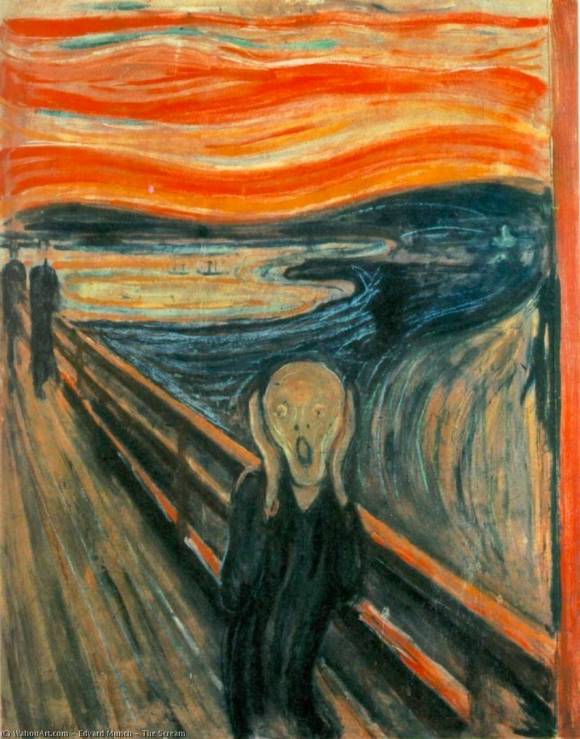



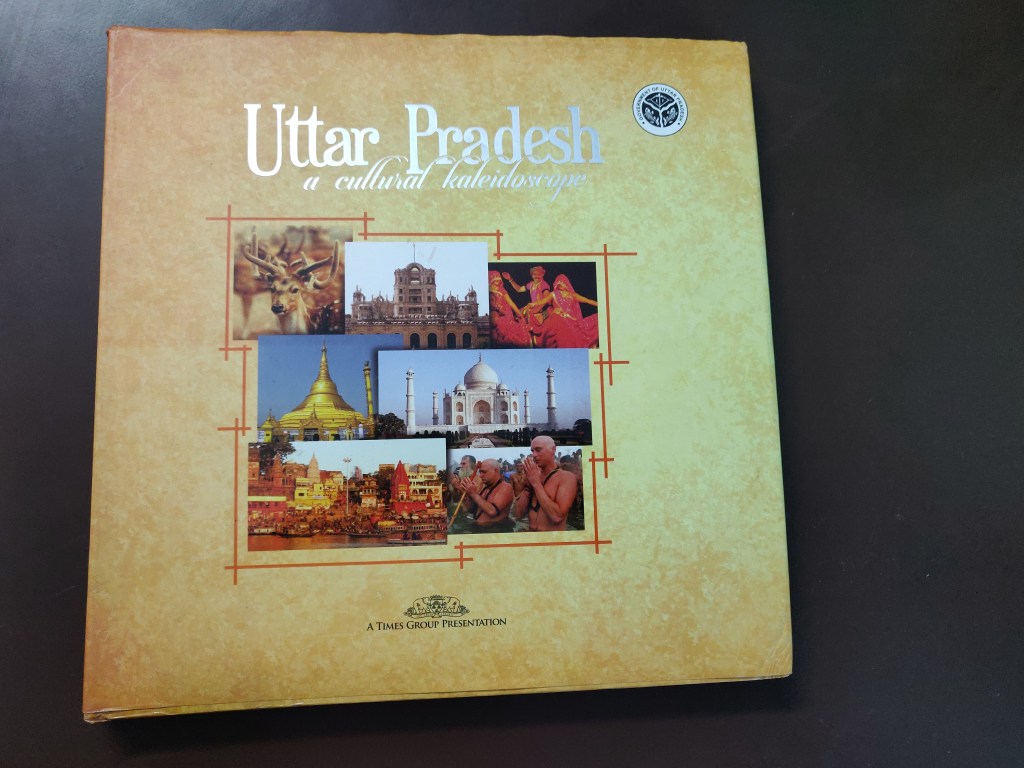
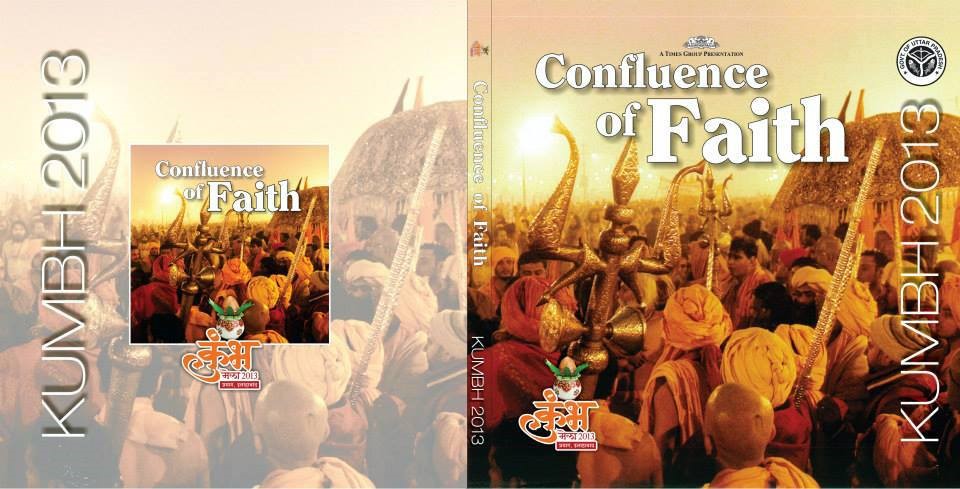

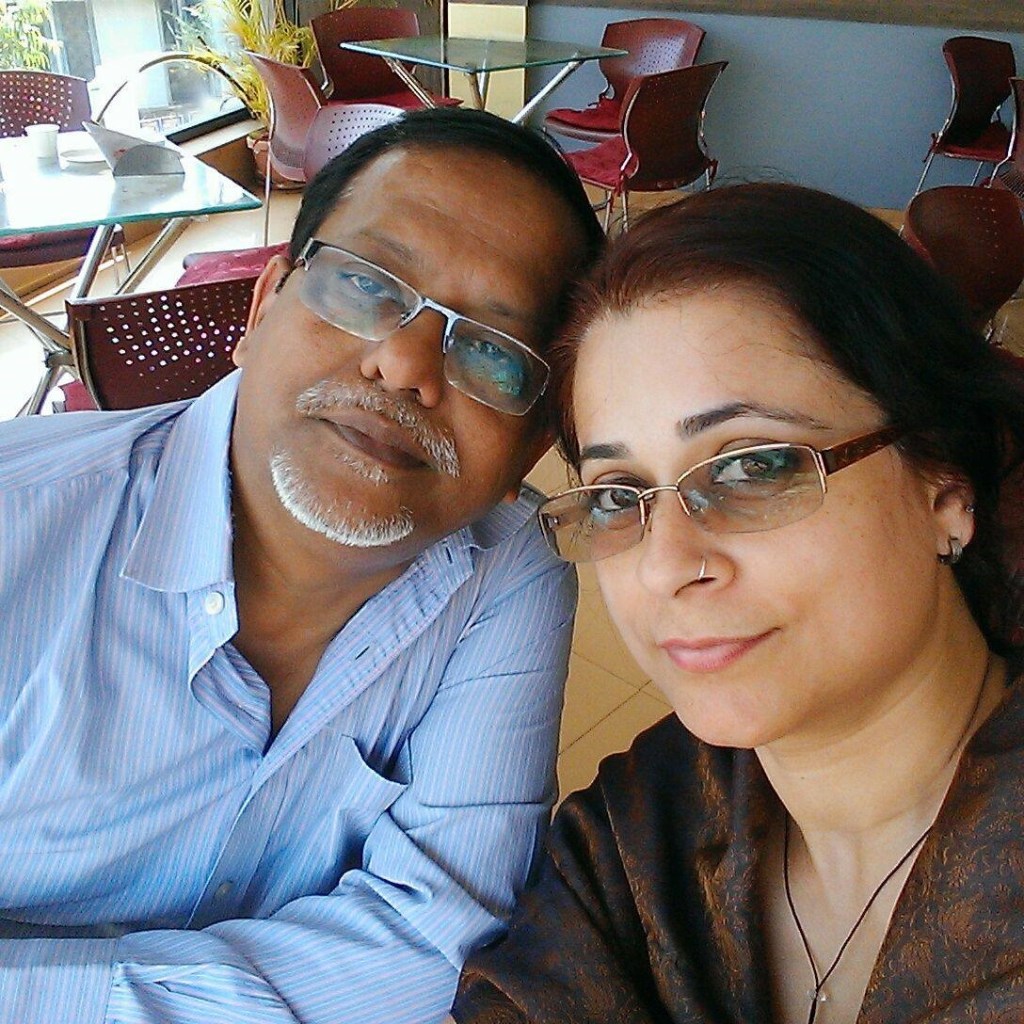


 Borderless