Categories
Excerpt

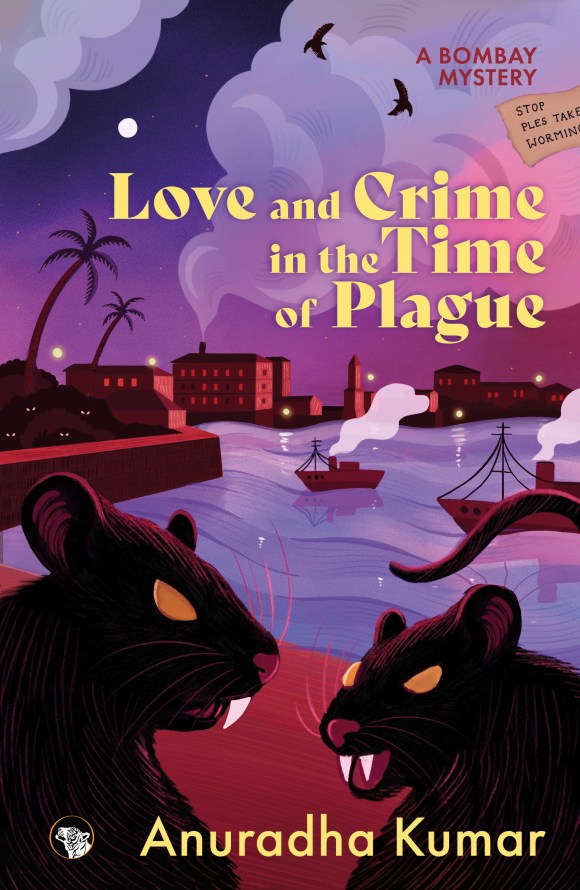
Love and Crime in the Time of Plague

Title: Love and Crime in the Time of Plague: A Bombay Mystery

Author: Anuradha Kumar

Publisher: Speaking Tiger Books

Maya is Discomfited

What shall we talk about?’ Maya asked in her irrepressible way, a lilt in her voice. That afternoon she was out cycling with Henry when the rain came down, turning heavy in moments. It was August and the middle of the monsoon season.

‘Tell me more about what you found. More about those…mysterious sketches. You have two minutes,’ Henry rolled his eyes playfully as he pulled out his watch.

Dark, thick clouds loomed over the sea and gathered by the palm trees and rocks lining the shore. Leaving their bicycles against the tall, old Ashoka tree, they had run, like many times before, toward the old Prong’s lighthouse to their right. Its white walls were damp-streaked and moss-stained, and the grey rocks huddled by it were dotted by foamy flecks. The sea swirled in noisily with an insistent rhythm.

They stood on the low stoop, looking out at the gravestones across the road. The door behind, blue paint flaking in places, creaked in the wind. The room in the old lighthouse always smelt musty. It was sparsely furnished with wooden chairs, a table, and a cupboard. Faded red curtains fluttered on the windows. A part of the roof near the fireplace leaked, and rainwater often dripped down into a large wooden tub. Soon, Henry always joked, it would fill up with fish. The keeper, an old Eurasian, waved to them from an upstairs window, his beard flailing through its rusting iron bars.

They were right at the tip of the city on the island of Colaba, and the new bicycles—shipped to Henry only that summer—were safe to ride on, with their evenly spaced wheels, pneumatic tyres, and a chain system. Henry was pleased with these new ‘Rover’ cycles, made by a company in Chicago, Henry’s home town. The wind left a mist on their faces, the gulls were noisy on the rafters, and they waited for the rain to ease.

The Causeway, its white stones grey in the wan light, stretched to the mainland. Built some fifty years ago, it now connected what had been the separate islands of Colaba, and the Old Woman’s Island to the bigger island of Bombay. If they craned their necks and looked to the left, through the palm trees, the stone walls of the old fort were clearly visible.

Henry took his cap off, twirled it with his fingers then placed it back on his head. Maya scraped the soles of her muddy boots against the stoop, and leaned against the door. They heard a sharp clear call, two eagles were majestically scouring the skies, their wings spotted white, and lighting up when the sun momentarily breathed through the clouds.

‘You’ve been thinking about the sketches, haven’t you?’

Maya nodded, her eyes the colours of the stormy sea. The eagles, she was thinking, maybe they were the White-bellied Sea Eagles familiar to these parts.

‘Tell me about it,’ Henry encouraged, stealing a look upstairs, and noting the open window. The keeper was probably all ears. They were always the subject of gossip, and Henry ruefully accepted this, always with a turmoil in his heart. He enjoyed Maya’s company and tried not to think too much of the future; most times he failed. Sometimes he thought Maya felt the same way.

~

Maya had found the sketches only a fortnight ago. In a room, dark, mysterious and unused, at the very back of the grey-stone ‘doctors’ house’ where Maya lived. She had wanted to use the room as a study. The doctors’ house stood on a narrow lane leading off the Colaba Causeway, on the sliver of land where Bombay stretched into the sea in a crab-like way. One walked through the house’s main hallway, and the study appeared after a series of small steps. Next to the study was the covered courtyard and on the left, its lone window faced the garden, with its wooden latticed fence, the bougainvillea and oleander creepers, and tall palm trees. Farther beyond, closer to the sea, lay the asylum and a part of the lighthouse, always visible from the upper floor windows of the doctors’ house. Sounds of the horse-drawn tramcars, the bells of the Afghan Church, the train coming in every morning and in the late afternoon, and the constant rolling of the sea, shaped a pleasing backdrop to everyday life in the house.

Once owned by Hormuzji Dorabji, a merchant whose business interests spread across Bombay, Surat, East Africa and Natal, the doctor Edith Pechey had first rented it when she came to Bombay to manage the city’s first women’s hospital. Soon there were two of them, when Charlotte Ellaby responded to Edith’s invitation, and that was how the bungalow got its name. Then about two years ago, though Maya felt it was much longer, the doctors’ house had a new resident when Maya joined them, a few weeks after reaching Bombay as part of a travelling theatre troupe from Lahore. The troupe soon moved on to another city, but Maya had stayed back. For a while only, she had thought at first, but months had flown by and the ‘doctors’ house’ was her home now. Edith had moved out when she married Herbert Phipson, an American businessman with offices in Bombay, and Maya still stayed on with Charlotte. Finding her feet in a city, warm and lively. Finding her heart too, but with that Maya wanted to take more time.

~

For Maya, the string-bound folder with the sketches was an unexpected find. It lay in the old wooden almirah, lost among dusty old account ledgers, old books, in old Pali and Persian, and crinkled maps brown with age.

‘They look so old, and so skilfully done.’ Henry still remembered the awed expression on Maya’s face the afternoon she told Charlotte and him about it. They had shared Maya’s delight, looking at the sketches—lifelike depictions of birds, drawn mainly in black ink, with distinct colours on some.

(Excerpted from Love and Crime in the Time of Plague: A Bombay Mystery by Anuradha Kumar. Published by Speaking Tiger Books, 2025)

ABOUT THE BOOK

It is 1896. A ship docks in Bombay Harbour, and as the workers rush to unload the cargo, a scream rings out. A large black rat, frothing at the mouth, has bitten one of the men.

Within weeks, a miasma of fear engulfs the city as ship-borne rats overrun its nooks and crannies, and more and more of its inhabitants fall sick—and die. Dr Acacio Viegas is the first to ring the alarm—it is the plague. The only way to control it is to sanitize the city’s slums, clean its drains, report any fever, and stay at home. The British Administration embarks on these measures on a war footing—until warning notes begin to turn up at Doctors’ House, where Maya Barton lives with Dr Charlotte Ellaby, and at the Women’s and Children’s Hospital—notes that threaten those who are ‘interfering’ with people’s religion and customs with dire consequences—all signed by the ‘Native Society’.

Maya and her friend Henry Baker, the American trade counsel, are soon hot on the trail of the Society, which leads them to the formidable Rangnekar Bhau, the Society’s founder, and its Secretary, the treacherous Satarkar, who hates everything new and ‘modern’, whether the British and the brown sahibs, and their so-called anti-plague drive, or women like Maya, who think too much of themselves.

As Maya and Henry unravel the mystery, they draw closer to each other and to what could be a future together. And Maya learns more about Reverend Barton, who could have been her father, and the Kashmiri woman who might have been her mother.

Anuradha Kumar once again uses her talent for recreating a period setting and engaging characters to brilliant effect in this sequel to the acclaimed The Kidnapping of Mark Twain, her first Bombay Mystery.

ABOUT THE AUTHOR

Anuradha Kumar has worked for the Economic & Political Weekly. She has an MFA in Writing from the Vermont College of Fine Arts (VCFA). Her stories have won awards from the Commonwealth Foundation, UK, and The Little Magazine, India. She writes regularly for Scroll.in. Her stories and essays have appeared in publications like Fiftytwo.in, The India Forum, The Missouri Review, among others. Two of her essays received notable mention in ‘Best American Essays’ editions of 2023 and 2024. Her essay collection, The Sound of Lost Memories, was recently a finalist for the Gournay Prize (University of Iowa) and will be published (2027) by Cornerstone Press (University of Wisconsin, Stevens-Point).

PLEASE NOTE: ARTICLES CAN ONLY BE REPRODUCED IN OTHER SITES WITH DUE ACKNOWLEDGEMENT TO BORDERLESS JOURNAL
Categories
Excerpt

The Wanderers, Lost and Seeking

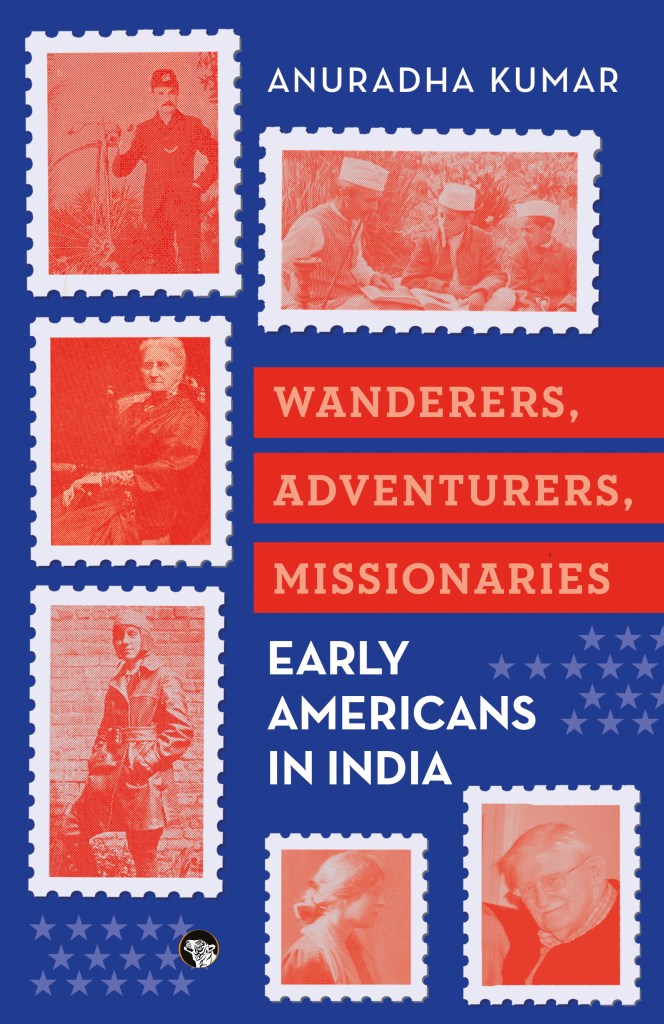
Title: Wanderers, Adventurers, Missionaries: Early Americans in India

Author: Anuradha Kumar

Publisher: Speaking Tiger Books

INTRODUCTION

The Wanderers, Lost and Seeking

The people you will meet here—the ‘first Americans in India’—were indeed all wanderers. They came, not attached to the intentions of a country, or even protected by it, unlike their peers, the Englishmen who made up the East India Company, and who came to trade backed by a royal charter granted by Elizabeth I in the year 1600.

The wanderers, the first of whom came at a time when the United States of America had not come into being—and their actions, thus, were different from what was ordained as state policy. The ‘wanderers’ were not ‘state actors’ in that sense, but they, men, and some women, came to India, on their own, driven by their own spirit of search. They were brought here by a sense of adventure, or by a wild dream—that of finding something that would make their fortune—gold or inspiration quite like gold—or by the need to do something good and enobling.

But they were in some ways quite lost after they came to India.

Stepping Into a Mosaic

To these wanderers who travelled to Asia between 1700-1950s, India came as a mosaic of many impressions, a spread of colour and many experiences. It offered a field of new sensations compelling them to revise received knowledge. They were intrigued, they saw its contradictions, its strangeness, and how things were very different from the homes they had left behind. In the process, life for these wanderers was made afresh.

They came as traders, adventurers, military men, fortune hunters, seekers of knowledge, storytellers, mystics, those seeking a new career, or who came simply to serve.

To them, India—that looked quite different from what it does now—was a land of adventure. A land to make a fortune in, or to find fame.

It was a mysterious, magical place, one that fuelled the imagination, a land that contained the ancient truths of the universe. Yet it was a place caught in the ‘medieval age’, a place they had been sent to, a matter ‘divinely ordained’—as the missionaries and mystics believed—to save souls.

A place one could write about, for it was as strange as fiction; it was a land that offered inspiration and where one could find new, yet old, wisdom. A place to serve and cure and heal. A land where a new world was possible, or an arena to set the world aright.

The wanderers were awed and overwhelmed, and then, scandalized and shocked in equal measure. Some of what they wrote mirrored each other’s experiences. For example, their surprise at the number of servants that were needed. The astonishing beauty of the temples. The majesty of the Taj Mahal. The artistry produced by craftsmen and artisans, an art passed down generations. The riot of unexpected colour—in the bazaars, in the turbans men wore, and in the forests with ‘exotic’ fauna and flora yet to be named and classified by the new science of taxonomy. Balmy days spent on houseboats—‘doongas’—in Kashmir. The spiciness of the food, the liberal doses of pepper in curries. And then, the sad state of its women, especially the child brides, and the young widows, who had to be ‘saved’. The timeless stubbornness of the caste system. The very unchanging nature of things.

Change in America

To look at this period—1700-1950—and talk of Americans is somewhat anomalous. For one thing, for the early part of this time, America was a British colony. By the mid-1770s things would change. The United States of America emerged as a new political entity only in 1776.

On the other hand, from the early 18th century onward, the once dominant Mughal Empire was in decline. Aurangzeb, the last powerful ruler of that dynasty, had worn himself and the empire out with his battles in the Deccan and the upsurge of discontent elsewhere that he failed to contain. Even before the Battle of Plassey in 1757 tilted the balance—beginning in the east—in the East India Company’s favour, India was a patchwork of regional rulers, each brimming over with ambition and jostling for power. To adventurers and fortune-seekers—like the ‘wanderers’—who had no master, who came lacking the conqueror’s zeal, but who had their own sense of adventure, such a state of affairs was ideal to make a fortune, to remake a life.

It is thus of little surprise that the first of the wanderers came as part of the East India Company, to associate themselves with it, as ordinary private traders. America at that time, showed the same precarity that characterized India. It was a continent divided up between competing European powers, and to the west of the continent, the different native American groups too had their territories.1

In the next decades, as America extended westward into new frontiers, set its own foundations as a young democracy, some of the wanderers, citizens of a new nation, also faced their own frontiers, as they sailed eastward onto an unknown land.

Most of these early travellers were those who lived on the northeastern seaboard of the American continent, that is, in the port towns of New England that had historic links with England since the early 17th century. These travellers who came all the way from the faraway West to the East were immigrants themselves, children of people who had moved a generation or two ago, a westward journey from Europe to the ‘New World’. The wanderers to India—the South Asian subcontinent—were thus children of wanderers themselves.

(Extracted from Wanderers, Adventurers, Missionaries: Early Americans in India by Anuradha Kumar. Published by Speaking Tiger Books, 2025)

THE BOOK

In 1833, Frederic Tudor, an American businessman, made history when he shipped 180 pounds of ice harvested from Walden Pond in Boston, to Calcutta—this luxury item being much in demand amongst the elites of British India. Tudor was deservedly christened the ‘Ice King’, and soon built a flourishing trade exporting American ice to India.

Others were drawn to the country by less materialistic goals. Like the ‘medical missionaries’ who were deeply concerned with the ‘women’s condition’ in India. Ida Scudder’s efforts in the 1900s resulted in the setting up of the Christian Medical College in Vellore, which continues to save lives till this day; in 1873, ‘Doctor Miss Sahiba’ Clara Swain set up the first hospital for women and children in Asia, in Bareilly, on land donated by the Nawab of Rampur.

There were also those who came to stay. Twenty-two-year-old Samuel Evans Stokes came to Kotgarh in the Himalayan foothills in 1904, embraced Hinduism and became Satyanand Stokes. He revolutionized apple cultivation in the area, now in Himachal Pradesh, by introducing the ‘Red Delicious’ apples of Missouri; today, his descendants still live and work in the region. Likewise, the Alter family. Martha and David Emmet Alter arrived in Mussoorie in 1917, to spend the summer studying at the Landour Language School; in 1941, Emmet became principal of Woodstock School, just around the hillside. Twenty-five years later, his son Robert occupied the same position. Robert’s son Stephen continues to live in Mussoorie, pursuing a successful writing career; his cousin Tom Alter was a much-loved actor in Indian films until he passed away in 2017.

These are just some of the ‘first Americans in India’ who came here, beginning in the 1700s, with different motives and dreams—as adventurers, traders, reformers, writers and artists. All of them, without exception, were fascinated, astonished, moved and, in the end, profoundly changed by their ‘Indian experience’.

Anuradha Kumar’s skilful and well-researched account of these early visitors makes this an important and engrossing book that informs, surprises and amuses in equal measure.

THE AUTHOR

Anuradha Kumar lived in Mumbai for over a decade, where she worked for the Economic and Political Weekly. She now lives in New Jersey in the US, and writes often for Scroll, The India Forum, The Missouri Review, Catamaran Literary Reader, The Common and Maine Literary Review. Two of her essays received ‘notable’ mention in Best American Essays editions of 2023 and 2024.

PLEASE NOTE: ARTICLES CAN ONLY BE REPRODUCED IN OTHER SITES WITH DUE ACKNOWLEDGEMENT TO BORDERLESS JOURNAL

Categories
Review

Mahasweta Devi: Writer, Activist, Visionary

Book Review by Meenakshi Malhotra

Title: Mahasweta Devi: Writer, Activist, Visionary

Editor: Radha Chakravarty

Publisher: Routledge

Mahashweta Devi (1916-2016) was a renowned and much awarded writer-activist-translator who was reputed for her close observation and documentation of tribal life and its marginalisation and willed forgetting by dominant power systems. Among the many awards received by her were the Padma Vibhushan, the Ramon Magsaysay, the Jnanpith and the Sahitya Akademi Award. The stated aim of the present volume — in keeping with the overall objectives of the Writer in Context Series — is to present a more rounded, multidimensional image of Mahasweta Devi. This has been admirably accomplished by Prof Radha Chakravarty who is an eminent translator and academic herself.

In the ‘Introduction’, she unpacks the partial truths that underlie the stereotypical image of Mahasweta Devi as an activist. Highlighting the fact that Mahashweta’s representations of different forms of mar­ginality bring together “the aesthetic and the political in ways that demand a more nuanced reading”, she reinforces the need to read Devi’s oeuvre as literature, and not only as “forms of social documentation or ‘wit­nessing’”. She interrogates the stereotype of the activist-writer and opens up the possibility of re-reading Mahasweta Devi’s life and work in “newer, more unsettling ways”. Further, Chakravarty highlights how her (Devi’s) creative writings in particular emerge as “ambivalent texts, simultane­ously imbued with radical potential and a continued reliance on traditional forms of signification”.

Mahasweta Devi’s writings often demonstrate a tenuous divide between fiction and non-fiction. As a matter of fact, she emphasises on “the historical basis for her creative writings”, which is evident in many of her novels like Mother of 1084 (Hazaar Churashir Maa, 1974), and stories like ‘Draupadi’ and many others, which are based on the Naxalite movement.  Simultaneously however, her literary works display a measure of social realism which, Chakravarty contends, is “offset by a visionary quality that enables the imagining of transformative possibilities.” The contents of this volume testify to the varied, diverse and  sometimes “contradictory dimensions of her multifaceted genius”.

The book under consideration aims to set the record straight for readers outside Bengal whose views are based on the “tiny fraction of her Mahashweta Devi’s work available in English translation”. She was an extraordinarily prolific and versatile writer who wrote in multiple genres, including fiction, biography, drama, children’s literature, memoirs, travel writing, and literary criticism. She also occasionally translated her own work into English.

Chakravarty’s introduction and compilations in this volume foregrounds the aspect  of Mahashweta’s political activism and how her writing itself  becomes a form of resistance. Her early  induction into Marxism was also partially attributable to her family background. Her family included Ritwik Ghatak (her father’s brother was a famed film maker) on her father’s side and on her mother’s, Sankha Choudhuri and Sachin Choudhuri, one a well-known sculptor and the other, the founder/editor of India’s foremost social science journal, Economic and Political Weekly, respectively.

Her early contact with Tagore and education at Santiniketan sensitised her to values of “inclusiveness, self-reliance, freedom of thought and expression, social responsibility, and environmental issues”. There, she also imbibed some of the spirit of the freedom struggle. Through her marriage to Bijon Bhattacharya, she grew familiar with IPTA[1] and the left ideologies. Later, she was associated with different radical movements in Bengal, Manipur, Jharkhand, Bihar, and Rajasthan, which find expression in many of her writings (Mother of 1084, ‘Draupadi’).

Her political commitment to these movements is evident in her use of language.  Local vocabularies become central to the style and subject of Mahasweta’s writings. She wrote in 1983: “Since I remain immersed in indigenous myths, oral legends, local beliefs and religious convictions, I find purely indigenous words very potent and expressive.”

She  was critical of writers in the Bangla literary establishment whose experiments with modernist aesthetics led to disengagement with the socio-political context. All the same, her writings evince special “linguistic, textual, and aesthetic strategies that can be compared to the prac­tices of other writers who were experimenting with new approaches”, using non-linear time. Oral traditions fascinated her and she worked closely with Prof G.N.Devy in her later years, to campaign for the recognition of tribal languages.

She also  translated and edited volumes on Indian folklore. In her own writings, she includes elements from the oral traditions, as in the snatches of local lore in Jhansir Rani (The Queen of Jhansi) or the lines from an untranslated Santhal song in ‘Draupadi’. As Chakravarty points out, “Heteroglossia, the use of language as an indicator of social hierarchies in multivocal, polyphonic texts, functions as a potent literary feature in her writings.” Alongside, many of her texts incorporate multilingual elements, as if to indicate the heterogeneities in South Asian societies and cultures.

The book is an comprehensive introduction to and reappraisal of Mahasweta Devi’s life and work. It is imaginatively conceptualised and organised into different sections, each highlighting diverse aspects of her work and the criticism thereon. Section 1 of the book called ‘Spectrum: The Writer’s Oeuvre’, offers the reader in English an overview of the full range of her oeuvre through brief samples of her literary writings across diverse genres to highlight her versatility. These include Jhansir Rani (1956), a fiction­alised biography of Rani Lakshmibai, Queen of Jhansi, which amalgamates historical sources, folklore, and creative characterisation, to show up the contradictions in different ver­sions of the Rani’s life and Hajar Churashir Ma (The Mother of 1084), her powerful novel about the political awakening of a mother after her son is killed by the police during the Naxalite movement of the 1970s, altered the trajectory of the Bengali novel. The extract from the final pages captures, in a style resembling stream-of-consciousness, the dramatic political power struggles in the outer world and the inner drama of the mother’s psyche.

The short story ‘Giribala’ narrates the plight of a girl married off at 14 to a man who sells their own daughters into the flesh trade to pay for the construction of his dream house. The play Bayen uses modern experimental techniques to present the story of a woman from the caste of Doms (cre­mation attendants), who becomes the victim of collective superstition and scapegoating and yet, in a final act of heroic self-sacrifice, saves the very community that has ostracised her. In a complete change of tone and style,’Nyadosh the Incredible Cow’, a delightful piece of writing for children, offers a witty anecdotal account of the devastating exploits of a cow in the author’s home. The extract from Tarasankar Bandyopadhyay, Mahasweta Devi’s English monograph on the iconic Bengali writer, reveals her incisive­ness as a literary historian and critic and also provides a window to her own literary values.

As Chakravarty clarifies, given the vast body of critical readings on Mahasweta’s writings, a comprehensive compilation is beyond the scope of this book. Instead, the selected essays in Section 2 (‘Kaleidoscope: Critical Reception’) offer the reader (in translation) a sense of the paradigm shifts that mark Devi’s critical recep­tion in Bengal, the rest of India, and in the international domain. Ten­sions, debates, and contradictions are highlighted, and overview of her critical reception over four decades –1957 to 1997 in Bengal is discussed by Arup Kumar Das. An essay by Dipendu Chakrabarti analyses the debates and contro­versies around her work. Dilip K. Basu’s account of Hajar Churashir Ma views itas a pathbreaking text that transformed the course of the Bengali novel in the 1970s.

The essays in English by other Indian critics include Sujit Mukherjee’s classic piece on Mahasweta and Spivak, Jaidev’s account of national alle­gory in Douloti, Arunabh Konwar’s comparative analysis of the creative use of fictionalised biography by Mahasweta and Indira Goswami, Shreya Chakravorty’s study of the politics of translation in the work of Spivak and Samik Bandyopadhyay, Anjum Katyal’s account of Mahasweta as a drama­tist, and Benil Biswas’ reading of the transmutations of Mahasweta’s texts via stage and screen adaptations.

International contributions include an important new essay on Pterodactyl by Gayatri Chakravorty Spivak, who interprets the rhetorical pointers in the text to speak of it as an activist mediation for the reader to learn about earn­ing the right to intervene. Shreerekha Subramanian’s essay offers a compara­tive study of the discourse on motherhood in novels by three women writers across different languages, locations, and literary traditions: Mahasweta Devi, Toni Morrison, and Amrita Pritam.

Section 3 (‘Ablaze With Rage: The Writer as Activist’) includes some of Mahasweta’s activist writings, such as ‘Tribal Language and Literature: The Need for Recognition’, a passionate demand for the inclusion of tribal languages in official discourse; ‘Palamau is a Mirror of India’, where she critiques what she perceives the failures of the state to address the plight of the oppressed people in post-Independence India; and ‘Eucalyptus: Why?’, a scathing critique of the nexus between local powers and global market forces that have led to the replacement of natural forests in Bengal with eucalyptus plantations that have destroyed the local ecology that sustained human and animal life there. Alongside, in ‘The Adivasi Mahasweta’, Ganesh N. Devy reminiscences about his first encounter with Mahasweta Devi and their subsequent collaborations in activist campaigns and projects. ‘Haunted Landscapes: Mahasweta Devi and the Anthropocene’, by Mary Louisa Cappelli, connects Mahasweta’s activist writings and fiction on the subject of the Anthropocene to indicate the need to take a composite view of her writing and activism as twin manifestations of the same vision.

Section 4, ‘Personal Glimpses: A Life in Words’, includes extracts from Mahasweta’s memoir Our Santiniketan (2022), along with interviews (with Naveen Kishore and Radha Chakravarty) and reminiscences by her family members (Nabarun Bhattacharya, Soma Mukhopadhyay, Sari Lahiri, Ina Puri), friends (writers ‘Anand’ and Anita Agnihotri), and associates (Ranjit Kumar Das ‘Lodha’, Dakxin Bajrange), which highlight different facets of Mahasweta’s life and personality, bringing to life the woman behind the public image.

The book offers a comprehensive overview of Mahashweta Devi’s writing and will be of immense use to students, researchers and to general readers. As Chakravarty reiterates , “New trends in Mahasweta studies continue to evolve, including emphasis on her environmental concerns, ethics, planetarity and the Anthropocene, intersectionality, the use of incommensurate realities and registers of writ­ing, comparative readings, and an emerging focus on her life”.

This is an ambitious attempt to give us an idea of the immense range of her work. While a full biog­raphy and a full bibliography of Mahasweta’s oeuvre is yet to be published, (encompassing the entire corpus of her work, including letters and other unpublished material) this volume is a vital step in that direction. In her excellent Introduction, Chakravarty charts the long-term impact of Devi’s work which continues to resonate in contemporary forms of activism and theatre. Through the actions of the many groups of people she inspired – the women of Manipur whose public protest imitated her fiction, to the per­formances of the Budhan theatre, and the rise to fame of the Dalit Bengali writer, Manoranjan Byapari— “Mahasweta’s impact and influence can be felt in many ways. She survives through the people she struggled to support all her life,”

It is an ironical reflection on our times that a prolific and much awarded Indian writer-perhaps deserving of the Nobel prize, should be excised from the university syllabus of a central university. This move has, perhaps paradoxically, elicited even more interest in Mahasweta Devi’s work and has also consolidated her reputation as a mascot, a symbol of resistance to state violence. A timely intervention, this volume proves yet again that a great writer, in responding to local , regional, environmental ethical concerns sensitively,  transcends his/her immediate context to acquire global and universal significance.    

[1] Indian People’s Theatre Association founded in 1943

.

Dr Meenakshi Malhotra is Associate Professor of English Literature at Hansraj College, University of Delhi, and has been involved in teaching and curriculum development in several universities. She has edited books on Women and Lifewriting, Representing the Self and Claiming the I, in addition  to numerous published articles on gender, literature and feminist theory.   Recently, she co-edited The Gendered Body: Negotiation, Resistance, Struggle.

.

PLEASE NOTE: ARTICLES CAN ONLY BE REPRODUCED IN OTHER SITES WITH DUE ACKNOWLEDGEMENT TO BORDERLESS JOURNAL
Click here to access the Borderless anthology, Monalisa No Longer Smiles

Click here to access Monalisa No Longer Smiles on Amazon International

Categories
Review

A Tale as Good as an Agatha Christie Mystery?

Book Review by Rakhi Dalal

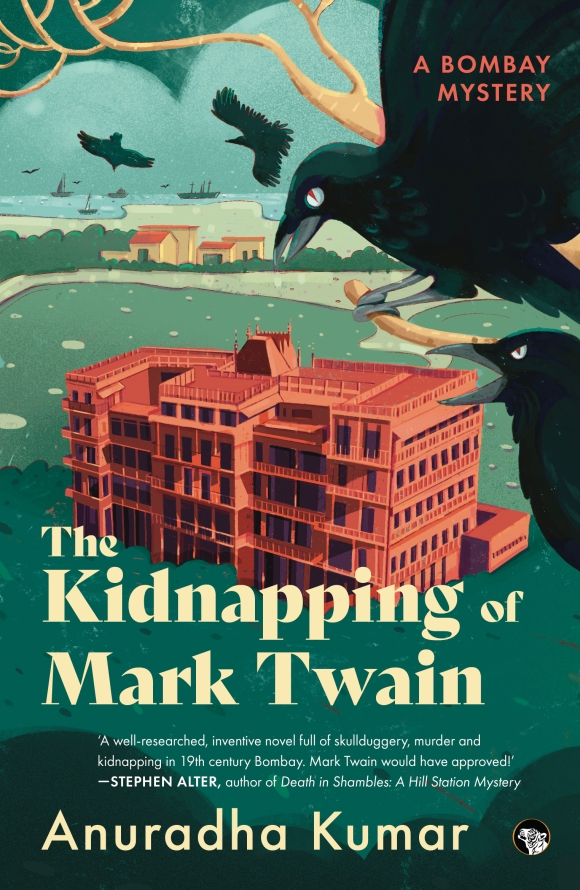
Title: The Kidnapping of Mark Twain: A Bombay Mystery

Author: Anuradha Kumar

Publisher: Speaking Tiger Books

At the turn of the nineteenth century, Bombay was a city bustling with economic activity. A city that stood on the verge of modernisation and rivalled cities like Paris, London and New York. A city that had much to offer to those coming in to make a living or to simply visit it for sightseeing. A city that offered home and work opportunities to people from different countries across the world. It was also during the years 1896-97 that Samuel L. Clemens, or Mark Twain as he was better known as, travelled to Bombay with his family and wrote about his experience in his travelogue, Following the Equator.

In The Kidnapping of Mark Twain, Anuradha Kumar weaves the historic facts from Twain’s book with some intriguing and riveting detective fiction and makes it a fascinating read, especially for the mystery readers.  Anuradha Kumar has published more than thirty books, has won the Commonwealth awards for short stories a couple of times, written under the pseudonym of Aditi Kay, worked in the Economic and Political Weekly for almost 9 years and writes from USA now.

The book starts with Henry Baker, an American trade consul, waiting impatiently for the arrival of Mark Twain and his family to Bombay. His arrival is shadowed by the news of murder of a young girl named Casi which has also left Henry’s friend Maya Barton disturbed. Within a day of his reaching Bombay, Mark Twain suddenly vanishes from his hotel room. What follows then is a series of trailing and mystery solving that keeps the reader in thrall.

Henry, with the help of Maya and his loyal aide Abdul, takes upon himself to find the writer. With much that is happening in the city, including murder, a labour unrest, a threat of strike, Henry finds the authorities a little too preoccupied or uninterested to follow Mark’s case. Since he cannot further risk any diplomatic disagreement between the United States and Britain, he follows through even though his position offers no legal authority. What he encounters at each step leads him to more confusing scenarios but he manages to pull through despite the shocking and bizarre revelations coming in.

Kumar skilfully crafts characters who carry the most unusual of acts which keep the readers on an edge – a ‘Waghare’ thief, a stilt walking magician, a fanatic preacher and a sad Serbian musician. Along with Maya Barton who excels in impersonating appearances. All this and much more. With the help of Maya and Abdul, Henry succeeds in unravelling the mystery of Mark Twain’s disappearance. The mystery that is solved, however, is just not of Mark’s disappearance but also of Casi’s murder and truth behind fanatic Arthur Pease’s de-addiction centre.

Anuradha Kumar’s research that has gone in writing this novel shines through her depiction of the city of erstwhile Bombay – its sights and sounds as well as all the places which stand out in the making of this city. The novel hustles with everything quintessentially Victorian Bombay. Action happens in places like the Victoria Terminus, the Bombay Police Headquarters, Colaba Causeway, Elephanta Caves and the Bombay Cotton Mills. Mark Twain takes rooms at the famous Watson’s Hotel where he finds it difficult to sleep because of all the noise made by crows. Henry Baker lives at Byculla club and Maya Barton at a Colaba bungalow. Tukaram, Casi’s husband and a suspect, is the labour supervisor at the Bombay Cotton Mills. The day Mark Twain lands, he attends a party hosted by a rich Parsi businessmen where the famous nautch girls present a dance. The reader gets a grasp on the city that once was. On the other hand, the novel also stirs with the city’s underbelly where crime, opium addiction, poverty and class dynamics are at play.

It is fascinating to note that the author would make use of Mark Twain’s disappearance as mentioned in his travelogue and spin it to make a thrilling mystery. The portrayal of events is so vivid that sometimes the reading seems akin to watching an Agatha Christie in a TV series. Then there are historic events mentioned in the backdrop which gives an idea about the world politics at large. The narrative refers to Oscar Wilde’s trial and his subsequent imprisonment in England and the first protest of women’s right to vote. It brings forth the discriminatory policies that British persisted in India like labelling certain ethnic groups as criminals and makes use of the social reforms like women education underway in the Indian society. All of these, combined with the adventure that the book offers, make for a gripping tale that could have been only set in the Bombay of 1896.

Rakhi Dalal is an educator by profession. When not working, she can usually be found reading books or writing about reading them. She writes at https://rakhidalal.blogspot.com/ .

.

PLEASE NOTE: ARTICLES CAN ONLY BE REPRODUCED IN OTHER SITES WITH DUE ACKNOWLEDGEMENT TO BORDERLESS JOURNAL
Click here to access the Borderless anthology, Monalisa No Longer Smiles

Click here to access Monalisa No Longer Smiles on Kindle Amazon International

Categories
Excerpt

The Kidnapping of Mark Twain

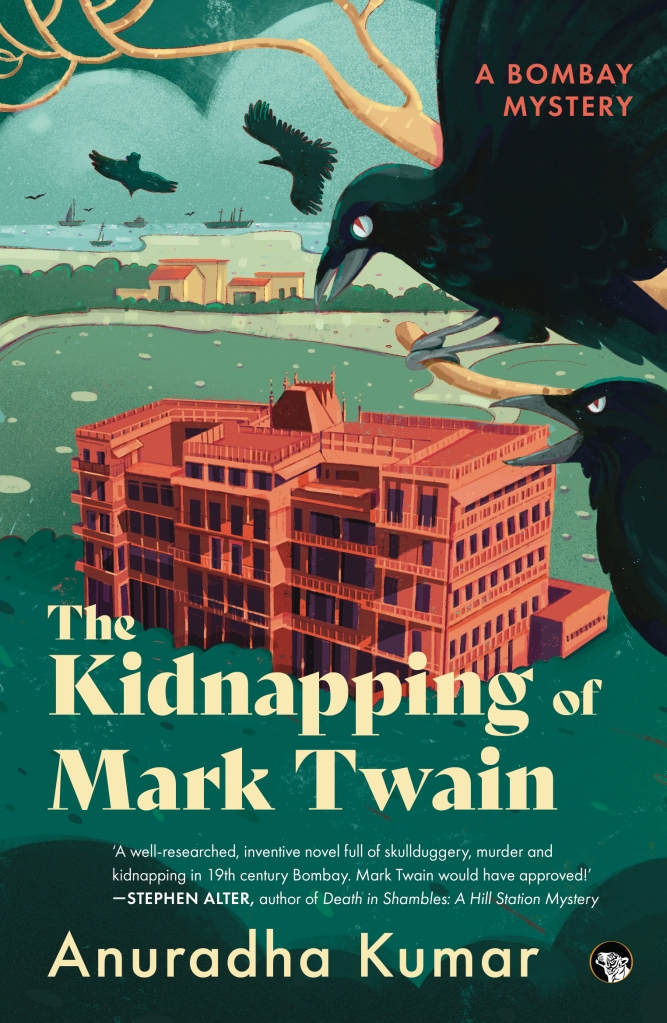
Title: The Kidnapping of Mark Twain: A Bombay Mystery

Author: Anuradha Kumar

Publisher: Speaking Tiger Books

An hour passed as Henry, back in his rooms at the Byculla Club, waited for Abdul to return from the doctors’ bungalow. He had taken a message from Henry to Maya. He would not be back to have dinner with the Clemenses that evening. ‘Don’t give Maya memsahib the message in front of them,’ Henry warned, and Abdul gave him his usual long-suffering look. He really wasn’t an idiot, Henry thought to himself ruefully. ‘And if she asks more, tell her some urgent business came up.’ Henry’s face darkened, for he wouldn’t tell her about his intentions of tailing Bancroft, even accosting him. ‘And come back fast, we need to…’

Abdul looked at him expectantly, but Henry paused, pursed his lips. ‘I will tell you when you are back.’

He looked toward his desk, where his prized Colt Bisley lay in the locked second drawer. A brand-new model, with its five-inch barrel, that he had bought in London. Henry didn’t want to use it, especially on Bancroft and he hoped the other man wouldn’t make it difficult for him. Freddie Bancroft had quite a reputation, one that preceded him. He had first trained as a dentist and then worked as an insurance agent in Philadelphia before he had set out to make a magician of himself. It was an ambitious hope, and Bancroft could be impatient. The time when the

New York papers had reported unfavourably about his show, when his illusions had not worked, and his card tricks had bored much of the audience, Bancroft had thrown a tantrum, throwing his magician’s props on the seated audience. He had then burst into the offices of the New York Journal. He had accosted the editor on the late evening shift, accusing him, and the paper, of favouring the other magician Alexander Hermann, and insisted that the next day the office itself would vanish into thin air.

A portion of the office was indeed found ablaze early the next morning, but Bancroft had an alibi. There were many people who had seen him on the return train to Philadelphia. And the culprits were found to be two workers who were part of the union of newspaper workers. But Bancroft later bragged about it, that he could indeed hypnotize people to do his bidding.

He had made sure people in Bombay knew about this too, and he was determined to stage his own show at the Rippon Theatre on Grant Road. Bancroft had dropped flyers all over, had demanded advertising space for himself in the Gazette, and was also soliciting funds from the likes of Albert Sassoon, Shapoorji Bengalee, and the others, to build those elaborate sets he so wanted. But, of course, Henry, his fellow countryman, hadn’t been of much help, nor had he pulled his weight with the customs people.

Henry sighed. He was letting his jealousy get to his head. Bancroft must have added to his skills in the months he was in Bombay. For he had impressed Maya, and in a far shorter period of time, Mark Twain too, it would appear. And perhaps, Henry thought, Bancroft wanted Twain to write about him, an entire piece in the American papers about the magician’s immense popularity in the East. And now, it would appear that Bancroft may have been the last person to actually see Mark Twain, for he must have peered into his room, as he had Boehme’s, and it was likely, he did know a thing or two.

Henry looked at his notes on the table, and realized with some consternation that he had forgotten a meeting. With a man he disliked as much as he did Bancroft, but when business mattered, Henry knew he had to be quite the professional. Arthur Pease, the tireless campaigner against opium, the vices of drinking, and prostitution, had expressed an interest in the electric fans. They were needed, Pease had said, for the big meetings and assemblies he called every once in a while, in the Parsi meeting halls, and the town hall, and especially at the Reformatory Institute that was a particular favourite of his, for he always found a willing and suppliant audience here.

An hour later, Henry felt there was little point waiting for Abdul in his study. The longer he was on his own, the more he would fret over Twain and think sullenly about Bancroft. So Henry resolutely set off first for the police headquarters, and then to meet with Arthur Pease in Khetwadi, that lay a bit after Crawford Market. This was where Pease lived in a small bungalow, part of which doubled up as a healing centre for addicts.

Henry left a note for Abdul by the table near the hat stand, next to the silver embossed tray that usually held the keys, messages, and letters. Come to…, and he wrote the address. House next to Daji clinic. Crawford Market. Come as soon as you see this.

He called for a carriage, from the many standing aimlessly by the club. The coachman, a Pathan judging from his build and turban, saluted smartly as he jumped down from his seat to hold the door open. ‘The police station first,’ Henry said in a low voice, ‘and then someplace else. I will tell you later. You do have the time, I hope?’

‘Good, sahib, very good,’ the coachman said, nodding to his helper who would ride with him. The boy resting at the foot of the statue that everyone called the Standing Parsi, came running up, and the carriage shook momentarily as he jumped up behind. ‘Go fast, all right?’ Henry said, looking through the window.

The man nodded, gently tapping the pony, a young, spirited brown animal, with his whip, and then, looking over his shoulder said, ‘They are sending a lot of the police toward Sewree and Parel, the workers are angry. They really anticipate trouble, and they are stopping us from going there.’

(Extracted from The Kidnapping of Mark Twain: A Bombay Mystery by Anuradha Kumar. Published by Speaking Tiger Books, 2023)

About the Book: In 1896, Mark Twain arrives at the docks of Bombay, wife and daughter in tow, and, after attending a party in his honour, vanishes from his room at the iconic Watson’s Hotel in the dead of night.

Desperate to find the legendary writer and avoid an international incident between his country and Britain, the American Trade Consul, Henry Baker, teams up with Abdul, his trusted aide, and Maya Barton, a free-spirited Anglo- Indian with surprisingly intuitive detective skills. But they have their task cut out for them: Mark Twain’s disappearance appears to be entangled with a thriving opium trade; an intimidating, self-righteous preacher; an anxious magician who walks on stilts; a professional thief on the run; and a powerful labour leader, Tuka, whose young wife is found strangled in her bed.

Full of fascinating period detail and delightful cameos—and awash with suspense—The Kidnapping of Mark Twain is a thrilling page-turner.

About the Author: Anuradha Kumar was born in Odisha. She studied history at Delhi University and management (specializing in human resource management) at the XLRI School of Business, Jamshedpur. She has worked for the Economic and Political Weekly. She has an MFA in Writing from the Vermont College of Fine Arts (VCFA). Her stories have won awards from the Commonwealth Foundation, UK, and The Little Magazine, India. She writes regularly for Scroll.in. Her stories and essays have appeared in publications like Fiftytwo.in, The India Forum, The Missouri Review, among others. She has written for younger readers as well. This present work is her 11th novel.

PLEASE NOTE: ARTICLES CAN ONLY BE REPRODUCED IN OTHER SITES WITH DUE ACKNOWLEDGEMENT TO BORDERLESS JOURNAL
Categories
Poetry

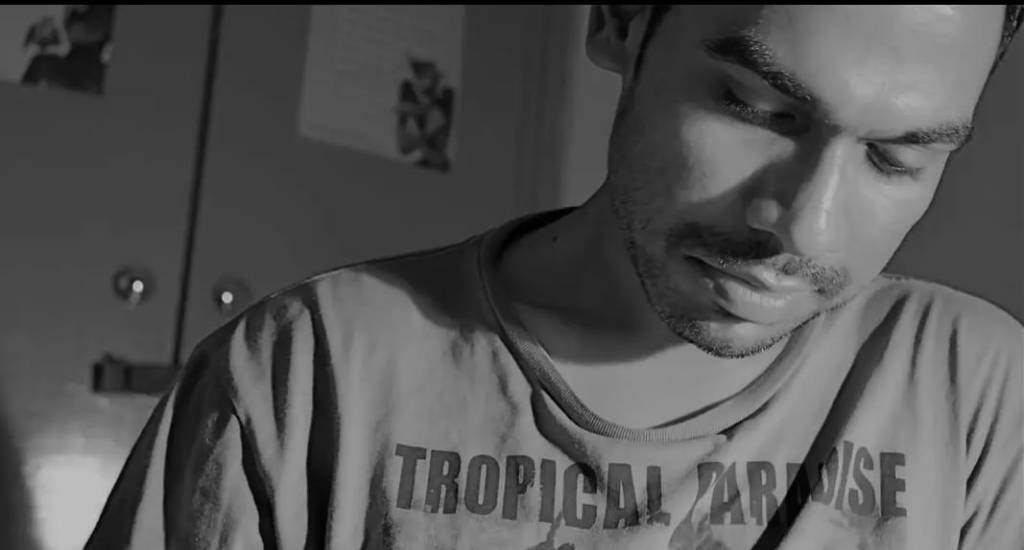
Longings

By Vikas Sehra

         Your fingers tinker
          untouched corners
            of my skin.

             Lingering
           sloppy kisses
          wayward embraces

          While I melt in
        the traces of cusps
           left on me.

           Come back
           not today
        but in forever,

       Rested in longing,
     holding the ephemeral
     of us in each other.

Vikas Sehra is a researcher and aspiring poet residing in Hyderabad, India. His work has been published in Economic and Political Weekly and EKL Review among others.

PLEASE NOTE: ARTICLES CAN ONLY BE REPRODUCED IN OTHER SITES WITH DUE ACKNOWLEDGEMENT TO BORDERLESS JOURNAL

Click here to access the Borderless anthology, Monalisa No Longer Smiles

Click here to access Monalisa No Longer Smiles on Kindle Amazon International