Categories
Excerpt

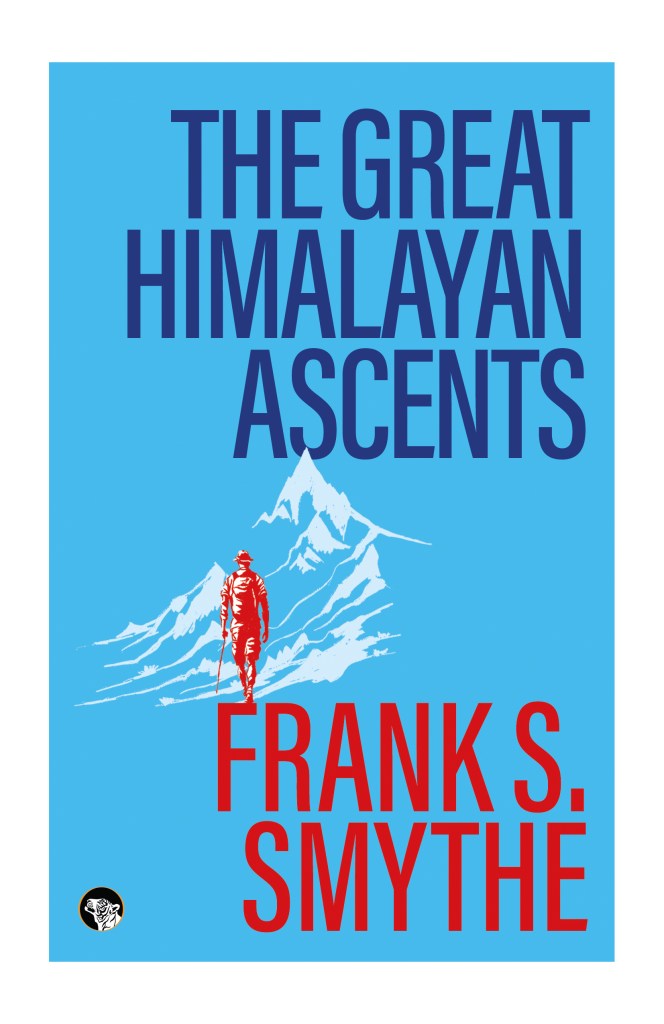
The Great Himalayan Ascents

Title: The Great Himalayan Ascents

Author: Frank S Smythe

Publisher: Speaking Tiger Books

The Himalaya

TWO HUNDRED YEARS ago mountains were regarded as useless and terrible masses of inert matter where dragons had their lairs and the spirits of the damned lay in wait to claim the unwary. But as man emerged from the superstitions and materialisms of the Middle Ages he began to realise that mountains were beautiful and their summits worthy of attainment. The nineteenth century saw the conquest of the Alps. Unknown difficulties and dangers had to be faced by the pioneers of mountaineering. Disasters occurred, lives were lost, and mountaineering thrown into disrepute. The mountaineer was not dismayed. He knew that beauty was his for the seeking; he rejoiced in a newfound comradeship and in the acquirement and exercise of a new craft.

The great alpine summits fell one by one; traditions were established; a technique was evolved; a literature was born. The ripples of alpine mountaineering radiated outwards, bearing with them mountaineers to other ranges: the Caucasus, the Rockies, the Andes, the New Zealand Alps. On their highest peaks the skill acquired in the Alps was sufficient to ensure success. But there remained one great range that defied invasion of its strongholds – the Himalaya. There, the technique acquired in the Alps was not sufficient. Height alone was a physical deterrent, and coupled to height was steepness and danger. Expeditions had to be organised to reach even the foot of the great peaks; time and money had to be found. Yet, despite these disadvantages, Himalayan mountaineering and exploration progressed steadily. Pioneers such as the Schlagintweit Brothers, Sir Joseph Hooker, The Duke of the Abruzzi, Mr W.W. Graham, Lord Conway, Sir Francis Younghusband, Mr D.W. Freshfield, Doctor T.G. Longstaff, Doctor A.M. Kellas, General Bruce, Mr C.F. Meade, Doctor and Mrs Bullock Workman, Messrs. Rubenson and Monrad Aas, and many other pre-war pioneers opened up a region unsurpassed for its beauty and grandeur, and by their experiences pointed the way to the highest summits.

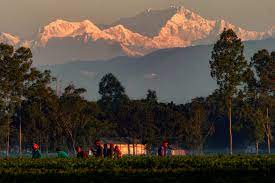
Many people refer to the Himalaya as though their limitations in scenery and climate were similar to those of the Alps. The tourist who gazes upon Kangchenjunga, 28,226 feet, from Darjeeling returns home saying that he has seen the Himalaya. So he has, but how much of two thousand miles of mountains stretching from the Pamirs to the borders of Indo-China, and beyond these limits, in terms of mountains? A lifetime might be spent wandering about the Himalaya, yet the knowledge acquired would embrace but an infinitesimal portion of that vast labyrinth of peaks, valleys and plateaux scrawled across the map of Asia.

In climate alone there is an extraordinary variety. From hot steamy tropical valleys, filled with luxuriant vegetation, it is but a few horizontal miles to zero temperatures and the highest snows in the world. Between these two extremes is an immense range of climate, the common despot of which is a fierce sun. Added to the complexities of climate due to height alone is the added complexity of seasonal weather fluctuations, due directly or indirectly to the influence of the monsoons and weather conditions emanating from the plateaux of Central Asia.

Racial characteristics are as diversified as the climate. From the people of Hunza and Chitral to the Sherpas and Bhotias of Northern Nepal, the almost extinct Lepchas of Sikkim and the wild races of Bhutan, the Himalaya can show many different types, for they form a natural frontier between India and Tibet, and a pudding-bowl wherein is stirred a mixture of Mongolian and Indian blood.

Politically, only a comparatively small portion of the Himalaya is accessible to the mountaineer and explorer. Democracy is unknown in Tibet and Nepal, and both these countries have closed their frontiers to Europeans and resolutely set themselves against infiltration of European thought and ideas. Some of the finest peaks of the Himalaya lie within the borders of Nepal, including the southern side of Everest, 29,140 feet, Dhaulagiri, 26,795 feet, Gosainthan (Shisha Pangma), 26,305 feet, and many other great peaks. In addition there are other districts where the mountaineer is not always welcomed, owing to political and other objections. The three most interesting districts accessible to mountaineers and explorers are the Karakorams, the Kumaun and Garhwal Himalaya and the Sikkim Himalaya, including the eastern side of Kangchenjunga, and it is in these three districts that the most notable mountaineering expeditions have been carried out, with the  exception of Everest (now barred politically) and the northern side of Nanga Parba (forbidden territory to expeditions at present). Each of these districts is magnificent in its own way. In the Karakoram there is no glacier to rival in grandeur the Baltoro, and no peaks surpassing in ferocity the terrific ice- armoured spires dominated by K2 (Mount Godwin Austin), 28,187 feet. From the Kumaun Himalaya rises Nanda Devi, 25,645 feet; the highest peak entirely within the confines of the British Empire, a mountain so difficult to approach that no one has yet succeeded in treading the glaciers at the foot of it, whilst Kamet, 25,447 feet, dominates the ranges of Northern Garhwal. In Sikkim, Kangchenjunga boasts the most wonderful snow and ice scenery in the Himalaya, owing to its exposure to the moisture-laden airs of the monsoon. It has defeated three determined attempts to climb it, in 1929, 1930 and 1931 by mountaineers well versed in the technique of high-altitude mountaineering. The highest point reached was 26,000 feet, by the gallant Bavarian expedition in 1931 and that only after incredible difficulty.*

Geologically, the Himalaya are a young mountain range, due to an uplift of the ancient seabed covering Central Asia. This uplift took place so slowly that rivers such as the Indus and the Brahmaputra, which have their sources to the north of the Himalaya, have been able to carve their way through the range as it rose. This is the only explanation that can account for the deep valleys cutting through from Tibet to India.

.

(Extracted from The Great Himalayan Ascents by Frank S. Smythe. Published by Speaking Tiger Books, 2025.)

About the Book

Frank S. Smythe (1900-1949) was one of the greatest mountaineers of the twentieth century, and a celebrated memoirist and adventure writer. This collection brings together three accounts of Smythe’s most thrilling ascents in the Himalayas—The Kangchenjunga Adventure, Kamet Conquered and Camp Six.

The Kangchenjunga Adventure narrates in detail the 1930 expedition to climb the third-highest mountain in the world: how Smythe, as part of an international team of mountaineers, attempts to reach the summit of Kangchenjunga, before a deadly avalanche—which kills one of the Sherpas— forces them to change course and scale the Jonsong Peak instead. In Kamet Conquered, Smythe makes a successful bid at ascending Mount Kamet in 1931, which was at that time still unscaled. On their way back, Smythe and his team chance upon the spectacular and colourful Bhyundar Valley, which they christen the ‘Valley of Flowers’, and which is now a National Park. Camp Six recounts a gripping adventure on the world’s highest mountain—the 1933 Everest Expedition, in which Smythe, climbing alone, ascends to a point higher than any human had reached before. Made without ropes or oxygen to support him, and in terrible snow conditions, the climb is regarded as one of the greatest endeavours in the history of mountaineering.

This majestic omnibus edition offers a fascinating window into early mountain climbing and Himalayan exploration. It is also a rare treat for every lover of fine, entertaining writing.

About the Author

Frank Sydney Smythe was a British mountaineer, botanist and adventurer. Smythe, who began his mountaineering career in the Alps, joined the international Kangchenjunga expedition of 1930 which ended in failure. In 1936, he led the expedition which successfully ascended Mount Kamet, then the highest peak ever to have been climbed. Subsequently, in the 1930s, Smythe was thrice part of teams which attempted to climb Mount Everest. An accomplished photographer and a prolific writer, Smythe wrote twenty-seven books in all, the best known among which are The Kangchenjunga Adventure, Kamet Conquered and Adventures of a Mountaineer. Smythe died in 1949.

.

PLEASE NOTE: ARTICLES CAN ONLY BE REPRODUCED IN OTHER SITES WITH DUE ACKNOWLEDGEMENT TO BORDERLESS JOURNAL

Categories
Poetry

Postcards from the Ledge

By Rhys Hughes

  Prologue.
There are fourteen mountains
on the surface of the Earth
higher than eight-thousand metres
and recently it was found
by observers on the ground
they have all been sending postcards
to the Royal Geographical Society
but no one knows why…
Courtesy: Creative Commons
     Mount Everest.
You say I am the tallest but that’s not
quite true: I am just
more obviously tall than you
and everyone else you know.
There is a mountain under the sea,
Mauna Kea by name
who is rather taller than me, 10,200
metres high as a matter
of fact: it’s just a question of tact that
she doesn’t loudly dispute
my claim to fame (and yes,
she’s a lady). And on the planet Mars
stands Olympus Mons,
highest mountain in our solar-system.

Courtesy: Creative Commons
     K2.
I am not quite as lofty
as my brother
Mount Everest (see above)
but he’s a softy
when compared to me in terms
of difficulty of climb.
Mountaineers drop from fright
on my slopes as well
as from physical exhaustion.
This is a warning, just a friendly
caution. Don’t sleigh
on my white suede snows. You
can do anything but
sleigh off my white suede snows.
Courtesy: Creative Commons
     Kangchenjunga.
I invoke hunger in the bellies
of those who try
to get to my summit. A fellow
named Crowley tried it
back in 1905 and he survived
while others of his team
were avalanched into oblivion.
He was snacking
at the time in his tent on mints
and thus was born
his insistence that life is sweet.
Courtesy: Creative Commons
    Lhotse.
I am the least prominent
of the eight-thousanders
despite the awfully vertiginous
vertical relief of my
South and Northeast Faces.
I wouldn’t really mind
swapping places with one of my
sheerer fellows but I’m
reluctant to make the offer.
Should I stoop so low?
Courtesy: Creative Commons
    Makalu. 
I look like a pyramid, they say,
but the comparison
offends me most painfully.
I am millions of years old,
the pyramids, a few thousand.
It should be the other way
around, visitors to Egypt ought to gasp
and cry: the pyramids look rather
like Makalu. Now that’s
the analogy that ought to apply.
Courtesy: Creative Commons
     Cho Oyu.
My name in Tibetan means
Turquoise Goddess
and although I am modest
I am pleased with the appellation.
It seems I am the easiest
of the eight-thousanders to climb
but I don’t regard that
as a disadvantage. Why be macho
in the clouds? If you love
Cho Oyu, she will be kind to you.
Climb me and you’ll return
like a human boomerang
for I have the lowest death-summit
ratio among the gang.
Courtesy: Creative Commons
    Dhaulagiri.
I dazzle the eyes with my gleaming
backside, and startle
the minds of those who slide down
my beauteous slopes.
I hope and pray for a climber today
to do something silly
such as roll down Dhaulagiri all the
way to the bottom
after the snapping of his ropes: yes,
to my shining base.
It’s not a race, as such, because there
can never be a winner,
just a mess like a yeti’s dog’s dinner.
Courtesy: Creative Commons
     Manaslu.
A serrated wall of ice hanging
on the horizon like a bandsaw
nailed to a door.
That is how I am described by
those who wish
to ride my teeth: climb up one
side and perch
on my summit and you’ll find
my mind is pure
enough for gentler metaphors.
I am not a tool, rarely the fool
who tries to fix
my own position in the scheme
of things. In the
valley below me snow leopards
prowl and growl
and so do you, softly, dreaming.
Courtesy: Creative Commons
     Nanga Parbat.
When rats desert a sinking ship
they expect it to really
sink, not merely plunge its prow
for a quick drink
and then right itself again. That
hurts, a betrayal
of the laws of disaster. And the
mice called climbers
who scurried
on my broad flanks when I sank
into the spray
of my own blown snows, crying
avalanche! surely
thought I had drowned for good
in that illusory sea.
But as you can see: I’m still here.

Courtesy: Creative Commons
     Annapurna.
Now we come to the real test.
I was the first eight-thousander
to be climbed.
Does that make me the easiest?
Well, no. In fact
I am the most dangerous of the
fourteen. My fatality
rate is twenty-five times as high 
as that of Miss Cho Oyu
and my slopes are littered with
those who have
found their literal ever rest here.
Get it? My propensity for
making puns wasn’t mentioned
in Maurice Herzog’s
classic book about the first ascent
of me. I wonder why?
I took all his toes and most of his
fingers with the aid
of frostbite: a remarkable feat for
him, paid for with
both of his own astonishing feet. 

Courtesy: Creative Commons
     Gasherbrum I.
I have a brother who you will meet
below, but in the meantime
you ought to know
that my eternal
snows glow
brightly
across the region that is my home,
and this is why
I am mystified as to
the origin of my nickname:
the Hidden Peak. It’s inaccurate
to my mind. Am I really
so hard to find?
Courtesy: Creative Commons
     Broad Peak.
My name is a physical descriptor
but my views
are broad too: I don’t care who or
what climbs me.
I welcome diversity. 
On July 23rd, 2016, a Frenchman
by the name of
Antoine Girard piloted a paraglider
over my head.
That’s a type of lightweight plane,
but I didn’t complain.
I never lodge objections with God.
Courtesy: Creative Commons
     Gasherbrum II.
You have already met my brother a short
distance above.
He is above in height
as well as in his location in this poem. I
look up to him in
everything, true, but he isn’t what I want
to talk about today.
No, I wish to briefly mention the Duke of
the Abruzzi and
also a certain Vittorio Sella,
the former a brave aristocrat and intrepid
mountain explorer,
the latter the greatest photographer of high
peaks who ever held
a camera. Climbers wear trousers but their
breath comes in pants:
this pair arrived to reconnoitre me in 1909
and I was flattered,
at least to the greatest extent that any giant
is flattered by ants.

Courtesy: Creative Commons
     Shishapangma.
I was the last of the eight-thousanders
to be scaled, not because
I’m any harder to climb than I am to rhyme
but thanks to logistical
and political considerations. Less of that!
I wish to share with you
a little snippet that I find pleasant to think
about. When Tintin
was in Tibet, he travelled
with Captain Haddock towards me, looking
for a crashed plane. I
don’t recall either of them,
but I have been told their journey was true,
although they knew me
back then by my Sanskrit name, Gosainthan.

     Epilogue.
Mountains rise and fall
like empires or supposedly solid walls.
Postcards are more
ephemeral than either,
especially when written in verse.
That’s the curse of time.
But the Royal Geographical Society
is never averse
to receiving them from
any interesting global feature that cares
to write a few lines.

Rhys Hughes has lived in many countries. He graduated as an engineer but currently works as a tutor of mathematics. Since his first book was published in 1995 he has had fifty other books published and his work has been translated into ten languages.

.

PLEASE NOTE: ARTICLES CAN ONLY BE REPRODUCED IN OTHER SITES WITH DUE ACKNOWLEDGEMENT TO BORDERLESS JOURNAL

Click here to access the Borderless anthology, Monalisa No Longer Smiles

Click here to access Monalisa No Longer Smiles on Kindle Amazon International

Categories
Poets, Poetry & Rhys Hughes

Ghee-Wizz

By Rhys Hughes

Ghee-laden, sugar-loaded, deep-fried, I have been warned that Indian sweets are naughty, even dangerous, and that I shouldn’t eat them at all, or if I do insist on eating them, then they must only be sampled in moderation, and even when I eat them in moderation I ought to visit a reliable doctor every week for a full health check, and even if I do that, I must bear in mind that men of my age die of heart attacks even when they don’t eat sweets of this nature. Indian sweets might look harmless on the plate but they are like cluster bombs, detonating inside the body and speeding a man into the next world.

But I climb mountains and mountaineering has been a huge part of my life, and when we climbed mountains back in Britain we took with us large amounts of a substance called Kendal Mint Cake. I need to talk about this food before I am able to make the point that I intend to make about Indian sweets. If you bear with me, I won’t be too long. Kendal Mint Cake is a sugar-based confection and is flavoured with peppermint oil. In fact, sugar, water and peppermint oil are the only ingredients, but they are prepared in a special way which remains a secret. I don’t think there’s much that’s very secretive about blending sugar, water and peppermint oil, but who am I to say that?

The ingredients are mixed together and boiled in copper pans while being continually stirred. If this stirring stops, the mixture becomes translucent and it will be ruined, because opacity is the desired feature of Kendal Mint Cake. How can a translucent sugar-rush product be taken seriously? We see the light after a lifetime of contemplation. We see a solid lump of minty sugar when we plan to ascend to the summit of some peak or other.

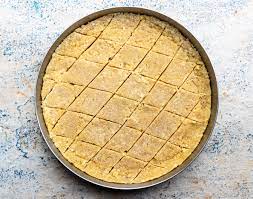
Kendal Mint Cake. Courtesy: Creative Commons

Kendal Mint Cake has a formidable and perhaps peerless reputation as the energy-providing snack of choice for the intrepid explorer. It played an essential role in the Trans-Antarctic Expedition of 1914–1917, led by Ernest Shackleton, one of the fittest and toughest men who ever lived. It aided Hillary and Tenzing in the first successful attempt on Everest in 1953 and other members of the team wrote, “It was easily the most popular item on our high altitude ration” and “our only criticism was that we did not have enough of it”. High praise indeed, with an emphasis on the high. Bonington also climbed Everest in 1975 using Kendal Mint Cake, as well as ropes and crampons.

I think we can safely declare that Kendal Mint Cake is heroic. Therefore, it seems to be that Indian sweets can also be regarded as mighty, valiant, doughty, gallant, fearless and daring. And when we consider that India has mountains far higher than those in Britain, shouldn’t we tend to the conclusion that the sweets of India are themselves a bracing landscape when seen on the counter of a shop that sells them? We hear a lot of talk about sugar highs and lows, but viewed as a backdrop, rather than as the progress of a graph line through time, highs and lows form mountain ranges. Indian sweets recreate on the inside the geography of the northern icy reaches of the country.

It is high time (more wordplay) that mountaineers and other explorers start carrying Indian sweets on their expeditions. Kendal Mint Cake has proved itself in the lonely heights, and now gulab jamuns and ladoos, and boxes of sandesh, modak, barfi and bowls of payasam should be given a fair chance, to say nothing of kulfi, halwa, gujiya, and my favourite, Mysore pak. Need I list them all? It is not just a question of providing energy to the adventurer, energy that can be expended a very short time after eating the sweets, as opposed to eating healthy foods which provide energy slowly and in trickles. No, there are many other good reasons for adding a broad selection of sweets to the supplies that are to be taken up slopes of staggering steepness into the very clouds.

First of all, sweets are light. They are lighter than so-called healthy foods. I pity the mountaineer who hefts sacks of cabbages and carrots to the top of harsh and fearsome Annapurna or Dhaulagiri. Sweets are considerably more compact than vegetables, especially the unpleasant-tasting vegetables. Sweets can remain fresh for longer and that’s another advantage. You don’t have to eat them all in the foothills but can save some for the ascent.

Sweets are rewards too. The fellow who promises himself a ladoo or two when he finally attains a certain tricky ledge is more likely to be motivated to strive for that ledge than the man who tempts himself with a turnip or beetroot. Who would want to munch on a root vegetable during a blizzard? Not me. The taking of sweets on expeditions also provides work for sweet-makers. It is both economically wise and aesthetically sensible to carry sweets together with ropes and pitons and carabiners and all the other accoutrements of a sober climb if one happens to be a serious climber. Hunger pangs are one thing at sea level, but at altitude they tend to be much worse.

There is another consideration that hasn’t yet been touched on. There is the perennial risk for the mountaineer who attempts the Himalayas that he will meet and be abducted by Yetis. I won’t overstate the risk. Most of the climbers of that range have returned without being abducted. But is it really responsible to poke one’s nose into the eternal snows without something to mollify the beast? There is the question of simply organic respect. The explorer who suddenly encounters a Yeti and emits a shriek has insulted his potential host. The explorer who opens a box of sweets and offers one, or several, or many, to the hairy brute will surely make a good impression. I can almost see them now, in my mind’s eye, man and monster sitting on a crag, sharing gulab jamuns.

Rhys Hughes has lived in many countries. He graduated as an engineer but currently works as a tutor of mathematics. Since his first book was published in 1995 he has had fifty other books published and his work has been translated into ten languages.

.

PLEASE NOTE: ARTICLES CAN ONLY BE REPRODUCED IN OTHER SITES WITH DUE ACKNOWLEDGEMENT TO BORDERLESS JOURNAL
Click here to access the Borderless anthology, Monalisa No Longer Smiles

Click here to access Monalisa No Longer Smiles on Kindle Amazon International

Categories
Essay

The Wonderland of Pokhara

By Ravi Shankar

Pokhara, Nepal. Courtesy: Creative Commons

The view of the Himalayan ranges through the airplane window to the right was breath-taking. The February day was bright and sunny, and the Himalayan giants were clearly seen. I was flying on an ATR 72 aircraft from Kathmandu to Pokhara. The flight was short (around 20 minutes) and soon I could see the Pokhara valley and the town far below. The town is cut into deep gorges by rivers flowing down from the Himalayas. I could see the vast building of the Manipal Teaching Hospital at the base of a huge hill.  

Pokhara is a magical city located in the western region of Nepal. Unfortunately, many confuse it with Pokhran, the site of India’s nuclear tests. I faced some difficulty explaining the location of these two places and their stark differences. The town is located about 250 km west of the capital, Kathmandu. The altitude is lower at around 900 m (Kathmandu is at 1300 m). Winters are less cold but there are violent hailstorms and thunderstorms during summer. The view of the Annapurna Himals (snow-covered mountains in Nepali) from Pokhara is spectacular. The Annapurnas have several peaks – Annapurna I, II, III, Hiunchuli, and Gangapurna. The fishtail mountain, Macchapucchare dominates the view from Pokhara. The fishtail aspect with twin peaks is only seen once you leave the Pokhara valley. The face of a tiger is said be discerned on the face of the peak. I spent a lot of time and effort trying to discern the tiger’s face. Then, one day, after a few years sustained effort suddenly my efforts paid off. I was able to see the tiger!    

Dashain (called Dussehra in India) is Nepal’s most important festival and celebrations go on for over two weeks. During autumn and winter, the air is clear, the dust has settled and the mountain views are spectacular. In the morning the faculty gather for tea/coffee near the mess at the Deep campus of Manipal College of Medical Sciences and enjoy a spectacular view. Watching birds glide against the clear blue sky and the clouds slowly gathering on the Himals is a unique experience. You could spend hours sitting quietly drinking in the view in the warm winter sunshine.

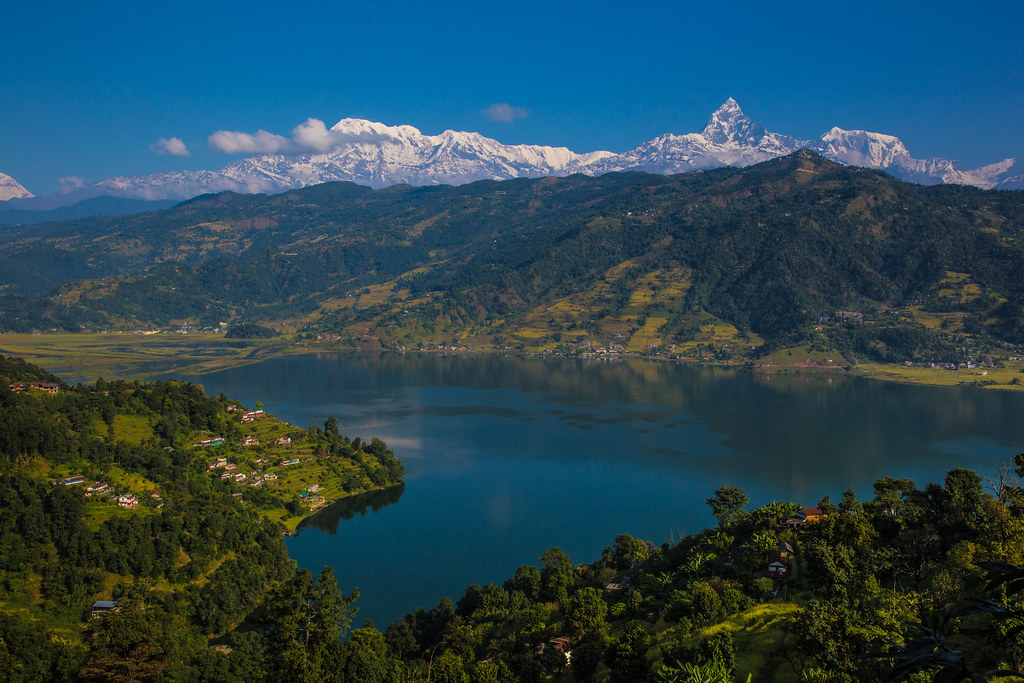
There are several day hikes around Pokhara. You can walk down to Lakeside. This takes a good ninety minutes from Phulbari where the Manipal Teaching Hospital is located. You can continue walking past the lake passing through rapidly urbanising villages, tourist lodges and restaurants. Phewa Lake is the jewel of Pokhara though it may be becoming congested. A road has been constructed around the lake and the lakeside is full of tourist hotels. The Tal Bharahi temple situated in the middle of the lake can be accessed by boat. Dervla Murphy stayed in Pokhara during the 1960s and writes about the pristine Phewa lake without the tourist accoutrements in her book ‘The waiting land’.  

Phewa Lake. Courtesy: Creative Commons

Pokhara Thakali Kitchen located at Lakeside serves authentic Thakali food. Thakalis are an ethnic group from the Thak Khola valley north of Pokhara famous as innkeepers and restaurateurs. I enjoyed piping hot rice, green dhal (lentil curry), saag (green leafy vegetables), potatoes roasted in ghiu (clarified butter), tomato achar (pickle), and the wonderful chicken or mutton jhol (curry in Nepali). I am also partial to dhido — a paste made from either corn or buckwheat. Another favourite place was a restaurant located toward the end of the lake. The tables were placed in small, thatched huts and you could enjoy the view while food was being prepared. There were also a few cots to enjoy a siesta. Their daal-bhaat-tarkari (lentil curry, rice, vegetables) and chicken curry were exceptional. In Nepal, restaurants usually prepare orders fresh, and you can expect to wait up to an hour for your order to be prepared.     

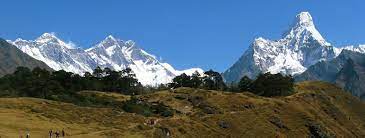
Sarangkot located at the height of around 1500 m offers spectacular views of the Dhaulagiri Himals to the west, the Annapurna range, and even the Manasulu peaks to the east. The area can get crowded during winter mornings and evenings as tourists and guides gather to watch the mountains turning golden, and different shades of red during spectacular sunrises and sunsets. The Annapurna Sherpa Resort is close by, and my friends and I had spent several New Years’ Eves there. From Sarangkot, you can descend to the lakeside. The trail is steep and passes through several villages. You can watch the hang gliders taking off, their colourful canopies staying suspended in the air and eventually landing at the far side of the lake.    

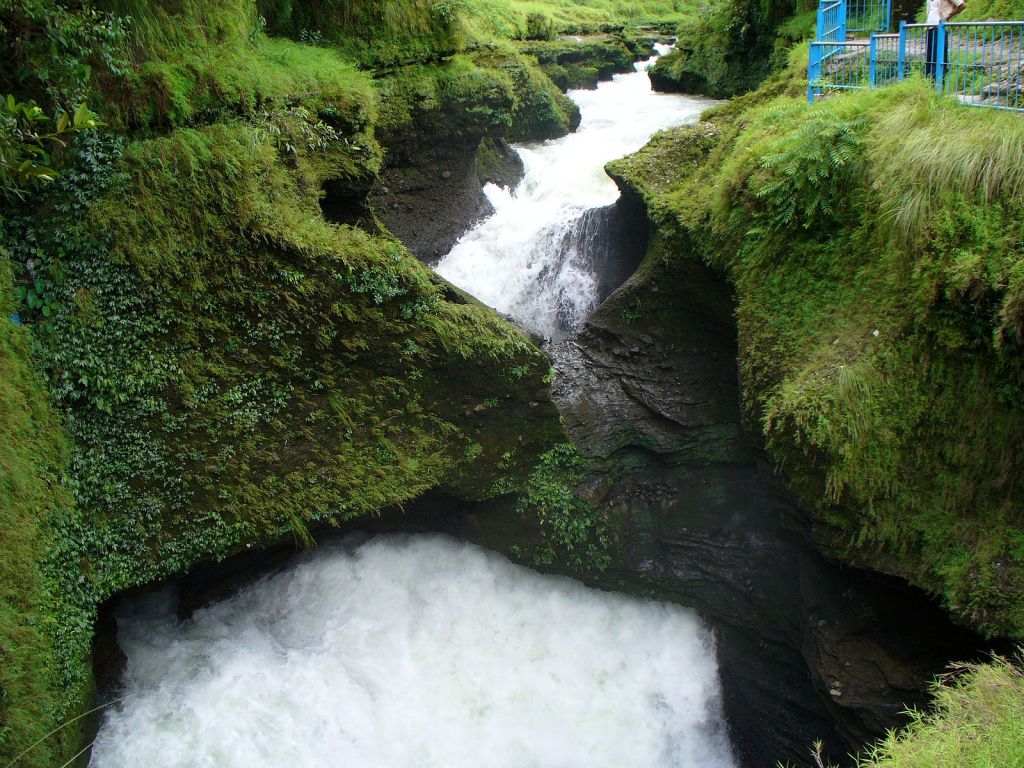
Kahundada is the mountain immediately behind the hospital. A road has now been cut to the top but two decades ago you had to climb up through stone staircases. There is a view tower at the top and you can enjoy the view of the Himals without the crowds. However, there are no hotels near the top so reaching the tower in time for sunrise is challenging. Devi’s fall is another attraction. In Pokhara, the ground in most areas is made of soft limestone and this can get dissolved in the acidic rainwater. In the Deep campus of Manipal, there were sudden cave-ins caused by limestone erosion. Devi’s fall is said to be named after a Swiss lady, Devine who went swimming in the fall but was swept away by a sudden gust of water. The Nepali name is Patale ko chango (underground waterfall).

Devi Fall. Courtesy: Creative Commons

The Gupteshwar Mahadev cave dedicated to Lord Shiva is nearby. This bat cave (chamere gufa in Nepali) is the habitat of the horseshoe bats. The exit requires some climbing and is narrower than the entrance. There is a belief that only those who have not sinned would be able to exit the cave. One of my favourite walks was to the village of Mauja. The trail climbs up through green forests and waterfalls. Mauja is a typical hill village and a good weekend hike. Another excellent hike is from Naudanda to the lakeside. You can take a bus to Naudanda and then walk down to the lake. You pass through several villages. Kaskikot was the old capital of the kings of Kaski. There is a fort on the hilltop with a good view over the valley. There is also a Kashyap hill where the rishi Kashyap is said to have meditated. A few high-end tourist hotels have now been established here. The view of the blue waters of Phewa lake get bigger as you slowly approach the lakeside.            

Begnas and Rupa lakes are two other lakes in the valley. Begnas lake is less crowded and is famous for its fish stalls. A small, forested hill, Panchabhaiya Dada, separates the two lakes. The waters of Begnas look darker and deeper. The International Mountain Museum was opened in Pokhara in 2004. The location offers spectacular views of the Annapurnas. The museum has three main exhibition halls: the Hall of Great Himalayas, the Hall of Fame, and the Hall of World Mountains. The cultures of the mountain people are also depicted. Bindhyabashini temple, the oldest temple in Pokhara was established in the 1760s. There is an interesting legend about the temple. The King of Kaski dreamt about establishing the temple. He had his men go to Bindhyachal Parbat and bring back an idol of the Goddess. While returning the men camped for the night in the current temple location. The next morning, they found they could not move the idol, and the king when informed ordered the temple to be set up at the current location.  

I enjoyed reading the fascinating book by Jagannath Adhikari and David Seddon, Pokhara: Biography of a Town. Pokhara is today one of the fastest-growing towns in Nepal. Ekai Kawaguchi, a Japanese monk was an early explorer of Tibet which he approached through Pokhara and the Thak khola. He was deeply impressed by the beauty of Pokhara. He mentioned in his writings that during all his travels he had never seen a place that rivalled the beauty of Pokhara. Magical Pokhara weaves its charm on visitors and residents alike!     

Dr. P Ravi Shankar is a faculty member at the IMU Centre for Education (ICE), International Medical University, Kuala Lumpur, Malaysia. He enjoys traveling and is a creative writer and photographer.

.

PLEASE NOTE: ARTICLES CAN ONLY BE REPRODUCED IN OTHER SITES WITH DUE ACKNOWLEDGEMENT TO BORDERLESS JOURNAL
Click here to access the Borderless anthology, Monalisa No Longer Smiles

Click here to access Monalisa No Longer Smiles on Kindle Amazon International