Categories
Musings

COVID claims jobs

By Devraj Singh Kalsi

Covid-19 seems far away from the district I live in. But deprivation has already set in. On my way home with a bag full of grocery items from the nearby kirana store (minimart), I was stopped by two masked women outside the park. One of them flashed a weak smile that disappeared as soon as she measured from my bag and body language that I was not the person she was waiting for. She asked me whether the distribution of food grains was scheduled in the park – whether they should queue up and wait. Being absolutely clueless regarding any such distribution plan and feeling a sense of remorse for carrying something these women were eagerly waiting for, I chose to suggest the adjacent house for reliable information in this regard.

I replayed her question in my head to assess her plight. Her voice did not quake with any sentiment of doom. But her face did carry a disproportionate mix of hope and worry. From her readiness to wait, it appeared she was expecting recovery and normalcy to return soon. Just like her, the entire nation was pregnant with hope of a turnaround. Except the corporate world that had already aborted it.  

Despite chanting mantras of positive mindset and chewing the motivational gum year after year, there seems to be a well-orchestrated unanimity in the prediction of business slump. Salary cut sounds a pretty neat term – quite like a bearded guy choosing to become clean-shaven and still looking dapper. Nobody seems to grudge pay cuts and there is a smile on every face if you mention it, as if it is an increment or Diwali bonus.

Weighed against the other alternative of job loss, this seems like a life-saver. While we are still a long away from finding the vaccine, it seems we have already found the cure that keeps us immune from lay-offs. Thousands of employees and workers are going to serve with renewed motivation because they have families to feed and regular debts to service. The vicious cycle continues.

It is barely a month of lockdown in India and companies are feeling the heat. They have to pay salaries when there is no cash flow. It pinches them hard. This comes as an ideal opportunity to downsize the workforce. Instead of waiting for two months to see how the situation evolves, companies have already started communicating their new human resource policies through email and phone. Seems there is no contingency fund to tide over the crisis and emergency credit lines will not meet their requirement.  

Before the Covid-19 crisis set in, I met my employers for a raise and the first draft of their script was ready. Every single line suggested they were waiting for the pandemic to blow up before they unfolded their mega plans in front of employees. It was a clear indicator that they were going to release a voluntary retrenchment scheme, or they would come up with a revised plan of salary packages.

After the 21-day lockdown ended and the extension happened, the advertising agency began its trial run on me. To be honest, I had an inkling that this exercise would begin with me. The owners communicated their decision to flatten my salary curve – slash 50% of it from next month. It was cold, insensitive, and brutal. The email exuded the same indifference. Since I was not ready to accept the new offer, I communicated my decision to quit my job in the next three months and served them my notice period.

Some friends called me to know about my job status. Did you get hit? The urban workforce hides its collective shame in this clever expression that helps salvage pride and dignity by playing the victim card — as if it was an enemy bullet that hit us while we were serving our corporate dukes in the battlefield.    

During Covid-19 times, the chutzpah to leave a job is certainly not what any employer would expect. A meek, timid acceptance would have warmed the cockles of their hearts. What I delivered was a bitter pill of gross insubordination and rebellion. I knew all their domestic clients were on board, and several of them were government clients. This was a temporary setback and the clients would resume operations after the lockdown. What was the tearing hurry then?

Imagine what happens to hordes of employees in the private sector in the coming months. People are going to suffer heart attacks, strokes and even contemplate suicide. And the organisations have no humanitarian approach or policy to address such a major problem. If they do not wish to utilise the resources acquired over the years of operations for the benefit of employees, it shows their rank opportunism and insensitive disposition in such trying times. 

Most of the companies operating in India have not existed since 1971. The corporate boom is a fairly recent phenomenon that arrived after liberalization was introduced in 1991. They have not seen wars or famines during their lifetime. All they are busy doing is axe, axe, and axe. As if jobs are like overgrown branches that need to be pruned from time to time.   

Corporates have a fairly typical mindset: expand hiring processes when business grows and contract when business shrinks. Remember the faces of those animals that perceive the slightest danger and curl up for protection – corporates are like that. Unreliable, fair-weather friends you can go on a date with provided you carry an umbrella or a raincoat of your own. When it starts pouring suddenly, do not expect them to take you under their umbrella.

Covid-19 crisis is yet another eye-opener that reveals the real predatory nature of corporate entities. Sadly, this realisation will soon be forgotten as the corporate juggernaut resumes its roll.   

Devraj Singh Kalsi works as a senior copywriter in Kolkata. His short stories and essays have been published in Deccan Herald, Tehelka, Kitaab, Earthen Lamp Journal, Assam Tribune, and The Statesman. Pal Motors is his first novel. 

Categories
Essay

COVID-19: Governance And Scientific Temper In India

By K.P. Fabian

The media, the Indian as well as the international, have  covered the continuing plight of the inter-state migrants resulting from the nation-wide lock-down announced with a calculated abruptness, not uncharacteristic of the Government of India (GOI) judging from the disastrous demonetization and the hurried and thoughtless implementation of GST.

Yet, none in the media has given a proper explanation for the failure of the GOI to anticipate the plight of the millions of inter-state migrants. It has been pointed out that these poor citizens come to the attention of the government only when there is an election. However, there is another explanation which the mainstream media, more or less intimidated by the establishment, do not dare to say: Any such major decision should have been taken based on a cabinet paper as the Rules of Business of GOI mandate. Such a cabinet paper  would have been prepared by the relevant Department/Ministry and submitted by its Secretary to the Cabinet Secretary who would have circulated it to the departments concerned, and even consulted with the states, as they have to implement the decision. That paper would have argued the pros and cons, listed out the actions to be taken before the announcement, and thereafter. It would have listed the anticipable problems such as the plight of inter-state migrants, the supply chain management and more. It certainly would not have recommended an announcement at 8P.M. to be effective at midnight.

Therefore, we conclude that the lock-down decision is not an instance of good governance. The lock-down was necessary. But in government even a good and necessary decision has to be taken and implemented  in the right way. Government procedures are there for a reason. Unless there are extenuating circumstances, the procedure should be respected.

The Finance Minister said that she barely got 36 hours to come out with a financial package. Looking at the half-baked package, her complaint is legitimate.

Let us now look at the strategy of GOI to address the Covid-19 pandemic. The sad truth is that there was no strategy because no attention was paid to the looming disaster though we have a National Disaster Management Act enacted in 2005. On 30th January 2020 the first case in India was detected in the State of Kerala. The patient had returned from Wuhan where she was a student. By 3rd February, two more students who had returned from Wuhan tested positive.

Let us look at the response of the Government of Kerala (GOK) and GOI.  Five days before the first case, the State Health Minister K.K. Shailaja, set up a high-level committee. On 4th February, GOK declared a ‘state disaster’.

The GOI did not take note of what was happening in Kerala. Is there a system of a state government sending an urgent report on such matters to the GOI? Whether it is there or not, the media covered the cases in Kerala, and nothing should have prevented the GOI from asking for an urgent report. Whether such a report was asked for or not, sent or not, the Union Ministry of Health issued an advisory on travel to China only on 17th January. It said that Indians going to China should take care in view of the contagion. On 25th January, a second advisory said that travel to China should be for ‘essential’ purposes only. There was no advisory in February. The third advisory was on 5th March, advising against travel to China.

Question: Why was there such delay? Our Embassy in China would have reported about the raging contagion. Taiwan took prompt action by medically screening arriving passengers from Wuhan, initially informally, and formally after China informed the W.H.O. of the contagion on 31st December.  What is even more important is that Taiwan started making testing kits as a precaution. Surely, our trade office in Taiwan would have reported all this.  By 20th January, the W.H.O.  published the action under way in Thailand, Japan, and South Korea. Our missions in the three countries would have reported on all this.  Our Permanent Mission in Geneva would have reported on all this though the web site of the organization was giving the information.

We conclude that the GOI was not alert.  President Trump and P.M. had a five-hour long session on 25th February. Trump had disallowed flights from China in early February. Did they discuss this contagion?

A related question: Why did Trump come at all, if he had made up his mind to indefinitely postpone a trade deal? Was the sole purpose to get an over-choreographed reception in Ahmedabad to a large gathering who might not have understood what he said as there was no interpretation? What was the raison d’etre of this Wagneraian opera at some cost to the people of India? To show GOI’s support for the candidate Trump? If so, is it wise to pick a side in the election in another country? Good diplomacy advises against such action.

Another instance of the deficit of good governance is that the resourceful military has not been mobilized to assist with the supply chain and the manufacturing of testing kits, PPE (Personal Protection Equipment) and much more.

There is a basic confusion in the mind of the GOI. Lock-down is required only to the extent it produces the conditions necessary for social distancing. Lock-down per se is not desirable.  The imaginary cabinet paper would have had three lists of economic activities:

1) Activities compatible with social distancing with minor modifications.

2) Activities that need more modification to be made compatible with social distancing.

3) Activities not compatible with social distancing.

Talks with the sectors of the economy and its representative bodies would have started on day one of the lock-down if not prior to it.  We see that the corporate sector is finding it difficult to accommodate the workers inside the plant or even to arrange for their transport. Democracy implies dialogue between the government and the rest of the society the initiative for which should be taken by the former. India has an excellent, or potentially excellent bureaucracy and sadly it has not contributed as much as it can into decision-making and implementation. Why is it so?

Above all, we need a scientific temper to successfully deal with such crises. Such temper seems to be absent among a section of the Delhi elite as seen from a WhatsApp message that went around:

The candle flames have temperatures in the range of 400° to 500° Celsius. When so so so many candles will light for 9 minutes, imagine the impact on the environment and the heat so generated will decimate the virus. Why 9 mins, 9 P M and 5th Apr (5+4)?9 in the numerology is an adamant digit, which cannot be destroyed.

It was Jawaharlal Nehru who coined the phrase ‘ the scientific temper’ that he defined in 1946 in The Discovery of India as follows:

“What is needed] is the scientific approach, the adventurous and yet critical temper of science, the search for truth and new knowledge, the refusal to accept anything without testing and trial, the capacity to change previous conclusions in the face of new evidence, the reliance on observed fact and not on pre-conceived theory, the hard discipline of the mind—all this is necessary, not merely for the application of science but for life itself and the solution of its many problems.”

It will be most useful if the P.M. in one of his addresses to the nation draws attention to article 51 of the Constitution which requires the citizens to cultivate such a temper.

This is not the time to find fault for the sake of finding fault. But unity of action in a democracy comes only when the government is self-confident enough to listen to criticism and benefit therefrom.

Let us work unitedly under the leadership of the P.M and C.M.s. India is too large a country to be micro-governed from the capital.

K.P Fabian is a former Ambassador

This article was first published in Countercurrents.org

Categories
Poetry

I am a Woman & Covid 19: An Intruder

By Pravat Kumar Padhy

I am a Woman

the stones stack

one above another

in deep silence

void mingles with the wind

rumbling into the emptiness

****        ****      ****

dark patches

of the colour of the skin

he screams aloud 

as if moon with its lost shine

hides behind the dense cloud

****        ****      ****

she fears to call

the wave by which name

layers over layers

she drags her footmarks

as the rain follows the rain

****        ****      ****

memory 

still frightens her

every evening

tears mingle

with her bereaved sea

****    ****    ****
wiping tears

gently from her face

with a needle of hope

she threads the pain in between

reading  life, like an anthology of poem

****    ****    ****

she reminisces

about events long gone by

floating leaves

gather patches  of shadow

mixed with receding sunshine

*****        *****      *****

holding the breeze

near the liberty square

she wishes

the sculpture to proclaim

her expression of tender pray

****     ****     ****

like an adrift tree

often she got bled and burnt

the woman of justice 

holds the beam balance,

the cover page of Social science

Note: These five-line poems are excerpts from the manuscript, “I am a Woman”

Covid-19: An Intruder

stillness

like a deep forest…

invisible invaders

axe everyone, like trees

falling silently into sleep

****    ****    ****

all around

beyond the border

a tremor of panic

swollen eyes turn

into craters of stormy rain

****    ****    ****

since sunrise

he has been breathing hard  

a stone even feels

the pain of suffering

as he strides towards his last evening

****    ****      ****

his last word

mingles with void…

we scream aloud

as the storm blows away

all the petals of our hope

****    ****    ****

aliens, if any,

might be wondering

about the planet

deep shadow of silence

eclipses under the trembling fear

****    ****    ****

dawn to dust

a long walk to the cemetery…

the last line

in the book of condolence

reads curse of the cruel Covid-19

****    ****    ****

seed of hope

lies under the soil

to sprout

wish for mankind to witness

the garden of flower and fragrance

Pravat Kumar Padhy has obtained his Masters of Science and Technology and a Ph.D from Indian Institute of Technology, ISM Dhanbad. His literary work is cited in Interviews with Indian Writing in English, Spectrum History of Indian Literature in English, Alienation in Contemporary Indian English Poetry, History of Contemporary Indian English Poetry etc. His poems received many awards and commendations including the Editors’ Choice Award at Writers Guild of India, Asian American Poetry, Poetbay, Vancouver Cherry Blossom Festival, UNESCO International Year Award of Water Co-operation and others. His tanka, ‘I mingle’ is featured in the “Kudo Resource Guide”, University of California, Berkeley. His poem, “How Beautiful” is included in the Undergraduate English Curriculum at the university level.

Categories
Musings

Distant Worlds Converging on Screens during the Global Pandemic

By Meredith Stephens

Adelaide is half an hour ahead of Japan, and today while in lockdown in Adelaide I keep an eye on the clock so I can join a meeting over 7000 kilometres away in Japan. Ten years ago this would have been a scene in a science fiction novel (at least for me), but now I just have to click a link and I can participate in meeting in a distant place and in a different language. Until now my worlds of Australia and Japan have been hermetically sealed. It has been impossible to be simultaneously present in both, but this crisis has brought them together for the first time. I can sit in front of the screen and attend a meeting in Japan, with the comforting presence of my ageing Labrador snoozing at my feet in Adelaide.

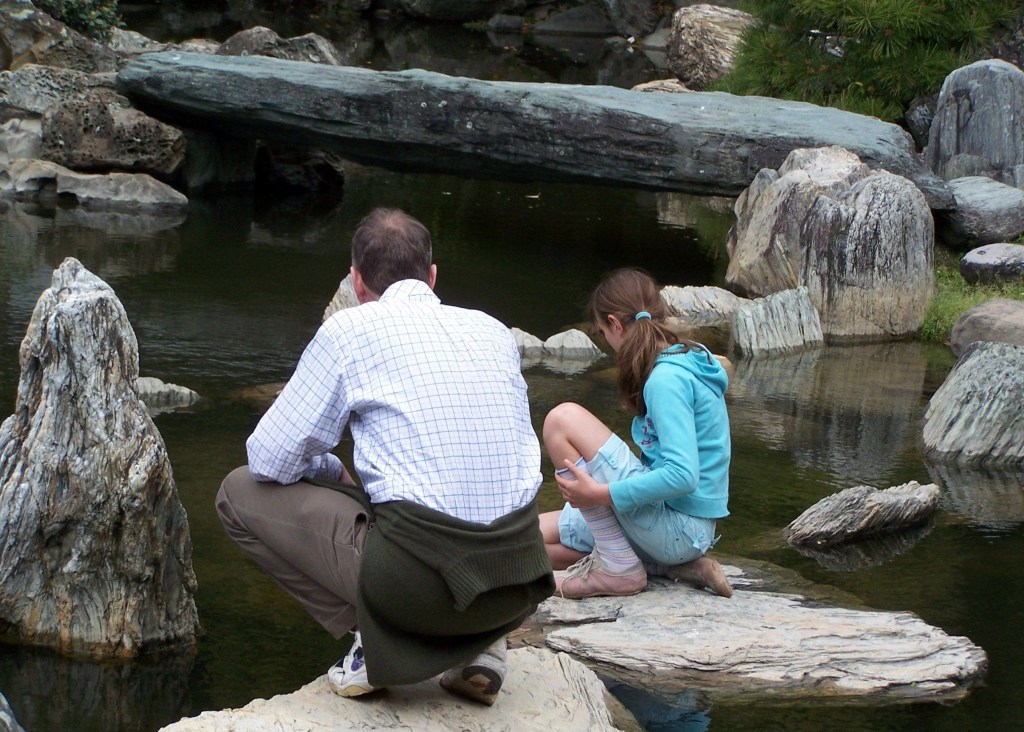
Until now my worlds have been separated by distance, language, culture, friends, acquaintances, food, pets, seasons, flora and fauna. Despite these innumerable differences we share one important commonality — the time zone. Adelaide shares its longitude with Japan and is only thirty minutes ahead in the Australian winter, and ninety minutes ahead in the Australian summer. Few have shared my two worlds other than family, a few friends, and a few students. When I go to check in at the airport in Adelaide the ground staff have never heard of the Japanese city where I live. I am the sole person regularly making this particular commute. I rarely tire of having parallel lives in locations which don’t intersect. My work is in Japan, and when I am there, I commute to the workplace, visit the shops and go to the doctor by bicycle. In spring I can enjoy plum blossoms, cherry blossoms, azaleas, irises and hydrangeas. What’s more, nothing rivals the stark beauty and symbolism of Japanese gardens.

I have Japanese friends, so I can enjoy daily conversations in their beautiful language. I can exchange emails in a language which is flexible enough that it can be written both horizontally or vertically. I also have English-speaking friends, mainly Americans and Canadians. It’s very exciting to make North American friends from such distant places as Arkansas, South Carolina, Philadelphia, New York and Spokane in the US, and Quebec, Ontario and Vancouver in Canada. I could never hope to meet such friends in Adelaide, which is in the southern hemisphere and faces the Southern Ocean. So my world has expanded not just because I am in Japan but also because of my ex-patriate friends.

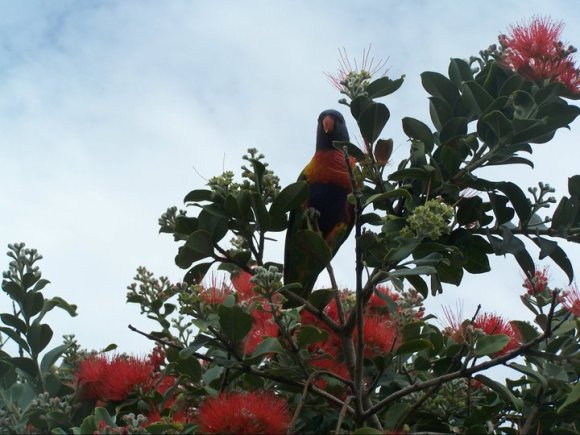
In Adelaide my world is characterized by immediate and extended family, my doggie, and native birds with distinctive birdsong that you will not hear anywhere else. It is always a great pleasure to arrive in Adelaide back from Japan and be woken early in the morning to a family of cackling kookaburras, magpies, and lorikeets.

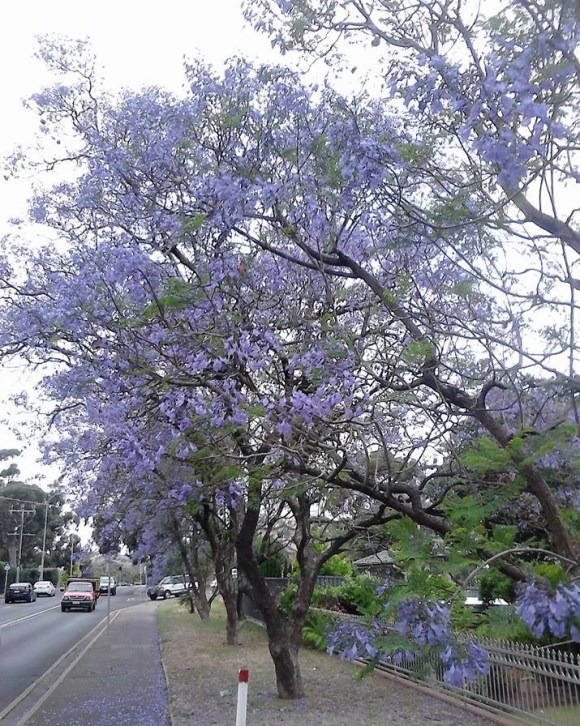
In the older suburbs, the spaces between houses are wide enough that you can forget that you have neighbours and imagine you are living in the country. Japan has taught me to be alert to seasonal change, and has enhanced my enjoyment of the Australian spring, when I can enjoy golden wattle, bottle brushes, eucalyptus flowers, jacaranda and roses.

It’s gratifying to participate in two different cultures and landscapes as I commute between Japan and Australia. However, each side is pulling my allegiance in a different direction. My colleagues in Japan think that I take off to Australia too often, and my family in Australia tell me it is time to come home. Each side seems to be unaware of how important the other side is to me. I feel guilty that I cannot please both parties, but I can give up neither. I hope the decision will be taken out of my hands. There is a word in Japanese to indicate the struggle between two children when they fight for a toy and neither will let go- toriai – and I feel like that toy which is being pulled in two directions.

It has taken a global pandemic for these two worlds to converge. Protecting people’s health has led to Australia’s international and state borders being closed. International flights have been cancelled. My lifestyle of commuting to Japan has come to an abrupt halt. Social distancing has been imposed. Shops, other than supermarkets and pharmacies, are closed. Most medical appointments are now by telehealth. Meanwhile my employer has entreated me to return to Japan and I feel guilty for refusing, but I am frightened of both the trip and being marooned in a country where I have no family.

A hurried solution to this has been online participation in meetings. This has been facilitated because of sharing a common time zone. If I were in America or Europe I might find myself participating in meetings during the night. My hitherto mutually irreconcilable worlds are finally converging. I have been able to click on a link and hear the familiar voices of Japanese-speaking colleagues from the comfort of my Adelaide sofa, with my faithful doggie at my feet. Never has participation in a meeting been so pleasurable. I can listen to my sweet Labrador’s regular deep breathing, progressing to gentle snoring as she rests, oblivious to this international communication. When I rest my eyes on the computer screen during the meeting I see the familiar Japanese writing, and watch the movement of the mouse as the moderator indicates the progression of the agenda. Meanwhile the intense Australian sunshine forces its way through the slats in the blinds. For the first time I might be able to hear kookaburras competing for my attention during a meeting which is being held in Japan. The hermetic seal between these two worlds over 7000 kilometres apart has been punctured, and I feel a sense of relief that the familiar voices of Japanese colleagues can reach me not only in the southern hemisphere, but also on the southern coast of this Antipodean continent.

Meredith Stephens is an applied linguist in Japan. Her work has appeared in Transnational Literature, The Blue Nib, The Font – A Literary Journal for Language Teachers, The Journal of Literature in Language Teaching, The Writers’ and Readers’ MagazineReading in a Foreign Language, and in chapters in anthologies entitled What’s Cooking Mom? Narratives about Food and Family, The Migrant Maternal: “Birthing” New Lives Abroad, and Twenty-First Century Friendship, all published by Demeter Press, Canada.

Categories
Essay

Rebuilding After Corona

By John Scales Avery

A better world is possible!

It is hard to predict how long the terrible COVID-19 pandemic will last, but at some time in the future it will end, and we will be faced with the problem of rebuilding the world after the enormous economic and human destruction which the disease will have left in its wake. The pandemic has thrown light onto the world’s political and economic systems, and has shown them to be wanting. Most people today do not wish to return to the old normal. That “normal” was part of the problem. The post-pandemic world must be a new and changed world!

Is a better world possible? Of course it is! Our present world is filled with an almost unimaginable amount of injustice, greed and folly. Why is our present world so full of glaring faults? One reason can be found in the slow rate of change of genetic evolution, compared with the lightning-like rate of cultural evolution. We face the problems of the 21st century with an emotional nature that has not changed much since our ancestors lived in small tribes, competing for territory on the grasslands of Africa. Our emotional nature contains an element of tribalism to which militarists can all too easily appeal.

Recovery offers climate action opportunities

When the COVID-19 pandemic is over, governments will be faced by the task of repairing the enormous economic damage that it has caused. The situation will be similar to the crisis that faced US President Franklin D. Roosevelt when he took office during the Great Depression of the 1930’s. Roosevelt, encouraged by John Maynard Keynes, used federal funds to build much-needed infrastructure around the United States. His programs, the New Deal, ended the Great Depression in his country.

Today, the similar concept of a Green New Deal is being put forward globally. This concept visualizes government-sponsored programs aimed at simultaneously creating both jobs and urgently-needed renewable energy infrastructure. The Green New Deal programs could be administered in such a way as to correct social injustices.

A sustainable economic system

Economists, with a few notable exceptions, such as Nicholas Georgescu-Roegen, Aurelio Peccei and Herman Daly, have a cynical tendency to confine their discussions to the short-term future. With self-imposed myopia, they refuse to look more than a few decades into the future. This allows them to worship growth, and to advocate perpetual growth. But endless growth of anything physical, on a finite earth, is a logical impossibility.

Our present financial system is unsustainable, and it works for the interests of a few very rich people.  For the sake of the long-term future, we must build a sustainable, steady-state economic system, an economic system which reduces inequality, and which serves the broad public interest, an economic system with both a social conscience and an ecological conscience.

A new freely downloadable book

I would like to announce the publication of a book, which discusses the changes that we must make to create a better world after the pandemic has ended. The book may be freely downloaded and circulated by clicking on this link.

http://eacpe.org/app/wp-content/uploads/2020/04/Rebuilding-After-Corona-by-John-Scales-Avery.pdf

Other books and articles about  global problems are on these links

https://wsimag.com/authors/716-john-scales-avery

https://wsimag.com/authors/716-john-scales-avery

I hope that you will circulate the links in this article to friends and contacts who might be interested.

I hope that you will circulate the link in this article to friends and contacts who might be interested.

John Scales Avery is a theoretical chemist at the University of Copenhagen. He is noted for his books and research publications in quantum chemistry, thermodynamics, evolution, and history of science. His 2003 book Information Theory and Evolution set forth the view that the phenomenon of life, including its origin, evolution, as well as human cultural evolution, has its background situated in the fields of thermodynamics, statistical mechanics, and information theory. Since 1990 he has been the Chairman of the Danish National Group of Pugwash Conferences on Science and World Affairs. Between 2004 and 2015 he also served as Chairman of the Danish Peace Academy. He founded the Journal of Bioenergetics and Biomembranes, and was for many years its Managing Editor. He also served as Technical Advisor to the World Health Organization, Regional Office for Europe (19881997). http://www.fredsakademiet.dk/ordbog/aord/a220.htm. He can be reached at avery.john.s@gmail.com. To know more about his works visit this link. http://eacpe.org/about-john-scales-avery/

First Published in Countercurrents.org

Categories
Musings

Life in Times of Corona

By Devraj Singh Kalsi

Her multiple complications turned worse around the time the first case came to light. During her last medical check-up, she was diagnosed with aggravated problems related to heart, liver, and gall bladder functioning. Hypertension, diabetes, arthritis, and cataract left out as routine and manageable disorders. She heard the doctor warn her of fatal consequences if angioplasty was not done immediately. She chose to bypass it with a smirk that offended the doctor and he prescribed three new tests at his specified diagnostic centre to locate more illnesses residing within her. 

Two months later, she heard the doctor had passed away. She was curious to know how his untimely end came. This is when she heard about COVID-19 for the first time. It sounded more like a prescription drug to her rather than a life-threatening infectious disease. When I simplified it with corona and explained what it was and how it was caused and transmitted, she grew interested in the pandemic, sneezed all of a sudden and asked: Can I get it? It was like —Am I eligible for it?

As the elderly folks with co-morbidity are at a higher risk, I urged her to practice social distancing. She did not get it, so I asked her to stay six feet away from people. She took this opportunity to cancel her scheduled blood pressure check-ups and blood sugar tests for a month.

She bombarded me with several questions. I searched online for the best answers to update her. From her facial expression she was not happy to learn that it came from China. Her xenophobic mind began to function. She blamed the Chinese for almost every evil in the world. She wanted to see a pangolin on my phone. After a proper look at the poor fellow looking cute and innocent, she said with regret: What else do you expect from people who eat snakes and dogs? She had no visible anger for bats or pangolins — only for the wet markets in China. 

She began to create conspiracy stories with impossible plots and angles, and this assured me that my creative streak was most certainly derived from her. She was not any different from what others were thinking except the fact that she did not know anything about bio-weapons. 

She took advantage of the fact that I was not born when China attacked India. She dramatized a few episodes. I had no option to verify. Since her emotional investment was evident from her expression, I chose not to interrupt her flow and nodded without conviction. Pakistan and China were the two countries she loved to bash indiscriminately whenever she got an opportunity or a person who harboured similar thoughts. Somehow, she had realised over the years that my intolerance for any nation had not peaked yet.   

                                                              *

Every day, from morning to night, she pops fifteen pills. But today she decided to skip pills. Just like people skip meals for dieting. I did not know how to react. Should I administer those pills with a word of caution or just let her do what she wanted to do? It appeared she was confident heart attack was unlikely to be the cause of her death. She did what she wanted to do — flirt with death.  

I told her to wear a mask for safety and she opened the window to see whether the lady in the adjacent house was wearing one. When she saw she was not wearing it at home, she refused to wear it. She kept the mask and said she would wear it when I entered her room after coming from the grocery store. To show she was taking some precaution, she agreed to keep the bottle of hand sanitizer with her.  

Although I myself was not sure about many possible ways of its spread, I added them all for extra safety. I mentioned how it behaves on various surfaces, how many days it lives, how easily it kills. This deepened her worry. She wanted to know whether her relatives were safe. She called them up to find out.

Armed with the knowledge derived from me, she began to use words like pandemic and social distancing and repeated preventive tips. She observed behavioural change in her close relatives. Those who used to express the desire to meet her were quiet now. She sought umbrage because nobody had invited her. I told her that relatives will not entertain or invite guests for one year at least. She said most of these were fake invites and so there was no harm in extending them, just to make others feel good. I explained that people were unwilling to take any kind of risk. You never know which crackpot turns up with a burning desire to meet once trains start running on the tracks.

The virus shared many attributes with God. It was also invisible just like God. She kept reading the holy texts as usual. I told her she must realise death is not caused by God’s will. Even a virus can kill people and faith cannot save people from Corona virus. This posed a big challenge to her faith. She began looking for a line of defence: Tell me, who created this virus? It is also God’s creation.

For once, she did not blame China for creating it. Before I could ask her why she felt so, she asked me to repeat the symptoms. I told her the virus can live in the human body for 21 days or more without any symptom. Now she got really worried and scared. She wore the mask and abused the virus in filthy language without showing any mercy – much of it I did not hear and what I heard I cannot put down.  

Devraj Singh Kalsi works as a senior copywriter in Kolkata. His short stories and essays have been published in Deccan Herald, Tehelka, Kitaab, Earthen Lamp Journal, Assam Tribune, and The Statesman. Pal Motors is his first novel. 

Categories
Musings

As History Unfolds

By Tehmina Khan

It started on Saturday, or perhaps even earlier on Friday, twenty-eight days ago, with tiredness and an odd tenseness in my body, which I attributed to stress. My husband returned to our home in Toronto from Pakistan on Monday afternoon and went into quarantine in our guestroom. Our COVID-19 days had begun.

By Tuesday morning, I had a sore throat, a dry cough, severe body pain, diarrhea, nausea and stomach cramps. I felt feverish though the thermometer gave a below average body temperature reading. My fever spells were followed by chills which set me shivering under a mountain of blankets. I made the terrible decision to get medical help.

I was worried because of COVID. The secretary at my doctor’s office asked me not to come in. My symptoms sounded too much like COVID and no one wanted to risk infection by seeing me.

 I called Telehealth and got bounced around until a nurse finally told me to get tested. Our closest assessment centre was North York General Hospital. This is where I gave birth to my son. This is where I had an uterine embolization and two surgeries a few years back. I associate kindness with this hospital. I am familiar with its corridors.

My husband was busy with a work-related call in the basement when I decided to walk the five kilometres to the hospital. I didn’t want to expose him or anyone else to my germs. The walk was slow and exhausting and the hospital I arrived at was not the place I was familiar with. They were construction workers erecting a pavilion of sorts outside the emergency department. The inside of the department looked like a scene from a war zone.

The doctor who finally saw me, spoke to me for a long while. He told me that while I was exhibiting all the symptoms other than fever (I had taken Tylenol before embarking on my walk), I did not meet their testing criteria. I was not over 65, immune compromised, or an essential worker. He was honest and told me that they do not have enough kits and therefore are conserving them for those most at risk. His last sentence to me before walking out was: “You are witnessing history unfold.”

I returned home and my condition continued to worsen. My husband and I swapped rooms. I was quarantined in the guestroom from my husband and two teenage kids. I was not bored. The trials my body was putting me through were relentless and left no scope for boredom. Around the two-week mark of my sickness, I had two days of feeling much better. I heaved a sigh of relief and announced my return to the land of the living.

But I was wrong, and I rapidly grew weaker. I became confused. I began spending much of my time crying from sheer weakness. As I felt my strength ebbing, I became convinced that I would not survive. At times, despite the layering of Advil and Tylenol, my pain was such that I almost wished for death.

My mental health lay in shambles. I could no longer read or write. I stared blankly at the same paragraphs trying to decipher the meanings behind the words. I felt I was a burden. I was unable to care for myself. People called to commiserate with my husband for being stuck taking care of me. I wanted to somehow magically return to my parents’ home in Karachi, Pakistan, and my mother’s care where no one would consider me a burden.

It is a strange thing to become dangerous to your own loved ones. My husband and I sleep in separate rooms. My children and husband use one bathroom, while I use the other. My family maintains physical distance from me. The last time I experienced human touch was more than three weeks ago. For the first two weeks of my husband’s return from Pakistan, our children did the groceries because both my husband and myself were under quarantine. I suffered guilt pangs knowing that we were placing our children in harm’s way in order to keep us fed.

Now, that my husband’s quarantine is over, he does the weekly grocery run. He and our kids also do all of the housework because I am unable to do more than take the few steps it takes to make it to the washroom.  People constantly call to tell me to thank God for His blessings. I wonder if they are simply trying to take advantage of my weakened state. They seem more interested in scoring brownie points with their God than in my well being because why else would you use this opportunity to intone God to a non-believer?

I eventually made a second trip to the Emergency department. It was a mistake caused by the burning in my chest. My family doctor the day before had prescribed an antibiotic and assured me that I should go to Emergency to get help if feeling worse. This time, I could barely manage the few steps into our car. I dissolved into tears at the hospital. I had trouble following the nurses’ instructions. They tested me for COVID. I was put on a drip and told that I was severely dehydrated. They did an EKG and a chest x-ray. Both were clear.

 By the time I left, it seemed that the attending doctor was just annoyed by my presence. She seemed to have decided on her own that my dehydration was caused by ongoing diarrhoea though I had informed her right in the beginning that my diarrhoea only lasted the first two days of my sickness. She lectured me on staying hydrated and sent me home where my symptoms continue till the present moment. My throat is still sore. My neck still hurts. The skin on my face and chest is red and splotchy. I still have bouts of nausea and dry heaving. My energy level is a bit better to the point where I was able to do a light housekeeping this morning, but even that bit of effort cost me, and so I am back to lying in bed. As for what is wrong with me? Who knows? But more importantly, who cares? We have all gone from being humans to just being statistics. Do you match these criteria? If not, please step aside.

This pandemic is the moment when we will reveal our humanity. Will we choose to overlook the ones who are easy to overlook? I don’t mean myself. I will be back to health soon enough.

I mean the ones who we have grown accustomed to overlooking; the people who were already struggling to exist. The ones who work multiple odd jobs and still barely manged to feed themselves. The ones who live in slums and have no access to clean water, decent food, education or health facilities. Others too, the elderly and the mentally and physically disabled who are not able to advocate for themselves. When we start to prioritize, as this pandemic will force us to do, who all will we choose to overlook?

 In our single-minded focus on COVID, we are neglecting all other illnesses and casting aside all other concerns. COVID is not the only health problem on the planet at the moment though it may be the only one on our television screens and while COVID is exacting its death tolls, shutting down the planet for a prolonged period will also exact a toll which we have not even gotten around to imagining as yet.

Tehmina Khan has her home in Toronto, where she lives with her husband, two children, and their dog, Luna. Mawenzi House published her collection of short stories, ‘Things She Could Never Have’, in the fall of 2017. She is currently working on retelling seven stories from ‘1001 Nights’. Her writing has appeared in the The Blue Minaret, ShedoestheCity, and The /temz/ Review.

Categories
Essay

The Economy, Lemurs And Us

By Sally Dugman

The underlying human horror and destruction from the nearly worldwide COVID-19 disease is truly daunting. Not to undercut the seriousness of the devastation, but this type of happening is hardly new. For example, consider the Black Plague that wiped out half of Europe and the fact that many British people are immune to Smallpox unlike many Native Americans whose ancestors were never exposed to the disease.

All the same, there are many other horrific events afflicting people and members of other species. Indeed, we all face floods, famines, pestilence, tornadoes, hurricanes, water shortages, tsunamis  and more. It seems that these sorts of events have existed since almost times immemorial for some dire happenings.

We also have another type of trouble and it involves decimation of the natural world. There is nothing new in that pattern either except that we have ever so many more people than in earlier times trying to eek out a living by dismantling the world’s forests, meadows, waterways and so on to have self-economic advances for oneself, family members and others.

In relation, it seems to me that desire for great self-gains indirectly accounts for greedy money mongers, people with giant homes filled with belongings and ditto for their vacation homes, vacation travel and other perks associated with having wealth.

Further there exist game shows in the USA wherein people compete for money. In some shows, the money to be potentially gained is a lot and in others — a little.  And some of the people in these programs act covertly or overtly savagely to get that moola for themselves. How nasty! … Civility can be quite far from the surface in these programs, and you can see the lack through body language, eyes, tone of voice, pretense, etc. (Such behaviors can sometimes be fascinating to watch as they show some degree of depravity in my opinion.)

All considered, it is not surprising one iota when a friend sent me this analysis titled “Your brain evolved to hoard supplies and shame others for doing the same.” It demonstrates in a way the desire to get ever more for oneself.

Two excerpts:

“The media is replete with COVID-19 stories about people clearing supermarket shelves – and the backlash against them. Have people gone mad? How can one individual be overfilling his own cart, while shaming others who are doing the same?

As a behavioral neuroscientist who has studied hoarding behavior for 25 years, I can tell you that this is all normal and expected. People are acting the way evolution has wired them.

“At the same time they’re organizing their own stockpiles, people get upset about those who are taking too much. That is a legitimate concern; it’s a version of the “tragedy of the commons,” wherein a public resource might be sustainable, but people’s tendency to take a little extra for themselves degrades the resource to the point where it can no longer help anyone.

“By shaming others on social media, for instance, people exert what little influence they have to ensure cooperation with the group. As a social species, human beings thrive when they work together, and have employed shaming – even punishment – for millennia to ensure that everyone acts in the best interest of the group.”

So let’s look at lemurs in this ravenous backdrop:

I saw in an environmental documentary that there are only around 20,000 left in the world with numbers dwindling (as their land is increasingly snapped up by humans) as compared to around 7.8 billion humans with the number of the latter kind growing. And blood samples were taken from them for study and possible drugs to be developed for humans.

Why? It is because they get many of the same ailments like Parkinson’s and Alzheimer’s as people do and how could that be so?

Look at your juxtaposed thumb. It came from natural selection based on a mutation and it is from lemur ancestors. In other words, the wild lemurs are your very distant cousins.

This has long been suspected as being the case. Yet it was only recently that two, yes — two, fossil samples prove it. After all, we are the only species with the opposed thumbs, which are very useful in myriad ways. And the fossilized evidence satisfactorily proves it since they have our thumbs.

Now, it is fine enough in my opinion that some people want to literally believe that humans derived from Adam and Eve. It is fine that they believe that life originated from some being standing on a turtle shell or aliens from outer space seeding our planet with life.

All power to them if such ideas bring comfort and joy. Good for them!

Meanwhile I like looking at my thumb while marveling at its origins. That view in light of empirically derived facts suffices for me.

Sally Dugman lives in MA, USA.

This piece was first published in Countercurrents.org

Categories
Musings

This is not a drill

Farouk Gulsara from Malaysia

 People, mainly the theistic type, are in a dilemma now. They are currently undergoing a test of faith of sorts. On the one hand, they feel they should not have been subjected through such a trial. Whoever had heard of man-made laws preventing believers from performing their daily mandatory salutations of the Divine Forces? Furthermore, at this time of calamity, if they cannot turn to the Divine for help, what else can they do?

 But wait…

Why did the Divine Forces ‘send’ such a test to us? Does He not love us so much? After all the cajoling over generations, and the importance that humankind had accorded to the divine forces all times, why are we continuously put to the test? Is it some kind of Divine Mirth for the amusement of the Maker and a testbed to gauge our devotion?

Why are the first spaces to be emptied all the places of worship? How can they be hotbeds for infection? Are they justified is asking, “My Lord, why hast thou forsaken me?”

Has God ditched his followers stricken with COVID-19 by shutting down religious centres with no prayer meetings? Social distancing seems to be the only panacea for the pandemic. Perhaps He is telling us that blind faith does not work.

 Above all, intelligence and cognitive power would make us stronger as a race. Perhaps the answer would be, “I am here just for your solace. I cannot possibly change the trajectory of the Universe just because you cajoled me in prayers. Imagine the catastrophe that could cause to the others. I have other requests too, you know!”

 It has happened many times before…

 There was a time when worshippers were contented when their scriptures protected them from dangers of the pleasure of the forbidden fruit. They thought it was only the deviants who were at the receiving end of God’s wrath. So, when people like Paul Ehrlich came up with his magic bullet, Salvarsan, to treat syphilis, a sexually transmitted disease willed to punish the wayward, he received no accolades but instead, Ehrlich was pelted with stones, and his home was torched. He was scorned for siding with the sinners and going against the overpowering might of God.

All through our civilisation, believers took it upon themselves to symbolise the omnipotence of Divinity by constructing grandiose erections in the name of His splendour. True — these abodes have been useful to house believers and non-believers at times of crises before. These robust megalithic structures are of limited use as they are of restricted use to care for the homeless. They have been labelled as sites of super-spreaders and is out of bounds to worshippers and asylum seekers alike…

 We are left with the power of human intellect and science to overcome this as we have done many times. In years to come, this current episode would be just a fleeting moment in the annals of human history. Catastrophes, one after another, we have bowled over. Floods, famines, earthquakes, tsunamis, world wars — we have defeated all. This will add another feather to our cap.

We did not attain the status of the de facto spokesperson of the planet for nothing.

We shall overcome.

Farouk Gulsara is a daytime healer and a writer by night. After developing his left side of his brain almost half his lifetime, this johnny-come-lately decides to stimulate his non-dominant part on his remaining half. An author of two non-fiction books, ‘Inside the twisted mind of Rifle Range Boy’ and ‘Real Lessons from Reel Life’, he writes regularly in his blog ‘Rifle Range Boy’.

Categories
Musings

Hope in the Pandemic: Notes from a Wuhan Physicist

By Tao Wang from Wuhan

Keeping busy: Tao Wang at his home during the lockdown period in Wuhan, China. (Courtesy: Tao Wang)

I run a research group made up of more than 20 graduate students, and in a “normal” workday my job is to supervise and direct them on research activities related to opto-electronic devices such as solar cells and light-emitting diodes. I also teach an undergraduate course in polymer physics during our teaching season, with lectures two times a week. I would normally also go to conferences, although not every week.

The city of Wuhan and the residential compounds within it responded differently at different stages of the pandemic. At the beginning of the outbreak, normal life was not affected much as the number of infected people was low. On 23 January, Wuhan was locked down, with nobody able to leave the city; however, in the early days of the lockdown people could still walk freely outside their homes. This was soon changed so that nobody could leave their residential compound except those involved in essential work, as evidence showed that less strict measures were not preventing the spread of the corona virus.

Life under lockdown

During the lockdown, a lot of medical and other resources were sent to Wuhan, and many volunteers helped deliver groceries to residential compounds, assist the vulnerable, and bring food to doctors and nurses on the front line. At first, patients with mild symptoms were asked to return home and self-isolate – partly due to the shortage of hospital beds and other resources, and partly due to a lack of experience in how to treat a virus that humans had not encountered before. Again, this soon changed, as the virus continued to spread, clusters of infections appeared, and people with mild conditions developed more serious symptoms.

To deal exclusively with corona virus patients, Wuhan constructed two new hospitals from scratch in 10 days. Another 16 makeshift hospitals were also built, some of them in one day. Other provinces in China also sent many thousands of doctors and nurses to hospitals in Hubei.

This enabled health workers to collect and treat all patients in hospital and closely watch those who have been in close contacts with patients. The number of new cases reduced immediately with these actions, and this – along with a reduced number of patients in hospitals after their cure and discharge – helped to ease the crisis.

I have kept myself fairly busy while self-isolating at home during the lockdown time in Wuhan. Whilst we report our body temperatures every day to local health volunteers and try to keep our life free of chaos and panic, we also try to do some of the work we would expect to do in a normal time.

My students and I have online meetings every two weeks, during which we discuss some of the latest literature related to their projects. We finished writing and revising a few manuscripts, and I also wrote two grant proposals (it is proposal writing time between January and March in China). At the beginning of the new semester in March, university students in Wuhan were asked not to return on campus due to the outbreak of COVID-19, and all face-to-face lectures have been turned to online virtual ones. This minimizes the disruption to their studies, while also ensuring their health and safety.

Emerging from the epidemic

For the past 20 days, very few new cases of corona virus have been reported in Wuhan, and as of today the total number of corona virus patients is less than 500. So, after 11 weeks of lockdown, people in Wuhan were allowed to leave the city from midnight on 8 April.

Thanks to the great achievement of putting down a pandemic in about two months, people in “epidemic-free” residential compounds are now allowed to leave their homes, for example to do grocery shopping in supermarkets. A lot of commercial units have resumed functioning. The authorities are evaluating how to ensure public health and safety in these new circumstances, and when that is settled our students will be allowed to return to campus. I actually tidied up my office today, and I am waiting for our students to be back, which I am sure won’t take long.

With great efforts from people in every country, this extraordinary crisis will surely be overcome, and we will be back to “normal” life.

 But this new normality won’t be the same as the one that existed before. It is going to change our society in ways we haven’t fully anticipated. I hope the changes are positive rather than negative. We should live in more healthy ways so that we can share this planet with other beings, and that will require everyone to think things over after the disruption is finished.

I do see positive things in all nations across the globe: responsibility, selflessness, self-discipline, unity and resolve. As for positive things in my professional life, the lockdown gave me time to look back and think over what I have done in my research activities over the past few years, and particularly to evaluate whether they are as methodologically robust as they could be. I have some thoughts on that and will start from those once I am able to return to my laboratory.

I hope the rest of the world can get hope from my experience in Wuhan. If we stick to social distancing, wash hands and wear masks, this pandemic is certainly controllable.

This post is part of a series on how the COVID-19 pandemic is affecting the personal and professional lives of physicists around the world. If you’d like to share your own perspective, please contact us at pwld@ioppublishing.org.

Tao Wang is an experimental physicist in the School of Materials Science & Engineering at Wuhan University of Technology in Wuhan, China.

First Published in Countercurrents.org