Categories
Notes from Japan

Return to Naoshima

Narratives and photographs by Suzanne Kamata

Several years ago, I published a short book, A Girls’ Guide to the Islands (Gemma Open Door, 2017) about traveling amongst the islands of Japan’s Inland Sea with my daughter, who is deaf and uses a wheelchair. One of the islands that we visited was Naoshima, the site of several art museums, including the Chichu Art Museum, which houses five paintings from Claude Monet’s Water Lilies series. In addition to writing about our responses to the various artworks, I touched upon the difficulties and differences in traveling with a wheelchair user. For one thing, the ferry which conveyed us from Takamatsu City to the island, did not have an elevator to the upper decks. While others got out of their vehicles to take in the scenery from above decks, my daughter and I spent the crossing in my car.

Shortly after this trip, I received a grant from the Sustainable Arts Foundation for a longer book about traveling with my daughter, which became the award-winning Squeaky Wheels: Travels with My Daughter by Train, Plane, Metro, Tuk-tuk, and Wheelchair (Wyatt-Mackenzie Publishing, 2019). A slightly different variation of our trip to Naoshima appears in that book.

Although I loved our time on the island, and had not yet visited all the museums and installations, I had not been back since that trip with my daughter. I finally had a chance to revisit last month when I learned that the couple who had administered the grant that had made my book possible would be visiting Naoshima. I arranged to meet with them on my way back from Kyoto, where I was going to attend a book launch. Unfortunately, I wouldn’t be going with my daughter this time. She is now an adult living in Osaka, and it takes a bit of effort to coordinate our schedules. Nevertheless, I figured I could scout out the situation before planning our next mother-daughter adventure.

Although on previous visits, I had taken a ferry from Takamatsu, on the island of Shikoku, this time I took the shinkansen, Japan’s high speed bullet train, from Kyoto to Okayama, where I spent the night in a hotel. The next morning, I easily found the stop for the bus bound for the ferry terminal. Almost everyone in the queue was foreign. As far as I could tell, most of them were from Europe.

No doubt some had timed their visit with the Setouchi Trienalle, an art festival which takes place mainly in the ports and amongst eleven islands every three years. Japan, in general, has seen a huge surge in tourism over recent years due to the weak yen and governmental efforts to promote inbound tourism. While this has been good for Japan’s economy, it has driven prices up for local residents. It also means that public transportation is often crowded.

When we arrived at the ferry terminal, I purchased my ticket and joined the tail end of a very long line. Luckily, I was able to board the ferry and find a seat. I was pleasantly surprised to find the ferry had been upgraded since my last visit. Not only was it appointed with plush seats facing the water, but also there was now an elevator!

About twenty minutes later, we arrived at Minoura Port. Armies of English-speaking guides were readily available. I quickly found my way to the bus stop and onto the bus that would take me to the recently opened Naoshima New Museum of Art. I had just enough time before meeting my benefactors to check it out and have lunch.

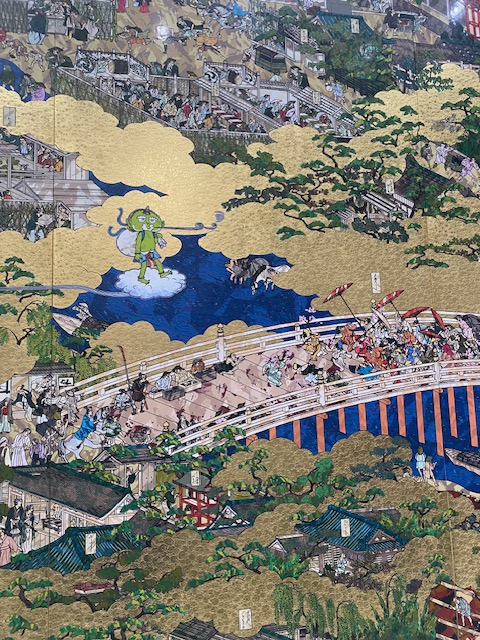
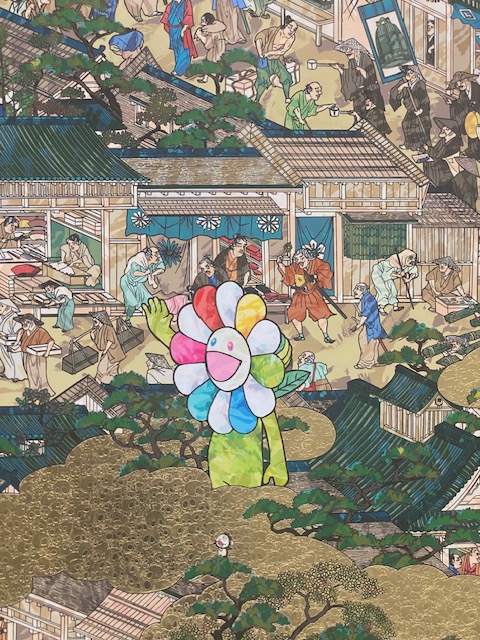
The inaugural exhibition featured the work of twelve artists and groups, including Takashi Murakami, who has achieved worldwide fame. His cartoonish characters appear on coveted Louis Vuitton bags. He also designed a special shirt, printed with cherry blossoms, for fans of the Los Angeles Dodgers. His work on display, a 13-meter-wide painting, is modeled after a 17th century folding screen titled Scenes In and Around Kyoto by Iwasa Matabei. Murakami’s rendition portrays scenes of everyday life in early modern Kyoto. But look closely, and you will find some of his iconic original characters!
Another impressive exhibit, Head On, by Cai Guo-Qiang, features lifelike wolves running toward and colliding with a glass wall. According to the exhibit brochure, the wall “symbolizes the intangible yet deeply felt ideological and cultural divisions between people and communities.”

After going through the exhibits, and vowing to return with my daughter, I popped into the museum café for a quick lunch. The dining area was in open air, with a view of the sea and the islands beyond. I ordered pumpkin toast, perhaps Naoshima’s answer to America’s ubiquitous avocado toast, and a nod to the famous Yayoi Kusama pumpkin sculptures which grace the island.

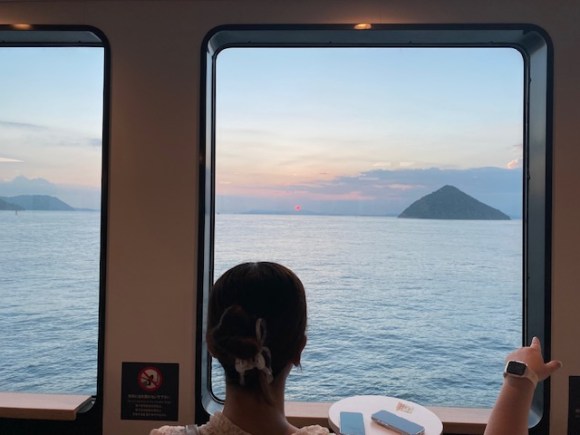
Finally, I took another bus and went to meet my friends. They are no longer awarding grants to parent artists, having shifted their focus to indigenous groups, however, I will remain forever grateful for their support. We met and had a drink near the Benesse House Park, just outside the Terrace, where my daughter and I had dined several years ago. Then it was time for me to head to the ferry terminal and back to Takamatsu, where I would catch a bus. I happened to cross at sunset – a final blast of beauty before returning home.
Suzanne Kamata was born and raised in Grand Haven, Michigan. She now lives in Japan with her husband and two children. Her short stories, essays, articles and book reviews have appeared in over 100 publications. Her work has been nominated for the Pushcart Prize five times, and received a Special Mention in 2006. She is also a two-time winner of the All Nippon Airways/Wingspan Fiction Contest, winner of the Paris Book Festival, and winner of a SCBWI Magazine Merit Award.

PLEASE NOTE: ARTICLES CAN ONLY BE REPRODUCED IN OTHER SITES WITH DUE ACKNOWLEDGEMENT TO BORDERLESS JOURNAL

Click here to access the Borderless anthology, Monalisa No Longer Smiles

Click here to access Monalisa No Longer Smiles on Amazon International
Categories
Poetry

Where can We Look for the Past

By George Freek

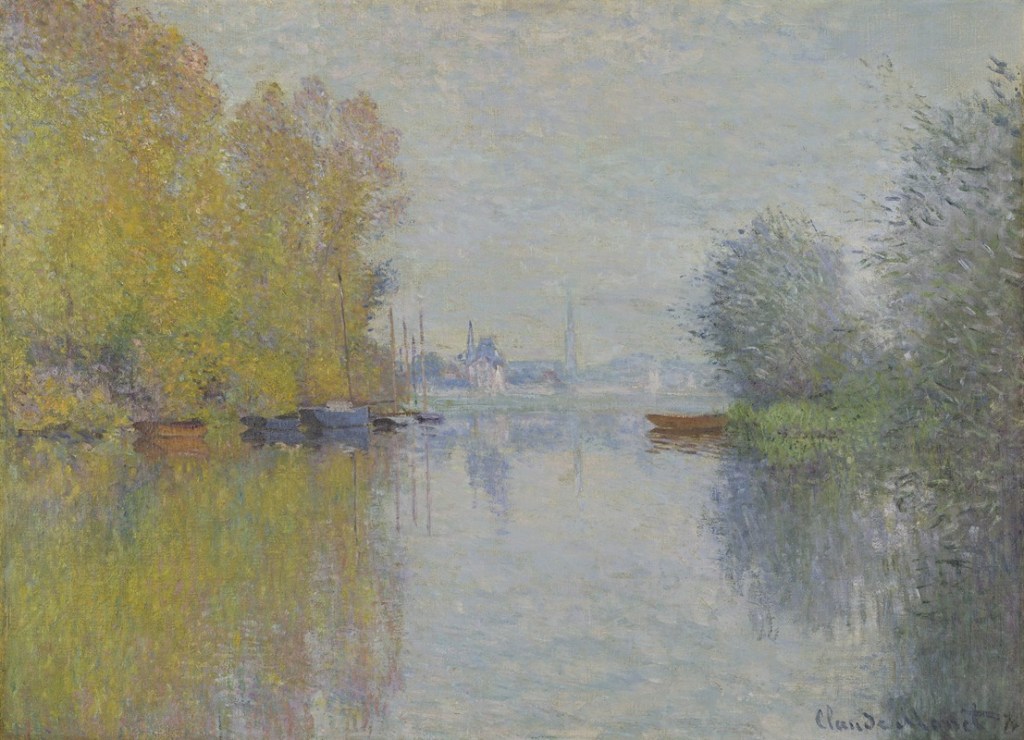
Painting by Claude Monet(1840-1926)
WHERE CAN WE LOOK FOR THE PAST 

Autumn has arrived,
like an expectant mortician,
dressed in sombre grey.
To whom can we pray?
The flowers have died,
and frantic squirrels scurry
to salvage a few remaining nuts,
where leaves fall to their rest
in yellow, red and brown,
falling to the ground,
without making a sound.
The moon’s silver light
clings to the trees,
then vanishes into eternity.
If I look at the stars,
I can barely see them.
They’re without eyes,
So they’re unable
to even look back at me.


George Freek’s poetry has recently appeared in The Ottawa Arts Review, Acumen, The Lake, The Whimsical Poet, Triggerfish and Torrid Literature.

PLEASE NOTE: ARTICLES CAN ONLY BE REPRODUCED IN OTHER SITES WITH DUE ACKNOWLEDGEMENT TO BORDERLESS JOURNAL

Click here to access the Borderless anthology, Monalisa No Longer Smiles

Click here to access Monalisa No Longer Smiles on Amazon International
Categories
Poetry

The Fabulous by George Freek

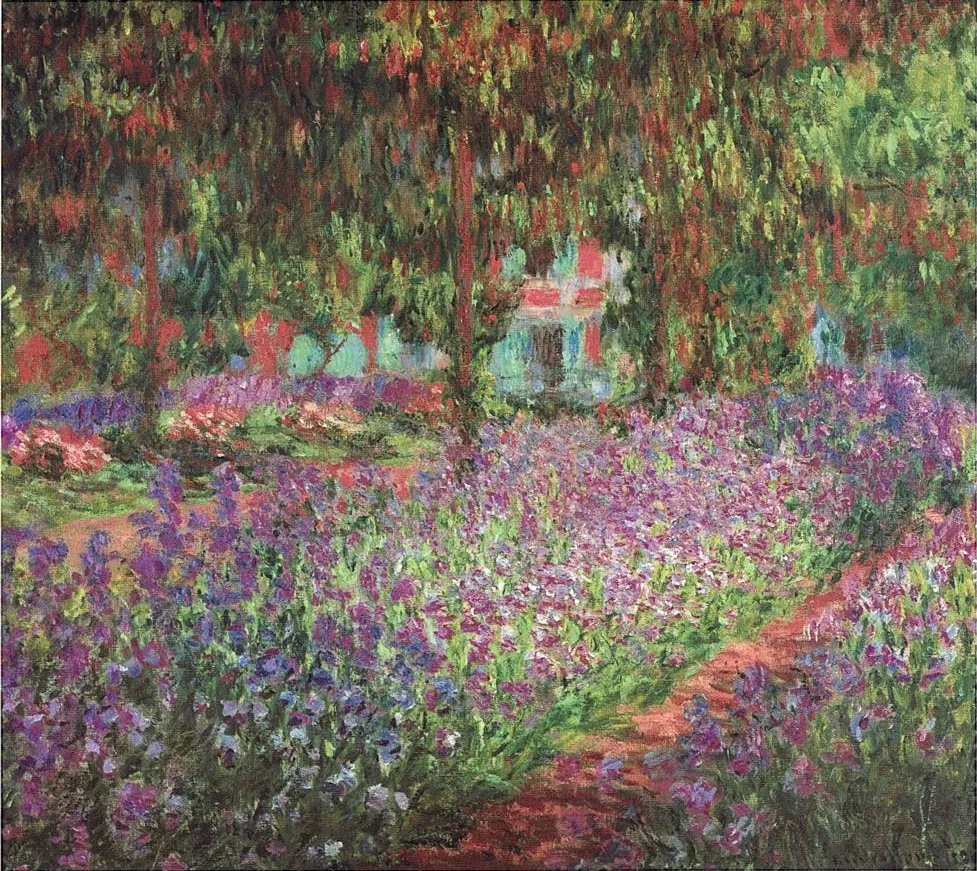
Painting by Claude Monet (1840-1926)
THE FABULOUS

The soughing of the waters
of the river is like the keening
of a mother for her child.
It will never end
until time itself is no more,
and the light disappears
from some distant shore.
Until then, Marianne
wields her garden rake
with something like fury,
as if that will happen tomorrow.
No crowd gathers to watch,
and no man offers assistance,
or can take a moment
from the course of his day,
to marvel at her persistence,
or to wonder, as at a body
risen from its grave,
or as a rake digs its furrow,
or the earth bears no seed,
at the cause of this unspoken sorrow.

George Freek’s poetry has recently appeared in The Ottawa Arts Review, Acumen, The Lake, The Whimsical Poet, Triggerfish and Torrid Literature.

PLEASE NOTE: ARTICLES CAN ONLY BE REPRODUCED IN OTHER SITES WITH DUE ACKNOWLEDGEMENT TO BORDERLESS JOURNAL

Click here to access the Borderless anthology, Monalisa No Longer Smiles

Click here to access Monalisa No Longer Smiles on Amazon International
Categories
A Special Tribute

Sunflowers of Resilience

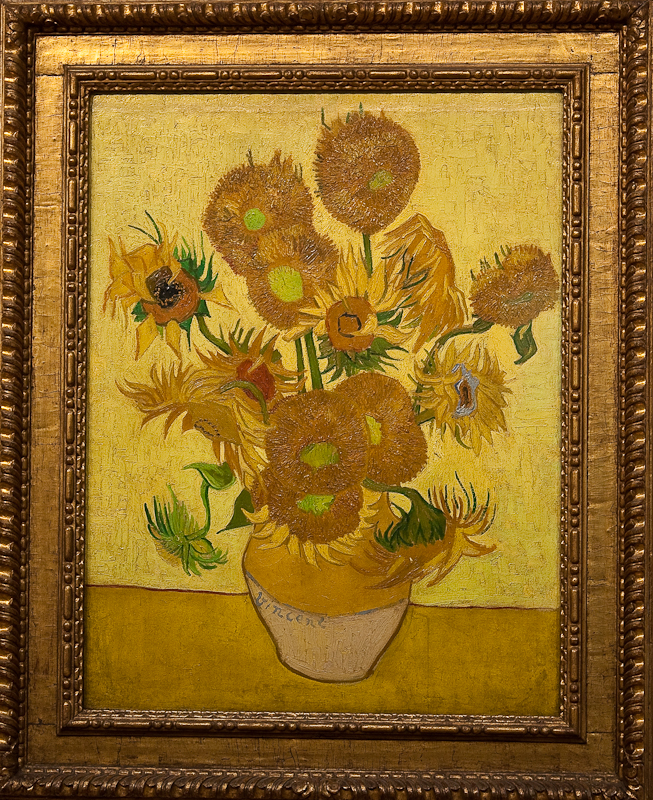
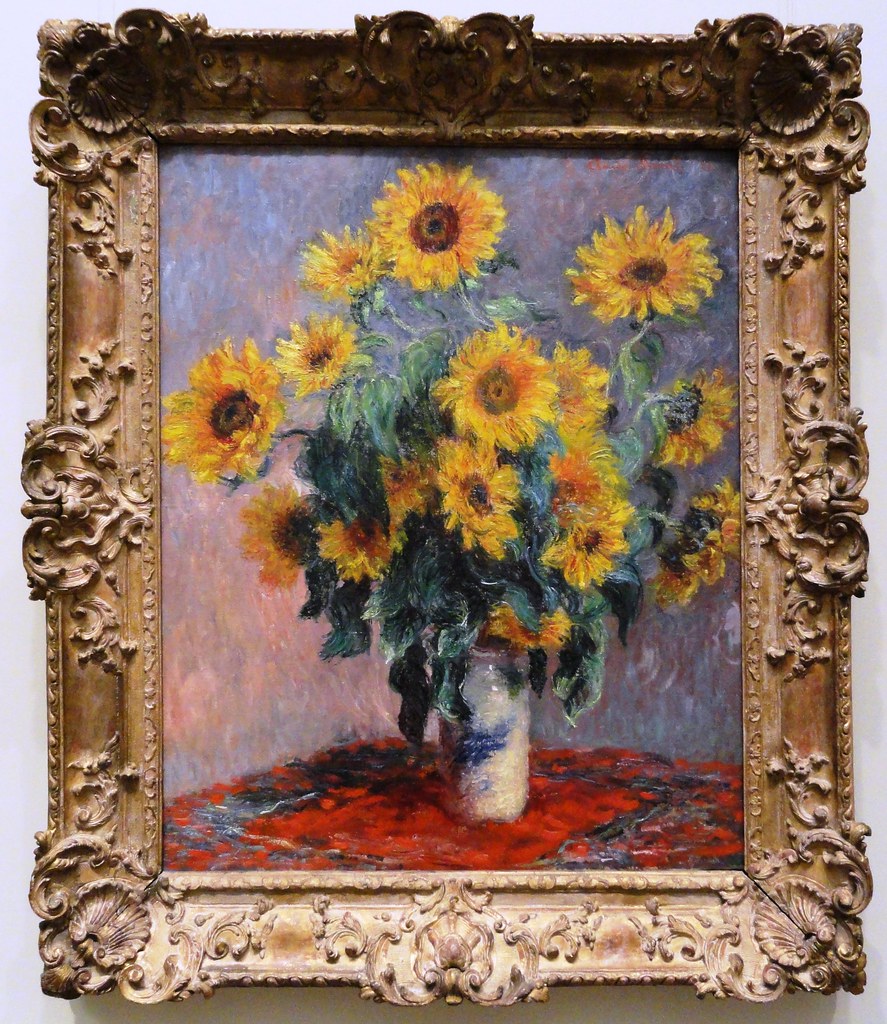
With resilience, they have withstood what could have become an international disaster for all humankind — an outbreak of a Third World War. The spirit that has resisted the ongoing invasion of Ukraine is admirable. They have stayed strong without bowing, crumbling or annihilating themselves in the wake of an onslaught that hurts humanity across all borders in different degrees and creates a huge population of refugees. We gave voice to one such refugee, Lesya Bakun — not just in our site but also in our first anthology — Monalisa No Longer Smiles: An Anthology of Writings from across the World.

This year, we quest for hope towards peace, a better, more accepting world with poetry on Ukraine. One of the poems here is accompanied by art from Ukrainian artist, Maria Kirichenko. We feature some of the poems gathered on Ukraine over the year.

My friend, Maria Kirichenko by Vineetha Mekkoth. Click here to read.

Poetry by Chad Norman on Ukraine. Click here to read.

Poems by Sukrita Paul Kumar on Ukraine. Click here to read.

Poetry by Scott Thomas Outlar on Ukraine. Click here to read.

Cry of the Sunflower by Ihlwha Choi. Click here to read.

“How Many Times Must the Cannonballs Fly…?” Featuring poetry by Lesya Bakun, Rhys Hughes, Ron Pickett, Michael R Burch, Kirpal Singh, Suzanne Kamata, Mini Babu, Malachi Edwin Vethamani, Sybil Pretious and Mitali Chakravarty. Click here to read.

Categories
Notes from Japan

An Encounter with the Monet on Naoshima

Suzanne Kamata writes of snacking on Claude Monet’s hundred year old recipes while savouring his art and that of the famed artist who makes bold art with polka-dots, Yayoi Kusama

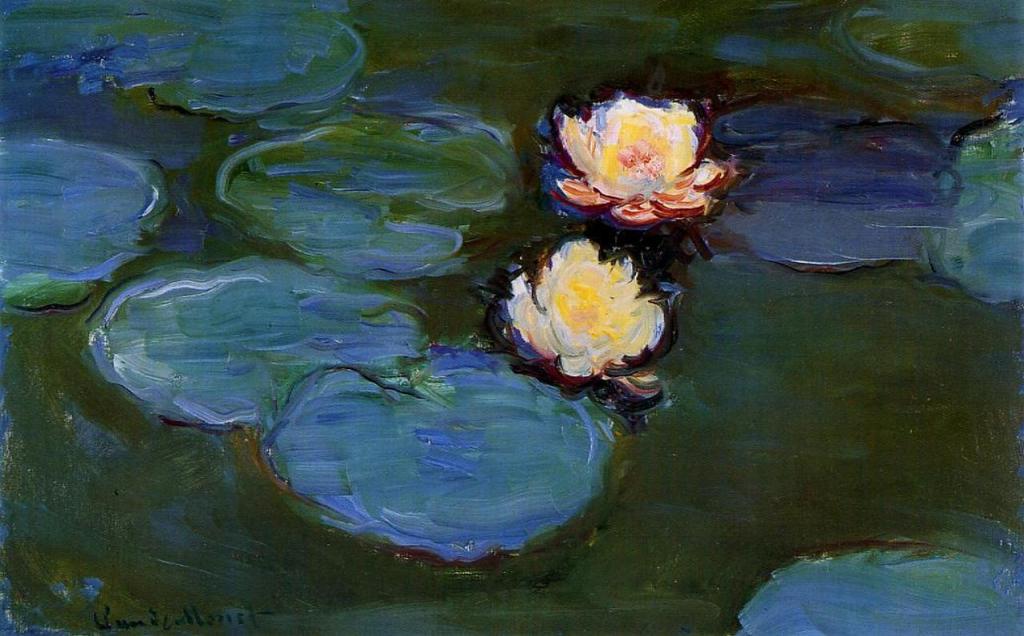
Water lilies by Claude Monet (1840-1926) Courtesy: Creative Commons

When I heard that the annual convention of the Association of Foreign Wives of Japanese would be held in nearby Takamatsu, I signed up. I would be able to meet other women with Japanese husbands and attend workshops in wine-tasting or yoga. At night, there would be a big banquet. During the day, there would time to visit the island Naoshima.

I’d heard about this island, once used primarily as a site to dump industrial waste. Now it was full of art museums, and part of the Setouchi Triennale, an art festival which takes place every three years, including this year. Among the permanent exhibitions is one of Claude Monet’s famous water lily paintings, housed in the Chichu Museum designed by world-renowned architect Tadao Ando.

Monet’s art has long been popular in Japan. The French artist had admired Japan. His garden in Giverny, France was designed in the Japanese garden style. A garden modeled after the one in France has been constructed farther south in Shikoku, but the painting was on Naoshima.

At the convention, I met up with my friend Michelle, an artist who sometimes works in coloured pencils, and sometimes in dust. She wanted to go to the island with all the art museums as much as I did. Michelle, Elana, an Italian woman whose husband is an art history professor, and I decided to visit Naoshima together. There are no bridges connecting Naoshima to Shikoku. The only way to get there is by ferry. We took a taxi to the ferry terminal and bought our tickets.

We decided to sit outside on the deck of the ferry. The wind whipped our hair and reddened our cheeks as we watched the city receding. The smaller islands scattered off the coast grew larger. Finally, we approached the dock at Naoshima. We could see the giant red polka-dotted pumpkin sculpture created by Yayoi Kusama, perhaps Japan’s most famous contemporary artists, known for her Kool-Aid colored wig and obsession with dots. Having been diagnosed with schizophrenia, Kusama has lived in a psychiatric hospital for many years. She continues to make art in her studio at the hospital.

Inside the giant red polka-dotted pumpkin by Yayoi Kusama. Photo Courtesy: Suzanne Kamata

Once off the ferry, we were confronted with a row of mom-and-pop restaurants. A bus runs from the harbour to the museums, but we decided to walk. It wasn’t far to our destination. Later that evening, we would be eating a lavish dinner and drinking wine. We needed the exercise.

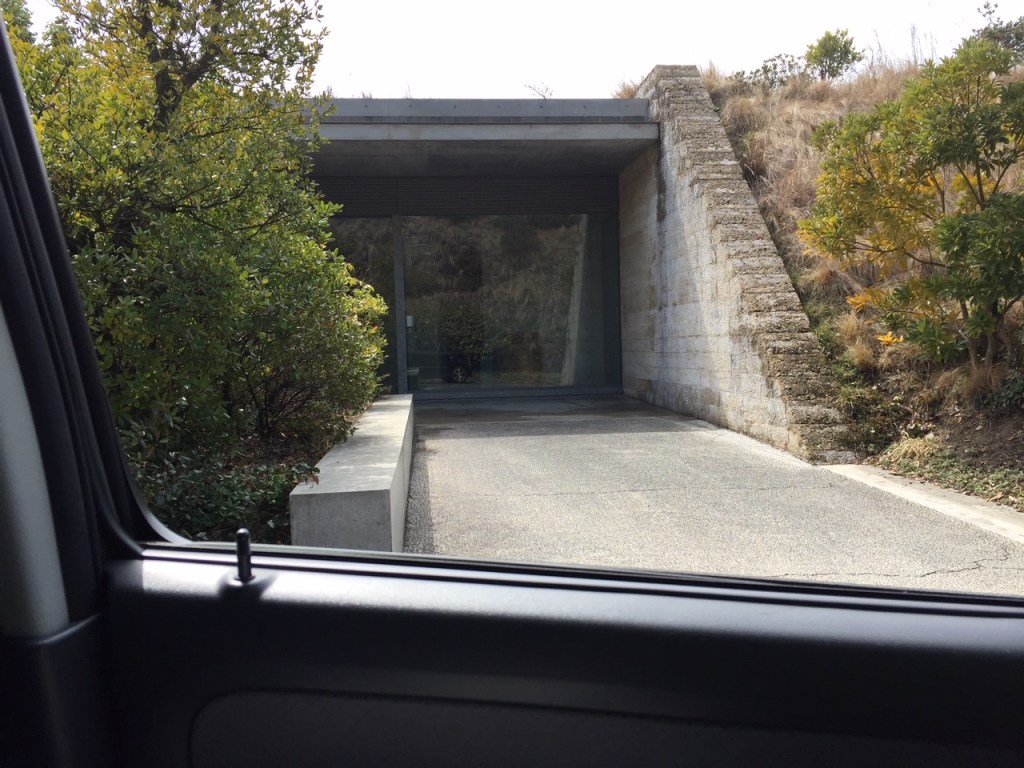
The entrance to the Chichu Museum. Photo Courtesy: Suzanne Kamata

The Chichu Museum was built into the side of a mountain, like a bunker, and lit only by whatever sunlight came in through the windows. The walls were grey concrete and most of the staff wore white lab coats. The brochure advised us to “maintain a quiet environment in the museum.”

As we were mainly there to see the Monet, we made that our first order of business. We descended an elevator to a dark hall and came upon a rack of slippers.

“Please change your shoes,” the docent said.

I removed my sneakers and slid my feet into a pair of vinyl slippers. Michelle and Elana did the same. Now we were ready to enter the hallowed space.

The room was circular, the walls blindingly white, offsetting the deep blues and purples of Monet’s sun-lit pond. We spent several seconds before each panel. The paintings were called “Water Lilies, Cluster of Grass,” “Water Lilies, Reflection of Weeping Willows,” and “Water Lily Pond.”

Michelle, who was a big fan of Monet, sighed happily. It was the off-season. We were the only ones in the gallery besides the docent. There were no other visitors in slippers waiting to shuffle in after us so we were allowed to take our time.

Michelle plopped down on the clean, white floor. Such irreverent behavior in this holy space! She leaned back and admired the paintings from this new perspective. Was she the first person to ever sit down on this floor?

“What the heck,” I thought. I admired her free spirit. I sat down on the floor beside her.

The docent stepped forward. Our unusual actions had clearly made her nervous. We weren’t touching the art or taking pictures. We weren’t doing anything bad. She had no reason to scold us, but she kept her eyes on us.

“Monet would laugh!” Michelle said. “He was messy. He would think it was funny that we had to change into slippers to look at his art.”

I was inclined to agree. I had seen photos of him. He had an unruly beard. His clothes were rumpled. Later, I would watch a video clip of Monet painting in his garden. He had a cigarette in his mouth even as he touched his brush to the canvas. Little dogs ran around at his feet. No smoking would ever again be allowed near his water lily paintings. Not these ones, at least. No dogs, either.

We visited the rest of the museum then had lunch in a café overlooking the sea which served desserts made from Monet’s recipes. In addition to painting food, he had enjoyed cooking it himself. I sampled his madeleines and apricot jam – delicious! — then bought a cookbook from the gift shop so that I could make them at home.

A madeleine made with Monet’s recipe. Photo Courtesy: Suzanne Kamata

Suzanne Kamata was born and raised in Grand Haven, Michigan. She now lives in Japan with her husband and two children. Her short stories, essays, articles and book reviews have appeared in over 100 publications. Her work has been nominated for the Pushcart Prize five times, and received a Special Mention in 2006. She is also a two-time winner of the All Nippon Airways/Wingspan Fiction Contest, winner of the Paris Book Festival, and winner of a SCBWI Magazine Merit Award.

PLEASE NOTE: ARTICLES CAN ONLY BE REPRODUCED IN OTHER SITES WITH DUE ACKNOWLEDGEMENT TO BORDERLESS JOURNAL

Categories
Poetry

Seasons in the Sun

Poetry by Michael R Burch

Courtesy: Creative Commons
SUN POEM

I have suffused myself in poetry
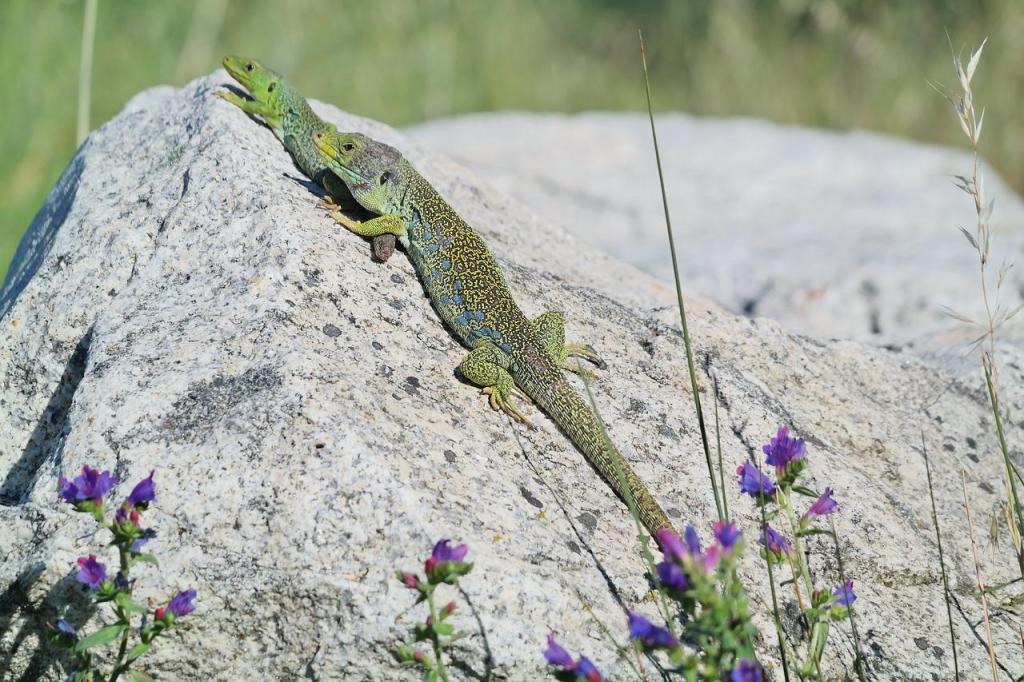
as a lizard basks, soaking up sun,
scales nakedly glinting; its glorious light
he understands—when it comes, it comes.

A flood of light leaches down to his bones,
his feral eye blinks—bold, curious, bright.

Now night and soon winter lie brooding, damp, chilling;
here shadows foretell the great darkness ahead.
Yet he stretches in rapture, his hot blood thrilling,
simple yet fierce on his hard stone bed,

his tongue flicking rhythms,
the sun—throbbing, spilling.


POPPY
(“It is lonely to be born.” – Dannie Abse (1923-2014)“The Second Coming”)

It is lonely to be born
between the intimate ears of corn . . .
the sunlit, flooded, shellshocked rows.

The scarecrow flutters, listens, knows . . .

Pale butterflies in staggering flight
ascend the gauntlet winds and light
before the scything harvester.

The winsome buds of cornflowers
prepare themselves to be airborne,
and it is lonely to be shorn,
decapitate, of eager life
so early in love’s blinding maze
of silks and tassels, goldened days
when life’s renewed, gone underground.

Sad confidante of worm and mound,
how little stands to be regained
of what is left.
                        A tiny cleft
now marks your birth, your reddening
among the amber waves. O, sing!

Another waits to be reborn
among bent thistle, down and thorn.
A hoofprint’s cleft, a ram’s curved horn
curled inward, turned against the heart,
a spoor like infamy. Depart.
You came too late, the signs are clear:
whose world this is, now watches, near.
There is no opiate for the heart.
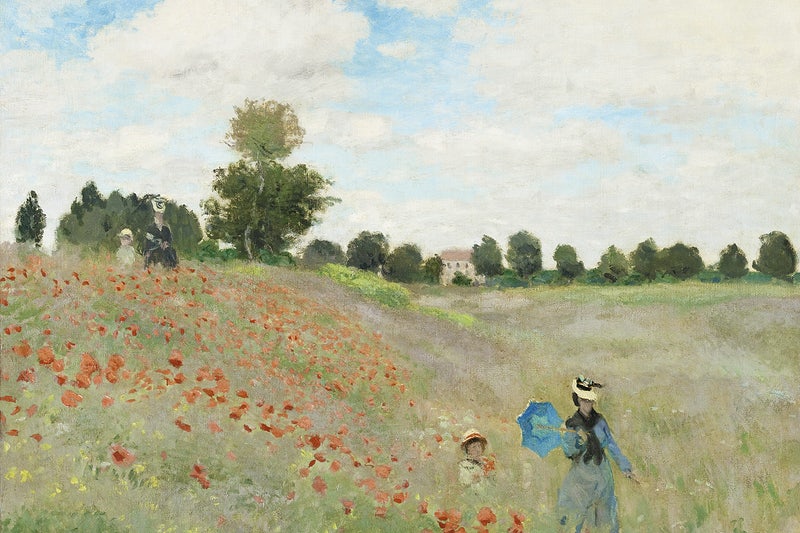
Claude Monet’s The Poppy Field near Argenteuil (1873). Courtesy: Creative Commons

Michael R. Burch’s poems have been published by hundreds of literary journals, taught in high schools and colleges, translated into fourteen languages, incorporated into three plays and two operas, and set to music by seventeen composers.

.

PLEASE NOTE: ARTICLES CAN ONLY BE REPRODUCED IN OTHER SITES WITH DUE ACKNOWLEDGEMENT TO BORDERLESS JOURNAL

Categories
Poetry

All Because you Smiled…

Poetry by Michael R Burch

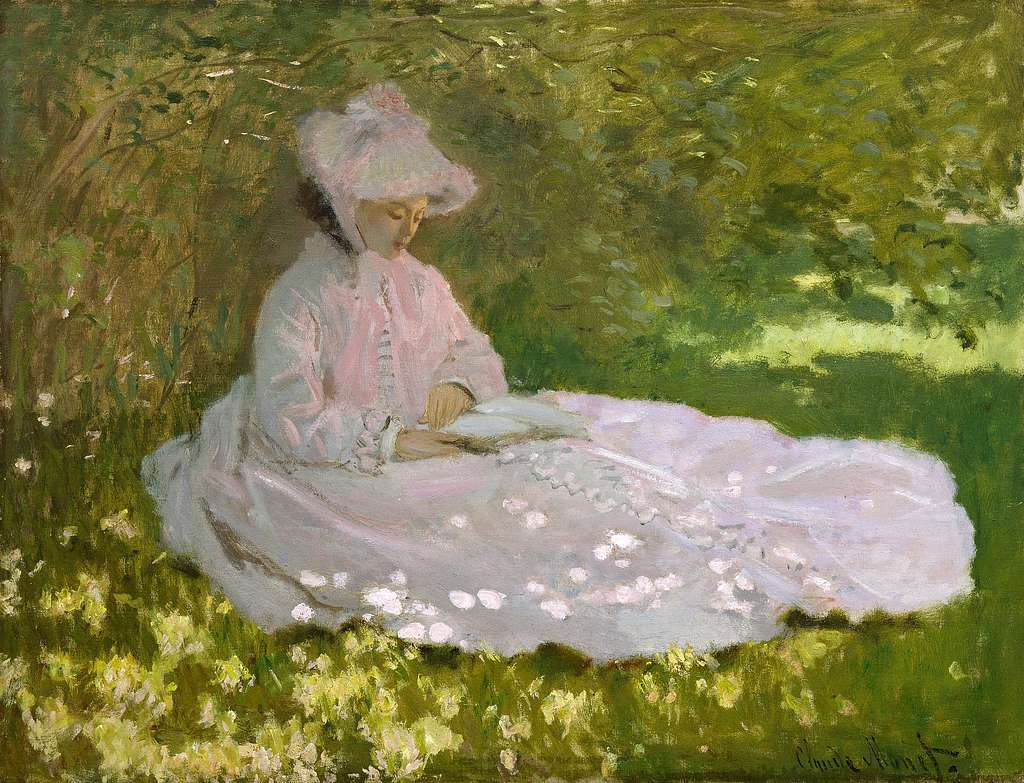
Springtime by Claude Monet ( 1840-1926). Courtesy: Creative Commons
REMEMBERING NOT TO CALL 


(A villanelle permitting mourning, for my mother, Christine Ena Burch)

The hardest thing of all,
after telling her everything,
is remembering not to call.

Now the phone hanging on the wall
will never announce her ring:
the hardest thing of all
for children, however tall. 

And the hardest thing this spring
will be remembering not to call
the one who was everything.

That the songbirds will nevermore sing
is the hardest thing of all
for those who once listened, in thrall,
and welcomed the message they bring,
since they won’t remember to call.

And the hardest thing this fall
will be a number with no one to ring.

No, the hardest thing of all
is remembering not to call.


LOVE UNFOLDED LIKE A FLOWER 

Love unfolded
like a flower;
Pale petals pinked and blushed to see the sky.
I came to know you
and to trust you
in moments lost to springtime slipping by.

Then love burst outward,
leaping skyward,
and untamed blossoms danced against the wind.
All I wanted
was to hold you;
though passion tempted once, we never sinned.

Now love's gay petals
fade and wither,
and winter beckons, whispering a lie.
We were friends,
but friendships end . . .
yes, friendships end and even roses die.


MELTING

(for Beth)

Entirely, as spring consumes the snow,
the thought of you consumes me: I am found
in rivulets, dissolved to what I know
of former winters’ passions. Underground,
perhaps one slender icicle remains
of what I was before, in some dark cave—
a stalactite, long calcified, now drains
to sodden pools whose milky liquid laves
the colder rock, thus washing something clean
that never saw the light, that never knew
the crust could break above, that light could stream:
so luminous,
                     so bright,
                                    so beautiful . . .
I lie revealed, and so I stand transformed,
and all because you smiled on me, and warmed.

Michael R. Burch’s poems have been published by hundreds of literary journals, taught in high schools and colleges, translated into fourteen languages, incorporated into three plays and two operas, and set to music by seventeen composers.

.

PLEASE NOTE: ARTICLES CAN ONLY BE REPRODUCED IN OTHER SITES WITH DUE ACKNOWLEDGEMENT TO BORDERLESS JOURNAL