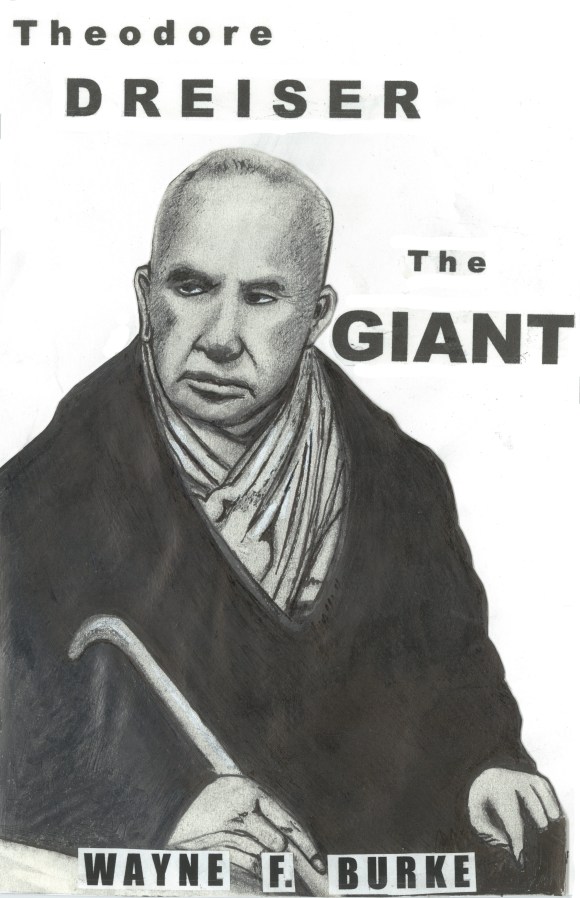
Theodore Dreiser (1871-1945) reached apotheosis of his literary endeavour with his 1925 publication An American Tragedy. In the following twenty years, until completion of the The Bulwark in 1946, nothing he wrote remotely equaled the power of the tragedy. His opus plus Sister Carrie has become a classic—so too Jennie Gerhardt to a less heralded extent. Some of Dreiser’s short stories, such as “Nigger Jeff”, “St. Columba and the River”, and “The Lost Phoebe”, could stand on their own in any American or world anthology. Due to its narrative thrust and other attributes (powerful romance), The Financier was and is the best of Dreiser’s ‘Trilogy of Desire’ (including The Titan and The Stoic). The first three-quarters of the autobiography Dawn made for compelling reading, as did all of the essays in Twelve Men. The Bulwark was and is a minor classic, truncated but yanking at heart strings as adamantly if not for as long as any of Dreiser novels. Newspaper Days, the second volume of his autobiography is a baggy and verbose twin of the heavily, and unfortunately edited, A Traveler at Forty.
“The last great American writer of Melvillean dimensions,” Jerome Loving wrote of Dreiser. Dimensionality and similarity is each writer’s search to uncover and understand the phenomenon of existence. It’s a spiritual quest, though neither men have any sectarian belief (Melville nominally Unitarian). What is and to whom does the “oversoul” of Emersonian transcendentalism belong? To Dreiser, the grand protagonist life itself suggests a something else: God or gods perhaps, behind the display of natural phenomenon. Hs opus suggests that God or gods, or the “Creative Force,” used humankind for his, her, its own purpose; a purpose hidden from humankind’s limited understanding; also theorising possibilities of additional God or gods in the background making use of, let us say, “primary” God or gods, for a like inscrutable purpose.
In his last years Dreiser looked through a microscope for clues to the phenomenality of being—to unravel mysteries of life. Switching gears mid-career, he became an explorer of consciousness who preferred the company of scientists to that of literary brethren (to the detriment of his art, I must add).
In Dawn, Dreiser theorised that humankind was an invention—a schemed-out machine, useful to a larger something. This theory marked his turn from an early mechanistic belief in universal proceedings to consideration of an oversoul, or creative intelligence, behind or causative to universal phenomenon.
But what “soul”? What cause? What intelligence? Ahab[1] tried to tear the veil that covered the quondam source; tried to expose the phenomenon of so-called “reality,” but being only a man, and mortal, failed—dying in the process. What is the symbolism of the great whale’s whiteness but a concealing veil thrown over appearances? Melville’s scientifically, scrupulously dismantled his leviathan part by part, yielding naught as to mysteries of origins and unquantifiable organic processes, while Dreiser wandered over the same dry speculative desert (as Hawthorne noted) too honest to be or do otherwise.
Dreiser had his own mystic creed; refusing to conform to any formal doctrine—his views in later years influenced by Quakerism, Hinduism, and Christian Science (which his wife “Jug,” and his character Eugene Witla of The Genius came under spell of). In Newspaper Days, and in a sour mood, he wrote, “Religion! What a mockery! Why pray? Of whom to ask? The one who loaded the dice at the start?” Elsewhere in that same book—and in a better mood—he wrote, “There is a sower somewhere. Is it planet, gas, element, fire? It gardens and sows—what is its plan, and why?”
Like many ex-parochial students, Dreiser had a profound dislike of Catholicism and her rituals. A dislike engendered, in Dreiser’s case, by scorn of an ineffectual father, John Paul Dreiser. In Dawn, Dreiser wrote of Catholics with ossified brains who rejected natural emotion as sinful; who spent inordinate amounts of time on their knees praying to an immense and inscrutable something which cared not for their adoration or supplication.
He denied sectarian pretense to divine authority and wrote about how little there was to the Christ legend aside from artistic spectacle. Ritual and churchly dogma infuriated him—particularly angered by the priest who at first denied Dreiser’s mother burial in the sacred grove because she was a lapsed Catholic.
Dreiser despised religion in the form of Catholicism as much as he came to despise oligarchy—though early in his career celebrated the power of the oligarch in the character of Frank Cowperwood, of the ‘The Trilogy of Desire’, apotheosis of laissez faire capitalism run amuck.
Will Dreiser’s work survive the muddle of brave new world exigencies? I hope so. The slow relentless and inexorable pace of his stories, with their accumulation of details, are or seem anathema to the cyborg-screed of flash fiction sound bites in the blogosphere, but the stories he told—all having to do with vagaries of the human heart—though perhaps out of vogue, will never not be relevant to the human oh so human condition.
Theodore Dreiser – The Giant, is an explication, exegesis, of the fiction of Dreiser plus much of his nonfiction. Included are synopses of each title. Between considerations of the work is a biography of the writer. (Note: Dreiser could be, in his work, pedantic and humourless: this study is neither.)
About the Author:
Wayne F. Burke writes both poetry and prose. He is author of 12 published poetry collections–most recently Whatever Happened to Baby Wayne? Hog Press, 2025; two works of fiction–most recently No Tab For Sully, a novella, Alien Buddha Press, 2025; and six works of nonfiction–including Theodore Dreiser – The Giant, Cyberwit,net., publisher, 2025. He lives in Vermont (USA).
PLEASE NOTE: ARTICLES CAN ONLY BE REPRODUCED IN OTHER SITES WITH DUE ACKNOWLEDGEMENT TO BORDERLESS JOURNAL
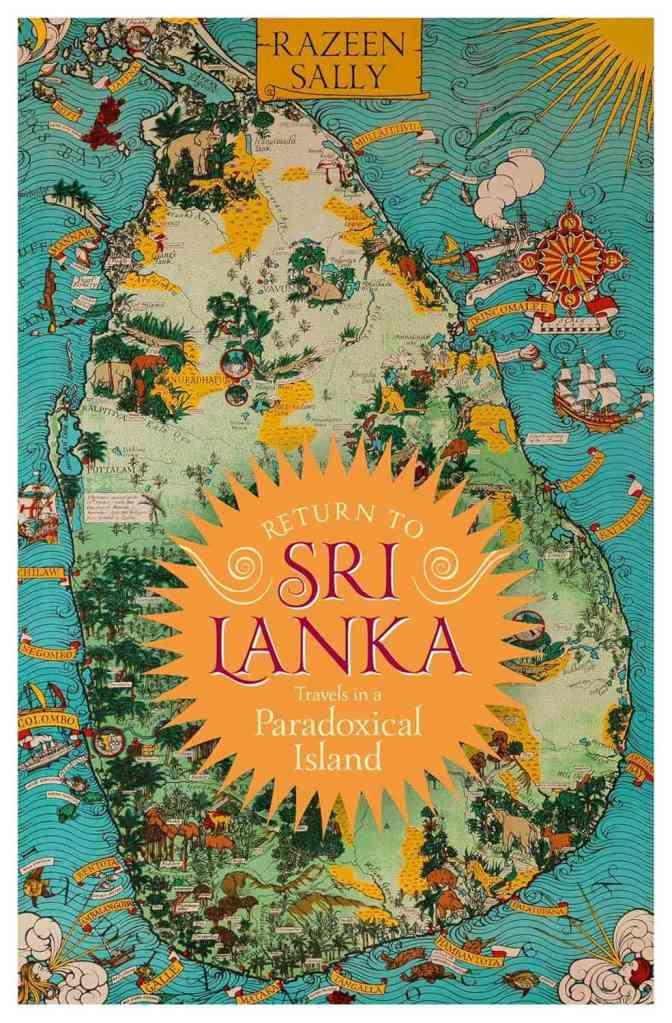
Title: Return to Sri Lanka: Travels in a Paradoxical Island
Author: Razeen Sally
Publisher: Simon & Schuster India
Sri Lanka’s culture is characterised by several paradoxical aspects that reflect its rich history, diverse population, and the complexities of contemporary society. Here are some notable contradictions: Home to various ethnic groups, including Sinhalese, Tamils, and Muslims, each has its distinct languages and traditions. However, there is a prevailing sentiment among some that prioritises Sinhalese culture over others, leading to tensions and conflicts regarding national identity and rights.
While Sri Lanka has a history of female activism and women hold significant positions in politics (e.g., former President Chandrika Kumaratunga), gender inequality persists in many sectors. Women often face societal pressures that limit their roles despite their contributions to the economy and community. The tiny country has made strides in economic development and infrastructure, yet significant poverty remains, particularly in war-affected regions like the North and East. This disparity highlights the uneven benefits of economic progress across different communities
The island is also known for its religious diversity, with Buddhism, Hinduism, Christianity, and Islam practiced by its citizens. However, this coexistence is often marred by sectarian violence and discrimination, particularly against minority groups during political upheavals.
As Sri Lanka embraces globalization and modern influences, there is a tension between adopting new lifestyles and preserving traditional customs. This cultural clash can lead to generational divides within families and communities.
Razeen Sally’s book, Return to Sri Lanka: Travels in a Paradoxical Island, explores these complexities and contradictions. The memoir combines personal narrative with historical and political analysis, offering readers an immersive journey through various regions of Sri Lanka—from the bustling capital of Colombo to the tranquil beaches and verdant hill country. Sally reflects on his childhood experiences while addressing the island’s tumultuous history, including its colonial past and the long-lasting effects of civil war.
Razeen Sally, the son of a Sri Lankan Muslim father and a Welsh mother, was raised in Colombo and educated in the UK. After teaching at the London School of Economics, he now teaches at the Lee Kuan Yew School of Public Policy in Singapore. In his early forties, he felt a strong urge to return to Sri Lanka for the first time since childhood and has spent the past ten years exploring the island.
Sally viewed Sri Lanka as a paradise during his childhood, but conflict soon disrupted their lives, fracturing his family’s connection to the island. Return to Sri Lanka tells the story of his journey towards reconciliation in the twenty-first century, as Sally, now an academic and political adviser, revisits his birthplace. This travel memoir addresses significant political issues and is rich in beauty and profound reflections, written by someone who feels like both a local and a visitor.
The words, “Paradoxical Island”, in the title encapsulates the duality of Sri Lanka, where hospitality coexists with high rates of violence and societal divisions. Despite interactions among ethnic groups like Tamils and Sinhalese, underlying tensions often surface, revealing deep-seated issues regarding rights and representation.
Sally provides insight into how historical events, such as the policies of successive governments and the impact of colonialism, have shaped contemporary Sri Lankan society. He discusses significant political figures and movements while critiquing policies that have led to economic challenges, including a brain drain among educated youth.
The book highlights Sri Lanka’s diverse cultural landscape, examining how various religions and ethnicities contribute to both its charm and its conflicts. Sally emphasises the importance of understanding these dynamics to appreciate the island’s true essence.
Return to Sri Lanka is not just a travelogue but a profound exploration of a nation grappling with its identity. Sally’s reflections offer hope for reconciliation and progress, urging readers to engage with Sri Lanka’s complexities while appreciating its inherent beauty. These paradoxes illustrate the complexities of Sri Lankan culture, where historical legacies continue to shape contemporary realities, creating a vibrant yet challenging social landscape.
Bhaskar Parichha is a journalist and author of Cyclones in Odisha: Landfall, Wreckage and Resilience, Unbiased, No Strings Attached: Writings on Odisha and Biju Patnaik – A Political Biography. He lives in Bhubaneswar and writes bilingually. Besides writing for newspapers, he also reviews books on various media platforms.
.
PLEASE NOTE: ARTICLES CAN ONLY BE REPRODUCED IN OTHER SITES WITH DUE ACKNOWLEDGEMENT TO BORDERLESS JOURNAL
Long, long ago, Zeus descended to the place where two trees are wrapped in a loving embrace: an oak and a linden tree amid an undulating landscape, their entwined branches a testimony to undying love. ‘I have seen them with my very eyes’ is how the narrator begins the story about how the gods can decide our fate, which was recorded by Ovid in his Metamorphoses.
The story goes as follows: one day Zeus, king of the gods, disguised himself as a mortal and descended to Earth, accompanied by his son, Hermes. They knocked at every door they found in search of a place to rest, but none of the homes they visited welcomed them in. They finally reached the tumble-down cottage belonging to Baucis and Philemon, an old couple who, in spite of their poverty, were perfectly content with their lot, and welcomed the pair with open arms, generously providing them with all the fruit, nuts, figs and dates they had to hand. They were even prepared to kill their goose, but the bird escaped its fate and found safety between the two gods. Hermes and Zeus explained to the couple who they were and why they were going to destroy this godless part of the world: ‘Only the two of you will be allowed to escape this disaster’.
Leaning on their staffs, the old couple followed the gods to the top of a hill, from which they looked back to see all the land in the valley flooded and sinking into a muddy bog, apart from their own cottage, which had been turned into a glistening temple with marble floors and columns. Zeus granted the couple a wish, and they did not need too long to think about their reply: they wished to become priest and priestess of the new temple and, most beautifully of all, they both wanted to die at the same time at the end of their lives. Both wishes were granted.
One day, after a long and fortunate life, the pair stood at the bottom of the marble steps leading up to the temple. All of a sudden bark began to cover their bodies and legs and their arms began to sprout leaves. They shared one final word of farewell as the leafy canopy started to engulf their faces. In an act of tenderness, they stretched out their branches longingly towards one another, and to this day continue to whisper to each other through the rustle of the leaves.
Living on together in human form after death is another comforting solution in stories the world over. No surprise therefore that storytellers have always wondered how Adam and Eve, the first humans according to Judaism, Christianity and Islam, met their end. The holy books of these three religious traditions all begin with the pair living in Paradise, with the Bible even stating that Adam was 930 years old when he died, but the details of their deaths are conspicuous by their absence.
Eve’s widowhood is not dealt with at all in the Bible, yet oral traditions do discuss it, as storytellers tend to have free rein. In one early Christian story, on his deathbed Adam confronts Eve with the most wicked accusation; during that emotional moment, he forces her to once again explain to their children and grandchildren (and all of his progeny) that it is through her that death came into the world. No surprise therefore that, after Adam’s death, Eve wallows in the mud, grief-stricken and despondent, imploring God’s mercy for her unending guilt, until she dares to gaze upwards, where the most incredible spectacle unfolds before her eyes: angels float in the sky, obscuring the vaults of heaven with their swinging incense burners, as the body of Adam is brought to Heaven on a chariot of light drawn by four shining eagles.
Further details about the now widowed Eve are absent, but in one optimistic Islamic story from Yemen, upon their deaths the angel Gabriel comes to Earth to collect both Adam and Eve to take them back to the Garden of Eden. As they arrive, the gates of Heaven swing open, and they are greeted with ‘Peace be with you and welcome back’. These words are spoken by Ridwan, the same gatekeeper who at the start of their earthly lives had slammed the gates of heaven behind the pair as they left. Upon their return they must undergo a ritual purification: first they are handed a golden cup with water from the well of purity, followed by another golden cup filled with water from the fountain of eternal youth.3 Together till the end, from their expulsion from Paradise to their return.
One goes, the other remains
In the harsh reality of life, this narrative works slightly differently, the question being ‘which of the two of us will be the first to go?’ This pressing question inevitably arises among people who are in love and happy with one another. In fairy tales, couples live long and happy lives, and at weddings you will often hear a variant of the adage ‘may you live long and well’. At weddings in India’s eastern state of Assam, you will hear the words ‘may the kinowari (bindi) never disappear from your forehead’. This symbol of marital bliss is used to wish brides a marriage that lasts a lifetime, with those who become widows no longer being permitted to wear it.
‘May a God-blessed wife go with her husband to his grave’ is a popular Arabic wish for women, as what could be more beautiful than dying together on the same day?
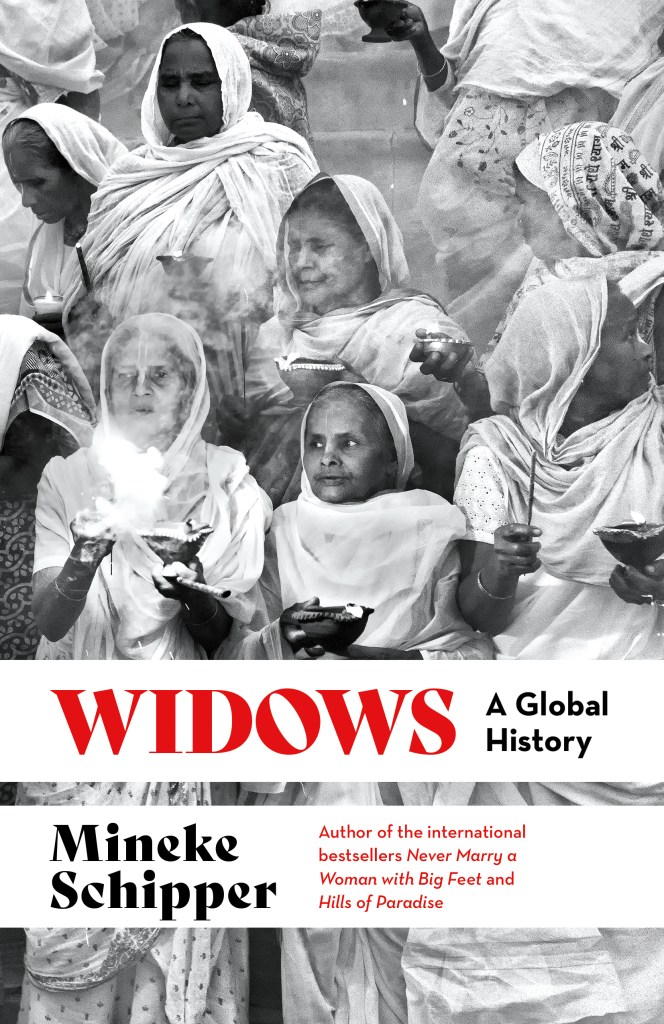
(Extracted from Widows: A Global History by Mineke Schipper. Published by Speaking Tiger Books, 2024)
About the Book
Widows have always far outnumbered widowers (who quickly remarry, usually younger women). War, hunting and the uncertainties of long travel ensured that most husbands died before their wives did. Mineke Schipper’s cultural history of widows examines how these husband-less women have, throughout history and mythology, been portrayed as helpless damsels, easy pickings for men outside the family or clan, or as cunning witches who are suspected of murder. In every case, the motive has been to exclude them and control them. Schipper traverses the world, travelling across time, to collect and analyse stories about widows and their treatment—the loss of status they face after their husband’s death; the harsh rituals of mourning they are forced to perform; the often brutal controls on attire, mobility and sexuality that they must submit to. It is a global legacy of cruelty and shame—as also, occasionally, of resilience and defiance—that has rarely been studied as deeply and thoroughly as in this extraordinary work. Widows draws upon sources from Ancient Egypt and Greece, medieval India and modern-day Europe, Africa and the Americas—examining folk and real-life stories of communities in Fiji, Papua New Guinea, Ghana, China, France, and several other countries and regions, as also stories and images from comics and fashion magazines.
Impressively researched and entertainingly narrated, this book—its information made distinctive by Schipper’s sharp insight and her humour—is an important document that helps us understand our past and, through it, our present.
About the Author
Mineke Schipper is Emeritus Professor of Intercultural Literary Studies at the University of Leiden, The Netherlands, with visiting professorships in Nigeria, Kenya, Zimbabwe, Burkina Faso and China. She is the author of NeverMarry a Woman with Big Feet (Eureka Prize for Non-fiction), Naked or Covered and Hills of Paradise.
.
PLEASE NOTE: ARTICLES CAN ONLY BE REPRODUCED IN OTHER SITES WITH DUE ACKNOWLEDGEMENT TO BORDERLESS JOURNAL.
We all know that Christmas Day, the night that Jesus came to earth, bringing with him peace and love for all humanity, is celebrated by Christians all around the world with great enthusiasm and merriment. Interestingly, for a multicultural country like India, Christmas is equally celebrated — not only as a religious festival but also as a cultural one. For a country where less than three percent of the population is Christian, the central celebration is the birth of a child, but it takes on new meaning in different Indian homes. Known in local parlance also as “Burradin”[big day] Indians from all classes and communities look forward to this day when they can at least buy a cake from the local market, shower their children with stars, toys, red Santa caps and other decorative items, and go for a family picnic for lunch, dine at a fancy restaurant or visit the nearby church. This syncretic cult makes this festival unique, and for Jerry Pinto and Madhulika Liddle editing this very interesting anthology comprising of different genres of Indian writing on the topic – essays, images, poems and hymns, both in English and also translated from India’s other languages is indeed unique.
Mary and Jesus’ a painting by Sister Marie Claire. (Picture courtesy: SMMI Provincialate, Bengalaru) ‘Adivasi Madonna’, a painting by Jyoti SahiImages from Indian Christmas: Essays, Memories, Hymns
In his introduction which he titles “Unto All of Us a Child is Born,” Jerry Pinto reminisces how he was surprised when he saw his first live Santa Claus. He was a figure in red that Akbarally’s, Bombay’s first department store, wheeled out around Christmas week. “He was a thin man, not very convincingly padded… seemed to be from my part of the world, someone who would climb up our narrow Mahim stairs and leave something at the door for us at three or four a.m., then take the local back to his regular job as a postman or seller of second-hand comics. The man in the cards and storybooks preferred London and New York. And a lot of snow. … Today, it is almost a cliché to say that Christmas, like every other festival, is hostage to the market.”
The other editor, Madhulika Liddle in her introduction “Christmas in Many Flavours” states, “According to the annals of the Mambally Royal Biscuit Factory bakery in Thalassery, Kerala, its founder Mambally Bapu baked the first Christmas cake in India”. It was way back in 1883, at the instance of an East India Company spice planter he set about trying to create a Christmas cake. Liddle wondered what that first Christmas cake tasted like; how close it was to the many thousands of cakes still baked and consumed at Christmas in Kerala? She also writes about the situation in India, where instead of wholesale and mindless importing of Christmas ideas, the people have been discerning enough to amalgamate all our favourite (and familiar) ideas of what a celebration should be and fit them into a fiesta of our own.
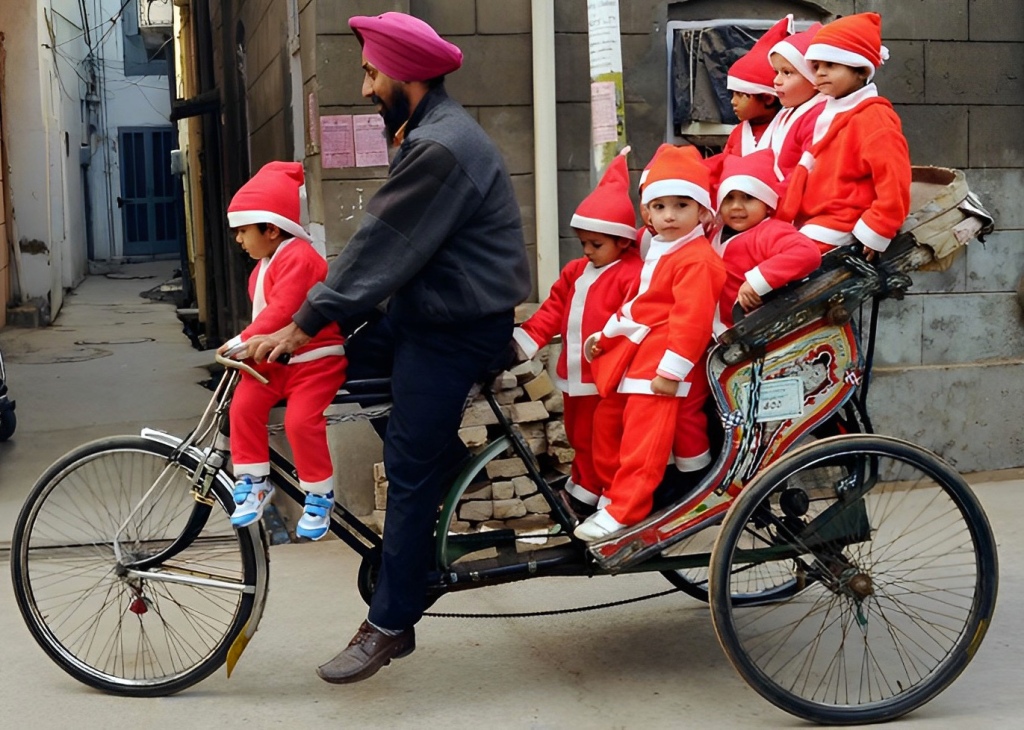
Images from Indian Christmas: Essays, Memories, Hymns: dressed up as Santa Claus leave for school in Punjab. (Picture courtesy: Ecocabs,Fazilka).
There are several other aspects of Christmas celebrations too. The Christmas bazaars are now increasingly fashionable in bigger cities. The choral Christmas concerts and Christmas parties are big community affairs, with dancing, community feasts, Christmas songs, and general bonhomie. Across the Chhota Nagpur area, tribal Christians celebrate with a community picnic lunch, while many coastal villages in Kerala have a tradition of partying on beaches, with the partying spilling over into catamarans going out into the surf. In Kolkata’s predominantly Anglo-Indian enclave of Bow Bazar, Santa Claus traditionally comes to the party in a rickshaw, and in much of northeast India, the entire community may indulge in a pot-luck community feast at Christmas time. Thus Liddle states:
“Missionaries to Indian shores, whether St Thomas or later evangelists from Portugal, France, Britain, or wherever brought us the religion; we adopted the faith, but reserved for ourselves the right to decide how we’d celebrate its festivals.”
Apart from their separate introductions, the editors have collated twenty-seven entries of different kinds, each one more interesting than the other, that showcase the richness and variety of Christmas celebrations across the country. Though Christianity may have come to much of India by way of missionaries from Europe or America, it does not mean that the religion remained a Western construct. Indians adopted Christianity but made it their own. They translated the Bible into different Indian languages, translated their hymns, and composed many of their own. They built churches which they at times decorated in their own much-loved ways. Their feasts comprised of food that was often like the ones consumed during Holi or Diwali.
Thus, Christmas in India turned to a great Indian festival that highlighted the syncretism of our culture. Damodar Mauzo, Nilima Das, Vivek Menezes, Easterine Kire, Hansda Sowvendra Shekhar, Nazes Afroz, Elizabeth Kuruvilla, Jane Borges and Mary Sushma Kindo, among others, write about Christmas in Goa, Nagaland, Kerala, Jharkhand, Delhi, Kolkata, Mumbai, Shillong and Saharanpur. Arul Cellatturai writes tender poems in the Pillaitamil tradition to the moon about Baby Jesus, and Punjabi singers compose tappe-boliyan about Mary and her infant. There are Mughal miniatures depicting the birth of Jesus, paintings by Jyoti Sahi and Sister Claire inspired by folk art, and pictures of Christmas celebrations in Aizawl, Bengaluru, Chennai and Kochi and these visual demonstrations enrich the text further.
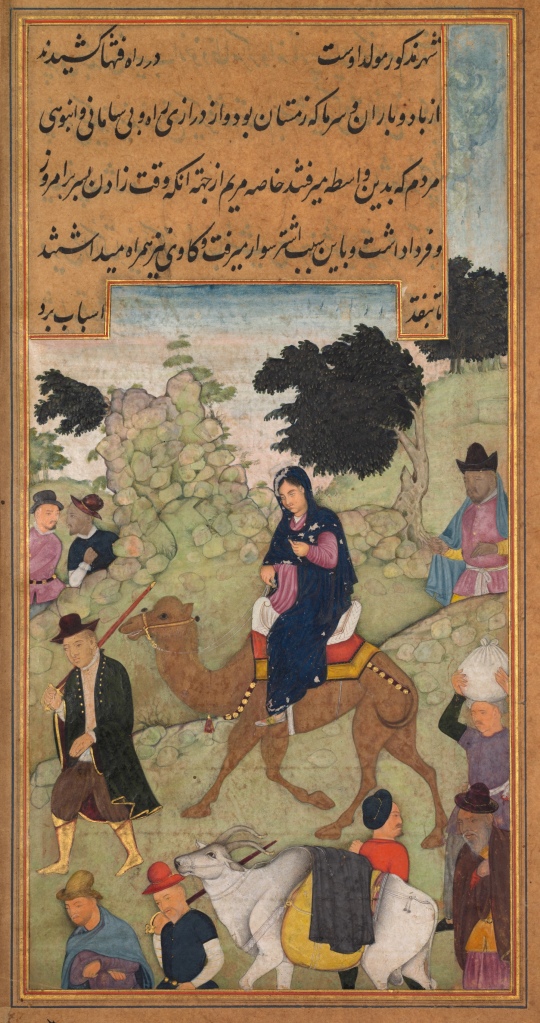
Seventeenth-century painting depicting Mary and Joseph travelling to Bethlehem. From a Mir’at al-quds of Father Jerome, 2005, Cleveland Museum of Art. (Wikimedia Commons) ‘Mother Mary and Child Christ’. Mid-eighteenth century, late Mughal, Muhammad Shah period. National Museum of India, New Delhi (Wikimedia Commons)Images from Indian Christmas: Essays, Memories, Hymns
Interestingly, the very first entry of this anthology is an excerpt from the final two sections of one of Rabindranath Tagore’s finest long poems, inspired by the life of Jesus Christ. Tagore wrote the poem “The Child” in 1930, first in English and translated it himself into Bengali the following year, titling it “Sishutirtha.” But many years even before that, every Christmas in Santiniketan, Tagore would give a talk about Christ’s life and message. Speaking on 25 December 1910, he said:
“The Christians call Jesus Man of Sorrow, for he has taken great suffering on himself. And by this he has made human beings great, has shown that the human beings stand above suffering.”
India celebrates Christmas with its own regional flair, its own flavour. Some elements are the same almost everywhere; others differ widely. What binds them together is that they are all, in their way, a celebration of the most exuberant festival in the Christian calendar.
Apart from the solemnity of the Church services, there is a lot of merrymaking that includes the food and drink, the song and dance. The songs often span everything from the stirring ‘Hallulujah Chorus’ to vibrant paeans sung in every language from Punjabi to Tamil, Hindi to Munda, Khariya and Mizo tawng.
Among the more secular aspects of Christmas celebrations are the decorations, and this is where things get even more eclectic. Whereas cities and towns abound in a good deal of mass decorating, with streets and public places being prettied up weeks in advance, rural India has its own norms, its own traditions. Wreaths and decorated conifers are unknown, for instance, in the villages of the Chhota Nagpur region; instead, mango leaves, marigolds and paper streamers may be used, and the tree to be decorated may well be a sal or a mango tree. Nirupama Dutt tells us how since her city had no firs and pines, she got her brother’s colleague to fetch a small kikar tree as kikars grew aplenty in the wild empty plots all over Chandigarh. In many entries we read about how Christmas decorations were rarely purchased but were cleverly constructed at home.
A very integral part of the Christmas celebrations of course is music. In many Goan Catholic neighbourhoods, Jim Reeves continued to haunt the listeners in his smooth baritone: “I’ll have a blue Christmas without you/ I’ll be so blue thinking about you/ Decorations of red on a green Christmas tree/ Won’t mean a thing, dear, if you’re not here with me.” Simultaneously, the words and music of “A Christmas Prayer” by Alfred J D’Souza are as follows: “Play on your flute/ Bhaiyya, Bhaiyya/ Jesus the saviour has come./ Put on your ghungroos/ Sister, Sister/ Dance to the beat of the drums!/ Light up a deepam in your window/ Doorstep, don with rangoli/ Strings of jasmine, scent your household/ Burn the sandalwood and ghee,/ Call your neighbour in, smear vermillion/ Write on his forehead to show/ A sign that we are one/ Through God’s eternal Son/ In friendship and in love ever more!/ Ah! Ah!” But the most popular Christmas song was of course “Jingle bells, jingle bells, jingle all the way….”
In “Christmas Boots and Carols in Shillong”, Patricia Mukhim tells us how the word ‘Christmas’ triggers a whole host of activities in Meghalaya and other Northeastern states that have a predominantly Christian population. Apart from cleaning and painting the houses, everything looks like fairyland during Christmas, a day for which they have been waiting for an entire year. She particularly mentions the camaraderie that prevails during this time:
“Christmas is a time when invitations are not needed. Friends can land up at each others’ homes any time on Christmas Eve to celebrate. Most friends drop by with a bottle of wine and others pool in the snacks and the party continues until the wee hours of morning. It’s one day in the year when the state laws that noise should end at 10 p.m. is violated with gay abandon. …Shillong [is] a very special place on Planet Earth. Everyone from the chief minister down can strum the guitar and has a voice that could put lesser mortals to shame. And Christmas is also a day when all VIPism and formalities are set aside. You can land up at anyone’s home and be welcomed in. It does not matter whether someone is the chief minister, a top cop, or the terrifying headmistress of your school.”
One very significant common theme in all the multifarious entries is the detail descriptions provided on food, especially the makeshift way Christmas cakes are baked in every home and the Indian way meat and other specialties are being prepared on the special day. There are several entries that give us details about the particular food that was prepared and consumed at the time along with actual recipes about baking cakes. “Christmas Pakwan[1]” by Jaya Bhattcharji Rose, “The Spirit of Christmas Cake” by Priti David, and “Armenian Christmas Food in Calcutta” by Mohona Kanjilal need special mention in this context. Liddle in her introduction wrote:
“Our Christmas cakes are a reflection of how India celebrates Christmas: with its own religious flair, its own flavour. Some elements are the same almost everywhere; others differ widely. What binds them together is that they are all, in their way, a celebration of the most exuberant festival in the Christian calendar.”
Later in her article “Cake Ki Roti at Dua ka Ghar[2],” the house where they lived in Saharanpur, Uttar Pradesh, she wrote how her parents told her that ‘bajre ki tikiyas’, thin patties made of pearl millet flour sweetened with jaggery, used to be a staple at Christmas teatime at Dua ka Ghar[3], though she has no recollection of those. She of course vividly recalls the ‘cake ki roti’. This indigenisation of Christmas is something that’s most vividly seen in the feasting that accompanies Christmas celebrations across the country. While hotels and restaurants in big cities lay out spreads of roast turkey (or chicken, more often), roast potatoes and Christmas puddings, the average Indian Christian household may have a Christmas feast that comprises largely of markedly regional dishes.
In Kerala, for instance, duck curry with appams is likely to be the piece de resistance. In Nagaland, pork curries rich in chillies and bamboo shoots are popular, and a whole roast suckling pig (with spicy chutneys to accompany it) may hold centre stage. A sausage pulao, sorpotel and xacuti would be part of the spread in Goa, and all across a wide swathe of north India, biriyanis, curries, and shami kababs are de rigueur at Christmas.
This beautifully done book, along with several coloured pictures, endorses the idea of religious syncretism that prevails in India. As a coiner of words, Nilima Das came up with the idea that ‘Christianism’ in our churches is after all, a kind of ‘Hinduanity’ (“Made in India and All of That”). This reviewer feels guilty of not being able to mention each of the unique entries separately that this anthology contains, so it is suggested that this is a unique book to enjoy reading, to possess, as well as to gift anyone during the ensuing Christmas season.
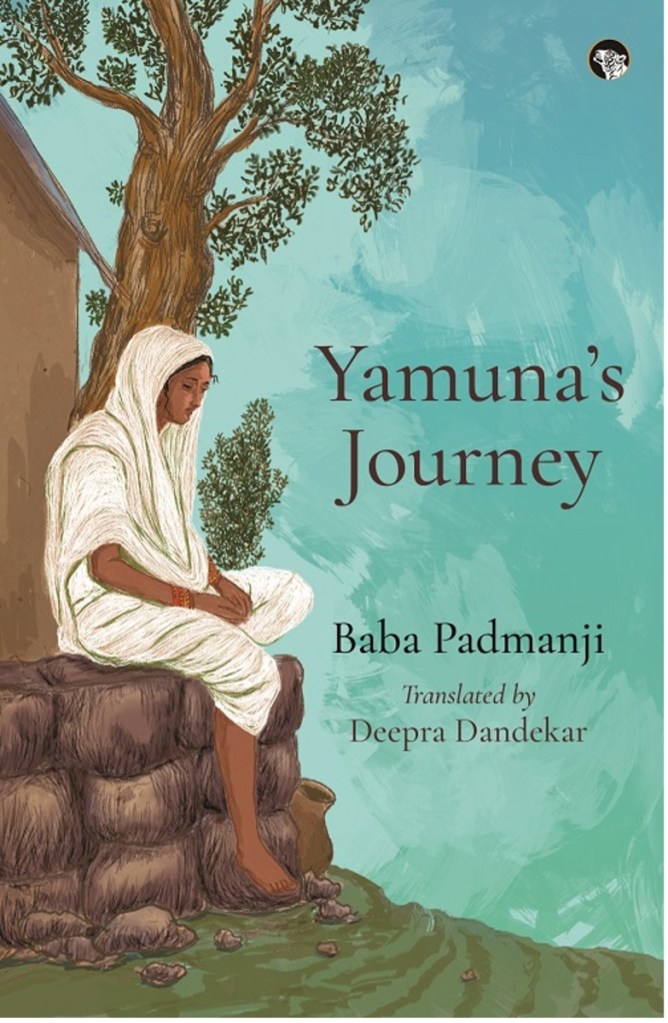
Author: Baba Padmanji, Translator: Deepra Dandekar
Publisher: Speaking Tiger Books
During the nineteenth century, among the various social concerns that plagued Indian society, three issues were greatly significant — the abolition of sati, or the burning of the widow on the pyre of her dead husband, the passing of the widow-remarriage bill by the British-Indian Parliament in 1856 augmented by the activism of reformers like Pandit Ishwar Chandra Vidyasagar, and of course the attempts at conversion to Christianity of people plagued, tortured and humiliated by the rigid strictures of class hierarchy and torture and humiliation imposed by Brahminical society during that period.
Baba Padmanji’s 1857 Marathi novel, Yamunaparyatan (translated as Yamuna’s Journey), is the first vernacular novel in India meant to provide a realistic account of the travails suffered by Hindu widows in Bombay Presidency region in particular and India in general and is based on empirical facts. It highlights the suffering of Hindu widows, forced into a life of loneliness and torture by their cruel Brahminical families. The heroine of the novel, Yamuna, starts off as a happily married woman, sharing a bond of mutual trust and respect with her husband. She travels with him across various regions of the Bombay Presidency and Western India and her interactions with widows on the way reveal the extent of their suffering within Hindu patriarchal and Brahminical society. Yamuna sympathises with them and calls for urgent reform, while advocating for widow remarriage.
Based on empirical research, and its main storyline composed of empirical anecdotes which were woven together in a single narrative, Yamunaparyatan was only written in the form of a novel. From the very beginning it was never meant to be a poetic, aesthetic book, and was always meant to be hard-hitting, and a realistic treatise. Deeply influenced by Rev. Surendra Nath Banerjea and his writings on women’s education and emancipation, Padmanji described the piteous situation of those young girls who were married off hastily as children to men decades older than themselves. Squeezed between marital duties, childbirth, and heavy domestic work, young girls became victims of their marital families. After their husbands died, they were subjected to further torture – tonsure, inadequate food and clothing, ill-treatment, a heavier than ever workload, and no creature comforts whatsoever. Padmanji argued that women within Brahminical families were constantly on the brink of abandonment and destitution, suffering deeply from the fear of becoming outcasts, even before they became widows.
When tragedy strikes and Yamuna is widowed, she too is tortured and stigmatised. But the feisty young woman manages to start a new chapter in life by converting to Christianity and remarrying a Christian man. In the last chapter of the novel, we are told how Yamuna-bai’s grief diminished gradually as she found solace in religion:
“After some time, God introduced her to an educated and religious young man, who became a loving and caring husband to her. With time, Yamuna dedicated herself to her new life companion and the couple thereafter spent the rest of their years in happiness, helping others and praising God.”
As mentioned earlier, Baba Padmanji was fiercely critical of the stigma accorded to widows within Brahmanical Hinduism and fought against it tooth and nail. In fact, one of the most enduring legacies of Yamunaparyatan is its portrayal of equal, romantic, conjugal partnerships, depicted between spouses of the same age, who shared religious, intellectual, emotional and moral proclivities and insights; spouses who were constantly in conversation and discussion with each other. Yamuna was not her husband’s junior, and their relationship constituted an ideal example of conjugal marital relationships for young, educated and reformed readers. This equality between spouses was something unimaginable in Hindu society of the time and one of Padmanji’s greatest anxieties was concerned with the hesitation of the educated and the reformed youth in taking the step to remarry widows. In fact, one of the book’s junior protagonists even outlines an evolved idea of running an organised, crowd funded, social movement in favour of widow remarriage. Padmanji even articulated the promise of happiness that reformed marriages held out for couples who could live together with social awareness, even if the women were widowed.
Apart from the proselytising mission by Baba Padmanji who himself converted to Christianity a few years earlier and thought it his duty to preach about its merits, especially the way women were respected in that religion, the novel is rather weak in structure. For instance, the last chapter begins in the following manner:
“The time has come for us to end the story and for our readers to finally know what the future held for Yamuna, Shivram, and his mother as the seeds of divine scripture sown in their hearts came to fruition.”
Labelled as the first of its kind in Indian literature, the novel’s weaknesses can of course be overlooked. It is true that the novel form in India was in its nascent stage at the time of composition of this text. The first vernacular novel in India was Fulmoni O Korunar Bibaran ( Fulmoni’s and Karuna’s Account) by Hanna Catherine Mullens published by the Calcutta Christian Tract and Book Society in 1852 and this Bengali book had its aim clearly mentioned in the subtitle –“Written for the purpose of educating women.” But since the author was not Indian by birth, the credit for being the first Indian author to pen a novel remains with Padmanji. It was about a decade later that writers like Bankim Chandra Chatterjee would gradually popularise the genre.
What makes Yamuna’s Journey special even today is the bold feminist ideas expressed in the novel, and though it was published more than a hundred and fifty years earlier, one still feels the currency of the feminist issues that Padmanji had raised. When we read about the deplorable condition of Hindu widows in religious places like Varanasi and Vrindaban even today, we realise that the vice has not been eradicated from Hindu society even in this twenty-first century. Not focusing particularly on the plight of lower-caste Hindus, Padmanji instead criticised middle-class Hindus (like the goldsmith caste, or Prabhus) for ritually aligning with Brahmins. The solution for him thus lay, not in focusing on lower-caste emancipation, but in strongly divesting Brahmins and Brahminism of demographic support, singling them out, and subjecting them to legal measures, social activism, and compulsory re-education. If Hindu society was bent on self-destruction by eliminating its women, then Padmanji felt that they had no right to be offended if these same women converted and lived respectful lives thereafter, as part of the Christian community that accorded them equality and dignity. Thus, reading the translation of this Marathi text, despite its proselytising tone and weak narrative structure, one still feels it to be rather significant.
Deepra Dandekar has done yeoman service by translating this vernacular Marathi text into English for a pan-Indian readership. In the note for the readers, she tells us how readability in the 21st century becomes the primary concern for her translation. Though she has kept Padmanji’s arguments intact, she has in other places paraphrased and desisted from providing verbatim translations, especially when Padmanji quotes Sanskrit passages or older Marathi religious texts. Since these verbatim translations do not add special meaning to the storyline, she has simplified the text in places, though she has also striven not to render it too simplistic. Dandekar also admits that in keeping with Padmanji’s aim of writing a fledgling romantic novel, she has desisted from making the text too academic. By avoiding footnotes, she has provided a glossary in the end that explains the meaning of vernacular words in context. So, Yamuna’s Journey is recommended for readers of all categories – those who want to study it as the first vernacular novel in India; those who want to know more about the larger debates concerning widow remarriage in the years 1856 and 1857; and those who want to read it as a feminist text propagating the drawbacks of Hindu contemporary society with its rigid class structures and embracing Christianity as a remedy to all social evils of the time.
.
Somdatta Mandal, critic and translator, is a Former Professor of English at Visva-Bharati, Santiniketan, India.
PLEASE NOTE: ARTICLES CAN ONLY BE REPRODUCED IN OTHER SITES WITH DUE ACKNOWLEDGEMENT TO BORDERLESS JOURNAL



 Borderless