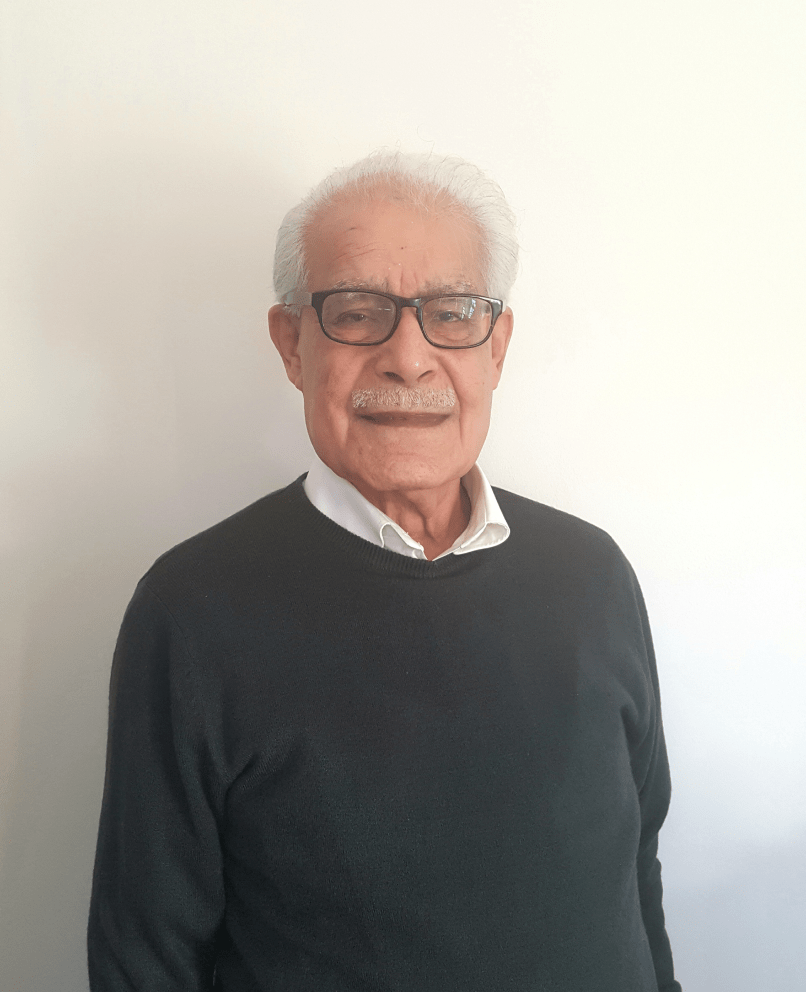
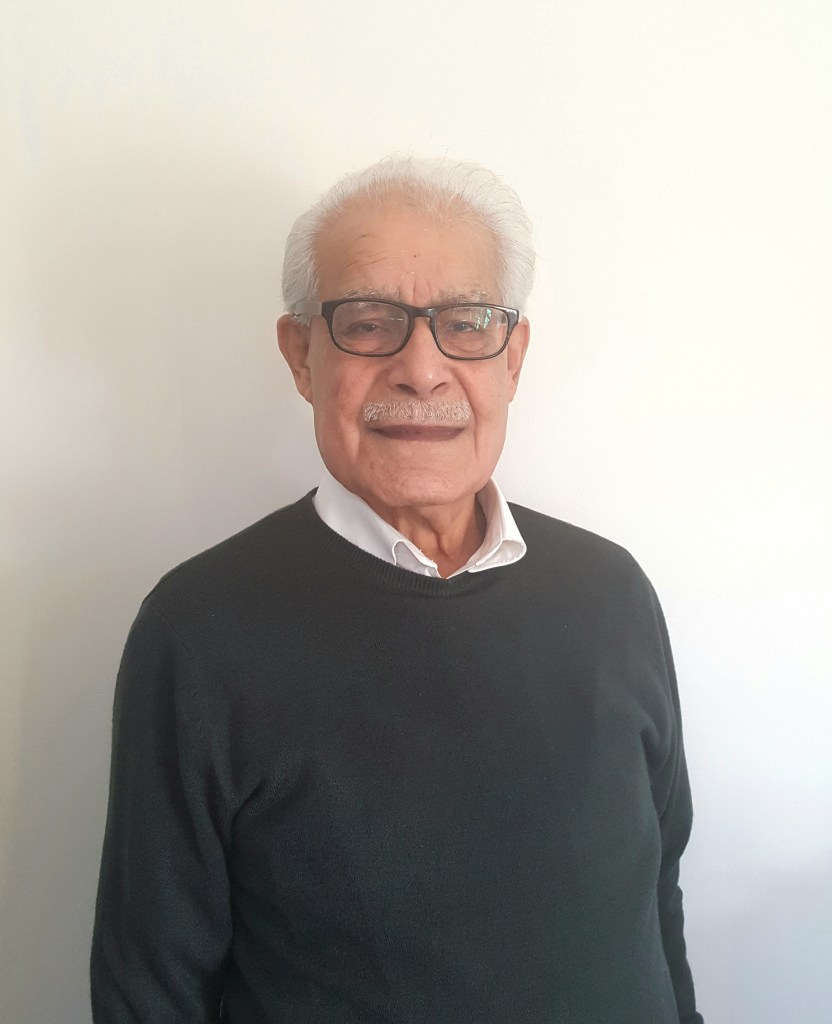
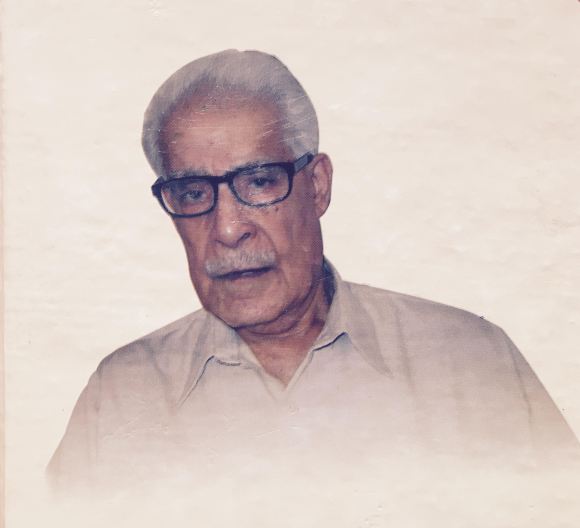
Akbar Barakzai (1939-2022) was born in Shikarpur Sindh, Pakistan. He received his early Education from Karachi and later he graduated from University of Karachi. Barakzai is considered as one of the most defiant progressive voices in modern Balochi literature. His poetry reflects the objective realities of life and ambitions of his people. Boundless love for masses, profound desire for peace and prosperity, and unwavering resolve to resist and defy the tyranny are some of the commonplace themes of his poetry.
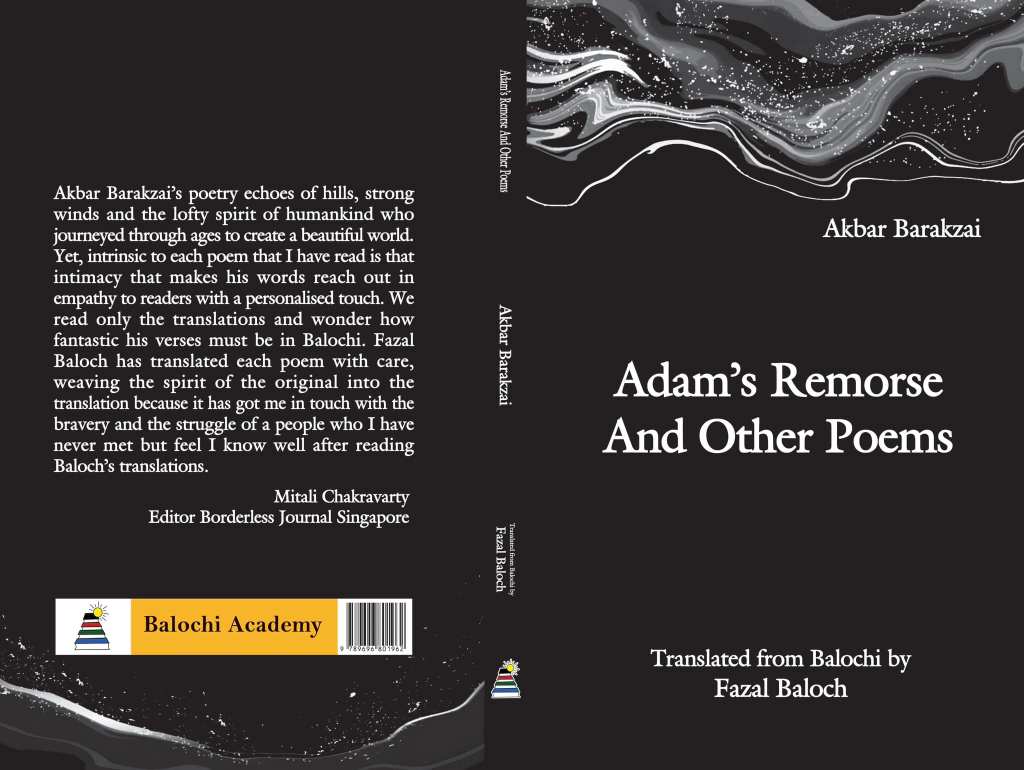
“Akbar Barakzai belongs to the generation of the poets that witnessed the political and literary activism of Muhammad Hussain Unqa, Sher Mohammad Mari, Mir Gul Khan Naseer and Azat Jamaldini”, writes Fazal Baloch, a renowned translator who most recently brought out the anthology of Barakzai’s translated poems under the title Adam’s Remorse and Other Poems, published by Balochi Academy Quetta in 2023.
In his literary career, which spans over a half century, Barakzai has managed to bring out only two of his anthologies. Some selected poems by Barakzai have been translated from Balochi to English by Fazal Baloch, a college professor in Turbat, and a prominent literary translator.
Akbar Barakzai was an honest and dedicated political and social activist whose aim was progress of Baloch people. He as poet could not only express the human sentiments but could also express their aspirations for their life of Freedom and Dignity. “He served … his people admirably and deserves our respect and love,” says Meer Mohammad Ali Talpur, a Baloch intellectual.
Barakzai’s poems are rich in linguistic and literary expressions. His language is both simple and philosophical. In his poetry, he celebrates resistance, challenges oppression, and expresses a belief in a better future without losing hope. He emphasises resilience to overcome suffering. He writes:
I am the tree of immortality,
O, you tyrant brute!
The more you hew me down,
the more I sprout
The imagery of the tree symbolises the strength and the life cycle of a tree which remains steadfast midst harsh weathers.
In another poem, titled ‘Not Forever’, Barakzai continues to convey themes of resistance and defiance. As he says:
The rule of chains and fetters
Will last only for today, not forever.
The age of tyranny and oppression
Will last only for today, not forever.
He inscribes that the current state of being oppressed or controlled (“rule of chains and fetters,” “tyranny and oppression”) is temporary. Barakzai implies hope for a future where such oppression will end, indicating a belief in the eventual triumph of freedom and justice.
Barakzai sought to reshape the prevailing socio-political views and wrote for freedom and liberty, peace and prosperity and dignity of mankind. His love for human dignity transcends all geographical and cultural frontiers and becomes universal, added Fazal Baloch.
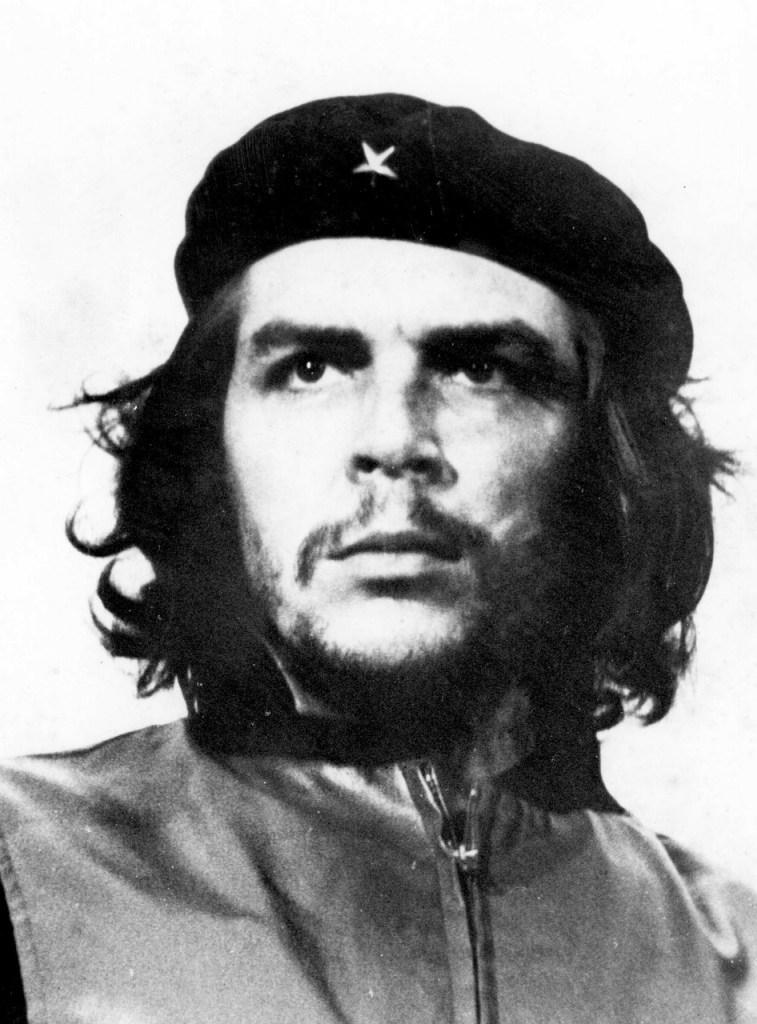
Indeed, Barakzai’s poetry transcends borders and speaks to universal themes. In his poem ‘Who Can Snuff Out the Sun?’ written in response to Che Guevara’s execution, he celebrates Che Guevara’s heroism and the universal struggle for justice and freedom. By acknowledging Che Guevara’s courage and sacrifice, Barakzai connects with a broader global struggle for human rights and liberation.
"Who can snuff out the sun?
Who can suppress the light?"
And in the last lines of the poem, he notes,
I'm Ernesto Che Guevara
I'm Immortal
Everywhere in the world
“This is not only Barakzai’s most quoted poem, but it is also one of the most remarkable Balochi poems touching the theme of resistance and defiance,” contends Fazal Baloch.
Similarly, in his another poem like ‘I’m Viet Cong’, he expresses solidarity with the people of Vietnam, few lines are written as such:
I'm the spirit of freedom and liberty
Who can enslave me?
Who can kill me?
After all
I'm Viet Cong I'm Viet Cong.
He might have shown solidarity with Afghanistan in his poem ‘April 1978’. His lines read:
Let's sing for the Saur
Let’s extol the groom
A garden in our heart has bloomed
Doves chant and herald the news
Revolution has arrived
Arrived what we desired
One of the ways in which Barakzai weaves the West and the East into his poetry. He has a poem called ‘Waiting for Godot’. Samuel Beckett’s Godot is emblematic of an ideal that we keep waiting for. Barakzai has captured the essence of the whole play in his poem with his refrain —
Arise! O friends from this deep slumber
Godot will not, will never show up
In one of his most powerful poems, ‘Word’, Barakzai conveys the power of speaking up for one’s rights and the importance of not remaining silent in the face of oppression. He believes that by voicing one’s grievances and advocating for justice, freedom, and salvation can be achieved, ultimately leading to the end of oppression as these lines indicate:
Don’t ever bury the word
In the depth of your chest
Rather express the word
Yes, speak it out.
The word brings forth
Freedom and providence
Of course, freedom and providence.
In ‘How Long’, Barakzai starts by portraying a bleak situation where life is filled with distress and young people are dying tragically. He inscribes,
For how long
Life will remain in utter distress
Handsome youths keep falling to bullets
And mirror like hearts
Continue to shatter into shards?
Then, he shifts the tone to one of hope and optimism, and writes,
Light-- the very essence of freedom
Will not forever remain in prison
Life will not suffer distress
The serpent of tyranny
Will vanish evermore
The sapling of envy and hatred
Will wither away.
He suggests that despite the current darkness, better days are ahead. He expresses confidence that “light”, symbolic of freedom, will not remain imprisoned forever. He predicts an end to the suffering and the disappearance of tyranny. The imagery of the “serpent of tyranny” vanishing and the “sapling of envy and hatred” withering away conveys the idea of a brighter future where oppression and negativity are eradicated.
Barakzai’s poetry is a ray of hope in the midst of suffering from atrocities and hatred and envy. His poetry reflects his love for humanity resonating with the voices of the oppressed and for them.
Hazaran Rahim Dad is a poet and writer. She writes on sociopolitical issues focusing on the right of fishermen. Currently she is pursuing her MPhil degree in English literature from Karachi.
PLEASE NOTE: ARTICLES CAN ONLY BE REPRODUCED IN OTHER SITES WITH DUE ACKNOWLEDGEMENT TO BORDERLESS JOURNAL
His poetry rings with the spaces between mountains. It rushes like the wind of freedom, taking you to the heart of the land and people he writes about.
Balochistan has a bit of the blood and bones of many cultures and people through the ages – dating back to Harappa and Indus Valley civilisations. Akbar Barakzai, the Baloch poet and activist, writes about transcending the suffering that exudes from hurts inflicted on humankind. He urges the masses to voice out against oppression.
Don’t ever bury the word
In the depth of your chest
Rather express the word
Yes, speak it out.
The Word brings forth
Freedom and providence.
--Akbar Barakzai, The Word
He writes for freedom from injustices and lives by his beliefs and principles. Having been forced to move countries to run journals, he is an immigrant in quest of a future that will unite the East and the West. Gently opposing oppressors with his writing, beliefs and ideas, Barakzai made news when he turned down the Pakistan Academy of Literature award last year because he says; “The Pakistan Academy of Literature is sponsored by the Islamabad rulers. I cannot accept an award from an organisation that operates at the beck and call of the tormentors of my people.” A writer who continues to emote for his people and their rights, he has been translated to English by a lecturer, Fazal Baloch, and published.
Barakzai calls himself “a part time poet” – but his poetry moves our hearts and minds – it makes us think, imagine a better world. Is he really a part time poet or a major inspiration crying out for mankind to move out of ‘messiahdom’, dogmatism and take charge of their own lives? In this interview, Barakzai not only reveals his life but also his sense of freedom from oppression, his love of human rights which forced him to move countries to conserve the voice of his people.
Since when have you been writing poetry? What set your muse going?
I started writing poetry in 1954 when I was still in school. I was inspired by our people’s long struggle for freedom and justice against the Pakistani and Iranian occupiers.
Your poetry mixes many strands of thoughts and many lores. Can you tell us what influences your writing? Books, music, writers?
My writing has been influenced by many poets and writers from different languages and cultures. The lasting influence on my art has been that of classical Balochi poetry. However, I must mention some great names from diverse poetic traditions who have had an impact on my poetry, such as the Persian poets Hafiz, Rumi and Nima Yushij; Urdu poets Ghalib and Mir; English poets Shelley and Keats; Russian poets Pushkin and Pasternak and the Chilean poet Pablo Neruda.
Your poem ‘Waiting for Godot’ depicts the theme of the play by Samuel Beckett. It has a beautiful mingling of East and West. What led to it?
Beckett’s Godot is perhaps the most mysterious character in modern (world) literature. My poem is a reminder that the so-called Messiahs never return to this world. Mankind has to find its own solutions. East and West are two different aspects of the same coin. Unlike the infamous poem by Rudyard Kipling, that great apologist of Western imperialism, the East and the West are slowly but steadily inching towards each other. Despite enormous odds “the twain” are destined to “meet” and be united to get rid of the geographical lines created by imperialist powers.
You deal with both the political and the spiritual in your poetry. How do you attune Che Guevara with the God who even if ruthless exists in your poetry?
I made peace with God quite some time ago. I hope we understand each other better now. I do not believe that God is necessarily ruthless. It may sound strange, but my spirituality is not religious at all, it is based on humanism. Your interpretation of my poem is different from what I had intended. I am not sure if such a dichotomy exists in the poem. However, it appears that poetic curiosity in the end has succeeded in detecting some kind of duality. With regard to Che, he symbolizes the primordial fighter for justice. He embodies all those millions of people who have fought against the forces of darkness. Hence the allusion to Phoebus Apollo and the ever-conquering brilliance of the sun.
Do you write only in Balochi? You must be fluent in English having lived in England for many years. Why do you not write in English? Or translate your own poems?
I used to write in Urdu and Persian in my younger years, until I discovered that I could write a lot better in my mother tongue. As far as writing in English is concerned, I do not feel confident enough to write in it.
Your poetry, the little I have read, takes on elemental truths and uses nature, intermingles those to arrive at larger truths toward the end. Is it all spontaneously expressed? Or do you need to work on it? Tell us a bit about your poetic process.
My experience of the poetic process tells me that it is spontaneous. Design and architecture of the poem occupy a secondary position. After a poem is formed in my mind my main concern would then be to revise and improve its language. This process may take any length of time. I must confess that I am an obsessive reviser. For example, one of my longer poems took many long years to complete.
As a poet, you continue shrouded in mystery. Tell us about your life.
My life is and has always been an open book. I don’t think a few random poems are sufficient to reveal the life story of any poet. However, without these fistful of poems, I would have appeared to be a greater mystery. My life, like the billions of ordinary people in this world, is indeed very ordinary. My great grandfather migrated from Western (Iranian) Balochistan as a result of the brutal military operations in the early twentieth century in which thousands of old men, women and children were killed and injured and thousands of others migrated to Sindh. My great grandfather was a small-time farmer. As a result of the Iranian atrocities, he was forced to abandon his land and livestock and move to Eastern (now Pakistani) Balochistan and finally to Sindh. In 1928, Reza Shah of Iran ultimately succeeded in occupying our country. Once they settled in Sindh my great grandfather and grandfather worked as labourers until they saved enough to buy a small shop.
My father had a basic English education. He had left high school when still in the 4th or 5th grade to support the family with odd jobs. A few years later, he opened his own shop, a ration shop. These shops had mushroomed all over during the war as the English authorities introduced a food rationing system in India. I believe with this background I must have belonged to the lowest rungs of the class system. But my family worked hard to improve their lot.
When I was ten or twelve, my father thought I was strong enough and responsible enough to work in the shop. I would go to school in the morning. As soon as I finished school, I would rush to the shop to help my father.
A few years before I finished high school, my father got a job in the Directorate of Civil Supplies as the manager of a warehouse. He rented out the shop. With two incomes our lot did improve a little. I was now in high school. I didn’t have to work in the shop anymore. During this period, I became interested in books – any books. These were mainly Urdu, Persian, Sindhi and Balochi books. I read a lot, but my reading wasn’t systematic. I wrote a few nondescript poems during this period and became interested in politics, particularly in Baloch politics. By then I was in college reading literature and related subjects. However, I was more interested in politics than in my studies which meant I wasn’t a good student. Despite this I somehow managed to graduate from Karachi University. My father wanted me to study further and enter the Civil Service. But by then I was completely radicalised. I think I disappointed him then by refusing to continue my studies in order to take competitive exams to join the civil service. However, a few years later as a result of the escalating Pakistani military operations in Balochistan, he told me that although at the time he was not happy with my refusal, he confessed wholeheartedly that my decision was absolutely right. I was so proud of him that he had finally approved of my decision. Although he passed away a long time ago, because of this confession I do love him and miss him more.
This rather lengthy snapshot of my life should be sufficient to explain why my poetry is expressly concerned with social and political issues.
What led to your move to England?
This was the busiest period of my political activism. It was the time when General Ayub Khan had imposed Martial Law in Pakistan and was trying to consolidate his rule by hook or by crook. In Balochistan he had re-ordered the military to crush the Baloch resistance once and for all. But the resistance has outlived Ayub Khan, and his military might. It has grown stronger and stronger with the passage of time albeit with huge sacrifices sustained by ordinary people. The rulers treated the Baloch people like dirt and our leaders as traitors who “deserved” to be hanged. By 1965, the military government stepped up its operations in cities and towns, especially in Karachi where the Baloch formed a sizable minority and naturally supported the struggle for freedom. By this time the majority of our leaders were imprisoned in various Pakistani jails. Hundreds of young activists were also put behind bars. I was constantly harassed by the secret police. They raided my house three times and confiscated all my books and papers. These included some precious manuscripts left by a maternal uncle of mine. I was told that they would be returned “in due course”, but I never saw them again.
In those days, at least in the big cities, the government showed that they believed in the legal system. However, things would soon change. They started arresting people at will, without producing them in a court of law. People would languish in prisons for many years without any charges brought against them. They kept on introducing new forms of brutality, including bombing the population and “disappearing” activists and ordinary people. Under their “kill and dump” policy, they to this day torture and kill activists and then dump their bodies in the periphery of a town or village. So far, they have “disappeared” about 5,000 activists and their family members. Recently they have started abducting young female activists and then dumping their bodies. Almost all of these victims have been assaulted and raped.
I was picked up twice by the secret police. The second time they brought the great poet Gul Khan Naseer (the Baloch Nazrul) from prison. We were both delighted to see each other. We hugged and exchanged greetings in Balochi. We were told firmly not to speak in Balochi. We protested at this suggestion. Without reacting, they started the interrogation which took about three or four hours. Naseer was taken back to prison. I was told to go home but be prepared for further sessions.
I was advised by our leadership to go underground and eventually leave the country and head for the Gulf region to organise the Baloch migrants working in that part of the world. I did exactly as I was instructed to do. Because of visa problems, I could not stay in the Gulf for long. I therefore moved to Syria, Lebanon and finally to Iraq where in 1973-74, I was joined by some other friends. Together we used to edit a monthly newspaper in Balochi called Tipaakie Raah (Path of Unity). In fact, this used to be the Balochi edition of the paper which was also published in Arabic, Persian, Azari (Azarbaijani) and Kurdish editions. We also managed a daily radio programme in Balochi. Additionally, we published a monthly newspaper in English from London which was called People’s Front. This task was assigned to a senior friend who moved from Baghdad to London for this purpose. Our stay in Iraq would soon be short lived. After Saddam Hussain and the Shah of Iran met in North Africa to end the dispute over Shatt al Arab waterway, the situation in Iraq changed drastically. We were told very politely that the “world situation” had changed. We would still be welcome to live in Iraq, but the publication of the newspaper and the radio broadcasts must stop. It was therefore decided I should move to London. With the help of a doctor friend, I obtained a British visa and moved to London.
Your poetry still cries out for your motherland. Do you want to return? Is a return possible?
Who wouldn’t want to go back to the country they love? But it is not possible. I am only tolerated if I keep silent and remain as far away from Balochistan as possible.
Why did you turn down the Pakistan Academy of Literature award?
The Pakistan Academy of Literature is sponsored by the Islamabad rulers. I cannot accept an award from an organisation that operates at the beck and call of the tormentors of my people.
You have published very selectively — do you have more writing which you have not published? If so, do you have plans to publish those?
I have never been a prolific writer or a poet. I keep on telling people that I am a part-time poet.
What message would you like to give to emerging writers?
As a part-time poet I don’t feel I am in a position to advise young writers. I can only say this much to them — be honest to yourselves and your art.
Akbar Barakzai’s poetry translated from Balochi by Fazal Baloch
Che Guevara
Akbar Barakzai
Freedom

Before liberating the people
Let’s liberate ourselves first
We who are slaves of our centuries’ old feuds and malevolence
Slaves of our follies and sins; malice and greed
How could we liberate the people?

How could we liberate our laborers and peasants
Shepherds and fishermen?
Before liberating the people
Let’s liberate ourselves first!


Who Can Snuff Out the Sun?
(In Memory of Ernesto "Che" Guevara)

Who can snuff out the sun?
Who can suppress the light?

In the realm of the dark night
The night-birds proclaimed
To have snuffed out the sun
They rejoiced and revelled in trance
With wine, songs and dance

Without the glorious light
Without Phoebus Apollo
The primeval source of light, music and poetry
The Heaven and the Earth
The moon, stars and Pleiades
Will lose their way
Into the dark void of nothingness
Without the timeless Phoebus
Life's most handsome knight
Passion will lose its spark
The sea of music will go dry
And the songs of love fall silent
Without the ardent Adonis
Life's Aphrodite wouldn't survive for a moment
Nobody can ever dare to snuff out the sun
Or suppress the light
In the dark wilderness of the night
The blind night-birds celebrated in vain
The triumphant sun comes out every day
spreading its radiance trough out the world
Chanting ever so gracefully
"I'm Phoebus Apollo"
"I'm Ernesto Che Guevara"
"I'm Immortal"

Everywhere in the world
It unveils Ernesto's smiling face
With splendor and grace

Who can snuff out the sun?
Who can suppress the light?


For How Long?

For how long
Light will languish in captivity
In vales and dales death will roam free?
For how long
Life will remain in utter distress
Handsome youths keep falling to bullets
And mirror like hearts continue to shatter into shards
For how long?
For how long?
Light -- the very essence of freedom
Will not forever remain in prison
Life will not suffer distress
The serpent of tyranny will vanish evermore
The sapling of envy and hatred will wither away
This world of mankind will blossom
Into a garden of paradise
But who knows?
How many more years will it take?
How many more eons will it take?
Akbar Barakzai was born in Shikarpur, Sindh in 1939. He is ranked amongst the proponents of modern Balochi literature. His poetry reflects the objective realities of life. Love for motherland, peace and prosperity and dignity of a man are the recurrent themes of his poetry. His love for human dignity transcends all geographical and cultural frontiers. Barakzai is not a prolific poet. In a literary career which spans over half a century, Barakzai has brought out just two anthologies of poetry, Who can Kill the Sun and The Lamps of Heads, but his poetry has depth and reaches out to human hearts with its profundity. Last year, Barakzai rejected the Pakistan Academy of Letters (PAL) award, quoting the oppressive policies meted out to his region by the government as the reason.
Fazal Baloch is a Balochi writer and translator. He has translated many Balochi poems and short stories into English. His translations have been featured in Pakistani Literature published by Pakistan Academy of Letters and in the form of books and anthologies. Fazal Baloch has the translation rights to Barakzai’s works and is in the process of bringing them out as a book.
.
PLEASE NOTE: ARTICLES CAN ONLY BE REPRODUCED IN OTHER SITES WITH DUE ACKNOWLEDGEMENT TO BORDERLESS JOURNAL
 Borderless