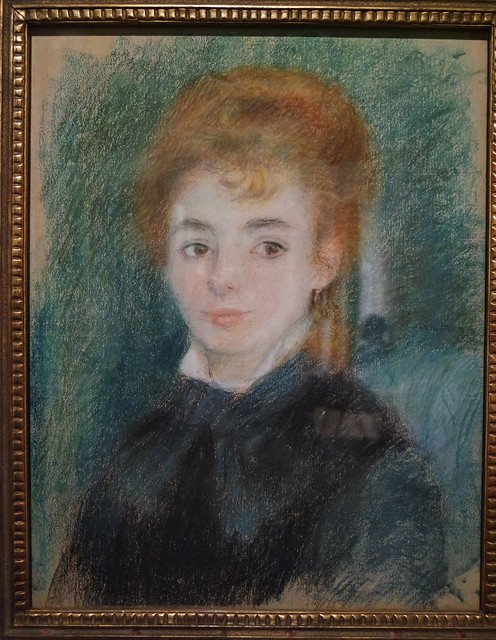
John, Augustus Edwin; Dylan Thomas (1914-1953); Amgueddfa Cymru – National Museum Wales; From Public Domain
I Can See Pink And White Mice (for Dylan Thomas)

The milkman’s habit of leaving his bottles behind was worrisome, reminded some of Starkweather; the weather’s stark, the distrait wind.  All manner of throttled spectres splintering off to catch the light.  And the visions of the magi had all become household names: bruised apple, poster wall, salt shaker…I can see pink and white mice sure as creeping mountains, blubberous fantasia of silty sea bed’s quilt,  careening gulls in apocryphal death-mount:  show me the tension that builds in each sinew, dance the structure of things away from gleeful horns, so that the words come upon you like a stranger in dark alleys: it is how things go together, sliding, reeling, unconstrained as a busy wood shop.  Warring crabs in twisted pincer, the general’s best men sent to the front to dig through the dirt of slugs.  Turning the soil into a belly of nervousness, of rolling thunder.
Ryan Quinn Flanagan is a Canadian-born author residing in Elliot Lake, Ontario, Canada with his wife and many bears that rifle through his garbage. His work can be found both in print and online in such places as: Evergreen Review, The New York Quarterly, Borderless Journal, GloMag, Red Fez, and Lothlorien Poetry Journal.
.
PLEASE NOTE: ARTICLES CAN ONLY BE REPRODUCED IN OTHER SITES WITH DUE ACKNOWLEDGEMENT TO BORDERLESS JOURNAL
Lady With a Blue Veil (Sally Fairchild) by John Sargent(1856-1925). Sourced by Ryan Quinn Flanagan
GHOSTING SALLY FAIRCHILD

What a ghost of a woman!
That Sally Fairchild, with hand raised to chest
as if poignantly aghast at the very sight
of her own faded rendering,
a noticeable accompaniment on the ring finger,
so there is that limited certainly,
but the thickets already seem to be gripping at apparitional days,
a loosening auburn bun swallowed up in blushing blues,
rimmed day hat, much the same:
perhaps, it is that maniacal jungle of colour
all around her, swirling spiked monsters
jumping out from a forgotten child’s scary closet –
what was John Singer Sargeant thinking?
No woman wants to be painted like that.
As if she is disappearing right out of existence.
Vanishing before everyone, even herself.
Ryan Quinn Flanagan is a Canadian-born author residing in Elliot Lake, Ontario, Canada with his wife and many bears that rifle through his garbage. His work can be found both in print and online in such places as: Evergreen Review, The New York Quarterly, Borderless Journal, GloMag, Red Fez, and Lothlorien Poetry Journal.
.
PLEASE NOTE: ARTICLES CAN ONLY BE REPRODUCED IN OTHER SITES WITH DUE ACKNOWLEDGEMENT TO BORDERLESS JOURNAL
I’m a rough tongued kitty.
Many blades, many languages.
I’ve licked the globe like it’s my very own
Catnip filled toy --
Yet forever remained an alien, exotic breed.
“You speak meow so well,”
Say the domestics.
“It doesn’t fit.”
I’m a sharp-clawed kitty.
Declawed, I’m defenceless.
Where beauty remains the ultimate weapon -- do I fit?
Do I fit -- among these manicured personas
Moulded into the shapes of patriarchal desire?
My feral femininity,
My felinity
Trying to go hand in paw --
But it doesn’t fit.
Arshi Mortuza was made in Bangladesh but moulded in the U.K, U.S.A, Sweden, China, Thailand and Canada. Many of her poems explore the theme of alienation, drawn from her experiences of being raised in multiple countries. You can find her on instagram as @poetessarshi
.
PLEASE NOTE: ARTICLES CAN ONLY BE REPRODUCED IN OTHER SITES WITH DUE ACKNOWLEDGEMENT TO BORDERLESS JOURNAL
I knew this woman, a girl really.
Kept painting her apartment different colours.

Her unhappiness with herself externalized
and splashed over all those walls.

A new colour every other week.

As though a change of colour would change
her circumstances, her life.

But nothing ever changed except the paint.
Barely a chance to dry, before she was at it again.

Maybe all that painting kept her busy.
So she wouldn’t have to sit in silence.
With the terrible truth of herself.
Ryan Quinn Flanagan is a Canadian-born author residing in Elliot Lake, Ontario, Canada with his wife and many bears that rifle through his garbage. His work can be found both in print and online in such places as: Evergreen Review, The New York Quarterly, Borderless Journal, GloMag, Red Fez, and Lothlorien Poetry Journal.
PLEASE NOTE: ARTICLES CAN ONLY BE REPRODUCED IN OTHER SITES WITH DUE ACKNOWLEDGEMENT TO BORDERLESS JOURNAL
Last week my name was Renfield Familiar to a cruel Muse who Visited according to his whim I scurried about in service To a master all-powerful Desperate for redemption For the key to sanity The key to unlock the poem
Yesterday my name was Ahab Searching the global seas For the Great White Word To start or finish a poem I paced my pitching desk In weather fair and foul But did not strike the words With my inked harpoon
Today my name is Vlad And my rage knows no Earthly bounds as I wait For the red blood of life To seep through my veins And into my maddened brain To create the words and lines And the cursed verses
Tomorrow my name will be Pablo And I will once again believe That I can be prolific In thought and deed Boldly setting pen to page With heart and soul Interred in every word Of a passionate poem
Gregg Norman lives in Manitoba, Canada. His work has been accepted by various international poetry publications in Canada, the USA, the UK, Australia, and Serbia.
.
PLEASE NOTE: ARTICLES CAN ONLY BE REPRODUCED IN OTHER SITES WITH DUE ACKNOWLEDGEMENT TO BORDERLESS JOURNAL
The cars line the street like curbed turtles spuddling with inertia, sketchy bellhop flies working the door in teams.
And the don has left the family. Breaking your heart was easy, hardly a crime of note.
Watching those lost auburn curls drop down past your shoulders with a theatre curtain fini.
To an angel’s dancing calm we go, to places unseen, early glories: silt songs of the whaling deep.
Ryan Quinn Flanagan is a Canadian-born author residing in Elliot Lake, Ontario, Canada with his wife and many bears that rifle through his garbage. His work can be found both in print and online in such places as: Evergreen Review, The New York Quarterly, Borderless Journal, GloMag, Red Fez, and Lothlorien Poetry Journal.
.
PLEASE NOTE: ARTICLES CAN ONLY BE REPRODUCED IN OTHER SITES WITH DUE ACKNOWLEDGEMENT TO BORDERLESS JOURNAL
She died last week and the family convened to box up all her things: a few jewelry box keepsakes, the new-fangled salad spinner from eight birthdays ago that she could never work and refused to use, that blazon of 50 little angels on the mantle, hands clasped and eyes ascended in silent porcelain deference; a small army thrown into boxes, taped up and sent to storage, so the landlord could list the place in the papers the following Tuesday, champion an eat-in kitchen and proximity to public transit.
(First appeared in Rusty Truck)
A Giant Bear Jumps Up the Rockface Outside Sudbury, Ontario
You never realize how helpless you would actually be if the cards came calling.
A giant bear jumps up the rockface outside Sudbury, Ontario. A single leap up over twenty feet after sprinting in front of my truck.
Across three lanes of traffic. Those powerful hind legs digging claws deep into billions of years of solid Canadian Shield.
Power windows don’t seem so great after that. We have a long way to go.
It was just a moment, but it was everything to me.
Why anyone would count carbs after that seemed completely farcical to me.
I was in control of nothing. And all the power steering in the world could not help me with that.
(First appeared in Setu) Foreclosure Town
What the level of hand soap was at when your brother died.
I would never forget that. How many rings were failing the shower curtain.
How many tubes of toothpaste were left in the pantry, were all the labels facing out?
That is the difference. I remember everything.
How the air felt against the side of my nose as the wind picked up.
Peeling railings on my fingers.
Those careless brown flecks with the orange underside. How nothing seems to get everywhere.
(First appeared in Rusty Truck)
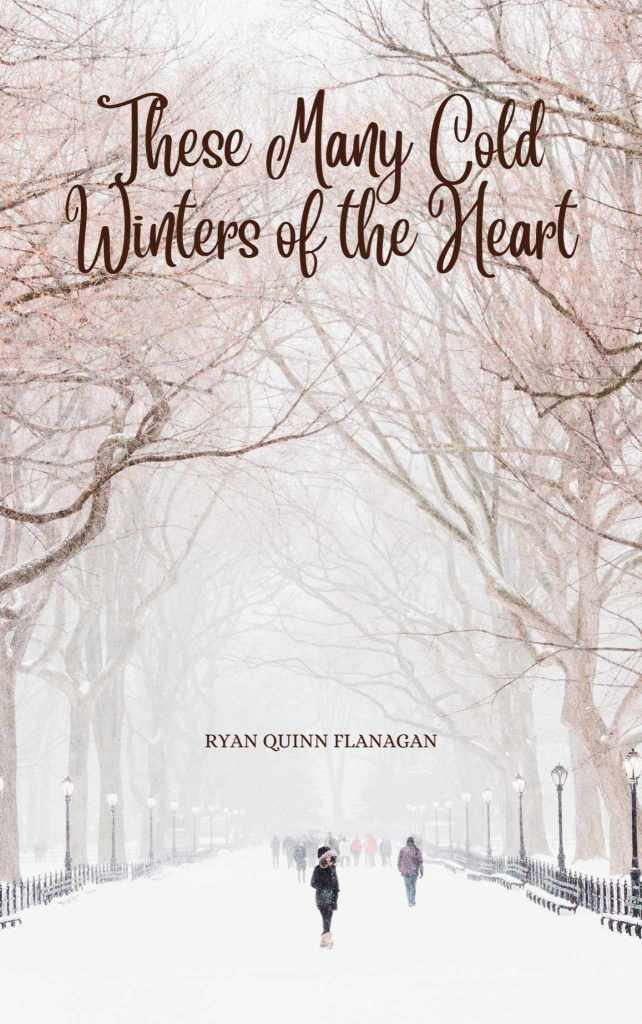
About the Book:
“Ryan Quinn Flanagan’s These Many Cold Winters of the Heart begins with an epigraph from Emily Dickinson “I am out with lanterns looking for myself,” a perfect depiction of this collection. You will be riveted from the opening poem, “I Grew Up in a Brewery Town,” where the Molson plant closes down but “people survived, they usually do” although “everyone had to pay for their beer now/and they were drinking more than ever” to the powerful “wonderful bloody magic” in “The Butterfly Hunter” near the end. Flanagan has no shortage of acute observations on everything from a humorous pair of crows and the homelessness of tents in winter, to Bob Dylan and Lawrence of Arabia. A plentiful array of humorous, everyday usually irreverent pieces, also stunning moments of awe, and sometimes addressing tough subjects without flinching, from unexpected violence and death, to family mental illness, the loss of a brother, and the suicide of a childhood friend and an uncle and its after-effects. These latter poems will sneak up on you and take your breath away….I highly recommend These ManyCold Winters of the Heart and look forward to having the book in hand. Susan Ward Mickelberry, author of And Blackberries Grew Wild.” (From Susan Ward Mickelberry Reviews).
“Ryan Quinn Flanagan walks us through daily life in These Many Cold Winters of the Heart. ‘This is no simple dirty ditty[.]’ The moments he captures come running off the page like a giant bear ‘A single leap up over twenty feet after sprinting/in front of my truck.’ He explores death, work, and all the minutiae of life somehow knowing how all the pieces fit together…” Karen Cline-Tardiff, Gnashing Teeth Publishing.
About the Author:
Ryan Quinn Flanagan is a Canadian-born author who lives in Elliot Lake, Ontario, Canada with his wife and many bears that rifle through his garbage. His work has been published both in print and online in such places as: The New York Quarterly, Rusty Truck, Borderless Journal, Evergreen Review, Red Fez, Horror Sleaze Trash and The Blue Collar Review. He enjoys listening to the blues and cruising down the TransCanada in his big blacked out truck.
PLEASE NOTE: ARTICLES CAN ONLY BE REPRODUCED IN OTHER SITES WITH DUE ACKNOWLEDGEMENT TO BORDERLESS JOURNAL
‘Brand loyalty, loyalty to the brand is paramount’

It starts early, like learning to walk or sucking that soother into milked oblivion.
As soon as the senses have been developed and primed:
‘brand loyalty, loyalty to the brand is paramount,’
say it with me as though we are trapped in an Orwellian elevator
counting the floors we are told are rushing by, but never witness.
And what stays with us is always the invasive species,
latching on, building appetites and limits, destroying potential.
Replacing creator with consumer, what a slippery little eel of a trick!
Slogans instead of sentiments truly felt, products and their placement.
Armies of jingle writers and focus groups that dwarf any once
great Napoleonic offering. Revenue streams no longer those idyllic
little fishing holes your grandfather took you to on weekends, in secret.
When the sun across your neck and arms and legs felt like
a strengthened reprieve. And what bounced off the water was some
marvellous simple truth revealed, if only for a moment and to you,
who by chance, was born again.
Ryan Quinn Flanagan is a Canadian-born author residing in Elliot Lake, Ontario, Canada with his wife and many bears that rifle through his garbage. His work can be found both in print and online in such places as: Evergreen Review, The New York Quarterly, Borderless Journal, GloMag, Red Fez, and Lothlorien Poetry Journal.
PLEASE NOTE: ARTICLES CAN ONLY BE REPRODUCED IN OTHER SITES WITH DUE ACKNOWLEDGEMENT TO BORDERLESS JOURNAL
At the end of April and the beginning of May, several Japanese holidays fall close together. This special time of year is called Golden Week. Often, a few work/school days fall between the holidays, however many people take advantage of the break and travel. I have a hard time remembering which days are which holidays, however I do remember that one of them is Midori-no-hi, or Green Day (which falls on the Showa Emperor’s birthday, May 4).
Not long after I graduated from college, I came to Japan to work as an assistant English teacher. I was assigned to a high school in Naruto, a city in Shikoku, southeast of Osaka, noted for its tasty seaweed and huge, natural whirlpools.
The principal of the high school was very friendly and often invited me to drink tea and chat with him, so I was none too surprised when he called me to his office one April afternoon. This, however, wouldn’t turn out to be a typical encounter.
The principal began to tell me about the annual Midori-no-hi (Green Day) ceremony. Each year, it’s held in a different prefecture, and that year it was Tokushima’s turn. The Emperor and Empress are always in attendance. Only a select group of people would be invited to attend the proceedings, the principal told me, and I had been chosen to participate.
How could I refuse? I imagined meeting the Emperor and Empress and telling them about my hometown in America. Maybe we’d sip green tea together from the locally-crafted pottery cups.
A full rehearsal was scheduled a couple of weeks in advance of the actual event. I boarded a bus at 5 a.m. along with a group of high school band members who would be performing during the ceremony.
As we approached the park settled in the mountains of Tokushima, I noticed that the formerly rough road had been paved. The roadside was lined with marigolds which had been freshly planted in anticipation of the imperial couple’s visit.
At the park, we all practiced our separate parts. Mine would be quite simple. Two other young women — a Brazilian of Japanese descent and an Australian who’d just arrived in the country — and I would be escorted to a spot in front of the Emperor and Empress. We would then bow, accept a sapling from the governor, and plant it in the ground with the help of boy scouts.
As the Emperor would be there and the entire ceremony would be broadcast on national television, everything had to be perfect. We practiced bowing many times with our backs straight and our hands primly layered.
Finally, Midori-no-hi arrived. The day was cloudy and occasional rain drops spotted my silk dress. Everyone hoped that the weather would not ruin the proceedings.
Marching bands, an orchestra, and a choir made up of students from various local high schools and colleges filled the morning with music. Instead of the sun, we had the bright brass of trombones, trumpets and cymbals.
Modern dancers in green leotards enacted the growth of trees. Later, expatriate children from Canada, France, Peru and other countries announced “I love green” in their native languages. This was followed by the release of hundreds of red, blue and yellow balloons into the grey sky. A hillside of aging local dignitaries were on hand to view the pageantry.
About mid-way through the ceremony, the Emperor and Empress arrived. They followed the red carpet laid out to the specially-constructed wooden dais, the Empress a few steps behind her husband as protocol demanded, to “Pomp and Circumstance”. The rustle of Japanese flags waved enthusiastically in the air threatened to drown out the orchestra.
After many solemn addresses and much bowing, the Emperor and Empress stepped down to “plant” trees. His Highness pushed some dirt around the base of a cedar sapling with a wooden hoe. His pink-suited consort did the same while balancing on high heels. The placement of the trees was only for show. Later, everything would be transplanted to a more suitable location.
At last, it was my turn. The other young women and I were led to the grass stage to the accompaniment of a harpist. I accepted my tree and buried its roots in the ground. The tree was a sudachi, which bears small green citrus fruit and is the official tree of Tokushima Prefecture.
The music and majesty of the occasion made me feel like I was doing something important on Earth. I was adding to the verdure of the world, enabling Nature. I felt a sense of awe.
When all of us were finished planting, we bowed in unison to the Emperor and Empress, then filed off the field. Afterwards, there was a mass-gardening session as all of the attendants on the hillside began planting prepared saplings.
I didn’t get to meet the royal couple after all. Although they passed by within a few meters of where I was standing, there were no handshakes, no pleasantries, not even any eye contact.
What I did get was a big bag of souvenirs — a cap, a small wooden folding chair, commemorative stamps, a flag, sudachi juice, and a book of photos so that I could always remember that misty day, that baby tree.
Sudachi treeSudachi fruit
Suzanne Kamatawas born and raised in Grand Haven, Michigan. She now lives in Japan with her husband and two children. Her short stories, essays, articles and book reviews have appeared in over 100 publications. Her work has been nominated for the Pushcart Prize five times, and received a Special Mention in 2006. She is also a two-time winner of the All Nippon Airways/Wingspan Fiction Contest, winner of the Paris Book Festival, and winner of a SCBWI Magazine Merit Award.
PLEASE NOTE: ARTICLES CAN ONLY BE REPRODUCED IN OTHER SITES WITH DUE ACKNOWLEDGEMENT TO BORDERLESS JOURNAL
You're a novice that doesn't walk with any measure of style or grace, so fly off an icy mountain at seventy miles an hour on a pair on sticks,
olympic skiers get injured but you're exempt from such physical injury because you're a manager of a launderette,
ride a motorbike, it's the freest way to travel, free to leave the road and land on your head three fields away,
bungee jump! the ten second thrill is worth the trade off - whiplash and long term spinal damage,
fly on an aircraft as often as you can, you have more chance of getting struck by lightning than crashing in an airplane. Ignore the fact that unless the machine is in perfect working order you could nosedive from thirty thousand feet into an ocean bed that is so deep the creatures there have teeth shaped like tennis rackets,
undergo plastic surgery!
Put your blind faith in a bogus surgeon who may consequently render you with half a chin and no nostrils. Forget the post-op catastrophe, okay so you entrusted a surgeon with the credentials that extended to that of a pottery teacher -- he fled with your cash and now you breathe through your ears, but give it a go.
Ocean surf!
Take advice from the veteran surfers who lost all their limbs and torsos to numerous shark attacks. They can still roll their heads onto the surfboard. There is nothing more aesthetically pleasing than watching a human coconut surf on a giant pitta bread.
Get a tattoo!
The best way to pamper your soft, elegant, silky skin? -- deface it with ink! ink! A substance that if spilt over your coffee table would spark a major household crisis, but your precious velvety skin? -- screw it, you're good to go and vandalise yourself with tacky meaningless ink stains.
THE BIG LIGHT
She made a candlelit dinner, but without thinking he put the big light on so he could see what he was eating -- so she left him,
keeping her happy was like walking a tightrope for him, and the night he put the big light on, he fell screaming,
he hit the ground, unlike the falling leaf he caught when he placed it in her palm and asked her to make a wish,
he always forgave her, like a bird forgives another for stealing its bread,
and as he flew alongside her he wondered how passing clouds could find their way home,
he would talk about how the sun and the rain could make pretty rainbows - the colours of the flowers on the mountain he climbed to pick for her,
but without thinking he put the big light on so he could see what he was eating -- so she left him,
finished her meal,
blew out the candles and left him.
ANALOGY OF A POLITICIAN
Two schoolboys are summoned to the headmaster's office for stealing apples from a tree belonging to a resident next to the school field,
One of the boys admits to stealing an apple, but tells the headmaster that his friend didn't take one -- though both boys took an apple each,
one of the boys is given detention but the 'innocent' boy escapes unpunished,
the 'innocent' boy tells the headmaster he is profoundly remorseful for being present at the scene of the 'crime', and though regrettable he fully understands the decision to punish his friend as it isn't fair on the owner of the apple tree.
The 'innocent' boy is the politician.
StephenPhilip Druce is based in Shrewsbury UK. He is published in the USA, India, the UK and Canada. He’s written for theatre plays in London and BBC 4 Extra.
Contact: Instagram – @StephenPhilipDruce
.
PLEASE NOTE: ARTICLES CAN ONLY BE REPRODUCED IN OTHER SITES WITH DUE ACKNOWLEDGEMENT TO BORDERLESS JOURNAL








 Borderless