Categories
Essay

The Bauls of Bengal

Aruna Chakravarti writes of the Bauls (wandering minstrels) of Bengal and the impact their syncretic thought, music and life had on Tagore
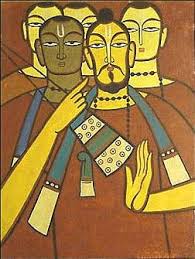
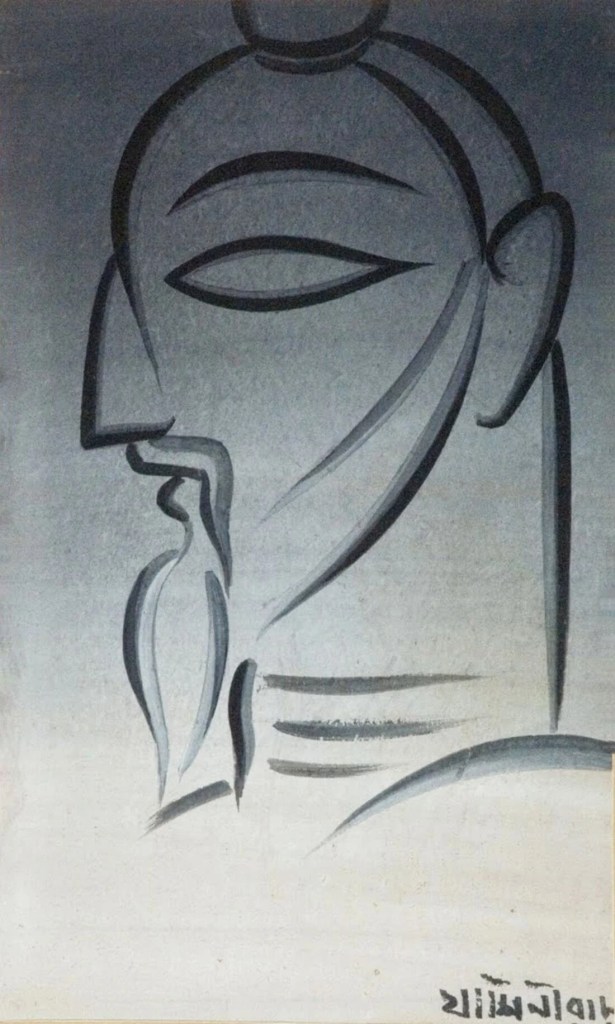
Religious movements such as Bhakti and Sufi have spanned time and territory and entered Bengal, in successive waves, creating a syncretic culture in which music and poetry are amalgamated. One of the forms in which these movements find creative expression is Baul Gaan —the singing of itinerant minstrels.

Universally recognised as foremost among the oralities of Bengal, the Baul Sampradai is a community for whom singing is synonymous with worship. The Baul expounds a philosophy of humanism which rejects religious orthodoxies and stresses human equality irrespective of caste, class, religion and gender. The Baul sets himself on a spiritual journey, lasting a lifetime, towards discovering his moner manush (man within the heart) thereby alienating the notion of seeking the Divine in external forms such as mosques, temples, images and sculptures. Since God is believed to reside within man, the human body is viewed as the site of the ultimate truth –that which encompasses the entire universe. This tenet of Baul philosophy is known as deha tatwabad—the belief that the soul being pure the body that houses it, together with all its functions, is pure and holy.

Concentrated mostly in Kushthia, Shilaidaha and Sajadpur in East Bengal (now Bangladesh) and Murshidabad and Birbhum in West Bengal, the Baul tradition, though drawing elements from Tantra, Shakta and Sahajiya[1], stems from two main sources — Muslim Sufi and Hindu Vaishnav. Hence the simultaneous presence of Hindu and Muslim bauls in the villages of Bengal and great composers from both streams—Lalon Fakir, Duddu Shah, Madan Baul, Gagan Harkara and Fakirchand. Rejecting religious codes such as Shariat and Shastras, caste differences, social conventions and taboos, which they see as barriers to a true union with God, they sing of harmony between man and man. “Temples and mosques obstruct my path,” the Baul sings, “and I can’t hear your voice when teachers and priests crowd around me.”

Refusing to conform to the conventions of religion and caste ridden Bengali society, Bauls (the word is sourced from the middle eastern bawal meaning mad or possessed) are wandering minstrels who sing and dance on their way to an inner vision. Essentially nomadic in nature walking, for them, is a way of life. “No baul should live under the same tree for more than three days” — the saying seems to stem from the Sufi doctrine of walking an endless path (manzil) in quest of the land where the Beloved (the Divine) might be glimpsed. Bauls live on alms which people give readily. In return the Baul sings strumming his ektara[2] with dancing movements. The songs are rich with symbolism, on the one hand, and full of ready wit and rustic humour on the other. The Baul rails against the hypocrisy of religion and caste and takes sharp digs at the clergy but totally without rancour.

Many of the composite forms found in an older culture of Bengal have become sadly obscured in the present scenario of identity politics. But the one that has not only survived but is gaining in recognition day by day, is the Baul tradition. This is, in no small measure, owing to the intervention and interest taken by Rabindranath Tagore. In his Religion of Man Rabindranath tells us that, being the son of the founder of the Adi Brahmo Samaj, he had followed a monotheistic ideal from childhood but, on gaining maturity, had sensed within himself a disconnect from the organised belief he had inherited. Gradually the feeling that he was using a mask to hide the fact that he had mentally severed his connection with the Brahmo Samaj began tormenting him. And while in this frame of mind, travelling through the family estates in rural Bengal, he heard a Baul sing. The singer was a postal runner by the name of Gagan Harkara and the song was “Ami kothai paabo tare/ amaar moner manush je re[3].”

“What struck me in this simple song,” Rabindranath goes on to say, “was a religious expression that was neither grossly concrete, full of crude details, nor metaphysical in its rarefied transcendentalism… Since then, I’ve often tried to meet these people and sought to understand them through their songs which are their only form of worship.” In his Preface to Haramoni[4], Rabindranath makes another reference to this song. Quoting some lines from the Upanishads—   Know him whom you need to know/ else suffer the pangs of death— he goes on to say, “What I heard from the mouth of a peasant in rustic language and a primary tune was the same. I heard, in his voice, the loss and bewilderment of a child separated from its mother. The Upanishads speak of the one who dwells deep within the heart antartama hridayatma[5]and the Baul sings of the moner manush. They seem to me to be one and the same and the thought fills me with wonder.”
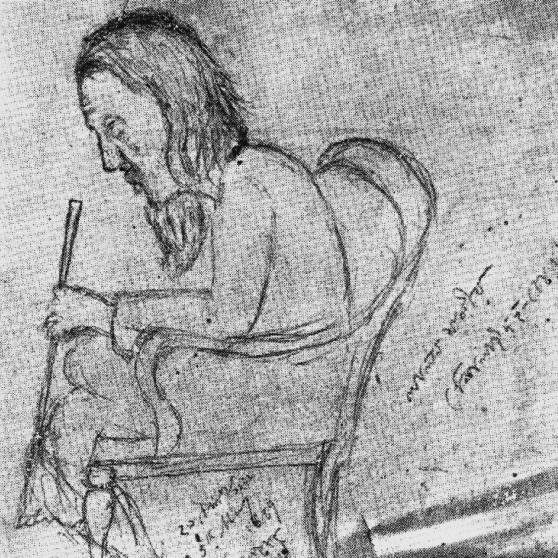
A Portrait of Lalon Fakir sketched by Jyotindranath Tagore(1849-1925)

Lalon Fakir’s commune was located in the village of Chheurhia which fell within Rabindranath’s father’s estates. Though there is no authentic record of a meeting between the two, it is a fact that the poet was the first to recognise Lalon’s merit which had the quality of a rough diamond. His inspiration was powerful and spontaneous but, lacking in clarity of expression, lay buried in obscurity till Rabindranath brought it out into the open. Publishing some of the songs in some of the major journals of the time, Rabindranath took them to the doors of the educated elite. Not only that. They gained in popularity from the fact that he, himself, often used Baul thought and melody in his own work. “In some songs,” he tells us in his Manush er Dharma[6], “the primary tunes got mixed up with other raags – raaginis which prove that the Baul idiom entered my sub conscious fairly early in life. The man of my heart, moner manush, is the true Devata[7]. To the extent that I’m honest and true to my knowledge, action and thought — to that extent will I find the man of my heart. When there is distortion within, I lose sight of him. Man’s tendency is to look two ways — within and without. When we seek him without — in wealth, fame and self- gratification — we lose him within.”

But it wasn’t only in his compositions that Rabindranath disseminated Baul ideology. It went deeper than that. The primitive simplicity and freedom of Baul thought and living charmed him so completely that he started imbibing them in his own lifestyle. He grew his hair long, kept a flowing beard and wore loose robes. He created Baul like characters in his plays and dance dramas and enacted the roles himself. And, as he grew older, a restlessness; an inability to stay in one place took hold of him. Leaving the ancestral mansion of Jorasanko he relocated to Santiniketan but even there he could not stay in the same house for more than two months. In the last two and half decades of his life, a tremendous wanderlust seized him. He travelled extensively both within the country and without, earning for himself the sobriquet of ‘roving ambassador for India’.

Perhaps, the most powerful testimony of the evolution of Rabindranath from a princely scion of the Tagores of Jorasanko to the man he finally became is found in Abanindranath’s portrait of his uncle. It depicts an old man with flowing white locks and beard, wearing a loose robe and holding an ektara high above his head. The limbs are fluid in an ecstatic dance movement. It is a significant fact that the painting is titled Robi Baul.
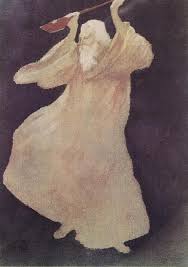
Robi Baul (1916): Painting by Abanindranath Tagore (1871-1951). From Public Domain

[1] Different schools of philosophy and religion. The Sahajiya is a philosophy that embrace nature and the natural way of life.

[2] String instrument

[3] Translates from Bengali to: “Where will I find Him — He who dwells within my heart”

[4] The Haramoni (Lost Jewels) is 13-volume collection of Baul songs compiled by Mansooruddin to which Tagore wrote the preface for the first volume published in 1931

[5] Translates to ‘innermost part of the heart and soul’

[6] Collection of Lectures by Tagore in Bengali, published in 1932

[7] Translates to “God’

Aruna Chakravarti has been the principal of a prestigious women’s college of Delhi University for ten years. She is also a well-known academic, creative writer and translator. Her novels, JorasankoDaughters of JorasankoThe Inheritors, Suralakshmi Villa and The Mendicant Prince have sold widely and received rave reviews. She has two collections of short stories and many translations, the latest being Rising from the Dust. She has also received awards such as the Vaitalik Award, Sahitya Akademi Award and Sarat Puraskar for her translations.

.

PLEASE NOTE: ARTICLES CAN ONLY BE REPRODUCED IN OTHER SITES WITH DUE ACKNOWLEDGEMENT TO BORDERLESS JOURNAL 

Click here to access the Borderless anthology, Monalisa No Longer Smiles

Click here to access Monalisa No Longer Smiles on Kindle Amazon International
Categories
Essay

Drinking the Forbidden Milk of Paradise…

By Meenakshi Malhotra

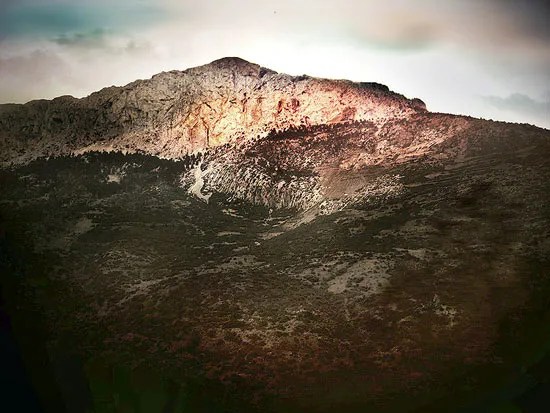
Mount Parnassus in Greece, where the muses were said to gather, was regarded as the home of poetry: From Public Domain

For the longest time, women were uncomfortable occupants of the house of poesy[1], particularly where there were existing canons of poetry established by the institutional gate-keepers and male custodians of literature. At best, they were viewed as Jane-come-latelies who sought to transgress the hitherto hallowed domains of high verse, interlopers to the hallowed heights of Parnassus who dared not “drink the milk of paradise”.

This ‘absence’ of women from the terrain of poetry is in spite of the fact that women have always written poetry, from ancient times to now. Sappho in the western tradition, was a Grecian poet from 5th-6th century BCE who was the pioneer of lyric poetry, a genre which apart from being set to music, also inaugurated the poetic ‘I’. In India, Buddhist nuns in the Mahayana and Theravadas who wrote poems known as the therigathas were early precursors of female poets. These early women poets engaged in the sometimes forbidden, sometimes lascivious charms of verse and versification. Down the ages, there were many others who joined them and kept the lamp of women’s versification lit. However, if women have always been versifiers, why has there been a  resistance and grudging admission for women to the poetic domain, which becomes a sort of “No (Wo)man’s land”? Why do women poets have only a token presence in traditional poetic anthologies?

Some reasons have been offered, not least among them being the preponderance of male poets who have often also been self-proclaimed and self-appointed guardians, legatees and arbiters of poetic tradition. Canonical poetic traditions, many claim, require a knowledge and understanding of Latin and Greek in the West while a knowledge of Sanskrit/Persian in the Asian context was deemed necessary. Thus women, who, for the most part, lacked formal education and had but small Latin and less Greek, could only hover around the margins and fringes of poetry. The situation with Sanskrit and Persian was similar and women remained mostly absent from or shadowy denizens of poetic terrains. Even if and when women were writing, they were doing so in colloquial registers and in the languages of the common people  and not in formal or decorative language, deemed essential for poetry, for the most part. Almost the first group of women writing poetry in India were Buddhist nuns who wrote in Pali, one of the many ancient languages in the ancient Indian subcontinent, which enshrined its own scholarly tradition. Sappho wrote in the Greek Aeolic dialect, which was difficult for Latin writers to translate.

Between 12th and 17th century, there was an advent  of devotional mystic poetry called “Bhakti” and “Sufi” poetry. While the poems were uttered/written in a devotional idiom, the poems and songs were often rebellious and iconoclastic, rejecting institutional religions and social norms. This poetry was rooted in personal and unmediated devotion and rejected formal languages and established societal norms. Some of this poetry was in an informal register, colloquial language and performative with a strong dramatic quality. Thus we have lines in Kannada from Akka Mahadevi (1130-1160) who rejects her earthly husband:

I love the handsome one: He has  no death decay nor form… no end no clan, no land.
Take these husbands who die, decay, and feed them to your kitchen fires.(Vachanas)

Women poets for the longest time had a crisis of identity, identification and non-belonging. They laboured under the anxiety of authorship where they felt the absence of precursors and fore-mothers and the lack of a poetic tradition to which they could belong. They were often made to feel as if they lacked genuine poetic talent or that they were transgressors against womanhood and femininity.

In Aurora Leigh (1855) by Elizabeth Barrett Browning, the eponymous title character, considers  the diverse fields of literature where women can exercise their talent and claim a space. The field of dramatic writing poses a challenge because the former demands that the woman writer be in the public eye in order to promote her plays. Further, to achieve or even aspire to the rank of Poet, Aurora must become capable of  “widening a large lap of life to hold the world-full woe”. Over the course of the long epic poem, she tries to reconcile her femininity with her artistic aspirations. In both cases, she is denied emotional fulfilment. She refuses to accept the role of an obedient wife, since it would mean foregoing the intellectual independence needed to develop as an artist, but then she must also refuse the love of a husband. In Book Five, she mentions three poets, none of whom she admires for their “popular applause”. Yet she admits that she envies them for the time they can devote to their chosen vocation and the adoring women that surround them and provide emotional support and fill their days with glory.

Another issue with women’s writing and poetry is the uncomfortable positioning of women in relation to patriarchal language or male centred language. If as Dale Spender  declares in “Man-made Language”, the masculine is asserted as the norm, where do we position women’s voices? While language is a universal medium of communication, man-made language is full of sexism and chauvinism and expresses reality from a predominantly masculine and patriarchal perspective. If language is a social system which women are persuaded or co-opted to use, how do they work within its confines to express their poetic aspirations? How do they stretch, bend, subvert language to express their own realities? Can we read techniques of irony, satire and other figurative and metaphoric strategies of defiance and subversion and an attempt to undermine from within?

Juliet Mitchell in her essay on ‘Femininity, Narrative and Psychoanalysis’ states that the woman writer/novelist must of necessity be a hysteric, straddling two opposed worlds. One world is that of male definitions and conceptions of femininity  and the other, a resistance and defiance of such conceptualising, accompanied by an attempt to undermine from within. Her defiance and resistance makes her character that of a hysteric, one who defies accepted notions and standards of femininity and is therefore considered transgressive. She troubles fixed gender categories, roles and definitions. She also disrupts and challenges the symbolic order of language, one which insists on rules of grammar and linguistic structures through the semiotic order which uses word play, repetitions and  childish rhymes, in order to express inner desires and drives. The symbolic order deals with the denotative aspects of language and the semiotic order with the affective aspect.

Women’s poetry often houses and accommodates the semiotic, seeming psychobabble that plays with and disturbs fixed notions of femininity and binary gender identities.

What are the popular themes that inform women’s poetry? Some themes are to with women’s search for authentic  self-hood and identity, their search for roots and a space of their own. As we see in Aurora Leigh, much of women’s poetry is self-conscious and self-reflexive, about the act of writing itself, the “awful daring of a moment’s surrender which an age of prudence could never retract.”(T.S.Eliot

Many contemporary women poets, across continents, have evinced a substantial  interest in exploring their poetic self  through their poems. On the one hand is the confessional poetry of Sylvia Plath and Anne Sexton, on the other the brief gnomic utterances of Emily Dickinson. Before the advent of the twentieth century, one hears of Barrett Browning, Emily Dickinson and Christina Rossetti, among many others. Names like Aphra Behn and Anne Bradstreet have been included in many syllabi, often as a token inclusion in an otherwise male centric course.

Women poets have talked about the horrors of war including rape, pillage and destruction. In their critique of war and violence, we find the forging of transnational solidarities, whether it is women’s poetry from Sri Lanka or Birangona (War heroines). 

In India the many names that come to mind are that of  Kamala Das, Eunice D’Souza, Meena Alexander, Sujata Bhatt and Sunuti Namjoshi. Women poets have employed effective means to explore the entire gamut of experience.The private  and the public domain, their process of  self-analysis; the process of poetic creativity and a probe into  poetic identities are all significant fields of exploration. For these women writers, analysing the creative process becomes much more than just a poetic theme. As they unravel the mystery of their poetic psyche in their writings, it becomes an epiphanic journey for the poets and their readers.

[1] Archaic word for poetry

Dr Meenakshi Malhotra is an Associate Professor of English Literature at Hansraj College, University of Delhi, and has been involved in teaching and curriculum development in several universities. She has edited two books on Women and Lifewriting, Representing the Self and Claiming the I, in addition  to numerous published articles on gender, literature and feminist theory.  Her most recent publication is The Gendered Body: Negotiation, Resistance, Struggle.

.

PLEASE NOTE: ARTICLES CAN ONLY BE REPRODUCED IN OTHER SITES WITH DUE ACKNOWLEDGEMENT TO BORDERLESS JOURNAL

Click here to access the Borderless anthology, Monalisa No Longer Smiles

Click here to access Monalisa No Longer Smiles on Amazon International

Categories
Review

The Reclamation of Wilderness

Review by Basudhara Roy

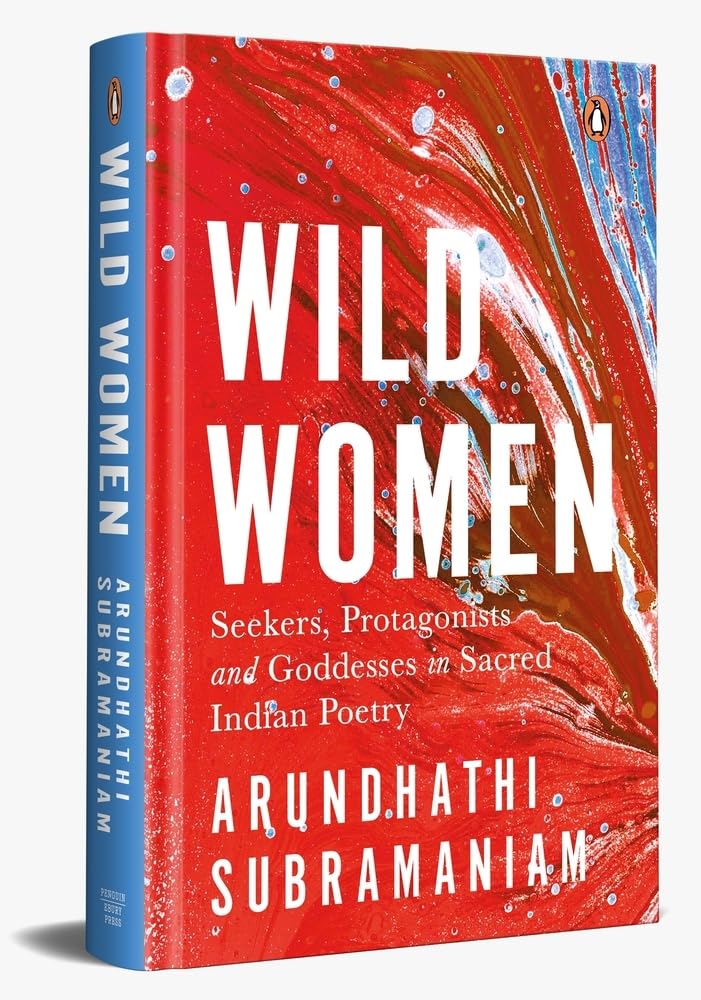
Title: Wild Women: Seekers, Protagonists and Goddesses in Sacred Indian Poetry

Editor: Arundhathi Subramaniam

Publisher: Penguin Random House

“The path of the heart is at times discredited as a soft option. It is seen as a path of neurotic excess and greasy sentimentality. Yet, what we hear in these songs isn’t prissy obedience but open-throated longing. […] Such longing is not born of an infantile need for a divine paterfamilias. Nor is it the resort of those who lack the intellect to craft their own destinies. This is the way of the razor’s edge. The path of those who have nothing left to protect or prove. This is one of the most courageous journeys back home,” writes Arundhathi Subramaniam in some of the most powerful lines of a very evocative Introduction to this book.

Wild Women: Seekers, Protagonists and Goddesses in Sacred Indian Poetry is a comprehensive anthology of sacred poems that brings together three of Subramaniam’s most cherished interests–spirituality, poetry, and women’s creative lives. Seen within the tradition of Arundhathi’s own consistent and remarkable oeuvre as woman, poet and spiritual traveller, this anthology containing poems by women seekers as well as poems by men and women dedicated to women protagonists and goddesses, is a deep historical and existential search for legacy, for connection, for the otherness of selfhood and the self-ness of the other. The cover of the book, richly symbolic as it is, is also highly attractive, and one that readers will not forget in a hurry. Here is a birth, both cosmic and cataclysmic, a falling and a rebounding, calm and turmoil.

As an anthology of poems, Wild Woman attempts an undertaking not envisaged before – the bringing together of the voices of women within the spiritual fold from across the length and breadth of the country’s geography and history. Here are women from varied historical ages, diverse places, languages, social classes, traditions, and religious cults; women who are both well-known and relatively anonymous; women who choose to live within the family as well as those who seek to renounce it altogether; women who speak in their own voices as well as those who are spoken for by male poets, lovers and devotees; women who stand between history, myth, and divinity; in short, women who have been beckoned by and have responded, in various ways, to the persistent call of the wilderness within their wide, vibrant souls.

Given the intensity of its subject and intention, the book is aptly titled. ‘Wild women’, apart from being alliterative, marks distinct metaphorical connections with the cultural terrain of women’s lives. As the poems in this book powerfully assert, ‘wilderness’ is a location these women existentially inhabit. It is a space that is beyond the governance and influence of society, and though women are native to it, this is where they are forever exiled from. To return to the self is to reclaim this wilderness within, to dismiss societal constructs and make an institution out of faith and intuition. This wilderness, as Subramaniam insists, “is not a cosy hearth. It is a place of peril, a smithy of surprises.”

It is also a space that has the potential to envision a new ontological, epistemological, and social order. Every voice in this anthology is, thus, disruptive in its envisioning of a form of existence that militates against the one offered by contemporary society. In ‘Get Ready to Live like a Pauper’, Gangasati [1]whose songs are an important part of the oral tradition of poetry in Gujarati even today, says:

The world of the divine has no place
For caste, gender or race
Shed this phantom chain,
Be cool and take it easy, man.

Similarly, Amuge Rayamma of the twelfth century CE, says:

If you know the self
why have truck with those who gossip?
If you can move in ways unimagined,
why depend on women?

In every poem, the route taken into this wilderness is that of the spiritual, revealing a desire to merge the self with the essential light of the universe—the formless Divine or the God, loved deeply in some human form.  Here is a total rejection of every established commandment, and a faithful obedience only to the experience of the self – the physical and the spiritual. The Lord is conceived as responding to every form of desire and arrives to the woman seeker in plural shapes of parent, lover, mentor or guide. To Kanhopatra of the fifteenth century CE, the Lord appears as “Mother Krishna” while to Vidya who wrote in Sanskrit sometime between the seventh and ninth century CE, he comes as a lover:

Why expose a lone woman
to such pageant
o season of rain
the torment
the sweet bitter need to be
touched

The poems in this anthology evince a strong dissatisfaction with prescribed moulds of identity and an urgency to experience life and thought first-hand. The constant pull between society and the individual, dogma and will, subjection and agency, and incarceration and liberation constitute the essential conflict in these poems, only to be resolved by the fierce choices of the spirit. Dissatisfaction with caste, gender, family, materialism and injustice lead the poets in this book to experiment with a language that legitimises the use of women’s experiences as yardstick and metaphor for the exploration and exposition of new truths. Keeping the feminine body of woman and nature at the centre of experience and discourse, the syntax of these poems is framed by an irresistible desire to overwhelm the old with the new. In every poem, thus, language becomes a sharp and dextrous tool, both argumentative and aesthetic, to establish new knowledges and new points of view. In ‘A Manifesto for New Poetry’, Muddupalani (eighteenth century CE) writes:

Can your poems stand in the field, girl,
alongside all the great poems of all the great
poets? Absolutely.
Doesn’t the bee gorged on honey
from the great lotus still savour
the humble flower’s nectar?

“The journey of a book, not unlike the journey of the heart, has its own logic—precise but not always schematic,” writes Subramaniam. Operating on its own logic, this book vitally performs for our times four extraordinary tasks—historical, activist, poetic, and feminist. Historically, it liberates women from stereotypes of oppression within patriarchy and domesticity, and by reinstating their positions as thinkers, philosophers, agents, leaders, and role-players within active religious and community life, it lays down empowered annals of womanhood for us to contemplate on. In terms of literary activism, such an extensive attempt at documenting and compiling voices of and for women within the spiritual domain, is largely unprecedented. “The essential impetus behind this project was to invoke the names of women. To turn cameos into protagonists. To invite backstage workers into the spotlight,” remarks Subramaniam. By highlighting women’s names and contributions to Indian spiritual traditions, this book will not only protect these names from oblivion and erasure but also encourage further explorations and deliberations in this field.

“A poem can offer us respite from too much meaning,” states Subramaniam. As poetry, this volume is a distilled collection of some of the finest spiritual doubts, agonies, and ecstasies of the human self in its journey towards the divine. Additionally, by bringing poems in translation from a wide corpus of vernacular languages into English, this anthology opens up Indian English poetry to the most intimate linguistic and creative recesses of the Indian mind. Finally, as a feminist work, this book highlights an ontology of the wild which becomes here, a praxis rather than an anomaly, and helps to establish a shared bond of courageous and self-conscious womanhood. Through each of the three sections of the book where women appear as seekers, protagonists and goddesses, Wild Women steadily performs an ecriture feminine, and sculpts a spiritual biography of Indian womanhood.

There is an elemental power that radiates from Subramaniam’s language, the power of words that have been painstakingly lived through before utterance. Subramaniam is, as much, a disciple of language as she is of the spirit. “This is poetry as power—the power of conscious utterance and the raging power of all that must be left unsaid,” she remarks of the poems in this book. Her own words evince that power to create and to procreate an understanding of womanhood that is steadily expanding to include new experiences and worldviews. She writes, “Since these poets lived lives profoundly wedded to mystery, that mystery is an integral part of this project.” Constantly aware of this mystery, Wild Women is a passionate and compelling thesis for reclaiming women’s essential wilderness and the place of wild women within history, spirituality and poetry.

[1] A medieval saint poet of the Bhakti tradition

Basudhara Roy teaches English at Karim City College affiliated to Kolhan University, Chaibasa. Author of three collections of poems, her latest works have been featured in EPW, The Pine Cone Review, Live Wire, Lucy Writers Platform, Setu and The Aleph Review among others. 

.

PLEASE NOTE: ARTICLES CAN ONLY BE REPRODUCED IN OTHER SITES WITH DUE ACKNOWLEDGEMENT TO BORDERLESS JOURNAL

Click here to access the Borderless anthology, Monalisa No Longer Smiles

Click here to access Monalisa No Longer Smiles on Kindle Amazon International