Categories
Bhaskar's Corner

Odisha after 1947

By Bhaskar Parichha

The narrative of Odisha post-1947 is one of change, unity, and strength, set against the backdrop of India’s fresh independence. Although Odisha was established as a distinct province from the Bengal Presidency in 1936, primarily based on linguistic and cultural factors, its evolution into a modern political and administrative entity truly commenced with independence.

On the Cusp of Independence

The foremost and most urgent challenge was the amalgamation of 26 princely states, collectively referred to as the Garjat states, each governed by its own ruler, administrative system, and local customs. These states were scattered throughout the hilly and forested regions of Odisha, and their unification required not just political acumen but also cultural awareness, negotiation skills, and strategic insight.

The responsibility of bringing Odisha together largely rested on Harekrushna Mahatab, the state’s first Premier, who collaborated closely with Sardar Vallabhbhai Patel and V.P. Menon from the central government. The discussions commenced in 1946–47, prior to India’s official independence, and extended into the early years following independence.

Several rulers quickly consented to join, swayed by enticing offers of financial rewards, ceremonial honors, and guarantees that their roles would be honored in a democratic Odisha. In contrast, some were hesitant, worried about the potential decline of their traditional power and local sway.

Mahatab skillfully blended diplomacy, patience, and strategic advantage, methodically uniting all 26 states under Odisha’s governance. This consolidation not only enhanced administrative efficiency but also set the stage for consistent laws, tax systems, and development initiatives throughout the region.

Democracy Finds Its Feet

In the political landscape following independence, Odisha experienced the formation of democratic institutions and practices. The Indian National Congress played a pivotal role in the early political scene, capitalising on its organisational strength and the heritage of the independence struggle.

Elections, local governance bodies, and legislative assemblies were created, providing citizens with a voice in governance and facilitating a gradual shift from princely rule and colonial frameworks to democratic self-governance.

The strengthening of political authority also enabled the formalisation of administrative practices, the modernisation of the bureaucracy, and improved coordination with the central government, which aided in developmental planning for both urban and rural regions.

Farmers First

Economically, Odisha grappled with the twin issues of historical underdevelopment and susceptibility to natural disasters. Agriculture, which employed the majority of the populace, relied heavily on monsoon rains, while traditional tools and methods hindered productivity. After gaining independence, governments focused on land reforms, including tenancy regulations and the redistribution of surplus land to small farmers, with the goal of reducing inequalities and empowering the rural poor.

Rise of Industrial Odisha

The enhancement of irrigation systems, canals, embankments, and reservoirs, especially along the Mahanadi, Brahmani, and Baitarani rivers, aimed to stabilise agricultural production and lessen the risks associated with droughts and floods. These initiatives established a foundation for sustainable rural development while ensuring food security in a state that has historically faced famine.

Industrialisation emerged as a crucial element of Odisha’s strategy following independence. The state’s rich mineral resources—such as coal, iron ore, bauxite, and chromite—served as the foundation for establishing heavy industries. Industrial hubs like Rourkela, which hosts India’s inaugural integrated steel plant, were developed with assistance from the central government and international partnerships, leading to job creation, urban expansion, and economic diversification.

The establishment of the Paradip port during the 1960s and 1970s enhanced the transportation of raw materials and finished products, connecting Odisha to both national and global markets. These industrial and infrastructural developments were part of a concerted effort to shift Odisha from a predominantly agricultural economy to one that is more varied and robust.

Furthermore, education and social reform played a vital role in Odisha’s growth after independence. Literacy initiatives broadened access to primary and secondary education, while improvements in teacher training and school construction elevated educational quality.

Tribal communities and marginalised groups were given focused support, including scholarships, vocational training, and legal protections aimed at helping them integrate into the broader economic and political landscape. Health infrastructure also saw significant growth, with the establishment of hospitals, primary health centers, vaccination campaigns, and maternal care initiatives that gradually enhanced life expectancy and lowered infant mortality rates, especially in remote and tribal regions.

Culture in Full Color
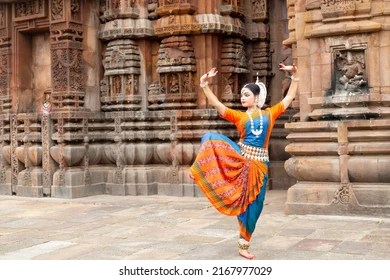
Oddisi dance at a temple

Cultural revival and the building of identity were closely linked to these economic and social changes. Odisha took active steps to promote Odissi dance, music, literature, and handicrafts, which not only bolstered regional pride but also created economic opportunities through tourism and the livelihoods of artisans. The state committed to preserving and promoting traditional arts like pattachitra painting, silver filigree, appliqué work, and handloom weaving, often facilitated by cooperative societies and government support.
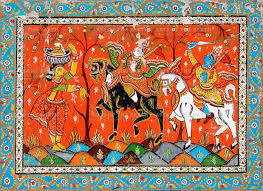

Temple towns such as Puri and Konark have maintained their significance in spirituality and culture, with events like the Rath Yatra and the Konark Dance Festival serving as key highlights of both religious fervor and cultural tourism. This fusion of age-old traditions with contemporary elements has enabled Odisha to carve out a distinctive identity while also addressing the developmental needs of a modern state.

The political landscape in Odisha after independence has transformed over the years, influenced by a mix of national and local factors. Initially, the Congress party held sway, but the rise of tribal movements, regional activism, and calls for increased administrative autonomy posed challenges to central governance and enriched the discourse on democracy.

Local leaders from tribal and marginalised communities have stepped forward, championing the cause for representation and the fair distribution of resources to overlooked areas. As a result, Odisha has cultivated a diverse political environment, featuring a variety of parties, coalitions, and grassroots initiatives that mirror the state’s intricate social and geographical tapestry.

Nature’s Wrath

Odisha’s natural environment has consistently challenged the resilience of its people and governance. The state faces threats from cyclones, floods, and droughts, which have repeatedly resulted in catastrophic losses of life, property, and agricultural productivity. Significant cyclones in 1971, 1999, 2013, and 2020 caused tremendous devastation, underscoring the susceptibility of coastal and rural populations.

Each disaster led to improvements in early warning systems, disaster readiness, and coordinated relief efforts, gradually turning Odisha into a benchmark for disaster management in India. The involvement of communities, enhanced infrastructure, and strategic planning enabled the state to respond more adeptly to natural disasters over the years.

Mining Marvels

In the late 20th and early 21st centuries, economic development centered on industrial growth, mining, and energy generation. Odisha emerged as a center for steel, aluminum, and power industries, drawing both domestic and international investments. Urban areas like Bhubaneswar, Cuttack, Rourkela, and Sambalpur grew swiftly, transforming the demographic and social fabric of the region.

Industrialisation ushered in a wave of prosperity and job opportunities, yet it also introduced significant challenges, such as environmental degradation, community displacement, and the pressing need to balance economic growth with sustainable development. Efforts to address these issues included policies focused on corporate social responsibility, environmental regulations, and rehabilitation initiatives, although the struggle to harmonize development with conservation persisted as a continual challenge.

Connectivity and Integration

The evolution of infrastructure has been pivotal to Odisha’s transformation since independence. The expansion of roads, railways, ports, and communication networks has linked rural and urban areas, facilitating the flow of goods, services, and people. Notable projects like the Hirakud Dam on the Mahanadi not only offered irrigation and flood management but also produced hydroelectric power, playing a crucial role in the region’s industrial growth.

Ports like Paradip and Dhamra have enhanced trade and maritime links, while the development of rail and road networks has connected remote areas with urban centers and industrial zones. These advancements have contributed to the geographical and economic unification of the state, diminishing isolation and encouraging greater involvement in the national economy.

Social and cultural transformations progressed in tandem with economic growth. Literacy rates saw a consistent rise, particularly focusing on the education of girls. Women became more involved in education, the workforce, and politics, mirroring both national policy efforts and evolving social standards.

Tribal and rural populations maintained aspects of their traditional lifestyles while also embracing modern education, healthcare, and job opportunities. Folklore, languages, and ritual practices were safeguarded through documentation, festivals, and community-driven projects, ensuring that the process of modernisation did not obliterate local identities.

Multi-faceted Society

By the dawn of the 21st century, Odisha had transformed into a complex, multi-faceted society, striking a balance between tradition and modernity, rural and urban progress, and the management of natural resources alongside industrial expansion. Politically, the state had transitioned from a period of Congress dominance to a more pluralistic and competitive democratic framework, with regional parties and coalitions influencing policy and governance.

Economically, the state’s diverse foundation in agriculture, industry, mining, and trade enabled it to endure external challenges while fostering ongoing development. Socially and culturally, Odisha preserved a vibrant heritage, merging classical arts, festivals, and tribal customs with the requirements of a contemporary, globalised world.

The era following 1947 in Odisha embodies a tale of unity, strength, and change. It spans the intricate discussions with princely states leading to the formation of democratic frameworks, agricultural advancements, industrial growth, recovery from disasters, and a resurgence of culture. Odisha’s evolution mirrors the larger narrative of India’s shift from colonial domination to sovereign nationhood.

The state’s skill in managing natural disasters, economic hurdles, and societal shifts while maintaining its cultural essence showcases an extraordinary ability to adapt, positioning Odisha as a fascinating case of regional evolution in a swiftly modernising country.

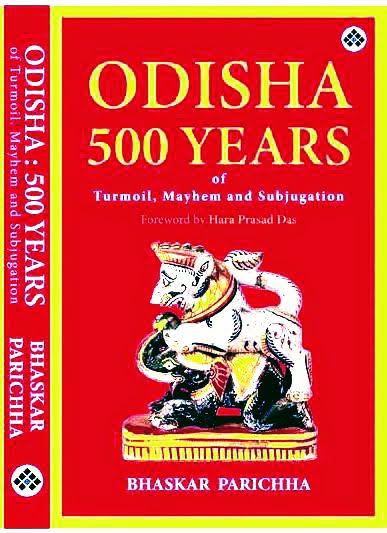
(Excerpted from the book Odisha – 500 Years of Turmoil, Mayhem and Subjugation by Bhaskar Parichha. Published by Pen In Books/Bhubaneswar)
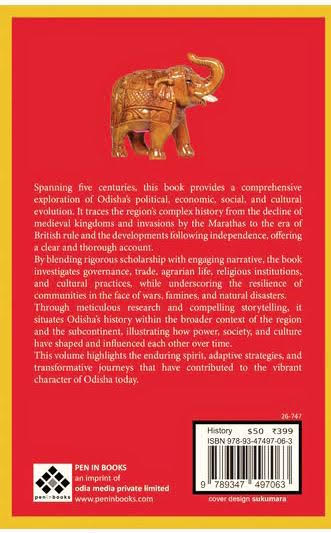
.

Bhaskar Parichha is a journalist and author of Cyclones in Odisha: Landfall, Wreckage and ResilienceUnbiasedNo Strings Attached: Writings on Odisha and Biju Patnaik – A Political Biography. He lives in Bhubaneswar and writes bilingually. Besides writing for newspapers, he also reviews books on various media platforms.

PLEASE NOTE: ARTICLES CAN ONLY BE REPRODUCED IN OTHER SITES WITH DUE ACKNOWLEDGEMENT TO BORDERLESS JOURNAL

Click here to access the Borderless anthology, Monalisa No Longer Smiles

Click here to access Monalisa No Longer Smiles on Amazon International
Categories
Celebration

Welcome to Nazrul’s World

I’m a cyclone, a whirlwind,
I pommel all that lie in my path,
I am a dance-driven swing,
I dance to my own beat, I’m a free spirit, high on life...

-- Kazi Nazrul Islam, Rebel or Bidrohi, translated by Prof Fakrul Alam.
Young Nazrul

Nazrul’s writing has the power of whirlwind or a tornado — it can break with its force and make with love. His songs are a law unto themselves and called Nazrul geeti. And all this remains popular and still relevant more than a century after he was born.

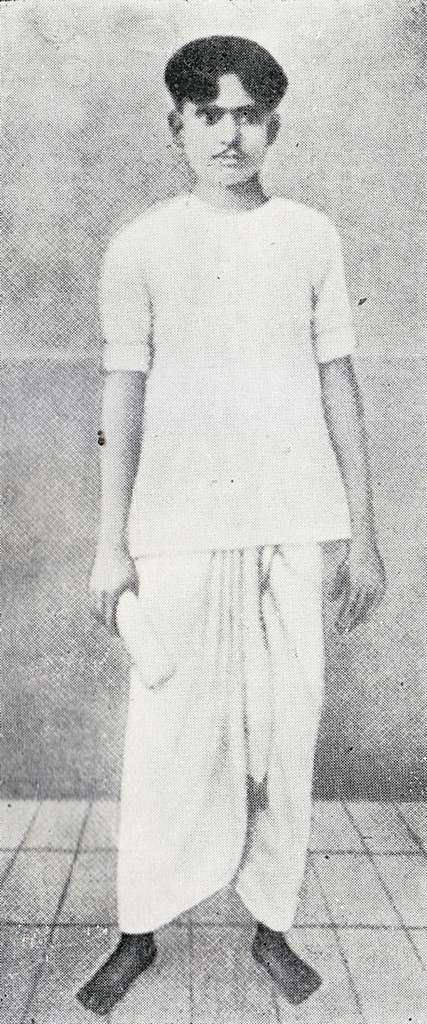
Kazi Nazrul Islam (1899-1976) was born in Burdwan, a part of the Bengal Presidency that stretched from Bengal to Singapore during colonial times. Nazrul lived through the colonial rule, the independence of the subcontinent, the Partition and the creation of Bangladesh. He was multifaceted — he had tried his hand at soldiering and then settled for being a poet, writer, journalist, and musician. He is now regarded as the national poet of Bangladesh, the Bidrohi Kobi or the rebel poet. 

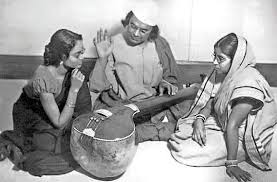
Nazrul teaching Nazrul Geeti

Here, we have tried to gather flavours of his writing and life. We start with the translation of his lyrics (a Nazrul geeti) on butterflies, translated by Fakrul Alam performed by the legendary Feroza Begum, move on to his response to Tagore’s poetry — they had a vibrant relationship as Somdatta Mandal has reflected in her discussion on Radha Chakravarty’s recent translation of his Selected Essays. It’s followed by more translations of three of his poems by Niaz Zaman, who has also written about Nazrul’s support for women. A searing essay on religious divides and socio economic gaps, translated by Sohana Manzoor, also brings to focus the plight of a beggar woman torn by poverty. A short story , showcasing him as a fiction writer, is borne of his experiences as a soldier. Last but not the least, we have a fiery speech by Nazrul from Chakravarty’s translation.

On Nazrul’s 125th birth anniversary, we welcome you to muse on him and his world…

Poetry

Projapoti (Butterfly) by Nazrul has been translated by Fakrul Alam from Bengali. Click here to read.

Nazrul’s rejoinder to Tagore’s 1400 Saal has been translated by Professor Fakrul Alam. Click here to read.

Three poems by Nazrul have been translated by Niaz Zaman. Click here to read.

Prose

 Deposition of a Political Prisoner: A Speech by Nazrul

A fiery speech by Nazrul from the Selected Essays: Kazi Nazrul Islam, translated by Radha Chakravarty from Bengali. Click here to read.

Temples and Mosques

Kazi Nazrul Islam’s fiery essay translated by Sohana Manzoor. Click here to read.

Hena

A story that grew out of Nazrul’s experiences as a soldier translated by Sohana Manzoor. Click here to read. 

Discussions

Nazrul and His World View

Somdatta Mandal writes about Radha Chakravarty’s translation of Selected Essays: Kazi Nazrul Islam and in the process explores his life and times. Click here to read.

When the Feminist and the Revolutionary Met

Niaz Zaman writes of the feminist leanings of Nazrul’s poetry in context of Madam Roquiah, a contemporary of the poet. Click here to read.

Categories
Essay

Epaar Bangla, Opaar Bangla:  Bengals of the Mind

Asad Latif

By Asad Latif 

If nations are imagined (but not therefore imaginary) communities, Bengal is a nation. The reality of nationhood rests on the quality of the imagination that goes into it. 

Calcutta, where I was born in 1957, provided me with a cartographic point of entry into the imagined geography of Bengal. My Bengal began with West Bengal, within which lay a rough face-to-face society rich in visual and oral provenance. The everyday homeliness of rural thatched mud huts were reflected in the high gabled roofs which contoured the spiritual skyline of Dakshineswar. Minstrel bauls walked through the soul, half-starved on their way to seeking salvation for everyone. The very soil of Bengal broke out in bhatiali song. The chau dancers of Purulia dramatised Hindu epics in a language emotively accessible to all. The energy of santhali dances invoked the performative agency of a tribal culture that refused to let pre-industrial and pre-state time lapse into contemporary irrelevance.   

Agricultural West Bengal encompassed the legacy of a land whose grasp was much longer and larger than the social circumference of middle-class life in Calcutta. In my own ancestral village in Hooghly district, a short train journey from Howrah station, boys my age could climb trees and run barefoot and naked across scorching soil, outpacing the shy urbanite in me. Young women, taught to avoid the roving gaze of male strangers, lowered their eyes to the ground in modest contemplation when men passed by. Farmers could bend unbearingly long to till the land, standing upright for only a few minutes before they resumed their toil. No one spoke English. No one needed to. No one needed me. I needed them.

To the west of West Bengal lay the rest of India. The “rest of the Indians” were decipherable. In Bihar and Odisha, once a part of Bengal Presidency, rump Bengal lived on in the linguistic and cultural traces of the colonial past. Farther west, West Bengal vanished into an eclectic Indian nationalism. I must say, though, that on a long train journey from Calcutta to Cochin in Kerala as a teenager, I thought (rightly or wrongly) that the particular shade of green found in the vegetation of West Bengal was lost till it was found in Kerala again. The renewed connection between Calcutta and Cochin made it possible for me to extend my Bengali-ness vicariously all the way to Kerala, making me quite a pan-Indian Bengali, I suppose. The connective nationalism of Indian Railways (like that of the State Bank of India) plays no small part in protecting the unitary reality of contemporary India. 

Farther to the west of the rest of India lay the lands of Islam. They began with forbidden territory: Pakistan. Pakistan embodied the Partition of India, the departure of space from Indian time. For me, West Pakistan was unknown terrain: No one I loved or hated lived there. But if, indeed, there was an “Islamic world”, then I certainly inhabited it subliminally. I was (and am) a Muslim. I belonged to the global efflorescence of a great faith that had spread into my birth and self-recognition. West Pakistan had nothing to do with it. My mother was a practising Muslim (after a fashion), my father was a practising atheist. As a five-day-old, I had been “adopted” by a childless Hindu couple who lived in the same block of flats as my parents. Nilima Kurup (née Bose) took me to temples, and Parameshwara Raghava Kurup, well-versed in the Vedas, stayed away from the Puranas. But no one made me anything but a Bengali indebted forever to the Islamic religiosity of South Asia, Central Asia, the Middle East, and beyond. Certainly, I belonged to the lands of Islam. There was nothing vicarious about this. It is just that West Pakistan had nothing to do with my identity. I respected its existence even as it stayed indifferent to mine (since it had no idea that I existed). That was all.   

East Pakistan was different. I had relatives there on both my mother’s side and my father’s. I remember a childhood visit to my paternal uncle’s home in Narayanganj. It was raining. Unlike West Bengal (where rain falls on people), the people of East Bengal fall on the rain. A female cousin, all of six years old, made an excuse of going to the bathroom: instead, she took a bath in a roomful of rain as wide as the skies outside, within sight of the elders, dancing with the abandon of the water that flowed through her tresses, kissed her eyes, drenched her frock, and caused an uproar that led her to be dragged back to lunch, laughing unrepentantly. Meanwhile, her elder brother wanted to go to the “bathroom” as well. He was held back by his hair and resisted violently, raining cries of recrimination on everyone. Watching my wild bangal (native East Bengali) cousins in righteous ghoti (native West Bengali) awe, I decided that East Pakistan was too Bengali for me. 

But it was not to be. 

Bangladesh

Baker-ul Haque came to live next door to our flat in Nasiruddin Road, Park Circus, Calcutta, in 1971. A year younger, he caught up with me in historical time with vivid stories of how he and his family had escaped Bogra, trudging through forests as the Pakistani air force strafed fleeing civilians, people fell dead on the left and the right, his mother held on his elder sister’s hand, he grasped his younger siblings firmly, his father led on, and all of them made their way — to me. I doubted specific details of his heroic journey, but not his visceral courage. I witnessed it when my pet dog chased him to the fourth-storey terrace, he climbed on to the parapet and kept walking on it calmly, I held the dog back, and I implored Baker to climb down. He smiled at me insouciantly. It was only when he saw tears in my eyes that he relented. Once he was safely down, I wanted to give him a hearty kick, but settled for a rib-shattering hug instead. Epaar Bangla[1]wins when Opaar Bangla[2]is safe. 

Baker and his family lived next door, in the third-storey flat which the writer Syed Mujtaba Ali had occupied briefly earlier. Given his literary reputation, I stayed away from him, but he was rather fond of me, and I invaded his rooms whenever I found the door ajar. The family which stayed with my own family was that of Lutfar Rahman, an Awami League Member of the National Assembly from Khulna. Chachaji[3] smiled a lot but was fierce, chachiamma[4] was benign to a fault, their elder son Ornob took after his mother and their younger son Tulu (his pet-name) took after his father. Both brothers, who were much younger than I was, became mini companions on laughing excursions to the same terrace on which Baker had reduced me to tears.         

The liberation of Bangladesh on December 16, 1971 (which happily and sadly soon saw Baker’s and Lutfar Chacha’s families returning to Bogra and Khulna) was my rebirth as a Bengali. I had been born into the bifurcated mythos of Bengal, which was first partitioned administratively in 1905 in an act rescinded in 1911, and then partitioned along national lines in 1947 to produce Pakistan. The partition of that Pakistan in 1971 produced an independent Bengali nation called Bangladesh. It is only in the years to come that I would understand the reasons for the ontological security of Bangladesh: it is a sated or satisfied nation because its borders guarantee the two conditions of its existence — that it be Bengali and Muslim in co-determinate measure — with provision being made for the rights of non-Bengalis and non-Muslims within its borders. Indeed, so successful has Bangladeshi nationalism been that its majority population finds it unnecessary to seek links with West Bengal to achieve cultural completion. That attitude is reciprocated in West Bengal, whose incorporation into the Indian ethos makes Bangladesh its closest neighbour, but a neighbour nevertheless. 

Yet, to look across the border within Bengal, to see its integrity, is to un-see its divisions. Bengal is named ground: To walk on it, even vicariously, is to recover the insights of Walter Benjamin [5]on his visit to Moscow. Benjamin’s delineation of Russia as named ground (in his Reflections) leads him to proclaim that “you can only see if you have already decided… Only he who, by decision, has made his dialectical peace with the world can grasp the concrete. But someone who wishes to decide ‘on the basis of facts’ will find no basis in the facts”. The facts are always too many. The facts are contested. The facts might not even be facts. But Bengal is decidedly one — not because of its successes but because of its vulnerabilities. 

The Refugee Within

The fragile figure of the refugee straddles the two Bengals. Achintya Kumar Sengupta’s[6] poem, Udvastu[7], rendered unforgettably in the recitation by Kazi Sabyasachi[8], is a part of an aural tradition without which it is impossible to re-imagine the Bengal that existed once. What makes the refugee central to the idea of Bengal as a state of mind is that she embodies the land’s biological unity and integrity in the very act of losing her place in its stolen geography. Bearing the scars of uprooting, dispossession and exile, the refugee socialises the pain which lasts long after the immediate displacement of enforced migration has passed. To seek refuge is to pass from basha to bariBasha is a temporary place of residence, no matter how long that temporarity lasts. Bari is an inherited abode which is both ancestrally personal and nationally interchangeable with desh, the native land. The udvastu or vastuhara[9] from East Bengal seeking refuge in West Bengal since 1947 had to contend with what Nilanjana Chatterjee calls “epistemological denial in India”, wherein those who had crossed the border were treated as an economic burden. 

The epilogue to the story of the refugees of 1947 was written in 1971, when it was the turn of Bengali Muslims from East Pakistan to join Bengali Hindus in seeking refuge in West Bengal. While the vast majority of refugees spent months in harrowing conditions, professional and other middle-class families were often hosted by middle-class families in West Bengal who could afford to do so. It was not unknown for the family of a Bengali Hindu, who himself had come from East Bengal in 1947, to share its basha with a Bengali Muslim family. The Bengali Muslim knew that he would return home if Bangladesh won the war. His Hindu host kept dreaming of a bari relegated forever to the nostalgic lay of a lost land. 

My family was more lucky. Our first trip to Bangladesh was to Lutfar Chacha‘s home in Khulna across the land crossing in Benapole. Of course, I enjoyed the royal spreads at breakfast, lunch, tea and dinner. But what filled my eyes was the sight of Ornob, Tulu and their little sister (by then), strutting about their home as if it was theirs. It was theirs. Bangladesh restored in me my extended sense of myself, my identity as a resident of Epaar Bangla who sought completion in the autonomy of Opaar Bangla. Soon after, I visited Baker in Bogra. At one dinner, his mother sat down just the two of us together. Naturally, I got the larger piece of fish in a bowl. I cooked up an excuse for Baker to go and look for something. I exchanged the bowls. He returned to eat. When we began with the vegetables, he exchanged the bowls. That insouciant smile again. I hate him. He has outwitted me always inspite of being a year younger.     

The refugee is the first citizen of imagined Bengal. She will also be the last. That is, without Bangladesh and West Bengal being the ultimate refuge of the transitional Bengali self, there will be no Bengal.  

There will be no me.

Birth matters. No one can be born in two places.

In his essay, “Englands of the Mind”, Seamus Heaney[10] registers the birthing role of place in the “interlacing and trellising of natural life and mythical life”; what a land does is to afford a man “nurture that he receives by living among his own”. Bengal forms a similar geography of the mind. It received me among my own. Life was material, which is to say that it veered from the banal to the brutal, but it was redeemed by the furtive companionship of the imagination.  The trellising which Heaney notes does not have to be idyllic. It rarely is. Australian writer Dorothea Mackellar’s[11] poem, “My Country“, written while she was homesick in Britain, captures the native lore of a land that her ancestors supposedly discovered for her. She writes: “I love a sunburnt country,/ A land of sweeping plains,/ Of ragged mountain ranges,/Of drought and flooding rains.” Australia is nothing without its enervating drought and its equally uncaring rain. Mackellar dismisses the pastoral epiphanies of a promised expatriate land, particularly “When sick at heart, around us/ We see the cattle die”. Natural disasters provoke her to reclaim art from nature. She redeems a wayward landscape by offering it refuge in her lines.

I am no Heaney or Mackellar. Bengal has no need to find refuge in my words. May these English words of mine find refuge in the lap of Bengal from which I sprung into life.  


[1] Epaar Bangla: This side of Bengal (West Bengal)

[2] Opaar Bangla: That side of Bengal (East Bengal or Bangladesh)

[3] Father’s younger brother is chacha and ji is an honorific in chachaji

[4] Father’s younger brother’s wife

[5] Walter Benjamin, German-Jewish man of letters and aesthetician (1892-1940)

[6] Achintya Kumar Sengupta (1903-1976), writer and editor in Bengali language

[7] Refugee in Bengali

[8] Kazi Sabyasachi (died 1979), a Bengali Elocutionist, Nazrul’s son

[9] Dispossessed in Bengali

[10] Seamus Heany, 1939-2013, Irish writer

[11]  Dorothea Mackellar, 1885-1962

 Asad Latif is a Singapore-based journalist. He can be contacted at badiarghat@borderlesssg1

PLEASE NOTE: ARTICLES CAN ONLY BE REPRODUCED IN OTHER SITES WITH DUE ACKNOWLEDGEMENT TO BORDERLESS JOURNAL