By Farouk Gulsara
It all started with a Facebook post which quoted Churchill and read, “If you are twenty and not a Communist[1], you don’t have a heart. But if you are forty and still a leftist, you do not have a brain.” That snowballed into a literary discourse on the word great and what constitutes greatness. The funny thing is that Churchill never said anything to that effect. The closest one gets to that quotation is Otto von Bismarck, the first Chancellor of Germany who may have uttered, “He who is not a socialist at 19, has no heart. He who is still a socialist at 30, has no brain.” By the way, Bismarck’s brand of politics earned him the title ‘Iron Chancellor’. How do we classify something or someone as great or otherwise?
As written by the victors, history also designates Churchill as a great leader and statesman. A towering figure, he stood steadfast with the people, with his oratory skills, during ‘The Darkest Hour’[2], as London was bombarded by German fighter planes. Surprisingly, he was also voted out of office after World War II. He was mentioned to have said, “History will be kind to me, for I intend to write it.”[3] I do not think that the family members of the 1943 Bengal famine victims will consider him anything but great – a racist, a bigot and a white supremacist, maybe.
Even then, many in the United Kingdom thought Churchill was not a statesman but a foul-mouthed drunkard. At a function, a female guest of aristocratic standing, obviously not his fan, berated him and his politics. She is said to have said, “Sir, if you were my husband, I’d poison your tea.” Without a single pause, the witty Churchill quipped, “Madame, if you were my wife, I’d drink it!” [4]
When Churchill was informed about the Bengal Famine, he was infamously quoted as saying, “Serves them right for breeding like rabbits and, by the way, why isn’t Gandhi dead yet?” [5]
My point is that one man’s great leader may be another’s mortal enemy. This is especially true in a world where power and wealth are used as a yardstick of prosperity. We often forget that these commodities are finite; the losses of one side exactly offset the gains of the other.
Alexander may be ‘Great’ for putting a small region called Macedonia on the world map. With all the carnage and misery he spread over the lands he and his army traversed, it took only the might of a tiny mosquito to bring him down. At least, that is one of the likely ways he died. Other contenders include alcoholic liver disease, depression and strychnine poisoning.
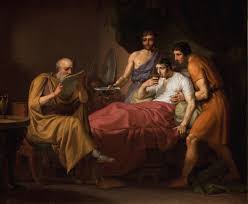
Like Alexander, many monarchs with the suffix ‘The Great’, such as Peter, Catherine, and Frederick II, left behind an enormous body count and a trail of devastation.
The Great ‘state-of-the-art’ Titanic was marketed as ‘unsinkable’, and itself was a lifeboat with tight watertight compartments, giving ample time for ferry passengers to be rescued by rescue vessels. Hence, the need for an adequate number of lifeboats was deemed unnecessary. We all know about the irony of its disastrous maiden journey, which is still spoken about a century later as one of Man’s greatest miscalculations.[6]
Indians of the 20th century honoured Karamchand Mohandas Gandhi as a selfless soul who chose a life of poverty to stir the masses’ consciousness towards self-rule. The people thought it appropriate to address him as Mahatma (the Great Soul) or the Father of the Nation. Today, an increasing number of Indians are having second thoughts. Perhaps they may have been taken for a ride and got the short end of the stick from the British. It is amusing that Gandhi’s son, Harilal, despite the reverence of the people of the subcontinent towards his father, also did not hold his father in high regard. Disillusioned with the senior’s move to block his law scholarship to England, Harilal became a rebel, spiralling into alcoholism, eventually becoming a public nuisance and falling into oblivion.[7]
The Great War, also known as World War I, was touted as a necessary battle to end all wars. We know it never ended anything, but its post-war deals remain a nidus for World War II and the turmoils that persist even today.
The Great Gatsby exposes the fallacy of the American Dream and the notion of a successful life under capitalism. F. Scott Fitzgerald shows that success-based materialism and trying to relive a nostalgic past will not lead to fulfilment. Instead, it will lead to a decadent path and disappointment. [8]
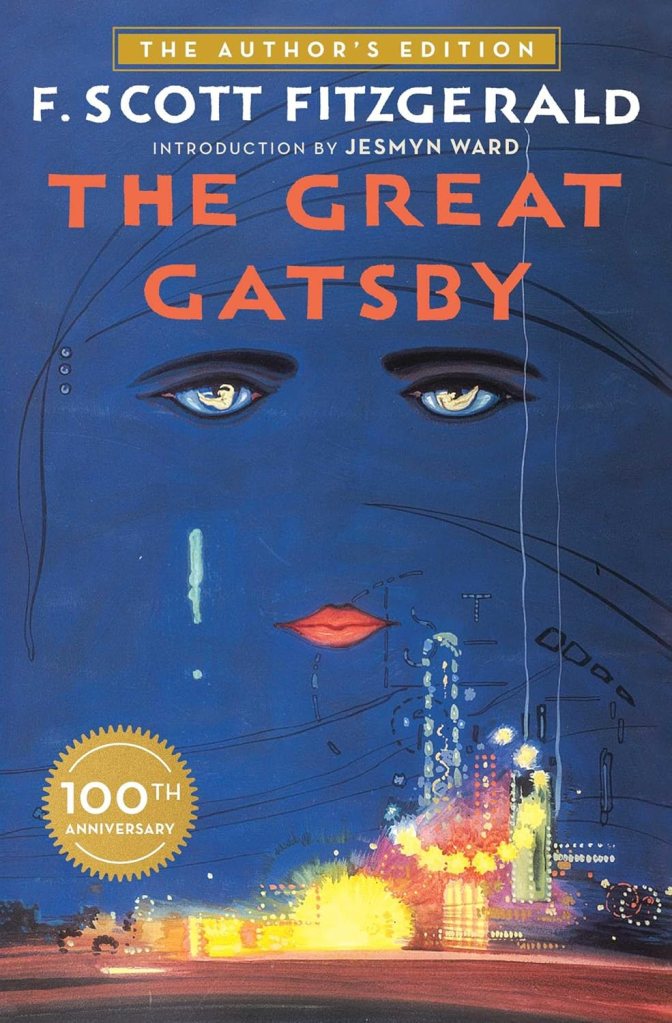

In a world so entrenched in wealth acquisition, we have heard of many families afflicted with the misfortune of striking it rich in the lottery and seeing their family spiral into an abyss.
The Great Train Robbery in 1963, the UK’s biggest heist, where the robbers scooted off with the present-day value of £62 million, ended with none of the culprits laying their hands on the loot, but mostly just behind bars. [9]
Just look at Trump and his track to the White House using the ticket which promises to ‘Make America Great Again (MAGA)’. The illusion of the blissful past only morphed into civil unrest, which required the deployment of National Guards and Marines to use flash-bang grenades and tear gas to squash down their own citizens. If that was not enough, now there is talk of MIGA — Make Iran Great Again, perhaps returning Iran to its glory days of the Persian Empire! [10]
When we describe something as great, we usually refer to it in a positive light, as something extraordinary pushing human abilities beyond normal boundaries. It is a subjective assessment. One man’s greatness is another’s failure. It can serve as a cautionary tale for those who have fallen.
It’s just food for thought. After having a bad day at the office when nothing went right, we returned to find that we had forgotten the house key at work and had to go all the way back to the office to retrieve it. What do we say? “Great!”
.
[1] ). Even though this quote is often referred to as coming from Churchill, it may have been originated from Otto von Bismarck, the first Chancellor of unified Germany between 1871 and 1890. He could have said, “he who is not a socialist at 19, has no heart. He who is still a socialist at 30, has no brain.”
https://en.wikiquote.org/wiki/Talk:Otto_von_Bismarck#Unsourced
[2] Speech and 2017 bmovie, which included the speech called ‘The Darkest Hour’
[3] https://www.goodreads.com/quotes/4611-history-will-be-kind-to-me-for-i-intend-to
[4] People probably put words into Churchill’s mouth. It may be a misquotation. The conversation may have taken place between Lady Astor and Churchill’s aide.
https://www.smithsonianmag.com/history/illustrious-history-misquoting-winston-churchill-180953634/
[5] Churchill’s policies contributed to the 1943 Bengal famine – study.
[6] Did Anyone Really Think the Titanic was Unsinkable? The makers probably oversold it.’
https://www.britannica.com/story/did-anyone-really-think-the-titanic-was-unsinkable
[7] Father to a nation, stranger to his son.
https://www.theguardian.com/film/2007/aug/10/india
[8] The reality was not what success for everyone in America.
https://www.ewadirect.com/proceedings/chr/article/view/9147
[9] The men behind the Great Train Robbery
https://www.bbc.co.uk/culture/article/20250410-the-men-behind-the-great-train-robbery
[10] MAGA to MIGA.
.
Farouk Gulsara is a daytime healer and a writer by night. After developing his left side of his brain almost half his lifetime, this johnny-come-lately decided to stimulate the non-dominant part of his remaining half. An author of two non-fiction books, Inside the twisted mind of Rifle Range Boy and Real Lessons from Reel Life, he writes regularly in his blog, Rifle Range Boy.
Disclaimer: The opinions expressed are solely that of the author and not of Borderless Journal.
PLEASE NOTE: ARTICLES CAN ONLY BE REPRODUCED IN OTHER SITES WITH DUE ACKNOWLEDGEMENT TO BORDERLESS JOURNAL
Click here to access the Borderless anthology, Monalisa No Longer Smiles
Click here to access Monalisa No Longer Smiles on Kindle Amazon International

 Borderless