The year1955 is precious in the annals of Indian cinema. That year had seen the release of the Bengali classic, Pather Panchali in August and the Hindi evergreen, Devdas, in December. The opening month of that very year, a certain Mandakini Nursing Home in Bandra, the western suburb of Bombay had seen Manobina, wife of director Bimal Roy, give birth to a son, and Kanaklata, wife of writer Nabendu Ghosh, give birth to a daughter.
“Mita (Friend) Bina was expecting after three daughters and Kanak Boan (sister) was also in labour for the fourth time, after two sons (her first born had gone within months). And we were all praying that Mita should have a son, and Kanak should have a daughter – not the other way around!” This family lore comes from Mary Jethima, wife of music director Arun Mukherjee, first cousin of thespian Ashok Kumar.
So, every time the month of January came around, I would wonder, what if the Roys had a fourth daughter and the Ghosh family a third son? I have wondered but never needed an answer. Because? I have been ever grateful to the powers that be to have Joy as my virtual ‘twin’ born six days apart.
This bonding was forged years before our birth – when Nabendu Ghosh had watched Bimal Roy’s directorial debut, Udayer Pathey[1], in a theatre in Rajsahi, now in Bangladesh; and Bimal Roy had read Nabendu’s allegorical novel, Ajab Nagarer Kahini[2], wanting to film it before Pehla Aadmi[3]became a reality. “Never have I seen a film like this!” Nabendu had echoed what hundreds, thousands, were saying when Udayer Pathey released in 1944. And he had prayed, “If ever I get to work with this director, my dream will be fulfilled!”
Bimal Roy, on his part, had said to him, “Your writings have a graphic visual quality that is so important for cinema.” And when he took up Ashok Kumar’s offer to make Maa for Bombay Talkies, and moved to Bombay in 1951, he invited Nabendu to join him as his screen writer.
That momentous journey has moulded our lives.
*
My earliest memory of the Roys at Godiwala Bungalow on 5 Mount Mary Road is of a toy horse-drawn carriage that had come from some distant land, and a life-size doll – both properties of Joy. I would take turns to ‘drive’ the carriage through the giant hall. And the doll? It opened its eyes and shut them too and even said ‘Maw!’
Outside the bungalow was the garden, a beautiful landscape hemmed in by boulders that created nooks and corners where we children could play hide and seek. But wait, there was a swing and a seesaw too, and I had all the time in the world! There was a spoilsport well at the far end of the garden that I stayed as far away from as I could. “There are ghosts in the well!” – I remember Joy telling me in a hushed tone that was perhaps meant to fool me. But when Joy said something, could I ever doubt it?
The aforementioned giant hall indoors was dominated by an imposing photo of Jethu foregrounded by 11 identical statuettes. These dancing ladies, I later learned, were the coveted Filmfare awards he had won in his illustrious career studded with unforgettables like Do Bigha Zamin[4], Devdas, Madhumati, Sujata, Bandini. As long as he lived and for years after that, Bimal Roy was the sole ‘owner’ of that many ‘Black Ladies’. But, to a girl yet to grow up, more attractive were the Japanese beauties in colourful kimonos adorning another end of the hall. However, what struck even greater awe was a ‘mosaic’ image of Madonna that Joy had crafted while in school — at age 12? It still adorns a part of his world at 6 Mount Mary Road.
Joy had a natural gift for drawing cats: One large O, another horizontal O, a curve that was an inverted C, two bright eyes and perked up ears… How effortlessly he breathed life into the lines! Joy and Bubundi’s house is now overrun by cats but back then only two brown dogs ruled, Toto and Burikin.
*
Joy was the reason I trailed into a shooting floor for the first time in life. We were maybe seven when Benazir[5] was under production at the now-extinct Mohan Studios. As the producer, Bimal Roy need not have stood next to the camera when Meena Kumari, half lying on a mehfil-style chaise lounge, would sit up, sing a single line of a tarana, discant, and the director would say ‘Cut!’ Since the fans would all stop whirring as soon as a voice called ‘Action!’, every ‘Cut!’ was followed by the make-up person trotting up to the diva and retouching her beautiful face. How many ‘Cut!’ did we survive before Joy and I skittered off the floor? No idea. But to this day I remember the deep affection in the eyes of Jethu[6] who became an icon when Joy and I were yet to outgrow the tenth year of our lives.
We were not yet teenagers when Teesri Manzil[7] released in Bandra’s New Talkies which normally screened Hollywood films. Ma and I arrived when Joy, Bubundi and friends were heading for an evening show. I got included naturally. The super hit entertainer had smashing songs in a tautly constructed suspense tale – yet I was not floored. When I said this to Jethima[8], she said, “You are speaking like a critic Uttama!” Unknown to me, that comment had perhaps set me on the course of dissecting a film like an initiated viewer.
After our school finals, Joy took to studying Commerce at Sydenham College, while I marched on with the Arts. So, I joined the Elphinstone College where all the Roy sisters – Rinkidi, Tatudi and Bubundi – had studied English Literature. Bubundi – Aparajita is her bhalo[9] name — was in the final year of BA when I joined the institution. And after she graduated, I inherited all her books and notes. With her benign presence she has been the Didi I never had in the Ghosh house, I realised in the process of preparing the short Aparajita, for her 70th birthday.
The Ghosh’s and the Roys at a family wedding. Photo provided by Ratnottama Sengupta
And when she got married, just like Joy I missed classes for days and weeks. More so because my elder brother, Dipankar, married Lesley Christine around the same time. Consequently, both Joy and I were least prepared for our MA exams. Together we shared our doubts with Mouni Baba, our spiritual guide who had come from Ujjain. “Do not entertain any doubt or fear,” Baba had drilled into us. “If you utter the word ‘No’ you say that to your inner self, and you will not succeed.” This priceless lesson has been my ‘Kindly Light’, leading me on at every turn of life.
*
* Jethima passed away when the 33rd International Film Festival of India was celebrating seven accounts of Devdas in Indian cinema, in 2002. In the chill of Delhi’s winter, Joy and I sat down in the Siri Fort lawns, clung to each other and howled away, oblivious of the curious stares darting in our direction.
* Joy was in Italy when Baba passed away in December 2007. The biggest bouquet at his funeral had come from Joy.
* Along with Aparajita and Yashodhara – that’s Tatudi’s formal name – Joy had completed Remembering Bimal Roy, a centenary tribute to their father. He had commenced its shooting with Nabendu Kaku, the most authentic and reliable resource person, having been with his father from Maa (1952), through Parineeta ( Wedded, 1953), Biraj Bahu (1954), Naukri (Job, 1953) and Yahudi ( The Jewess, 1957), till the very last Bandini (1964). There was another reason, as Joy himself wrote on Baba’s 90th birthday in March 2007. “He has expressed faith in my abilities even in my darkest moments of self-doubt and always encouraged me to come out of shell and move ahead in life.”
* Year 2008. Bimal Roy’s birth centenary was round the corner. Joy and I met my friend Neelam Kapur. As director, she lost no time in scheduling the tribute in the IFFI [10] at Goa. Serendipity! That very year, IFFI also paid a homage to Nabendu Ghosh who’d passed away the previous year.
The screenings, the press conferences, the purchases, the idling on the beach – more than all of these, I recall the time we spent on a boat that had ladies from Commonwealth of Independent States dancing away to glory. While most of the guests toasted with whiskey or wine, Joy and I sipped on our mineral water. Because? It happened to be a Sunday, the one day in a week we were enjoined by Mouni Baba to forego every food except one salt free vegetarian meal before sunset!
*After Remembering Bimal Roy had been feted internationally and enhanced Joy’s fan following at home, he said to me, “Here’s the entire conversation with Nabendu Kaku. I’ve used only a few minutes of it. I’ll be glad if you can use it.”
I can never thank him enough for this generosity. For, I culled 20 minutes out of the 2-hour conversation, added clippings, posters, stills, book covers, letters, reviews and critical comments to the hour-long documentary And They Made Classics… This centenary tribute traces the unique bonding Nabendu Ghosh shared with his Film Guru.
*
But let me circle back to the birth of a Bundle of Joy and the Best of Jewels in the Roy and Ghosh families respectively.
Days before 21 January 2015 Tatudi called me up. “Joy is turning 60, and how can the celebration be complete if you are not there?” Needless to add, I put on hold my preparation to retire from The Times of India just five days later, and boarded a flight bound for Mumbai. I alighted with just enough time to change into a joyous outfit, for I’ve always revered Tatudi’s good taste and Joy’s flair for dressing just right for any occasion. And was I glad I did so! For, when I reached the venue, I was speechless.
Filmmakers Behroze Gandhy and Dilesh Korya’s documentary,Kekee Manzil – The House of Art offers a glimpse into the interiors of a heritage home, shedding light on its iconic residents Kekoo and Khorshed Gandhy. Kekoo established the only picture-framing company in Asia in the 1940s and later opened the city’s first contemporary art gallery, Gallery Chemould, now known as Chemould Prescott Road, run by his daughter, Shireen Gandhy. The documentary captures how Kekoo and Khorshed displayed compassion during challenging times, stayed true to their secular ideals, and remained engaged civically, while building frameworks within which art could grow in post-colonial India.
What did I admire most? The heritage Kekee Manzil overlooking the Arabian Sea? The gathering of friends and family, including Gen-X of Bimal Roy’s team? The drinks, the amsatta paneer, the grand Birthday Cake? All of this, yes. But most of all, I will cherish for the rest of my life the taste of another cake that Tatudi and Bubundi and Joy had got. Inscribed on it were these words: “Happy Birthday Uttama!”
Some bondings start with our birth, but they live on beyond our life.
Ratnottama Sengupta, formerly Arts Editor of The Times of India, teaches mass communication and film appreciation, curates film festivals and art exhibitions, and translates and writes books. She has been a member of CBFC, served on the National Film Awards jury and has herself won a National Award.
.
PLEASE NOTE: ARTICLES CAN ONLY BE REPRODUCED IN OTHER SITES WITH DUE ACKNOWLEDGEMENT TO BORDERLESS JOURNAL
(Excerpted from Ramblings of a Bandra Boy by Ratnottama Sengupta)
Joy Bimal Roy looks back at the many 21 Januarys, his birthday, that have dotted 70 calendars
On 6th February 1950 Baba and Nabendu Kaku arrived together in Bombay to work on Bombay Talkies’ Maa. I wasn’t born then, so I can only wonder if either of them, or their illustrious fellow travellers Hrishikesh Mukherjee and Asit Sen even imagined what a life changing experience that journey would be for each of them and, ultimately, for Indian Cinema.
This small but immensely talented and visionary team — Baba as director, Nabendu Kaku as screenplay writer and Hrishi Kaku as editor — created some of the best loved and most remembered classics of the golden ’50s and early ’60s: Do Bigha Zamin, Devdas, Madhumati, Sujata and Bandini.
When I was born on 21st January 1955, this team was already well established and feted in Bombay film industry. Co-incidentally (or perhaps not, because is there any such thing as coincidence?) six days after my birth, a daughter Ratnottama — Uttama to me — was born to Nabendu Kaku and Kanak Kakima in the same, Mandakini Nursing Home in Bandra. Uttama and I instinctively formed a bond which continues till today and seems to strengthen over the years. For me this became the link between our two families.
*
Some silly astrologer told my parents that they should not celebrate my first seven birthdays — else, ill-luck would befall me. So I grew up going to birthday parties of other children and wondering why I never had one.
That could explain why to date I hate my birthdays. It is a day of introspection and soul searching, assessing the past year of my life for gains and losses. No wonder I am more depressed than usual by the end of the day.
All that changed on my 40th birthday thanks to Sriram, my college classmate, and my sister, Aparajita, who was in Mumbai from Kolkata at that time. Together they conspired to have a small celebration at home. Sriram, ever generous, brought the champagne and glasses as well because he was not sure we had any.
Paradoxically it was possibly the worst time in our lives. We had lost the eviction suit our landlords had filed against us in the Small Causes Court, and had been given four months to vacate the premises, of which two months were already up. My birthday was on 21st January and three weeks after that, on 14th February, we were supposed to vacate our home of 46 years — unless we got a Writ Petition admitted in the High Court.
Plonk in the middle of this mess, the thought of celebrating my birthday had not even crossed my mind. But when Sriram entered holding the champagne bottle aloft like a trophy, along with his petite and demure wife Enakshi, and my classmates Divyakant and Ajay, their love and concern were so palpable that suddenly my spirit soared and I felt free as a bird. If I was blessed to have friends like them, Life couldn’t be so bad after all.
It’s not that I celebrated every year after that but I was no longer traumatized on my birthdays.
*
The first birthday we celebrated after moving into our cottage was my 50th birthday. It doubled as a housewarming party, so it was a riotous affair. Everyone got high thanks to the ministrations of a bartender called Greenville and danced to blaring music like whirling dervishes. Our neighbours complained and the cops turned up.
Not bad for someone who started out in life with no birthday celebrations at all, eh?
*
When my 60th birthday dawned I was not feeling particularly celebratory. But my sister was coming down, this time from Hyderabad, my niece from Dubai and my nephew from England, and I didn’t want to disappoint them.
Our home at that time was overrun with cats and the garden was a mess, so I looked for a more welcoming venue. The only place I could think of was Kekee Manzil, home to our old family friend Kekoo Gandhy, founder of Chemould, India’s first commercial Art Gallery — and his daughters Rashna, Behroz and Shireen. I asked hesitantly but they agreed enthusiastically and I will always be grateful for that.
Kekee Manzil is an elegant and gracious villa, a heritage structure overlooking the Arabian Sea at Bandstand. At one point of time the Gandhy family also owned the adjacent property which once went by the name of Ville Vienna and housed Baba’s mentor Nitin Bose — and now is famous as Mannat, owned by Shah Rukh Khan.
The venue was the hero on that evening filled with friends, food and fun, not me. Because I was feeling singularly ill at ease about my appearance.
I hadn’t had the time or the bandwidth to figure out what to wear for this milestone birthday, so I had to settle for the only new kurta I had. Unfortunately it looked like tent on me. To make matters worse I had burgeoned to 95 kilos, so I felt like a beached whale.
I made a mental resolution. I HAD to lose weight that year. But as they say, the way to hell is paved with good intentions. So my resolution remained just that — until months had gone by…
*
But before the year dovetailed into my 61st birthday, by sheer synchronicity I stumbled into the right dietician for me — and in eight months I lost 16 kg. Cereno, a trendy batch mate, told me about Zara and gave me a style tip for my hair. He said I would look much better if I had a very short haircut, like a crew cut. I didn’t like the idea of a crew cut but I realised I needed a makeover to go with my new clothes.
At the end of it all my reflection in the mirror was unrecognisable. A strange bald man looked back at me. My sister shrieked when she saw me but she was mollified by the favourable reaction of Cereno and other classmates.
The coup de grace was when a poker-faced Cereno borrowed my phone, fiddled with it, and handed it back to me saying he had put my profile on a dating app. “Just wait for five minutes,” he said, “and you’ll get your first hit.” Sure enough, after five minutes my phone went beep!
So in my 60th year I reinvented myself. Better late than never?
About the Book
Ramblingsof a Bandra Boy is a compilation of Joy Bimal Roy’s posts on social media between 2017 and 2020. These slices of life “served without any extra seasoning or fancy garnish” as he puts it, have been described by Rachel Dwyer, professor of Indian Cultures and Cinema at SOAS, London, as jottings in kheror khata, the traditional cloth bound notebook that Satyajit Ray — and his father Sukumar Ray before him — used to pen down thoughts and visuals that are world’s treasure. It covers life in the glitzy Bandra where most of the Bollywood crowd resides… giving glimpses of real life of the giants peopling the cinema screens.
About the Author
Joy Bimal Roy is the son of legendary Indian filmmaker, Bimal Roy, and one of India’s pioneer woman photographers, Manobina Roy. He started his filmmaking stint as an assistant director to Shyam Benegal.
Gandhi (1869-1948)The victims of the 1946 riots in Calcutta (now Kolkata)
The sun went down.
One after another the lamp posts in the winding lane sprung to life. Their brilliance was dimmed by the smoke from the homely clay oven, sigri. The darkening sky above got dotted by a glittering star or two. And that is when Ratan’s feet became unruly like a wild steed. Donning a mulmulkurta he got ready to go out for the evening.
Jasoda had entered the room to pick up something. She came to an abrupt halt.
“Off?” she asked, her voice laced with sarcasm. “Can’t stay put at home any longer, can you?”
Solemnly Ratan nodded his head. “Yes, just need to take a round.”
Jasoda knitted her brow, “Just take a round? Chhee! Don’t do that. Pour some down your throat too, okay?”
“Jasoda!”
“Why? Am I saying something wrong, haan[1]? Something not quite done?”
Ratan did not utter a word in reply. He only glared at Jasoda for a second before walking out in rapid steps.
He didn’t stop until he reached Jatin’s house. His friend Jatin who sells fish every morning and evening. He has no family save his aged mother – he had married but his wife died years ago, and he made no attempt to have another after that.
They all gather in his house – Haaru, Potla, Jaga, Radhu and a few others. Since most of them are in the business of selling fish or meat, they have cash in their pockets. They easily turn uproarious as mutton chops and prawn cutlets stream in to enhance the pleasure of downing country liquor.
In a room foggy with fumes of cigarette, they settle down to a few games of card. They play as long as they feel like; when they don’t want to, they storm the cells of Gendi or Bunchi in the dark of the night. Or, when they are told to, they dive into the alleys of the Muslim neighbourhood and toss a few hand grenades.
Yes, the responsibility to curb the riot – a euphemism for hunting down Muslims – has suddenly come to rest on their able shoulders. They didn’t anticipate or expect it to, but it did. All of a sudden the wealthies of their end of the city started to pamper them. They raised funds through donations, to arm Ratan and his friends with small weapons so that they could protect the prestige of the Hindus, and of the womenfolk.
The way things were going, this was bound to happen. They had outdone everyone in severing head from the torso of walking talking men.
*
They were all there. Haaru, Potla, Jaga, Radhu – all of them had showed up. Ratan lent the final touch.
“Come in saala[2], come!” Jatin affectionately welcomed him.
Laughter and banter followed.
There was a sudden lull in the spate of riots that had been on sporadically for a year since the Direct Action Day, and had got a spurt when the country won its freedom on 15th August. But God knows what went wrong? All of a sudden the darkness of hatred started to melt, and the two warring units that had been at each other’s throats, suddenly saw themselves in the mirror: they embraced each other in brotherhood.
Since that day their ‘work’ had gone down. Further calm has descended since Gandhiji appeared in the city. He is camping in Beliaghata. He has been saying that he will not go anywhere until there is peace. Why, he has even staked his life! He will give up his life if he has to, to stop the riots! That is why Ratan and his company are spending more hours in downing liquor and visiting the sluts in the forbidden quarters, singing in their hoarse voice and walking with unsteady steps.
The chops and cutlets from Nitai’s shop were hot off the oven. The air thickened with the smell of blended oil. And their eyes sparkled with the spirit.
“Abey Jatin, get the bottles out…” Ratan urged.
“Haan bey,” Jatin was most willing to oblige.
A bitter-sharp smell spread through the room. The earthen cups filled to the brim were emptied in no time. The world before their eyes started dancing like a flame. Nasha… stupor.
“Bring out one more bottle, saala…” Ratan nudged Jatin.
“Haan bey, I will…”
“Arre call for more chops and cutlets.”
“O-K-K Sa-a-la…”
Jaga suddenly sprung to his feet. “I’m off, bye…”
“Where to?” Jatin wanted to know.
“To Bimli’s…he-he-he…”
“Get back to your chair” – Jatin barked at him. “We will all go in a group.”
Jaga wasn’t too pleased, but he sat down again. “Okay baba, that’s what we will do. Meanwhile let me have a bite of the cutlets…”
The room was filled with the odour of country liquor and smoke. Reddened eyes and numbed responses. Tidbits dropped on the floor, empty bottles and used cups and dishes piled up. Vegetable salad and sauces dripped to stain their clothes. None of them cared to wash their hands, silently they went on downing the liquid fire. Periodically they pulled their faces and uttered satisfaction, “Aah!”
“Hear that?” Ratan turned to gaze at Jatin.
“What?”
“All of you here can hear this?”
Potla shook his head, “How can we hear if you don’t spit it out, saala…”
Ratan crinkled his face, “This Gendo[3] of yours has thrown a spanner in the wheel, re…”
A gentle murmur coursed through the room. Almost as if a gentle breeze had rustled dry leaves.
Gandhi – yes, Gandhi! Superannuated Gandhi, old rascal Gandhi. This Gendo chap is a fraud. He is in cahoots with the Muslims, enemy of the Hindus, foe of the Bengalis…
“Yes, he has thrown us off-gear,” Jatin spoke through gritted teeth. “But for how long can he stymie us? He can’t get away with his bujruki, his hoax …”
Jaga spoke in a tired voice, “I just want to see Bimli for a while…”
“Sit, you owl!”
“Whatever you may say,” Haru spoke in a soft voice, “Gandhiji is a good soul, hanh?”
“Good soul?” Ratan roared out a nasty abuse, “My foot! All of us can sing bhajans and paeans to Ram if we had a life of comfort like him, buddy! And this guy alone is responsible for the Muslims daring to go so far as to demand a separate land. But this can’t go on! Now we have gained Independence. This is Hindustan – we will put an end to the last Muslim standing here!”
“Right! Right you are!!” they chorused in their boozy voice.
“Riot! We must hack every invader, every single Yavan!”
“Listen!” Jatin ran his eyes over them, “What Ratan is saying is hundred percent correct. Gendo can’t have a run of the state. No. D’you know what that chap is up to now? He’s saying he will bring back every single Muslim and rehabilitate them in the bustee[6]at Beliaghata. Why, I ask you dear, why couldn’t you say this to our people? What did you, all told, achieve in Noakhali?”
Ratan nodded in agreement and let out a mouthful of smoke. “No, such humbug will no longer work here. Enough. The guy wants to unite Ishwar and Allah[7]! As if you can do that at will!”
“Shut up bey!” Jatin cackled.
“Tomorrow. We will rake it up tomorrow itself. The Babus had sent for me today – everything is fixed.”
“All fixed?” Ratan’s face brightened at this, “Good. I’m relieved.”
“Oh, good. Come on, baba Jatin…” Haru called out, “bring out another bottle Jatin!”
“Die, you pests!” Jaga stood up and spoke in excitement, “None of you are sober. I’m off to Bimli’s.”
“Saala can’t wait to get there,” Ratan chuckled. “Arre baba, we’ll all go with you…” They all got to their unsteady feet.
*
Ratan couldn’t contain his glee. As he strode forward he kept thinking, “So there’ll be riots again – good!”
The lull in the violence these past few days was most irritating. He simply couldn’t take it anymore. He had tasted blood – and that is a dangerous addiction. For years, he had been a butcher and beheaded goats and lambs. But the thrill of killing a man, a live human being, was something else.
The first day he stabbed a man he understood that this was the king of highs. Day after day, he had sought out Musalmaans and delighted in putting the knife into them – and now it had spread through his veins. Now he felt out of depth on the days when he did not snuff out a life. He felt rather unwell.
He had a faint recollection of one particular afternoon.
He was sipping tea in Bipin’s tea stall.
All of a sudden some boys dragged in a young Muslim fellow. They told Ratan, “Now you have to finish the job Dada[9]. We are exhausted.”
Ratan grinned, “What’s so tough, idiots?”
“You’re mistaken bhai[10]…” the young man broke into tears. “I’m a Hindu!”
“Really?” Ratan laughed uproariously. “I’ll check that out once I’ve finished with you.”
The youth was dragged to a dark end of the lane and done with. After the job was over, a curiosity gnawed Ratan. He was absolutely certain that the kid had claimed to be a Hindu out of sheer fear. Still… He bared the body and checked the genitals of the naked corpse. “Shhuh, I got fooled!! This guy was actually a Hindu…”
They were outside Bimli’s door. There was no one else in the gully but them. The entire city was holding its breath, too scared to breathe in the riot-torn air. And then, it was late in the night. The gaslight was casting eerie shadows. Silence ruled.
*
Jatin’s words came true. The riots broke out the very next morning. And there was severe rioting. But this time around it was the Hindus who were aggressive, not the Muslims. The bombs and sten guns resounded across the sky and the air was rife with fear.
Ratan finished one round and returned home. Aah ! He felt somewhat relieved today.
But Jasoda was furious and would not relent. “So! You do have to come home to Jasoda, yeah? So liquor and sluts are not your cup of tea round the clock!”
“Jasoda!”
“But why are you losing your cool? I’ll get it for you – after all, you have been doing so much work! Boozing… whoring… killing…”
“Jasoda I’ll knock your head off!”
“Don’t I know that?” Jasoda’s fiery eyes bored through him, “The day you will fail to find a human to stab, you’ll twist your knife into me to satisfy your thirst for blood…”
Jasoda walked out of the room.
After a while she sent a khullar[11] of tea through her little boy but she herself stayed away.
Ratan was displeased. He spent the rest of the afternoon sleeping. Let the others take the responsibility to keep the fire aflame; now that it has been lit again, it will spread on its own steam.
That’s exactly what happened. By nightfall the riots took a sinister turn. Tension gripped the air of the city, dread filled the dark of the eyes. There was hardly any footfall in the streets.
*
When they met in the evening, Jatin said, “See how easy it was to rekindle the flame! But…”
“But?”
“It seems that Gendo chap is fasting since morning.”
“Fasting! Really?”
“Yes. Crazy, this man is. He will fast unto death, he won’t eat a morsel until the riots stop, he has said.”
“Arre let him!” Ratan hissed. “Let the oldie die. This is how he has been pampering the Musalmaans. Forget him – he should die!”
“Right you are,” Jatin nodded in agreement, “let him die. You come with me, there’s work to be done.”
A while later the sky lit up with the blaze of a burning slum. The fire brigade rushed to the spot with sirens blaring. The city cowered, trembled with fear, as the sound of bombs rent the air every now and then.
Coming home, Ratan was again subjected to the tongue lash of Jasoda. What is this vixen, a virago? No fear in her soul!
“So you’ll kill him? You will kill Gandhiji?”
“And what if I kill him?”
“What if you kill him! Are you a human being? You’ll kill a sage like him? You’ll rot in hell if you do that, understand? You’ll burn in hellfire…”
“Piss off! Just shut up and go. Get lost — ”
“Chhee! What are you, a man?”
“Jasoda!”
“What? You’ll kill me too? Go ahead, do that!”
But what good was silencing Jasoda? Ratan simply couldn’t sleep that night.
That Gandhi has gone off food?! What stuff is the man made of? If I kill two men, you’ll fast yourself unto death? What a dissembler. But otherwise the man has done so much! That the country has gained independence – it is largely due to this man, they say. So what? Why must he pamper the Muslims to this extent? If he’s really so bothered, why doesn’t he go fast to stop the riots in Punjab? Humbug. Let him rot.
*
The same story repeated itself the next day. The sacrificial fire kept devouring human flesh.
“What a hassle,” Jatin grumbled. “This Gendo simply won’t eat a bite, I hear! He’ll kick the bucket day after if not tomorrow.”
“All this is willed by Goddess Kali, d’you realise Jattye?” Ratan added with a wave of his hand, “It’s best he shuffles off his mortal coil and drops dead.”
Stray incidents filled the day. Then it started to pour. They couldn’t do very much after that. When the rain stopped, Ratan stepped out to stretch his legs. He noticed that people were gathering here and there, reading newspapers, discussing something in a grave voice. Gandhiji, the name, kept recurring. They all looked worried, sounded concerned, crestfallen.
All his countrymen genuinely worshipped Gandhi. He has actually done a lot – gone to great length to gain independence for the people. Not just the Lord Saheb, even the King of the British rulers held him in deference!
Suddenly Ratan hastened his pace. Why not go upto Beliaghata and take a look at Gandhi? To this day he had not set his eyes on this man, what was the harm in sizing him up? Ratan was not enamoured of Gandhi, he didn’t care two hoots whether he lived or died. Still, a peek at the man would do no harm. All said and done, he’d made a name for himself, perhaps even a place in history.
Ratan was overcome by a strange emotion. Inscrutable. Without much thinking he showed up in Beliaghata for the evening prayers. There was a large crowd waiting outside the house. He nudged and pushed to wend his way and find a footing in the front row. After a long wait he got to see Gandhiji.
A short statured, dark complexioned ageing man with the radiance of a child on his face. Bare bodied, Khadi-clad, he had a meditative calm about him. So this was the magnanimous Gandhiji!
A tremor passed through Ratan. It was as if he had suddenly come face to face with a morning sun. As if he was standing on the shore of the Pacific Ocean, as deep as its boundless expanse.
In a flash something happened deep within Ratan. Everything turned topsy turvy as if shaken by an earthquake high on the Richter scale. He realised he had finally encountered a magnificent personality. One who would not bow his head to anything unjust or immoral. One who would not daunted by guns and bullets.
As he looked on, Ratan turned misty eyed. Who said Gandhi was a pygmy? To Ratan he seemed like the Himalayas piercing the sky. Ratan trembled, he panicked, he fled.
All kinds of thoughts beset Ratan and he became restless. He headed straight for Jatin’s house. He felt like settling down with bottles of the fiery stuff. As he felt the liquid sear down his throat, the daze cleared somewhat.
“Know what Jattye?” he tried to draw his friend’s attention.
“Seems a sadhu, right? Yes, the fellow has actually done a lot for the country…”
“That’s what I hear. So many times he has been incarcerated and been to the jail. So much suffering he has put up with…”
“But that one failing! He has spoilt all his good actions by pampering and mollycoddling the Muslims, over-indulging them…”
“You have hit the nail on its head!”
One by one the others joined them. In no time the place was abuzz with food from Bipin’s Stall and bottles of country liquor. Downing the liquid in rapid succession they were quite a boisterous crowd.
“Follow me, Ratnya?” Jatin slurred, “this…”
“Unh?”
“Gendo is fasting, let him. He won’t kick the bucket in a day or two, will he? Old bones are sturdy – he’ll last. Meanwhile, in two days we’ll clear out all the ragheads, won’t we?”
“Yes Jatye, spot on…”
“Here, some more… f-o-r youuu…”
“Yeah… g-i-v-e mee…”
Ratan could not walk straight when he reached home.
“Why?” Jaosoda came at him like a bull at a gate, “Why are you back here? Was there no space for you in Chandravali’s love nest?”
“Shut your trap Jasoda!”
“The frigging bastard won’t let me be in peace.. Maa-go!”
Ratan flopped in his bed and murmured, “Q-u-i-e-t Jasoda! Shut up and keep quiet bhai…”
“Bhai! Bro? Shame upon you, no-good burnt-face monkey! You see a brother in me?”
Jasoda kept on muttering long after Ratan had started snoring.
*
Next morning the rioting picked up in momentum.
Ratan and his chums returned to action big time, complete with sten guns. From the rooftops, on the streets, wherever they were, they kept firing towards the Muslim shanties. After almost three hours there was a lull in the firing. The police and military forces had arrived and by afternoon things were quiet again.
Vans with loudspeakers were blaring that, unless the riots came to a stop, Gandhiji would cease to be. He would end his life.
The peaceniks took out a procession. The violence started to wane.
“That was quite a blast, wasn’t it Ratnya?” Jatin was smiling ear to ear when they met in the evening.
Ratan simply nodded.
Jaga returned from the paan[14] shop with a fresh stock of bidis[15]. “Folks have you heard this? Gendo is about to snuff out!”
“Who said that?” Ratan was startled.
“The newspapers have headlined, it seems, that Gendo has refused to relent in his fasting because there’s no let-up in the riots.”
“Ohh!”
“Arre that’s bullshit!” Jatin reacted. “Two more days of action at this level and all the Mullas will be shown their place.”
“Hunh!” Ratan nodded unmindfully, “but Gandhi is in such a poor shape, he’ll conk out, they’re saying…”
“Arre forget it! Rumour – that’s all it is. Come, let’s have a toast.”
“Well then, let’s go.”
*
Ratan joined Jatin to open a liquor bottle long before sunset. The tumult in the morning had left him exhausted. A few drops of hard core liquor might just be the tonic. But Gandhiji? There’s something about him… a halo. He had touched the heart of thirty crore men and women. Ardently they cried out, “Mahatma Gandhi ki jai [16]!” All-pervading emperors and powerful lords had not succeeded in intimidating him. Mahatma Gandhi!
At this point Madhu ran up to them. “Hey guys, come fast! I’ve cornered one of them…”
“What?!”
“Bastard!”
Suddenly the thirst for blood got the better of him. Sitting bolt upright Ratan said, “Come on Jattye.”
The three of them strode forward. Jaga, Haru and Potla were waiting round the corner, a middle-aged Muslim in their grip. They’d got the better of the man who was walking down the street lost in thought.
“Please let go of me bhai !” the man pleaded.
“Let go of you?” Jaga laughed out loud, “Why? Are you my wife’s brother, saala? Does your sister sleep with me?”
In silence Ratan went up to the man and grabbed him by his hand. Agitation tinted the blood that was coursing through his body. Blood! Unless he spilled blood his head might burst!
“Who’ll twist the knife in – you?” Jatin asked. Ratan nodded, “Yes.”
“How many will this be in your count of heads?”
“Maybe a score and half…”
“Well then, go on. Get over with it.”
“You’ll kill me?” The man wailed out, “Please let go of me baba – I implore you! Believe me, I have a son at home who is critically ill – I came out only to buy some medicine for him…”
“Shut up!”
Just then a voice floated across from a loudspeaker being played from a van: “Gandhiji is in a critical condition…”
Ratan pricked up his ears. Jatin looked towards the van, “Hey, what are they saying?”
“Gandhiji’s priceless life is in your hands today…” the voice was faint but the words were clear. “If you don’t stop killing, Gandhiji will not return to life. Stop now – and bring Gandhiji back to life…”
The voice receded in the distance.
“Go on, finish the job at hand Ratnya,” Jaga spoke, “or leave it to me.”
Ratan looked at the man.
Instantly the man smiled. “You’re determined to kill me, Baba?”
“Abey why are you showing your teeth?” Potla rudely demanded.
“Kill me,” the man said. “But don’t forget, killing me means stabbing Gandhiji.”
“Shut up!” Jaga roared, “not a word more…”
Still the man went on, “Listen to me Baba, now I’m not speaking for myself. Don’t kill me – let Gandhiji live!”
“Enough! Don’t want to hear the devil quote scriptures – hold your tongue.”
“Kick the rascal!”
“Go for it Ratnya!”
‘What’s holding you Ratnya??’
“Go go go…”
Unexpectedly Ratan turned around. He stood in front of the Muslim guy and said in a determined voice, “No.”
“Meaning?!” Jatin was stupefied, “What’re you saying Ratnya?”
“You heard me right Jatye — I’ll let this man walk.”
“Nope.”
“Yes, I’ll let this fella go Jatye. If you try to stop me, you’ll have to fell me first.”
All the others moved back a few steps.
“Have you gone out of your mind ?!” Jatin couldn’t make head or tail of it. “What’s the matter, I say?”
Ratan didn’t reply. Instead he addressed the man, “Come Mian[17], let me take you to the high road.”
The two of them took a few steps forward.
“Bah ! Won’t you even tell us why you’re letting him off? Hey Ratnya?”
“Ratnya! Hey bugger!”
Without a pause in his walk Ratan said, “Don’t call out to me.”
After escorting the fellow to the safety of the main street Ratan headed home.
*
Soon the night set in. The curfew hour started. The roads emptied out. From the lane they could make out that the military trucks and police vans were whizzing around the city. Some light escaped the windows of neighbouring houses. A handful of faces peeped out now and then. Swiftly, a dopey silence engulfed the habitat. The city seemed to be drained of vigour. The yellow gaslights on barren roads imparted a ghostlike ambience. The night deepened.
Jasoda noticed the worry lines on her husband’s visage and frequented her rounds of the room.
Out of the blue she even asked him, “What’s the matter with you, go[18]?”
“What? Nothing!” Ratan responded.
“Today you didn’t down bottles of liquor. Such good fortune!” She grinned at him, then wondered, “Why, you’re not even angry!”
“Hunh !”
“Feeling unwell, are you? So you’re missing your Chandravali Brigade! Care for a cup of tea?”
“Get it.”
Jasoda left to get the tea. Today Ratan was happy to see Jasoda.
Amazing! Something was the matter with him surely. He just could not bring himself to stab the man! One man’s life is so precious? People were correct about him. They worry for him, to protect him. To save his life, they appeal to all and sundry, even to strangers!
Yesterday he had visited that One Man. Short of height, dark of complexion, an octogenarian with a halo about him. A man like the Ocean, like the Himalayas, like the Sun. Boundless his sacrifice; immense his patience, unending his hope. Forgiveness, compassion, truth, love, ahimsa [19]– he defined all these virtues.
Magician, he was! He had crazed thirty crore men and women who chanted in unison ‘Gandhiji Ki Jai! Victory for Gandhiji!’ He has made them fearless, and independent. Yesterday he saw his Ram with his own eyes. It was all rubbish, he was no one’s enemy. He was ajatshatru, his enemy had yet to be born. Everyone in the country was his child, his progeny. He did not punish one for the failings of another. The punishment due to everyone he placed on his own head – a crown of thorn.
The night deepened and darkened.
Lying in his bed Ratan started to leaf through the album of his life. Alcohol, meat, women, neglect of a wife like Jasoda, butchery, rioting and killing more than a score of lives… And that enlightened Old Man? He had won the country, the world, in the brief bracket of a lifetime.
The night rolled on, towards sunrise.
At daybreak Ratan rose from his bed. He searched through his house and pulled out every piece of hand grenade, bullets, knife, and tied them into a bundle. Jasoda was still not up. Ratan cast a silent look at her and stepped out of the house.
The sky had not yet lit up, but the curfew hours were over. A handful of souls had stirred out on the streets here and there. A few cars had set out for some destination.
Ratan took full strides eastward. That’s the direction from which a red sun would rise. But Ratan was not headed towards that sun. He was thinking only of the sun fasting in a dilapidated house in Beliaghata. Ratan would go to him and lay down the bundle of his sins at his feet and pray to him, “Oh sun! Please end the fasting soul within me and light up the inner soul so far deprived of light…”
Nabendu Ghosh’s (1917-2007) oeuvre of work includes thirty novels and fifteen collections of short stories. He was a renowned scriptwriter and director. He penned cinematic classics such as Devdas, Bandini, Sujata, Parineeta, Majhli Didi and Abhimaan. And, as part of a team of iconic film directors and actors, he was instrumental in shaping an entire age of Indian cinema. He was the recipient of numerous literary and film awards, including the Bankim Puraskar, the Bibhuti Bhushan Sahitya Arghya, the Filmfare Best Screenplay Award and the National Film Award for Best First Film of a Director.
.
Ratnottama Sengupta, formerly Arts Editor of The Times of India, teaches mass communication and film appreciation, curates film festivals and art exhibitions, and translates and write books. She has been a member of CBFC, served on the National Film Awards jury and has herself won a National Award.
Dadamoni: The Life and Times of Ashok Kumar by Nabendu Ghosh (1917-2007) is a reflection on the Hindi film industry as much as it’s a biography of the legendary actor. An eminent scriptwriter in Bollywood and director, Ghosh was an award-winning Bengali writer whose oeuvre of work includes thirty novels and fifteen collections of short stories. As a script writer, he wrote the scripts in Hindi for iconic films like Devdas, Bandini, Sujata, Parineeta and many more.
Ashok Kumar (1911-2001) was a part of both the small and the big screen in India while he lived. Was Ashok Kumar a star? What was his position in the Hindi film industry? When did he become a character actor? Was he a good actor? These questions are very easy to answer about others but when it comes to ‘Dadamoni’, as he was fondly called, the answers become nebulous.
Ashok Kumar started his career in the early 1930s which makes him senior to stars like Raj Kapoor, Dilip Kumar and Dev Anand who made their debuts and attained stardom when Ashok Kumar was already a reigning star. Ghosh knew Ashok Kumar personally for many years. And the personal touch comes through in many places – through anecdotes and because of the regard that shines through the narrative. The jokes that Ashok Kumar cracked from time to time, the things the thespian told the author, all find place in the book. There is also a visible attempt to protect Dadamoni’s reputation against any allegation of vices generally attributed to stars. Ghosh, who had gone to Bombay as part of Bimal Roy’s team, constantly tries to establish Dadamoni as a gentle, thoughtful and educated person.
But this gentle, thoughtful and educated person didn’t have it easy in the world of films. Ashok Kumar had a shaky start. A shy and retiring person, he had gone to Bombay while studying to become a lawyer in Calcutta — to become a director. The ambition was idealistically driven – films, a new medium then, could be a means of educating people. But fate intervened. The person supposed to play the hero’s role in Achhut Kanya(Untouchable Maiden, 1936) had gone missing and the search for a replacement was on.
One day, Ashok Kumar, an employee of Bombay Talkies then, discovered the owner of the studio, Himanshu Rai, quizzically looking at him. Rai had found the replacement for the hero of Achhut Kanya. But for the hero, it was beyond belief that he could act in a movie. The most endearing part of the book is how this diffident hero finds his footing in the industry becoming its earliest and biggest star. And the most poignant part is the gradual decline and death of the studio system even as its product – Ashok Kumar – rose to new heights.
As the narrative draws to a close, one is left wondering what is Ashok Kumar’s position in the legion of Bollywood stars? This has been answered exhaustively in the ‘Afterword’ by Ratnottama Sengupta, eminent film critic and Ghosh’s daughter, who brings in not only personal lore but also her own experience. She tells us Ashok Kumar served “as a textbook for actors wanting to perfect characterisations, voice control, timing, gestures postures” and that he transformed “the acting style in Indian cinema from theatrical to naturalistic – which is still the cinema language worldwide.”
Naming him the “Elder brother of the industry”, Sengupta asserts, “I’d say he is the one personality who symbolises Indian cinema’s journey from Bombay Talkies to Bollywood.” She brings in his stories of interactions with film stars, his hits and directorial ventures, his launching of major actors and his deep links with them, including his acclaimed brother, Kishore Kumar, with more anecdotes from multiple eminent actors like Shammi Kapoor, Moushumi Chatterjee, David Lean and his associates and family ties that stretch to embrace actors from different religion and race. Bharti Jaffrey, Ashok Kumar’s daughter, who has written a heartfelt forward for this edition, is married to actor Saeed Jaffrey’s elder brother.
What makes this book unique is that Ghosh wrote this book in English himself and it has been republished posthumously[1] with the addition of a forward and an exhaustive afterword by the well-known daughters of the two film icons. It also has classic photographs of Ashok Kumar. Both the emotionally charged forward by award-winning actress Bharti Jaffrey, and the afterword by Sengupta, a national film award-winning journalist, explore further the enigma that was Ashok Kumar. By the end of the ‘Afterword’, one realises how deeply tied and organic are the Bollywood families and how much they do to try and create bridges and close gaps – the Ashok Kumar Foundation being one such effort. The whole package – the forward, the narrative, the photographs and the afterword — leaves one spellbound.
[1] First published in 1995 by Harper Collins – mentioned in the ‘Preface’ written by Ghosh in 1995 and reproduced in this edition published by Speaking Tiger Books.
.
Indrasish Banerjee has been writing and publishing his works for quite some time. He has published in Indian dailies like Hindustan Times and Pioneer, and Café Dissensus, a literary magazine. Indrasish is also a book reviewer with Readsy Discovery. Indrasish stays and works in Bangalore, India.
.
PLEASE NOTE: ARTICLES CAN ONLY BE REPRODUCED IN OTHER SITES WITH DUE ACKNOWLEDGEMENT TO BORDERLESS JOURNAL
Title: Dadamoni: The Life and Times of Ashok Kumar
Author: Nabendu Ghosh
Publisher: Speaking Tiger Books
Wordsmith Sarat and Tell-tale Ashok
The child Ashok Kumar was highly imaginative and could tell stories to his maternal grandfather, Raja Shib Chandra.
‘Come on boy, tell me a new story,’ the Raja would demand with a smile.
The five-year-old great grandson would gravely start, ‘You see great grandpa, yesterday I was walking through the jungle –‘
The Raja narrowed his eyes, ‘At what time?’ he interrupted.
The boy did not lose his nerve. ‘Yesterday, when you were having a nap after your lunch,’ he kept up the grave tone.
‘And where was the jungle?’ the Raja quipped.
The boy smiled, ‘On the bank of the Ganga.’
‘Carry on,’ said the Raja.
‘As I walked through the jungle,’ little Ashok went on, ‘there were birds chirping and peacocks dancing. I was feeling fine when suddenly I heard a tiger roar. I stopped. The birds stopped chirping, the peacocks flew fast and in panic. I turned around. And there it was standing, the tiger. It was a huge tiger, snarling at me and thrashing its tail on the ground…
‘Trembling in fear, I broke into a run. The tiger roared and sprang at me. I ran and ran hard. The tiger chased me. It almost reached me, it would soon fall upon me, grab me, swallow me. What shall I do? Oh, how shall I save myself? I prayed for wings and they sprang out of my two shoulders and I flew upward through the trees and escaped in the air. The tiger roared and roared and roared on…’
Little Ashok looked at the Raja for a due appreciation.
But the Raja looked at him with disbelief in his eyes and asked, ‘So you can grow wings out of your shoulders?’
The boy stared at him and nodded, ‘Yes, I can.’
‘Show me,’ the Raja demanded.
Undaunted, the boy said, ‘You become a tiger and I will show you my wings.’
The Raja roared with laughter. ‘Bravo my little one, bravo!’ he conceded.
Two servants peeped in at this moment on hearing the Raja’s laughter. The Raja beckoned one of them in.
‘Jagai, go to Upen Ganguly’s house and house and call that dark chap – you know –‘ Raja Shib Chandra ordered.
‘Yes, master.’
Soon a young man came there. He was dark but attractive, with handsome features and exceptionally bright, penetrating eyes.
The Raja welcomed him, ‘Come here, my lad. Do you know my great grandson, Ashok?’
‘No sir – but now I will know him,’ the dark young man smiled at little Ashok and added, ‘Ashok is the name of an Emperor.’
The little boy smiled back at the compliment.
Shib Chandra said to the young man, ‘Look here, my great grandson is no less than you — he can also tell stories. Tell him a story Ashok.’
Before starting to narrate a story Ashok looked at the young man and asked, ‘Have you ever eaten silver rice and fried silver parval?’
‘I will eat them when I find them.’
Many many years later when the cinema houses displayed a ‘House Full’ board everytime an Ashok Kumar film was released, New Theatres of Calcutta invited the actor to join the concern. It had earned the reputation of producing quality films — and to this day the name remains nonpareil in the history of Indian cinema.
Ashok Kumar agreed to meet them to discuss the matter. When he met Birendra Nath Sircar, the managing director, in his office there were some other directors and a dark man with silvery hair and sharp burning eyes.
Mr Sircar introduced the gentleman in dhoti-kurta by saying, ‘Mr Ganguly, he is our pride — Shri Sarat Chandra Chatterjee, the great novelist.’
Startled, Ashok Kumar turned towards the legend and bowed low.
Sarat Chandra smilingly asked, ‘Do you remember me?’
Ashok shook his head, ‘No sir — sorry.’
Sarat Chandra laughed and said, ‘Try and you will remember that you used to narrate stories to me — of silver made rice and fried silver parval.’
And the scene came back to Ashok Kumar. So, he used to narrate to this great magician — story writer Sarat Chandra!
Every one had a hearty laugh when Sarat Chandra narrated the story from the past. In his tum Ashok Kumar narrated how Sarat Chandra’s uncle, the writer Upen Ganguly, would regretfully say, ‘This chap, my nephew Sarat, does nothing! I am worried about him.’ This unleashed another round of laughter.
Ashok Kumar finally acted in only one film, Samar. He did not join New Theatres. It was Bombay Talkies that had groomed him and made him what he was. He would never leave Bombay Talkies.
(But, in 1953, after Bombay Talkies closed its shutter for good, he bought the rights to Parineeta. It was the first film of Ashok Kumar Productions.)
(Excerpted from Dadamoni: The Life and Times of Ashok Kumar, Speaking Tiger Books 2022)
About the Book:
Ashok Kumar (1911–2001), fondly known as Dadamoni, is one of the great icons of Hindi cinema. This warm, intimate biography traces his remarkable journey, from reluctant actor to Bollywood’s first superstar and, in his later years, a much-loved presence on national television.
Born in Bhagalpur (then in the Bengal Presidency), Ashok Kumar was enthralled by the ‘bioscope’ as a child. In his twenties, he quit his law studies and came to Bombay to become a film director. But life—rather, Himanshu Rai, the founder of Bombay Talkies—had different plans for him. Despite the director’s reservations, he was cast in the lead role opposite Devika Rani in the 1936 film Jeevan Naiyya when the original hero went missing. The same year, Ashok Kumar was paired with Devika Rani again in Achhut Kanya, which was a blockbuster. The transformation of the accidental hero into a charismatic star-actor had begun. Over the next six decades, he proved himself to be a master of the craft, playing cop and thief; genial grandfather and sly matchmaker; villain and hero; heartbroken lover and suave rake with equal ease in numerous films, including Kismet, Mahal, Parineeta, Kanoon, Gumrah, Chalti Ka Naam Gaadi, Aashirwad, Mamta, Jewel Thief, Khoobsurat and Khatta Meetha. But as Nabendu Ghosh writes, Ashok Kumar’s world was much larger—he was also a charming conversationalist, mentor, homeopath, astrologer, painter, linguist, limericist and, above all, loyal friend and devoted husband and father. This book is also a mini-history of the early decades of Bombay’s Hindustani cinema, and its pages are rich with little anecdotes featuring legends like—besides Devika Rani—Saadat Hasan Manto, Sashadhar Mukherjee, Leela Chitnis, Dilip Kumar, Dev Anand, Meena Kumari and B.R. Chopra. Sarojini Naidu and Jawaharlal Nehru make brief appearances too, as does Morarji Desai.
For anyone interested in the Hindi cinema of yesteryears—in its cosmopolitanism, camaraderie and charm—this thoroughly engaging book is a must-read.
About the Author:
Nabendu Ghosh (1917–2007) was a dancer, novelist, short-story writer, film director, actor and screenwriter. His oeuvre of work includes thirty novels and fifteen collections of short stories, including That Bird Called Happiness: Stories and Mistress of Melodies, edited by Ratnottama Sengupta. As scriptwriter, he penned cinematic classics such as Devdas, Bandini, Sujata, Parineeta, Majhli Didi and Abhimaan.
Translated by Ratnottama Sengupta from Bengali, Nabendu Ghosh’s short story brings out the absolute deprivation of basic needs of the common people during the Bengal Famine of 1943.
Courtesy: Creative Commons
Old man Ekkori was closing in on sixty. For two years his sight has been halved by cataract – in fact he’s as good as sightless. By doing this the Preserver of People’s Dignity had protected Harimati from the indignity of standing in the nude before her father-in-law – even her husband Teenkori admitted this.
Nude? Yes, what else but nude? The two saris that Harimati had been alternating on a daily basis had become so threadbare that, forget outings, it would be tough to maintain decorum even indoors if her father-in-law still had his power of vision. And this, even though they’re not gentlefolks, they’re mere peasants.
Harimati didn’t step out of the house until sundown. Fetching water, doing the dishes, washing the clothes – everything had to wait until darkness sets in. Yes, they’re from the lower strata but her sense of decorum and shame was not a mite less than that of a refined woman belonging to genteel society. It could actually be a bit more since Harimati had always been proud of one thing: Her father had studied till the Minor (primary) school examination – something beyond her husband Teenkori and his father Ekkori.
Still, she was managing. She was determined not to be bothered by embarrassment or chagrin. But things came to a head when an uninvited guest showed up with the claim of an uncalled for kinship. There was a time when a guest was worshipped as God but those times were long past. Time had taken that culture too with it. Now if things came to pass, a father disowned his son, a husband abandoned his wife, a mother sold her offspring. Even that could be excused – they may not have had any other option.
In a peasant’s family, even dire poverty did not deprive them of a coarse variety of rice and some greens that grew in their own courtyard. The bottle gourd climbing up their fence was about to blossom, the other end of the narrow stretch fenced off had a drumstick tree that caught attention with its healthy growth.
A distant cousin from Nandangachhi had showed up unannounced. Teenkori’s maternal aunt’s paternal cousin’s son Nandalal. Some work had drawn him to their town – he would go back the same evening. He was accompanied by a helping hand – belonging to the Tili community, a notch lower than them in social standing.
That wouldn’t be a problem. They’re guests for half a day – they could and would be taken care of. They would even be served a bowl of milk – borrowed from Tarini Mondal’s family who lived next door. But trouble arose when it came to serving them lunch.
It had been decided that Teenkori’s eleven-year-old sister Protima – the motherless Pooti – would serve the meal. But when it was time to seat the guest on the floor mats, she left on the pretext of fetching water from the nearby pond. Fact was, she too felt shy. A tense Harimati had called out to her two or three times but the girl didn’t look back. Consequently Harimati couldn’t avoid the task she was planning to all this while: she had to take upon herself the onus of serving food to the guests.
Teenkori started fidgeting halfway through the meal. A glance at his wife, and the food stuck in his throat. An old old sari soiled with time, torn in places and patch-worked at spots – she was trying to cover her body with the rag. Teenkori hasn’t forgotten the pedigree of the sari. Before the War broke out, before his stillborn son came into the world, when Harimati was given a shower in the seventh month, he had purchased a pair for two rupees and one anna. One of the duo had gone months ago, this one was worn occasionally and so had lasted a while longer. Since the last year, she was reduced to wearing it every single day, and now it was threadbare. Harimati had carefully draped it over her body, yet you could clearly make out the contours of her body. Her arms, her shoulder, fleshy bulge near her chest — they refused to be subdued by the rag. Had she the cover of a chemise, she would not feel so discomfited. But in a family where procuring a coarse sari barely five yards long was itself a feat, a chemise was a luxury they did not waste time thinking about.
Teenkori’s fidgeting could be traced to one more reason. All the men seated to lunch were focused on the meal, but the eyes of the boy accompanying Nandalal were restless, untamed. Even as he was gulping the mouthfuls, his oblique stare was devouring every part of Harimati’s body. She may not have been an eyeful, nor was she repulsive. Her youthful healthy body had an innate appeal. Earlier, she was even more healthy, even more sprightly. But the efforts to evade the decimation of the horrendous famine had taken a toll. She has withered, shrunk.
There was another reason. The famine that spared not a grain of rice, no food, not even greens that could sustain them, took with it the cynosure of her eyes, her two-year-old Khokon. But if Death is an inevitable truth, so is Life. Hence Harimati lived on. And at twenty-two she is not old enough to think of Death. So, youthful vigour was still overflowing her body. Naturally Nandalal’s helping hand would eye her every now and then. The effort to hide her nudity seemed to add to her appeal for the boy.
Harimati also realised that. That is why when she came in with the repeats, she took care to drape her father-in-law’s worn out gamchha over her chest. Teenkori looked at her, it seemed to him that tears had welled up in her eyes.
*
Precisely so.
Harimati did not touch her food. She was waiting for Teenkori. The minute Nandalal left with his help, and old man Ekkori surrendered to his siesta, Teenkori went indoors. Harimati came out of the kitchen and stood before him. The tears that she had so far kept within the guard of her eyelids now flowed over.
Teenkori took Harimati’s hand in his own. Trying to stem the hot spring of unhappiness with the palm of his right hand he asked, “What’s the matter bou?”
Harimati bit her lip so as not to break the silence.
Teenkori suddenly felt irritated. It was the monsoon month of Sravan halfway through the English month of July. There was so much left to do in the fields. It was just that there were guests at home, else he would have spent the whole day in tending to the fields. They held the key, the hope and happiness for the rest of the year. Rest, the unhappiness of the womenfolk, the need to love and be loved – now was not the time for all this. His debt was mounting at he moneylender’s who could now claim every hair on his head. With barely two rupees left to pull along till Diwali in November, he would have to borrow some more. Was this the time to cry?
“Why don’t you spit it out, woman?”
“Don’t you know what’s the matter? Can’t you see with your eyes?” – Harimati hissed at him like an angry serpent. She found it difficult to keep a hold on herself since their son died. At such times, the usually quiet woman terrified Teenkori.
“What? What’s the matter? How will I know if you don’t tell me, am I omniscient?”
“Your cousin’s help was gobbling me with his indecent eyes – didn’t you see that?”
“I did,” Teenkori hung his head low.
“Then do something about it. It’s better to go around nude than to be covered in revealing clothes!”
“What can I do about it?” Teenkori didn’t want to understand. And what could he actually do even if he did understand?
“Sari! Sari!!” Harimati impatiently stretched out her arms to her husband, “give me a piece of cloth, a sari… It’s so long since I asked you for one, don’t you remember? It is more than a year since you gave me one, for the pujas – can it last an entire lifetime? So many times I brought up the subject, you kept postponing it, ‘Not tomorrow, day after surely!’ ‘It’s very costly, prices have gone up, once the prices come down I’ll get you on…’ Words, words, words to fill in for inaction. You’ve caused me to go around semi-naked. Now? Now it’s impossible to go around. You get me a sari at any cost.”
The force of her words made Teenkori lose track of his thoughts. An indescribable impatience made him angry. So he spurned logic and picked on a phrase of Harimati, to vent his bitterness. With reddened eyes he glared at Harimati, “I’ve caused you to go around semi-naked?” he roared.
“You, you, you have. You’re the man of the house, can’t you get me a sari?”
“Where will I bring it from if there’s none in the market?” he demanded..
“I don’t care where you’ll get it from – just get it. I MUST HAVE IT. Issh! What an able husband, mine! Don’t they say…”
Tthaash!
Before she could say another word, Teenkori slapped Harimati hard on her cheek – he simply couldn’t take it any more.
“Hit me..! You hit me?!” Harimati’s fury fizzled out like water poured over a stove. Only tears streamed down her cheeks.
“Yes I hit you.” Teenkori grit his teeth and sat down to rummage through their trunk.
Old man Ekkori’s voice floated in, “What’s on with you guys, hunh?!”
“Nothing – go to sleep.” Teenkori shouted back at him.
“If you say so, son!” The old man’s voice echoed the dejection of the Blind King Dhritarashtra of the Mahabharat.
Teenkori extracted a few coins wrapped in a piece of rag kept safely in one corner of the trunk. They added up to some seven rupees, he counted before stashing them away in his waist. Then without a word he stepped out of the house.
*
But soon as he stepped out, he caused another uproar.
Pooti had just returned with a pitcherful of water poised on her hip. She was draped in an old gamchha around her waist, covering only the lower half of her body. That was all.
The sight of her stoked his asperity. Where was the need for the lass to go fetch water? Always evading work, always looking for fun.
“Pooti!”
“Yes?”
“Come here.”
Pooti put down the pitcher on the kitchen veranda and walked up to him. She could not fathom the reason for the summon in a grave voice.
The minute she stood by him, Teenkori traced the outline of all his five fingers on her cheek. “Where did you disappear, you brat? Didn’t your boudi tell you not to go, hunh? Went to fetch water!! Why did you go, hunh? WHY??”
The unexpected slap stunned Pooti. Pain and hurt choked her voice. She could not say a word in reply, only tears welled up in the large eyes like a dumb animal.
The reply came from Harimati. She was trembling with rage.
“So what if she had gone, why are you bossing?”
“Why should I not?”
“No, you cannot. You don’t have the right to. If you can, cast a glance on her chest.”
Teenkori cast a glance. It made Pooti swiftly retire into the kitchen. But that momentary glance was enough for Teenkori to ralise something that made him shut up.
He’d forgotten that Pooti has completed eleven. He’d forgotten that, in Bengali homes, this age spelt a lot of metamorphosis in a female anatomy. He only remembered that Pooti was his younger sister, much younger to him, even now.
But Teenkori does not know that there are glances other than a brother’s – glances that pierce through layers of clothings, so what to say of bare bodies. These glances do not make any concession for the innocence of a pre-teen girl.
Harimati chewed out every vowel, “She’s no longer a lass, she’s on her way to becoming a maiden. At this green age she’s more shy than I. Don’t you realise that?”
“Ayn?!”
Teenkori scurried out at the speed of an arrow released from the bow.
*
Teenkori walked some way at a very fast pace. Why, which way, he’d not stopped to think. He was still fuming in his mind. If his head were made of clay, then it might have let out steam into the air. Fortunately for all, his head was not made like an earthen pot.
Nibaran Dutta’s son Manish was walking down the mudpath. A young man of about twenty-six or –seven, he’d been incarcerated for five years for his involvement in the Nationalist movement. On his release three years ago he’d returned to the village. He still engaged in Nationalist activities. Dressed in a pleated Khadi dhoti, a half-shirt and a leather sandal on his feet, he had a cross-chested bag dangling by his side. It always held an assortment of books and papers. Every now and then he summons them, discusses various things about their well being, about the country’s well being. During the recent Famine and the epidemic he worked so hard – amazing! This was something to remember him by forever.
They – Manish and his partymen – were also agitating about the rationing of cloth, Teenkori was aware. At that moment he was like light at the end of a tunnel for Teenkori.
“O Manish Babu!”
“What’s new, brother?” – Manish smiled at him.
“I need something,” Teenkori’s vice bubbled with agitation.
“Tell me. But before that, come under the shade of that tree. I’ve been walking a long way you know, all the way from … Nimdanga.”
They walked under the banyan.
“Tell me what you want.”
“It’s become impossible to do without a sari.”
“That, I do know,” he smiled feebly. “That is exactly why I am going in every direction. Tomorrow we will take out a procession. All the boys and girls from poverty stricken families in the neighbouring villages will walk to the city to file an application. You must also join us without fail.”
Teenkori could not wait to communicate his own woes, he broke in, “Yes yes, I will but I must have one right away Manish Babu.”
Manish looked at Teenkori without speaking a word.
“You’re doing so much for the nation, and you can’t do this much?” – Teenkori’s voice lost its bite and sounded pathetic.
“Nation?” Manish smiled. “Yes, I am striving for the nation but Teenkori, it is still not swadesh, my country.”
“It might be so but you have to do this favour to me Manish Babu. You simply HAVE TO. If you don’t believe me, just go and take a peep at Pooti and her boudi.”
“No need,” Manish protested. “I don’t wish to add to your woes and humiliation. But what is the matter – haven’t you been to Fakir Miya’s yet?’
Fakir Miya was the president of the Union Board and secretary of the Food Committee. He’s the one who gives out the permit for clothes.
“Yes I’ve been to him. Several times. My shoes have worn out, so many visits I’ve made. But I haven’t got the permit.”
“Really? Come with me, let me see what can be done.”
*
At every step Teenkori thought to himself, “Something will surely materialise now.” Because, like everyone else in the village, Fakir Miya also had a lot of respect for Manish.
But nothing worked out.
Fakir Miya shook his head and said, “There’s no way to give a permit, because there is NO CLOTH.”
“Nothing at all can be done?” Manish asked with gentle smile.
Fakir Miya took a deep puff of his hookah and said, “How can it be? You’ll understand once you hear me out. There are 813 families in the village and the total of dhotis and saris we have received is 65. Now you tell me, who do I give and who do I deprive?”
“Whom have you given?”
“Those who came first.”
“And those who have references, and influences, isn’t it so?” Manish softly added with a grin.
A reddish tint played on Fakir Miya’s visage for an instant. He gave a gentle twist to his mehdi-tinted goatee, then said, “See Manish, I really hold you in deep regard, that is why I am not taking any offence at what you just said. But you have indeed spoken the truth. That is why I have decided that I will distribute the next lot only among the destitute and the needy. I will care for the poor first. This time I can’t help you – you really have no idea how helpless I feel.”
Manish smiled again. “I do understand, everything. I hope you will actually carry out what you are planning to do next time. Never mind: for the time being, do give me a permit, whether you have the stock or not. I have promised it to Teenkori, let me at least keep my word to him. Besides, his family is really finding it difficult to continue in society.”
Fakir Miya glanced at Manish, then at Teenkori who was waiting pale-faced and in all humility. Fakir Miya said, “I’ll honour your word Manish. I’ll write a permit.”
Manish went homeward. And, with the permit in his hand, Teenkori raced towards Chhaganlal’s shop, his heart beating fast, now with hope and now out of fear.
*
Chhaganlal Marwari has come to this village all the way from the deserts of Rajputana. From that distant corner of the land too he had learnt about the shortage of clothes in this unmapped village of Bengal – and in answer to that he had come via Kolkata with one lota and a bundle of clothings. In the weekly fairs that dot this and so many outlying villages, he personally carried such bundles of saris and dhotis for four full years. Then gradually, with the blessings of the Elephant-Faced God with a Big Belly he earned the benevolence of Goddess Lakshmi and prospered enough to own a double-storey building at the very front of the market – just like the Englishmen who came to trade with one ship full of goods and eventually built Fort William at the mouth of the Bay of Bengal.
This very Chhaganlal was reclining on a bolster post-lunch. Having loosened the knot of his dhoti around his tummy, he was glancing through the previous day’s accounts.
“Sethji!” – Teenkori called out softly.
Sethji looked up, “Yes? What is it?”
Teenkori brought up the permit, with the deference of a devotee offering flowers at the feet of a deity.
“What d’you want?” Sethji demanded again.
“Cloth – I mean a sari.”
“There’s none.”
“Here’s the permit. Fakir Miya himself gave it.”
Extremely irritated, Chhaganlal stood up. “So what if Miya has given a permit? If there is no sari in the stock where can I materialise it from? Leave now – come back next month.”
“I can’t go without one Sethji, please give me one.”
“Have you gone out of you mind, ayn? None – there is not a single sari, don’t you see all the almirahs are absolutely empty?”
“Yes I see that. Still, do give me one – it will be a big favour.”
“D’you want me to take off what I’m clad in and go naked?”
Teenkori could say nothing. He could think of nothing to say, he only looked around him vacantly.
His eyes fell on the colourful saris displayed from the hook at the shop window.
“Those – those are handloom saris?”
“Yes.”
“Price?”
“The lowest priced one costs twelve rupees and four annas.”
“Can’t you give for less than that?”
Chhaganlal lost his cool. “Go, leave now, go home right now… This isn’t a vegetable mandi, just go.”
Teenkori couldn’t buy a sari.
*
He walked some way, then sat down under a semul tree. The sun was strong. His temper was mounting too. Sitting there, under the semul tree, he tore up the permit into tiny pieces. In the depth of sorrow he felt like laughing. It wouldn’t be wrong on his part to laugh aloud – all the others who were passing that way were probably laughing at him! The difference was that Teenkori’s laughter was a distorted version of crying.
The village priest Mahesh Bhattacharjji was coming his way. He proudly displayed the twisted, unwashed sacred thread around his neck, his pigtail too was bobbing happily to declare his unadulterated Brahminhood. But he was clad in a lungi. Quite an example of how dearth helps people break tradition and adapt to new ways!
“Bhatt’charjji Sir, regards – pranam!” Teenkori strode up to him.
“May you prosper son! What news Teenu, all well?”
“How can things be well Sir?? But what’s this – Bhatt’charjji Mashai in a lungi!”
Bhattacharjji shook his head and smiled, a wan smile born of pain. His voice shook with emotion. He wanted to drape his wife’s sari but she warned him, “This is dearer than gold and gems now, it’s not for you to even touch.” Naturally he had to resort to this way of preserving his dignity – “can’t go out without a stitch on you, can you? And is this inexpensive? I had to kowtow to Manik Miya, go on pleading ‘Big Brother – you’re like my father!’ Only then I got it for four and half rupees. But I am not ashamed Teenu – the God who makes a lame climb mountains and a mute speak reams, is the same almighty who’s making a Brahmin dress like a Mullah!”
“Why, don’t you get offerings of sari and dhoti when you conduct pujas?”
“Ashes! Bananas!” Mahesh Bhattacharjji waved his right thumb in the air. “How many people organise pujas at that scale where you offer saris and dhotis? And even if they do, they just pay eight annas or a rupee saying, ‘Please buy yourself a cloth Sir!’”
Teenkori, though in deep anguish, couldn’t help but laugh.
They kept walking side by side. One of the village elders, Kalimuddin Sarkar was coming their way with something wrapped in a gamchha held under his armpit.
“How d’you do Morol {headman}? Where are you coming from?” Bhattacharjji hailed him.
“From the bazaar,” Kalimuddin grinned.
“You are laughing because I am in a lungi, aren’t you? Well, go on, laugh. But what’s that in your armpit, eh? So carefully you are clutching it – what’s it?” Bhattacharjji narrowed his sharp eyes.
Kalimuddin hesitated a bit before replying, “You won’t tell anyone, will you?”
“No dear, no –“
“Just bought a pair of dhoti from the Marwari.”
“Let’s see – let’s see –“ Bhattacharjji and Teenkori both said at once.
A pair of ordinary mill-produced dhotis.
“Did you get a permit?” Bhattacharjji enquired.
“Hunh!” – Kalimuddin pulled a face. “The permit is still in my pocket. This I bought in the black market. That too because he is known to me. These days you don’t get these even if you have the money.”
“How much did he charge?”
“Fifteen for the pair. He’d asked for twenty rupees.”
“Bastard! Thief!!” Bhattacharjji’s face went pale.
“And d’you know the price of saris? The mill-made ones are for 25, 30… the handloom ones are no less…”
Teenkori let out a sigh. If one had the money to pay for it, one could buy everything even when the situation was to the contrary. One who did not save money had to go without food and clothing – this is what Lord Almighty had ordained. At least in today’s world!
He would organise some money.
But money wasn’t for the asking!
The moneylender Ramkanta shook his head. “Ten rupees you want – but what else do you have to mortgage? Have you kept track of the balance still due to me? When will you clear that?”
“I remember – five rupees six annas. Apart from the interest.”
Teenkori went to many other people. Everyone shook his head just like Ramkanta. “No.”
Experiences and realisations build up the philosophy of our lives. Hence Teenkori had no hope, only hopelessness; no happiness, only unhappiness. Hence his life view was tragic, wrapped in a cover of ink-smeared darkness.
Manish turned grave on hearing the full account. He kept silent for quite a while, then said, “This is why we will take out the procession tomorrow. Be patient for some more days brother – there has to be some resolution.”
Teenkori spent the rest of the day going hither and thither. The whole day was wasted. There was work to be done in the fields – all had been undone. The next day also he would not be able to attend to the work, he had to join the procession. The nationalists were right: neither Teenkori by himself nor others like him – alone they could gain nothing. The strength of the poor and the deprived lies in their union, their coming together.
The procession would not draw immediate result; joining a party or raising slogans would not get Teenkori a sari for his wife. Still, would it all be wasted effort? Everyone would hear, everyone would know that nudity was forcing them to shed tears day and night.
*
Teenkori felt small going home. After darkness, he returned like a thief, stealthily. He felt relieved. Nandalal and his page had left in the evening.
Harimati entered the room after a while. Teenkori did not have the will to lift his head. Harimati fixed him with her gaze, then laughed a satirical smile and said, “Didn’t get it, did you? If you simply can’t, then this rag will have to be carefully donned – for a year, what d’you say?”
Slowly she walked out of the room.
Teenkori’s humiliation and remorse went up manifold at night. Harimati shut the door to their room, turned down the lamp and said, “Turn your face the other way.”
“Why?”
“There’s a reason…”
In the darkness she peeled off the torn yardage clinging to her body. With great care she folded it up and carefully she hung it on the clothes rack. She covered herself with the discarded gamchha of her father-in-law and came to bed.
The moment his hand touched Harimati he exclaimed, “What’s this?”
In a grave voice Harimati replied, “Can’t you imagine what will happen to the rag if I sleep in it?
Teenkori started sweating in the depth of the night.
*
At daybreak Teenkori showed up in the school playground. That’s where everyone was to assemble.
Manish was already there, and another 150 villagers. A few elderly women and a handful of girls too were in the crowd. People from the lowly communities of Bagdi, Jele (fisherfolk), Tili, poor peasants from both Hindu and Muslim communities were present. The dearth of clothes and of food did not differentiate on religious grounds.
Before setting out Manish and another young man gave them placards – slogans mounted on bamboo sticks. In English and Bengali, they said more or less the same thing: ‘We want clothes’ ‘Down with hoarders!’ ‘End the Shame of Nudity’ ‘Down with Black Market’ ‘Perish, Profiteers!’
Minutes later they started the march.
Intermittently they bellowed – “We want Saris! We want Dhotis!”
One voice shouted out: “Hoarders!” All others refrained: “Perish! Perish!”
“Down With…”
“Hoarders! Profiteers!”
While crossing the market Teenkori looked at Chhaganlal’s shop. It had yet to open, but along with others who sought to be entertained, Chhaganlal too was crowding the balcony. A sly smile of disdain hung from the corner of his lips. The bright beams of the baby sun shone brightly on the gold chain around his neck, casting an aura around him.
As they kept progressing, four or five other groups from two-three surrounding villages joined them. Their numbers now totalled at five hundred. It took about an hour to reach the city. It was almost eight by then.
Manish with all his men arrived at the bungalow of the District Magistrate. A policeman had joined forces with the watchman at the gate.
“Raise your voices brothers!” Manish urged. Before anyone else could respond Teenkori screamed, “We want cloth!” Everyone else joined in, “We want Cloth! We want Cloth!”
“Profiteers must perish!”
“Stop the black market!”
“Magistrate Sahib, give us justice!”
“We want clothing! Give us cloth!”
The policeman and the durwan barked something in unison. But, just as a river’s song would drown in the roar of the ocean, so too was their command drowned by the “We want clothing!” demand of the crowd.
At that moment District Magistrate Carter was discussing international politics with his wife and daughter. The slogans reached him like the sound of waves breaking on a distant shore.
“What’s that dear? Let me check,” Mrs Carter said.
“The same old story of naked men – they want clothing,” Carter replied.
Mrs Carter parted the green raw silk curtains and peeped outside. Their daughter Joanna came and stood behind her. Beyond the green lawn fenced by rose bushes, beyond the iron gate, a crowd of uncouth, underclad men were clamouring loudly. What were they crying out for? Mrs Carter and her daughter could not comprehend. But the numbers and the loud expression of their want filled them with panic.
“How pitiable!” Mother and daughter both agreed.
Durwan Ram Singh came in and saluted them.
“What is it Ram Singh?” Carter enquired.
“They’re asking for clothes Huzoor!”
“Why here?” Mrs Carter flared up. “Is this a shop for clothes?”
“Father is not a Marwari cloth merchant!” Joanna commented. “Ask them to go to the shop.”
Carter stood up. “Let’s go,” he said, lighting up his pipe.
Mrs Carter stopped him. Her blue blue eyes gleamed from fright. The August of 1942 was still fresh in her mind. “Carry your pistol darling,” she pleaded.
“Yes daddy,” Joanna echoed her, “do take that.”
“Nonsense!” Carter laughed. “People who don’t lift a finger even when they die of hunger, surely will not kill me for clothings!” He went off laughing.
Mrs Carter wasn’t pleased. These days you can’t trust Indians any more – the’ll go to any limit. What ought she to do? The sound of slogans was gradually rising outside.
“Mom – Mamma!”
“Yes?”
“Call the police please!”
“Right dear. I was also thinking of doing that.”
The sound of the phone being picked up filled the room.
Mr Carter stoutly stood at the gate. His pipe was ceaselessly blowing out the strong smell of tobacco while his other hand was twisting a white kerchief. On either side, stood a policeman and his personal guard, Ram Singh.
The assembly burst out like thunder, “Give us clothings!”
“Chup raho, silence!” Mr Carter roared at them. “Tell me peacefully what you want.”
“Clothings – that’s all we want,” they bellowed again. “Just organise that…”
“What?” Carter scanned the faces. “Aye you – come here, HERE…”
Teenkori was at the forefront, he was shouting his lungs out. Carter summoned him. With a high jump Teenkori tried to lose himself among the crowd at the back. Gora Sahib! Englishman!! Magistrate!!! Oh God!
Manish strode forward in his place. Carter scanned him from head to toe and asked, “Are you the leader?”
“I am not a leader, but I will tell you what they are here to tell you.”
“Then say – tell me.” Carter put the pipe back in his mouth.
No good came out of the effort. Meaningless assurance was all Carter could give them – they had to go back with the vague assurance that something would be done. But when? What? No word on that.
Teenkori wasn’t pleased. Walking the distance, shouting at the top of his voice – what result did that yield? They ambled through the city’s thoroughfares for another hour and then dispersed. It was almost 10 by this time.
Teenkori thought to himself, “I should try the city shops, may be I’ll get something within my means.”
But that wasn’t to be either. The black market crafted by profiteers and cheats had created a stock that was not available to anyone who did not have a certificate stating “My Candidate”. And what was available to those privileged was beyond his pocket.
Teenkori returned home empty handed.
*
Pooti was down with fever in the evening. Malaria. She was lying in a delirium, wrapped in a torn quilt.
After lunch, Teenkori went off to the fields with his bullocks. The sight of them brought tears to his eyes – both shrivelled, their ribs showing through their hide, they were unlikely to survive too long. What will be their fate then? Perhaps the Master of their Destiny too has no idea.
Harimati was in a jam. The dishes needed to be washed, there was no water at home, and Pooti was in the clutches of fever. No option but for her to go out.
But draping a piece of cloth doesn’t cover everything. The bulge of the breasts stands out, and the abdomen? That too remains visible.
Of course the pond wasn’t too far. Harimati didn’t go to the one frequented by most of her neighbours. Shame! She chose the one less frequented so that she could be away from human gaze. It had rained plenty in October, the ponds were still overflowing. She only had to reach out.
She’d almost finished washing when someone wolf-whistled right behind her. Startled, Harimati turned around. The good-for-nothing village loafer Avinash was oggling the exposed parts of her body with wolfish eyes.
Harimati tugged at one end of her sari to cover herself but the old wornout fabric gave way.
“Ahaha!” Avinash cackled, “you just tore your sari out of shame!”
“I’ll beat you lame, you monkey! Let Pooti’s brother come home from the fields…” Harimati retaliated.
Avinash cackled some more. “Damn all he can do. Why? What wrong have I done? I’ve not embraced you, not said anything indecent to you. I’m only gazing. God has given me eyes, and you have given things to gape at – so I’m looking. What’s wrong?”
Harimati swiftly gathered the vessels, filled up the bucket and took to her way.
Avinash called after her, “You need a sari, and I can get you one. Will you take it? Hear me!”
Harimati broke into a run, “God! Oh God!” she kept repeating.
The entity thus addressed did not reply.
Harimati started howling.
*
Teenkori’s veins were about to burst. “Quiet!” he said, not a word more! Just be quiet.”
Harimati’s wailing gave way to yelling. “Quiet?! What d’you mean, ‘Quiet’? I won’t shut up until you get me a sari.”
“How can I get one? Steal?”
“Do that.”
”All right, that’s what I’ll do.”
Teenkori stomped out of his house. It wasn’t too late at night, in fact they had not had their dinner yet. Only old man Ekkori had finished his dinner and gone to bed after dusk.
He actually went off?!
Harimati wiped off her tears, then went and stood outside. “Where are you?” she called out. “Where have you gone? I beg of you, come back and have your dinner.”
*
Teenkori did not ever come back to dinner.
In the middle of the night he was caught trying to steal a sari in Chhaganlal’s house.
Chhaganlal raised a huge hue and cry and gathered a large crowd. What a lynching Teenkori got! Slaps and kicks and boxing – it left him almost lifeless. The villagers who had gathered felt ashamed and sheepishly went back to their homes. In their heart they could not support Chhaganlal but openly they couldn’t let off Teenkori. All said and done, he had turned into a thief!
At daybreak Chhaganlal’s men took Teenkori all tied up to the police station. In that state he was left in their custody. His misery and despair had dried up his tears. His dejection and gloom made him only want to tear his hair.
*
The news reached Manish around 9 in the morning. “The docile, peaceable Teenkori could not keep a hold of himself!”
A few of the villagers pleaded with him to do something in the matter. Manish felt sorry for Teenkori. He felt it was his duty to do something, he hurried out.
When a man keeps asking for something basic and does not get it, what else can he do? Millions and zillion years of civilisation has taught him otherwise — today, how can he forget all that and accept nudity as normal? And, in terms of law too, how has Teenkori ‘erred’? How can age-old norms hold sway over changed circumstances and dire needs?
Manish went directly to Chhaganlal. He heard him out but refused to acquiesce. “That is not to be Manish Babu. He’s a thief, he ought to be jailed.”
Manish stood up, his eyes raining fire. “Don’t try to give a lesson in right and wrong. For the last time I’m pleading, with folded hands Chhaganlalji. Poor man, the lynching he has suffered has been punishment enough, please don’t send him to jail. If you destroy a family it will not bide well for you. Besides, I can prove that you are responsible for all this.”
Chhaganlal heard Manish speak and pondered over it. He has also been following the political trend, perhaps from afar, out of sheer curiosity, but yes, he has been following the trend. All of a sudden he felt that if the circle of time brings changes in history, when the present rule is over, perhaps he would find himself standing before these very people with folded hands. On that future date, it would not help to have these men as his opponents.
Chhaganlal also stood up. “Okay Manish Babu, I will do as you say, and let go of him. Come.”
Together the two went to the police station.
Not there. Half an hour before they got there, Teenkori had been transferred to the court.
Manish implored and took Chhaganlal with him to the court.
*
On hearing the news old man Ekkori had beseeched his neighbour Tarini and gone to the thana. The infirm, near-blind man had leaned on his walking stick and walked behind Tarini all the way to the police station and faced the policeman. He even met Teenkori. The son did not utter a word, only shed silent tears.
The station officer said, “How can I let him go, tell me? There’s a case filed against him. You better go to Chhaganlal.”
Oldman walked to Chhaganlal’s shop. Chhaganlal had just gone out.
Old man went back home, flopped on the floor and wailed, “I couldn’t, dear girl, I couldn’t bring him home!”
Harimati sat still like a corpse.
Ailing Pooti called out to her from inside, “Boudi I am starving. Give me a handful of puffed rice.”
Harimati made no reply. She went to the kitchen and tried to light a fire. She couldn’t, she just gave up. No fumes rising from the clay oven but her eyes were hurting, flooding with tears.
Harimati could almost see with her eyes that Teenkori had been sentenced to a long imprisonment. In the family that was already in dire straits, there was no one to bring home anything by way of livelihood. An emaciated father-in-law, a baby sister-in-law, she herself with no capability. She had no mother or father, no brother, no one to fall back on. She had only her husband, now he was gone. Even if she mortgaged all she could, it would not sustain them for long. The nudity would have to come into the open. The hyena eyes would feast on her, the indecent proposals would go up manifold. One man’s adversity emboldens the beast in other men: this is an eternal truth as the history of mankind shows. Many will offer her a bellyful of meal and a cloth to wrap her body in but in lieu she’ll have to lose her all — dignity, home, fidelity.
What good would be such a life?
*
Manish returned at sundown with Teenkori. Yes, he had succeeded in freeing him.
As soon as they drew near Teenkori’s house, they could hear wailing and commotion.
The minute they stepped into the courtyard, they could see Harimati’s semi clad body lying on the floor. Her dead eyes were wide open. She was surrounded by two-three elderly women, some men and a few children. Pooti and Ekkori were on the veranda.
Tarini was also present. He spoke, “She hung herself in the backyard of the Mukharjees. I found her an hour ago, on my way back with the cattle from the fields. Madhu has been dispatched to inform the police.”
Manish was speechless.
Teenkori was swaying.
Blind King Dhritarashtra had cried for a hundred sons – Ekkori was crying more than him for his only daughter-in-law. His weather-beaten face was swamped in tears.
Manish was immersed in thought. Are men and women governed by colonial rulers any better than dogs and wolves? So weak, so helpless, so pitiably helpless! Such tragedy befell them for the want of a piece of rag?! He turned his face away. The wailing, the howling, the half-naked body of Harimati – they were all taunting him, ridiculing his leadership, mocking his manhood.
A savage look had set in Teenkori’s eyes, the sort that descends in the eyes of soldiers when they confront their enemies. Many countless invisible enemies seemed to have aligned against him. His muscles swelled up. A desire to tear those enemies tingled at the tip of his fingers…
No, Teenkori would not cry.
Glossary
Anna — Currency. 1/16 of a rupee.
Gamchha — Coarse cotton cloth used like a towel.
Bou — Wife
Puja — Durga Puja
Boudi — Elder sister-in-law
Mandi — Market
Durwan — Security guard
Nabendu Ghosh’s (1917-2007) oeuvre of work includes thirty novels and fifteen collections of short stories. He was a renowned scriptwriter and director. He penned cinematic classics such as Devdas, Bandini, Sujata, Parineeta, Majhli Didi and Abhimaan. And, as part of a team of iconic film directors and actors, he was instrumental in shaping an entire age of Indian cinema. He was the recipient of numerous literary and film awards, including the Bankim Puraskar, the Bibhuti Bhushan Sahitya Arghya, the Filmfare Best Screenplay Award and the National Film Award for Best First Film of a Director.
Ratnottama Sengupta, formerly Arts Editor of The Times of India, teaches mass communication and film appreciation, curates film festivals and art exhibitions, and translates and write books. She has been a member of CBFC, served on the National Film Awards jury and has herself won a National Award. Ratnottama Sengupta has the rights to translate her father, Nabendu Ghosh.
.
PLEASE NOTE: ARTICLES CAN ONLY BE REPRODUCED IN OTHER SITES WITH DUE ACKNOWLEDGEMENT TO BORDERLESS JOURNAL
Ratnottama Sengupta, eminent journalist and daughter of Bengali writer Nabendu Ghosh, has been a force behind translating Bengali literature and bringing it to the doorstep of those who do not know the language. In this exclusive, she discusses how translations impact the world of literature.
I have often been asked, “Nabendu Ghosh was a literary figure and a screenwriter. How much importance did he place on translation?” Truthfully, because he was a literary person, my father placed a lot of importance on translations which, as he once pointed out, has given us access to almost all the first books in a bevy of Indian languages.
Let me elaborate. Adi Kavi Valmiki, the harbinger poet in Sanskrit literature, composed the original – ‘mool’ – Ramayan long before the first century BC. But Krittibas Ojha’s 15th century rendition in Bengali ‘Panchali’ style is not merely a rewording of the original epic, it gives a description of Bengal’s society and culture in the Middle Ages. It also explores the concept of Bhakti which later contributed to the emergence of Vaishnavism in the Gangetic belt.
This is said to have had a profound impact on the literature of the surrounding region. In Bihar of 16th century Goswami Tulsidas heightened the Bhakti quotient as he retold Ramayan in Hindi, as Ramcharit Manas. The same happened in Orissa. Earlier it had been adapted, with plot twists and thematic adaptations, in the 12th century Tamil Ramavataram; 14th century Telugu Sri Ranganatha Ramayanam; several Kannada versions, starting in 12th century; Ramacharitam in Malayalam; into Marathi also around this time.
My father had inculcated in us this love for multiple languages when I was about ten. As we all sat around after dinner, he would read from these texts – Valmiki’s Ramayan, Tulsi’s Ramcharit Manas, The Old Testament from the Bible, Buddhist Jataka Tales, and Sri Sri Ramakrishna Kathamrita wherein Mahendra Nath Gupta recounts, word for Bengali word, the conversations and activities of the 19th century Indian mystic. Published in five volumes between 1902 and 1910, this work summing up the life philosophy of Ramkrishna Paramahans through simple anecdotes and parables, has been translated into English and Hindi.
Before that, at the young age of nine, I was also initiated into the crème de la crème of world literature – Tolstoy, Gorky, Mark Twain, and Shakespeare too – through translations into Bengali. Abridged versions of Crime and Punishment, Mother, Adventures of Tom Sawyer, Blue Bird, and Hamlet, Lear, Othello, Romeo and Juliet were published by Deb Sahitya Kutir — among other Bengali publishers — for young readers. Later in life, as a student of English Literature, I realized that our understanding of the ways and woes of our world would be so much poorer if Iliad and Odyssey had remained confined to Greek readers; if Henrik Ibsen’s A Doll’s House had not crossed the frontiers of Norway; if Don Quixote were to be read only in the Spanish that Miguel Cervantes wrote in; if The Hunchback of Notre Dame was meant only for those raised in French, or if Faust were to be played only to German viewers.
And, talking of viewers: how would the world have known about the Russian Sergei Eisenstein, the Japanese Akira Kurosawa, the Greek Theo Angelopoulos, the Italian Michelangelo Antonioni and Federico Fellini, the French Jean Luc Godard and Francois Truffaut, the Swedish Ingmar Bergman, the Polish Andrzej Wajda, the Czech Jiri Menzel, the Argentinian Fernando Solanas, the Turkish Yilmaz Guney, the Chinese Zhang Yimou, the Iranian Abbas Kiarostami, or our very own Satyajit Ray? Unthinkable, the world of cinema without subtitles in this day and age when Hollywood films come with subtitles in not just English and Hindi – the two official languages of India – but also in its umpteen regional languages to reach viewers in pockets that speak only Tamil, Telugu, Malayalam, Marathi, Bengali…
The importance of translation is best exemplified by the Song Offerings. If Rabindranath Tagore had not translated the poems of Gitanjali, Asia would have had to wait longer for its first Nobel Prize. Incidentally the central theme of this work too is devotion – and it is part of UNESCO’s collection of Representative Works. And it is my belief that no other Nobel for literature has come to India because we have not come up with any worthy translation – say, of Bibhuti Bhushan Bandopadhyay? At least, not until recent years, nor in a big way.
Also, it is my own experience that only after Me and I — translated from the Bengali original, Aami O Aami by Devottam Sengupta — was published by Hachette India that a major international publishing house got interested in translating Nabendu Ghosh into French.
*
That brings me to the frequently asked question: “Why are you translating Nabendu Ghosh rather than publishing his Bengali originals?” The answer takes me back to 1940s when Baba’s Phears Lane was translated into Urdu and published in Lahore. Clearly Nabendu Ghosh was a ‘star’ in Bengali literature then. Allow me to quote Soumitra Chatterjee, the thespian who we lost so recently and was a Master in Bengali: “I had known about Nabendu Ghosh even before I took to studying Bengali literature, since Daak Diye Jaai (The Clarion Call) was a sensation even when I was in school. His writing was not confined to urban setting and city life. He went to the villages and wrote about the man of the soil too. His characters were always flesh and blood humans.”
But the Partition of India had halved the market for books and films in Bengali, dimming the prospects of even established directors and writers who sought a new opening on the shores of the Arabian Sea. Thus, when Bimal Roy – a celluloid star after his meteoric debut with Udayer Pathey ( In the Path of Sunrise, 1943) — left for Bombay in 1950 to make a film for Bombay talkies, Nabendu Ghosh joined his unit. However, in Bombay he found that his kind of writing did not have as much of a prospect in films which were made primarily for the entertainment of an amorphous mass. So, he decided to write scripts based on other people’s stories, and his own thought-provoking stories — which he described as ‘fingers pointing at what ails society’ — he continued to write as pure literature, in Bengali, and send to publishers in Kolkata.
This oeuvre bears the distinct stamp of his outlook towards life, society, or state. As a critic wrote, “There is deep empathy for human emotions, layers of meaning that add to the depth of the spoken words, subtle symbolism, description of unbearable life paired with flight in the open sky of imagination.” But this aspect of the writer got buried under the glamour of screen writing, and even in Bengal people thought of him only as the screen writer of successful films. Small wonder, since he wrote more than eighty scripts, for directors like Bimal Roy, Guru Dutt, Hrishikesh Mukherjee, Basu Bhattacharya, Vijay Bhatt, Sultan Ahmed, Dulal Guha, Lekh Tandon, Phani Majumdar, Satyen Bose, Shakti Samanta, Sushil Mazumdar, among others. Most of them are considered classics of the Indian screen: Sujata, Bandini, Devdas, Parineeta, Aar Paar, Majhli Didi, Teesri Kasam, Chaitanya Mahaprabhu, Ganga Ki Saugandh, Khan Dost, Baadbaan, Insaan Jaag Utha, Lal Patthar …
But Baba was saddened that even his colleagues in the filmdom did not know his literary pouring as only a handful were translated into Hindi and none into English. This is what I have tried to rectify through Chuninda Kahaniyaan (2009), Me and I (2017), and That Bird Called Happiness (2017). Mistress of Melodies (2020) you could say is a part of a continuum that started with River of Flesh (2016) and comes after That Bird Called Happiness. Nabendu Ghosh would read up volumes — books, news items, dictionaries and encyclopedia — when he fleshed out his characters. Perhaps that is why they play out their lives before you, like moving images. It was no different when he was writing Song of a Sarangi/ Ekti Sarengir Sur, included in Chaand Dekhechhilo that won him the Bankim Puraskar.
But above all, the reason for putting my energy in this art is to take a part of my heritage to the world. Because, as the celebrated Bengali writer Shirshendu Mukherjee said about Nabendu Ghosh, he is a writer who deserves to be read. Allow me to finish with a quote from him as he talked about his senior’s continuing relevance, to readers of Bengali literature and outside.
“Nabendu Da’s use of language was remarkable. He starts one of his stories with the word ‘Bhabchhi / (I’m) Thinking.’ It is a single word, that is also a complete sentence, and it has been used as a para in itself. One of his stories, Khumuchis, explores the secret language used by pickpockets. Bichitra Ek Prem Gatha (A Wondrous Love) – published to mark 2550th year of the Buddha — uses a vocabulary that is devoid of any word that would not have existed before the advent of Islam.
“He had an amazing sense of the optimum in this matter — he never overdid it. Not many writers of his time were into such experiments. Nabendu Ghosh did. He stood apart from his contemporaries in this respect. A part of his mind always ticked away, thinking of how his characters would speak. This added to the readability of his novels and stories. It quickened the pace of unfolding the narrative. They were all so racy! So fast paced, so real, so full of conflict and its resolution… Exceptional is the only word to describe it.
“And this was because of his language/ vocabulary. He was always pushing the boundaries of the language. His ‘throw’ was such that it turns into an eternal emotion which continues to cast its spell.
The same focused development of a plot shorn of every trivial and expendable branch, razor sharp emotions, whirlwind passion — I feel writing itself was a passion for him. He did not write with his head alone, his heart bled for the human condition.
“And this is why he never dated. His writing is the stuff that makes a story universal, eternal. For today’s readers he is a lesson in how to write — they can master how to write a narrative that flows like a boat down a rapid stream. In terms of language, structure, characters and situation, he is a writer who would be relevant to the young readers of not only Bengal but worldwide.”
Translations of Nabendu Ghosh novels initiated by Ratnottama Sengupta in recent years
Ratnottama Sengupta, formerly Arts Editor of The Times of India, teaches mass communication and film appreciation, curates film festivals and art exhibitions, and translates and write books. She has been a member of CBFC, served on the National Film Awards jury and has herself won a National Award.
.
PLEASE NOTE: ARTICLES CAN ONLY BE REPRODUCED IN OTHER SITES WITH DUE ACKNOWLEDGEMENT TO BORDERLESS JOURNAL
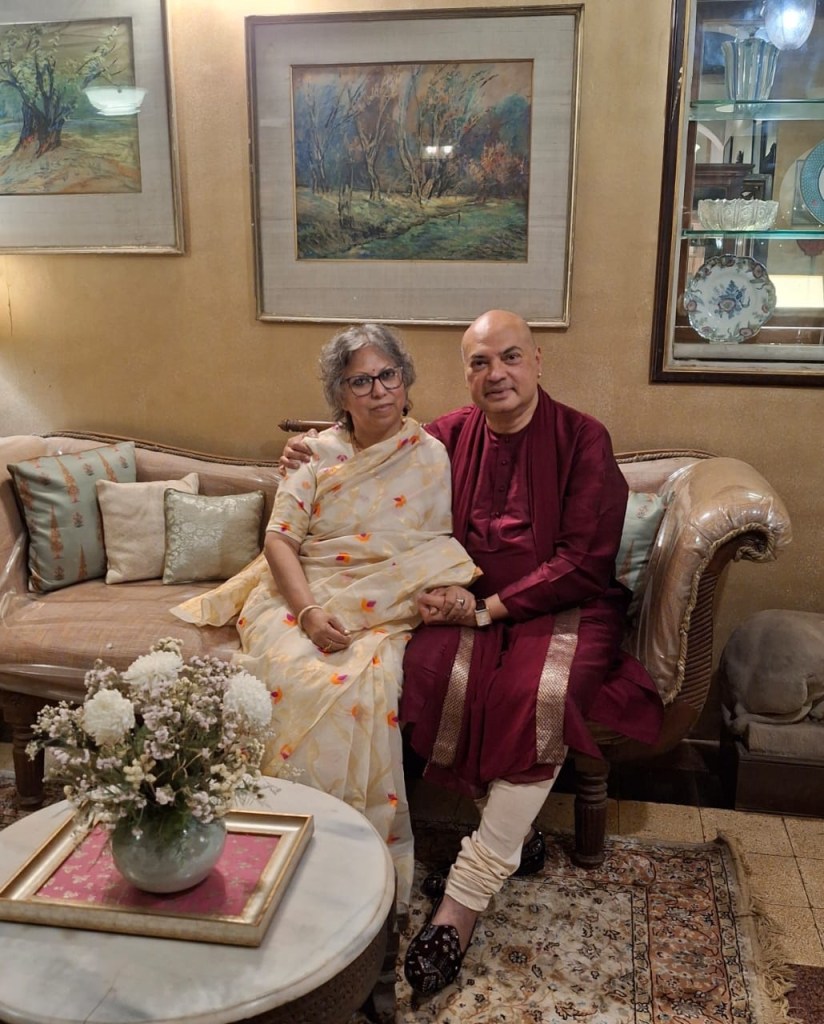
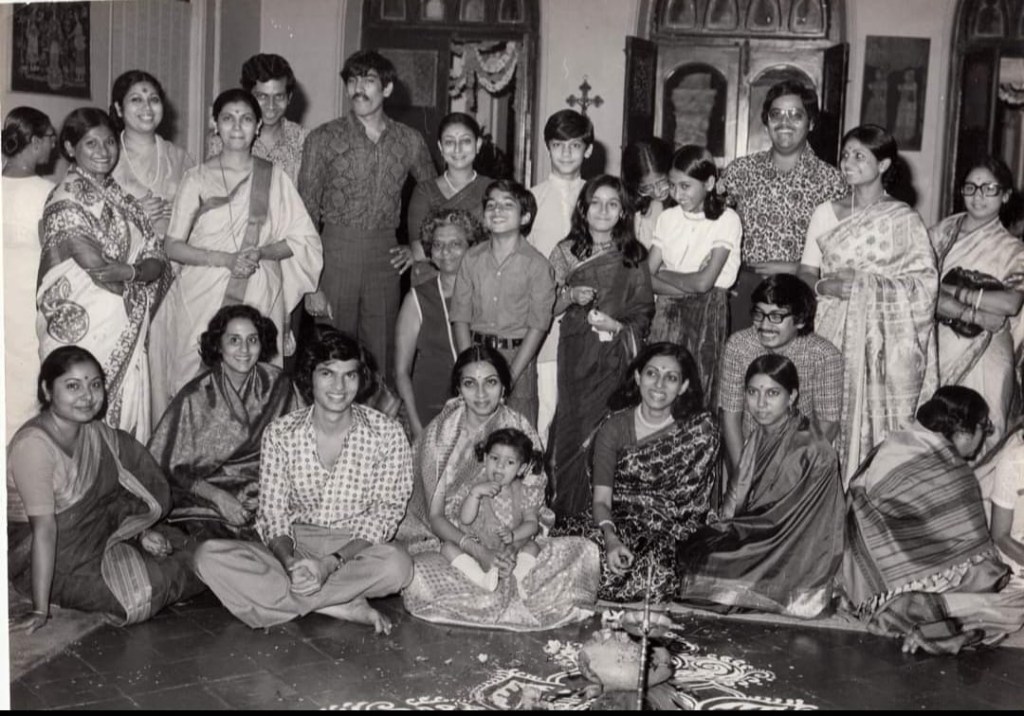
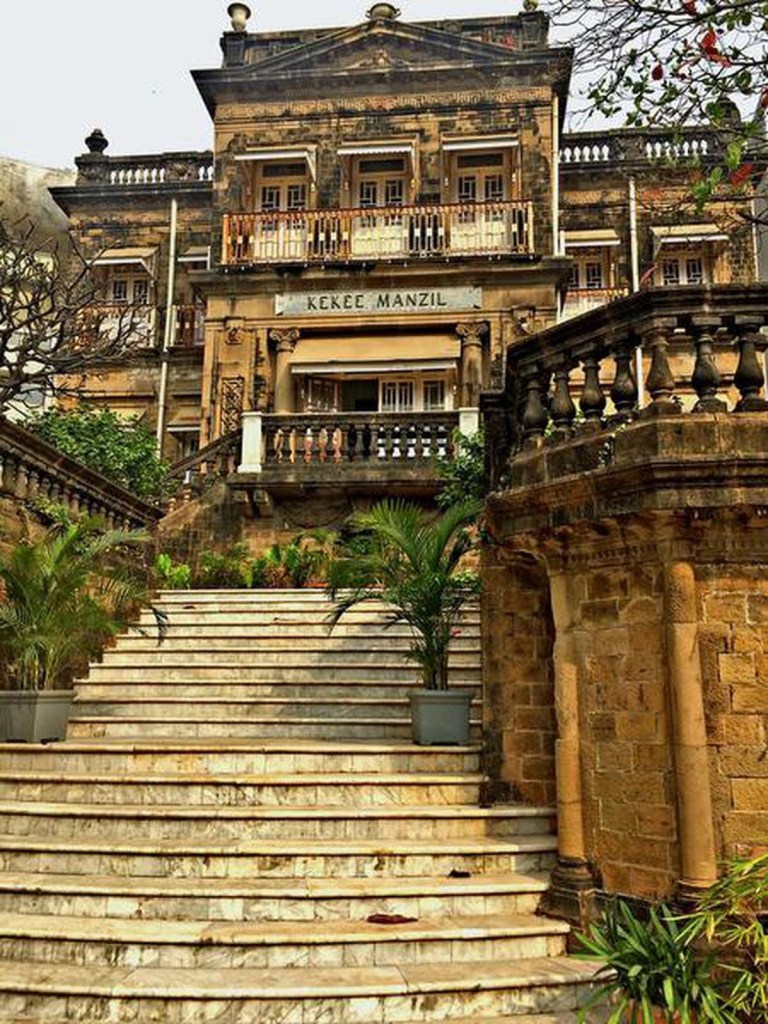
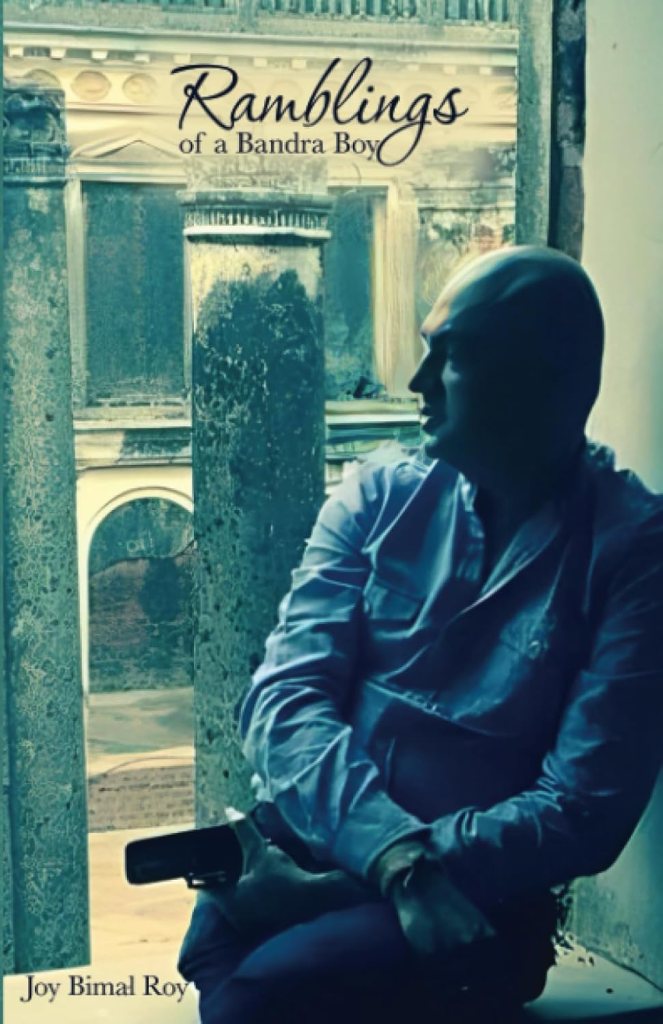


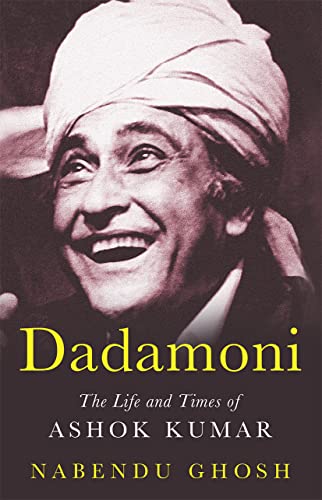
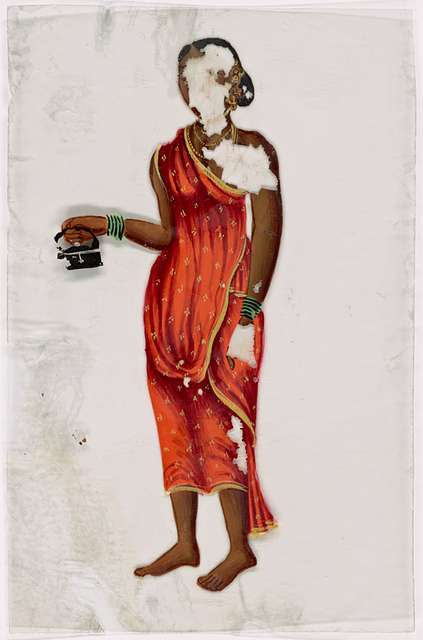
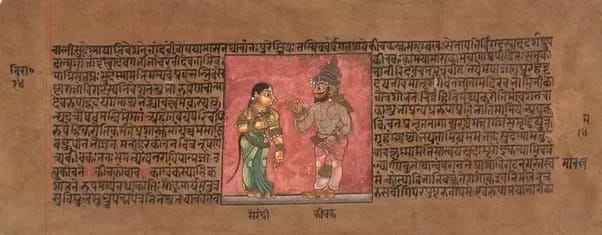
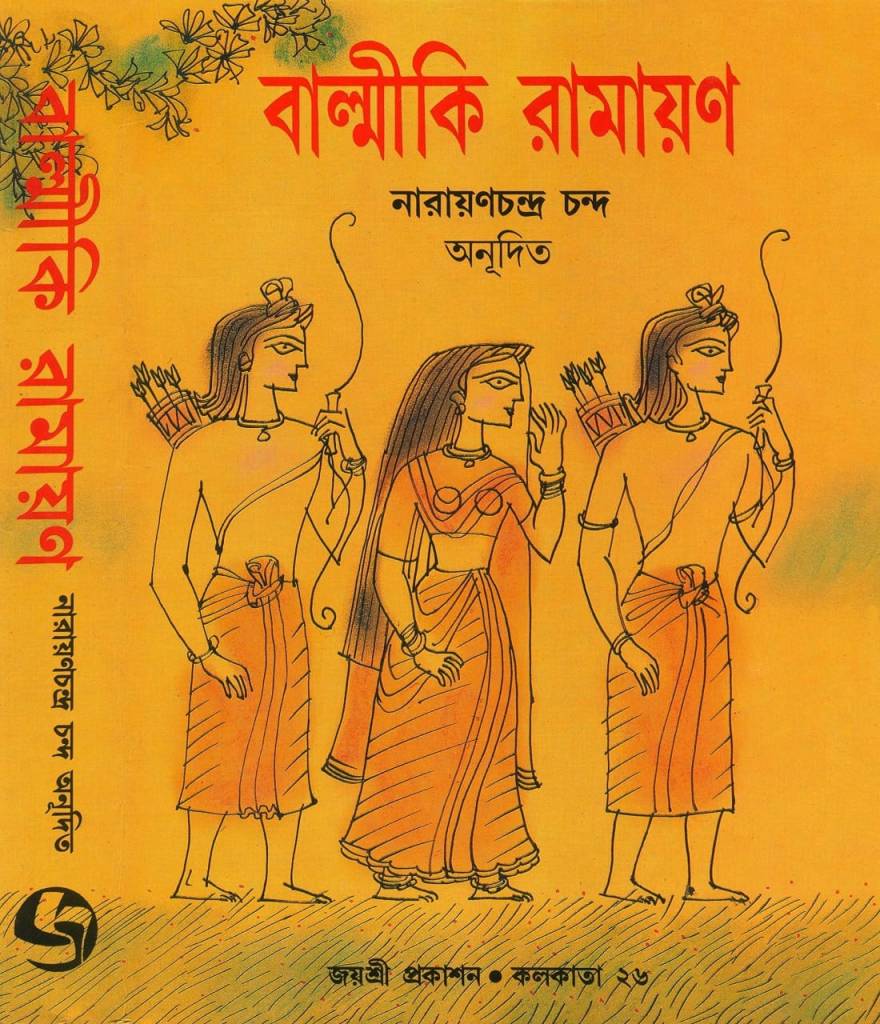
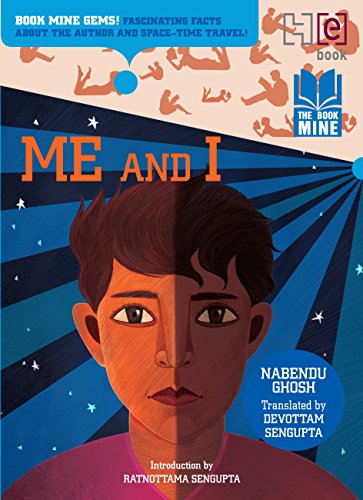
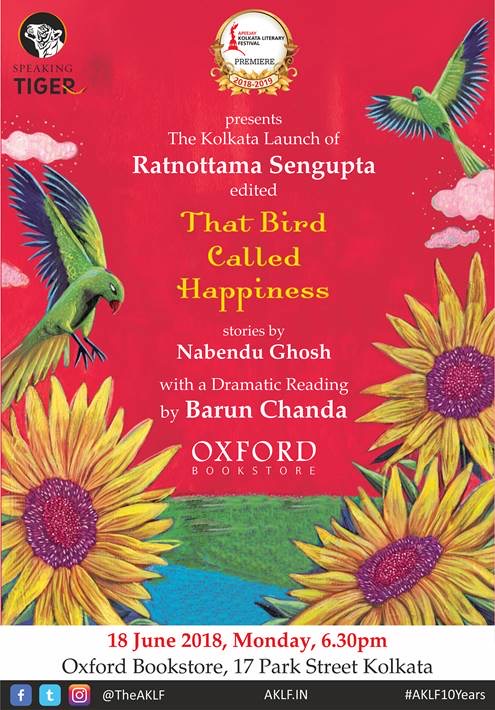
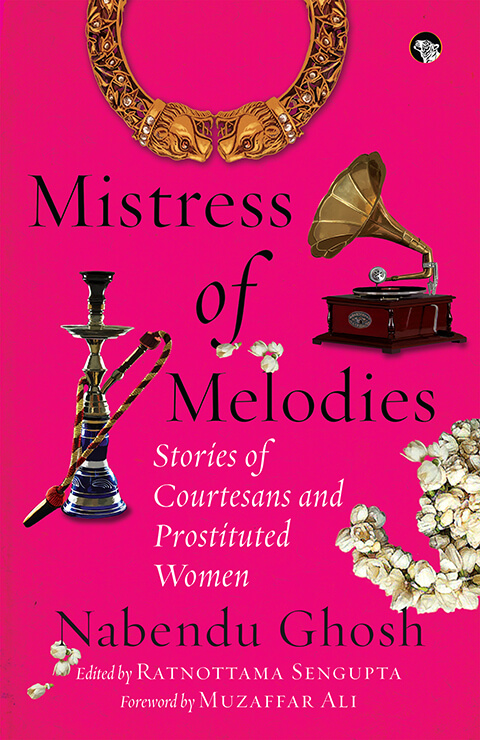
 Borderless