Categories
Slices from Life

The Rule of Maximum Tolerance?

By Jun A. Alindogan

From Public Domain

In the Philippines, ‘maximum tolerance’ refers to peacekeepers practicing a high level of restraint during public gatherings to ensure safety and maintain peace, while law enforcement implements action against violent demonstrators and shows tolerance towards those who are peaceful. Essentially, it means tolerating an individual’s capacity for patience, endurance, and long-suffering in the face of behavioral challenges.

Until now, I have maintained a close relationship with an orphaned nephew of a colleague of mine. Our bond grew stronger when he moved to our church shelter from a nearby mountainous town to live with his uncle. I have always empathised with him, as my family also provided care for fatherless children. The purpose of his relocation was to enable him to complete his college education. He eventually graduated with a degree in computer science from an institution that claims to have an Asian focus, despite lacking a physical campus during the Covid-19 pandemic. Understandably, he struggled to find employment. He returned home to stay with his aunt’s family, patiently waiting for an opportunity to secure a job, which proved to be challenging.

During his studies, we would occasionally meet for meals to discuss the work on his paper requirements before graduation and plan his group thesis. When the pandemic hit, our conversations shifted online, but his willingness to seek my assistance remained strong, and I gladly supported him.

His first job involved selling organic powdered coffee imported from Malaysia at an office in the heart of Quezon City. When the Covid-19 virus spiked, all the company’s employees had to work from home. However, there were times when they were asked to come to the office despite the significant health risk.

My friend refused to do so, which was quite reasonable as he lived with his elderly aunt and uncle. As a result, he was reprimanded and issued a memo for unauthorised leave of absence. I had to help him draft a letter in response to the memo. This situation challenged him to assert his rights as an employee as not every human resource policy is beneficial. At times, companies will test your threshold of tolerance to the limit which is not necessarily wrong. Upon repeated emails that we sent to the HR department, he was finally given his last paycheck months after his resignation.

His next job was as a management trainee for a Canadian-based coffee shop in a mall chain. Coffee shops and fast-food stores often hire college graduates from any field to fill staffing gaps caused by high employee turnover, even if their majors are unrelated to the food industry. Unfortunately, he did not pass the probationary period because he said he was verbally mistreated by the store manager over work principles and practices.

His initial job application at a global fast-food chain was unsuccessful, as he did not receive an interview. He ended up taking a part-time online job at a small pharmaceutical company to earn money for his expenses. After a year of waiting, he was finally invited for a management interview at the same fast-food chain in a city near his hometown. He got the job.

He has been working for the global fast-food chain for over two years now and enjoys his role as a specialist manager due to his interest in computing and ordering items. However, the local store management has not been supportive in terms of taking care of their team. For example, when he had a high-grade fever while working, he was not allowed to go home until the next shift manager arrived, in the midst of a heavy, rainy evening. There was even an instance where he had to attend a management meeting at another store after his graveyard shift.

On a particular rest day after his graveyard shift, he was instructed to attend management classes in a southern city for three days, without being given additional days off to offset his attendance during his rest day. Another schedule required him to report at 2pm after working a graveyard shift. At times, he was also instructed to go to other stores to manage, without any fare allowances. All these cases are documented online. The goal is for the team to hit the sales target at whatever cost and without offering any additional incentives. Even when he had toe-surgery and had to go on sick leave, he was still expected to work from home regarding stock orders. The global fast food chain’s work-life balance policy is only superficial.

Maximum tolerance does not mean to allow individuals, communities, and corporations to exploit us to unimaginable levels, where our self-worth is solely dependent on our output. Outstanding results should be based on a holistic approach that recognises everyone’s basic humanity. Resignation prevails simply because individuals are not allowed to exercise and enjoy their humanness in any circumstances. This should not be the case.

This scenario is not only limited to corporations, but also to religious institutions. In the church that I regularly attend, the resident minister encourages members to be involved in various programs, as leadership should not be dependent on a single individual but on the collective efforts of everyone. However, in doing so, he expects every member to participate in a series of activities all day on Sundays. Sundays, or any Sabbath day, should be a day of spiritual and physical refreshment and renewal. However, with the onslaught of day-long programmes each Sunday, the maximum tolerance of members is tested to the point where most skip events instead of feeling encouraged, as the minister makes them feel guilty. Saying ‘n’o is not a sin of omission.

I look forward to a time when it will be common for business enterprises and social institutions to implement appropriate mechanisms that help individuals to be more human, rather than just robots mindlessly following instructions.

Manuel A. Alindogan, Jr. or Jun A. Alindogan is the Academic Director of the Expanded Alternative Learning Program of Empowered East, a Rizal-province based NGO in the Philippines and is also the founder of Speechsmart Online that specialises in English test preparation courses. He is a freelance writer and a member of the Freelance Writers’ Guild of the Philippines (FWGP).

.

PLEASE NOTE: ARTICLES CAN ONLY BE REPRODUCED IN OTHER SITES WITH DUE ACKNOWLEDGEMENT TO BORDERLESS JOURNAL

Click here to access the Borderless anthology, Monalisa No Longer Smiles

Click here to access Monalisa No Longer Smiles on Kindle Amazon International

Categories
Poetry

Alcove and the Theory of Time

By Saranyan BV

At the fourth level, there is an alcove hidden from other human beings. 
(I didn’t know fourth level existed.)
From here a slope moving down in the form of roof,
Looks over another slope, again a roof.
If I can’t see the people, neither can they me!
The pane at this level has a small crack
To allow the air I require to breeze in. Thank you, Lord.
The space in the alcove allows me to stretch,
Allows me the freedom to assume a foetal posture.
The alcove keeps me cold, keeps me warm.
It gives the creepy feeling I might fall off or roll down.
It gives the assurance I am safe.
Here shadows spill light, nights shine darkness.
The whole thing is about the mind.
There is always the whistle, the thoughts about sex,
When it’s not about the sex, it’s about Gods,
About men travelling in trains, men running for cover to hide nakedness.
I am always missing my trains, waiting to find the station’s rest rooms,
Waiting in front of restrooms for the restrooms to be free.
Here people don’t acknowledge truth, the media doesn’t.
The Caxton phenomenon* is dead, all channels whore.
And then there is the sky, the big clear sky like a slice of cake.
The big sky out there where the birds fly, birds make the clouds wait for another day.
How little I feel, how little.
I speak to the feathers to share the alcove.
I speak to feathers because, reasons can’t speak to anyone else in this high alter of solitude.
I impress upon them to share the alcove
Because times are not shareable.

*Caxton phenomenon refers to the impact William Caxton had on English literature and language when he introduced the printing press to England in 1476
From Public Domain

Saranyan BV is poet and short-story writer, now based out of Bangalore. He came into the realm of literature by mistake, but he loves being there. His works have been published in many Indian and Asian journals. He loves the works of Raymond Carver.

.

PLEASE NOTE: ARTICLES CAN ONLY BE REPRODUCED IN OTHER SITES WITH DUE ACKNOWLEDGEMENT TO BORDERLESS JOURNAL. 

Click here to access the Borderless anthology, Monalisa No Longer Smiles

Click here to access Monalisa No Longer Smiles on Kindle Amazon International
Categories
Excerpt

From Rasa to Lhasa

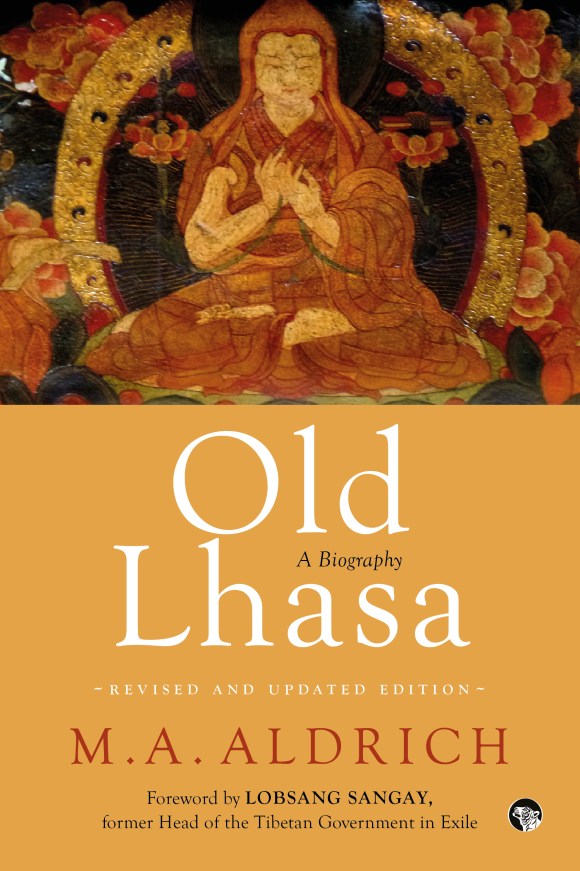
Title: From Rasa to Lhasa: The Sacred Center of the Mandala

Author: M.A.Aldrich

Publisher: Speaking Tiger Books

In 1904 at the behest of a suspicious imperial government in India, a British expeditionary force under Colonel Francis Younghusband occupied Lhasa in a fruitless search for evidence of Russian meddling in Tibetan politics. Prior to this bellicose assignment Younghusband had spent years exploring the remote, blank spaces of late nineteenth century Central Asian maps and acquiring an unusually sensitive insight into Asian religion for someone in his position. After visiting the Jokhang Temple, Tibet’s most sacred shrine, he penned a description that still resonates today.

Here it was that I found the true inner spirit of the people. The Tibetans from their mountain homes seemed here to draw on some hidden source of power. And when from the far recesses of the temple came the profound booming of great drums, the chanting of the monks in deep reverential rhythm, the blare of trumpets, the crash of cymbals, and the long rolling of lighter drums, I seemed to catch a glimpse of the source from which they drew. Music is a proverbially fitter means than speech for expressing the eternal realities; and in the deep rhythmic droning of the chants, the muffled rumbling of the drums, the loud clang and blaring of cymbals and trumpets, I realized this sombre people touching their inherent spirit, and in the way most fitted to them, giving vent to its mighty surgings panting for expression.

For Tibetans, the Jokhang Temple is at the heart of a mandala, a circular geometric design that serves as a symbol of the universe as well as a visual guide to complex and esoteric Buddhist principles. The devotional ritual of circumambulation around the temple reinforces its status as the sacred center or a “life-pole.” It is the geometric center of Lhasa’s three imaginary concentric circuits: the three korlam that are pathways for pilgrims to practice the dharma by circumambulating the Jokhang.

Eight protective shrines were built around the Jokhang. There are other nearby sites tied to the legendary account of the construction of the temple in the seventh century. Some of these sites are still used for worship, while others have become shops or residences; sadly, some have disappeared into the ether over time. The sacred and the secular were not separated in the streets of Lhasa, just as the normal and supernormal were entwined indivisibly. To expect otherwise would have come as a shock to the residents of old Lhasa and sounded downright silly to them.

For nearly all of its existence, the Jokhang Temple was Lhasa in the minds of Tibetans. Ninth-century Tang dynasty chronicles suggest Lhasa might have consisted of nothing more than mobile encampments for nobles, soldiers, and nomads, with only two permanent buildings constructed in stone (the Jokhang and its sister temple, Ramoche); but Chinese chroniclers did not always examine the ways of barbarians with much care. Lhasa did not come into being as a modest-sized city until the seventeenth century. Nevertheless, the Jokhang was felt to be synonymous with Lhasa, the “Place of the Gods.” Even in recent times the city’s bus drivers cried out “Lhasa” to their passengers to announce arrival at stops near the Jokhang Temple.

Tibetans reaffirm their view of religion as permeating all elements of the phenomenal world by perceiving them in the form of a mandala. Indeed, the mandala model applies equally to the universe as a whole, to the country, … to each city, to each temple and shrine, and, tantrically, to the worshipper’s own body. The realization of one’s own identity with these larger designs is the attainment of salvation.

ABOUT THE BOOK

A sweeping, magnificent biography—which combines historical research, travel-writing and discussion of religion and everyday culture—Old Lhasa is the most comprehensive account of the fabled city ever written in English. It is a portrait not only of a city but also an entire people—both those who still live in occupied Tibet, and those who are in exile.

‘[This book] brings you closer to the real spirit of Lhasa.’—Lobsang Sangay, former head of the Tibetan Government in Exile

‘This remarkable history should be compulsory reading for travellers, academics and armchair historians. Experts will find that Aldrich has shaken the kaleidoscope of the history and geography of Lhasa and Tibet into new and illuminating patterns. Immersing himself in the place and its past, he unravels the colourful threads that make Lhasa and Tibet so fascinating… This splendid book is a compendium of knowledge about the city and its place in Tibetan history and culture—including, of course, religion.’—Alan Babington-Smith, President of the Royal Asiatic Society, Beijing

‘Aldrich has provided in these pages a whole simulacrum of a country and its wonders. What shines in the book and gives it life is not only his amazing knowledge and understanding of Lhasa and Tibet but also his passion, enormous humour and, above all, love for its people.’—Adam Williams, author of The Palace of Heavenly Pleasure

‘Aldrich has produced an outstanding narrative focused on one of the most interesting cultural capitals in Asia… [A] fascinating history that will continue to attract readers for a long time to come.’—Jonathan S. Addleton, author of The Dust of Kandahar

ABOUT THE AUTHOR

M.A. Aldrich is a lawyer and author who has lived and worked in Asia since the 1990s. Besides Old Lhasa: A Biography, he is the author of The Search for a Vanishing Beijing: A Guide to China’s Capital Through the Ages,The Perfumed Palace: Islam’s Journey from Mecca to Peking and Ulaanbaatar—Beyond Water and Grass: A Guide to the Capital of Mongolia.

.

PLEASE NOTE: ARTICLES CAN ONLY BE REPRODUCED IN OTHER SITES WITH DUE ACKNOWLEDGEMENT TO BORDERLESS JOURNAL

Categories
Poetry

Dinosaurs Peeping over Prison Walls

 By Saranyan BV

From Public Domain
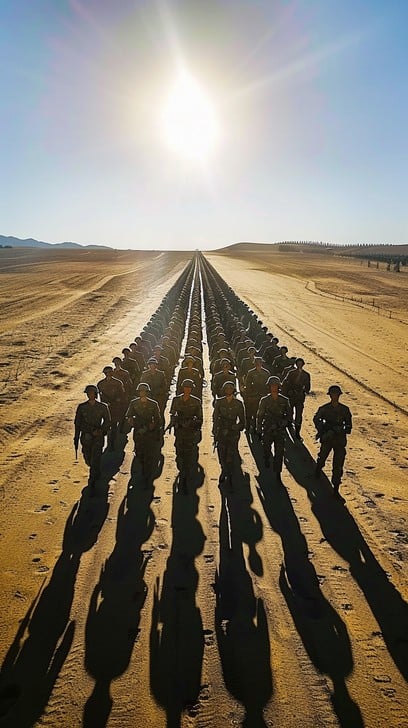
I don’t have to pinch myself to check if I  am alive   --                                                                                             Together we tread this ochre path in a convoy of mortuary vans.
We have no issues over stopping at the gas stations now and then for refuelling.
Most of us rush to the rest rooms, a wise guy buys sachets of glucose at the counter --orange flavour,
He tucks the stuff into his backpack and settles down in his black van, the sachets come with plastic straws which do not decay.
I button up my trousers and board mine.
The map on dash board shows the route,
The blue line does not show the destination though.
I get this funny feeling the place is pretty close, not more than few months.
It would be a calm place, a camp cot kind of thing,
Or at least a hard-surfaced concrete bench
And a place to wash with tap water.
The needlessness for God is now clear in the glare of evening twilight
Like fish spread on the beach sand of truth.
Fish cannot close eyes, God seem to have made them that way.
There is some kind of curiosity left on arc of their eyes.
It makes me wonder what have I lived for?
I gloat over my prayers, the rituals I performed day in and day out,
The images trail like ocean clouds in the river of blue sky.
My piety seem unreal at this point of time, all my piety
The vans stop at the toll gate following sombre lane discipline,
The wise old man’s van too stops, CO2 from it spews next to mine.
He lifts and shows one of the sachets,
Takes a small sip from it and explains over the window,
“Time and energy is all misspent”, then takes a large sip,
His eyes squint to see where the straw enters the small hole.
I see his Adam’s apple rising and levelling, “Piety is of no use after we pass brother, it always come to that, all things in our life.”

“Belief in afterlife is stupid”, I tell the old man to keep the conversation going.
“I never had a chance to ask dinosaurs how it came into extinction.”
He likes the way I speak with perennial eyes, offers me a sachet through the window and expresses alignment,
“True, the last of the dinosaurs died 65 million years ago. You know if the dinosaur had souls, those too would have died.”
This way he tries to prove souls hang around though eventually they die.
I think he invests in the concept of soul to prolong his own life after death.
His ticketing is done, the van starts ahead.
My soul died at birth, the inevitability of death sticks on the wall
Like residue of the gums left by Bollywood posters,
Snatched and eaten by the city bovines.
My mom told me that the only protein city cows get is from the glue,
She also kept telling that milk of the city cows smell of the wheat adhesive.
Mom is gone and she won’t be watching, all that she has taught too is gone.
It is not about God or religion or even atheism,
It’s about us, the dinosaurs peeping over the prison walls.

Saranyan BV is poet and short-story writer, now based out of Bangalore. He came into the realm of literature by mistake, but he loves being there. His works have been published in many Indian and Asian journals. He loves the works of Raymond Carver.

.

PLEASE NOTE: ARTICLES CAN ONLY BE REPRODUCED IN OTHER SITES WITH DUE ACKNOWLEDGEMENT TO BORDERLESS JOURNAL

Click here to access the Borderless anthology, Monalisa No Longer Smiles

Click here to access Monalisa No Longer Smiles on Kindle Amazon International
Categories
Poetry

The Years I Still Have

Poem by Saranyan BV

From Public Domain

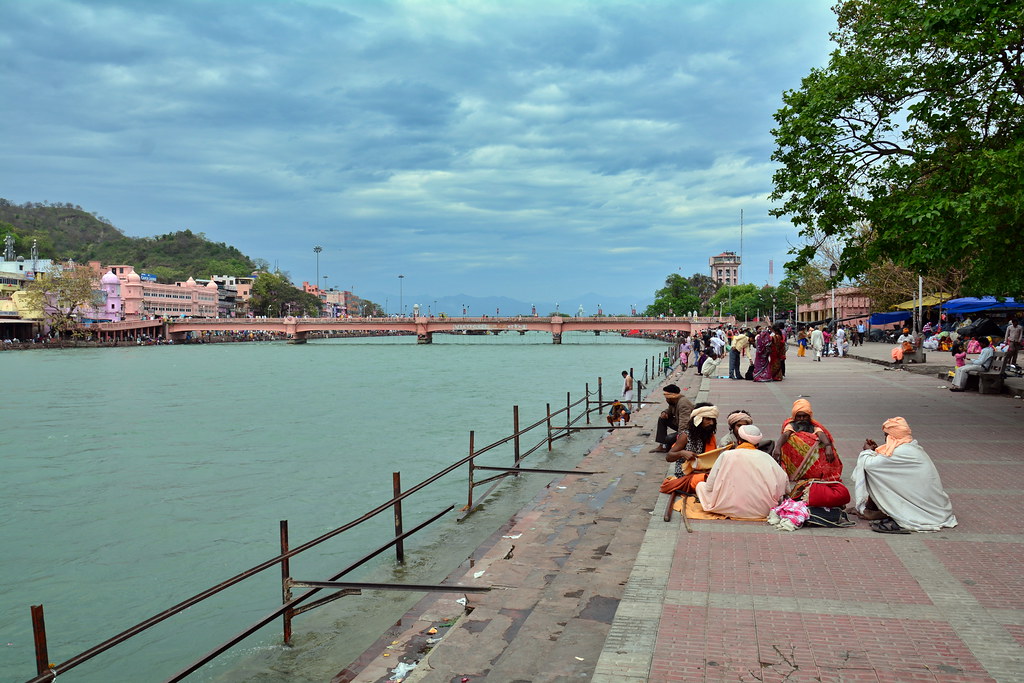
I am in Haridwar. Haridwar is a holy town where people wash sins in the Ganges.
I watch the waves touch my feet, then tumble over the cobblestones, take the curve and veer off.
I watch the horizon dissolve, vanish into the darkness of the night.
These kind acts of nature are reminders of the years I still have.
There is absolute uniformity in the sound from conch-shells.
The blower has no control over the notes of appeasement.
The blower is dressed like a sage. I cannot vouch if he is one.
I hear the cow-bells shake off satisfaction,
I envy the bovines heading home for a regular meal from the wife of the herdsman.
The cows have before them a whole night of masticating after the day-long grazing is done.
The river or horizons or even the cows and their sweet moos are mere physical things.
An angel comes in my dream and proclaims that we are products of time.
Though men often wish not to ponder over this labyrinth of metaphysics --
Nothing is truer than death, death is real, it is the only truth --
The angel doesn’t explain in so many words, simply leaves the footpath of left over life ahead.
I sit on a stone to study the footprints left by the muster of crows,
What made them descend to the ground although they have wings?
What did they forage?
Oh angel, you are evanescent as are my dreams. Do not go away. I long for you. I have no power to criticise or doubt.
I will even drink for your presence -- though I stopped drinking long ago.
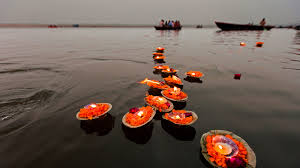
There, let us join! Young monks prepare for the aarti* of mother Ganges!
The lights from the aarti act as beacons for the dingy boats of sins,
Are there labs to check the density of sins or instruments to measure the river’s purity?
A horde of pelicans fill the wintry sky with rosy feathers and fade out
Giving the sky back it’s blue.
Nothing is permanent -- everything seems good, everything –
And that’s why I’d feel secure when I close my eyes later in the night.

*Offerings accompanying prayers
Religious offerings on Ganges. From Public Domian

Saranyan BV is poet and short-story writer, now based out of Bangalore. He came into the realm of literature by mistake, but he loves being there. His works have been published in many Indian and Asian journals. He loves the works of Raymond Carver.

.

PLEASE NOTE: ARTICLES CAN ONLY BE REPRODUCED IN OTHER SITES WITH DUE ACKNOWLEDGEMENT TO BORDERLESS JOURNAL

Click here to access the Borderless anthology, Monalisa No Longer Smiles

Click here to access Monalisa No Longer Smiles on Kindle Amazon International
Categories
Poetry

Oh! You Would Not Believe…

By Saranyan BV

From Public Domain
THE HIDE-OUT IN MY BOTANY BOOK


Oh! You would not believe
For a while I thought Professor Livingstone fooled me.
He taught us botany, that tamarind is a leguminous species
With small little leaves and a central nerve.

Oh! You wouldn’t…
For a while I believed when I read somewhere all leguminous are like spinach*,
Good protein, sound for body and health,
No small leaves, no central nerve.


Oh! You wouldn’t…
When I referred back to my old text
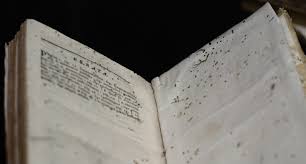
That the Professor used for Botany, the book had holes,
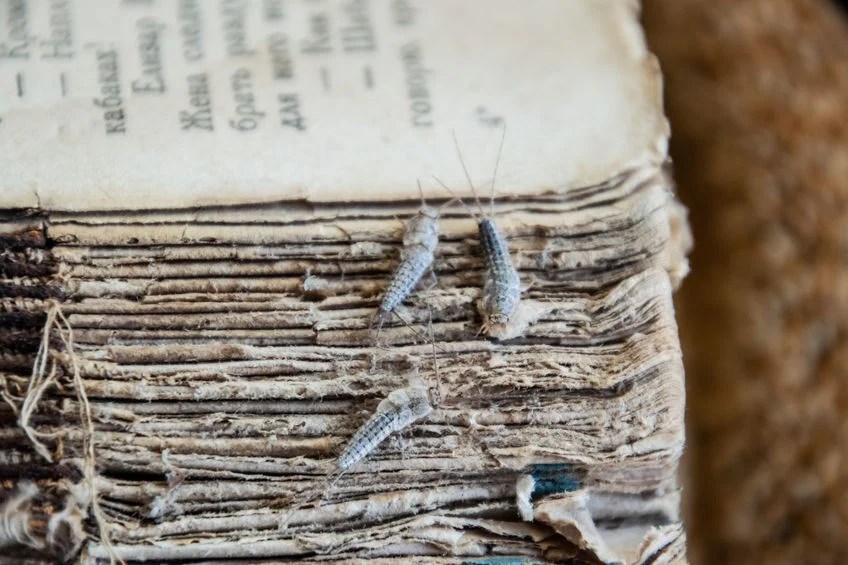
Smelt ancient, a silver fish or two crawled to shy away from light.

Oh! You wouldn’t…
The silver fishes ate the portions of the book
Which spoke about the species Tamarindus Indica
And the family to which it belonged.

Oh! You wouldn’t believe my dear Professor,
The tamarind trees belong to the leguminous after all.
I tried to hide my head in a borehole
Dug by silver fishes in the pages containing work on Phytomorphology*.


* http://www.dietamediterranica.pt/?q=en/node/240

*The study of external structures of plants
From Public Domain

Saranyan BV is poet and short-story writer, now based out of Bangalore. He came into the realm of literature by mistake, but he loves being there. His works have been published in many Indian and Asian journals. He loves the works of Raymond Carver.

.

PLEASE NOTE: ARTICLES CAN ONLY BE REPRODUCED IN OTHER SITES WITH DUE ACKNOWLEDGEMENT TO BORDERLESS JOURNAL

Click here to access the Borderless anthology, Monalisa No Longer Smiles

Click here to access Monalisa No Longer Smiles on Kindle Amazon International
Categories
Poetry

A Vignette

By Saranyan BV

A VIGNETTE

I let her place her hand on mine.
I let her rest it like a turquoise tailor bird.
I could feel my burdens lift.
We sat watching the kids in the monsoon park,
Playing, climbing over the slide board
And gliding down. The board was wet
where it joined the earth.
We didn’t need to speak.
Speaking always led to differences.
The marigolds had showered and withered
Everywhere like tapestried carpet,
I squeezed her hand gently, and she said, “Oh!”
She got up and walked in the direction of the gate.
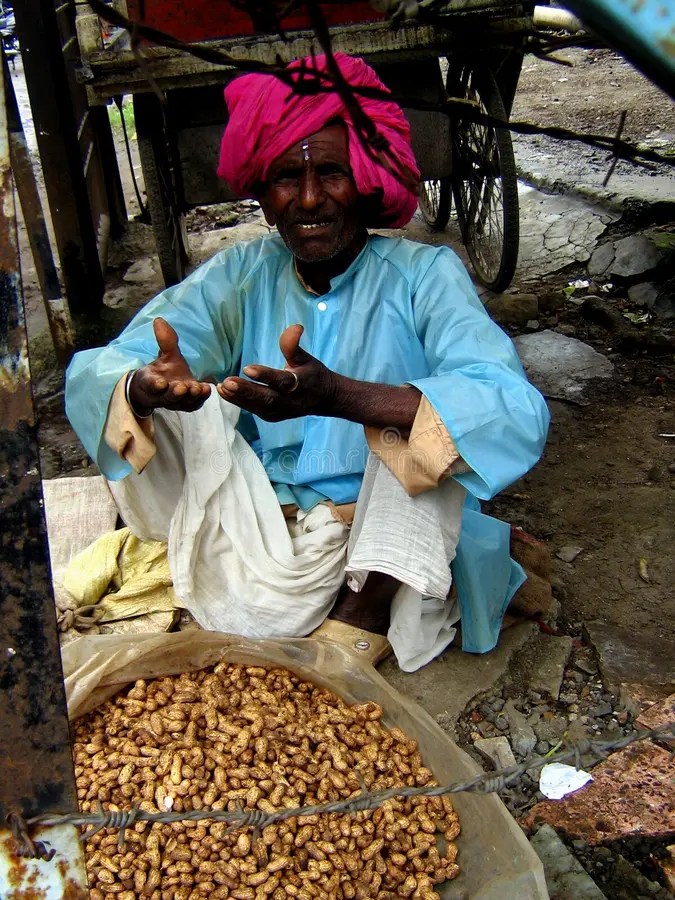
The man at the gate roasting groundnuts and selling,
Kept banging the skimmer
On the wrought-iron sand-filled pan. It made a lot of noise.
A Peanut Seller. From Public Domain

Saranyan BV is poet and short-story writer, now based out of Bangalore. He came into the realm of literature by mistake, but he loves being there. His works have been published in many Indian and Asian journals. He loves the works of Raymond Carver.

.

PLEASE NOTE: ARTICLES CAN ONLY BE REPRODUCED IN OTHER SITES WITH DUE ACKNOWLEDGEMENT TO BORDERLESS JOURNAL

Click here to access the Borderless anthology, Monalisa No Longer Smiles

Click here to access Monalisa No Longer Smiles on Kindle Amazon International
Categories
Poetry

The Clock that Cuckoos

By Saranyan BV

As I was fast asleep in my bed of roses,
Someone silently moved
The cuckoo clock standing against the eastern wall
And hung it next to the awning through which I watch sunset.

As I sleep on my bed of roses,
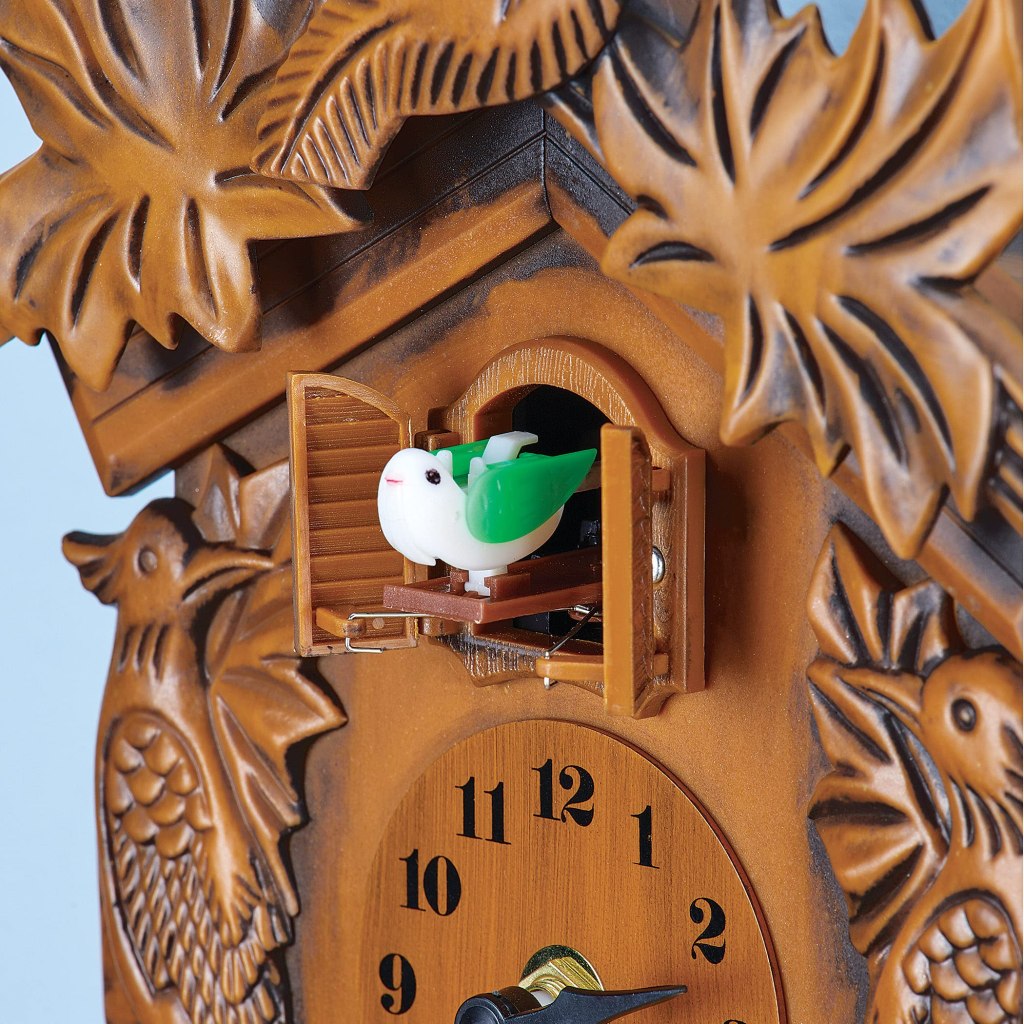
The cuckoo comes out of the darkness every hour.
The cuckoo's breast is brown, like the pile of wood stacked on funeral pyres.
The cuckoo would look at the unencumbered nail sticking out,
And blow its honest heart out,
‘It’s not about death I am afraid, It’s about living’ –
It’s time I hang a picture of the churchyard symmetry
Where my father, my mother and my friend have gone before, sleep.
I sleep past my bed of roses.
I do not draw conclusion from the waxing of or waning of the moon
The moon passes through the window over the beads of raindrops
All night,
The good old cuckoo clock minds
‘Cuckoo…, cuckoo…’.
From Public Domain

Saranyan BV is poet and short-story writer, now based out of Bangalore. He came into the realm of literature by mistake, but he loves being there. His works have been published in many Indian and Asian journals. He loves the works of Raymond Carver.

.

PLEASE NOTE: ARTICLES CAN ONLY BE REPRODUCED IN OTHER SITES WITH DUE ACKNOWLEDGEMENT TO BORDERLESS JOURNAL

Click here to access the Borderless anthology, Monalisa No Longer Smiles

Click here to access Monalisa No Longer Smiles on Kindle Amazon International
Categories
Poetry

Learning to Listen to Silence

By Saranyan BV

Our friendship overcomes the distance between the balconies.

At first the extent seems long, gaping like the head of a ship-mast sailing beyond the horizon.

We could connect only with our eyes. We do not have access to each other.

Otherwise, she is companionable, very bubbly. She is petite,

I guess she feels lost being alone. She demands I remain in the balcony all the time.

And I would, a book of poems on my lap.

My neighbours often leave her alone,

go roaming, to play or to munch popcorns in movie malls,

She would express her stress by barking through the morning,

or whining the rest of the day. I learn not to be troubled by her tantrums.

She would jump with joy upon seeing me, let me know how happy she felt using the tail.

I never reason any other purpose for that appendage.

It makes me feel inadequate, the absence of it.

In that period of love we forge our clandestine kinship by panting like mountaineers doing high altitude trek.

I learn to return her love.

I would lean over the balustrade and pretend to hug.

She taught my eyes to ooze oxytocin, which she channels into her wide-eyed ardour.

And then her folks move away to another apartment, taking her along.

She is not aware of the plan to move, she has not been told, she goes without saying goodbye.

I still have the book on my lap, the book of poems, open and face down.

The silence is not adequate to replace the ligature of our bond

or to teach me how to bear her absence with quietude.

Saranyan BV is poet and short-story writer, now based out of Bangalore. He came into the realm of literature by mistake, but he loves being there. His works have been published in many Indian and Asian journals. He loves the works of Raymond Carver.

.

PLEASE NOTE: ARTICLES CAN ONLY BE REPRODUCED IN OTHER SITES WITH DUE ACKNOWLEDGEMENT TO BORDERLESS JOURNAL

Click here to access the Borderless anthology, Monalisa No Longer Smiles

Click here to access Monalisa No Longer Smiles on Kindle Amazon International
Categories
Poetry

Spasms by Kirpal Singh

Etching by Thomas Rowlandson (1756-1827)
SPASMS

They delight through their insistence
Like some ill found friend,
Who doesn’t know lines drawn,
Keeping deeper knowing at bay.

These spastic breaths do worry
Many, whose heartbeats are dire,
Torn between duty and desire
Lingering in-between in sadness.

Thus, do I thrust through my days,
Keeping both vigil and dreams,
Determined to preserve sanctity
Of faith and resilience and Truth.

Someday, it’ll all make sense
Especially to those who keep mum
Fearing repercussions, hiding away
Guilt and shame and sorrow.

Such intimate knowing is rare
A precious gift to those chosen
To know and bear the cross
Burying in their end the Truth.

Kirpal Singh is a poet and a literary critic from Singapore. An internationally recognised scholar,  Singh has won research awards and grants from local and foreign universities. He was one of the founding members of the Centre for Research in New Literatures, Flinders University, Australia in 1977; the first Asian director for the Commonwealth Writers’ Prize in 1993 and 1994, and chairman of the Singapore Writers’ Festival in the 1990s. He retired the Director of the Wee Kim Wee Centre.

PLEASE NOTE: ARTICLES CAN ONLY BE REPRODUCED IN OTHER SITES WITH DUE ACKNOWLEDGEMENT TO BORDERLESS JOURNAL

Click here to access the Borderless anthology, Monalisa No Longer Smiles

Click here to access Monalisa No Longer Smiles on Kindle Amazon International