Categories
Essay

Where the Rice is Blue and Dinosaurs Roar…

By Ravi Shankar

The Kuala Terengganu Skyline. Photo courtesy: Ravi Shankar

The lighting was subtle but magnificent. The transparent minarets glowed red, green, pink, and blue in turn. We were at the Masjid Kristal on the island of Wan Man at Kuala Terengganu in the state of the same name in northern Malaysia.

The mosque is among the most photographed monuments in the Islamic Heritage Park, and we could easily guess why. This is the first intelligent mosque in the country with an IT infrastructure and wi-fi connection. We were glad we came. The reflection of the mosque lights on water was enchanting. Getting around KT — as Kuala Terengganu is lovingly called by the locals — could sometimes be tricky without your own vehicle. Ride hailing services may not work optimally in the peak hours of the evening. We were informed by one of the cab drivers that Maxim is the most popular e-hailing app in the city.  

The population in KT loves to eat out and in the evenings the restaurants are usually crowded. We were staying at the Intan Beach Resort at Pantai Batu Burok and the eating places by the beach were always crowded. The beach is popular with locals with several attractions and rides during the evenings. There is a three-kilometre walking path by the side of the beach. As we stayed right by the beach, we could enjoy early morning strolls on the soft sand.

Panti Batu Burok: Photo Courtesy: Ravi Shankar

The Kuala Terengganu state museum was huge and is located on over 23 acres of land. The museum was officially opened in 1996 and was designed by a well-known Malaysian architect, YM Raja Dato’ Kamarul Bahrin Shah, who also happens to be related to the royal family of Terengganu. The building is designed in traditionally Malay style and the outer façade was left undecorated. There are nine different galleries, and these include the Royal gallery, the historical gallery, the textiles gallery, the Islamic gallery, the handicrafts, the natural resources, the shipping and trading and the marine resources galleries.

Tha Batu Bersurat. Photo Courtesy: Ravi Shankar

The ‘Batu Bersurat’ (lettered stone) is the museum centrepiece and of great significance to the state. The stone is estimated to be 700 years old and mentions the position of Islam and the application of Islamic laws in the state. The stone is written in the Jawi script using Arabic characters. Jawi script is still used in Terengganu though in many areas Malay is written mostly in the Roman script. In the museum grounds, there is a good collection of different old cars and other vehicles used by the King and Chief Ministers of the state.  

The Islamic Heritage Park is a major attraction located on the island of Wan Man. The park has small scale replicas of famous global Islamic monuments. Among the monuments represented are the mosques at Medina and Mecca in Saudi Arabia, Dome of the rock in Jerusalem, the Taj Mahal in India, and a mosque in Aleppo, Syria. The national mosque of Malaysia and mosques in Singapore, Indonesia, Pakistan, Iran, China, Tatarstan, Uzbekistan, and Iraq are also on display. Replicas of these famous monuments were displayed in the vast gardens of the monument. I liked this concept, and the monuments were well maintained except one or two that may require more attention.

The sun was hot, and I had to drink copious amounts of water.  In the evening, my friend, Binaya, and I went to the floating mosque situated in Kuala Ibai Lagoon near the estuary of Kuala Ibai River, 4 km from Kuala Terengganu Town. The mosque combines modern and Moorish architecture, and is a white structure situated in five acres of land. There is also a floating mosque in Penang.

The next morning, we went to the Science and Creativity Centre. The centre is housed in a huge, modern building. There are multiple galleries to explore. I was fascinated by the stainless-steel exhibit showing the structure of DNA, the blueprint of life. The encounter with the dinosaurs was the highlight of the trip. The dinosaurs were colour coded in red (dangerous), yellow (exercise caution) and green (safe). Tyrannosaurus Rex was the highlight. Raptors, allosaurus and other dinos filled the hall with their cries and screams. The Stegosaurus had scales on the back. When I was young, I was a big fan of Phantom comics created by Lee Falk and Phantom had a stegosaurus as a pet. The inflatable dome on the top floor had a delightful cosmic show and you can see the universe projected above your head. The museum had plenty of things to see and do and is a big hit with children.

The Masjid Sultan Ismail Chendering has delicate artwork and is built entirely in white. The simple design and the beautiful artwork had me mesmerised. The mosque has a long history. The small Lebai Zainal Mosque which could accomodate150 people was first built near the current location of the mosque before being replaced by the Raja Chendering Mosque and then replaced again by a new mosque which is the Sultan Ismail Mosque.

Soon it was time for lunch. There are plenty of food options near our hotel. I enjoyed nasi kerabu, a Malaysian rice dish, in which blue-coloured rice is eaten with dried fish or fried chicken, crackers, pickles and other salads. The blue colour of the rice comes from the petals of Clitoria ternatea flowers, which are used as a natural food colouring.

In the evening, we went to see the Abidin Mosque which is Terengganu’s old state royal mosque built by Sultan Zainal Abidin II between 1793 and 1808. The Royal mausoleum is located next to the mosque. Istana Maziah, the official palace of the Sultan of Terengganu is located close to the mosque at the foot of the mountain, Bukit Puteri. The palace is the official venue for important functions such as royal birthdays, weddings, conferment of titles and receptions for local and foreign dignitaries. We wanted to climb Bukit Puteri, but the place was under renovation and closed.

We continued along the waterfront to the Shah Bandar jetty. A cool breeze was blowing, and many people were strolling along the promenade. We were moving toward the Kuala Terengganu drawbridge constructed in 2019 inspired by the London drawbridge. We waited for the sky to darken so that we could see the lights on the bridge.

Photo Courtesy: Ravi Shankar

Buses from KL take the highway to Kuantan and then bypass the town. The journey continues to the town of Paka and then takes the coastal highway through Dungun. Some parts of this state reminded me of my home state of Kerala in South India. Plenty of coconut trees were seen. Coconut trees grow so well in Kerala and in many areas along the west coast of India.

The expressways in Malaysia are well-designed and maintained. Traveling on these are usually a smooth experience though they get very crowded during major holidays when people leave Kuala Lumpur for their hometowns and villages. KT is about 400 km from KL and takes around eight hours by bus. Malaysia’s northern state on the East Coast can be a good getaway. The town and the state has culture, history, natural beauty, delicious food, and serene beaches. The islands off the coast were still closed. Redang island was mentioned to be one of the most beautiful islands in the world. Hopefully, we will visit these during our next trip. God willing, we shall!  

.

Dr. P Ravi Shankar is a faculty member at the IMU Centre for Education (ICE), International Medical University, Kuala Lumpur, Malaysia. He enjoys traveling and is a creative writer and photographer.

.

PLEASE NOTE: ARTICLES CAN ONLY BE REPRODUCED IN OTHER SITES WITH DUE ACKNOWLEDGEMENT TO BORDERLESS JOURNAL

Click here to access the Borderless anthology, Monalisa No Longer Smiles

Click here to access Monalisa No Longer Smiles on Kindle Amazon International
Categories
Slices from Life

Mister, They’re Coming Anyway

Narrative by Timothy Jay Smith

Memories of Lesbos, 2016.

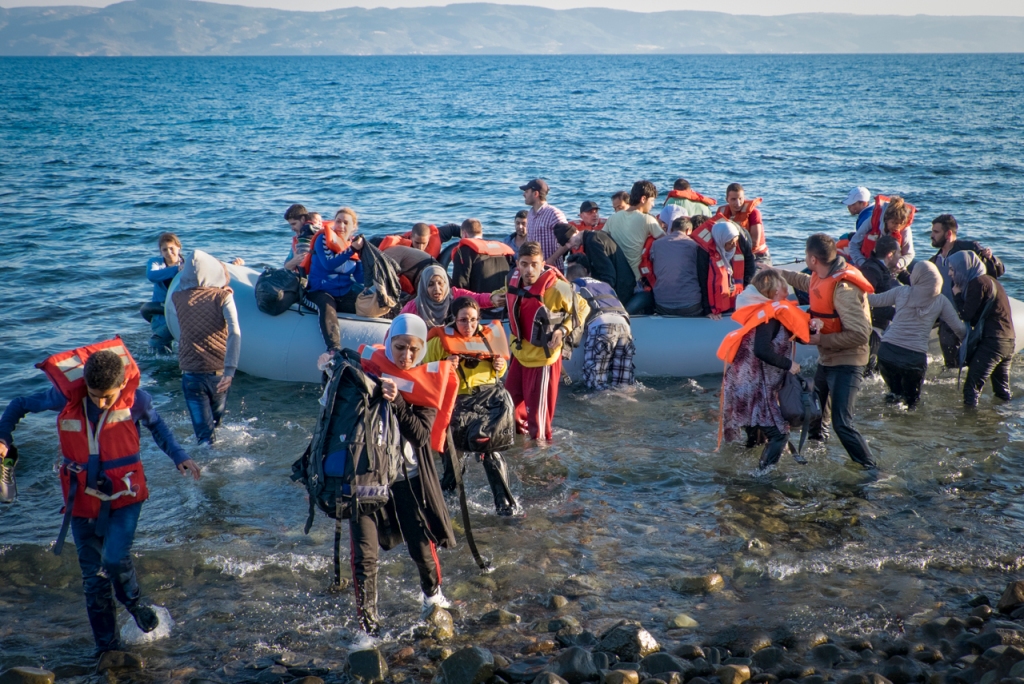
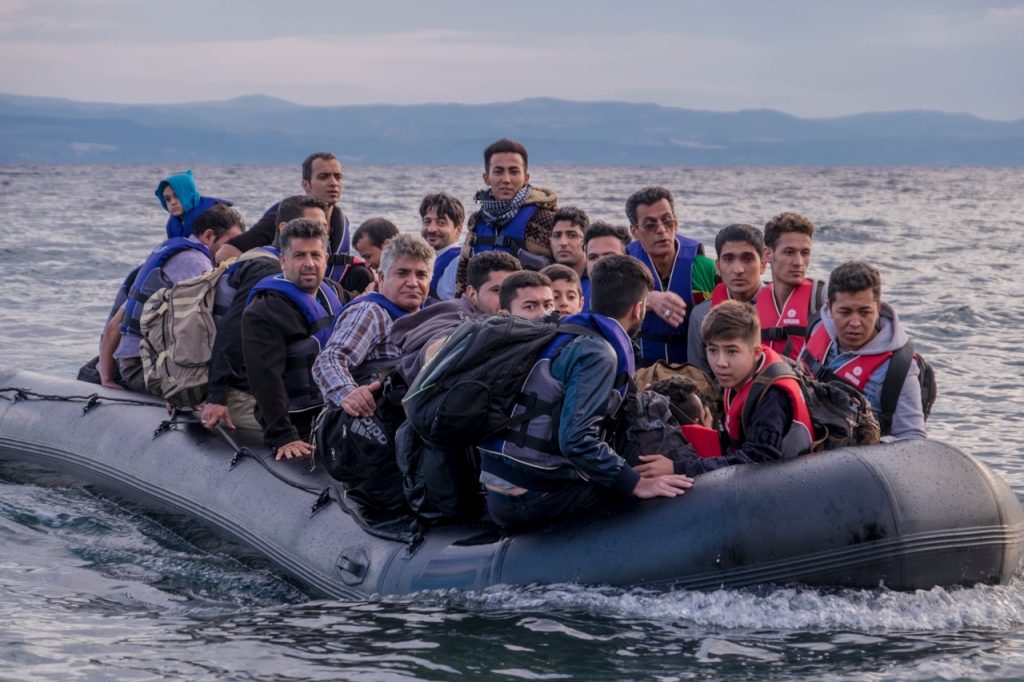
Sunrise over the Mediterranean. The island’s hills brighten as the chug of boat engines can be heard over the lapping waves. These aren’t your typical Greek fishing boats returning from a night at sea, but a flotilla of black rafts, nine total carrying some 400 refugees to land on the north coast of Lesbos Island. Under five miles off the Turkish coast, Lesbos has become a beachhead for a flood of refugees that has come as unannounced as a tsunami, and for which local communities are even less prepared.

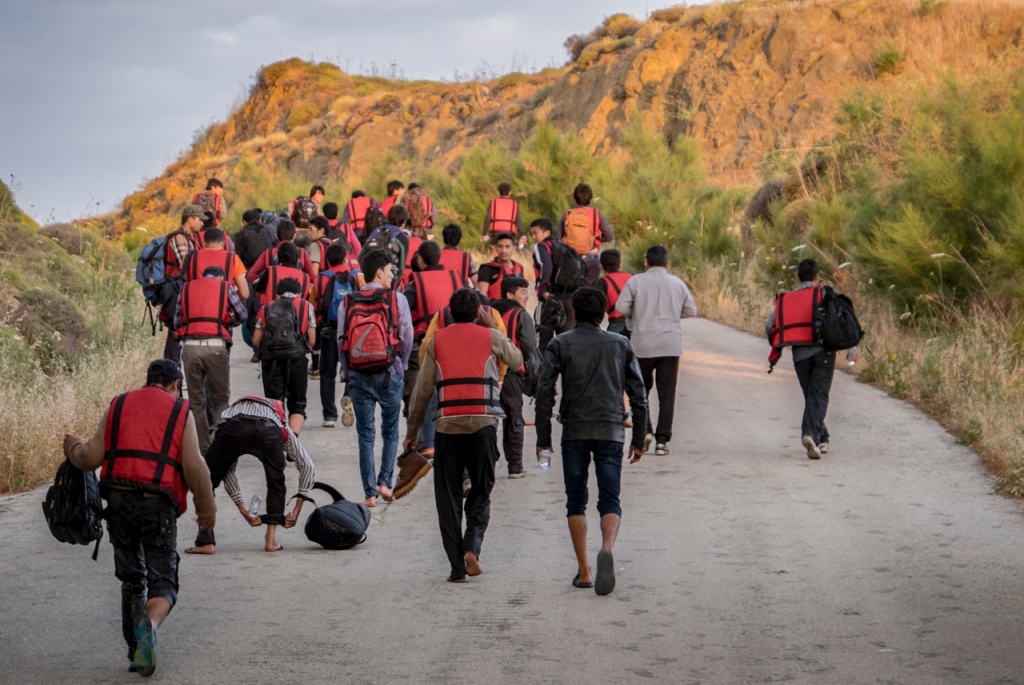
There has always been a trickle of refugees across the narrow channel. In the ten years that I have been coming here, every week I would find one or two rafts abandoned on the beach with ten or so life jackets or paddles. Until recently, most had been young men from Afghanistan and Iraq, escaping wars they didn’t want to fight, who would later be spotted on a road walking the forty miles or so to the island’s capital, Mytilini, to be processed and transferred to a camp in Athens. In the whole country, the number of such migrants has increased five-fold over the same period last year; but for the islands offshore Turkey, the numbers have risen far more dramatically. On Lesbos, the count has gone from a few dozen a month to over two thousand in one three-day period alone.

A surge in Taliban-led violence in Afghanistan, the rapid spread of the barbaric Islamic state in Iraq, and Syria’s devastating civil war have sent millions fleeing for their lives. Over half of the Syrian population has been displaced, and now accounts for half or more of the new arrivals. Often members of the middle class—teachers, IT specialists and engineers—more often Syrians come as families, forced to leave when their children’s school was bombed; or if from Aleppo, when their neighbourhood was razed. On the whole, Syrians have more money than others, but that doesn’t mean much when they have nothing else but the clothes they are wearing.

Some Afghani refugees have walked from as far as Kabul, taking weeks to hike over Iran’s mountains and cross the length of Turkey to its west coast. The odd Syrian has flown to Istanbul, and taken buses to where, even if he or she has money, still has to hide in forests, waiting for days until his turn for the ‘trafficker’ to bundle him aboard a rubber raft. With the craft’s captain (usually one of the refugees) given an hour of training, they are launched for Greece with nothing more precise nautically than a pointed finger.

It’s a harrowing journey for everyone, not the least because of the real risk of capsizing their overloaded rafts even in light seas—sometimes purposefully. The traffickers instruct them to slash their pontoons if the Greek Coast Guard approaches to keep from being turned back to Turkey, which inevitably tosses forty-some non-swimmers into the sea with a crew of only four frantically trying to save them. Ironically, the Coast Guard’s mission is not to turn them back, but to ensure their safe arrival.

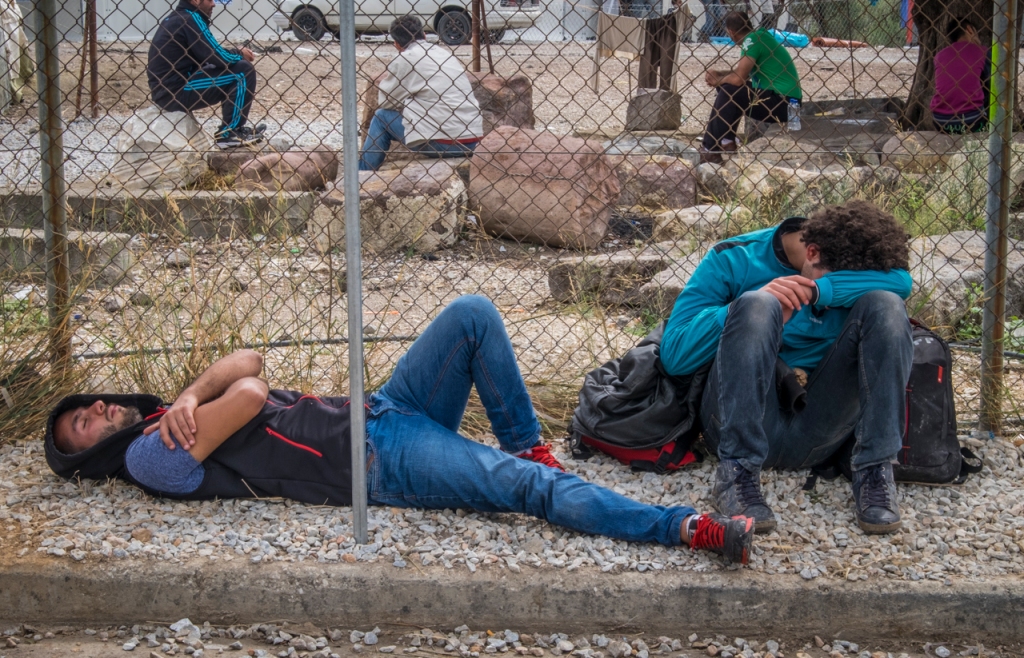
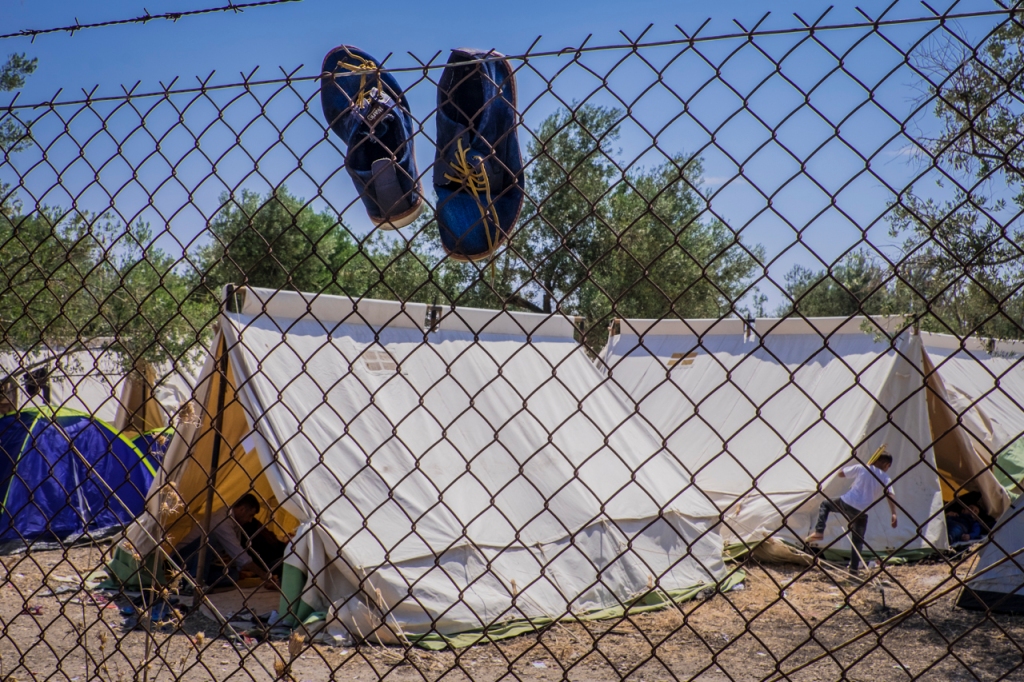
Ahead of them, the journey will still be hard. They don’t know it yet. Their dream—their safety—is their first footstep in Europe. It’s only one step in a perilous journey that will take them to processing centers, overcrowded camps, and force them into the hands of other traffickers, more malevolent than anyone else they have met on their way, who, for extortionist prices, promise to get them to Germany or Austria—the current popular destinations.

That emotional first step on European soil can’t be overestimated. As their rafts slide ashore, it’s a celebration. The journey has ended and they have arrived safely. Regardless of their wariness of what’s next, they scramble ashore, some feeling the need to run a short distance from the water; but others, overcome with their first sense of security in years, weep, embrace each other, believing—rightfully—that they have made it to a better place. Certainly a safer one.

It’s different, too, from what they imagined. There is little officialdom at this northern point of the island. No police to register them, no information other than the latest rumours that their rescuers—sometimes the Coast Guard, sometimes local volunteers—can pass on. Frequently they don’t know where they landed, only that they need to register with the police to get in the long line to be processed.

Where are the police?

Seventy kilometers away.

Will there be a bus?

Maybe.

Maybe?

Probably not. But maybe. It changes daily.

What do we do?

Walk.

Walk? My wife is pregnant. My boy is three years old.

I’m sorry. Walk.

The rules, and the probability of a bus, change daily. It’s not because of some great inefficiency by Lesbos’ government, though the elimination a few years ago of village mayors to create a central authority in Mytilini has complicated providing services as essential as portable johns at the bus park where people are often stranded for several days. Earlier this week, that meant thirty persons crowded into a bus shelter on a chilly and rainy night; among them, eight children and five women—two of them pregnant.

While it was foreseeable that the Syrians would mass in camps just over the border in Turkey, it was far less predictable that they would become such a massive wave of refugees headed for the West. If someone saw it coming, that message never got to frontline Lesbos. It might not have mattered if it did. The country is bankrupt. Local officials can hardly provide basic services, let alone cope with an explosion of refugees. International NGOs haven’t caught up with the crisis either.

Local volunteers are making extraordinary efforts to meet the rafts on arrival, and ensure that they have food, water, clothing, shoes, and even Pampers because there are so many infants. Of course, not everyone agrees on what assistance, if any, should be provided.

Most refugees don’t plan to stay in Greece. Some will, of course, but the locals, seeing first-hand the dimension of what is happening, are starting to ask the bigger picture questions: What does it mean for Europe? Who are these people, coming from war-torn countries, possibly armed because in war zones people have weapons? How many refugees can be absorbed before fundamentally changing the culture of Europe itself?

Closer to home, the concerns take on an economic aspect. What if tourists stop coming because they don’t want to be confronted with the plight of refugees, as some reports suggest has started to happen on other islands? No one denies they need water and food, but what beyond that might actually encourage the next groups to make Molyvos their destination? Tents? Toilets? The worry is that if the refugees, using their cell phones, report back to those following in their footsteps that they are being helped, even more people will come here.

The refugees expect to be met and confronted in some way. The lack of even one policeman in my village, or the absence of a bus to take them to Mytilini, puzzles them. A couple of days ago, a few staged a sit-in, blocking traffic on the road in the village, demanding to be arrested and taken to Mytilini. It lasted only as long as it took to convince them that there really was no one in authority who could arrest them.

One of the young men asked me why not a policeman? Why not a bus? I told him that Greece was a poor country, but he didn’t buy it. His was poorer.

I tried the argument: There are too many of you. The village can’t cope. You are sending messages back that here you get water, food, and until a few days ago, we had a small camp where you could sleep. Now too many people are coming.

He shook his head sadly at my obtuseness.

Mister, they’re coming anyway.

Photograph by Michael Honegger

Timothy Jay Smith, writer, wanderer and philanthropist, has traveled around the world many times collecting stories for his novels, screenplays and stage plays. 

.

PLEASE NOTE: ARTICLES CAN ONLY BE REPRODUCED IN OTHER SITES WITH DUE ACKNOWLEDGEMENT TO BORDERLESS JOURNAL

Click here to access the Borderless anthology, Monalisa No Longer Smiles

Click here to access Monalisa No Longer Smiles on Kindle Amazon International