A Jessie Michael explores blind belief in a Malay village
The nerves of Kampong Semut were aquiver with anxiety, fear and excitement, all melded together. The haven of wooden houses several miles from the nearest town and surrounded by coconut groves and padi fields, which were more and more a rarity, now had its slow, meandering peace shattered and its people shaken awake. Adrenalin flowed fast and they jumped at shadows.
A hysterical village girl claimed that she had seen, against the light of the moon, the shape of a naked man climbing through her window. When she sat up, the shape slid out again and vanished. The village religious body initially put the claims down as the imaginings of a frustrated young woman but when more girls made similar claims, the villagers decided that there might be some truth to the matter. The village elders claimed the sightings could be that of an Orang Minyak, (Oily Man) — that grease covered, naked, dark, male malevolence that prowled villages, seeking to molest and rape virgins. This entity had long been quiet in the whole country and was beginning to be dismissed as myth.
The village police first looked suspiciously at the village boys but could find no evidence. No fingerprints, no grease trails. Their parents, some of whom were in the police force too, could vouch for the male members of the family being home on the nights of the intrusions. It must have been a male from a neighbouring village; but, increasingly, by the very nature of these apparitions, they were prone to believe the old myth. The apparition came on moonlit nights and never in the rain. The police could only advise stop-gap measures. The girls were told to sleep close to their mothers or grandmothers and barricade all the windows. The men set up night patrols.
The ‘prowler’ stopped for a couple of months and then struck again when the villagers had dropped their guard a little to enjoy their evenings with family meals and chatter. This time, the Oily Man attacked Pak Din’s daughter as she was going to the outhouse nearby late at night. The light of the moon was bright enough so she carried no torch or lantern. The outhouse was clearly outlined as were the clumps of vegetation around. She could leave the outhouse door open for the quick visit.
He succeeded in raping her as she was returning. Her family could only glean scraps of information from the shattered girl — a naked, oily, masked, man, the whiff of a strange incense and passing out. By the time she recovered to find herself half naked and screamed, the intruder had disappeared without a trace.
As usual the village descended on the village headman’s home. As usual Tok Baharuddin was not yet home. Tok Baharuddin was village headman, businessman cum politician, all rolled in one, who had to travel to town daily to drum up grass root support as well as business. As everyone knew, politics and business go hand in hand; one cannot exist without the other. He was good for the village, getting them a decent clinic, school, roads and always writing job recommendations for school leavers even if most did not land the jobs. He was so busy with meetings that he was out every day and often travelled out station for a few days. He was a feather in the village cap for the mention of his name put Kampung Semut on the local map.
When he returned that evening, Tok Baharuddin was apoplectic that the police were so negligent as to let this crime happen and not have any clues or suspects. He visited the victim’s house for a first hand version of the incident. “I’ll talk to the Police Chief,” he declared. “I’ll make sure this criminal hangs.” As village chief he must be seen to take action to secure the safety of his village and naturally his own effectiveness and reputation.
The villagers listened to him respectfully. He was a good leader but he straddled the old world and the new and more and more he leaned into the new. He tactfully avoided, meaningless rituals and shunned dabbling in the occult.
The village men gathered again in each other’s homes to study the situation from another perspective. Ariffin, a retired police officer who had served in other states, gave some hair-raising information. “You know, the Indians and Chinese also have this spirit phenomenon. Another being or spirit can enter a person and completely alter the personality and behaviour of that person until the spirit decides to leave. The spirit can speak in strange languages, make the host sick and harm others. When the episode of possession is over, the person reverts to normal but cannot remember anything of what happened. In the most idyll of places, evil preys; it roams to feed its primal lust.”
Ariffin’s audience looked at each other. Was he saying it could be any of them? Perish the thought. One of the men burst out, “This is evil let loose. It is not human. The police can’t do anything. We will have to call the bomoh (local shaman /medicine man) from Trengganu to exorcise this village”.
Such practice was publicly declared to be pagan and unIslamic, so, a little argument arose if this was even allowed. The village Imam was soon outvoted and persuaded that all old customs could not be thrown out at the risk of harming their daughters and that they were to resort to this without blaming God for what was going on. The Imam bowed out gracefully, since his prayers all these months had proven ineffective. They did not worry about the headman who they knew considered himself a little too advanced to believe in shamans and bomohs. So, he could be expected to close an eye to their plans and not attend the exorcism exercise out of political correctness.
The exorcism was to be an expensive affair, for even a bomoh needed to make a living. And he had to exorcise the evil entity not only from the victims but from the whole village as well, which meant a visit to each house and building and there must have been fifty buildings at least. Every household contributed; at least RM200 each. Life was disrupted for two days over the weekend. The bomoh arrived from across the state border with his paraphernalia of keris (dagger), frankincense, pots, roots, oils and herbs. The village women sourced flowers and limes to make large pots of infusions.
Tok Baharuddin tactfully took a two-day business trip out of state, leaving his wife to attend to all the rituals.
The main ceremony began at the village hall where the bomoh lit a small bonfire in a pot, fuelled with the herbal leaves and roots. He held a silver keris hanging on a chain over the flames and declared that the swing of the keris indicated the presence of an evil spirit lurking in the village. Someone had sent this entity from the nether world and it was unlikely to leave until it had claimed its prey of seven virgins to satiate its lust if the exorcism was not performed. The bomoh threw incense into the flames and a great cloud of smoke enveloped him and most of the room. While the smoke billowed and the attendees choked on the pungent odour of the incense, he muttered incantations and occasionally gave an almighty shout, commanding the evil spirit to leave the village.
The exorcism in the hall lasted an hour, ending with the medicine man sprinkling water infused with flowers and cut lime and into which he had blown and spat vehemently. No corner of the hall was spared. A similar but shorter, smoky ceremony was enacted at every house after which the occupants were instructed to bathe in the flower and lime infusion which they had prepared and into which the Bomoh had blown spells. Unmarried girls and women were given amulets to wear around their necks to ward off all harm. The following day all the public buildings were exorcised – the school, clinic, the police station, and as an extra precaution, the little mosque too. The villagers gathered at every building, the older ones, nostalgic for the practices of their forefathers and fearful of missing out on something, the younger ones fascinated by these old rituals they never knew existed in their culture. It was quite a spectacular performance at each stop. When it was all over, the bomoh was gratefully sent off with his tools and stash of cash. The villagers finally breathed in relief.
The exorcism gave the village two weeks of peace. Then the bold, daring, greasy phenomenon struck again in the dark, to attack Muna, the twenty-year old only daughter of the widower Pak Som. Fortunately, Pak Som had not let his guard down. He boarded the windows and doors and kept a long pounding stick next to his mat. He gave a knife to Muna to keep beside her. They regularly burnt incense in the house to ward off evil. But that night Muna felt a slimy hand smelling of car engine oil trying to smother her. She could not scream but her hand clutching the knife obeyed her father instructions. She swung the knife hard against the thing’s back and it yelped. Her scream had her father out, swinging the pounding stick but he hit only air. The thing was gone. He rushed out and could not spot anything. The moon was shining full and looking up he saw, silhouetted against the silver orb, a black dog flying.
“AllahuAkbar,” he muttered repeatedly. The neighbours were alerted and they came with their lanterns. They could only see the gap on the floor of the raised house where the Orang Minyak had removed a plank, and traces of blood on the knife, nothing else.
It was mid-day by the time Tok Baharuddin rushed over. He had been delayed arriving home from one of his late-night meetings in the town. A crash between his car and a buffalo had landed him in hospital to tend to his minor wounds while a mechanic tended to the car’s wounds and made in drivable. The villagers were too distraught to bother with his misfortunes. They were on a warpath. “The bomoh has been useless — not powerful enough. This evil had to be fought with evil. Someone has set a curse on the village and that person has to be found and destroyed by a stronger evil entity!”. Muna’s father was distraught. Black magic had the propensity to attract all the jinns and dark forces to the place where it was practiced and to the people who practiced it. Already he felt its tentacles tightening around his chest. He was quite sure his death was imminent. He had seen the ominous sign – the flying black dog.
The headman complied with their request. There was no other way to appease them except to let them fight fire with fire. He also had to show concern for his daughter just returned from the University in the city. Her polish and elegance might make her the next target. His wife was super vigilant, barricading the doors and windows, covering the wooden floors with linoleum and nailing planks against the eves so there was no entry to the rafters. What more could one do?
Tok Baharuddind’s daughter, Hasinah, while respecting the fears of the villagers was thoroughly bemused in private. She was quite sure it was a case of mass hysteria, the kind that occurred with village girls confined in boarding schools; only here they were confined to their village. To appease her mother, she agreed to keep a big stick next to her. As a precaution, despite her doubts, she took her camping flick knife to bed too
“I’ll be back at midnight. Be careful to lock up properly,” Baharuddin announced to his wife and children as he left for yet another business/political meeting.
His daughter played with the flick knife while waiting to sleep. She imagined the many ways in which she would attack an intruder and surprised herself with her imagination.
It was at midnight, when she drifted between sleep and wakefulness that Hasinah felt a hand slide up her thigh and another smother her. As she struggled against the naked being mounting her, she flicked the switch knife clutched in her outstretched hand and transferred all her strength into plunging him deep in the neck.
It was definitely blood, not oil, that spurted out of the Oily Man, warm and musty, mingling with the suffocating smell of grease and oil. He sprang up and ran to the front door, stumbling. She chased him and grabbed his arm but he slid from her grasp as the grease was intended to allow. She followed him out, shouting for the sleepers to awake. She looked around and saw a black dog flying, silhouetted against the moon.
The neighbouring men brought out torches and hurricane lamps and followed the clear trace of blood but could not track it beyond the front door. Still they persisted, fanning out their search. No one could bleed so much and go far, and spirits don’t bleed. Half an hour later they found the village headman, naked, oil covered and masked, bleeding to death in a ditch. Next to him, a dead black dog.
A. Jessie Michael is a retired Associate Professor of English from Malaysia and a writer of short stories and poems She has been published in anthologies and literary journals online.
PLEASE NOTE: ARTICLES CAN ONLY BE REPRODUCED IN OTHER SITES WITH DUE ACKNOWLEDGEMENT TO BORDERLESS JOURNAL.
A story of 1950s indiscipline related by Brindley Hallam Dennis with a soupçon of humour
The cathedral doors were massive. They towered above them. Even the keyhole and the iron ring handle were above their heads. And you would think it was the youngsters’ fault, the way they got a severe reprimand when the headmaster and his group arrived on the riverbank. Perhaps he had a word with Mr Stephens too, on the quiet in the coach on the way home.
Sound travelled oddly in big old buildings like that cathedral. Something whispered in one place at the other end of the cloisters could be heard quite clearly, yet something spoken in a quite normal voice above the heads of the children couldn’t be heard in the middle of the nave. What was heard perfectly clearly by the children was the instruction to go back inside through the huge wooden doors because you were with Mr Stephens’ group. And what stuck in the minds of at least one of them for decades afterwards was the shock of seeing that vast, empty grey space when they did. Mr Stephens and his group had simply vanished. Perhaps there was another door out of the building, somewhere down towards the choir stalls, or behind the pulpit.
It was Bryan who poked around behind the candles and the rood screens and in several other gloomy places, but he found no-one. It was Bryan who suggested that they should go back outside and tell the headmaster that Mr Stephens and his group had disappeared. It was Bryan who went outside and came back in saying that the Headmaster and his group were missing too. Then they had all gone outside and stood at the foot of the Cathedral doors wondering what to do.
What memory hasn’t recorded is the life of the city that must have continued to pass by, to and fro, in front of the building where they stood, whatever the Headmaster and Mr Stephens and their groups were doing. All sorts of people must have gone by and noticed the five or six adult-less seven-year-olds huddled against those doors like medieval supplicants denied entrance on account of some unforgivable sin or unacceptable affliction. Perhaps even policemen on their beats passed by without intervening, along with Samaritans and other travellers.
It was Bryan, probably, being a precocious but thoughtful child, who suggested, that they should go down to the river where they were scheduled, after their picnic lunch, to go on a boat trip. Mr Stephens and the Headmaster and their groups would be bound to show up there, obviously. Bryan had a watch, perhaps, or maybe they looked up at the Cathedral clock, if there was one. I think Bryan would have been the sort of boy who would have had a watch. Perhaps several of them did. And perhaps too, children being more observant often, and attentive to adult memes, they had taken in the oft-mentioned half past twelve of the planned lunch break at the wooden tables down by the landing stage.
It would have been Bryan, if anyone, who guessed or even knew that if you want to find a river, going downhill is as good a strategy as any. Or it might have been blind luck of the good sort, as one must suppose the abandonment by Mr Stephens, or the Headmaster, if wilful neglect or lack of attention or plain unruliness in the children were not to blame, had been the bad luck.
Whatever the explanation for the recovery of the situation it came to pass that the children moved safely through that urban jungle and found themselves on the riverbank where boats plied for hire. There they waited the half hour or so that it took for Mr Stephens and the Headmaster and their groups to circumnavigate the city’s ancient walls. Which of these two arrived first, memory does not record but what remains clear is that the Headmaster was very cross and flustered. He may have wished that there had been enough parental volunteers among the group to have prevented the occurrence. Or maybe, he did not.
With a voice sharper than they were used to hearing, the negligent children were told, that, seeing as they had already consumed their picnics, and before the appointed time, he, the Headmaster, would take them personally around the walls as that been the major educational objective of the trip, before they embarked on the boat. This he did at a pace remarkable for such small legs, and the walls passed beneath them in a blur.
By the time they got back to the riverbank, the Headmaster had cooled down, and made it plain that there would be no more mention of the children’s momentary lapse of concentration, and that they should be glad that nothing untoward had come of their irresponsible behaviour. They were advised, for their own sakes, if they wanted such trips in the future, not to talk about their misdemeanour with their friends or brothers and sisters back at school, and certainly not with their parents. Such indiscipline was not to be tolerated, and though it need not be dwelt on, it might serve as a useful lesson to us all.
Going back a lifetime later what was most surprising was how small those Cathedral doors really were.
Brindley Hallam Dennis lives on the edge of England where he writes occasional plays, poetry, and essays. His writing has been published and performed. He blogs at www.Bhdandme.wordpress.com
.
PLEASE NOTE: ARTICLES CAN ONLY BE REPRODUCED IN OTHER SITES WITH DUE ACKNOWLEDGEMENT TO BORDERLESS JOURNAL
A translation from Bengali to English by Dipankar Ghosh of Nabendu Ghosh’s Traankarta, a story set during the Partition riots
Nabendu Ghosh
The bad news reached here too, the news of the rioting. The roads looked tense and empty. Even the pariah dogs that usually roamed the streets had disappeared. Only a few brash teenagers were bunched up in a group at the head of the lane, swaggering around with cigarettes hanging from their lips.
On the other side of the city, fires were raging, severed heads rolling on the blood-bathed streets; teenaged girls had their breasts cut off and little babies had been thrown head down into concrete floors. Tonight they were paying homage to Satan in the stygian darkness, on the other side of the city. The news wafted in the gentle breeze, and the horrifying tales of the day’s events spread through the grapevine to every household.
Gloom descended on everyone. They felt benumbed, paralysed, by a tidal wave of fear. Fear, unspoken fear. Fear that made the heart palpitate madly in the breast. Fear that made you seek the company of a crowd. Awful fear. The kind of fear that deprived one of the will to live.
The ladies proceed silently with their chores. Not too many items on the menu for tonight. Rice and boiled vegetables. The children don’t understand much, occasionally they were bursting out into giggles, running noisily up and down the stairs, squabbling amongst themselves. But, now and then, an older person would burst out like a sentry, “Silent! Or I’ll behead you with a smack!”
But they could think of very little that they could be done to save their own heads from the approaching holocaust. Everyone was discussing behind barred doors, what to do. Not just bad news, but terrible news that the people from the other side intend to attack them tonight. A cold wave of fear ran down their spines when they got the news. What to do, what on earth should they do?
The house of Mr Bose, a barrister who was the local leader, was brightly lit up. Arun was planning to quietly slip out, how long could one possibly stay cooped? But Mr Bose had his searchlight eyes on every possible exit, making it impossible for anyone to either enter or leave his fortress of Lanka without his knowledge.
“Where do you think you are going?” he asked in his deepest voice.
“Just out – for a dekko.”
“Just out! Forget it. Are you not aware of what’s going on in the heart of this city?! Go, get back and stay put in your room.”
Arun returned to his room.
His daughter Ruby came out. There were dark circles of anxiety under her large almond eyes. Her curly black tresses were floating in an unruly fashion, her usually healthy pink glow was replaced by sallow pallor. She was depressed, and fear had put its mark on her. Movies, parties, and picnics were suddenly out of question, the desire to fly around the flowers and taste their honey at will had suddenly flown out of the honey bee. Ruby was lost.
“Daddy –”
“Yes?”
“Will you take us to uncle’s house?”
Meaning Bhawanipore. Meaning a predominantly Hindu area, where perhaps she could put on her crepe silk sari and wander around at will, shaking her long coil of hair.
Mr Bose shook his head in frustration, “Uncle’s house? Now? Impossible! The roads are barren, not a man or a car about, we will have to cross many localities, driving through corpses and rivulets of blood, and more importantly, sudden unprovoked attacks! That important thing called life that we are trying to save, could very easily be ended en route! Stop making silly suggestions, go up to your room and stay there Ruby –”
But how on earth could Ruby sit calmly in her room! She felt frightened out of her mind. Occasionally the sound of shouting was floating in from afar. Awful noises. Last night she had seen the sky flare up in the east. She had heard all the beastly tales. It had all left a fearful imprint on her mind and every now and then, a spark of fear would set off a burst of anxiety in her mind. The nervous pulsating of the vessels under that pink alabaster skin of hers bore witness to her angry, frightened state of mind.
Now, it was one thing browbeating Arun and Ruby, but Mrs Bose? Perpetually conscious and tense about her obese abundance, she was an entirely different proposition. No doubt the dreadful news of the riots would put her in a fairly explosive state of mind — of that Mr Bose was certain. Therefore, when the substantial lady made her appearance Mr Bose felt a bit intimated, fairly aware that if he tried to browbeat her, the result could be counter-productive.
“Listen, I can’t go on like this — this suspense, this danger, it is unbearable.”
“But what — tell me what am I to do dear?” Mr Bose protested weakly.
“Do something, for Heaven’s sake! Don’t just sit still, quietly—”
“I am not sitting still. I am trying to think. Besides, we have two rifles, five hundred rounds of ammunition, we have a sentry, a bearer, a man servant and also a chauffeur, so what are you worried about?”
Mrs Bose collapsed on the sofa, there was a glint of fire in her bluish eyes, sharply she said, “Spare me a list of your rationale, please — your little group would disappear in front of a massive crowd. I’d like to see you stop them with those five hundred rounds. You don’t consider that an unending supply, do you? No, I’m sorry that is not enough to reassure me — I’ll faint any moment under the strain!”
Knock, knock. Somebody at the door.
“Sir,” the sentry’s voice outside the door.
“What is it Tiwari?”
“Some people of the community want to meet you Sir.”
“Offer them seats,” he spoke aloud, then continued to assure Mrs Bose, “Now listen, don’t get overexcited. Let’s wait and watch. We are due to have a meeting of the local defence committee. It is such a large community I am sure they are all willing to fight to protect us all. Don’t be nervous dear. If the situation deteriorates then of course we will have to take a risk — but the car will be ready to leave at a moment’s notice.”
*
In the margins of the so-called civilised society, at the end well-to-do side of the neighbourhood, separating them from the Others on the opposite side, lived a group of people who considered themselves a part of the same community. They were the untouchable Doms. Living in pigeon hole sized tiny hovels, they just about carried on living. They swept the roads, carried water for folks, washed their drains and lavatories. They collected night soil, got into manholes and extracted rubbish from them, they cleaned refuse bins and manned the garbage carts of the municipality. Their hovels were plastered with mud, and they ate from chromed metal plates of their dirt mixed rice. They sat in the light of little kerosene lamps and got boisterously drunk in the evening. And although they considered themselves to be part of the community, to the more genteel and affluent part of the community they were always a bit of an embarrassment.
These people in the no man’s land between the two communities numbered some two hundred. And the only man who had the absolute obedience of these two hundred odd bods was called Jhagru. Such was his hold over them that, if he chose to call daylight as night his men would do so without batting an eyelid. He was their unopposed and unanimous chief, their sardar.
Jhagru’s men had come to him. They had seen bits of what had happened on the other side, heard most of all the atrocities that had taken place, they had even helped the frightened people who had managed to flee from the fortress-like bounds of the place, and taken them to safety. But the question was, what would they do today? If what they had heard on the grapevine was proven true, then how were they to react?
Having binged on some onion bhajis (fritters) and the potent rice-wine of Tari, Jhagru was feeling content. The capillaries of his eyes were bloodshot, and in the cool evening breeze his large figure deemed ready to take off like a well inflated balloon. He eyed his wife’s, Suratiya’s, generous proportions as he was preparing himself for some decent basic entertainment for the evening, his men all descended on him with the bad news, and spoilt his mood.
“Bugger off !” he said crossly in Hindi. “What will be, will be. So what if they attack?”
Ranglal said, “But surely we must do something -”
“You buggers have ruined my drinking,” Jhagru barked at them.
Waving a hand, he demanded, “What the hell is there to worry about? If they attack, we will fight. What else? The main thing is, be prepared with your weapons, when the gong is rung, jump on them — end of story –”
“But sardar–”
“No buts, you all run off. Sitting here with my toddy, let me enjoy my drink — you blighters get back to your homes.”
They all left.
Munching his onion bhaji, he sipped from his earthen cup. Slowly but surely the warmth off the stinging spirit made his ears ring, his breathing got heavier, his eyelids drooped, his sight got hazy. Jhagru was drunk. In that state he was pleasantly surprised to notice that Suratiya had turned into an exceptional beauty, like an unattainable princess of a fairy tale.
“Suratiya dear –”
“What?”
“Come on, over here –”
“Unh-hun –”
“Have a bit of tari?”
“NNo – I won’t –”
In his stupor Jhagru was suddenly enraged by this rejection, and got headstrong.
“You coming here or not — you bitch!”
“No I won’t — I’ve enough work still to finish –”
“Then suffer the consequences –”
Jhagru got up. Walking with unsteady gait like a child, he reached Suratiya, caught hold of her and lifted her in his arms.
“You’ll kill me,” Suratiya screeched, “you’ll break every bone in my body!”
Pulling his wife close to him Jhagru guffawed loudly, “You frightened? Don’t be, woman. Go on, sit in my lap.”
Jhagru was drunk like a lord. No way could he hold on to a strong woman like Suratiya in his drunken state, let alone have his way with her. Giggling loudly, Suratiya ran away.
Ten or eleven o’clock in the morning. If it were an ordinary day, Jhagru would be up to his neck in work. But since the rioting was a good excuse not to be at work, why not have some fun.
“Ran away,” Jhagru laughed. “Bloody woman.” Got to do something, he thought to himself. The tari was finished, he was drunk, and Suratiya was gone. So he needed to do something. But what?
Suddenly in a dusty corner he noticed his forgotten dhol (drum). He pulled it out and started to beat it enthusiastically. He would sing. Never mind, if it scared the daylight out of people, Jhagru could not desist. He was in the mood for some singing, and sing he would.
Vigorously beating the drum, Jhagru started to sing widely. Amongst the incoherent lyric the audience could have deciphered only one line, which he kept repeating in a refrain:
Chhappar par kauwa naache, Bug bugoola/ Hanh hanh bug bugoola…
(The crow dances on the rooftop, bug bugoola)
Ya, Ya, bug bugoola —
What wonderful tune! What incredible control of voice! What melody and feeling in rendition! The entire slum of untouchables woke up to fact that Jhagru was drunk and was singing.
Respectfully they whispered, “Sardar is singing, by jove he is singing.”
*
The Defence committee meeting was on at Mr. Bose’s house. He himself was the chairman.
Almost all the important folks of the locality were gathered there. Venerable teacher Nibaran Mukherji, solicitor Haridas Mitra, Dr. Santosh Dutta (MBE, RCS), and iron merchant Sukumar Roy. There were also the young representatives of the Saraswati Orchestra Group, Youth Body-Culture Samiti, and the Evergreen Dramatic Club. A large blanket had been laid on the floor of Mr Bose’s inner courtyard. Seated on it, all the members were earnestly discussing the situation.
In a room across the corner Ruby had drawn the curtain aside to watch the proceedings. Sheer curiosity. Unable to get out of the house, the lack of parties, movies and picnics was getting unbearable. The meeting was an interesting diversion. If nothing else, she would see a wide spectrum of people. Ruby did not watch them passively, she tried to instinctively assess them. It pleased her to do so.
Mr Bose started in a deep, appropriately grave presidential voice. “You are all aware of the reprehensible events that have started in our city yesterday. Some of you may have witnessed the carnage. This is not the time, and I’m not the person, for long drawn speeches. Suffice it to say that we, especially us Bengalis, are witnessing the beginning of an evil period. Today we must bind together against this medieval barbarism. We have to fight it and stop it — meaning, we have to stop this aberration. We must forget the differences of our castes, our classes, high or low, who is untouchable and who isn’t– remembering only one thing– that we are Hindus and nothing else.”
Mr Bose stopped for a moment, took a hanky out of his pocket, wiped the tension-induced sweat off his forehead. Opening his cigarette case, he offered the expensive ‘Black and White’ cigarette to the assembled elders and lit one for himself. There was a murmur of appreciation in the gathering for his opening speech, Ruby was flushed with pride.
The iron merchant said, “Absolutely, there’s great merit in what you have just said. The time for squabbling about class, caste et cetera is gone — from now on we are all equal, we are all Hindus.”
Mr Bose said, “Now let us determine how we should go about it.”
“Right, right,” they said in unison, and leaned forward.
The venerable teacher said, “Let’s divide the neighbourhood into four parts, each one keeping guard in their side of the four directions.”
The solicitor said, “Let’s use a siren or conch shells to signal danger to others.”
The doctor said, “A group of youths should stand guard, by rota, and blow on a conch three times at the first sign of danger. The siren should go off then. There should be red beacons in the last row of houses in the four main directions, and if danger approaches, the beacons should be lit up to let the others know which direction the danger is approaching from.”
The industrialist said, “The women, children, and the elderly should remain in the top floor or in the terrace armed with bricks and stones. The men should stay on the ground floor, armed with sticks and other weapons.”
All the suggestions were passed. The defence committee meeting was progressing nicely, but suddenly, a young lad called Jatin, created a problem. He wore clothes of hand woven khadi, which meant he was a nationalist, he had short cropped hair, and he was rough-spoken.
He said, “You have arranged everything. But if they really do attack us, then who is going to engage in a hand to hand fight?”
It seemed like a bomb had been set off. Everything felt hazy and nebulous like smoke. Not for a moment had they considered this! Really worth thinking.
The industrialists said, “Why, won’t we all fight them? Let all of us get to grips with them.”
The teacher shook his head in dissension, “That does not sound reasonable. It would mean that a group of people would always have to be outside to fight the enemy. In other words, they would have to be prepared to sacrifice their lives. Can all the able-bodied men do that, or be willing to do that?”
Another explosion. Really, who should fight on ground, if there were a fight? If their worst fears materialised and thousands of people attacked them suddenly, then would people in individual houses, like disparate little islands, battling the enemy with bricks and sticks be able to save themselves?
Jatin said, “So, in spite of our well-organised meeting, and all our arrangements, we will not be able to save ourselves. So consider what ought to be done–”
Mr Bose was an intelligent man, having passed his bar at Law in the distant land across the seas had sharpened his instincts even more. He realised that since Jatin had raised this insoluble problem, it was fairly certain that he had pondered on the answer to it. And truly it was a serious point. He said, “I really have no solution to the problem Jatin has set before us, so I must request Jatin himself to show us a way out of this dilemma.”
Jatin smiled. “Fine,” he said, “I will resolve the problem. Have you any idea knowledge of the poor people who live between ‘Them’ and ‘Us’?”
“The Doms?”
“Yes. They don’t belong to the other community, they consider themselves part of us Hindus. And, although they cannot enter the Shiva temple at the other end of our colony, they worship the idol in that temple. Meaning, they are Hindus –”
Mr Bose smiled appreciatively at him, “The idea.”
Jatin continued, “They might earn little and eat less but they are hardy and strong. The instinct that we have lost, which is presently making us timid despite our numbers, is fully active in them. So if you really want to perform as a defence committee, and live on, then you better bring them into this meeting. And raise a fund-immediately!”
The mention of money made the industrialist take note, “Fund for what?”
“It is best to give some salted yeast to the cow when it’s in milk,”Jatin smiled.
“Meaning what? Cough a bit freely, son –” the industrialist said, testily.
“The meaning is self-evident. We must give them weapons, good food, and a decent flow of liquor.”
“That is true. Those who are going to put their lives on line must be well tended,“ Mr Bose agreed with Jatin.
“Don’t waste time in thinking,” Jatin stressed. “Atrocity has to be stoutly countered with ferocity, so we must be prepared. And let there be no doubt in your minds that they will attack us tonight.”
There was a rustle of notes and coins changing hands. Then and there a collection of fifty rupees was raised, more funds would be forthcoming later. Who could object to a bit of wise investment when one’s life was at stake? Nothing is quite as deep as one’s life — so let the blighters have good food and potent country liquor. Not a lot to pay for the bargain. They might attack this very night. If the cruel pack of animals descend in the dark of the night, then these men will pour out their life blood for our protection. Wasn’t this the least one could do for them? Surely they would serve them. It would be a good deed. Not just the joy of being alive but also the gratification of doing a good deed, by giving the money. So let them eat, let them get drunk.
*
Jhagru suddenly tired of the drum and put it down. He kicked it to a corner, swearing, “Hell, I think I’m sober –”
No work today. How long can a person enjoy staying within the house? It would be fine if there was toddy around. That was gone. A bit of monkey business with Suratiya might have been fun, but she, wretched girl, had scampered. Maybe she really had work to do. Even bonking wasn’t much fun any more, but what he did enjoy was good liquor. This approaching sobriety, clearness of vision, reality creeping into the drowsy stupor of alcoholic haze was most disagreeable to Jhagru. What was termed as normal life was totally abnormal as far as Jhagru was concerned. To him normalcy was epitomised by gallons of drinks followed by drunken fisticuffs, singing and dancing bare-assed, puking the guts out and lying down inebriated.
This was rotten. Must get some more toddy. Must get back into the mood.
“Suratiya –O Suratiya–”
“What do you want?”
“Give us a couple of annas, dear.”
“Don’t have any.”
Jhagru jumped up and roared, “You going to give me the money without hassle, Suratiya?”
Suratiya answered back in the same pitch, “No hassle, no tassle — simple fact, I don’t have the money.”
Suddenly, Jhagru lunged at Suratiya — pulling her by her short pigtail he thumped a few hefty blows on her back, “You ungrateful slut–”
“Oh my Ma — he’s killing me!” Suratiya wailed out loud. There was no need for the wailing, but Suratiya had talent for dramatic exaggeration.
“Are you gonna gimme the money or not, you wretched witch?”
The people of the hovels took note, and respectfully whispered amongst themselves, “Sardar is giving his wife a thrashing, a good hiding.”
It was at that moment they heard two or three voices call out, “Jhagru? Is Jhagru in?”
The voices were barely audible above Suratiya’s caterwauling. Again the voices were heard, this time a notch higher, “Jhagru? Jhagru sardar— are you in? Jhagru–”
Suratiya stopped her yowling, looked out and said, “Some people looking for you –”
“Me?”
“Yes, some gentlemen.”
“Gentlemen?!”
Caught unawares, Jhagru tried to collect his thoughts as he came out to meet the three ‘gentlemen’. Jatin was one of them.
“Are you Jhagru?”
“That’s me.”
“You have been sent for.”
“Who has sent for me?” Jhagru was a bit puzzled.
“Bose Saheb, the barrister– don’t you know of him?”
Jhagru’s pupils dilated anxiously, shaking his head vigorously he said, “Sure I know him sir, of course, yes.”
“He has sent for you — now–”
“Me? Oh my lord, what would he want with Jhagru Dom?”
“He needs you. Won’t you come?”
“Yes, yes, certainly I will come, sir. Barrister Saheb has sent for me, goodness–”
“Salaam squire, salaam babus–”
Jhagru stood in front of the defence committee. He was still rather drunk, he swayed a bit on his feet as he waited. They all gazed at him. There was a fine sheen of sweat on his hairline pate, and the pupils of his small eyes flickered a bit anxiously. He was wearing a dirty torn loincloth and a thick loose shirt, an angry boil on his left cheek. That was Jhagru.
Ruby stood close behind the curtain. Her nose in the air, she muttered to herself, “How ugly and dirty!”
All the inspecting keen eyes seemed to pierce Jhagru like needles.
He smiled a bit uncomfortably, blurting out, “Forgive me sirs, I am a bit drunk on rice wine–”
Mr Bose leaned forward to ask, “So you are Jhagru?”
“Yes sir, Jhagru Dom.”
“And you are drunk?”
“Yes sir.”
“You enjoy your booze?”
Hanging his head, Jhagru said, amused, “Certainly do sir.”
A bit more forcefully, Mr Bose asked, “Are you the leader of the Doms?”
“Yes sir.”
“Well then, listen Jhagru. We will let you, and your comrades, have as much drink as you want. And not just drinks, we will give money for food too.”
Jhagru wondered if he was dreaming. He looked all round, somewhat warily. No, everything looks quite real. He wondered if he was he awfully drunk. Never, he had barely wet his snout. It wasn’t false, it was all true, real.
“You are very kind sir, but –”
Mr Bose interrupted, “I’ll tell you. You have heard about the disturbances, haven’t you Jhagru?”
Jhagru nodded, yes.
“Tonight they might attack us here.”
“Yes sir.”
“We are Hindus, and you all are also Hindus.”
“Sir.”
“If Hindus don’t save Hindus then who will save them?”
“Certainly sir, absolutely right.”
“If they attack us, you will all fight? We — we shall certainly join you, we will fight together.”
Suddenly, Mr Bose noticed that amidst the seated gathering Jhagru was the only one standing up. In an excited voice he said, “What’s this Jhagru, why are you still without a seat? Come take a seat, sit.”
Jhagru’s was stunned. The sudden, unexpected cordiality overwhelmed him, he uneasily said, “But –”
“No buts, no formalities, don’t be shy, take a seat.”
“I am an untouchable Dom, sir.”
“Dom?” Mr.Bose lifted his eyes to heaven, his voice quivering with feeling he said, “Dom so what? Untouchable?! You are a human being just like us. A Hindu just like us. Sit down, brother.”
Suddenly, to emphasise that he meant what he had uttered, Mr.Bose walked up to Jhagru, took the astounded man’s arm and sat him down on a chair.
Jhagru tried to say something but his chocked vocal cords would not cooperate. The man who could talk nonstop even when he was completely inebriated, was struck dumb through a combination of amazement, gratefulness, and a feeling of unprecedented happiness.
The soft crackling of notes being counted could be heard.
Moments later Jhagru came out of the house.
On his way back home, as he passed by the temple of Lord Shiva, Jhagru stopped short. He went up to the temple, moved his calloused hands over its mossy wall, and chuckled, “Lord Shiva, you are so kind, so good.”
*
All at once an air of festivity engulfed them all in the slums. Ramprasad Singh’s distillery of illicit liquor was drained within the hour. Banwari’s Confectionery shop had empty shelves, so had Tiwari’s eatery.
Occasionally the sound of a clash in the distance would float in. The battle-crazed sound of destruction, “Allah-Ho-Akbar!” It sounded like the sea from a distance, like waves the sound overpowered the senses.
Every now and then, a dog or two would respond to the danger of the distant noise. In the deepening silence of the dark night, the leader of the slum-dwelling Doms sat awake and alert. His eyes pierced the unknown before him, his ears pricked, attuned to every sound and echo.
At about one o’clock in the morning They declared war.
“Allah-ho-Akbar–”
“Pakistan zindabad–”
Jhagru started to beat his drums. Doom-doom-doom-doom. Every slum-dweller was awake. Without a word, they all ran out to the meeting point.
They came playing a band, with torch flares alight. A feeling of hellish surreality descended with them. Like a mass of primitive malevolent spirits, some blood-thirsty phantoms seemed to have taken possession of their dark souls.
The main assault was aimed at the Shiva temple, the purpose being its destruction and after that, the colony beyond.
The entire neighbourhood was overcome with fear. Sirens were blaring, the blood-red lights at the top of the buildings sent out a morse flicker of fright, children could be heard crying as windows banged and doors rapidly closed. The sound of fleeing feet was challenged by the conches.
The whole colony in fear roared, “Vande Mataram* –”The battle cry that was used to liberate the country from foreign rule was the very one they now used to strike at their own countrymen.
Jhagru had stopped beating his drum by then. Quietly they waited.
“Make no noise brothers– let them get close–” Jhagru directed them.
“Allah-ho-Akbar–”
Suddenly they descended like floodwater. In the bright light of the torches their knives and swords gleamed wickedly.
Jhagru was swaying to the beat of the band music, now he shouted, “Go strike now brothers– let’s clear this rubbish–”
The slum-dwellers let out a roar.
The Shiva temple whose walls had never granted them entry, the deity whose blessings they sought merely by touching its moss-covered walls, whom they prayed to and sought solace by beating their head in despair, the unresponsive stony God who never objected to the poverty and deprivation of His people, in His name, Jhagru joined the battle today.
“Har har Mahadev– Jai Shivji ki jai—” Glory to the God of Gods–victory to Lord Shiva.
Then, it seemed as if two mountains had clashed. Not soft mud-hills of earth but two primordial masses of rocks.
Blood flowed in streams. Arms, legs, and decapitated heads fell and floundered on the soil. Shattered skulls poured out their contents like an outpouring of ghee. The sharpened knives pierced a chest or belly and emerged victorious, dripping blood.
Overhead, in the dark blue of the eternal sky the stars flickered weakly. Scraps of cloud floated noiselessly. Somewhere in the sooty night surely flowers were opening their petals, some child was peacefully sleeping, a lover was holding his beloved to his chest motionlessly. Somewhere, surely people were dreaming, someone was singing, making love. And yet…
*
The rioting stopped. They accepted defeat and retreated. Jhagru’s band had cooled their ardour for battle. The Shiv temple stands untouched.
But many had lost their lives. On both sides. On this side, only the Doms. All the genteel folks were watching the rear end of the battlefield, but the battle did not extend that far. If it had done, of course they would have pitched in, sacrificed their lives.
In the deserted battlefield only the corpses remained. The stench of spilt blood and decomposing bodies was stifling the breeze.
Outside Mr Bose’s house the car stood with its engine idling in the semi-dark of early dawn. Next to it stood an army truck, with four armed soldiers.
“Are you all ready, Ruby?” Mr Bose urgently called out. “Hurry up, the military escort will not hang about much longer.”
Ruby nodded in assent, “Yes, we are ready, let’s go. You know Daddy, Maa is still in a shock.” They all came out.
“Quite natural,” Mr Bose said, “Do you think I am my own self? The good Lord saved us so we are alive to talk about it. Now hurry up.”
Mr Bose got into the car. It sped off. They were going to the safety of Bhowanipur.
Arun said, “Jhagru was our saviour, dad! The man put up some fight.”
Mr Bose lit up a cigarette, until now he did not have the state of mind to do so. Letting off a mouthful of smoke, he said, “Hunh — it was their kind of work. Do you think you all could have done that? Certainly not. Anyway, we did not fail to compensate with money, he was well paid.”
Ruby heaved a sigh of relief, what a close call. Thankfully picnics, parties, and movies would not go out of her life, the butterfly had not come to the end of her days.
The car disappeared into the distance.
In the slums of the untouchable community, the women mourned their dead.
Numerous women had lost their fathers, brothers, husbands and sons. Their cries of mourning rose like a flame into the morning sky.
Suratiya wept. Jhagru was dead.
Yes, Jhagru is dead, but then people like him are born to die so that may save the Mr Bose of this world. Without five sacrificial deaths in the highly combustible lac house of Jatugriha, the five Pandav princes of Mahabharat could not have been saved.
.
*Vande Mataram — A song by Bankim Chandra written for his novel Ananda Math in the nineteenth century and used during the Indian independence movement widely.
(Published with permission of the translator’s and writer’s families.)
Nabendu Ghosh‘s (1917-2007) oeuvre of work includes thirty novels and fifteen collections of short stories. He was a renowned scriptwriter and director. He penned cinematic classics such as Devdas, Bandini, Sujata, Parineeta, Majhli Didi and Abhimaan. And, as part of a team of iconic film directors and actors, he was instrumental in shaping an entire age of Indian cinema. He was the recipient of numerous literary and film awards, including the Bankim Puraskar, the Bibhuti Bhushan Sahitya Arghya, the Filmfare Best Screenplay Award and the National Film Award for Best First Film of a Director.
Dipankar Ghosh (1944-2020) qualified as a physician from Kolkata in 1969 and worked as a surgical specialist after he emigrated to the UK in 1971. But perhaps being the son of Nabendu Ghosh, he had always nursed his literary side and, post retirement, he took to pursuing his interest in translation.
.
PLEASE NOTE: ARTICLES CAN ONLY BE REPRODUCED IN OTHER SITES WITH DUE ACKNOWLEDGEMENT TO BORDERLESS JOURNAL
A mysterious woman in a lonely house… a story by Sohana Manzoor
The ride from the train station to their old house would take about fifteen minutes. Tana’s eyes tried to understand the changes which did not seem to be too many. Things in the cities change fast, but here, in the backwaters of their old town, the houses and the narrow alleys seemed pretty much the same. There were a few changes, of course. The famous Neeldubi Pond seemed to have shrunk in size and the waters did not seem as clear as before. She also noted that even though it was around noon nobody was washing at its banks. Tana could understand that the old custom of washing and bathing at the pond was probably gone.
The auto-rickshaw turned to the very familiar lane where her grandparents’ house was. And her heart stopped beating for a few seconds. The small brick house of the red witch down the alley was there still.
Tana had not been to Tushapur for over ten years now and even this visit too was purely out of necessity. Their old ancestral house was being sold. It has been many years since she and her siblings had moved out. After her grandmother died about eleven years ago, Tana had not had a chance to come back. The years went by too fast, but the memories of Tushapur were frozen in a globe of timelessness. The shuttered house made of red bricks where once upon a time a lone woman lived did the magic of opening the memory box.
Tana had not thought about her any time in the recent past. She had lived there as far as Tana could remember. When Tana was a little girl, the woman never came out of the house. But once every month a man used to visit her and buy packets of things. He would also deliver some large packages and boxes. Once, someone had whispered that she used to sell herbs and magic medicines. She did have a small garden at the back of her house where she grew vegetables, flowers and strange smelling plants.
Tana and her friends found this lonely woman really strange. Everybody knew her but avoided her for no palpable reason. Moreover, she lived just by herself. There were no children, no husband and no elderly parents. In those days, there was no other woman in their vicinity who lived all by herself. It was strange indeed. There was some kind of secret, the children could sense it, but nobody told them anything. The adults and children might have lived side by side, but they always had their very own secrets which they jealously guarded against the other.
Hence one dove-cooing noon, three curious children jumped over the mossy brick wall to walk around the strange grove. The cluster of mango and tamarind trees had cast a spell of shadows and light in the garden. A tall acacia seemed out of place with sunlight reflecting on the topmost branches. There was a bushy bokul at the corner of the garden with small pale-coloured flowers which one could smell from afar. They wondered what the creeping vines of orange and blue bulbs were. Then there were those herbs that emitted strange smells– some pungent, some intoxicating and some dizzyingly sweet. They all recognized amla and bay leaves. Shojon whispered the named the haritaki tree because his grandmother used to have the fruit on a daily basis. But what were the others? Then, Husna, who was always a bit jumpy, noted the bats hanging upside down in the branches of a shaggy tree. And a strange voice said, “Wookkuuu!”
They ran for their lives. Tana looked at the house one last time and saw a black cat sitting on the sun shed as if keeping vigil of some kind.
Later Husna swore that she saw a small dome-like thing sticking out of the ground. Stories grew after that– strange stories that made no apparent sense. Rokon said that creatures walked upside down in that garden. Piyal was sure he had seen a large caterpillar the size of a side-pillow crawling on its walls. Nobody wanted to go around that house after dark. They called her ‘the woman who lives down the lane’. Mushfique was ready to swear that when he was passing by that house late one night with his father, both of them had heard sounds of crying. His father had later said that it was either a kitten or a bat, but they all sat silent with apprehension as Mushfique regaled them with his tale. Some went as far as calling her ‘the red witch’.
As years passed, the stories grew longer and darker. However, no matter what they said, the adults seemed either unconvinced or oblivious to their fears. But she was nobody’s aunt and only once Tana’s mother had mentioned casually that her name was Surma and in a long forgotten past they used to go to school together. Then Tana’s grandmother hushed her up. The information sounded so foreign to little Tana that she pretended not to have heard it. She certainly did not want to destroy the web of enchantment they had woven around her. So, the little shabby house down the lane grew shabbier and darker while its lone inhabitant continued to be an enigma.
Tana reached the two storey-house, where she had spent her childhood. Two of her cousins still lived nearby. Tana was supposed to live with them till the papers were signed. Her other siblings lived abroad, and Tana was carrying documents that gave her the power of attorney to sign on their behalf. Ruby, a daughter of her phuppi (paternal aunt) had mentioned that she had a few trunks that belonged to her parents and Tana would have to go through them to see if there was anything valuable. Tana went to stay at Ruby’s house that was right beside their old home. After lunch, they sat down for a cup of tea at the veranda. Tana asked, “Does she still live in that house at the end of our lane?”
“What house and who?” Ruby seemed to have forgotten all about the red house.
“That old red brick house. Remember, we used to call her ‘the red witch’?”
“Oh, her!” Ruby said. Then she shook her head. “She died two years ago.”
Tana said, “And her house?”
“The house has been sold. They are going to demolish it soon and turn it into a fancy cottage we hear.”
“Who sold it?” was Tana’s quizzical question.
Ruby knitted her eyebrows as she said, “There was quite a hubbub, actually. It seemed that she was a cousin of Mahbub chacha(uncle). But for some odd reason, there was no connection. But after she died, his mother started to cry claiming her as her niece. And some of the older people seemed to know all about it. So, they buried her in their family graveyard and Mahbub Chacha’s sons later claimed the property as theirs.”
Tana was suddenly at a loss. All those stories of ghosts and witches around that house suddenly had such an ordinary ending!
“But why were they estranged?”
“I have no clue,” Ruby shrugged.
Tana looked at her cousin a little distastefully. Ruby never had any imagination. Even now as she was telling Tana the tale of the strange woman, there was no excitement.
“Such a bore!” Tana muttered to herself.
The few days that Tana stayed at Tushapur were devoid of any extraordinary events. People seemed to have accepted that the mysterious woman whose real name was Shahanara Khatun, and who went by the name Surma, was a cousin of Mahbub Talukdar. Apparently, there was some kind of family feud. Then her husband died as did her baby boy. But she continued to live alone.
Tana felt there was a missing link somewhere. And what about all those weird creatures and crying in her house?
As Tana was going through the trunks, she wondered at the discolored brass trinkets with greenish hue. Some of them were ashtrays and ornate cups. An antique coffee pot with turquoise stones raised its head from the mass of junk. There were some wooden dolls and boats. She touched the trays of dull silver and wondered if they were real silver. At this point, she espied a diary. A leather-bound diary that was faded with age. The front cover was badly discoloured, as if someone had spilled liquid on it. Tana’s eyes widened as she opened and saw the name on the first page — Gul Nahar Sultana. It dated from the 1980s, more than thirty-five years ago. Gul Nahar was her mother’s name. But Tana could not recall ever seeing the diary before.
Finally, when Tana left Tushapur, she had reduced the three trunks into one. She still was not sure why she was even taking this one back, but she did. The relics of the past were not easy to give up.
After another month and a half, Tana finally found some time to look into the things she had brought back from Tushapur. The first thing she picked up was the diary. Two poems. A fragment of a story. There were some sketches of human figures. Tana felt a pang as she knew her mother once wanted to be an artist. Most pages were clean, just slightly yellowish. She thought that was it. But then she saw some pages at the end, filled up with closely knit writing.
The name “Surma” caught her eyes.
“I went to visit Surma yesterday. Amma tells me not to go again. She is an outsider now. A high price to pay for marrying a man of a different religion. But I had to go and help her with the last rituals of her baby. They did not allow her to bury the child in the graveyard because his father was not Muslim. With Tapan dada gone, what can she do by herself? She buried the poor thing under the Bokul tree in her garden. I can hear her cry at night. And all those cats in her house wail through the night too. Sometimes I think, I can hear the baby cry. She could not even get a doctor for the mite. Am I going crazy? Perhaps I should not go. Sometimes, it is wiser to shut our eyes and not see others suffer. That’s the only way to be happy, they say.”
Tana sat there immobile. The mystery of the woman who lived down the lane was finally solved. But how will she ever remember the magical childhood now without feeling guilty? The days of innocence are not so innocent after all.
.
Sohana Manzoor is an Associate Professor, Department of English & Humanities at the University of Liberal Arts bangladesh. She is also the Literary Editor of The Daily Star.
.
PLEASE NOTE: ARTICLES CAN ONLY BE REPRODUCED IN OTHER SITES WITH DUE ACKNOWLEDGEMENT TO BORDERLESS JOURNAL
Once there lived a king who ruled a certain land. He had a son, whose mother passed away during his childhood. The prince was so handsome that no boy or girl in the land surpassed him in good looks. Time passed and the prince became a young man. The king looked forward to his wedding with wedding songs, drumbeats and dance. He gave a picture of the prince to one of his most trusted slaves and assigned him the task of finding an equally beautiful girl for his son in the neighbouring kingdoms.
The slave took the picture and set out on his mission. After travelling for several days and nights, he finally reached another land and spent the night at the hut of an old woman. Next morning, he resumed his journey and went from door to door till at last he found a beautiful girl in the house of a poor man. The beauty of the girl stunned the slave. When he regained his senses, he pulled out the picture of the prince and compared the two — once gazing at the girl and then at the picture. He believed the girl was worthy of being the prince’s bride.
At last, he turned to the owner of the house and addressed him: “I’m the slave of the king so-and-so. He has given me the task of finding a bride for the prince. I have been wandering from city to city and house to house looking for a beautiful girl. The beauty of your daughter surpassed that of all other girls I’ve seen so far.”
He presented the prince’s photograph to the girl’s father who after looking at the picture said: “How can a poor man like me dare to compare himself to a rich prince? I think you are making fun of me.”
The slave turned to him and said: “I swear by the honour of your chaste daughter that whatever I told you is true. I believe your daughter is worthy of being my master’s bride.” He then asked him for a picture of his daughter and urged him to accept the proposal.
The man took the prince’s picture from the slave and gave him one of his daughter in return. Early in the morning, the slave took leave of him and set out for his own home. After having travelled for half-a-day, he reached a small hamlet and went into a house to rest. It was the house of a maidservant. She welcomed him. After exchanging greetings with him, she inquired: “Where have you been and where are you heading?”
The slave confided the details and the purpose of his journey. In the middle of the conversation the maid expressed her desire to see the photograph of the prince’s would-be-fiancé. Actually, the maid was the paramour of the prince. But the slave did not know that. The moment her eyes fell on the photograph she went almost numb with trepidation. She had never seen such a beautiful girl in her entire life. She feared the prince would discontinue his attentions to her after he tied the knot with the pretty girl. The prince would most likely not spare her a single glance.
A myriad of thoughts flooded her mind. Hideously envious of the girl, she gave the photograph back to the slave and excused herself and strolled out of the door. Sometimes later, when she returned, she found the slave fast asleep. She surreptitiously took out the photograph from his pocket and cunningly left a scratch mark on the picture – on one of the eyes of the beauty — and slipped it back into his pocket. When the slave woke up, he took leave of the woman and resumed his journey.
Late in the evening he finally reached his destination and gave an account of his journey before the king, presenting him the photograph of the girl as well.
When the prince returned from a hunting trip the king told him that they had found for him a beautiful girl and within a few days he would be married to her. The prince happily returned to his bedroom. Dreams and desires blossomed in his heart. But the moment he took out the picture from his pocket, his glowing face almost turned pale. The girl was exceedingly gorgeous but alas she looked blind in one eye. Anyhow, the prince submitted himself to his father’s will. Soon drum beats, the sounds of shehnais and wedding songs reverberated in all corners of the land. Amidst music and dancing, the prince was conducted to the nuptial chamber. However, he was not happy with the marriage and thought it to be a burden unleashed by his father on him. On the very first night he ordered the maidservants thus: “Lay my bed away from that of the bride’s and put out all the lamps and lights.”
The lamps were blown out and the prince and the bride slept separately in the dark house. It became the routine with the prince. He spent the day outside hunting and, at night, he slept away from his wife in the darkness.
The girl was worried about the strange behaviour of her husband. She was desperate to please, but she couldn’t ask him anything. She was worried. She thought something might be ailing the prince and he didn’t want to disclose his illness. And that was the reason for his sleeping separately and blowing out the lamps. She also wondered if she had made a mistake or the slave had told him something against her.
People began to whisper and gossip about the king’s daughter-in-law for not giving the prince an offspring. Sick of people’s gossip, the young girl began to devise a plan. Secretly, she wove winnowing baskets and sold them door to door. One day she happened to go to the house of the maidservant who was responsible for the agony she was going through. She was shocked to see her husband sitting with the maidservant. The maidservant was almost stunned. The prince had his eyes fixed on the beautiful lady. He took pity on her as he thought poverty had forced her to sell straw-baskets. He couldn’t help but call out to her: “O basket-seller! Come here.” She strolled forward.
He asked her: “Do you live in this city?” The girl replied in affirmative.
The prince asked her again: “Where do you live by the way”?
“I live in a dark house somewhere in this city,” replied the girl.
“Dark house?” The prince slipped into deep thought. A moment later he turned to the girl and said: “Anyhow, I’ve to discuss something with you. Where shall you meet me?”
“I shall wait for you by the riverbank tomorrow,” the girl responded.
Next day, she asked her maidservant to accompany her to the river to wash her hair. She picked up the mirror, hair oil and soap, and, together with her maidservant, went to the river bank. Through the strands of her open hair covering her face, she saw the prince ride up on his horse. She turned to the maidservant and said, “Give me the bottle of hair-oil.”
The next moment, she broke the bottle and pierced her hand with a shard. She began to cry. In the meantime, the prince went to her. When he saw blood dripping from girl’s hand, without any hesitation he tore his chador and dressed her wound with the strip of cloth.
The girl turned to the prince and regretted, “Today our meeting was spoiled by this unexpected incident”.
The prince said, “We shall meet sometimes in the future.” The prince rode back to the palace. The girl and her maidservant took a different route back.
At night, as usual the prince blew out the lamps and slept on his bed. When his wife was sure he was fast asleep, she dragged her bed near to her husband’s. The prince turned on his bed and his hand touched his wife’s wounded hand. The girl cried out aloud:
“O God! Ah! My wounded hand. You touched my wounded hand.”
He asked him what happened to her hand. The girl replied: “Didn’t the shard pierce it on the riverside?”
“A shard?” The prince was taken aback.
“Yes, it did,” replied the girl.
The flabbergasted prince got up. He was surprised to see his wife’s bed placed by his own. He asked his wife: “How do you know a girl’s hand was pierced by a shard on the riverside? She was someone else”.
The girl said, “She was none but me.”
The prince could not believe his ears and said, “You are telling a lie.”
The girl said, “If you don’t believe, turn on the lights and look for yourself.”
He asked all her maidservants to go away that very instant. He turned on the lights. The moment he saw his beautiful wife he was mesmerised. He cursed himself in his heart. He pulled her into his embrace and apologised, “Forgive me my beloved! I was mistaken. Rather I’ve been betrayed. I… when I saw your photograph, I noticed a blemish in your eye… I didn’t know…”
In the morning, the slave was summoned to the court. He told his entire story. The maidservant with whom the slave had stayed that night was summoned to court. The king warned her with dire consequence if she did not tell the truth. Finally, she was forced to admit her wrongdoing. And the king ordered the maidservant to be hanged and adjourned his court.
(This folktale retold by Rahman Murad, originally appeared in Quarterly Drad Gwadar, Dec 2001-Jan 2002).
Fazal Baloch is a Balochi writer and translator. He has translated several Balochi poems and short stories into English. His translations have been featured in Pakistani Literature published by Pakistan Academy of Letters in 2017 and in India.
.
PLEASE NOTE: ARTICLES CAN ONLY BE REPRODUCED IN OTHER SITES WITH DUE ACKNOWLEDGEMENT TO BORDERLESS JOURNAL.
She had never thought it would end like this. A chance meeting in a food trail which culminated in the lanes of Paharganj was quite an ordinary occurrence for Sagari. She considered herself a foodie and anything to do with eating captured her attention. Not that she minded any adventures…in fact just the thought of staying at home for a prolonged period of time depressed her. However, this particular day had a lot more in store than just a food trail…
She had been careful not to crush her crisp cotton dupatta when she boarded the metro in the morning. The shared auto ride till the station had messed up her hair a little but she liked that unkempt look. The bright pink kurta was a sign of her enthusiasm and complimented her dusky look. The kohl rimmed eyes were mysterious and honey-coloured giving her an air of aloofness. Just the prospect of meeting a whole bunch of strangers filled her with excitement.
The food trail had already begun when she joined the motley group of people, old and young including a gray-haired man who looked a little out of place with his crisp white shirt and dark trousers, a couple of middle-aged women whose idea of coming on a food trail had little else beyond food and a bunch of over-enthusiastic teenagers who couldn’t stop talking even while the others strained to hear what the guide was telling them about the sweet shop in Chandni Chowk.
The only other person who had come alone besides herself was a young man who had a quiet demeanor and reminded her of the lanky hero in those early Amitabh Bachchan starrers. He had noticed her immediately but seemed in no hurry to strike a conversation. She kept asking questions and the others looked disenchanted with her curiosity about the origins of dhabas (street side eateries) and their owners’ pride in hoarding family recipes. She loved everything about the walk and the little discoveries of secret recipes, the smells and the aroma of spices and the delectable food that filled her senses with a pleasure that was hard to resist.
The young man who had shown no interest in her so far intrigued her. His lack of enthusiasm acted as a trigger for her to take it up as a mission. The pattern was the same always, the more a man ignored her, the more interested she became in knowing how to get his attention. It is not too hard to decipher that she succeeded nine out of ten times. For her, this too was an adventure…unraveling the enigma behind the ordinary exterior and then getting to know the person.
The trail ended before time as the sun had already set and the cool breeze had lulled everyone into silence. The chaiwala (tea stall owner) at the corner of the street was definitely a temptation and she decided to walk up to him for a strong cup of tea. As if on cue, the young man followed her to the bench which didn’t seem too inviting and served more as an indication of the chaiwala’s existence. That is when she noticed the steady gaze which seemed to linger on her.
Immediately conscious of her hair, she made a cursory attempt to look a little more presentable. By then he had taken both their teas from the chaiwala and was holding on to them, waiting for her to reclaim hers from his hand.
“Thanks …you didn’t have to do this.”
“It’s all right, thought I’ll wait for you to finish.”
That is when she realized that her bag’s zipper had come undone and she was still struggling to close it.
Why do these clumsy things happen when you are in decent company? She thought to herself.
The tea had become inconsequential by now. It was almost as if they had both been aware of the ploy which had finally brought them this proximity.
By now, she had gained her composure. It was strange how naturally they both hit it off and the leisurely walk in one of the Paharganj lanes seemed like the most obvious choice of activity. Neither of them was in a hurry. On the contrary, the prospect of spending the next few hours in each other’s company was exciting enough. He kept listening to her incessant chatter about her little room in a shared flat and how it seemed insufficient for her adventurous mind with its creative thoughts and ideas.
She loved to go out, alone mostly and explore the city which had given her an identity. She seemed to know a lot about Delhi, considering the short span of her stay here. She looked eager, starting a new sentence before the first one had finished…laughing at the little jokes which he made with a straight face. Her eyes were full of the joy that comes from living your own life your way and there was no way he could not be fascinated with her charming figure which wasn’t slim but had an interestingly voluptuous look which his male imagination had assessed much earlier in the day.
They decided to eat, and a curiously winding staircase fascinated them into climbing up to a roof-top restaurant which had a quaint look and a wide terrace with stray benches strewn around giving it a strangely nonchalant air, as if the atmospherics were least interested to know who the occupants were. A plate of momos followed by a few beers were enough to make them comfortable with each other.
He cajoled her into a space where she just wanted to live in the moment. He was not the kind of man who looked threatening, instead he had an easy air about him, almost as if there was very little in the world that could jolt him out of his composure. She was equally relaxed, almost on the verge of putting her head on his shoulder, the beer making her feel lighter and happier. The wrought iron bench in the corner of the terrace, with an adventurous branch of the Neem tree winding up to it seemed to offer an invitation and they eased into it, both anticipating an interesting end to this day.
The very essence of this night was the silence around them…most of the people in the restaurant had left and there was nobody to check on them or even ask them to leave…it wasn’t that kind of a place where people intruded into your conversations to ask you to leave. It was the kind of place which let you be and trusted you enough to find your way out.
They talked about life, relationships, travails of living in a big city, and about their dreams which always seemed to be round the corner but remained elusive. She had never imagined she was capable of this. Talking through the night with somebody she had met a few hours ago.
It surprised her a little…her comfort zone and how easily she could treat herself to an adventure. In fact, when the dawn broke, and she took a cab home, deciding to drop him to the next metro station, he didn’t seem too averse to the idea. It was pretty clear to both of them that the romance of the night was over…the magical rapport they had felt with each other seemed to fade away in the sunlight. Their realities had shaken hands and said their goodbyes.
She was quite sure she wouldn’t see him again. What she couldn’t figure out was her own impulse and that carpe diem spirit which ruled her mind on most days.
This happened to her a lot and her consciousness berated her each time she thought about her seven-year-old relationship with her boyfriend who worked in the US. It seemed to her a minor factual detail in her bemused existence. It was almost as if she wanted to have a fill of her stray encounters with men, she found interesting. Was it her way of finding the truth about her committed relationship or just a series of casual adventures?
She had no clue and although these questions kept popping up like little droplets of water on a windowpane, there was never an immediate need to clear the surface and peep into her mind.
Life can be quite uncertain, she told this to herself often enough. The thought of marriage and moving to another country was going to happen at some faraway juncture.
For now, she was pleased with the way her career at this startup was shaping up, she was content to go on her solitary walks in this beautiful city, listen to her favorite melodies in the rain, enjoy her food trails and take innumerable pictures, read to her hearts’ content on lazy weekend mornings. If life had anything more to offer, she was in no immediate haste to get there. She told herself often…tomorrow is another day.
.
Dr Gauri Mishrais teaching as Associate Professor in the department of English at College of Vocational Studies, University of Delhi. She likes to dabble in poetry and short fiction from time to time. She is very passionate about teaching and also heads the placement cell of her college.
.
PLEASE NOTE: ARTICLES CAN ONLY BE REPRODUCED IN OTHER SITES WITH DUE ACKNOWLEDGEMENT TO BORDERLESS JOURNAL.
Written in Balochi by Mereen Nizar, translated by Ali Jan Maqsood
That unpleasant winter night breaks my heart. My mother sobbed loudly and stated with tearful words, “Better than this life, I had tied a rope on my neck and killed myself. What misfortune! What sin have I committed that I am being punished?”
After these words, Mother wiped her tears.
I was caged with chains of childhood and immaturity. My thoughts were next to nothing. I could not start to comprehend the anguish of my mother. I felt so vague and dumb.
While I shed tears in a corner by the wall, my mother, lay on her stomach and continued to sob.
Time moved faster. I, as a lame, was dragged along with time towards an unknown destination.
I felt my experiences were maturing me.
And then I witnessed again a similar winter night — my mother — the exact walls and home, but there appeared marks of cruelty on her.
She had lost the courage to be alive. She was inconsolable. Crying and lamenting had depleted her youthfulness. Age had crept in on her and humbled her.
The mother, sitting on the funeral of her innocent child, was missing him.
I continued to be the same person, attached to the same walls of the home. I wandered like a lost soul with grief haunting my thoughts. My eyes began to rain with tears. By then, my mother was not alone. I, too, was torn with pains and worries.
The world had changed: many had lost the game of life, many had won. Many were homeless. People were yet moaning under the fallen walls of weariness. One among them was the same old lady who had lost the game of life and was shouldered by four people. She was kept under sanctuary of the Motherland.
I realised the place and situations had changed. My mother’s laments had ceased. The Motherland had sheltered my mother. The sky began to shed its tears along with mine. I apprehended my mother was shedding her tears for me from the sky.
Mereen Nizar is a Balochi fiction writer and an M.phil scholar in the field of Botony. He writes for different local newspapers and magazines.
Ali Jan Maqsood is a student of Law at University Law College Quetta and can be reached at alijanmaqsood17@gmail.com. He tweets at @Alijanmaqsood12
Originally published in Balochi language in Tawar newspaper in 2015.
PLEASE NOTE: ARTICLES CAN ONLY BE REPRODUCED IN OTHER SITES WITH DUE ACKNOWLEDGEMENT TO BORDERLESS JOURNAL
The hills beyond the pavilion danced with the silky breeze. Their outline of azure blue hue beckons me to come closer as they whisper my name huskily.
“Come and give us a hug!” they start chanting clearly in a language that I can understand too well.
On my right, the lake shimmered in stark silver like that of a bride smiling in her nuptial glory waiting for her groom…and then my thoughts reach out to you, the one closest to my heart. The one whose aura consumes most of my lucid dreams. The one whose face remains etched in my mind’s eye, since forever.
The sweet chanting was getting louder by the moment.
I gazed longingly at those inviting contours. The greens, the blues and the whites all mixed together as if in a surreal painting and they pulled at my heartstrings.
I started missing you more than ever and there is a noticeable pain in my heart now.
My feet started moving willfully on their own as if in complete control of the feat ahead. Closer and closer I moved but although I felt a strong need to be there among the hills, I had an intense burning desire to have you beside me, right there holding my hands.
And then the thought struck me. It hurled at me like a whirlwind.
It was so sudden that I almost lost my balance. Slowly, I bent down and crouched on my knees on the wet grass. I put my hands on my head in an attempt to excogitate the answers to the raging questions in my mind.
Why did this place feel so familiar when in reality it was the first time, I had consciously visited it anyway? What made me feel that I have known you all along and that I have known you all my life when in reality I could not recall just how or where we had met before?
Why did I feel this way every time I saw these hills and the greenery close to me? And most importantly, why did it all remind me of you; of us when in the real sense, there is no us at all?
Why? Why? Why?
Is it possible that you and I, we had lived among those luscious hills, perhaps in another lifetime? But my strict sense of religion clearly forbade me to think along these lines. Or, could it be possible that souls met in heaven before they were destined to start life on Earth here? In that case, it did make sense to me.
What I did know for sure is that it was not just my imagination or a hallucination but a real feeling I had. There was no mistake about that! And, at least, that itself is a relief.
With that dwelt a certainty. Just like a mathematical formula, if there was a me and an us, somewhere, at some point in time, then there definitely was and is a you. The mere notion that you existed somewhere out there just like I had felt all along, was enough motivation for me to suppress all my Earthly desires, till the point in time in our entwined destinies, when we would meet each other. The thought made my heart smile.
Slowly, I walked back to my dorm.
.
Aminath Neena is an English lecturer from the picturesque archipelago nation of the Maldives. An avid lover of words, she writes both poetry and short fiction. Her writings explore themes like love, relationships, spirituality, society, and global issues.
.
PLEASE NOTE: ARTICLES CAN ONLY BE REPRODUCED IN OTHER SITES WITH DUE ACKNOWLEDGEMENT TO BORDERLESS JOURNAL
Sohana Manzoor explores the myth of happily ever after with three short & gripping narrativesset in modern urban Bangladesh
No matter how people dream of being happy together, dreaming, like sleeping and living, is done alone. There just might be a few couples that would dream of doing the exact same things. Ninety-nine percent of couples don’t and yet they are known as happy couples.
1
Trina eyed Porag like a cat eyeing a mouse. Porag was looking wistfully through the window and it was not too difficult for her to guess what he wished. As for herself, the newly bought Devil’s Diadem was beckoning her from the bedside table where she had left it last night.
So, before Porag could propose anything, she said coquettishly, “The rain is lovely, isn’t it, darling? Wish we could go out in the rain. But I feel feverish. Can we read together?”
Porag’s face fell; he was about to ask his newly wedded wife to take a rickshaw-ride with him. But if she was feeling feverish, there was nothing much he could do, could he? Yet why did he feel somewhat cheated? He looked at Trina who was gazing back with imploring eyes. He shook off the nagging thought and took a seat by her.
An hour later, Porag was snoring on the bed while the house-cat Minty dozed and purred over his chest contentedly. Trina was poring over the fantasy book and was oblivious to the rest of the world. If Porag was asleep, that must mean that he was very happy too.
Everything’s right with the world!
2
Israr got into the car and drove out cheerfully. He just needed to believe that it was a special day, and it indeed turned out very special. Yes, the man she was betrothed to died last year, but surely, she would not be grieving him through the rest of her life?
He was Rupam’s best friend and he did everything he could to save him. It is not that Israr was always in love with Sruti. But watching her taking care of Rupam during his dying days made him fall for her. He was tired of all the glossy social butterflies and became totally smitten with Sruti. Israr knew that if she could learn to care about him half as much, she cared about Rupam, he should be very happy. He waved at the young woman who stood still in the veranda. Even though she did not wave back, he felt joy rushing through his veins.
“Our life together will be the happiest, I promise you!” Sruti stared at the receding figure of the young man driving away. Her heart almost felt that it would break. Did people still believe in that kind of happiness? Or such dreams? It seemed as if they did.
She had accepted the proposal. Israr came from a very affluent family and would gladly take care of her brother who was slowly dwindling away because of bone cancer. At her heart, she felt the presence of a dried up river. The grotesqueness of the reality that she had just sold herself hit her hard even if that buyer was very nice and caring.
3
Ria uploaded all the eleven pictures of the “perfect couple” on Facebook. All were taken the previous evening at Eppi’s engagement ceremony. Ria admired her blue jamdani studded with silver stars. It may not be as expensive as Tania’s golden one but was certainly more beautiful. Ria admired her own oval shaped fair skinned face with just the perfect blush. The smile was enchanting. And Ashik looked as dark and handsome as ever. Speaking of Ashik, where was he? Still stuck in the bathroom? The sound from her phone made her look at the screen again. A message in the messenger: “You look lovely. But did you have to cling on to his arm?”
A dimpled smile played at Ria’s lips. There are so many ways to play. Jishan had not called her or talked to her in the past one week. But this one post got his attention, and he was back in line. So, would she have lunch with him today? Hmm, that would be nice but weren’t they supposed to visit Ashik’s sister that same afternoon?
Ashik scrolled up fast. Did he lose the message? Piu would kill him if he did not find the number. Just imagine him agreeing to run this errand! He would never agree to do this for anybody else. But Piu was his oldest friend; more than a friend, to be honest. Okay, he found it and heaved a sigh of relief.
The door opened and a neutral voice said, “Call apa* and cancel the lunch today, Ria. An emergency meeting has come up.”
Ria could not believe her luck but she pouted nevertheless. “Haven’t seen apa in a while. But, oh well… will do.”
The perfectly happy couple danced away in pursuit of their separate interests.
*apa: Elder sister
.
Sohana Manzoor is Associate Professor, Department of English & Humanities, ULAB.
.
PLEASE NOTE: ARTICLES CAN ONLY BE REPRODUCED IN OTHER SITES WITH DUE ACKNOWLEDGEMENT TO BORDERLESS JOURNAL.
This is Balochi folktale retold by Fazal Baloch. These stories would be related by a storyteller and they would end with a punchline defining their role in the story.
A storyteller telling a story to an eager crowd. Courtesy: Wiki
Once there lived a merchant. He had two children, a boy and a girl, from his late wife. Travelling to far off lands became difficult for him as he had to look after his children. In his neighbourhood, lived a widow who pretended to love the merchant’s children so much so that it filled him with the longing to marry her. However, she had a wicked heart, and in reality she had had her eyes on merchant’s wealth. At last the merchant tied the knot with her. Soon she began to treat her stepchildren very cruelly. As the merchant spent most of his time outside, he was unaware of his wife’s brutality to his children. She forced them to live on leftovers. As they feared her wrath, the children disclosed nothing to their father and silently suffered torment at the hand of their stepmother.
Time went by. The merchant’s wife was pregnant and eventually gave birth to a child. Her hatred for her stepchildren grew stronger. When the boy grew older, the merchant assigned him the flock to tend in the pasture. The boy spent most of the time away from home. On the other hand, his sister did all chores at home. Her stepmother would curse and beat her. One day, the stepmother made a plan to kill her stepdaughter.
So she took her stepdaughter to the forest on the pretext of collecting firewood. When they got there, she strangled the little girl to death and threw her body into a deep gorge and returned home wailing, “I don’t what befell my daughter. God knows if she ran away; or was devoured by a lethal beast; or did somebody kidnap her…” The merchant was not at home nor were any men in the neighbourhood. The women looked for her but they could not find any trace of the girl. Times passed by and the girl’s flesh and bones grew into a reed plant. One day, tending his flock, the merchant’s son passed by the gorge and caught the sight of the very reed plant. He bowed low and pulled up a reed stalk and made himself a flute. When he played the flute, a voice echoed:
‘Play on brother! Play on brother!
Curse the lowly brute
who killed and threw me into the gorge
and I grew into a flute
Goats nibbled my leaves
my brother played me.
The merchant’s son was taken aback. He grew a little afraid but soon he assumed it was her sister’s voice coming out of the flute. He played it again and the flute repeated again:
Play on my brother!
Whenever he played the flute he heard the same lines over and again. On a moonlit night, a little distance away from home, in the sands the boy played the flute and the flute said:
Play on brother!
When flute’s call reached to the ears of merchant’s wife, she trembled in fear. She thought it was her stepdaughter’s spirit come to haunt her. In the morning, as usual, the boy drove the flock to the pasture and at dusk he made his way back home playing the flute:
Play on brother!
The merchant’s wife at last discovered the voice was coming out of the flute. She seized hold of the flute. Next day with a heavy heart, the boy drove the flock to the pasture. The moment he disappeared from the sight, his stepmother threw the flute into the burning oven.
A while later, an elderly woman came over to bake herself a bread. When she was taking the dough out from beneath the hot ashes, she found a ring stuck to it. The flute had transformed into a ring. She brought the ring home for her grandson. She wrapped the bread in a cloth and put it on the tablecloth.
When her grandson demanded bread, she told him where she had kept the bread. The boy walked over but instead of the bread she found a beautiful girl sitting there. The boy drew back in fear. The girl said softly: “Don’t get frightened. I’m your fiancée. Your grandma has brought me in.”
Meanwhile the grandmother walked in. The boy turned to her and said: ” There is no bread. Instead, there’s girl who says I’m your fiancée.”
The grandmother went to see and found a beautiful girl sitting there. She was happy to have found a fiancée for her grandson. The girl nevertheless warned her and said: “Never tell anyone about me.”
From that day, the girl did all chores at old woman’s hut.
One day a wandering fakir caught the sight of the beautiful girl. He thought that such a moon-like girl deserved to grace a palace rather than a hut.
The fakir immediately made his way to the palace of the king where they were deliberating where to find a beautiful bride for the prince. The king was asking everyone present in the gathering about princesses of nearby kingdoms. Everyone was giving their opinions. Finally the king turned to the fakir. The fakir replied politely: “O, Majestic King! I’ve been to Syria and Rome, China, Hind and Sind; I’ve visited the abodes of rich and poor. If I get my life spared, I want to say something in your honour.”
The king said, “Go ahead O Holy subject of the Lord.”
The fakir continued, “I’ve seen a girl in the huts. She is as beautiful as a houri.”
The prince said he would go and bring the girl himself. Hence, he took plenty of gifts and along with the fakir went to the old woman’s hut. When the old woman understood the intentions the prince, she moved the girl to an undisclosed location. The prince sent many people to the old woman demanding the hand of the girl in lieu of enormous wealth but she refused and said that other than a grandson, nobody lived with her in their hut.
At last, the enraged prince went to her. He placed hot roasted wheat on old woman’s palm and firmly clenched it in his hand. The old woman cried loudly and sought apologised to the prince and revealed the location of the girl and demanded a huge dowry for her.
The prince granted all her demands and gave her so much wealth that she could lead the rest of her days in peace and prosperity.
The storyteller concluded the tale:
I took the girl to the palace and made it back home.
.
This folktale originally appeared in Gedi Kessah ( The Folktales; Volume 07) published by the Balochi Academy Quetta shared with us with permission taken by the translator.
.
Fazal Baloch is a Balochi writer and translator. He has translated several Balochi poems and short stories into English. His translations have been featured in Pakistani Literature published by Pakistan Academy of Letters in 2017 and Silence Between the Notes — the first ever anthology of Partition Poetry published by Dhauli Books India in 2018. His upcoming works of translation include Why Does the Moon Look So Beautiful? (Selected Balochi Short Stories by Naguman) and God and the Blind Man (Selected Balochi Short Stories by Minir Ahmed Badini).
.
PLEASE NOTE: ARTICLES CAN ONLY BE REPRODUCED IN OTHER SITES WITH DUE ACKNOWLEDGEMENT TO BORDERLESS JOURNAL.

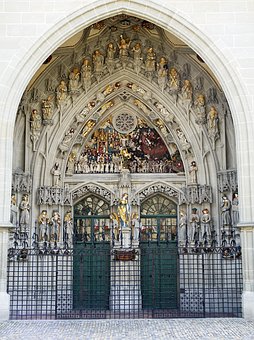




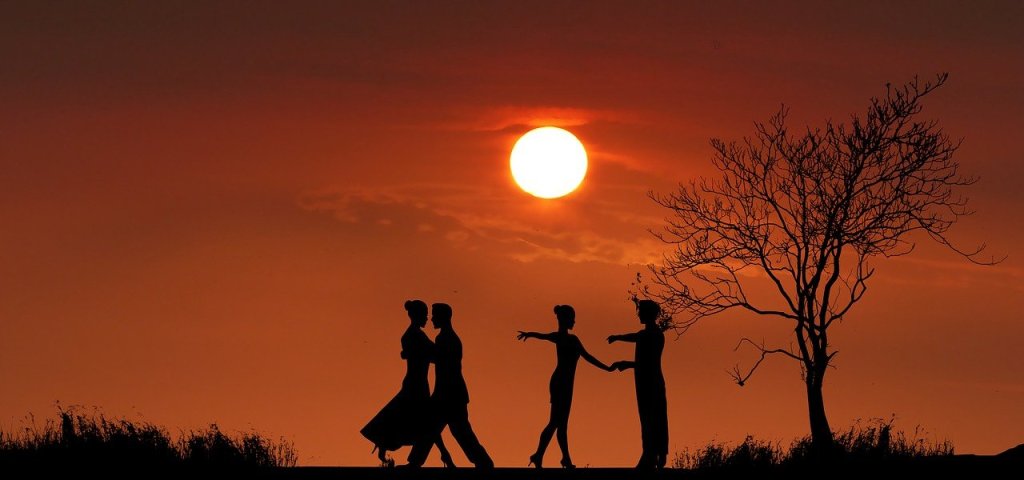

 Borderless

_-_TIMEA.jpg)