Categories
Poetry

The Woman in the Dabb

By Santosh Bakaya

A house with a protruding balcony or Dabb.
The Woman in the Dabb*

Rub –a- dub- a- dub, one woman on the dabb*.1 
Absently, she gives her Pinocchio nose a rub.  
Is she waiting for some mouth-watering grub?
The belligerent woman smug in the snug dabb.  

That woman always strikes a quarrelsome pose.  
A contemplative finger perched on her nose, 
conferring with cacophonously cawing crows 
sitting on the boundary wall in rows and rows.  

Nay, I plead guilty to the crime of mendacity. 
But, no way am I refuting the crows’ garrulity.
Then, there were no walls etched with bellicosity. 
Those times were marked by back-slapping hilarity.   

But, my kid brother was a very mischievous sort, 
raising a hue and cry when in the slips caught. 
This budding cricketeer with everyone fought, 
Saddled with a sharp tongue and a temper hot. 

Not friends with the shrewish woman in the dabb 
who had one eye cocked towards our respected Bub*.2 
Brother’s sixer caught the woman’s nose in the dabb.
Profanities followed from the woman in the snug dabb.

Cursing the ball, the boy and the corollary disgraced, 
she flailed her pheran-clad arms, singing her own praises.
She had a penchant for evocative Kashmiri phrases, 
a rich vocabulary of intriguing phonetic cadences.  

Alas, the ball had created a dent in her Pinocchio nose. 
Kashmiri expletives freely flowed; belligerent her pose.
Now, Naseem, the woman, was ready to come to blows. 
She rolled up her pheran sleeves, bracing to give a dose

Of her tongue to my brother, who had dented her nose. 
In a fiery temper vile, no longer could she lie in repose.
Salman, his buddy, said, “You should try giving her a rose. 
Quipped my brother, “Will she accept it despite a broken nose?”  

Strange but true, after hours two, the team was in her dabb.
Rohit, Sarju, Ashok, Kuku, Salman, Irfan and a doting Bub,   
breaking bread; of cherry chuckles, the dabb was now a hub.
Kandurvaan ki roti*3and kehwa*4 and mouthwatering grub.

Down below, the houseboat-dotted Jhelum happily roared.  
Over bellicosity and grudges, love had once again scored. 
From the pine tree the golden oriole its melody poured.
Grudges and spats had once again been wisely ignored.   

The languorous traffic swirled on the ancient Kani Kadal.* 5
Soon, some little folks and a woman were in a group huddle.
Suddenly a cry of ‘Howzat?’  went up like a lilting song. 
The woman smiled, her voice ringing like a dinner gong: 

“Gobra*6, thankfully, you broke my nose, not my heart.” 
Eyes twinkling, she said with a chuckle, a hand on heart. 
Now, my kid brother mends hearts, does not break noses. 
Violence, and heartlessness, this cardiologist heartily opposes.   

With a smile, he often recalls that woman in the dabb.  
He grins as he glimpses her giving her Pinocchio nose a rub.
The woman is now history; for my brother it is a mystery
whether she really carried a torch for our beloved bub.
That affectionate pheran-clad woman in the snug dabb.


 *1 Dabb*: A mini balcony with a protruding ledge in old houses in Kashmir. 
*2 Bub:   An affectionate term for an elderly person, [short for Babuji] 
*3 Kandurvaan ki roti: Baker’s Bread. 
*4 Kehwa: Milk less tea garnished with cardamom, crushed almonds, and cinnamon powder [[saffron optional]        
*5 Kani Kadal: The name of a bridge in Srinagar, Kashmir 
*6 Gobra:  A Kashmiri term of endearment for a child.

Dr. Santosh Bakaya is an academician, poet, essayist, novelist, biographer. She has more than ten books to her credit , her latest books are a biography of Martin Luther King Jr. (Only in Darkness can you see the Stars) and Songs of Belligerence (poetry). She runs a very popular column Morning meanderings in Learning And Creativity.com.

PLEASE NOTE: ARTICLES CAN ONLY BE REPRODUCED IN OTHER SITES WITH DUE ACKNOWLEDGEMENT TO BORDERLESS JOURNAL

Click here to access the Borderless anthology, Monalisa No Longer Smiles

Click here to access Monalisa No Longer Smiles on Kindle Amazon International

Categories
Poetry

Still Ringing

By Afshan Aqil

STILL RINGING

I visit my school,
Sit under the Ashoka tree,
Straight and tall,
Before the gym hall.

Issuing from the tower 
Of St.Joseph’s Cathedral,
Floating in the air
Came the sound of the bell,

Peaceful, white,
Sailing light,
The most pleasing notes
I had ever heard.

The bells were still ringing 
When I woke up at dawn,
Filling the courtyard,
The garden and the lawn.  

By the boundary wall,
Stood the Ashoka tree, tall.
Beyond the low wall
Stretched the Western sky.

Bells were tinkling,
Incessant and merry
At a far-off shrine 
By the riverside.

Photo provided by Afshan Aqil

Dr. Afshan Aqil lives in India. She has authored a book titled, The Poetry of Edward Thomas. She has taught English Literature to undergraduates.

PLEASE NOTE: ARTICLES CAN ONLY BE REPRODUCED IN OTHER SITES WITH DUE ACKNOWLEDGEMENT TO BORDERLESS JOURNAL

Click here to access the Borderless anthology, Monalisa No Longer Smiles

Click here to access Monalisa No Longer Smiles on Kindle Amazon International

Categories
Poetry

Kiyya and Sadu

A part of a Balochi ballad translated by Fazal Baloch with a brief introduction by the translator

Courtesy: Creative Commons

The love story of Kiyya and Sadu is very famous among the Baloch. An anonymous poet has versified the whole story in the form of a romantic ballad in lucid yet captivating language, this story of Kiyya, a young man from western Balochistan, and Sadu, who hailed from Makkuran. When a devastating draught hit the region, Kiyya along with his herd migrated from his hometown and camped somewhere in coastal area of Balochistan. One day by the river, he ran into a fair maiden, Sadu. He was struck by her charm so much that he fell in love with her instantly. He approached Sadu’s father and asked for his daughter’s hand in marriage. Since Kiyya was the member of an illustrious tribe, Sadu’s father accepted his marriage proposal.

A few days later, Kiyya took leave from Sadu’s father asking him that he would come back just in a few days after making necessary preparation for the marriage. However, he did not return in the stipulated time. Time went by. Neither did Kiyya showed up nor did come any message from him. In the meantime, some other men approached Sadu’s father with the desire to tie the knot with Sadu. His father was caught in a dilemma. He had given his words to Kiyya who had almost forgotten his commitment. On the other hand, age was slowly creeping upon her daughter. While, Sadu was not in favour of tying the knot with another man. She wanted to wait for Kiyya. The following poem is the description of Sadu’s message to Kiyya through an emissary bird:

SADU SAYS TO THE BIRD --

O sweet singing lively bird! 
Red-eyed and pretty-winged, 

When you peck from harvested fields,
Bits of spring yields. 
But tiny grains of wild shrubs 
Wouldn’t ever feed ye. 

Come, alight onto the threshold of my hut, 
Away from rest of the flock -- 
I'll feed you with fragrant grains, 
With cardamoms and cloves.

I’ll spread them on my scarf 
And water I’ll give you in a silver cup. 
In the shade of my sable hair 
Perch on my shoulder and chirrup.

Nestle on my lap and sleep. 
Whenever you want to leave, 
Just coo and forewarn me. 
With civet-musk I’ll gild your beak, 
With rose-petals your wings,
I’ll dispatch the clouds of mist 
To sail you over.
 
Come and be my messenger 
From Belau*, all the way to Bahau*.
Of the lay of the land, I'll give you some clues. 
On the land that's called Bahau, 
A long river flows through.

Like Zamzam* its water sweet and scared,
Herds of camels and calves,
Roam and graze on the verdant meadows. 

A dome-shaped tree stands in grace and awe,
Like a camel’s foot appears its leaves,
Like a scorpion’s sting its spikes,
And branches like a tiger’s paw. 

Illustrious men have gathered by the royal court. 
In a row, sit the matchless warriors; 
In the next, the common folks; 
The blue-blooded Kalmatis*, in the third row.

Amongst them, there’s a man 
Dressed in exquisite robes.
Handsome of the most handsome fellows, 
Indeed, Kiyya is distinct 
In appearance and demeanour, 
His waist curved by the quiver,
By the glistening shield his shoulder.

Alight on his turban, chirping 
Ever so gently whisper in his ear, 
The message of Sadu I do bear 
Her message and good tidings.

Kiyya! O, you the unfaithful fellow 
You promised to return in ten days, 
But now it has already been 
Six months and a whole year.
You vowed to return but did not.


The lambs kept for the wedding feast
Have now all grown old.
Worms have devoured the flour.
Birds have pecked away the henna. 
Your bride has lost all her teeth.
The bridal incense has gathered dust.
Come if you must, 
Or henceforth someone else will replace you.

If you’ve fallen in love with someone else,
May death consume her! 
May a headache, a deadly cough 
And a slow fever claim her mother!
May no harm befall you ever!
It’s a loss alone I’m to suffer!

*Bahau: A place in Western Balochistan.
*Belau: A place in Eastern Balochistan
*Zamazam: A well located in Mecca, Saudi Arabia.
*Kalmati: Name of a Baloch tribe.

{Note from the translator: There are more than one version of this ballad with substantial difference in the text. This is an assortment of different sources primarily from Meeras, (The Heritage) (4th edition) compiled by Faquir Shad, and published by Fazul Adabi Caravan, Mand in 2016}

Fazal Baloch is a Balochi writer and translator. He has translated many Balochi poems and short stories into English. His translations have been featured in Pakistani Literature published by Pakistan Academy of Letters and in the form of books and anthologies.

.

PLEASE NOTE: ARTICLES CAN ONLY BE REPRODUCED IN OTHER SITES WITH DUE ACKNOWLEDGEMENT TO BORDERLESS JOURNAL

Click here to access the Borderless anthology, Monalisa No Longer Smiles

Click here to access Monalisa No Longer Smiles on Kindle Amazon International
Categories
Poetry

Years of Yearning

By Swarnendu Ghosh

YEARS OF YEARNING 


I see the horizon filled with ghosts of pre-owned wives and
Insomnia dripping from rooftops.
Those bodies… bodies with eternal youth
emerge from utter darkness. Soft. Palpable to my carnal breath.
 
They all are coming out and claiming me.
A desire for a bonfire dance. I see insects
dying like martyrs.
Tomorrow, I will write an elegy in their memory.
 
Maybe those walls still stand. Those rooms.
Those battlefields and muses. Maybe we all recall our
scars and moonlit longings and the enchantress
who danced with us spitting fire.
She is there tonight, preaching peace and death. 

Swarnendu Ghosh is a poet from Kolkata, India, who writes in English and Bengali. His first book, Ferry Ghate Frida, is a collection of Bengali poems published in 2023.

PLEASE NOTE: ARTICLES CAN ONLY BE REPRODUCED IN OTHER SITES WITH DUE ACKNOWLEDGEMENT TO BORDERLESS JOURNAL

Click here to access the Borderless anthology, Monalisa No Longer Smiles

Click here to access Monalisa No Longer Smiles on Kindle Amazon International

Categories
Poetry

Unutterable Silence

By Hela Tekali

UNUTTERABLE SILENCE 

In Silence I came into existence
Without uttering a single word
Very few things I know recently
It all comes through a whisper

Words fall asleep in this temple of mine
Everything gives birth to a perception
Silence Is all I have learnt so far
The sky is full of dots  like this farthest star

Why shall I speak while the answer is inside
All I can utter is a simple sigh
I breathe but what exists is Silence
Dots and full stops make me just wonder

In Silence all the questions are answered
We came to earth without making a noise
But the inside is full with modes of speech
And utterances are just left unanswered

In Silence pertains all the sounds of existence
The essence of life is left speechless
Sounds and tones are born out of this quietness
The soul is the place where Silence is taught

Hela Tekali hails from Tunisia. She is a poet, a novelist, a translator, an editor, a reviewer, and currently writing a play ( a tragedy). She is by profession an English teacher at the Faculty of Law and Political Sciences in Tunisia. She has published more than 11 books of poetry , prose and two novels.

.

PLEASE NOTE: ARTICLES CAN ONLY BE REPRODUCED IN OTHER SITES WITH DUE ACKNOWLEDGEMENT TO BORDERLESS JOURNAL

Click here to access the Borderless anthology, Monalisa No Longer Smiles

Click here to access Monalisa No Longer Smiles on Kindle Amazon International
Categories
Poetry

Loose Leaves Fill…

Poetry by Luis Cuauhtémoc Berriozábal

Photo courtesy: Luis Cuauhtémoc Berriozábal
LOOSE LEAVES 

Trifling through loose leaves.
Searching for the young me,
same as the old me. Did I write
anything of value then? Do I
write anything of value now?
We all have our detractors.
It is best to let all criticism
slide across your back. Pay 
no mind and forge forward
like rockets in the sky. All you
need to do is lay your heart
bare. Whether pure of thought
or dirty ramblings, write it
all down as best you can.
Scrap it and throw it away if
you can make it better. Loose
leaves fill entire cemeteries,
where words go away to die.
Sometimes you can pick one
out of the many that are worthy
to be kept alive or resurrected.


OUT OF BED

I drag myself out of bed
into the city where the cold
wind blows. I go where the skies
appear like mirrors, pale and
pure, in the October twilight.
In the melancholy streets
my restless feet wander. I
walk with trepidation. I
feel myself pulling away.
Art by Luis Cuauhtémoc Berriozábal

Born in Mexico, Luis Cuauhtémoc Berriozábal lives in California and works in the mental health field in Los Angeles, CA.His poetry has been published by Blue Collar Review, Borderless Journal, Escape Into Life, Kendra Steiner Editions, Mad Swirl, SETU, and Unlikely Stories.

PLEASE NOTE: ARTICLES CAN ONLY BE REPRODUCED IN OTHER SITES WITH DUE ACKNOWLEDGEMENT TO BORDERLESS JOURNAL

Click here to access the Borderless anthology, Monalisa No Longer Smiles

Click here to access Monalisa No Longer Smiles on Kindle Amazon International
Categories
Poetry

Migrant Poems

By Malachi Edwin Vethamani

Courtesy: Creative Commons
A HABITATION OF ONE’S OWN 

(i)

His journey began
with a seed of hope,
an unwavering resolute
to seek new opportunities.

                Tossed on a sea
caught between two land masses,
a small soul
lurching towards a dark land.

Greeted on land by few, familiar faces 
his hungry belly needed feeding
and work to provide a roof,
shelter from sun and rain. 

                     *
Daytime sweat saving dollars
to return home one day
to buy land
build a house, raise a family.

The journey home,
constantly deferred,
soon blurs
familiar family faces.

News from home
arrives with newcomers
few and far between.
Scant and sketchy.

Life takes a new turn
and begins to take root
in the once harsh 
friendless, orphaned land.

               *
The years pass on,
the world encroaches
upon little lives with
deaths and disappearances.

A sudden change of masters
abandoned by the white man 
terrorised by Japanese swords, 
heads on stakes.

Survived to hear shouts of “Merdeka”! 
gave little cause for rejoicing 
received a red identity card,
labelling him a foreigner.

(ii)

His labour,
faith in his God,
hope for his children
remain resolute and unyielding.

The change of masters
has meant little for his lot,
still second-class citizens
meted out meagre morsels. 

The land that had drawn
the father now pushes
his children away, 
to seek new shores.

They now depart
to distant lands,
leaving father and mother
like their father once had.

(iii)

Tirunelveli
Madras
Penang
Kuala Lumpur
Malaya
Malaysia

All the places
my father passed through,
then resolutely remained
refusing to return.

Now he lies in Cheras, 
at final rest, all labours done
in Malaysian soil
with a blue identity card.

(First published in  ‘Life Happens’, Petaling Jaya, Maya Press, 2018)

NEW ARRIVALS 

You now arrive 
on wings of hope
small bands of brothers
leaving behind kinfolk.
Budding youth
soon to be savaged
in this land.

Like you,
my father and uncles
once made that journey.
Different routes, 
not similar conditions.
Same hopes, not of wealth
but to mete out 
a life for themselves.

Decisions made to leave
home and village
on a single-way passage
unclear destinations.

Their long journey
many decades ago
tossed and turned
on unkindly seas.

The sight of land
through sea-sick eyes
gave little comfort,
knowing that another journey
was set to begin
with no preparation
on touching land -
the promised Malaya.

Now, you arrive
over land and by air,
fatigued and clueless.
A piece of paper
in your hand
holding hope and despair
Like so many before you. 


(First published in  ‘Life Happens’, Petaling Jaya, Maya Press, 2018)

THE OTHER CHILD

As the candles on his thirteenth 
birthday cake were blown out,
so ended a dear dream. 

Unlike his freshly minted teenage friends 
he is labelled different. 
Losing the camaraderie of childhood friends,
set aside as a refugee. 
A word he would hear more and more.  

He too was born in this land.
Sang Negaraku* every school week,
the last six years. 
Now those doors he yearned for
are closed to him. 

His parents are silent. 
They have no answers.
They say: Be patient. 
God will answer our prayers. 

I have not changed overnight. 
But they see me different now.
My sun-filled school days now grey.
I now wait for my father 
with news of a new school,
among others sharing a similar fate
born in this land 
but still a refugee. 


*Malaysian national anthem

(First published in Rambutan Kisses, 2022)

Malachi Edwin Vethamani is a poet, writer, editor, critic, bibliographer and Emeritus Professor at University of Nottingham. His publications include: Rambutan Kisses (2022), The Seven O’clock Tree (2022) and Love and Loss (2022), Coitus Interruptus and Other Stories (2018), Life Happens (2017) and Complicated Lives (2016). His individual poems have appeared in several literary journals and anthologies. His edited four volumes of Malaysian poetry in English. The Malaysian Publishers Association awarded Malchin Testament: Malaysian Poems the National Book Award 2020 for the English Language category. His collection of poems Complicated Lives and his edited volume of poems Malaysian Millennial Voices were finalists for the National Book Award 2022 for the English Language category.

PLEASE NOTE: ARTICLES CAN ONLY BE REPRODUCED IN OTHER SITES WITH DUE ACKNOWLEDGEMENT TO BORDERLESS JOURNAL. 

Click here to access the Borderless anthology, Monalisa No Longer Smiles

Click here to access Monalisa No Longer Smiles on Kindle Amazon International
Categories
Poetry

‘Seeds Fall to the Ground’ 

By Ryan Quinn Flanagan

Courtesy: Creative Commons
‘Seeds fall to the ground, something grows’ 

Nestled so close to harpied shore, 
seeds fall to the ground, something grows – 
what has been replaced, never in true replica, 
it is but for these small changes that that I find myself 
ambered in thought, wrenched mandibled and Langoliered 
as if the thick black ledger has gone to town and left a deep flush  
pulsing to be felt by personal agitators; if I seem pensive, 
know that the millwright has never been the machine, 
these oats of a ponderous farling… 
And see how the diving gulls parry, 
the many deboning stations along fisherman’s wharf 
lost to scaler’s ardour; 
a heaviness overcomes me that is no simple sleep, 
never suffocating, so much as revelatory: 
imposter fish, locksmith, birth mother…  
Everyone is in the service of someone. 
Even if that service is  
of the Self. 	

Ryan Quinn Flanagan is a Canadian-born author residing in Elliot Lake, Ontario, Canada with his wife and many bears that rifle through his garbage.  His work can be found both in print and online in such places as: Evergreen Review, The New York Quarterly, Borderless Journal, GloMag, Red Fez, and Lothlorien Poetry Journal

PLEASE NOTE: ARTICLES CAN ONLY BE REPRODUCED IN OTHER SITES WITH DUE ACKNOWLEDGEMENT TO BORDERLESS JOURNAL

Click here to access the Borderless anthology, Monalisa No Longer Smiles

Click here to access Monalisa No Longer Smiles on Kindle Amazon International

Categories
Poetry

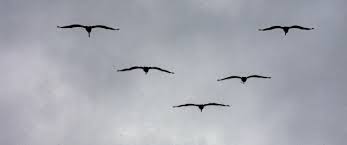
Birds in Flight

By A Jessie Michael

BIRDS IN FLIGHT   

Birds in flight
Wings spread wide and tight
Lift off
In perfect formation
Inbuilt navigation
Flying to food and shelter
Unperturbed by storming weather

Men in flight
Crammed in rickety open boats
Set off
Flotsam of a nation
Escaping damnation
No leader, no navigator
No telling their fate in water

They look up to the sky
See birds in flight
Gliding high
In perfect formation
Inbuilt navigation
Out in front a leader
Heading to food and shelter

HAVE WE?  HAVE WE?

Have we learnt another language
to challenge our little brains?
Have we walked in others’ shoes 
and learnt of their pain?
Have we shared with them a cup of joy
and freely drunk of theirs too?
Have we sat at their table and
broken bread with them?
Have we stood beside the others 
and thought them just the same?
Have we risen above ancient anger,
forgiven our fellow men,
thought them worthy of our compassion
and stretched out our hands?
Have we emptied the bitter cup
that diminishes all men?

Our colours are but geography,
our religions but pathways 
to the same universal One.
So who is to say who is better?
It is always our own buried fear,
that we pray at the alter,
then curse the man on the street
just because he looks different 
and is from another land;
just because we will not say
he is really homo deus.


A. Jessie Michael is a retired Associate Professor of English from Malaysia. She has written short stories for online journals, local magazines and newspapers. She has published an anthology of short stories Snapshots, with two other writers and most recently her own anthology The Madman and Other Stories (2016).

PLEASE NOTE: ARTICLES CAN ONLY BE REPRODUCED IN OTHER SITES WITH DUE ACKNOWLEDGEMENT TO BORDERLESS JOURNAL

Click here to access the Borderless anthology, Monalisa No Longer Smiles

Click here to access Monalisa No Longer Smiles on Kindle Amazon International

Categories
Poetry

In Another Galaxy

Poetry by Masud Khan, translated from Bengali by Fakrul Alam

Sun by Edvard Munch  (1863–1944) Courtesy: Creative Commons
The Sun’s old. Deadly rays leak out of its decrepit body,   
Lashing planets, satellites and asteroids. 
Fleeing for dear life, humans and animals run helter-skelter.
 
Unable to endure the sun’s excruciating heat, 
Men and women prepare to move with the Earth forever—
Moving with the planet they love more than any other,  
They will seek sanctuary in some distant young galaxy,
Just as bewildered people, uprooted by some raging riot somewhere,
Flee far away to some distant land, lives in their hands,
Forsaking their country, destined to be refugees forever. 
 
One morning, at sunrise,
Planets, satellites and asteroids will stare in astonishment.
At a nine-planet orbital village, a stellar union council of nine wards, 
Looking immense, elliptical, though everything else will be the same! 
Other planets will be in their orbits as always!
Only cunning, conniving and naughty earth will elude their gaze!
 
The Sun, that incarnate ball of fire, will be so fiery and indignant then 
That it will dart out its mile-after-mile long murky tongue
Spewing furious fumes of loud hitherto unheard curses, 
Gurgling lava spilling out from some swollen uvula forever...
It will pursue Earth as long as it can, chastising it all the time
It will flicker its fiery, thundering, curses-spewing tongue incessantly! 
 
As it flees, casting furtive backward glances, 
Will Earth ponder for even a moment and exclaim:
“Alas, what’s going to happen to those ill-fated planets—
To Mercury, Venus and Mars?”   

Masud Khan (b. 1959) is a Bengali poet and writer. He has, authored nine volumes of poetry and three volumes of prose and fiction. His poems and fictions (in translation) have appeared in journals including Asiatic, Contemporary Literary Horizon, Six Seasons Review, Kaurab, 3c World Fiction, Ragazine.cc, Nebo: A literary Journal, Last Bench, Urhalpul, Tower Journal, Muse Poetry, Word Machine, and anthologies including Language for a New Century: Contemporary Poetry from the Middle East, Asia, and Beyond (W.W. Norton & Co., NY/London); Contemporary Literary Horizon Anthology,Bucharest; Intercontinental Anthology of Poetry on Universal Peace (Global Fraternity of Poets); and Padma Meghna Jamuna: Modern Poetry from Bangladesh (Foundation of SAARC Writers and Literature, New Delhi). Two volumes of his poems have been published as translations, Poems of Masud Khan(English), Antivirus Publications, UK, and Carnival Time and Other Poems (English and Spanish), Bibliotheca Universalis, Romania.  Born and brought up in Bangladesh, Masud Khan lives in Canada and teaches at a college in Toronto.

Fakrul Alam is an academic, translator and writer from Bangladesh. He has translated works of Jibonananda Das and Rabindranath Tagore into English and is the recipient of Bangla Academy Literary Award (2012) for translation and SAARC Literary Award (2012).

PLEASE NOTE: ARTICLES CAN ONLY BE REPRODUCED IN OTHER SITES WITH DUE ACKNOWLEDGEMENT TO BORDERLESS JOURNAL

Click here to access the Borderless anthology, Monalisa No Longer Smiles

Click here to access Monalisa No Longer Smiles on Kindle Amazon International