I mostly stare at the empty ceiling;
watching the imaginary pink bees,
I sometimes try to match up with people, chaos in my wake, no one sees.
You will never know how your absence strikes my heart,
until you are in my place.
Every time I watch “The Notebook”,
I see your non-existing face in front of me --
Enjoying, laughing, seeing the miserable shredded parts of me.
My heart always ached to hear the echoes of your soul;
But you were never ready to hear.
Because you did not feel me as I felt our deja vu.
I screamed and screamed, loudly and madly just to be with you.
But you turned yourself off like a Deaf Cockatoo.
Afrida Lubaba Khan is an aspiring poet, writer, and translator from Dhaka, Bangladesh. She is one of the Sub-Editors of ULAB-MUSE Magazine, and she is currently pursuing a Bachelor of Arts in English Humanities at University of Liberal Arts Bangladesh.
.
PLEASE NOTE: ARTICLES CAN ONLY BE REPRODUCED IN OTHER SITES WITH DUE ACKNOWLEDGEMENT TO BORDERLESS JOURNAL
The girl caught in a dream                                                                                                                                           threw off her bedspread in response                                                                                                                       to chords rattling somewhere                                                                                                                                                           in her brain, feet                                                                                                                                                                  unfurling, feeling the floor                                                                                                                                                                 foot after foot                                                                                                                                                                                   as if it were school time                                                                                                                                                                   but where was her school bag?


She walked as if urged along                                                                                                                                           by an inner deity, as if the yakshis*, those                                                                                                                   malevolent spirits, carried for her trays                                                                                                                                of paddy grains, tender coconuts, lamps, zari*.


Sometimes a girl thinks she is in good company                                                                                                                                                                                 but what were the Saptha Kannis* doing?                                                                                                                     It was only dusk, the midnight jasmines                                                                                                               bloomed, snakes plaited themselves like couples.                                                                                                                   Maybe it is all trickery of Kuttichatan*.                                                                                                                                        Who has ever seen him?


Something must have                                                                                                                                       snapped. Half asleep half awake, she bolted                                                                                                                     upright and walked and walked                                                                                                                                                    till her feet felt their own blisters.


Why were all the household people snoring                                                                                                               like porcupines, when she had reached                                                                                                                                       the doorstep of her school?


In the morning, they would tell her all about it.                                                                                                        They would even ask if she had any unfinished                                                                                                                  homework.


Sometimes we walk                                                                                                                                                      not knowing our destination or purpose--                                                                                                     sometimes, great men in history like the Buddha                                                                                                                             just walked, until they found their tree.


*Yakshi—female nature spirits

*Zari—thread made of silver or gold

*Kuttichatan – a portly spirit from Malabar lore

*Saptha Kannis – the seven embodiments of Shakthi, the Mother Goddess
Sivakami Velliangiri has been included among the women poets in the History of Indian Writing in English (1980). She has a chapbook, In My Midriff, and her debut poetry book is How We Measured Time. Her poems appear in The Penguin Book of Indian Poets (2022).
.
PLEASE NOTE: ARTICLES CAN ONLY BE REPRODUCED IN OTHER SITES WITH DUE ACKNOWLEDGEMENT TO BORDERLESS JOURNAL
A fakir sings of life,
In abandon,
He plays his string instrument.

Who said you can't
Pluck a smile and
Garden millions of them?

Writing the pain
And erasing it is
Like the ocean
Washing the shore.

The dew of dawn glistens
After night closes its purdah*.

Autumn's bare fate
Is spring's blooming reason.

Seasons follow one another;
Life sets and shines
Like seasonal sunshine.

Life can bloom,
While you appreciate
Waiting on a bench,

Under the reddish
Rhododendrons
That decorate and
Light up the landscape.

The seashells long to be collected!


*Curtain
Sushant Thapa writes poetry, book reviews and flash fiction. He has an M.A. in English from JNU, New Delhi. He is a lecturer of English and Business Communication in Biratnagar, Nepal.
.
PLEASE NOTE: ARTICLES CAN ONLY BE REPRODUCED IN OTHER SITES WITH DUE ACKNOWLEDGEMENT TO BORDERLESS JOURNAL
Crabs scuttle there, lonely hearts of purblind pleasure

You yearn to scoop up with a child’s shovel,

Relishing the tingle of sand’s reanimated matter.

In the corkscrewed nexus of a god’s naked palm

You discover butts and unusable flotsam

Blackened by barnacle rust from history’s rime:

The timelessness where you bear witness

To a soggy past with these craggy sentinels

Watching marshmallow clouds slowly morph

Through hazy days of mist-ridden skies.

Rock becomes pillow to your nodding head,

For one cannot sleep under destiny’s rainbow

With scattered rain eclipsing the diurnal wend

Of conflicting elements?

Your lips bear a garlanded surprise, perhaps,

Of entwining seaweed still growing yet,

Into lungs of possibly pandemic rot

Where the airs of your humanity expire

Under the crags of dubious spiritual shelter;

You’re no longer witness to urban banality

Outside where a gross mechanised landscape

Looms in retinal configurations of cold dust.

You won’t have to breathe airborne droplets

Fastening a bleak curtain of acidic rain, either:

The grey confetti choking those homeless ones

Pushing shopping carts filled with dumpster leftovers,

While sparrows with limpid wings descend

To peck at that detritus of rife, decaying flora.

Under the crags the helix of humanity crumbles

As you finally emerge to sit atop one,

Meditating as an outcast Buddha of sorts

On the inevitability of seasons forever

Eroding these basaltic, ocean thrones –

and the secrets beneath left to other sad beachcombers?


****


Under the crags you found an old cell phone

Ringing, and the voice said “under the crags

Hip crabby beachcombers live scuttling there,

And they forage under the littoral’s rocks

Of old volcanic upheaval beneath cloud-ridden skies

Where brave explorers once ruled the sea.

They mapped nearby landscapes, my friend,

As long-billed terns strutted gaily everywhere,

Pecking for food … (Under the crags of eternity,

Or boulders of outsized granite, with gemstone stanchions

Like god pebbles thrown there by Gulliver’s sturdy hand):

Until you’re meditating with the drowning Buddha today

On the inevitability of seasons eroding these ocean thrones

You sit like a beached saviour in silence beneath …”


Then I hung up –
Peter Magliocco writes from Las Vegas, Nevada, where he’s been active as writer, poet, editor, and artist. He has recent poetry in A Too Powerful Word, Trouvaille Review, Lothlorien Poetry Journal, Flashes of Brilliance, dyst, Dreich, and elsewhere. His latest poetry books are The Underground Movie Poems (Horror Sleaze Trash), Night Pictures from the Climate Change (Cyberwit.net), and Particle Acceleration on Judgement Day (Impspired press).
.
PLEASE NOTE: ARTICLES CAN ONLY BE REPRODUCED IN OTHER SITES WITH DUE ACKNOWLEDGEMENT TO BORDERLESS JOURNAL
Down with these bloodied walls,

where love is held prisoner,

life’s journey stalls.

Time has no purpose.


Down with these graffitied walls,

where hate binds all pain,

voices imprisoned in

confined spaces echo.


Down with these white-washed walls,

where prejudice abides,

ignorance crawls,

dust never settles.


Down with these bullet-holed walls,

where peace is wanting,

liberty mauled,

humanity cries.


Down with these surrounding walls,

so, birds return to nest,

dreams reinstalled,

and life breathes again,


    and souls become songs,

    and spirits begin to sing,

    and the lame dance,

    being alive to the heartbeat,

    as the healing begins.
Sanjay C Kuttan, poet, philosopher and writer, was born in Malaysia, lives in Singapore, has his poetry published in Where Fires Rage, In One Breath, Under the Spell of Flickering Lights, Quilted Sails and in other anthologies.
.
PLEASE NOTE: ARTICLES CAN ONLY BE REPRODUCED IN OTHER SITES WITH DUE ACKNOWLEDGEMENT TO BORDERLESS JOURNAL
Poetry by Masud Khan, translation from Bengali by Professor Fakrul Alam
MOTHER


In the dust smeared evening

Far away, almost at the margins of the horizon,

The one who is resting all by herself


In a bed laid out under the open sky

Is my mother.

Her bed smells of grass and the antiseptic Dettol.

A tube in her nose supplies her with oxygen,

A saline bottle is attached to her arm,

And she is tied to a catheter too—

It is as if she is getting entangled inextricably

In a jungle of plastic and polythene reeds.


A smoky surreal unreal canopy encircles her bed.


Seemingly after ages, dusk descends on the world,

A few birds and insects form a chorus,

Wailing throatily obscure and dissonant tunes

In amateurish over-excited zeal,

Seeking refuge timorously in that plastic hedge,

At the margin of the horizon,

In the shadow of primeval motherhood.


A FRAGRANT TALE


The world is full of misleading, minus signs and foul smells.


At times, the world feels as heavy and unbearable

As the weight of a son’s dead body on his dad’s shoulder,

Or as stressful as playing the role of a dead soldier,

Or as formidable as a physically challenged person’s ascent up a mountain

Or as painful as caring for a precocious, traumatised child...


Nevertheless, occasionally such stress-laden memories will blur,

And suddenly, wafting on the wind’s sudden mood swing,

A fragrant moment comes one’s way!
Masud Khan (b. 1959) is a Bengali poet and writer. He has, authored nine volumes of poetry and three volumes of prose and fiction. His poems and fictions (in translation) have appeared in journals including Asiatic, Contemporary Literary Horizon, Six Seasons Review, Kaurab, 3c World Fiction, Ragazine.cc, Nebo: A literary Journal, Last Bench, Urhalpul, Tower Journal, Muse Poetry, Word Machine, and anthologies including Language for a New Century: Contemporary Poetry from the Middle East, Asia, and Beyond (W.W. Norton & Co., NY/London); Contemporary Literary Horizon Anthology,Bucharest; Intercontinental Anthology of Poetry on Universal Peace (Global Fraternity of Poets); and Padma Meghna Jamuna: Modern Poetry from Bangladesh(Foundation of SAARC Writers and Literature, New Delhi). Two volumes of his poems have been published as translations, Poems of Masud Khan (English), Antivirus Publications, UK, and Carnival Time and Other Poems (English and Spanish), Bibliotheca Universalis, Romania. Born and brought up in Bangladesh, Masud Khan lives in Canada and teaches at a college in Toronto.
Ten Thousand Miles along the Yellow River (datable to 1690–1722). Qing dynasty (1644–1911). China.
THE PAINTER CHING HAO*


He brushes in the sky.

He sees it as yellow.

He colours the river

and sees that as yellow, too.

Leaves will not fall on

ground where bones

lie in earthen shrouds.

Where death is not,

it cannot be proud.

The truth is in my mind,

He seems to say. He works

in the cold, in the rain.

When nights are clear,

He sits on a balcony

to stare at the stars,

gleaming like

the eyes of gods,

he hopes are still there.


*Also known as Jing Hao, Chinese landscape painter(855-915CE)
George Freek’s poetry has recently appeared in The Ottawa Arts Review, Acumen, The Lake, The Whimsical Poet, Triggerfish and Torrid Literature.
PLEASE NOTE: ARTICLES CAN ONLY BE REPRODUCED IN OTHER SITES WITH DUE ACKNOWLEDGEMENT TO BORDERLESS JOURNAL
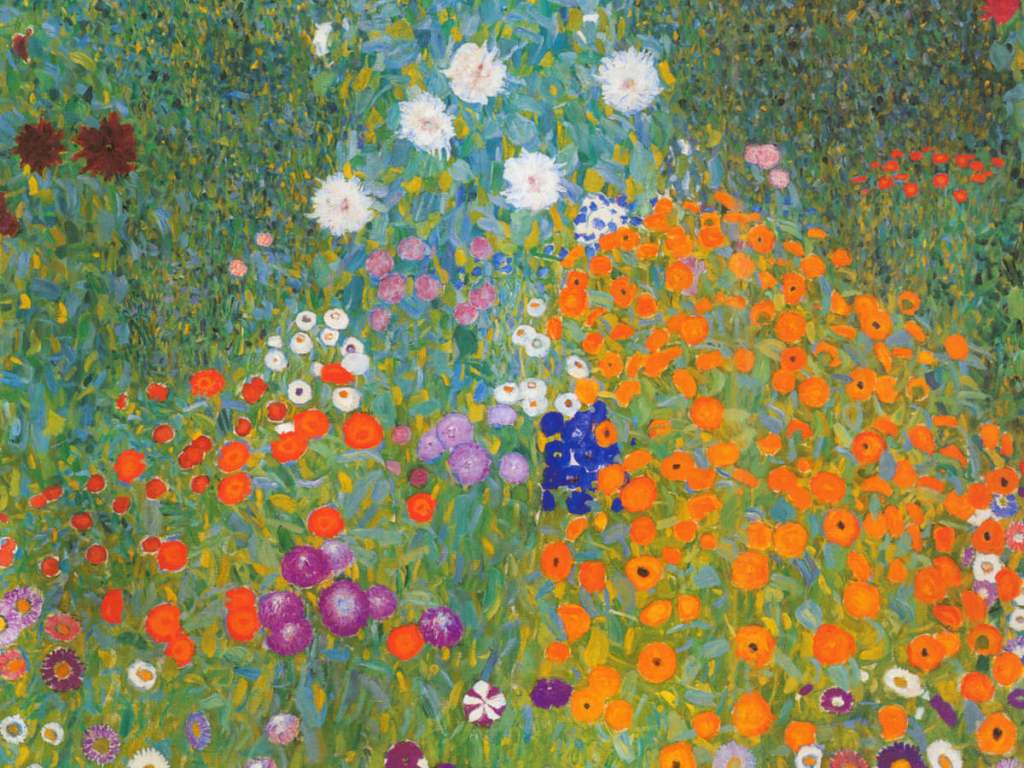
Nature has shed her wintry robes
to adorn brighter clothes.
A cornucopia of colours – bold
yellow, crimson, purple, gold.
Far away the ample hills repose
where a new light softly grows.
The sky is blue, the wind is fair.
A lone bird flies into the air.
In winter, silent seeds have toiled
to deny the grip of frozen soil.
Soon in the garden, green will
bloom with tulips, roses, and daffodils
And the nourished roots shall bring
forth the joyful fruits of spring.
UNTITLED
I feel a silky silence grow
as if all the world has died.
Night is as black as the crow,
no light to show habitation,
but the far off, orange glow
of firelight on the hillside.
I hear a rippling river flow
through a valley, dark and wide.
The white of an owl swoops low –
wings spread, I watch it glide
and the distant orange glow
of firelight on the hillside.
Stuart McFarlane is now semi-retired. He taught English for many years to asylum seekers in London. He has had poems published in a few online journals.
.
PLEASE NOTE: ARTICLES CAN ONLY BE REPRODUCED IN OTHER SITES WITH DUE ACKNOWLEDGEMENT TO BORDERLESS JOURNAL
At the end of December
in the year 2023
I wrote this poem about a bee
who held a key
in his little legs, delicately.
He flew to a door in a big tree
and turned the lock
in the trunk
with a dramatic clunk
and I’ll remember
for quite a while
how slender was his smile.
Behind the door
was a cup of tea
brewed especially for me
in a clean teapot
but strained afterwards through
a smelly old sock.
Plus a ginger biscuit like the moon
that took up most
of the room in the gloom
of the tree’s interior,
and I was grateful for these gifts.
“Thankee kindly,” I said to the bee
as I dunked and drunk
from the porcelain cup.
Then unexpectedly he said to me:
“Nothing is free
in this material world. That’ll be
six hundred rupees.
I will take a cheque, pay up now
or by heck there’ll be a mighty row
and you will never
see tomorrow.”
That, to my sorrow, is a true tale
and now I avoid tea
offered to me by bees in a forest.
And it is why
I only accept
cautiously at best
black coffee brewed by butterflies.
LOST LOVE
We parted near the marble fountain
in the twilight of a magic year,
she was a scientist at the university
and said I was too simple for her.
She also said I was far too small
to make the affair feel quite right,
that our love was just a game but I
was an intriguing specimen all the same.
Although I have not seen her since
and indeed I have now lost all hope,
I suspect she nonetheless is watching me
through an electron microscope.
Rhys Hughes has lived in many countries. He graduated as an engineer but currently works as a tutor of mathematics. Since his first book was published in 1995 he has had fifty other books published and his work has been translated into ten languages.
.
PLEASE NOTE: ARTICLES CAN ONLY BE REPRODUCED IN OTHER SITES WITH DUE ACKNOWLEDGEMENT TO BORDERLESS JOURNAL
My wife watches flowers grow,
while I gaze at a cloudy sky.
She sees beauty.
I see darkness closing
like a lizard’s eye.
Soon it will snow.
She’s rooted in the earth
like an oak tree.
I’m always drifting
into outer space.
She says a rose has grace.
I tell her the moon
has a nasty face.
When I say tomorrow
Won’t be fair,
She isn’t listening.
She’s busy
trimming my unruly hair.
SEPTEMBER IN EARLY MORNING
Flowers have dropped their petals
like a child loses its toys.
Leaves are dry and wrinkled,
like an old woman’s eyes.
Summer has come and gone,
and birds which nested in my trees,
have left on their flight south.
My wife is in the ground.
This morning even her nagging
would be a welcome sound.
I don’t drink wine.
Drunken memories are unkind.
I drink a cup of bitter tea.
I have suddenly grown old.
I feel neither love nor pity.
I watch the moon slowly die,
but I can hardly see it.
It barely lights the sky.
George Freek’s poetry has recently appeared in The Ottawa Arts Review, Acumen, The Lake, The Whimsical Poet, Triggerfish and Torrid Literature.
PLEASE NOTE: ARTICLES CAN ONLY BE REPRODUCED IN OTHER SITES WITH DUE ACKNOWLEDGEMENT TO BORDERLESS JOURNAL







 Borderless