Categories
Poetry

No One Told Him

By Aman Alam

He has a degree,
it sits on the shelf gathering dust,
something they told him would unlock doors.
His parents had big dreams,
sold their land, their jewelry,
put everything into his future.
They believed,
and so did he.

He studied hard,
burned the midnight oil,
topped his class.
Teachers said he’d go far.
But now, it’s been months,
maybe years,
since he’s left that classroom,
and the job market is a string of disappointments.

Job fairs, interviews, waiting rooms.
Each time, it's the same—
a door shut quietly,
a nod from the suited man,
"We’ll let you know,"
but they never do.

He learns the truth, spoken in hushed tones:
You need favours,
you need money,
you need things they never taught in school.
Without that,
your degree is just a piece of paper
fluttering in the wind.

Day after day, he watches the world move.
People pass by in suits, cars,
they look like the future he was promised.
But he’s not part of it.
He’s stuck,
in the cracks between his dreams and reality
no one prepared him for.

The calls stop coming,
his father’s voice is quieter now,
his mother doesn’t ask about interviews anymore.
They’ve run out of things to sell,
run out of stories to tell the neighbours.
He feels like a failure,
but it’s not his fault,
still, it feels like it is.

One evening, as the sun sets,
he walks to the edge of the bridge.
The river below is quiet,
more peaceful than his mind.
The weight of all he couldn’t do
pulls him down,
the promises he couldn’t keep
drag him under.

In the morning, they’ll find his body,
but no one will mention the empty job postings,
the bribes he couldn’t pay,
the promises that led nowhere.

They’ll talk about him as if he gave up,
as if the struggle was all in his head.
But he didn’t quit—
he was crushed,
under a weight too heavy to carry alone.

And his parents,
they will sit in silence,
wondering where they went wrong,
not knowing
he was lost long before he fell.

From Public Domain

Aman Alam is an English major at Jadavpur University, with a deep love for literature and a knack for thoughtful conversations. He’s always lost in a good book, writing poetry, or dreaming up ideas for his next big project. Along with his love for words, he’s equally obsessed with cricket and never misses a chance to debate life’s big questions over a cup of chai. Known for his laid-back style and sharp humour, Aman has mastered the art of doing everything at the last minute – yet still manages to pull it off with charm.

.

PLEASE NOTE: ARTICLES CAN ONLY BE REPRODUCED IN OTHER SITES WITH DUE ACKNOWLEDGEMENT TO BORDERLESS JOURNAL. 

Click here to access the Borderless anthology, Monalisa No Longer Smiles

Click here to access Monalisa No Longer Smiles on Kindle Amazon International
Categories
Poetry

Balochi Poem by Ali Jan Dad

Translated by Fazal Baloch

Ali Jan Dad
ROLL UP NOT THE MAT 

Death is a state
That leaves grief in its wake,
Tearing souls from their loved ones.
In the sieve of this moment,
We must not divide “ours” from “others.”
We are dwellers of the jungle.
For nature’s tidings—
Be it the heart or the hut—
We must not roll up the mat.
Before me came my father,
And before him, my grandfather—
Weavers of sacred customs.
We have taken every shade of the jungle,
Draped ourselves in its colours.
The jungle has its customs:
Nurture envy and hatred
As tenderly as you nurture love.
Never to strike a hungry foe.
You, a soldier from the enemy’s ranks,
Who come to slay my people—
Eat your fill before you go,
For hunger lies ahead.
Do you see these towering peaks,
These treacherous ravines?
My sons, brave as lions,
Know them better than you ever will.
They wait for you,
Hidden in the trenches.
The jungle may show you no way out.
My brothers, fierce as tigers,
Have mastered the craft of survival.
We are dwellers of the jungle.
And you, a soldier from the enemy’s ranks,
Have come to our land
Sit. Eat. Leave with a full stomach.
For in the jungle, it is custom
Never to strike a hungry foe.
I will not let blood
Stain the sanctity of my tradition.
Whether in war or peace,
For nature’s tidings—
Be it the heart or the hut—
We must not roll up the mat.

Ali Jan Dad is a prominent figure in contemporary Balochi literature. He wields equal command over both the genres of ghazal and nazm. Primarily, he is a poet of love and romance, and his poetry is imbued with a melodious and lyrical finesse. Additionally, he addresses the objective issues of life and the complexities of human existence in a highly artistic manner. So far, two collections of his poetry—Dróháp (The Mirage, 2009) and Róchay Sáheg (The Sun-Shade, 2013) have been published. The translated poem has been taken from his website Kodacha.com and is presented here with his permission.

Fazal Baloch is a Balochi writer and translator. He has translated many Balochi poems and short stories into English. His translations have been featured in Pakistani Literature published by Pakistan Academy of Letters and in the form of books and anthologies. Fazal Baloch has the translation rights of of this poem from the poet. 

PLEASE NOTE: ARTICLES CAN ONLY BE REPRODUCED IN OTHER SITES WITH DUE ACKNOWLEDGEMENT TO BORDERLESS JOURNAL

Click here to access the Borderless anthology, Monalisa No Longer Smiles

Click here to access Monalisa No Longer Smiles on Amazon International

Categories
Poetry

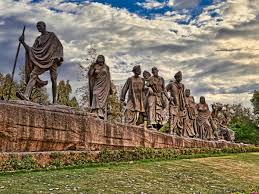
Experiments with Truth

By G. Javaid Rasool

THE LIGHT OF TRUTH – SATYA  

A ‘Truth’ quizzical about the veracity of most truths,
Practiced with oneness of adoration
As being the eternal bedrock of material life and
Trumpeted as God
Could only be the ‘Truth’ – the ‘Satya’ - Gandhi experimented.

Fashioning ‘Truth’ as passion,
An impulse in his life,
So dear to let the freedom perish at its cost,
Without wanting deification,
Shrouding in mystery and
Waiting for the metaphysics to unfold,
Gandhi worshiped ‘Truth’ as Supreme Force.
He practiced as a means of self-realisation,
An instrument of knowing – constructing the knowledge of God,
As a quest for being alive; experiencing the material world.

As a seeker of ‘Truth’, that is ‘Satya’,
Emanating from the essence – the ‘Sat’,
It marked by its omniscience as God.
The knowledge of Him was truth enough,
Revealed in the form of consciousness,
Giving meaning to love, to ‘Ahimsa’ – non-violence,
And surpassing language and reason
Among believers and non-believers alike.

The practice of ‘Ahimsa’ reveals the ‘Truth’,
Leads to its consciousness
And brings about the unity of our being.
‘Satya’ and ‘Ahimsa’ begin to define together
Human character and conduct – a personal way of living
And mediate as the instruments of augmenting humility,
Withering away egoism,
Addressing social injustices,
Setting example of an exemplary life and
Harmonising all the creatures on the planet.

But the ‘Truth’ Gandhi espoused for himself,
From his vantage point,
Turns out in fragments -- in relative terms
as relative truths, quite like human existence.
For ‘Truth’ cannot be, we are warned, taken as universal
Without clinging fragments, taken from different point of views –
Together for realisation the of absolute truth,
Perhaps through cultivation of pure consciousness and,
To evade subjectivity and any impending fanaticism.

G. Javaid Rasool, a Lucknow boy, is a writer, poet and translator. ‘The Wire’ has published good numbers of poetic compositions. International journals/websites/newspapers sometimes carry his writings.

.

PLEASE NOTE: ARTICLES CAN ONLY BE REPRODUCED IN OTHER SITES WITH DUE ACKNOWLEDGEMENT TO BORDERLESS JOURNAL

Click here to access the Borderless anthology, Monalisa No Longer Smiles

Click here to access Monalisa No Longer Smiles on Kindle Amazon International
Categories
Poetry

The Music of Someone Else’s Noise

By Jenny Middleton

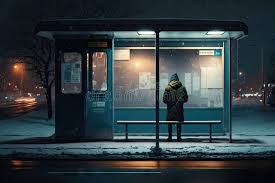
From Public Domain
waiting in darkness   
the man
at the bus stop
shifts his weight from foot
to foot

watching from inside
the shelter
I can hear the music
of cold air
sliding beneath his feet

all the while the city trees
are exchanging
their damp leaves
for the road’s fumes

eating the white noise
of the traffic
into the closeness of their
bark

until I can’t see him
leaving anymore
but see him returning
to the red seat
of the bus stop, glowing
in its florescence.

Jenny Middleton is a working mum and writes whenever she can amid the fun and chaos of family life. Her poetry is published in several printed anthologies, magazines and online poetry sites.  Jenny lives in London with her husband, two children and two very lovely, crazy cats.  You can read more of her poems at her website  https://www.jmiddletonpoems.com.

.

PLEASE NOTE: ARTICLES CAN ONLY BE REPRODUCED IN OTHER SITES WITH DUE ACKNOWLEDGEMENT TO BORDERLESS JOURNAL

Click here to access the Borderless anthology, Monalisa No Longer Smiles

Click here to access Monalisa No Longer Smiles on Kindle Amazon International
Categories
Poetry

Poetry by John Grey

Art by Salvador Dali (1904-1989)
THE STREET MUSICIAN’S PHILOSOPHY

Thirty years from now, what will it matter?
What goes wrong now will be forgotten then.
I’ll be dead, my guitar in a dumpster.

When you toss money in my cap,
you’re funding a stranger’s problems.
Not the music. You barely listen to what

I’m strumming and singing. My body
needs sustenance to keep from breaking down.
Your spare change ends up in the pocket of some pusher.

But I’m not complaining. A boyhood dream
warms itself by a grownup nightmare. I can
call myself a musician. Addict is another’s word.

And thirty years from now, I’ll be as forgotten
as the ones that got clean, who had no music in them.
So nothing matters. But its generosity is always welcome.


PARENTS

She looks up from time to time,
as if to penetrate the ceiling,
to get at the room
where she spent ten years
nursing a dying father.

It's over now
but her stress doesn't think so.
Not while her mother’s
fragile drifting speech,
wrinkled eyes,
fall far short of knowing anyone.

These are the only parents
she will ever have –
the father of her nose,
the mother of her mouth,
one passed on from life,
the other from identity.

She once was their daughter.
There’s no name for what she is now.

John Grey is an Australian poet, US resident. His latest books are Between Two Fires, Covert and  Memory Outside The Head are available through Amazon. His upcoming work will be in Haight-Ashbury Literary Journal, Amazing Stories and River and Sout.

.

PLEASE NOTE: ARTICLES CAN ONLY BE REPRODUCED IN OTHER SITES WITH DUE ACKNOWLEDGEMENT TO BORDERLESS JOURNAL

Click here to access the Borderless anthology, Monalisa No Longer Smiles

Click here to access Monalisa No Longer Smiles on Kindle Amazon International
Categories
Poetry

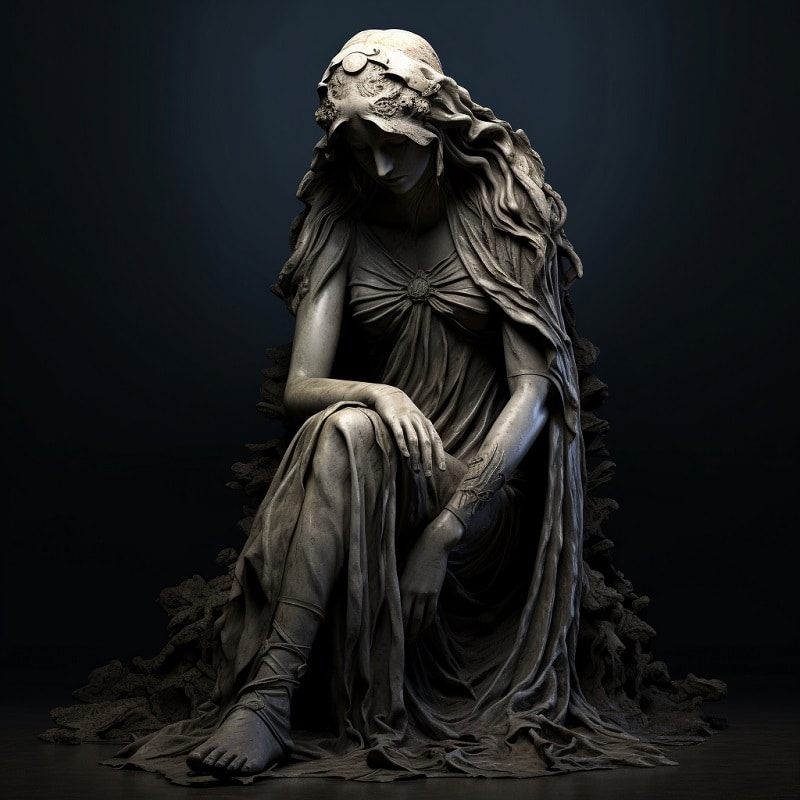
Oizys

By Vidya Hariharan

Oizys: The Greek Goddess of Misery: From Public Domain
Yesterday I saw a fool
Give up her love
for she lacked the courage
to stand up and fight
for all that she deserved.
Yesterday this fool stood by
And let the world
Rob her of joy,
Helpless and hopeless
She made her own bed
Of guilt, shame and regret.
Yesterday she failed to care
Enough to move ahead
In life, whiled away her time
In pointless pastimes.
Yesterday she hid again,
From challenges and promises.
Afraid to seize and wrest
Opportunities life presented.
Today it is too late,
All the yesterdays have passed,
Tomorrow may or may not,
Give her another chance.
As she lies there, staring
Sightlessly at the transparent
Tube, snaking from her arm,
The regrets come crowding in
And ask, “Why didn’t you live life?”

Vidya Hariharan is an avid reader and traveller. Her poems and prose narratives can be found in Setu, Contemporary Haibun Online, Under the Basho, Glomag, Poetry Super Highway, Poem Hunter and Pan haiku review.

.

PLEASE NOTE: ARTICLES CAN ONLY BE REPRODUCED IN OTHER SITES WITH DUE ACKNOWLEDGEMENT TO BORDERLESS JOURNAL

Click here to access the Borderless anthology, Monalisa No Longer Smiles

Click here to access Monalisa No Longer Smiles on Kindle Amazon International

Categories
Poetry

Shakespearian Musings by Kirpal Singh

King Lear, Act I, Scene I (Cordelia’s Farewell) The Metropolitan Museum of Art. Pianting by  Edwin Austin Abbey (1852-1911) From Public Domain.
DESPERATE LEAR 

against all winds that blow
and all the rains that pour,
Old Lear still sought home
as we all do sooner or later—

home is where the heart is—
cardiac surgeons locate hearts
but the homes seem elusive
lost perhaps among the veins
and the pulse beats which sound
okay to all intents.

thus to be without home
ported lustlessness;
perhaps for some despair
too close for comfort
too close to acknowledge,

And so I roam without a home.
return to the heart,
the heart of all things,
and I realise and learn,
my heart is here with me.
inside and pretty safe,
despite some odd beats
hardening who knows what,

home is where the heart
returns after all the wandering
finally settling all debts
owed by the stomach
in desperate circumstances,

Old Lear challenged the gods
but the duel was one-sided
no one wanted him
as he wrestled Nature
desperately needing Cordelia,

sometimes our Cordelias die
before they’re properly born-

I know for my Cordelia died
before she could be born--

she still struggles to learn
knowing its totally futile.

after all only in rare miracles
do we resurrect from the dead,

farewell, my sometime girl,
perhaps we shall meet
somewhere in our dreams
and realise all was a nightmare!


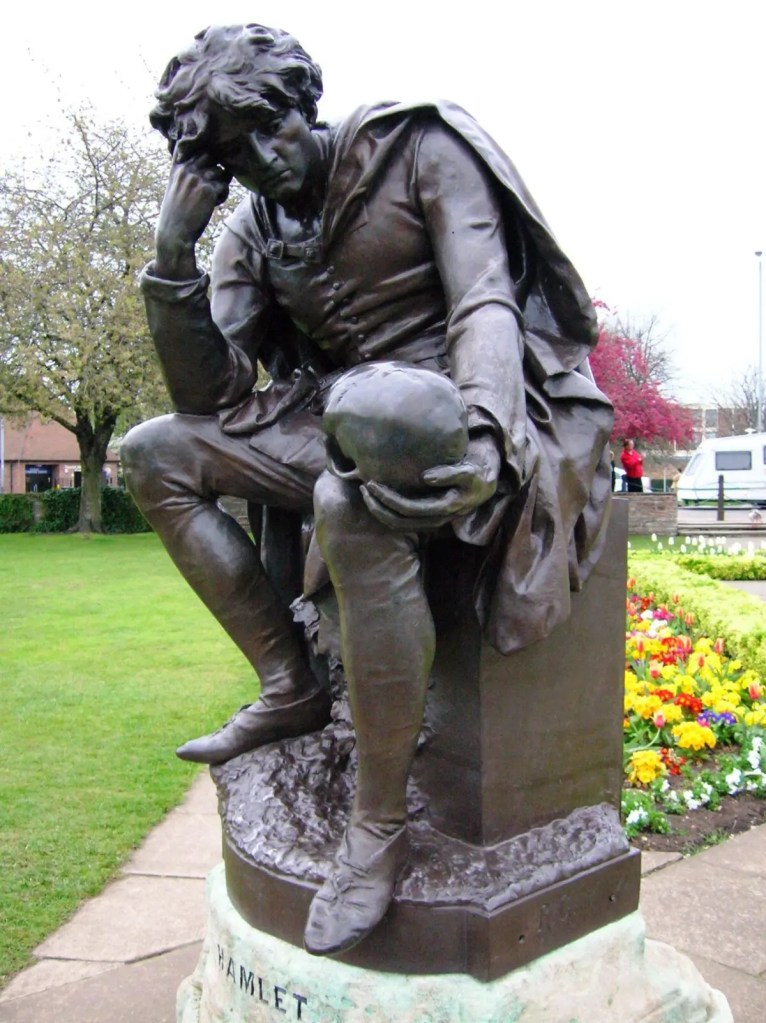
POOR HAMLET

Poor Hamlet
forgot poor Cordelia
in another realm
also where deceit,
cunning and corruption
ruined innocence, purity
and brought hell to bear.

these poor players
whose destinies pry
and fathom deep sores,
some known only alone,
challenge our premises,
contentment, pride, joy
and much else besides—

but who are we to probe
and pry and wonder?
think and cry and ponder
when it's the same
yonder and everywhere?

in my stillness, my friend
you who smile all the time
and beguile love
will never know anguish
nor the Joy of being
humanly correspondent
despite all hints and
references, nor in the
byways of escape
and neither in the grasp
of knowing and suffering
will you understand, know
and appreciate
value and truncated joy.

in the end, nothing much
matters more than smug
satisfactions of owning
even in this simple way,

forgiveness can be all!
Hamlet. From Public Domain.

Kirpal Singh is a poet and a literary critic from Singapore. An internationally recognised scholar,  Singh has won research awards and grants from local and foreign universities. He was one of the founding members of the Centre for Research in New Literatures, Flinders University, Australia in 1977; the first Asian director for the Commonwealth Writers’ Prize in 1993 and 1994, and chairman of the Singapore Writers’ Festival in the 1990s. He retired the Director of the Wee Kim Wee Centre.

PLEASE NOTE: ARTICLES CAN ONLY BE REPRODUCED IN OTHER SITES WITH DUE ACKNOWLEDGEMENT TO BORDERLESS JOURNAL

Click here to access the Borderless anthology, Monalisa No Longer Smiles

Click here to access Monalisa No Longer Smiles on Kindle Amazon International
Categories
Poetry

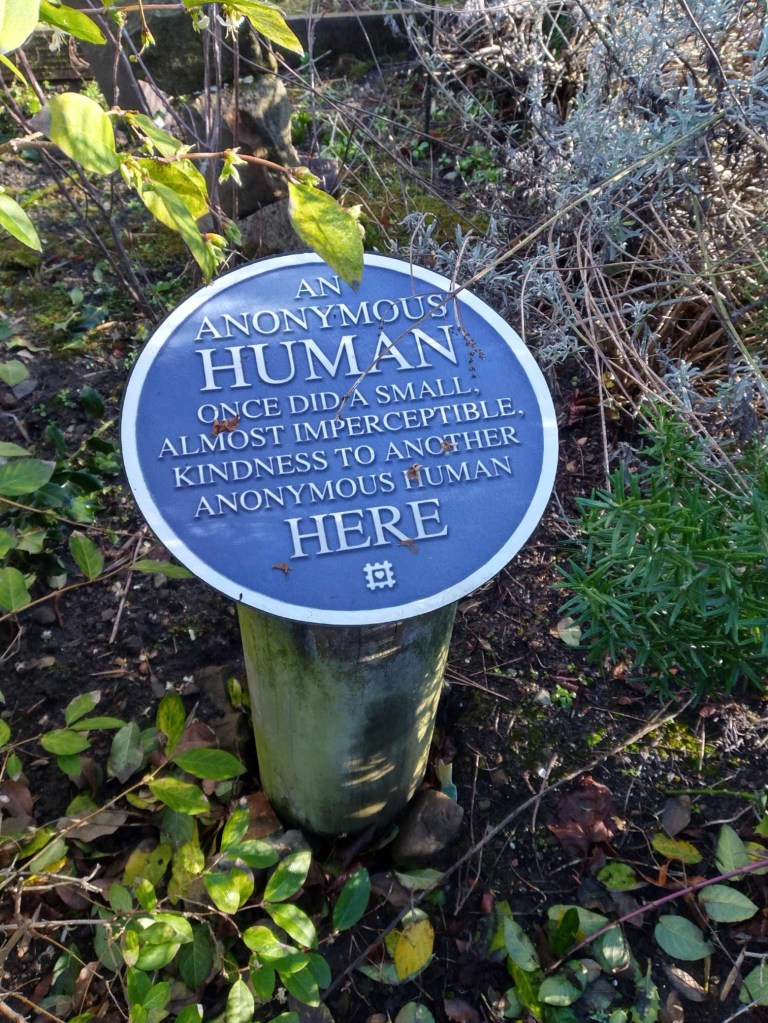
An Anonymous Human

Poetry and Photography By Rhys Hughes

An anonymous human once did
a small, almost imperceptible,
kindness to another anonymous
human here. But it isn’t clear
what that microscopic kindness
was. All the details are missing
and no amount of listening to
the wind kissing my ears will
give me any significant clues.

Maybe it was to make a dream
come true? Some modest scheme
such as a desire to swim in cream
or perhaps the wish to read maps
upside down without a frown?

I don’t know but now I’m thinking
about those times when I did a little
kindness for someone too. Let me
give you just one domestic example:

She asked me to do the washing up and I did.
I don’t want her to think I take but never give.
So, I did the plates, the cutlery, pots and pans,
and every cooking utensil piled up in the sink,
but my fingers got stuck in the holes of a sieve.

Not convinced of my nobility? Then
I ought to choose some other incident
that will prove my sincerity and ability
when it comes to minor moral actions.
Are you ready for my confession? It
teaches a valuable lesson, yes it does.

After the fiasco with the sieve
I bought her a pair of slippers
made from a new type of fabric
as black as a frogman’s flippers
and when I enquired what she
thought of them the following
day, this is what she had to say:

“My slippers are equally good
at both walking and wallowing,
and so silky and smooth they
glide like the valiant cheeks
of a greased rump on a slide.
A wider rump than mine by far,
my rump is of a reasonable size
and has no excess of friction.
This is not a fiction. Hurrah!”

By which I surmise she liked the surprise
even though I never saw her wear them,
but it’s the thought that counts. Therefore
I must have an abacus somewhere inside
my skull, preventing me from being dull.

And at night I help her fall asleep
by disguising myself as an intruder
who isn’t a creep, a mythic figure
from old fairytales, and she smiles
as I try to croon a soothing refrain:

“Sandman, when it rains
do your grains get sticky?
It must be awfully tricky
to sprinkle sticky grains
into the eyes of sleepers?
And have you seen my
new bed? It’s in the shape
of a hippopotamus head.”

Well, that’s all the evidence I possess
to address the issue of whether I am
the very best or even just a runner-up
at doing small, almost imperceptible,
kindnesses. Maybe you can outdo me,
brewing coffee or tea for grizzly bears
in the depths of a beverage-less forest,
or climbing ladders to rescue adders
stuck up trees, and by ‘adders’ I don’t
mean snakes but men with abacuses
instead of brains, or do you prefer to
shovel snow to clear those lanes that
seem to grow across the hillsides in
spring like tendrils, a peculiar thing?

In the meantime I am bedridden
and that is why I remain hidden
from society, as if I’m anonymous
and consequently synonymous
with that kind human, the subject
of this poem. Why do you say ho
hum? Do you doubt my anecdotes?

Nobody knows how I managed
to get thimbles stuck on my toes
overnight. I rose one morning
to sniff a rose with my long nose
but found I could no longer walk.

How do I feel about this? Just
sew-sew, I guess. I have no need
to talk about it further. Be kind
even if you don’t have an abacus
for a mind. That’s all. Farewell.

Rhys Hughes has lived in many countries. He graduated as an engineer but currently works as a tutor of mathematics. Since his first book was published in 1995 he has had fifty other books published and his work has been translated into ten languages.

.

PLEASE NOTE: ARTICLES CAN ONLY BE REPRODUCED IN OTHER SITES WITH DUE ACKNOWLEDGEMENT TO BORDERLESS JOURNAL

Click here to access the Borderless anthology, Monalisa No Longer Smiles

Click here to access Monalisa No Longer Smiles on Kindle Amazon International

Categories
Poetry

My Father’s Jacket

Poetry and translation from Korean by Ihlwha Choi

From Public Domain
The father, who is nearing the end of his life in this world,
gave me his winter jacket.
A black jacket he once wore with style,
on which thick snowflakes piled on cold shoulders,
a jacket that warmed itself by the stove in a soup restaurant.

A jacket with mismatched buttons,
worn through a life marked by crooked paths,
Unable to rest peacefully at the center of the universe,
tossing and turning like a migratory bird that had lost its way,
wandering through unfamiliar lands,
spending sleepless nights in the cold.
So that I may spend my winters warmly,
so that I may button my life neatly and live upright,
my father handed me his jacket,
like an offering of regret.
In the early winter that chills the heart again and again,
wearing my father’s outdated winter jacket,
I briefly trace the worn path of his difficult life.

Ihlwha Choi is a South Korean poet. He has published multiple poetry collections, such as Until the Time When Our Love will Flourish, The Color of Time, His Song and The Last Rehearsal.

.

PLEASE NOTE: ARTICLES CAN ONLY BE REPRODUCED IN OTHER SITES WITH DUE ACKNOWLEDGEMENT TO BORDERLESS JOURNAL. 

Click here to access the Borderless anthology, Monalisa No Longer Smiles

Click here to access Monalisa No Longer Smiles on Kindle Amazon International
Categories
Poetry

My Grandfather’s Hills

Poem by Michael R Burch

From Public Domain
My grandfather lies at the foot of an oak
far from the beaten path,
and never before has a spirit so free
lain fettered in sleep.

But although he lies and walks no more,
I see his eyes in the setting of the sun
and I hear his voice when the sap runs,
for these are an old man's hills.

Don't tell me the government "owns" them,
for the government didn't live them
and breathe them and know them—
only he did.

Don't tell me the government "regulates" them,
when seventy years
of his sweat and his blood and his tears
flow through the waters of these hills
to nourish the trees ...

No, these
are an old man's hills.

No one knew them as he did—
every hole where the woodchucks hid,
every nest where the blue jays lived—
and nobody loved them
as much as he loved them.

Only he cared when the flood waters killed
the tiny buds and the blades of grass
that grew beyond the fields.

And only he cared when the last bear died,
caught killing livestock.
"The oldest bear ever lived,"
he'd brag, "and the smartest."
Though we'd often hear it trip and crash
against the trash cans.

These are an old man's hills,
and they will never be the same
without his loving hand
gently transplanting shrubs and trees
that otherwise would have died
in the rocky, shopworn land.

Yes, these are an old man's hills,
and his eyes were the blue of the autumn skies
he knew so well even after he went blind.

"There's a few wispy clouds to the west today,
fadin' away, ain't they, boy?"
he'd ask me, and of course he was right.
"Sure are, 'pa," I'd reply, and a smile would crease his face
and a warmth would pour out of his soul,
for he loved his hills.

Don't say that someday
the wind and the rain
will weather away
his mark from the land—
the well that he dug
and the wall that he built
and the fields that he planted
with his two callused hands.

A memory cannot wither away
when it’s reborn in the songs of the raucous jays
and heard within the laughing waters
of the sea's silver daughters.

An old man lives within these hills, although he walks no more;
I have often heard his voice within the winter's stormy snore;
and I’ve seen his eyes flash, sometimes, in the bluest summer sky;
and I’ve heard his knowing laughter in my newborn baby's cry.

Michael R. Burch’s poems have been published by hundreds of literary journals, taught in high schools and colleges, translated into fourteen languages, incorporated into three plays and two operas, and set to music by seventeen composers.

PLEASE NOTE: ARTICLES CAN ONLY BE REPRODUCED IN OTHER SITES WITH DUE ACKNOWLEDGEMENT TO BORDERLESS JOURNAL

Click here to access the Borderless anthology, Monalisa No Longer Smiles

Click here to access Monalisa No Longer Smiles on Kindle Amazon International