Categories
Poetry

When the Quotidian Wrote our Notes of Isolation

By Nabina Das 

We were brought up by folks who respected the encrusted time,

wound in their watches every morning, opened windows to days.

They swept the morning breeze with either their prayerful ways

or brisk footprints out about the gardens of mint and marigolds.

 *

We were taught to eat with hands but not lick the fingers too much,

sometimes given spoons to scoop up manners away from the old world.

 *

Also made to brush our shoes black as squeaky bumblebees on the run,

rub wet chalk every Saturday on the white canvaswear like ghost tales.

 *

Visitors in that world arrived often without having to sniff their hands

from stiff alcohol smells. No furtive glances. They kept wearing shoes.


*

We were brought up by a man and a woman who valued hugging

and cracking a silly joke or two, elbows pirouetting at the dining table.

 *

They took us to the movies where women with small breasts got laughs

and even men with clownish big arms were thought to be big bores.

 *

Solitude meant suddenly finding hand holding in unexpected places.

A decade has now gone. Taking away easy tactile closeness with it.

 *

Nothing changed as we spotted snails in the grass; she still cooked

while he got the monthly grocery home counting money with care.

 *

Days of déjà vu-ing didn’t matter and he read the inscrutable Prufrock

in his gong-wide voice; she sang full throated. But it wasn’t called strategy.

 *

Nothing took the rhythm away from books and ink and weekends,

ice cream treats, water color tablets in tin boxes, the neat domestic talk.

 *

It’s not to say we did not hop mad after the moon or swoon in rains

brought mud in our feet, ran amok like twisters on the sleepy town.

 *

He sneezed too hard some days and scared the alley cat and she

scanned the city in her tiny feet, eyes lush gooseberries and face small.

 *

The music was always a rousing breeze through the receptive ceiling,

the food was quite reluctant to let its own vital aroma fade and die

 *

I often read through my story books learning to spell: i-s-o-l-a-t-i-o-n

hidden within the Kamasutra. The neighborhood lay in erotic repose.

 *

What was missing, oh, what was missing, people sometimes asked in jest:

not the doorknobs, not the bloody ancestors, not new birds on chipping beams.

Nabina Das is a poet and writer based in Hyderabad. She has published three books of poetry, one short fiction collection, and one novel. In the age of Corona virus, she tackles here the questions of isolation already experienced while she grew up in Guwahati, Assam, among ginger roots and swamp dragonflies.

Categories
Poetry

The Contingency of Saying and Eternal Motion

By Desmond Kon Zhicheng–Mingdé

The Contingency of Saying


If I say I love you.
If I say this love we share will be our last.
If I say we should trust our every emotion.

That even at their darkest, they reify the same.

The same culling of past acts of love, of endearment.

That’s what the novel was, haven’t you known all along?

A book of letters, each epistle like a gift of the angels.

If I say you should stay.
If I say this staying will be forever.
If I say every decision arrives at the same decision.

That as you confessed: you are, as I am.

You are, as I am content in this mirror of things.
All things now made for this, to house our love.


Eternal Motion

~ After David Medalla’s Cloud Gates


There is no redundancy here.
There is no superfluity, even in life’s assessment.

No one’s looking.
No one, Oh Ephemerae of Dissolutions.
No one is there, in the room where it all happened.
So long ago, the memory has become a fiction.
The room seems like a fiction, but it is real.
You know it is real, its squarish angularity.
I know it is real, the way you hold my hand.

The repetitions are eternal inversions.

Of an extended metaphor extending itself,
series of infolding turns, so much as to disappear.
No lodged positions, no milky consistency.
The resulting invisibility, also a contingent condition.

It is there, it exists like this coloured sky.
No one’s looking, but there’s our seat, ensconced.


~ Penned specially for the event, In Stitches, this poem was read at the National Gallery Singapore on 28 January, 2018.

~ Penned specially for the event, In Stitches, this poem was read at the National Gallery Singapore on 28 January, 2018

Desmond Kon Zhicheng-Mingdé is the author of an epistolary novel, a quasi-memoir, five hybrid works, and nine poetry collections. A former journalist, he has edited more than twenty books and co-produced three audiobooks. Among other accolades, Desmond is the recipient of the IBPA Benjamin Franklin Award, Independent Publisher Book Award, National Indie Excellence Book Award, Poetry World Cup, Singapore Literature Prize, two Beverly Hills International Book Awards, and three Living Now Book Awards. He helms Squircle Line Press as its founding editor. He can be found at: desmondkon.com

Categories
Poetry

The Tiniest Man on Earth and more…

By Aditya Shankar

The Tiniest Man on Earth

Was so tiny

he did not belong among humans.

Too big for microbes and fungus to befriend.

Too small for mushrooms

to feel the entitlement of a rain shelter.

Eliot’s practical cats were too practical

to respond to his queries.

Orwell’s Old Major

was busy inspiring a rebellion.

With none to acknowledge,

his happiness bore no relation to happiness.

His grief bore no relation to grief.

He watched the communion of men from afar—

their greets, hugs, smiling eyes.

He was happy.

But with none to share it,

his happiness hurt worse than grief.

He watched the war of men from afar—

their slit throats, longing, silence.

This hurt him.

But with none to relate with,

his grief grew light and comical.

He roamed the lonely world,

depressed and happy at once,

a microcosm of the humanosphere.

On his epitaph, he wrote:

Emotion seeks a watching eye

and lay in his grave.

But death never came for him.

It did not want to devour a breath

that wouldn’t distill into a potion of loss.

Notes:

Old Possum’s Book of Practical Cats by TS Eliot.

Old Major, a character from Animal Farm by George Orwell.

Annapurna// A History of Food

Mouth opens like the door of a shrine.

God, hungry and veiled by gloom is within.

She clutches her children tight.

Sets her men and women to work on barren lands,

pickaxes in their hand.

They plant crops, harvest the yield.

Chases away pigeons and crows.

War, they charge at rats in the granary.

Time is but the rushes of a never ending film on food—

the land our ancestors moved/ oxen ploughed,

earthworm that wiggled/ lizard fish that splashed,

cranes and parakeets that flew.

Not to forget the much more ancient recordings.

Spears that we darted/ meat that we roasted,

forests that thronged the fields once/

hills that we scaled.

No love story, without an episode of meal.

No battlefield, without a thirsty dying throat.

No captivity, as unbreachable as hunger.

Grounded by roots that we assume are severed,

an indoor sapling channels light.

A hand fed parrot pecks from our digital nest.

Concise and edible in its beak,

the epic of Annapurna, my mother’s fond deity.

Note: Annapurna is the Hindu goddess of food and nourishment

Aditya Shankar is an Indian poet, flash fiction author and translator. A Best of the Net and two-time Pushcart Prize nominee, Aditya has his poetry translated into Malayalam and Arabic. His poems have appeared or is forthcoming in The Little Magazine, Chandrabhaga, Asiawrites, Indian Literature, Poetica Review, Columba, Periwinkle Literary Magazine, Reality Break Press, Brasilia Review and so on. Books: After Seeing (2006), Party Poopers (2014), and XXL (Dhauli Books, 2018). He lives in Bangalore, India.

Categories
Poetry

Saturday Morning Musings

By Sheldon John Dias

Gazing into a mirror on a Saturday morning…

As I gaze into the crystal flattened and stretched

I search for meanings – of life and of memories etched.

Who am I?

Where am I?

Why am I?

Here?

I ask myself these questions till I faintly hear :

You are chaos

You are the cosmos

You are light and darkness

Shining brightly through prisms of uncut gems.

Alive in a spectrum of life and death and then life again.

You are the elaichi in kadak chai

The icing on macaroons and

Pani in the hands of the puchkawala.

You are the dal in the khichdi and

every grain of atta in your paratha.

You are the pandal blocking the road on Durga Puja.

You are the magician at the end of his Act saying, “ Ta da”.

You are a drop of rain. You are the ocean.

You are the sun and moon and stars altogether.

You are the highways and by-ways

And dead ends of a one- way street to bedlam.

You are the question and the answer.

You are the lie and the truth.

You are no one and everyone.

You are a mystery of this universe

but not a mystery to you!

Sheldon John Dias is an Educational Supervisor and a teacher of English and Drama at GEMS Modern Academy, Dubai. He has also served on several examination boards and panels. He is passionate about theatre and elocution and is currently working on his first book

Categories
Poetry

Pandemic and more…

By Melissa A Chappell

Pandemic

Do you remember,
as the alarm bells were crying,
how we were silent in the sun,
our blood roiling red with the ruins of the sun.
Do you remember,
as the warnings were rising,
how we once lowered the moon
till it lay pale on our backs.
Do you remember,
as the virus spread across the world,
how once we curled, small, like a fiddlehead fern,
forgetting everything,
forgetting everything.
 I Walked Out

I walked out on a Sabbath day
into these woods that I have called my own.
In praise the poplars bare branches raise
In this their silvered wintry home.

I looked out over the crest of the hill,
to see, where, as a child, I wandered wild,
down to the now songless rill,
where the mysterious gray dusk once beguiled.

Laying my claim, here I call down my preening pride,
for I know that to me nothing has ever belonged.
Just the same, you were never mine.
For all that is dwells where the Lord’s graces throng.

I walked out--not even my body bore my name.
Empty hands, empty heart, room for all.
My human passions ever tamed,
the empty plenum, brimming with God, brings lauds.

The Cedars

Walk a while with me,

along this borrowed road

where courageous grows

the Queen Anne’s lace.

Let us speak of the

furious star

hurtling through the

door ajar,

our catechisms

and ponderings,

umbrous

in the roaring

light of day.

Sit a while with me,

beneath yonder poplar tree.

I cast my seed into

the dark furrows

of your yearnings deep.

Perhaps they will

settle quiet

into their loamy rest

at the diffuse dusking

in the lavender west,

readying for the waking,

the cracking of the husk.

Lay a while with me,

on a bed of evergreen boughs.

As I brush the hair from

from your brow,

the gracious breeze will

caress every sense of ours.

Together in the fire struck night,

we die, one to the other,

rising, blessedly more human,

having loved beneath the cedars,

having loved beneath the cedars.

One-Tenth of a Percent

The long awaited DNA results

radiated sundry on my computer screen.

At the bottom of my long and

kaleidescopic lineage, there it was,

as if someone had almost forgotten to link it

to my motley double helix:

“Sudanese, one tenth of a percent.”

One infinitesimal gene, which, excitedly

laying claim to an exotic slice of Africa,

suddenly became a mountain of pride.

Lordly, I passed through my days,

knowing that in my blood ran the ebulliant,

ancient tribal songs and dances of Sudan.

Yet I thought not of a fractured nation,

perishing for an independence

cut out of its mountains and plains,

and the tortured alchemy of

bloodlust, power, and dulled machetes.

The blood of Sudan courses through humanity,

its lament rising from the ancient gene,

the lament of those everywhere who,

facing intolerable danger, flee away,

away to stranger shores, or to the wilderness,

where manna from heaven is only an old story,

where seeds and leaves are the sole food that

the only God they know can offer them.

My one-tenth of a percent was lost in the infinite ocean,

yet finally swam across a sea of plasma to reach

nucleic shores, finding refuge in the improbable

gene pool of a girl so white the sun is blinded by her.

She does not understand the faint, foreign chants

that she sometimes hears in the offing.

Yet one-tenth of a microscopic percent,

real as the blood that wails for justice,

dreams of flowering hills of daffodils,

where the blood soaks silent into the waiting earth.

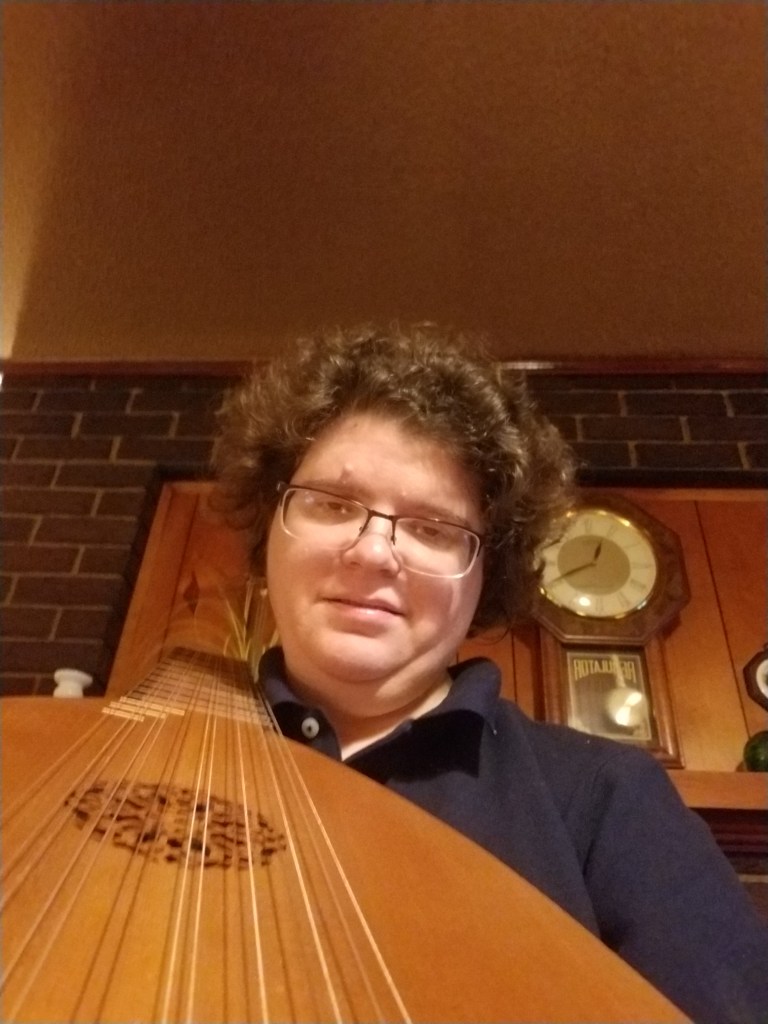
Melissa A. Chappell is a native of South Carolina, USA. She contentedly resides on land that has been in her family for over 130 years. She has a BA in the Theory of Music and a Master of Divinity degree. Besides writing, she plays several instruments, including the lute. Music and the land are her primary inspirations for her poetry. She has had two chapbooks published: Rivers and Relics (Desert Willow Press)

Categories
Poetry

Rasam and Sunil the Brahmin

By Marc Nair

Rasam

for Grandma (1926–2017)


In her last hours, birdlike,
heaves of brittle breath
flutter like grace notes
in a sodden sonata.
A bursting heart shudders
under this slip of skin. Nothing
made of words drips into evening.

Her mouth a soundless nave,
mind a widened sieve, eyes a dim
room of racing monitors, diodes
that map a flailing terrain held
by the memory of daughters,
women now; strange women
of quibbling hours, who rock her
with distant tears.

She does not know
who she sees; no thing
of memory remains, not in
muscle or breath, not in
the taste of rasam lost
beyond her tongue, thin spices
souring over years of simmering
in a dusty kitchen, morning sun
ageing the linoleum, a ‘For Sale’ sign
growing in the yard.


Sunil the Brahmin

Just keep following the heart-lines on your hand
 			Florence and the Machine

He would read me the truth of words spliced by the lines
on my hand, in fisted heartbeats of callused stories.

His own thumbs will not bend; steeled by a certain
inflexibility to step from the haveli of his fathers

into this pulsing world, sheared by jagged roofs
and backpackers. The valves of his blue-daubed house

open and close their doors with older sight, blood
etched from the lineage on his palm; a history of

Brahmins as soothsayers, the holy lines on their head
clear as the need for a city’s arteries to flow, a sure pump

of wisdom that foiled uprisings. They walked for centuries
in the fault lines of kings, telling of fame and famine,

although Sunil speaks to me in smaller worlds: of my own
love-lines split like Jodhpur’s road winding from the

unconquered fort, as my palm reveals its map of the maker’s
blade, the unfinished road pressed against my heart.

( First published in Vital Possessions, Ethos Books, 2018)

( First published in Postal Code, Red Wheelbarrow Books, 2013)

Marc Nair is a poet who works at the intersection of various art forms. He is currently pursuing projects that involve photography, movement and creative non-fiction. His work revolves around the ironies and idiosyncrasies of everyday life. He has published ten collections of poetry. 

Categories
Poetry

Two Covid-19 viruses meet Albert Camus

(A Dystopian spoof on Corona and Camus)

By Ra Sh

The world was calm now. And silent.

Only the birds chirped tweeted sang cawed.

Only the animals barked mewed mooed growled.

Only the river gurgled.

Only the sky thundered.

Only the fires crackled.

Two covid-19 teenage viruses walked around the city

assessing the damage. On Route vers l’ouest, they found

mansions with cars parked in front and little gardens.

Four dogs ran out of the house dragging a well dressed

woman and a naked man. It was the posh area of the city

and in house after house dogs feasted.

On Route Vers le nord, that led to the fields, unharvested paddy

lay in the fields. That was the operational area of the rodents,

snakes and the jackals. On Route vers l’est, that led to the offices,

the road lay thick with the police, applicants, clerks, officers and

mounts of paper. The vultures landed on them and tore away

the flesh.  It was a mass of rotting flesh, blood, hair and

official communiqué.

On Route vers le sud, that led to the river, peacocks danced on

the road. From the two theatres that showed no films, super stars

grinned from posters. Weeds were slowly climbing up the

courtyards of the college and the schools. The grounds were

covered with bodies , furniture, lab instruments and aprons.

The teenage viruses reached the river and sat holding hands.

Being young, they were in love and being idealistic a tad bit

sad about the end of humans.

They then spied a human in a trench coat and trousers angling for

fish  on the bank. He smoked a pipe and chuckled while he spoke

to the fishes. The adolescent viruses approached him and asked,

“Who are you sir, how come you are in one piece when

all humans are dead all over the world?”

The man chuckled again and retorted, “I am Camus

and I wrote a novel ‘The Plague’ long back. I wrote that the city

was happy, life went on, but the plague bacillus never dies or

disappears for good. It can lie dormant for years and years

in bedrooms, cellars, trunks and bookshelves and perhaps the day

would come when it roused up its rats again and sent them

into a happy city.  You are those rats now and you are the plague.”*

The Gen X viruses who could barely understand him, watched

as Camus gathered his things and made his way up stream with

fishing rods, bait and the day’s catch, whistling to himself.

Albert Camus

*From the last lines of the Albert Camus novel, The Plague.

Ra Sh is a poet based out of Kerala

First published in Countercurrents.org

Categories
Poetry

Come to the Summer of my Arms & Bristle Stories

By Nalini Priyadarshni

Come to the Summer of my Arms

Come to the summer of my arms

the winter of our discontent has lasted too long

peppering our wisdom with salt and snow

settling into nook and crannies of our being

shadows of the moon on your forehead

has lengthened to reach our eyes

that have been growing dim

with each revolution of earth.

Come to the summer of my arms

we have harvested too long the silence

sown with the best of intentions

that has been whittling us beyond recognition

think of the moles and the birth marks that

need to be salvaged before we forget they exist

or keys that must be forged to unlock life

read books we discarded as unreadable

Come to the summer of my arms

for one of us cannot thaw without the other

winter of our discontent

inch by inch recovering the expanse of unexpressed

so that intimacy could be tilled into rows and rows

of languid kisses strewn with endless possibilities

perhaps then, someday we will

live our way into the passion we always sought

Bristle Stories

They arrive uninvited

like guests during summer siesta

and find strength in numbers

Stubborn as teens in combat boots

looking for trouble at street corner

my chin hair refuse to die

or remain dormant

They recoil every time I wax

Let me celebrate victory after a laser

Disappear for maybe a couple days,

but always return snapping gum vivaciously

 to sun themselves unabashed

bold and burping on a cloudless terrace

On weekdays, they foil with vengeance

 my all attempts at prettiness

refuse to apologise

throw tantrums, stomp and yell

spitting at the feet of men smiling at me

Feeling right at home, my bristles stretch themselves

claiming more space with each day

play cards, exchange stories and smoke cigarettes

Greedy

unapologetic

bordering on contemptuous

they reassure the woman in me

that they are paragons of

proud and vicious feminism

The woman inside me wonders

if greying calls for a truce

to make peace with my rebellious mongrels

Nalini Priyadarshni is a feminist poet, writer, translator, and educationist though not necessarily in that order who has authored Doppelganger in My House and co-authored Lines Across Oceans with late D. Russel Micnhimer. Her poetry, prose and photographs have appeared in numerous literary journals, podcasts and international anthologies including The Lie of the Land published by Sahitya Akademi, New Delhi. A nominee for the Best of The Net 2017 she lives in Punjab, India and moonlights as a linguistic consultant.

Categories
Poetry

Witness to times past and Yellow Bird

By Nishi Pulugurtha

Witness to times past

A garden tracing its time back

Centuries,

The river flowing by

As it had always done

They have been there together

For years now

Bound by geography, by place

Witness to all that has changed

Witness to all that is changing now

Huge trees, overarching branching

Creepers, shrubs, foliage

Dry leaves – red and brown

Rustling, now quiet

The wind blowing through the green ones

Leaning on, some bent

Broken too,

Twisted and curled

Cut down, decayed

Banks derelict too

The river’s course has changed

Mud flats with debris

Muddied waters.

Glistening in the winter sun

On the broken bench a lone figure

Asleep in the winter sun

Some rest amid all the noise and bother

Before life resumes all over.

Yellow Bird

That yellow bird with a black band around its neck

Perched itself each year

December/January

Its winter haunt, I guess

It sits for a while perched on the branch

And flies off

To land on another branch

The little leaves barely a camouflage

Solitary on its perch

Chirping for a while

To soar away

It is back soon

Almost each morning

The pleasant winter sun seems to be just right for it

It feels nice

It makes me feel nice

The colour, the motion

The flight.

That happy yellow bird

With the black band around its neck.

Dr. Nishi Pulugurtha is Associate Professor in the department of English, Brahmananda Keshab Chandra College and has taught postgraduate courses at West Bengal State University, Rabindra Bharati University and the University of Calcutta. She is the Secretary of the Intercultural Poetry and Performance Library, Kolkata (IPPL). Her research areas are British Romantic literature, Postcolonial literature, Indian writing in English, literature of the diaspora, film and Shakespeare adaptation in film and has presented papers at national and international conferences in India and abroad and published in refereed international and national journals. She writes on travel, film, short stories, poetry and on Alzheimer’s Disease. Her work has been published in The Statesman, Kolkata, in Prosopisia, in the anthology Tranquil Muse and online – Kitaab, Café Dissensus, Coldnoon, Queen Mob’s Tea House, The World Literature Blog and Setu. She guest edited the June 2018 Issue of Café Dissensus on Travel. She has a monograph on Derozio (2010) and a collection of essays on travel, Out in the Open (2019). She is now working on her first volume of poems and is editing a collection of essays on travel.

Categories
Poetry

Winter in Vienna and more…

By Sarita Jenamani

Winter in Vienna 

Winter is usually foggy here 

It blurs the reflection of your dream 

in the mirror of your imagination 

Night does not sojourn here 

but when the snowy night 

passes through the city 

a violet glow envelopes everything 

A certain passion erupts in me 

and jumps back to its own caldera 

Conversation is a sin here 

Voice darkens and submerges in the sorcery of silence

Snow trickles into the stillness

Exile 

All through life 

an unending journey 

accompanies you 

And in the absence of 

a destination 

much of what’s inside gets lost 

And the warp and weft of being 

keeps on breaking

Beyond 

Stillness spreads its wings 

like the desert 

beneath a dawning sky 

The paraplegic pyramids glitter 

in a mixture of azure and gold 

There is still a lot to say 

beyond civilization

Viennese Coffee-houses 

No sooner does dusk fall 

than the city’s cafés come to life 

with the tinkling clang of indifference 

Gradually the crowd of solitude gathers 

around the tables

Sankt Marx Friedhof*

Silence is magnificent 

particularly when it connects 

the monumental music of lives 

that sleep peacefully 

with the absolute space 

Flowers and graves shoot up 

rupturing earth’s breast 

They exist side by side in stillness 

I wonder what they think 

of volatile souls that travel to the sky 

with the chanting 

of mysterious mantras 

or of those who wait 

for an undefined time to resurrect 

Beyond cemetery’s wall 

a swarm of sound passes through 

slicing the essence of existence 

in our trivial time

*Mozart was buried in St. Marx Communal Cemetery, Vienna.

(These poems are excerpted from her latest collection, Till the Next Wave Comes)

Sarita Jenamani is a poet of Indian origin based in Austria, a literary translator, anthologist, and editor of a bilingual magazine for migrant literature – Words & Worlds – a human rights activist, a feminist and general secretary of PEN International’s Austrian chapter. She has three collections of poetry. She writes in English, Odia and translates to and from German. Sarita translated Rose Ausländer, a leading Austrian poet, and an anthology of contemporary Austrian Poetry from German into Hindi and Odia. She has received many literary fellowships in Germany and in Austria including those of the prestigious organizations of ‘Heinrich Böll Foundation’ and ‘Künstlerdorf Schöppingen’.  She studied Economics and Management Studies in India and Austria where she works as a marketing manager.