The numbers arrived without ceremony: a small column of figures, neat and confident, delivered through a screen that assumed fluency. There was no preamble, no invitation to feel anything about them. They simply existed—self-contained, conclusive. I stared at them longer than necessary, as though attention itself might persuade them to say something more.
I had been trained to trust measurement. To believe that what can be counted is what can be known, that precision is a form of care. Science has given us extraordinary clarity—the age of the universe, the speed of light, the composition of distant stars. It reduces the world to units small enough to hold without trembling. And yet, faced with those figures, something loosened. Not doubt exactly, but space.
Outside the window, trees moved according to rhythms that resisted instruction. The wind shifted, paused, resumed. Nothing announced itself. Nothing asked to be improved. I noticed this only because the numbers left room for it. They explained something, certainly—but not the sensation of standing there, or the quiet pull of attending to what did not ask to be solved.
The figures were accurate. The method sound. Still, they felt incomplete—not because they lacked information, but because they stopped where experience continued. They could describe a condition, but not what it felt like to inhabit it, or how knowledge settles unevenly into a day.
I began to notice how often I reached for numbers for reassurance. Steps counted. Hours logged. Probabilities consulted. Each promised orientation, a sense of being located within something stable. Yet the more faithfully I checked them, the more sharply I felt what they could not carry: anticipation, curiosity, the pleasure of patterns that were alive rather than abstracted.
The trees continued their unsystematic movement. No pattern held. Nothing corrected itself. They offered no explanation, only presence. Whatever I was leaning toward did not arrive as conclusion. It arrived as attention.
My body seemed to understand this before I did. Breath shifted. Awareness sharpened. These responses did not contradict what the numbers said; they existed alongside them—gathered without instruments, held without proof.
By evening, the figures had settled into their proper place—neither dismissed nor revered. What lingered was the act of noticing: the difference between explanation and understanding, between knowing the parameters of a situation and standing inside it.
Later, I returned to the window. The trees were still there, indifferent to coherence. Light moved across them without emphasis or instruction. It required very little of me—not judgment, not conclusion, only presence.
Some kinds of knowledge arrive complete. Others unfold slowly, through attention. The numbers gave me the first. The rest asked only that I stay.
Tamara-Lee Brereton-Karabetsos is an Australian writer working across poetry and lyric non-fiction, exploring perception, science, and the spaces where language meets what cannot be measured.
PLEASE NOTE: ARTICLES CAN ONLY BE REPRODUCED IN OTHER SITES WITH DUE ACKNOWLEDGEMENT TO BORDERLESS JOURNAL
It was a sombre occasion. The only sounds audible were the occasional sniffles and a quiet hum of a mantra in the background. The crowd arrived in an orderly manner, circled the casket, paused at her feet, touched them, and raised their hands in reverence. They stopped near the son; some offered a consolatory handshake while others embraced. Afterwards, they found a safe corner to watch the world go on, lost in thought. They wonder if they should slow down, take a step back, and smell the roses. They understand that every passing day brings them closer to the day when they will be the main focus at such an event.
Many who knew her well will remember her 87 years of life and the challenges she faced. Coming to Malaysia as a young, match-made bride from India, she must have encountered difficulties adapting to her new country. Widowed for more than half her life, her children were her constant companions. The recent sudden death of her eldest son took a heavy toll on this octogenarian. It said that the biggest burden that a parent carries is to bury their own child.
The mourners who were there at the funeral were there to pay respect to the soul that had endured all the challenges that life threw at her. Amid those hurdles, she managed to bring forth offspring who helped make the world a better place. The kids, in their own ways, contributed to society and the nation. It is like a 21-gun salute to a fallen hero, minus the military regalia. That is all.
It was an act of gratitude. The rituals symbolised the completion of a book; an immersive one. The covers were closed, but the memory of its contents would linger in readers’ minds for a long time, especially if it was well written. What is a good book in the story of life? That would start the debate about the purpose of life. Why are we here? Is it a reward to be born into a species with higher senses, after enduring millions of births before which were not so glamorous? Is it a test bed for other births to come?
Are we here just to engage in the dizzyingly indulgent experience of being alive? Are we sent here to make some indelible change or leave a legacy?
These questions popped up again after his funeral as I was watching a reel sent to me on social media.
It was one of those rare, civilised discourses on Tamil Nadu TV about the younger generation and their outlook on marriage and having kids. On one side of the auditorium, Baby Boomers and Gen-X’ers[1] were complaining that Gen-Zs were delaying their marriages and even postponing the time they embarked on having children. Their bone of contention was that this was bad for society at large. Society’s in a constant flux, needing new innovations and people with unabashed energy to stay afloat. Only young minds can do this. Delaying this process could be a disservice to mankind, they say.
In defence, the Gen-Zs asserted that we are given just one life. Within that span of a lifetime, we are expected to learn, save, serve, experience and enjoy. There isn’t much time. Bringing a child into the world is a big commitment and a strain on their time and finances. There is no guarantee that they would do as good a job as the generation before them. They went on to say that the world is a dangerous place with predators and with global degradation on the rise, every living day draws earthlings a day closer to annihilation. The fear of passing on harmful genes was also mentioned.
In rebuttal, they were told that no one comes with a cookbook for surviving. Everyone tends to learn on the job, savouring every moment of it, the ups and downs, and leaves the world with nothing but memories. If that is our purpose in life in the first place, this was it.
Then again, the same thought came into my conscience around the time when Renée Good was shot dead by ICE (Immigration and Customs Enforcement) officers in Minnesota. If Renée were not shot, the world would probably not be reading her award-winning poem, ‘On Learning to Dissect Fetal Pigs‘. As if by a stroke of serendipitous and synergistic coincidence, her poem also explores the interplay of faith and scientific reason in our day-to-day lives. The logical mind tells us something is either white or black. Further exploration may reveal various shades of white, off-white, beige, ivory, and more. There is a confusing line that separates the analytical mind, which complicates understanding, from the spiritual awe that prompts one into submission. In that poem, Renée probably conceives of life as a chance meeting of an ovum and a sperm. Is there a higher meaning for this chance meeting?
To quote George Orwell, “The trouble is every generation imagines itself to be more intelligent than the one that went before it, and wiser than the one that comes after it.” In the late 18th century, economist Thomas Malthus postulated that population would outstrip food production, leading the world to starve into oblivion. Subsequent generations, through science, proved him utterly wrong, and we are now afflicted with malnutrition of abundance.
We should not underestimate the next generation to find answers to questions we cannot answer.
Every generation is still searching for the ultimate secret of life. What we are given instead are the red pill of the sciences and the blue pill of unquestionable social traditions[2].
Propagating the race with our progeny may not be the only reason for existence. If such is the case, the world would not remember literary doyens like Jane Austen and Virginia Woolf. Neither would spiritual figures, like Swami Vivekananda and Adi Shankara, who left without children, remain in people’s minds. They left us with chests full of wisdom to help us think.
A perfect life need not be complemented with children. Legacies may be handed down by other means, through passing of wisdom, art or impact.
[2] The Red Pill / Blue Pill concept was introduced in the 1999 movie, ‘The Matrix’. The Red Pill reveals the harsh truth about the world, and the Blue Pill lets him stay in comfortable ignorance.
Farouk Gulsara is a daytime healer and a writer by night. After developing his left side of his brain almost half his lifetime, this johnny-come-lately decided to stimulate the non-dominant part of his remaining half. An author of two non-fiction books, Inside the twisted mind of Rifle Range Boy and Real Lessons from Reel Life, he writes regularly in his blog, Rifle Range Boy.
PLEASE NOTE: ARTICLES CAN ONLY BE REPRODUCED IN OTHER SITES WITH DUE ACKNOWLEDGEMENT TO BORDERLESS JOURNAL
There was a time when watching films was nothing more than rest, an evening comfort after work, a temporary escape into worlds beyond my own. Like most people raised in an era saturated with visual storytelling, I consumed narratives without questioning their construction. I laughed, worried, and wondered alongside characters, yet I rarely asked how those emotions were engineered or how those journeys were shaped. Stories simply happened, and I accepted them as complete experiences rather than crafted designs.
My relationship with cinema began to change when my relationship with writing deepened. As I started shaping my own manuscripts and essays, I discovered that watching films could be far more than entertainment. They could instruct how to be subtle, practical, and immediate. Gradually, the screen became a classroom where narrative structures revealed themselves through observation rather than formal lectures. This transformation did not occur overnight. It emerged from habit, curiosity, and a need to look beyond spectacle into construction.
I did not learn storytelling theory in abstraction. I learned it by noticing patterns and by asking why certain stories held my attention while others dissolved into forgetfulness. The first lesson I absorbed was that nearly every compelling narrative rests upon a recognisable arc, a beginning, a middle, and an end. This realisation might seem elementary yet seeing it repeatedly across films gave it clarity and emotional substance. I began recognising this structure not as formula but as rhythm, the natural pulse of storytelling that guides audience engagement.
In the beginning of a story, I observed how filmmakers introduce their worlds with efficiency and intention. Characters appear within contexts that suggest their ordinary reality. Atmosphere, tone, and relationships are established with subtle precision. Tensions are hinted at, even when not fully expressed. Soon an event disturbs equilibrium. Something shifts irreversibly, and the narrative awakens. I came to understand this as the true starting point of storytelling. Watching this transition repeatedly taught me how crucial it is to establish stakes early in writing. Without disruption, there is no curiosity, and without curiosity, there is no reader commitment.
As I continued observing, the middle portion fascinated me most, because here stories breathe and struggle. I noticed how conflicts deepen, relationships evolve, and obstacles accumulate. Rarely does tension remain static. Instead, it escalates, twists, and transforms. Films helped me grasp pacing, how narrative momentum must be sustained without overwhelming or exhausting the audience. I learned to appreciate shifts in direction where revelations redirect expectations and intensify engagement. Translating this insight into writing helped me maintain movement in long narrative stretches that might otherwise drift.
This exploration also introduced me to the art of foreshadowing, those delicate hints planted early that later bloom into significance.
At first, I experienced these moments subconsciously, feeling satisfaction without understanding its source. Later, I trained myself to detect them consciously. A line of dialogue, a recurring symbol, or a passing gesture might appear trivial, yet later return with emotional resonance. Observing this taught me the elegance of preparation and restraint. Foreshadowing became a lesson in trust, demonstrating how writers guide readers gently rather than instructing them bluntly. It is not manipulation. It is anticipation crafted with care.
From foreshadowing I moved toward understanding twists. Watching narratives unfold, I realised that satisfying surprises rarely appear without groundwork. Effective twists do not betray logic. They reinterpret it. They cause viewers to revisit earlier scenes mentally and perceive them differently. This discovery reshaped my own approach towards writing. I began questioning whether my narrative turns felt earned or merely sudden. Films revealed that the most powerful twists balance unpredictability with inevitability. They shock the mind while satisfying the intellect.
Eventually, the story advances toward culmination, the climax. I learned to recognise this convergence where tension peaks and decisions crystallise. Cinema often dramatises this moment visually, yet its structural importance remains universal. Climax is not spectacle alone. It is consequence. It represents the meeting point of character, conflict, and choice. Observing this repeatedly helped me appreciate emotional resolution as much as narrative resolution. Writing began to feel less about describing events and more about guiding emotional progression toward meaningful closure.
Then comes the ending, not merely stopping the story but settling it. Watching endings taught me that resolution does not require complete explanation. Instead, it must honour the journey undertaken. Closure arises through thematic harmony rather than exhaustive answers. Some endings comfort, some provoke reflection, and some remain deliberately open. Each variation revealed to me that endings must resonate rather than conclude mechanically. This awareness influenced how I approach narrative responsibility in my own work.
Beyond structural awareness, films broadened my understanding of storytelling elements intertwined within that structure. Dialogue revealed character identity through vocabulary and rhythm. Settings shaped emotional atmosphere and influenced decision making. Secondary characters reflected or challenged protagonists, often revealing hidden dimensions. Physical gestures conveyed interior conflict that words might obscure. Observing these layers expanded my appreciation for narrative texture and encouraged me to incorporate similar awareness into my writing.
Yet while learning from cinema, I also became aware of its limitations in comparison with the written form. Films often rely on action and expression to communicate thought, whereas writing allows direct entry into the interior life of characters. This distinction reminded me that visual storytelling could inform craft without replacing literary strengths. The purpose was not imitation, but adaptation. I absorbed lessons about pacing and structure while preserving the depth of introspection unique to prose.
One practice that accelerated my learning was revisiting familiar films analytically. Knowing outcomes freed me to examine construction rather than suspense. I studied how scenes transitioned, how tension was distributed, and how narrative clues were planted. Sometimes I watched without sound, observing gestures and movement alone. At other times I focused exclusively on dialogue patterns. These exercises sharpened my sensitivity to storytelling architecture and strengthened my capacity for conscious observation.
Reflecting on this journey, I recognise that films can never replace reading or scholarly study. They complemented them. In a cultural moment where visual narratives dominate collective imagination, ignoring their instructional potential would be wasteful. The screen became not a distraction from writing, but a partner in understanding it.
Today, when I sit to write, echoes of those observations accompany me. I think about beginnings that invite curiosity, middles that sustain tension, and endings that resonate emotionally. I consider foreshadowing that prepares revelation, twists that deepen understanding, and climaxes that honour investment. These insights have become instinctive rather than theoretical, woven into my creative process through attentive viewing and reflection.
The screen, once merely entertainment, became an unexpected mentor. And perhaps that is the quiet gift of storytelling in all its forms. It teaches those willing to observe. For me, learning structure through films did not diminish the magic of writing. It enriched it, providing shape to imagination and confidence to craft.
I still watch films for enjoyment. I also watch with awareness. Somewhere between these two experiences lies growth, the gradual shaping of a writer who learns not only from books and lived experience, but from the stories unfolding in light and motion before him. In that space between viewing and reflection, I continue discovering new dimensions of narrative, reminding myself that learning, like storytelling, never truly ends.
.
Gowher Bhat is a a columnist, a freelance journalist, and educator from Kashmir. He writes about memory, place, and the quiet weight of the things we carry, often exploring themes of longing, belonging, silence, and expression. A senior columnist in several local newspapers across the Kashmir Valley, he is also an avid reader and book reviewer. He believes the smallest moments can carry the deepest truths.
PLEASE NOTE: ARTICLES CAN ONLY BE REPRODUCED IN OTHER SITES WITH DUE ACKNOWLEDGEMENT TO BORDERLESS JOURNAL
There are many great cinematic representations of time such as the 1960 George Pal version of the Time Machine and from the same period the Time Travellers ( which was remade as the inferior Journey to the Centre of Time some years later) had some interesting juxtapositions near the end. But the sequence that has stuck in my head is from Kubrick’s 2001 a Space Odyssey, where a shattering glass is used to convey the passage of subjective time for Bowman. For the majority of living things, time is a subjective concern, a relative few spend most of their lives looking at the cosmic scheme of things — philosophers, scientists and writers.
Aristotle differed from Plato and over the centuries there were many unique interpretations ranging from bleak existential views to epic works comfortingly tied to Madeleines. Our concept of time is reinforced by popular culture. A 1960 film titled When the Clock Strikes, is about a criminal condemned to be executed at midnight. It’s a stormy night and an assortment of characters converge on Cady’s place not far from the prison where the convicted murderer will be hung. Cady’s is a convenient place to shelter from the storm for a juror who is wracked with guilt that he might have sent an innocent man to the gallows. He has an opportunity to convey his concerns when the warden calls on the way to prison. Also there is a woman pretending to be the wife of the condemned man and somehow a man struggles through the stormy night and arrives at Cady’s to announce that he is the guilty one but he is too late to stop the execution as the phone lines are down. The rest of the movie deals with a plan to somehow get the stolen money the deceased man had hidden. This is a good example of how time hangs over our existence, providing motivation and sometimes pushing us to the limits of endurance rather than be beaten by the relentless arrow of time.
Newton ‘s Universe served us well until the electron microscope focused attention on the underlying structure of the Universe. No longer could we accept that the Universe functioned like clockwork as in the languorous days gone by. Even Einstein knew that, for want of a better word, ‘spooky’ things were happening at a sub-atomic level. The Universe is essentially vast amounts of information. In the 20th century, devices were invented to record sound and visual information . These devices proved invaluable to scientific research as well as arts a and entertainment. Scientific and creative minds found ways of mixing, compressing and manipulating information in much the same way that information goes through various transformations in a cosmic setting such as event horizon of a black hole for instance. The Universe is composed of sequences of information , timelines branching in all directions. Some entities will follow one timeline while others will sample multiple timelines. On a quantum level, time foam can occur under the right conditions and elsewhere there are shards of time and no doubt there is time that resembles the contents of a document shredder.
This is the 21st century and we should have mastered time with all the technological marvels at our disposal. Modern transport can get us from A to B so much quicker, at least it would if only governments would spend enough on infrastructure so we did not spend so much time in traffic jams. AI should be facilitating a more a meaningful existence but algorithms can be time wasters when corporations use them to maximise profits. At a time when there are record numbers of lonely people someone comes up with the bright idea of creating a virtual reality where participants interact with avatars creating another wedge between people and the real world. Such virtual worlds can attract people predisposed to such immersion. Gambling addicts can spend days, weeks, years, gambling on poker machines. The tragedy is playing out right now as these individuals lose their partners, families and souls to the machines. It’s a limbo world where nothing meaningful happens. Lost time.
Scientists say the concept of time was invented by us to create a sense of order to our existence but is time not a thing? We should make the most of whatever devices are at our disposal to improve our lives and the lives of those around us. A meaningful existence is one that acknowledges that we are creatures like all other creatures on this planet and we are sustained by this planet and the complex ecosystems around us.
The answers to the mysteries of time might be solved by the collective wisdom of the world’s indigenous people. It might also come some time in the future in conversations with sperm whales at a depth of three thousand metres.
From Public Domain
.
Mario Fenech is an artist, writer. His visual art is mainly sculptures and had many exhibitions around Melbourne over the years. His writing has been essentially science fiction ideas and most were short stories although he self-published a novella in 2013 titled, ‘The Rock in Room Ten’. He is currently two thirds into his latest science fiction story.
.
PLEASE NOTE: ARTICLES CAN ONLY BE REPRODUCED IN OTHER SITES WITH DUE ACKNOWLEDGEMENT TO BORDERLESS JOURNAL
Pondicherry must have been a dream. To co-exist in the halls of history where the French had left their mark was well within one’s capacity, but to thrive in a society where sandwiches were the norm and butter paneer the exception verged on the extraordinary. Every day in Pondicherry merited a visit to Baker Street, whose otherworldly triad of sandwich, croissant and quiche deserved an equally competent pat on the back; to not grow fat, content and happy in this town would have been doing it an injustice.
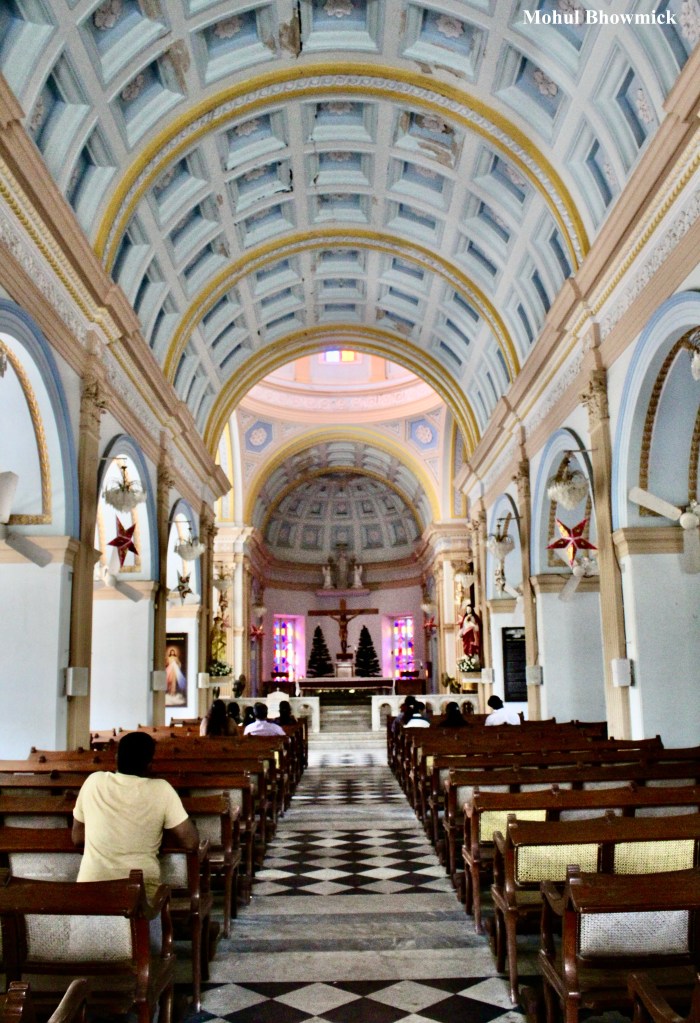
The Basilica of the Sacred Heart of Jesus, towering above the modest remains of Mahatma Gandhi Road, buffered the excesses that Our Lady of Angels (or Notre Dame des Anges – you tended to pick up lingua colonia in Pondicherry) gracefully bypassed. The ashram of the terrorist-turned-mystic Aurobindo Ghosh sat quietly on Rue Marine. To capture the whiff of spirituality by contact two lanes away on Rue de Dupleix was not to ask for much.
Yellow buildings in French Pondicherry Church of Notre Dame des Anges
The breath of fresh air that Ananda Adyar Bhavan up the same road promised but did not deliver remained just as it was when I had last come here three monsoons ago; in a stubborn reluctance to offer it anything but importune wisdom, I remembered being carried away by Alexander Dumas’ The Count of Monte Cristo (1846).Yet, it befitted the traveller to note that Rue Dumas honoured the colonialist Pierre Benoît Dumas[1], and not the man considerably greater than him. Of course, the French celebrated Dupleix[2] far more, as evidenced by a huge monument dedicated to him at the end of Goubert Avenue. To them, he was the greatest hero in a world where Napoleon was yet to be born, and where the English did not have Cromwell and the Americans had not seen Washington.
The sun bypassed the graceless winds that set up shop on the Promenade every evening; frequented far more by tourists than locals, it risked losing its sheen as something more than a weekend destination. But the coffee — of course, the coffee — whose aroma one could smell five streets away, was only a tad more appealing than the Pain au chocolat in all the bakeries of Pondicherry, upon whom entire paeans could be written.
To be carried away by such history was a must in Pondicherry; to stay sane, all one had to do was avoid mixing one’s emotions up in the Black Town, and be carried away by scarcity, poverty and destitution while crossing the canal between Netaji Salai and HM Kassim Salai. When I asked a fumbling Frenchman as to why the most significant roads of Pondicherry were named after men who vociferously advocated for self-rule, he told me that he did not know much about de Gaulle, and that his companion, a mild-complexioned young woman to whom being a liberal meant the same as being a libertine, had not read Voltaire.
“In the heart of every Frenchman, there is wine,” I said, quoting Ramanujan, who had been to Strasbourg and Marseille by road, but this only elicited the tiniest of smiles from a pockmarked student from Nantes who had read Hugo, and to whom the world was only just showing its vraies couleurs. It was all she could do not to stand in attention and belt out La Marseillaise under the mid-afternoon sun on Rue de Bussy.
[1] Pierre Benoît Dumas (1668–1745) was the French Governor General for Pondicherry
[2] Joseph Marquis Dupleix (1697-1763), Governor general of French India
Mohul Bhowmick is a national-level cricketer, sports journalist, poet, essayist and travel writer from Hyderabad, India. He has published five collections of poems and one travelogue so far. His latest book, The Past Is Another Country, came out in 2025. More of his work can be discovered on his website: www.mohulbhowmick.com.
.
PLEASE NOTE: ARTICLES CAN ONLY BE REPRODUCED IN OTHER SITES WITH DUE ACKNOWLEDGEMENT TO BORDERLESS JOURNAL
I did not grow up wanting to be famous. I grew up wanting to read. Books entered my life quietly, persistently, and stayed. They were never mere ornaments on a shelf. They were companions, confidants, and windows to other worlds. I read late into the night, bent and underlined pages in hand, learning early that a book could be as vital as breath. Reading became a habit, then a need, then a lens through which I understood life itself.
But reading is not always easy. Even as a child, I struggled with the distractions of the world around me, the noise, the pull of tasks, and the sense that books were a luxury rather than a necessity. Many children grow up without sustained access to literature or quiet spaces to engage with ideas. Many adults, too, lose the habit of reading amidst digital noise, constant demands, and a culture that prizes speed over reflection. In such a world, cultivating a relationship with words becomes an act of devotion, of care, and of patience.
I read widely and without rules: fiction first, then mystery, later thrillers, philosophy, psychology, literary novels, family dramas, clean romance, cozy mysteries, science fiction, and books about the craft of writing itself. I read what interested me, what unsettled me, what slowed me down. Each genre teaches something different. Mystery teaches pacing. Literary fiction teaches restraint. Philosophy teaches patience. Psychology teaches observation. Good writing, no matter the category, teaches honesty. And yet, for many, access to books, time to read, and the encouragement to do so are rare privileges.
Reading and writing have always been companions. To write well, I must read widely. To read well, I must be attentive to language and nuance. When I read, I am listening to other writers. When I write, I try to answer, in my own way, the questions they pose on the page. Books that stay with me longest shape my own sentences, not by imitation, but by instilling rhythm, precision, and empathy.
Reading shaped the way I think and the way I write. It taught me rhythm. It taught me silence. It taught me that a sentence does not need decoration if it carries truth. Over time, reading stopped being separate from writing. One fed the other. I read to learn how others solved problems on the page. I wrote to see if I could do the same.
But the act of reading and writing is more than personal; it is communal. Stories, essays, novels, poems, reflections—they connect us. They allow us to see beyond our immediate experiences and inhabit others’ lives. They create empathy in societies that can often feel distracted or rushed. They challenge assumptions, expand understanding, and remind us of shared humanity. Yet, in a time when attention is fragmented, cultivating space for reading and writing is an ongoing challenge.
Writing arrived quietly. I began by writing notes to myself: observations, small scenes, feelings I could not explain out loud. Writing became a place to sit with things without having to perform. There was no audience then, just the page and me. Even a short paragraph, carefully written, could provide clarity where speech often failed. It could contain emotion without spectacle, simplicity without emptiness.
I am an English educator by profession. Over the years, I have guided students in navigating language, finding their voice, and understanding the weight of words. Teaching sharpened my attention. It made me careful with words. When you teach, you learn how fragile confidence can be. You learn how much words matter. You learn that clarity is kindness. The classroom has also taught me patience and observation, qualities essential to writing. Students’ struggles, triumphs, and quiet moments often inspire characters or scenes in my own work. More importantly, it has shown me that access to words, encouragement, and mentorship can transform lives, opening doors to reflection, creativity, and understanding.
My writing grew in that same vein.
I am drawn to ordinary lives, to quiet moments, to people who carry more than they say. I am not interested in spectacle. I am interested in what happens at the table, in the hallway, during a phone call that lasts too long. The smallest moments often reveal the most. A pause, a glance, a question left unasked often speaks louder than any dramatic event. Writing, I have discovered, is about noticing these details and offering them gently to the reader.
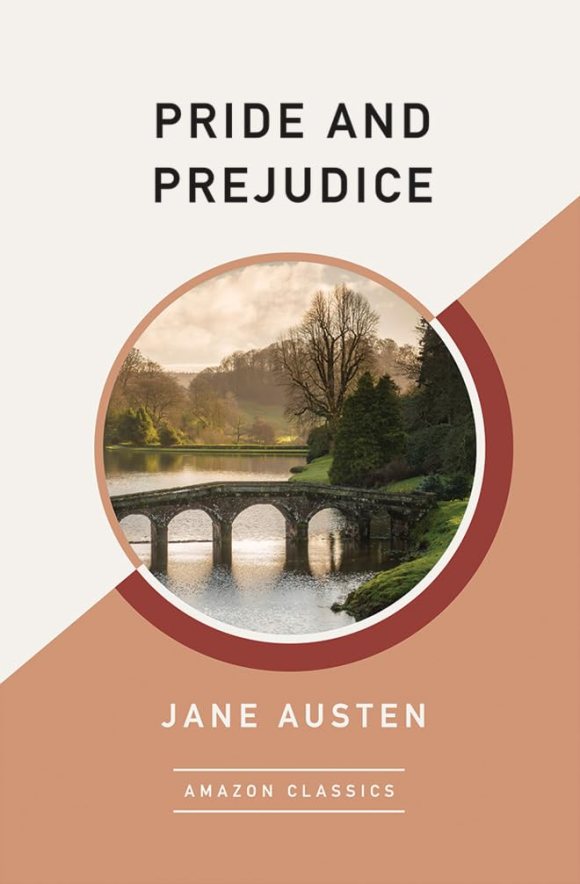
I read Jane Austen years ago and understood something important. You do not need to explain everything. You do not need to impress. You only need to tell the truth and step back. That lesson stayed with me. My writing aims for simplicity, not emptiness. Austen’s writing taught me that character, dialogue, and subtle observation can carry a story, even without dramatic plot twists. This resonates deeply as I try to develop my own voice.
I write literary fiction, family drama, and clean romance. I write about relationships between parents and children, husbands and wives, people and their inner lives. I am interested in homecoming, in belonging, in the idea of home as something emotional rather than geographical.
Many of my characters search for peace without naming it. They live in ordinary spaces yet carry extraordinary emotions. Through their stories, I explore love, hope, and resilience, not as abstract ideas, but as lived experience. These themes are not only literary; they reflect challenges we face in real life, in understanding each other, and in finding space for reflection, empathy, and connection.
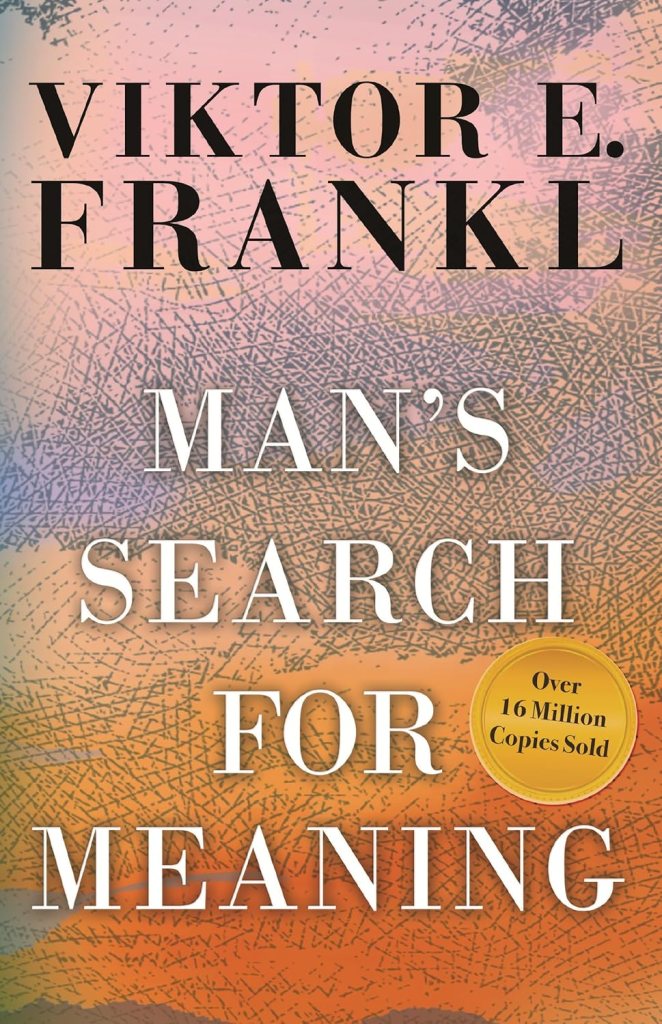
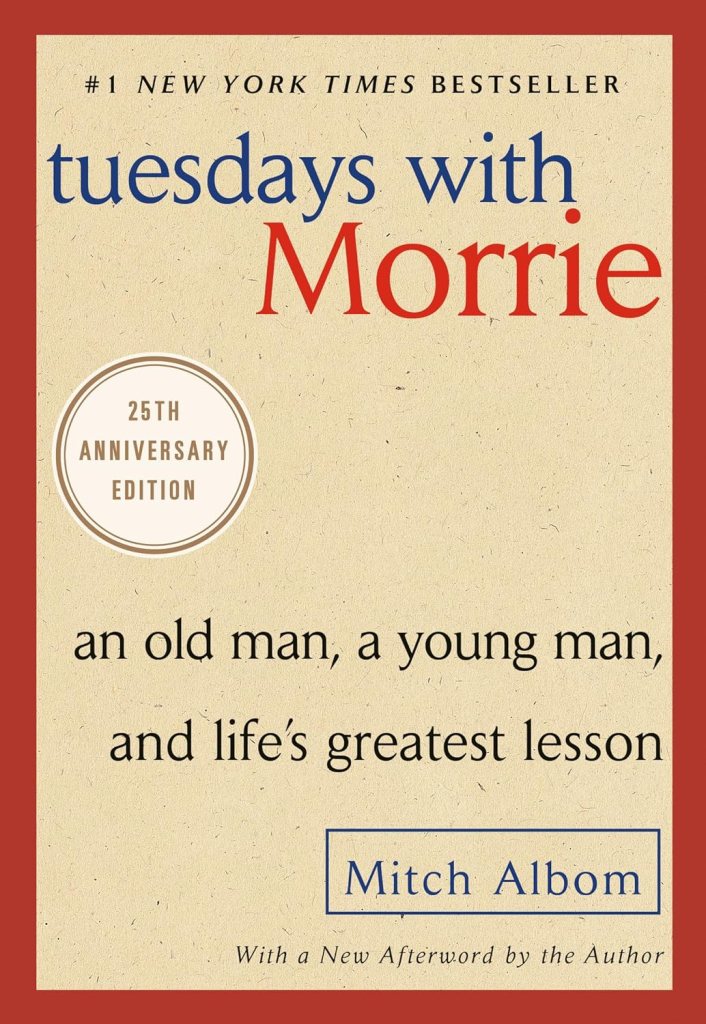
I read widely to guide my writing. I still read every day, sometimes for hours, sometimes only a few pages. I return often to books that once moved me deeply: Pride and Prejudice, Man’s Search for Meaning, Tuesdays with Morrie. Each rereading feels different. That is how I know books grow with us. Revisiting a familiar story allows me to notice things I had missed before, to understand new perspectives, and to refine my sense of narrative and character development.
I read craft books not to copy technique, but to understand intention. Why does this sentence work? Why does that scene linger? Reading teaches humility. There is always someone writing better, clearer, braver. Instead of discouraging me, that comforts me. It means the work is endless, and that is a good thing. There is always more to learn, always room to grow. This realisation keeps me grounded and committed to the long journey of writing.
I am part of some anthologies, and I have authored many articles over the years. These small contributions are part of my learning and practice, a way to keep writing while I work on larger projects. They are exercises in discipline and experimentation, testing different voices, formats, and perspectives. Each piece, no matter how short, teaches me something about structure, clarity, and the rhythm of language.
The life of a writer is not glamorous. Most of it is quiet. You sit. You doubt. You write. You delete pages you once loved. You rewrite. You keep going. There is no certainty, only commitment. Writing requires discipline more than inspiration. Inspiration visits. Discipline stays.
There were periods in my life when writing was the only stable thing I had. Work challenges, writer’s block, my daughter’s health issues, long waits—writing did not solve these problems, but it gave me a place to stand. It reminded me who I was when everything else felt fragile. Writing became a companion, a place to breathe, a way to make sense of the world. More than that, it showed me that writing, reading, and reflection are tools we all need, as societies and as individuals, to engage with ourselves and others.
My faith plays a central role in my life and writing. It teaches patience and surrender. Writing is similar. You do your part and let go of the outcome. You write honestly and accept that the work will find its reader when it is meant to. Writing, like prayer, requires consistency, trust, and humility.
I do not measure success by recognition. I measure it by sincerity. If a reader feels empathetic, the work has succeeded. If a sentence stays with someone longer than expected, that is enough. Every story, every paragraph, every sentence is a small offering, an attempt to communicate honestly, and that is enough.
I am still learning. Still reading. Still writing. That, for me, is a full life.
And it began, simply, with a book opened in silence.
Gowher Bhat is a a columnist, a freelance journalist, and educator from Kashmir. He writes about memory, place, and the quiet weight of the things we carry, often exploring themes of longing, belonging, silence, and expression. A senior columnist in several local newspapers across the Kashmir Valley, he is also an avid reader and book reviewer. He believes the smallest moments can carry the deepest truths.
PLEASE NOTE: ARTICLES CAN ONLY BE REPRODUCED IN OTHER SITES WITH DUE ACKNOWLEDGEMENT TO BORDERLESS JOURNAL
We’re looking for one in particular. We find 130 Michael Smiths.
I’m standing at the kitchen counter chopping an onion at eleven in the morning. We’ve just walked seven miles, on what feels like the first day of spring. Real spring: The sky is blue, the maples are in lush full leaf, the ferns along the east side of our house are burgeoning. The birds are so noisy even with these bad ears of mine I can hear them. Ten minutes into our walk I pull off one of my two layers, the long sleeve shirt.
“That’s a lot of Michael Smiths,” I say now. Tizi is looking for him on her IPad.
And I’m thinking, there could be a joke– How many Michael Smiths does it take to…? But it’s 130 obituaries we’ve found. An obituary is not funny.
Earlier today, on our walk to the top of Van Ness, an avenue of maples near our house, we stopped and talked to Carol, a friend from the local senior center, which we abandoned during the plague, then never went back to, post-Covid.
“Will you look at us,” she says to Tizi, pointing first at her own hair, then at Tizi’s. Both gorgeous silver. Carol is sleek, energetic and funny. This morning she’s dressed in slim jeans, a gray fleece, and running shoes. When we walk up her driveway she’s stabbing a weeding fork into dandelions along her front sidewalk. She says her house is too big. She’s lived here, post-divorce, thirty some years. Too many flower beds, she says. Too much work. When I ask, she says her hip replacements were a great success. Yes, she tells Tizi, she did go back to the senior center, where there are some of the same people. And there are those, like us, who never came back. And, she says, there are some new seniors too. I think: Does that make us old seniors?
“What about Ed?” Tizi asks.
I know she’s afraid to ask. Ed’s the trumpet player. Ed’s the leader of the senior center big band. Occasionally he took the elevator downstairs to the exercise machines and didn’t exercise. Mostly he sat at the round table upstairs, drank coffee, and dispensed witticisms. A few years ago, we missed his 90th birthday bash. He had a yellow Corvette in the parking lot but didn’t drive much. One Tuesday nights, I took him (or he took me) to a jazz jam session over on Woodward Avenue. We sat through two sets. Every so often, he wiped tears from his eyes. He drank one glass of beer.
“Gone,” Carol says now.
Tizi shakes her head. “I knew it.”
Carol says, well, Ed was 92. “But Michael Smith?”
He was a young senior, with a shock of very premature gray hair and a wicked sense of humour. He had no business being a senior. And now, he has no business being dead.
*
Like Carol I think about the flower beds. And the basement. And a spare room upstairs. Every house has a junk drawer. We have a junk room. At our age, you begin to reckon with the too-muchness of a house. At least I do. Tizi not so much.
Part of the problem is accidental shopping. We try to avoid Home Goods. There’s one right next to Costco. If you’re waiting for Costco to open, you can kill time at Home Goods. But there’s peril. We don’t need another pan, another serving dish. We have enough tongs. When I open kitchen and bathroom and mudroom cupboards, I find soaps we bought at Home Goods and forgot about.
I find soaps with a French accent–savon pour les mains (soothing, it says on the label, soft cotton), three 17-ounce pump bottles of those. I also find Lemon Verbena made by or for aromatherapy rituals; Ginger Mandarin Hand Soap, which, according to the label, is “pure and good”, biodegradable and plant-based; we have Rain Forest Collection of Ecological Products (meaning, judging from the look of them, soaps); we have Thyme Vegetal Soap and Cedar Vegetal Soap; Kirk’s Original Coco Castile pure botanical coconut oil 100% natural hypoallergenic skin care with no synthetic detergents soap. We have The Chef’s Soap (not A chef’s soap) also made in France. All that soap makes me want to get dirty. It also tells me don’t buy any more soap, maybe ever.
Online shopping has exacerbated the problem. It’s too easy to buy stuff.
A helpful message popped up on my phone one day. I’m paying too much for hearing aids was the message. That day, it just so happened, I came home from Shake Shack, a stressful outing with a grandson involving touch screen menus and digital ordering and a flood of hungry young professionals, and I was missing one of my hearing aids. I tried calling. Did you find a small electrical thingie on the floor… and learned if you press 1 you can place your order and if you press 2 you can leave a message for the manager but really you really can’t. Press 2 and you go nowhere. They don’t ever say wait for the beep. There’s no beep. I pictured Big Beaver lunch traffic passing through Shake Shack, my dinky, obscenely expensive device under foot, smashed.
This ad on my phone said, “Get new hearing aids for less than $100!”
They arrived two days later. The operating instructions, a 12-page manual only slightly larger than a postage stamp, said it can take up to two weeks to get used to them. I lasted three days. The problem was feedback, annoying high-pitched squealing coming from the direction of my head. I could hear the feedback just fine. The frequency-adjusted audible world that came to me sounded like sharpened knives. Tizi said, “What’s that noise?” She meant the feedback. The one-button control panel on the side of these things, which are the size of a peanut inserted into your ears, is no bigger than the head of a pin. Press the head of the pin three times to adjust volume. Squeal. Hold the head of the pin down for three seconds to change the mode. Squeal.
When my father got old and wore hearing aids, his fingers were always in his ears, adjusting, pressing, fiddling, which I think now, in my case, is only slightly less unsightly than a finger up my nose. No one wants to see that. I am becoming my father. Deaf, like him. Old.
I sent them back.
*
Poor Michael Smith. We never find the obit. Nor the death notice
Next day I’m thinking about him again, walking out of a local market, and I see Ted. I’d see him at the senior center, too, but he and I go back a number of years. We go way back to the BC (before Covid) years, to the years our kids were in school together. He is heavier. He has unkempt gray hair and an unruly goatee.
He squints as we pass each other in the parking lot. “I know you,” he says.
“Ted,” I say.
“What’s your name?”
The look of irrecognition is on his face, in his eyes. I tell him my name, feeling a shiver of alarm. He says, “How do I know you? Do you go up North?”
I say yes, we go up North. I tell him we’ve been to his house up there. This doesn’t register. He’s trying to puzzle it out. I can see he’s tired of puzzles. “We sat all those nights by the Herman’s pool?”
“The Hermans,” he says. He gets that. Then: “Whatever happened to them?”
I feel a moment of panic of my own when I can’t remember his wife’s name. I ask, Grandchildren? Yes, he has two.
“We’ve got three,” I say. “We’re going to California on Tuesday to see the new one.”
He asks again, “Do you go up north?” If he knows me, I can’t tell. He has other things not on his mind.
When I get home, I tell Tizi. She says she surprised Ellen lets him drive.
Ellen, I think. That’s right.
Before lunch I step outside to walk around the house, to feel the spring air again, to stand in the sun. In Tizi’s patch of trillium we have a lump of rock that’s a foot tall and comes to kind of a point on top. Every year on a day like today we’re likely to see a chipmunk perched on top of it, looking around in its nervous, jerky chipmunk manner. This is one of those days. It’s the first chipmunk day of the year. I can’t hear it chipping and chattering, but I know it does that.
What I do hear is a sound in the distance. At first, I think, electric bicycle, the distinct whine as it picks up speed, probably just down the street. Then I realise, no, it’s a motorcycle accelerating, running through the gears in the far distance, going who knows where, fast, and enjoying it.
.
Rick Bailey blogs about family and friends, home and travel, food and wine, the odd and ordinary in everyday life. He has published four collections of essays, a memoir, and a novel.
.
PLEASE NOTE: ARTICLES CAN ONLY BE REPRODUCED IN OTHER SITES WITH DUE ACKNOWLEDGEMENT TO BORDERLESS JOURNAL
Lucknow bears the identity of an old soul always beholding glory and cultural heydays that have not altogether faded. The afterglow of its architecture, spiritual antecedents rarely misses the mark. After being pulverized by the lost revolution of the First War of Independence (1857), it transmuted its fearless legend to the present day, it’s hard not to think about the city’s twin children who breathe new life to it.
Shah Najaf ImambaraSibtainabad Imambara
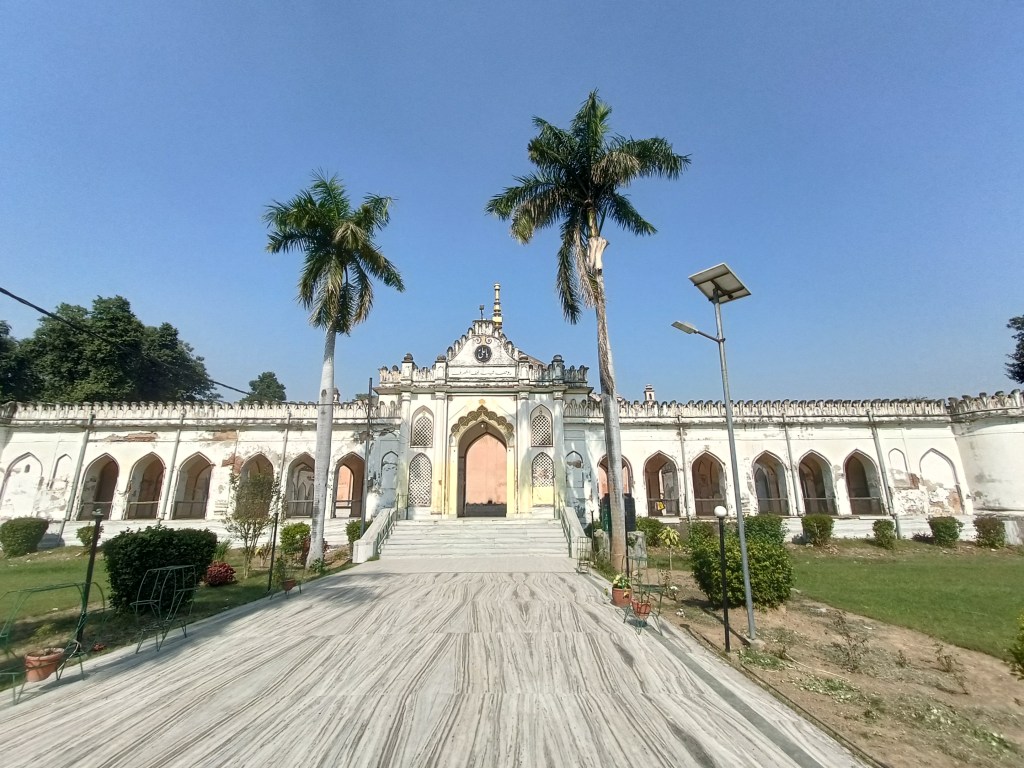
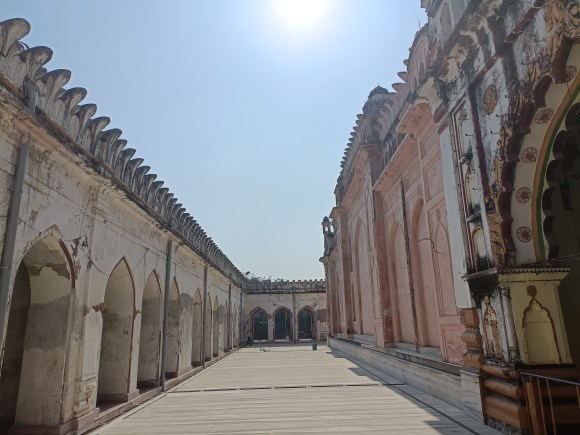
Shah Najaf Imambara and Sibtainabad Imambara are nestled just ten minutes away from each other within the historic and unmistakable centre of Lucknow- Hazratganj. But they cannot be summarised in pithy words. For if serenity draws us closer to our own tranquil and fuller selves, they play a huge part in orienting us towards a spiritual life that’s almost impressionistic.
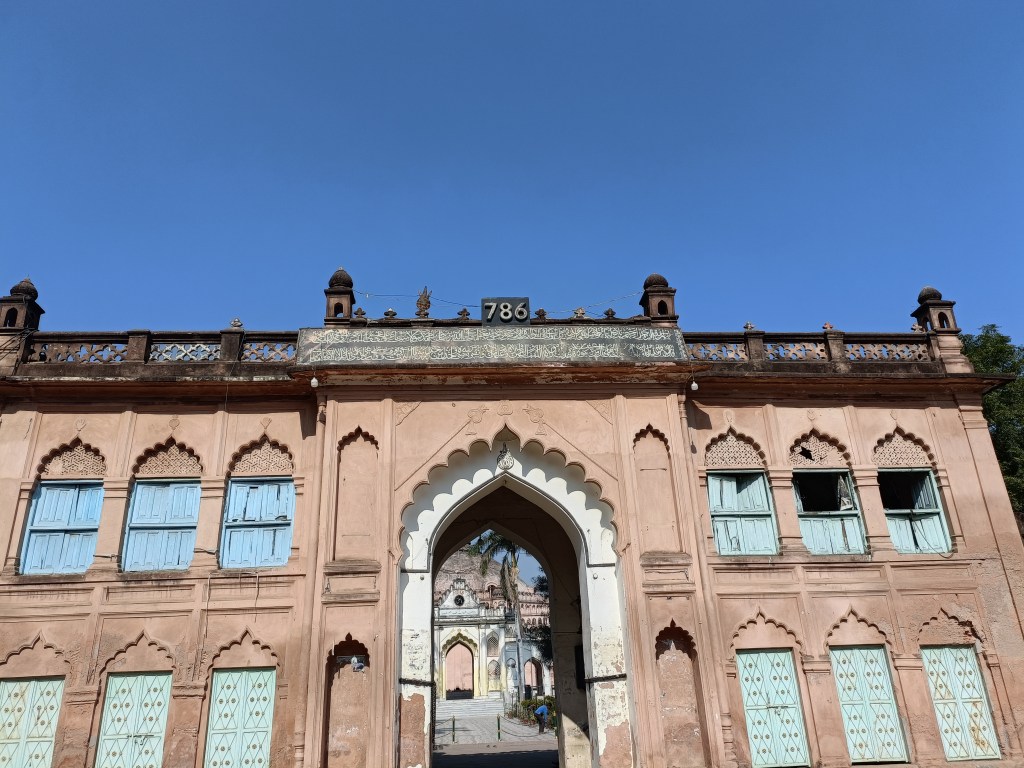
Built under the aegis of Nawab Ghazi-ud-Din Haider in 1818, Shah Najaf Imambara derives its name from Shah-e-Najaf (King of Najaf), leaning towards its Shia origins and a place of spiritual importance in erstwhile Iran. Once again, these imambaras/ mausoleums were made in such formative fashion that the distinction between a royal estate and a resting place for architects of the region almost blurred. Today, it’s taken as the burial place of Nawab Ghazi-ud-Din Haider and some other pivotal family members. But on every occasion where the spirit meets holy chants and inner emotions especially during Muharram, Shah Najaf Imambara celebrates human valour to let the timeless strains stir those that need history to guide the present.
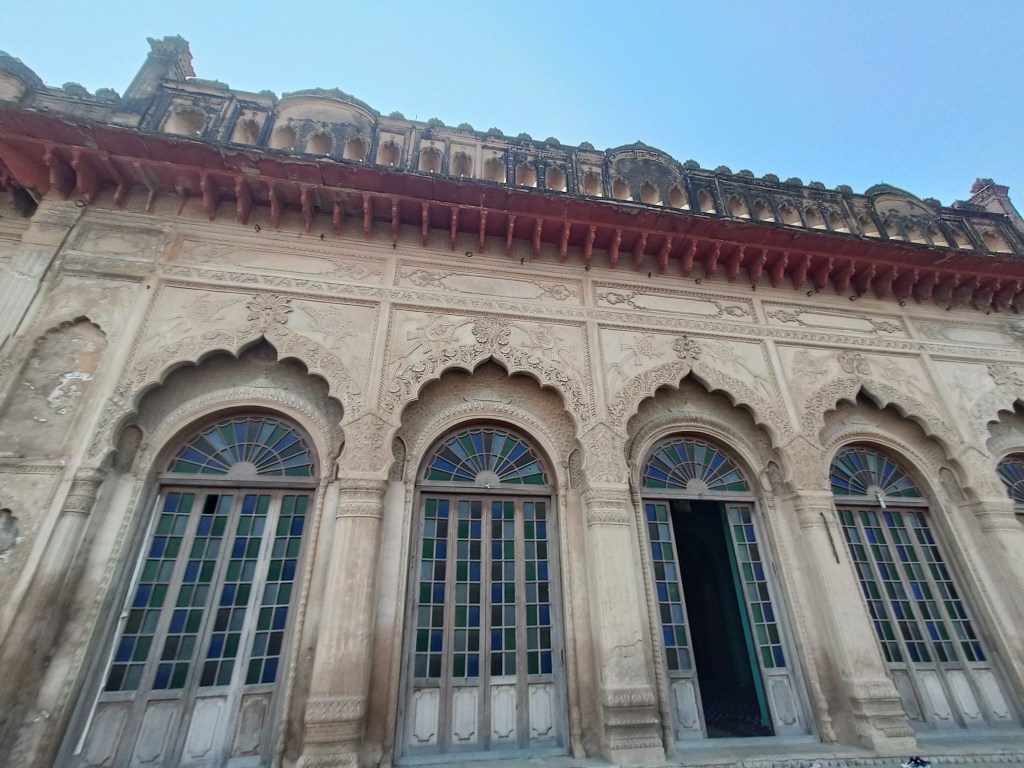
Two doorways usher us towards the main structure. The first has two lions almost standing as eternal sentinels while the second one has arched designs, windows in striking sky blue and turrets to welcome us. Then, past a garden and symbols of umbrellas and pillars on both sides, we enter the domed structure with a golden spire. The initial architectural framework has a miniature castle-like arrangement and pillars. Then the unique indoors open to wide verandahs, huge walls resembling those of a palace while stained glass windows and floral patterns catch our eyes.
We walk around and behold the sunshine. Pigeons make their passage like unobtrusive guides. It’s once we enter the main hall of the Imambara that its richness finds heft and visual import. Intricate doorways in black open the way to the sanctum where colours shimmer and add lustre to portraits of erstwhile kings.
Oplus_131072
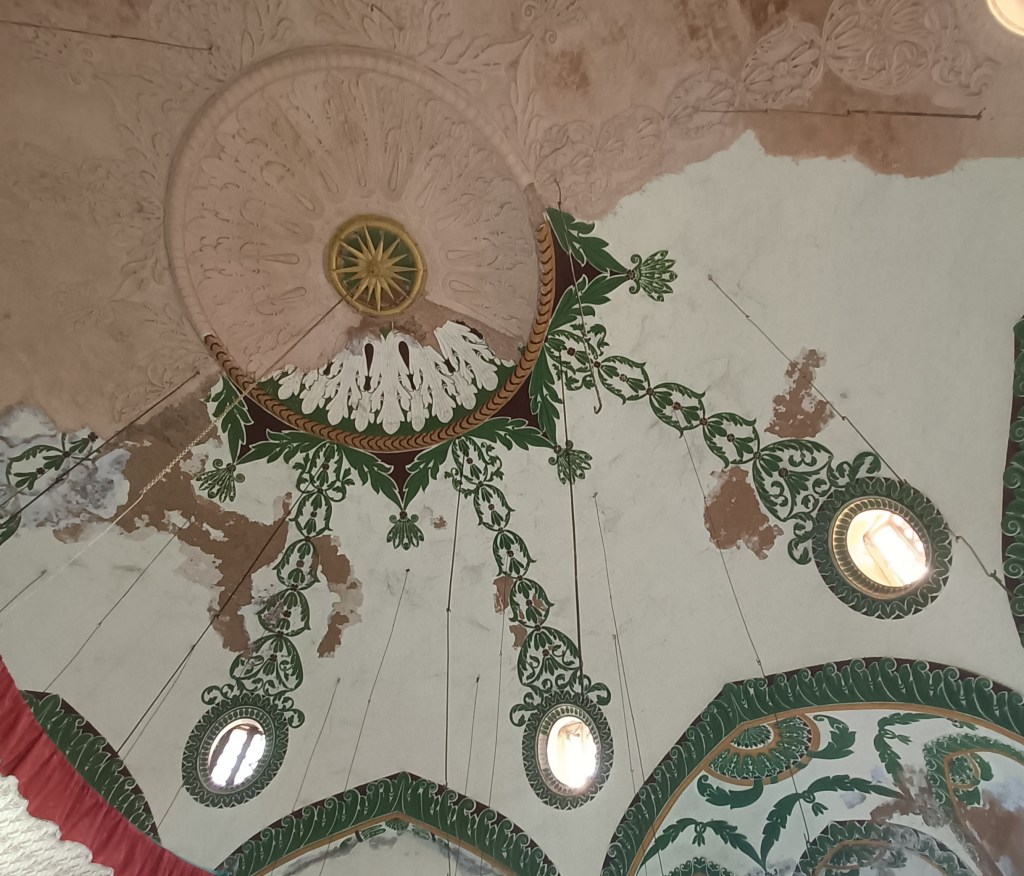
Here tazias (handmade religious symbols), chandeliers, gilded mirrors and clocks, tapestries, lanterns, Quranic verses engraved on walls and pillars evince an aura of holding everything in a single space. Yet they never overwhelm the assortment. From the high roof with circular vents, light floods this space as green and gold filigrees shimmer admiration for the craft. Gold, green, black, white are the prominent colours expediting a unique spiritual leadership. We come here to capture serenity in our pulses, quieting our anxious throb. Shah Najaf Imambara commences that sojourn in true humbling fashion. It’s said that the thick walls around the central mosque withstood the heavy gun fires of the Rebellion of 1857. Looking at this centre of secularism today, it’s obvious there’s some extraordinary strength that still radiates power and integrity.
Then walking towards the further center of Hazratganj which is bustling and still lively with the rhythms of an active day, we reach the other spiritual cousin which is the Sibtainabad Imambara. Here too, dual gateways, one that begins amid the main market area and the other that leads us further to the main structure, are attractions in their own individual right. Then commanding a centre surrounded by a few residences styled in an exquisite classical style is a white mosque, Sibtainabad Imambara, raised on an eight-foot platform navigated by steps. Its historical continuum is still intact and that is why it’s so fascinating.
It was Amjad Ali Shah(1801-1847), the fourth King of Awadh, who greenlit its construction as a place of majlis (mourning) in memory of Imam Hussain’s martyrdom in the Battle of Karbala. It was his son, the great Wajid Ali Shah, who completed the structure with his army of architects and other creative hands. Today, Sibtainabad Imambara houses Amjad Ali Shah’s tomb and bears the history of being under the eye of the storm during 1857. But since History and Time always have a unique way of restoring Lucknow’s architectural marvels, it has withstood the test of time despite changing administrative jurisdictions and the gradual passage of eras.
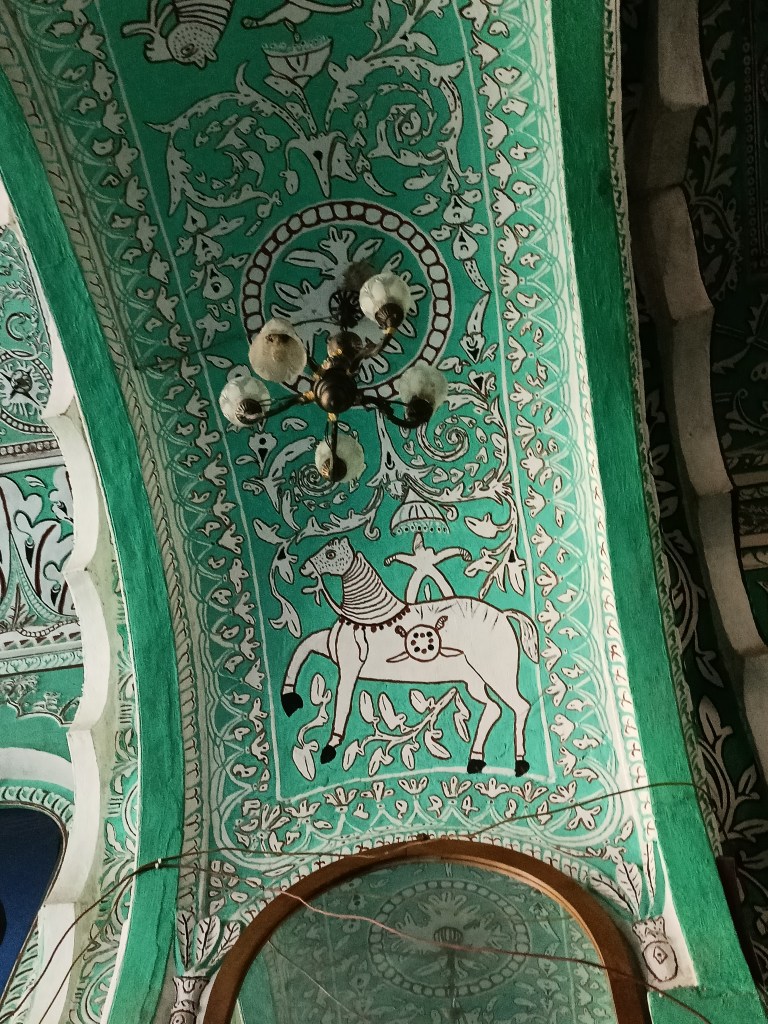
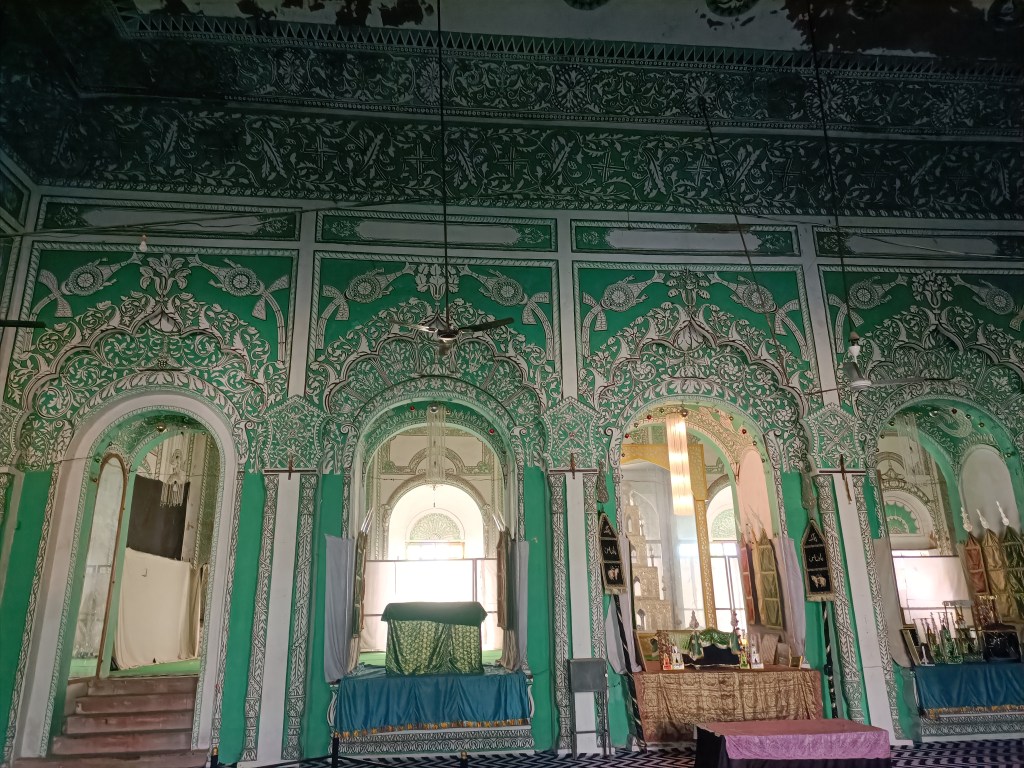
Its outer surface is one of arches, parapets, eaves, dome and stucco which makes it conjoin its formation with Shah Najaf Imambara. The interiors are adorned with beautiful green paint of the most impressive hue. The main hall enthralls with images of horses bearing coat of arms, floral designs, anthropomorphic beings, swords, angels harking to past riches and fish symbols central to the city. Stained glass windows, huge mirrors on the walls and chandeliers complete a mosaic of colours that take the caravan of spiritual fulfillment further ahead, all the way from Shah Najaf Imambara.
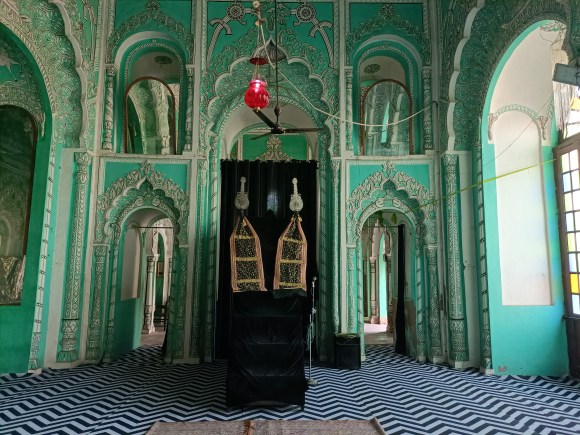
Tazias deck the main hall while a throne shrouded in black and zig-zagging floor designs create a most exquisite picture.
While many people, men and women say their prayers here in both these places of spirituality, religious exclusivity never even becomes a point of consideration. You can be anyone, belonging to any faith or religious background which are after all man-made labels. Both the Shahnajaf and Sibtainabad Imambaras let us become one with the light emanating from their natural structures and the tranquil air that counters the world of noise and everyday activity. We are encased or should we say delivered from the coves of our daily occupations to their cores of transformation simply by choosing to go there.
Spirituality and faith beckon private, internalised journeys. Both the Shahnajaf Imambara and Sibtainabad Imambara attest to those journeys, occupying the heart of Lucknow to let its bloodstream flow with due diligence, with an eye towards true serenity.
.
Prithvijeet Sinha is an MPhil from the University of Lucknow, having launched his prolific writing career by self-publishing on the worldwide community Wattpad since 2015 and on his WordPress blog An Awadh Boy’s Panorama. Besides that, his works have been published in several journals and anthologies.
.
PLEASE NOTE: ARTICLES CAN ONLY BE REPRODUCED IN OTHER SITES WITH DUE ACKNOWLEDGEMENT TO BORDERLESS JOURNAL
Sunset at Colaba, Bombay, which is currently referred to as Mumbai. From Public Domain
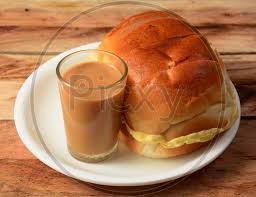
To think that Bombay is attainable is the first mistake of the rookie. And though this city attracts and repels in equal measure, it is the former that makes me want to linger all the more. And linger I do, over a cup (or was it two?) of piping hot Irani chai and bun maska at the Persian Cafe in Cuffe Parade. The rain starts just as soon as I step out of the metro station and make for the safer confines of the cafe, reminding me of home in more ways than one. It is only in Bombay that I am reminded that the culture of the Zoroastrians flourishes somewhere outside of Hyderabad as well.
Colaba lures me, but Kala Ghoda’s immense detachment from its suburban-esque walkways seems more pensive. With Mahatma Gandhi Road sweeping past the Fort and Dr Dadabhai Naoroji Road intersecting it at Flora Fountain, Bombay’s charm offensive lies bare. It is only much later, after I step into Kitaab Khana, the Bombay equivalent of Madras’ Higginbotham’s and Calcutta’s Oxford, that I strongly feel the Raj’s tentacles of reunion. On the other side of the road, the college named after Lord Mountstuart Elphinstone, who twice gave up the chance to be appointed governor-general of India, preferring to finish his two-volume work, History of India (1841) instead, is a reminder of the good that existed among our colonial masters.
*
But the second mistake that the rookie can make is by affirming that all of Bombay lies within the island of Colaba. While it did, in the days of the Raj, it no longer holds the sanctity of tradition as much as it does for the affluent who have no idea of when the last local leaves from Churchgate to Borivali. Versova, much a fishing village as Bandra had once been, is as far away from Colaba as Islamabad is from Vancouver, and Jogeshwari is a mere landing ground for the aristocrats of the north, for whom Thane is where the merely envious congregate and share stories over pav bhaji. A hint of Marathi wafts over the air, sprinkled generally with salt from the sea, and the Bambaiya of Parel and the Hindi of the island city are forgotten.
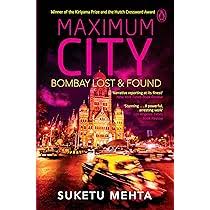
For what does a gentleman bred in the now-reclaimed Old Woman’s Island, fondly called Little Colaba, know of the fighting on the streets of Dadar? The Gateway of India, looming far beyond the ordinary, takes no part in the skyline of this Bombay, where political representatives of all hues and colours sell dreams just as kaleidoscopic as their ever-changing loyalties. Areas where no cars enter are not strictly unheard of in the Bombay of the north, and as Suketu Mehta so lovingly painted in Maximum City, it is a conurbation not afraid of its past, and one that is constantly stuck in an identity crisis. For there are more millionaires in Bombay than in any other city in the country, and they are only matched by the number of people who go to bed hungry. The Marine Drive becomes an elongated resting place for the unfortunate, the destitute or the merely curious once the lights on the Queen’s Necklace get turned on. I would have seen it had I known where to look.
*
To reclaim the days of the Raj, there are few places more apt to while away an evening than Colaba. There are certainly no places as germane as the cafes Mondegar and Leopold, which happily serve continental fare to their patrons after all these years without a trace of embarrassment at the culinary debaucheries they joyfully commit. Old men, with fedoras last seen in fashion in 1930 (before World War II took away the joys of wearing headgear, apart from sola topis, in a country where the sun has been awarded citizenship), and with shirts tucked into waistbands up to their lower chest, order bottles of grizzled beer with a side of mashed potatoes. Cholesterol and high blood sugar are forgotten when relieving one’s youth, especially with Spanish women gawking at the absurdity of it all in the flea market on the causeway outside. With the stroke of a pen, these men bring to life the jazz clubs of the early 1950s, recollecting the trumpeter Chris Perry at Alfred’s. And then they remember Lorna Cordeiro, of whom they speak as if she were a loved one.
The scarcity of vada pav in the vicinity of Kala Ghoda scares me until I remember that even autorickshaws are banned from this part of town. Much like a man seeking water from the desert atrophies of the Middle East, I lunge into a seller close to the Victoria Terminus. When he asks for a mere INR 30 for two vada pavs, I am shamed into submission, looking towards my shoes — coloured an extravagant yellow — and murmur notes of dissent that even my ears cannot pick up. A jet-black Mercedes-Benz skids past the puddle of water that has gathered around Flora Fountain, dousing me with dredges of obstinacy. There are two worlds that we live in, and Bombay may have achieved its supremacy over both yesterday.
Bun Maska can be found in Iranian cafes in Mumbai Pav Bhaji, a popular street food of Mumbai From Public Domain
Mohul Bhowmick is a national-level cricketer, poet, sports journalist, essayist and travel writer from Hyderabad, India. He has published four collections of poems and one travelogue so far. More of his work can be discovered on his website: www.mohulbhowmick.com.
PLEASE NOTE: ARTICLES CAN ONLY BE REPRODUCED IN OTHER SITES WITH DUE ACKNOWLEDGEMENT TO BORDERLESS JOURNAL.
I cringe every time I hear this line, during those countless times during my calls, placed amidst the robotic, psychosis-inducing loop of hold music. Funny, this ‘muzak’[1] was meant to create calmness.
“All our agents are extremely busy right now; you’ll be attended to shortly. Your call is important to us.” The robotic voice would go, trying to sound like how a hangman would place a hood over your head before pulling the lever.
“You are the number 999,999,999th customer in line!”
This is nothing new. Even when an alien concept called customer service was introduced in the old days, people had to wait in line to have their issues resolved. At least, the saving grace at the end of this endless queue was a human voice, not a chatbot. Now, after a zillion years of human experience in crisis management, the problem of waiting persists, and we still have to wait in line, twiddling our fingers.
Now that all transactions and dealings are conducted electronically, I wonder why the queue on the telephone line is never-ending. Is there a rush for something that I am unaware of? Are the customers so unimportant or irritating that the company believes it does not need to invest in more agents to handle the increasing demand? Whether it is a Monday or any other day of the week, you can tune in and listen to an hour or so of so-called soothing music, or until your patience runs out.
When you finally reach the end of the line and think it is all over, it is not. Here, you will be presented with a menu so extensive that you will be spoiled for choice. Press 1 for English, press 2 for …, press 1 for savings, press # to return to the main menu, yada yada. The fat lady never sings.
Along the way, you will be forewarned, “anything you say can be used against you in the court of law!”, but not in the exact words.
“Your call is important to us. It will be recorded and be used for training purposes!” Yeah, right.
For all you know, nobody is there at the other end. The single casual employee employed to man the line may be on sick leave with a sore throat or something. The customer line is just to hold a caring image. If a problem cannot be resolved online, how can it be sorted over the phone? The clients have to present themselves in person at the office anyway. Just give the callers some chill music and let them be zombified by the hold music. At a time when AI (artificial intelligence) is taking over mundane tasks, it is not cost-effective to hire dedicated staff for them. This is what the big companies seemingly offering call-in customer service seem to think.
They may have made a devilish deal with the telco companies. We hold the line while the telcos go laughing all the way to the bank on our account. That is why there are frequent dropped calls. It is not due to poor cellular network coverage or a system glitch. It is intentional.
Not to forget the flurry of self-aggrandising advertisements that get inserted while clients wait in anticipation or are doing their down-to-earth activities like cutting vegetables or watering the garden with the phone on speaker mode, realising the futility and wasted effort of holding the phone to the ear.
Customer service is a thing of the past. Now that there are so many online options to address the intended concerns, face-to-face interaction is quite dated. If the customer is too daft to use the services, they deserve to be taken for a ride. Increasingly, automation can handle most compelling transactional issues. If the customer’s problem is too big for the bots to handle, the customer still needs to go to the office.
The problem is that offices are virtual nowadays. Mailing addresses are in the cloud, and offices are shared by a zillion fly-by-night companies. There is a thin line between the modern way of doing business and being taken for a ride. Like the pleas of the stranded Nigerian princes and their stash of heirlooms, a legitimate transaction may turn out to be a scam, too.
From Public Domain
[1] Muzak- a brand of soft, instrumental, and smooth non-distracting music designed to create an atmosphere of calmness.
Farouk Gulsara is a daytime healer and a writer by night. After developing his left side of his brain almost half his lifetime, this johnny-come-lately decided to stimulate the non-dominant part of his remaining half. An author of two non-fiction books, Inside the twisted mind of Rifle Range Boy and Real Lessons from Reel Life, he writes regularly in his blog, Rifle Range Boy.
PLEASE NOTE: ARTICLES CAN ONLY BE REPRODUCED IN OTHER SITES WITH DUE ACKNOWLEDGEMENT TO BORDERLESS JOURNAL











 Borderless