Categories
Bhaskar's Corner

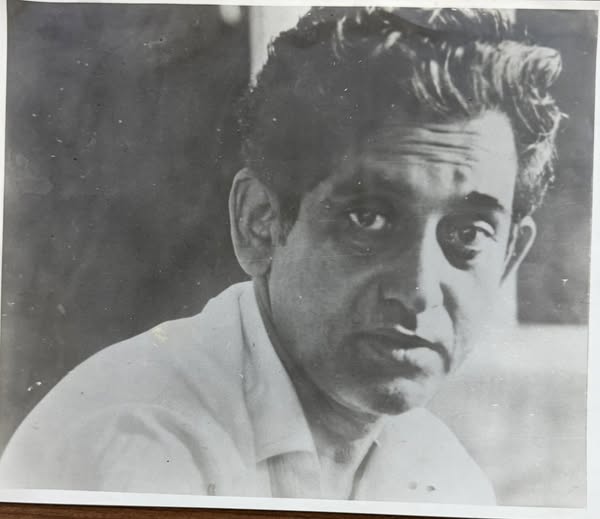
The Riverine Journey of Bibhuti Patnaik

By Bhaskar Parichha

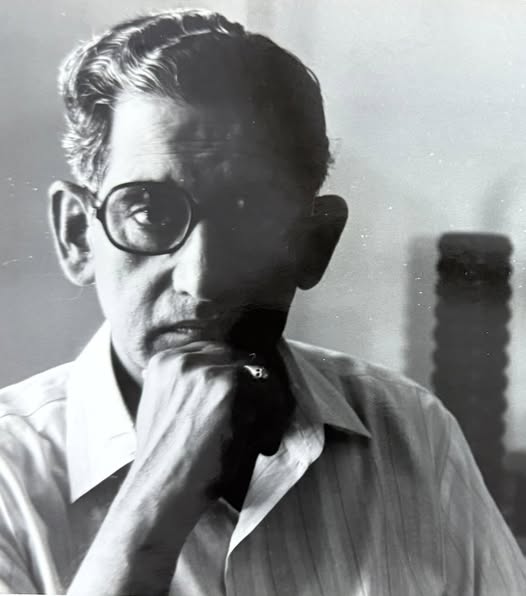
Bibhuti Patnaik (born: 1937). Photo provided by Bhaskar Parichha

Bibhuti Patnaik’s literary career unfolds like a long river—steady, persistent, and quietly transformative—running through the landscape of Odia literature for more than six decades. From the late 1950s onward, he wrote with a rare combination of emotional honesty and narrative discipline, giving voice to the evolving inner lives of middle-class Odias.

His writing emerged at a time when Odia literature was searching for a new expression after Independence, trying to reconcile classical traditions with modern psychological sensibilities. Into this space stepped a young writer who was not concerned with ideology or grand social systems, but with the stirrings of the human heart.

A defining feature of Pattanaik’s oeuvre is his meticulous representation of the Odia middle class. His novels, whether Aswamedhara Ghoda (Horse of Aswamedha)Sesha Basanta (Last Spring), or Prathama Sakala (First Dawn), foreground the ethical tensions, emotional fragilities, and moral negotiations embedded in quotidian life.

What distinguished Patnaik from many of his contemporaries was his unwavering commitment to emotional realism—a faith that the complexities of human relationships, especially love and desire, could carry as much literary weight as any political or social theme.

In his earliest works, Patnaik revealed a sensitivity to the fragile moral dilemmas that shape everyday life. His characters were not heroic figures or tragic archetypes; they were ordinary men and women negotiating expectations, impulses, and the confines of middle-class respectability. His prose, clean and unadorned, immediately established a new relationship with the reader—intimate, direct, and unpretentious.

For Odia readers of the 1960s, accustomed to more stylized narrative forms, this was refreshing. Young readers in particular embraced his novels, drawn to a writer who articulated emotional experiences with clarity and sincerity. Even at this early stage, Patnaik showed a remarkable ability to create female characters with depth and interiority, granting them agency in a literary culture that often placed women on symbolic pedestals rather than treating them as independent subjects.

As Patnaik moved into the 1970s and 1980s, his literary world expanded. The emotional tensions that shaped his early novels did not disappear, but they began to encounter new social realities. Odisha was changing—economically, culturally, and morally—and Patnaik’s novels became sensitive mirrors to these shifts. Urbanisation, job insecurity, the erosion of joint families, and the anxieties of modern aspiration found their way into his fiction.

He continued to write about intimate relationships, but these relationships were now embedded in broader pressures: generational conflict, economic burdens, and shifting gender dynamics. His characters struggled not only with their feelings but also with the demands of a changing society. Through this evolution, Patnaik maintained a narrative clarity that made his writing accessible to a wide audience, allowing him to be both widely read and critically noticed.

The 1990s marked a turning point in his career. While he continued to produce fiction, Patnaik increasingly turned his attention toward literary criticism and self-reflection. His essays—fearlessly honest, sometimes provocative—revealed a writer deeply engaged with the ethical health of the literary world. He wrote about the politics of awards, the failures of institutions, the erosion of literary standards, and the compromises that authors often make.

These writings unsettled the comfortable spaces of Odia literary culture but also enriched the discourse by demanding accountability and sincerity. At a time when many writers preferred diplomatic silence, Patnaik chose frankness. This choice, while controversial, made him an indispensable voice in understanding the dynamics of Odia letters in the late twentieth century.

His memoirs and autobiographical writings in the 2000s and 2010s further broadened his contribution. They are not mere recollections of a long literary life but important historical documents that offer insight into the personalities, politics, and conflicts of Odisha’s literary circles. The candour with which he narrates his experiences—sometimes tender, sometimes critical—makes these works stand apart in Odia autobiographical literature.

They reveal a writer who, despite being celebrated, never hesitated to critique himself or the milieu in which he worked. The tone of these later writings is marked by a late-style simplicity: calm, distilled, and enriched by decades of observation. Unlike many of his generation who grew stylistically heavier with age, Patnaik’s prose became lighter, clearer, and emotionally more resonant.

One of the most enduring features of his work is his representation of women. Throughout his career, Patnaik returned again and again to the complexities of female experience—women torn between personal desire and social expectation, women who resist, women who compromise, and women who assert themselves. His empathy for his female characters is evident not in idealisation but in the dignity he grants to their doubts, choices, and vulnerabilities. In a literary tradition long dominated by male narratives, this alignment with women’s emotional truth marked a significant departure and set a model for subsequent writers.

What ties Patnaik’s diverse phases together—novels, essays, memoirs—is an ethical thread. At the heart of his writing lies an insistence on sincerity: sincerity in feeling, sincerity in storytelling, sincerity in literary practice. His criticism emerges from the same commitment that shaped his fiction—the belief that literature must remain close to life, uncorrupted by pretension or institutional manipulation. Even when he critiques, he does so with the conviction that honesty is necessary for a healthy literary culture.

Today, looking back at his multi-decade journey, it becomes clear that Bibhuti Patnaik’s importance extends far beyond his widespread readership. He shaped the emotional vocabulary of several generations of Odia readers. He penned some of the most psychologically astute portrayals of love and moral conflict in Odia fiction.

He exposed the fissures in literary institutions through his bold essays. And he preserved the history of Odia literary life through his memoirs. His evolution—from a young chronicler of quiet emotions to a mature critic of cultural politics—mirrors the transformations of post-Independence Odisha itself.

Bibhuti Patnaik’s legacy is defined by this continuity of purpose. Whether writing a tender love story or a sharp critical essay, he remained committed to the integrity of human experience. His work endures because it speaks, with remarkable clarity, to the fears, hopes, and contradictions that shape ordinary lives.

 In doing so, he carved a place for himself as one of the most authentic voices in modern Odia literature—unshakeable in sincerity, unafraid of truth, and unforgettable in the emotional clarity of his storytelling.

.

Bhaskar Parichha is a journalist and author of Cyclones in Odisha: Landfall, Wreckage and ResilienceUnbiasedNo Strings Attached: Writings on Odisha and Biju Patnaik – A Political Biography. He lives in Bhubaneswar and writes bilingually. Besides writing for newspapers, he also reviews books on various media platforms.

PLEASE NOTE: ARTICLES CAN ONLY BE REPRODUCED IN OTHER SITES WITH DUE ACKNOWLEDGEMENT TO BORDERLESS JOURNAL

Click here to access the Borderless anthology, Monalisa No Longer Smiles

Click here to access Monalisa No Longer Smiles on Amazon International
Categories
Bhaskar's Corner

‘Language… is a mirror of our moral imagination’

By Bhaskar Parichha

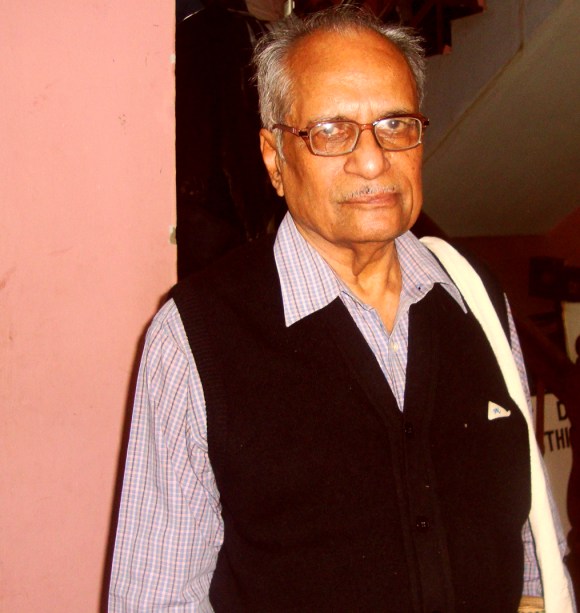
Prof. Sarbeswar Das (1925–2009): A scholar of depth, a teacher of light. Photo Provided by Bhaskar Parichha

In the intellectual history of modern Odisha, Professor Sarbeswar Das stands as one of those rare figures who seamlessly bridged scholarship, ethics, and social commitment. A luminous teacher, an erudite writer, and a quiet Gandhian, his life and work embodied the moral seriousness and intellectual curiosity that marked a generation shaped by the freedom struggle and the promise of a newly independent India.

Born in Sriramchandrapur village in the Puri district of Odisha in 1925, Sarbeswar Das grew up in a milieu where simplicity, discipline, and community values were deeply ingrained. His brilliance shone early—he topped the matriculation examination across Odisha and Bihar, a distinction that foreshadowed a lifetime of academic excellence.

His educational journey took him first to Ravenshaw College, Cuttack, the cradle of higher education in Odisha, where he absorbed the liberal spirit and rigorous intellectual training that the institution was known for. He later studied at Allahabad University, one of India’s foremost centers of learning, before proceeding to the University of Minnesota, for advanced studies in English literature.

His exposure to American academia at a time when few Indian scholars ventured abroad profoundly shaped his intellectual orientation. The years in Minnesota opened to him a new world of thought—modern literary criticism, American fiction, and the philosophy of democratic humanism—all of which left a deep imprint on his teaching and writing in later years.

On returning to India, Das joined the teaching profession, which he would pursue with remarkable dedication and grace for several decades. He served as a professor of English in some of Odisha’s most respected institutions—Christ College (Cuttack), SCS College (Puri), Khallikote College (Berhampur), and Ravenshaw College (Cuttack).

As a teacher, he was known not only for his formidable command of English but also for his clarity of expression, quiet humour, and empathetic engagement with students. He could bring Shakespeare and Emerson alive in the classroom, weaving them into the moral fabric of everyday Indian life. His pioneering initiative was the introduction of American Literature as a formal subject of study in Indian universities, long before it became fashionable to do so.

In an age when English studies in Odisha were largely confined to the British canon, he expanded its horizons by introducing writers like Walt Whitman, Emily Dickinson, William Faulkner, and Mark Twain to Indian classrooms.

Das believed that literature must connect with lived experience. He often told his students: “Language is not just a means of expression; it is a mirror of our moral imagination.” This conviction shaped generations of students who went on to become writers, teachers, and civil servants. Among them was the late Ramakanta Rath, later one of Odisha’s most celebrated poets, who fondly remembered Prof. Das as a teacher who inspired intellectual courage and aesthetic sensitivity.

Alongside his teaching, Prof. Das was a prolific writer and scholar. He authored around twenty-five books spanning essays, literary criticism, translations, and reflections on education and society. His writings in English and Odia reveal a mind steeped in both classical and modern traditions. Fluent in English, Odia, and Sanskrit, he was at ease quoting from the Bhagavad Gita and Hamlet in the same breath.

His essays in English reflected on the role of language in education, the cultural responsibility of intellectuals, and the need for moral clarity in modern life. He consistently argued for a vernacular humanism—a belief that English education must not estrange Indian students from their cultural roots but rather help them view their own traditions through a broader, universal lens.

As a principal, he brought administrative efficiency and human warmth to his role. His tenure is remembered for reforms that encouraged academic discipline, faculty collaboration, and student participation. He believed that education was not merely about acquiring degrees but about shaping ethical citizens.

Prof. Das’s intellectual life was inseparable from his moral and civic commitments. As a young man, he participated in the Quit India Movement, aligning himself with the Gandhian values of simplicity, non-violence, and service throughout his life.

Late in life, Prof. Das turned inward to recount his journey in his autobiography, Mo Kahani (My Story), which has since acquired the stature of a modern Odia classic. Spanning eight decades of personal and social history, it offers not only a memoir of a life well-lived but also a vivid ethnography of Odisha across the twentieth century.

In Mo Kahani, he paints rich, affectionate portraits of his family—his parents and sisters, Suruji and Hara Nani—and evokes the rhythms of village life, with its festivals, hierarchies, and hardships. His account of the great famine of 1919, passed down through family memory, is a haunting narrative of suffering and resilience.

The autobiography captures the moral universe of rural Odisha—its compassion, faith, and silent endurance—while chronicling the social changes wrought by modernity, education, and political awakening.

The book transcends personal recollection to become a social document of rare authenticity, preserving the voices and values of an era in transition. Scholars have hailed it as a valuable resource for understanding Odia social and cultural history, as well as a significant contribution to Indian autobiographical writing.

Prof. Sarbeswar Das passed away in 2009 at the age of 84, leaving behind a legacy of intellectual depth and human kindness. Those who knew him remember his calm demeanour, his Gandhian simplicity, and his unwavering belief in the power of education as a moral force. His students and colleagues regarded him not merely as a teacher but as a guide who exemplified integrity and humility in every aspect of life.

His contributions to English literary education in Odisha were transformative. By introducing American literature, promoting cross-cultural study, and insisting on a pedagogy grounded in ethical reflection, he helped modernise the study of English in the state and inspired a generation to approach literature as a bridge between worlds.

Even today, his writings—both critical and autobiographical—continue to speak to the challenges of our times: the search for meaning in education, the reconciliation of global and local cultures, and the enduring need for moral clarity in a rapidly changing world.

In the final measure, Prof. Sarbeswar Das remains not only a scholar and educator but also a moral historian of his age—one who chronicled the soul of Odisha with the sensitivity of a poet and the precision of a teacher. His Mo Kahani endures as his final lesson: that learning is not a mere accumulation of knowledge, but a lifelong practice of understanding, empathy, and truth.

.

Bhaskar Parichha is a journalist and author of Cyclones in Odisha: Landfall, Wreckage and ResilienceUnbiasedNo Strings Attached: Writings on Odisha and Biju Patnaik – A Political Biography. He lives in Bhubaneswar and writes bilingually. Besides writing for newspapers, he also reviews books on various media platforms.

PLEASE NOTE: ARTICLES CAN ONLY BE REPRODUCED IN OTHER SITES WITH DUE ACKNOWLEDGEMENT TO BORDERLESS JOURNAL

Click here to access the Borderless anthology, Monalisa No Longer Smiles

Click here to access Monalisa No Longer Smiles on Amazon International

Categories
Bhaskar's Corner Tribute

Bidyut Prabha Devi – The First Feminist Odia Poet

By Bhaskar Parichha

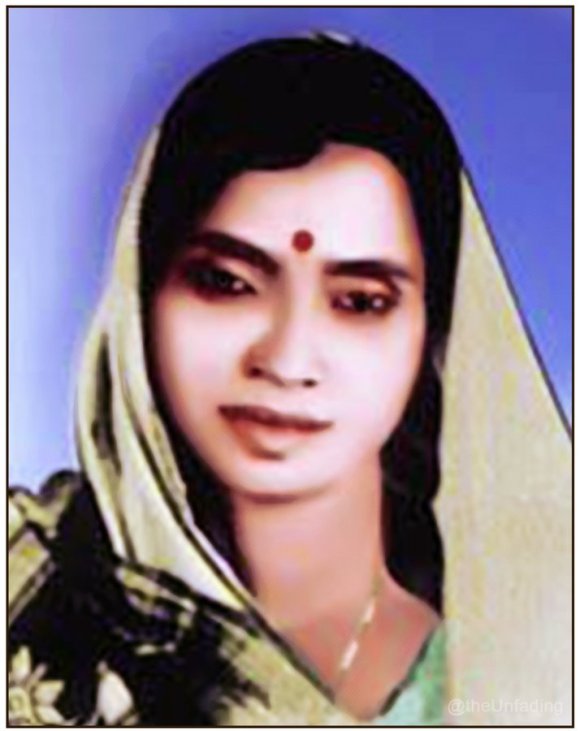
Bidyut Prabha Devi

Bidyut Prabha Devi (1926 – 1977) is celebrated as one of the most prominent female poets in Odia literature. Hailing from Natara village in the Kendrapara district, she was the second daughter of the esteemed writer, Nimai Charan Das, and Rekha Devi.

Raised in a traditional family in Bamphisahi, Cuttack, she received most of her education independently, attending Ravenshaw Girls’ School until the ninth grade. Inspired by her father and notable Odia poets like Nanda Kishore Bal and Kunja Bihari Das, she began her journey into poetry in 1940.

Her first collection, released in 1944 when she was merely 18 years old, featured patriotic poems that celebrated the cultural and natural heritage of Odisha. It highlighted her early ability to create vivid imagery and convey emotional depth, drawing from her rural background and the literary traditions of Odia.

Her 1950 collection, Utkal Saraswata[1], was recognised as a significant contribution to education, being included as a poetry textbook at Utkal University. In addition to poetry, she also wrote for children, for which she was awarded by the Government of India in 1955, acknowledging her impactful contributions to children’s literature.

Bidyut Prabha’s poetry explores the challenges faced by women, societal limitations, and the theme of empowerment, weaving together both personal and universal experiences. It embodies her feminist viewpoint, tackling matters such as gender inequality within a conservative framework, all while preserving a lyrical and approachable style.

She authored numerous plays, although specific titles are not extensively recorded. Her theatrical pieces frequently conveyed social messages, resonating with her socialist and feminist principles. Her writings were recognized for their clarity and moral depth, rendering literature accessible to younger audiences. Some of these later works are less documented but showcase her reflective and philosophical nature.

Influenced by socialist principles, her poetry examined social disparities and advocated for the marginalised. Her self-taught approach was characterised by clear and evocative language, rendering her work both relatable and profound.

Bidyut Prabha’s writings were revolutionary for their era, especially in their focus on women’s issues within Odia literature. Her son, Sachidananda Mohanty, a distinguished educationist and litterateur, has translated her works, thereby preserving her legacy.

Writes Sachidananda Mohanty[2]: “In recent decades, feminist historiography in eastern India has paid welcome attention to issues of education, creativity, and sisterhood across linguistic barriers. It has recognised women’s pivotal role in shaping the public space at the intersection between feminist history and literary creativity. Scholars like Judith Walsh, Tanika Sarkar, Malavika Karlekar, and others have brought to our attention forgotten life-narratives of literary women of the region who have created a tradition of their own.  Bidyut Prabha Devi, recognised as a major female voice in pre-modern Odia poetry, belongs to a poetic tradition represented by an illustrious sisterhood, comprising Reba Ray, Kuntala Kumari Sabat, Haripriya Devi, Debahuti Devi, Nirmala Devi, Tulasi Das, and Brahmotri Mohanty, among others. 

“While Bidyut Prabha may be known in Odisha, her feminist poems, based on her deep understanding of domesticity and patriarchy, have not been sufficiently read outside the state. Even in Odisha, her ‘romantic poems’ are widely anthologised at the cost of the more powerful compositions that address the woman’s position and identity in terms of the entrenched power structures in society.”

According to Mohanty, Bidyut Prabha’s feminist poetry stands out distinctly from the prevalent ‘Advice-for-Women’ genre in the region. She bases her work on her own life experiences and resonates with the growing feminist consciousness in Odisha, which is championed by literary feminists and social reformers like Sarala Devi[3], who played a pivotal role as a mentor to Bidyut Prabha. This journey was marked by its transnational influences. Sarala Devi had a strong connection with poet Annada Shankar Ray, a key figure in the Odia Romantic movement.

Her impact on Odia literature is significant, particularly as one of the earliest notable female poets in a predominantly male literary environment. Her contributions are rooted in her capacity to merge lyrical elegance with social critique, enhancing the inclusivity, reflection, and cultural relevance of Odia literature. Her work continues to serve as a foundational element for feminist and regional narratives in Odisha.

She was married to Panchanan Mohanty. Following health challenges in 1966, her literary output took on a spiritual dimension, shaped by her connection to the Sri Aurobindo Ashram, Pondicherry. Unfortunately, she took her own life.

Bidyut Prabha Devi’s poetry, deeply rooted in feminist and socialist ideals, continues to motivate and inspire, with her centenary of birth being commemorated in 2025 as a representation of women’s empowerment in Odisha.

[1] Odia Literature

[2] A literary sisterhood, Vol. 65, No. 6 (326) (November-December 2021), Published By: Sahitya Akademi

[3] Sarala Devi (1904-1986) – Odisha’s first Satyagrahi, first female legislator and first feminist writer.

.

Bhaskar Parichha is a journalist and author of Cyclones in Odisha: Landfall, Wreckage and ResilienceUnbiasedNo Strings Attached: Writings on Odisha and Biju Patnaik – A Political Biography. He lives in Bhubaneswar and writes bilingually. Besides writing for newspapers, he also reviews books on various media platforms.

PLEASE NOTE: ARTICLES CAN ONLY BE REPRODUCED IN OTHER SITES WITH DUE ACKNOWLEDGEMENT TO BORDERLESS JOURNAL

Click here to access the Borderless anthology, Monalisa No Longer Smiles

Click here to access Monalisa No Longer Smiles on Amazon International
Categories
Bhaskar's Corner

Can Odia Literature Connect Traditional Narratives with Contemporary Ones?

By Bhaskar Parichha

Odia literature is characterised by a profound tradition of classic narratives, with notable examples such as Fakir Mohan Senapati’s timeless Chha Mana Atha Guntha[1].  This literary corpus is further enhanced by an array of mythological and folk narratives that hold significant importance in the cultural legacy of Odisha.

These narratives persist through time because they reflect universal human experiences, encompassing themes such as land, power, family, and morality, all while being intricately linked to the historical context and cultural identity of the region. They serve not only as stories but also as reflections of society, having been shaped and refined over the years.

Readers are consistently attracted to these literary works for reasons similar to those that draw us to the writings of Shakespeare or the epic narrative of the Mahabharata: their themes are enduring, and the insights they provide remain pertinent. Similarly, publishers and curators, even at the national level, often revisit these classic tales, a trend that is entirely justifiable.

However, it is the transition to contemporary matters that strikes a significant chord. Odia literature has been progressing, albeit perhaps not as prominently or visibly as certain other Indian literary landscapes. Modern voices are addressing current issues—urban isolation, the influence of technology, caste relations, and environmental deterioration. The change is evident, yet it remains less pronounced than it has the potential to be.

What accounts for this? There may be multiple reasons.

The literary tradition of Odisha is profoundly embedded in its heritage. Classic literature is not only revered and taught but frequently eclipses modern works. Both publishers and readers exhibit a conservative inclination, preferring established texts. This trend is not unique to Odia literature; for example, Tolstoy remains a central figure in Russian literary discourse. As a result, this inclination obstructs the acknowledgment of new authors.

Modern Odia literature faces considerable challenges in its distribution. In contrast to Bengali or Tamil literature, which benefits from larger urban readerships and established translation networks, Odia books often struggle to reach broader audiences.

While digital platforms are making significant strides in this domain, the overall development is still sluggish. Without a strong market, numerous authors may opt to concentrate on more conventional themes that are viewed as more commercially viable.

The demographic composition of Odisha is primarily rural, where numerous readers find a stronger connection with stories that delve into village life or ethical dilemmas, as opposed to genres like cyberpunk or themes focused on existential angst. Although there are urban Odia authors, their readership is frequently limited in range. As a result, contemporary themes may seem alien to those who maintain a deep bond with traditional cultural settings.

The literary language of Odia typically possesses a formal tone, significantly influenced by its classical roots. This can lead to a conflict with modern terminology and global themes, posing challenges for writers who wish to innovate without jeopardising their connection to the audience. In contrast, languages such as Hindi and Malayalam readily incorporate colloquial expressions, which thrive in contemporary literature.

Nonetheless, modern Odia literature is dynamic and progressing. Short story writers are exploring a variety of topics including religion, science fiction, feminism, leftist ideologies, and climate change. Prominent authors such as Sarojini Sahu, Satya Mishra, Rabi Swain, Sadananda Tripathy, Jyoti Nanda, Bhima Prusty, Janaki Ballabh Mohapatra, Ajaya Swain, Biraja Mohapatra, Sujata Mohapatra and young writers like Debabrata Das  are actively investigating these contemporary themes. Publications like Kadambini, Rebati, and Katha are offering platforms for these creative narratives.

Despite this, the main obstacle remains the need to improve visibility. Social media and over-the-top (OTT) platforms have the potential to revolutionise this landscape—just picture an Odia adaptation of Black Mirror[2]!

There is an immediate need for greater investment in Odia storytelling to effectively bridge the gap between traditional and modern narratives.

.

[1] Six acres and a Third, a novel by Fakir Mohan Senapati(1843-1918) published in 1902

[2]Black Mirror is a British dystopian science fiction television anthology series that started in 2011 and is still on the run.

.

Bhaskar Parichha is a journalist and author of Cyclones in Odisha: Landfall, Wreckage and ResilienceUnbiasedNo Strings Attached: Writings on Odisha and Biju Patnaik – A Political Biography. He lives in Bhubaneswar and writes bilingually. Besides writing for newspapers, he also reviews books on various media platforms.

.

PLEASE NOTE: ARTICLES CAN ONLY BE REPRODUCED IN OTHER SITES WITH DUE ACKNOWLEDGEMENT TO BORDERLESS JOURNAL

Click here to access the Borderless anthology, Monalisa No Longer Smiles

Click here to access Monalisa No Longer Smiles on Amazon International
Categories
Bhaskar's Corner Tribute

Ramakanta Rath: A Monument of Literature

By Bhaskar Parichha

The death of Ramakanta Rath, a provocative figure in contemporary Odia poetry, has left a considerable gap in the literary landscape. Born on December 13, 1934, in Cuttack, Ramakanta was a prominent modernist poet in Odia literature. He obtained his Master’s degree in English Literature from Ravenshaw College and joined the Indian Administrative Services (IAS) in 1957.

His work was significantly shaped by the influences of poets such as T.S. Eliot and Ezra Pound, often delving into themes of mysticism, mortality, and human isolation. Ramakanta Rath’s contributions have profoundly impacted modern Odia literature in various ways. He brought modernist themes and styles to Odia poetry, drawing significant inspiration from Western poets such as T.S. Eliot and Ezra Pound. His examination of topics like the search for the mystical, the concepts of life and death, and the experience of inner solitude facilitated a transition in Odia poetry towards more contemporary and universal themes.

 Rath’s poetry is marked by symbolic references to spiritual and metaphysical dimensions of existence, which enhanced the intellectual richness of Odia literature. This methodology enabled readers to engage with intricate philosophical concepts through the medium of poetry. Rath’s poetry is noted for its somber tone and symbolic references to the spiritual and metaphysical dimensions of existence.

His significant literary contributions include Kete Dinara (Of Bygone Days, 1962), Aneka Kothari (Many Rooms, 1967), Sandigdha Mrigaya (Suspicious Hunting, 1971), Saptama Ritu (The Seven Seasons, 1977), Sachitra Andhara (Picturesque Darkness, 1982), Sri Radha (1984), and Sri Palataka (Mr Escapist, 1997). Rath was honoured with the Sahitya Akademi Award in 1977, the Saraswati Samman in 1992 for Sri Radha, the Bishuva Samman in 1990, and the Padma Bhushan in 2006. He also received the Sahitya Akademi Fellowship in 2009 before which he was the vice-president of the Akademi.

Rath is particularly celebrated for his lengthy poem, Sri Radha, in which he reimagines Radha, freeing her from theological limitations and depicting her as a remarkable character who embodies deep emotions, love, defiance, and resilience. This poem uniquely intertwines themes of erotic love with existential introspection. This notable work initiated a new trend in Odia poetry that echoed the confessional styles of poets like Sylvia Plath, infusing a personal and introspective quality into Odia literature.

He skillfully combined traditional Odia poetic meters and techniques with contemporary free verse, creating a unique hallmark of his artistic expression. Odia poetry is characterised by its extensive use of classical meters and forms, such as chhanda, chautisa and  champu which serve to articulate intricate emotions and themes in a structured and rhythmic manner. By incorporating these traditional elements, Rath infused his poetry with cultural richness and musicality, thereby amplifying its emotional resonance and thematic depth.

Ramakanta Rath’s integration of traditional Odia meter enriched his themes in multiple ways. By using these familiar poetic forms, his work connects more profoundly with readers who recognise them. This cultural connection amplifies the emotional resonance of his themes, making them easier for his audience to relate to. Additionally, traditional Odia meters often hold symbolic significance, which Rath skilfully utilises to deepen his modernist themes.

The combination of symbolic annotations and modernist concepts enhances Rath’s poetry, adding depth and encouraging reflection. By contrasting traditional forms with modernist ideas, his work creates a dynamic tension. This tension amplifies the emotional resonance of his poetry, prompting readers to navigate the clash between traditional values and contemporary realities, which adds layers to his themes. Rath’s incorporation of traditional meters with modern free verse invites readers to think critically about his poetry.

This fusion of styles encourages a deeper exploration of his themes, leading to a more profound appreciation of his work. While the traditional Odia meters offer a cultural base, Rath’s modernist themes keep his poetry relevant on a global scale. This interplay between tradition and modernity enables his work to reach beyond local confines, attracting a wider audience interested in existential and philosophical questions.

Rath’s poetry stands out for its masterful incorporation of irony and wit, elements that add depth and complexity to his body of work. Critics note that his use of irony can often be challenging to interpret, reflecting the nuanced and multifaceted nature of his poetic viewpoint. This unique approach, combined with his thematic explorations, has sparked a resurgence among a new generation of Odia poets, playing a crucial role in the advancement of modern Odia literature.

Ramakanta Rath’s impact has been instrumental in shaping the landscape of contemporary Odia poetry, solidifying his reputation as a monumental figure in the realm of Indian literature today. His passing signifies the conclusion of a significant era in the narrative of Odia literature, leaving behind a legacy that will continue to inspire future writers and poets.

.

(First published in Odisha Plus)

Read his translated poems by clicking here.

Bhaskar Parichha is a journalist and author of Cyclones in Odisha: Landfall, Wreckage and ResilienceUnbiasedNo Strings Attached: Writings on Odisha and Biju Patnaik – A Political Biography. He lives in Bhubaneswar and writes bilingually. Besides writing for newspapers, he also reviews books on various media platforms.

.

PLEASE NOTE: ARTICLES CAN ONLY BE REPRODUCED IN OTHER SITES WITH DUE ACKNOWLEDGEMENT TO BORDERLESS JOURNAL

Click here to access the Borderless anthology, Monalisa No Longer Smiles

Click here to access Monalisa No Longer Smiles on Amazon International

Categories
Bhaskar's Corner

Chittaranjan Das: A Centenary Tribute

By Bhaskar Parichha

Chittaranjan Das (1923-2011)

In the contemporary world, with its multiple environmental crises, conflicts, and violence, persisting poverty, and social exclusion, the question about the role of arts in general, and of literature specifically, must inevitably arise. Do they have any positive role other than entertainment and distraction, or are they merely the icing on a rapidly decaying and disintegrating cake?

Without naming the problem in exactly this way, much of Chittaranjan Das’s work was devoted to implicitly answering this question, for he clearly recognised that a merely functionalist approach to trying to identify the role of the arts in society would be totally inadequate and theoretically shallow. Rather, to answer the question more fully, we should ask what constitutes a society’s self-understanding, its modes of self-representation, and its internal hermeneutics, and how, methodologically speaking, we can gain access to this deep cultural grammar of a society. Das’s original professional career was as a rural sociologist and teacher of the subject in Agra and elsewhere. As a sociologist he would have been aware that such questions arise not only in the sociology of the arts, but equally in relation to such intractable subjects as religion, suicide, and the emotions.[1]

The year 2023 is the centennial birth anniversary[2] of the thinker, educationist, critic, pioneer of Odia non-fiction writing and one of the finest translators, Professor Chittaranjan Das. Chittabhai — as he was known throughout Odisha — was the most prolific writer, with numerous diaries, essays, reviews, autobiographies, memoirs, columns, textbooks, and monographs.

Many eminent writers were born in Bagalpur village in Jagatsinghpur district. Chittaranjan Das was one of them. He was the third child of five brothers and three sisters. He attended Punang School after schooling in his native village. Afterwards, he attended Ranihat Minor School and Ravenshaw Collegiate School. In 1941, he passed the matriculation examination and enrolled at Ravenshaw College, Cuttack, for higher education. However, he became involved in the independence movement. His inspiration came from Manmohan Mishra[3]

During his Ravenshaw student days, he was an active member of the Communist Party of India. In 1942, he joined the Quit India Movement and was imprisoned. During his jail term, Das  acquired many skills, including learning languages, particularly French. In 1945, he was released from prison and attended Santiniketan. During his academic career, he was exposed to a wide variety of intellectuals, thinkers, and writers. He was deeply influenced by their works.

His studies in psychology, sociology, and cultural anthropology continued in Europe and abroad in the years that followed. He was trained in clinical psychology at the Vienna School established by Sigmund Freud. It was here that he met philosopher Martin Buber. He continued his studies at Santiniketan and later at Copenhagen University, Denmark.

He returned to Odisha in 1954 and joined the Jibana Bidyalaya, a school inspired by Gandhi’s ideals on education, established by Nabakrushna Choudhury and Malati Devi. Later on, he became the headmaster of this institution. He left after four years and took a teaching assignment near Agra.

Sri Aurobindo’s philosophy drew Das to the revered sage’s teachings. Upon returning to Odisha, he taught at the Institute of Integral Education in Bhubaneswar, based on Sri Aurobindo’s values. This was in 1973. While he did not stay for long, he remained associated with this movement until his death in 2011.

Das considered the whole world to be his home. He was proficient in a wide range of languages, including Hindi, Urdu, Bengali, Assamese, Sanskrit, Danish, Finnish, French, Spanish, and English. His vast studies covered many areas of social and human sciences like philosophy, psychology, religious studies, and linguistics as well as school studies. His knowledge is reflected in 250 books he wrote or translated into Odia.

He was a regular contributor to newspapers and his columns appeared in major Odia dailies like Dharitri, Pragativadi, Sambad, Samaja and more. These short pieces have been compiled into books that give insight into his views on contemporary issues. His first writing was an article in a school magazine. The article ‘Socrates’ appeared in 1937 in the Ravenshaw Collegiate magazine, Sikshabandhu.

Das travelled widely around the world. During his travels, he closely examined the social, cultural, and political life of the countries he visited. He wrote books describing his impressions. He has translated many books into Odia from countries he visited. His translation work is vast. His understanding of the topic and the translation of the books make for a pleasant reading experience.

He was an excellent diary writer. These captured his feelings about many incidents. The autobiographical diary entries have been published as Rohitara Daeri[4], a series of over 20 volumes. His love for the mother tongue was unparalleled. Despite excellent command of more than a dozen languages, including German, Danish and Finnish, as well as Sanskrit, Pali, Urdu and Bengali, he wrote mostly in his mother tongue, Odia.

His contribution to Odia literature was huge because he translated the works of many prominent writers — Bengali writer Ashapurna Devi, polymath Albert Schweitzer, French novelist François Mauriac, British-Indian anthropologist Verrier Elwin, Danish poet Karl Adolph Gjellerup, French writer Antoine de Saint-Exupéry, Lebanese-American poet and writer Kahlil Gibran, Russian poet Boris Pasternak, former President of India Sarvepalli Radhakrishnan and the iconic Mahatma Gandhi. Sri Aurobindo’s principal philosophic work, a theory of spiritual evolution culminating in the transformation of man from a mental into a supramental being and the advent of a divine life upon earth, Life Divine, is Chittranjan Das’s significant work.

Many awards have come his way. In 1960, for his essay ‘Jeevana Vidyalaya’[5], he was awarded by the Odisha Sahitya Akademi. He was given the Sarala Award in 1989 for his essay ‘Odisha O Odia’. He was conferred with the Sahitya Akademi Award in 1998 for his book Biswaku Gabakhya [6]. He bagged more accolades from Prajatantra Prachar Samiti, Gangadhar Rath Foundation, Utkal Sahitya Samaj and Gokarnika.

Chittaranjan Das’s works incorporate both creative experimentation and a transformative philosophy. He has worked in education, literature, cultural creativity and artistic criticism. During his lifetime, he was instrumental in the growth and development of numerous social action and development groups. Throughout his writings, he discussed self-development, social change, and mankind’s evolution. His Odia autobiography Mitrasya Chakhusa  [7]is an extraordinary work in the genre.

A scholar of eminence, literary commentator and author of numerous books in Odia and English, he was known as ‘Socrates of Odisha.’

.

[1] John Clammer (The Essays of Chittaranjan Das on Literature, Culture, and Society/Ed. Ananta Kumar Giri and Ivan Marquez)

[2] The Odia writer lived from 1923-2011.

[3] A revolutionary writer and poet who lived from 1917 to 2000.

[4] Rohit’s Diary

[5] School of life

[6] Window to the World

[7] Through the eyes of a Friend

Bhaskar Parichha is a journalist and author of UnbiasedNo Strings Attached: Writings on Odisha and Biju Patnaik – A Political Biography. He lives in Bhubaneswar and writes bilingually. Besides writing for newspapers, he also reviews books on various media platforms.

.

PLEASE NOTE: ARTICLES CAN ONLY BE REPRODUCED IN OTHER SITES WITH DUE ACKNOWLEDGEMENT TO BORDERLESS JOURNAL

Click here to access the Borderless anthology, Monalisa No Longer Smiles

Click here to access Monalisa No Longer Smiles on Kindle Amazon International

Categories
Bhaskar's Corner

Fakir Mohan: A Tribute

By Bhaskar Parichha

Fakir Mohan Senapati. Courtesy: Creative Commons

The 19th century Oriya novelist Fakir Mohan Senapati was a most oblique writer — he hardly said or meant anything in a straightforward manner. Much of his work is ironical and satirical, and of course irony and satire work through indirection, by way of the meaningful glance rather than the plainspoken word. Yet irony, while aiming to surprise, can sometimes be applied too predictably, and then it becomes as unsubtle as the more homespun narrative mode it disdains. Thankfully, this is not the case with Senapati: he worked with a very light and delicate hand.

-Chandrahas Choudhury (Author of ‘My Country is Literature–Adventures in the Reading Life’)

Father of modern Odia literature, Fakir Mohan Senapati’s birth anniversary is around the festival of Makar Sankranti (mid-January) every year. There are a bevy of festivals by various names celebrated across India during this period.

As a novelist, short story writer, poet, philosopher, social reformer and forerunner of Odia nationalism, Senapati (1843-1918) played a foremost role in establishing the distinct Odia identity. But for his sweat over a lifetime, Odia — which is today India’s sixth Classical language — wouldn’t have survived the onslaught by adjoining vernaculars. The life of Fakir Mohan is undeniably the story of the “resurgence” in Odia literature. He protected the Odia language from near extinction.  

Mallikashpur village of Balasore district neighbouring West Bengal is where Senapati began his formal education — when he was nine years old. Since he could not pay for his tutoring, he is said to have even worked at his teacher’s house to pay the fee. Balasore’s Mission School was his Alma Mater, and he went to become a teacher where he served until 1871. Still later, he rose to become the headteacher. Around this time, he started teaching Odia to the Balasore Collector John Beames. 

Fakir Mohan learnt English all by himself with the help of a dictionary. He readto read several famous classics — Arabian Nights, Robinson Crusoe, the English Bible, and Bengal Peasant Life by Lal Behari De — he started learning English at twenty-three. Fakir Mohan’s instinctive wisdom was recognised even by foreigners. 

The early life of Fakir Mohan was one of courage and dexterity.  His accomplishments were amazing. A multi-tasker, Fakir Mohan, even worked as a labourer in a port. He ventured into the wood and paper business having worked in a press only to become an editor. Besides being a teacher, Fakir Mohan became a dewan of Athagarh and later of Tekkali in Srikakulam district of Andhra Pradesh.

In the second phase of his life, Fakir Mohan worked as administrator in the princely states of Nilgiri, Dampada, Dhenkanal, Daspalla, Pallahara and Keonjhar. As a manager, Fakir Mohan was very efficient and successful. During Keonjhar Praja Meli (people’s agitation against the feudal lord), he escaped cleverly writing a symbolic letter to the king. 

Mayadhar Mansingh, another celebrated, Odia called Fakir Mohan the ‘Thomas Hardy of Odisha’. He had the ability and expertise in whatever arena he laid his hand on. These prodigious abilities were reflected in his later-day writings as well. Although Senapati translated from Sanskrit, wrote poetry, and tried numerous forms of literature, he is known primarily as the father of modern Odia fiction. His four novels, written between 1897 and 1915, mirror the socio-cultural conditions of Odisha during the eighteenth and the nineteenth centuries.

The time in which Fakir Mohan lived was the darkest period in the history of modern Odisha. The infamous ‘Naanka’ Famine of 1866 — which one third of the region’s population — hurt the economic and social condition of Odisha beyond recovery. The deprivation during this period has been documented in many of his stories and novels. In course of time, he emerged as a novelist of rare caliber not only in Odia but also in a pan-Indian setting.

Senapati’s Rebati (1898) – recently translated into thirty-six Indian and foreign languages — is widely recognised as the first Odia short story. It is the tale of a young innocent girl ‘Rebati’ whose desire for education in the context of a backward conservative society went beyond the ordinary. The village where the protagonist lived was hit by the killer epidemic, cholera. Rebati’s grandmother – the last survivor — believed that it was the craving for education that brought misfortune to the family. In fact, ‘Rebati’ was one of the earliest stories in the realm of world pandemic literature.

‘Randipua Ananta’ is a story of a very notorious, errant youth who in the end transforms himself. While the flood water entered the village through a hole of the river-embankment, Ananta pulled the wooden door of his house and covered the hole standing as the supporting pillar and asked villagers to pile soil onto it. Gradually, his body heaped-up up and at last he was buried. Ananta dedicated his life to the welfare of the village and was a rare character in the Odia short story genre. 

Dak Munshi (The PostMaster), ‘Sabhya Zamindar‘ (The Educated Feudal Lord), ‘Patent Medicine’, ‘Adharma Bitta‘ (The Ill-gotten Money) are the other famous stories for which Senapati is known far and wide. But, it is the   three novels — Chha Mana Atha Guntha  (Six and a third Acres,1902), Mamu (Maternal Uncle, 1913)and Prayaschita (Penance, 1915) — which have made  Senapati immortal because they explored the realities of community life in its manifold dimensions.

Chha Mana Atha Guntha is the first Indian novel to deal with the exploitation of landless peasantry by the feudal system. The importance of this novel is that it was written much before the October revolution and even before the emergence of Marxist ideas in India. Set in Orissa in the 1830s, it is about village politics, caste oppression, social malpractices, and land-grabbing under the zamindari system in colonial Odisha. Both a literary work and a historical document this novel provided a unique ‘view from below’ of Indian village life under colonial rule. Ten years after this novel came Mamu.

Prayaschita was the last of Fakir Mohan Senapati’s  ‘trilogy of crime and justice’ novels — to use the epithet coined by the eminent Senapati scholar John Boulton. It was published just three years before the death of Fakir Mohan. The novel is unique because it sheds light on Senapati’s increasingly dark and tragic perception of colonialism. The novel was a defender of the traditional values and the Hindu way of life which the writer saw was gravely threatened by an alien value system of the British which had made huge inroads into Indian society.

Lachhama is another novel by Senapati dealing with the anarchic conditions of Odisha in the wake of Maratha invasions during the eighteenth century. It narrates the historical romance of Rajput lady Lachhama and her husband Badal Singh, in the backdrop of the political disturbances between the Mughals and Marathas to gain supremacy in Odisha. The story is set in a period of early advent of the British in India during which Nawab Alivardi Khan was Governor of Bengal. The depiction of love, honor, courage and revenge of the woman protagonist Lachamma is significant.

Fakir Mohan also wrote the first-ever autobiography in Odia – Atma Jeevan Charita. It gives a socio-cultural account of Odisha along with the novelist’s own life spanning over half a century and makes for prodigious reading.

Senapati wrote a long poem, Utkal Bhramanam, in 1892. Literally meaning Tour of Odisha, this poem is not a travelogue but a commentary on the state of affairs of that time, written satirically. He has also translated the Mahabharata, the Gita, the Ramayana and Boudhavatar Kavya into simple Odia verse.

Fakir Mohan’s innovative technique, ineradicable characters, humour, imaginativeness, and the insights into the rural milieu had few parallels. His contribution to Odia language and its revival was immense.  

Senapati was a great genius, a versatile personality and an ardent literary artist who breathed his last on June 14, 1918, when Odisha hadn’t become a separate province for which Senapati fought relentlessly. He is unsurpassed and commands great respect among the authors. In the words of Dr. J.V. Boulton, Fakir Mohan is the Gorky of Odisha. The  Dhammapada estate conferred on him the enviable title Saraswati. He was also endowed with the title of Katha Samrat (Emperor of Fiction) and is rightly called Vyasakavi

His fiction and short stories reflected the theme of social realism, societal reform, and preservation of cultural values. Fakir Mohan dedicated his whole life to the development of the native language in the late 19th and changed the course of Odia literature.

Fakir Mohan is to Odia what Prem Chand is to Hindi and Rabindranath Tagore is to Bengali literature.

.

Bhaskar Parichha is a journalist and author of UnbiasedNo Strings Attached: Writings on Odisha and Biju Patnaik – A Political Biography. He lives in Bhubaneswar and writes bilingually. Besides writing for newspapers, he also reviews books on various media platforms.

.

PLEASE NOTE: ARTICLES CAN ONLY BE REPRODUCED IN OTHER SITES WITH DUE ACKNOWLEDGEMENT TO BORDERLESS JOURNAL

Categories
Bhaskar's Corner

Politics & the Media

In recent years, the increasing influence of the media has changed the shape of politics all over the globe. Consequently it has raised provocative questions about journalism’s role in the political process. There are questions about the media’s effect on the political system and the subsystems — including the legislature, the executive and the lobbies.

Is media power in politics a myth or an exaggeration? Who influences whom? When does the media power peak and when does it touch the bottom — these and similar other questions, however, defy any clear-cut answer.

Research over the decades suggests that the media effect on politics cannot be answered in broad generalities. There are various types of effects, on different types of political dispositions, at various levels of political activity, under various conditions. Further, the mass media are highly diverse in content and include a very wide range of activities of which politics is only a miniscule part.

In politics, the mass media influences not only individual opinion but also the way politics is conducted. Today, if political roles are changing, so are the expectations of politicians. Changes take place even between the relationship of followers to leaders, and, perhaps, also some values of political life itself.

Walter Lippmann, a renowned American journalist and political analyst, once said that journalists point a flashlight rather than a mirror at the world. Accordingly, the audience does not receive a complete image of the political scene. Instead, it gets a highly selective series of glimpses. Reality is also tainted. It was his view that the media cannot possibly perform the functions of public enlightenment that democratic theory requires. He reasoned that the mass media cannot tell the truth objectively because the truth is subjective and entails more probing and explanation than the hectic pace of news production allows.

Images of reality the mass media portray differ from country to country. Judging by their respective media, audiences are apt to form quite varied images about events and their international ramifications. Different media produce different opinions when journalists disagree about which political actors and actions deserve the spotlight and which should be regarded positively, negatively or as neutral.

Influence also depends on the credibility of the media and on the esteem with which their audiences regard them. Usually, the media have negative ratings in European countries, but a positive score in the United States. Despite credibility problems, most audiences in Europe believe that the media have much less influence on the three branches of government, while Americans credit the media with a great deal of influence over governmental institutions.

 Alexander Solzhenitsyn, a Russian writer, remarked in 1947 while delivering a talk at Harvard University, that the press had become the most powerful force in Western countries. It had surpassed in power the executive, legislature and the judiciary.

Nearly everyone acknowledges that the media plays a powerful role in our public and private lives. Also, opinions about the media and estimates of their influence on society’s other institutions are important barometers of democracy’s functioning.

On the other hand, attitudes about the media have been highly critical. Critiques of the press have spanned a century and several continents. Balzac (1799-1850), the French novelist and dramatist, wrote in 1840 : “In France, the press is a fourth power of state; it attacks all, yet no one attacks it. It reprimands recklessly. It asserts domination over politicians and men of letters that is not reciprocated, claiming that its protagonists are sacred. They say and do horribly foolish things; that is their right! It is high time we took a look at these unknown, second-rate men who hold such importance in their time and who are the moving force behind a press with a production equal to that of books.”

A Louis Harris survey in 1987 revealed that as compared to America, Germany, Great Britain and Spain had little or no confidence in the media. The pluralities in these three countries said the media had too much power. This survey assessed the media’s influence on three central institutions of government-the legislature, the executive and the judiciary. Some respondents accused the media of undermining the separation of powers that is the foundation of democracy.

Whether the media actually impedes the operations of the other three organs of democracy is difficult to say, but as the Indian experience shows, the media has a more abiding influence on government and its institutions rather than the other way round.

The American humourist, Will Rogers, contended, “All I know is just what I read in the papers.” For many Indian politicians, there is a good bit of truth in this aphorism — what they learn about ongoing political events comes primarily from the news media. Therefore, the media as a supplier of information moulds public opinion and influences political decisions. If the media guides citizens’ attention to certain issues and influences their thinking process, the media also influences the choice of issues that will be matters of political concern and action. That is the reasoning behind the agenda-setting hypothesis of scholars like Maxwell E. McCombs and Donald L. Shaw.

Agenda-setting or the ability of the media to influence the course of events in the public mind has been part of the political culture of the United States of America for nearly a century. The assumption of media power has been asserted by political journalist and historian, Theodore White, during the presidential elections of 1972. According to him, the power of the press in America is primordial. It sets the agenda for public discussions; and this sweeping political power is unrestrained by any law. It determines what people will talk and think about — an authority that in other nations is reserved for tyrants, priests, parties and bureaucrats.

The idea of agenda-setting asserts that the priorities of the press become the priorities of the public. What the press emphasises is emphasised privately and publicly by the audiences, asserts White. The press largely structures voters’ perceptions of political reality. It can also influence which issues make up the agenda for any particular elections.

In 1952, the Republicans led by Dwight Eisenhower successfully exploited the three Ks — Korea, Corruption and Communism — in order to regain the White House after a hiatus of twenty years. The prominence of those three issues, cultivated by press reports extending over many months and accented by partisan campaign advertising, worked against the incumbent Democratic party.

There are numerous instances of how popular American presidents’ actions and statements reported in the media affected public opinion. These include President Nixon’s persistent opposition to speeding up troop withdrawals from Vietnam during 1969,1970 and 1971; Reagan’s 1981 argument of AWACS airplane sales to Saudi Arabia; Carter’s 1977-78 increased attention to Arab countries, his 1982 bellicose posturing towards the Soviet Union; Ford’s 1974-75 defence of military spending and Carter’s advocacy of cuts in domestic spending, et al.

In contrast, unpopular presidents had little success at opinion leadership. In several cases, unpopular presidents made serious efforts to advocate policies but failed to persuade the public.

In no area of public life have practicing politicians taken media effects more seriously than during elections. Political campaign organisers spend much time, effort and money to attract favourable media attention to candidates for major electoral offices. When their candidates lose, they frequently blame the tone of media coverage, or rather the lack of it.

There is an old saying that there are many slips  between the cup and the lip. It is one thing for politicians to create a particular image and another for that image to be conveyed to news people and, through them, to the voting public.

Systematically establishing the impact of election communication on the public’s opinions and behaviour is a real challenge. The nature of campaign coverage has also a profound impact on the way people vote. This is confirmed by how people tended to view the candidate — as the winner or the loser. As for the media ,that old line of legendary coach Vince Lombardi – “Winning Isn’t Everything, It’s The Only Thing” — is taken to heart and the public response usually follows suit.

Ever since the television age of politics was born in the 1952, American presidential stakes between Dwight Eisenhower and Adlai Stevenson, the ability to use the medium has been increasingly essential to electoral success. In 1960, John F Kennedy’s video persona in his televised debate with Richard Nixon proved his margin of victory.

Similarly, in 1976, Jimmy Carter co-opted television in the Democratic primaries to help him create a candidature  that was larger than life. Ronald Reagan throughout his presidency proved that the visual medium had become the political message. Reagan’s White House advisors understood early that in areas of government policy and global complexity the nature of the medium is tedium. And so, by controlling the pictures, they could control the pacing of the news shows.

The media effects politics in a variety of ways. They also affect public policies. By mobilizing hostile public or interest group opinions, the media may force a halt to political choices. But, as a general rule, journalists should disclaim any motivation to influence public policies through their news stories. Except for the editorial pages, their credo calls for objective, neutral reporting. Only investigative stories may be the major exceptions to this rule.

Contemporary political folklore pictures the media as adversaries of officialdom who alert the citizens to governmental misdeeds or failures. In reality, there are, or may occur, many situations when officials and journalists work together to bring about needed action.

The power of news people rests largely in their ability to select news for publication and feature it as they choose. Many people in and out of government try to influence these media choices. But in the ultimate analysis, it is the editor and news directors — the gatekeepers in news media- who, in an ideal situation, decide which item to clear  and which one  to reject.

(First Published in The Frontier Post)

.

Bhaskar Parichha is a journalist and author of No Strings Attached: Writings on Odisha and Biju Patnaik – A Political Biography. He lives in Bhubaneswar and writes bilingually. Besides writing for newspapers, he also reviews books on various media platforms.

.

PLEASE NOTE: ARTICLES CAN ONLY BE REPRODUCED IN OTHER SITES WITH DUE ACKNOWLEDGEMENT TO BORDERLESS JOURNAL

Categories
Bhaskar's Corner

Tagore & Odisha

Odisha and West Bengal, two geographically contiguous states of India, are as much a proximate in culture and language. Both states have a close link – from people movements to culinary familiarity. More to that. Puri attracts lakhs of people from Bengal. In truth, it is the Bengalis around whom the holy city of Puri revolves. They contribute greatly to the city’s economy. The Tagore family of Jorasonko too had a close connection with Odisha and it stretches back to generations. Rabindranath Tagore’s great grandfather Nilamani Thakur had come to Cuttack as a ‘Sirastadar‘ (revenue collector) duly appointed by the British.

In 1840, Rabindranath’s grandfather Prince Dwarakanath Tagore had bought a small estate near Pandua in the present Jagatsinghpur district. Tagores even had a house built in Cuttack’s Tulasipur area. Later, Rabindranath’s father Maharshi Debendranath Tagore visited Odisha sometime around  1851 to supervise the estate at Pandua  from where he visited Puri.

Records of those times bring out how the Tagore family was fascinated by Puri’s pristine beach, the camaraderie, and the cool breeze.

In 1891, Rabindranath Tagore visited Odisha for the first time to oversee the land his ancestors had bought. Tagore’s maiden visit to Odisha was memorable and soul-stirring. The bard’s fascination for Puri finds mentioned in ‘Chinnapatra’ — his letters to Indira Devi, Tagore’s niece. In one such letter, Tagore wrote: 

“The road from Cuttack to Puri is good. It is high with low-lying fields on both sides. There are big shady trees, mostly mango. At this time, all the mango trees are in blossom, filling the way with fragrance. Some villages are seen surrounded by mango, pipal, banyan, coconut and palm trees.”

Tagore informs further:

“In places covered carts are standing on the banks of shallow rivers. There are confectioners under palm-leaf thatches. Inside the huts in rows, under the trees on both sides of the road, the pilgrims are taking their meals. The beggars are shouting in strange languages, whenever they see fresh batches of pilgrims or carriages or palanquins.”

He wrote fabulously about what he saw on his way to the glorious city of Puri:

“As one approaches Puri, the pilgrims are seen in greater numbers. Covered carts are seen moving in lines. People are found lying down, looking or gossiping together on the banks of tanks. On the right side of the road, a big spire of the Jagannath temple rises. Suddenly at one place, crossing the line of trees and bushes, the wide stretch of sandy sea-beach and the azure line of the sea become visible.”

Tagore visited Odisha once more in 1893.This time it was Cuttack with his nephew Balendranath. Tagore was a guest at the then District magistrate BL Gupta, ICS ( Malati Chaudhury’s grandfather). Having spent a few days there, Tagore  set out to Puri  on a palanquin and he was spellbound  over the unspoiled  sceneries on both sides of  the Jagannath Sadak as it was called then. Tagore’s last visit to Odisha was in 1939. 

 He came on the request of Biswanath Das, the then Chief Minister (called Prime Minister) of Odisha   to visit the province. When Das was in Kolkata to attend a meeting of the All India Congress Committee, he personally met the poet to pay respects and extend the invitation.

Tagore reached Puri on 19th April in 1939. He was warmly received by the ministers and government officials. The poet stayed in the Circuit House as the state government’s guest. But all his engagements were canceled as the poet developed a slight fever and the doctors advised him complete rest.

On 8th May 1939, the poet was given an ovation on behalf of the women of Odisha. The next day — his birthday – was celebrated with gusto. The birthday bash was held on a well decorated pandal with an opening song. The poet was welcomed with the chanting of Vedic hymns by the pundits of Puri’s Sanskrit College. Flower, sandal paste, vermilion and coconuts were offered to the poet as a mark of veneration.

So enthralled was Tagore at this spirit of love and affection that he wrote in a letter to his former Secretary Dr. Amiya Chakravarti:

“I have come to Puri. I am the invited guest of those who are now at the helm of the affairs of Orissa. There is something novel in this fact. In older days, they who were kings or heads of the state, used to honour the meritorious, thereby honouring their own countries and governments. By this liberality, they used to keep contact with human culture and admit the universal heritage in the development of faculties.”

He further wrote:

 “We have learnt the modern system of political administration from the English. The talented have no place in it. The statesmen of Europe wield the outward aspect of that power which is based upon economic and administrative laws. They cannot have the right to govern the spirit that lies underneath but it is needless to argue that having acknowledged and paid due regard to it, a noble environment can be created for the government. In oriental system of administration, the scope for acknowledgment of the individual talent has, however, not been neglected.”

In the same letter, he was a bit apologetic: 

“Let me now tell you about myself. I have no work here, nor am I of any use to anybody. Those who are taking care of me here, expect no material advice from me. That salutary and refreshing effect with which the sea breeze is touching my body and mind is the very symbol of the hospitality of the newly responsible Orissa Government. Administrative procedure has created no obstacle to it, nor has it been affected by the budgetary economy.”

On human relations Rabindranath wrote when he was convalescing:

“Sitting on the first floor of the Circuit House, I have unhesitatingly given myself up to pure idleness. The ministers here, having noticed the tired condition of my health, come every day to encourage me to spend my days without any purpose. The mentality of admitting human relationships even in the midst of heavy pressure of work is still inherent in our country; and this has been felt by me especially after I have come over here.”

During his stay at Puri, the Raja of Puri – an institution by himself – and the Superintendent of Sri Jagannath temple, bestowed upon Rabindranath, the title Parama Guru (the great teacher). As the poet was indisposed, the ceremony was not held publicly. The Dewan (manager) of the king came down to the circuit house in a procession to confer the title. The panegyric was read out in the hallowed Sanskrit language. Then a camphor garland, head dress and a pair of silk clothes were offered as a mark of respect by the chief priest. 

Historian Prof. Pravat Mukherji later wrote about Tagore’s acceptance of the recognition thus: “He had been warmly received in many countries of the world, but the reception which was given that day by the people of Odisha touched his heart, as it was according to the traditional Hindu style.”

Tagore’s stay in Puri had a few other blissful moments. Many poets and freedom fighters met him. Among them were Lexicographer and compiler of ‘Purnachandra Bhashakosh’ (Odia Encyclopedia), Gopal Chandra Praharaj, Pandit Raghunath Mishra, freedom fighter Sarala Devi, poet and novelist Kalindi Charan Panigrahi and yet another gentleman from Jajpur, Chandrasekhar Das, about whom Tagore penned a few lines:

“O’ my unknown admirer,

Today you have become known.

With my blessings I repay

My admirer your loan.”

Two contemporary Odia poets — Bhaktakabi Madhu Sudan Rao and Kantakabi Laksmikanta Mohapatra (creator of the state song ‘Bande Utkal Janani’) – were inspired by Tagore and wrote two books – Kusumanjali (Posy of Flowers) and Jiban Sangeeta (Life Song) respectively, which are rare beginnings in modern Odia literature. 

It was also during the Puri layover that Tagore wrote the dance drama ‘Chitrangada’ – the theme he seemed to have overheard from the local epic-sayers. Tagore also wrote some of his famous poems: Pravasi (Expatriate), Janmadin (Birthday) and Epare Opare (This side and that side) in Puri. In Pravasi, Tagore describes himself as a “man of the world and he does not consider anybody to be alien”

Tagore loved the people of Odisha so much that he concluded: 

“From a distance I have formed an idea about the love of the people and the efficiency of those who are at the helm of the administration of Orissa at present, and now I am appreciating it from close quarters.”


References:

Guru Kalyan Mohapatra: Puri & the Poet

Sambad by Prof Basanta Kumar Panda ( Odiya translation of Chinnapatra). The excerpts from the Chinnapatra have been translated by Bhaskar Parichha from Odiya.

.

Bhaskar Parichha is a journalist and author of No Strings Attached: Writings on Odisha and Biju Patnaik – A Political Biography. He lives in Bhubaneswar and writes bilingually. Besides writing for newspapers, he also reviews books on various media platforms.

.

PLEASE NOTE: ARTICLES CAN ONLY BE REPRODUCED IN OTHER SITES WITH DUE ACKNOWLEDGEMENT TO BORDERLESS JOURNAL

Categories
Bhaskar's Corner

Richard Hughes: The Reporter Who Inspired Ian Fleming

Death came to Richard Hughes a little over a quarter century ago — precisely on 4th January 1984. For his friends it was more than a personal loss, not just the occasional twinge of sorrow. It was a permanent bereavement. Richard Hughes was the foreign correspondent of the Far Eastern Economic Review from 1971 to 1983 and was one of Asia’s top-notch reporters.

Born to an Irish mother and Welsh father, Hughes combined Catholicism and Calvinism. Hughes was a pressman, complete and unassuming. He began his life with a writing job in the public relations department of the Victorian Railways. He soon joined the Melbourne Star (he was reported to be cracked, leaving PR for journalism is like running away from sea to go to school). Then he joined Sydney’s Daily Telegraph and was sent to Tokyo. Hughes reported the events of World War II. After the war ended, he continued reporting for other wars — particularly, the Korean War (1950-53).

His journalistic stints hovered around The Economist and The Sunday Times. Like all great reporters, scoops were his forte — the best known being an exclusive interview in Moscow with Burgess and MacLean, both British men who spied for the USSR. Later he shifted to Hong Kong and began writing his weekly columns.

Richard Hughes was more than a pressman. A towering personality who loved his job eminently, he was equally in the company of eminent people. Ian Fleming who was penning his James Bond thrillers was Hughes’ foreign editor and John le Carre wrote him into his books. Dikko Henderson of the Australian Secret Service in Fleming’s You Only Live Twice (1964) and Old Craw in Le Carre’s The Honourable Schoolboy (1977)are none other than Dick or Richard Hughes.

The life of Hughes as a reporter spanned many decades, most of which was spent in Asia. Hughes wrote extensively about Asia and his memoirs of those decades are chronicles of some important happenings in the continent. From hilarious events to the macabre ones, Hughes wrote about them and with great elan.

Hughes was an avid China-watcher and in most of his reports China figured prominently. Even the first report he filed on 16 October 1971, carried a commentary on Chairman Mao Zedong’s health and Lin Biao being anointed heir-apparent.

The year 1972 was, like 2008, the Chinese year of the Rat. Hughes wrote rather assertively: “The late Comrade Marx may not have heard of this celestial law of the animal calendar, and Chairman Mao himself does not refer to it in any of his manifestos; but stubbornly it persists, real and abiding, if non-ideological.”

President Nixon was visiting Peking early 1972. Hughes in his ingenious style commented: “The Chinese comrades have their own Maoist version of champagne, which was available in an alleged nightclub in a hutung behind the old Peking market as late as 1957; but the less said about that bastardized product the better for the Washington-Peking detente.”

In yet another of his weekly columns, Hughes described how Comrade-Prince Sihanouk of Cambodia (1922-2012) feared and distrusted the communists and the Vietnamese (Hanoi and Saigon alike) more than he feared or distrusted the Americans and the West.

Hughes’ oeuvre spanned from small little facts to great tributes. His piece on the death of Mitsugoro Bando VIII, the 69-year-old Kabuki actor, which he wrote in February 1975,was not only an homage but it carried an incisive analysis of the cause of this theatre personality’s death-eating fugu or Japanese globefish. Mark these details which Hughes had appended in his dispatch:

“Globefish poisoning is caused by tetrotoxin, usually found in fugu liver or ovaries, which can be far deadlier than potassium cyanide and causes violent paralysis. Since 1958, when a total of 289 diners suffered from globefish poisoning in Japan and 167 died, only licensed cooks have been authorized to prepare fugu dishes.”

Hughes was once expelled from the press galleries of both the Senate and the House of Representatives in Canberra because of his critical remarks about an irresponsible Senate vote against John Curtin’s Labor government. As he was re-seated after being exonerated in the galleries, he was not only delighted but gave this bit of information in his column that the Canberra press is one of the friendliest in the world.

Richard Hughes’ dispatches were not always matter-of-fact reporting; some of them were comical and conversational. One such backdrop was the lunar zodiac in which Chairman Mao and Premier Zhou were born.

Here is another account of Kim II Sung of North Korea (1912-94), who was speculated to have disappeared from public life owing to an incurable malignant neck cancer. Hughes wrote:

“Many of my barefoot spies in Peking and Seoul believe that when Kim II Sung sought medical advice in Rumania in 1974, he was told that he could expect to continue in public office for only two more years. This story certainly helps to explain his family-cult buffoonery and the controversial promotion of his 37-year-old son Kim Jong II as his successor.”

A September-1978 column of Hughes takes us to what happened in Indonesia in the late sixties — Ratna Sari Dewi, the one time Tokyo geisha hostess and the third  wife of the late president Sukarno, denouncing the CIA for complicity in the abortive 1965 communist coup. In the same vein, Hughes wrote eulogistically about President Suharto: “He sought to retire Sukarno, the father figure of Indonesian revolution, with relative dignity and avoid humiliation of the man who had been the country’s voice for two decades. But Sukarno, that arrogant hypocrite, never gave Suharto credit for his characteristically Indonesian perception and generosity.”

No newspaper columnist can ever keep himself aloof from writing about newspapers themselves. So, when Hughes attended a reception of Shimbun’s 35th anniversary celebrations he was nostalgic about the Foreign Correspondents’ Club of Japan and how it had grown to a strong 250-member association by 1946. In a similar vein, he argued in one of his reports in November 1981 that the world’s first daily newspaper was not The Times but the contest was between west and East Europe or Korea. Based on various sources Hughes resolved that The Leipziger Zeitung (Korea) was the world’s first daily newspaper.

Richard Hughes’ last column was on the charade by former Australian prime minister Harold Holt’s espionage and his submarine escape to China. He, no doubt, called him a patriotic Aussie and recalled their friendship from the debating days of Melbourne. This column was submitted on 15 December 1983 and after which he never returned to write those brilliant columns once again.

Hughes columns were hilarious and sensitive to prevailing situations. He touched those niceties of life which he could handle with great aplomb. Whether it was the slave children of old Shanghai, plunging pathetic, claw-like hands into vats of boiling water to prepare silk cocoons for spinning or the Teikoku poisoner who massacred a bank’s staff for a haul of US 80 dollars, Hughes’ columns were down-to-earth.

No wonder he was called the ‘barefoot reporter’!

.

Bhaskar Parichha is a journalist and author of No Strings Attached: Writings on Odisha and Biju Patnaik – A Political Biography. He lives in Bhubaneswar and writes bilingually. Besides writing for newspapers, he also reviews books on various media platforms.

.

PLEASE NOTE: ARTICLES CAN ONLY BE REPRODUCED IN OTHER SITES WITH DUE ACKNOWLEDGEMENT TO BORDERLESS JOURNAL