Categories
Stories

The Art Of Sleeping

By Atreyo Chowdhury

“Mr Ghosh!”

 Mr Ghosh sat up startled. His colleagues were staring at him. He glanced at them and returned to his boss standing arms akimbo in front of the cubicle. “Do I pay you to sleep on the job?” he bellowed, his nostrils flaring.

“I’m sorry,” Mr Ghosh mewed, wiping the streak of saliva that had dribbled from the corner of his mouth onto the desk.

“Disgusting!”

A pink ball on the dark computer screen bounced about, and Mr Ghosh waited for his boss to march off. He then stretched in his chair, yawned, and rose. Caught sleeping twice in the very first week, not bad, huh? he thought, letting out a silly chuckle as the coffee machine sputtered out a cup.

All of a sudden, the odds of surviving this job appeared far better than the last company he worked for. There, he had been fired after a month-long sleeping streak. Following a miraculous stint of three years and thirty-three days in that miserable dump, his luck finally ran out, and matters snowballed when a colleague posted a video of him on Facebook. The caption read: The Art of Sleeping. The post spread through the office like wildfire. In the video, Mr Ghosh was seen with his head cupped in his hands, elbows on the desk, eyes shut, an innocent smile on his lips. It was hard to discern if he was dozing as the computer screen reflected on his glasses. But in the two-minute-long video, many of his colleagues made necessary appearances; some dancing, doing the pelvic thrust near his face, others miming and gesticulating obscenity. Eventually, the video made it to his supervisor, who laughed his head off, falling off the chair and rolling on the floor. He decided to not summon Mr Ghosh and instead ordered the CCTV cameras to be focused such that he could keep a watch.

On payday, Mr Ghosh was the only employee to not receive his salary, and he went to his supervisor to enquire. His supervisor ushered him into the conference room, where a couple of board members were present. They commended him for his hard work and dedication to the company, enthusing that he deserved a promotion or a hefty bonus at the very least. This continued for a while as Mr Ghosh spent dreaming of the car he fancied. At the end of it all, his supervisor slipped a DVD into the video player. In the footage, Mr Ghosh was seen in his cubicle sound asleep. The dates at the corner of the screen changed through the month, fast-forwarded, only to be slowed down in stretches when his supervisor gleefully appeared to wave his hand between the computer screen and Mr Ghosh to let the viewers know that Mr Ghosh was indeed asleep.

The room convulsed in the laughter of those men; old, haggard and disgusting, so much so that Mr Ghosh felt sick deep in his gut. He dashed out of the room and didn’t bother to collect his belongings. He ran to the street and caught a taxi home, to his bed, to hide under the blanket and cry, sleep, cry—repeat.

His wife, pregnant at the time, was so alarmed to see him in this state that she urged him to visit a doctor. When he wouldn’t, she grabbed him by his arm and dragged him to the neighbourhood physician. The doctor examined Mr Ghosh and dispatched him home with pills to boost his vitality. However, Mr Ghosh did not show any improvement whatsoever, and one could argue that his condition deteriorated for the worse. He neither ate nor uttered a word and simply stayed put in his bed, awake like an owl all night and repeating the cycle; cry-sleep-cry, during the day.

Terrified, his wife hauled him to a psychiatrist next. Alone in his chamber, Mr Ghosh burst into tears. He trembled, recounting the brutal, inhuman act, choking between sobs and gulping through a jug of water.

The doctor adjusted his spectacles and asked. “Do you doze off almost anywhere?”

Mr Ghosh nodded, blowing his nose in a handkerchief.

“Is the urge to sleep irresistible, almost uncontrollable?”

“Yes.”

“Do you dream during these episodes? Do they seem real, life-like?”

Mr Ghosh straightened up in excitement. “Yes, yes!”

The doctor rose and circumambulated his desk three times. He then came to a stop beside Mr Ghosh and asked, “Would you describe your night-time sleep as disturbed, incomplete?”

Mr Ghosh almost leapt out of his chair, but the doctor patted him down in place. He made a grave face and informed Mr Ghosh that he seemed to suffer from a rare neurological disorder—narcolepsy. It was quite a mouthful for Mr Ghosh, and the doctor had to break it down into syllables.

Mr Ghosh’s shoulders drooped, and the doctor paced about the room, explaining the complexity of it. “Narcolepsy affects just two in ten thousand people. You see, it’s quite rare. Presently, there’s no cure available, and we can only work towards mitigating the symptoms… Orexin is a hormone that helps us stay awake; it is produced in the brain, and in patients with narcolepsy, the cells in that region are irreversibly damaged. The culprit is none other than the patient’s own immune system. Isn’t that fascinating?”

Mr Ghosh tried his best to follow, but the doctor seemed elusive, not only in his movement but also in his explanation. “In general, we progress through multiple sleep cycles every night, each composed of four stages.” His body and arms swayed gracefully in tune with the rhythmic drone of medical jargon he expressed in his silky voice. It was as if he was singing a lullaby and not describing a disease. “…a normal person would enter the fourth stage, thedreaming phase, only after ninety minutes. But a patient with narcolepsy would go into it within minutes of falling asleep…”

A vortex of images tumbled inside Mr Ghosh’s brain, and he found it impossible to keep his head upright. The doctor’s chamber turned misty; it began receding from his vision. The doctor’s voice, now garbled, trailed off into silence.

Mr Ghosh heard a faint tinkling of an anklet approaching, and he looked up to see his mother bear down upon him with a sweaty face and wild flowing hair. She screamed, and a gust of wind blasted across his face. A chill ran up his spine, and he cowered into a ball, shivering. He shut his eyes, and he was at his desk, studying. The room was dark except for the light from the table lamp. His pen kept slipping from his fingers, and his head kept drooping. From the corner of his eyes, he noticed a hand creep towards him as if not to disturb him, yet with a fearful intention. It picked up speed, and whack, it struck him on the back of his head. His heart leapt to his throat, and he swivelled to see his father’s face emerge out of the shadow, large angry eyes, bared gritted teeth. He could smell his breath.

In the calm after the storm,

She walked away.

Drenched in love,

I scaled the peaks, but alas…

Ms D’Souza turned from the blackboard, and the boys drooled at her sight—her curly hair and dreamy eyes. Mr Ghosh grinned, standing on a bench, holding his ears. The scent of bél flowers in her hair sent his senses into a tizzy as she walked past, reciting the poem. He closed his eyes…only to be violently roused by a thunderous cheer of a football match. He stood leaning against the goalpost, his hair ruffled by the summer breeze that carried the smell of fresh-cut grass. The scores were tied with only a minute to go, and his team fought on. He could hear the crowd applause; scream with frantic passion but could only figure out Ms D’Souza, standing amidst them, beckoning him. She looked beautiful in a simple white gown, a yellow lily behind her ear. He grinned coyly and stretched out his arms, but… whoosh, the ball whizzed past, barely missing his face. He opened his eyes to discover that the ball lay tangled inside the net as the opponent team huddled in jubilation. He had dozed off yet again, leaning against the goalpost…

“…Someone with your condition can carry on with day-to-day activities in half-asleep states, and, and…they often experience sleep paralysis while awake, conscious… Mr Ghosh? Mr Ghosh!”

Mr Ghosh sprang up in his seat.

“Was it another of your episodes?” the doctor asked.

“Um, I don’t know. It might have been.”

Outside, his wife was reading a film magazine. She looked at him quizzically, but he said nothing. He simply smiled and helped her onto her feet as she struggled with her skewed centre of gravity. Then as they returned home in a taxi, holding hands, Mr Ghosh, gazing at the passing vehicles, shops and buildings, lamented about their future. He predicted it. “I don’t know how present I’d be when you’d give birth to our child. I’d probably miss her subsequent birthdays too, his—if it’s a boy, doze off in a corner and wake up when they sing the birthday song. I’d miss the precious moments in life, like when our kiddo takes her first step or calls me papa. I’d be fired from jobs, only to keep moving from one company to another. I might not even be there for you when you need me, and you may find me snoozing on the couch as you recount your day or grouse about your friends. I’d someday purchase a car but never get to drive it, take you on a long, romantic drive. I’d create awkward and embarrassing situations, both in private and public, be a burden, and multiply your troubles as I grow old. For all that, I am sorry. I understand that those incidents would leave you helpless, angry, frustrated or even disgusted at times. But in the end, I’m certain you’d always awaken me with a smile, not with a hoot or a slap. You wouldn’t mock my imperfections or take me as lazy, clumsy or socially awkward. And for that, I’d forever be grateful…”

Atreyo Chowdhury was trained to be a mechanical engineer and has a postgraduate degree from IIT Guwahati. Besides writing, he shares an equal passion for music and travelling. He can be found at https://atreyochowdhury.wordpress.com/

.

PLEASE NOTE: ARTICLES CAN ONLY BE REPRODUCED IN OTHER SITES WITH DUE ACKNOWLEDGEMENT TO BORDERLESS JOURNAL. 

Categories
Poetry

Retirement

By Ashok Suri

RETIREMENT

Happier times descend,
Hectic ones come to an end.
Time to be with your family,
Relax like leaves on tree.
Time to pursue nobler passions,
Extend yourself to your fellow men.
Time to see how the sun rises, how it sets,
How the stars wander, how they rest,
How the moon sails and comes out of clouds,
Like a young prince moving out of crowds.
And times to know
Who is behind this eternal show?
Lord brings you the best,
A sky to fly and a warm nest to rest.

Ashok Suri is a retiree and is settled with his family in Mumbai. He tries to convey in simple words what he wants to say.

.

PLEASE NOTE: ARTICLES CAN ONLY BE REPRODUCED IN OTHER SITES WITH DUE ACKNOWLEDGEMENT TO BORDERLESS JOURNAL

Categories
Poetry

Braids & Birds

Poetry by Emalisa Rose

Emalisa Rose
BONDING BY BRAIDS

Braiding your hair,
thinking back to those
days when my mom
braided mine, as she spoke
of her mom, braiding hers.

You had your first child
last week. I hope that my
fingers, somewhat arthritic,
can revive and make braids
for my grandson.

BIRDFUL OF BRANCHES 

A mural of cards, gifts
and photos, paper the
walls, in the room where
she respites, for the past
several months.

Once barren trees, now bloom
back with berries, as she’s
looking ahead, to the days
life had promised her.

Leaves on, or leaves off, five
sparrows sing to the sycamore,
as rain plays redemption, where
Jane once lived life, by the window.

WHAT SHE WENT BACK FOR 

Knowing the storm was forth
coming, seeking the lowlands
Jane does a run back to collect
those few things she holds dear -

her best reading glasses, her
pouty pink lipstick, the poems
she’d be working on

and the half pack of Parliaments
she’d been hiding, knowing this
won’t be the time, to divest of
bad habits.

When not writing poetry, Emalisa Rose enjoys crafting and birding. She volunteers in animal rescue.  Her latest collection is On the whims of the crosscurrents, published by Red Wolf Editions..

.

PLEASE NOTE: ARTICLES CAN ONLY BE REPRODUCED IN OTHER SITES WITH DUE ACKNOWLEDGEMENT TO BORDERLESS JOURNAL

Categories
Essay

Farewell Keri Hulme

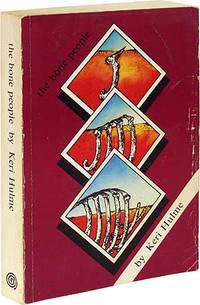
Author Keri Hulme (1947-2021) was the first New Zealander to win the prestigious Booker prize for the bone people*. Keith Lyons recalls times he spent in a remote coastal settlement with the humble writer, who remains a divisive enigma.

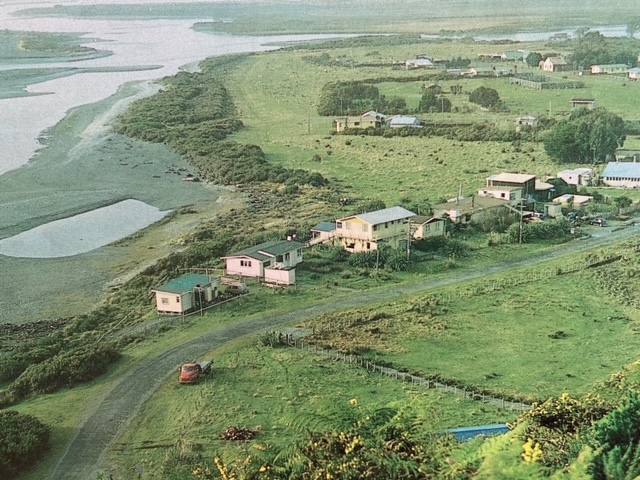
Okarito, home of Keri Hulme. Courtesy: Creative Commons

“You want to know about anybody? See what books they read, and how they’ve been read…” Keri Hulme

I was in high school when I heard the news that Keri Hulme’s the bone people had won the 1985 Booker Prize, literature’s most prestigious award for a novel in English. At 38 years old, she was the first New Zealander to receive the prize. Hulme became the first author to win with their debut novel. Later, in 2013, Eleanor Catton became the second Kiwi, the youngest winner of the Man Booker Prize, and also holds the record for the longest novel, 832 pages.

The following summer while hitchhiking around the South Island, I visited the small settlement of Okarito on the West Coast, where Keri had built her own house and lived since the 1970s. A converted schoolhouse in the former 1860s gold mining town was the main accommodation available: a youth hostel with bunk beds. I’d been attracted to the area because of the rugged coastline, placid tidal lagoon, mountain views and the elegant white herons which nested in the nearby forest.

Even though I’d struggled through an early edition of the bone people, I wasn’t as enthralled about the book as some of my fellow travellers who occupied bunk beds in the spartan hostel. Several European visitors carried copies of the book, which had been translated into many languages, several with different covers. It seemed that every day I went out walking along the main street of the settlement (population: 13 permanent residents), there would be an earnest woman from Cologne clutching Unter dem Tagmond or a young couple from Aarhus plodding along the road in the hope of finding Keri’s octagonal tower two-story house. Visitors wandered over the sand dunes desiring to encounter the acclaimed pipe-smoking author, beach combing for driftwood or gemstones washed up on the high tide.

There for the scenery and sanctuary of the coast, lagoon and native forest, rather than to spot the world-famous author, I did locate her house further along the settlement’s main road. A sign on the gate read “Unknown cats and dogs will be shot on sight”. The hostel warden Bill Minehan, who lived next door to Keri, told me she didn’t really like the attention or surprise visitors. Some of the other residents, protective of the community’s drawcard, would give wrong directions, so visitors after sightings of the elusive author could be seen pacing up and down the rutted grass airstrip — signposted Okarito International Airport and flying the Okarito Free Republic flag — or sidestepping around sheep grazing on the settlement’s rough golf course.

Often, after rains, Keri’s front yard flooded, creating a moat to protect her from rubberneckers. The Okarito Free Republic flag sometimes fluttered from a flagpole at Keri’s house, along with an alternative New Zealand flag, with a stylised spiral fern frond, made by Austrian painter and artist Friedensreich Hundertwasser. She moved to Okarito after winning a ballot for a section of land in 1973, building the house herself, lining bookcases with some 6,000 books, and setting up her writing desk with views out to the sea.

Keri was increasingly portrayed as reclusive. Rumours were that she’d spent all her Booker Prize thousands on alcohol from the Whataroa Hotel, some 25 km away. She didn’t like meeting strangers. She was reluctant to give interviews, and very rarely did she allow anyone into her house. She preferred solitude. “A large part of my life is the surge of the sea, listen to the sea, the pulse of the sea,” she once said.

I did catch a glimpse of Keri on my last day when returning a key to Bill — she was wielding a hammer, fixing the side of her house. The sweet aromatic scent of pipe tobacco floated in the humid air. Then I realised it was probably her I’d seen surf-cast fishing while on a long coastal walk towards the lagoon’s outlet into the Tasman Sea.

Bill let slip that Keri was formidable, but not unbeatable, at Scrabble. Having told him I had been at a Catholic boys’ school in Christchurch, and that I was also a writer, he asked if I knew any good high-scoring Scrabble words. I gave him ‘exorcise’ and ‘queazy’.

One of Keri’s favourite Scrabble words, I later found out, was ‘syzygy’, meaning the alignment of three celestial bodies. Three main characters make up ‘the bone people’. Keri said the characters for her book first came into her imagination when she was eighteen years old. After dreaming about a mute child with strange green eyes, she mused over the vision, eventually developing it into the character of the shipwrecked boy Simon Peter, whose life is intertwined with what one critic described as ‘his child-battering stepfather and a virgin feminist’.

The eldest daughter of a carpenter, whose parents came from Lancashire, and a mother who came from Orkney Scots and Māoris, she grew up in my hometown Christchurch. Her father died when she was aged eleven. After leaving school she dropped out of university part way through a law degree. She worked as a tobacco picker, in a woollen mill, delivering mail, cooking fish and chips at a takeaway shop, as a pharmacist’s assistant, a proofreader at a local newspaper, and in television production.

It took her almost two decades to finish the novel. She spent a dozen years trying to find a publisher. All New Zealand’s main publishing houses rejected the manuscript outright or insisted on extensive heavy re-writing before they would consider taking on the book.

In the end, it was published by a small obscure three-woman feminist collective (it was only the second book they produced), and typeset by students at a university newspaper, with an initial print run of just 2,000 copies. The book, which contained numerous typographical errors, was launched at an event at a teacher’s training college.

The year after its humble beginnings, the bone people won the Oscars of world literature, against the odds and against such literary heavyweights as Peter Carey, Doris Lessing and Iris Murdoch. The somewhat controversial win showcased writing from New Zealand to an international audience, who would perhaps only be aware of the likes of modernist short story writer Katherine Mansfield or Janet Frame, who explored madness and language.

Hulme’s contribution, blending indigenous myth and Celtic symbology, and set in a distinctly wild coastal New Zealand setting, is described as “an unusual story of love”’  or in the Amazon blurb “a true evocation of loneliness and attempts by deeply flawed people to connect to each other”. The main character of three, part-Māori artist Kerewin is convinced that her solitary life is the only way to face the world. How autobiographical is it, you ask? The more you delve into it, the more you find similarities with the unusual literary star, who increasingly got dubbed “reclusive” by the media because she wished to remain out of the limelight.

Part of the legend around Hulme is about the surprising success of her debut novel. She didn’t fancy her chances of winning the Booker Prize, so was in the US when the awards ceremony was held in London (plumes of cigarette smoke swirled up in the film footage) — she was the only contender not in the audience at London’s Guildhall. When she was called in her Salt Lake City hotel room during the event, she didn’t believe the news down the phone line. “You’re pulling my leg, aren’t you?” she said, “Oh, bloody hell.”

She was full of self-doubt. The literary world had a mixed response to her breakout novel. “Set on the harsh South Island beaches of New Zealand, bound in Māori myth and entwined with Christian symbols, Miss Hulme’s provocative novel summons power with words, as a conjurer’s spell,” wrote one New York Times review. “She casts her magic on three fiercely unique characters, but reminds us that we, like them, are ‘nothing more than people’, and that, in a sense, we are all cannibals, compelled to consume the gift of love with demands for perfection’.

Another review in the same publication was more critical. “It’s not so much that the novel offers ‘a taste passing strange’ as the author notes in the preface — interior monologues, disjointed narratives and vulgar language, after all, are hardly news these days. It’s more that the novel is unevenly written, often portentous, and considerably overlong.” The Guardian described the bone people as “a morass of bad, barely comprehensible prose.”

Even one of the Booker Prize judges, Joanna Lumley, was against it being picked as the winner, saying its subject matter was ‘indefensible’. A recent article described the bone people as one of the most divisive novels in Booker Prize history. The four words to sum up the book were violent, disturbing, poetic and striking.

While dismissed by some as unreadable and pretentious, in New Zealand the novel combining reality with dreams was seen as a masterpiece by others with its vision of a society regenerated by the adoption of Māori values and spirituality. For some, it challenged their worldview and sense of place at home in the world. Author Joy Cowley wrote, “Keri Hulme sat in our skulls while she wrote this work . . . she has given us — us.”

Keri said she wanted the novel to harmonise New Zealand’s two major cultural influences, indigenous Māori and European-descendent settlers (she herself shared both heritages). If you were to discover other authors who have explored in new ways what it means to be Māori, look up works by Patricia Grace and Witi Ihimaera, or for a raw look at the debilitating effect urban life has had on Maori, Alan Duff’s Once Were Warriors.

By the time I returned to Okarito the following August holidays to write a story for the Youth Hostel Association, the secluded hamlet had grown in population with the addition of a few more hardy souls and holiday houses, I only saw Keri a few times. One time, after gutting some snapper, she was off to clear the mailbox and collect the newspaper at the highway junction (there was no shop in the township). Another time she was cleaning a gun, bespectacled, and wearing her trademark red bush shirt. Like Hemingway, Keri liked hunting, (she favoured a .22 Ruger rifle among her collection of guns, swords and knives), and often took to the forest in search of deer.

Another time she was assembling poles, screens, nets, waders and buckets for the official start of the white baiting season. My father had worked in marine administration for decades, which included the monitoring of whitebait jetties and official seasons, so I knew a few things about the obsession. “Are the whitebait running yet?” I asked as she made the finishing touches to repairing nets. “Any day now,” she replied, looking expectedly towards the clouds billowing in the west. The season officially started the following day, and she had already checked her favoured locations for a 5am start. Normally a night owl and late riser, even her writing routine was swept aside for the ten weeks of the season when she was out trying to catch the coveted tiny fish. While throughout the year she might be catching rig or kahawai in the surf, netting for flounders in the lagoon, or trying to land salmon or trout in the rivers, her main springtime preoccupation was catching whitebait, the prized juveniles of migratory Southern Hemisphere fish.

I helped Bill load up driftwood onto the back of his vehicle before the rains set in, for use as firewood at the hostel (with a load for Keri too) and found some fool’s gold in quartz rock. Bill confirmed my folly. I gave him some more Scrabble words: Quartzy and Quickly.

That next summer I returned again to ‘The Big O’, hitching on the dusty corrugated gravel road to the coast with its pounding surf, driftwood sculptures and star-filled nights. Just before Christmas, with Bill away, Keri asked me if I could look after things at the hostel and check her place while she visited relatives on the other side of the South Island. The only other person staying medium-term was a German dwarf actor, who joked with me that he was a big man in European television and movies. Before she left, she dropped off a carton of a dozen beer, and some frozen whitebait, silvery eyes glistening through the plastic bag, with advice on how to make a batter for fritters with beer, flour, salt, and fresh parsley growing outside the hostel. “You could spice it up with some chilli pepper,” she said, pointing to a half-full jar of pepper left behind in the communal pantry by a Chilean backpacker.

Later, as we drank beer and watched the sunset from the old wharf, I mentioned to Manfred that even though Keri showed typical West Coast conviviality, we never once talked about writing. We’d talked about the moods of the weather, birdcalls from creatures seldom seen, what remedies protected vegetable gardens from slugs, and strange things which washed up on remote beaches. Having lived in that place for so long, she had plenty of stories about incidents, characters, or her own eccentric foibles. And I think that seeing her as a three-dimensional person (almost ignoring that she was a Booker Prize winner) rather than a 2-D writer made a difference, because it took away the pretensions and the expectations. She was direct, and also had a dry sense of humour. Manfred liked her rugged independent spirit, and kindly nature, not just because she had given us a box of beer. “She is like a good Kiwi bloke, yah?”

However, in the literary world, there was an expectation that a second novel was due. Her debut novel was on track to sell over a million copies. She’d retained the film rights, as its form couldn’t be easily adapted to the big screen. She believed that some stories work best ‘behind human eyes, not in front of them’. Surely she wasn’t going to be a ‘one-hit wonder’ like the band who sang the Macarena, Harper Lee’s To Kill a Mockingbird or The Catcher in the Rye by J. D. Salinger?

She finally announced her second novel, about fishing and death, she finally announced. And it would be called BAIT. She published a second collection of poems in 1992, and two collections of short stories appeared in 1986 and 2005. As for BAIT, it later would be published along with its twinned novel, On the Shadow Side.

She once declared she didn’t believe in writer’s block. “I know about distractions, laziness, daydreaming, stressful events that push writing to the background, and the sheer enjoyment of doing other things for a change … I am a slow, but very, very persistent writer.”

I can’t exactly recall when the last time it was I saw Keri. I just remember seeing her heading out on a fishing trip, along the windswept beach towards the lagoon and its ever-shifting outlet to the sea. She gave me a nod, and gradually faded into the misty greyness of the day and the distance. That night, after sunset at the beach, I witnessed the rare phenomena sometimes seen when the surf glows neon-blue from a bioluminescent algal bloom or plankton. Above it and beyond, the stars twinkled.

A decade ago, after almost forty years at Okarito, Keri left to move to the other coast, where she felt more at home. She had been dismayed by the development with ‘very ugly McMansions’ holiday homes visited by outsiders who would fly in by helicopter or plane. Her council rates were becoming unaffordable. She was also suffering from arthritis in her hips, back and elbows.

A few years ago, I went back to Okarito with a friend, but it felt different without her being there. We both hold the wish to buy her house, mainly in memory and tribute to Keri’s life and work, and also, to inspire our own writing. Though we both admit that Keri has fished all the best words, and woven the most compelling tales.

The much-anticipated second novel was never published, nor was the promised third. She died in late December last year. A family representative said she wasn’t after fame or fortune. “There were stories of her being this literary giant. It wasn’t really something that she discussed. It was never about fame for her, she’s always been a storyteller. It was never about the glitz and glam, she just had stories to share.”

*Please note ‘the bone people’ all lower case is the correct version of her title

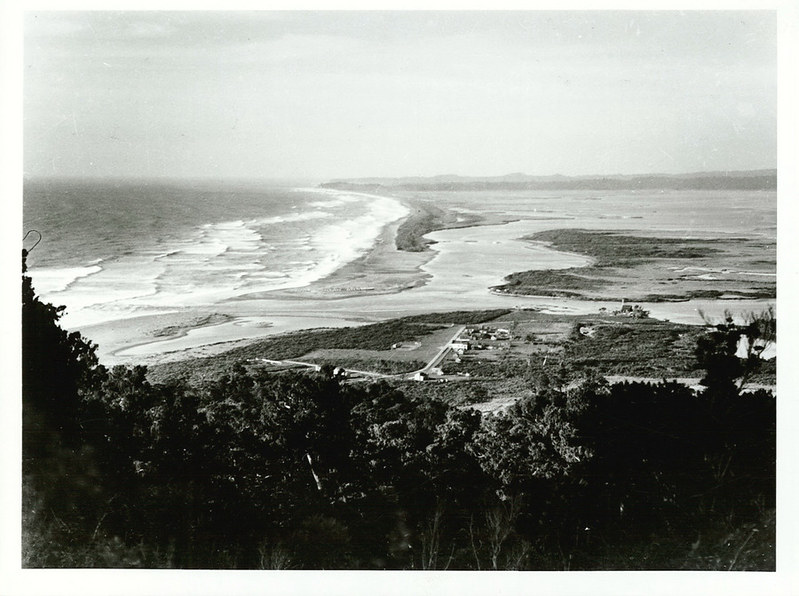
 A view over Okarito and its lagoon and beach. Photo Courtesy: Keith Lyons

Keith Lyons (keithlyons.net) is an award-winning writer who gave up learning to play bagpipes in a Scottish pipe band to focus on early morning slow-lane swimming, the perfect cup of masala chai tea, and after-dark tabs of dark chocolate. Find him@KeithLyonsNZ or blogging at Wandering in the World (http://wanderingintheworld.com).
.

PLEASE NOTE: ARTICLES CAN ONLY BE REPRODUCED IN OTHER SITES WITH DUE ACKNOWLEDGEMENT TO BORDERLESS JOURNAL

Categories
Essay

Satyajit Ray’s Cinematic Universe: Can Isolation Create a New World?

 By Rebanta Gupta

The Hungarian Marxist philosopher György Lukács coined the term “transcendental homelessness” in his essay The Theory of the Novel, to explore the feeling of homesickness prevalent in the arena of modern philosophy. The ecosystem of the epic was governed by the cosmic laws of fate, the transcendental signified was ever-present to protect mankind, and the human soul found a transcendental home in that cosmic destiny. The celebrated Postcolonial scholar Edward Said, in his essay, ‘Reflections on Exile’ observes, “Classical epics, Lukács wrote, emanate from settled cultures in which the values are clear, identities stable, life unchanging.” Novel, the brainchild of modernity, is the site where this “transcendental homelessness” functions. The European novel emerged out of a changing society, where the omnipotent figure of God had been effaced, with the invasion of skepticism and rationality. Novels germinate from a societal structure, Said writes, “in which an itinerant and disinterested middle-class hero or heroine seeks to construct a new world, that somewhat resembles an old world left behind forever.” A sense of retrogression, an insatiable urge to return to that erstwhile home haunts the modern world, which suffers from an ontological homelessness. The shadow of this sense of homelessness and estrangement also haunts cinema, which has a novelistic structure. Cinema, which is engraved on celluloid, is written by an auteur, the director, who is analogous to the author of a novel. The characters of the celebrated Indian filmmaker Satyajit Ray’s films suffer from a sense of perpetual homelessness; pangs of isolation and estrangement haunt their sinews and nerves, in the midst of a kaleidoscopic world. This essay would focus on two of Ray’s films: Kanchenjungha (1962) and Charulata (1964) and try to analyze how they create an atmosphere of isolation and estrangement.

Satyajit Ray. Courtesy: Creative Commons

Kanchenjungha (1962) narrates the saga of a wealthy aristocratic family, during the final lap of their vacation at Darjeeling. Inclement weather has shrouded the peak of Mount Kanchenjungha with mist, and a parallel mist of confusion, contradictions, unrequited desire, and unspoken words has enveloped the characters. The film describes the primacy of the father figure in the family ecosystem through the character of Indranath (played by Chhabi Biswas), who is a snooty, pompous, and authoritarian figure, who wants his daughter Manisha (played by Alokananda Roy), to marry a wealthy man whom he has hand-picked for her, but she seems to be reluctant to accept this unilateral decision of her father. William Wordsworth, in the poem Lines Composed a Few Miles Above Tintern Abbey (1798), had instructed his sister Dorothy to believe in the ways of nature, which fills the mind “with quietness and beauty” and “lofty thoughts, that neither evil tongues, rash judgments, nor the sneers of selfish men” can demotivate her. But Indranath, it seems, stands vertically opposite to the arena of Wordsworthian exhortations; he is completely alienated from nature, his materialistic drive has effaced his capacity to appreciate the beauteous aspects of Darjeeling and the Himalayan wildness. When the ornitho-enthusiast Jagadish, his brother-in-law (played by Pahari Sanyal) talks about his search for a bird, Indranath nonchalantly asks, “Roast hoy? (Could it be roasted?”). He is marooned in his sequestered island of materialism, and his desire to catch a glimpse of the snow-clad Kanchenjungha is basically a competitive desire to acquire a coveted product, real love of nature is not associated with that. He has high opinions about Banerjee (played by N. Viswanathan), the potential groom for Manisha, because he has a starting salary of twelve hundred rupees, which was indeed a handsome amount in the postcolonial context of the film. Indranath’s wife Labanya (played by Karuna Banerjee) is a subjugated woman, who has a feeble presence before the domineering existence of her husband, and her subjectivity finds no outlet. She, therefore, sits on a bench by the abyss, and at the hour of descending fog, sings the Tagore song E Parabase Rabe Ke Hay (“Alas, who will live in this forlorn and alien land”), set in the Hindustani Classical Raga Kafi, which uses the notes komal gandhar (E-Flat) and komal nishad (B-Flat). The raga creates a melancholic mood, as the song touches the somberness of gandhar and the solitary bohemianism of nishad (which is widely used in the mercurial and melancholic Bengali folk music), and it reflects the alienated state of a woman, who has not had her share of love from her husband. Fog dilutes the outlines of the horizon, as her hopes slowly get extinguished and desperation reigns supreme, and the last line, “Temon apon keho nahi e prantare hay re (There is no one dear and near in this alien world)” mingles with the fog to create an atmosphere of perennial loneliness. Jagadish’s comment, “You have sung after such a long time,” indicates that Labanya’s daily hectic life and Indranath’s iron fist have isolated her from her artistic persona. Rabindranath Tagore talks about the importance of aesthetics in his seminal work Japan Jatri (Travels through Japan, 1919) if humans become too much obsessed with the utilitarian domain, they become machine-like entities, whereas the domain of aesthetics is the area where they can actually realise the true nature of their existence, leading to the experience of the Lebenswelt (life-force)described by Edmund Husserl. The song not only translates Labanya’s melancholia into musical notes, but it also signifies her urge to rediscover her real self, as she expresses concern over the possibility of the smothering of Manisha’s artistic qualities and urges after the marriage. The golden Kanchenjunga, which appears in the last few frames of the film, signifies that cosmic home, the abode of hope, which has hitherto remained elusive to the characters. But in this journey to the cosmic abode, the rogue Indranath is left behind, as he frantically searches for his compatriots, and a terrifying wave of isolation hits him, along with a mocking, derisive tune of a hilly song.

Charulata (1964) is widely regarded as one of the premier achievements of Ray. The film, which is based on the 1901 novella Nashtaneer (The Broken Nest), written by Rabindranath Tagore, narrates the heart-wrenching saga of the eponymous heroine (played by Madhabi Mukherjee), who walks down the solitary passages of an aristocratic house like a spectre. Her husband, Bhupati (played by Shailen Mukherjee), the editor of a political newspaper, nurtures the dream of expanding his business, while Charu suffers from lovelessness; sexual and intellectual dissatisfaction simmers within her. The much-lauded opening scene sets the melancholic tone of the film. The scene where Charu is seen knitting the initials of Bhupati’s name on a handkerchief might remind the audience of Alfred Tennyson’s Lady of Shalott, who is imprisoned in an island castle. She weaves a colorful web in her solitary chamber under the shadow of an unknown curse, which will befall her, if she looks down at the city of Camelot. She can only catch glimpses of the “shadows of the world” in the mirror that hangs before her. Charu, like the Lady of Shalott, is imprisoned in an urban mansion, where household chores are managed by a fleet of servants. She watches the activities of the outside world through binoculars, in an effort to reconcile the differences between the home and the world. The images of the palanquin bearers, a man with monkeys, a fat man with an umbrella crossing the road- all these are reminiscent of the “shadows of the world” in Tennyson’s poem written in 1842, which have now appeared on the glasses of Charu’s binocular. But the Lady of Shalott had to pay the price for abandoning her loom and looking down at the blooming water lilies and the “helmet and the plume” of the gallant knight, as Tennyson writes,

Out flew the web and floated wide;
The mirror crack’d from side to side;
“The curse is come upon me,” cried
      The Lady of Shalott.

Similarly, the curse of infidelity and adultery hits Charu, with the arrival of Amal, her attractive brother-in-law (played by Soumitra Chatterjee). He enters her life in a tempestuous way, which echoes the knight’s entry into the lady’s life. Charu’s isolated state makes her desperate to efface the boundaries separating the home and the world, and the entry of Amal signifies the eruption of the outside world in Charu’s domestic discourse. Ray portrays the psychological gulf between Bhupati and Charu by making Charu stare at the fleeting image of Bhupati through the binocular. He is engrossed in his world of political journalism with no time to accompany his wife, while the latter tries to find solace in literature and other artistic works. But the binocular episode underscores the irreconcilable differences between them. The camera unprecedentedly backtracks, as she lowers the device and stares at her husband with a note of derision in her eyes. This derision anticipates the arrival of Amal, who will occupy the void left by Bhupati will emerge as his sexual and intellectual rival.

The last scene, which incorporates the freeze-frame technique, is reminiscent of the final scene of François Truffaut’s film The 400 Blows (1959) where the teenage protagonist Antoine Doinel stares at the audience by rupturing the fourth wall, and the camera zooms in on his face and refrigerates time, to show the signs of discontentment on his face. Charu and Bhupati face each-other, and the latter’s heart is exploding because of his wife’s supposed infidelity. Though a note of reconciliation is hinted at, when Charu invites Bhupati inside, the frame eventually freezes, the music halts, and Bhupati cannot hold Charu’s extended arm, underlining the impossibility of their conjugal bond. Antoine’s discontentment, along with a sense of guilt, now appears on the couple’s faces, as the word Nashtaneer or “Broken Nest” appears on the screen.

Tagore had celebrated the grandeur of a peaceful abode when he wrote the song “Ohe sundar mama griha aji paramatsaba rati, rekhechhi kanaka mandire kamalasana pati (Beauty, I have laid down the bed of lotus in the golden pagoda for you, on this auspicious night of festivity)”. But Charu and Bhupati fail to construct that resplendent home, since they are separated by circumstances. They could be inhabiting the same house, but with an abysmal gulf between them, they would be suffering from a sense of metaphorical homelessness. In this regard, Charu, Bhupati, and Amal anticipate the ménage à trois between Bimala, Nikhilesh, and Sandip in Ray’s Ghare Baire (1984). Bimala (played by Swatilekha Sengupta) too becomes a victim of the broken nest syndrome, as her nationalistic aspirations are at loggerheads with her conjugal fidelity.

These two films illustrate the urge to reach a cosmic abode of love, unity, and security, which is throttled by the constraints of worldly relationships and circumstances. Charu is searching for that elusive home, where she can find her true self, and fine-tune her soul with the ethereal harmony of the universe, but her failure to touch the perimeters of that utopian abode fills her hearts with pangs of isolation and estrangement. Labanya’s personal moments of discovery through the song by the abyss marks the intersection of solitude and loneliness; solitude has a personal dimension, when an individual can explore the hidden self away from the worldly bustles, but loneliness has an excruciating and universal dimension, that unravels her marooned condition, when materialist forces have encroached and decimated her subjectivity. Kanchenjungha and Charulata underscore the desire of these characters to travel from the world of loneliness and estrangement to the world of solitude, where they can re-explore and rediscover themselves to understand the divine mechanisms of the universe. It is an inward spiritual journey, which intersects with the journey of Christian, the protagonist of John Bunyan’s magnum opus The Pilgrim’s Progress (1678,1684) who had embarked on a quest for the Heavenly City.

.

Rebanta Gupta has completed his Postgraduate studies in English Literature from Presidency University, Kolkata. He is interested in Literary Theory, Hindustani Classical Music, Hermeneutics of Film, Narrative of Bengal, and Cultural Studies.

.

PLEASE NOTE: ARTICLES CAN ONLY BE REPRODUCED IN OTHER SITES WITH DUE ACKNOWLEDGEMENT TO BORDERLESS JOURNAL

Categories
Poetry

Who Said You Could Die…

By A Jessie Michael

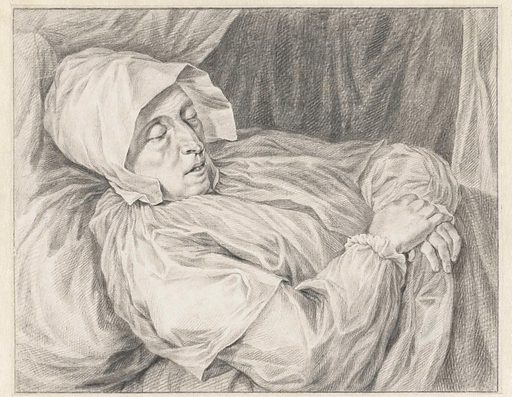
Woman on her Deathbed,1777, Abraham Delfos. Courtesy: Creative Commons
Who said you could die Ma,
Just because you are old?
The Ganges is called mother.
Like her you have flowed long,
Tributaries and distributaries webbing 
wide around the world.

You have lived so long in this world,
How will we breathe Ma if you die?
Your blood in our veins is our webbing.
A river dos not dry up because it is old
So who said you could die mother
Just because you have lived so long?

We are mothers with a mother,
Living in another world.
We have missed so long
your laden table, dishes to die
for, and curry rice balls of old.
The stories of your history is our webbing.

We still do not know the webbing  
Of the food of the mother --
Land, recipes of old,
Food of the gods from another world.
Our taste buds will die
Not having tasted them so long.

We have loved you so long,
How will we mend the webbing
Of the delta when you die mother?
You are the Ganges of our world.
You are eternal, not old.

We have also grown old
and our shadows are long.
What will we do in this wide world
but cling desperately to tattered webbing
Please stay. Breathe mother
Who said you could die?

A. Jessie Michael is a retired Associate Professor of English from Malaysia. She has written short stories for online journals, local magazines and newspapers. She has published an anthology of short stories Snapshots, with two other writers and most recently her own anthology The Madman and Other Stories (2016).

PLEASE NOTE: ARTICLES CAN ONLY BE REPRODUCED IN OTHER SITES WITH DUE ACKNOWLEDGEMENT TO BORDERLESS JOURNAL

Categories
The Observant Immigrant

To be or Not to be…

 Candice Louisa Daquin takes a close look at death and suicide.

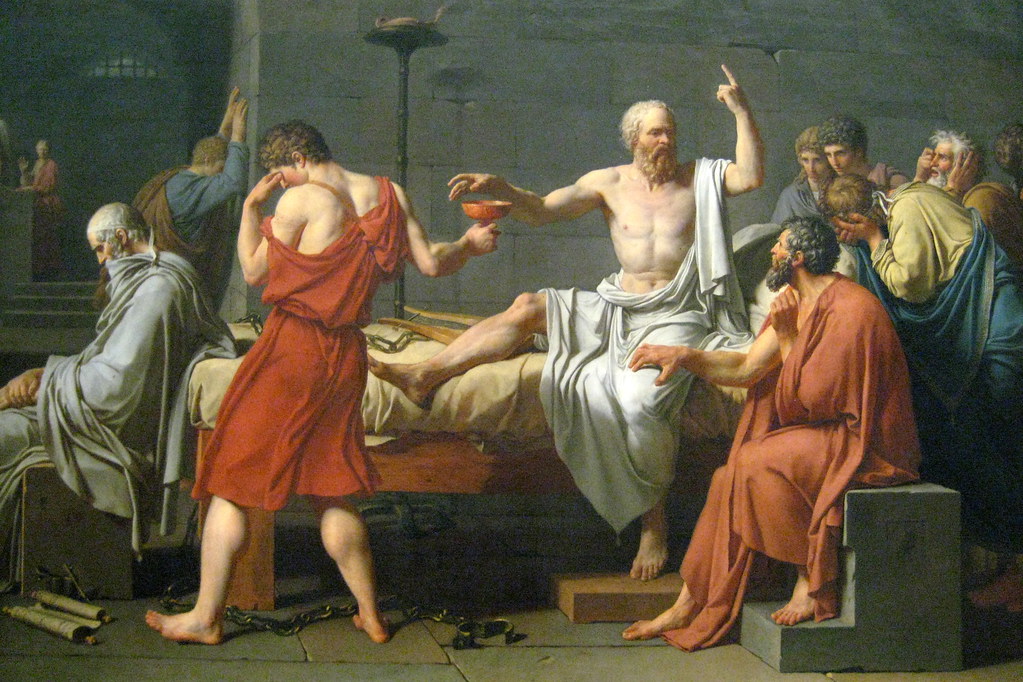
The Death of Socrates by Jacques-Louis David (1748-1825) Courtesy: Creative Commons

Recently I’ve been grappling with the imminent death of a very dear friend. She is very young. Maybe her youth or maybe my attachment to her, makes this particularly moving to me. I have dealt with death before and it is never something as simple as going softly into the night. Yet it is something we must all deal with, multiple times, often intimately and up-close-and-personal when it comes to our turn. This may be a macabre subject but, in a way, it shouldn’t be because it’s the one thing we will all are guaranteed to experience. Maybe it’s time to see death and dying differently?

In my friend’s case she wanted passionately to live. She didn’t want to get cancer in her thirties and have the rest of her days taken up with trying to survive. It’s unfair, it’s horrible, it’s what most of us fear. Despite this, her grace leading up to her death, including her time in the Hospice, had been startling for me. I saw a change in her, that I found unexpected and illuminating. One could have argued it was the hand of God touching her, those who do not believe might have mooted for inner peace. As much as I rail against her dying, and wish stupidly something could prevent it, what helps is knowing what I feel and think is nothing compared to what her family is experiencing, and it puts things in perspective and demands that I rein my feelings. By that, I don’t mean ignore the sadness, but put it in a context because everything is a context.

My context is: A few years back my beloved cat died, I was very upset. But I knew he was a cat who lived a long life, and he was ‘just a cat’ versus a human. For me, that context is different (despite ultimately believing us all equal). If my father passed on, it would devastate me more than say, a stranger, and that’s just being honest. When my grandparents died, I was very upset, but I put it in the context of expecting grandparents to die and whilst I still think of them and miss (some) of them, I’m able to cope. I think this is true with my clients, they rationalise by contextualising. It’s how we cope with grief and fear. When we cannot do this, we usually develop some type of imbalance and that can cause us to have unexpected responses like feeling as if it is the end of the world if your pet turtle has passed on. Everything is context-based. While it might seem insensitive to admit this, it’s what keeps us sane.

People can be dismissive of others pain. I have often heard people say things like: “Well her parents died more than a year ago, don’t you think she should be ‘over’ it by now?” Invariably when their time comes to lose their parents, they may finally understand why most people don’t get ‘over’ it when they lose parents, or siblings or their children. Others believe you are weak if you don’t ‘suck it up’ or that there is some time limit on grieving. In the faith I grew up in, we tend to give a year for grieving for parents (or close relatives) which allows the griever to not feel guilty (or guilted) for their emotions – it frees them. On the other hand, it could be negative if say, after a year they feel worse as many do because grief is not linear. Nothing is perfect. The important thing is to have empathy and realise we all process differently and there is nothing that is wrong or right, except for the individual.

If we all die, then we shouldn’t stigmatise illness or fear it but many people do. It is the great unknown. In modern times, a worse fear is suffering. We may not know what happens when we die, but we know suffering and nobody wants to suffer, but increasing numbers of people do. Why? We always suffered to some extent. In wars people would lie on battle fields for long periods of time dying of awful wounds. In modern times we harnessed the power of pain killers and believed ourselves free of pain and thus, suffering. Despite this quite the opposite phenomena has occurred. In some ways people suffer more.

Why? Because with the advent of ways to prolong life, came medication that extended life but it came with a price. When a person gets cancer say, it’s no longer a death sentence. Many recover fully and go on to live long healthy lives. For those who get a late diagnosis however, the cancer might have spread so much so that eventually it will take their life. This is where modern medicine seems to shine. There are a plethora of medications that prolong life. No, not cure but cause remission or sustain life for a period of time.

If you are someone with children or grandchildren, living an extra two years might be worth the astronomical sum it costs (if you can afford it) but at what cost? Many of these drugs cause horrible side-effects and do not reduce suffering, in fact it is the suffering (toward death) that becomes the experience. You could say, we have prolonged suffering in our attempts to give people ‘more time.’ The question then, is it worth more time and what do we mean by more time?

Whilst doctors want to offer hope, they do so more out of a stubborn desire to ‘try anything’ rather than because the six months they may give a dying person, is really beneficial when you consider the sheer backbreaking cost (bankruptcy from medical costs being the #1 reason) and very small gains (six months more of life and you have spent all your money on a treatment which only benefits Big Pharma, according to Dr. Azra Raza in her ground breaking book about death and dying, The First Cell). The unwillingness of doctors to give up, is admirable and very human (who wants to tell someone there is no hope?) but it brings with it, a false promise.

In the modern world, people have smaller families by and large, and as such, many of us when we get older and more likely to die, may have less obvious incentives to live if we get sick. It’s not so much a wish to die, but a pragmatism about death and dying. Easy in theory, perhaps less so in practice, we must all eventually deal with this issue. Better to consider it before the time comes, hence the increase of living wills, whereby we inform doctors and loved ones, what we want to happen should we get sick. Again, macabre maybe, but imminently sensible, and useful when doctors are not mind-readers and cannot predict what a patient coming into Emergency may wish by way of life sustaining treatment.

Speaking of life sustaining, one debate long held relates to dementia. Right now, if you were to write in a living will that should you get dementia you do not want any life sustaining treatment that would only include if something actually happened to you, such as a heart attack or your kidneys shutting down. For many with dementia though, it is the day-to-day living that is hard, both on the individual whom on some level knows they are not themselves, and on those who care for them. Whilst it seems inhumane to some, to consider letting people with dementia die, those lucid enough to know they have dementia will often wish to die rather than live, without any hope of recovery and the mental state of a child without any chance of growing up. Since dementia is so common place and we’re all living longer, this is a real issue and yet little is done to combat the increase in dementia patients who may often have nobody to look after them and no funds for full time care. What should be done?

Clients of mine with parents suffering from dementia will often describe the agonising decision to put them in care if they have the financial wherewithal or take care of them at home, often at great expense (loss of job, career). Some wish nothing more than the opportunity to care for their parents or loved ones, whilst others feel guilty for wishing it were anyone but them looking after their dementia patient. Both perspectives are understandable. For some there is a redemptive quality to caring, and it comes naturally. For others, financial or emotional reasons may make being a person who cares for others, incredibly hard. It is not surprising that older carers such as the husband of a woman with Alzheimer’s, often dies before the wife. The actual act of caring is exhausting as it may be redemptive, and nobody should be blamed for being unable to do it. Sometimes however, there is no choice, with rising costs for elder care, especially with dementia. It makes me wonder what will happen if the predicted number of elderly develop dementia. Will it be common place to see them walking the streets without anyone to look after them? Take me for example, should my father develop dementia and I live in a different continent, what would I do? This is something many of my client’s fear and yet little is done to resolve this issue by world Governments.

Some people believe dementia patients should be allowed to access euthanasia. As of now, all countries with some degree of access to euthanasia ask that the patient be ‘sound of mind’ – which would not apply to someone with dementia. But even if you write a living will stipulating that you wish to have euthanasia if you get dementia, this is a tricky situation because by the time that would apply, you would not be sound of mind, so it negates the ability to have euthanasia. Furthermore, what of unscrupulous relatives or friends, jockeying for inheritance or to financial gains? How can this be stopped from being misused? How can we gauge whether someone with full blown dementia really wants to die? The reason this matters, is by the time a woman is 80 she has a 1/3 chance of dementia of some kind and by the time she’s 90 that chance is 1/2. This is and is going to affect a huge swath of the population and as such, these conversations need to be had. The only way we do this is to consider what end of life means and how best to end life.

End of life conversations are common in therapy. Clients may be bereaved. They may have a partner dying of a terminal illness, they may have lost a child, parent, friend. Perhaps it is a relief to have counselors because many people don’t want to ‘go there’ and talk about death and dying as if it is contagious. It’s a hard subject, a sad subject, and difficult to put a positive spin on it. Life can be tough enough, without considering dying before it’s time, but that’s exactly what we should do to protect ourselves.

The other subject not discussed in depth is suicide. It’s one thing for us to die of disease, we know that’s a possibility but we’ve always struggled with the idea of suicide. For most of history, suicide has been variously unsanctioned by society-en-mass, but the question is why? Is it an ancient fear of the ‘unnatural’ impulse to die? That we work so hard to stay alive, it seems absolutely wrong to wish to die? Or something else? Whilst Emile Durkheim (1858-1917) wrote on suicide and many have questioned this, no one person that I’m aware of, has managed to figure out what our collective horror is in relation to suicide.

Let’s play devils advocate for a moment. What is it about the decision of another wishing to take their life that causes people to react so strongly? Is it the same as abortion? Pro-life over Pro-choice? Or the visceral horror we all have about dying? If the latter, why does it matter so much to us what others do? What right do we have to intervene? Yet we do, societally and individually. One might say we’re just trying to save lives, but do we put as much passion into feeding the starving or rescuing women from abusive relationships as we do banning abortion and making suicide illegal or socially frowned upon? When it’s not illegal, it’s considered ‘weak’ and a ‘cop out’ (to use an American term). The only society where suicide was really ‘embraced’ if such a thing can exist, is Japan, and nobody really knows why that singular country took the notion of suicide to such an artform.

Suicide bombers today may be Muslim fundamentalists protesting against the tyranny of an oppressive country. They are sold on the idea the after life will be a paradise, and much of what they are told is not from the Koran but from the machinations of those who impel them toward acts of terror. When a young person blows themselves up to destroy others, this is not the suicide we think we understand, but an act of anger, revenge, justice or ignorance. Suicide in its more common form is less about revenge or justice but can be about ignorance or anger. Ignorance in that many young people kill themselves almost upon an impulse, with little pre-thought or planning, just in a reactionary ‘of the moment’ way, that shocks loved ones who didn’t see it coming because it may not have been (coming). There is an element of ignorance to this act, they may be copying others, or reacting abruptly, and had they known more in that moment, they would possibly have looked back on the act and regretted it. As such the impulsive element of the act could be viewed as ignorance/nativity.

Anger is a very common reason for suicide, although probably the one everyone is most familiar with is despair (depression). Ironically anger is as much as incentive for suicide as despair, because of the heightened tendency to react with both those emotions. It is in that heightened state that many attempt or complete suicide and those who survive, often realize there were other options they wish they had taken. For the committed, then suicide is a personal decision, perhaps based on a terminal illness diagnosis or long-term suffering. Despite this people intervene and tell anyone who wishes to die rather than linger and suffer, that they are weak for taking this option. I have always found that fascinating and awful, because I see it exactly the way I would putting my cat to sleep. I did it out of mercy and love. I did not want my cat to suffer. A human being is not a cat but the same emotion applies. Where is the true difference?

The difference lies in religion. People who condemn people for taking their lives are not universally religious but many are. The tenants of a religion might dictate that someone should not take their life. I have always wondered why, because I believe most religions were written and created by humans and so it begs the question, why were they so intent on stopping people from taking their own lives? I can understand that if a God exists and says we should not take our lives, this would give pause to many. But it also creates a challenge, because what God would wish someone to suffer terribly?

This is a very personal decision and that’s my final word on whether someone should choose suicide if they are suffering. To some extent it should be the right of the individual and never anyone else, what they do with their life and death. I recall Brittany Maynard (1984-2014), a young woman with a terminal cancer in her 20’s talking of her right to end her life rather than brutally suffer and I felt then, even if I did believe in God, I would not strip her of that right, because I did not want her to suffer and I could not believe any God or human would. Again, if we have tools in place to deal with these issues, then people who are suffering terribly, do not have to battle through this, at their most vulnerable.

Many of us may not know this but suicide if we’re talking technically suicide, is incredibly common. Old people often stop eating and will themselves to die when they have had enough of life. Technically that’s suicide even if they do not see it that way. Maybe it’s more natural than we imagined? Likewise, hospices and long-term care facilities will medicate terminal patients at the end to hasten their death and relieve some of the suffering. Effectively causing a person to die before their ‘time’ if we think in God-given terms. I do not begrudge this because these carers are seeing people suffer in ways few of us can imagine, if there is not a mercy to ending a life of agony, then I don’t know what mercy really is.

The stigma of suicide is incredibly pervasive. Just like mental illness, suicide is seen as ‘not right in the head’ and a weakness. How sad that society believes judging those during their worst times is the right thing to do? How is that going to help someone choose anything else? And what of their right to end their suffering? This begs the question: Is it right to die before your time? And by right, what do we mean? Who is the judge of what is right and wrong? For some, it’s easy, it’s God and most Gods say suicide is ‘wrong’ but again, why? And at what cost? For those of us without God, then right and wrong become moral principles that we try to adhere to. Is there a downside to morality being the choice of humans rather than something more than us? Absolutely. We are flawed and liable to influence, but sometimes trying our best is all we can do. I would like to think I would be merciful before judging if someone I loved dearly wished to end their life. It would of course depend upon the circumstances, as it should.

Switzerland is the only country in the world where you can elect euthanasia for no specific reason. In America in the ten states that permit some degree of euthanasia, you need to be close to death and have a terminal illness.

Why is death sad?

Switzerland is testing a 3-D-printed pod that its creator says can painlessly end someone’s life in a matter of minutes. The device is called ‘Sarco’ and users can potentially end their lives at the push of a button. The advantage of this system is he pod becomes filled with nitrogen gas, which lowers oxygen in a person, until they fall unconscious and this occurs fast, within a minute. The idea of a truly painless death by euthanasia is why this was invented and users do not Sacro suffocate they die fast of oxygen deprivation after they’ve fallen asleep.

Some have argued a machine like this could glamorise suicide (although how, is not explained) and that it may be overly appealing to a mentally ill person seeking death. I don’t really agree. If there are checks and balances in place that work effectively, this won’t be an issue. The real issue is who wants to consider people taking their lives when death is sad? And how do we access without bias, who is ‘eligible’ for euthanasia and who can be helped another way, that doesn’t involve a premature death? After all, someone in the throes of depression, may wish legitimately to die, but what if a year later they are well enough to be glad they didn’t die? Those kinds of grey areas must be resolved before euthanasia could ever be expanded or wide-spread.

The Netherlands and Belgium permit assisted suicide for patients with unbearable physical or psychological suffering. Which differs from the USA where it can only be for terminal end stage physical illness. Switzerland has less qualms, making it a destination for ‘suicide tourism’ which again, is very sad, but perhaps what is sadder, is that they have to resort to this and what about those who don’t have the means? People assume those who are pro-euthanasia must be eugenicists or simply not care about others, but often the extreme opposite is true, just as it is with Pro-Choice advocates, who believe choice is freedom and the basic right of any woman.

Should we be able to die because we’re simply ‘tired of life’ or should we be expected to carry on to the ‘bitter’ end? This is such a cultural dilemma and maybe suicide became more acceptable in Japan because they reframed the concept of death, making it honourable to commit suicide (or as a means of regaining honor) just as suicide bombers find honour in the act. Should we need honour or some justification to believe suicide needs to be part of any argument about end of life? Maybe this is also connected to concepts of the death penalty. It is believed by many that America will not have the death penalty in years to come, that it’s a faded system that doesn’t work and scapegoats the most vulnerable. I see the death penalty as very different (a consequence for a bad act) than legally assisted suicide (to end suffering) and thus, when I consider arguments about end of life with clients, my considerations are about their quality of life and not, the myriad ways we can consider forms of dying.

In an ideal scenario nobody would wish to die, perhaps. Why? Because so much can be found in living and those who love us would not wish to lose us. Realistically however, people get sick, people get tired, people suffer. As long as we recognise this in ourselves and others, then debates about what end of life represents, will be part of a larger conversation and a necessary one. Perhaps if we cannot see anything positive in this, we can at least not shun it until it is too late. Likewise, we could consider that death is not the worst thing to happen to us, though suffering might be (or the suffering of those we love) and ways of alleviating suffering that are compassionate, should be part of the conversation.

.

Candice Louisa Daquin is a Psychotherapist and Editor, having worked in Europe, Canada and the USA. Daquins own work is also published widely, she has written five books of poetry, the last published by Finishing Line Press called Pinch the Lock. Her website is www thefeatheredsleep.com

.

PLEASE NOTE: ARTICLES CAN ONLY BE REPRODUCED IN OTHER SITES WITH DUE ACKNOWLEDGEMENT TO BORDERLESS JOURNAL.

Categories
Poetry

The Death of Time

By Ananya Sarkar

THE DEATH OF TIME

You mark the death of everything
Love, anger, fear,
Suffering in its throes…
Yet when you die
How will we know?
For neither the summer breeze
Nor the starlit sky
Will give way to the fact that you are no more...
So when you die
How will we know?

Ananya Sarkar is a creative writer from Kolkata. Her work has been published in various ezines. She loves to go on long walks, cloud gaze and ponder upon miracles.

.

PLEASE NOTE: ARTICLES CAN ONLY BE REPRODUCED IN OTHER SITES WITH DUE ACKNOWLEDGEMENT TO BORDERLESS JOURNAL

Categories
The Literary Fictionist

Missing

By Sunil Sharma

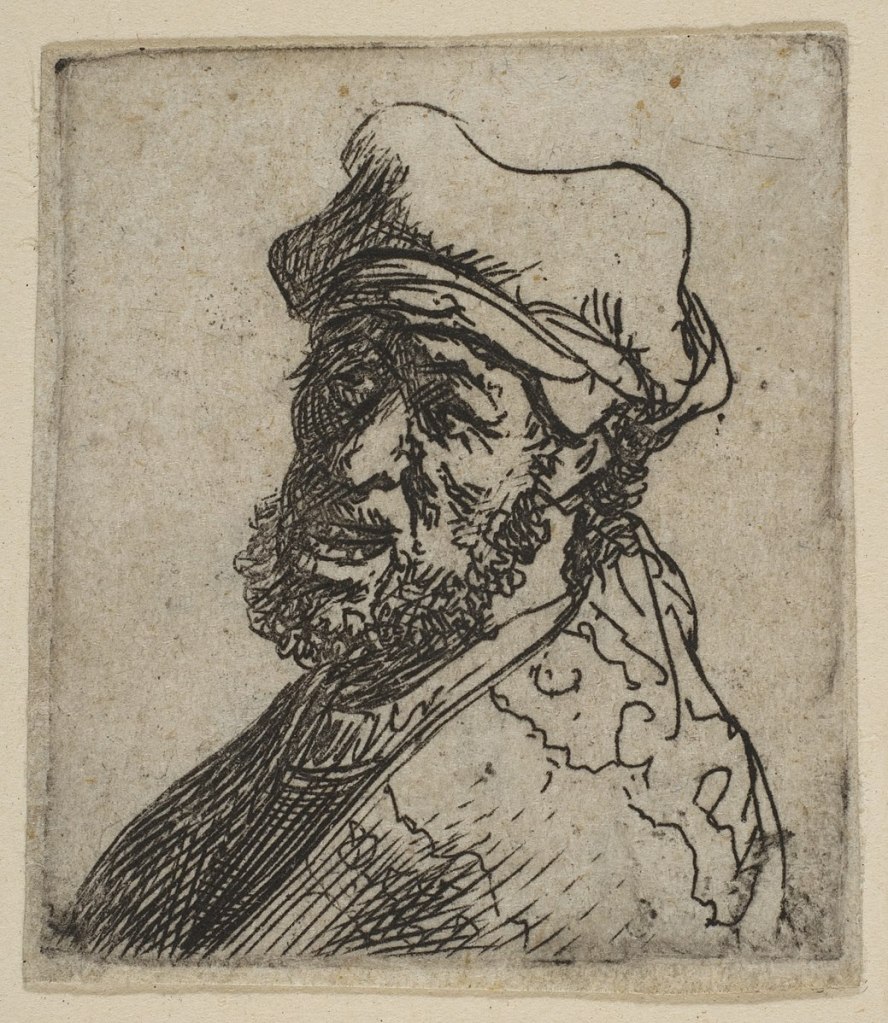
Man Crying Out, Rembrandt (1606-1669) Courtesy: Creative Commons

The December morning came with a shock.

Pa was not in his room. It was crisp morning and the air brittle in your numb figure. There were raindrops glistening on the windowpane and on the treetops and the telephone poles. The cold hit you hard and your exposed skin felt like a reptile was crawling on it. It was as if your insides were being sliced with a cold dagger.

A Russian landscape, almost, that is typical of a Chekhovian story!

Bright, yet dismal!

Or Hemingway. Maybe.

The tall eucalyptus trees rose majestically in the distance. A clump of white, slender-waisted eucalyptus, half-a-mile away, near the shallow strip of river, swaying in the wind.

The silvery face of the river threw off a white haze. A few mud houses stood here and there. Vegetable fields ran down to the river edge, all green and rich, in the brilliant sun.

This side of the house, it is urban sprawl. That side, at the back, the country. This, ugly. That one, enchanting. The house he was standing in stood on a rising ground, all three-storied, of red brick, part completed, part painted, dwarfing other one-roomed houses of the small colony, recently sprung up, like the twisted innards, in an area, where basic amenities are as foreign as hunger is to the rich.

He surveyed the illogically constructed and misshapen houses where dirty and ill-clad children, nose running and feet bare, were playing, in the dust and garbage, with great gusto and abandon.

This house could not house a gentle soul! The man who spent his hard earnings in turning this dream into reality!

But where would Pa go?

The room, as usual, was very clean. The bed was made, the sheets smooth, the pillows neatly laid, the quilts neatly piled up. The English papers were kept in a corner. The bed was not slept in, at least, by the looks of it. The bookcases were lined with books — majority on philosophy and language, criticism and fiction. In English.

The soul had deserted the room!

“The aim of literature, good literature, mind it my boy, is to give courage, moral courage, to give insights into the nature of reality, the world,” a faraway look so typical of such encounters, “the courage to come to terms with life. To sort out the mess… to straighten up the whole twisted-up thing-life. What religion could not do, good literature does. It tells you about persons, the world, time…. A good artist is the seer…. Mad for conventional society but sane for the followers. Van Gogh, for example, and his sunflowers…”

During such moments, Pa looked unearthly. A halo appeared behind his head, the face dark in the erupting blinding light, the voice coming from clouds. He belonged to a different realm.

Is Pa an angel in human form?

How articulate!

So calm!

Looking at someone invisible, having a dialogue with that force, a dialogue liberating!

Pa communes with the spirits!

“Yes”, says he, “the dead speak. Through the mist of centuries. They come to me in dreams.”

He, the listener, is mesmerized. He cannot figure out the why of it.

But he looks and listens. Pa is majestic. Regal. Tall, thin. Fine face.

A straight nose. Thin full lips. A pair of piercing brown eyes. A rich husky voice. An erect posture. Commanding attention. That is the sum total.

Pa.

Cogito ergo sum. That is my philosophy.” Pa declared.

When he decides, he can be vocal. Very articulate. Precise.

Otherwise, he can be an iceberg.

Brooding. Off limits.

They had many animated discussions. Prod him on his favourite topic and he would be all animation. Gesturing. Eyes rolling. Hands moving up, down. Voice rising and falling.

“Nobody writes good literature. A soul companion in hours of solitude. Where are the Tolstoys, Romain Rollands, Hemingways, Nerudas in the 80s and 90s of the world? Human spirits speak through them. Now it is exhaustion. Personal idiosyncrasies. Language experiments”. He was dismissive. Hurt. Bitter. Literature had abdicated the messianic role. The artist celebrates a personal hell. What a climb down!

A reversal shocking. Market has ruined everybody.

Could Pa, this man of steel, desert us like this? Disappear?

He could not make any sense out of this sudden exit of Pa.

He returned to the room. It reflected the neatness of its occupant. A cold blast came from the narrow corridor adding to the silence of the room. Chilling! The wind ruffled up a stock of papers. The hissing sound unnerved him. He went out and down to the living room on the ground floor. The family was gathered up there. When he entered, they became quiet. He looked at them. They were lost in their own worlds. He thought he was intruding upon a private moment. He got up gingerly, without being obvious.

“Where are you going, Rajesh?”

It was Uttam, his eldest son.

“Just for a smoke,” he said.

“Any clue? Letter?” Uttam said without any conviction.

“No.”

“Where can Pa go?”  asked Raman, the second son.

“Only God knows.” Uttam said dully.

Their wives and children stared blankly. Two more neighbours dropped in.

“What happened?” asked one old lady. “Nothing.” Uttam said with a note of finality.

“He ate his dinner. Watched the 10 P.M. news. Read a book till 11:30 pm and then retired,” said Raman, voice devoid of emotion.

“Very strange!” The lady exclaimed.

It was a quest for Rajesh now. He went to Amol Shrivastava. The retired man was alone in the flat, sipping tea and reading morning paper. He answered the bell on the third ring. They went out into the small balcony. The news surprised the old man.

“I met him yesterday,” said the old man. “He was cheerful. We went for our regular walk of three miles. He was pretty jovial. I cannot believe it.”

They were quiet for some time.

“I also cannot believe it,” Rajesh said. A healthy man suddenly disappeared without any clues. He was not depressed. Went for a morning walk. It was very confusing!

“When did they discover his absence?” Shrivastava asked, his lined forehead a furrow of crisscrossing lines.

“At about six. The youngest daughter-in-law went to his room with tea. He was not there. She left the tea there. An hour later, she returned. The cup was still there. Untouched.”

“Hmm!” grunted the retired accountant. “She raised the alarm,” Rajesh said. They had searched the house, the neighbourhood. Pa had left no trace.

“Maybe he went for a long walk!” Amol said, the voice drained of any feeling. “It is almost eleven now,” said Rajesh. “A man cannot walk that long!”

“Umm!” grunted Amol.

“A man cannot walk out like this, on a bitter winter morning, wearing a woolen sweater, a shawl, shoes, with little money and vanish just like that! It sounds ridiculous.”

‘Right.” agreed Amol. A man cannot!

‘Why did he do it then?” Rajesh asked.

“Was there any quarrel in the family?” Amol inquired.

“Not. as far as I know.”

“I cannot guess, either.” Amol said in a tired voice.

“Did he ever say anything about his family?” queried Rajesh.

“Never.” Amol answered. “He was very happy with his two sons, their wives. With his three daughters and their husbands. His wife, you know, expired ten years ago. He never complained.”

They fell quiet.

“I cannot figure it out,” Rajesh said, “a man suffering from nothing, apparently very happy, healthy, leaves his own house. And at the age of 63, to top it all. It is absurd!”

His next stop was the college. Some of his colleagues greeted the news with bewildered looks. A.N. Jha, a lecture in English, was unable to believe the fact.

“He is not that type!” exclaimed Jha. “He can never run away this way. I met him three days go in a literary function. We chatted for an hour. There was no sign of any stress or depression. And why should he? His sons were settled. Daughters married. He led an active life. He retired as a lecture in English. He was well known in the town. A great scholar. And a fighter. I mean I cannot believe it at all!”

“Jha Saab is right,” Trivedi from the department of Psychology spoke. “He was a healthy person. Social and outgoing. Affectionate. A hard worker. He can never do such a thing!”

Others also joined in.

The Pa that emerged from this group discussion was the Pa he had admired: strong, heady, realistic, with deep convictions, widely read, honest. A great intellect who was largely ignored in media and university circles of Delhi because of his roots in a small town that was a satellite of a hot, buzzing Delhi with its palace intrigues.

Apart from two books, he never published anything in a long and beautiful academic year. Since these two books were on Marxism, very scholarly and difficult for the pseudo, the Left also was miserly in its recognition of a small-town intellectual. Most of the Left travelled in cars, lived in big houses in south Delhi, worked in the university and had their books published by major publishing houses and went to London, Paris or Moscow. The town was still painfully feudal and backward where goons and the police and the rich ruled, where casteism, in the year 1999, was deeply entrenched in the social consciousness, despite the arrival of pizza huts, MacDonalds, Hondas.

Pa worked against all this with workers and peasants — worked for a dream in a world without Berlin Wall, U.S.S.R., for a unipolar world without boundaries; a world where a young student no longer read Capital but invested his small capital in an Archie card and gave it as a valentine to a demure lower-middle-class girl in the college corridors. In this world eating spring rolls or burgers and drinking Pepsi was more ‘happening thing’ than taking part in the student protests. Where the only ideology was myself and my world. “The whole world is getting Americanised. Third world, too quickly, I am afraid. The MacDonald culture is everywhere. The Walt Disney culture. The dollar culture. American businessmen should be congratulated. They have made all of us Yankees, without any force or coercion. We are Yankee with our brown, black and yellow skins. Is it not marvellous? Ha, Ha, Ha!”

Pa had laughed loudly in a wayside eatery, over cups of sugary tea, surrounded by a group of gaping followers and former and current students. A happy, star-struck group of lower middle-class young men, idealism running like a molten lava in their veins, dreams of conquering Everest, talking Brecht and Howard Fast and Miller, in that steamy, thatched, mud-plastered, small eatery near the highway, on charpoys, under the swaying eucalyptus trees, on a pleasant March evening when early spring was in the air and flowers were blooming and the scented air and the orange disk setting in the western sky lent an ethereal touch to the whole encounter there. Some of them were M.A. students and some, recent post-graduates in English, were unemployed. Majority wrote stories or poems or acted in plays. They wanted to be either famous authors or actors. They lived in a realm of young imagination and pure ideas with an enduring appeal, universal and eternal. They wanted to be artists in a market-driven era, and, in a town where there were hundreds of hotels and restaurant and one, very small shop that sold magazines in Hindi and English and a couple of popular English novels! With no reading culture or very little theatre there, they dreamed, like Pa, dreams that looked impossible for those who were not part of the camp.

“It is like discussing Shakespeare with a whore!” exclaimed a detractor once. Pa was unfazed, unruffled.

All of us have our dreams, some black and white, some Eastman colour, that is the only difference! Pa had remarked, face deadpan.

Remember, guys, the dead never dream! Pa had fascinated him. A hypnotic effect. Whatever he uttered became new gospel for him and souls kindred. Souls that found themselves misunderstood in family, home, society. They thrived on ideas and hopes. They became members of the clan and the Pa was the grand patriarch, a Moses, who was to guide them through the Egyptian wilderness to the promised land. A small band of warriors assaulting the monumental stone walls of the town. He thought Pa was a Von Gogh, painting sunflowers in an ugly urban sprawl which did not have a single potted plant constricted uncrushed by urban squalor and poverty. Only the human spirit thought of sunflowers, open meadows, wheat fields — of freedom, equality, of liberating world of imagination with frothy seas and magic casements and aching hearts. Only a genius could do that.

And suddenly this man disappears!

“Socrates, Tolstoy and Lincoln have one thing in common: a nagging wife,” Pa said once, while taking a long evening walk amid a cascading landscape of mustard flowers and a setting sun that had set the heavens on fire in deep crimson. Bird songs were sonorously punctuated by a scented, tranquil, ethereal air. The humble cottages of a fast-vanishing hamlet, off the main highway and on the outskirts of the town, loomed like far off phantoms in the gathering dusk and the invigorating country air, now seriously endangered because of the rapid encroachment of the town.

“But”, he had paused and stood there for a minute, appearing as a solitary figure in that solitary place, out of breath, “All wives are nagging, my boy. Ha, ha, ha.” The deep laughter unsettled a stork and made it fly. He looked imposing and formidable there, framed by a dark sky, the gentle wind ruffling his hair. He was giant, touching the sky, tall and erect, powerful and mesmerising, amid those undulating fields of mustard.

He resumed walking. The trance was over. “Somewhere at same point, you feel lonely. Terribly lonely. A perfect stranger. Look at Tolstoy. Driven out of his own home. Suffering from pneumonia. Homeless. Old man. King Lear minus the kingdom. Or Marx. Broken by the death of wife and daughter. Terribly lonely and isolated figure. Or Van Gogh. Or Dostoevsky. The list is long and impressive. Masters creating beautiful worlds, blessed with noble souls, yet lonely at a basic human level, suffering pain and humiliation, rejection. Ordinary life is like that. The difference is the artist transforms all this through art and becomes immortal. The ordinary man dies with this pain unsung. He cannot even share this pain with anyone.” He stopped momentarily.

“The thing is, boy, life does not favour art. This age is not favourable to it. It destroys your nobility, soul, person at the altar of money, commerce, vulgarity. You were born with divinity and end up dying as an animal.” He resumed walking again in the gathering gloom, “This age belongs not to Rembrandt or Leonardo but to the stockbroker, to DiCaprio, to Mario Puzzo,” a long pause. Then, “Look at the greats. Joyce becoming blind. Virginia Wolf and Sylvia Plath and Hemingway, committing suicide. Their spirits shining through their monumental works. But the same spirit is caving in, after a long battering. Joyce died poor. O’ Neil and Mayakovski, again embittered. They could never belong to this inhospitable place and cracked up. The most beautiful children, sensitive, highly intelligent and gifted, superior imagination, language — all these beautiful and innocent children of life, totally wasted by a cruel mother!” His voice had cracked up and choked.

A mournful silence descended, and the darkness suddenly appeared as eerie and gloomy. Lights were twinkling in the mud houses and seen through mellow enveloping darkness, looked magical and sweetly assuring and beckoning. A fire in an open hearth danced merrily and lit up a small surrounding area with hovering shadows and the mysterious black beyond frequented by the nightly visitors — the unseen spirits of the forest. The whole thing was unreal.

Finally, they emerged from the dark curtain on to the highway. Ear shattering cacophony of motor sounds and harsh sodium vapour lights invaded these two minstrels of a lost song. They went to a nearby tea stall. Rickshaw pullers were sipping tea.

“The thing is,” Pa said in an even voice, “the fact catches up with you sooner or later. In a grim fight between the fine spirit and the fact it is the vulgar fact that triumphs.” The air was putrid, heavy with charcoal smoke and dust. The tea was served by an ill-clad urchin with a swollen eye and of indeterminate age. The boy listlessly stared at the duo and then shifted his stare at the highway. “Imagination does not offer a permanent sanctuary to the alienated spirit,” Pa said, gazing at the passing motors, the characteristic far-off look in his liquid eyes, voice resonating, “Fancy cannot cheat us long. Facticity returns to claim us back. More viciously. More grimly. We wage a war against the desertification.  A losing war but worth fighting for.”

And then, “What can you write in a bustling Las Vegas? Or what New York can offer you except its dazzling skyline?” If the name of John Barth were to be added to these stray observations, he thought, critics would have already started quoting and anthologising them! That is what marketing can do. They can create icons out of anonymity, obscurity. He looked at pa in the mild darkness lit up by a lantern. “You are wonderful. A genius!”, he exclaimed, admiration oozing. Pa smiled. Said nothing. Finally, “These are your sentiments. For the world I am a retired teacher. No more than that. Anonymous. Ordinary like millions. My name does not sell.”

“But market success is not everything!”

“Yes, it is,” Pa replied, sipping tea, “without market success, in a market economy, you are nobody, howsoever brilliant you are! It is the way you market yourself, that counts. The way you sell yourself. Otherwise, you are a zero.”

“Then why did you not sell yourself?”

“Because I hated the whole process. I can never do that.”

“But you are a great for me, for all of us here.”

Pa looked at him and smiled. “This small recognition is enough for me. And, by the way, after death, all are equal…unto dust thou shalt return.” He winked at him.

Now, looking back at this conversation, he could sense something which he had missed out at that time. Pa was deeply troubled and was trying to communicate this through this pantheon of artists, in an oblique manner, to him the loneliness, anguish, anger of an old, retired person who had made the painful discovery: that he was now redundant to his family and society. How dumb of him to miss the larger picture! A fine example of breakdown of personal communication.

But why did Pa take recourse to such a play?

Why did he not tell the plain truth to an adoring disciple?

That he was adored by a small group of artists who made him feel wanted and the feeling of being superfluous in the family, maybe, this social contradiction he could not resolve meaningfully. He had seen it happen earlier with others also. In late fifties, many had felt useless, with no defined role to play. The kids had outgrown their fathers. Most of them had turned to religion and yoga. They suffered diabetes, elevated blood pressure, angina pin, ulcers, and what not. Their eyes were sunk, skin leathery, teeth caved in, eyesight failing. They went on creating fictions. Reinventing themselves. Deep down they waited for the curtain call. A date with their maker. Religion comforted; paltry pension brought some cheer, but the gloom did not lift. The fact remained. They were no longer wanted. Had no price. Were irrelevant in a fast-changing society.

The police inspector, huge and rude, looked at him with malevolent eyes. So, what, if an old man is missing? He bawled angrily, is he a king or P.M.?

“Our Saab does not care about big shots,” the fawning sub-inspector said in a mocking tone. “He is the PM. of this station.” The huge pot-bellied inspector smiled. The graying handlebar moustache moved up and down on a fat face of a hard drinker. His blood-shot eyes were menacing, teeth pan-stained, garlic on breath. He looked intimidating. “A trigger-happy bastard,” he thought, “who shoots first and then asks.”

“See, officer, we have been made to wait here for two hours and nobody has bothered to take down out complaint,” he said in a mild tone, controlling anger and revulsion.

The inspector turned his full gaze on the speaker. The cop eyes were hard and full of hatred of a common, powerless man.

“Oh!’ He exclaimed and laughed. He pressed a button. A hungry-looking constable burst in.

‘Idiot,” the inspector roared, “where were you? Do you not see we have the governor sir here with us?”

The constable was confused. The inspector laughed uproariously. Sub-inspector also added a few decibels to the racket. “Governor, ha, ha, ha.” Inspector was rocking.

“Now listen Mr. Inspector,” he spoke in a commanding voice. The laughter died down immediately.

“Yes, Excellency!” the inspector said, taking out his revolver and playing it.

“I am Ashok Suri, news editor, with the star TV,” he spoke, slowly, a snarl dilating nostril. “A very good friend of S.S.P. and D.M. very close to the governor. A man is missing. An old man to people like you, but a father to these sons, teacher to me, a precious person to all of us! He is not a figure. He is a man. Ex-president of teacher’ union. Active on many fronts of the communist party. Do you get me?”

The inspector underwent a dramatic change.

Suri got up, followed by the two sons. “And I am going straight to S.S.P.,” Suri said, eyes blazing. “See you there, Mr. Inspector, the doorway. Except a lot of trouble tomorrow. Dharnas (strikes) by teachers, students and communist party workers. Goodbye, Mr. Governor. I will be there to cover it for my T.V. channel!”

They exited in a hurry. The cops came out in a fast-forwarding motion. The trio was escorted back. Tea and biscuits were served. The F.I.R. was lodged promptly. Half-an-hour later, they came out of the station.

Uttam shook hands with Suri, “Ashok you were superb!”

“What if they had caught your lie?” asked Raman.

“Oh!” Suri said, “you know I am a very good actor.”

“I spoke to them in the only language they understand,” said Suri.

The night came early and silently. The lanes were deserted. Houses stood shivering in the cold. Suri looked out of the window. The fog was swirling about like a ballerina, painting everything with a white brush. Somewhere a street dog was weeping, adding to the macabre. He was feeling tired and sad, Shambu came and sat down in the opposite chair. He lit a cigarette and spoke in a musical voice. Pa had come to me last Sunday.

“Was it?” asked Suri.

“Yes.”

“Was he disturbed?”

“Nope, slightly distracted.”

“I see. Anything else?”

“Well, well…lemme think… it was Sunday afternoon, and it was pouring…”

Pa had come around three in the afternoon. The overcast grey skies were pouring rain that came battering the neighborhood in a furious manner. Pa stood in the doorway, dripping, the grey hair being whipped by the cruel blasts of wind. Shambuda lived three houses away and was a good friend. Shambu sprang to his feet and welcomed Pa with a towel.

“So, what brings Marx here?” Shambhu asked.

“To meet Beethoven,” said Pa.

That was the opening gambit. Pa was Marx to Shambhu and Shambhu, Beethoven to Pa.

“What would your majesty have? Tea? Rum?”

“No Thanks.”

“No problem.” Shambhu, known as Da, went and brought two pegs of rum. Some salted cashew nuts.

“This lousy weather…pouring…kills my mood …to the angry elements and to Majesty’s good health.”

They sipped the liquid.

“Good stuff!” Pa said. “Fires up an old guy.”

“And makes the world red and golden,” Da said.

The wind-driven rain came in a sudden gust and lashed the shuttered glass Windows. Families were huddled around T.V. sets. It was bleak place. Dark, rainy, cold, cheerless. Pa was silent. Da refilled the glasses.

“Shambhu?” Pa said.

“Yes, boss,” replied the fiftyish portly man.

“It is dismal. This bleeding rain, this winter.”

“No quarrelling with your judgment, boss!”

“Can I hear a song from you?”

Da looked at his senior friend.

“No problem. Music is my first love.”

Da called his youngest son. Harmonium and tabla were brought out. Da sang a folk song, his favourite, in a sweet voice, the voice of a music teacher and a classical singer, a voice that always drew admirers, like pins to a magnet, from all the corners of the town:

Where are you,

My beloved?

I miss you dear,

In this rain and

Scorching summer,

Come back,

Come back,

Before I die,

Pining for

Your

Beautiful

Hair.

The melody, the earthly song, the rain and the rum. When Da finished and came out of the trance, he saw Pa wiping his tears with his hanky. Music had washed the souls of the two solitary figures on that wind-swept Sunday afternoon.

“I also have a distinct memory of that Sunday,” said Ashok.

Ashok’s Narrative

The sky was overcast, dull grey — a wet early evening gloom spreading in the vast skies, a strong wind pregnant with pearl drops of rain buffeting town and country. The streets were deserted. Pa was there in the doorway, smelling of hard liquor, wet and dishevelled, umbrella dripping. But Pa was always a welcome guest.

“Let us go, Ashok,” Pa said. A simple order. I look my umbrella and we went out on wet, slippery, pebbly road. Trees were shedding rain drops as big as stones. Birds were shivering. We walked two kilometers and then came to an abandoned culvert across a deep drain.

Around us were long stretches of soggy plains and looming mills and chimneys. We sat down on the wet culvert. Pa was quiet.

“Perfect setting for a rum-soaked evening,” I said, “for paneer pakoras (cottage cheese fritters), fried green chilies and roasted grams…”

“And hard-boiled eggs,” Pa said and laughed, his lean body shaking.

“If life were such a royal banquet…”

We lit cigarettes and emitted rings. Pa took out a half-bottle, two plastic cups, disposable soda and a packet of fried black grams topped with onion rings, tomatoes sliced and chopped coriander leaves, from the shoulder bag of khadi.

“Your wish is fulfilled, master.” Pa said.

“No, you are master, my master.” I spoke.

We drank and ate the grams. Pa was silent but I was used to his mood and unpredictable ways.

“Why do you love me so much?” he asked

“Because life teaches me through you. A fine, noble, learned man…”

“Who bothers an’ le guy like me? Who bothers for learning? For a mental worker? They bother for money. Cars. Good houses…Not a writer, a teacher, no, they do not care.”

“It does not matter…to me.”

“You are different, Ashok.”

“You, too.”

“That is why…we interact. I see myself in you.”

We sipped the rum. Dark thickness thickened.

“Folks like us are unhappy. Get crucified. Marked. We cannot escape our lot.”

I clung on to each word. Epiphany, you know.

“Once, during my young days, I walked along with my pop along a country road, on a dark wintry night, for five kilometers, to reach our village home. The road never seemed to end.

Father told many stories to lessen my fright. Then he lifted me up and put me on his shoulders. He walked, carrying his nine- year-old on his heavy shoulders, telling wonderful tales, to relive monotony, to comfort me, to ease my fears. The fields were full of mischievous ghosts…the wind produced strange music.

Shadows threatened…lions roared.

We were two Red-Indians walking the forest in night, watched by the spirits. I forgot my terror and listened to his comforting voice…

He paused for long period.

“That image still haunts me…Two figures and an unending road…A dialogue in the wilderness. He was my father, so was safe. Nothing could harm me. Twelve years later I had to travel the same road, alone. I had missed my last bus. The country road was same. My fears came back…lions still roared in my ears. Ghosts whispered. Shadows danced about. I was awfully scared. Death lurked. I died every minute. The journey took ages…when I arrived home, safe, I realised I was missing my father. A father who had died many years ago…”

Pa looked pathetic. Bent. Gaunt.

Ranting. They stood up on the fringes.

Sympathetically. Boundaries collapsed.

The steel in Pa was cracking up.

“When your own family denies you, mocks you, it is time to bid goodbye. “Listen to the Bard:

“……The tempest in my mind,

Doth from my senses take all

Feeling else,

Save what beats there! Filial

Ingratitude!

No, I will weep no more…”

The rain was pouring. Gently dark veil had obscured everything. Pa was looking across centuries where another old man was holding forth his own private audience…

Sitting now, in Da’s room, I came to realise the import of that last encounter on that rainy lovely night.

.

“I must leave now,” Ashok said suddenly.

“Why?” Asked da, alarmed.

“I am tired,” Ashok said.

“O.K.!” Da said. “Do you think he would come back?”

Ashok stood up and reflected.

“No,” he said. “He won’t.”

“What do you mean?” Da was surprised.

“Well, he said his goodbye, on last Sunday,” Ashok said.

He came out and bent a last look at Pa’s house.

Goodbye, teacher!

Tears were running down the solitary man’s face.

.

Sunil Sharma is an academic and writer with 23 books published—some solo and joint. Edits the online monthly journal Setu. 

.

PLEASE NOTE: ARTICLES CAN ONLY BE REPRODUCED IN OTHER SITES WITH DUE ACKNOWLEDGEMENT TO BORDERLESS JOURNAL.
Categories
Poetry

Mahnu by Atta Shad

Balochi Poem by Atta Shad, translated by Fazal Baloch

Atta Shad: Photo provided by Fazal Baloch

Atta Shad (1939-1997) is the most revered and cherished modern Balochi poet. He instilled a new spirit in the moribund body of modern Balochi poetry in the early 1950s when the latter was drastically paralysed by the influence of Persian and Urdu poetry. Atta Shad gave a new orientation to modern Balochi poetry by giving a formidable ground to the free verse, which also brought in its wake a chain of new themes and mode of expression hitherto untouched by Balochi poets. Apart from the popular motifs of love and romance, subjugation and suffering, freedom and liberty, life and its absurdities are a few recurrent themes which appear in Shad’s poetry. What sets Shad apart from the rest of Balochi poets is his subtle, metaphoric and symbolic approach while versifying socio-political themes. He seemed more concerned about the aesthetic sense of art than anything else.

Shad’s poetry anthologies include Roch Ger and Shap Sahaar Andem, which were later collected in a single anthology under the title Gulzameen, posthumously published by the Balochi Academy Quetta in 2015. The translated poem is from Gulzameen.

Mahnu, you envy of the moon,
I am a wretched of the earth.
My existence is like a dry and barren field.
Lightning scorched it to ashes.
Facing the wrath of the frigid winters,
Forever thirst-stricken,
Eyes seek the sea of fragrant clouds
At the far and unbeknownst threshold of hope.
May the rain of sublime hailstones set the dry field afire.
May there remain no cluster of marrying clouds 
at the far end of the horizons. Nor any desire 
in the hearts of waiting maidens.

Mahnu, envy of the moon,
You're oppressed by the night.
I'm a wretched of the earth.
Like you,
I too am lost in the fathomless expanse of loneliness.
Milky-way illuminates your path,
And mine is dark without a star.
Moonlight is the ecstasy of your beauty's wine,
I'm nothing but a sigh.
Like melody everywhere echo the words of your command,
I've shrunk like a suppressed call.
A world yearns for you.
A fake hope is all my life hinges upon.
You soar high like a lover's imagination.
I'm humble like wisdom.

Mahnu, envy of the moon,
Granted you are light, 
I'm ash and dust.
Yet, if I survive not these fathomless days and nights
Woes and torments of life,
Then, think awhile,
Who in the world 
Will write the songs extolling you?

Mahnu, you envy of the moon,
I am a wretched of the earth.

Fazal Baloch is a Balochi writer and translator. He has translated many Balochi poems and short stories into English. His translations have been featured in Pakistani Literature published by Pakistan Academy of Letters and in the form of books and anthologies. Fazal Baloch has the translation rights of Atta Shad from the publisher.

PLEASE NOTE: ARTICLES CAN ONLY BE REPRODUCED IN OTHER SITES WITH DUE ACKNOWLEDGEMENT TO BORDERLESS JOURNAL