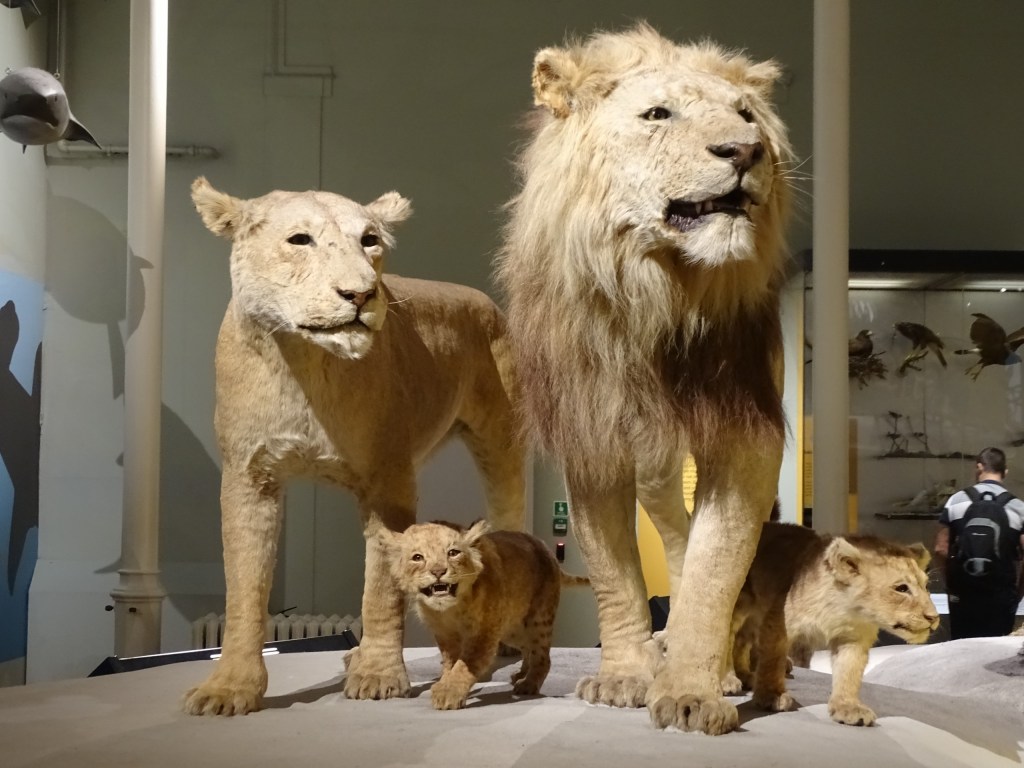
The King of Beasts in the Museum of the Extinct

The king of beasts, my child,
was terrible, and wild.

His roaring shook the earth
till the feeble cursed his birth.

And all things feared his might:
even rhinos fled, in fright.

Now here these bones attest
to what the brute did best

and the pain he caused his prey
when he hunted in his day.

For he slew them just for sport
till his own pride was cut short

with a mushrooming cloud and wild thunder;
Exhibit "B" will reveal his blunder.


After the Poetry Recital

Later there’ll be talk of saving whales
over racks of lamb and flambéed snails.


Evangelical Fever

Welcome to global warming:
     temperature 109.
You don’t believe in science,
     but isn’t the weather Divine?


God to Man, Contra Bataan

Earth, what-d’ya think of global warming?
Perth is endangered, the high seas storming.
Now all my creatures, from worm to man
Know how it felt on the march to Bataan.
Michael R. Burch’s poems have been published by hundreds of literary journals, taught in high schools and colleges, translated into fourteen languages, incorporated into three plays and two operas, and set to music by seventeen composers.
PLEASE NOTE: ARTICLES CAN ONLY BE REPRODUCED IN OTHER SITES WITH DUE ACKNOWLEDGEMENT TO BORDERLESS JOURNAL
              MORELS

(In temperate regions of the northern hemisphere,
over seventy species of the highly prized
mushroom, Morchella, may be found)


This is the way, through apple trees
          gone wild – on past
The ruined church, where branches seize
          and catch – at last

An opening in the fence. We
          come every spring
Along a path that gradually
          bends ’round, to bring

Us back to what, still hidden here,
          not far below,
Occasionally will reappear
          in the patched snow.

             SHORELINE

Then in late winter, after rain
          has swept the sea,
And neither presence can explain
          the mystery

Of sand unblemished, or of waves
          that wander there,
Though nothing follows, nothing saves
          those margins where

Half circles fade. As from a dream,
          a ragged frond
Of seaweed surfaces, and gleams,
          and then is gone.
Jared Carter’s most recent collection, The Land Itself, is from Monongahela Books in West Virginia. His Darkened Rooms of Summer: New and Selected Poems, with an introduction by Ted Kooser, was published by the University of Nebraska Press in 2014. A recipient of several literary awards and fellowships, Carter is from the state of Indiana in the U.S.
.
PLEASE NOTE: ARTICLES CAN ONLY BE REPRODUCED IN OTHER SITES WITH DUE ACKNOWLEDGEMENT TO BORDERLESS JOURNAL
Title:The Wizard of Festival Lighting – The Incredible Story of Srid
Author: Samragngi Roy
Publisher: Speaking Tiger Books
There are two things that make this book interesting. Firstly, it is the story of a man who decorated lights during festivals and got worldwide fame for what he did. Secondly, the author of the biography is a young writer. The Wizard of Festival Lighting: The Incredible Story of Srid is written by the protagonist’s granddaughter, Samragngi Roy, who published her debut novel, a young adult fiction in 2017.
Nevertheless, what makes this book stand out most is its unconventional theme. History is presented innovatively in this 352-page book, and folklore is at the center. Just like Durga puja can’t be mentioned without Kolkata, Jagatdhatri puja can’t be mentioned without lighting. This isn’t just West Bengal’s festival history, but India’s. Here’s how one man conquered the world through his vision. Documents like this are historical.
The blurb reads: “Eleven year old Sridhar was fascinated by light. Growing up among a dozen siblings in a mud cottage in Chandannagar in West Bengal, he longed to create something beautiful. A school dropout who never studied beyond Class Eight, he taught himself about lights and electricity by doing odd jobs at an electrician’s shop—an act that earned him a severe beating from his father. In spite of his family’s opposition, he grew up to become a celebrated light artist and inventor, setting new standards for festival lighting and pioneering new techniques.”
Recalls Sridhar “In 1968, when I was hired by the Bidyalankar Puja Committee for the purpose of providing street lighting, I had volunteered to additionally decorate the banks of our old pond too for three primary reasons. Number one, I had grown up next to it. Number two, it had been the source of some of our most sumptuous meals in childhood. And number three, it had been the setting for several of my childish shenanigans.
“However, when the lights glowed around the pond after sundown, the space enclosed by the banks of the pond looked extremely empty. But of course, I couldn’t have done anything about it because the enclosed space contained nothing but neck-deep water. That’s when I first contemplated the possibility of making lights glow under water and laughed at myself for being so impractical.”
The narrative continues: “So, I closed my eyes, muttered a quick prayer and used my stick to smash a glowing lamp. Then I waited for the impact. There was none that I could feel. My muscles, which had been tense and stiff all along, slowly relaxed. Parashuram and I looked at each other, and my gentle nod was met with a happy little jig that he performed on the steps of the ghat, bursting with excitement. But then the idea stuck with me for a while and what had seemed impossible in the evening had started to seem like an idea worth giving a shot by the night. I wasn’t even sure if the idea was feasible since it was unprecedented.”
Sridhar Das’s work received great acclaim throughout the world. His work has been exhibited in the Festival of India in Russia, Ireland, Los Angeles and Malaysia. The cover of the book is based on his exhibit in the Thames Festival in London — his famous illuminated peacock boat in three dimensions.
As a result of his fame and commitment to work, Sridhar, along with those closest to him, suffered from a variety of issues. His wife had to combat illness and loneliness to care for the family, leaving her husband free to forge his own path. His daughter grew up with her famous father largely absent. The telling encapsulates the true story of his meteoric rise, as well as his family with an unflinching exploration of what his meteoric rise cost him.
The story, poignantly related by his granddaughter, is both a subtle portrait of a complex individual and an affectionate tribute to a grandfather loved by his grandchildren. It takes readers back to vanished times, and introduces them to a man who pursued his dreams and created his own field through sheer determination.
.
Bhaskar Parichha is a journalist and author of Unbiased, No Strings Attached: Writings on Odisha and Biju Patnaik – A Political Biography. He lives in Bhubaneswar and writes bilingually. Besides writing for newspapers, he also reviews books on various media platforms.
.
PLEASE NOTE: ARTICLES CAN ONLY BE REPRODUCED IN OTHER SITES WITH DUE ACKNOWLEDGEMENT TO BORDERLESS JOURNAL
GULGULA-GULGULE

This is going to be sweet.
Leave behind the sour and savoury.
Come, feel the taste of this Haryanvi delight.
Monsoon special.
Teej* treat.
Take some wheat flour,
Add jaggery,
And a dash of fennel powder,
Leaving your hands and kitchen aromatic.
Give it a good mix with some water.
Keep your hands moving.
We don't want lumps in our gulgule. And in life, in general.
Glad, you noticed, they are called gulgule.
Gulgula in singular.
Gulgule in plural.
Packed with sweetness of dadi's* love and profound memories,
Deep fried in mustard oil and tossed in a huge thali,
Emanating the fragrance of childhood fondly wrapped in our hearts,
So that we may catch a whiff of love once in a while
Only to realise how loved we are.
Frantically moving and crossing various stations,
of remembrance and recollections.
Gulgule.
Embellished with tokens of toil, patience and warmth.
Never in a perfect shape
But evermore fitting for a perfect time.
Try it
For you will relish it.
And taste a flavour from the bylanes and dhaanis* of Haryana!


*Hariyali Teej is a festival of North India celebrated in the month of monsoon.
*Dadi -- grandmother
*Dhaanis are small conglomeration of houses located mostly in Punjab and Haryana
Alpana teaches in a government college of Gurugram, Haryana. When not working on her laptop, she can be spotted making lists of her essentials, her husband’s sloth hours and her toddler’s tantrums.
PLEASE NOTE: ARTICLES CAN ONLY BE REPRODUCED IN OTHER SITES WITH DUE ACKNOWLEDGEMENT TO BORDERLESS JOURNAL
An Indian newspaper published an article about adults who still read Tintin and I realised that although I would have liked to be interviewed for that article, my qualifications were inadequate, for there is no ‘still’ in my particular case. I only began reading the comic when I was grown up. In fact, I only read it properly in the past few years, and I am more than half a century old. True, I did read one or two of his adventures when I was young, but I read them half-heartedly, I don’t know why, instead of with unalloyed delight, as they ought to be read. Possibly they were too elaborate for me back then.
Yes, Tintin is elaborate, but this doesn’t mean it isn’t simple. Yet it has the kind of simplicity that seems complex to the very young reader. There are plots and subplots, conspiracies and clues, and all of this is perhaps a bit much for the mind of a child more familiar with the primitive antics of Dennis the Menace or The Bash Street Kids from The Beano. Each of Tintin’s exploits seemed beyond reasonable length to me, too adult and requiring a heavy investment of my time and intelligence. I speak, naturally enough, only from a personal perspective. In some households, Tintin was read by minds younger than mine, understood and enjoyed too. I was clearly a late developer.
Thanks to a remarkable bookshop in Bangalore, I have been able to obtain the comic books in omnibus editions and catch up with what I missed out on. It intrigued me to learn that the elements I had regarded as impossibly modern in my youth are now quaintly dated. Tintin’s adventures are not hugely dissimilar in tone and setting to the adventure stories of John Buchan1 and they even put me in mind of Somerset Maugham2 at his most sensational, with their heavy reliance on seaplanes and tramp steamers and open-topped automobiles. The pacing is as fast as The Thirty-Nine Steps or Greenmantle, the atmosphere as exotic-colonial as The Moon and Sixpence or The Narrow Corner. There are differences too, of course, but the differences are less surprising.
The pacing is incredibly fast and Tintin blunders his way into scrapes and pickles almost as if destiny has chosen him for the role of spanner in the cogs of the workings of villains, which in a way it has (if we regard Hergé as Fate). He is highly competent most of the time, but can also be inefficient and even inept, often hampered as well as helped by his dog, Snowy. But no quantity or quality of hampering can keep him down for long, he is deft at seizing the opportunities of coincidence that extreme contrivance throws his way. He is fully the equal of any ancient hero from legend or mythology.
And he is mentally strong: no amount of trauma, no near-death incidents or hair-breadth escapes affect him psychologically. He falls out of an aeroplane, an assassination attempt by a dastardly pilot, and his parachute malfunctions. A flat character on a flat page is about to be flattened on the flat ground, but no, he has the singular good fortune to land in a hayrick being transported on a cart. There are no broken bones and no gasping for breath. He picks himself up, dusts off a few straws, resumes his mission with perfect aplomb. One might even say he is inhuman in his attitude to danger. A touch of psychopathy, perhaps? But he is a friend of goodness, an enemy of criminality.
He is also weirdly tolerant of the pompous ineffectiveness of all the sundry supporting characters who populate his existence. Thomson and Thompson, the detectives who never get it right but always take credit for cases solved in their vicinity, provide comic relief, which justifies itself, but even a cursory analysis of their deeds raises a few awkward questions. How on earth are they entrusted continually with missions requiring the utmost delicacy, tact and cunning? They are negative factors in the field of detection, hindrances rather than boons, a pair of slim buffoons (we normally regard buffoons as portly) with a strange sartorial taste and peculiar speech patterns, dramatically underperforming sleuths who are prone to take what they are told at face value. They are worse than useless; they are beneficial to the continuance of evil.
It was a long time before I was able to tell them apart but now, I know they are doubles rather than twins, and that the one with the drooping moustache is Thompson and the one with the flaring moustache is Thomson. In the original French, they were Dupont and Dupond, which is a little less confusing but not much. Tintin ought to have nothing to do with them, but he is always delighted to see them and treats them as highly competent and valuable colleagues. This is a symptom of his own occasional incompetence. But this has nothing to do with India and so we must regretfully forget them.
Tintin travels to India on several occasions. In Egypt, he daringly escapes a firing squad, requisitions an aeroplane, a 1929 de Hallivand DH-80 Puss Moth, one of the highest performing aircraft of its time, with a 130 hp (97 kW) Gipsy Major engine (this aircraft is also notable for being the first to cross the Atlantic from east to west, in 1932) and he courageously, some might say foolishly, sets off for India. Unlike the pilot Nevill Vintcent3, who flew the exact same aircraft from Britain to Sri Lanka (Ceylon, as it once was) without crashing, Tintin runs out of fuel and comes down in the jungle.
Although extremely absurd, the idea of piloting such a plane so far isn’t as implausible as it might appear. We should remember Maurice Wilson4, that very noble but eccentric mystic who planned to climb Mount Everest solo in 1934, forty-six years before Reinhold Messner5 managed the feat, and of course it was inevitable that he would fail, for all the odds were against him. Despite his lack of flying experience, he purchased a de Havilland DH.60 Moth, a more rickety aircraft than the one Tintin used, and flew it from Britain to India in a series of hops. It was a lunatic thing to attempt and yet he succeeded. His failure was on the mountainside, not in the air. Therefore, we have established that Tintin really could have flown to India from Egypt.
Tintin, after his crash landing, meets elephants in the jungle and he wishes to solicit their aid but he doesn’t know their language. He decides to learn it and improvises a trumpet in order to do so, carving the instrument from a block of wood with a penknife, an amazing feat of carpentry (but in Land of the Soviets he creates a new propeller in a similar manner). Now he can fluently talk to all elephants in their own tongue, for elephants apparently speak in a kind of jazz. It is good to have such magnificent animals on your side. One elephant is worth a dozen human friends when it comes to strength and endurance. And they will never forget a service rendered. That, as far as I’m aware, was Tintin’s first visit to India, but he had another a little later.
Tintin in Tibet, often regarded as his finest adventure, finds Tintin visiting Delhi in the company of Captain Haddock, that boisterous, drunken, bumbling, loquacious master mariner who frequently makes matters worse rather than better. They admire the Qutab Minar, as I did, awestruck, when I was in Delhi. I have since learned that the Qutab Minar was based on a tower in Afghanistan, the Minaret of Jam, which must be the most marvellous name ever devised for a tower. I imagine it is made from apricots and strawberries and I lick my lips as I contemplate it. But this has nothing to do with Tintin, who after leaving Delhi travels to Kathmandu and then overland into the mountains. He meets a Yeti and scares it off with the flash of his camera.
The Tintin comics always had a very substantial fanbase in India and letters from Indian readers often were mailed to Hergé. It is therefore unfortunate that a Tintin adventure set entirely in India doesn’t exist. Personally, I would be happy to see one set in Goa. In the 1990s, a nameless artist designed a series of t-shirts bearing images that are parodies of the Tintin book covers with the title “Tintin in Goa” on them. They show the intrepid reporter doing nothing intrepid at all, simply lounging about the beach or going for a joy ride on a motorcycle. Even a comic character as psychologically resolute as Tintin needs a holiday once in a while. What better place for a relaxing stay?
John Buchan ((1875–1940), Scottish peer, writer and editor ↩︎
Neville Vintcent (!902-1942), South African aviator ↩︎
Maurice Wilson (1898-1934), British soldier, mystic and aviator, who died trying to climb Mt Everest solo ↩︎
First mountaineer to ascend Mt Everest solo, without oxygen in 1970 ↩︎
Rhys Hughes has lived in many countries. He graduated as an engineer but currently works as a tutor of mathematics. Since his first book was published in 1995 he has had fifty other books published and his work has been translated into ten languages.
.
PLEASE NOTE: ARTICLES CAN ONLY BE REPRODUCED IN OTHER SITES WITH DUE ACKNOWLEDGEMENT TO BORDERLESS JOURNAL
A POEM ON THE NEW MOON

Fall is as cold as the moon.
Fierce clouds tell me
snow is coming.
Monks, seeking comfort,
mutter incantations
in their self-absorbed occupations,
but in their trance,
they ignore the signs
in the sky. I watch the moon
as it dies.
Where does heaven lie?
I stare at that dimensionless sky.
If life is a mistake,
to whom should we apologise?
George Freek’s poetry has recently appeared in The Ottawa Arts Review, Acumen, The Lake, The Whimsical Poet, Triggerfish and Torrid Literature.
PLEASE NOTE: ARTICLES CAN ONLY BE REPRODUCED IN OTHER SITES WITH DUE ACKNOWLEDGEMENT TO BORDERLESS JOURNAL
THE TIME FOR THE JANITOR TO PASS BY

Birds colliding with the glass window and falling,
The janitor sweeps them away with familiarity.
Birds that once lived in the square of the sky,
On Ukraine's transparent glass window,
On Myanmar's ruthless glass window, they plummet.

The time for the janitor to pass by again.

Flowers we see are like a fleeting paradise,
The way we viewed America once.
Glass windows erected over America, horrible barriers.
The time for the janitor to pass by again.
The mother bird becomes a glass wall of death,
Time and time again, a baby bird falls beneath the glass wall.
From the glass window of the sea,
To the soundproof walls of the land, colliding silver wings,
Many things plummet daily onto the blue star.
Ihlwha Choi is a South Korean poet. He has published multiple poetry collections, such as Until the Time When Our Love will Flourish, The Color of Time, His Song and The Last Rehearsal.
.
PLEASE NOTE: ARTICLES CAN ONLY BE REPRODUCED IN OTHER SITES WITH DUE ACKNOWLEDGEMENT TO BORDERLESS JOURNAL.
It is funny that I knew the title of this story before I had even begun it. I knew that my characters would meet at the airport, in this place where there is a momentary suspension of life, the spot which physically and symbolically marks the continuation of a journey or even the beginning of a new one and sometimes the end.
I don’t know why but it is important to me that the two characters know each other. It shouldn’t be that they were meeting each other for the first time. The two are supposed to be long lost, perhaps even estranged. But I don’t really know how to begin this story. I don’t even know what the story is, all I know is that there is supposed to be one. A story meant to take place at the airport.
The image has haunted me for a long time and has made me wonder if it is a glimpse of my past life or a premonition of the future. I have always wondered if in case it is a premonition, who would be the other person for me at the airport. I have often looked at the people around me and have been compulsively forced to imagine an arc of experiences with them that would make them that persona at the airport for me.
Some people felt to be a good fit to be the persona of my imagination, but for each person I imagined a new context, and a new feeling would colour the moment. The top contenders for that character, slowly with time disappeared from my memory altogether. Or with time, became entirely unsuitable for that moment. It became so special — this glimpse, this image — that now I think that maybe this is not a premonition but a calling for my work. That perhaps it will be the centrepiece of a story I am destined to write. But how do you write a story that you are destined to write? There is just too much riding on that. I don’t even know if it is a story about love or loss.
I think I will suddenly bump into him. When our eyes meet, in a matter of seconds, years of questions will be answered. I will look at him, realising that I have come far. I will be introduced to his wife. Now that I see her by his side, I know I didn’t belong there at all, that all the moments I questioned whether it could have been me, would finally be resolved, because she — she makes sense. At that moment my children would run to me, a set of twins — I have always imagined — and say hello to him. That looking at them he would smile, because I always talked about how I didn’t want children and was afraid that because I resist them so much, I would end up having two in one go. This moment wouldn’t be one of those moments where we would run into our old friends and would be just happy to see each other. This moment would feel like the universe allowed us a glimpse of the forbidden.
It is intriguing to me that I always saw my children, but in this vision, my husband is in the background, I cannot see him clearly. I cannot imagine, for the life of me, what my partner looks like. Is he brown or white, tall or somewhere closer to my height? Isn’t it strange that in this alleged premonition/vision of the future, I have more clarity about the man I am supposed to meet for five minutes and not the man standing next to me, supposedly for life?
But what is the story? Is it that this man and I were close, lovers maybe, and had to go our separate ways? Or were we friends who never could fall in love? I have definitely thought of being by his side. Perhaps, he is the person who remained an entity without a background. We silently must have seen each other in the periphery of our visions, too afraid to look straight. Maybe, the clarity with which we might see each other would be too much for us to handle in this life. So maybe the next? He would leave and so would I. I hope that once again somewhere, when our flights land, we can see each other. No, only in our next lives.
But I still don’t know what this story would be about, I still don’t know if I already have lived this story, I still don’t know if this is the story.
Prakriti Bandhan writes stories with a difference.
PLEASE NOTE: ARTICLES CAN ONLY BE REPRODUCED IN OTHER SITES WITH DUE ACKNOWLEDGEMENT TO BORDERLESS JOURNAL
Time leaves footprints on my body,
Wrinkles my skin, greys my hair.
Makes me tell a lie with Dyes and Botox;
But my neck and fingers refuse to lie:
Lying still, won’t cooperate with me,
Whisper the ageing lie, the mirror is a referee.
Every time I face my reflection,
It only stares back,
A nirvana-detached yogi,
Doing its duty.
Every time I face the glass --
Silvered true with oxides,
I fall into despair:
The mirror only makes it worse.

Beauty lies in the eyes
Of the beholder;
Naked truth lies, in my image.
The dead truth lies,
On the crinkled parchments
Of my neck and hands.
The veins like old banyan roots,
Strangle the fleshless bones.
Muscles are only memories --
Of a shape I used to be.
No scalpel changes me.
No pills, No creams, No chants:
Only muffler, stoles and gloves.
To play hide and seek.
Some sad emojis left to laugh,
With me, with me.
Nirmala Pillai is a writer, painter, and an Ex-Civil Service Officer, who has published three collections of poems and one of short stories. Her published works have appeared in PEN, The Asian Age, Indian Literature, Bare Root review from Minnesota University, Poetry Can, UK [Poetry Southwest], The Telegraph, The Little Magazine, Cha; An Asian literary journal.
PLEASE NOTE: ARTICLES CAN ONLY BE REPRODUCED IN OTHER SITES WITH DUE ACKNOWLEDGEMENT TO BORDERLESS JOURNAL
Going into work after almost a week of absence feels rather peculiar, I feel like an outsider in the city where I grew up — a city that is often referred to as my hometown. It greets me with a polite nod as a stranger would. This is the city where I spent over two decades growing up and yet today my sense of belonging seems to have dissipated in the dusty morning traffic, leaving me confused as to what makes a home. Is home the physical space that we exist in or is it the people who make a place a home?
If the definition of home is about a place I reside in, why can’t it be the dusky lonely evening that I got lost in the Tallahassee Park only to find company in the countless stars that helped me find my way back?
Or the Welsh mountains that I struggled to hike up with Chittappa — almost giving up for the steepness of the trek, constantly reminded by my aching body that I was lazy and good for nothing. Yet, the endless green hills glistening in the golden rays smiled at me and greeted me with a cool welcome hug, urging me to be hopeful for my future. Isn’t that a home for making me believe in myself once again?
Or can it be the bone chilling cold shores of the lake in the Algonquin State Park, where Anna and I greeted the new year alongside the wolves howling at the moon who seemed to be lost that night like us. We hid from the countless years that stretch before us, not knowing if there would be an end to all the craziness that we had to deal with. Is it home when you are lost and confused, yet at peace knowing that not all answers are to be found, some questions are endless quests, but the journey teaches us more than the answer itself?
Or maybe it is in the sunrise on the Vizag beach with my cousins, where we laughed and played while the cool water soothed our battle scars of rivaling parents and vengeful family feuds. Is it home where all my fears and insecurities are treated with a cooling balm and my soul is healed so I find courage to love again amidst the raging darkness that overwhelms me?
Or is it the apartment I found on the hot afternoon, walking in despair along the Whitefields road with Amma after our family banished us from living in their home? The balcony with the wise eucalyptus trees that reminded me that parents are human too. While love is not perfect, setting my boundaries and building my life independent of family can strengthen our bonds more.
Or is it home when my girlfriend opens the door with the brightest smile after a long stressful day at work, asking me how my day went? Even if we had both just spent the past eight hours getting yelled at and defeated by corporate patriarchy, she gives me the warmest hug assuring me that I am safe and with her. I don’t have to battle to be seen or heard. Isn’t it home where you always matter and your contributions are recognised, irrespective of where you live or how far apart you are from each other?
Or can it be home in the arms of my boyfriend as he cuddles me to sleep, gently calming my mind, easing away the stress. Reminding me to stay smart and channel my ever-bubbling anger, raging beneath my surface into something useful instead of drowning myself in it and getting lost. Isn’t it home where you learn to channel your strengths but there is space for your weakness and failure to co-exist, so that you learn to not get overwhelmed in the face of adversity?
Perhaps home is in the delicious fragrance of my mother’s coffee as she greets me with her loving good morning and a freshly baked pumpkin muffin, a reminder that today is a new day and ripe with unexplored opportunities. Isn’t it home where you feel supported and encouraged even when you are lost and unsure of what to do next?
Maybe I am someone who will always find a home wherever I go with the people I love. Home is not static nor confined to a physical space set in a particular time. To me it is all those experiences (and people) that help me find joy, love, courage, and strength to greet another day with a smile.
Madhulika Vajjhala has a passion for literature and exploration. She loves reading and globetrotting.
PLEASE NOTE: ARTICLES CAN ONLY BE REPRODUCED IN OTHER SITES WITH DUE ACKNOWLEDGEMENT TO BORDERLESS JOURNAL








 Borderless