Categories
Poetry

Therefore: A Poem by Sukanta Bhattacharya

Translated from Bengali by Kiriti Sengupta

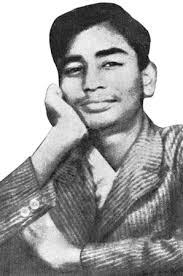
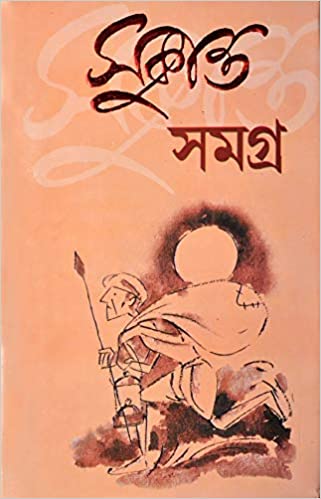
Sukanta Bhattacharya (15th August 1926-31st May 1947):  Called “Young Nazrul” and Kishore Bidrohi Kobi[1], Sukanta Bhattacharya died at the tender age of twenty of tuberculosis. He, like Nazrul, wrote poetry to protest the colonial atrocities. His poems describe the suffering of common people and looked forward to a world free of exploitation. His writings were anthologised in Sukanta Samagra (Complete Works of Sukanta, 1967), published posthumously, simultaneously in East Pakistan and West Bengal.

The once-paved paths 
are now vitiated.
How can I endure
the trauma without
divine intervention?

Death, death, everywhere...

Life's earnings
must be renounced.
When the means
become futile,
they are best discarded like tattered rags

[1] Youthful Rebel Poet: Nazrul was called the rebel poet of Bengal. He wrote a poem called Bidrohi or Rebel and his poetry had been that of rebellion like Sukanta Bhattacharya’s.

Kiriti Sengupta has had his poetry featured in various publications, including The Common, The Florida Review Online, Headway Quarterly, The Lake, Amethyst Review, Dreich, Otoliths, Outlook, and Madras Courier. He has authored fourteen books of poetry and prose, published two translation volumes, and edited nine anthologies. Sengupta serves as the chief editor of Ethos Literary Journal and leads the English division at Hawakal Publishers Private Limited, one of the top independent presses established by Bitan Chakraborty. He resides in New Delhi. Further information is available at www.kiritisengupta.com.

.

PLEASE NOTE: ARTICLES CAN ONLY BE REPRODUCED IN OTHER SITES WITH DUE ACKNOWLEDGEMENT TO BORDERLESS JOURNAL

Click here to access the Borderless anthology, Monalisa No Longer Smiles

Click here to access Monalisa No Longer Smiles on Kindle Amazon International
Categories
Excerpt

Letters from a Daughter to Her Father

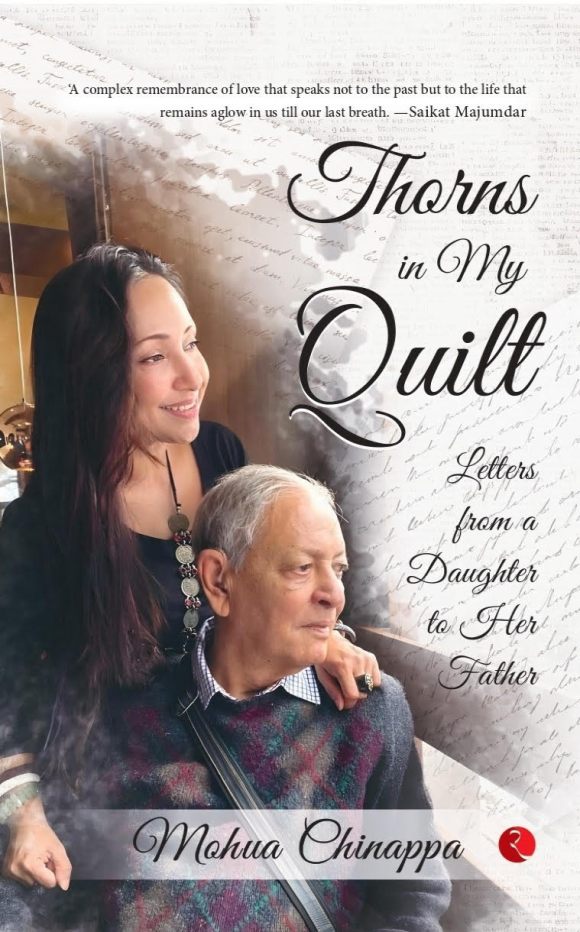
Title: Thorns in My Quilt: Letters from a Daughter to Her Father

Author: Mohua Chinappa

Publisher: Rupa Publications India

LOSS

4 August 2022

Living Room, Bengaluru

Dear Baba, Today is your shraddho, the puja for your departed soul. Referring to you as a soul seems so distant. Calling you anything but ‘Baba’ seems like two strangers speaking to one another. The purohit is here to do the rituals. The atmosphere is sedate. The room is lit and the flowers in the vases are in full bloom. I am glad we have cousins in the city; otherwise, it would be very lonely for Ma and me. We know very few people who would make the effort to attend a staid function like a shraddho. How does one end a tie so deep with a mere ritual? One can’t. It does feel surreal to watch your photograph with a jasmine garland around the lifeless frame. The sandalwood phonta or tika on your forehead makes you look different. The living room has been cleared. The large antique box has been covered with a white cloth, and your photograph is placed on it in such a way that you are facing the direction that will lead you to the other world. The shraddho among Bengali Hindus is a ceremony that is performed to ensure a passage for the recently deceased to the other world. The rite is both social and religious and is meant to be conducted by the son. But you have no male heir. So I defy tradition and lead the puja.  I follow the rites dutifully and chant the mantras, which don’t mean much to me. You are gone. There is no mantra that can soothe my heart. On the floor is a bed, laid out with a pillow and an umbrella for your onward journey to God-knows-where. I follow the purohit. Neel joins me in the ceremony. I feel so anchored, having him next to me. What a loving child he is. He makes life so much simpler for me. After the puja, we put out a plate of your favourite food so that a crow can come and eat it. Leaving the food in the corner of a lane seems ridiculous, but I have decided not to question any of the rituals, for I don’t want Ma to feel that I didn’t do my best. I leave the plate on the ground. There are bottles strewn around, and the ground is not very clean. I don’t turn back for another look. Your photo has now been removed and stands on my marble corner table. I put out the burning incense sticks and remove the flower garlands. It is still sinking in that I won’t be able to hear your voice ever again, calling out to me, asking me for something or the other. As we sit down to eat, Neel reminds me how you discussed Left politics and he argued with you on capitalism, just to rile you up in jest. You had such a wonderful bond with my child. I smile as I hear Neel mimic you and your quintessential Bengali ways of reacting to situations. Those debates between you both. I loved the way you both called each other Dadu. Baba would say, ‘Dadu, you must read about the world and its magnificent history. The great idea of how civilizations emerged, and how revolutions took place in protest against tyranny and oppression. As you read, you will learn that the world is a beautiful study of humanity and historical events.’ And Neel would say, ‘Na, Dadu, I will only read books that emphasize the profit and loss of capitalist businesses. Whoever cares about art and philosophy?’ Neel knew how you would go red in the face. And you would say, ‘No businessman ever built a nation; it is the thinkers and the dreamers who created a world of equal opportunities.’ This camaraderie you both shared remains the most beautifully preserved and poignantly pure memory of you with your grandson. I remember those days when you constantly waited to hear from Neel, and how the Sundays were marked aside to have your long-awaited conversations with him. You truly were a wonderful grandfather to my son. I feel empty as the furniture in the living room is rearranged to how it was before. Like nothing has happened, and no one is now gone forever. It looks as if you will come back in a minute, ask for a cup of tea and brood with your arms crossed over your chest. I think just being there to watch me do everyday things made you feel calmer. I don’t know. But I hope someday, I will understand the silence between us. Comfortable spells of silence, and some very terrifying ones. Like your death.

Love

Manu

*

5 August 2022

Bengaluru

Dear Baba, The vermilion has been removed now. The parting is stark white the hair oiled tied into a braid of acceptance. The grey mixed with the leftover black strands falling carelessly on her shoulder. I had seen her one lonely noon take a pair of scissors cut off her locks Like Samson and Delilah. She was at war A war with her own existence Her identity has been shaken Her oar is cracking open along with her broken sail. She sets to the seas but the land is far away on the horizon shining like the crystals found on a crown lost in a war lying forlorn for the head of the right king but now Samson is dead the Philistines have left too the palace has been torn down but parts are intact. Her locks sheared from guilt for being alive. Will she find her shore with her broken boat and tattered sail hoping the seas take her in or the fire of her breath is gutted before it becomes wild like a forest fire burning the little birds coloured kites stuck between branches and her capsizing boat too lost in the new world!

Love,

Manu

About the book:

Thorns in My Quilt: Letters from a Daughter to Her Father is a series of letters written by a daughter to her father after he passed away. Unspoken thoughts, unshared memories and unsaid words combine in this searing and poignant account of a relationship filled with joy, but with equal moments of sorrow.

Mohua Chinappa (Manu) loved her Baba, who was as kind as he was cruel, as well-read as he was unworldly, as loved as he was unloved. His dearest Manu recollects her childhood in Shillong, infused with the aroma of vanilla essence that went into the butter cookies he baked. She reminisces about her father holding her little hand while helping her through the undulating, rain-drenched roads. Mohua returns to Delhi, where she spent a part of her growing-up years, and revels in the memory of a government house with a harsingar tree. She writes to him about her broken marriage, recalls how her parents left her side, and how she reinvented herself. The letters are often selfish yet strangely cathartic.

Her father’s kidney failure prompted a daughter to confront the demons within—the loss, the doubts, the emptiness, the guilt of saying things, and the angst of not saying things.

About the author:

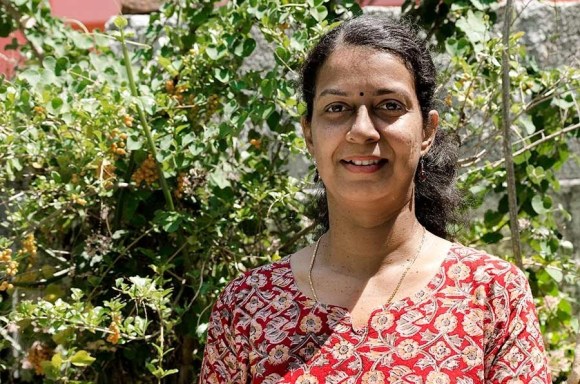
Mohua Chinappa is an author, a columnist, a renowned podcaster in India, a TEDx speaker, a former journalist and a corporate communications specialist.

The Mohua Show, a podcast she started in 2020, has close to 2 million downloads. She contributes regularly to various national dailies and magazines, including The Telegraph, Deccan Herald and Outlook. She is regularly invited as a speaker on TEDx and Josh Talks.

Mohua’s other initiative—NARI: The Homemakers Community—provides a platform for homemakers to voice their everyday challenges.

Her book—Nautanki Saala and Other Stories—was awarded the PVLF Best Debut Non-Fiction (in English) Award 2023. She also has two poetry collections to her credit—If Only It Were Spring Every day and Dragonflies of My Dreams.

PLEASE NOTE: ARTICLES CAN ONLY BE REPRODUCED IN OTHER SITES WITH DUE ACKNOWLEDGEMENT TO BORDERLESS JOURNAL

Categories
Poetry

Five Against One – Diary of a Hawk

By Ron Pickett

A lone hawk circles,
Searching the neighbourhood.
Searching for a gopher, a rat, a vole, a fledgling bird!
Sometimes it is joined by a smaller hawk.
Likely Red-tailed, possibly Cooper’s,
They soar and dip and turn – hunting, watching.
They are not alone.
First one, then four more crows join them.
Circling, seeking support from their fellows,
Looking for weakness, inattention.
They turn, climb, glide, dodge.
The crows are a team, they take turns.
Attacking the hawk from the rear.
A dog fight by birds.
The fight continues, turning, climbing, ducking, pecking.
One crow leaves, followed by another.
The three crows continue their attacks,
They disappear behind the Gum trees.
I’ll see them again tomorrow.

Ron Pickett is a retired naval aviator with over 250 combat missions and 500 carrier landings. His 90-plus articles have appeared in numerous publications. He enjoys writing fiction and has published five books: Perfect Crimes – I Got Away with It, Discovering Roots, Getting Published, EMPATHS, and Sixty Odd Short Stories.

.

PLEASE NOTE: ARTICLES CAN ONLY BE REPRODUCED IN OTHER SITES WITH DUE ACKNOWLEDGEMENT TO BORDERLESS JOURNAL

Click here to access the Borderless anthology, Monalisa No Longer Smiles

Click here to access Monalisa No Longer Smiles on Amazon International

Categories
Musings of a Copywriter

Driving With Devraj

By Devraj Singh Kalsi

From Public Domain

After training for several months, I discovered that my driving instructor was not a qualified, certified one. With years of practice, he could easily take beginners for a ride. That he could bring the car to a screeching halt and avert head-on collision was his claim to fame recycled through unverified narratives circulated by his acolytes. Whatever he taught came under the lens of suspicion when I cross-checked with the driving manual and online videos. Nothing seemed to match with the tricks he passed on, making me feel the need to unlearn everything. The final moment of awakening arrived when my cousin laughed at my clumsy gear shifting exercise and raised the obvious question: who taught you driving?

A clutch of rapid-fire queries, based on observations, to assess my fitness to go behind the wheel deflated my confidence. I shared with him the reality of the fake instructor who fleeced gullible folks with his dignified facade. Always dressed in spotless white kurta like sober academicians, he did not come across as a man who negotiated sharp bends at great speed and mastered the art of rash driving. The windshield of his falsehood was smashed by a business rival trying hard to expand his start-up business. The veracity of accusations could not be established but the active involvement of my driving coach in a fraudulent network was further corroborated by some disgruntled former employees. Sadly, it was too late for advanced learners to cancel the admission and enrol elsewhere. 

Excavating facts revealed interesting details. His driving licence – issued decades ago – was obtained after bribing the officials as he did not meet the eligibility criteria. Gathering false certificates of secondary school education and submitting those documents was an offence that never surfaced due to lack of investigation. He drove around the city and the state even though he did not deserve to be granted a valid licence. He cleared the litmus test and silenced those who expected him to make a blunder. He reversed the car with precision and amazing control. It was so spectacular that the senior officer, who had never seen such a move in the real world but only in action films,  felt he surpassed the need for other examinations, thus allowing the bogus instructor to hit the road with legal approval.

Picking up driving skills while working as a helper for a lorry driver was his first big break.  He gained experience and then switched to smaller, lighter vehicles he fondly referred to as toys.  Once he became comfortable, he made it his strength and spent days and nights driving taxis and matadors. Nothing seemed to match the rule book as his learning process was organic. Practical exposure made him an expert and he taught others just the way he taught himself. All those who sought his guidance were granted licences very quickly and this was the key reason why he remained popular over the years.

His contacts were useful as many jobless and illiterate youth trained under him to acquire genuine licences just as he had done long ago. The issue of corruption was immaterial as he appeared to be a messiah who provided the scope to get employment. Even though his modus operandi was shady, nobody accused him of misdoings till recently. Tons of regret that I shelled out a premium amount to learn exclusively from him for an hour every day. His 1:1 tutoring model failed to impart flawless training. I feel ashamed of learning the ropes from an instructor who duped unsuspecting entrants by mentoring them without sticking to the rule book. He formulated his own set of rules and remained confident that accidents would never occur if his guidelines were strictly followed even on dug-up, potholed roads.

Clearing the driving test in front of the transport officer was a big victory for which I remained grateful to the driving school and the dubious instructor, even though I realised the need to learn a lot more to drive safely. He believed in pushing the learner to get rid of fears – like throwing a non-swimmer inside the Olympic-sized pool on the first day. We were encouraged to take risks in our stride and decide how to get past a stray dog or a stranded bovine in the middle of the road without honking incessantly from a long distance and disturbing the peace of the locality. There is no denying the fact that it was more of a trial-and-error method of learning under his tutelage. He expected the learners to observe him and learn. Instead of pointing out individual shortcomings, he sought focus on his style, hoping we would also pick it up like he did from his truck driver boss. Since he managed to get valid licences for all learners enrolled with his school, there was nothing called rejection or loss of fees. Evidently, the amazing clearance statistics never grounded his growth story.  

Whenever I hit the road, I knew I had to face unexpected dangers. Driving through crowded streets and negotiating narrow lanes without scratches on the chassis involved prayers. Every day I had to thank God for keeping me safe. But one day I ran out of luck and rammed the front bumper into a pillar. As it was more than a dent, it had to be replaced. This accident led to a dent of confidence and I became afraid of my irresponsible driving, entrusting my spouse to handle the vehicle. Henceforth, all I did was to take the car out of the garage and park it right outside the house.

The sight of a truck pounds my heart even when I am not driving the car. I feel it is there with the ulterior motive of bumping me off, sent on a special mission by one of my hidden enemies. Such is the residual impact of watching masala potboilers from Bollywood that I suspect something fishy when I see a speeding truck either in front of me or catching up fast from behind. Although my spouse urges me to stay calm, it is the best example of anxiety attack that wrecks my state of mind. She suggests I should face more trucks to overcome this irrational fear but the beastly trucks and containers do not leave me in peace. I hold their domineering presence on the roads to be equally responsible for my failure to ace driving skills. Seeing other people remain composed in front of trucks makes me wonder how fearless they are. The highways are meant for heavy vehicles and it is common to find a fleet of trucks every hour. We often hear and read stories about drunken truck drivers bumping off car passengers. I always share such tragic news with my spouse to make her understand that my fears are genuine, raising concerns regarding the company-fitted air bags that fail to open up when required. 

Recently, she asked me to hire a full-time personal instructor and learn driving once again as she finds it cumbersome to guide me on the roads. But I suspect all drivers have acquired the licence from the same instructor with dubious credentials. The retired gentleman in my neighbourhood has bought a swanky car and he drives around quietly, making my spouse shower compliments on his smooth driving style. Envious, I approached him one evening to know how he mastered driving and from where he learnt. I poured forth my sob story and he suggested I must begin as a fresher. I sought his help in this regard and offered my car for training purpose in case the safety of his vehicle was his worry. But he politely declined. However, to lift my spirits, he conducted a short theory test. My answers did not satisfy him. When I asked him why he refused help, he confessed he was also a student of the same school but he had to learn it all over again from his daughter who lived in another city. If a retired fellow can learn how to drive, there is hope for me.

Even though my licence is valid, I consider myself unfit to drive and keep others safe. The best way to use it is to furnish it as my address proof to get the cooking gas cylinder. I should have learnt driving before marriage like my spouse did. But then, I had no idea I would get any chance to drive. I admire those sunroof sedans in the Western movies where romantic, breezy scenes of long drives are filmed so well. But the ground reality of roads is quite bumpy here. You have to ensure safety of vehicles and lives, which is nothing less than a miracle in a chaotic world where car crashes have become common like fractures.

Devraj Singh Kalsi works as a senior copywriter in Kolkata. His short stories and essays have been published in Deccan Herald, Tehelka, Kitaab, Earthen Lamp Journal, Assam Tribune, and The Statesman. Pal Motors is his first novel.  

PLEASE NOTE: ARTICLES CAN ONLY BE REPRODUCED IN OTHER SITES WITH DUE ACKNOWLEDGEMENT TO BORDERLESS JOURNAL

Click here to access the Borderless anthology, Monalisa No Longer Smiles

Click here to access Monalisa No Longer Smiles on Kindle Amazon International
Categories
Poetry

Chaos in Action

By Bibhuti Narayan Biswal

CHAOS IN ACTION

Chaos, a gaping void looks untamed
For ordered rules are never governed.

Fundamental truths that guide our way,
Visible in math, in life, and in nature’s play.

From nature's living schemes and biology’s intricate streams,
To physics’ endless and vivid dreams.

Chaos is a quasi-natural phenomenon
In cyclonic storms, boiling water or the fizzy coke cans.

Chaos is the result of physical and chemical changes,
Evident to the naked eyes of fauna, including humans.

Chaos manifests as a natural process or in a scientist’s imagination,
Some time is required in small amounts in the living world for everyone.

In the visible universe, chaos can be seen in many ways,
Science helps us identify and explore the pathways.

Chaos diminishes the intermolecular force of attraction,
Sometimes, it causes devastation like the atomic bomb.

One can see chaos in many forms –

Evaporation of liquids and solvents,
Sublimation of solids,
Brownian motion of colloidal particles,
Dissolution of solutes in solvents for solutions,
Burning candles in the process of ignition,
Transpiration in plants,
Expansion of air on heating,
Heat transfer in a metal conductor,
Melting of ice and snowflakes,
Reaction of vinegar and the baking soda,
Heartbeat in humans while running,
Creation of magnetic effect around a conductor on passing electricity,
Pleasant sound into a loud noise,
Honking bikes on roads,
Scattering of light by dust particles,
Release of bubbles from an empty bottle in a bucket of water.

Chaos is a scientist's paradise and a creator's heaven,

Science behind the Poem: Chaos is coined from the Greek word “Khaos”, meaning ‘gaping void’. It is applicable to study several disciplines, including mathematics, physics, engineering, economics, biology etc. Chaos is a quasi-natural phenomenon and the result of physical and chemical changes, sometimes in a scientist’s imagination. Chaos is sometimes required in small amounts for everyone. The canvas of chaos is ever-expansive and required for the exploration of the mysteries of the physical world and the cultivation of humans’ scientific quest.

Bibhuti Narayan Biswal is a passionate science communicator and science lover. He has been working as a school thought leader for two and half decades. He has to his credit three publications in Consilience Journal. He can be reached by email via Bibhuti.nb@gmail.com

PLEASE NOTE: ARTICLES CAN ONLY BE REPRODUCED IN OTHER SITES WITH DUE ACKNOWLEDGEMENT TO BORDERLESS JOURNAL

Click here to access the Borderless anthology, Monalisa No Longer Smiles

Click here to access Monalisa No Longer Smiles on Kindle Amazon International
Categories
Review

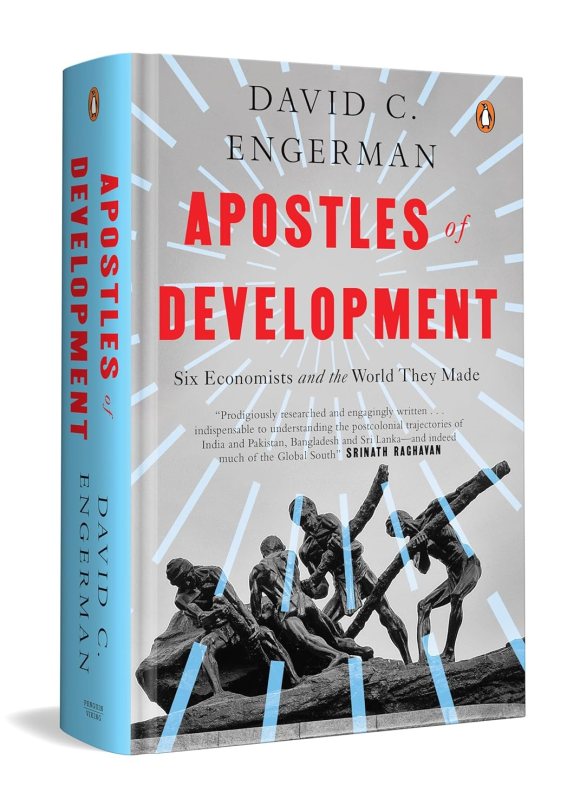
Six Economists and the World they Made

Book Review by Bhaskar Parichha

Title: Apostles of Development: Six Economists and the World They Made 

Author: David C. Engerman

Publisher: Penguin Viking

David C. Engerman is a Yale University professor focused on twentieth-century international history. He has authored two books on Russia and the USSR’s influence on American politics and has extensively studied international development assistance. His key works include the co-edited volume Staging Growth: Modernization, Development and the Global Cold War (2003) and the monograph, The Price of Aid: The Economic Cold War in India. His research was featured in his 2016 presidential address to the Society for Historians of American Foreign Relations. He is currently writing a comprehensive history of international development, tentatively titled International Development: A History in Eight Crises.

Apostles of Development: Six Economists and the World They Made by Engerman focuses on six influential economists from South Asia : Amartya Sen, Manmohan Singh, Mahbub ul Haq, Jagdish Bhagwati, Rehman Sobhan and Lal Jayawardena.

All six were born as colonial subjects in the British Empire and studied at Cambridge University. They emerged as pioneering “Third World development experts”, playing central roles in shaping global debates on poverty, inequality, and economic development.

The book highlights that the fight against global poverty, which began in the aftermath of World War II, represented a monumental effort that brought together economists, engineers, and a multitude of organisations.

This period marked the emergence of economists as a vital force in global affairs, playing a crucial role in shaping international dialogues focused on poverty alleviation and development strategies. Their contributions were essential in formulating policies and initiatives aimed at addressing the complex challenges of poverty on a worldwide scale.

Writes Engerman in the introduction: “The Apostles’ careers — and their home countries — demonstrate that there was no one path to development. Many governments in new nations opted to build factories. Others focused on roads and power plants, or on schools and hospitals. Some, like India, stressed economic self-reliance while others, including Pakistan and Ceylon, pursued international trade. Whatever the strategy, debates over the role of government-which frequently divided these six-resonated with the growing tensions of the Cold War, which pitted contrasting economic and political models against each other. Yet development was no mere creature of the Cold War, especially when examined from the perspective of the former colonies.” 

He further contends: “Core ideas and practices of development changed dramatically over the Apostles’ long careers. Debates roiled academic conferences, di- vided planning commission discussions, and dominated international venues — and the Apostles participated on all sides. Was the goal of development to alleviate poverty or was it to reduce inequality? Was the best solution to expand the economic role of government or to reduce it? Was national development better served by becoming self-sufficient was economic theory universal or did a different set of economic rules (and therefore economic tools) apply to poor countries than to rich ones? Development was always contested. 

“The Apostles’ turn to economics was in keeping with the spirit of the age. Economic questions loomed large in the middle of the twentieth century and economists proved ready, willing, and able to offer answers. Political leaders frequently sought their expertise and the century’s leading economists answered that call. The Depression cried out for an explanation that suggested a solution; the doyen of Cambridge economics, John Maynard Keynes, took on that task with gusto. The fate of World War II was determined as much by each side’s ability to mobilize resources as it was by battlefield tactics– hence Paul Samuelson’s boast that it was ‘an economist’s war’. And the problems of the postcolonial world arose precisely as economics was becoming what one historian called ‘the master discipline of the 20th century’.”

The book emphasizes that the origins and driving force of development were rooted in the Global South, aiming to improve the conditions of the world’s poorest countries, rather than being a project imposed by the West.It explores the different economic philosophies of these six economists and the ongoing debate about how economic theory should differ for poor versus rich countries.

Engerman challenges the idea that development is simply a tool for rich countries to dominate or a pure expression of humanitarianism. Instead, he argues that successful development comes from practical solutions tailored to real-world problems, not rigid ideological frameworks.

The book advocates for a modest, pragmatic approach to development, prioritising the reduction of gross inequality and insisting that development means more than just economic growth.

The narrative situates these economists’ work in the broader context of the Cold War and the shifting global landscape, highlighting how their ideas shaped and were shaped by international politics and economic crises.

This extensively researched and substantial book is acknowledged as a significant and timely addition to the literature concerning economics, economic history, and the progression of development thought, particularly in light of current global discussions regarding inequality and the prospects for economic growth.

Apostles of Development is suggested for those who are interested in the historical context of development economics, the influence of the Global South on global policy formulation, and the life stories of several of the most impactful economists of the 20th century.

.

.

Bhaskar Parichha is a journalist and author of Cyclones in Odisha: Landfall, Wreckage and ResilienceUnbiasedNo Strings Attached: Writings on Odisha and Biju Patnaik – A Political Biography. He lives in Bhubaneswar and writes bilingually. Besides writing for newspapers, he also reviews books on various media platforms.

.

PLEASE NOTE: ARTICLES CAN ONLY BE REPRODUCED IN OTHER SITES WITH DUE ACKNOWLEDGEMENT TO BORDERLESS JOURNAL

Click here to access the Borderless anthology, Monalisa No Longer Smiles

Click here to access Monalisa No Longer Smiles on Amazon International

Categories
Poetry

Poetry by Jenny Middleton

From Public Domain
I Go Walking In His City   

night blurs blue
sky to electric
fish hatch in space

I search
for him in the café bar's
lights' ring

conversations
are a fume of voices
hovering in loops

above our mouths
the street lights
burn brilliantly

throats
of climbing honeysuckle
flower with shadows

my shadow
is one
moving and swimming

the street
belongs to the sea
trees waver

repeating
sighs in budding
leaves

canopies thickening
with night
he pours me a second glass

Jenny Middleton is a working mum and writes whenever she can amid the fun and chaos of family life. Her poetry is published in several printed anthologies, magazines and online poetry sites.  Jenny lives in London with her husband, two children and two very lovely, crazy cats.  You can read more of her poems at her website  https://www.jmiddletonpoems.com.

.

PLEASE NOTE: ARTICLES CAN ONLY BE REPRODUCED IN OTHER SITES WITH DUE ACKNOWLEDGEMENT TO BORDERLESS JOURNAL

Click here to access the Borderless anthology, Monalisa No Longer Smiles

Click here to access Monalisa No Longer Smiles on Kindle Amazon International

Categories
Stories

The Stranger

By Jeena R. Papaadi

I was sure I had kept a ten rupee coin ready. But, when he came around a second time, I was still fumbling. I looked up at him, embarrassed, shame-faced, and quickened my search. My hand travelled the same paths within my handbag that it had toured a few seconds ago, again encountering nothing.

He had no reaction. He had been at this job fa​r too long. Seen far too many people. Heard far too many excuses. Listened impatiently to far too many stories. He looked away and moved on. Destiny would bring him back though. He would persevere until my journey ended. Then I would be erased from his mind and some other deviant passenger without exact change, with a bagful of tales, would take my place.

I gave up and pulled out a hundred rupee note. Something you should never wave at a city bus conductor. I was doing the unthinkable. I had no choice. My ten rupee coin had vanished within the folds of my bag, liberating itself from its inevitable fate. With one hand grabbing the railing for dear life as the bus dashed across the city, this was the best I could do. If one could pause life long enough, one would admire the lesson in philosophy thus presented before oneself. But one was busy going rather red before the conductor’s stern gaze.

No change, I muttered, my words and eyes dripping with apology.

He could shout. He could yell. He could ask me to leave the bus. No, he couldn’t, but he certainly could make us believe he had enough power in the world to extinguish our lives with one flick of his hand. No wonder small children aspired to be bus conductors.

He decided against violence and sighed deeply. The burden of the entire human race rested on his shoulders that morning.

Out of nowhere, a hand appeared between the conductor and me, with a sparkling, crisp ten rupee note crackling between the fingers. My eyes fell on it and on the hand holding it, and traced it back to the man who owned both. 

For one long instant, all eyes of the people on the bus – except the driver, luckily – were on the man with the receding hairline and he began to look a tad uncomfortable at the attention. 

It’s okay, he said, seeing me hesitate. It’s okay.

Now all pairs of eyes transferred themselves to me because it was my turn. He was offering to pay my ticket, to save me from the hundred rupee note embarrassment and possible eviction from the bus. 

The conductor, still expressionless, leaning against a seat, immune to the insane race of the bus, waited for my response. To take the money or not to take it? He didn’t have all the time in the world. He had tickets to dispense and other things to do, I’m sure.

You can pay me back later, said the ten-rupee-note-man. Or not, he added hastily. 

So I nodded, unsure of the etiquette and expectations in such a situation. I wasn’t taught how to behave when a stranger on a random bus showed generosity or kindness. Should I accept it? Should I be offended? Should I presume that he had ulterior motives? Should I refuse and go back to unearth my delinquent ten rupee coin? Or stubbornly insist that the conductor give me exact balance for my hundred?

The conductor sighed again. I was wasting his time more than the ten rupees demanded. 

Everyone, and the bus itself, seemed to be holding their breath. I had to satisfy them all.

I took the ten rupee note, and handed it to the conductor whose patience was fast wearing thin, fairly certain that whatever I chose at this moment, I was going to regret later.

The situation defused, and everyone exhaled and went back to their own businesses of staring out the window, as the vehicle shot across the city.

I turned to my saviour and said, I’ll buy you tea. 

He had an easy smile, one that makes you want to see it again. Oh, that won’t be necessary. But if you insist…

My eyes did insist, I suppose.

People seated next to this developing scene of action were listening without appearing to, some clearly appearing to, and hopping to conclusions on where this could lead.

I’ll get my change for hundred too, I explained, showing the note. This was mostly for the benefit of the listeners.

Of course, he said.

We now had a solid reason to have tea together. 

So we got down at the stop where the ten rupees had led, and found a tea shop nearby. He was easy to talk to, easy to confide in, easy to befriend. He did not bore me to death with his stories, like most men did. He knew when he lost me, when to stop and when to pay attention.

One week later, we had dinner together. The strangeness had passed and we were comfortable as though we had been married for years. 

And then it happened, on the third date… When he lost himself and I was abandoned, the gaps began to reappear, and the cracks which were merely glossed over, never fixed, broke open.

Just as it was when we had been married.

Another failed experiment. Come, let’s be strangers again…

If you change nothing, nothing would change.

.

Jeena R. Papaadi is an author of fiction and poetry. Her articles and stories have appeared in several publications including The Hindu Open page, Kitaab, European Association of Palliative Care, Aksharasthree, etc.

.

PLEASE NOTE: ARTICLES CAN ONLY BE REPRODUCED IN OTHER SITES WITH DUE ACKNOWLEDGEMENT TO BORDERLESS JOURNAL

Click here to access the Borderless anthology, Monalisa No Longer Smiles

Click here to access Monalisa No Longer Smiles on Kindle Amazon International

Categories
Poetry

Resilient

By Juairia Hossain

I am young, yet the fire burns bright,
They doubt my steps, they mock my flight.
Too small, too soon, they laughed, they swore,
But I walked ahead and asked for more.

Through sleepless nights, through silent pain,
Through dreams that bled in endless rain.
Alone I stood, alone I cried,
Yet never once let dreams subside.

They turned away, they called me weak,
Now they return, their voices bleak.
Not with scorn, but laced with spite,
For I dared to chase my light.

Once they sneered—"You’ll never rise,"
Now they watch with jealous eyes.
For age they mocked, now age they fear,
The path was hard, but I am here.

A wise voice whispered, firm yet kind,
"Hard roads are short, but test the mind.
If you endure, if you push through,
No force on earth can hinder you."

And so I walk, unchained, unbowed,
No need for praise, no fear of crowd.
For every scar, for every fight,
Has carved my soul in fearless light.

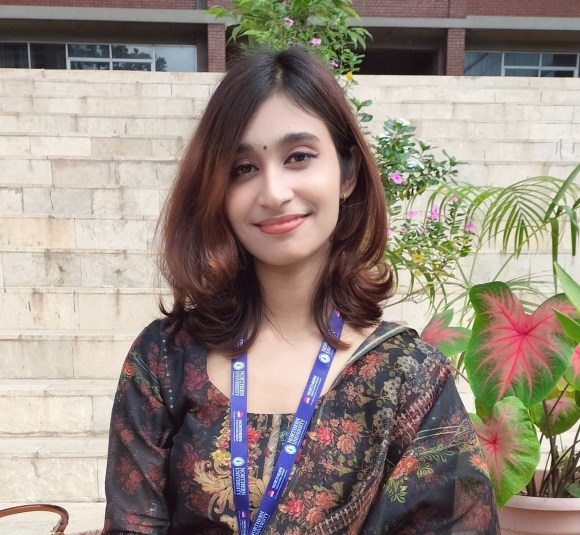
Juairia Hossain is an undergraduate student of English Language and Literature at the Department of English, Northern University Bangladesh. She is passionate about writing and regularly contributes to various online newspapers and magazines.

.

PLEASE NOTE: ARTICLES CAN ONLY BE REPRODUCED IN OTHER SITES WITH DUE ACKNOWLEDGEMENT TO BORDERLESS JOURNAL

Click here to access the Borderless anthology, Monalisa No Longer Smiles

Click here to access Monalisa No Longer Smiles on Kindle Amazon International

Categories
Musings

Hope Lies Buried in Eternity

By Farouk Gulsara

I learnt early that life is never fair. They say time and tide wait for no man, moving along their own trajectory. 

I heard money solves all problems or at least eases the pain of tough times. There was a time I ventured into saving mode. I started my own piggy bank, dropping in a coin almost daily into a plastic-mould chick figurine. I patted myself on the back as the clink of coins became louder and louder. It was not much, but every jingle reminded me of the value of money and the comfort it would provide me one day. The trouble was that my sisters were equally pleased that my coffers were filling to the brim. They began needling out coin after coin to finance their addiction of buying little treats. I felt frustrated. I knew saving was hard, but I never expected reaching my goal to be so difficult. My sisters’ malfeasance came to light one day when I noticed that the piggy bank had been displaced away from its usual place, tucked behind my nice shirts. That was when I confronted my sisters. 

In my eyes, I did nothing wrong. Instead of admonishing my sisters and compensating for my loss, Amma claimed it was my fault. She taught me the harsh truths of life. It was my responsibility to safeguard my property, not anyone else’s. After that realisation, I sought out other ways to save money.

Then, I had a new group of friends. I joined a competitive group of classmates who wanted to excel academically. I thought that would be easy. I devoted all my time to studying and paying attention in class. It seemed easy, but it was a different story when the examination results were released. It was the class jester, for whom everything was a joke, who came out on top. Another valuable lesson I learnt was not just to study hard, but to study smart.

As I grew older and the screaming radio became a constant background to my daily life, I realised that the world was not a peaceful place. On one hand, songs promised a tranquil world of apple trees and honeybees[1]; from the same country, they sent tanks and bombs to annihilate each other. It seemed that the Vietnam War would never end. Peace in the Middle East was merely a pipe dream. 

Amidst all that, a hippie song emerged, envisioning a world without boundaries, an airspace free from control, and a peaceful existence [2]. It instilled a sense of hope that life might indeed have something to look forward to after all. The image of two figures dressed entirely in white playing a white grand piano remains permanently etched in my mind as the beacon of hope that one day everything will be all right. And life went on. 

After many years of burning the midnight oil and reaping bitter seeds, its sweet fruit finally emerged. Yet, all my classmates who were partying and living life to the full had already gained a head start in their careers. They had ascended the ladders of their professions and were cruising around in flashy cars, while I was starting as an intern with little to show except a few letters behind my name. The competitive streak within me, however, reassured me that academic excellence is superior to the acquisition of wealth.

I continued my healing work, convincing myself that what I was doing would be returned in kind and that I would receive blessings of a different kind. As time passed, I realised that those were merely comforters to soothe a colicky baby. The old adage ‘health is wealth’ was a fallacy. In the real world, wealth buys health, just as one gets justice with all the money one can afford to pay for legal services. The youthful cry of ‘Can’t Buy Me Love’ [3] was another lie. Money buys everything, and it feels better to cry in a BMW than by the footpath of the street. 

So, there I was, thinking that if I were to follow the ways prescribed by the elders, I would be all right. “Tell no lies.” They said. “Speak only the truth!” Then there were people who made lying— or they would call it ‘bending the truth’— the pillar of their profession. “Don’t be materialistic, look at humanity!” Tell that to the stockholders who do not take it kindly when the conglomerate shows high praises and blessings but announces no monetary returns in dividends. For one thing, even big countries help each other not for altruistic reasons but for geopolitical and economic interests. There is no such thing as a free lunch. Everything comes with its encumbrances. 

I was advised not to fight back but to turn the other cheek. Yet, behind my back, the world has regarded me as a fall guy, and I was merely a useful idiot—someone they could blame for all their wrongdoings because I was naïve enough to admit my mistakes. Now my friends urge me to strike before the other party draws first blood and to never admit to any wrongdoings. 

As human beings, we yearn for a world without conflict. We all desire peace of mind—a world where everyone follows a single prescribed path, where everything falls into place, a utopia in which one person sees another not by the colour of their skin or the tunic they wear, but by the strength of their character. Most prayers we offer to a higher being invariably end with ‘Peace on Earth’ or ‘Happiness for All’. Prayers like ‘Sarve Bhavantu Sukhinaha‘ [4] and ‘Om Shanti‘ [5] assume that everyone can have things their way at one given time, creating a win-win situation. Such a situation can only exist in our imagination. Regardless of what everyone else says, life is a zero-sum game. For someone to win, another must lose, somewhere, somehow. For the lion colony to be happy, a goat must be sacrificed. Contentment is achieved when we acknowledge our limitations and accept that sometimes things do not go in our favour. Outcomes may improve if we recognise that we can only do so much.

An Earth without conflict is a pipe dream. The natural course of events is entropy interspersed with instances of chaos and order. One can choose to adopt a nihilistic view of our existence and do nothing, or be like Sisyphus [6] — resigned to the fact that we are in a hopeless situation — but strive to find joy in setting small targets and achieving modest successes, filling our hearts with laughter and happiness during the lull before the storm, and endeavour to leave a better future for the next generation.

When everyone found it impossible to carry a big load, the human mind devised the wheel. When the greener pastures across the lake obsessively stirred the curious, it took one brave young man with the imagination to make a raft of fallen tree trunks. Hope springs eternal in the human breast[7]. The change we want the world to embody starts with the man in the mirror. Numerous social experiments have repeatedly shown that doing a kind gesture is contagious. One good turn deserves another. No good deed remains unreturned. We can try. 

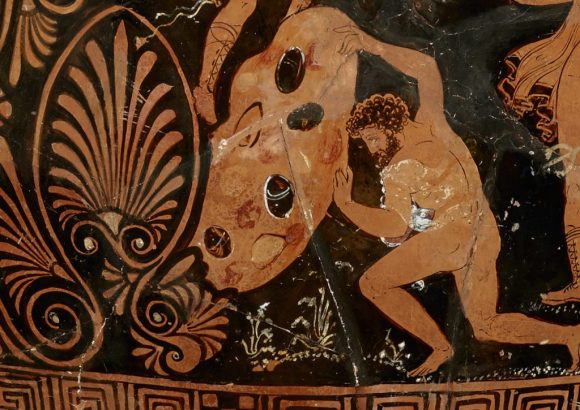
Sisyphus: From Public Domain

[1]  A verse from The New Seekers’ “’I’d Like To Teach the World to Sing” became a jingle for Coca-Cola later.

[2] John Lennon’s most successful solo single, ‘Imagine’, envisions a world of peace without materialism, without borders separating nations, and without religion.

[3] The Beatles’ 1964 hit ‘Can’t Buy Me Love’ is a McCartney composition that naively preaches that true love cannot be bought. In the later stages of his life, McCartney discovered the hard way that divorce, without a pre-nuptial agreement for someone of his stature, could be financially draining. Money can’t buy love, but falling out of it can be costly.

[4] Sanskrit for ‘May all be happy’

[5] Sanskrit for ‘Peace’

[6] In Greek mythology, Sisyphus was a shrewd king. The gods condemned him to roll a boulder up a hill for eternity, only to see it roll down again after reaching the summit. Albert Camus, in his book ‘The Myth of Sisyphus,’ implies that Sisyphus was happy. He found performing and completing the act itself meaningful. He gave meaning to the meaningless.

[7] “Hope springs eternal in the human breast,” an excerpt from Alexander Pope’s poem “An Essay on Man.”

.

Farouk Gulsara is a daytime healer and a writer by night. After developing his left side of his brain almost half his lifetime, this johnny-come-lately decided to stimulate the non-dominant part of his remaining half. An author of two non-fiction books, Inside the twisted mind of Rifle Range Boy and Real Lessons from Reel Life, he writes regularly in his blog, Rifle Range Boy.

.

PLEASE NOTE: ARTICLES CAN ONLY BE REPRODUCED IN OTHER SITES WITH DUE ACKNOWLEDGEMENT TO BORDERLESS JOURNAL

Click here to access the Borderless anthology, Monalisa No Longer Smiles

Click here to access Monalisa No Longer Smiles on Kindle Amazon International