Categories
Essay

Countdown to Lockdown: Fear and Loathing in the Trolley Race at the End of the World

Keith Lyons from Christchurch discovers that the big world seems very small when it comes to stockpiling for the coronavirus.

If I had to choose a place to be to sit out the coronavirus pandemic sweeping over the globe, there are probably few places better than the South Island of New Zealand. A significant number of the world’s super-rich have invested in the Southern Hemisphere nation, some even buying residency through a controversial and secretive ‘Investor Plus’ scheme. Tech startup incubator for Reddit, Dropbox and Airbnb, Sam Altman, Pay Pal’s Peter Thiel, and the co-founder of LinkedIn Reid Hoffman are among those who have invested, buying secluded boltholes and luxury bunkers. One US company has constructed more than three dozen doomsday bunkers in New Zealand. Several of my friends have worked for ‘high net worth individuals’ as staff at remote lodges and on luxury super-yachts.

Kim Dotcom, of Megaupload, is among those who have decided to call New Zealand home. I call New Zealand home because I was born here. And now I’ve returned ‘home’ after more than a decade living in China and spending the last few years in South East Asia.

In February, this year, my route back from India via Myanmar took me through Phuket airport where a taxi driver had already been infected with the coronavirus. Transiting Kuala Lumpur’s KLIA2, after an overnight in Denpasar International Airport in Bali, I discovered no tests had been made to determine if anyone had the virus. Then a short stopover in Melbourne, Australia, where there seemed to be no additional measures to combat the spread of the corona virus. Even on arriving in my hometown Christchurch, there were no temperature checks or questioning to see if I had come from China, Italy or South Korea. In mid-February, the most stringent measures encountered were in Central Phuket Festival mall, where the handful of customers going from one half of the normally teeming mall to the other side were stopped for a temperature check.

If 9/11 meant greater security with screening for knives, box-cutters, and nail files, and having to take out water bottles, mobile phones and laptops, almost two decades on, we are now adding to the security screening with thermal cameras and the symbol of 2020: thermometer guns. After the masked official at the Phuket mall held his gun to my forehead, satisfied that I didn’t have a raised temperature indicating fever, he turned it around so I could see the digital reading: 36.8 C. Now, I am not expert on human health, so assumed it was not too hot and not too cold, as I couldn’t make out if the official was smiling or grimacing behind his mask. At least they aren’t taking the readings the old-fashioned way, rectally.

One of the things about the coronavirus is that is it invisible and faceless. Like an imaginary menace. Its presence is only made more tangible and real when we see on TV the patients in ICU units, doctors and nurses in masks and glove hurrying around with beeping ventilators and tubes, maps showing the spread of the new virus which threatens like a hurricane.

The other thing about the coronavirus is the speed at which it moves, spreads, and intensifies. When I travelled back from Asia to Australasia, coronavirus was primarily a Chinese problem, with some possible spread to Italy. But as February turned into March, it became more apparent that this Wuhan wet market virus was going global big time.

I guess we should have all been ready for something like this to happen. It was corona virus — COVID19 — there was bound to be a pandemic which would sweep the world, infecting millions and killing many. After all, such an event has been predicted by everyone from Nostradamus and Bill Gates to author Dean Koontz (see conspiracy theories) and The Simpsons. There are even some among us who believe one episode of The Simpsons foretold the self-isolation of Tom Hanks.

There are also those among us who having known something like this was going to happen have made preparations for their survival. This is now an ‘I told you so’ occasion for the smug ‘preppers’ who feel vindicated having lined their shelters with emergency rations, first aid kits and firearms, though this coronavirus thing is turning out to be mild compared to the much-anticipated zombie apocalypse scenario. Instead, it seems the ‘always carry’ list for those fighting the hidden enemy includes wet wipes, hand sanitiser, and N95 masks. The US company Preppi at one stage marketed a special US$10,000 prep bag which included gold bars for bartering.

My hometown, Christchurch, has experienced several traumatic events this last decade. A large earthquake in mid-2010 followed by a more devastating quake in early 2011 damaged nearly 100,000 buildings, half the city’s roads, and killed 185. A year ago, a white supremacist gunman shot dead 51 people at two city mosques. New Zealand is geologically young, and prone to natural disasters including earthquakes and volcanic eruptions, so most homes have emergency kits with food and water to last at least three days.

However, the prospect of an infectious pandemic with a lengthy lockdown period has taken most citizens by surprise. When on the second-to-last day of February news broke of the first case of coronavirus in New Zealand, brought by a resident returning from Iran, I was in my local supermarket a few hours after the announcement. There was no flour available, the shelves of the 1.5kg bags and 5kg bags were empty. It was not just the ordinary white flour, it was high-grade flour too, along with self-rising flour and wholemeal flour. On the next aisle of the Countdown supermarket, a Thai woman was posing for a photograph in front of shelves half empty of rice. I mentioned my observations later to friends and family, wondering if there was a shortage or some other reason.

A few days later there was news of a second case, this time arriving from Italy. But even though this virus had arrived on our shores, it seemed like its impact would be insignificant, as it was not spreading, and those returning to New Zealand had mild symptoms, not unlike a cold you pick up during a long haul flight. There were reports that some supermarkets have been swamped by customers buying toilet paper, hand sanitiser and tinned food.

Ten days later, the news was full of events happening far, far away in Italy, Iran and South Korea. The coronavirus had spread to more than 100 countries, and infected more than 100,000 — a few days earlier the World Health Organisation declared it an official pandemic. In New Zealand, the sixth case of the virus is confirmed. This did not deter my parents, who did their regular Saturday morning shopping at their usual supermarket. “Yes, it was quite busy, busier than normal,” my father noted.

During our Sunday dinner, I casually mentioned that maybe this was the last weekend that we would have the freedom to do things as normal, and perhaps from now on, it might be best if I went and did the shopping instead. My parents looked at me as if I have overstepped the line between parent and child. Over-reacting again, they are probably thinking.

An international cricket match between New Zealand and Australia was played in an empty stadium, and then the rest of the tour called off. Cancelled too was the memorial service for the mosque attacks. I visited the neighbours of my parents, bringing them a date and walnut cake I had especially made according to a detailed Iraqi recipe. My visit interrupted an interview with a documentary crew from BBC about their son Hussein who was shot dead trying to stop the gunman.

I felt like I am moving between worlds, from the warmth of the kitchen to the coldness of a massacre, and then outside, there was something sinister and foreboding which was looming bigger than kindness, bigger than tragedy, an acute existential crisis that was unknown in its quantity and impact.

In the following week, I set about sourcing various things from around town, and stocking up on supplies. I got some seeds to plant for autumn and winter harvest. I visited two Indian grocery shops to procure green cardamom seeds, almonds, ready-made chapatis, MTR ready-to-eat meals and dosa flour mix. I loaded the boot and back seat of my parent’s Toyota Ractis until its suspension springs almost snap from 450kg of wooden pellets for their fire. With my mother we did one big shop, making sure we got her favourite brands and the foods preferred by my father who is recuperating from an operation for bowel cancer.

During my daily shopping visits, I noticed that this wasn’t the normal shopping experience anymore. I did not witness any of the stockpiling in the early days of the crisis, though at a store I did overhear a staff member tell his colleague, “We need to bring out the remaining fruit stock we have out back, as it is all selling fast. I am not sure why.”

In early March, there was already a run on particular items, most noticeably and perhaps misguidedly, folks were stocking up on toilet paper. I am not sure the rationale behind this, somehow extrapolating that toilet paper might not be available in the future. It seems many people had the fear reaction triggered, and it was compounded by seeing supermarket shelves already half empty of toilet rolls. Toilet paper is non-perishable and will all eventually be used, so it is not an unnecessary purchase. It also is bulky and takes up space, so its absence in supermarket shelves signals to us ‘shortage’, while having it stocked up at home fulfils some primitive need to be prepared and ready, and also signals that we are smart shoppers, having ample supplies of large 16-roll 4-ply toilet paper, what a bargain and an easy way to relieve worries of not being prepared for the impending doom.

There is a meme doing the rounds with a kid asking his mother, “What is the corona virus?” with the parent replying, “Shut up and eat your dinner” with a picture of a bowl serving a roll of toilet paper. The panic buying of toilet paper was a reaction to the mixed messages about the possible severity of the coronavirus, something of an emotional pacifying purchase to gain control over our hygiene. In other countries where a bidet, bum gun or old-fashioned scoop and water pail is used, there must have been some eye-rolling when stories emerged of Westerners stockpiling toilet paper, price gouging and even scuffles in aisles to secure the rolls of toilet paper.

The government was quick to reinforce the message that was enough to go around, and that essentials would be available. That seemed like the sensible approach. And it was an appeal to people’s sense of community and togetherness in fighting the virus spread. But in times like these, a different mindset kicks in. One of my longtime friends showed me a photo of his partner in the supermarket. After finding the shelves stripped bare of toilet paper and hand sanitizer, they found a whole carton of sanitiser behind other items on another aisle, and much to the shame of my friend, his partner (from South America) loaded the carton into their shopping trolley, later posting on social media of her cache.

That shared image, along with the footage of empty shelves and shopping trolleys piled high with supplies reinforce the panic buying mentality across the world. In Hong Kong, thieves held up a supermarket to steal a delivery of toilet paper. In Australia, a newspaper printed eight extra pages for use as emergency toilet paper in case supplies run out. Now in many supermarkets, there is a limit of two items for these symbolic products along with other essentials, with security guards and supermarket staff patrolling aisles and scrutinising shopping carts.

I noticed during my pre-lockdown shopping excursions quite a range of responses by fellow shoppers. Many were doing big shops, marking off items on a checklist. Some were clearly in unfamiliar territory or were struggling to decipher the list given to them by their partners or friends. “Is tomato puree the same as tomato puree?” one man asked me rather than call his wife again to clarify the differences. In the aisles, it was interesting to observe the interactions of couples, with usually one being ultra-cautious and thorough, while the other (usually a male) being more carefree and unperturbed. “Shouldn’t we get one just in case?” I heard a woman still in her airline uniform ask her husband, who was displaying the typical New Zealand ‘no worries’ attitude. “No, she’ll be right. We can always get it later.”

As well as tension between shoppers, there was also a new dynamic I noticed. Individuals or families were largely in their own bubbles, increasingly aware of the need to stay clear of others who might be contagious. But shoppers were also aware of the goods others had purchased, peering into nearby trolleys, noting what products others were stocking up on, or what items they had secured the last of. On a few occasions, my eyes met others after a mutual trolley check out, and I made a mental note to get a particular item, or even scoffed at other’s purchases.

As well as the hoarding of toilet paper and hand sanitizer, it was the quick sell-out of perishable items which suggested widespread fear of missing out. Bread and milk were coveted items, along with eggs, meat and fresh vegetables.

However, it was the stockpiling of non-perishable items which contributed to the overloaded shopping carts and baskets, and perhaps revealed most about our globalised connected world. Despite the news being full of footage from northern Italy about the horrors of the virus, in New Zealand and Australia, and other countries, shoppers opted for Italian food. Pasta, pasta sauces, tinned tomatoes, risotto rice and olive oil quickly disappear from shelves. On one supermarket run, I found only a few packets of flat lasagna, just the wholemeal and wheat-free varieties, and the following day, nothing except a couple of damaged packets of cannelloni, the pasta meal that requires the most preparation.

But it was not just Italian food we sought for comfort in our emergency supplies and lockdown rations. While most of the fresh produce is still grown locally, increasingly more things are being imported from Asia, in particular China, along with Vietnam and Thailand. Even homegrown brands are sourced from overseas or made of ingredients from as far away as Chile, the USA, Ecuador or Spain. Closely reading the fine print on a bag of mashed potatoes reveals it was made in Belgium, the tuna was canned in Bangkok, while the frozen strawberries hail from Peru. In the dry noodle section, I have to choose between Mamee from Malaysia or Yum Yum out of Thailand. It is a small world after all.

As I shop locally but collect items from around the world, I wonder if it is being sensible or selfish. I wonder about those that can’t afford to stock up, who survive week to week.

As the coronavirus morphed from a foreign plague to a resident contagion, stores imposed limits on some items, increased cleaning and hygiene, and tried tactics to ease consumer’s concerns. My local Countdown placed a pallet of toilet paper just inside the entrance to signal that there was plenty of stock available. Health authorities reinforced the key message that soap and hot water for a 20-second hand wash was better than sanitizer. I started to get emails, some obvious ‘cut and paste’ jobs, from every business about how they were protecting their staff and customers.

Around this time, there was news of a case in Christchurch. The next day, the government announces it was closing its border, to all but citizens and permanent residents. On the following Saturday, 21st March, New Zealand Prime Minister Jacinda Ardern announced on a four-level alert system, raising it to Level 2, then a couple of days later raising it to Level 3 and outlining the move to its highest level 48 hours later. Businesses and schools have been closed, everyone had to stay at home, the only reason to venture outside was to shop at supermarkets for essentials, visit a pharmacy, or doctor. It was a lockdown, though people could go out to exercise as long as they did it in their neighbourhood and did not mix with others.

This pandemic quickly changed the boundaries and borders.

It spread. New hotspots light up the world map.

My own personal geography changed too. Other than my local supermarket, less than a 15 -minute-walk, I also factored into my shopping a fresh vegetable market nearby, and a branch store bakery offering bread, milk, savouries and sweets. I figured that this trio of shops within walking distance could be relied upon for my future shopping, along with the pharmacy.

When I first visited the bakery, it was business as usual, and I was rather surprised to see the staff not wearing any additional protective masks or gloves. Three days later, it was a completely different story. I had to wait outside to be called in. There was a station set up with hand sanitizer and blue gloves to be worn (optional) and customers were reminded to keep their distance from others. At the checkout, items had to be placed on the counter, and the customer was asked to step back behind a line so the clerk could price the purchases. The choreography meant the shop assistant would step back and the customer then approached the counter, to pay by card (no cash was accepted), pack their own bags, and then exit, allowing the next person in the queue to go through the routine. On returning home, I described the new shopping behaviour to my parents, who seemed amused at all the fuss. I was half expecting them to say it was all ‘health and safety gone mad’.

The next day I checked Facebook for the store hours and there was a notice that the outlet was now closed to the public. The greengrocer who had reduced hours to ensure more time for restocking also posted a similar notice, not being able to ensure a safe space, and also deemed by the government to be non-essential.

Yesterday I braved the cold winds and ventured out to Countdown (a New Zealand supermarket). Having to wait outside in a long queue, spaced 2m apart, operating on a one-out/one-in rule that meant when I finally got in and cleaned my basket handles, most aisles only had one or two shoppers nervously avoiding each other, and imploring with dagger eyes ‘keep your distance, buddy’. In the chilled food section, I had a moment when I thought I might sneeze, and I worried that if I did, security guards would bundle me up into a bag to be dispatched the hospital. On my list of items to buy was black pepper, but I skipped that, fearing that a whiff of pepper might induce a sneezing fit.

Back home, gloves discarded, hands washed, items sprayed, I pondered the craziness of it all as I savoured my cup of hot miso soup from Japan. All of my shopping could be in vain if I get the virus. One of the first symptoms noted by doctors in Europe is that those with the coronavirus lose their sense of smell and taste.

Keith Lyons (keithlyons.net) is an award-winning writer, author and creative writing mentor, with a background in psychology and social sciences. He has been published in newspapers, magazines, websites and journals around the world, and his work was nominated for the Pushcart prize. Keith was featured as one of the top 10 travel journalists in Roy Stevenson’s ‘Rock Star Travel Writers’ (2018). He has undertaken writer residencies in Antarctica and on an isolated Australian island, and in 2020 plans to finally work out how to add posts to his site Wandering in the World (http://wanderingintheworld.com).
Categories
Review

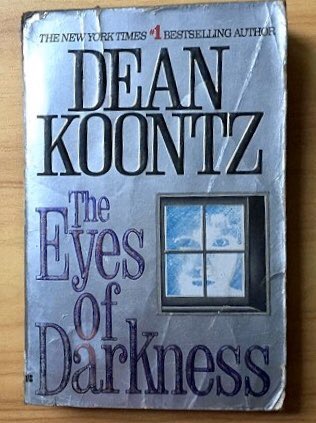
The Eyes of Darkness: Was it all predicted?

By Mitali Chakravarty

Title: The Eyes of Darkness

Author: Dean Koontz

Publisher: Pocket Books, USA, 1996

One of the passages from a thriller that has been  circulating the social media circles during COVID 19 is how the Wuhan virus was evolved in a lab in the United States with a  Chinese refugee’s help, one who had defected to US “carrying a diskette record of China’s most important and dangerous biological weapon in a decade.” The book, The Eyes of Darkness by Dean Koontz, is listed as a thriller, mystery, suspense and horror. It has been republished with a few changes in 1996, post-Glasnost and post-Tiananmen incident.

In the novel, the virus, called Wuhan 400, was said to have been developed in a lab in the outskirts of Wuhan. It “afflicted only human beings”. The fictitious virus had an incubation period of less than twenty-four hours. We are told, “It destroys part of the brain that controls the autonomic functions. The victim simply ceases to have a pulse, functioning organs, or any urge to breathe.” People died within a few hours of the infection.

The corona, luckily for mankind, does not affect the brain – only the lungs and most recover with mild flu-like symptoms and some have no symptoms at all.

The Wuhan 400 has been shown to be so infectious that one single panic-ridden, irresponsible, contaminated scientist infected a huge batch of boys and their teachers, who were on a trip that would teach the youngsters survival skills. Ironically, except for one child, the rest die. What gave the child the resilience to survive becomes the source of study for scientists in the middle of a deserted spot in Texas. The story revolves around how the child is rescued by his mother and her boyfriend who fly incognito all the way from Las Vegas to Reno and then into the wilds.

The book has a touch of the paranormal.  The author tells us in an ‘Afterword’: “The Eyes of Darkness was one of my early attempts to write cross- genre novel mixing action, suspense, romance, and a touch of the paranormal.” And the title is based on the paranormal activity. The paranormal activity is a little eerie and the descriptions are just frightening to the right degree.

The Eyes of Darkness had been revised in 1996 and republished. This is the version that is doing the rounds of the social media platforms. The earlier 1981 version was authored by Dan Koontz under the pen name of Leigh Nichols. In the 1981 version, the virus was called Gorki 400 virus and developed in Russia. This was before Mikhail Gorbachev used the terms perestroika(restructuring) and glasnost to indicate an openness in the Soviet Union which was its first step towards democratisation. Then in 1991, Boris Yeltsin moved towards a loose federation of Russian states. In 1989, the terrifying incident of Tiananmen Square killed thousands of innocent protestors.

In the 1996 edition, Dombey, a scientist in the facility which housed the research tell us , “The Russians… they’re now supposed to be our new friends, but they keep developing bacteriological weapons, new and more virulent strains of  viruses, because they are broke, and this is a lot cheaper than other weapons systems…” That the paranoid of weaponists and security experts obviously knows no bounds anywhere in the world is well borne out by the narrative. This has nothing of the conspiracy theories to wipe out the world. It is a thriller like a James Bond! It does not dwell on Machiavellian concepts quoted in Dan Brown’s thriller, Inferno:

“When every province of the world so teems with inhabitants that they can neither subsist where they are nor remove elsewhere, every region being equally crowded and over-peopled, and when human craft and wickedness have reached their highest pitch, it must needs come about that the world will purge herself in one or another of these three ways: floods, plague and famine”

Dan Brown has something similar in Inferno where the world is threatened by a conspiracy to decimate the population based on Machiavellian and Malthusian principles by a villain who is more colourful and dramatic than Koontz’s and weaves the story in the city of Florence.

The story of Inferno, located in Italy, is interesting and perhaps can be the subject of another review. I enjoy a Dan Brown thriller more because it is woven around history and philosophy.

The Eyes of Darkness is simpler lore — with shooting, bars, the glamorous world of casinos, racing from place to place, helicopter and fast car rides, homes getting blown up, strange paranormal activities that wreck a room and bomb blasts from which the protagonists escape. The villain is perhaps a little less colourful than Dan Brown’s or the Joker from Batman — but weird none the less. The plot is intriguing! Take a plunge and see — it is a good and easy read while you wait out the virulence of the real COVID 19! 

Mitali Chakravarty is a writer and the founding editor of borderlessjournal.com.

Categories
Musings

Corona and my uncle

By Archana Mohan

Apparently, my 75 year old uncle, Kailash, is immortal.

His astrologer, the one whose perennially hanging VIP undies on the terrace are a Google Maps landmark, told him so.

I quote my uncle verbatim. “My Jupiter is in the 6th house and even if I want to, I cannot get killed this year.”

And so, whereas we ‘snowflakes’ stay at home and wash our hands till the fate line disappears, cool dude Kailash walks around the empty streets every evening without a mask or care in the world.

Do you know a Kailash? You probably do.

Do you mutter under your breath when they wash their hands and fail to do a rotational rub of their thumb clasped in the other hand’s palm? Ah! Newb.

Do you roll your eyes when they dismiss it as a ‘made in China’ defective virus?

And when they send you forwards on Whatsapp about the power of raw ginger juice in keeping the virus at bay, what do you do? Do you smirk, ignore and go back to the Mexican drug cartel show you have been binge watching?

Congratulations! People like Uncle Kailash aren’t the problem. You and I are.

We mock these senior citizens about being PhDs from Whatsapp University but forget that the same university sends them gory images of victims and statistics that probably scare the daylights out of them.

They know that people of their age, especially those with underlying health conditions are twice as likely to develop serious outcomes from the corona virus as compared to otherwise younger, healthier people.

And that is why they forward messages that claim to know ‘nature’s cures’. They aren’t stupid. They are scared.  And raw garlic, gives them hope.

The virus wasn’t made in China. It is being made here, at our home, everyday. For when an ‘Uncle Kailash’ acts out and refuses to conform to the lockdown, he isn’t ‘pig headed’. He is scared.

Scared that 200 people in your area have been quarantined. Scared that he and his family will be one of ‘those’.

He doesn’t have the luxury to switch off from the crisis and ‘work from home’ as you do. He cannot meet the friends who sail on the same boat as him. He struggles with video calls. He is worried sick about his daughter in the States. He keeps checking his medicine cabinet. Anything can happen.

He hasn’t told you but he knows that even though his astrologer says he is immortal, he really isn’t. He knows that life is like a mutual fund investment. It is subject to market risks and even if you read all scheme related documents carefully, you could still get burnt.

He is so petrified by what is going on, that he cannot sleep. He has questions. Many, many of them and he is afraid to know the answers.

He is dying to speak. To unburden. He yearns for a kind word. A reassuring pat. A kiss from a grandchild. A cup of hot tea, with extra ginger. New gossip about the neighbour. Anything. Even an off-color joke about his favourite actress just to lighten up, to take his mind off the fear. Even if, for just a few minutes.

But where to start?  He sneaks a look at you. You are wearing headphones.  Your eyes are glued to your device. You are probably busy. He really doesn’t want to intrude. He backs off.

Later that night, he sees that your phone is charging. Perhaps he could try one more time. He gathers courage and sends you a forward.

Ting!  A new Whatsapp message.

‘Congratulations! UNESCO has declared ‘Jana Gana Mana’ as the best national anthem of the world,’ it reads. You read it but don’t react. Old Uncle Kailash at it again. These oldies! The worst mistake we made was introducing them to Whatsapp.

87% charged. That’s good enough.

You plug the phone out from the charging cable and get back to your binge watching.

You are watching ‘Contagion’, a 2011 movie about a deadly virus that is about to cause misery to the entire human race.

Unknown to you, there is a deadly virus in the other room eating up an old, terrified man.

It is called loneliness.

Archana Mohan is  the co-founder of Bookosmia (smell of books) a children’s content company that delivers brilliant content to the world through Sara — India’s first female sports loving character. Her book Yaksha, India’s first children’s book on the dying folk art form of Yakshagana received wide acclaim. She has worked as  a  journalist, corporate blogger and editor working with names like Business Standard, Woman’s Era, Deccan Herald, Chicken Soup for the Soul and Luxury Escapes Magazine.  She won the Commonwealth Short Story contest’s ‘Highly Commended Story’ award in 2009. She loves interacting with budding writers and has conducted journalism workshops in colleges.Do check out Bookosmia’s website https://bookosmia.com/about-us/ for more information.

Categories
Poetry

The Boy with the Yellow Light & more…

By Annie Blake

THE BOY WITH THE YELLOW LIGHT                                                      

/ for the cupid charges his dart / but to dodge love / for eros is invisible without a lamp /and who the hell knows who we’re really marrying / and venus was angry she had to come down to earth / for kenosis is giving up being god / living between the dark / the night lapping and the shore smacking her lips / the birth of my divine child / my husband promised to return / but the river nile is also the waterfall of the styx and i was sad so many babies had to die /

/ the nurses showed us how to experience death / and we all had to be prepared / but psyche brought her life and her lamp / but the light made his body glow / and i wasn’t ready for god back then / so i dropped the knife and the oil and burnt my own wings / or webs and i wonder how i could have despised my own wedding ring /

/ palm oil has cleared so many forests / but never give alms whilst ascending from hell /for my mother and father will climb on top of my body and we shall both drown / i left my parents but i was rejected by them first / and left bread as crumbs / so he grew out of the water / but an overgrown cupid / there was a door and a yellow light / the boy and a door and blood / my son and a door and i buried his head in the sand / for he drove a dodge dart and the jocasta complex /

/ for so many men say they can tend gardens but in the summer they let their flowers dry up / so i told him to assemble a steering wheel / made out of felt and robin hood green / for mothers must steal from the grinch and let their sons feed from their hands / so i handed him over to my husband / for the father is the son / mutatis mutandis / his wings outstretched on god’s table / the blood and the nails that strengthen the stable and how the fountain lights / his mountain climb /

LAKE MONOGRISTA                                                                                     

/ i thought she said montecristo and i was on the train heading home /

but as i was about to exist / i realized i had forgotten letters / photos of my child when she was young / and i had to stop myself from falling out / the train had walls / and the backs of passengers / for i wanted her to be pretty and pure / to wear a poncho because of my indictment of winter and the fall / hail stones as small as baby teeth and the union of demeter with persephone /

/ only alone / i had to go through lake monogrista / when will the goddess become a woman / energy which embeds will not floar up / above the ceiling / a maze or village roads archetypes or archangels made of white marble / suspended and upside down / for this map and where do i cross or sort out the corn to make flour / the eleusinian mysteries /

/ heilagr bread and i prayed for akeru / for when i’m not sure if what i’m seeing is real or conducive to evolution / wassilissa the beautiful / the black grains and the wild peas / a pestle and mortar like pen and paper / then a grain of earth in the poppy seeds / i prepared kvass on her table / her tongue / small flame heating her lips / pointy fire of a hybrid flower / she had down syndrome / and told me i had been waiting a long time to ask a question /

/ so i gave my child money for her tooth / and for charon a drachma under her tongue and i took her letter / and i hoped she would only ever find the box when she grew /for to have pistis / she made me see a light outside / daylight candle and she was in a cradle in the branches / but to admit she is really here / for newborns were saved and to rock in the wind / but for all their dead weight / or faith that she was a fait / and my fate / to breathe / her out / to life /

TANTUM ERGO SACRAMENTUM                                                              

/ limbs / sacred animal / in the ground / i dig with my fingers and my toes / nails like roots / my back / spine rises / snake charmer and out of the casket / when i ask psychoanalysts questions they often say / how does that relate to what we’re talking about / me and peek a boo with the clock / and the whole point is missed and an altered sensorium /

/ so my husband pulled a chandelier out of the ground / arms out of the soil / the colour of spoilt iron / he told me it had sunk with the titanic / ostensorium / in miss havisham’s house / made out of flight light and rock / he swings in my room / he said for those who will hold both order and chaos / or tell the truth and for the stunting of our time / that lovemaking and the tragedy of it / triadic and in christo / 

/ for he who acquires patience / discipline to maintain the meaning of ritual / not a single offering will be missed / a man’s joined hand / veins like rope / upright sconce / within his skin / rivers green / yellow strength in his candle / in his body / burdens / burn like a forgotten forest church / for to know the same man since / baring our child / dark garden of gethsemane /

/ he now knows not to move any paper for they are my lifeskins / for my mouth is volubly mute / not to move a single body or a single letter / my altar and my cup / my holden host / golden moon and how our son impailed / the hour of adoration / for i would rather he climb as fragile as a looking glass / tread on me carefully instead /

THE BLACK STEAM TRAIN RATTLES OUR BACK DOORS IN WINTER              

/ snake of moses / rose branch to the apple / round as stone / its mouth did speak and the soul was satisfied / so whole he grew / fed his interregnum from the birth cord / extended his arm from the ground / took of his body and ate /

/ i was in the desert / for where i grew up and live / bridges wired up like cages / and the silos because the sky / sheets of steel / and our sense of responsibility / for our own lack will give us a life sentence and a prison cell / and i have always felt worried because during the war / and he could not yet cry / for suffering sedates and shuts the eyes /

/ working mechanical shark / iron box crashes / debris of his body / sea ash / how the smoke sits thick like clouds when i burn my wedding ring / the ticking clock and the next train / snake railway / and to trespass the halo of her body / but i was always good at diving in and unhooking the bait from my mouth / o soporific soul and my auseinandersetzung /

/ he hadn’t slept for days / how a man had to watch the child’s head come about 325 wordsengthen off / how he was given a broom to sweep his parts up from the ground / because when he was a boy / but then his mother died / and the easiest way to kill a man’s woman is to send him to war /

/ so there was a border / or the edge of a road / for the vestiges of my old intransigent world / a lily as white as his hand in the sand and as i lay down my clothes / for one must take the time to mourn our absences / my army clothes / his school uniform / because he was now larger than me / i couldn’t yet see the enemy / but to climb / a tomb hollowed out the next word / and we reveled in what he lay /

/ i had to stay with my ear close to his roots / and to run / river of dust when i could detect where they were / our old linen garments / submerged and lifted out of the river / i told my mother to wash our clothes because / it is more comforting to confront death and to know her then / for when your mother will not know you /   

HABENTIBUS SYMBOLUM FACILIS EST TRANSITUS                          

/ fowl sowl of men / mouth of men / sour bowl / i’m sorry / for she wears the devi cloak / how words are left to hang like jowls / uphill road / light forest / crevice of light / cervical and a cat’s eye / the color black is a deep empty hole / both in each other’s soak / for our bodies warm and the nights black / digesting the plaited crop /

/ i always had long births for i hold onto my children for too long / my body / my boy / every six months / the indian lady would sew back my eye / she said i must be patient and i was not to move / and my husband asked me how he was to learn patience / so at the hospital / i asked to have my dream interpreted / she gave me chopped apples in a ceramic bowl and i had to eat them piece by peace / so when i let go from the substructure of the world /for some people cannot live if they are not sticky inside a web / so i remember to smile even if the felicity doesn’t exactly belong to me / breasts of milk / nipples made of pearls /

/ when a mother’s suffering is manifested into her child / then i must unglove and evolve my mother / for it is our children who remain hidden and who always validate the truth /

/ so i took the time to bathe myself / and i remembered the first time my children were awed by their own hands / a leitmotif or iteration / for to see my one body / white as soap / all belonged to be / 

Annie Blake (BTeach, GDipEd) is a divergent thinker, a wife and mother of five children. She commenced school as an EAL student and was raised and, continues to live in a multicultural and industrial location in the West of Melbourne. She enjoys experimenting with Blanco’s Symmetrical and Asymmetrical Logic to explore consciousness and the surreal and phantasmagorical nature of unconscious material. Her work is best understood when interpreting them like dreams. She is an advocate of autopsychoanalysis and a member of the C G Jung Society of Melbourne, Australia. You can visit her on annieblakethegatherer.blogspot.com.au  and  https://www.facebook.com/profile.php?id=100009445206990.

Categories
Essay

Corona Virus: What’s happening?

By Ugo Bardi from Florence, Italy

The most recent data indicate a decrease in the number of coronavirus infections in Italy. That means we could get out of the epidemic in the coming months. But why do we expect this trend? It is explained in the field of Science called “epidemiology” that studies how epidemics spread.

The first epidemiology studies date back to 1927, when two British researchers, Kermack and McKendrick, developed the “SIR” model (susceptible, infected, removed), still used today. However, the basis of these studies was the previous work of the American Alfred Lotka and the Italian Vito Volterra. A few years earlier, they had developed the model that we now call “Lotka-Volterra,” but also “predator-prey,” or “foxes and rabbits” (although neither Lotka nor Volterra ever spoke of foxes or rabbits).

Let’s explain. Imagine a green islet in the middle of the sea, populated by only two species: foxes and rabbits (there is no such island, but let’s take it as a hypothetical example). The population of foxes (predators) tends to grow when rabbits (prey) are abundant. It grows so fast that, at some point, the surviving rabbits can no longer reproduce quickly enough to replace those eaten by the foxes. The rabbit population reaches a maximum and then falls. At this point, the foxes starve. With few foxes around, the remaining rabbits can reproduce peacefully and the cycle begins again.

The model is based on the idea that predators tend to take more resources than nature can replace: it is what we now call “overexploitation” It always ends badly, but the model describes the trajectory of the populations that first grow and then collapse as a bell-shaped curve. An example of a real case is that of St. Matthew Island in the Pacific. There were no reindeer on the island before the US Navy brought some, in 1944. In a couple of decades they became thousands, they devoured all the grass, and then almost all died of starvation. Then, a couple of particularly harsh winters exterminated the last individuals, sick and hungry. Reindeer was the predators and grass the prey: a classic case of resource overexploitation.

Not that the model can explain the complex interactions in a whole ecosystem, but it is useful to provide us with a framework for what’s happening. And we can use it to understand the current epidemic. It is the same thing: the virus is the predator and the prey is us. The population of the virus is growing rapidly as it always happens when resources are abundant. But soon the virus will begin to run out of prey, fortunately not because infected people die (some, unfortunately, do). They are no longer prey because they become immune. Indeed, the epidemic is following the bell-shaped trajectory predicted by the Lotka-Volterra model.

So, nothing unexpected. Viruses are creatures looking for resources just like we do. They’re doing nothing different than what we did in the past by exterminating species like mammoths or the dodo. And, today, with the huge expansion of the human population over the last 1000-2000 years, we have become a great hunting ground for so many micro-organisms, also because of our tendency to live in crowded cities where it is easier to get infected. Thus, the past history is full of epidemics: plague, smallpox, cholera, influenza and many others.

In a way, we are at war: viruses attack us and we defend ourselves with vaccines, antibiotics, hygiene, and our immune system. But, if it’s a war, we won’t necessarily win it. Maybe we’ll find a vaccine for the Sars-VOC-2 virus, but don’t expect miracles.

Actually, species do not make wars against each other: they adapt, that’s how the ecosystem works. Viruses and bacteria are seen almost only causes for diseases, but our body hosts a large number of them and of many different species. They are not parasites, many are “symbionts” – creatures that help us with so many things, think of our intestinal bacterial flora. So, in time, we’ll end up adapting. And the virus will adapt, too.

Ugo Bardi teaches physical chemistry at the University of Florence, in Italy and he is also a member of the Club of Rome. He is interested in resource depletion, system dynamics modeling, climate science and renewable energy. Contact: ugo.bardi(whirlything)unifi.it

This essay was first published in Countercurrents.org

Disclaimer: The opinions expressed are solely that of the author and not of Borderless Journal.

Categories
Poetry

In The Midst of The Plague

By Mutiu Olawuyi

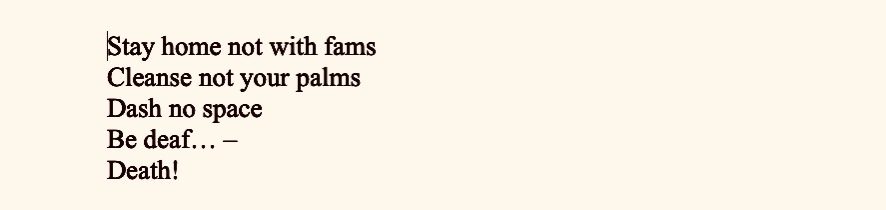
Stay home not with fams            
Cleanse not your palms                      
Dash no space                                             
Be deaf… –                                                  
Death!                                                                             
                                              
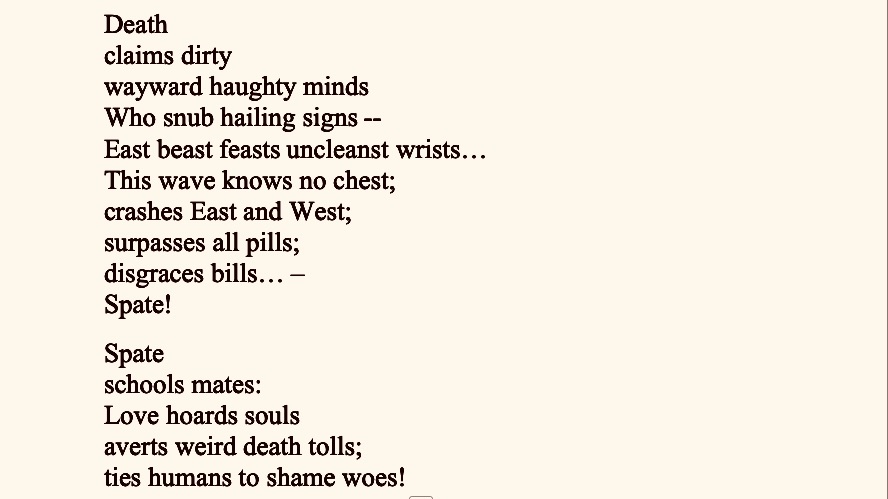
Death                                                                             
claims dirty                                                       
wayward haughty minds                                 
Who snub hailing signs --                 
East beast feasts uncleanst wrists… 
This wave knows no chest;  
crashes East and West;
surpasses all pills;
disgraces bills… –
Spate!
Spate
schools mates:
Love hoards souls
averts weird death tolls;
ties humans to shame woes!
Stay home not with fams            
Cleanse not your palms                      
Dash no space                                             
Be deaf… –                                                  
Death!                                                                             
                                              
Death                                                                             
claims dirty                                                       
wayward haughty minds                                 
Who snub hailing signs --                 
East beast feasts uncleanst wrists… 
This wave knows no chest;  
crashes East and West;
surpasses all pills;
disgraces bills… –
Spate!
Spate
schools mates:
Love hoards souls
averts weird death tolls;
ties humans to shame woes!

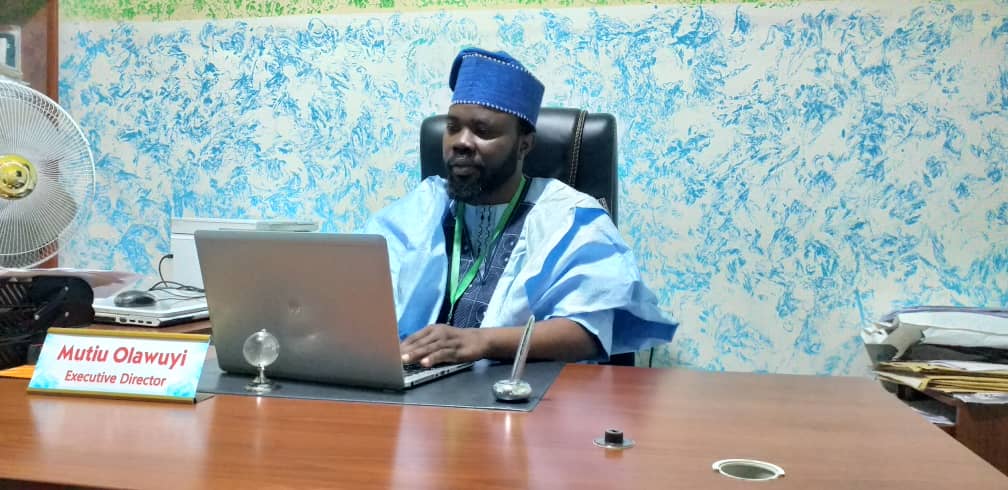
Mutiu Olawuyi (popularly called the Jungle Poet) is an international award-winning poet –  2013 World Poetry Empowered Poet Awardee, Canada, Honorary Professor of International Art Academy, Volos Greece; World Poetry Cultural Ambassador (2014) – Vancouver – Canada; and Master of Literary Innovation (2019) – World Poetry Conference, Bathinda Punjab, India . He is the producer and host of ArtFlakes on CBA TV, the Voice of East Africa and he is also the Editor-in-Chief of Parkchester Times and MCR newspapers (Print and Online) based in Bronx, New York, USA. He has authored numerous books of poetry (Among them are American Literary Legends and Other Poems [2010], Thoughts from the Jungle [2012], 9/11 Poetry [2012], and The Journey to the Archangels [2013]) and has edited numerous international anthologies, journals and magazines. Mutiu is a teacher, English language and literature curriculum developer, freelance writer/editor, literary critic and inventor of a new form of poetry called 9eleven (a poem of 9 lines written with 11 syllables) and the first writer of a story without verb – The Blotted Pawpaw (published 2013 by Bharat College in India). He is also an editor for The Criterion International Journal in English based in India. Mutiu has some of his poems, short stories and research papers published  in online and offline journals and magazines in India, Ireland, England, Canada, Greece, Nigeria and USA. Finally, some of his works have been translated to Arabic, French, Esperantos, Malayalam, Telugu and Hungarian.   

Categories
Interview

How Will the World look after COVID 19?

Fabrizio Verde of L’Antidiplomatico interviews Andre Vltchek

(During this exchange, both men were “locked up”. Verde in Naples, Vltchek in Santiago de Chile)

FV: How will the world be after the Covid-19?

AV: Totally different and I’d like to believe, much better.

But before it gets better, millions of people will lose their lives, and perhaps hundreds of millions will have their existence thoroughly ruined.

When I say ‘people will lose their lives’, I don’t say they will be killed by COVID-19. Instead, they will be killed by unemployment, by collapse of the social services, by psychological depression, and simply by misery.

The Western economy is crashing. The Western governments are behaving like a bunch of irrational trolls, and they are destroying, or “rearranging”, both industry and social system. Solidarity is gone; in North America, but especially in Europe. In such places like the United Kingdom, nobody is even pretending that the establishment cares about the people, anymore.

Therefore, most likely, things will get really terrible, horrific, before they get better.

The Western regime is devouring its own people, literally. Its own people, but especially people from all over the world, particularly in what could be defined as the ‘neo-colonies.’

What is new and positive is that human beings everywhere are shedding their illusions about the current arrangement of the world. They now clearly see that the gangrenous face of the Western system, of imperialism. COVID-19 is a symbol, not just a disease. After dust settles, after the epidemy is defeated, inhabitants of our Planet will never want to be governed by the European and North American “culture”.

Which means, there will be, once again, a chance for a logical development for the human race: towards socialism and democratic Communism; towards natural progress that was brutally interrupted, during the 20th century, by twisted fascist and imperialist forces with their bases in London, Paris, Berlin, Washington D.C. and New York.

FV: We are seeing two systems confronting COVID-19. Both China (we could even say Asia, in general) and the West, are fighting against the virus. Both are using all means available, but results are very different. In your opinion, is the Chinese system superior to the Western one?

AV: The Chinese system is clearly superior. For many reasons, but the most important is – because it is geared to serve and defend the Chinese people, and all human beings on this Planet. It is not a ‘perfect system’, but at this moment, it is the best system that we – our humankind – have.

It is repeatedly showing its superiority: in the social spheres, by pulling hundreds of millions of people out of poverty, and by creating a society without extreme misery. By its fight for the “ecological civilization”. And by aiming at the world without wars, free of armed conflicts. The Chinese system is bravely and effectively confronting the Western colonialism and imperialism, through many ways, one of which is the “Belt and Road Initiative” (BRI), a brainchild of President Xi.

Now, all that the West can use against China are not facts, it is the most vicious propaganda, dark sarcasm, smearing: in brief, nothing positive or progressive; no great ideas or ideals, only dirt, perverse lies, and brain manipulation of the masses through the mass media, NGOs and “education”. At a closer look, there is no logic in such propaganda. But the West uses negative indoctrination of its subjects for centuries, and it technically managed to achieve certain perfection in disseminating it all over the world. It already destroyed Soviet Union utilizing propaganda. It ruined many countries in Latin America and elsewhere. It doesn’t do it in order to improve life on our Planet. It only does it in order to keep its grip on power.

Look at the main U.S. anti-Chinese warriors: Peter Navarro and Steve Bannon: one uninformed, ignorant economist, ridiculed even by his own colleagues for knowing nothing about China; other being just an extreme right-wing wing ideologue and apparatchik.

The superiority of the Chinese system is now also clearly evident, when analyzing the struggle against COVID-19. China mobilized immediately after the first cases were detected. It behaved rationally, without excesses. Even at the most dangerous moments, it was only the hardest-hit areas, not the entire country, which were locked up. Simultaneously, the entire society went to work, enthusiastically, with great zeal, utilizing all intellectual and physical forces in the war against the novel coronavirus. It was an epic battle for the survival of the nation, and in a way, it was somehow beautiful to watch: the greatest country on Earth raising against the mortal enemy, a repulsive virus, which was, possibly, brought from abroad.

And after defeating the virus, China, together with Russia and Cuba, began helping other nations, including Italy, Serbia, but also many poor and defenseless nations, all over the world.

That is socialism, at its best. If they tell you that the great “isms” are dead, laugh at them!

Now look at the United States, United Kingdom, Italy, Spain and France! What are they doing to their people? How dare they? Inept, pathetic, ruthless approach. Why? Because these regimes cannot mobilize in the name of the people. They can only plunder, consume, and brutalize “the others.” They lost all their ability to work for the better future.

The Western civilization is dead. I have written a lot about it. And what we are experiencing now is clear proof of it. Such culture has no right to govern the world. Enough. Off the way! Let the much better systems influence the people of this Planet, instead.

FV: How do you judge the US sanctions imposed against the countries which are fighting the Covid-19?

AV: It is clear degeneracy.

The U.S. is imposing sanctions against China, Russia, Venezuela, Iran, Syria and many other places, as if it would have some moral upper hand.

You know, such countries like Venezuela ‘did not fall’. They were doing great! And the West broke their spine precisely because they were doing well. The West and their servants prevented them from changing, improving the world. First, sanctions were imposed, then huge destabilization campaigns were unleashed. Direct attempts at overthrowing legitimate governments were made. And then, when the Venezuelan economy was destroyed from abroad, massive propaganda went to work, repeating thousands of times: “You see, socialism cannot work!” And totally brainwashed and conditioned, the citizens of the West have been obediently accepting all these cheap propaganda gigs. It is shameful. Another sign that the West has no right to judge or lecture the world: its citizens are as conditioned as the ISIS fighters.

Also, just look at what is being done to Iran – a country which is, for decades, on the receiving end of the Western terror.

Recently, Venezuela and Iran asked for the assistance, so they could continue with the fight against Covid-19. And what did they get? Nothing! Sorry, they got something, obviously: the more threats, the more attacks, tightening of sanctions.

You know, in the U.S., even many doctors do not stop on the highway, when they see a car accident. So, what do you expect from their fascist government? You are down, and if you happen to be from the other end of the political spectrum, you will be kicked, robbed, violated, and perhaps, murdered. That is what they are doing to Venezuela and to Iran. It is actually not just shameful, it is twisted and inhuman.

FV: Your opinion, your thoughts, about incredible declarations of the U.S., against Maduro and Cabello of today?

AV: As mentioned above, the West is continuing to brutalize its victims, even during this tragedy. Or more precisely, especially now, when the countries like Venezuela are particularly vulnerable.

It is nothing less than a fascist, terrorist campaign against the independent-minded nations.

The United States has already managed to overthrow a socialist government in Bolivia. That was before COVID-19. Now COVID-19 is used by the “interim government” in La Paz as some justification, to ‘postpone’ the elections by several months.

Now, COVID-19 is immobilizing everybody. People cannot travel. If the U.S. decides to attack, to overthrow the socialist government in Venezuela, it can do it easily. There will be no foreign witnesses, as it is next to impossible to get to Caracas.

I am experiencing ridiculous lock-up in Santiago de Chile. I am desperately trying to get to Venezuela, but there seems to be no way. This is a political move. This fascist regime in Chile is playing the same game as its master – the West. In many ways, Santiago uses the same shameful strategy as Bolivia, where the US-backed coup broke the spine of the multi-racial socialism. The extreme right-wing government here postponed referendum on the new Constitution, by several months. It did it in the name of public health (in a country with only handful of fatalities). Ridiculous and perverse. And people, as in the West, are suddenly, obediently, accepting such lies from the president whose popularity is in only in single-digit neighborhood.

But back to Venezuela: it is possible that the West will take advantage of the situation, and try to overthrow President Nicolas Maduro, as well as the entire socialist system.

That would be detrimental to the entire Latin America and free world.

It is essential that the countries like China and Russia come to Venezuela’s rescue.

If Caracas falls, it will have huge, horrific impact on the region and the entire world. Venezuela is home to one of the most progressive internationalist philosophies on Earth. It is close to Russia, Cuba and China.

If the United States occupies it, the control of the largest oil reserves will fall into its hands, as well as the control of the access to the Panama Canal. That would have tremendously negative impact on both China and Russia.

Venezuela has to be defended, by all means.

And the entire world has to be defended against the lunatics in Washington and London, who are using COVID-19, in order to preserve their control over the Planet!

Andre Vltchek is a philosopher, novelist, filmmaker and investigative journalist. He has covered wars and conflicts in dozens of countries. Five of his latest books are “China Belt and Road Initiative”, China and Ecological Civilization” with John B. Cobb, Jr., “Revolutionary Optimism, Western Nihilism”, a revolutionary novel “Aurora” and a bestselling work of political non-fiction: “Exposing Lies Of The Empire”. View his other books here. Watch Rwanda Gambit, his groundbreaking documentary about Rwanda and DRCongo and his film/dialogue with Noam Chomsky “On Western Terrorism”. Vltchek presently resides in East Asia and Latin America, and continues to work around the world. He can be reached through his website, his Twitter and his Patreon.

First published in Countercurrents.org

Categories
Poetry

Elmhurst, O Elmhurst

By Melissa A. Chappell

(Elmhurst, the only public hospital in New York City was founded to serve the poor in 1832. It serves Western Queens County.)


Elmhurst, O Elmhurst,
I did not know you in your mothering shift
of glass and mortar.
 
I ticked off your name in my mind
as you caught my ear on the morning radio:
“Elmhurst.”
 
This, as I authored my own survival.
 
Perhaps I may be one of the remnant.
 
Perhaps this wasting bane
may steal away on some wing
of the breeze.
 
But, no, Corona prefers to steal the air
from the ravaged world;
 
so that one day I saw on my 52 in. screen,
Elmhurst,
with an almost snake like refrigerated truck,
parked outside its venerable walls,
the vile work of Corona
unmasked,
by the shining light of day;
 
so that, the wretched of God gathered at the hem
of her weeping garments.
 
The poor and the dead,
thronging around her.
 
She has mothered them for generations,
now they lie dead in the emergency room,
with none to kiss their brow.
 
She weeps over those who have waited so long
to shelter within her.
 
Yet she rejoices in those who leave her,
walking from her doors.
 
Elmhurst, O Elmhurst, I did not know you
in your mothering shift
of glass and mortar.
 
Yet now, now, I catch the genesis
of the most improbable invitation
on a wind that comes
out of the surly darkness:
“Breathe, breathe.
I will keep your going out
and your coming in.”
 
This, for the poor who gather around
the shabby fringes of the earth.
 
This, for you, O Elmhurst,
form this time on,
and forevermore.

Melissa A. Chappell is a native of South Carolina, USA. She contentedly resides on land that has been in her family for over 130 years. She has a BA in the Theory of Music and a Master of Divinity degree. Besides writing, she plays several instruments, including the lute. Music and the land are her primary inspirations for her poetry. She has had two chapbooks published: Rivers and Relics (Desert Willow Press)

Categories
Musings

Notes from Myanmar: Humans versus Viruses

A reflection on Covid-19 virus outbreak by San Lin Tun

Deserted roads in Yangon

Birds are at ease, showing no worries, looking down at the helter-skelter of humans, struggling and striving to survive under this ruthless virus’ attack. Before that, birds caused flu and migratory birds could not be seen easily. That time, people hated birds; they stopped bird watching for the fear posed by the threat of bird flu. Birds migrated from one end of the world to another, crossing boundaries, as was their natural tendency. Now, the Covid-19 virus is traveling almost throughout the world.

We normally tend to look for experts to resolve emergencies or crisis. Why are the experts silent while human’s freedom has been attacked by the pandemic outbreak? Have humans transgressed the territories of the virus or their liberty? Or is it retaliation for human follies? People think that their lives are cosy and fine within the contexts of capitalism and democracy. They have, however, in their complacent existence, forgotten to think of emergencies like pandemics, the outbreak of anti-heroes and antithesis to blissful living.

Governments only set regulations to restrict human traffic and impose lockdowns on cities, poured funds to regain faltering economies after earlier crises. Now, people are at a loss and they do not know to whom they should turn to. They are realising they have to rely on themselves. They might wonder where their heroes are. They feel repentant for having done nothing, only things to destroy or to jeopardize world harmony, pouring budgets to manufacture hazardous equipment.

The outbreak of virus has restricted all-inclusive human activities, moving freely within the compass of the world and even posing a threat to human rights. We have been attacked by unknown and unseen enemies which are too small to see but powerful enough to cause a havoc in the whole human population. Scientists are now racing to search for the vaccines to combat its outbreak. What about other professions and creative industry? They should also join in fighting against this virus outbreak. Food, clothes and shelter are the three necessary things for humans daily needs. Maybe they can think of ways to provide these.

Professionals worldwide should form a think tank to come up with good and genuine ideas to combat this existing threat. There might be some ways to curb or contain the spread.

People-to-people contact carries virus which transmit person to person. In sci-fi movies or novels, we will find these alternatives and the creative minds will think up the following:

  1. Why not design virus repellent/protective outfits to wear when you go out?
  2. Why not create self- air purifying masks?
  3. Why not invent virus scanning goggles?
  4. Why not produce virus detecting devices?
  5. Why not manufacturing super-booster pills?
  6. Why not . . .?
  7. Why not . . .?
  8. . . .?

All these gadgets are only available in Sci-fi movies or fiction.  If we have those in real world, our lives would not have been disrupted to this level. All solutions tend to prevent virus containment in food, clothes and shelter. The blue planet belongs to the human race. Viruses have only one purpose that is to destroy. They cannot travel, only humans carry them.

Humans do not know the number of them. But they know they are lethal. So, people fear. Fear deters human intelligence to think or create properly, causing panic in people’s minds. Then, it will be hard to be in touch with witticisms under these trying circumstances where so many are petrified by the fear and horror of it.

They know that their liberty is disturbed, and they lose their freedom. Then, they are looking for the stable system to cope with their crises. They know that the only way to end this crisis is to get vaccines.

As for a miracle, men like to look for philosopher stones or magic wands to alter the circumstances and create a virus free world. You can say fantasies can ring a note of hope that will lighten anxious minds and bring a sense of cheer to the depressed. As we ponder realistically or miraculously, we will definitely find a solution to wage the counter-attack on viruses. And, the virus crisis will end.

San Lin Tun is a freelance writer of essays, poetry, short stories and novels from Myanmar and English. Sometimes, he draws cartoons for fun. His writings has appeared in Asia Literary Review, Kitaab, Mad in Asia Pacific, Mekong Review, NAW, PIX, Ponder Savant, South East of Now, Strukturriss and several others. He has authored ten books including ‘‘An English Writer’’. He lives in Yangon, Myanmar.

Disclaimer: The opinions expressed are solely that of the author and not of Borderless Journal.

Categories
Poetry

love quarantined

By Mallika Bhaumik

I pull up the blinds
and look at the glassy darkness waiting outside,
night is a pause,
droplets of the day's fatigue gathered in its palm,
its sighs and shadows coming back 
like cards from an anonymous lover, his
unclaimed love.
An insomniac tells the tale 
of the time that has flown through me, its slippery mossy trail, 
of a heart that remains folded in a Kashmiri wooden box, the smell of unread verses,
the fluid love of Darbari Kanada slow dance on my skin.

I close my eyes
Night becomes a long lonely stretch of asphalt
sound of footsteps fading, mingling with the dark 
an eerie silence envelopes a fear 
stretching itself to the fragile china cup that brings the day to my lips,
the quotidian of virus laden news and hand sanitisers follow me
a black kitten mews around the bin
I go through another day of quarantine.

Mallika Bhaumik has a Master’s degree in English from the university of Calcutta.Her works have been widely published in reputed e mags like Cafe Dissensus, Shot Glass journal, Harbinger Asylum, Mad Swirl, In Parentheses, Madras Courier to name a few. Her first book of poems, Echoes (2017) by Authorspress, has won the Reuel International Award for the best debut poetry collection, 2018. Her second book of poetry is, How not to remember (2019) by Hawakal Publishers. She is a nominee for the Pushcart Prize for poetry, 2019. Her poems have been included in the PG syllabus of BBKM university, Dhanbad (2020). She lives and writes from Kolkata