Categories
Poetry

Hope in Pandemic

By Geetha Ravichandran

A Prayer

What can you say
to a dear friend
who is fighting for life,
gasping for breath?

Open your eyes-
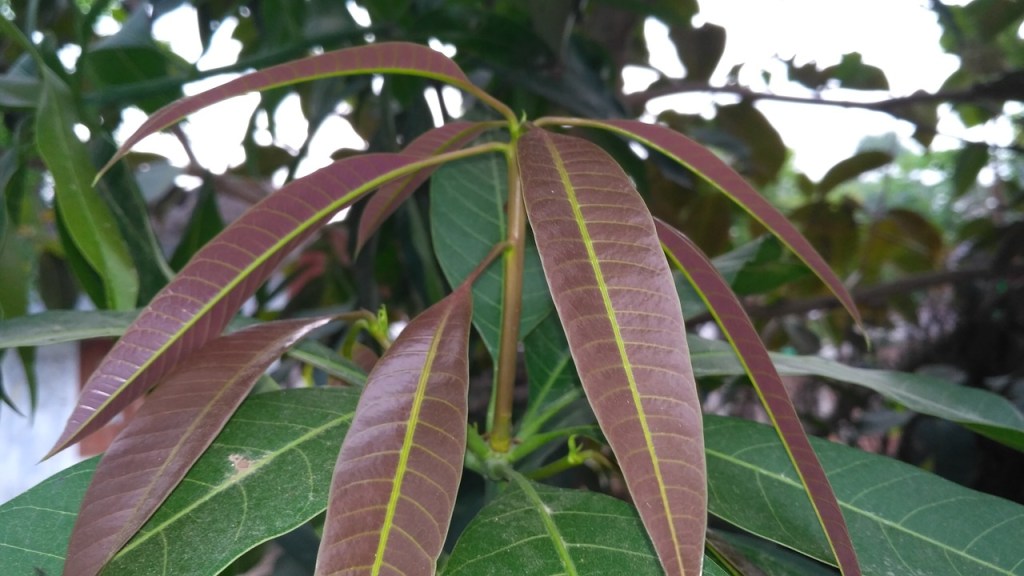
the tender
mango leaves,
have begun to sprout.
There’s a ruckus outside 
the window, the babblers
you watched over daily,
are scrambling for grain.
 
Let the love
your gurgling laughter
spread, the faith 
that kept you busy
on cold nights,
the beauty of your 
giving freely,
gather --
to weave a magic blanket
to protect and heal you.


Clouds

Every cloud holds a story,
in its nameless form
and its formless cape.
One edges out the sun,
jutting on its way
and dabs its cheeks
with pink splotches.
Another blazes a trail,
of gold dust and flushes
in borrowed beauty 
for half-a-second.
One stands like an anime,
poised for eternity. 
There’s an in-between god,
who rides a tiger
and pours rain callously
on a cold, feverish city.
The posthumous rain
will splash on, till
the burning fever wrath
evaporates like a dream,
when the folds of the cloud
unfurl and let 
the clear sky be.

Geetha Ravichandran lives in Mumbai. When she is not working, she watches the sky and the sea.  In the past year, her poems have been published in Borderless, Setumag and included in a couple of anthologies published by Hawakal.

Categories
Poetry

Empty Spaces

By Geethu V Nandakumar

For you, I would be those spaces between the words-- empty and forgotten
For some, I would be those backgrounds disguised in an attire of white.
Look for me and if I am imperceptible to your eyes,
read the dialect of silence within the interiors of its voidness.
Recite the eclogues that's encrypted in it.
Unravel the dots and labyrinthine patterns concealed behind its flowing cape.
Drown into the stillness it beholds. 
Read the tales it enfolds.
You may find meaning
to the words that it accompanies.
Count down the cerulean pearls 
of hidden emotions lingering 
in its pristine white sea.
For if there had been no spaces,
Then those words would have been mere bodies -- dead and buried.
If you see this,
Stare at those spaces for one last time
And you will see me,
like a tangerine sun that creeps 
into the hazy sky 
chanting triolets 
of the deepest of desires!

Geethu V Nandakumar, is a post-graduate student of English language and literature. A writer by passion, her writings chronicle harsh realities of human life and multitude of thoughts that often unfurl into a world of hope, new understanding and transformation.

.

PLEASE NOTE: ARTICLES CAN ONLY BE REPRODUCED IN OTHER SITES WITH DUE ACKNOWLEDGEMENT TO BORDERLESS JOURNAL
Categories
Lockdown Stories

The Arangetram or the Debut

By Sheefa V. Mathews

Pavithra skipped into the apartment wearing a mask of blue denim. Everything about her was quick and she seemed to be float on a restless bubble of energy. 

Amma! The dress rehearsal went very well! I can’t wait for tomorrow.”

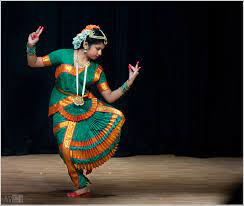
Savitri looked at her daughter and could not help but feel a surge of maternal pride. Pavithra had worked so hard. During the lockdown she had continued working on Zoom with her teacher all for the arangetram which was to be the next evening. They had been through a trying two months of lockdown due to the pandemic, but restrictions had eased a month ago and she had resumed classes with social distancing. It was two weeks since all restrictions had been eased, and she had booked a big hall near their home. The tailor had made the beautiful peacock blue and orange costume with shimmering gold borders. All the jewelry had been bought and decorations and food had been arranged. What had seemed impossible two months ago was suddenly possible.

“How many of your friends are returning home with us for dinner?” asked Savitri smiling at her daughter preening in her golden nose ring studded with deep red stones. “Pavi you look ridiculous wearing a nath with your jeans!”

“Only five, Amma,” said Pavithra giggling happily as she removed the nath. “The others have not got permission. With school going at breakneck speed their parents are not happy to send them, but they will all come to the hall.”

“Now go shower and change. I’ve made your favourite roti for dinner.”

“Ma, you are the best!” said Pavithra as she rushed to her room to shower. 

Savitri heard her husband come into the sitting room and sit ponderously on the armchair. The next minute the television came on and the news reader was updating everyone on the latest about the nation.  Pavithra fresh from her shower dressed in light blue pajamas came and perched on the arm of the chair telling him about her day. Vishwanathan partly listened but most of his attention was on the news.

“We interrupt the news bulletin to bring a special announcement from Delhi,” said the news reader. The Prime minister came on the screen and said that as they had seen an unprecedented spike in the number of cases, lockdown has again been instituted barring only essential services.

The moment seemed frozen in time as the reporter took over and droned on reading a list of essential services.  A heartrending sob escaped Pavithra, and she rushed blindly to her room, eyes thick with tears. She lay face down on the bed and hot, angry tears flowed down her cheeks.

“It’s not fair,” she sobbed. “I’ve worked so hard! Just one more day just to do my arangetram that’s all I want. I hate this world!” Her mother and father sat beside her trying to calm her, make her feel better.

“Come and eat your dinner you will feel better,” said her Amma.

Amma, Apu, I need to be alone. I don’t want dinner. Just leave me alone. I’m okay now,” said Pavithra. “Please I need some space. Take that with you please,” she added, pointing to the shimmering peacock blue outfit.

All her friends tried calling but they were met with mechanical recording that the device had been switched off.

In the morning Pavithra came in for breakfast looking pale and a little shamefaced. She hugged her parents and talked a bit too cheerfully and loudly, but she was not fooling anyone. The doorbell rang and the mother went out to find a large packet of fresh jasmine garlands and some roses that had been delivered as arranged by the milkman. She had forgotten to cancel the flowers for Pavithra’s hair. She quickly wrapped them up and took them to the kitchen. She would cut it up and send it to the neighbours after Pavithra went to her room. The fragrance of jasmine hung guiltily in the air around her as she bustled into the kitchen.

The crisp ghee masala dosas were her favourite and Pavithra pretended to enjoy them as she knew that it was her Amma’s way of consoling her. It took all of her courage and strength to swallow down the second. “I’ve got to catch up on some project work,” she said and slipped into her room.

Savithri’s phone rang, and it was Angela, Pavithra’s best friend and neighbor.

“How is Pavi aunty? She won’t pick up her phone!”

“Give her time Angela. She is trying to be good about it, but the poor thing is devastated. Infact the flowers for her hair came just now and I have moved the package to the balcony as the fragrance will surely make her weep again”

“Okay auntie! Take care! Will try calling her again after lunch.”

When Pavithra came in for lunch she seemed better.  She brushed aside her Appu’s question with “I’m a big girl Appu. I got this!”

Her father knew that he could say no more on the subject. His heart was breaking seeing his daughter’s disappointment and pain, but he was also immensely proud that she knew how to pick her battles and accept hurdles and setbacks in her stride. He was dreading 6pm which was the auspicious time they had fixed for her arangetram. He wanted to discuss it with Savitri, but her phone had been ringing nonstop from the morning – all their relatives and well-wishers wanted to know how Pavi was.

While he was dozing in his favourite chair Savitri was busy with her phone. At 4pm, she went to her daughter’s room and knocked on the door. “It’s Amma,” she called out on hearing no response.

“Please leave me alone Amma, I’m alright — just need to be alone.”

“Open the door Pavi I want to ask you something.”

Pavithra opened the door. She looked miserable and was bravely holding back her tears. Savithri felt a rush of love for her brave child.

“Pavi put on the costume and flowers and dance for Appa and me. We will hold your arangetram at the auspicious time.”

Amma our little apartment has no room, and I will be bumping into things. “

“With the curfew there will be no one in the quadrangle stage of our building. You can dance there and Appa and I will watch you.”

“What about the music? I don’t have all of it recorded.”

“Your teacher has agreed to send it all. She will bless you through Zoom and sing the first half herself.”

Pavi’s eyes started gleaming. Yes, it could be done even if it was just her parents watching. With a smile her mother started braiding her hair carefully attaching the piece that would make the braid reach her hips. Row upon row of jasmine flowers interspersed with a few roses were carefully attached to her hair. Then the golden ornaments were fixed at regular intervals. Her hair was ready.

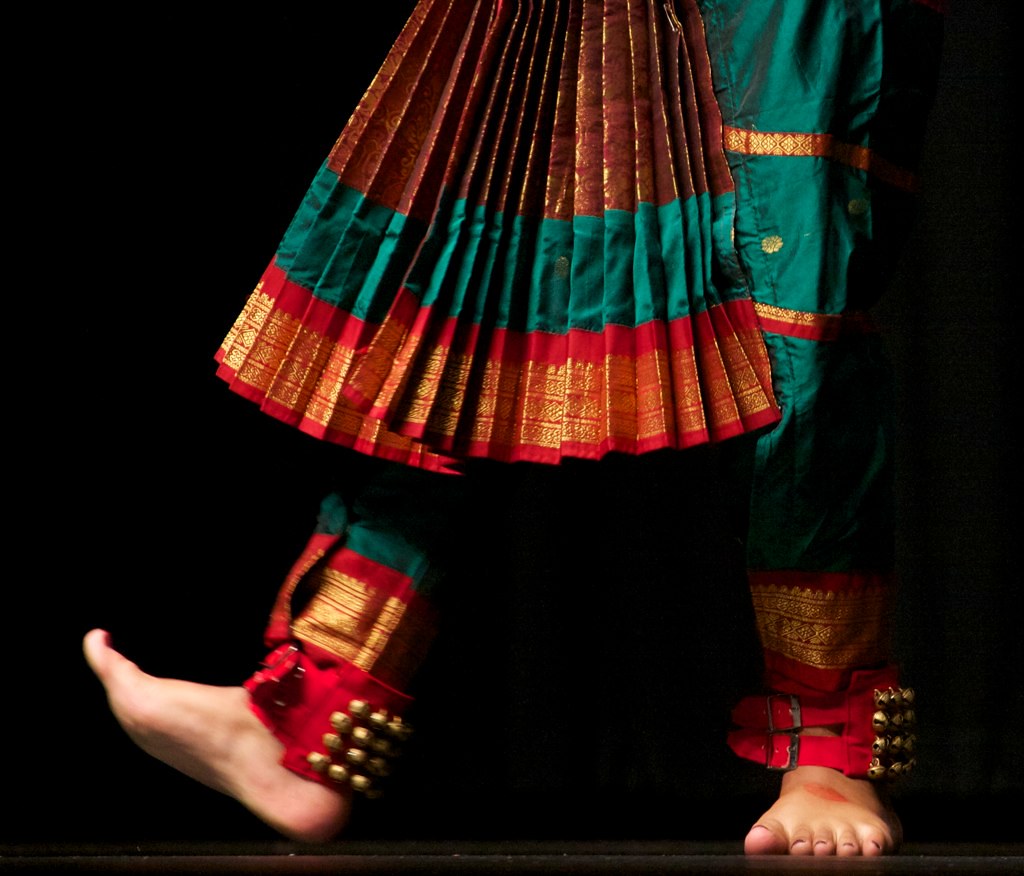
“Love you Amma,” said Pavi as her mother started lining her eyes with black eye liner. After the make-up, she got into her beautiful costume and leant down to tie her ghunghoroos. The time was 5.45 pm. She bent down and touched the feet of her mother and father seeking their blessing. Vishwanathan could not hold back the tears of pride and joy as he looked at his beautiful, brave girl.

From the lift they walked to the quadrangle. Savi set up the cordless speakers and the laptop. Dot on six Pavi’s teacher came on the screen. Pavi received her guru’s blessing with her head bowed low.

Tha, they, thith, they…  her teacher called out the opening notes and Pavi started moving her feet in the dark quadrangle. Suddenly a strobe of white light hit her hand, then another lit her face, yet another followed her feet. All around the residents stood in their balconies and at their windows aiming their bright, white phone torches at the dancing girl.

Pavi danced as she had never danced before. Her mother turned up the volume of the speakers and every pose was received with cheers and claps. When she finished Pavi bowed to her teacher, then her parents and finally did a twirling bow to all the people who were her audience. Plomp something hit her cheek. It was a rose, a zinnia landed near her feet, a Cadbury chocolate hit her ear, it was raining flowers and chocolates. “Love you all,” screamed Pavi as she blew kisses in all directions and collected her gifts. She had her arangetram and it was more special than she ever thought it would be.

Appu, Amma and Pavi walked silently back home, arms laden with gifts only to find many more gifts of food left at their doorstep. It is love that makes everything special said wise little Pavi as she hugged her parents.

Glossary

Amma – mother   

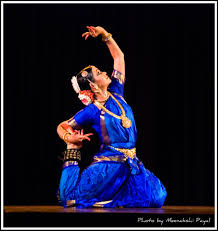
Arangetram – First debut public performance for Bharatnatyam dancers.

Roti — flatbread

Apa/Appu – father

Dosas – South Indian salty pancake with stuffing

Ghungroos – Bells

Guru — teacher

.

Sheefa V. Mathews is a professor of English Literature and enjoys writing. She is currently working on her first novel. 

.

PLEASE NOTE: ARTICLES CAN ONLY BE REPRODUCED IN OTHER SITES WITH DUE ACKNOWLEDGEMENT TO BORDERLESS JOURNAL
Categories
Poetry

Slices of the Sun

Poems by John Grey

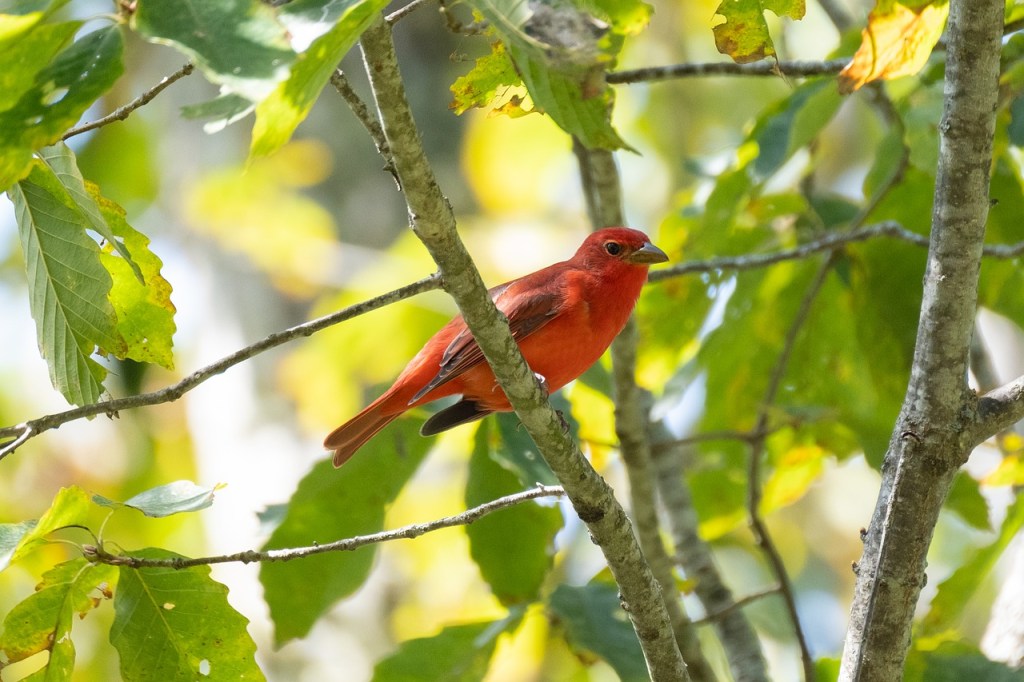
Tanager
ORANGE

Holy scent
of after rain,
the sigh of breezes
in the canopy,
flowers unbowed
by gilded rainbow,
brisk tanager
chirps crimson in the mist.

Such birthright. Such bequest.
Fervour of daylight,
silky sheen of utter midday,
luminous dawn,
crisp with heaven's air,
twilight,
the second wind of fire.

Night falls.
I eat an orange,
cut in quarters,
slices of the sun.


THE TRAUMA THAT REMAINS

You’re terrified of fire.
I can see it in your eyes.
A roaring hearth before you.
You struggle to tamp it down with tears.

Your mother and sister
perished in a blaze, 
caused by a faulty electric wire.
You were staying with friends at the time.

You’re also afraid of staying with friends.
You need to leave, go home to your empty apartment.
There’s no one there in need of saving.
At least, not until you get there.


THIS IS MY WORLD

The lake below the town
is a blue haze
in which two mute swans
glide back and forth like yellow-beaked sailboats.
The old fishing shack is half-smothered in moss.
An egret is shaking out its wings.
Light fades from the sky.
A chanting chorus of frogs
pulse the edge of day.
You can catch me at home later.
I’ll be listening to jazz.


John Grey is an Australian poet, US resident, recently published in Orbis, Dalhousie Review and the Round Table. His latest books, Leaves On Pages and Memory Outside The Head, are available through Amazon.

.

PLEASE NOTE: ARTICLES CAN ONLY BE REPRODUCED IN OTHER SITES WITH DUE ACKNOWLEDGEMENT TO BORDERLESS JOURNAL
Categories
Musings

The Significance of Roll Numbers

By Shahriyer Hossain Shetu

“What is your roll number in the class?”

I was never able to answer this question. At a very young age, I realised that the importance of having a roll number is highly significant in our society. This significance includes three important aspects that reflect a student’s life: First, on a scale of balance, the weight of a roll number placed next to a grade is heavier than any other qualities of a student. Second, it adds an enormous impact on careers availing people to differentiate between the best and the worst. And third, it clarifies who deserve all the importance as well as compliments from everyone.

Back then, I was not familiar with the concept. Due to my unfamiliarity with the term, I ended up questioning my Abbu (father), “What exactly is this roll number thing, why does everyone keep on asking me this question?” His answer, being straightforward as always, was, “Ask your Ammu (mother).” His reply was very much expected considering how hasty he has always been because of his work as a journalist. Asking my Ammu would have been a waste because she too would give me a similar response to Abbu. The scenario was like a football match where I, like a football, was being passed between one player to the another from the same team, unable to determine where exactly I was going.

Before getting admitted to a school, I mostly spent my time watching television. CN (Cartoon Network) was my best mate with whom I had spent most of my childhood. I got so obsessed with the fictional characters of CN that I started to draw them on papers using pens of different colors. My obsession started to develop into a habit and gradually to an escape from reality. But my escape route had to be closed as I was told by my parents that it is religiously prohibited to draw human figures. Plus, there is no particular future in such an obsession. “The real talent only lies in books and knowledge.” And to have a bright future, the first step is to reach the top position in the classroom. Thus, I stopped drawing.

I did my schooling in an ordinary English Medium institution located in Dinajpur. Because of my father’s job as a district correspondent, I was lucky to spend my childhood in that beautiful region. One well-known place in Dinajpur is the Boromaath (literally, Large Field), a huge green field that can be considered as the heart of the district. My school was close to Boromaath and we would often bunk our classes to play cricket or football on the big field. Our school was the only English medium institution in that locality and the idea of O and A level was not much appreciated by people who lived outside the capital. Thus, very few students in our vicinity were English medium students because people were also suspicious of the system in such schools.

As we were fewer student, the idea of having roll numbers was futile. Although, instead of roll numbers, we had registration numbers that were not given based on any academic excellence, capability, or talent. These numbers were like a code that they had shared with us as evidence for being a part of that institution. One can say that the numbers were an unnecessary adjunct, occupying an extra space in our school identity cards right under our long names.

The idea of classifying students was visible, even though we had no discriminating term as the roll number next to our grades in school. This categorisation of students based on academic grades came with extraordinary packages that concerned only the top candidates — too much care from the teachers, applause from parents, and the privilege of having too many friends. Unfortunately, I was not among the good ones to receive such privileges as my marks were never satisfactory and the dream of achieving the “extraordinary package” was never a reality for me. Due to my incapability, I had to go through an extreme ordeal of taunts and insults from my surroundings. I was already declared as the “worst” kind.

The ordeal phase was mostly because of a particular distant relative who could’ve been a millionaire if criticising could be called his full-time vocation. I still can recall the face of that overly concerned person who loved to critique my every action like a war hawk. He assumed that I was too embarrassed to share my roll number with anyone because of my poor grades. I wasn’t sure of the reason for his fantastic assumption. His way of speaking seemed too absurd to me, and I ended up raising my voice to prove my point, wrecking all traditional beliefs. As a result, I received the title of a “discourteous” child in the family. He even informed my other relatives about my “rudeness” just to prove his point.

Being raised by a middle-class family that only follows ethics and traditions, I am not supposed to defend myself from elders (not even to save my dignity) as it is religiously as well as societally prohibited. Although, using the code of “seniority,” an elder can cut and split me into two with his sharp-edged words.

He still reprimands my parents for not raising me properly because of that particular reason. How can defending ourselves from senior citizens who are almost toxic, wicked, and torturous be wrong? What does it have to do anything with our parent’s nurturing method? I still couldn’t figure it out.

The importance of roll number is still high in our country. Is it necessary to analyze a child’s future just by seeing his academic grades and categorizing him/her in first to last numbers? I don’t know. But I do know that this idea is destroying lives before it even started.

.

Shahriyer Hossain Shetu is a student in the Department of English & Humanities, ULAB. Some of his writing has appeared in Daily Star, Bangladesh.

.

PLEASE NOTE: ARTICLES CAN ONLY BE REPRODUCED IN OTHER SITES WITH DUE ACKNOWLEDGEMENT TO BORDERLESS JOURNAL
Categories
Nature's Musings

Changing Seasons

By Penny Wilkes

The weather changes
    Socks lose their mates
          Traffic and noise annoy
Tastes fade
   Friends lose interest
           Ideas wander 
We notice a
  slide
    a dwindle
         or a drain
 
Without looking
    backward
       or forward
One moment
    lingers
      for attention
Then buoyancy
    lifts us
      as we marvel
             at the sunset
Discomforts
      slip away
           into the sea

Penny Wilkes,  served as a science editor, travel and nature writer and columnist. An award-winning writer and poet, she has published a collection of short stories, Seven Smooth Stones. Her published poetry collections include: Whispers from the Land, In Spite of War, and Flying Lessons. Her Blog on The Write Life features life skills, creativity, and writing:  http://penjaminswriteway.blogspot.com/ . Her photoblog is @: http://feathersandfigments.blogspot.com/

.

PLEASE NOTE: ARTICLES CAN ONLY BE REPRODUCED IN OTHER SITES WITH DUE ACKNOWLEDGEMENT TO BORDERLESS JOURNAL
Categories
Stories

The Crystal Ball

By Saeed Ibrahim

Rohit’s interest in star signs went back to his school days. His teacher, Professor Godbole, apart from being a Maths teacher, was also an amateur astrologer. It was from him that Rohit had learnt about the alignment and movement of the planets and their effect on a person’s life and character. Later on, with the pressures of his engineering studies and his subsequent employment as a software engineer, Rohit did not have the time to pursue a serious study of the subject. However, his faith in astrological predictions had remained.

Rohit was convinced that astrology provided an effective guide to steering one through life and planning one’s future. He regularly followed the “What the Stars Foretell” column in the newspaper, and it was the first thing he looked at each week in the Sunday magazine section. Not that Rohit’s current situation in life needed any particular guidance or reassurance. No dark clouds appeared to darken his horizon. For a twenty-six-year-old, he was on a fairly good wicket and not doing too badly by most standards. His job was paying him well and living with his parents, he had few overheads. He liked his work and was popular amongst a small group of friends.

Each Sunday, he joined his buddies for a game of badminton at a sports centre near his home. The four of them would take turns to book a court in advance and after sweating it out on the court, they would get together for a round of beer followed by a game of carom in the games room. On one of these Sunday mornings, Rohit and his friends had gathered together as usual in the clubhouse after their badminton game. His friends often pulled Rohit’s leg about his penchant for astrology.

“Hey Rohit, have you checked your weekly forecast today? You can’t afford to miss this one!” teased his friend Prakash.

Rohit had to take his elderly father for a morning blood test and for the first time in months, he had not had a chance to see the weekly horoscope column in the newspaper. Prakash pulled out the Sunday paper from his backpack and, clearing his throat, he read out aloud the prediction for Rohit according to his birth sign:

You may be required to take some tough decisions at work. Some of you may be walking on thin ice.” Prakash paused for effect and looked up at Rohit. A look of consternation appeared to cloud Rohit’s face. He leaned forward to listen more attentively to what his friend was saying. Prakash seemed to be enjoying the effect his words had had on Rohit. “Hold on folks – there’s more to come!” he announced, as he continued to read from the newspaper:

 “Avoid getting involved in any unnecessary conversations at work. There are hidden enemies who may be conspiring against you. The health of a parent may cause concern.”

Rohit hastily grabbed the newspaper from Prakash, wanting to verify for himself what Prakash had announced. His face turned pale as he read the ominous prediction.

“Is everything alright, Rohit?” Sameer asked with concern.

Rohit did not answer. He looked troubled and disturbed by what he had just read.

Prakash, guilty at having upset his friend, offered:

“Relax, Bro. Don’t take it to heart. We know how utterly unreliable these forecasts can be.”

“You shouldn’t be taking this seriously. These words are not targeted at you. If anything, they could be applicable to a thousand others,” Akbar tried to reassure Rohit.

But Rohit appeared distracted and preoccupied. He felt the need to be by himself and excused himself saying:

“Sorry guys I have to leave you. I have to check on my Dad. He has not been keeping too well.”

On reaching home, Rohit went up directly to his room, pensive and a bit shaken. He would not have given serious thought to the enigmatic warning in the week’s forecast had it not been for the fact that it seemed to strike home with accuracy. At his software firm things had not been terribly favourable of late. The economic slowdown had had its impact on the IT industry as well. Many of the smaller firms had been badly hit and there had been job cuts and retrenchments. Had the recession caught up with his company as well?

What tough decisions were in store for him at work and what was the meaning of the words “walking on thin ice?” Was his job at risk? Was he likely to be fired on account of downsizing as some of his friends in the industry had been?

The second part of the forecast was equally confusing and worrying. Who were the hidden enemies mentioned and was there a plot being hatched against him? Henceforth he would have to be on his guard all the time. And of course, as far as the health of a parent was concerned, it had hit the nail on the head. His father had been quite unwell recently and this had been a source of worry for both him and his mother.

With these disconcerting thoughts plaguing his mind, Rohit left for the office the following day. He had decided that he would try to be extra diligent in his work so as not to give rise to any complaints from his boss. Also, keeping in mind the warning from the horoscope, he would go about his activities keeping his ear to the ground, alert to any suspicious behavior around him.

Later that day, in the office corridor he saw a group of his co-workers huddled together in conversation and talking in whispers. As he passed by, he noticed that they had stopped talking. Was there some conspiracy afoot and was this the group of hidden enemies that he had been cautioned against? Maybe it was just his imagination. He dismissed the thought and went ahead towards his workstation. But the following day in the lunchroom, his doubts were confirmed when he saw the same group of colleagues sitting together at a table and looking meaningfully towards him. When they realised that he had noticed them, they quickly lowered their gaze and looked away in another direction.  Rohit was now convinced that the group was plotting against him. But what was he to do? For the moment he had no proof to support his doubts. Maybe it was best that he bide his time until he came upon some concrete evidence.

However, his peace of mind had been destroyed and his sleep that night was troubled and disturbed. Try as he would, he could not get the words of the forecast out of his mind. The following Sunday he avoided meeting his friends and remained brooding at home. With uncertainty and self-doubt plaguing him, he needed some sort of reassurance that these forebodings would not come to pass and jeopardise his career in any way.  He thought of consulting his astrologer friend, his former Math teacher, Mr. Godbole, but found, to his dismay, that his old mentor had passed away only a few months ago.

He had almost given up in despair, when on going through the classifieds, his eye was caught by the following ad:

“Worried about your future? Get your fortune told and find out what destiny holds for you. Contact psychic reader Madame Aishwarya”.

There was a phone number given beside the name and Rohit hurriedly noted it down before returning the newspaper to its usual place in the living room. His parents normally took a nap after the family’s Sunday lunch and Rohit decided to use this opportunity to make the call. He nervously dialed the number and with a beating heart he waited for the phone to be connected.

On the fifth ring, the phone was picked up and a tired, gravelly voice at the other end announced:

“Yes, who is this?”

“Good afternoon, Ma’am. Is this a good time to talk to you?” Rohit asked tentatively.

“Well, not exactly.  But go ahead. Tell me who you are and why you are calling”

This is not going to be easy, Rohit thought to himself, as he braced himself and stammered back:

“I am Rohit and …I… err… saw your ad in the paper today, and… err… I was wondering if I could have a consultation with you this evening.”

“Is this for yourself? If that is the case, you can come today at 6 pm. Call this number and ask for directions. I charge Rs. 1,000 for a fifteen-minute consultation.” A number was called out and the call was ended abruptly.

Rohit just about managed to jot down the given number. He felt a bit unsettled by the strangeness of his telephonic interaction and the mystery that seemed to surround Madame Aishwarya. Why hadn’t she explained the address herself and what was this other number he had been asked to call? He was in two minds about whether to pursue the matter and make the follow up call or just forget about the whole thing. He finally decided that having come this far, he may as well continue. He picked up the phone and dialed the given number.

“Royal Lodge, good afternoon,” a male receptionist’s voice answered.

Rohit was taken aback. He thought maybe he had dialed the wrong number. He had half expected to be put through to Madame Aishwarya’s secretary. But… Royal Lodge???  The mystery seemed to deepen.

“Royal Lodge, good afternoon,” the voice repeated.

“I was given this number by Madame Aishwarya,” blurted out Rohit. “I have an appointment with her at 6 pm this evening.”

“Yes Sir. Madame Aishwarya is a long-staying guest at our lodge. Would you like me to explain the address to you?”

The Royal Lodge, as it turned out, was a modest-looking guesthouse located in the centre of the city, close to the railway station and the main bus terminal. It was one of several reasonably priced lodgings opposite the city’s transport hub that catered mainly to budget conscious travelers, itinerant traders and salesmen and young employees entering the job market.

Rohit arrived early and was told to wait as Madame Aishwarya would only see him at the appointed time of 6 pm. Striking up a conversation with the receptionist, Rohit learnt that Madame Aishwarya was a clairvoyant who had once been sought after by princes and prime ministers alike for her amazing psychic powers and her ability to foretell the future. She had fallen upon hard times and was practically abandoned by her high-flying clientele. She now lived as a long-staying guest at the Royal Lodge. She slept for most of the day, saw clients by appointment in the evenings, and did a weekly horoscope column for a daily newspaper.

When it was time, Rohit was led up a narrow staircase and ushered to a guest room on the second floor. His discreet knock received a brief “Come in” in the same raspy voice. Rohit entered a small, darkened room lit by a single blue electric bulb that suffused the interior with an eerie half-light. One wall of the room was hung with a single, large portrait of a long-haired god man with a sandalwood garland adorning the frame. A strong aroma of incense pervaded the entire room and added to the other-worldly aura of the small, confined space. In the middle of the room was a rectangular table and hunched over it was the figure of a rather large woman in her mid-sixties, dressed in a black, ankle length kaftan and a spotted blue head scarf worn over a striking, though heavily made-up face, which could have once been described as handsome. Apart from a heavy, beaded necklace and large earrings, Madame Aishwarya wore no other jewelry.

“Take a seat, young man. You are allowed a consultation of fifteen minutes with three questions that you would like answered.”

In the centre of the table was a quartz crystal ball, of a size somewhere between a cricket ball and a football. The crystal ball was mounted on a small metallic stand and next to it was a lighted candle whose flame illuminated a number of tiny crack-like imperfections on the crystal, throwing up sparkling rainbow type images. Rohit sat transfixed, totally mesmerized by the sight in front of him. The lady now closed her eyes in concentration and after a few minutes she re-opened them, placed her hands over the orb and gazed intently into its depths.

Rohit had come with the idea that he would unburden himself of all that had been troubling his mind, but totally awed by the lady’s persona and the fascinating object that she held between her hands, he appeared to have lost his tongue. Forgetting about the three questions, Rohit, with some difficulty, managed to get across in a few words his concerns relating to his workplace and his fears about losing his job.

“Dark shadows are hovering over you at your place of work. Evil forces are at play to thwart you in your career. I hear whispers and see an open pit lying in front of you.” intoned Madame Aishwarya as if in a trance.  

Rohit gripped his chair and broke into a cold sweat.

“But fear not, young man. You will ward off your enemies if you wear a moonstone close to your skin. The moonstone is your birth stone, is it not? It will keep the evil forces away and draw only good vibrations towards you. Health-wise, don’t be afraid of sickness in your family. If a person you are close to is ill, he will soon be healthy again. Romance and marriage are in the air for you. Your parents will arrange your marriage and it will be a perfect match. I see several children.”

With these words, she rose from her seat, blew out the candle and covered the crystal ball with a square of cloth, indicating by her actions that the consultation was over.

“You may place the fees on the table here. I think you know your way out,” she informed Rohit in a tone suggesting that he was dismissed.

Rohit was speechless and stunned by the clairvoyant’s words. He put the money down on the table and stumbled out of the room confused and bewildered. He had expected some comforting words of reassurance, but the lady’s sinister words had only served to re-enforce his misgivings. His father was already well on the road to recovery and his health was no longer a matter of concern. As for marriage, it was the last thing on his mind right now.

Dejected and disillusioned, he trudged to the office the following morning. He had not got over his dark and depressing frame of mind and he found it difficult to concentrate on his work. Mid-morning, he was summoned to the manager’s office. This was what he had feared all along. It was only a matter of time before the death knell would sound, and this was it.  Today he was going to be given the dreaded pink slip.

On entering the manager’s office, he was surprised to see that he was not alone. There was his immediate supervisor, the manager, and the CEO of the company, all of them seated in a row. He would have preferred to be given the bad news by just his supervisor, instead of being humiliated in front of the entire senior management team.

“Good morning, Rohit. Do take a seat,” the CEO called out in a cheery voice. Why did he have to sound so cheerful? If only he knew how nervous it made him to have to face all three of them together.

Rohit barely managed to return his greeting and with a weak smile, he sat down in the chair in front of the manager’s large desk.

“Your supervisor and manager have been telling me…” the CEO began to speak, and Rohit swallowed hard and lowered his head, waiting for the axe to fall.

“They have been telling me how happy they have been with your work and the additional responsibilities that you have undertaken. It has also been a year since you have joined the company. It is now time for you to get a promotion and an increase in your emoluments. Congratulations, Rohit! You have been made a team leader and you will henceforth report directly to your manager.”

Rohit could hardly believe his ears. The three stood up to shake hands with him, and the manager informed him that the human resource department would give him his new terms of appointment sometime later in the day. Rohit struggled to his feet, mumbled his thanks to the trio and left the room in a daze. It took several minutes for reality to sink in and before he could breathe a sigh of relief. When finally, the impact of what he had just been told dawned on him, a cry of joy escaped his lips as he pumped his fist in triumph. With a spring to his step, he returned to his desk, barely holding back the temptation to immediately call his family and friends to announce the good news to them.  

With renewed self-confidence and a restored belief in himself, Rohit returned home that evening with the realisation that his fears and misgivings had after all been totally irrational and unfounded. So much for crystal balls and astrological predictions!

.

Saeed Ibrahim is the author of “Twin Tales from Kutcch,” a family saga set in Colonial India. Saeed was educated at St. Mary’s High School and St. Xavier’s College in Mumbai, and later, at the University of the Sorbonne in Paris. His short stories and book reviews have earlier been published in the Bengaluru Review. 

.

PLEASE NOTE: ARTICLES CAN ONLY BE REPRODUCED IN OTHER SITES WITH DUE ACKNOWLEDGEMENT TO BORDERLESS JOURNAL
Categories
Essay

Remembering Shiv Kumar Batalvi

By Amrita Sharma

Shiv Kumar Batalvi: Sourced by Amrita Sharma

A shayar (poet) who received exceptional fame, a poet who became the youngest recipient of the Sahitya Akademi Award and a star who left too early at a young age of 36, Shiv Kumar Batalvi remains one of those few poets who lived and died within the embrace of poetic charm. Being an immensely popular poet during his lifetime who wrote in one of the Indian regional languages, Punjabi, he received international acclaim within a very brief span of time.

With around eight collections of poems to his credit and as a performer who read and sang his verses across innumerable public gatherings, Shiv Kumar Batalvi (1936-1973) remains a popular subject for critical writings ranging from doctoral thesis to popular magazines. Born on July 23, 1936, in a village, named Bara Pind Lohtian, situated in the northern part of pre-partition Punjab, Batalvi spent a peaceful childhood until his family migrated to India after Partition. As a young man in his twenties, writing in the 1960s, a period marked by a new force of modernity across the world, Batalvi’s verses ranged over a vast canvas of themes and wanderings. Though largely remembered as a love poet who was fascinated with death and grief, he wrote prolifically on subjects that even remained unconventional and anti-stereotypical for his time.

As the month of May marked the time of the year when Batalvi breathed his last, this article is a revisit to his poetic style that commemorates and celebrate his poetic vibrancy. Perhaps one of his most popular compositions remains his song titled “Ki PuCHde Ho Haal FakeeraaN Da” (The Condition Of Fakirs) that opens with the following lines that grew immensely popular with his performances:

Ki puCHdiyo ho haal fakeeraaN da
SaaDa nadiyoN viCHRe neeraaN da.
SaaDa haNjh di joone aaiyaaN da
SaaDa dil jaleyaaN dilgeeraaN da!

Why ask about the condition of fakirs like us?
We are water, separated from its river,
Emerged from a tear,
Melancholy, distressed!

With a poetic sensibility that remained enchanting with its rhythmic flow and vigour, Batalvi may be credited with enriching his first language with poetic compositions that captured its cultural essence. While not losing out on the classical Punjabi style, he wrote songs that were cast in a traditional tone and yet remained a part of the emerging modern verse. For instance, the following lines from his poem “Vidhva Ruht” (“Widowed Season”) read as follows:

Is ruhte sab rukh nipatare
Mahik-vihoone
Is ruhte saaDe sukh de sooraj
SekoN oone.
Maae ni par vidhva joban
Hor vi loone.
Haae ni
E loona joban ki kareeya?
Maae ni is vidhva rut da ki kareeye?

In this season the trees are leafless,
Without fragrance.
In this season, the sun of my happiness
Has no warmth.
But even more bitter
Is my widowed youth.
Tell me,
What should I do
With this bitter youth.

With suffering and its accompanying emotions remaining closest to Batalvi’s poetic outlook, he carved verses that spoke to his readers and listeners, thus, revisiting an oral tradition. Recreating and enticing the concept of sorrow with his love for the natural, Batalvi wrote of an optimistic vision to it in a manner of a folk song, as in his verse titled “JiNdu De BaageeN” (The Garden Of Life) where he writes:

k taaN taeNDaRe
Kol kathoori,
Dooje taaN dard baRe,
Teeja te taeNDRa
Roop suhaNdaRa
GalaaN taaN milakh kare!

Remember that you have
The sac of musk,
You also have great sorrow.
Thirdly you are
Beautiful,
And your words are precious

Batalvi’s verses thus particularly remain memorable for his fascination with grief, pathos and pain.

Though having suffered severe critical dismissals, Batalvi nevertheless remained extremely popular with the masses. Majority of his compositions have been now cast into songs by numerous popular singers on both sides of the border within the Indian subcontinent. Having lived a life that often became a subject of social critique and having died at a very young age due to failing health, Batalvi perhaps remains a singularly unique poet who lived and died with  the unconventionality of his poetic romance.

While India faces a surge in the outbreak of the Covid 19 virus, we continue to alternate between emotions of anxiety and grief. Poetry by Batalvi encapsulates within itself a range of emotions that contain the charm of enticing an entire tradition of such alternating emotions, it remains endearing to remember such poets today. Difficult times as those we face today may serve to strengthen our faith in the capacity of literature that helps us look beyond our immediate surroundings. Recalling Batalvi’s poetry, I would like to end by leaving you with the following lines by him:


Ih mera geet dharat toN maela
Sooraj jeD puraana.
KoT janam toN piya asaanu
Is da bol haNDHaana.
Hor kise di jaah na koi
Is nu hoNTHeeN laana,
Ih taaN mere naal janmeya
Naal bahishteeN jaana

This song more soiled than the earth,
As old as the sun,
For many births I have had to live
The weight of its words.
No one else is able
To bring voice to it.
This song was born with me,
And will die with me.

(The texts for the poems  and their translations were taken from http://apnaorg.com/poetry/suman/index.html)

Amrita Sharma is a Lucknow based writer currently pursuing her Ph.D. in English from the University of Lucknow. Her works have previously been published in various online forums.Her area of research includes avant-garde poetics and innovative writings in the cyberspace.

.

PLEASE NOTE: ARTICLES CAN ONLY BE REPRODUCED IN OTHER SITES WITH DUE ACKNOWLEDGEMENT TO BORDERLESS JOURNAL
Categories
Humour

Limericks by Michael R. Burch


Time Out
 
Hawking’s Brief History of Time
is such a relief! How sublime
that time, in reverse,
may un-write this verse
and un-spend my last thin dime.
 
Time Back In!
 
Hawking, who makes my head spin,
says time may flow backward. I grin,
imagining the surprise
in my mother’s eyes
when I head for the womb once again.

The Dromedary
 
There once was a dromedary
who befriended a crafty canary.
Budgie said, “You can’t sing,
but here’s the thing:
just think of the tunes you can carry!”

The Better Man

Dear Ed: I don’t understand why
you will publish this other guy—
when I’m brilliant, devoted,
one hell of a poet!
Yet you publish Anonymous. Fie!

Dot Spotted
 
There once was a leopardess, Dot,
who indignantly answered: "I'll not!"
"The gents are impressed
with the way that I'm dressed.
I wouldn't change even one spot!"


.

Michael R. Burch has over 6,000 publications, including poems that have gone viral. His poems have been translated into fourteen languages and set to music by eleven composers. He also edits The HyperTexts (online at www.thehypertexts.com).

.

PLEASE NOTE: ARTICLES CAN ONLY BE REPRODUCED IN OTHER SITES WITH DUE ACKNOWLEDGEMENT TO BORDERLESS JOURNAL.

Categories
Nazrul Translations

The Equaliser

A Translation of Kazi Nazrul Islam’s poem “Samyabadi” by Shahriyer Hossain Shetu

Samyabadi recited in Bengali by Kazi Sabyasachi, Nazrul’s son
I sing the song of equality --
Where all obstacles have become one,
To unite Hindus, Buddhists, Muslims, Christians.
I sing the song of equality!
Who are you? -  A Parsee? A Jain? A Jew? A Santhal, a Bhil, a Garo?
Confucius? Charbakh Chela? State, state again and again.
My friend, regardless of what you want to be,
Whichever scriptures or books you carry on your stomach, back, shoulders, brain --
Read as much of Quran-Purana-Veda-Vedanta-Bible-
Tripitaka-Zendabesta-Granthasaheb as you can.
But why would you carry these burdens that only hurt?
Why bargain at stores when fresh flowers bloom in your path?
You have all the books, the knowledge of all ages,
You will find all the holy texts if only, my friend, you open your life!
All religions and eons reside inside you,
Your heart is the abode of all the Gods.
Why search for the divine in dead scriptures and skeletons?
He smiles within the immortal nectar that lies concealed in  your heart.

My friend, I am not lying,
This is the place where all royal crowns bow down.
This is the heart where can be found Nilachal, Kashi, Mathura, Vrindavan,
Buddha-Gaya, Jerusalem, Madina, Kaaba-Bhaban,
Here are the mosques, the temples, the churches,
Here Jesus and Joshua were introduced to the truth.
On this battlefield, the youth who played the flute chanted the great Geeta,
Shepherds and prophets met God on this field as friends.
Here is the heart that made the Sakyamuni meditate,
Discarding his kingdom for the cry of suffering humanity.
In the mountainous cave, the beloved son of Arabs heard his calling
To recite the verses of equality in the Quran.
I haven’t heard a lie, my friend,
No temple or Kabah is bigger than this heart.

Shahriyer Hossain Shetu is a student in the Department of English & Humanities, ULAB.

.

PLEASE NOTE: ARTICLES CAN ONLY BE REPRODUCED IN OTHER SITES WITH DUE ACKNOWLEDGEMENT TO BORDERLESS JOURNAL