To care,
Nurture and
Cherish till
Death do us part —

A day to celebrate the
Fecundity
Fertility and the
Rites of the passage of
Time.

-- Earth Day, Countercurrents,org
Earth Day is a celebration of our planet that has been our cradle and our home for the last 200,000 years, though the Earth itself is much, much older. It is more 4.5 billion years in age…Perhaps a number unimaginable in the small speck of our existence…
Our oeuvre for this occasion starts with non-fiction that celebrates the beauty, the fecundity of the planet along with its colours — travel stories from Himalayas to Antarctica. We meet whales and sail or climb mountains to see what we have done to Earth and its other residents. Through poetry and fiction, including translations of greats like Tagore, Jibanananda Das and Nazrul, we quest to understand the needs of our planet better… Do join us in celebrating our home — yours and mine…
Non-Fiction
In A view of Mt Everest, Ravi Shankar travels in the freezing cold of Himalayan splendour and shares magnificent photographs of Mt Everest. Click here to read.
In Sails, Whales, and Whimsical Winds, Meredith Stephens writes of her sailing adventures in New South Wales and spots some sporting whales. Click here to read.
In Climbing Sri Pada, Rhys Hughes takes us on a trek to the hilltop with unusual perceptive remarks which could evoke laughter. Click here to read.
It was June, and we were sailing north along the coast of New South Wales. We arrived at Hacking Bay to weigh anchor at sunset, and later fell asleep to the gently rocking motion of the boat. The following day, Alex made an early start up the coast before I roused. In anticipation of rough waters, he brought me an anti-seasickness pill and a glass of water. After lying there in my cabin for half an hour, I heard Alex uncharacteristically utter an expletive. I knew I couldn’t stay in bed any longer.
“There’s a tear in my mainsail!”
“What now?”
“We can’t get to Pittwater today. We have to find a sailmaker as soon as we can.”
Alex rang his sailor friend Luke who put him on to a competent sailmaker. We had just passed Botany Bay near where the sailmaker worked, so had to turn around in rough waters and motor upwind back to the bay.
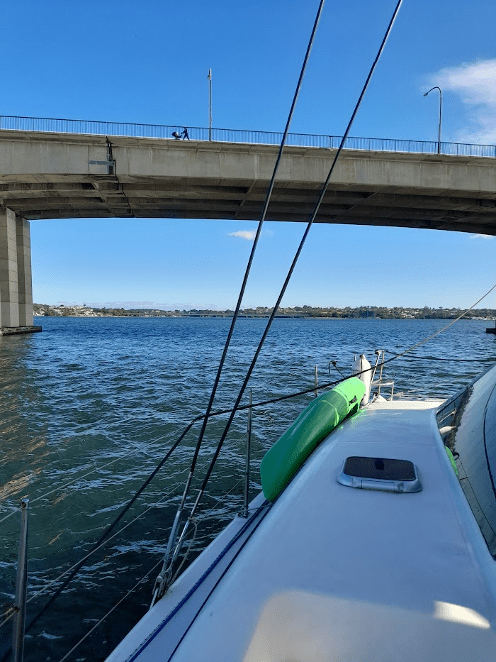
Soon after entering the bay into the St George Estuary we spotted the Captain Cook Bridge looming ahead of us. Would the mast clear the underside of the bridge? We gently and carefully started moving under the bridge. As we passed under it, we noticed the VHF antenna on top of the mast bending while scraping the underside of the bridge, so we reversed as quickly as we could and decided to wait nearby until low tide. After finding out the precise time of low tide we tentatively approached the bridge again, Alex all the while craning his head upwards and to the side of the helm to find the high point of the bridge. The VHF barely tickled the bridge, and we made it to the other side.
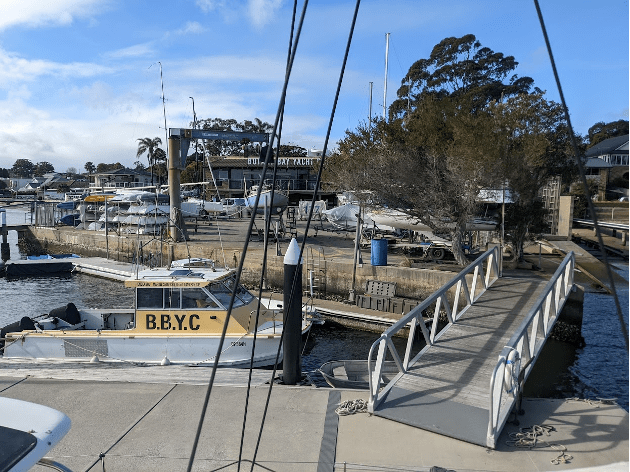
Then we navigated the boats dotted around the harbour while we made our way to the wharf. Shipwrights working there approached the berth and greeted us warmly. We threw them the docking lines and they expertly tied them to the cleats. The sailmaker arrived soon after to take the sail away for repair. We entreated him to have it ready before low tide the following day so we could pass back under the bridge and avoid being trapped another day.
We had twenty-four hours to pass in the Sans Souci neighbourhood and spent most of our time strolling along the pedestrian path by Botany Bay. Upon our return to the boatyard, the gates were locked, and we could not access the boat. Alex spied a metal ladder lying in the boat yard. He pulled it under a gap in the base of the fence and laid it against it. We climbed up and stepped onto one of the boats on the other side, and then lowered ourselves onto the ground. I ruefully thought that this was something only teenagers would do, but here we were in our sixties, using a ladder to enter a locked property.
The next morning the sailmaker arrived in good time and we heaved the sail back onto the boat. Alex raised the sail and looked pleased with the neat patch.
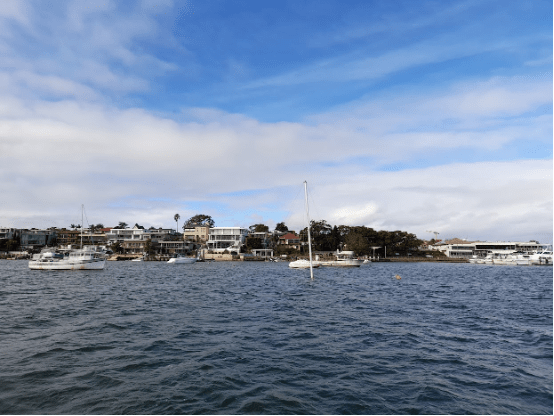
We waited until low tide, and then wove our way once more through the moored boats, even passing a sunken boat with its mast protruding through the surface of the water.
We precisely timed our passing under the bridge to low tide. As before, Alex proceeded under the highest point of the bridge.
We were exhilarated to have timed the low tide accurately and to have passed under the bridge with only the tip of the VHF antenna having gently grazed its underbelly. We exited the bay in relief and headed back to the Tasman Sea, turning back north to resume our trip up the coast.
Over the next few days, we enjoyed fair conditions for winter sailing. Sailing downwind was like floating in space. The boat cantered across the surface of the water but we had the sensation of being gently propelled through the air.
“This wind is a bit whimsical,” complained Alex, as he moved to the helm to turn on the engine.
“We are approaching Ballina so I have to keep an eye out for…”
“Whales?” I interrupted.
“No, craypots. There might be whales too, though.”
Alex scrutinized the horizon, shivering in his wet weather gear, searching for unforeseen objects.
The name of the town, Ballina, reminded me of the word for ‘whale’ in French: une baleine. In fact, the name has nothing to do with whales. Rather it was probably named after the Irish town of the same name.
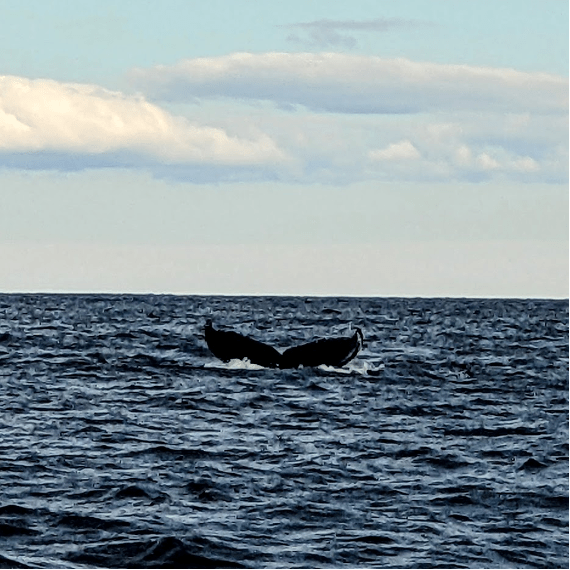
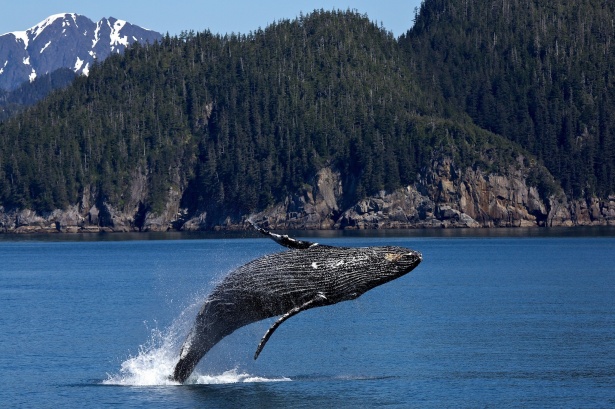
Whale sightings were the highlight of our voyage as we sailed north up the coast of New South Wales. They had migrated from the Antarctica for calving. These were my reward when it was my stint at the helm. Sitting still and observing did not come easily to me. Usually, I liked to busy myself with errands, reading, writing or socialising. I gradually became used to sitting at the helm for hours at a time trying to remain vigilant to spot obstacles to our path. One such day I was sitting there, sensing the swell of the ocean gently rocking beneath me as I held my posture erect, listening to the swishing of the water against the hull, when I was suddenly shocked out of my trance by a spout of water erupting from the ocean surface. Waves do not erupt horizontally so it held my attention. Then I saw a whale throw herself into the air to somersault, and then reveal her fluke as she dived back in again.
“Alex!” I screamed, uncharacteristically, surprising even myself.
It was like being transported to a film set. Alex sensed my excitement and came out with his phone camera, moving to the bow to get as close as he could.
“They’re only a hundred metres away,” he observed.
They performed another flip for us, and flashed their flukes as they dived down. We kept scanning the patch of ocean where they had given their performance, but they did not reappear. I retreated to the helm and then turned around as I heard another splash behind me. The boat had moved on, and the whales were making a reappearance in their original spot.
The trials of seasickness, straining to keep alert while on duty, and sail damage were more than compensated for in the unanticipated sight of a whale breaching before my eyes. All the hardships dimmed in those moments of awe.
Meredith Stephens is an applied linguist from South Australia. Her work has appeared in Transnational Literature, The Muse, The Font – A Literary Journal for Language Teachers, The Journal of Literature in Language Teaching, The Writers’ and Readers’ Magazine, Reading in a Foreign Language, and in chapters in anthologies published by Demeter Press, Canada.
PLEASE NOTE: ARTICLES CAN ONLY BE REPRODUCED IN OTHER SITES WITH DUE ACKNOWLEDGEMENT TO BORDERLESS JOURNAL
We set sail south from Dublin town
with forty-five sailors and one clown.

But before we reached the wide Atlantic
the frantic antics of the clown dismayed us.

Should we therefore throw him overboard?
we asked ourselves in urgent conference.

It would give us a chance to proceed
in peace and harmony, free from jokes.

Ah, to continue our voyage without fuss!
That was the issue we yearned to discuss.

And eventually we came to an agreement
that dunking was no cure for torment.

And murder was too extreme a measure
to improve the leisure of our journey.

The clown was a man, his painted smile
could be easily smudged with a frown.

There was no need to send his soul down
to the circus hell where clown ghosts go.

No! Let us find some alternative method
to restrain the fool and hobble his tricks!

We therefore employed him as a topsail
whenever the breeze turned into a gale.

And as his Pierrot costume billowed out
he would wail and occasionally shout.

Especially if he spied a distant whale
in a white dinner jacket, obviously male.

But that didn’t happen on a daily basis
for most of the whales had female faces.

Anyway, I have gone off on a tangent,
the sound of hornpipes is quite plangent.

And they call me back to my nautical duty
which is to lace up all the crew’s booties.

Not much else happened for several days
until mountains loomed through the haze.

We had reached Sierra Leone on our own,
just forty-five sailors and a lofty buffoon.

What an excellent marker of our progress!
It cheered us up and reduced our stress.

There was room in the hold for tropic fruits
and so we went ashore for an afternoon.

We bought bananas, mangoes and guavas
without anyone causing a hell of a palaver.

And then we set sail again, or should I say
we set clown again, and went on our way.

Shortly we passed the island of São Tomé
engorged on fruit with rather sore tummies.

It was at this point that symmetry suffered
a relatively modest but disturbing calamity.

For we had reached a latitude
where the second line of any couplet has an unbalanced longitude.

But we soon passed to happier frothy waters
full of strong mermen and their daughters.

A little later it was with squids we played
and afterwards with octopuses we prayed.

We safely rounded the Cape of Good Hope
and raised and lowered the clown on a rope.

By now he was fully reconciled to his position
and in fact embraced the ideals of our mission.

And those ideals were to circumnavigate Earth
and at the same time, to increase our girth.

Thus we devoured the fruit stored below deck
until juice ran out of our noses, flipping heck!

In the Indian Ocean we played deck test cricket
using the first mate’s wooden legs for a wicket.

Because there wasn’t much else for us to do
apart from stirring big barrels of strong glue.

Why the captain needed adhesive, I can’t say
but sticky wickets were the order of the day.

And that’s why we continued to bowl and bat
using avocado pears for balls that went splat.

But take care, shipmates! That was my shout
when beneath our hull erupted a waterspout.

It was so powerful that it lifted us up high
and then we were sailing through the sky.

Clouds filled the shrouds with damp fleece
and gulls in flight honked at us like geese.

Our altitude increased and we were chilled
and soon I supposed we would all be killed.

But when the waterspout turned itself off
we didn’t drop back into a terminal trough.

No! The clown on a mast extended his arms
and span on his axis to save us from harm.

Like a helicopter he was, but not a good one,
and for him, it can’t have been too much fun.

Yet his rotary action was certainly well-meant
and provided enough lift for our safe descent.

We landed in waters on the far side of Borneo
but jumbled up was our carefully stored cargo.

The clown was quite dizzy, but what of that?
So are rooms in which you might swing a cat.

Or is it the cat that is giddy thereafter? I can
never remember the exact categorical order.

The fruit in the hold had transformed into juice
and some nails in the planks had worked loose.

But we were still seaworthy and shipshape
and would remain so while on the seascape.

So we sloshed along like a wooden breakfast
with the clown, our saviour, sick on the mast.

But he would recover, he needed no physician,
for dizziness is merely a temporary condition.

And now we concentrated instead on the terrific
news that already our vessel was in the Pacific.

Leagues and leagues of unislanded blue water, see!
But is ‘unislanded’ a word that if used, oughta be?

I don’t know about that, I’m not a lexicographer,
and in fact I’m not even a competent geographer.

No matter! Onwards! We are circling the globe
and it doesn’t matter how quickly we are going.

Slow or fast, start and stop, and if the mate bellows:
“Avast!” we all know such a pause will hardly last.

And now we are sailing steadily east with no fruit
to feast on, but plenty of juice to swim in, undilute.

Solid food is what we require, growled the captain!
Though there’s no cellophane for it to be wrapped in.

Thus we stopped off at an island just beyond Fiji
to buy some cream fudge from a Heebie-Jeebie.

In nautical lingo a Heebie-Jeebie is a shrewd adventurer
marooned long ago who now has a commercial venture.

The fudge was copious and also coconut-flavoured
and he gave us extra portions as some sort of favour.

I think it was because he was originally from Dublin
and we reminded him of the things he was missing.

But there was sadly no room on board to take him along
so we departed while singing him a fudge-mangled song.

“Don’t worry too much and don’t make too big a fuss,
keep making your fudge and all will be fine, trust us!”

The lyrics of that song were probably a cruel deception
but when he heard them he gave them a good reception.

Anyway! Enough of that. Without wishing to fudge
the issue, we have other things to trouble our minds.

I’m a little bit concerned about how the lines of each couplet
seem to be getting longer and longer as this poem progresses.

They are almost twice the length of the opening lines
which, if you remember, formed the following rhyme:

“We set sail south from Dublin town
with forty-five sailors and one clown.”

So let us endeavour to sail closer to a shorter length
for the sake of the reader’s mental and poetic health!

And now we are nearing stormy Cape Horn,
as good a place as any for mariners to mourn.

Tossed on the waves for two and a half days
we were lucky to emerge wholly unscathed.

Back into the Atlantic we plunged in alarm
while the clown vibrated from the yardarm.

But finally in calmer waters we settled down,
the odds reduced that any of us might drown.

As for myself, I looked forward to docking
yet again in the harbour of old Dublin town.

Weary of travel and the fathomless blue deep,
tired of this poem and exhausted with sleep.

Lacing booties to furious hornpipe melodies
no longer fills me with joy but only self-pity.

But only a score of leagues or so left to go
and with this wind there is no need to row.

The night was dark like a pint of stout beer
and then I knew that home really was near.

How glad was I to spy right in our midst
the Emerald Isle looming out of the mist!

Mission accomplished, let’s all dance a jig
and finally discard our stale seaweed wigs!


Explanatory Notes

Why take a clown aboard a ship?
Because we were so very bored.

Yes, whales may go to formal dinners.
If they don’t, they will be much thinner

Hornpipes are musical unicorns,
piercing ears like mythical thorns.

Cricket on deck is such an odd sport,
umpires snort when a ball is caught.

Waterspouts are fountains malign,
always of brine and never of wine.

The South Pacific is a very nice place
unless your booties need to be laced.

Cape Horn is loud and rather sharp,
the diametric opposite of Cape Harp.

Ireland, my Ireland, how I love thee!
Two shots of whisky please in my tea.
.
Rhys Hughes has lived in many countries. He graduated as an engineer but currently works as a tutor of mathematics. Since his first book was published in 1995 he has had fifty other books published and his work has been translated into ten languages.
.
PLEASE NOTE: ARTICLES CAN ONLY BE REPRODUCED IN OTHER SITES WITH DUE ACKNOWLEDGEMENT TO BORDERLESS JOURNAL
WEAVING THE LONG NOW TOGETHER

What stories might Mother Elephant tell
    to guide her herd through the dark eclipse?

What songs might the whales exchange
   of bygone currents and plenty krill?

Do gods send sighs over centuries,
   as we waste seconds and breath,
   barely seeing what is with us still?
Devangshu Dutta is a student of life.
.
PLEASE NOTE: ARTICLES CAN ONLY BE REPRODUCED IN OTHER SITES WITH DUE ACKNOWLEDGEMENT TO BORDERLESS JOURNAL



 Borderless