Categories
Poetry

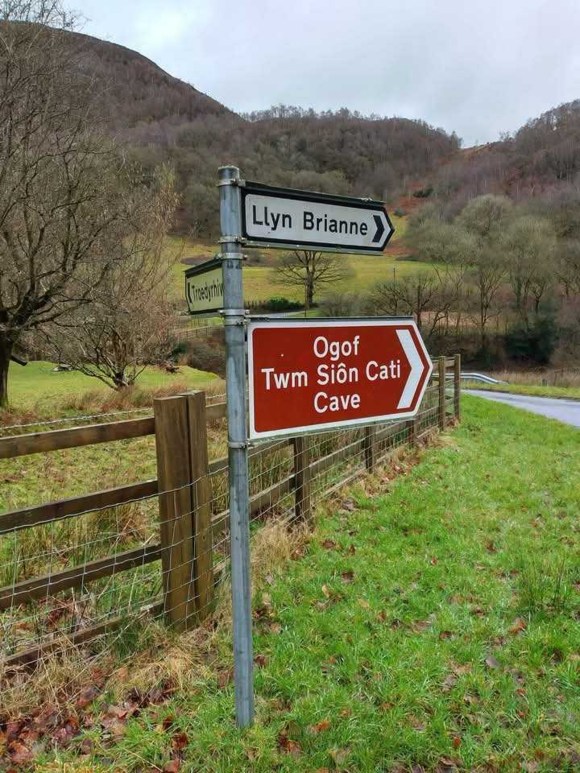
Twm Siôn Cati Cave by Rhys Hughes

Photo Courtesy: Rhys Hughes
Ogof
Twm Siôn Cati
Cave
is the place
the outlaw graced
with his face
and the remainder of
his ruffianly presence when
he was hiding
from the drab forces of Law
and Order.

Ogof is the Welsh word for Cave,
a word never heard
over the border in England,
and Twm Siôn Cati
is hardly known outside his native
land. I understand
why: he is obscure and there’s no
use being in great
haste to fashion poems about him.

He was a Robin Hood character, I
guess you can say.
If you trudge the wrong way on the
road between
Rhandirmwyn and Soar y Mynydd
you might even
end up as his involuntary guest and
be forced to relax on his stone sofa
while staring down
the barrel of his old flintlock pistol.

He might whistle
through his teeth a merry tune,
but no melodies later
than the 17th Century.
Twm Siôn Cati
never listened to the music
of Erik Satie
or Debussy or Shostakovich.
How could he?
and how can you expect him to
be familiar with their melodies
if it’s true he lived
so long ago in a damp cave?

You have slipped
back through time
and that’s the reason
if not the rhyme
for the mess you find yourself in
now: wave farewell
to modern comforts,
be resigned to a tougher life and
I think you’ll find
solace in the challenge.

Unlike Robin Hood,
Twm Siôn Cati never did
and never would
rob the rich to give to the poor.
He robbed the rich
and the poor as well to give
to himself,
but needless to say,
on any given day he preferred
wealthy victims.

Enjoy
your stay in
Ogof
Twm Siôn Cati
Cave.
Be brave: the scenery is
wonderful,
there are blackberries in
early autumn,
the colourful rocks,
odd as socks
glisten in the rain.

You ought to remain sane
if you accept
your fate: no pain, no gain:
no coin to toss,
no loss.
Twm Siôn Cati has adopted
you as his heir,
you must prepare to follow
in his footsteps
and become a troglodyte,
a night bandit plaguing
the heights of
the region: he planned it this
way all along.

Rhys Hughes has lived in many countries. He graduated as an engineer but currently works as a tutor of mathematics. Since his first book was published in 1995 he has had fifty other books published and his work has been translated into ten languages.

.

PLEASE NOTE: ARTICLES CAN ONLY BE REPRODUCED IN OTHER SITES WITH DUE ACKNOWLEDGEMENT TO BORDERLESS JOURNAL

Click here to access the Borderless anthology, Monalisa No Longer Smiles

Click here to access Monalisa No Longer Smiles on Kindle Amazon International

Categories
Review

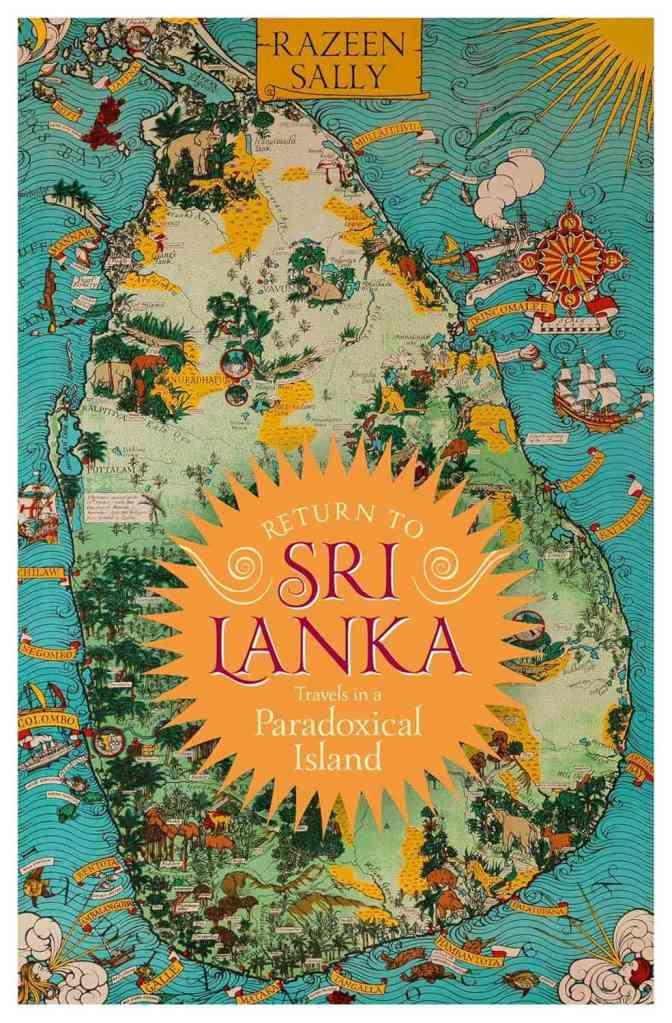
Travels in a Paradoxical Island

Book Review by Bhaskar Parichha

 Title: Return to Sri Lanka: Travels in a Paradoxical Island 

Author: Razeen Sally

Publisher: Simon & Schuster India

Sri Lanka’s culture is characterised by several paradoxical aspects that reflect its rich history, diverse population, and the complexities of contemporary society. Here are some notable contradictions: Home to various ethnic groups, including Sinhalese, Tamils, and Muslims, each has its distinct languages and traditions. However, there is a prevailing sentiment among some that prioritises Sinhalese culture over others, leading to tensions and conflicts regarding national identity and rights.

While Sri Lanka has a history of female activism and women hold significant positions in politics (e.g., former President Chandrika Kumaratunga), gender inequality persists in many sectors. Women often face societal pressures that limit their roles despite their contributions to the economy and community. The tiny country has made strides in economic development and infrastructure, yet significant poverty remains, particularly in war-affected regions like the North and East. This disparity highlights the uneven benefits of economic progress across different communities

The island is also known for its religious diversity, with Buddhism, Hinduism, Christianity, and Islam practiced by its citizens. However, this coexistence is often marred by sectarian violence and discrimination, particularly against minority groups during political upheavals.

As Sri Lanka embraces globalization and modern influences, there is a tension between adopting new lifestyles and preserving traditional customs. This cultural clash can lead to generational divides within families and communities.

Razeen Sally’s book, Return to Sri Lanka: Travels in a Paradoxical Island, explores these complexities and contradictions. The memoir combines personal narrative with historical and political analysis, offering readers an immersive journey through various regions of Sri Lanka—from the bustling capital of Colombo to the tranquil beaches and verdant hill country. Sally reflects on his childhood experiences while addressing the island’s tumultuous history, including its colonial past and the long-lasting effects of civil war.

Razeen Sally, the son of a Sri Lankan Muslim father and a Welsh mother, was raised in Colombo and educated in the UK. After teaching at the London School of Economics, he now teaches at the Lee Kuan Yew School of Public Policy in Singapore. In his early forties, he felt a strong urge to return to Sri Lanka for the first time since childhood and has spent the past ten years exploring the island.

Sally viewed Sri Lanka as a paradise during his childhood, but conflict soon disrupted their lives, fracturing his family’s connection to the island. Return to Sri Lanka tells the story of his journey towards reconciliation in the twenty-first century, as Sally, now an academic and political adviser, revisits his birthplace. This travel memoir addresses significant political issues and is rich in beauty and profound reflections, written by someone who feels like both a local and a visitor.

The words, “Paradoxical Island”, in the title encapsulates the duality of Sri Lanka, where hospitality coexists with high rates of violence and societal divisions. Despite interactions among ethnic groups like Tamils and Sinhalese, underlying tensions often surface, revealing deep-seated issues regarding rights and representation.

Sally provides insight into how historical events, such as the policies of successive governments and the impact of colonialism, have shaped contemporary Sri Lankan society. He discusses significant political figures and movements while critiquing policies that have led to economic challenges, including a brain drain among educated youth.

The book highlights Sri Lanka’s diverse cultural landscape, examining how various religions and ethnicities contribute to both its charm and its conflicts. Sally emphasises the importance of understanding these dynamics to appreciate the island’s true essence.

Return to Sri Lanka is not just a travelogue but a profound exploration of a nation grappling with its identity. Sally’s reflections offer hope for reconciliation and progress, urging readers to engage with Sri Lanka’s complexities while appreciating its inherent beauty. These paradoxes illustrate the complexities of Sri Lankan culture, where historical legacies continue to shape contemporary realities, creating a vibrant yet challenging social landscape.

Bhaskar Parichha is a journalist and author of Cyclones in Odisha: Landfall, Wreckage and ResilienceUnbiasedNo Strings Attached: Writings on Odisha and Biju Patnaik – A Political Biography. He lives in Bhubaneswar and writes bilingually. Besides writing for newspapers, he also reviews books on various media platforms.

.

PLEASE NOTE: ARTICLES CAN ONLY BE REPRODUCED IN OTHER SITES WITH DUE ACKNOWLEDGEMENT TO BORDERLESS JOURNAL

Click here to access the Borderless anthology, Monalisa No Longer Smiles

Click here to access Monalisa No Longer Smiles on Amazon International
Categories
Musings

Where is Your Home?

By Madhulika Vajjhala

Going into work after almost a week of absence feels rather peculiar, I feel like an outsider in the city where I grew up — a city that is often referred to as my hometown. It greets me with a polite nod as a stranger would. This is the city where I spent over two decades growing up and yet today my sense of belonging seems to have dissipated in the dusty morning traffic, leaving me confused as to what makes a home. Is home the physical space that we exist in or is it the people who make a place a home?

If the definition of home is about a place I reside in, why can’t it be the dusky lonely evening that I got lost in the Tallahassee Park only to find company in the countless stars that helped me find my way back?

Or the Welsh mountains that I struggled to hike up with Chittappa — almost giving up for the steepness of the trek, constantly reminded by my aching body that I was lazy and good for nothing. Yet, the endless green hills glistening in the golden rays smiled at me and greeted me with a cool welcome hug, urging me to be hopeful for my future. Isn’t that a home for making me believe in myself once again?

Or can it be the bone chilling cold shores of the lake in the Algonquin State Park, where Anna and I greeted the new year alongside the wolves howling at the moon who seemed to be lost that night like us. We hid from the countless years that stretch before us, not knowing if there would be an end to all the craziness that we had to deal with. Is it home when you are lost and confused, yet at peace knowing that not all answers are to be found, some questions are endless quests, but the journey teaches us more than the answer itself?

Or maybe it is in the sunrise on the Vizag beach with my cousins, where we laughed and played while the cool water soothed our battle scars of rivaling parents and vengeful family feuds. Is it home where all my fears and insecurities are treated with a cooling balm and my soul is healed so I find courage to love again amidst the raging darkness that overwhelms me?

Or is it the apartment I found on the hot afternoon, walking in despair along the Whitefields road with Amma after our family banished us from living in their home? The balcony with the wise eucalyptus trees that reminded me that parents are human too. While love is not perfect, setting my boundaries and building my life independent of family can strengthen our bonds more.

Or is it home when my girlfriend opens the door with the brightest smile after a long stressful day at work, asking me how my day went? Even if we had both just spent the past eight hours getting yelled at and defeated by corporate patriarchy, she gives me the warmest hug assuring me that I am safe and with her. I don’t have to battle to be seen or heard. Isn’t it home where you always matter and your contributions are recognised, irrespective of where you live or how far apart you are from each other?

Or can it be home in the arms of my boyfriend as he cuddles me to sleep, gently calming my mind, easing away the stress. Reminding me to stay smart and channel my ever-bubbling anger, raging beneath my surface into something useful instead of drowning myself in it and getting lost. Isn’t it home where you learn to channel your strengths but there is space for your weakness and failure to co-exist, so that you learn to not get overwhelmed in the face of adversity?

Perhaps home is in the delicious fragrance of my mother’s coffee as she greets me with her loving good morning and a freshly baked pumpkin muffin, a reminder that today is a new day and ripe with unexplored opportunities. Isn’t it home where you feel supported and encouraged even when you are lost and unsure of what to do next?

Maybe I am someone who will always find a home wherever I go with the people I love. Home is not static nor confined to a physical space set in a particular time. To me it is all those experiences (and people) that help me find joy, love, courage, and strength to greet another day with a smile.

Madhulika Vajjhala has a passion for literature and exploration. She loves reading and globetrotting.

PLEASE NOTE: ARTICLES CAN ONLY BE REPRODUCED IN OTHER SITES WITH DUE ACKNOWLEDGEMENT TO BORDERLESS JOURNAL

Click here to access the Borderless anthology, Monalisa No Longer Smiles

Click here to access Monalisa No Longer Smiles on Kindle Amazon International

Categories
Poets, Poetry & Rhys Hughes

An Experiment with Automatic Poetic Translation

Courtesy: Creative Commons

I am intrigued by the whole process of translation, a most remarkable alchemy of words and meanings, and when it comes to the translation of poetry, I find the operation especially bewildering and beguiling. But this is not the place for me to discuss my views on the mechanics of the subject, for in fact I have no such views. I am not a translator. I merely wish to explain that the following poem is the result of a minor experiment I have been planning for a long time, a variant of the ‘Chinese Whispers’ game, performed using an automatic translation program. A poem is written, a poem using fairly obvious imagery, and then the translation game begins. The poem is translated from English into another language, in this case Albanian, then from Albanian into another language, Arabic in fact, and from Arabic into Basque, and so on. Eventually the poem exists in Zulu, and from there it is translated back into English.

Possibly it will no longer sound like a real poem at this stage. But it can be easily adjusted, turned into something resembling a new poem, and presented as a continuation of the original poem. The final poetic work will consist of the original stanza followed by the manipulated stanza. If they enhance each other, so much the better, but if not, nothing much has been lost.

The Transformation

The transformation is lengthy
but painless,
it does not drain us. The way
ahead is clear
as far as the glowing horizon
where the moon
has promised to rise. The eyes
of the night
stare intensely in preparation
for blinking
thanks to the white eyelid of
a belated moon
and we grow wise when at last
it arrives, saying
that the stars belong in sleep
and so they do and so
do we and finally
the change
occurs
rest
ful
ly.

This poem was automatically translated between all the following languages:

English – Albanian – Arabic – Basque – Bengali – Czech – Dutch – French – German – Greek – Hindi -Indonesian – Korean – Latin – Macedonian – Maltese – Nepali – Persian – Portuguese – Romanian – Sanskrit – Slovak – Swahili – Thai – Turkish – Urdu – Vietnamese – Welsh – Zulu – English

And the result, after a very small manual adjustment, is:

After a long time
I’m still crying,
a street name outside of us.
This is obvious at first:
bright horizon.
Where is the moon?
And so ends the contract.
Dinner?
I can’t wait to get ready.
This is not a rumour
of white hair
or months.
Finally we bring you a sage.
They started talking,
you are sleeping,
and so
I continue to do so.
Be careful,
what’s up is silence,
targeted
from where?

Rhys Hughes has lived in many countries. He graduated as an engineer but currently works as a tutor of mathematics. Since his first book was published in 1995 he has had fifty other books published and his work has been translated into ten languages.

.

PLEASE NOTE: ARTICLES CAN ONLY BE REPRODUCED IN OTHER SITES WITH DUE ACKNOWLEDGEMENT TO BORDERLESS JOURNAL

Click here to access the Borderless anthology, Monalisa No Longer Smiles

Click here to access Monalisa No Longer Smiles on Kindle Amazon International

Categories
Poetry

South Pacific in the Palace Cinema

 By Robert Nisbet

We were all romantic heroes, back in 1958.
We’d line the good guys up, go with them scrapping,
outwitting villains, wooing and winning the girls,
the final clinch, the fade-away, the ever-after.

South Pacific was tricky, from the very start.  
De Becque the hero was the same age as our Dads,
and his little boy and girl too much to cope with,
even with Mitzi Gaynor as the prize.

But then the sub-plot came and we found our hero,
Lieutenant Cable, and after mystery journeys
and boat trips through exotic seas, he found the girl,
a pearl of South Sea Island beauty. 

We were settling to the film’s rhythms now,
De Becque and Cable off to war, a matter of time,
surely, before they foiled the enemy, went back
for the final clinches, fade-away, the ever-after. 

And Cable died. Uneasily, some half-hour later, 
we stumbled home, with a lot to assimilate.
A native girl? Were they saying it was all for the best?
Was that the idea? It was bloody sad, all the same.

Robert Nisbet is a Welsh poet widely-published in Britain, where he won the Prole Pamphlet Competition in 2017, and in the USA, where he is a four-time Pushcart Prize nominee.

PLEASE NOTE: ARTICLES CAN ONLY BE REPRODUCED IN OTHER SITES WITH DUE ACKNOWLEDGEMENT TO BORDERLESS JOURNAL

Click here to access the Borderless anthology, Monalisa No Longer Smiles

Click here to access Monalisa No Longer Smiles on Kindle Amazon International