Book Review by Malashri Lal
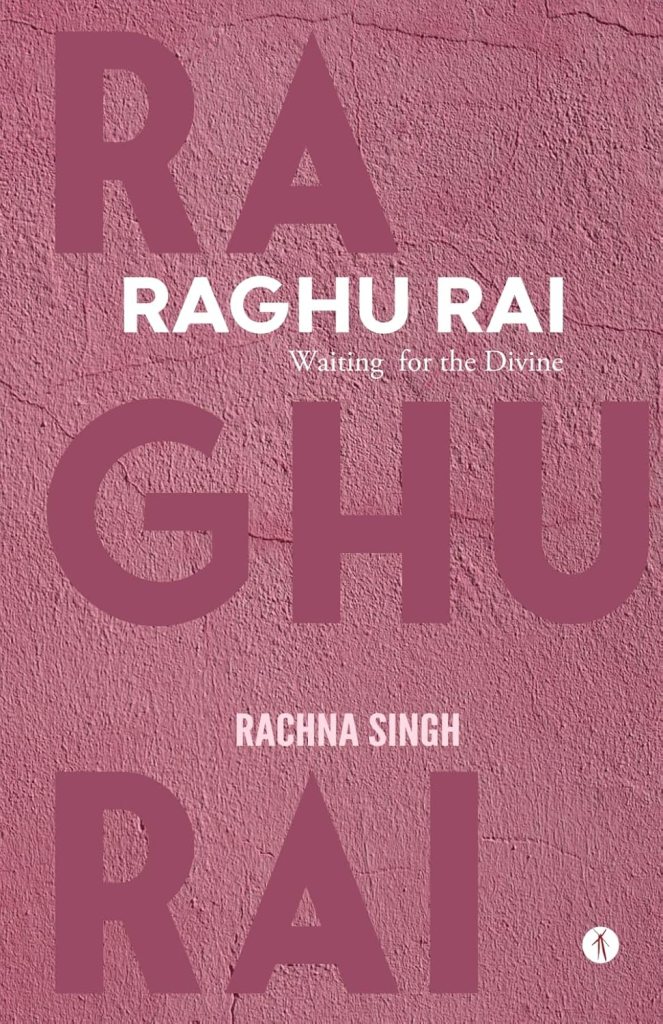
Title: Raghu Rai: Waiting for the Divine
Author: Rachna Singh
Publisher: Hawakal Publishers
“My story should remain simple, step by step, click by click.” -- Raghu Rai
Rachna Singh, notebook and recorder tucked in her bag, pen in hand, first meets Raghu Rai in his picturesque home nestled in the Mehrauli forest of New Delhi, a landscape with occasional medieval structures peeping through the trees. Away from a concrete encrusted city, Rachna, a patient biographer, knows that the legendary photographer whose images shaped the visual progress of a nation, has his own deep stories. But will he reveal them? She pries the tales open by carving pathways through Raghu Rai’s photos— and a remarkable book about the person behind the camera is captured by a literary image-maker, in this sensitive, tender, and insightful biography. Rai permeates a series of chapters that play intricate games with memory because every frame in the camera is connected to myriad threads of experience.
Since the book is sub-titled “Waiting for the Divine”, I naturally look for references to Mother Teresa and the Dalai Lama to discover how the transcendent power of Raghu Rai’s photos of these two personages emerged. Entry into sacred precincts is never easy, and a camera in hand signals a definite obstacle. However, at the Sisters of Charity in Kolkata the photographer is permitted to follow the Mother unobtrusively. Yet, when a curtain flutters to reveal angel-like nuns and Rai dives to the floor to catch the best angle and the right light, even the Mother’s equanimity breaks and she is aghast! From such “shadowing” emerges the divine photograph titled “Mother Teresa in Prayer” with every crease in the luminous face catching the glow, an expression transporting her to realms beyond ordinary comprehension.
If Raghu Rai’s association with Mother Teresa is marked by reverence, his link with His Holiness the Dalai Lama is marked by friendship—one that extends to warm handshakes and brotherly embrace, informal conversations and a conviction about universal compassion. Says Rai, “His Holiness is an uninhibited, wonderfully loving man. How gracious of him to say he is my friend.” Again, it is the camera lens that reveals remarkable facets of the Dalai Lama– his childlike smile as also the sombre spiritual leader of a people in exile. Rachna Singh recounts an almost surreal story of a protective stone gifted to Rai by His Holiness that saw him survive a severe heart condition of ninety percent blockage while still chasing images of a crowded procession!
This takes me back to Rachna Singh’s intention, “My book is not a third-person memoir nor a chronological recounting of Raghu Rai’s life. Instead, it unfolds through candid conversations, inviting the readers into an intimate dialogue.” The reader’s response being part of her textual strategy, I too could add my account of the mystical energy felt in the presence of the Dalai Lama. The book’s attraction lies in this fluidity of the biographer, her subject and the reader being part of the evolving discussion of the deep philosophical pool from which photos are created. The trajectory of Raghu Rai’s life is well known—the photo journalist with The Statesman and India Today; his famous photo essays in the international magazines Time, Life, The New Yorker and numerous others, the award of a Padma Shri, his eminent friends and compeers, but Rachna Singh’s book probes Rai’s mind, his consciousness, his search and his beliefs. Therefore, it offers gems of information through anecdotes and the atmospherics of events, and some delectable quotations in Punjabi and English.
I turn here to Raghu Rai’s series on the Bhopal gas leak of 1984. “The black and white picture of a dead child, eyes open, staring sightlessly into space, lying in the rubble with a hand gently caressing the ravaged face in farewell,” describes Rachna, calling Rai a ‘Braveheart’ who painted a “searing picture of the tragedy.” The conversation is strangely matter of fact as though both the biographer and her subject are numbed by the enormity of that night of terror. Did Rai fear for his health or safety in the toxic air? The answer is “No” because the human pain around was greater than the instinct for self-preservation. All the journalists visited the mass cremations, the hospitals, the dead and the dying as though it was a “job”, Rai being practical enough to say, “You cannot let your spirit turn soggy with emotion.” Those of us who read of such tragedies and see photos in newspapers while sipping our morning tea should admire the intrepid people providing the raw material from ground zero.
Another memorable series was on Bangladesh refugees after the 1971 war—emaciated women and men often carrying sick children in baskets. Rai had been in the frontlines of the war and had once been surrounded by a hostile mob. Rachna is on tenterhooks as he narrates the details but he declared “I was more excited than scared … there was actually no time to feel scared.” At one time he even smiles and says, “It was a lot of fun.” Which brings me to probe the extraordinary grit and strength of photo journalists or reporters from war zones. Where does compassion and newsworthiness meet? Is image more important than the decimated human body? What lasting imprint does such witnessing leave?
Perhaps the answer lies in Raghu Rai’s quest for the Divine—beyond image, outside time. He was born in pre-partition India, in the village of Jhang that is now in Pakistan. He speaks haltingly of the childhood terrors—homes in flames, of escape in the pre-dawn—Rachna notes the tremor in his voice and the reluctance to recall those years. Yet she astutely links Rai’s portrayals of hurt and human sorrow, his sensitivity yet distancing from those early experiences. Finally, it’s been a holistic calm. Rai is quoted: “Photography has been my entire life—it has, in fact become my religion, a faith to which I have dedicated myself completely. My craft led me toward a meditative path that gave me insights to life and the divine.” And that quest bridges the beatific and the aesthetics in this most commendable book.
Malashri Lal, writer and academic, with twenty four books, retired as Professor, English Department, University of Delhi. Publications include Tagore and the Feminine, and The Law of the Threshold: Women Writers in Indian English. Co-edited with Namita Gokhale is the ‘goddess trilogy’, and also Betrayed by Hope: A Play on the Life of Michael Madhusudan Dutt which received the Kalinga Fiction Award. Lal’s poems Mandalas of Time has recently been translated into Hindi as Mandal Dhwani. She is currently Convener, English Advisory Board of the Sahitya Akademi. Honours include the prestigious ‘Maharani Gayatri Devi Award for Women’s Excellence’.
PLEASE NOTE: ARTICLES CAN ONLY BE REPRODUCED IN OTHER SITES WITH DUE ACKNOWLEDGEMENT TO BORDERLESS JOURNAL
Click here to access the Borderless anthology, Monalisa No Longer Smiles
Click here to access Monalisa No Longer Smiles on Kindle Amazon International

 Borderless