Categories
Stories

The Mask

By Nishi Pulugurtha

Green all around, shades of green actually, that seemed to smile at her as she looked out. The tall moringa tree that seemed to reach up high, its small leaves dazzling in the play of sun and rain. That tree that met her eyes each morning as she looked out of that large window always made her feel nice. The rusted iron grills, the wooden window shutters broken here and there, did not shut tight, the latch rusted too, some bit of concrete laid bare a little of the masonry – her eye moved along.

***

Bimala arrived in this house after her marriage. It was an arranged one. Baba and Ma looked for a suitable groom for their youngest born and the marriage was solemnised in the traditional way. Dida (grandmother) wanted it to be done just that way. Dada (elder brother) was working by then and just a few years before this they had moved into an apartment on the eastern fringes of the city.

It was a modest one and Bimala took great pains to do it up — from choosing the colours of the wall, the upholstery, the curtains, the fittings in the bathroom, almost everything. Bimala had a keen taste for the aesthetic and visitors to their home always made it a point to refer to it.

Baba had worked with the state government and retired a year after her marriage. They were a middle class family, and a very happy one at that. Bimala was never pampered, Ma and Baba were strict disciplinarians who made sure their children had the best in life.

Anupam, Bimala’s husband, lived with his mother in a neighbourhood in the southern part of the city. Anupam had his education from some of the best institutions in India, he obviously had been a very good student. He had been working with a multinational company for some years now and everyone knew he would soon rise to the top. Kumar Kaku (uncle) knew the family well and vouched for Anupam. He and Kakima (aunty) always said, Anupam was a wonderful person, soft spoken and reticent.

“A reserved lover, it is said, always makes a suspicious husband,” Kate Hardcastle’s line from the play she read in college had come to her mind. She spoke about it to Ma and Baba. Baba said, “You can surely talk to him. If you don’t approve, we will not go ahead.”

She remembered Ma’s reply, “Kumar is distantly related to the family. We have known him for years, he is our family friend, we can trust him completely. When he says the boy is good, we could go along. I see no reason why we need to have doubts.”

She did talk to him a few times before the wedding and Anupam came across as a decent guy. They met up too a few times. She did not want to rush into it, she wanted to take some more time, but Kumar Kaku was insistent. “I know the family well. They are decent people.”

“That is alright,” Baba said. “It is a question of Bimu’s life, let her take some more time before she decides.”

Kakima too waxed praises galore, “Anupam was such a nice person.” She spoke highly of him and his family and called up Ma regularly. For some days, this was what went on in the household. Dada also agreed with Baba.

“Bimala could be given time to decide,” she heard Baba tell Ma. That was all the kind of conversation that went on at home, these days, she thought. As days went by, Kumar Kaku’s visits to their house increased. Bimala said yes after some thought. Kakima and Kumar Kaku were jubilant.

“I know both families and this is what is best for our Bimala,” she could hear his words as he spoke to Ma.

Baba did not say much. “Are you sure, Bimu, you want to go ahead with it? If you have even a little bit of doubt, any questions, anything, let me know. I am sure I can talk with your Ma about it.”

Bimala just smiled, “Na, Baba, it is alright.”

So in about less than twelve months, the marriage was finalised. A flurry of activity – arrangements were done, invitations sent out, so much taken care of. Kaku and Kakima took an ever more eager interest in everything. Things moved real fast after she had agreed. A modest wedding and soon her new “life” in the new house began.

The ‘mask’ came off in less than six months. “Don’t touch that.” “Don’t do this.” “This is my house.” “Do not try to show off your learning.” “All your ideas are worthless” – they just kept coming at all times.

“Why do you need appliances? My mother did all these by herself. “

“But Khokha, things have changed now. Certain things are needed these days. Had they been available earlier on, my home would have been so very different.” Anupam’s mother had been the voice of good sense, not that she had much say in the house.

He would just stare at her. Bimala felt nice talking to her. A year after the marriage, a massive heart attack ended that life. They had been talking when the end came and Bimala was in a state of shock for weeks after that incident.

In summer months the house was unbearable. Bimala had not been used to this heat. Anupam had said that he would make provisions so that life could be nice. That was before the wedding. Kumar Kaku and Kakima too had said that he would do all that was needed to live life well. Nothing happened. Bimala tried to reason with him, he ignored her. That day, about a year and half after they had been married, the television was blaring and Anupam was watching the news. She tried speaking to him about getting an air conditioner, he turned away. She again tried speaking.

This time she switched off the television. He shouted at her. She tried keeping her cool, he refused to listen to anything. Suddenly he caught her with his two hands, he held her neck. He held her that way and pushed her from the living room to the bedroom, she tried to break free, but the grip was too strong. Bimala was so taken aback by the whole think that she could not utter a single word. He pushed her on the bed, holding her neck in his hands, shaking her. She struggled and struggled. After a while, he eased the grip, went into the living room, switched on the television.

She lay on the bed, crying in pain, in hurt, in humiliation, insulted. All for some cold air, to live life well. After some time, she got up, there were marks on her neck. Who should she turn to, she felt so lost. She called up Kakima and told her what had happened.

“Such things happen in marriages. Don’t pay much attention to them,” she said.

Bimala could not believe what she said, “Things will be alright now, you see.”

After the conversation was over, she took out her suitcase and started packing her things. The next morning she left.

Anupam did not say a word.

Baba told her, “You did just the right thing.” Ma was upset with the turn of events but they were both happy with the decision.

Bimala never went back.

***

It has been five years since then. Restricted by the lockdown, amid reports of an increase in domestic violence cases, she got talking about it that evening. I knew that was a traumatic period in her life. She had tried picking up her life little by little. I have known her for years and have seen her as she tried to begin things afresh.

“As I look at the masks that we are to wear these days as precautionary measures, I am so reminded of the masks that people always wore.” We were chatting online, and Bimala said, “Kumar Kaku and Kakima’s masks fell off after I walked out of that marriage. All those years of friendship with my parents ebbed so quickly. They never ever got in touch with us, never again.”

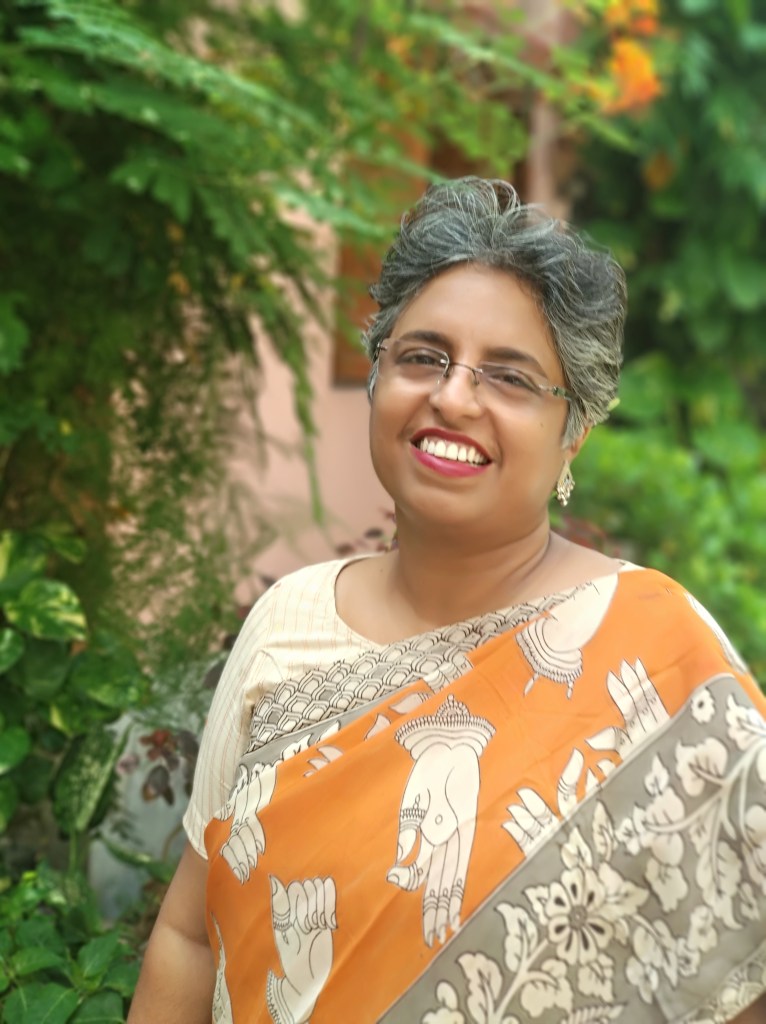
Dr. Nishi Pulugurtha is an Associate Professor in the department of English, Brahmananda Keshab Chandra College and has taught postgraduate courses at West Bengal State University, Rabindra Bharati University and the University of Calcutta. She is the Secretary of the Intercultural Poetry and Performance Library, Kolkata (IPPL). She writes on travel, film, short stories, poetry and on Alzheimer’s Disease. Her work has been published in The Statesman, Kolkata, in Prosopisia, in the anthology Tranquil Muse and online – Kitaab, Café Dissensus, Coldnoon, Queen Mob’s Tea House, The World Literature Blog and Setu. She guest edited the June 2018 Issue of Café Dissensus on Travel. She has a monograph on Derozio (2010) and a collection of essays on travel, Out in the Open (2019). She is now working on her first volume of poems and is editing a collection of essays on travel.

Categories
Musings

COVID claims jobs

By Devraj Singh Kalsi

Covid-19 seems far away from the district I live in. But deprivation has already set in. On my way home with a bag full of grocery items from the nearby kirana store (minimart), I was stopped by two masked women outside the park. One of them flashed a weak smile that disappeared as soon as she measured from my bag and body language that I was not the person she was waiting for. She asked me whether the distribution of food grains was scheduled in the park – whether they should queue up and wait. Being absolutely clueless regarding any such distribution plan and feeling a sense of remorse for carrying something these women were eagerly waiting for, I chose to suggest the adjacent house for reliable information in this regard.

I replayed her question in my head to assess her plight. Her voice did not quake with any sentiment of doom. But her face did carry a disproportionate mix of hope and worry. From her readiness to wait, it appeared she was expecting recovery and normalcy to return soon. Just like her, the entire nation was pregnant with hope of a turnaround. Except the corporate world that had already aborted it.  

Despite chanting mantras of positive mindset and chewing the motivational gum year after year, there seems to be a well-orchestrated unanimity in the prediction of business slump. Salary cut sounds a pretty neat term – quite like a bearded guy choosing to become clean-shaven and still looking dapper. Nobody seems to grudge pay cuts and there is a smile on every face if you mention it, as if it is an increment or Diwali bonus.

Weighed against the other alternative of job loss, this seems like a life-saver. While we are still a long away from finding the vaccine, it seems we have already found the cure that keeps us immune from lay-offs. Thousands of employees and workers are going to serve with renewed motivation because they have families to feed and regular debts to service. The vicious cycle continues.

It is barely a month of lockdown in India and companies are feeling the heat. They have to pay salaries when there is no cash flow. It pinches them hard. This comes as an ideal opportunity to downsize the workforce. Instead of waiting for two months to see how the situation evolves, companies have already started communicating their new human resource policies through email and phone. Seems there is no contingency fund to tide over the crisis and emergency credit lines will not meet their requirement.  

Before the Covid-19 crisis set in, I met my employers for a raise and the first draft of their script was ready. Every single line suggested they were waiting for the pandemic to blow up before they unfolded their mega plans in front of employees. It was a clear indicator that they were going to release a voluntary retrenchment scheme, or they would come up with a revised plan of salary packages.

After the 21-day lockdown ended and the extension happened, the advertising agency began its trial run on me. To be honest, I had an inkling that this exercise would begin with me. The owners communicated their decision to flatten my salary curve – slash 50% of it from next month. It was cold, insensitive, and brutal. The email exuded the same indifference. Since I was not ready to accept the new offer, I communicated my decision to quit my job in the next three months and served them my notice period.

Some friends called me to know about my job status. Did you get hit? The urban workforce hides its collective shame in this clever expression that helps salvage pride and dignity by playing the victim card — as if it was an enemy bullet that hit us while we were serving our corporate dukes in the battlefield.    

During Covid-19 times, the chutzpah to leave a job is certainly not what any employer would expect. A meek, timid acceptance would have warmed the cockles of their hearts. What I delivered was a bitter pill of gross insubordination and rebellion. I knew all their domestic clients were on board, and several of them were government clients. This was a temporary setback and the clients would resume operations after the lockdown. What was the tearing hurry then?

Imagine what happens to hordes of employees in the private sector in the coming months. People are going to suffer heart attacks, strokes and even contemplate suicide. And the organisations have no humanitarian approach or policy to address such a major problem. If they do not wish to utilise the resources acquired over the years of operations for the benefit of employees, it shows their rank opportunism and insensitive disposition in such trying times. 

Most of the companies operating in India have not existed since 1971. The corporate boom is a fairly recent phenomenon that arrived after liberalization was introduced in 1991. They have not seen wars or famines during their lifetime. All they are busy doing is axe, axe, and axe. As if jobs are like overgrown branches that need to be pruned from time to time.   

Corporates have a fairly typical mindset: expand hiring processes when business grows and contract when business shrinks. Remember the faces of those animals that perceive the slightest danger and curl up for protection – corporates are like that. Unreliable, fair-weather friends you can go on a date with provided you carry an umbrella or a raincoat of your own. When it starts pouring suddenly, do not expect them to take you under their umbrella.

Covid-19 crisis is yet another eye-opener that reveals the real predatory nature of corporate entities. Sadly, this realisation will soon be forgotten as the corporate juggernaut resumes its roll.   

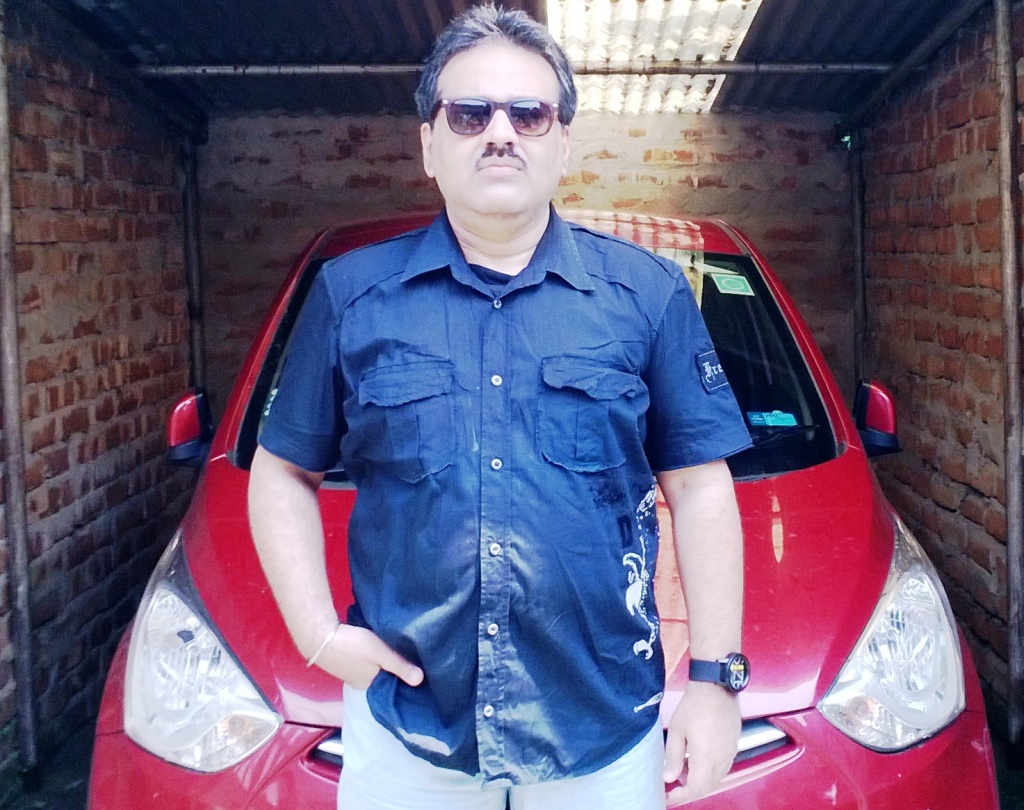
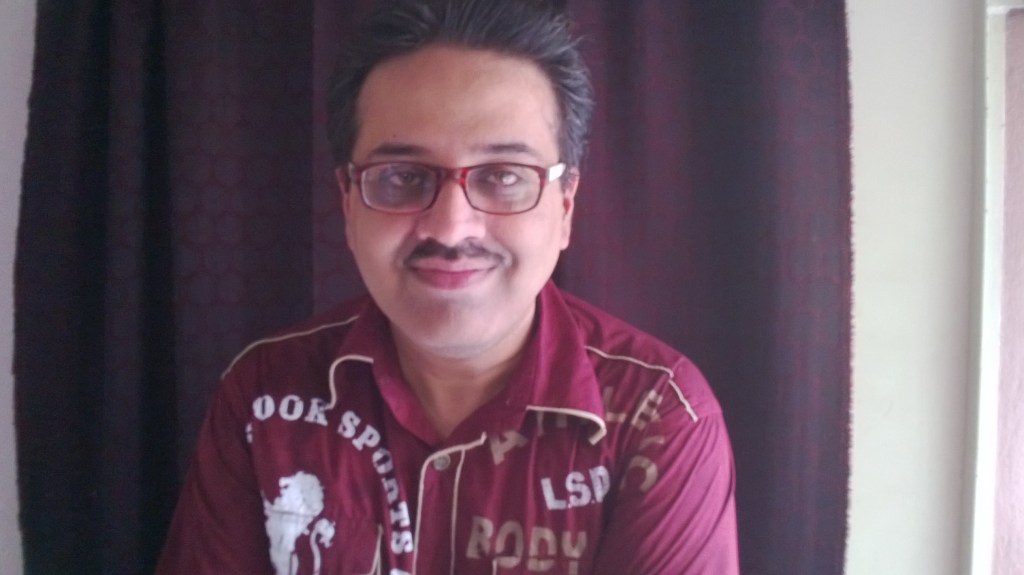
Devraj Singh Kalsi works as a senior copywriter in Kolkata. His short stories and essays have been published in Deccan Herald, Tehelka, Kitaab, Earthen Lamp Journal, Assam Tribune, and The Statesman. Pal Motors is his first novel. 

Categories
Musings

Life in Times of Corona

By Devraj Singh Kalsi

Her multiple complications turned worse around the time the first case came to light. During her last medical check-up, she was diagnosed with aggravated problems related to heart, liver, and gall bladder functioning. Hypertension, diabetes, arthritis, and cataract left out as routine and manageable disorders. She heard the doctor warn her of fatal consequences if angioplasty was not done immediately. She chose to bypass it with a smirk that offended the doctor and he prescribed three new tests at his specified diagnostic centre to locate more illnesses residing within her. 

Two months later, she heard the doctor had passed away. She was curious to know how his untimely end came. This is when she heard about COVID-19 for the first time. It sounded more like a prescription drug to her rather than a life-threatening infectious disease. When I simplified it with corona and explained what it was and how it was caused and transmitted, she grew interested in the pandemic, sneezed all of a sudden and asked: Can I get it? It was like —Am I eligible for it?

As the elderly folks with co-morbidity are at a higher risk, I urged her to practice social distancing. She did not get it, so I asked her to stay six feet away from people. She took this opportunity to cancel her scheduled blood pressure check-ups and blood sugar tests for a month.

She bombarded me with several questions. I searched online for the best answers to update her. From her facial expression she was not happy to learn that it came from China. Her xenophobic mind began to function. She blamed the Chinese for almost every evil in the world. She wanted to see a pangolin on my phone. After a proper look at the poor fellow looking cute and innocent, she said with regret: What else do you expect from people who eat snakes and dogs? She had no visible anger for bats or pangolins — only for the wet markets in China. 

She began to create conspiracy stories with impossible plots and angles, and this assured me that my creative streak was most certainly derived from her. She was not any different from what others were thinking except the fact that she did not know anything about bio-weapons. 

She took advantage of the fact that I was not born when China attacked India. She dramatized a few episodes. I had no option to verify. Since her emotional investment was evident from her expression, I chose not to interrupt her flow and nodded without conviction. Pakistan and China were the two countries she loved to bash indiscriminately whenever she got an opportunity or a person who harboured similar thoughts. Somehow, she had realised over the years that my intolerance for any nation had not peaked yet.   

                                                              *

Every day, from morning to night, she pops fifteen pills. But today she decided to skip pills. Just like people skip meals for dieting. I did not know how to react. Should I administer those pills with a word of caution or just let her do what she wanted to do? It appeared she was confident heart attack was unlikely to be the cause of her death. She did what she wanted to do — flirt with death.  

I told her to wear a mask for safety and she opened the window to see whether the lady in the adjacent house was wearing one. When she saw she was not wearing it at home, she refused to wear it. She kept the mask and said she would wear it when I entered her room after coming from the grocery store. To show she was taking some precaution, she agreed to keep the bottle of hand sanitizer with her.  

Although I myself was not sure about many possible ways of its spread, I added them all for extra safety. I mentioned how it behaves on various surfaces, how many days it lives, how easily it kills. This deepened her worry. She wanted to know whether her relatives were safe. She called them up to find out.

Armed with the knowledge derived from me, she began to use words like pandemic and social distancing and repeated preventive tips. She observed behavioural change in her close relatives. Those who used to express the desire to meet her were quiet now. She sought umbrage because nobody had invited her. I told her that relatives will not entertain or invite guests for one year at least. She said most of these were fake invites and so there was no harm in extending them, just to make others feel good. I explained that people were unwilling to take any kind of risk. You never know which crackpot turns up with a burning desire to meet once trains start running on the tracks.

The virus shared many attributes with God. It was also invisible just like God. She kept reading the holy texts as usual. I told her she must realise death is not caused by God’s will. Even a virus can kill people and faith cannot save people from Corona virus. This posed a big challenge to her faith. She began looking for a line of defence: Tell me, who created this virus? It is also God’s creation.

For once, she did not blame China for creating it. Before I could ask her why she felt so, she asked me to repeat the symptoms. I told her the virus can live in the human body for 21 days or more without any symptom. Now she got really worried and scared. She wore the mask and abused the virus in filthy language without showing any mercy – much of it I did not hear and what I heard I cannot put down.  

Devraj Singh Kalsi works as a senior copywriter in Kolkata. His short stories and essays have been published in Deccan Herald, Tehelka, Kitaab, Earthen Lamp Journal, Assam Tribune, and The Statesman. Pal Motors is his first novel. 

Categories
Essay

After the Pandemic

By Devraj Singh Kalsi

Our admiration, interest, and respect spikes for countries where the spread of Covid-19 is flattened or limited with early measures. As we track global statistics on a daily basis, any country with less than 1000 cases makes us react with Wow and How. As we scroll further down the list, those with 500 or less than 100 cases make us feel positive and we conclude: This is the place to live. These may or may not be counted as fantasy lands or ideal destinations in normal times, but when it comes to survival, we salute them for keeping citizens safe in these dark times.  

When I discussed this with some friends in an online chat, they are reluctant to bat for developed and advanced nations now. Countries more efficient in the management of crisis and saving human lives, countries more benevolent towards the poor, countries with more nature-friendly policies, countries where a citizen is considered much more than a statistic are weighed against the traditional heavyweights. When the pandemic subsides and people have lesser emotional stress, perhaps the same set of questions will have completely different answers. Or maybe, the magnitude of this crisis enables us to imagine grief more closely and we are compelled to revise our assessment of growth, development, and quality living. 

While the recovery phase will take its time, the nations least affected will have having a clear advantage over the severely affected ones. Whether they will be able to leverage on their strengths and give the world the option of a better life with limited but sufficient resources remains to be seen.   

Economists and artists will get busy mapping the COVID-19 impact on people once the pandemic is contained. GDP predictions, recession, relief packages and stimulus will form the key discussions. The wealthy of every nation will look for growing economies to park their funds and they will come together to create rich economies — lured by maximum plough back of profits. They will look for economies with double-digit annual growth or for high single-digit economies with enormous potential to double up in the short term itself.

Job losers and fresh job seekers will migrate in search of better and stable options anywhere in the world. The top ten nations for immigrants will be another interesting development. Many new countries will enter this list and many big names will be excluded from the list. Globalisation will become a word of caution for some nations while the rest of the world will begin to harness its potential.  

Tragedies inspire artists. The political class that creates global tragedies will be defeated by nature this time. Man-made tragedies kindle the angst in artists far more than the natural ones, even if the extent of damage remains the same or even greater. Being lovers of nature, the community of artists will not be ruthless towards the eco systems. They will blame mankind for being unkind, for the excesses against nature, and treat every natural disaster as the planet’s brave attempt to heal or reclaim what it lost. Artists will remind people and countries to be friendlier towards the Earth as will environmentalists, who have always emphasised harmonious co-existence with nature. This enthusiastic drive will continue with full force.

As soon as the element of greed raises its ugly head and the countries become competitive to provide a ‘better life’ or restore the ‘better’ life, the return towards normal will start. Although we live under greater threat, we have greater confidence that we will survive every kind of threat. The resumption of the predictable cycle will make us return to our lives of consumerism, to flaunt fancy gadgets or something precious to suggest our material abundance. The lessons from COVID-19 will be forgotten and buried.

Rich countries fear the death of their privileged status more than the death of thousands and millions of people. Those who survive will need to live in the same country with pride in its strengths. A country with the highest casualties will continue to say it is far below the expected numbers. If a million die, they will boast of saving many millions more. They will boost the morale of the nation with solidarity drives and keep them upbeat about a quick bounce back. It is a humongous task that brings a battery of opinion makers, public relation strategists and pliant media to play a constructive role in helping governments build – or rebuild – their image.

However, as critical assessment will have lesser tolerance, masses will expect their governments to do what is required. In such times, elected leaders will get the opportunity to showcase their potential. State leaders will grow in stature through their performance. National leaders will find suitable roles other than criticising the government. Social service measures to benefit the poor will help them connect better. Instead of lampooning the governments, people should be seen aligned with the government. These images will linger in the public mind for long. And a new class of leaders will emerge as viable alternatives –some reaching the helm through sacrifice, some reaching it through service.    

It will not matter whether democracies deliver the best care or totalitarian regimes perform better. Any kind of governance will find resonance if the citizens conclude their leaders prevented severe loss of human lives. At the end of the day, survival matters. The political class has understood it is not only important to do enough, but it is equally important to be seen you are doing enough. When one game seems lost, the other has to be won.

Global leaders are trying their best to tell their citizens they have a responsive and proactive government. When elected leaders get affected by the virus, they appear vulnerable as individuals. When they get cured faster, they prove their stronger ability to fight and survive. A subtle message that the nation is safe in their hands.


Devraj Singh Kalsi works as a senior copywriter in Kolkata. His short stories and essays have been published in Deccan Herald, Tehelka, Kitaab, Earthen Lamp Journal, Assam Tribune, and The Statesman. Pal Motors is first novel.  

Categories
Musings

Hope in Troubling Times

By Nishi Pulugurtha

My college is closed, classes are off and examinations have been deferred. We need to go in only if and when there is a need. It is not a holiday as I keep telling all my students, it is a shutdown, done for the sake of social distancing and isolation.  It is difficult convincing all about the seriousness of it all, how important it is to take precautions. There are many who dismiss it as media hype, as unnecessary, as India is safe, etc. Convincing does not seem to work, nor does rationale, some just refuse to see logic and reason.  No, I am not in a state of panic, just being careful. Trying to do my bit. As I began writing this. news came in of the first case in Kolkata.

As I was reading news about COVID_19 a few days ago it seems like some dystopia, a sci-fi movie or novel, only this time it is not fiction. It is for real and the earlier we realize it and take all necessary measures the better. Life for the daily wage earner could be even more difficult. The driver who came in yesterday morning told me that since many like me who will not be needing their services for sometime, his income is going to fall sharply. What happens to people like us, he said. I did not have an answer.

The shutdown gives most of us time to slow down, to work at other things that we can. I recorded my first lecture last night, a brief one, a test one. I shared it with my fourth semester students in a group that we created, our virtual classroom for the time being. I need to make sure that they are connected to their books and studies. Some of them did watch my video and even asked pertinent questions. I am sure many more will do it too, will take it seriously. Yes, we are angry and disturbed that so many of our plans, our schedules, our trips, our holidays, our getogethers, our parties, our functions, our movie dates, our programmes, so much of our lives that we looked forward to are all cancelled. We need to make the best of a bad situation. We are all in it together and maybe that is what will help us tide over it all.

Yesterday I noticed a post by a young dentist interning right now, miles away from home, she spoke about restraint, about taking precautions, about being careful. That post gave me hope, that in spite of the many who are throwing precautions to the wind and taking things very casually, there are sane voices. I know things sound depressing, who wants to be stuck at home. Even though I have prepared a long list of things I plan to do during this shutdown, I am not sure how much I will actually get down to doing.

It is going to be difficult for the elderly and for those with other health issues and ailments. My mother is in an advanced stage of Alzheimer’s Disease and is immobile now. I have been writing about our journey with the disease for some time now so as to create an awareness, just to talk about it, to give voice to those who are no longer able to speak for themselves as the tangled nerves in their brains prevent them from doing so. I need to be extra cautious as a result. She needs constant supervision, her hands need to be washed as she very often puts her fingers into her mouth, just like a baby. The caregivers at home have been instructed to take precautions.

A group of friends came up with a brilliant idea to reach out to those who need help. The Facebook post which I then shared spoke of reaching out to parents of friends, colleagues and acquaintances living alone in Kolkata as their children are abroad or in other parts of the country and are unable to come back now. It spoke of reaching out to them, checking on them to find out if they are alright, if they need anything, of making arrangements so that they have basic supplies, medicines they need. Work on it has already begun, people on both sides have begun to reach out, help is reaching homes. A friend is worried about her father undergoing dialysis at a city hospital and the worry is absolutely justified. The most I can do is to reach out to her. A word of help, of consolation, I believe work.  That friend, too, is part of this group reaching out to the elderly. There surely is much hope and compassion in times such as these. Let us look out for them, reach out, just be there.

Dr. Nishi Pulugurtha is Associate Professor in the department of English, Brahmananda Keshab Chandra College and has taught postgraduate courses at West Bengal State University, Rabindra Bharati University and the University of Calcutta. She is the Secretary of the Intercultural Poetry and Performance Library, Kolkata (IPPL). Her research areas are British Romantic literature, Postcolonial literature, Indian writing in English, literature of the diaspora, film and Shakespeare adaptation in film and has presented papers at national and international conferences in India and abroad and published in refereed international and national journals. She writes on travel, film, short stories, poetry and on Alzheimer’s Disease. Her work has been published in The Statesman, Kolkata, in Prosopisia, in the anthology Tranquil Muse and online – Kitaab, Café Dissensus, Coldnoon, Queen Mob’s Tea House, The World Literature Blog and Setu. She guest edited the June 2018 Issue of Café Dissensus on Travel. She has a monograph on Derozio (2010) and a collection of essays on travel, Out in the Open (2019). She is now working on her first volume of poems and is editing a collection of essays on travel.

Categories
Poetry

Witness to times past and Yellow Bird

By Nishi Pulugurtha

Witness to times past

A garden tracing its time back

Centuries,

The river flowing by

As it had always done

They have been there together

For years now

Bound by geography, by place

Witness to all that has changed

Witness to all that is changing now

Huge trees, overarching branching

Creepers, shrubs, foliage

Dry leaves – red and brown

Rustling, now quiet

The wind blowing through the green ones

Leaning on, some bent

Broken too,

Twisted and curled

Cut down, decayed

Banks derelict too

The river’s course has changed

Mud flats with debris

Muddied waters.

Glistening in the winter sun

On the broken bench a lone figure

Asleep in the winter sun

Some rest amid all the noise and bother

Before life resumes all over.

Yellow Bird

That yellow bird with a black band around its neck

Perched itself each year

December/January

Its winter haunt, I guess

It sits for a while perched on the branch

And flies off

To land on another branch

The little leaves barely a camouflage

Solitary on its perch

Chirping for a while

To soar away

It is back soon

Almost each morning

The pleasant winter sun seems to be just right for it

It feels nice

It makes me feel nice

The colour, the motion

The flight.

That happy yellow bird

With the black band around its neck.

Dr. Nishi Pulugurtha is Associate Professor in the department of English, Brahmananda Keshab Chandra College and has taught postgraduate courses at West Bengal State University, Rabindra Bharati University and the University of Calcutta. She is the Secretary of the Intercultural Poetry and Performance Library, Kolkata (IPPL). Her research areas are British Romantic literature, Postcolonial literature, Indian writing in English, literature of the diaspora, film and Shakespeare adaptation in film and has presented papers at national and international conferences in India and abroad and published in refereed international and national journals. She writes on travel, film, short stories, poetry and on Alzheimer’s Disease. Her work has been published in The Statesman, Kolkata, in Prosopisia, in the anthology Tranquil Muse and online – Kitaab, Café Dissensus, Coldnoon, Queen Mob’s Tea House, The World Literature Blog and Setu. She guest edited the June 2018 Issue of Café Dissensus on Travel. She has a monograph on Derozio (2010) and a collection of essays on travel, Out in the Open (2019). She is now working on her first volume of poems and is editing a collection of essays on travel.