Categories
Musings of a Copywriter

Stay Blessed!

By Devraj Singh Kalsi

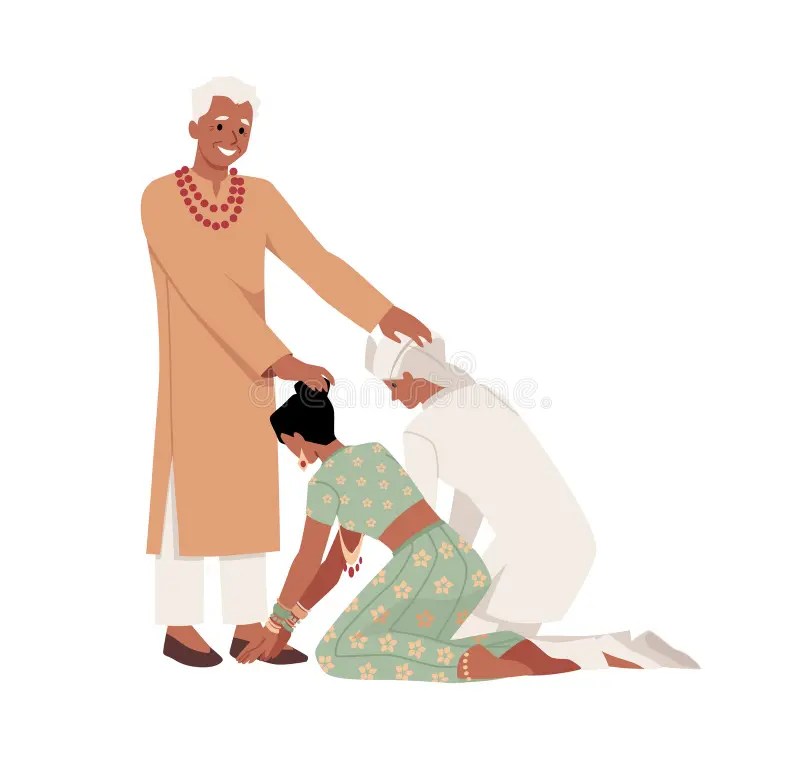
Just like attaining the eligible age to vote or marry, I am convinced that some individuals – awakened souls I mean – acquire the power to bless only after a certain age. Premature greying of hair lends the wrong impression that I have already reached the age to raise my hand to shower blessings like rose petals. Misled by the ageing process showing visible signs, a senior couple came home with their newly-wed son and daughter-in-law, directing them to touch my feet and seek blessings. I withdrew my pedicured feet before they could reach there and patted the padded shoulder of the bridegroom wearing a sherwani instead of placing my hand on his head. It must have appeared odd to the family that I had not shown the willingness to bless the newly-married couple in a proper, traditional manner. My heavy pat was an attempt to boost his morale and brace him up for the challenges ahead or it could be interpreted as a thumping appreciation that he had garlanded the right partner after a long wait since the pandemic.

My life has not been spiritually gifted or divinely blessed, so I do not wish to behave like a saint to transfer goodness or good wishes. Besides, I do not think my soothing words of blessings have any magical power to alter the destiny of an individual. If the guy drinks and drives and rams his car into a truck, my live-long blessings would have no meaning. If the fellow turns into a gambler, my tons of blessings cannot save his wealth.  

When it comes to seeking blessings, I am always ready to receive. I have tried to build a reservoir of blessings over the years but these have not proved to be beneficial in terms of growth. Maybe those who blessed me were also spiritually weak or they did not possess the divine aura to bless. Or perhaps my fate was so overloaded with tragedies that most of those blessings had been utilised to neutralise dark episodes and ensure a smooth, steady life without any highs or lows. The stabilising influence of blessings has been the most convincing and comforting argument I can offer myself, to feel assured that blessings do have an impact if sourced well.

Forget the blessings of ordinary mortals, which come with a doubtful efficacy rate like vaccine shots. Focus on the blessings of the divine alone. My double standards are revealed when I ask other people to stop seeking blessings from me but always look eager to receive blessings from people all around me. The opportunity to seek blessings from mendicants when they receive foodgrains or currency is never lost. I go out of the way in my greed to collect blessings. My key objective behind every act of charity is to receive blessings and raise a buffer stock – fit to use during troubled times.

In the matter of seeking blessings from the Lord, I forget to make a list of what I want. Usually, it is long like a grocery list. I know the others praying are also seeking similar blessings from the Lord. Sometimes I feel I should rein in my greed to receive blessings and request the Lord to distribute my share among the other seekers. But this noble thought perishes soon. The fear of a dull, aching life without divine blessings returns to haunt me. The arrogance of having to survive without his blessings can only invite curse and misfortune.  

There have been several instances where young people have come forward to seek my blessings. I give them a warm hug instead without explaining why I am incapable of giving blessings. A fanboy reader in my neighbourhood made the mistake of considering me a wise, well-read scholar and hoped to get blessed to write better – simply by touching my feet. I stepped back and asked him to write more and face rejections to improve his creative skills instead of pinning high hopes on a direct benefit transfer through his act of submissiveness. 

Even if I proclaim myself as a sinner, those who associate me with goodness will never buy my story. I cannot tell them I do not think I have reached the fag-end of my life when all I can do is sit by the riverside and distribute blessings to the world. I think my life itself is a blessing and I must stay afloat and blessed forever to live it to the fullest.

A situation emerged when I was enraged and felt I must curse the chap with a bleak future as he tested the limits of my patience by challenging my faith in God. I said in anger that he would suffer horribly for offending me though I had been kind and helpful to him. I was confident that my curse would wreak havoc but within a few years he really prospered. Though we did not meet after that incident and I do not intend to bump into him again, I am sure he must be eager to tell me that my curse was nothing more than a fake mumbling of an overheated brain. It made me conclude that even though I had not tested my power to bless, the power to curse had been tested and it misfired. Sometimes I feel like writing a mythological tale based on curses but then I am reminded whether those curses would lack potency and weaken the plot instead.   

Incurring the wrath of saints is never a good idea – a lesson acquired after a memorable encounter with a group of sadhus who came close to getting offended by my tendency to bargain with them. As their kohl-lined eyes grew wider to scare me and the tongue began lashing out invectives to scold me for monetary attachment in this transient world, I loosened my purse strings to bring them back from the verge of spewing fire and converted their harsh words into the nectar of admiration.

I have not cursed too many people, not even those who ditched me, ever since I realised my zero potential to curse effectively. Many people have been offended or snubbed without a valid reason and they have cursed me behind my back – quite effectively in my case at least. Whenever I accost them, they are so cheerful that I forget their tendency to curse.  

Seeking blessings is reduced to a mere formality prevalent all around. There are many opportunists who fake it and come forward to seek blessings just to make you feel superior. The younger relatives who visit me to seek blessings are politely asked to identify the actual elders in the family and bow down before them. A septuagenarian wields more power to bless vis-à-vis a person who is flirting with middle-age. I prefer to seek blessings from elders even today and permanently occupy the slot of a recipient instead of becoming a donor of blessings. 

Having realised that I am not the one empowered to bless or curse a person, I avoid getting into this trap now. No divine light emerges from my palm so I keep my hands clasped in prayer instead of raising it too often to bless like a godman popping up through the panoramic sunroof of his luxurious SUV.  

Devraj Singh Kalsi works as a senior copywriter in Kolkata. His short stories and essays have been published in Deccan Herald, Tehelka, Kitaab, Earthen Lamp Journal, Assam Tribune, and The Statesman. Pal Motors is his first novel.  


PLEASE NOTE: ARTICLES CAN ONLY BE REPRODUCED IN OTHER SITES WITH DUE ACKNOWLEDGEMENT TO BORDERLESS JOURNAL

Click here to access the Borderless anthology, Monalisa No Longer Smiles

Click here to access Monalisa No Longer Smiles on Kindle Amazon International
Categories
Musings of a Copywriter

All Creatures Great and Small…  

By Devraj Singh Kalsi

From Public Domain

The white cat cuddles up on the furry brown mat right outside the entrance door. After I lock the gate leading to the granite steps, it slips in through the iron grille, assured that this seat will ensure comfortable sleep at night. So long as it makes no noise to disturb me, this arrangement works fine. Sometimes when I wake up early, I forget to peep out through the glass window to check whether it is still there. My sudden opening of the door hits her legs and she quickly vacates the spot, turning back to stare and warn that my inhospitable disruption would draw a bloody scratch.

It is true she would have slept longer if I had not arrived on the scene. The feline is entitled to jump to the conclusion that I am the culprit who did not show a sensitive side by tendering an apology through expression. Making an effort to introspect mirrored how miserable I felt when I was groggy with sleep – head buried under the pillow – especially if a domineering member of the family pulled me out of the cosy comforter and rebuked me for being lethargic. My humble submissions for another fifteen minutes of restful sleep were always rejected like salary hike requests. Drawing this parallel provided the solace that I still had a  functional ability to regenerate the tender side.

To make amends, I woke up late or delayed opening the door, allowing the cat the opportunity to snooze for a longer duration. Any kind of clatter inside the house could disturb her sleep so I took extra precautions to maintain peace in the kitchen. I chided myself for not being courteous enough to offer a bowl of milk to welcome the guest. These were clear indications that my sensitive side was kicking in!  

The decline of the sensitive side usually gets overlooked in the rush to cope with daily commitments. When something awful and unexpected occurs, the journey to explore within and measure the decline begins all of a sudden. One tends to becomes extra vigilant, checks repeatedly the extent of damage and how to recover the lost ground. The natural ability to be sensitive and the efforts to restore it calls for consistent efforts that strengthen bonds with nature and its allies.

The other day I woke up late as I binge-watched a lot. It slipped out of my mind that the pigeons were waiting to be fed. When I reached the garden, most of them had taken flight. There were still a few of them hopping around. As I served foodgrains, there was a scramble to peck at it. They settled down to polish off whatever their eyes could find and then proceeded to spread their wings in the air. After their exit, smaller birds like sparrows descended from the branches of a guava tree to have their fill. The squirrels on the garage roof availed the hollow pipe to come down with alacrity, to search for remnants. I thought I should arrange something for them, probably nuts. It was a mere idea without any urge to act immediately. Some minutes later, I came inside to proceed with other chores but I kept thinking about the pigeons – about the ones who could not wait and those who stayed there.  

The loss of patience was natural as the pigeons knew I was never so late. Instead of wasting time, they flew away to other options to have their fill. I could relate to this practical behaviour as I myself do not like being kept waiting to be served tea or coffee at home or in a café and have often shown the tendency to leave. Somewhere deep inside I relished the thought that those who waited for my arrival were close to me and shared a strong bond that I became aware of through this episode.

The packet of peanuts was torn, and it slipped out of my hands when I tried to fill them in a glass jar. A handful of nuts fell on the tiled floor. I gathered those nuts and opened the kitchen window to offer it to the squirrels still lounging in the garden. Perhaps the universe had communicated my thoughts to them. Within minutes, the squirrels vanished with the booty. Though it is widely believed that the food reaches for whom it is meant, it shows gross insensitivity when food is wasted or thrown away. How can it possibly be acceptable that some human beings are destined to scavenge for food in garbage bins?

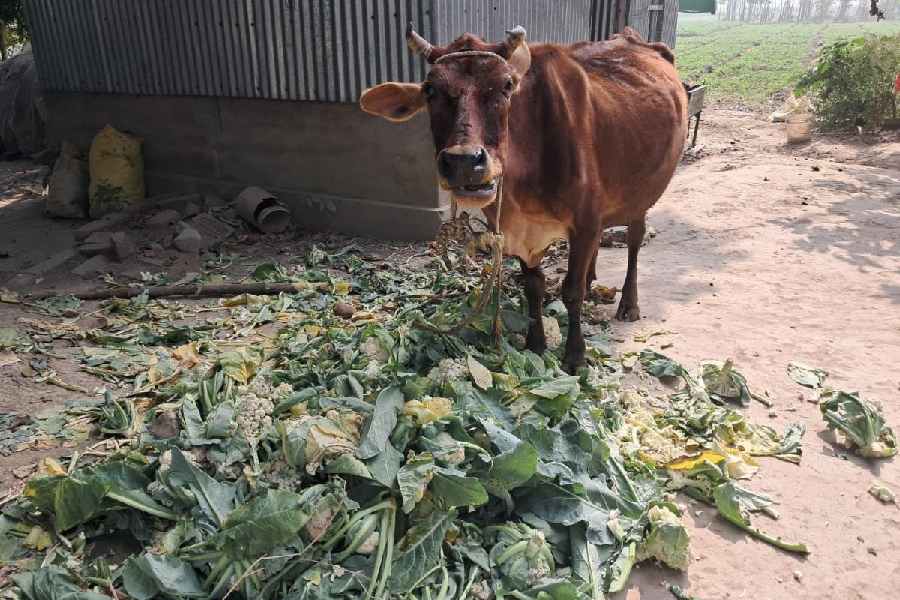
Some mornings are special as the sight of a herd of cows grazing on the grass outside the main gate motivates me to offer them greens such as cauliflower and cabbage leaves. Their mastication draws the attention of stray dogs who feel my act of preferential treatment cannot be overlooked.  Their collective barking peaks, reminding me that I must offer them something as well. Serving biscuits is the easiest way to calm them. When I give them something to eat, their anger subsides.

Feeling left out is painful as I can recollect how miserable and low I felt when I was not considered fit for the school cricket team despite being a good player. The stray dogs tamed their resistance and allowed the cows to graze without any confrontation, following them like escorts. The sight of two different species bonding so well became an inspiration, making me wonder how I can emulate this example and make my house an abode for multiple creatures to co-exist and care for each other without any fear of competition.

I am not a regular when it comes to feeding the cows crossing my house. But I have noticed some of them slowing down their pace in front of my gate, anticipating something to be served to them. Now I intend to add breadcrumbs or chapatis or anything they like to eat, making it a regular practice to place something for them. Being quite punctual like pigeons, their arrival signals they have memorised my address and they take a break to stop and chew here. The neighbour has shown the competitive spirit to become sensitive by placing a tumbler full of water for all animals. Cows eat from my home and then proceed to quench their thirst next door. I should celebrate such healthy competition as the neighbour is playing a positive role to find his space in the connected world by becoming useful to other species.  

Recently, I bought a bird feeder and decided to put it up in the garden, with the support of bamboo poles. Before summer sets in, the bird feeder should be installed. A little bit of digging of the soil is required and this tiresome activity slows me down. I made a resolution to hire someone to do the job if it proved too cumbersome for me. Although I am aware it’s getting delayed, I am not making any effort to complete it.

When I finally went to the garden on a Sunday afternoon, I saw dried-up, hardened soil and felt disappointed. Watering plants should be a priority. The petunias made my windows look beautiful, with the purple and white blooms. I was busy clicking photos and sharing them  for likes but I was not ready to accept that these plants needed more attention to bloom better and for longer. I had seen them growing in other places during this season, in other bungalows, boulevards, and other cottages. I needed to be modest in accepting the fact that I had not shown a highly sensitive side when it came to nurturing them with love. If I could dedicate fifteen minutes every day, to water them early in the day, I would have shown better signs of care.

Nowadays, I am happy just watering them – whenever I find the time. There is a palpable loss of my sensitive side as I consider it is sufficient to water plants without thinking too much about fixing a timeline. I need to remember how quickly I reach out for a glass of water whenever I am thirsty. But in case of plants, I have concluded that watering them is enough – delaying it does not generate any smidgen of guilt.

The truth is that plants also need water regularly and performing this task early in the day is better. Before I consume the first glass of water, I must ensure the plants have quenched their thirst. I should stop comparing myself with those who do not water plants. I should not feel I am doing the plants any favour. When the plants grow healthy here, they create a positive environment for the residents to lead happier lives. Instead of taking pride in providing any noble service, I should change my mindset and think that there are hundreds of more ways to strengthen the sensitive side. These are some smalls steps as the awakening grows deeper. Knowing the depth of love knows no end. Similarly, the depth of sensitivity is never fully known. All we can do is keep growing sensitive to make this world a better place for all creatures. 

From Public Domain

Devraj Singh Kalsi works as a senior copywriter in Kolkata. His short stories and essays have been published in Deccan Herald, Tehelka, Kitaab, Earthen Lamp Journal, Assam Tribune, and The Statesman. Pal Motors is his first novel.  


PLEASE NOTE: ARTICLES CAN ONLY BE REPRODUCED IN OTHER SITES WITH DUE ACKNOWLEDGEMENT TO BORDERLESS JOURNAL

Click here to access the Borderless anthology, Monalisa No Longer Smiles

Click here to access Monalisa No Longer Smiles on Kindle Amazon International
Categories
Review

Mapping Raghu Rai: A Photo Journalist’s Journey

Book Review by Malashri Lal

Title: Raghu Rai: Waiting for the Divine

Author: Rachna Singh

Publisher: Hawakal Publishers

“My story should remain simple, step by step, click by click.”   -- Raghu Rai

Rachna Singh, notebook and recorder tucked in her bag, pen in hand, first meets Raghu Rai in his picturesque home nestled in the Mehrauli forest of New Delhi, a landscape with occasional medieval structures peeping through the trees. Away from a concrete encrusted city, Rachna, a patient biographer, knows that the legendary photographer whose images shaped the visual progress of a nation, has his own deep stories.  But will he reveal them? She pries the tales open by carving pathways through Raghu Rai’s photos— and a remarkable book about the person behind the camera is captured by a literary image-maker, in this sensitive, tender, and insightful biography. Rai permeates  a series of chapters that play intricate games with memory because every frame in the camera is connected to myriad threads of experience.

Since the book is sub-titled “Waiting for the Divine”, I naturally look for references to Mother Teresa and the Dalai Lama to discover how the transcendent power of Raghu Rai’s photos of these two personages emerged. Entry into sacred precincts is never easy, and a camera in hand signals a definite obstacle. However, at the Sisters of Charity in Kolkata the photographer is permitted to follow the Mother unobtrusively. Yet, when a curtain flutters to reveal angel-like nuns and Rai dives to the floor to catch the best angle and the right light, even the Mother’s equanimity breaks and she is aghast! From such “shadowing” emerges the divine photograph titled “Mother Teresa in Prayer” with every crease in the luminous face catching the glow, an expression transporting her to realms beyond ordinary comprehension.

If Raghu Rai’s association with Mother Teresa is marked by reverence, his link with His Holiness the Dalai Lama is marked by friendship—one that extends to warm handshakes and brotherly embrace, informal conversations and a conviction about universal compassion. Says Rai, “His Holiness is an uninhibited, wonderfully loving man. How gracious of him to say he is my friend.” Again, it is the camera lens that reveals remarkable facets of the Dalai Lama– his childlike smile as also the sombre spiritual leader of a people in exile. Rachna Singh recounts an almost surreal story of a protective stone gifted to Rai by His Holiness that saw him survive a severe heart condition of ninety percent blockage while still chasing images of a crowded procession!

This takes me back to Rachna Singh’s intention, “My book is not a third-person memoir nor a chronological recounting of Raghu Rai’s life. Instead, it unfolds through candid conversations, inviting the readers into an intimate dialogue.” The reader’s response being part of her textual strategy, I too could add my account of the mystical energy felt in the presence of the Dalai Lama. The book’s attraction lies in this fluidity of the biographer, her subject and the reader being part of the evolving discussion of the deep philosophical pool from which photos are created. The trajectory of Raghu Rai’s life is well known—the photo journalist with The Statesman and India Today; his famous photo essays in the international magazines Time, Life, The New Yorker and numerous others, the award of a Padma Shri, his eminent friends and compeers, but Rachna Singh’s book probes Rai’s mind, his consciousness, his search and his beliefs. Therefore, it offers gems of information through anecdotes and the atmospherics of events, and some delectable quotations in Punjabi and English.

I turn here to Raghu Rai’s series on the Bhopal gas leak of 1984. “The black and white picture of a dead child, eyes open, staring sightlessly into space, lying in the rubble with a hand gently caressing the ravaged face in farewell,” describes Rachna, calling Rai a ‘Braveheart’ who painted a “searing picture of the tragedy.” The conversation is strangely matter of fact as though both the biographer and her subject are numbed by the enormity of that night of terror. Did Rai fear for his health or safety in the toxic air? The answer is “No” because the human pain around was greater than the instinct for self-preservation. All the journalists visited the mass cremations, the hospitals, the dead and the dying as though it was a “job”, Rai being practical enough to say, “You cannot let your spirit turn soggy with emotion.” Those of us who read of such tragedies and see photos in newspapers while sipping our morning tea should admire the intrepid people providing the raw material from ground zero.

Another memorable series was on Bangladesh refugees after the 1971 war—emaciated women and men often carrying sick children in baskets. Rai had been in the frontlines of the war and had once been surrounded by a hostile mob. Rachna is on tenterhooks as he narrates the details but he declared “I was more excited than scared … there was actually no time to feel scared.” At one time he even smiles and says, “It was a lot of fun.” Which brings me to probe the extraordinary grit and strength of photo journalists or reporters from war zones. Where does compassion and newsworthiness meet? Is image more important than the decimated human body? What lasting imprint does such witnessing leave?

Perhaps the answer lies in Raghu Rai’s quest for the Divine—beyond image, outside time. He was born in pre-partition India, in the village of Jhang that is now in Pakistan. He speaks haltingly of the childhood terrors—homes in flames, of escape in the pre-dawn—Rachna notes the tremor in his voice and the reluctance to recall those years. Yet she astutely links Rai’s portrayals of hurt and human sorrow, his sensitivity yet distancing from those early experiences. Finally, it’s been a holistic calm. Rai is quoted: “Photography has been my entire life—it has, in fact become my religion, a faith to which I have dedicated myself completely. My craft led me toward a meditative path that gave me insights to life and the divine.” And that quest bridges the beatific and the aesthetics in this most commendable book.

Malashri Lal, writer and academic, with twenty four  books, retired as Professor, English Department,  University of Delhi. Publications include Tagore and the Feminine, and The Law of the Threshold: Women Writers in Indian English. Co-edited with Namita Gokhale is the ‘goddess trilogy’, and also Betrayed by Hope: A Play on the Life of Michael Madhusudan Dutt  which received the Kalinga Fiction Award.  Lal’s poems Mandalas of Time has recently been translated into Hindi as Mandal Dhwani. She is currently Convener, English Advisory Board of the Sahitya Akademi. Honours include the prestigious ‘Maharani Gayatri Devi Award for Women’s Excellence’.

PLEASE NOTE: ARTICLES CAN ONLY BE REPRODUCED IN OTHER SITES WITH DUE ACKNOWLEDGEMENT TO BORDERLESS JOURNAL

Click here to access the Borderless anthology, Monalisa No Longer Smiles

Click here to access Monalisa No Longer Smiles on Kindle Amazon International
Categories
Musings of a Copywriter

The Heroic Fall

By Devraj Singh Kalsi

From Public Domain

Those were not the days to honour bravery on the domestic front. But if an award gets constituted to recognise such acts of valour, my grandmother would emerge as a strong posthumous contender. What she did remains remarkable, audacious, and inspirational to several generations of our family and relatives who idolise her for this singular outstanding quality that pushed her into the realm of greatness.

From the balcony of the second floor of the house in the village my grandmother was dumped – and assumed dead – by the band of veteran dacoits that had entered the mansion with the ulterior motive of robbery after a tip-off from some reliable sources that all the male members had gone to the city to place bulk orders for the upcoming festive season. Her agility to oppose the intruders and block their path was a source of irritation as they suspected their flawless plan would flounder in its execution if such resistance garnered support from the other families. Before conducting their operation in peace, they chose to get rid of the disturbing element. But they forgot to get the keys of the locker almirah from her.

Unfortunately, what they felt was designed to succeed had ended in disappointment as the old lady landed on a mound of haystack, suffering injuries that threatened to break her back but not her spirit. When one of their acolytes rushed down to search for the keys, she pretended to be dead by holding her breath. They could not find the key. The truth was that she had buried the bunch of keys in the haystack as soon as she crashed on the ground.

After the dacoit left her, she composed herself, swallowed her pain, and screamed louder than before, ensuring that the lamps in the neighbourhood lit up bright out of curiosity as the word daku[1] rend the air. Soon there were flames marching ahead to attack and overpower the intruders who thought it was better to retreat instead of facing the irate mob. With village folks arriving in droves to rescue her, the dacoits fled the scene without the booty, carrying with them only the jars of mango pickle lifted from the attic.

When she heard so many voices around her, including some familiar ones, she slowly opened her eyes but could not manage to get up on her own. She was carried inside the house and the medical examination revealed a fracture of the hip. After her sons and their families returned home to discover her in this state, they regretted their decision to leave her behind. But she said it was God’s plan to save the family fortunes. Within a few months, she regained the ability to walk slowly and she narrated dramatised tales of her big fight with dacoits. It was a fine blend of reality and her imagination. She became a feted character with immense popularity in the surrounding villages on account of her encounter and survival skills.

The trail of destruction that the intruders had left behind was in the form of overturned tables and dislodged beds, with sharp tools lying scattered in their hurry to escape the mob that her shout had garnered. Her narrative went through additions and alterations, making some infer what she reminisced was tweaked due to memory loss although it was her clever ploy to retain fresh appeal. Many people suspected she would never manage to regain her full strength and firmness, but her speedy recovery confirmed her bones had suffered minimal damage.

She basked in the glory of her valour and thanked God for giving her the opportunity to showcase this side of her personality that would never have emerged if this incident had not occurred. She averred she did not worry about personal safety for a single moment and acted the way her husband would have done. Such disclosures signified she was making a gender statement of equality, that she was no less courageous than her male counterpart who had settled well into his heavenly abode some years earlier. Now it was posing a challenge for her sons and daughters to set a higher benchmark though none of them looked capable of surpassing her next level of courage.

My grandmother herself was not sure how she gathered the intrepidity to stand in front of armed goons. Like flashes of brilliance, bravery also came in sudden spurts. Standing in the courtyard of the house, the sons assured boldly that if any dacoits made another daring attempt in their presence, they would chop their heads off with swords. Their stentorian voices did not carry an iota of conviction but they tried to convince their mother that they were equally brave and prepared to face life-threatening situations without any fear.

During their entire lifetime, the next generation did not suffer any violent attack or external aggression though they themselves were engaged in petty fights and quarrels that did not make them eligible for any honour. My grandmother lived a long life and always gave the family some reason to feel inferior. Without going to the battlefield, she had fought and survived a dangerous attack. As this story was still in circulation during our childhood, we grew up hearing it repeated with great interest from none other than our grandmother. She was corrected by other members of our family for introducing changes in the narrative she had shared earlier.

Mythological tales did not catch our imagination as much as her own story. We loved to hear it retold in her voice. The element of suspense retained freshness in her narrative and we were hooked to her storytelling. Although dacoits became a rarity by the time we were growing up, and their attacks were seen only in Hindi masala films, there was a recurring dream of facing a similar crisis where a band of dacoits would hold us hostage, but we would somehow manage to escape unhurt from their clutches.

Contemporary dacoits have become multi-tasking experts with a diverse set of skills as their earlier focus on the few wealthy families in rural areas has now shifted to other profitable, prepaid criminal gigs like contract killing and shoot-outs. They prefer to work from remote locations on a freelance basis just like writers and copywriters. The middle-class families now face burglary from thieves armed with daggers wafting in their apartments like evil spirits.

Travelling by train to visit central India, crossing the Chambal Valley known as the hub of dacoits, I was expecting dacoits on horseback, galloping ahead along the railway track, to catch up with the superfast train, to latch on to the door and enter the air-conditioned coach and hold the passengers on board captive at gun-point. This would be an ideal opportunity as I would –at the right time — emerge from the toilet and catch the ‘Gabbar’ [2] of their gang from behind, snatch his weapon and point it at his tilak[3]-smeared forehead, ordering his team mates to jump off the train before I finished counting fifty. This would be the best outdo the family record of heroism. Saving the lives of fellow passengers would make me eligible for the highest bravery award for civilians.

As I sat brooding over this possibility, the train crossed the Chambal region safely and the passengers heaved a sigh of relief. That the fear of such attacks still resides in many hearts was evident as the curtains of the windows were pulled apart only after the train had crossed the danger zone. My window seat had the emergency exit and I am sure if the attack had taken place, I would have been the first one to jump out to save my life and wait for better heroic opportunities.

Dacoits have appeared as positive characters with a sad story of exploitation that compelled them to pursue this profession. They have been glorified in our films for carrying a heart of gold, not just pots of gold. As some of them became political leaders after winning elections, one is forced to take a relook and believe in the forgiving nature of the masses who elect them and give them the chance to rule and become an integral part of the mainstream. Though I must admit I have no idea of how many dacoits turned politicians have helped the nation grow as their personal rivalries and internal fights culminated in their untimely end. However, the sobering impact of such narratives makes one reflect on the entire concept of who loots and plunders at an individual level and how the colonisers looted and robbed in an organised and official manner. It should not come as a surprise if their tales of violence and exploitation get compared with those who plundered cities and states though they were entrusted with the task of protecting them.

Returning to my earlier tale, my grandmother’s framed and garlanded portrait on the wall urged me to seek her blessings. Even though it was not exactly a case of getting thrown off by pillaging dacoits, my late grandmother blessed me one day with a chance to survive a similar attack. Getting pushed down the staircase by a nefarious businessman but landing safely without sustaining head injuries due to my proven skills of tackling motion while disembarking from moving local trains as they entered the platform, I was able to retain my balance and save myself, which made me think of the miraculous escape and how I got the privilege to emerge as a hero for the current generation. Perhaps the spirit of my grandmother stood firmly behind me and saved my head from cracking up like a coconut.

This scary episode made me feel closer to my grandmother. I have contributed to the glory of the family, preserving the rich legacy by making worthy additions to it. Those who were eagerly expecting to crush my skull were surprised to see me unhurt. Full credit goes to my grandmother for supporting me invisibly – though she is not around to see me replicate her distinction. Now we share a special bond and a common fate of surviving a deadly attack and telling the tale, rising in stature and esteem after the heroic fall.

[1] Dacoit

[2] An allusion to a Bollywood hit dacoit leader called Gabbar Singh from the film Sholay (1975)

[3] A mark in the centre of the forehead with vermilion or ash to show devotion to a deity.

Devraj Singh Kalsi works as a senior copywriter in Kolkata. His short stories and essays have been published in Deccan Herald, Tehelka, Kitaab, Earthen Lamp Journal, Assam Tribune, and The Statesman. Pal Motors is his first novel.  


PLEASE NOTE: ARTICLES CAN ONLY BE REPRODUCED IN OTHER SITES WITH DUE ACKNOWLEDGEMENT TO BORDERLESS JOURNAL

Click here to access the Borderless anthology, Monalisa No Longer Smiles

Click here to access Monalisa No Longer Smiles on Kindle Amazon International

Categories
Musings of a Copywriter

Banking  Ideas?

By Devraj Singh Kalsi

Opening a bank account is a simple procedure that takes a complex turn for writers once they reveal their profession. The bank executive eyeing a rich customer loses interest in serving a writer who is expected to struggle with the maintenance of minimum balance in his savings account. Almost on the verge of suggesting he should opt for a piggy bank instead, the executive dumps his papers, making him wait for longer than expected even though there is no serpentine queue inside the bank. The writer collects his original documents and proceeds to the sitting area, hoping that the executive will be merciful and serve him without further delay. He tries to establish contact, but the executive rolls his eyes and looks at the computer screen, pretending to be busy with some urgent online task despite the server failure notice tagged above his terminal.

The sitting area has other customers facing a similar fate. The writer finds it a blessing to be surrounded by other clients. He takes keen interest in observing their mannerisms and speech. He overhears their conversations and tries to remember the important bits and pieces that he can later use as dialogues in his forthcoming novel. One interesting line or a phrase that catches his imagination gets noted in his diary.

He begins to love his waiting time and feels comfortable with such inordinate delays so long as he gets fodder for his prose. He gets richer during the waiting period though the bank has no idea how this happens. When he is finally summoned to the counter to deposit his earnings, he looks happy instead of showing signs of irritation. The executive sports a fake apologetic smile and proceeds to make the entry while he chalks out the plan for another visit to the bank branch – even if the task is just updating his passbook. He needs an excuse to enter the bank where he finds so many clients discussing financial and personal matters. His greed to enrich himself with varied, interesting human insights makes him a regular customer who continues to be warmly greeted by the security guard irrespective of his financial position.

The next visit to the bank is slated in the same week. He comes in with a request for partial withdrawal of the deposited amount, making the teller wonder why he has to waste a cheque for this instead of swiping his debit card. He stands in the queue, flanked by other customers, and he strikes conversation with a fellow customer who smells fragrant and suddenly fishes out a bundle of currency notes to deposit. Seeing such a hefty amount of money that exceeds his annual income, the writer becomes aware of his own impoverished state and collapses in his mind. He tries to look the other way as he does inside a public lavatory and keeps a safe distance from the customer who loses interest in carrying on with the silly chat on weather and politics as he inches closer to the cash counter.

Perhaps the writer deserves this assault on his financial status to return to the materialistically insane world. He makes a quick promise to himself, closing his eyes and pledging to churn out a best-seller that would give him royalty of a much bigger amount. The special visit makes him strongly motivated and inspired. He is determined to mint money through writing even though most of the writers the world over have failed to do so for centuries. He aims to become part of the minority of globally successful authors with royalty earnings ensuring a royal lifestyle. If a writer can create the best life for a character, he is also entitled to dream of a similar fortune for himself. The writer who topples characters from cliffs or offers them a lifeline gives himself some space to hang on, bounce back, and break the silence of critics. He knows it takes no time for the naysayers to start crowning an emerging author as the bravest, newest, and shiniest literary star who breaks norms to push the boundaries of creativity churning out a best-seller that keeps selling like hot cakes the world over.

When the bank refuses to serve him with interest but charges interest on any dues, there is not much he can do to show how aggrieved he feels as an ordinary customer. He goes home and creates a wily character with shady features of the presiding banker. He has no fear of getting caught as he knows the banker is not likely to trace or read the story published in a faraway land. He goes ahead with adding villainous shades to the character created with borrowed inputs resembling the banker. The way he fobs off pesky customers – and his scrunched-up forehead with flawed skin – finds space in fiction.

The next time the writer walks in for another trivial chore, he has no idea of what is in store for him. He is pleasantly surprised to find a new woman executive who is courteous, polite, and dignified in her professional conduct. As he walks in early in the morning, the lady offers him a seat in front of her desk and proceeds to address his concerns and carry out the tedious job of printing the passbook even though there is just one entry on the last page. He reads the updated book and then reads her face that still looks eager to offer assistance. He submits the requisition for another cheque book even though there are many leaves unused in his current one.

Such hospitable treatment makes the writer an admirer of the woman executive, and he opts to glorify her grace in his next story by making her a strong character trying her best to change the world of banking. He makes her wield ample strength and positions her as a saviour even though she herself has no idea of being so headstrong. Keeping a writer happy delivers a lot as the lady executive soon understands. He ensures that the story reaches her. He forwards her the published link. He does not gather the courage to ask whether she has read it or not. It would appear he seeks attention from his contacts. But he keeps appearing in front of her in case she remembers she has to offer feedback on the link forwarded to her number. The brief fascination – and interaction – with her comes to a sudden end as she is transferred to another department behind a cubicle far away from the customer service zone.

The sound of note counting machine begins to irritate the writer. He is reminded of the typewriter days. Just to hear the sound of counting notes he buys the machine and keeps counting the same cash again and again. Inside the bank, the same process is repeated only when the machine stops reading at ninety-nine instead of reaching one hundred. He thinks the domestic machine lacks adequate practice and hides errors in the counting process. It becomes his duty to check multiple times and ensure error-free counting even though his writing tends to carry errors he cannot detect. The cacophony has to hit him hard so that he remembers it while writing. It should hammer him all the time, making him determined to write that elusive best-seller at the earliest.

The solitary bundle of his few thousand rupees is dumped carelessly by the teller who has no idea of how much hard work has been put in to ensure this money flows into the writer’s account. Bored of the simple job of deposits and withdrawals, the writer turns ambitious as he approaches the investment counter, deciding to make a systematic investment plan. When he opts for the package with the minimum amount, the fund manager looks with bulging eyes, almost a scornful glance that seems to suggest he is wasting his valuable time.

The writer seems determined to begin his financial journey as an investor – and he firmly states his decision to proceed with it. This gives a little boost to his waning confidence as he signs a cheque for investment after several years. He chooses banking with a leading private sector bank to get better banking services, oblivious that the customer profile matters more in this regard. Those struggling to maintain the threshold limit of minimum balance should not show the temerity to enter the bank meant for the privileged few. Deep inside, the writer is convinced that he will have a reversal of fortune. He knows the bank that is least interested to have him as a customer would felicitate him some day as the most valuable customer who they feel proud and honoured to serve. They will turn loyal readers of his novels and seek his autograph and photograph.

He visualises a turnaround in his financial fortunes through writing even though he is aware that only a few novelists the world over ever make the cut. He remembers the discriminatory scene inside the bank where a rich customer is offered coffee, juice, and cookies while no such warm gesture comes his way – not even a glass of water. He pursues with the dream of turning the tables, reposing full faith in the eternal truth that fortune always favours the brave. The transactional relationship with the bank serves a reminder of how the world operates along the lines of profit and loss even if it is deeply regrettable. He hopes that his repeated debits and credits would make him eligible for a free credit card at least – in case the crunch becomes too hard to bear. In case his dream remains a pipe dream.

The series of snubs steel the writer’s resolve to earn plaudits. He sits at the desk and whenever he feels low and dispirited, he goes straight to the bank to seek a booster dose. The cold welcome is the perfect shot that works like magic. The sight of rich customers and their privileged treatment sets his imagination wild. He keeps adding zeroes in the slip and tears it apart before tears well up. He hopes to create phenomenal income through writing and plans to launch his book inside the same bank or have it as a key sponsor. With such an intense relationship brewing in his mind, he is convinced that his manifestation is sure to translate into reality. He walks in with his book and hopes the staff would recognise him as a learned person. But they ignore him as they are more interested in the cheque book or passbook. At this juncture, he is left with no option but to withdraw all his money and close his account to embalm his bruised ego.

Months and years pass and yet there is no boost in royalty – or loyalty to a bank. He writes well but does not sell well. The best seller remains a distant dream. He switches to another domain, hoping some producer would buy his flop stories and turn them into a web of hit series. Changing the banking partner does not change his fortune. The same plight ensures his flight from another bank – despite the trench coat and dark shades. The wide inequality between his balance and appearance is read by the cashier. Another dream of opening his account with an MNC[1] bank once he becomes a globally read author takes root.

The fact that he slogs despite his previous output comprising four novels and five collections of stories means the writer is alive and forever hopeful that his next tome would rewrite his financial standing. Even though nothing of that sort happens, he is glad to have produced such an enormous body of work that has found few takers. If he is still banking on hope and visiting some bank to feel charged to write, he is following the right track. Rejection works as a stimulant for the writer who faces the maximum number of rejections in life has nothing more to lose. All he needs is a bank as a companion where he makes regular trips to get insulted, to uplift his sagging morale, to mingle with the rich and tell their refreshing tales of deceit, crookedness, and betrayal with a sensitive pen. 

[1] Multi National Corporation

Devraj Singh Kalsi works as a senior copywriter in Kolkata. His short stories and essays have been published in Deccan Herald, Tehelka, Kitaab, Earthen Lamp Journal, Assam Tribune, and The Statesman. Pal Motors is his first novel.  


PLEASE NOTE: ARTICLES CAN ONLY BE REPRODUCED IN OTHER SITES WITH DUE ACKNOWLEDGEMENT TO BORDERLESS JOURNAL

Click here to access the Borderless anthology, Monalisa No Longer Smiles

Click here to access Monalisa No Longer Smiles on Kindle Amazon International

Categories
Musings of a Copywriter

Byline Fever

By Devraj Singh Kalsi

From Public Domain

Newspapers with audited accounts of circulation and readership surveys gave the opportunity to claim that your piece was read by millions of readers. Even though the metrics did not suggest how the individual piece performed in terms of garnering readership, the millions of people who bought the newspaper were assumed to have read what you wrote. Unlike the digital space where the complete picture of reads, likes, and shares is accessible, the traditional media platforms provided a cover to indulge in tall claims of popularity and the collective statistics delivered a high to those who dabbled in writing to see their name in print. Even if the truth was that your piece was the least read one, there was no way to establish that in the editorial room where the high-brow editors cherry-picked on the basis of quality of writing and the relevance of the topic.

Bouquets and brickbats in the form of letters to the editor was the only reliable way to assess the merit or demerit of the piece, but these letters were dashed off as reactions to columns by leading commentators in the belief that the editor would grant space for the feedback on what the heavyweight columnists churned out. Readers were apprehensive that their letters would end up in the slush pile if they focused on newcomers. This fear was not unfounded as the interactive engagement often appeared limited to luminaries and experts on the edit pages.

Being published next to a syndicated column meant the equivalent of placing your debut novel on the same bookshelf where the works of a bestselling novelist were displayed. As neighbours, you had the liberty to brag about enjoying the same status even though your readership was negligible. You rushed to the newspaper vendor to buy additional copies of the same edition and keep it archived in your portfolio of published works. Printing xerox copies for circulation in your group of friends and relatives was the next big activity but the target group pricked your ego by saying that they do not read the newspaper that carried your piece. It was a polite way of saying that your breakthrough was no big achievement as they did not consider that newspaper suitable for reading.  

The desire to see your name in print again and again was a good motivator in the initial stage. Since you never knew you would get the same space twice in a month, it was a struggle to try another kind piece to ensure you were carried on some other supplement page in the next week. You wanted readers of all age groups to notice your name in the newspaper, to register it in the list of frequent contributors. The easiest way to do so was to keep writing on a diverse range of topics. The byline fever gripped you and a week without a piece in the same newspaper or its competitor felt like a long gap of staying away from the limelight. Writing in a hurry also involved the risk of getting your piece rejected. Maintaining the same quality of writing and factual accuracy through proper research work was important because the team of editors should not get disappointed with any of your submission. As a precautionary move, bombing them with low quality pieces for the sake of byline was ruled out. But the obsession to become a regular contributor with a dedicated space led to several attempts across multiple genres to find your strengths. Even though you were able to find out what worked better in terms of flow and engagement, it was not possible to share the same observations with editors who drew their own inferences.

To keep struggling to write with no reward meant sustenance despite all odds. In such a situation, the byline was a big attraction to continue writing. If journalistic writing led to occasional disappointments, you had the freedom to turn to middles and infuse a dose of humour. There was further scope to write short stories and create a new world of awe, with the illustrator adding visual attraction to the theme of your fiction. This was a great opportunity to find your creative bent and, in case, it clicked, you could submit more elsewhere before getting a solo book of short stories published. Writing for some years in this fashion gave you adequate exposure and you turned confident enough to switch from regional publications to national dailies. Listing these achievements in the resume managed to draw the attention of an employer who himself was keen to get published in the same newspaper without releasing advertisements.

There was anxiety and depression every weekend as the expected publication of your piece was delayed due to editorial discretion. You went to browse at the nearby bookstall to know if you were inside the pages. The joy of seeing your name in print lit up your eyes and you picked up extra copies of the same publication without explaining to the vendor what made you do so. If you were lucky to find space for some weeks at a stretch, you chose to subscribe to it. But when you fell out of favour due to changes in the editorial policy or on account of a new editor storming in with his loyal team of freelancers, you felt like cancelling the subscription plan and never writing again. This temporary phase was soon over – when you found another piece of yours getting picked up by a rival publication. You felt buoyed again, determined to get your byline pieces carried to various homes. Your family was glad you were getting published so they did not discourage you. But they were aware you were getting close to the space where politicians dominated. They were convinced you had a future in writing even if it was an unstable one.

Although the honorarium was a modest amount, the thrill of getting paid for the piece was intense. You felt encouraged to write more to get those cheques and line up for encashment in MNC banks. The recovery of courier and stationery expenses from the published works removed the guilt of suffering losses in case of rejections. The newspaper stayed the whole day on your desk and additional copies were displayed in the lobby or the entrance, to let the guests or visitors catch a glimpse of the edition becoming special with your piece. The frisson of delight petered out as the frequency of publication gathered pace. Many readers, including friends and relatives, wrote to the editor in praise of your piece even though you never got to read those flattering comments in print.

When a delighted reader approached the newspaper office to gather your postal address and mailed a long epistle in appreciation of the style, it was an out of the world experience in the pre-digital era. When the elderly reader requested you to meet him at his residence, you did not feel shy to reach out to a stranger. Despite the wide age-gap, the conversation flowed well on writing issues as he was curious to find out whether it was a flirtatious relationship with writing or something more serious and everlasting would flower. Without confirming anything, you let it remain open-ended and interpretative. Despite your best efforts, the elderly reader inferred it was going to be an enduring relationship. When he confessed he was a writer with a book out of print, it was a humbling experience as you sat in front of a published author whereas you had no such credit. He got up and offered a signed copy and sought candid feedback on his work. You felt being the chosen one who could revive his interest in writing and motivate the septuagenarian.

You were also reminded of similar moments of frustration and encouragement from multiple sources. In his case, the story was different as he was battling health issues and yet seeking out advice pertaining to whether he should pursue writing or quit the domain. You felt like saying the magic of creativity should be kept alive even if there is nothing rewarding in the pursuit. You did not need to read the book to deliver this piece of advice. Whether he took it seriously or brushed it aside as a generic observation could not be ascertained. Later attempts to communicate proved futile. Perhaps he was gone, from the city or left the world, or maybe, the landline phone was dead. Searching for his byline in the newspapers and tomes in the bookstores produced no result. You did not feel like trudging up to the same apartment to uncover a bitter truth.

Your friends in the varsity were the most critical readers who always found something lacking in your piece but were also generous to appreciate the attempt. Some were jealous and competitive – driven by the urge to appear on the same page – and they went to the same editor with their submissions. Unable to bear rejection, they spread the word that the editor sought freebies to publish opinion pieces and it was the surest way to get a byline. Despite getting featured in multiple publications, the child-like curiosity to see your name again and again retained its flavour. Writing became a habit as a result, and the desire to be published generated the desire to write. Sustaining the urge to write was immense and, once it became a regular habit, everything else ceased to matter. You were confident of facing the blank page despite flak and rejections. Even if you wrote five pieces in a month and four of them were spiked, you had the satisfaction of seeing one in print. This was good enough to keep the pen flowing. You became more risk-bearing and tried out other avenues and other forms of writing at the same time. As the digital world opened up more options, you began exploring the writing opportunities on a global scale.

Years of honing your craft offered a better understanding of the writing world and the real world. When a young person read your piece against dowry and went to the newspaper office to collect your address and visit your residence and offer you a proposal to marry his sister, it was a moment of realisation how writing shapes perspectives and the immense responsibility it carries. It was an episode to remind you that good writing is read and the writer must pen his words with social responsibility. Such early encounters made you understand the value of writing beyond the power of bylines.

The writer must be prepared to reach a mature stage when the byline fever subsides. Whether you acquired a thousand bylines becomes immaterial after a certain stage, but the role of byline in offering you anchorage and encouragement cannot be sidelined in the formative years of your writing career.

Devraj Singh Kalsi works as a senior copywriter in Kolkata. His short stories and essays have been published in Deccan Herald, Tehelka, Kitaab, Earthen Lamp Journal, Assam Tribune, and The Statesman. Pal Motors is his first novel.  


PLEASE NOTE: ARTICLES CAN ONLY BE REPRODUCED IN OTHER SITES WITH DUE ACKNOWLEDGEMENT TO BORDERLESS JOURNAL

Click here to access the Borderless anthology, Monalisa No Longer Smiles

Click here to access Monalisa No Longer Smiles on Kindle Amazon International

Categories
Musings of a Copywriter

Becoming a ‘Plain’ Writer

By Devraj Singh Kalsi

When a friend of mine glorified living in the hills and suggested I should live close to nature in order to nurture my creative side, I disagreed without showing displeasure as it would have appealed to me a decade ago. Instead of shifting to the mountains to forge a deep connection with nature, now I prefer to increase my interactions with nature and its elements in the nearby surroundings every day. Even if these exchanges are small and trivial, these are spread throughthe day and keep happening with amazing frequency.

Finding ample time to feel the presence of nature all around leaves me with negligible desire to relocate to the hillside where I would have the privilege to spread myself on a roadside bench and gaze and wave at newly married couples clasping their hands and walking down the road with melting ice-cream cones. I do not wish to turn into another such old man with a toothless grin, who never shies away from showing his naughty side whenever an opportunity arises.

Not considering such indulgences as effective remedies to stay young at heart during old age, the all-pervasive burst of energy actually comes from the bout of inspiration to produce a new creative work. The hills or the muse are just two known – and popular – sources while the fact is that there are infinite sources to explore. It depends on the individual embarking on this journey to awaken the creative self.

Hills are romanticised and considered to be the abode of purity with the power to trigger creativity like no other place. My recent visits to the hills did not prod me to write. While such a visit could be inspiring for many people who prefer the serenity of the hills to produce a masterpiece, I would consider myself an exception or a part of the small group holding a divergent opinion. Those who say you do not face writer’s block on the hillside are not telling the entire truth. Without contesting their belief, I am quick to retort by saying that I do not stare at the blank page and do not face any shortage of ideas here. I am happy to live in the plains and remain a plain writer without any complaints.

Those who live in the hills and write profusely get to write about nature and the people they observe closely during their long walks.  The hill towns also have a vast population of ghosts to write about since they prefer to live and breathe clean, fresh air and enjoy the mist and fog of the mountains. This category of dead folks brings so many stories to life. With deadpan humour, the writers relate engaging stories but if there is an abundance of paranormal tales from writers in the hills, it does not mean that the writers from the small towns across the country do not have spooky encounters to narrate. There is no dearth of ghosts to explore in the haunted, dilapidated buildings, cemeteries and treetops. If the emerging and established writers take a keen interest to spin bewitching tales, there can be a potpourri of ghostly delights to feast upon. Instead of trekking to the hills in search of lively characters where the human population is not dense, it is better to seek variety in the plains where the population is teeming with saints and sinners of varying degrees, climbing the heights of divine glory and plumbing the lows of depravity.

Abandon the idea of finding a goldmine of ideas in the hills and choose to focus on the world you live in. Relocating to get inspired involves disconnecting in the greed of enrichment. The ability to source the hidden treasures from the town or the locality comes to those who respect it unconditionally, just as we value the love we get unconditionally. There are many who leave for the hills to become fantastic storytellers, but their output fails to impress and loses consistency. Only when they come down and hit the mean streets, travel in crowded buses and trains, enter flea markets and dingy, narrow lanes do they become an integral part of the creative madness and their output shows that solitude is not the sole stimulant: a chaotic environment can also work its magic to stir creativity in wandering souls.

In case you have garnered a modicum of success and wish to experiment, you can try the hills or the beaches to measure the impact on your creative output. But in case you realise you can write well without changing your pin code, and all you need is a house with big windows providing a wide view of the verdant garden lined with trees and plants, offering a clear vision of quietness, then you can deliver a good creative work by sourcing material from the life lived, from the things you can imagine.

Taking a short break to tour the hills has left me disappointed once again. A depressed state of mind and boredom gripped me more than the lush green vistas. I missed the traffic, the mad rush for trains, and the tearing hurry to cross bridges, the restlessness to leave others behind. The sense of satisfaction found in the hill people seemed to infect me. With limited sources of entertainment, preferring to hit the sleep mode was the best thing to do. The idyllic scenery relaxed me for a few days and then the craving for frenzy took over. Depriving myself of it further would make me sick. So, I returned earlier than I had planned to, with the realisation that writing in the hills would be a challenging job for me. It could force me to quit writing forever. I could well be one of those seasonal types who retreat there to recharge their batteries and come back super charged to face the daily hectic grind of the real world.

How long would an ambulance take to reach me during a medical emergency in the hills also loomed large as a growing concern. Negotiating a sharp bend and thinking about such situations made me feel low. As I grow older, I refuse to be enchanted by apples and apple-picking. The childhood fancy of farm-picking sessions, of plucking litchis, berries, and cherries and apples and eating them in the orchards can be skipped or realised within a week. This charming activity cannot make a strong case to become a resident of the hills. Besides, the local market in the neighbourhood has good supplies throughout the year.

Dozens of markets, malls, bargain stores, eating joints, beauty parlours, and multiplexes are likely to be missed in the hills where consumerism is still not rampant. Aside from natural produce, other staple items are more expensive in the hills. Maintaining budgets would be an uphill task for an aspiring writer. Farmer markets would tempt me exploit those, but I do not want to join the list of discredited experts who exploit and then write about exploitation, thereby showcasing their hypocrisy to the world. Locating an advertising agency in a hill station would be another challenge as the clients think creative honchos from the ad world and film world live in the big cities. Agreed, having a second home in the hills for vacation purpose or weekend breaks is a good option. But writers cannot have this luxury unless they churn out bestsellers to finance a second home.

You could be a writer who is read not just in the hills but also read by those from the plains and beyond. Make your location immaterial for writing.  Junk the idea that a masterpiece with a universal appeal can come from a serene place alone. Writing thrives with speed, pace, and action. And the plains are remarkably good at offering this advantage, not just the slow-moving life and stillness in the hills that makes the mind race faster when the body is in a state of relaxation.

Devraj Singh Kalsi works as a senior copywriter in Kolkata. His short stories and essays have been published in Deccan Herald, Tehelka, Kitaab, Earthen Lamp Journal, Assam Tribune, and The Statesman. Pal Motors is his first novel.  


PLEASE NOTE: ARTICLES CAN ONLY BE REPRODUCED IN OTHER SITES WITH DUE ACKNOWLEDGEMENT TO BORDERLESS JOURNAL

Click here to access the Borderless anthology, Monalisa No Longer Smiles

Click here to access Monalisa No Longer Smiles on Kindle Amazon International
Categories
Musings of a Copywriter

Libraries and Me

By Devraj Singh Kalsi

From Public Domain

The school library was the place we were herded to once every week. Although a few of us were booklovers, the brief period of relief and relaxation inside the large, airy, and sunlit room stacked with books, bookshelves, and desks made us fake an immersive experience of reading bliss. 

Contrary to the orders of Lobo Sir, our librarian who always emitted strange noises to remind us to maintain pin-drop silence, we occupied the window seats to gaze at the panoramic world outside and discuss what appeared in sight. It was more engaging, refreshing, and rewarding as an activity. I was not one of those smart, gifted fellows who focused on the brittle pages of the heavily borrowed titles to impress teachers.

Observing the lush green trees and the slow movement of traffic on the macadamised road outside the campus became the new pastime — punctuated with furtive, irksome glances at the middle-aged librarian who saw potential book thieves lurking within us. His long hands groping our pants and bellies during the mandatory exit check to locate books hiding inside never quite managed to reach the exact spot where books were hiding within some of us: inside our fecund, curious minds.

Most of the students were not fond of reading or stealing books when there were far more precious items like hearts waiting to get stolen outside the campus during those teenage years. Impressing the girls from the nearby convent with our natural gift of storytelling evinced an encouraging response and for us, it was a firm confirmation that holding a book in hand was less likely to catch their interest.

Keeping the library card was an obligation so we had to borrow at least one book in a month, get it stamped, and then return it within a week without further tears to avoid a hefty fine. It was wise to show the librarian the pages already torn, dog-eared, smeared with ink, or doodled with arrows piercing the hearts as his memory never failed to identify new signs of damage to the books and he would insist on replacement or recovery of its full monetary value at the given time.

Considering the perils of borrowing books from the library that made us careful about spilling tea or coffee or  noodle (stuck between the pages) or tomato sauce dots ruining the cover, I decided that I should buy the book and then read it without any fear, even if it involved buying from a second-hand bookshop. With a strong sense of possession and freedom to toss and turn around, I felt free to place a tall glass of cold coffee on it and read it the way I liked. The sense of reading with a free mind had no substitute. Borrowing titles from the library did not inculcate this sense of freedom.

The possibility of forgetting a storybook inside the bus or train was high. Even tears would not convince the librarian to waive the costs if we lost it in transit even though its condition was nothing close to mint. Some of us took the library titles home, kept them in the safest custody of parents and then carried the titles back to school without reading a single page. Of what use was such trouble we could not fathom but negative thoughts resonated more, keeping us mired in anxiety.

Only the toppers borrowed classics to read and discuss with teachers what they grasped. The teachers agreed with their insights and analysis in a bid to sound encouraging even if what the high achievers said made little sense. It was a source of collective victory that some students showed the potential to read classics and match the wavelength of teachers whereas we could not go beyond the popular, readable titles.

The desire to read for fun and pleasure was stronger than the urge to read for knowledge during our school days. ‘Read more’ was the repetitive message from teachers even before it caught our attention as the tagline of a global publisher. Every teacher suggested serious reading to build our command over the language though we had no estimate of its utility except for those aiming for academics. Reaching college gave us a comforting truth — acquired from visiting bookstores in the neighbourhood: it is possible to become a writer without the ballistic power of vocabulary. Several successful authors wrote simple yet powerful prose even if their works were not considered fit for inclusion in school libraries.  

Library trips made a comeback in my life at the university level due to my interest in spending more time in pursuit of a girlfriend who was fond of taking notes from various texts inside the library. While acquiring knowledge was not my goal, I chose to sit with a title and observed her fondness for the written word as she wanted her answers to be unique and well-researched.  The slow, whirring fan turned the pages of the slim title for me, and I ended up turning twenty pages without having read a single sentence in an hour. My dedication and punctuality to visit the library around the time she reached was noticed by many others including the librarian though he never saw us talk or disturb others.  Some weeks later, she said that it was futile for me to spend time in the library. But I contradicted her by saying it was always worthwhile to stay in the company of scholars. The peaceful environment inside the library – found nowhere else in the campus – allowed me to learn to focus on one thing even though it was not reading. She understood what I was referring to and her silence encouraged me to pursue this habit with greater concentration.

Everyday, I climbed the stairs to stare at this beautiful girl inside the library. I even suggested coffee inside the canteen. She declined but surprised me by suggesting a sip outside the campus. We came out of the library and allowed others to notice us together. The campus would be rife with speculation and to keep the world guessing was the first vital step to relish the taste of celebrity culture.

Within a few weeks, she distanced herself from me. I suspected someone must have poisoned her mind. I thought she had changed her timings to avoid me. I kept track of the library hours and noticed her regular absence. One afternoon, driven by the mad desire to check on her, I entered the library with a book purchased from a pavement stall. I scanned the room, but she was not there. The librarian came running as he saw me leaving the hall with a book in hand. Perhaps he thought I was a book thief – like Lobo Sir did in our school. He grabbed the book from my hand only to feel ashamed.

It was a romantic title with a suggestive cover that he took his bifocal eyes away from, assured that such books were not stored inside any library. Recovering from the embarrassment, he admonished me for bringing such dirty books inside the campus. He further disappointed me by saying the girl I came with had surrendered her library card without offering any reason, and I pretended as if it was not the information I was looking for, certainly not from him.  My library trips came to an end with this bitter adventure, and I have not entered any library for more than a decade now.

The need to visit libraries has almost disappeared with the emergence of cafe cum bookstores where you can sit and read like you did inside the library, with a wide view of the world outside, but without the pesky librarian keeping track of the moves and ulterior motives. The book thieves are also taken care of by beeping machines installed at the exit point, thanks to advanced technology, and the innocent browsers do not have to suffer the indignity of groping hands of a security guard.

Devraj Singh Kalsi works as a senior copywriter in Kolkata. His short stories and essays have been published in Deccan Herald, Tehelka, Kitaab, Earthen Lamp Journal, Assam Tribune, and The Statesman. Pal Motors is his first novel.  


PLEASE NOTE: ARTICLES CAN ONLY BE REPRODUCED IN OTHER SITES WITH DUE ACKNOWLEDGEMENT TO BORDERLESS JOURNAL

Click here to access the Borderless anthology, Monalisa No Longer Smiles

Click here to access Monalisa No Longer Smiles on Kindle Amazon International

Categories
Musings of a Copywriter

Berth of a Politician

By Devraj Singh Kalsi

During long-distance train travel, I stay anxious about my fellow passengers in the neighbouring seats. Like any other optimist, I am hopeful of finding beautiful, exciting people to make the hours fly like minutes, to ensure I do not have to pull the curtains and switch on the reading lamp. When the attraction of the window seat offering a panoramic view of the green world fades after a few hours, having engaging people occupying the opposite seats to converse with on a wide range of issues ranging from politics to films is a boon. The presence of yawning bores makes it soporific as their loud, unending phone conversations detailing domestic drudgery start getting on the nerves after a while. Unfortunately, most of my train journeys have nothing refreshing to offer. So, the sight of a young smart lady walking in with her ticket to locate the seat was a huge visual relief. But the joy was short-lived when an elderly lady with a bawling baby in her arms followed her.

Understandably, they were related and perhaps shared a mother-daughter relationship. The young lady understood they were allotted the upper berths. She requested a swap. But the greed of the window seat prevailed. I declined the switch. This bland refusal left her shocked. The elderly lady also did not pitch in with her personalised appeal as she understood that if I could say no to a beautiful young lady, my response would remain the same in her case.

Before they could climb up, a gentleman wearing a hat walked in and seeing their predicament, offered his lower berth to the young lady. Delighted that the young lady would be seated opposite, I took it as some kind of relief but sadly the young lady climbed up while the elderly lady with the child sat in front and started changing diapers. The beautiful lady and the hatted gentleman went up. The gentleman spread himself above my seat while the lady occupied the upper berth on the opposite side. I thought this would provide some opportunity to catch a glimpse of the beauty, but she was so grateful that she enjoyed conversing with the hatted gentleman regarding her difficult journey to the national capital for medical treatment. The gentleman continued to guide her even though she did not seem interested in his advice.

He showed his sensitive side by asking the railway staff to control the air-conditioning temperature as it was quite chilling at night. He made it appear he was doing it for the small child and the lady out of concern even though they had not asked for it. The elderly lady thanked him by saying her arthritic knees needed this relief. As the AC turned warmer with his intervention, the women were assured they were in the presence of a genuinely caring person whereas I was a villain who declined to help women in need and now stayed wide awake to overhear their conversation. When the young lady found my furtive glances too hot to handle, she pulled half the curtain to block my sight. Perhaps this was well-deserved for being from her perspective, uncaring.  

During the night, the hat belonging to the gentleman toppled onto my berth and awakened me. I sat up and threw it near the corner gently, hoping not to disturb his snores. In the wee hours of the morning, the hat fell again but this time his legs also dangled in front of me. Perhaps, he was getting up from his berth to probably visit the loo. He suddenly jumped down and took the hat from me, with a barely audible thank-you, and searched for his slippers underneath the seat. When he returned to the cabin, he picked up his phone and gave a wake-up call to his family and reminded them that his parcel would arrive via courier that morning, much before he reached home. They would have to receive it in his absence.

When the railway catering staff came for taking breakfast orders, the hatted gentleman was accorded great respect. They seemed to be familiar with him. During their conversation, it emerged he was a former parliamentarian who still travelled quite frequently by the same train to the national capital. When the elderly lady on the opposite sought to know his name, he revealed his full identity. I searched online. The first page gave the image of the gentleman wearing a hat, with a short biodata revealing his long, illustrious political journey spread over the decades doing social service. In a way switching the berth for the lady showcased his sensitive side and also hinted at the comfort and ease with which he could switched sides during his political innings. Had the lady and her family been a resident of his constituency, he would have definitely got their votes.

He got a grand salute for the tip he gave to the staff member after breakfast, and it reminded him of how common such genuflection had been during his heydays. I felt I should have started a conversation with him to know the state of politics today, but since he appeared to relive the past glory, it did not appear he had any connection with the present dispensation. It was not likely he was positive of a grand comeback, as he remained wedded to the glorious past, with his worn-out hat representing the outdated courteousness and etiquette long associated with the past. When the elderly lady thanked him profusely for his kindness, he folded his hands like an astute politician does in front of the public during election time and stayed modest about his generosity with a smile spread wide on his puckered face.

When it was time to disembark, he sat on one side of my berth and shuffled his dossiers, and called up an associate, asking him to fix an appointment in the second half of the day. That a former member of the House slept on my upper berth was a privilege indeed. Now I could boast about it and for that, I needed to have a selfie with him or his autograph at least.  I was sceptical since he knew I had declined to help the women he might refuse to entertain my request. My hesitation prevailed as I could not countenance a rejection in front of the ladies. So, I resisted my urge for an introduction.

When he stood up clutching his files and dragged the wheeled trolley with the other hand, I maintained a safe distance from him, scared of dashing my luggage against his legs. I was expecting there would be a few acolytes waiting with marigold garlands to receive him at the station, but I was surprised to see there was not a single person waiting for the former leader. He was a lone man pulling his burden and finding his way among the crowd. He kept walking the length of the platform with his hat almost toppling in the wind, firmly holding his set of files and the trolley with the other hand.

Devraj Singh Kalsi works as a senior copywriter in Kolkata. His short stories and essays have been published in Deccan Herald, Tehelka, Kitaab, Earthen Lamp Journal, Assam Tribune, and The Statesman. Pal Motors is his first novel.  


PLEASE NOTE: ARTICLES CAN ONLY BE REPRODUCED IN OTHER SITES WITH DUE ACKNOWLEDGEMENT TO BORDERLESS JOURNAL

Click here to access the Borderless anthology, Monalisa No Longer Smiles

Click here to access Monalisa No Longer Smiles on Kindle Amazon International

Categories
Musings of a Copywriter

‘Is this a Dagger I see…?’

By Devraj Singh Kalsi

Although I do not think I have the potential to write a controversial book that ends up hurting or offending the sentiments of readers or non-readers in any part of the world, the recent episode of a violent attack on an internationally acclaimed author has brought about a fundamental change. Now, I spend more time pondering over novel attacks and how to protect myself and my vital organs from fundamentalists and other hardliners stepping across the line to seek revenge and make the ground beneath my feet disappear. I do not dismiss the possibility of being attacked or hounded by a crazy fellow who does not like the colour of my skin or my hair or the aquiline shape of my nose or simply finds the entire set of features not aligned with his sensibilities. As a small-time writer who cannot afford a full-time, fully armed bodyguard shadowing me wherever I go, I must find other cost-effective ways to keep my creative head safe from bullets and pellets. 

Whenever I go out for a walk during the day, I should wear a helmet even if pedestrians find it weird. I do not need to explain to them the hazardous profession I am part of, riskier even than that of a mining engineer. There are many themes and plots for stories and novels brewing in the cerebral pot, so I cannot risk a fatal hit. A broken leg can assure me of recovery, but a cracked-up skull will end my writing career before it could take flight. Some years ago, I remember being hit on my head by a super charged cricket ball that came at top speed. Just after this episode, my writing speed has suffered, and I suspect the neurological wiring suffered some irreversible damage.  

As a precautionary move, I should also put an end to my flirtatious tendencies since the possibility of being attacked by a jealous lover haunts me these days. Attending marriage ceremonies, getting close to the bride, and wasting no time to put my hands around her slender waist for a joint photograph by edging out her obese husband from the frame is a risky act indeed. As waiters keep moving around with trays loaded with forks and knives, the offended husband could pick up a sharp one and jab one at me while hurling the most abusive words I fear to use for wily characters in my prose. Having identified this area of darkness, I should throw more light on my behavioural pattern and avoid building a huge female fan following that activates life-threatening impulses in men. 

As a writer, my attempt should be to hammer harsh truths. But the sight of labourers and carpenters working with hammers and other heavy tools induces fear of another kind. Whenever I find myself close to such working class people, I feel an unexplained fear that the bitter truths have stopped flowing from my pen, and this has not gone down well with them. One of them running after me with a hammer to silence my voice, generates a fear that compels me to think of the need to get closer to the realities of life instead of being an escapist. I fail to convince them that the need to offer relief is far greater than reminding them of the depressing truths all the time.

Humour in my writing could also be the potential reason for disaster to strike me. This entertaining streak possibly offends some people who do not like a writer to be an entertainer but an eye opener. Cordoning myself from such a mindset is not easy. In the park, in the subway or in the market, such offended folks keep lurking and stalking. The scissors and blades at the barber’s shop generate a rising sense of fear as the most unlikely source of danger often shocks and silences you. The truth behind losing an eye[1] is an eye-opener in many ways and makes a lily-livered writer like me extra cautious when it relates to scribbling thoughts and ideas on the page. 

Signing book copies and then being surrounded by a guy holding a knife near the throat is a scary possibility that has made me stay away from book launches forever. Losing the scope to interact with readers to build new bonds comes with the high risk of losing my bond with life. I do not know the reason why such a thing should happen to me, but the dire consequences of such a deadly attack compels me to stay away from the limelight and keep writing in anonymity. 

My voracious appetite for humour could also provoke a person to serve me a lethal delight. The food delivery app guy who presses the doorbell and offers me a food packet with poisoned foodstuffs comes prepared to seek revenge for my attempt at making fun of food in my writing, calling it a violent act of mastication. As I imagine retribution, I should stop my writing contribution or funnel my sentiments through a different outlet. Survival of writers has always been challenging, but now it goes beyond the financial domain and includes his right to life.  

More bubbles up my mind. An acid attack or any such violent attack truncates the life of a writer. Though the writer kills characters the way he likes, he does not know his end. Sitting in a café could bring on his sudden end as a biker enters and fires at point-blank range and leaves behind a note of apology.

My crime of poking fun and being satirical might trigger the dangerous sentiment. The offended fellow for whom life is no fun finds such humour unacceptable. And the writer must meet his end for making fun of his situation, for not focusing on serious issues, for the unlisted crime of offering light reads of little or no worth or value to readers who seek literary merit in words. Not being an ideal writer could be the reason for my premature end, with dollops of humour dying along with me. 

[1] Salman Rushdie lost an eye in 2022: https://www.bbc.com/news/entertainment-arts-68739586#

Devraj Singh Kalsi works as a senior copywriter in Kolkata. His short stories and essays have been published in Deccan Herald, Tehelka, Kitaab, Earthen Lamp Journal, Assam Tribune, and The Statesman. Pal Motors is his first novel.  


PLEASE NOTE: ARTICLES CAN ONLY BE REPRODUCED IN OTHER SITES WITH DUE ACKNOWLEDGEMENT TO BORDERLESS JOURNAL

Click here to access the Borderless anthology, Monalisa No Longer Smiles

Click here to access Monalisa No Longer Smiles on Kindle Amazon International