Categories
Stories

The Mischief

By Mitra Samal

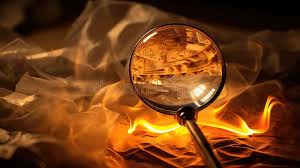
“If you don’t put it to good use, you will not be allowed to use it at all.”  My grandpa said in a stern voice, waving the magnifying glass on top of my eight-year-old head.

I had misused it twice in the past week and had already received a scolding from my grandma. To reprimand me and prevent any further mishaps, my grandpa decided to place it in the most unreachable top corner of the tall cupboard, where my height, even with the help of any furniture, would sadly not land me.

Apparently, my maternal grandpa, an eminent scientist in Odisha, wanted his firstborn granddaughter (me) to become a renowned physics teacher someday, while his grandson, my elder cousin, would become an engineer. After taking the liberty of deciding our careers—much to our discontent, as I wanted to be a lady police officer, influenced by my childhood soap Udaan[1], and my cousin dreamed of becoming a bus conductor (though I’m not sure of the source of his inspiration)— grandpa decided to teach us physics.

Of all the things he demonstrated in his lab, the one that made the strongest impression on me was how the lens of a magnifying glass, when focused on something, can set it on fire. My cousin, however, remained docile and completely uninterested in either the lens or the fire. He would roll the round Marie Gold biscuits on the floor, imagining them to be the tires of a bus, a bus for which he dreamed of being the conductor someday. My curiosity led me to do bizarre experiments with the lens. As long as I smouldered unused items, it went unnoticed, but eventually, I landed myself in trouble.

Mischief was my domain, not Tipu Bhai’s. Though my cousin was named Tipu, like the valiant Tipu Sultan, he would always retreat like a wet cat. His usual line was, “Do whatever you want, but don’t pull me into this, Nitu!”

Once, I asked him, “Tipu bhai, why do you want to be a bus conductor and not a driver?”

He simply said, “Driving is too much work. I don’t think I can drive such a huge bus. It looks like a gigantic beast. I would rather be a bus conductor.”

I knew bhai was that starry-eyed kid who loved watching the bus conductor almost falling out of the door, the wind playing in his hair, and his whistle piercing the air with a shrill sound. That must have seemed thrilling enough to spark bhai’s otherwise sorry imagination.

My grandma didn’t have many stringent parenting rules. Although she occasionally hollered at me when I was being naughty, most of the time, she pampered us with delectable food and gifts. I remember her sparing coins for us to buy chocolates.

Bhai and I would walk to the nearest market and buy lollipops in our favourite colours. People often asked if we were siblings, and I would reply, “We are cousins.” Sometimes, they would smile or say, “You both look so alike,” before resuming their stroll toward the stalls.

Bhai was too shy to even look at them, so I was usually the one to answer their curious questions when they saw two kids wandering around the market late in the afternoon.

*

We spent our school summer vacations at our grandparents’ house in Cuttack, about a fifty-minute bus ride from Bhubaneswar, where we lived with our parents. My grandpa’s house in Cuttack had a courtyard full of mango trees. That afternoon, my grandma and Malati, our seventeen-year-old maid, were busy collecting mangoes from the trees, most of them raw, to make mango pickles and chutney. The garden was covered with dried mango leaves, and my grandma had asked Malati to sweep them all to the far end and set them on fire.

I had two raw mangoes and a magnifying glass in the pockets of my overalls as I followed my grandma and Malati everywhere.

“Wait here, Nitu, while Malati climbs the tree to get more mangoes,” Grandma said, pointing toward the garden’s boundary wall before walking away.

Tipu bhai was fast asleep inside the house, and Grandpa was away at one of his meetings. I watched from a distance as Malati cautiously climbed one branch after another, tossing mangoes down for my grandma to collect. After a few minutes, I got bored standing in one place, watching Malati and Grandma work as a team while I stood feeling abandoned. I noticed a pile of dried leaves beside me and remembered the magnifying glass in my pocket—if I focused it just right, I could set anything on fire. So, I focused the blazing afternoon sun’s rays onto the leaves.

To this day, my grandma insists there wasn’t any kerosene on the leaves, while I still try to convince her that Malati must have spilled some, intending to sweep them to the other corner later. The leaves caught fire, and the flames quickly rose toward the branches of the tree, spreading fast. My grandma let out a scream and ran toward me, while Malati rushed in and together, they pulled me away from the fire. One of the burning branches fell onto the roof of the hut beside our house, setting it ablaze. The hut belonged to a woman named Foola, meaning flower, and it was her kirana[2] store.

Amidst the chaos, we didn’t realise that Grandpa had just arrived. Foola rushed out of the store in panic, and Grandpa quickly ran into the house to call the fire brigade. The fire brigade arrived ten minutes later and began pouring water on the Kirana store. By then, some neighbours, along with Malati, had already thrown buckets of water on the fire. The roof suffered some damage, but the store itself wasn’t affected much, thanks to the timely intervention. All the while, I stood there helplessly, engulfed by guilt.

In the evening, my grandma sat me down and asked if I knew how the fire had started. Her formidable figure loomed over my tiny one, her hands clasped behind her back, the serious green light from her eyes meeting my brown glaze.

“I didn’t do anything, nothing at all!” I blurted out but then grandma is an expert in studying body language and hearing the unspoken words.

“Look I know you had something to do about it. A fire doesn’t start out of the blue. Better confess it and I will not give you any harsh punishment.” Grandma said with her brows raised.

“It must have been completely accidental. I don’t remember much about how. I think there was kerosene in it.”

“There wasn’t any kerosene. I am positive.” This argument about the oil, as I mentioned, never really ended. I did my best to stay defensive without revealing any details.

Then, my grandma brought her right hand in front of my face, holding the magnifying glass. “I found this in your overalls. Any explanations about it? I may not be well educated but I had seen your grandpa demonstrating what it can do.”

That was it—I was caught red-handed. I knew any further argument would only spark more anger and trouble, so I bowed my head and kept my eyes on my toes. Suddenly, the idea of stealing my grandma’s nail polish and painting my toes red crossed my mind, but I quickly brushed it off.

My grandma pointed her index finger at me and said, “No lollipops for a week.”

“That’s too long!” I complained almost teary eyed.

“You argue more, I extend more. Your brother can have them though.”

I felt like Mowgli in The Jungle Book when he was abducted by the monkeys. However, Grandma paid no heed to my misery.

*

Foola came the next morning and stood on the veranda, sobbing. I could hear her telling my grandparents that although the fire brigade had extinguished the fire, the water had seeped into the sacks of rice and pulses, ruining almost a quarter of her grains.

“Babu, please pay for the damage. I am a widow, there is no one to look after me, with all this ruin I will be at a huge loss.” Foola said to my grandpa.

Grandpa knew that the fire had started in our courtyard, though he hadn’t bothered to find out the intricacies involved, and Grandma hadn’t cared to explain. She thought that barring me from eating lollipops for a while would be enough to teach me a lesson. I had felt guilty, then angry, and now I felt very sorry for Foola.

“How much do you think would be enough for managing the damage?” My grandpa asked Foola.

“I won’t quote more, Babu. I swear to God a hundred or two hundred rupees should be enough.” Foola answered with tears rolling down her cheeks.

My grandpa must have known that Foola was being honest. He exchanged a glance with my grandma, and she nodded in approval. I then saw him hand her two hundred-rupee notes. Grandma encouraged her to come again if she needed further help and the matter was somewhat settled.

Four days had passed without lollipops, and there were three more to go. I was craving them—their sweet and tangy taste, the scent that used to fill my nostrils. They always looked like my favourite coloured bulbs, capable of switching my mood to the happiest level every time I licked them. Furthermore, Bhai had committed the heinous crime of eating my favourite cola-flavoured lollipop the day before.

The guilt and desolation that had entangled me slowly began to be replaced by a sense of rage. I waited for my grandma to go to the bathroom, then reached under the mattress on her bed, where she kept the almirah keys. They were still there—two of them, one for the main door and the other for the locker inside.

Beside her jewellery box lay my magnifying glass. Her favourite green saree, the one she wore to the evening pujas, hung neatly on a hanger. When you’re a child and consumed by anger, reason hardly stands a chance. Without thinking, I focused the lens of the magnifying glass on the saree until it burned a hole through the fabric.

That was how, within a single week, I made two miserable mistakes. When Grandma found out, all hell broke loose in the house, followed by Grandpa reprimanding me.

*

When the anger and rage subsided, realisation dawned on me—guilt, more guilt, and an overwhelming sense of remorse, though I still occasionally craved lollipops. Grandma didn’t pamper me, and grandpa buried himself in his books, not once inviting me to his physics lab. Bhai was busy staring at every bus that passed by the house, lost in daydreams. Malati kept herself occupied with household chores and rarely engaged in outdoor activities. The mango trees had started bearing more fruit, some of them beginning to ripen. The sun was less scorching, though a hot loo blew occasionally, and a couple more weeks had passed. Soon, summer vacation would be over, and my father’d take me back home. He wouldn’t really be proud of my behaviour.

One afternoon it was hotter than usual. The sun blazed like a fiery orb, unleashing an army of relentless heat waves upon us. The air was thick with swirling dust. The garden hand pump and the water faucets in the house spewed only hot water. I sat on an armchair on the porch, with a mildly gloomy face, unperturbed by the heat.

Just then, a middle-aged woman in a saree, with a cloth bag slung over her shoulder, arrived at the gate. She looked fragile, as if the sun had drained all her energy. In a weak voice, she called out to me, “Girl, fetch me a glass of water, please.”

I rushed to open the gate and led her in by the arm. After making sure she was seated comfortably in the shade, I gave her the hand fan I wasn’t using and went inside to get some water.

“Grandma, come along. There is a woman at the door,” I said as I headed out with a jug full of water.

The woman gulped down the water, relaxed a bit, and wiped the sweat from her brow with the end of her saree. I sat close, fanning her, and asked, “Are you okay now?”

“I am, girl, I am. You saved my life!” The woman said with her hand on her chest.

“Do you want more water?” Grandma had just come out of the door.

“No sister. I am okay now. Have to get going.” The woman said, and with her hand patting my head, added, “She saved my life.”

She opened her cloth bag and gave my grandma a handful of ripe guavas. When my grandma offered to pay her, she gently refused, insisting they were a gift. She had traveled from a nearby village and often came to Cuttack to sell fruits and vegetables in the market. That afternoon, the ruthless sun had nearly exhausted her as she made her way to the bus stand. Desperate for some shade and water, she had somehow managed to reach our house.

After she left, grandma told me that good deeds bring blessings.

“You were very kind today,” she said with a smile. It had been a long time since she had given me such a radiant smile.

“And when you do wrong, Satan hovers nearby and doesn’t give you many chances to rectify your mistakes. This time, you did good. I will ask your grandpa to give you the magnifying glass back.”

She then handed me a few coins. “You can have lollipops tomorrow, but make sure to share some with Bhai.”

That was the last time grandma had been so strict, and I never got into such mischief again. After all, who would want to risk getting caught by Satan!

From Public Domain

[1] Flight, a 2014 soap on child labour

[2] Convenience or grocery store

Mitra Samal is a writer and IT Consultant with a passion for both Literature and Technology. Her works including poems, stories, essays, and reviews have been published in The Hooghly Review, Muse India, Borderless Journal, Madras Courier, The Chakkar, and Kitaab among others. She is also an avid reader and a Toastmaster. 

.

PLEASE NOTE: ARTICLES CAN ONLY BE REPRODUCED IN OTHER SITES WITH DUE ACKNOWLEDGEMENT TO BORDERLESS JOURNAL

Click here to access the Borderless anthology, Monalisa No Longer Smiles

Click here to access Monalisa No Longer Smiles on Amazon International

Categories
Poets, Poetry & Rhys Hughes

What I Thought I Knew About India When I was Young

Courtesy: Creative Commons

I had a jigsaw of a map of India but it wasn’t a proper map. It had the names of cities on it but it was covered in pictures too, scenes of ‘typical everyday life’ for people who lived in various parts of the country. This jigsaw introduced me to India. I saw lots of elephants and tigers and women picking tea and men drinking the tea and coconut trees and mountains and a few deserts. The trees, elephants, tigers, women and mountains were all the same size. Sri Lanka was included in the map and because it is a much smaller landmass it only had room to show one elephant and one woman picking tea.

This jigsaw was one of several jigsaws that I had in the same series. They were all the same size too, so that I came away with the mistaken impression that India, Australia, New Zealand, Japan and South America were all as large as each other. I have checked just now and I see that these jigsaws were made by Waddingtons and called ‘jig-maps’ and now I also learn that the Indian one didn’t contain Sri Lanka after all. The fallibility of memory! Looking at it for the first time in almost fifty years I discover that Bangalore is represented by a man playing a flute to two cobras in a basket while a wise mongoose looks on. Was Bangalore ever really like that? Was it like that when the jigsaw was made? Clearly a lot has changed in half a century.

The jigsaw was only the starting point of my intellectual discovery of the Indian subcontinent. Films augmented my growing awareness. Films showed me that the meaning of India could be found in elephants, tigers and women picking tea, not to mention men drinking tea, coconut trees, mountains, deserts. The place seemed marvellous. I decided to go there one day. But when? The thing to do was to consult a proper atlas, not a jigsaw, in fact a battered old atlas bound in ripped green cloth that dated from the 1920s and was probably a book once owned by my great-grandfather.

India seemed far away, yes, but not as far as Australia, and because I had cousins in Australia who had come to visit (bringing me a boomerang as a gift), I knew the voyage was feasible. First, I would reach France, that was the first step, and I felt confident I could walk to France. There was the inconvenience of a stretch of open sea between Britain and France, but I believed I could construct a raft from driftwood and sail across without too much trouble. Once I arrived in France the remainder of the journey would look after itself. I equipped myself for the walk. I took a penknife and a flask of orange squash, and I set off. There was woodland near the house where I grew up and I walked for ten minutes or so before meeting a boy I knew who was unsuccessfully trying to climb a tree. He came down with a crash, asked me for a drink and I obliged. Half the squash went down his gullet and I knew I could never hope to reach France on a half empty canteen. I returned home.

But I never abandoned the quest to reach India, I merely postponed it. The country had snakes in baskets! How could I resist that? Where I came from, the only stuff you found in wicker baskets was laundry. Boring in comparison! The snakes in India were musical and loved flute melodies. That also was amazing. It occurred to me that snakes were flute-like themselves and perhaps had even evolved from flutes (or vice versa) which explained the association. What if the strong resemblance led to a flautist accidentally trying to play a snake instead of a flute? The question alarmed me for days.

Maybe the music produced as a result would be the best ever heard by any human ear? Or perhaps it would be the worst! Yet another thing to find out for myself when I got to India. In the meantime, to continue my research, I spent a lot of time with a toy called a ‘View-Master Stereoscope’ that showed images on slides in 3-D. It was a plastic box with two lenses and a lever that rotated a disc on which the images were fixed.

One of the discs in my possession was an arrangement of “spectacular views” from around the globe. It included Banff in Canada, the Golden Horn in Turkey (those are the only other two I remember) and yes, a frontal view of the Taj Mahal. I studied the Taj Mahal carefully. It was vast and white. What clues could I glean from it? I wasn’t sure. Someone told me it was constructed by elephants. I accepted this but wondered what use elephants had for such a grand monument. It wasn’t edible. It wasn’t a bun.

On a school trip I was taken on a bus to Bristol Zoo, which seemed to lie at an extraordinary distance from the small town where I lived. We were shown an elephant and informed by a teacher that it was an Indian elephant, because it had small ears. Those ears looked vast to me and from that moment I had no choice but to regard the teacher as incompetent, a fool who didn’t know the difference between big and small. The incompetence of adults was something I learned the hard way, like most children. For instance, another teacher told us that crude oil was ‘liquid gold’ but I knew he was wrong. Oil was black and gold was golden, they couldn’t be the same. He had neglected to explain it was a metaphor. That might have helped his credibility.

My grandmother knew a little about India because one of her uncles was a sailor and had been there. He came back full of stories about it. People in India were able to levitate cross-legged, he had told her, after studying a thing called yoga. But yoga was dangerous. Some men had tied themselves in knots doing it and couldn’t be untied. They had spent the rest of their lives as a knot. Only the lightest men could levitate as far as the ceiling. Occasionally one of them would go up the chimney and drift away on the breeze. He had sometimes been far out at sea and watched them drifting over his ship. He had waved to them but if they broke their concentration they would come back down and make a splash, so his cheerful greetings were ignored. No offence taken, he said, he understood their predicament. Well, that was India for you.

In Calcutta he had seen a magician with a rope who had thrown it up high in the air and it had become rigid. Then he climbed it and vanished at the top. It was an impressive trick but he couldn’t see the point of it. He preferred the men who slept on nails instead of mattresses. Had he actually seen any of these chaps himself? No, not exactly. Nails grew on trees in that country and during his stay there had been a drought and a bad harvest and there weren’t enough nails to spare and those magic men had to sleep on porcupines instead. It was better than nothing, he supposed. My grandmother passed these tales onto me, uncritically and with evident approval. She always regretted not being born a man and going to sea herself. She wanted to be a pirate.

My grandmother’s uncle knew all about curries but I didn’t and I waited a long time before I tasted my first. It blew off the roof of my mouth, but looking back, I imagine, it was a very mild curry. Like most British men I soon acquired a taste for spices and eventually I became what is known in common parlance as a ‘chilli head’, going so far as to munch on the spiciest raw chillies available and insisting through a forced grin that they were “nothing special”, but that was later. My first curry was an eye opener. On second thoughts, it was more of an eye shutter, as I squeezed back the tears into my ducts. Yet this experience is a necessary rite of passage for all British males. It is the ‘test of fire’ and no less important than ‘the test of liquid’ (one’s first beer in a pub) and the ‘test of hair’ (the first shaving of the chin). These are the three essential tests, although there might be some others of lesser importance.

It must also be admitted, and I don’t say this cheerfully, that Kipling had a deep influence too on what I thought I knew about ‘India’. He is a problematic author now, one who made too many assumptions about how acceptable it was to work within the rigid structures of an imperialist system and only petitioning for greater humanity within that system. We can look back now and chide him for not opposing the system itself, but as a young British boy, I had no thoughts about systems of any kind. I was unhistorical despite my interest in history. The past was a place of knights bashing each other with maces, the distant past was a place where cavemen bashed each other with clubs. The present could never be history because it wasn’t the past, a simple equation in my head, and when Kipling wrote of his contemporary India, I received his impressions in my own time. Therefore, his India became mine too. ‘Gunga Din’ was exactly the sort of chap one might meet in the streets today. It never occurred to me that Kipling was a relic, an antique, for the reason that his books stood on my bookshelves now, and thus had contemporary relevance.

My sister’s best friend at school was an Indian girl, Joya Ghosh by name, but because we lived in a small town in Wales, I don’t think it registered in my mind that her parents had come from elsewhere. I didn’t think about the matter very much, if at all. She was merely a person with a deep laugh, much deeper than the laugh any child ought to have, thinking back on it now. It rumbled. It was the sort of laugh I later came to associate with hearty men with big beards, Captain Haddock or Taras Bulba types. She didn’t have a big beard or even a small one, at least I don’t recall seeing one.

She once courageously interceded in order to stop a pillow fight between myself and my sister. Her diplomacy in maintaining her neutrality as she did so impressed me considerably. But I never asked her anything about India. Maybe she wouldn’t have known much, but that is beside the point. I never even made the attempt. Nor do I remember meeting her parents or siblings, though I surely must have. She was here and India was elsewhere, so no connection could be logically made. The Jungle Book cartoon film filled in all the gaps anyway. I learned that in India wolves held conferences, that monkeys had kings, and that vultures were willing to join forces with humans to frustrate the machinations of tigers. This seemed perfectly reasonable.

When I was 14 years old, a brief article on Buddhism in an encyclopaedia captured my imagination. I wanted to know more about this philosophy. Where should I turn in order to find out more? There were no books on the subject in my local library, which was the only source of reading material in the town, and no adults I asked knew anything about it. The Buddha had found enlightenment under a tree in India. Would I have to travel to India to find enlightenment about his enlightenment? That seemed probable. My grandmother’s uncle hadn’t said anything to her about it, strangely enough, so I had to extrapolate from that one encyclopaedia article. It mentioned reincarnation and I liked this idea. To get an opportunity to be every other animal under the sun! To understand that already I had been many of those animals. Sublime!

The deeper aspects of the philosophy were passed over in that article. But my mind was made up, I would henceforth be a vegetarian, and I have been one ever since. There was familial opposition to my decision, of course. If I was no longer going to eat meat, what would I eat? British food back then was famous for being terrible (some would say it still is) and there was no tradition of tasty vegetarian meals. A vegetarian meal was simply an ordinary meal but without a lump of meat included, in other words a plate of boiled potatoes, boiled carrots, boiled cabbage, sprinkled with salt and pepper. This was years before the Curry Revolution that shook our island nation to the core, threw out our complacency and shattered our culinary blandness.

I now decided that I was a Buddhist and would go to live in a monastery in the mountains when I was older. Unlike my first attempt at walking to India, my second attempt would see me equipped with more than just a penknife and flask of orange squash. I would go equipped with inner tranquillity. That was the idea anyway. If I met with an accident during the journey, savaged by wild beasts or attacked by bandits on mountain slopes, it wouldn’t matter too much because I would be reborn as some other animal, maybe a squirrel or goose, and have an interesting life in a new form. I might even be reborn as an animal with enough strength to turn the tables on my attackers. A rhinoceros or hippopotamus. That would be fun and I regretted that I wouldn’t be there to see what happened, even though in another sense I was there…

But I kept putting off the day of my departure. There were too many other things to do first, such as pass my school exams and save enough pocket money to buy a new bicycle. Also, I didn’t want to shave my head. Time and tide wait for no man, or so they say, and weeks turned into months, months into years, and then I lost interest in walking seven thousand kilometres overland because I had started to go on hiking trips with friends and was learning what distance really meant to legs and feet. My first proper manly hike was 28 Km through forested hills and my feet were blistered on the soles so badly that for the next three days I walked on tiptoes like a conspirator but while making noises that no conspirator would make, “Ouch!” and “Yow!”

I grew up even more than I already had, went to university, graduated and travelled. I had friends who went to India and came back and they told me tales of their adventures. These adventures were suspiciously devoid of canyon rope bridges and cobras swaying to flute music, and equally suspiciously full of ghee-laden sweets and cheap beer. I eventually made it to India, but I went first to Sri Lanka, for reasons too complicated to outline in an article of such a short length. Yes, there were ghee-laden sweets and cheap beer shortly after I landed in Bangalore, but I think that was just coincidence. As for canyon rope bridges I still haven’t encountered any, but I did see an incredibly rickety broken bridge when I went to Coorg, absolutely the sort of thing one finds in old adventure novels or in the films adapted from them.

And now I sit under a magnificent banyan tree and consider how all my current knowledge about India deviates from what I thought I knew about the country in my distant youth. I think I have only really learned one thing, which is that India is simply too large to comprehend. There is too much of it, and it is full of people doing things, and those things are baffling even when explained because the explanations, no matter how lucid they are, are also baffling. This is a complicated way of saying I haven’t found any snakes in my bed yet, no bears in my bathroom, and I still haven’t been eaten by a tiger and reincarnated as a mongoose. But anything at all can happen.

Rhys Hughes has lived in many countries. He graduated as an engineer but currently works as a tutor of mathematics. Since his first book was published in 1995 he has had fifty other books published and his work has been translated into ten languages.

.

PLEASE NOTE: ARTICLES CAN ONLY BE REPRODUCED IN OTHER SITES WITH DUE ACKNOWLEDGEMENT TO BORDERLESS JOURNAL

Click here to access the Borderless anthology, Monalisa No Longer Smiles

Click here to access Monalisa No Longer Smiles on Kindle Amazon International