Categories
Review

“…in order to hear the Earth, we must first learn to love it…”: Amitav Ghosh

Book Review by Somdatta Mandal

Title: Wild Fictions: Essays

Author: Amitav Ghosh

Publisher: HarperCollins (Fourth Estate)

How can a 470-page long book turn into a page-turner when it is neither a historical novel nor a whodunit thriller that compels the reader to go on reading as quickly as he/she can? That too when it is a motley collection of twenty-six essays written on different occasions and on different topics for the last twenty-five years. The answer is of course Amitav Ghosh who can literally mesmerise his readers with his multi-faceted interests and subjects ranging from literature and language, climate change and the environment, human lives, travels, and discoveries. Divided into six broad sections, Ghosh clearly mentions in the Introduction that the pieces in this collection are about a wide variety of subjects, yet there is one thread that runs through most of them: of bearing witness to a rupture in time, of chronicling the passing of an era that began 300 years ago, in the eighteenth century. It was a time when the West tightened its grip over most of the world, culminating ultimately in the emergence of the US as the planet’s sole superpower and the profound shocks that began in 2001.

A subject very close to his heart and that is reflected in all the books that he has been writing over the last decade or more, the six essays of the first section are on “Climate Change and Environment.” Ghosh writes about different aspects of migration (both in the sub-continent and in Europe), about the storm in the Bay of Bengal, cyclones, the tsunami affecting the Andaman and Nicobar Islands, and about Ternate, the spice island in Indonesia. According to him, by knowing about anthropogenic greenhouse emissions and their role in intensifying climate disasters, it is no longer possible to cling to the fiction of there being a strict division between the natural and the political. Climate change and migration are, in fact, two cognate aspects of the same thing, in that both are effects of the ever-increasing growth and acceleration of processes of production, consumption and circulation.

According to Ghosh, each of the six essays in the second section entitled “Witnesses” grew out of the research he undertook for his four historical novels, The Glass Palace, and the Ibis Trilogy. All the essays in it “are attempts to account, in one way or another, for the recurrent absences and silences that are so marked a feature of India’s colonial history”. While looking for accounts written by Indian military personnel during the First World War, Ghosh came across two truly amazing books, both written in Bengali, on which three pieces in this section are based. The first of these books is Mokshada Devi’s Kalyan-Pradeep (‘Kalyan’s Lamp’; 1928), an extended commentary on the letters of her grandson, Captain Kalyan Mukherji, who was a doctor in the Indian Medical Service. The second, Abhi Le Baghdad (‘On to Baghdad’), is by Sisir Sarbadhikari, who was a member of the Bengal Ambulance Corps, and is based on his wartime journal. Both Mukherji and Sarbadhikari served in the Mesopotamian campaign of 1915-16; they were both taken captive when the British forces surrendered to the Turkish Army in 1916 after enduring a five-month siege in the town of Kut-al-Amara – the greatest battlefield defeat suffered by the British empire in more than a century. He also writes about how these two prisoners of war witnessed the Armenian genocide.

Regarding the exodus from Burma, Ghosh narrates the plight of one Bengali doctor, Dr. Shanti Brata Ghosh from whose diary (written in English) we are given incidents of events that are a striking contrast to British accounts of the Long March. What the doctor remembered most clearly were his conflicts with his white colleagues and his diary represents a personal assertion of the freedom that his nation’s hard-won independence had bestowed upon him.

Section Four entitled “Narratives” consists of three essays. Speaking about the etymology of the word ‘banyan’, and a short personal anecdote about 11 September 2001, we come to the essay from which the title of this collection – Wild Fictions – is taken. It shows us how the policies and administrative actions have divided landscapes between the ‘natural’ and the ‘social.’ Discussing several environmental issues related to the manner in which over many decades there has been a kind of ethnic cleansing of India’s forests and how the costs of protecting nature have been thrust upon some of the poorest people in the country, while the rewards have been reaped by certain segments of the urban middle class, Ghosh warns us why the exclusivist approach to conservation must be rethought. Before environmental catastrophe happens, we have to find some middle way, one in which the people of the forest are regarded not as enemies but as partners. The idea of an ‘untouched’ forest is none other than a wild fiction.

As mentioned in the beginning, Ghosh’s intellectual curiosity ranges from exploring themes of history, culture, colonialism, climate change and the interconnectedness of human and natural worlds and the readers will get a sample of these different topics in this rich collection. Over the years, we had read some of the essays in journals like Outlook, The New Yorker, The New York Times, The Hindu, The Economic and Political Weekly, The Massachusetts Review, Conde Nast Traveller and so on, and some of the articles have been the product of his detailed research before he commenced writing a novel. The five essays in the penultimate section titled “Conversations” begins with a long correspondence that Ghosh had with Dipesh Chakraborty via email after Provincilaizing Europe was published in 2000. The two never met personally as Chakraborty was in Australia at that time, but the exchanges between these two scholars on such wide-ranging issues is surely a reader’s delight. The pieces on Shashi Tharoor’s An Era of Darkness and Priya Satia’s Time’s Monster which were written as reviews also form parts of ongoing dialogue. As Ghosh states, Sattia’s work “has given me new ways of understanding the role that ideas like ‘progress’ have played in the gestation of this time of monsters”. In ‘Storytelling and the Spectrum of the Past’, we are told about the historians versus the novelists view of seeing and documenting themes.

The final and sixth section comprises of three pieces that were originally conceived as blogposts or presentations, accompanied by a succession of images – “the texts that accompany my presentations are scripts for performances rather than essays as such”. In the first one, Ghosh gives us new insights from his diary notes (the Geniza documents) about how he chose to study social anthropology and how In an Antique Land was made—about the Muslim predominance in the Arab village where he stayed and how he evaded the attempt at conversion. In a lecture he delivered at Indian Institute of Technology, Kharagpur, Ghosh asks us to think back for a moment to the intellectual and historical context that led to the foundation of such institutions as the IITs, the IIMs and the outstanding medical institutions of contemporary India. He tells us how we cannot depend on machines alone to provide the solution to our social problems and talks about mercenaries, prisons, the hegemony of the Anglo-American power and how the empires kept close control over rights to knowledge. One of the great regrets of Ghosh’s life was that he never met A.K.Ramanujan and in the concluding essay of this section, he tells us how he considered Ramanujan to be “one of the foremost writers and intellectuals of the twentieth century and how one of the most important aspects of his work is the context from which it emerged.

In the introduction to this collection Ghosh wrote that we were now in a time between the ending of one epoch and the birth of another – ‘a time of monsters’, in the words of Antonio Gramsci. In the Afterword he mentions how the strange thing about this interstitial era is that it could also be described as a ‘time of benedictions’ in that it has suddenly become possible to contemplate, and even embrace, potentialities that were denied or rejected during the age of high modernity. He reiterates that it is the elevation of humans above all other species, indeed above the Earth itself, that is largely responsible for our current planetary crisis. “The discrediting of modernity’s anthropocentricism is itself a part of the ongoing collapse that we are now witnessing.” The only domains of human culture where doubt is held in suspension are poetry and fiction. Though it is not possible to discuss all other aspects that Ghosh deals with in this anthology as the purview of the review is rather limited, I would like to conclude it by quoting the last couple of sentences written by Ghosh himself when he categorically states: “High modernity taught us that the Earth was inert and existed to be exploited by human beings for their own purposes. In this time of angels, we are slowly beginning to understand that in order to hear the Earth, we must first learn to love it.”

.

Somdatta Mandal is a critic and translator and a former Professor of English at Visva-Bharati, Santiniketan, India.

.

PLEASE NOTE: ARTICLES CAN ONLY BE REPRODUCED IN OTHER SITES WITH DUE ACKNOWLEDGEMENT TO BORDERLESS JOURNAL. 

Click here to access the Borderless anthology, Monalisa No Longer Smiles

Click here to access Monalisa No Longer Smiles on Kindle Amazon International

Categories
Essay

A Story Carved in Wood, Snow and Stone  

Narrative and photographs by Urmi Chakravorty

As a traveller, I always try to zero in on destinations that are less frequented and hence, more likely to retain their pristine touch. We applied the same thumb rule during our recent ten-day visit to Himachal Pradesh.  Leaving the more popular venues to backpackers and robust tourists, my husband and I reached Sangla Valley to savour three days of undiluted peace and unsullied natural beauty at Batseri.

Situated at a height of 2700 metres (8530 feet) above sea level, Batseri is a postcard-pretty village in Sangla, in the Kinnaur district of Himachal. Our hotel was located right in the middle of an apple orchard – an embodiment of luxury and modern engineering juxtaposed against a backdrop of idyllic charm, antiquated structures and time-worn practices. As we stepped into our spacious room and attached balcony, the sight that greeted us was nothing short of amazing!

Apple orchard

Just outside the hotel boundary lay an enormous stretch of ivory, grey and beige – rocks, pebbles and shingles, accumulated through centuries of weathering and deposition – through which, gently meandered the Baspa with its wealth of shimmering emerald waters. This breath-taking layout was hemmed in by the giant deodar, fir and spruce trees on one hand, and the glistening snow-capped peaks of the gigantic Kinnar Kailash range on the other. The picture was enhanced by a common sit-out area in the patio, where one could plonk down on the quaint, low seats crafted out of timber and have a leisurely breakfast, while the whispering conifers hummed a ditty. Or simply, choose a vantage log-seat at a shadowy spot and catch up on some reading over caffein. The possibilities were endless and we were already rueing the prospect of our departure after a fleeting three days.

At Batseri, our bedside morning alarm was replaced by the natural birdsong. Relaxing in the balcony with a piping hot cuppa and waiting for the sun to peek from behind the peaks was an experience to cherish. We watched in awe as the sky metamorphosed into a fast-changing palette of peach, pink and gold, steeping the entire valley in a warm glow. Men and women, flora and fauna, welcomed yet another chance at renewal and opportunity.

One morning, we set off for a village walkthrough, after polishing off a hearty breakfast. The hotel exit was located about half a kilometre away from the building. The connecting pathway was smooth though quite steep, and was flanked by apple orchards on both sides.

Summer is the time when the trees bear white-and-pink papery flowers, which are eventually blown off by the winds, leaving behind the core, which, subsequently bears fruit. The flower-laden trees, against a backdrop of green grass and snow-capped mountains, were a splendid vision in white. The women working in the orchards seemed a cheerful, gregarious lot who either tended to the apple trees, or prepared the soil for a crop of green peas, red beans and buck wheat – cash crops which can withstand the extremities of nature in these parts. During their break, I found them sitting, sharing tea and chatting animatedly with the owner of the property. Class barriers and alienation of the non-privileged had clearly not tainted this picturesque hamlet, I mused happily.

The same camaraderie and co-existence marked even the simple, day-to-day interactions of the villagers, as we observed later. The highlight of the village was the hallowed temple of Badri Narayan Ji[1], an intricately carved wooden temple which sported a very neat, well-maintained premise. The original temple was destroyed in a fire in 1998 and it was rebuilt with the collective effort of the villagers. The young priest shared a familial bond with the local residents, who, in turn, helped uphold the sanctity and cleanliness of the temple and the shrine. No visitor is allowed to climb up the three steps leading to the sanctum sanctorum – the offerings are collected by the priest and offered to the deity. Nobody — young or old, rich or ordinary — challenges or questions. We had earlier observed a similar austerity in other temples of Kinnaur, as well. In fact, some mandate the wearing of the colourful, traditional Himachali cap for men inside the premise. Women usually have stoles, scarves and dupattas[2] to cover their heads with.

From the temple, a single path led us forward to the village. We met and spoke to the local store-keepers, animal herders, agriculturists, home-makers – everyone greeted us affably and spoke about their lifestyle and community. Their pride in their village and its traditions, along with their warmth and hospitality, left an imprint on my heart. We observed the houses which were a complete and welcome departure from the glass-and-metal structures that we usually see. They were all built of sturdy wood collected from the nearby deodar forests and burnished well to display a sheen. Each house had ample open area where they stowed away firewood and other essentials. There were no fences or barbed wires to demarcate properties. Piles of stones collected from the Baspa riverbank were stashed neatly to make a low boundary between two houses. I remembered noticing a similar demarcation among the orchards outside our hotel, too. Here was a community where people thrived on an innate sense of trust and fraternity; scaling of boundaries, literal or otherwise, was something unheard of.

Motor vehicles were not allowed inside the village, barring a rare two-wheeler, though we did see a couple of cars parked at the entrance. Fluffy, pampered street dogs dotted the paths and slept on the stairways of homes – they formed the extended family of the entire village. Just like the adorable Sheroo, a Bhutiya furry who ruled over our hotel like a boss!

The entire Sangla Valley is on the path to accelerated development with multiple road and hydel power projects being executed at regular intervals. The strong currents of the voluminous Baspa are harnessed for this purpose. These projects form an important source of livelihood for the local residents who cannot engage in extensive cultivation because of the inclement weather and soil conditions.

Enroute to Chitkul

The next to-do on our itinerary was a visit to Chitkul, the last village on the Indo-Tibet border. Perched at an elevation of 3450 metres (11,320 feet), this charming village with its panoramic view of the majestic Kinnar Kailash range and the verdant vistas, is often considered the ‘Jewel of the Baspa Valley’. Our cab took us to the last motorable spot beyond which were located the Army and the ITBP camps. As we stepped out of the vehicle and looked around, we were left agape by the ethereal splendour of the place! The snow-kissed peaks alternated with rugged mountain faces and together, they stood like silent sentinels towering over the sprawling alpine meadows, pockets of dense green woods, and the gurgling, meandering Baspa. The Baspa is fed by the perennial Himalayan glaciers and shares a common catchment basin with the Ganga. Fifty shades of green, all in one canvas, I thought to myself!

Scenic Chitkul

Far away, we spied the Chitkul village, conspicuous by its symmetrical hutments and their colourful roofs.  We walked around the undulating meadows with cautious steps – a reminder for us to embrace the various ups and downs of life with grace and equanimity. The place abounded in rocks, boulders and pebbles of all sizes and shapes which prompted me to make a humble cairn of my own – a modest attempt at preserving my footfall on this slice of heaven!

At a distance, we saw defence personnel going about their duty in a brisk, professional manner, unfazed by the grandeur of their surroundings. As the clock ticked by and the shadows lengthened, we knew it was time to turn back. We drove into the small hub of activity in the village which housed the last Post Office of India and also, its last dhaba[3]. Rows of colourful prayer flags strung alongside the road seemed to whisper prayers for our well-being and safety. Multiple pictures and a hearty meal of rajma-chawal [4]later, we headed back to our hotel in Batseri.

As we approached the premises, our driver pulled up on the side and switched off the engine. There was a pile-up of men and machine, and all vehicular movement was halted. We alighted and ambled forward to probe the matter. The sharp slope leading up to our property had been completely blocked by the sudden uprooting of an ancient tree around noon, its gnarled branches reaching up ominously towards the twilight sky. The administration had swung into action, aided generously by the villagers. The monotonous whirr of the giant chainsaw cutter axing down the tree into large chunks, and the occasional thud of the felled logs, reminded us, yet again, of the unpredictability and difficulty of life in the remote mountains. We strolled around the nearby areas for about half-an-hour before a narrow tract was created on one side for us to walk through. The stranded people — visitors and villagers alike — trundled out.

After spending three memorable days at Sangla, we headed out to our next destination. I spent the last few minutes on our balcony, listening to the gentle susurration that seemed to whisper ancient secrets of the mountains. I admired the patterns created by the play of sunlight through the leaves –- that gave me life lessons in gratitude for these fleeting, beauteous moments of life. As we drove away, I cast one last lingering look at beautiful Batseri –- a fascinating story of life carved in wood, snow, and stone.

[1]Badri Narayan is another name for Vishnu

[2] Stole

[3] Roadside eatery

[4] Red bean curry and rice

Urmi Chakravorty is a former educator and presently, a freelance writer and editor. She has been published by The Hindu, The Times of India, TMYS Reviews, Indian Review, Mean Pepper Vine, eShe, The Chakkar, Kitaab International and The Wise Owl, among others.

.

PLEASE NOTE: ARTICLES CAN ONLY BE REPRODUCED IN OTHER SITES WITH DUE ACKNOWLEDGEMENT TO BORDERLESS JOURNAL

Click here to access the Borderless anthology, Monalisa No Longer Smiles

Click here to access Monalisa No Longer Smiles on Kindle Amazon International

Categories
Stories

Monsoon Arc


By K. S. Subramanian

There was a time when monsoon was known to be either parsimonious to Chennai or simply indifferent. 

In the sixties and seventies, water scarcity was a byword in every household.  The city evolved from independent houses to matchbox apartments extending its periphery to suburbs and beyond in the name of burgeoning real estate, but water scarcity continued a mole on the elbow.

Like in all commercial activity where promises mean more than performance, real estate developers too promised enough water supply to ensure bookings and until the housing was handed over. Few years after the handing over, the old complaints returned and the problem revolved around deepening or digging more bore wells manipulating the cross currents of water flow…….in the process digging their own grave.

In due course bore wells became economical with water, not costs.

They were not to be blamed strictly either because it was in the nature of demand and supply. Essentially it meant, rather sounded the missive, that planning was all fine on paper but when it came to reality, commercial exigencies and lobbies took over.  It became then a case of passing the buck.

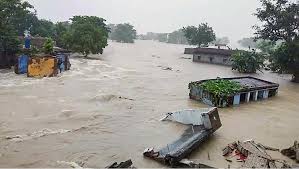
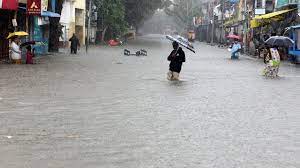
The city had long since graduated from the parsimony of monsoon. Now it was regular, buoyant and often uncomfortably bounteous. So much so that parked cars in the stilt space of apartments went for a swim in roaring waters that stretched to a height of 5 to 10 ft in some places.

One of the inmates from her window of the first-floor apartment saw her car transported to God knows where and screamed knowing full well she was helpless……could not get down into the vast sheet of water that left no sign of anything — let alone the road. And she hoped to find her car when the water level receded.

Just the night before, Ganesan, a young software engineer holding a senior position in a prestigious IT firm, had boarded the train to Srivaikuntam, a holy town close to Tirunelveli where Lord Vishnu held court. A devout believer and practitioner of sacraments that drilled into him the belief that men could succeed and achieve on the merits of brain and diligence but there was always a pervading force that guided him, he had prayed before boarding the train to Tiruchendur.

Four days back, the forecast of a formidable downpour had unnerved him but he wanted to see his parents after a gap of two years. They looked forward to it as much as he did. He was loath to cancel or put off the trip on the prevarications of nature. It could be sunny if the low depression changed its course at the last minute and veered away…not that he wished ill for his brethren in the neighbourhood.

So he took a chance, went ahead with the trip and saw the Tiruchendur Express chug slowly out of Chennai Egmore.

The weather was murky, stubbornly ominous.  He shrugged his shoulders, smiled.

“It’s all in the game. Let us leave it to the on High!”

*

On the way the starless sky got darker still. Dark clouds raged viciously to pour with the chilling owl-like howl of the wind. It was December and the cold wind hitting the windowpane of the train chugging in a monotony of extreme caution, made Ganesan’s arms shudder. He could see nothing in the dark and barely could imagine the procession of dense vegetation and fields obviously drenched in the downpour.

He put on his sweater, but it proved to be no protective cloak and so he had to put on more. “God! It’s frightening… hope I reach my place in one piece.” His thoughts were as intimidating as the weather outside.

Thankfully the lights were on. All the shutters were down in the coach except his, where the glass pane was tightly secured. The biting cold penetrated the inside of the coach though there was balancing warmth due to radiation of body heat.

An elderly man, in his early sixties, was travelling with his wife. There were several families busy chatting about their kin or the functions to attend in Tiruchendur, including the celebrated Murugan temple, though inwardly their minds were filled with queasy churnings.

“Where are you bound, sir?” asked the elderly man with hesitation. Ganesan smiled though he could smell the palpable concern in his voice.

“Vaikuntam sir….to be with parents. I am visiting them after two years.”

The old man returned the smile. “I am a resident of Tiruchendur, have got land and a rice mill there. My daughter is in Chennai. We came on a holiday to be with our granddaughter.”

There were two families in front in the three tier AC[1] coach. Both the families had taken their dinner early in the evening as they were too wary of railway catering. The elderly man, who introduced himself as Muthuraman, was not finicky enough to insist on home made food and shun rail service and had, therefore, ordered. So did Ganesan.

As they dug into the dinner, Muthuraman broke the silence, aware that the inclement weather could make anyone off colour. Silence made it worse, of course.

“Sir!  You must be in touch with parents. They would be worried. The cyclone had hit close to the Chennai coast a few weeks back but now it is pure monsoon fury. The earlier one affected Chennai badly and a lot of them are yet to come out of the trauma. I am worried about the open drains, small dams and culverts and lakes in southern part of the state which are all vulnerable.”

Ganesan, listening to him in rapt attention, said, “I know. A place like Vaikuntam cannot face up to persistent rain for a few hours, let alone the whole day or days. We own land very close to our home and the paddy will be submerged. My father told me just now he is bracing up to some severe loss of crop and money this year.  We have been facing it regularly.  A curse in what is otherwise a holy and fertile belt….”

Muthuraman’s wife nodded with lines of worry in her face. “What else could we do other than pray to Perumal?”

Muthuraman spat out in disillusionment.  “In cities, they lay roads which cannot stand a day’s rain, metro rail and residential skyscrapers where a guy in the balcony is no proof against a bust of breeze. I know of a lady who lived on the 14th floor and wanted to enjoy the scene. She opened the door and stood close to it when the gust of wind, slammed the door on her face knocking her over. She fell into coma and died soon after. I mean…a city is unable to cope with the pressures of money and commercial lobbies which have their way. So, the less said about a rural town the better.”

“God! It is horrible to hear. Such occurrences are hard to believe,” said Ganesan. “Migration in search of a job across the country is inevitable and it adds to the pressure. You need to have a footing somewhere and if all things go well settle down there. You need to build a roof unless you are lucky enough to get back to where you belong.”

Just then, the train had halted at Villupuram for more than 45 minutes before easing into motion. The passengers were blissfully unaware of it, having been preoccupied in their own uncertain world.

“We didn’t even know we were tagged here for this long,” said an exasperated Muthuraman. Ganesan, who was equally chagrined, didn’t reply.

*

Most of the stations en route wore a deserted look except for the idle tea stalls, The passengers too, especially senior citizens, didn’t venture out even for a hot sip of tea apprehending wet and possibly slippery platforms. Inevitably the train ran late by an hour considering possible presence of water or even flooding of the track. Thankfully, signals were in place though the menacing purr of the dark outside continued with the trundle of the train. 

“Are we closer to Kumbakonam?” enquired Muthuraman.

“We are, possibly will reach in a few minutes,” said Ganesan. “But the persisting rain worries me, sir. In some places ahead of us the track would be flooded, and it could delay us longer.”

“If the train drops us at our destinations, I will be more than happy, in fact thank God for it. It will be a blessing,” said one of the members of a family in front.

None of them however had any assurance that they would be blessed in some way.

*

Ganesan slept fitfully as he was accustomed to during train travel at night. “Cool, undisturbed sleep is a luxury,” he thought. Most of the passengers in the coach appeared to have slept well perhaps as a relief from the ordeal of the weather.

He looked at his watch and saw it as 6.30 a.m. He pulled up the shutters to see how the weather was and it was dull, wet and pouring. The train had stopped and he had no way of knowing the duration of the halt. He knew the train should have reached Srivaikundam by now but the stretching flooded farm fields on either side with sparse houses indicated that it was off schedule. There was no evidence of roads or pathways — had there been any.

“Srivaikundam is just a km away sir,” said a passenger who was bound for Tiruchendur.  “The train got an alert and has halted. Seems the ballasts are off. I hope it will start moving again.”

Ganesan gave a sigh of near relief though he was not sure whether the train would move. He could see a sheet of water submerging the fields though the track appeared to be navigable. He could not help blurting out his concern though.

“The scene is scary sir. We can neither get down nor remain in the train.”

Muthuraman, who had got up, was slightly sullen, looking clearly unwell. “Mr. Ganesan, I am glad you are close to your destination….we are still 30 km away.” His wife looked crestfallen, at the end of her tether.

“He is a heart patient. I am only concerned about him.” To Ganesan’s relief the train creaked, began to move. It trundled at a snail’s pace and reached Srivaikundam.

But his relief was only palpable and short lived as the message came through that any further movement was risk bound and foolhardy. One of the railway staffers came to the coach to inform them that the train might remain there for some time before the weather eased or the flooded tracks were restored to usable.

The train had already been delayed by more than 90 minutes. Ganesan was embraced by his father who had managed to come to the railway station in his car driving through flooded roads in the town in meditative hermitlike composure and caution.

Ganesan found someone tugging at his shirt and turned back to find Muthuraman”s wife apprehensive and scared.

“Son! He seems to have symptoms of cardiac attack. I don’t know what to do….”

Ganesan’s father rushed into the coach while Ganesan ran into the railway staff room to look for instant health care.

A stretcher was brought to take Muthuraman and rush him to the nearest hospital. Thankfully Ganesan knew of a specialist hospital close to the station and took him there, having forgotten to even speak to his fretful mother about what had held him and his father back. He knew his mother would continue to worry but there was no time to even ring her up.

“We must know first this man is all right or is recovering,” he muttered. His father took care to let his mother know that an emergency (not related to their family) had occurred and it had held them up at the station.

Ganesan also came to know that the train would not proceed further and that the passengers were holed up there.

A crisis had come home to roost.    

*

All the passengers shackled to Srivaikuntam for no fault of their own put it to a matter of a few hours but it seemed to stretch before the shadows of the night crept in. There was no let up in the rain and the southern belt was not equipped to handle nature’s unmitigated fury.

Thankfully the cafeteria run by a local rose to their needs and gave them breakfast but the railway catering service was not prepared for this eventuality. About 500 odd passengers, including the geriatric, needed round the clock vigil and sustenance though some were near breakdown amid symptoms of vomiting and diarrhea.  

Ganesan and his father were faced with a task not of their own choosing and of the magnitude of a mountain to climb. They could not let it go either. The roads in the town were clogged with knee-deep or waist level sheet of water, hindering their drive to do their best.

“It is a test of our nerve, my boy! We have not spent all our lives to creep back into our shell and watch them suffer, possibly die. It was your good fortune you reached along with others but the rest of them are braving it out. We have to show we are not heartless, nor do we rely on external agencies for help. There is no time for it. Rather we help ourselves.”

Ganesan, who had learnt forbearance in his stint in IT firm and not given to wasteful emotions, nodded and raised his thumb to his father.

His father used his decades old connections in the town, comprising hoteliers, vegetable and fruit vendors, nursing staff to help the distraught. 

The message from the railways was distressful and alarmingly ominous. “Sorry ladies and gentlemen. It will take a day or two. The track restoration is on in full blast and the signal system is in place. Please, please bear with us.”

*

The railway station was abuzz for the next prolonged hours with supplies of food, medicines and equipment being rushed to the respective coaches where the need was greater. It pertained to those who had symptoms of sudden dehydration, stomach disturbance, diarrhea and fatigue and stress related syndromes.

Ganesan and his father were on their feet all the time coordinating whatever they could with local connections of suppliers who rose to the occassion. Commerce took the back seat relatively to an extent.

Muthuraman showed signs of recovery a few hours later in the evening having gone through a CPR and defibrillation by the railway staff as was done in the event of unforeseen emergencies. His wife spoke to her daughter in Chennai who was almost ill with perplexity and worry since they left the city.

The news that the train had halted at Srivaikuntam and might not leave for a couple of days was less painful than one of father’s cardiac arrest which left the family in tatters. She could only hope her worst fears would not come true.  

Muthuraman opened his eyes, took note of his wife’s presence before locking his hands in gratitude with Ganesan.

“No sir…this is no time for thanking me and my father. You must thank all the locals who rose as an army to support and bring relief to so many who are stranded in the train still because they are unable to move out. We have arranged a big hall where most of them could be fed in turns. I am amazed sir… unable to believe it. But I have learnt a world of things from this experience. That alone matters sir.”

His father laid a reassuring hand on Muthuraman’s shoulder. “They are still at work. Possibly the train may leave tomorrow morning. I hear the track has been restored. If you wish you can return in the train itself or you can have somebody from Tiruchendur to take you in a car.”

Muthuraman’s wife said “It will take three days as per medical opinion to discharge him. We will ask our cousin to take us home in a car.”

“We will take care of you till you leave for home,” smiled Ganesan.

He took leave of the couple as one of the hotelier’s employees came up to him. “Sir! We have the next consignment of water cans ready for the station. Care to join us?”

“Of course,” said Ganesan and hopped into the front seat of the van.

A cool breeze blew across the vast fields from a distance. The weather had improved beyond expectation two days after the train came to a halt at the station, looking sunny, soothingly warm and reassuring after the terrible onslaught of the monsoon the day they left Chennai.

Suddenly, nature seemed to have recovered from its surge of fury and had become benign and benevolent. But anything could have happened in the passing hours when the fury was in full swing and the aftermath would have been horrible to imagine, much less experience.

But what gave him succor and regeneration was the unstinted display of human kindness and concern in times of adversity. The whole village worked as an army to guard, nurse and redeem the afflicted from the depths of despondency.

“There is always a light in the tunnel” thought Ganesan with a smile. “If I had any cynicism about the milk of human kindness it is gone.”

[1] Airconditioned

K.S.Subramanian, a retired Senior Asst. Editor from The Hindu, has published two volumes of poetry titled Ragpickers and Treading on Gnarled Sand through the Writers Workshop, Kolkata, India.   His poem “Dreams” won the cash award in Asian Age, a daily published from New Delhi. His essays and blogs can be found under his name in http://www.boloji.com.

.

PLEASE NOTE: ARTICLES CAN ONLY BE REPRODUCED IN OTHER SITES WITH DUE ACKNOWLEDGEMENT TO BORDERLESS JOURNAL

Click here to access the Borderless anthology, Monalisa No Longer Smiles

Click here to access Monalisa No Longer Smiles on Kindle Amazon International

Categories
Review

No Doomsday Narrative

Book Review by Bhaskar Parichha

Title: Climate Capitalism: Winning the Global Race to Zero Emissions

Author: Akshat Rathi 

Publisher: Hachette India

Climate capitalism combines economic growth and environmental sustainability. This approach leverages market forces and capitalist principles to address climate change. Climate capitalism aims to create a system where businesses can thrive while reducing their carbon footprint and promoting clean technologies. A key driver of climate capitalism is the belief that the market will drive innovation and investment in sustainable practices. The transition to a low-carbon economy can be accelerated by creating economic incentives for companies to adopt clean technologies.

There are many strategies and policies involved in climate capitalism. Carbon pricing mechanisms, such as carbon taxes or cap-and-trade systems, put a price on carbon emissions to create a financial incentive for companies to reduce their emissions. The development and deployment of clean technologies can also be supported through subsidies or grants.

Climate capitalism also integrates environmental considerations into corporate decision-making. Sustainable business strategies include setting greenhouse gas emission targets, adopting environmentally-friendly practices throughout operations, or incorporating sustainability goals into business strategies. Climate capitalism advocates argue that businesses can drive economic growth while also contributing to climate mitigation and adaptation. A more sustainable and prosperous future can be achieved by aligning financial incentives with environmental objectives.

Critics, however, are concerned that greenwashing may result in superficial attempts to appear green. Climate capitalism may not go far enough in addressing the systemic changes necessary to address climate change, and more radical action is needed. Economic development and environmental sustainability are reconciled by climate capitalism. By harnessing market forces to create a more sustainable future, it acknowledges the role that market forces can play in driving change. Whether climate capitalism can deliver on its promises and effectively address climate change challenges remains a subject of debate.

In this context, this book is an excellent addition.Climate Capitalism: Winning the Global Race to Zero EmissionsbyAkshat Rathi is a fascinating book that sheds a fresh look at the issue. Akshat Rathi is a senior reporter at Bloomberg News. Bloomberg Green’s Zero podcast is hosted by him. A PhD in organic chemistry from Oxford and a BTech in chemical engineering from IIT Mumbai, he has worked for QuartzThe Economist and the Royal Society of Chemistry. His writings have also been published in NatureThe Hindu and The Guardian

According to the blurb: “Our age will be defined by the climate emergency. But contrary to the doomist narrative that’s taken hold, the world has already begun deploying the solutions needed to deal with it. On a journey across five continents, Climate Capitalism tracks the unlikely heroes driving the fight against climate change. From the Chinese bureaucrat who did more to make electric cars a reality than Elon Musk, to the Danish students who helped to build the world’s longest-operating wind turbine, or the American oil executive building the technology that can reverse climate damages, we meet the people working to scale technologies that are finally able to bend the emissions curve.”

Through stories that bring people, policy and technology together, Rathi reveals how the green economy is possible, but profitable. This inspiring blend of business, science, and history provides the framework for ensuring that future generations can live in prosperity. It also ensures that progress doesn’t falter.

Which economic policies are most effective at reducing greenhouse gas emissions and combating climate change? Climate Capitalism examines the economics and politics of market-based climate change solutions. It is essential reading for all students and teachers, unionists and business leaders, grassroots activists and politicians.

.

Bhaskar Parichha is a journalist and author of UnbiasedNo Strings Attached: Writings on Odisha and Biju Patnaik – A Political Biography. He lives in Bhubaneswar and writes bilingually. Besides writing for newspapers, he also reviews books on various media platforms.

.

PLEASE NOTE: ARTICLES CAN ONLY BE REPRODUCED IN OTHER SITES WITH DUE ACKNOWLEDGEMENT TO BORDERLESS JOURNAL

Click here to access the Borderless anthology, Monalisa No Longer Smiles

Click here to access Monalisa No Longer Smiles on Kindle Amazon International

Categories
Poetry

Whir in the Orbit

By  K.S. Subramanian

WHIR IN THE ORBIT  

The fans' blades are still. 
They sense they will swing
only when I want to warm up,
be ready to set about my day.

When still they look like Yogis,
In evanescent reverie, 
unblemished lotuses in the pond,
 
Untroubled or undismayed by
the coagulating dust on their frame,                                                     
Any more than shrivelled leaves 
Eviscerate the lotus in the pond. 
Time breathes on them,                                                     
leaves no moss on their being.

The day comes alive only 
when they set on their toes. 
Else they are as just vivacious 
as the whir in the orbit. 

 K.S.Subramanian, a retired Senior Asst. Editor from The Hindu, has published two volumes of poetry titled Ragpickers and Treading on Gnarled Sand through the Writers Workshop, Kolkata, India.   His poem “Dreams” won the cash award in Asian Age, a daily published from New Delhi. His essays and blogs can be found under his name in http://www.boloji.com.

.

PLEASE NOTE: ARTICLES CAN ONLY BE REPRODUCED IN OTHER SITES WITH DUE ACKNOWLEDGEMENT TO BORDERLESS JOURNAL

Click here to access the Borderless anthology, Monalisa No Longer Smiles

Click here to access Monalisa No Longer Smiles on Kindle Amazon International

Categories
Musings

Happiness: Heart in a Casket

By Rana Preet Gill

I look up to find the evening sky stretch out like a canvas with a multitude of hues, change like a kaleidoscope of colours. It is the like the work of an artist, our Creator. I have often been startled by the beauty of life amidst my own fake despair.

I do not have many concrete problems in life. Not the ones that could be touched with bare hands, seen with naked eyes. Not the ones that could be described with a flourish. Not as if problems could ever be explained.

The world is a living, breathing cauldron. A little whimper gets turned into a moan, a slight regret gets carried into a lament, an awkward glance becomes a fleeting affair and dissatisfaction with life snowballs into melancholy.  Disclosures of unhappiness are difficult to make. Affability comes with ease. Life is often dictated by societal norms. And the mind is in constant harmony as one amongst them.   

The evening sky beacons for an escape. The birds wielding their wings high up in the sky, pumping the air beneath their wings, soar high, up and up away. I wonder what it takes to be happy, to be alive for them. I wonder if they suffer the throes of existential chaos.  I wonder what life would be like, bereft of any problems, of any conflict, of misery. Why cannot it be a perpetual ride of ease and comfort?

I am not particularly unhappy. I am positive, rearing to go. I can talk endlessly about my dreams. My dreams about my life, my future, security, approval, turning the negatives into positive in times of lockdown and much more.

I have a privileged life. I have the money, enough to satiate the needs of my life. Enough to buy me clothes of myriad shades of colors and designs.

Yes, not the very expensive ones. I know my reach. Salaried middle class. But there have been days I have spent thousands of rupees on things I never cared to wear. The money trapped in my greed for something new had lain in the closet for months and sometimes years. It’s only when the cloth have aged enough, humbled by its disregard that I have picked it up and given it an audience.

My tendency has been only to hoard. I have not felt any concrete need or significance of that particular object in my life. My happiness has been short lived. It has dazzled me with its existence but it only turned out to be a mirage.

Happiness can never be found in what you wear. It gives you a momentary delight to be dressed in the choicest of clothes. But for that prolonged calm and poise clothes are a far cry. The closets are full of clothes new as well as old yet somedays there is nothing to wear.

The stark nakedness of the soul shines on those days. This depravity, the greed for more reflects on me. There are people who have nothing to wear yet brave life with a smile embarrassing us with their unseemly flesh on display. And here I am all covered in swathes of sequined clothes yet I am unhappy, grumbling, complaining about an imaginary chaos in my life. I will only be able to see clearly when the dust settles. But I never stopped spinning like a top around my axis. How will I ever see what my mind tells me to see? It’s the haze that whirrs around me unsettling me with the frivolous.

Food!  I wonder if that provides a semblance of happiness. We eat to live or we live to eat! Making a living to buy the essentials or splurging it all on mindless eating leading to flabs of flesh. How much meat do I need around my bones?

The aroma of food being cooked at home fizzles into my nostrils but when I sit down to eat I am not hungry at all. As if the very thought of food has inundated my palate filling it up to the brim.

I am often enamoured by the colorful paraphernalia of junk present on display in shops. The packet of chips, biscuits and other knick-knacks in iridescent colours; red, blue, green, neon, beckon with delusions. Just one wafer thin chip can bring dollops of pleasure with the crunchiness alone. As long as the packet tempts me I think about the buying it and parting with a few rupees from my wallet.

I keep on putting this momentary satisfaction away, of being able to possess them is madness. What food value does this frivolous entity have?  It is not the worth my money. But the temptation of the color and taste finally leads me to the shop.

The packet unopened, uncared will lie in the drawer for many hours before I decide to open it. I look for the promised happiness displayed on the cover of the packet. A smile of a nondescript man, so profuse, deep, enchanting, carrying assurances unbeknown. And yet the savory did nothing to fulfill the promise of that happiness.  

I grab the packet and give it away to the household help. Her children would be grateful for this treat. Food does not give comfort. When you do not have the means to buy it, it becomes the single motivating factor in your life. When you have the luxury of choice, the comfort of having too much on your plate, you lose the narrative. Enough money can buy enough food but not a healthy appetite.

I live in a big home. Big enough to the eyes of the outsiders who would often throw a casual remark just looking at the façade. There are two floors and a couple of rooms. I often do not have the place to keep my stuff which lies on bed and chairs, crying for my attention. There are not enough cupboards? I rue the lack of storage facilities. I take my home for granted.

While the homeless of the world scourge for a roof above their heads, I pompously shun the comfort of my abode to look for more privacy inside my home.  I need a snug home, like a kennel, something to wrap around myself. Something too close for comfort yet close enough to fill my senses.

Those with bigger houses are oblivious to the luxury of space while those with smaller homes keep on pandering about their desires. Life becomes a never-ending desire to escape from the real.

A mad dash to be somewhere else. In some other country, state, city, village, travelling to far off places — all the while contemplating the comforts of home. Comparing, making notes, concluding that life is best lived in the sanctity of home. And once back, the confined existence of home is repressive. Start another search, home if far away.

There is no comfort and joy to be found living in well-furnished big houses. Home is where heart is! And the heart needs to be molded to fit in a casket to be cared for a life time.

Home is valuable yet not valued enough, heartfelt desires often soar high escaping the restraints of one home. I have multiple homes in a surreal world and I often flit from one to another. Only there is no comfort grand enough to chain me to one amongst them. In the real world, home looks miniscule, a tiny room, a tinier closet, a heart in the casket. Some days I gasp for breath and rush out of my house.

I have often searched for the meaning of being happy. A comfortable home, lots of material comforts, oodles of tasty and expensive food, money in the wallet as having a limitless purchasing power is never a guarantee of bliss. It’s a reason for dissatisfaction for some.

Why we have it all when there are people who do not have anything and yet they are living with an aplomb, a carefree life?  Their remorse at living ill-equipped lives does not reflect on their faces somedays depriving me of the perverse pleasure which I derive while making comparisons. An absence creates a want, fulfillment of that particular need. The alleviation of it becomes the sole purpose of life promulgating happiness. But then what do I know about the needs of those who sleep on the roads with an empty stomach, search for shelters during the rain, garble for morsels of food, for them home is a distant dream.

I wonder if happiness is empathy. Only being sympathetic yet not taking any concrete steps to alleviate the suffering. But then I do not think about the destitute of the world all the time. My mind is crammed with my very own self. My own attempts at navigating my life seems gargantuan. My own attempts to find peace, hope, salvation outwit me into thinking as I assume that my problems are larger than life yet they are not.

As I sit in the verdant lawn in front of my home wondering about life and happiness, a world of silver oak trees, palm spruces, rose bushes, peaches and plums in full bloom, ripe with fruit, fecund, living, breathing reach out to me. The honey bees buzz around collecting nectar of flowers. The butterflies flit from one bloom to another.

For a fleeting moment, one with silken wings alights on my shoulder. It has pink and yellow wings, a combination so strange. It looks hideous and, yet, I wonder if it is blessed with the knowledge to castigate itself.

It is happy. And for a moment, just for that brief moment that happiness is transferred to me. Amidst constant movement the unassuming insect gives stillness to my mind.  Shrouded in the constant chaos of nature, my mind feels at peace. The butterfly on my shoulder with its fluttering motion lends me its momentary joy before making its way towards the evanescent dusk.

A brief snitch of happiness before I start the tireless journey full of recriminations. But I am glad there was a moment to escape. I wonder if the constant fluttering of its wings unsettles the winged one as it seems to be on perpetual move. A life in motion yet in peace. I spread my dormant wings to give myself a push. I make them flutter only to imagine myself taking that giant leap towards the sky.

It is constant work to keep myself above the ground but I guess this is what life is all about. Working, moving, flying, spreading your wings, striving to meet the horizon, dreaming, desiring the beautiful, happiness untamed. As I close my eyes to let myself soar I could see million butterflies let lose in the sky. Living, breathing, jostling to color the evening sky.

To give untamed hopes and dreams, wild desires, unleash the madness yet guide it with a serenity to halt that drive with a serene composure — what is it?

Happiness is above all a search, a thought, a way to live amidst constant contemplation.

.

Rana Preet Gill is a Veterinary Officer with the government of Punjab, India. Her articles and short stories have been published in The Tribune, Hindustan Times, The Hindu, The Statesman, The New Indian Express, Deccan Herald, The Hitavada, Daily Post, Women’s era, Commonwealth writers. org, Himal, Spillwords press, Setu Bilingual, Active Muse and Indian Ruminations. She has compiled some of her published pieces into a book titled Finding Julia. She has also written two novels – Those College Years and The Misadventures of a Vet.

.

PLEASE NOTE: ARTICLES CAN ONLY BE REPRODUCED IN OTHER SITES WITH DUE ACKNOWLEDGEMENT TO BORDERLESS JOURNAL.