Depressingly, you kept disappearing by degrees. First, the emerging woman in you had to be veiled. Next, the shy charm you exuded had to be obscured. And then it seemed you decided life itself should cease! Now, more than ever, I see you smiling ever so softly Now, keenly, I think of your bright but quiet presence. Could it be that you had finally opted for absence? Did you decide to extinguish your light fully, voluntarily? Why else would you fall to a rare, autoimmune disease? Surely you had felt it was time for you to cease! All of us can only rue that so brilliant a mind had so short a lease But tired of remorseless life you had decided in the end to cease!
(Written for the condolence meeting for Iffat held at EWU on 20 July, 2013)
Jibananada Das’s poem translated from Bengali by Professor Fakrul Alam
GIVEN THE BOON OF ETERNITY

Given the boon of eternity, I would walk the ways of the world eternally.
All, all alone — what if I would see lush green grass in full bloom then?
And what if I beheld the yellowing grass withering away— And view
The sky full of wan white clouds at dawn? Like a tattered munia bird
Blood reddened breast in the evening — I would see the stars repeatedly;
I would see an unknown woman’s hair drifting away from a loosened bun;
A woman who would leave — with a face bereft of the evening sun’s glow.
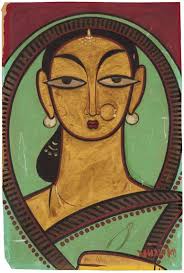
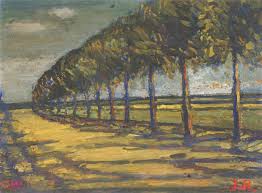
Art by Jamini Roy
Jibanananda Das (1899-1954) was a Bengali writer, who now is named as one of the greats. In his lifetime, he wrote beautiful poetry, novels, essays and more. He believed: “Poetry and life are two different outpouring of the same thing; life as we usually conceive it contains what we normally accept as reality, but the spectacle of this incoherent and disorderly life can satisfy neither the poet’s talent nor the reader’s imagination … poetry does not contain a complete reconstruction of what we call reality; we have entered a new world.”
Jibananada Das’s poems translated from Bengali by Professor Fakrul Alam
THE GREAT WAR IS OVER

The Great War is over
And yet there is left its vast gloom
Our skies, light and society’s soul have been overcast
One has to intuit whatever light there is every day
The sky is dark; society vacuous; Existence
Disgraced; love dead; blood flowing fountain-like;
Knowledge becoming the bearer of an immense load of corpses
And of its own self as well!

A NOBODY
A nobody wanted to walk down the path as always.
How then could those closest to him get lost forever,
And disappear in some underground world?
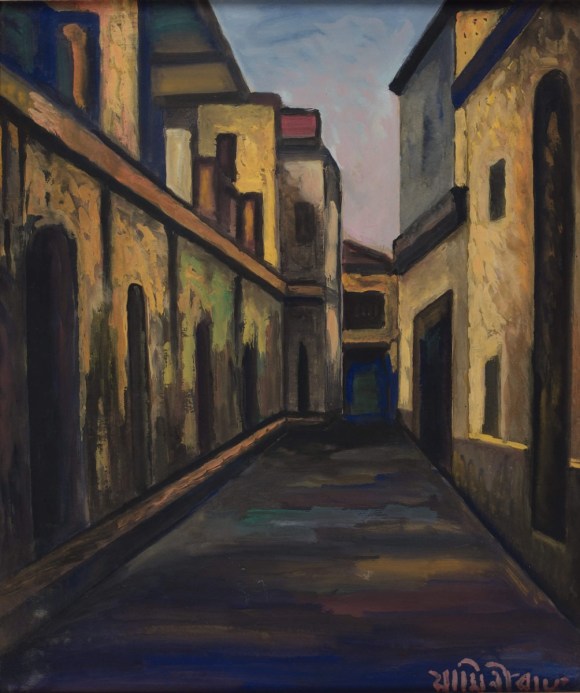
Painting By Jamini Ray (1887-1972)
Jibanananda Das (1899-1954) was a Bengali writer, who now is named as one of the greats. In his lifetime, he wrote beautiful poetry, novels, essays and more. He believed: “Poetry and life are two different outpouring of the same thing; life as we usually conceive it contains what we normally accept as reality, but the spectacle of this incoherent and disorderly life can satisfy neither the poet’s talent nor the reader’s imagination … poetry does not contain a complete reconstruction of what we call reality; we have entered a new world.”
Professor Fakrul Alam translates two songs by Nazrul on social isssues from Bengali
Kazi Nazrul Islam (1899-1976)
Born in united Bengal, long before the Partition, Kazi Nazrul Islam(1899-1976) was known as the Bidrohi Kobi, or “rebel poet”. Nazrul is now regarded as the national poet of Bangladesh though he continues a revered name in the Indian subcontinent. In addition to his prose and poetry, Nazrul wrote about 4000 songs.
Arise O Woman

Arise, o woman, arise flaming!
Arise, daubing your forehead blood-red,
Everywhere unfold your flaming tongue.
Dance wildly—excited, inspired.
Arise, hapless, maligned snake,
Awake, kindling the world aflame!
Burn briskly, o fume-filled smoky one,
Arise, mothers, daughters, brides, wives, nieces.
Arise prostitutes, cast out, exiled ones
With the tidal force of the Ganges, arise,
Down-trodden ones. Streaking clouds with lightning
Arise, aroused by Durga, the ever-triumphant one.
‘Arise O Woman’ performed in Bengali
Two Flowers on One Leafstalk

Hindu and Muslim -- two flowers on one leafstalk --
Muslim its jewelled eyes, Hindu its heart and soul!
In the lap of their mother, the same sky is reflected,
Where sunlight and moonlight alternately sway.
Within their bosoms the same blood courses
While the same navel string binds the twain.
We breathe the same earth mother’s air
And drink the same earth mother’s water.
In her bosom, the same fruits and flowers grow.
In the soil of the land are burial sites quite akin --
Doesn’t matter if one is called Gore -- the other Shoshan!
We call out to our mothers in the same language.
We sing for them songs strung in similar tunes!
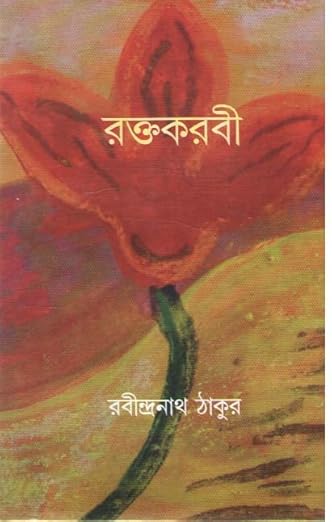
An excerpt from Professor Fakrul Alam’s unpublished translation of Rabindranath Tagore’s Raktakarabi or Red Oleanders (1924) from Bengali: It was first published in Prabasimagazine. This play rebels against totalitarianism.
Roktokorobi (Red Oeander) by TagoreRed Oleanders. From Public Domain
Introduction
This play is based on truth. However, any reader who turns only to historians to ascertain the authenticity of events is bound to be left unfulfilled by it. Let this suffice then as an explanation: as far as this poet is concerned, they are based fully on truth.
It is possible also that geographers will differ on the play’s actual setting. But everyone knows that the setting is informally known as Lucre Land. Scholars say that the mythical Lucre Land was the site of the gilded throne of Mammon, the God of Wealth. But it will not be right to see this play as one set entirely in a mythical period; it should not be classified as a fable either. The land that it deals with it has in its mines the most precious of minerals. Its discovery led to tunnel-digging. This is why people fondly calls it Lucre Land. We will get acquainted with some of the diggers involved in due course.
No one can expect historians to agree on the real name of the monarch of Lucre Land either. The one thing that I know is that the moniker used for him is “The Dreaded”. In due course it will be clear why this is the name by which he is called.
Outside the king’s palace walls are latticed windows. It is from a room with such windows that The Dreaded One chooses to meet any number of people he wants to talk to. Why he acts so bizarrely is something that we know nothing more about than what becomes apparent from the exchanges taking place between the main characters of this play.
The chieftains who run the kingdom on the king’s behalf are well-suited to carry out their work. They are also supposed to be far-seeing—all of them are members of the King’s inner council. Their carefully taken measures ensure that there are no lapses in the work being done by the diggers. And so this is how Lucre Land has developed steadily. The supervisors, once diggers themselves, have earned on their own merit the titles they now have. Indeed, in efficiency they often surpass the chieftains they once worked for. If the laws governing Lucre Land can be called euphemistically “The Full Moon’s Beams”, the responsibility of enforcing them are entrusted to the supervisors manning what can be called its Department of Disgrace.
In addition, there is the “Holy One”. He always swears by God but lives off what is allotted to him by the chieftains. He is believed to be responsible for a lot of the “good things” that are benefitting Lucre Land.
From time to time, inedible marine animals get stuck in the net of the fishermen casting their nets here. They are of no value though—either as edible creatures or as ones that can be traded for cash. On the contrary, every now and then they leave behind holes in the nets they get entangled in. In a net flung in the course of the plot of the play, however, a girl called Nandini shows up—a girl seemingly destined to tear apart the intricate net that separates the King of Lucre Land from the rest of the world.
As far as we can see at the start of the play, the events it dramatizes take place outside the room with the latticed windows where the king lives. We get to know very little of what is happening inside the palace though.
This play is set in the country called Lucre Land. The workers here are employed to dig gold. Its king remains hidden behind a thick screen. Only one scene of the play, however, is set behind the screen. The remaining scenes all take place outside.
From Public Domain
Enter Nandini and Kishore—a young man employed in digging mines
Kishore: Nandini! Nandini! Nandini!
Nandini: Why keep calling my name again and again young man? Do you think I have a hearing problem?
Kishore: I know you have no hearing problem. I keep calling you by your name because I like doing so. Do you need more flowers? If you do, let me go and get some.
Nandini: Go, go back to work. Don’t waste any more time here.
Kishore: What I do all day long is dig for gold. Whenever I can steal some time away from such digging to search for flowers for you. That makes me feel alive.
Nandini: Young man—don’t you know they’ll punish you if they find you not at work?
Kishore: But didn’t you say you really, really want the red oleanders? What delights me is that you can’t find them easily anywhere nearby. I found only one red oleander tree behind the rubbish dumped all over the place and that too after searching hard for it.
Nandini: Show me the place and I’ll go pluck the flowers myself.
Kishore: Please don’t say such a thing again. Don’t be so cruel Nandini! Let the tree remain as my one secret. Bishu sings for you songs he composed himself. From now on, I’ll get you the flowers you want and flowers that I can call my own.
Nandini: But the beastly people of this place keep punishing you. My heart breaks whenever they do so.
Kishore: The pain I endure makes the flowers that blossom even more dearly mine. They are the harvests of my sorrow!
Nandini: But how will I endure the pain and the suffering you have to endure on my account?
Kishore: What pain? That there will come a day when I’ll sacrifice myself fully for you is the thought that comes to my mind again and again.
Nandini: You keep giving me so much. Tell me, what can I give you in return?
Kishore: Make this pledge to me—every morning you’ll take the flowers from me.
Nandini: Fine, I’ll do that. But careful….
Kishore: No way I’m going to restrain myself! No way! I’ll bring you flowers even if I have to face their lashes every day!
Exit Kishore
The Professor Enters
Professor: Nandini! Don’t go; look at me!
Nandini: What for Professor?
Professor: Why do you keep surprising me again and again only to disappear afterwards? Since you succeed in stirring my mind, why don’t you then stir it up fully? Just stay for a minute and let me say a few things to you.
Nandini: Why do you need to talk to me?
Professor: If I’m to talk about what is of importance, just take a look! Our diggers climb up to the top from the tunnel with what they have mined from the heart of the earth and then carry burdens on their head like termites do. All the wealth of Lucre Land comes from that dust-mixed source—gold is the outcome! But beautiful one, you are golden not because of such dust but because of the light you emit. How can only the need for wealth detain you?
Nandini: You keep saying the same thing again and again. What amazes you so whenever you look at me Professor?
Professor: There is nothing surprising about the light that brightens the flower gardens in the morning. The light that comes through cracks in the wall are something else though. In Lucre Land you are that kind of unexpected light! Tell me—what could you for be possibly thinking about as far as this place is concerned?
Nandini: I am amazed to see the whole city’s focus to explore what is underground and all the groping in the dark that goes on. They keep digging in these underground tunnels for treasures that have been fossilising there for ages. These are treasures earth buried there.
Professor: What we do is exhume the corpses of such resources devotedly. We want to tame the ghosts within them. If we can tie the golden lumps up and retain them so that they don’t seem strange, we’ll have the world in our grasp.
Nandini: What is more shocking is that you have your king covered up in a wall made up of weird nets. It is as if you wouldn’t like people to find out that he is human. I feel like either opening the cover of that dark tunnel or flooding it with light. I feel like tearing up such a weird net and rescuing the man trapped inside.
Professor: Just as the ghost of fossilised wealth can be scary, the king we have can terrify us because of the power he has to scare his subjects.
Nandini: Everything you keep saying is so concocted.
Professor: Yes, I’ve made them up for sure. A nude need not be identified; only his tailored clothes will mark him as a king or a beggar! Come to my house—I’ll be delighted to make you wise with words of wisdom.
Nandini: Just as your diggers bury themselves when digging the soil, you seem to be digging deeper and deeper into your books. Why would you waste time on someone like me?
Professor: We are dense, thick-headed creatures, submerged in opaque scholarly work. You are the evening star we see when we have nothing else to do; seeing you makes our wings restless. Come home with me; let me spoil myself for a change.
Nandini: No, not now—I’ve come to see your king seated in his chamber.
Professor: He stays within his latticed wall; he won’t let you in for sure.
Nandini: No wall can block me; I’m here to spend time with your king in his chamber.
Professor: You know what Nandini—I too live inside a wall. I’ve sacrificed a lot of my human side; only my scholarship stirs in me. Just as our king is awesome, I’m an awe-inspiring scholar.
Nandini: You must be joking! You don’t seem frightening at all. Let me ask you this question: If they could bring me here, why didn’t they bring Ranjan to this place as well?
Professor: Their strategy is to tear up everything. In any case, let me say this: why bring your precious soul to a place so full of lifeless treasures?
Nandini: If Ranjan is brought here, their dead hearts will stir again.
Professor: Nandini alone has been enough to strike the chiefs of Lucre Land dumb; imagine what will happen if Ranjan is brought here as well.
Nandini: They have no idea how strange they can be. If God could make them smile, the spell they are in would be broken. Ranjan’s smile is God’s smile!
Professor: The smile of God is like sunlight—it melts ice but doesn’t move boulders. If you want to stir our chieftains, you need to be forceful.
Nandini: Ranjan’s strength is like your Shankhini River. Just like that river, he’ll be all smiles at one moment and a destructive force in another. Professor, let me tell you what has been a secret till now. I’ll be meeting Ranjan later today!
Professor: How do you know this?
Nandini: We’ll meet, for sure we will. The news has come that we’ll be united soon.
Professor: How can such news travel without attracting the attention of the chiefs?
Nandini: They’ll come through the same route that ushers news about spring. It’s touched with the colour of the sky and the lilt of the wind.
Professor: In other words, the colours of the sky lilt the breeze that ushers in spring.
Nandini: When Ranjan comes, I’ll be able to show you how news that has been flying can land on earth.
Professor: Once the subject of conversation turns to Ranjan, there is no stopping Nandini from talking. Never mind! Since I’ve mastered real knowledge, let me enter its depths; I myself don’t dare do anything now.
He comes back after advancing a little.
Nandini, aren’t you frightened at the thought of being in Lucre Land?
Nandini: Why should I be?
Professor: Animals fear solar eclipses but not the round sun. Lucre Land is a place where an eclipse of sorts has taken place. The sun was bitten when it got into a gilded crater during an eclipse. Since it itself wasn’t full, it didn’t want anything else to be fully developed. Let me advise you—don’t hang around this place. When you leave these craters, they will be yawning before us—but I’ll keep insisting—flee! Be happy with Ranjan anywhere else where people don’t shred the borders of Mother Earth’s sari into bits!
He goes some distance and then returns
Professor: Nandini, won’t you give me one of the red oleander flowers you are carrying in your right hand?
Nandini: Why? What do you want to do with it?
Professor: On many occasions it occurred to me that the red oleanders you wear have some significance for you.
Nandini: I have no idea what they could possibly mean.
Professor: Perhaps the Divine Dispenser of your fate does. The red color emits mysterious negative vibes and not only ones that delight.
Nandini: Things that can frighten me?
Professor: God has in this case painted beauty with a brush dipped in blood! I have no clue to what you were scribbling in red as you came. There are malati, mallika, chameli flowers aplenty that you overlooked. What made you pluck flowers only from this particular flowering tree? Know that people only do unthinkingly what they are fated to do.
Nandini: Every now and then Ranjan will fondly call me “Red Oleander”. I don’t know why the thought occurs to me that my Ranjan’s love is of that colour. It’s the colour I wear on my neck, my bosom and my hand.
Professor: So why not offer me a flower only for a while so that I can figure out the essence of that flower?
Nandini: Here, take this one. Ranjan will be here today. I’m so happy that I’ve decided to gift you this red oleander.
The Professor departs.
Gokul, a Tunnel Digger, Enters
Gokul: Turn your face this way for once. I can’t seem to figure you out! Who could you be?
Nandini: I’m exactly what you see. Nothing else! Why do you need to know anything more?
Gokul: Not a good idea to not know. Has the King of this realm summoned you here for any reason?
Nandini: For no good reason!
Gokul: What a thing to say! He is trapping us all. You are the cause of the danger we all are in.
Anyone bewitched by your beautiful face is doomed. Let’s take a look—what is that swinging there where you hair is parting?
Nandini: Red Oleander flowers!
Gokul: What do they signify?
Nandini: Nothing!
Gokul: I don’t believe you at all. You must be up to something. There is bound to be trouble before the day is over. That is why you decked yourself so. What a dreadful trick!
Nandini: What makes you think I’m so terrifying just by looking at me?
Gokul: You remind me of a torch lighted up in many colors. Go and fool innocent ones by telling them— “Take care! Beware!”
Gokul Exits
Nandini is now outside a latticed window
Nandini (Striking the latticed window): Can you hear me?
Voice: I hear you Nanda! But don’t keep calling me again and again; I have no time left, not a bit.
Nandini: I feel very happy today! So happy that I’d like to enter your room.
Voice: No need to come in. If you have anything to say, do so from outside the room.
Nandini: I’ve brought you a garland made of jasmine flowers. It’s covered with lotus leaves.
Voice: Wear it yourself!
Nandini: It doesn’t suit me. I wear red oleander garlands
Voice: I am like a mountain peak. I look best unadorned.
Nandini: From such peaks waterfall stream. A garland will sway in your neck as well. Open the net—I’d like to go in.
Voice: I won’t let you in. Say what you want to now. I don’t have any time to lose.
Nandini: Can you hear any song from where you are?
Voice: What song?
Nandini: A song about the winter month of Poush[1]! A song calling all to harvesting!
Poush calls us all
Come, come away
Its tray is full this day
With harvested crops galore
Come, come away
Don’t you see how the harvested rice’s loveliness mingles with the wintry sky?
In the heady wind
Goddesses work
Across rice fields
All over the land
A golden hue spreads
So good to see. Ah me!
Come outside King! Let me take you to the field.
The sky is happy to hear in fields flutes play.
 Who’d want to stay indoors any longer today?
 Open, open all doors
Voice: I go to work? What work am I good for?
Nandini: Harvesting is much easier than the kind of work you do for Lucre Land.
Voice: The work which seems easy to you is actually hard for me to do. Can a lake dance like the foams of a waterfall?
Nandini: Your strength is truly amazing. The day you let me enter your treasury, I wasn’t a bit startled by your gold piles. What truly fascinated me then is the way you managed to put things into an orderly heap effortlessly despite your immense strength. Nevertheless, I’ll have to say this: can lumped up golden balls respond to the amazing rhythms of your hands as well as a rice field? Tell me O King, aren’t you at all afraid to handle the fossilised resources of the world day after day?
Voice: Why, what is there to fear?
Nandini: The earth bestows on us joyfully things it holds dear. But when even dead bones are snatched away by those who value them merely as precious things what they really do is dig up from the dark depths things a blind giant had cursed. Don’t you see that everyone here is edgy? Either that or they are scared.
Voice: Scared of what?
Nandini: The fear that things will be snatched away and of the killings that might follow.
Voice: I don’t know of any curse involved. What I know is about the power we can evoke. Does my immense strength make you happy Nandini?
Nandini: Very happy indeed. That is why I’ll insist: come out into the light; put your feet on the soil; let earth rejoice.
The light joy brings
Daubs ears of corn with dew
Why not feel the joy of touch?
Nature’s joy knows no bounds
A sight so good to see
—ah me!
[1] Ninth month of the Bengali calendar coincides with December-January of the Gregorian calendar.
If I get to live forever — then forever, I’ll be all alone — If I return to the paths of the world, I’ll see green grass Sprouting — will see yellow grass scattering — the sky Whitening in the morning — like a tattered munia bird, Breast blood - stained in the evening — again and again I’ll see stars And view a strange woman untying braided hair and leaving Alas, her face devoid of traces of the setting sun’s soft glow
If I get to live forever — forever, I’ll walk the ways of the world All alone. If I ever return to the world’s pathways, I’ll see Trams, buses, dust. Innumerable slums and, broken bowls too — Dark and dirty lanes; fights, people swearing; squinted eyes Rotten prawns; I’ll see a whole lot of things interminably And yet all this time I won’t get to meet you again — for eternity!
If I have eternal Life ( Anante Jebon Jodi)
Given the boon of eternity, I would walk the ways of the world eternally. All, all alone — what if I would see lush green grass in full bloom then? And what if I beheld the yellowing grass withering away — And view The sky full of wan white clouds at dawn? Like a tattered munia bird Blood reddened breast in the evening — I would see the stars repeatedly; I would see an unknown woman’s hair drifting away from a loosened bun; A woman who would leave — with a face bereft of the evening sun’s glow.
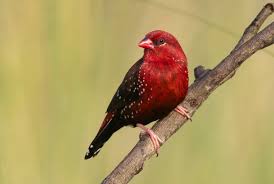
Munia birds. From Public Domain
Jibanananda Das (1899-1954) was a Bengali writer, who now is named as one of the greats. In his lifetime, he wrote beautiful poetry, novels, essays and more. He believed: “Poetry and life are two different outpouring of the same thing; life as we usually conceive it contains what we normally accept as reality, but the spectacle of this incoherent and disorderly life can satisfy neither the poet’s talent nor the reader’s imagination … poetry does not contain a complete reconstruction of what we call reality; we have entered a new world.”
A translation of three Bengali poems of Jibananda Das by Professor Fakrul Alam
Painting by Sohana Manzoor
THE GREAT WAR IS OVER

The Great War is over
And yet there is left its vast gloom
Our skies, light and society’s soul have been overcast
One has to intuit whatever light there is every day
The sky is dark; society vacuous; Existence
Disgraced; love dead; blood flowing fountain-like;
Knowledge becoming the bearer of an immense load of corpses
And of its own self as well!


 GAFUR

“Gafur” I called out to him silently, and yet—
What sticks to my ears—wordless outbursts
Aren’t really artificial—incongruous—frosty –
“Where have your oxen wandered ?”
“They died a long time ago!”
It’s as if someone had lost a twin brother,
Or as if Hanifa was no more—didn’t seem to be
Anything anywhere anymore.
 Gafur’s mouth returned to its normal shape silently,
As if a vast expanse of land had been walled off!


A NOBODY WALKS…

A nobody wanted to walk down the path as always.
How then could those closest to him get lost forever,
And disappear in some underground World?
Jibananada Das (1899-1954) was a Bengali writer, who now is named as one of the greats. In his lifetime, he wrote beautiful poetry, novels, essays and more. He believed: “Poetry and life are two different outpouring of the same thing; life as we usually conceive it contains what we normally accept as reality, but the spectacle of this incoherent and disorderly life can satisfy neither the poet’s talent nor the reader’s imagination … poetry does not contain a complete reconstruction of what we call reality; we have entered a new world.”
Professor Fakrul Alam writes of libraries affected by corporate needs… With this essay, we hope to launch a discussion on libraries as we knew themand the current trends…
From Public Domain
Dhaka, 2003
Where have all those libraries gone?
Back in the ‘70s, in-between classes, adda[1], and sports, I used to spend most of my time in the USIS[2], British Council, or Dhaka University libraries. I would go to USIS for its collection of magazines and fiction, and to the Dhaka University Library for almost everything else. Despite the dust, the load shedding, the noise, the frequent closures of the university and the missing pages within the books, it was a splendid place for both adda and study. Some of my friends and acquaintances lamented that somehow, I had lost interest in “fielding” and had turned into a bookworm, but every book that I read made me thirst for more treasures of English literature. And then there was the British Council Library.
Perhaps memory always rose-tints the past, but it seems to me now that it was the friendliest part of the city then. The lush green lawn and the open spaces that surrounded the library, the access to stacks and stacks of books, the periodicals that you could leaf through, anything from the latest cricket news to reviews of books, the abundantly stocked reference section that was a source of special delight for me, the rows after rows of books that you could explore—here was God’s plenty! The Dhaka University Library had no doubt a much richer collection, but inside the British Council Library you could occasionally experience the bibliophile’s ultimate thrill: leafing through yellowing pages of a fairly old book, only to set it aside for another one; or merely reading surreptitiously through a page or two, secure in the knowledge that not all books are to be swallowed, chewed, and digested, that at least a few are to be tasted, and that was what the British Council Library was for! I would take a book or a periodical on a lazy day, sit down in one of the chairs, and then dream away, secure in the feeling that “there is no Frigate like a Book/ To take us lands away/ Nor any Coursers like a Page/ Of prancing Poetry.”
Everything about the British Council of this period seemed to be inviting. You got to know the staff after a few visits and they were all very friendly. I was still a student when I was on a “first-name basis” with the expatriate assistant representatives and librarians. In the middle of the decade, though only a lecturer at Dhaka University, I could claim the Librarian, Graham Rowbotham, to be a dear friend. In retrospect and especially compared to the library decor and staff now, everybody and everything associated with the library seemed to be amateurish in a way that was endearing and conducive to aimless browsing and long hours of lounging. Book of verse or criticism in hand, I loved spending my mornings here, although “thou” would be a few desks away, and to be glanced furtively in an essentially one-way traffic!
New books kept coming fairly regularly and were ordered by people of catholic tastes and wide-ranging interests. But most importantly, membership was cheap. I can’t remember what the membership fees were, but it must have been ridiculously low since even in those cash-strapped days I never seemed to have been bothered about renewing my membership from year to year. And yet you didn’t have to be a member to go in and browse, although I always preferred to be one so that I could always have books to take away and read at home.
Returning to Bangladesh after six years in Canada, I found the British Council of the ’80s not that different from the inviting, relaxed place I knew in the ’70s, although by now incoming books had slowed down to a trickle. Towards the end of the decade, I think, the library added a video section, but, on the whole, the Council seemed to be cutting back on everything. I had also heard that the library was going to be restructured; apparently, the “Iron Lady” was bent on making the British Council less of a burden on the British economy and more of a self-sustaining, income-generating unit.
But the full effect of the restructuring of the British Council into a self-sustaining, charitable organisation was obvious only by the middle of the ’90s. The Thatcherite assault on the arts, a heightened British concern with security after the Gulf War, and unrest in Dhaka University all must have played their parts, for in 1995 the British Council decided that they would leave the campus for the security of the Sheraton Annex.
The first casualty of what was surely an ill-conceived decision, like USIS’s move to Banani was the British Council’s wonderful collection of books. Row after row of books were given away for free. Indiscriminately. Thoughtlessly. Even some reference books and bound periodicals were distributed gratis since it was felt the Sheraton British Council would have very little space.
Thankfully, the British Council abandoned its move to the Sheraton, but the Fuller Road library never recovered from the book-giving spree. Instead, the library was redesigned to give it a contemporary feel on the outside as well as the inside, security was beefed up, and everything about the library redone to give it a “new”, packaged look.
A cyber centre was installed to make you feel that the ambience was au courant, and impressive graphics-brightened the walls. But what is a library without stacks and stacks of books? The British Council was always the repository of the best in British culture, but this one seemed to be as anaemic as the foreign policy of present-day Britain and nowhere representative of the nation’s past cultural glory. Indeed, where were the Booker Prize winners, the Nobel laureates, the Poetry Book Society choices, London Magazine, Granta, The New Left Review, The London Review of Books? Where were the bibliographies, the reference books that you could use to track an idea or pursue a stray thought to an ever-widening world, so that even within the confines of a library you “felt like some watcher of the skies/ when a new planet swims into his ken?”
The British Council has leased the best piece of property in town from the University of Dhaka. And what does it offer the university’s students? Forced to generate revenues for its upkeep, it had become, as my dear friend put it so memorably, the New East India Company, making money any which way it is able to. Thus, the Council was now more bent on offering exorbitantly-priced language courses and all sorts of examination services, trading on its Englishness and cashing in on the dismal state of our educational system set back by excesses of linguistic nationalism, than on stocking books that represented the best in British culture and that could be made available to the largest group of people. Library fees are ridiculously high—which middle class family can afford to make its children members at Tk 1,300 a year? And entry to the library itself is restricted—you have to be a member to browse! In fact, everything about the present British Council Library reinforces the feeling that it serves almost exclusively two groups of people: the upper class of Dhaka and people desperate about going to Britain for higher studies!
Significantly, the British Council Library now has remade itself as the Library and Information Services. What services? I stopped becoming a member in 1998 when I realised that the membership fees, which I could barely afford even then (the current fees are Tk 650 a year!), were entitling me to diminishing returns every year since the books and most of the periodicals I wanted to read were not there. The year I quit my membership after I had requested the library to procure a book on Burke and India for a research project but, despite repeated reminders to the librarian, that book never came (and I thought that they would listen to a professor of English literature at Dhaka University). The reference section was no longer stocking current bibliographies and sources of information about the world of books.
When I decided to write this piece, I thought in all fairness I should spend some time checking out the Library’s current state before I started critiquing its current library policy. To my dismay, I found that things had gone from bad to worse in the last few years. What services? There is now left only one shelf of literature books and another one devoted to reference items. The library looks pretty, and everything is neatly arranged but why does it remind me of the artificial, vacuous smile of the catwalk beauty? No doubt in line with modern concepts of interior design the library has more space than ever before, but all I see in it is emptiness! Yes, it is smartly done and for the smart people, but where is the world of knowledge in all this?
As my colleague pointed out to me in a note, “What services? How can the young come and request books they don’t know about? Knowledge comes from browsing the shelves, from looking at books and authors you have never seen before, and then you pick it up and read a new author, and perhaps you find a lifelong favourite and your mental landscape changes and that’s what a library’s function is, to widen, to broaden, to expose minds to superior stuff, not provide some crap ‘services’, some videos, some paper hangings, and then have the gall to call it ‘progress’ or ‘keeping up with the times’ or whatever!”
I should add that I have no real problem with the British Council cashing in on the O and A level market and IELTS[3] examinations, but I can’t figure out why it can’t plow back more of its surely substantial profits into establishing a proper library instead of the Fuller Road scam that now calls itself one. Let it charge the people who can afford its outrageously-priced language courses all it wants to, but why can’t it lower library fees so that anybody who wants to can use the library facilities, can browse and read in the library without having to pay anything? I am aware that the British Council is a registered charity and believe that it is supposed to spend its gains here, but can’t it become a leaner operation so that it can beef up its library services? Shouldn’t charity begin at home?
Our libraries have become shadows and shells of their former selves, and it is time we started to ask ourselves a very simple question: what exactly is a good library? And don’t we owe our children and ourselves at least one library?
(Adapted from the essay, ‘The British Council Library: The New East India Company?’ Published on November 8, 2003 in Daily Star)
Tumi Kon Kanoner Phul ( From whose garden could you be) by Tagore was published in the collection called Kori O Komal (Sharp and Flat) in 1886.
From whose garden could you be
And in which sky were you a star?
Where could I have seen you before
And in what dream did you last appear?
When was it that you had last sung,
And when did you last look at my eyes?
I’ve forgotten it all!
All that I can remember now
Is that you were my eyes’ star!
Hush—don’t say anything now—
Just take a look and go your way
In this moonlight just smile and melt away!
Overcome with sleep, I look at the moon
With an enraptured heart
Like your eyes, let the twin stars in the sky
Keep streaming their rays.
Renderred by well-known contemporary singer, Srikanto Acharya
Anjali Loho Mor (Take my Offerings) was written and composed by Nazrul (1899-1976)
Take my offerings melodically, musically
Like a flaming lamp, my soul flickers
Captivated by you, O lovely one;
What feeling of bliss is this, making the body sway
And dance before you melodically, musically?
In ecstasy unfolds love’s petals,
Full of beauty, fragrance and love
Looking at your face, I’d like to say to you:
“Fall down like petals of flower will do
And colour your feet’s soles, melodically, musically”
Renderred by the legendary Feroza Begum (1930-2014)
Tumi to Janona Kichu (You seem to know nothing) from Jibananda Das’s poetry collection, Ruposhi Bangla (1934), has been translated from Bengali by Professor Fakrul Alam.
From Public Domain
You seem to know nothing, and it won’t matter if you don’t—
All my songs will still only be for you.
When Hemonto’s* early winter storms have gone away
Will you shed and lie down on my bosom
Like fallen leaves on a pathway?
Will your mind be content
To be overtaken by sleep?
Will the sharpness you display now
Loose its edge by that dawn?
Did you really want only the dew
That gathered on my bosom that night?
Will only its taste
Satiate you?
Though I’ll shed, with all my life
I’ll cling to you as long as I am alive
All my songs will still only be for you!

*Autumn
Jibananada Das (1899-1954) was a Bengali writer, who now is named as one of the greats. In his lifetime, he wrote beautiful poetry, novels, essays and more. He believed: “Poetry and life are two different outpouring of the same thing; life as we usually conceive it contains what we normally accept as reality, but the spectacle of this incoherent and disorderly life can satisfy neither the poet’s talent nor the reader’s imagination … poetry does not contain a complete reconstruction of what we call reality; we have entered a new world.”









 Borderless