Poetry and translations from Malay by Isa Kamari
THE KRIS

Heppp!

Hold tight the hilt of faith.
Insert the base pin of endeavour into the hollow of destiny.
Adorn the ring with carvings of identity.
Gild the heart with gold on the transverse base piece.
Welcome the strong spirit on the elephant’s trunk.
Ensure the side finials are neat, although spiky.
Meditate on the rejuvenated fallen tree at the base of intention.
Sprinkle spilled rice grains on life’s damascene.
Complete the trio pattern with golden showers.
Dance in the rhythm of odd waves.
Honour loyalty of the blade on the forehead.
Make sure the thrust is sharp on target.
Once the blade is drawn out, the task must be accomplished.
Adorn the self’s sheath with morality.
Cleanse the rust of misdeeds with lime.
Accompany every move with the fragrance of perfume.
Warm up intuition with smoke from the freshness of incense.
Slip the calling of the motherland at the waist.

Heppp!

It is unforgivable for the warrior
to surrender before the fight.
It is not death before its time.
Mantras of faith and honour
will always be revered,
will always be upheld.

Ciiiss! Come, forward!

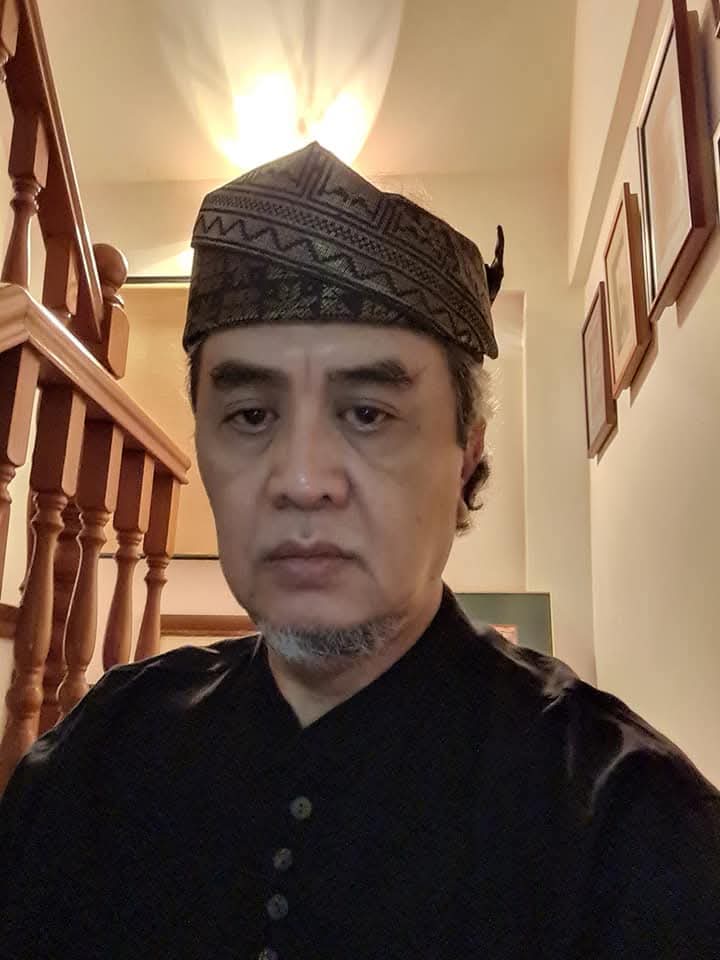
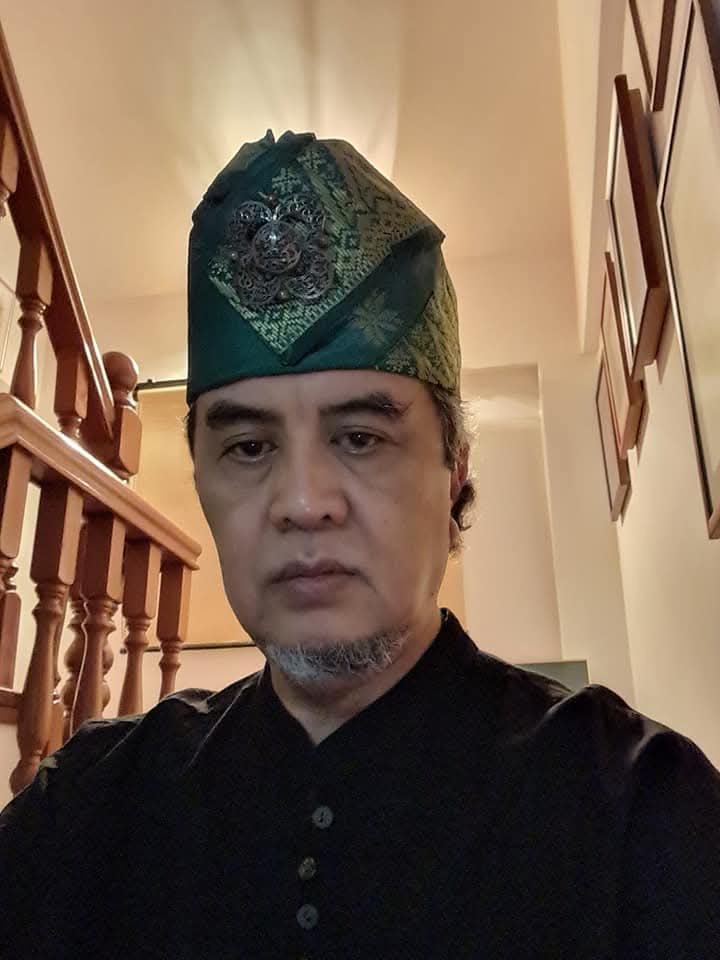
THE SEJANTAK
(Traditional Headgear)

Aduhai, hai, hai, hai!

The head is a guard,
the head is a warrior,
the head is a seat of kingdom,
the head is a treasury of culture, knowledge, and identity.
It’s only right to uphold it.
It’s only proper to revere it.

Aduhai, hai, hai, hai!

A piece of cloth to block the sun,
woven from thread to absorb perspiration,
tied in accordance with locality,
decorated in accordance with tradition.

Aduhai, hai, hai, hai!

Bulang Bidang is simple in readiness.
Bugis Tak Balik walks alone.
The Eagle Slices The Sky with might.
The Rooster unsheathes its spurs.
The Young Admiral conquers the ocean.
The Getam Budu is wise and intelligent.

Aduhai, hai, hai, hai!

Although humans are equal,
the head determines the fold and pattern of adornment.
It elevates the have-nots to the haves,
removes the yearns of the haves from the have-nots.
The head shines in resplendence, pulsates in the veins.

Aduhai, hai, hai, hai!

The setanjak narrates:
The Malay has a place.
The Malay has a tradition.
He moves forward with confidence, acts with wisdom,
the intuitive who and what the self is.

Aduhai, hai, hai, hai!

Beta Dendam Tak Sudah
(This Never-ending Feud)

IRON

The origin of iron is not iron.
Iron comes from the word.
The word comes from Hu!
Iron remains as iron without forging.
The forging begins in fire.
The fire melts the hardness of metal.
The metal is folded and hit repeatedly,
in layers, sieving the pure.
It needs the wild rage of fire, knocks upon knocks.

At last, the iron tells its tale
in the reveal of the damascene patterns.
The blade is dipped into water.
Ciiiiiiss! Ciiiiiiss! Ciiiiiiss!
Aspirations rise as steam,
penetrate seven layers of air.

The origin of iron is not iron.
Iron comes from Hu!

Only the expert smith
knows how to select the best iron ore.
Only the brave smith
dares to befriend the fire.
Only the knowledgeable smith
forms beautiful and beneficial damascene patterns.
The inheritance returns to its owner.
The knight returns to the other world.

Hu! Hu! Hu!
Ciiiiiiss!

THE ROUTE

Given the shortest route
that is clear and beautiful,
you procrastinate from valley to valley.

Although painful, slowly but surely,
I will scrape all meanings of Beauty
except for Truth.
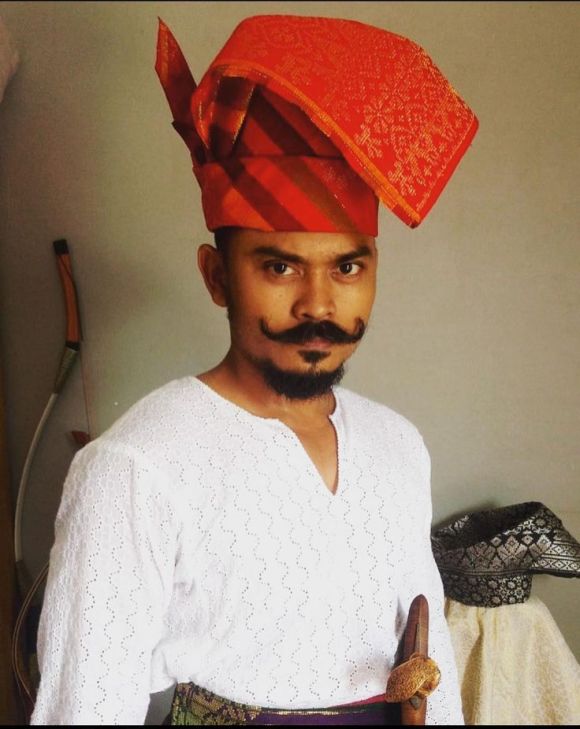
Isa Kamari has written 12 novels, 3 collections of poetry, a collection of short stories, a book of essays on Singapore Malay poetry, a collection of theatre scripts and lyrics of 3 music albums, all in Malay. His novels have been translated into English, Turkish, Urdu, Arabic, Indonesian, Jawi, Russian, French, Spanish, Korean, Azerbaijan and Mandarin. Several of his essays and selected poems have been translated into English. Isa was conferred the S.E.A Write Award from Thailand (2006), the Singapore Cultural Medallion (2007), the Anugerah Tun Seri Lanang (2009) from the Singapore Malay Language Council, and the Mastera Literary Award (2018) from Brunei Darussalam.
He obtained a BArch (Hons) from the National University of Singapore in 1989, an MPhil (Malay Letters) from Universiti Kebangsaan Malaysia in 2008 and is currently pursuing a PhD programme at the Academy of Islamic Studies, Univeristi Malaya. His area of research is on the problem of alienation and the practice of firasat (spiritual intuition) in selected Singapore Malay novels.
The Lost Mantras is a collection that blends spirituality, Malay cultural heritage, and universal human experience. First published as part of Menyap Cinta (Love Greetings, 2022, Nuha Books KL), these poems are like a bridge between mysticism and everyday life, where traditional images (betel, jasmine, kris[1], oil lamps, setanjak[2]) are woven with Qur’anic echoes, prayers, and existential questioning. The collection carries a Sufi resonance—always circling back to longing, humility, surrender, and beauty as signs of God. The poems are not only lyrical but also function as cultural memory: they preserve Malay traditions, communal practices, and village life, while situating them in a cosmic framework of faith, sin, and redemption. The use of Malay customs, rituals, and objects is powerful: it asserts that spirituality is not abstract but embedded in heritage. This makes the collection uniquely Southeast Asian despite its universal in appeal.
[1]A dagger
[2] Malay headgear
PLEASE NOTE: ARTICLES CAN ONLY BE REPRODUCED IN OTHER SITES WITH DUE ACKNOWLEDGEMENT TO BORDERLESS JOURNAL
Click here to access Wild Winds: The Borderless Anthology of Poems
Click here to access the Borderless anthology, Monalisa No Longer Smiles
 Borderless