Categories
Interview Review

Sriniketan: Tagore’s “Life Work”

In Conversation with Professor Uma Das Gupta, Tagore scholar, author of A History of Sriniketan: Rabindranath Tagore’s Pioneering work in Rural Reconstruction published by Niyogi Books, 2022
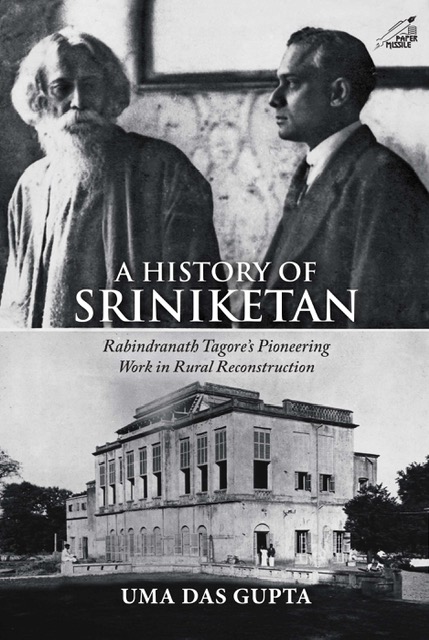
Tagore (1861-1941) has been celebrated as one of the greatest poets of the world, a great philosopher, a writer, an artist, a polyglot but what did the maestro himself perceive as his greatest ‘life work’?

He wrote: “My path, as you know, lies in the domain of quiet integral action and thought, my units must be few and small, and I can but face human problems in relation to some basic village or cultural area. So, in the midst of worldwide anguish, and with the problems of over three hundred millions staring us in the face, I stick to my work in Santiniketan and Sriniketan hoping that my efforts will touch the heart of our village neighbours and help them in reasserting themselves in a new social order. If we can give a start to a few villages, they would perhaps be an inspiration to some others—and my life work will have been done.” This was in a letter in 1939 to an agricultural scientist, Leonard Elmhirst (1893-1974), who helped him set up Sriniketan, a craft and agricultural development project for the villages which fell under the purview of the Tagore family zamindari.

To Tagore, his ‘life work’ lay in the welfare of humankind and poetry was just one of the things he did, like breathing. He told a group of writers, musicians, and artists, who were visiting Sriniketan in 1936: “The picture of the helpless village which I saw each day as I sailed past on the river has remained with me and so I have come to make the great initiation here. It is not the work for one, it must involve all. I have invited you today not to discuss my literature nor listen to my poetry. I want you to see for yourself where our society’s real work lies. That is the reason why I am pointing to it over and over again. My reward will be if you can feel for yourself the value of this work.”
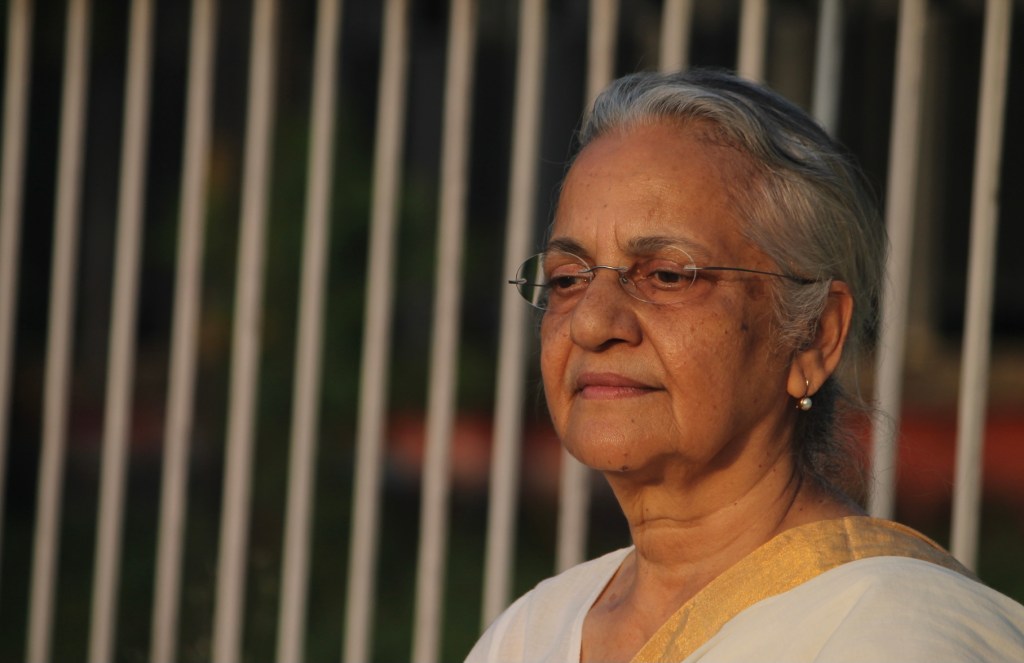
Uma Das Gupta

These are all incidents woven into a book called A History of Sriniketan by historian and Tagore biographer, Uma Das Gupta, who did her post-doctoral research on the maestro and the history of the educational institutions he founded at Santiniketan and Sriniketan. She moved out of Oxford and pursued her studies in Calcutta. She has highlighted Tagore uniquely as an NGO (Non-governmental organisation) operator and also an educator. Mahasweta Devi (1926-2016) in her book Our Santiniketan, recently translated by Radha Chakravarty, focussed on his role mainly as an educator who sought to revive values, a love for nature along with rigorous academics to create thinkers and change makers like the author herself.

A History of Sriniketan is about his work among villagers to bridge gaps. Often, his poetry and writing expresses the empathy he felt for pain and suffering, his need to instil beauty and well-being into humankind so that they could evolve towards a better world — an ideal which he described to an extent in poems like ‘Where the Mind is Without Fear’ and India’s national anthem.

Dasgupta did this by not only delving into Tagore’s own writings but by devoting her life to unearth the depth of the maestro’s commitment and the hard work and money he invested in the project he described as his ‘Life’s work’. She even visited the villages and talked to the beneficiaries and workers. Her book is peppered with photographs of Tagore in Sriniketan. It is amazing to see pictures of the poet with people from Sriniketan sitting on the ground or celebrating festivities.

Tagore, Das Gupta tells us, poured all his Nobel prize money, into the Sriniketan Bank project which was led by his son, Rathindranath. The project hoped to free the peasant from debt. How well were these experiments received by Tagore’s contemporaries? Das Gupta writes in her book: “It would not be an exaggeration to say that Rabindranath had to encounter all of those things, that is, to ‘overcome opposition’ and to ‘conquer space and time’, in no uncertain measure. In short, he had to drive hard to do anything good for a better village life. As a first step, he insisted that Indians should unite to provide nation-building services to the village and not look to the State for doing what was our own duty towards our people. For him, this had to be the more important function of the Swaraj being sought from alien rule.

“In Rabindranath’s view, what had misled society in our transition to modernity was the introduction of the Western concepts of private property and material progress. What this led to was that mankind, though never free from greed, now crossed the limits, within which it was useful rather than harmful. What came about as a result was that property became individualistic and led to the abandoning of hospitality to our people and loss of communication with them. As a consequence, there was an increasing divide between city and village. He found all that to be the reality, when trying to bring about changes, both in his family’s agricultural estates and in the villages surrounding Santiniketan-Sriniketan.”


Tagore, Nandalal Bose & Leonard Elmhirst are together in this picture taken in 1924. Lord Elmhirst, then Tagore’s secretary/assistant stands at the back with Nandalal Bose between him and Gurudev. Courtesy: Creative Commons

To bridge this divide, Sriniketan was created with the involvement of more of the Tagore family, agriculturists, scientists from all over the world, like Leonard Elmhirst whom Tagore had invited in 1921 to lead the Sriniketan work, and artists, like Nandalal Bose. It was a path breaking experiment which found fruition in the long run. They adapted from multiple cultures without any nationalistic biases. Rathindranath brought batik from Indonesia into the leather craft of Sriniketan. We are told, “One of the early influences was from Santiniketan’s association with a group of creative thinkers from Asia, who were spearheading a Pan-Asian Movement that questioned Western hegemony in art and artistic expression. A pioneer of the Pan-Asian Movement was Kakuzo Okakura (1863–1913, Japanese scholar and author of The Book of Tea). He came to Calcutta in 1904, when he met Rabindranath, and they became friends. Okakura admired and supported Rabindranath’s Santiniketan school. Nandalal’s Kala-Bhavana syllabus included Okakura’s artistic principles of giving importance to nature, tradition, and creativity, which were the same as Rabindranath’s artistic principles.”

That Tagore’s effort was unique and overlooked by the mainstream is well brought out through the narrative which does not critique but only evidences. For instance, Das Gupta contends: “He (Tagore) wrote the same to Lord Irwin, the Viceroy, in a letter dated 28 February 1930, when appealing for a government grant towards agricultural research. ‘I hope I shall have the opportunity on my return for another talk with Your Excellency in regard to what has been my life’s work and in which I feel you take genuine personal interest.’ Lord Irwin had come for a visit to Sriniketan at the time and Rabindranath was told of his favourable impression of what he saw during his visit to Sriniketan. In his letter, Rabindranath wrote how he was doing the work ‘almost in isolation’, without any understanding from his people or from the government.” Does that often not continue to be the story of many NGOs?

Sriniketan by Dasgupta is a timely and very readable non-fiction which brings to light not just the humanitarian aspect of Tagore but the need for the world to wake up to the call of nature to unite as a species beyond borders created by humans and live in harmony with the Earth. It all adds up in the post-pandemic, climate-disaster threatened world. To survive, we could learn much from what is shared with us in this book. I would love to call it a survival manual towards a better future for mankind. Scholarship has found a way to connect with the needs of the real world. The book is reader friendly as Das Gupta writes fluently from the bottom of her heart of a felt need that is being voiced by modern thinkers and gurus like Harari — we need to bridge borders and unite to move forward.

Das Gupta retired as Professor, Social Sciences Division, Indian Statistical Institute. She was Head of the United States Educational Foundation in India for the Eastern Region. Recently, she has become a National Fellow of the Indian Institute of Advanced Study (IAAS), Shimla, and a Delegate of Oxford University Press. Her publications include Rabindranath Tagore: A Biography; The Oxford India Tagore: Selected Essays on Education and Nationalism; A Difficult Friendship: Letters of Rabindranath Tagore and Edward Thompson, 1913–1940; Friendships of ‘largeness and freedom’: Andrews, Tagore, and Gandhi, An Epistolary Account, 1912–1940. In this interview, she focusses mainly on her new book, A History of Sriniketan, while touching on how Tagore differed from others like Gandhi in his approach, his vision and enlightens us about a man who created a revolution in ideological and practical world, and yet remained unacknowledged for that as in posterity he continues to be perceived mainly as an intellectual, a poet and a writer.


Uma Das Gupta in the corridors of the Indian Institute of Advanced Studies (IIAS), Shimla, where she was visiting as a  National Fellow (2012 – 2014) to advise on a permanent exhibit on Tagore’s life and work. The project was sponsored by the Ministry of Culture in celebration of Tagore’s 150th anniversary. This Institute is housed in the erstwhile Viceregal Lodge of imperial times. Photo provided by Uma Das Gupta

You are a well-known biographer of Tagore and have done extensive research on him. What made you put together A History of Sriniketan?

Grateful for your kind appreciation.

Writing a history of Sriniketan has been a priority for me. As a Tagore biographer, my dominant theme is about a poet who was an indefatigable man of action. His work at Sriniketan is of prime importance in that perspective. The secondary theme is of him as a poet and writer of many a genre, lyric, poetry, narratives, short stories, novels and plays. I had to make a choice of emphasis between the two themes since I did not intend to write a full-scale biography covering all aspects of Tagore’s life, equally.  My choice was to explore his educational ideas and to examine how he implemented them at his Santiniketan and Sriniketan institutions. His work as an educator and rural reformer is even today hardly known because his genius as a poet and a song writer overshadowed his work as an educator, rural reformer, and institutional builder. That area of research was quite virgin when I started it as a post-doctoral project in the mid-1970s. For perceptions about his poetry and his large oeuvre I have drawn on the work of the scholars who know the subject better than I do.  

My focus is on the concerns that featured persistently in Tagore’s writings and his actions. These were about the alienation in our own society between the elite and the masses, about race conflict and the absence of unity in our society, India’s history, nationalism, national self-respect, internationalism, an alternative education, religion, and humanism as elaborated by him in his collection of essays titled The Religion of Man (1931).

A History of Sriniketan is a detailed presentation about his ideas and his work on rural reconstruction. The idea of doing something to redeem neglected villages came to him when he first went to live in his family’s agricultural estates in East Bengal. His father sent him as manager in 1889. The decade that he spent there was his first exposure to the impoverished countryside. He was then thirty, already a poet of fame, and had lived only in the city till then. The experience played a seminal part in turning him into a humanist and a man of action. The closer he felt to the masses of his society the further he moved from his own class who were indifferent to the masses. His independent thinking gave him the courage of conviction to work alone with his ideas of ‘constructive swadeshi’. 

As a pragmatist he knew there was not a lot he could do given his meagre resources as an individual in relation to the enormity of the needs. But he was determined at least to make a beginning with the work. His goals were a revitalized peasantry, village self-reliance through small scale enterprises, cottage industries and cooperative values. He wrote, “If we could free even one village from the shackles of helplessness and ignorance, an ideal for the whole of India would be established…Let a few villages be rebuilt in this way, and I shall say they are my India. That is the way to discover the true India.”

Disillusioned with nationalist politics he turned to his own responses to the many troubled questions of his times. Tagore was convinced there could be no real political progress until social injustices were removed. He pointed repeatedly to the sectarian elements of Indian nationalism which kept our people divided. He hoped that the Santiniketan-Sriniketan education would create a new Indian personality to show the way out of the conflict of communities. He thus brought a different dimension to nationalism by arguing for universal humanity. It led to doubts about his ‘Indianness’ among his contemporaries. He had the courage to defy the idea of rejecting the world as a condition for being ‘Indian’. In fact, he tried continuously to break out of the isolation imposed on his country by colonial rule. He had the foresight to sense that the awakening of India was bound to be a part of the awakening of the world.  

What is the kind of research that went in into the making of this book? What got you interested in Tagore in the first place?

I am a historian by training. Historians have to back up every statement they make in their analysis by written documents. That is why the historian’s main source is the archives. Likewise, my research for this book has been mainly archival. I searched for written documentation from 1922 when the Sriniketan scheme of rural reconstruction work was officially launched. The documentation included the minutes of meetings, memoranda exchanged among the workers of the Institute of Rural Reconstruction, official notes, and annual reports written and filed.

In addition, I used to visit the villages in which the scheme was implemented to get an understanding of the ground reality. The work was started with six villages in 1922, extended to twenty-two more villages in the first ten years, and to many more villages afterwards. When the work was being run on a small scale, the Institute tried to post a village worker to stay in the village itself and work along with the villagers to implement the Sriniketan scheme. Some of these villages actually kept notes and records of their work which I could use as part of my local level research. I also interviewed some of the workers who had retired but who were still living around Sriniketan in their old age though their number was small. I have used those oral interviews in my documentation. Some of the Village Workers had their own private correspondence to which they gave me access.

There is also extensive personal correspondence in the Rabindra-Bhavana Archives between the leaders of the Sriniketan work. Among them first and foremost are Rathindranath Tagore and the British agricultural scientist, Leonard Elmhirst, whom Tagore had invited in 1921 to lead the Sriniketan work. Elmhirst had been to India earlier as a Wartime Volunteer during World War 1. When Tagore came to know of him through another British agriculturist working in Allahabad, Sam Higginbottom by name, he contacted Elmhirst with a request to come to Santiniketan and to lead the Sriniketan work. One of Tagore’s prime targets was to implement Scientific Agriculture in the villages. In fact, many years earlier, in 1906, he had sent his son Rathindranath and another student of the Santiniketan school, Santoshchandra Majumdar, who was Rathindranath’s classmate, to the University of Illinois at Urbana-Champagne to study Agriculture with the view that they would bring back the expertise for the Sriniketan work at the completion of their studies.       
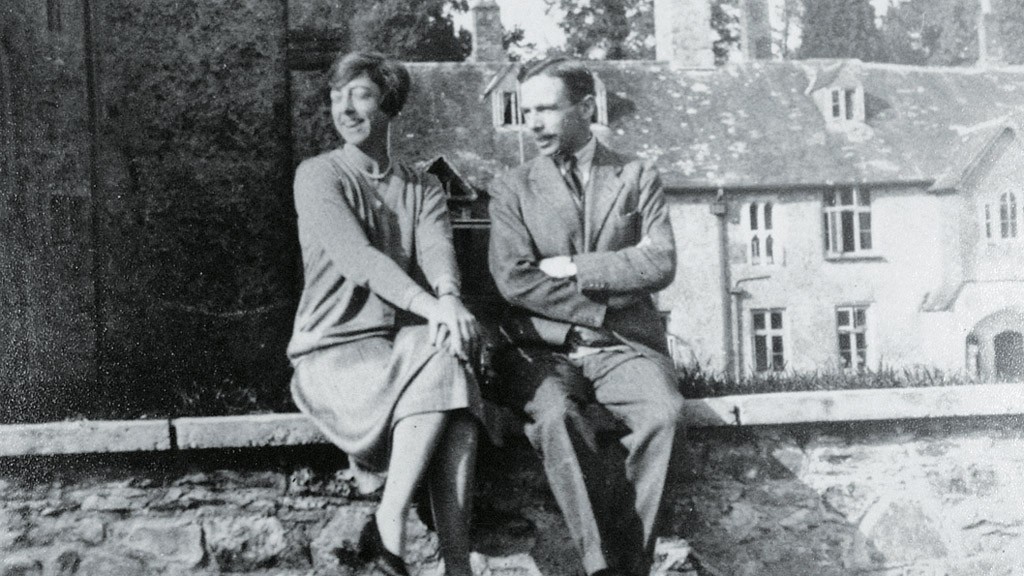
Leonard Elmhirst & his wife: Courtesy: Creative Commons

Elmhirst was in Sriniketan from 1922 to 1924 after which he returned to his work in England. He worked closely with the Sriniketan team even from far through the letters they exchanged. Rathindranath consulted Elmhirst regularly over Sriniketan’s work in progress and this correspondence is in the archives.

There is also a very charming body of personal letters between Tagore and Elmhirst. Tagore’s originals are among the Elmhirst Papers in the Dartinghall Hall Trust archives in Devonshire, UK, and Elmhirst’s original letters are in the Rabindra-Bhavana archives, Santiniketan. This correspondence has been published.  
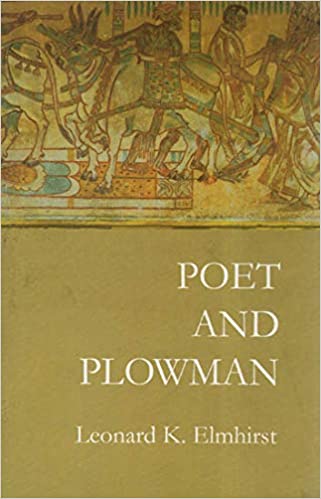
Another very important source of documentation is available in the Diaries of Leonard Elmhirst which he wrote from the start of the Sriniketan work in 1922. Elmhirst’s Diaries were published by Visva-Bharati titled Poet and Plowman. There are some day-to-day accounts of how the work was being done on the ground by a group of senior students from Santiniketan who had chosen this field for training and of course by the Village Workers who had been appointed by the Institute. There were other leaders who helped with the work throughout like Kalimohan Ghose who later carried out the pioneering Surveys of the Villages. I have included some of these path breaking Surveys in the Appendices of A History of Sriniketan.   

Last but not the least important for my research were Tagore’s ideas of education and rural reconstruction about which he wrote several essays in two important collections, namely Palli-Prakriti (Countryside and Nature) and Sikshya (Education). Some of the essays were autobiographical as to how he started the rural work in his family’s agricultural estates in East Bengal where his father sent him in 1889. He stayed at Selidaha, the Estates’ headquarters, with his family till 1900 when he moved to Santiniketan in South Bengal’s Birbhum district where his father had founded an ashram and called it Santiniketan, the ‘Abode of Peace’. It was not a monastic ashram but one for householders to spend some days in prayer and meditation away from their household responsibilities. This is where Tagore and his young family moved in 1900-01 with his plans to start a school for children in the heart of nature. It was to be a school where the children could learn to creatively assimilate the knowledge imparted to them instead of in the classroom that characterised colonial education. This was how his Santiniketan school was founded in 1901.

Santiniketan was located within two miles of the Bolpur Railway Station on the East Indian Railway Line. It was situated on high ground, in the middle of a wide plain, open to the horizon on all sides. There, father and son had planted noble groves of mainly mango and sal trees. There, in the heart of nature not far from a big city, Tagore had the advantage of being able to draw upon both raw materials and cultural products in equal measure as it were. There was the influence of trees, open fields, and the seasons changing so starkly on the one hand; on the other hand, there was the inspiration of artists, science teachers, libraries, and hand-made, machine-made, equipment.        

You ask why I got interested in working on Tagore. There is a very personal story to share. When our son was born in Oxford where my husband and I were working with University Fellowships during 1972-73, we decided to move to Visva-Bharati on an invitation from the then Vice-Chancellor, the eminent historian Pratul Chandra Gupta. We were of course attracted to the possibility of being at Tagore’s institution and also to the prospect of raising our child in its pastoral environment. We did thus move to Visva-Bharati in 1973 leaving our Calcutta jobs at Presidency College, where my husband was Professor of History, and Jadavpur University, where I was teaching. Once we went Visva-Bharati, I began to explore the possibility of doing post-doctoral research on Tagore rather than on colonial history as was the area of my doctoral dissertation at the University of Oxford.

What would be the purpose of such a book? Do you think Tagore’s model would work if multiple NGOs adopted his ideas?

As I have already mentioned I am a biographer of Tagore’s educational ideas and the history of his institutions at Santiniketan and Sriniketan. To me writing this book on a history of Sriniketan was an integral part of my research. But at a personal level, I was concerned that the history of that practical and experimental work that Tagore did under the most difficult of circumstances might get completely forgotten if it were not documented. That was a genuine concern because of two reasons. Firstly, while Santiniketan has retained its charm as a popular tourist spot, and as Santiniketan’s oldest buildings of exceptional architecture had become heritage buildings, Sriniketan did not have anything to show or display for outsiders to connect with its one-time strident presence in bringing life and action to the villages. Secondly, Sriniketan never reinvented the wheel but just carried on from the 1950s as a unit of Visva-Bharati University to fill in for routine bureaucratic and funding purposes. Even its beautiful and thriving craft work that brought acclaim to Sriniketan from well beyond its precincts, would slowly but surely erode.  

Therefore, the primary purpose of this book is to document a pioneering humanistic enterprise for posterity, and also for the next generations who were expected to be engaged in the field of rural development even though the original model was not necessarily practically and theoretically viable in today’s socio-economic scenario. The book is also for the scholar and for the generally interested person. When I was starting my work in the mid 1970s, there was no doubt in my mind that Sriniketan was becoming less visible.   

As for whether multiple NGOs could use the Tagore model is for the NGOs to tell us, but I do know that in its neighbourhood, Sriniketan remains an important inspiration for mobilizing villages non-politically.  There have been one or two such movements in the vicinity of Santiniketan-Sriniketan which are continuing to work actively at grassroots. One is Pannalal Das Gupta’s ‘Tagore Society for Rural Development’. Founded in 1969-70 as a registered society, the Tagore Society specialises in motivating villagers to take on environmental self-help projects. There is also the ‘Amar Kutir Society for Rural Develoment’ located very close to Sriniketan which was once a shelter for runaway political prisoners. Founded in 1923 by Susen Mukhopadhyaya, a young revolutionary freedom fighter then, who was attracted to Tagore’s work in rural reconstruction. We learn from his writing that he kept observing the work while coming in and out of jail himself.  ‘Amar Kutir’ developed the work of organising local crafts persons, upgrading their skills, training them in design, and in marketing their products for economic rehabilitation. The Birbhum district had several families of traditional weavers. Some of them had been engaged in trade by the East India Company.     

Another such non-governmental private initiative for rural development has come up more recently in 1984 in the outskirts of Sriniketan called the ‘Elmhirst Institute of Community Studies’, (EICS), whose members are working mainly in the areas of women and child development including family counselling, family adoption, de-addiction and rehabilitation, HIV/AIDS education and intervention. They were started with substantial moral and financial support from Elmhirst who was interested in spreading Sriniketan’s pioneering enterprise and taking the ideas further to meet the needs of the later day.    

In other parts of India individual leaders were drawn to the work of building village self-reliance and a few had dedicated themselves to the cause in post-independence India. For his Ashrams at Sabarmati and Wardha, Gandhi himself kept closely in touch with Sriniketan which he visited several times even after Tagore’s passing and knew it well. Gandhi’s follower, Baba Amte, in Madhya Pradesh was a key worker in the field. More contemporarily one reads of the utopian commune ‘Timbaktu Collective’ in rural Andhra Pradesh where a husband-and-wife team, Bablu and Mary Ganguly, have organised the hapless farm labourers of Anantapur district to work for the regeneration of wasteland and start projects on organic farming, soil conservation, propagation of traditional food crops and have also taken steps for women’s and Dalit empowerment and rural health. Most of these ideas were at one time born and nurtured in the holistic laboratory for socio-economic development that Sriniketan was. Bablu Ganguly acknowledges Fukuoka as his mentor. Being Bengali by birth, it would not be surprising if he was aware of Tagore but perhaps only as a poet and songwriter.      

Tagore withdrew from the national movement to develop villages, which is where, he felt lived a large part of India. Gandhi had a similar outlook. So, where was the divide?

With his deepening sympathy for the suffering millions of his country, Tagore became increasingly critical of the changes that Britain had brought to India. But he also felt strongly for the West’s ideas of humanism and believed they were of benefit to Indian society. Revolutionary changes were inescapably entering into our thoughts and actions. This was evident in the proposition that those whom our society decreed to be ‘untouchables’ should be given the right to enter temples. The orthodox continued to justify their non-entry into temples on scriptural pretexts, but such advocacy was being challenged and resisted. The people’s ‘voice’ had put out the message that neither the scriptures nor tradition nor the force of personality could set a wrong right. Ethics alone could do so.   

There were important factors that led gradually to this new way of thinking. The impact of English literature was one such. Tagore pointed out that acquaintance with English Literature gave us not only a new wealth of emotion but also the will to break man’s tyranny over man. This was a novel point of view. The lowly in our society had taken it for granted that their birth and the fruits of their past actions could never be disowned; that their sufferings and the indignities of an inferior status had to be meekly accepted; that their lot could change only after a possible rebirth. Society’s patriarchs also held out no hope for the downtrodden. But contact with Europe became a wake-up call. It was no surprise that in his landmark essay Kalantar (Epoch’s End) Tagore recalled and endorsed the British poet Robert Burns’s unforgettable line, “A man’s a man for a’ that.

It was in that longing to bring hope to the deprived people that Tagore and Gandhi felt really close. They were both carrying out rural reconstruction work because they knew that the majority of Indians lived in villages and wanted to bring awakening and national consciousness to the villages as the prime goal to freedom. Both men focused their attention on the peasantry as the largest class within Indian society who were paralysed by anachronistic traditions and weighed down by poverty and the absence of education.
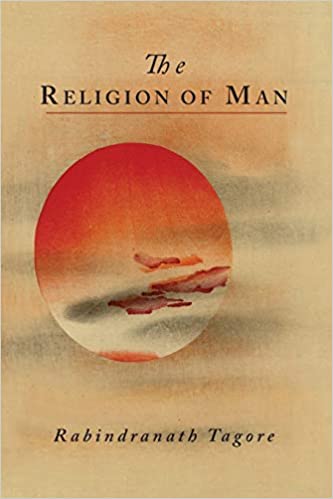
The major issues on which Tagore and Gandhi differed were debated nationally. Before discussing the specific issues in the controversy, it would be useful to examine their general positions on freedom and nationalism. In The Religion of Man (1931), Tagore developed the position that the history of the growth of freedom is the history of the “perfection of human relationship”. Gandhi applied the same principle to resolving India’s racial conflict. Tagore took the idea further and challenged the credo of nationalism. Tagore argued that the basis of the nation-state was a menace to the ideal of universal harmony or to the “perfection of human relationship”. But to the nationalist leadership all over the country, including Gandhi, political self-rule or swaraj came to be understood as a necessary phase of spiritual self-rule, or swarajya, and nationalism as the first step towards attaining free human fellowship.

Tagore alone spoke out against that trend. He argued that the crucial stumbling block in India’s future lay in the social problems of the country such as the absence of human rights for the masses and the alienation between the educated classes and the masses. He emphasised what the country needed most of all was constructive work coming from within herself and the building of an ethical society as the best way for rousing national consciousness. The rest would inevitably follow, even political freedom.

In his novel, Ghare Baire (The Home and the World, 1916), Tagore seemed critical of Gandhi’s call for Khadi and burning of mill cloth imported from England. Yet, Sriniketan was a handicraft forum for villagers to find a way to earn a living through agriculture and craft. So, why the dichotomy of perspectives as both were promoting local ware? Where was the clash between Gandhi’s interpretation of Khadi and Tagore’s interpretation of selling indigenous craft?

There was never any conflict in their perceptions or feelings for the poor, Gandhi’s and Tagore’s. Other issues were stirred in relation to the Khadi campaign and the burning of foreign cloth. For instance, the Congress in 1924 moved a resolution under Gandhi’s recommendation enlisting its members to spin a certain quantity of cloth on the charka (spinning wheel) as a monthly contribution. The idea was to give the movement country-wide publicity, and also, to make spinning a means of bonding between the masses and the politicians.

Tagore was wholly opposed to the idea of using the charka as a political strategy for swaraj and explained his position in his 1925 essay titled ‘The Cult of the Charka’. He argued that there was no short-cut to reason and hard work if anything was to succeed; that nothing worthwhile was possible by mass conversion to an idea; that our poverty was a complex phenomenon which could not be solved by one particular application such as spinning and weaving Khadi. Tagore raised the question if our poverty was due to the “lack of sufficient thread”, or due to “our lack of vitality, our lack of unity”?

On burning clothes Tagore’s position was that such a method hurt the poor by forcing them to sacrifice even what little they obtained from selling those clothes. He concluded that buying and selling foreign cloth should be delegated to the realm of economics. In his reply Gandhi wrote, that he did not draw “a sharp or any distinction between economics and ethics”. He added that the economics that hurt the moral well-being of an individual or a nation “are immoral and therefore sinful”.     

Is Sriniketan unique? Can it be seen as Tagore’s model for rural development?

To the best of my knowledge there is no parallel institution in India.

I am not aware if Tagore was ever talking of a ‘model’ that he expected others to follow. He was certainly hoping, as he wrote, that his work will help to establish an “ideal” [his word] for the rest of the country.

My own sense is that an “ideal” has been established given that empowerment of the villages through the Panchayats has become a nationwide project. Of course, the government’s approach is not fully in character with Tagore’s holistic vision for the individual’s humanistic development. Today the individual hardly counts, politics and economics are what matter. All the same it has to be said that the villages are getting some attention and are not left to rot as had been the case in the earlier century.       

You have said that Tagore faced criticism for the way he used Nobel Prize money. Can you enlighten us on this issue? Tell us a bit about the controversy and Tagore’s responses.

As anyone would surmise the Nobel Prize money was very precious also to the Santiniketan community because the teachers and workers there had to struggle over the resources for the institution. But contrary to the community’s expectation, Tagore decided that the Prize money would be given to the cause of rural credit. He had started the Patisar Krishi (farmers’) Bank in 1906 followed by the Kaligram Krishi Bank. According to Tagore’s biographer, Prasanta Pal, the total investment in the rural banks in 1914 amounted to Rs 75,000 of which Rs 48,000 was invested in the Patisar Krishi Bank at 7% interest per annum and Rs 27,000 at the same rate of interest in the Kaligram Krishi Bank. Tagore decided that only the interest from those investments could be used to pay for the maintenance of the Santiniketan school. The actual purpose of the fund was to give loans to the poor peasants so as to relieve them from exploitation by moneylenders and some unethical landlords too. In order to repay their loans, the peasants had to sell their produce at a rate lower than the market price immediately after drawing the harvest. This phenomenon was causing them perpetual indebtedness. The Krishi Banks were to loan money to the peasantry at a lower rate than the money lenders and relieve them from the age-old exploitation.     

Tagore was firm that the primary beneficiary of his Nobel Prize money would be the poor peasantry of his family’s estates, and the Santiniketan school would be only the secondary beneficiary. He tried thus to balance his two main concerns when settling the future of his Nobel Prize money.  

It cannot be said there was a ‘controversy’ over this as Gurudev (which was how the community addressed Tagore) was too revered for a controversy to be raised about a decision that he had taken. But there was disappointment.  It seemed strangely that even his inner circle had not realised his deep emotional attachment and ideological commitment to the cause of the impoverished peasantry. Perhaps, my response to your earlier question may explain why. 

Tagore had noticed the gaps between the different strata of Indian society. Sriniketan was an attempt to bridge the gap. How far did his ideals succeed?

There was tremendous societal gap between the different strata of Indian society.  With all of Tagore’s will and effort, it cannot be said that the Sriniketan ideals could bridge the gap. Even today, a perceptive visitor, who visits Santiniketan and Sriniketan, located only within two miles of each other, can tell the difference between the two. Santiniketan looks bright and thriving, but Sriniketan looks neglected.    

Community life in the Indian villages was seen to break for the first time with the emergence of professional classes among the English-educated Indians. The city began to attract them away from the villages. Those Indians were happy to let the government take over guardianship of the people and relinquish to it their own traditional duties to society. The result was a widening gap between town and country, city and village.  Tagore knew from his life’s direct experience that none of those who dominated the political scene in his time felt that the villagers ‘belonged’. The political leadership apprehended that recognising this vast multitude as their own people would force them to begin the real work of ‘constructive swadeshi’. They were not even interested to try. That was where the Sriniketan effort was invaluable to Tagore. He saw that the endeavour built at least a relationship with the village, if nothing else.

The Sriniketan scheme sought to bridge the gap by bringing to the village a combination of tradition and experiment. Tagore knew that a civilisation that comprises of only village life could not be sustained. “Rustic” was a synonym for the “mind’s narrowness”, he wrote. In modern times, the city had become the repository of knowledge. It was essential therefore for the village to cooperate with the city in accessing the new knowledge.  One such vital area of expertise was in agriculture. His study of “other agricultural countries” had shown that land in those countries was made to yield twice or thrice by the use of science. A motor tractor was bought for Sriniketan in 1927 because he believed that the machine must find its way to the Indian village. He wrote,If we can possess the science that gives power to this age, we may yet win, we may yet live.”

Your book tells us that Sugata Dasgupta’s publication, A Poet & A Plan (1962) showed that Sriniketan had benefitted the villages it adopted decades after Tagore’s death. Has there been further development of these communities or is it status quo?

No, it cannot be said that it is status quo from the 1960s. There have been changes for sure. There have been benefits to the villages from the Government’s projects. Indeed, the government had adopted some of their early projects from Sriniketan’s original work.

More interventions are needed of course but it has to be said something is being done. Of course, the changes I can mention that have benefitted the condition of the villages and therefore the villagers’ lives came well after Sugata Dasgupta’s publication. The three that I can mention are communications, roads, and electricity. Today there are more long-distance buses than ever before transporting people to and from the villages. Totos and cycle rickshaw-vans take passengers from the bus stands to the interior villages. Roads are another major development.  Besides the highways, the mud paths in the villages are now being converted to metalled roads. There is electricity in the villages.

I should mention one other significant change which is that secondary education is now fairly common to the present-day rural populace. College education has also come within their reach.

What is the current state of the present day Sriniketan? What do you see as the future of Sriniketan?

Presently, Sriniketan runs as a department or unit of Visva-Bharati University and works according to the University’s requirements. I am not acquainted with the requirements. I continue to be a regular user of the University’s Rabindra-Bhavana archives even now. But I have not been connected with the University in any official capacity after the 1980s which is a long time ago.

Thank you for your time.

(This is an online interview conducted by Mitali Chakravarty.)

PLEASE NOTE: ARTICLES CAN ONLY BE REPRODUCED IN OTHER SITES WITH DUE ACKNOWLEDGEMENT TO BORDERLESS JOURNAL

Categories
Interview

In Conversation with Radha Chakravarty

Radha Chakravarty

Radha Chakravarty has, for many of us, been synonymous to translations that we read – excellent translations of Tagore, Bankim and Mahasweta Devi – major names from Bengal in Literature. A well-respected academic who specialises in translations, Tagore, Mahasweta Devi, Women’s Literature, South Asian Literature, Subaltern Writings and Comparative Literature, in this exclusive she talks to us of the multiple journeys in her development as a translator, critic and writer.

You are an eminent translator, editor, critic and writer. What started you out on this path?

These are separate yet interlinked roles, different journeys yet part of the same narrative of my involvement with the world of words. I started writing when I was a child, but came to think of publishing my creative work many years later, when journal editors began to solicit my poetry for publication. My poems have now appeared in many books and journals, in India and internationally. It was a wonderful collaborative experience to contribute to Pandemic: A Worldwide Community Poem (Muse Pie Press, USA), nominated for the Pushcart Prize 2020. 

My work as a critic evolved through engagement with research. Feminism and Contemporary Women Writers (Routledge, 2008) for instance, emerged from my doctoral research, a cross cultural study of writers such as Mahasweta Devi, Anita Desai, Doris Lessing, Toni Morrison, Margaret Atwood and Buchi Emecheta. Novelist Tagore (Routledge, 2013) draws upon my research on gender and modernity in Tagore’s novels. My essays and reviews come from my areas of specialization, including Tagore Studies, women’s writing, South Asian Studies, Comparative Literature and Translation Studies.

As an editor, my work is inspired by the idea of sahitya, the Bengali word for “literature” that Tagore interprets as “being with” or “being together”. This idea of collaboration and dialogue across heterogeneities fascinates me. My edited volumes, such as Bodymaps (Zubaan, 2007), a collection of South Asian women’s stories on the body, Vermillion Clouds (Women Unlimited, 2010), an anthology showcasing a century of fiction by Bengali women and Writing Feminism (co-edited with Selina Hossain; UPL, 2010), containing selections of South Asian feminist writing, are inspired by this principle. My most exciting collaborative project as an editor, so far, was The Essential Tagore (Harvard and Visva-Bharati, 2011), where my co-editor Fakrul Alam and I worked with thirty reputed South Asian translators located in different countries, on the largest anthology of Tagore’s writings across ten genres. The volume, named the ‘Book of the Year’ 2011 by Martha Nussbaum, has since become a standard reference for Tagore scholars worldwide.

As for translation, I started dabbling in informal translations, across Bengali, English and Hindi, even as a child. My grandfather, who taught me advanced Bengali at home, often involved me in these linguistic experiments. My first published translation happened almost by accident, in the 1990s. A friend, an Israeli art historian, asked me to explain the lyrics of the Bollywood song daiya re daiya re charh gaye papi bichhwaa (the poisoned scorpion climbed on me), because she was researching the scorpion motif in the Khajuraho scultpures. I ended up translating the entire song into English, in verse! My friend was amazed. She included my translation of the song with due credit, in her essay on the scorpion, published in the Journal of the Asiatic Society of India. As for my early books in translation, I must thank my friends, the editors and publishers who urged me to take up those projects. They saw in me a potential I had not fully recognised myself. Later, the overwhelming recognition that these books received transformed my self-image. I began to think of myself as a translator, among many other things.

You started by translating Mahasweta Devi. When and why did you start translating Tagore? What moved you from Mahasweta Devi to Tagore?

At the turn of the century, I was immersed in the challenge of translating into English the heterogeneities of contemporary Bengali fiction. Crossings: Stories from Bangladesh and India (2003), my first published book of translations, included the stories of twenty living writers. Alongside, I was working on In the Name of the Mother, my translations of some powerful, unusual stories about motherhood by Mahasweta Devi. The volume appeared soon after Crossings.

Meanwhile, I received a sudden call from Rani Ray—once my teacher, now a friend, mentor and figure of inspiration—urging me to translate Tagore’s Chokher Bali (A grain of Sand) an important but neglected text. I remember the shock and awe I felt at that moment. I protested that I was no Tagore expert, much as I loved and admired his work, but Rani di was adamant.  “I think you are the right person to translate this novel,” she insisted. I found myself promising that I would try. And that was how my journey as a Tagore translator began. I read the novel, was struck by its boldness as a path-breaking modern text, and felt daunted but also tremendously excited at the challenge of trying to translate this hundred-year-old text that was at once so rooted in its context, and yet so far ahead of its time. Translating Chokher Bali was an immersive experience. It transformed me, drew me into a lifelong relationship with Tagore, and there has been no looking back.

Was translating Tagore different from translating Mahasweta Devi or Bankim? How was it similar/ different?

As I said, I first translated contemporary writing before turning my attention to Tagore. My translation of Bankim’s Kapalkundala came in 2005, after I had also translated Tagore’s Shesher Kabita as Farewell Song. So the transition from Mahasweta and other contemporary figures, to Tagore’s early twentieth century texts, and then to Bankim’s nineteenth century novel was like a journey back in time, delving further and further into the Bengali literary past. Of late, I have been translating parts of the Chandrabati Ramayana, a sixteenth century composition. Each step in this journey has been a process of exploration and rediscovery through translation, of familiar and much loved texts that I had read avidly in my early life, never dreaming that I might one day aspire to translate these literary jewels.

After working with living writers, the transition to Tagore was not easy. When translating Chokher Bali, I felt the need to evoke the flavour of a bygone age, even in a contemporary translation for the twenty-first century reader. This involved complex creative experiments with style and vocabulary that stretched my abilities as a translator. One felt the importance of bringing to life the cultural ethos of Bengal in the late nineteenth century, a world in many ways unfamiliar to readers of our time. Simultaneously, I recognized the modernity of Tagore’s novel, the new element of interiority that transformed the Bengali novel at his magic touch. That needed to be brought to life too.

Moving from Tagore to Bankim offered a fresh set of challenges. The lyrical, Sanskritised cadences of Kapalkundala are far removed from the more modern idiom of Tagore’s novels. Bankim’s text is set in the Mughal period. Hence the translator must actually negotiate the past at a double level, to bring to the modern reader the late medieval ethos as represented through Bankim’s nineteenth century sensibility. Crossing these temporal and cultural divides demanded daring experiments with language, as well as considerable research to contextualize the source text. It was a learning process for me.

Working with the Chandrabati Ramayana is a different experience altogether. A radical text for its times, and one that challenges the mainstream literary tradition, it remains a text worth returning to in our own context, because it destabilizes monolithic conceptions of our premodern religious and social traditions. Finding in English an idiom that will capture the poetry as well as the content is a hard task though.

These adventures in translation have compelled me to read the Bengali literary tradition from a different angle, from a writerly perspective, as it were. I have realized that translation involves a creative element, but also works as a form of interpretation. It has become clear to me why translation can be described as the most intimate act of reading.

In the Jaipur Literary Festival (2017), you made a very interesting observation that if one does not get into the skin of a writer, one cannot capture the essence of the writer in entirety. Are all good translations more of transcreations that literal translations?

Translation often appears to me a form of ventriloquism, the translator’s voice making itself heard through the voice of the source text. It produces a double-voiced text. My endeavour, when translating, is to bring to life the spirit rather than the literal vocabulary of the source text. One struggles to apprehend, interpret, and then, through one’s own creative ability in the target language, to approximate the impulse behind the original. A doubleness comes into play here, due to the gap in time, location, language, culture and context that separates the translation from the source text. In this tension resides the dynamic potential of translation to simultaneously recognize and displace the original. The success of a translation often depends on the translator’s creativity, as well as the author’s.

What is your opinion of Tagore’s own translation of his works? Can you expand on that?

Tagore’s English translations of his own work shot him to international fame and led to the Nobel Prize. Yet he was diffident about his own command of English, and unsure about the quality of his translations. Some of these translations resorted to archaisms and a rather stilted style that did not weather the test of time very well. They were partly responsible, I feel, for the fluctuations in Tagore’s international reputation after the initial flush of success. Certainly, they are not close copies of the original Bengali texts; rather, they are re-creations in a different language, for a different readership. While some readers may cavil at the gap between the source texts and their English versions, these translations, in my opinion, remain important instances of the ways in which translation can connect different cultures through dynamic border crossings. The Kabir translations for instance, drawing upon the work of Kshitimohan Sen, and produced by Tagore in collaboration with Evelyn Underhill, provide a fascinating instance of the translingual and transcultural border-crossings that were involved in this process.

Sometimes Tagore adopted unorthodox collaborative measures when working with translations.

We know about the English translations of course, but it is worth remembering that Tagore also translated numerous premodern poets into Bengali and English, from a range of different languages, often drawing upon eclectic sources and relying on the assistance of others more knowledgeable about the languages and literary cultures of the source texts. I have recently published an essay on Tagore’s translations of medieval poetry, where I argue that these should be read, not as literal, faithful renderings that seek to cling close to the source texts, but rather, as transcreations that resituate these early texts in new, unfamiliar contexts. What takes place in his translations of Bhakti poetry, for instance, is also a meeting of different faiths, across diverse histories and geographies.

Can a translation be done from a translated piece into the same language? Would such a revision be of value?

Intralingual translations can be found in many literary cultures. Sometimes, texts in formal or classical versions of a language get translated into a modern, colloquial idiom, to reach a wider audience in a different time period. Often, these can be read as democratizing moves, arising from dynamic historical shifts that bring about an interrogation of social and linguistic hierarchies. The bridging of gaps between “high” and “popular” cultures can be attempted through such processes. These translations imagine into being new readerships for older texts, giving them a new and altered “afterlife”. The market also dertermines some of these things, especially when it comes to promoting modern versions of enduring texts that are regarded as classics. Intralingual translation can blur the borderline between translation and adaptation.

Can a translation to another language be done from a translation say in English, and still have the authenticity of the original writer?

It is currently a widely prevalent practice to use English translations as source texts for re-translation of texts into other languages. English as the language of global currency provides a useful medium for such translingual, often transnational interchanges. In India, despite our multilingual culture, there is dearth of translators who can work across Indian languages without taking recourse to English as a via media. This is part of the colonial legacy, which transformed our premodern polyglot culture through the compartmentalization and codification of the “modern Indian languages”. Today, bilingual and multilingual Indian scholars and translators are scarce. Hence, traffic across Indian languages tends to take place via English. The need of the hour is to regenerate a culture where the true potential of our multilingualism can be acknowledged, through a revaluation of polyglot scholarship.

Collaborative translation also holds immense possibilities for South Asian cultures, where diverse forms of linguistic and literary expertise can be harnessed, to work directly across our many languages, without always using English as a crutch. We already possess a rich history of collaborative translations in our literary past. This can inspire us to develop models for translation that involve mutual relationships between translators working in different languages.

How do you deal with translating multiple languages used by a writer into English? How would you indicate the presence of dialects or another language in the text you are translating from Bengali to English?

This question is particularly pertinent to the writings of Mahasweta Devi, where we find extraordinary instances of heteroglossia and multilingualism, in ostensibly monolingual texts. In a single story, such as “Draupadi”, we find chaste and colloquial Bengali, Santhal song, Hindi words and phrases, and English expressions, as well as quotations from various sources. Such texts challenge the monolingual paradigm to indicate that our cultural ethos, and also our sensibility, is always already multilingual. The idea of “pure” language is destabilized, to dramatize, in the words of the text, the dynamic interaction of various languages and linguistic registers. The social and political hierarchies that underlie this interplay of languages come to the fore through the rhetoric of the text. In such instances, the translator faces a tremendous challenge, especially with English as a target language so far removed from South Asian linguistic cultures. This tests the translator’s imagination and creativity, and demands the ability to summon up suitable strategies to deal with the challenges posed by the source text.

In my own translations, I prefer to highlight the forms of otherness operational in the source text, instead of erasing these markers of difference in order to create a smooth and easy style that would comfort a reader unfamiliar with written Bengali or South Asian cultures. To a great extent, I try to retain “untranslatable” cultural elements such as kinship terms, or names of trees, flowers, food and clothing. The use of italics also needs to be rationalised, depending on the demands of the source text, as well as the context, purpose and target audience for the translation. I prefer to keep notes and glossaries to a minimum, wanting instead that the reader engage actively in making meaning of the translation. In other words, I like to foreground the “translatedness” of the translation, as a text from elsewhere. At the same time, though, I don’t carry the process of defamiliarization so far as to completely destroy the readability of the target text. After all, I translate in order to be read. And I translate for the general reader, because I want my translations to have as wide and eclectic a readership as possible. It is my mission to bring writers from our own culture to the rest of the world, not just for a select coterie of erudite scholars.

Has translating all these writers impacted your own writing and thought processes as a critic? How?

As a critic, one reads a book from the outside, as it were. It is the analytical faculty that comes to the fore, even in close reading. When translating, something different happens. Translation, like literary criticism, involves close reading, interpretation and contextualization. But the actual process of translating also involves other faculties beyond the rational and intellectual. A feel for language is required, an element of emotion, and a creative ability to find strategies that will make the text viable in a new language for a new audience. One gets drawn into the source text through the process of rewriting or reinventing it, instead of striving for critical distance. Elements of affect, and the pleasure of the text, bring the process of translation alive. Criticism treats the text as a stable entity to be interpreted and analysed, while translation destabilizes the fixity of the “original” and makes us aware of its potential mutability. As a practising translator, I think I have become more sensitive to the “writerly” aspect of the texts that I read as a critic. I have also become more sharply aware of the way canons are formed, and the ways in which translation can trigger transformations in prevalent literary and linguistic hierarchies..

How do you find the time to juggle between academics, translations and writing?

It can be a tightrope walk. But if something matters enough, one tries to make time for it. Always, one is up against the feeling of racing against time. So much to do, and so little time. A lifetime is too short.

What are your future plans? Do we have anything new in the offing?

I find myself immersed in many different adventures with words. Currently, I am working on The Tagore Phenomenon (Allen Lane, forthcoming), a giant anthology that showcases Tagore’s works as a polymath whose oeuvre covers an extraordinary range of subjects, including nationalism, internationalism, education, social issues, nature and environment, spritituality, science, literature and the arts, rural reconstruction, religion, philosophy and humanism, to name a few. A new translation of Char Adhyay (Four Quartets), Tagore’s last novel, is on the way.

Our Santiniketan, to be soon published by Seagull, is my English translation of Mahasweta Devi’s recollections of her days in Santiniketan as a little schoolgirl. An entire ethos, a bygone era, comes to life in these memoirs, invoking the world of Santiniketan in the living presence of Rabindranath Tagore, during the 1930s. Mahasweta Devi: Writer, Activist, Visionary, an edited volume, will bring together scholarly essays and translations showcasing the writer’s life, work and critical reception across cultures. I am also translating selected essays by Kazi Nazrul Islam, whose prose deserves far more attention than it has so far received.

Alongside, my poetry continues to appear in print, in diverse forums. Translations of my poems have also been published. Drawing my poems together in a collected volume is a long overdue project, waiting to happen …

Thank you for giving us your time Professor Radha Chakravarty.

Click here to read Tagore’s prose translations by Radha Chakravarty.

Click here to read Tagore’s poetry translations by Radha Chakravarty.

.

(This is an online interview conducted by Mitali Chakravarty on behalf of Borderless Journal.)

.

PLEASE NOTE: ARTICLES CAN ONLY BE REPRODUCED IN OTHER SITES WITH DUE ACKNOWLEDGEMENT TO BORDERLESS JOURNAL
Categories
Essay

When West meets East and Greatness blooms

Debraj Mookerjee explores how syncretism permeates between the West and the East — how the two lores do meet

Cultural influences travel at the speed of human imagination. In the modern world it is easy to plot the journey of cultural influences across the planet, thanks to the seamlessness created by communication technologies. The Internet links us all. But we also know cultural influences travelled through the globe since the earliest migration of humans.  We know the Chinese invented paper some 2,000 years ago. We know potato came to India from the new world through the Portuguese and became widely popular only around the 19th century. We know Marco Polo brought pasta from China to Italy. These are things we know. We also know because these are things. But along with things, ideas also travelled, as did poetry and song. Philosophy travelled, and ways of knowing and experiencing the world travelled. How many of us know for example that Ibn Rushid, an Andalusian of Arabic descent born in Islamic Cordoba, Spain, in 1126, translated Aristotelian philosophy into Arabic? Or the fact that these translations were further retranslated into Latin by Thomas Aquinas, a mediaeval scholar who was influenced by, though he differed strongly with, Ibn Rushid? Such is the power of ideas. Ideas are borderless. That is their power.

 In the context of the so-called East–West encounter, there are so many cross-cultural influences we are unaware of. Influences that travelled to and fro between the West and the East. India seeped into the cultural experiences of either of the two worlds. History and society can be viewed in many different ways. As E. M. Forster suggests in his essay ‘Art for Art’s Sake’, politics often invents a vocabulary that insists on differences; art on the other hand weaves patterns that merge into each other, producing beautiful new forms that emerge organically. 

Art and the philosophy surrounding it bring different cultures into play with each other. We will walk around some examples of such cross-fertilisation. And in the process, perhaps, expand the borders of our own minds and how we look at the world. I shall dwell on two such instances of cross-cultural influences. First, I shall look at Gandhi and the influences he shared with the West and the sharing of political ideas and philosophies they produced. I will explore the diverse trajectories his core ideas of non-violence and civil disobedience took in shaping up to what they eventually became, and even the influences they have had after him. I shall thereafter present Tagore and begin by looking at the shaping of his worldview as a thinker and as an artist, reading closely into his specific interactions with particular milieus in England. Finally, I shall look at Tagore iconic music (Rabindra Sangeet) and trace the influence Western (especially Welsh) music had on his works.

 “You can love a person dear to you with a human love, but an enemy can only be loved with divine love.”

“Let us forgive each other—only then will we live in peace.”

Who would you imagine might have spoken these words?

Gandhi? Almost, but not quite. These are Tolstoy’s words. Tolstoy was a writer, a philosopher and a religious thinker. Gandhi was particularly influenced by Tolstoy’s The Kingdom of God is Within You and his essay ‘Christianity and Patriotism’. Tolstoy’s ideal of “simplicity of life and purity of purpose” had a deep and abiding impact on Gandhi’s core thinking. In ‘Christianity and Patriotism’, Tolstoy writes: “Patriotism may have been a virtue in the ancient world when it compelled men to serve the highest idea of those days—the fatherland. But how can patriotism be a virtue in these days when it requires of men an ideal exactly opposite to that of our religion and morality—an admission not of the equality and fraternity of all men but of the dominance of one country or nations over all others? But not only is this sentiment no virtue in our times, but it is indubitably a vice; for this sentiment of patriotism cannot now exist, because there is neither material nor moral foundation for its conception.”

Gandhi had carried Tolstoy in his heart for the longest time. But shortly before Tolstoy passed  away in 1910, as Gandhi began the active phase of his fight for human rights for Indians in South Africa, and thereafter his struggle for India’s independence, he wrote to Tolstoy, prompted by the writer’s ‘Letter to a Hindoo’, in which he paves a path for freedom sans violence. The letter from Tolstoy was addressed to Tarak Nath Das, editor of Free Hindustan, who advocated the violent approach. 

Gandhi apprised Tolstoy about the Indians’ ‘passive resistance’ against racial oppression in Transvaal. He wrote (in October, 1909) that nearly half of the total Indian population of 13,000 in Transvaal had left Transvaal rather than submit to the degrading law, and “nearly 2,500 have for conscience’s sake allowed themselves to be imprisoned, some as many as five times”. Tolstoy’s letter explained why non-violent resistance and a resolve by Indians to become free were the only solution. Gandhi sought Tolstoy’s confirmation for his letter to Das and his approval to print 20,000 copies for distribution and having it translated to Indian languages. He had “taken the liberty” to write the letter “in the interests of truth, and in order to have your advice on problems the solution of which you have made your life-work”. Gandhi quoted Tolstoy thus, as he introduced his letter, when indeed it was widely distributed: “Do not resist evil, but also do not yourselves participate in evil: in the collection of taxes, and in the violent deeds of the law courts and (what is more important) the soldiers. Then, no one in the world will enslave you.”

But there is a bigger symmetry at work here than just the transfer of wisdom from Tolstoy to Gandhi. Thiruvalluvar was a legendary Tamil poet who lived sometime between the fourth and first century BCE. His work Thirukkural is an unparalleled treatise on ethics, communicated in verse. The first translation of the Thirukkural in a European language was done in Latin by Constanzo Beschi, a Jesuit Missionary, in 1730. Beschi himself was a Tamil scholar and poet, known as Viramamunivar. Tolstoy is said to have read a German translation of the work. And his ‘Letter to a Hindoo’ was apparently inspired by what he’d read in the Tamil saint-poet’s work.

 Around the time, Gandhi wrote an article, ‘Tolstoy’s Satyagraha’, showing how thousands, acting on his views “advising people not to obey the laws of the Russian Government, not to serve in the army, and so on”, were going to jail. Tolstoy’s writings, though proscribed, were being published, leading to the imprisonment of his agent. Tolstoy thought that “my views are true, and that it is my duty to propagate them”. Gandhi concluded: “True freedom is to be found—only in such a life. That is the kind of freedom we want to achieve in the Transvaal. If India were to achieve such freedom, that indeed would be swarajya.”

Gandhi had told Rev. J.J. Doke, his first biographer (1909): “It was the New Testament which really awakened me to the rightness and value of Passive Resistance. When I read in the Sermon on the Mount such passages as ‘Resist not him that is evil’, I was simply overjoyed, and found my own opinion confirmed when I least expected it. The Bhagavad Gita deepened the impression and Tolstoy’s The Kingdom of God Is Within You gave it a permanent form.”

When we imagine Gandhi, along with perhaps Asoka and the Prophet Muhammad, as among those historical figures who imagined society and politics through the prism of morality, we ought to know the influence of Tolstoy’s thoughts. Tolstoy thought of morality as a category that steps beyond politics. Gandhi could not afford that luxury. India needed freedom. So, he introduced morality into politics. 

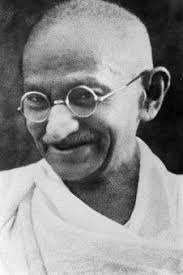
Gandhi harvested patriotism through the principles of ahimsa and satyagraha —non-violence and truth force. The latter was the goal and the former the means. In these he drew influences from ancient Indian philosophy, and from thinkers like Tolstoy and the transcendentalists of America—more on the latter in a bit. So, we find a saint-like figure, a Russian aristocrat and also among the more celebrated writers of his time, conversing across time and space with one whom Churchill infamously labelled as the ‘Naked Fakir’, but who went on to become the Father of a Nation.

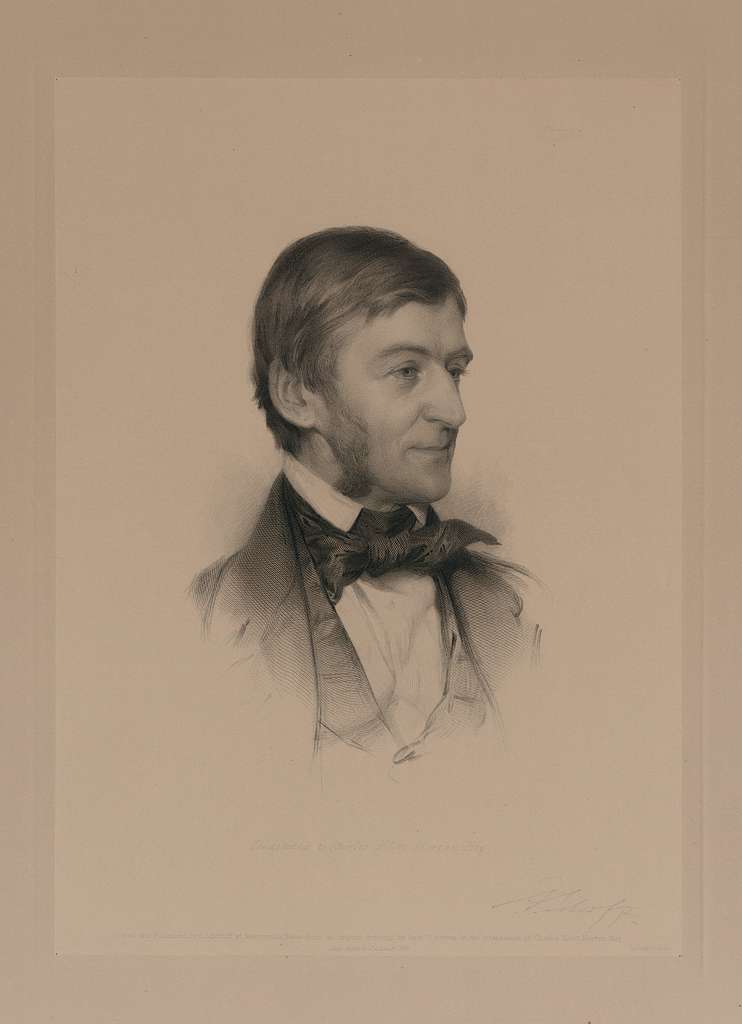
Beyond the influence of Tolstoy  — and we need to frame this in the context of the Cold War that was to commence soon after the assassination of Gandhi—the other major influence on Gandhi came from the United States of America. The transcendentalists were radical thinkers of the early 19th century who rejected organised traditional religious belief systems. They believed in the ‘oneself’ of the self and the universe. Ralph Waldo Emerson, thinker, poet, writer, philosopher, and the most famous of the transcendentalists, once wrote: “Within man is the soul of the whole; the wise silence; the universal beauty; to which every part and particle is equally related; the eternal ONE.”

Emerson took interest in Hindu texts thanks to his aunt Mary Moody. His idea of the over-soul, the universal oneness can be read as a derivative of the idea of Brahman —the singular force signified by the chant ‘Aum’. In this poem by Emerson entitled ‘Bhrama’, the oneness mentioned above is emphasised, as an idea subsumed in the concept of ‘Brahman’, which goes beyond this or that or even the specific injunctions of scripture:

 If the red slayer think he slays,
 Or if the slain think he is slain,
 They know not well the subtle ways
 I keep, and pass, and turn again.
  
 Far or forgot to me is near;
 Shadow and sunlight are the same;
 The vanished gods to me appear;
 And one to me are shame and fame.
  
 They reckon ill who leave me out;
 When me they fly, I am the wings;
 I am the doubter and the doubt,
 I am the hymn the Brahmin sings.
  
 The strong gods pine for my abode,
 And pine in vain the sacred Seven;
 But thou, meek lover of the good!
 Find me, and turn thy back on heaven. 

A contemporary of Emerson and one deeply influenced by him was Henry David Thoreau, who advocated both self-reliance and civil disobedience, elaborately discussed in his book, Walden Pond, which is an account of his experiments with asceticism. His practices were motivated by his encounter with yoga. Thoreau seldom was ecstatic. And yet he wrote: “What extracts from the Vedas I have read fall on me like light of a higher and purer luminary, which describes a loftier course through a purer stratum, free from particulars, simple, universal.” 

He was fond of quoting from the Bhagavad Gita, as was Gandhi. Gandhi was significantly influenced by Thoreau’s experiments and ideas. Gandhi, to correct the misperceptions (thanks to the British media) in the American mind about the Indian freedom struggle, wrote a letter (on October 3rd, 1942, while travelling to Bombay from Wardha, where the Congress had just held a session in which it had urged the British to withdraw from India in the interest of the Allied cause) that was to be sent via the India league, ‘To American Friends’. He wrote, very cleverly invoking Thoreau to buttress India’s cause (having already written separately to Roosevelt on the issue): “You have given me a teacher in Thoreau, who furnished me through his essay on the ‘Duty of Civil Disobedience’ scientific confirmation of what I was doing in South Africa”. 

At the Second Round Table Conference in London in 1931, the American reporter Webb Miller, a long-time admirer of Thoreau, asked Gandhi, “Did you ever read an American named Henry D. Thoreau?” Gandhi replied: “Why, of course I read Thoreau. I read Walden first in Johannesburg in South Africa in 1906 and his ideas influenced me greatly. I adopted some of them and recommended the study of Thoreau to all my friends who were helping me in the cause of Indian independence. Why, I actually took the name of my movement from Thoreau’s essay, ‘On the Duty of Civil Disobedience,’ written about eighty years ago.” 

Miller noticed that Gandhi, a ‘Hindu mystic’, adopted from Thoreau the philosophy which was to affect millions of Indians and inspire them to defy the powerful British Empire. “It would seem,” Miller concluded, “that Gandhi received back from America what was fundamentally the philosophy of India after it had been distilled and crystallised in the mind of Thoreau.”  

The back and forth does not end here. We all know how Martin Luther King Jr was influenced by Gandhi. He once wrote, “While the Montgomery boycott was going on, India’s Gandhi was the guiding light of our technique of nonviolent social change.”

So ancient Indian philosophy influenced the transcendentalists. The transcendentalists influenced Gandhi. And Gandhi went on to influence Martin Luther King Jr Kipling might have written that “East is east, and the West is West. And ne’er the twain shall meet”, at the cost of sounding frivolous, perhaps he had not read Walt Whitman’s famous poem, ‘A passage to India’.

Gandhi and Tagore were in conversation in the deepest sense of the term, both captured by the tight frame of history, yet never ever contained by it. It is apposite, therefore, to try and capture within the rubric of the larger argument, the influences and intellectual trajectories of both Gandhi and Tagore. Tagore, India’s iconic poet, the first non-European to receive a Nobel Prize, who travelled to England in 1912 clutching a collection of 103 self-translated English poems, became a world phenomenon in a little more than a year. Though Tagore is revered among Bengalis and indeed all Indians as ‘Kobi guru’ (Poet Guru, as it were), his development as an artist was syncretic. 

As a young boy, he spent a month in Amritsar with his father and was greatly impressed by the devotional songs sung inside the Golden Temple, with his father often joining in. While a landlord in East Bengal during the 1890s he became familiar with the great baul tradition of Lalon Shah. He absorbed Western influences, especially in his poetry, but also influences as diverse as the paintings of specific communities in islands as far-flung as New Ireland in Papua New Guinea! Tagore took to painting later in age and was never quite sure of his own work, but they have a magical haunting quality that is all too difficult to pin onto a singular culture.  

One of the first persons whom Tagore wanted to meet and know about in London was Stopford A Brooke[4]. Tagore, being a prominent member of the Brahmo Samaj, which was closely allied to Unitarianism, had heard so much of him, and had perceived an alignment of convictions. Sir William Rothenstein,in his account of Tagore’s days in London, says, “Stopford Brooke asked me to bring Tagore to Manchester Square; ‘but tell him’, he said, ‘that I am not a spiritual man’.” 

Soon Tagore would become quite the toast of young poets, who would seek him out, Ezra Pound being prominent among them. Among others whom Tagore met were Shaw, Wells, Galsworthy, Andrew Bradley, Sturge Moore and Robert Bridges. In a 1915 letter to Robert Bridges, Tagore wrote, “I know what this war is to you… Please let Mrs. Bridges accept my heartfelt sympathy and reverence [for one] whose son is fighting for the cause of liberty in one of the greatest wars in the history of mankind.” Bridges included Tagore’s poems in his anthology The Spirit of Man in 1915. On his part, Tagore was struck by the breadth of view and the rapidity of thought that he found among his new friends. Rothenstein recounts that while addressing his English audience, Tagore said, “Those who know the English only in India, do not know Englishmen … All you people live, think and talk while a strong, critical light is constantly focussed on you. This creates a high social civilisation. We in India, on the contrary, live secluded among a crowd of relations. Things are done and said within the family circle which would not be tolerated outside; and this keeps our social standards low.” 

Tagore famous novel, Ghare Baire (Home and the World, 1916; trans. 1919) presents his disquiet with insular nationalist sentiments, to the exclusion (of what he believed) larger humanist imperatives. His protagonist, Nikhil articulates liberal universal values and is willing to sacrifice his life to ensure peace in his domain (he is a landlord). His fiery friend, the nation- (as mother) worshipping ultra-nationalist radical Sandeep, stokes the violence that ultimately consumes Nikhil, but from which he himself stealthily slinks away.

Tagore absorbed more than just ideas from the West. His music, especially the scores of many of his songs, was influenced by his interactions with the West. On his 2012 visit, he’d heard the music hall songs and folk tunes that he later incorporated into his distinctive musical genre, Rabindra Sangeet. As a child, he’d heard his siblings play myriad instruments. His older brother Jyotirindranath, significantly, played the piano and violin. From him, Tagore developed an early ear for Western musical lilts. Lively English, Irish and Scottish folk tunes impressed Tagore, whose own tradition of Brahmo hymnody was subdued. Tagore confesses: “At seventeen, when I first came to Europe, I came to know it intimately, but even before that time I had heard European music in our own household. I had heard the music of Chopin and others at an early age.”

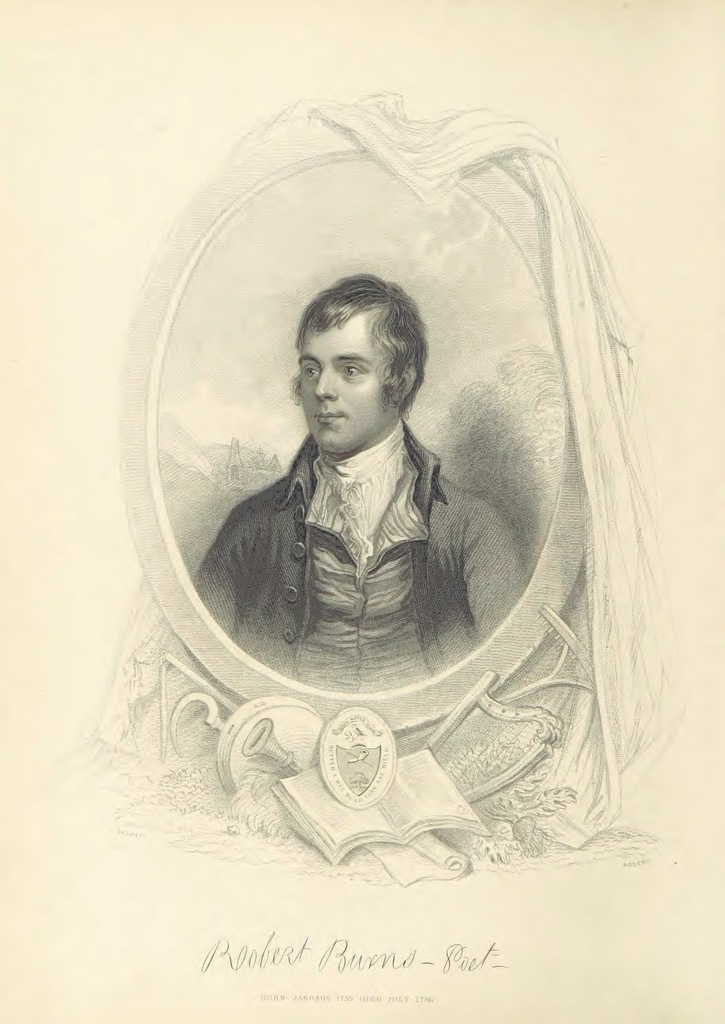
Of particular note is Robert Burns, whose poetry and music were quite widely known in metropolitan Bengal. His work was particularly popular with Bengali students in the early days of Hindu College (now Presidency University), Calcutta (Kolkata now). The Scottish missionary to India, Alexander Duff, remembers students in Henry Derozio’s (poet and assistant headmaster of Hindu College) discussion group reciting Burns’s poetry and singing his democratic anthem ‘A man’s a man for a’ that’. Two of Burns’s sons served for many years in the Company army, and one of them, James Glencairn Burns, was later appointed judge and collector of Cachar (in Assam), and became an expert in Hindi, instructing company cadets in the language on his return to England in 1839. Burns’s songs pervaded 19th century British India and were well known to many Indians: Rabindranath Tagore adapted at least three of them and set musical scores to the Bengali versions of the original melodies.

Tagore created one of his most popular songs, ‘Purano shei deener katha,’ on the model of the old Scottish folk song collected by Robert Burns: ‘Auld lang syne’ (1788). Whereas the Scottish is in dialect, its Bengali counterpart in the standard tongue. There can be no literal translation in songs transcreated, as it were in a different language, since the nature of the two languages is different. And yet, there are great similarities between the songs. The original communicates the eternal sentiment of nostalgia for old friends, memories of good times and longing to revive the same. Tagore communicates the same basic sentiment. One should remember that even though Tagore adapts the tune of the Western songs, he very often varies the tempo and the rhythm to suit his own creative needs. The mention of ‘dola’ (swing), ‘banshi’ (flute) and ‘bokuler tolay’ (beneath the bokul tree) introduces interesting indigenous cultural symbols. These words introduce the concept of the god Krishna and his worldly amour divesting them of both divine and erotic connotation. The Bengali song stands as an eternal paean to reunion of friends of all categories.

Tagore’s ‘Phule phule dhole dhole’ is a transcreation of Burns’ ‘Ye banks and braes of bonny Doon’ (1792), the tune of which is based on ‘The Caledonian Hunt’s delight’. The first four lines of Tagore’s song evoke faint sweet breezes, rippling gurgling stream, cuckoo song and an undefined longing. It is close to the mood of the ‘Ye banks and braes’, though more mystic and abstract. In Burns’ original version, the nostalgia and longing are rooted in unfulfilled love. In the Bengali translation, there is no hint of narrative though the narrative is obviated when sung in its proper context. Sung independently, it appears as a universal romantic desire for an unattainable ‘something’, intensified by the beauty of nature. 

But Burns was not the only one to influence Tagore’s music.  In 1885, much before his heydays, Tagore composed ‘Kotobar bhebechhilnu’, using the tune of Ben Jonson’s ‘Drink to me only with thine eyes’. The tune of the original English song is adapted to his original Bengali lyrics. Tagore’s song raises interesting cultural issues. The words are radically different, though the mood of love is dominant in both, the English song is much more sensuous, redolent of physical and Petrarchan appeal. Tagore’s Indianisation is romantic, idealistic and self-effacing, but with a witty twist in the last two lines: “Now that you yourself have come to ask me/ How can I explain how much I love you?” Another Irish folk song that inspired Tagore was ‘Go where glory waits thee’ (1807), which was anothologised by Thomas Moore (1779–1852) and based on ‘Maid of the Valley’. Tagore’s songs ‘Ohe Dayamoy’ and ‘Aha aji e basante’ are based on these two originals. 

There is a general consensus that Western and Indian songs are essentially different in that in the former the rhythm may change many times within the same song, while it remains the same in most Indian songs. Tagore nevertheless finds the change of rhythms ideally suited to express different facets of feeling (see Tagore’s essay ‘Sangeet o Bhab’). One cannot be entirely sure as to the exact source of his musical preference, whether it came from Western music, or even from his ear for kirtan (popular Bengal devotional music associated with the Vaishnavite tradition). But what is certain is that his music comes from a syncretic imagination, which was able to discern beauty and form beyond the restrictions of nation and culture.  

Both Gandhi and Tagore were closely allied to the cause of India’s independence from colonial rule, and they were, therefore required to shape their thoughts and philosophy to serve certain political ends. Notwithstanding this monumental obligation that history chose to rest on their ever-exploring minds, they strove for an imaginative space “Where the world has not been broken up into fragments / By narrow domestic walls.” Both were deeply devoted to the idea of the Indian nation, but not by having to pay the price of a severed humanity. Most significantly they filtered ideas from great minds from around the world, allowing themselves to be suffused by the thoughts of distant thinkers, while also imbuing those thoughts with the inflection of their own greatness. Reading Einstein’s conversations with Tagore, you realise two things. Small things can separate small minds. When it comes to truly big minds, there is little that can separate them.

Debraj Mookerjee has taught literature at the University of Delhi for close to thirty years. He claims he never gets bored. Ever. And that is his highest skill in life. No moment for him is not worth the while. He embraces life and allows life to embrace him.

.

PLEASE NOTE: ARTICLES CAN ONLY BE REPRODUCED IN OTHER SITES WITH DUE ACKNOWLEDGEMENT TO BORDERLESS JOURNAL.