“Stop your pranks! Can’t you see I am reading a poem?”
The workers were silent. The poet recited his verses.
Much later, when everyone was gone
The workers resumed their life-song.
I don’t know if the poet heard it.
***
Emperor and the Kids
“Emperor, we are hungry!”
This sounded like a shooting lullaby;
The Emperor slept for one more century.
“Emperor, please lend us your crown for a while;
We will play the king-queen game and return.”
The Emperor ordered:
“Officer! Send these children out of the four passes!
They are here to spread measles.”
***
Firefly
Firefly,
Perhaps it’s time that writes our existence.
No matter how much you try
To glow in broad daylight
You need to wait for the night
To make yourself visible
***
Storm!
Blow on, storm!
Blow with all your might!
Unless there is wind
And unless a few homes and roofs are betumbled
No one writes
An epic on air, the puny thing!
***
The Sky
All smoke rising from the earth
Goes skyward
But the sky is never called the country of smoke
It is always called
The land of the stars and moons
***
These poems are excerpted from his latest collection, Notes of Silent Times
Mahesh Paudyal is a Nepali poet, storywriter, critic and translator. A lecturer of English at Tribhuvan University, Mr. Paudyal has written extensively for children and adult readers, and has translated more than 2 dozen books from Nepali into English. His major works include Tadi Kinarko Geet (novel), Tyaspachhi Phulena Godavari (stories), Of Walls and Pigeons (stories), Sunya Praharko Sakshi (poems) and Notes of Silent Times (poems). Among his seminal translations are Dancing Soul of Mount Everest (representative modern Nepali poems), Radha (an award-winning novel by Krishna Dharabasi), Unfinished Memoirs and Prison Notes by Sheikh Mujibur Rahaman and Silver Cascades (representative Nepali short stories.) A recipient of Nepal Bidhyabhushan, Narendramani Dixit Gold Medal, Bimal Gurung Memorial Award, Sudish Niraula Memorial and Prasiddha Kandel Memorial Award, he has also represented Nepal in many international literary seminars.]
.
.
PLEASE NOTE: ARTICLES CAN ONLY BE REPRODUCED IN OTHER SITES WITH DUE ACKNOWLEDGEMENT TO BORDERLESS JOURNAL.
Chandra Gurung’s poetry translated by Mahesh Paudyal
My Father’s Face
Two eyes glitter like the sun and the moon
In that face
A kite of self-confidence keeps flying
Beautiful orchids and rhododendrons bloom
Combating the storms of calamities
.
On that face
A sun rises every morning to carry the burden of a new day
And returns, at the end of the day
Hiding every line of sorrows
Carrying little parcels of joy
Making the house and the patio bright
.
On that face
Narrow are the eyes that read the world
Pug is the nose that looms with raised self-respect
Wrinkled are the cheeks where joys and sorrows glide
Chapped are the lips, where smiles stage a march-past
And the entire Mongol identity has been smouldered by heat.
.
But I am delightful
Happy beyond telling
When everyone says:
“You look exactly like your father.”
.
Trust
Since you are back
Take those roses on the table
And kindly adorn them in the hearts.
Let the fragrance of love waft from it.
.
Bring out on the veranda
A pair of chairs;
Let’s spend some intimate moments.
Also place a bottle of wine, and two glasses
On the table;
We shall spend
Some moments of life, talking.
.
Look!
My weary rags
My books, pen and paper abandoned like an orphan
The stubs of cigarette littered like unclaimed corpses
And the scratched mirror—
All await for a single touch
From you.
.
This dark evening
You showed up at my doorstep all alone.
At this moment
Every nook of my heart
Is filled with love, ripple by ripple.
.
Leave it!
Let that window remain open at least
It reflects my heartfelt belief
That you would certainly turn up.
.
Desert: A Life of Mirage
There is not a single bright line of smile
On the broad canvas of the face
No butterfly of joy flutters on the cheeks
Desolate is this desert
Like a garden where all beauty has wilted.
.
There are dry tufts, devoid of life, everywhere
Dry hands of wind come to caress youth
The eyes accumulate dead excitement
And looms a mound of desolation
.
The youthful sun comes to face, eye-to-eye, all day long
The wind teases again and again
The desert longs to allure a traveler with its youth
Dreams of enchanting someone with its gestures
The desert is like a bride’s dream
Living in anticipation of a loving embrace.
.
Its breasts are decked by green date palms
A youthful cactus is tucked on its ears
And the desert stands in a long caravan of desires
Like a life of mirage
.
All is well
Everything is fine.
Just now,
My children in immaculate uniform
Have been taken to school
By a house-boy their age
.
My parents are happy in an old-age home
I am off from the pack of my siblings
My better half spends time watching TV serials
My home has hosted peace pervasively
From this, we can perceive that
All is well.
.
Since a prayer room in the home accommodates
A bunch of deities
It has been long that praying has been a rare tale
Doesn’t it mean
Everything is fine?
.
Nothing ever tortures my heart
I don’t meddle in others’ affairs
And keep myself away from such trifling hassles
And thus, do not bother myself in vain
It’s true:
Everything is fine.
.
I keep my own ways
Act amiably with all
And keep myself away from problems
For this reason
Everything is fine.
.
I carefully maintain my looks
Dress up myself decently
And follow healthy dietary habits
In fact,
Is everything really fine?
.
All these poems are excerpted from Chandra Gurung’s upcoming book, My Father’s Face, with the author’s permission
.
Chandra Gurung is a Bahrain based Nepali poet. He has an anthology of poetry to his credit. That was published in 2007. The second anthology of his translated poems titled My Father’s Face will be published from Rubric Publishing, New Delhi. He has passion for translation as well. He has translated Hindi, English and Arabic poets into Nepali. He has also has translated some of the Nepali poets into Hindi. His works (poems and articles) have found space in many online and print magazines including More of my beautiful Bahrain, Snow Jewel, Collection of Poetry and Prose complied by Robin Barratt (UK), Warscapes.com and many leading Dailies in Nepal.
.
Mahesh Paudyal is a Nepalese writer, translator critic and Assistant Professor of English at Tribhuvan University. His works basically foreground local epistemic traditions and Eastern mythological richness. He has published novels, stories, poems, plays and songs both for adults and children and has extensively written critical works. His major translations include Sheikh Mujiboor Rahman’s Unfinished Memoirs and Prison Notes into Nepali, Silver Cascades, a collection of Nepali short stories and Dancing Soul of Mount Everest, representative modern Nepali poems. He is the Executive Editor of Roopantaran, a translation-based journal of Nepal Academy.
.
PLEASE NOTE: ARTICLES CAN ONLY BE REPRODUCED IN OTHER SITES WITH DUE ACKNOWLEDGEMENT TO BORDERLESS JOURNAL.
You are listening to me, but without any attention.
.
The glasses of wine are recently backed in their position
And after we took the first sip,
One glass has a smear of lipstick on it
Another has on its outer part
A mark of wine drop.
.
While trying to take another sip
Something weird happens
And the glass slips
Hops in the air
And crashes on the floor.
.
Clink!
.
What’s broken –- a glass or the heart?
Both are fragile.
.
People look at us
And again become busy with them.
.
The waiter is cleaning the floor.
Love has broken in our heart too,
.
But there is no waiter for us.
.
Viplob Pratik was born and raised in Kathmandu, Nepal. He loves to travel, and has learned from other cultures and societies. He draws inspirations from everyday life. His thoughts are compact, and he is deeply sensitive to human values. His poetry collection ‘Nahareko Manchhe’ (translates to ‘The Undefeated Man’) and ‘A person kissed by the moon’ was published in 2005 and 2013 respectively and his debut novel ‘Abijit’ (the unconquered) was published in 2017.
~Bhim Karki Frisco, Texas
.
PLEASE NOTE: ARTICLES CAN ONLY BE REPRODUCED IN OTHER SITES WITH DUE ACKNOWLEDGEMENT TO BORDERLESS JOURNAL.
Ray copied all the questions from the question paper and looked out of the window. Twenty minutes had passed, and he wasn’t able to answer any question. Mathematics had always been very difficult for him. He always failed in mathematics but passed other subjects. He managed to get promoted to higher classes. He had reached the highest class of school with the lowest grade in mathematics.
“What do you expect out of me?” he would question his mother in an arrogant manner.
“Why don’t you study mathematics during your exams?” his mother would ask.
“Even if I study it, I wouldn’t make it,” he would reply, and scribble poetry.
He had a diary in which he wrote poems. On top of every poem, he would write proverbs, and those proverbs related to his poetry. Writing poems was the only virtue he was gifted with. He wasn’t good at sports either. During the whole duration of a game of football, he would not get a chance to touch the ball — leave alone to kick it.
Ray would question his existence in his poems. He would lament about his life, the life which he had not seen nor lived. He created mountains of words and he lived his life vicariously through his poetry. The thought of writing poems made him feel alive.
Many times in the examination hall he would scribble poetry in rough sheets. His class teacher who was also the examiner was aware that Ray could only copy questions in mathematics but solving them correctly was another matter. He was not the only one who was weak in mathematics; there were many of them in his group. But he was the only one who wrote poetry, and that made all the difference.
Ray would try to solve the questions in mathematics, but his answers never matched with the answers at the back of his book.
Poetry was his only hope.
How fragile his life was without it? Reflections in poetry were like life itself. Poetry could reflect happiness, pain and illusion in life. Mathematics was very abstract for him. The answers never matched and sometimes he doubted the questions too.
On the other hand, poetry also questioned his existence, but always provided him with answers. It made him think and ponder upon the questions of life. And the best thing about poetry was that answers were different for each person and they need not match and be the same. This openness made all the difference.
Ray was finding answers to life in poetry and the answers were his own. The answers did not need to match with the answers in the books. It was unlike the mathematics they taught in school in every sense.
Poetry could be contemplative in nature but mathematics in school was derivative in nature — derived from facts and laws in form of numbers. However, while trying to solve math problems, he glimpsed poetry could be like mathematics and only the ways of finding or reaching conclusions were different. He felt mathematics and poetry were two different paths to examine life and to prove that life exists. The process and methods might be different, but the conclusion was always similar. Both the subjects had a similar derivative – to explain life around us.
He even felt that zero, the smallest number in mathematics could also be meaningful. Zero was capable of having meaning on its own – it could mean nothingness. Yet, when combined with other numbers it could still be meaningful. Similarly, in poetry words were capable of providing infinitesimal meaning when they were on their own but when combined with other words, they could provide infinite meanings.
Mathematics explained the laws of universe in numbers and poetry explained it in words. Mathematics could elaborate a new dimension of time and space. Poetry could also elaborate a new dimension of time, thoughts and space. Senses could be unbound with words and with numbers too.
Mathematics surpassed time in its calculation and poetry was immortal in words. Mathematics could calculate in numbers the wholeness of the universe: poetry could describe the idea of the universe in words. Mathematics helped to create inventions with precision: poetry also invents with words – with brevity and precision.
Ray was only trying to solve the equation of life and draw conclusions in his own way. He felt and saw the subtle differences in both the subjects and yet both had some strains of similarity.
Poetry had brought him to limelight in his class and in school. Since he was good at poetry his teacher felt the urge to help him with his mathematics. He was the same examiner who always noticed Ray while he copied questions in the examination hall.
Ray had begun by copying questions of mathematics, but eventually he was all set to find his answers too. It took him time to find his answers through numbers, but eventually he succeeded to pass his mathematics exam of tenth grade. The difference worked out pretty well for him.
Ultimately, Ray realised the difference between poetry and mathematics. The difference which he realised brought different modes from life together and produced a meaningful ending for him. His teacher read few lines of poetry from Ray’s diary to the class:
For, what is it that Poetry can do?
It can make tremble a single leaf of a tree among many, and make you its master
It can let you climb on clouds while you are on the ground and are finding your stand
When your heart aches and you find pain in others
When you stumble and see others falling too ….
.
Sushant Thapa is an M.A. in English Literature from Jawaharlal Nehru University in New Delhi, India. His poems, essays, short stories and flash fictions are published in Republica Daily, The Writer’s Club, Kitaab.org, firewordsdaily.com, Sahitya Post, Udghosh Daily of Biratnagar and Borderless Journal. Sushant revels in rock music, books, movies and poetry from his home in Biratnagar, Nepal.
.
PLEASE NOTE: ARTICLES CAN ONLY BE REPRODUCED IN OTHER SITES WITH DUE ACKNOWLEDGEMENT TO BORDERLESS JOURNAL.
Sushant Kumar B.K. from Gulariya,Bardiya, Nepal. He has M.A in English Literature and Political Science from Tribhuvan University, Kathmandu,Nepal. He is a freelance writer for The Himalayan Times, national English daily of Nepal. His latest work, a poetry, Insane lover can be read in The The Republica. He has attended a workshop jointly organized by Fulbright Nepal and Dignity Initiatives. He has participated in Translation Workshop provided by Society of Translators Nepal where he learned translating from Nepali to English and vice-versa.
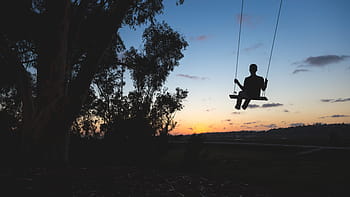
The guava tree always stood in seclusion. The lemon tree also grew beside it. The potential of the lemon tree was curbed by the sharpness of its thorns. Jubilant children did not care about thorns on the lemon tree and swung beside it on the guava tree where their swing was attached. The potential of children was one thing and that of a tree with respect to its thorn was another. Ah! The sharpening of the senses and the sharpening of thorns, two things related in Nature, but created differently by Nature for two different subjects. Still, children cherished the playful act of swinging from a tree.
The tree that stood in seclusion was not at all alone because children visited it regularly. Had the children not cared to visit the tree, it would have remained alone. The thorny tree was also not lonely because it stood beside the guava tree and children visited the guava tree as their swing was attached to it. Every day they visited the guava tree after school. It was their place of recreation. They embraced the joy present in the air around the tree. The tree welcomed them with its spaciousness. The lemon tree was the only thing that occupied space and interfered with the space for children to play. The children were not able to climb or swing on it because of its thorns.
The children visited the guava tree every day after four in the afternoon. Manu was among those youngsters. He was a shy lad. He didn’t talk much in school. He occupied small space in the library while he visited, and sat with his books. Ideas and words went above his head. He sat with his vacant mind in the vastness of the library. His mind dwelt around the guava tree and its spaciousness which was very lively for him in comparison to the sedate, quiet library. He liked the vastness and liveliness around the guava tree.
Manu dwelt happily on the secluded space of the orchard where those trees stood. Sometimes, he used to swing alone at the fall of dusk. He found himself even in the aloofness. The tree caught and captured his scattered self and he always felt himself to be slightly amassed when he was near it. Loneliness did not occupy any space near those trees, especially near the guava tree. Manu did not feel vacant at all; such was the ambience and the feeling, the feeling of personal space, in the vastness of nature. His heart and mind were occupied in that playful act of swinging on a tree. The freshness of the air and invigorating atmosphere made him feel lively. He did not feel alone. He was present in the wholeness of the space. He kept swinging on the guava tree beside the lemon tree, without caring about thorns of the lemon tree.
Eventually, he was able to make few friends. His shyness gave way while he played. After all, life in the orchard was not bad at all. Even beside the thorny lemon tree, goodness prevailed. Yes, the guava tree always stood there in its seclusion like in the beginning of the story.
Sushant Thapa is a recent post-graduate in English Literature from Jawaharlal Nehru University, New Delhi, India. His short story “The Glass Slate” has been published in Kitaab.org from Singapore. His poems and essays have been published in Republica daily from Kathmandu. His short stories and poems have also been published by The Writers’ Club, New Jersey, United States. He revels in rock music, poetry, books and movies from his home in Biratnagar, Nepal.
Poetry by Sangita Swechcha, translated by Jayant Sharma
Dr Sangita Swechcha
Over the rim of the eyes
welled weary the tears,
asking the eyes—
“Should I trickle or not?”
The poor couple turn oculus in utter surprise,
respond in a staggering and gruelling shape—
“How do you yearn to roll down?”
The tears sob at the oddity of the question
and reply in a state of being offended and distressed—
“If you’re embarrassed to show up in open,
I shall glide my way inside.
If you are in solitude otherwise,
I shall spill out in a surge.”
How wise the tears are—full of empathy!
To save the eyes from being abashed
they are ready to repress their outburst.
And to loosen up the eyes
they are all set to gush out
from creeks across the cheeks.
The eyes, meanwhile, are silent;
their heart already hard as stone.
And so retort—
“I get fused easily
even after countless fragmentation
only to be never fragmented again.”
Thus is the difference—
between the eyes and the tears.
The eyes are fixed
But the tears get dismembered many times only to be shattered again.
Hence—
The tears that once dropped off inadvertently in despair
have started asking for permission nowadays
before making their way out.
And the eyes that were inept in giving consent before
have started giving permission these days.
Thus is this alchemy between the eyes and the tears—
The tears ask—
“Should I trickle or not?”
And the eyes respond—
“How do you yearn to roll down?”
Dr. Sangita Swechcha has been an ardent lover of literature from an early age. She has published a novel ‘Pakhalieko Siudo’ (Washed Vermillion) and co-authored a collection of short stories ‘Asahamati ka Pailaharu’ (Hoofmark of Discord) before the collection ‘Gulafsanga ko Prem’ (The Rose: An Unusual Love Story). Her second novel is under publication and her short story collection is being translated into English. She has many short stories and poems published in various journals and online portals including Radio Nepal, Nepal Television, Global Literature in Library Initiative (GLLI) – USA based site and Your2Read, a London based venture dedicated to short story genre. Email: sangyshrestha@hotmail.com , Website: www.sangitaswechcha.com.
Jayant Sharma is the publisher and editor of an English literary magazine Sathi which promotes Nepali literature through English translations and the founder of translateNEPAL which is an initiative to represent Nepal to the global literary scene. As a writer and translator, Jayant also contributes to major national dailies and South-Asian journals regarding arts, literature, and culture.




 Borderless