Categories
Interview

“Words became my dwelling place”

A conversation with Neeman Sobhan
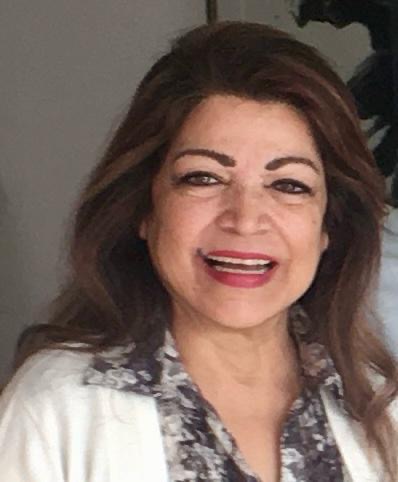
Neeman Sobhan: A Global Nomad?

Neeman Sobhan, born in the West Pakistan of Pre-1971, continues a citizen of both her cultural home, Bangladesh, and her adopted home, Italy. Her journey took her to US for five years but the majority of times she has lived in Italy – from 1978. What does that make her?

She writes of her compatriots by culture – Bangladeshis — but living often in foreign locales. Her non-fiction, An Abiding City, gives us glimpses of Rome. These musings were written for Daily Star and then made into a book in 2002. Her short stories talk often of the conflicting cultures and the commonality of human emotions that stretch across borders. And yet after living in Rome for 47 years – the longest she has lived in any country – her dilemma as she tells us in this interview – is that she doesn’t know where she belongs, though her heart tugs her towards Bangladesh as she grows older. In this candid interview, Neeman Sobhan shares her life, her dreams and her aspirations.

Where were you born? And where did you grow up? 

I was born in Pakistan, rather in the undivided Pakistan of pre-1971: the strange land we had inherited from our grandparents’ and parents’ generation when British colonial India was partitioned in 1947 down the Radcliffe line, creating an entity of two wings positioned a thousand miles apart on either side of India! The eastern wing, or East Pakistan was formerly East Bengal, and my cultural roots are in this part of the region because I come from a Bengali Muslim family. But I was born not there but in West Pakistan, which is culturally and linguistically distinct from Bengal, comprising the regions of Western Punjab, Sindh, Baluchistan and the NWFP (North-West Frontier Provinces, bordering Afghanistan), where the official language is Urdu.

So, my birthplace was the cantonment town of Bannu in the NWFP, (now KPK or Khyber Pakhtunkhwa).

Perhaps my life as the eternal migrant, living outside expected geographical boundaries started right there, at birth. 

My father’s government job meant being posted in both wings of Pakistan. So, I grew up all over West Pakistan, and in Dhaka, whenever he was posted back to East Pakistan. Much of my childhood and girlhood were spent in Karachi (Sindh), Multan and Kharian (Punjab) and Quetta (Balochistan).

How many years did you spend in Pakistan?

The total number of years I spent in undivided Pakistan (West Pakistan, now Pakistan, and East Pakistan, now Bangladesh) is about two decades, or one year short of twenty years. From my birth in 1954, my growing years, till I left the newly independent Bangladesh in 1973 when I got married and came to the US at the age of nineteen.

What are your memories about your childhood in West Pakistan? I have read your piece where you mention your interactions with fruit pickers in Quetta. Tell us some more about your childhood back there. 

I have wonderful memories of growing up in West Pakistan, in Karachi, Multan and Kharian of the late 50’s and early 60’s (despite the era of Martial Law under Field Marshall Ayub Khan, and later his military-controlled civilian government). However, the political environment is invisible and irrelevant to a child’s memories that center around family, school and playmates, till he reaches the teen years and becomes aware of the world of adults. Since, my father’ job entailed us going back and forth between West and East Pakistan, by the time we arrived in Quetta in late 1967, it ended up being my father’s last posting, because by then Ayub Khan’s regime was tottering under protests in both wings of Pakistan; and by the time (I should say in the nick of time) we left for Dhaka, it was already the turbulent year of 1970, which turned Pakistan upside down with General Yahya Khan becoming the new Marshall Law administrator. When we returned to Dhaka, it was the beginning of the end for Pakistan, with preparations for the first democratic general elections, and the blood soaked nine months war of independence for Bangladesh about to be staged.

But as a child, growing up in a Pakistan that was till then my own country, what remains in my treasure trove of memories are only the joys of everyday life, and the friendships (with those whom I never saw again, except one school friend from Quetta with whom I reunited in our middle age in Toronto, Canada!)

Also precious are the road trips with my five siblings and our adventurous mother, as we always accompanied our father on his official tours, across the length and breadth of West Pakistan.

But if I start to recount all my precious memories, I will need to write a thick memoir. And that is exactly what I have been doing over the years: jotting down my recollections of my past in Pakistan, for my book, a novel that is a cross between fact and fiction. The happy parts are all true, but the sad ones relating to the war that my generation underwent in 1971 as teenagers is best dealt with from the distance of fiction.

What I can offer is a kaleidoscopic view of some random memories: the red colonial brick residence of my family in the 60’s in Multan, one of the hottest cities of Punjab, known for its aandhi — dust storms — that would suddenly blow into the courtyard of the inner garden in the middle of the night as my sister and I slept on charpoys laid out in the cool lawn under a starlit sky, and being bundled up in our parents’ arms and rushed indoors; tasting the sweetest plums left to chill in bowls of ice; being cycled to school by the turbaned chowkidar weaving us through colourful bazars to the Parsi run ‘Madam Chahla’s Kindergarten School’ or on horse drawn tanga (carriages); learning to write Urdu calligraphic letters on the wooden takhta (board) with weed Qalam(pens) and a freshly mixed ink from dawaat (ink pots); and to balance this, my mother helping us to write letters in Bengali to grandparents back in East Pakistan on sky-blue letter pads, our tongues lolling as pencils tried to control the Brahmic alphabet-spiders from escaping the page.

In Karachi, returning home on foot from school with friends under a darkening sky that turned out to be swarms of locusts. Learning later that these grain eating insects were harmful only to crops not humans (and Sindhis actually eat them like fried chicken wings) does not take away the thrill of our adventure filled with exaggerated, bloodcurdling shrieks to vie with the screen victims of Hitchcock’s The Birds, viewed later as adults in some US campus. Picnics and camel rides on the seabeaches of Clifton, Sandspit, or Paradise Point. Near our home, standing along Drigh Road (the colonial name later changed to Shahrah-e-Faisal after King Faisal of Arabia, I later heard) waving at the motorcade of Queen Elizabeth II passing by with Ayub Khan beside her in a convertible with its roof down. That was in the 60’s. Later in 1970, embarking with my family on the elegant HMV Shams passenger ship at Karachi port for our memorable week long journey back to Dhaka across the Arabian Sea and the Indian Ocean, with a port of call at Colombo in what was still Ceylon, to disembark at Chittagong port, not knowing then that we were waving goodbye not just to the Karachi of our childhood but a part of our own country that would soon become the ‘enemy’ through its marauding army.

But I reset my memories and bring back the beauty and innocence of childhood with images of my family’s first sight of snowfall in Quetta, the garden silently filling with pristine layers of snowflakes piling into a cloudy kingdom under the freshly tufted pine trees, as we sipped hot sweet ‘kahwa’ tea, and cracked piles of the best chilgoza pine-nuts and dried fruits from Kabul. And since Quetta was our last home in Pakistan, I leave my reminiscences here.
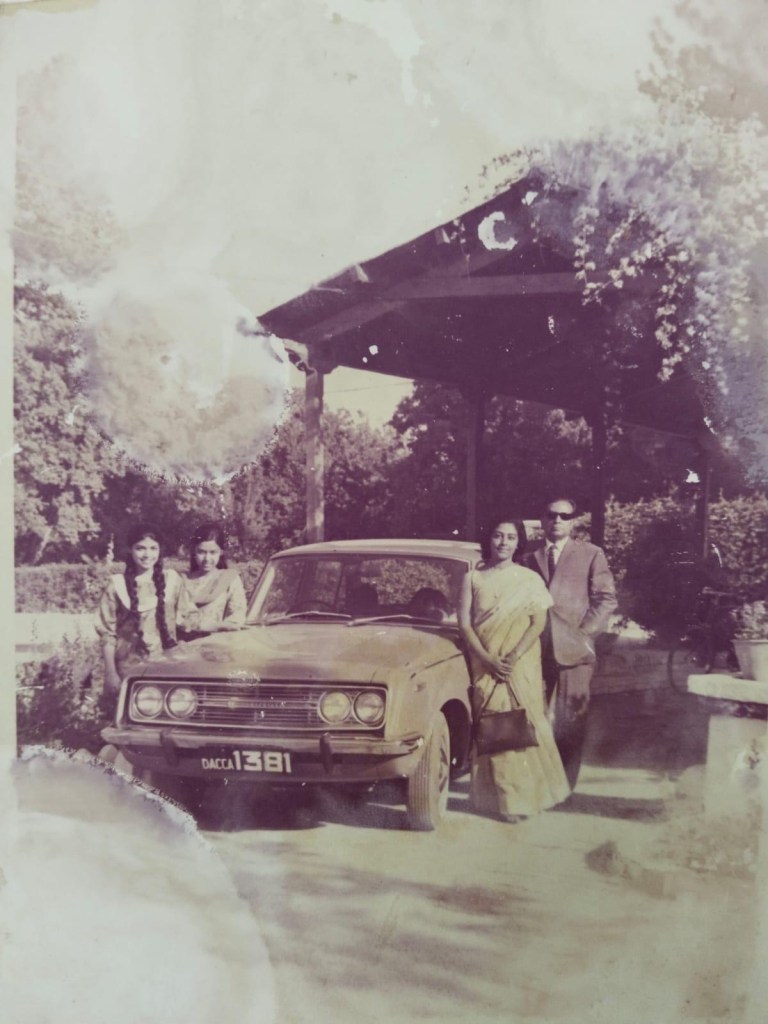
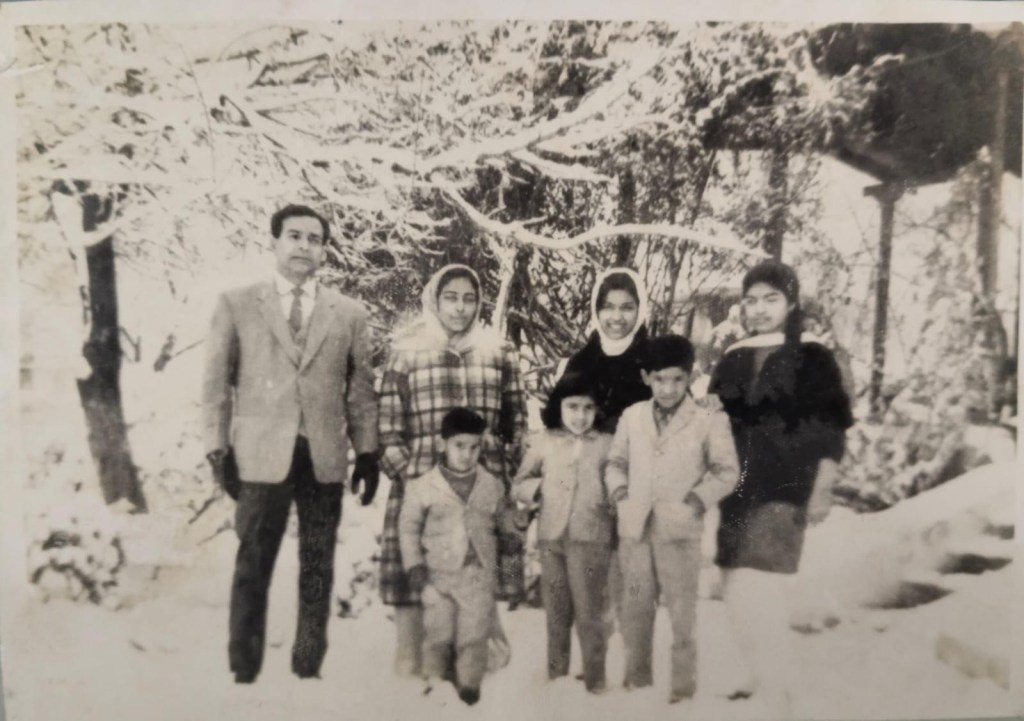
There are so many ways to enter the past. Photographs in albums discolor after a time, but words keep our lived lives protected and intact to be accessible to the next generation. I hope my novel-memoir will provide this.

How many countries have you lived in? Where do you feel you belong — Bangladesh, Pakistan, US or Italy — since you have lived in all four countries? Do you see yourself a migrant to one country or do you see yourself torn between many? 

I have indeed lived in four countries, for varying lengths of time. In the sense of belonging, each country and stage of my life has left its unique impact. But I have still not figured out where I belong.

Although I lived in Pakistan and Bangladesh from birth till I was nineteen, these were the formative years of my life, and I feel they have coloured who I am fundamentally. The culture and languages of the subcontinent is fundamental to me as a human being. Also, having shared my parent’s experience of being almost foreigners and expats in their own country, trying to speak Urdu to create a Bengali lifestyle at home in a culturally diverse world of Punjabis, Sindhis, Baluchis or Pathans, I know it made them (and us as a family), different from our compatriots in East Pakistan who never left their region and had only superficial understanding of the West Pakistanis. My introduction to a migrant’s life and its homesickness started there, observing my parents’ life.

When I moved to the US after my marriage in 1973, it was to follow my husband Iqbal, to the Washington-Maryland area, where he had moved earlier as a PhD student after giving up, in 1971, his position in the Pakistani central government where he was an officer of the CSP (Civil Service of Pakistan) cadre. These were the days of being newly married and setting up our first home, albeit in a tiny student’s apartment, because more than as a home maker, I spent 5 years attending the University of Maryland as an undergraduate and then a graduate student. We thought our future might be here in the US, he working as an economist for a UN agency, and I teaching at a university. A classic version of the upwardly mobile American immigrant life.

But before we settled down, we decided to pursue a short adventure, and Iqbal and I came to Italy in 1978, from the US, on a short-term assignment with FAO, a Rome based agency of the UN. The mutual decision was to move here, temporarily! We would keep our options open for returning to the US if we did not like our life in Italy.

Well, that never happened! And given the fact that since then, we have spent the last 47 years in Italy, the Italian phase of my life is the longest period I have ever spent in any country in the last 71 years!

Meanwhile, we slowly disengaged ourselves from the US and it was clear that if we had to choose between two countries as our final homes, it would be between Bangladesh, our original home country, and Italy our adopted home.

Still, living away from ones’ original land, whether as an expatriate or an immigrant, is never easy. Immigrants from the subcontinent to anglophone countries like the US, UK, Canada, Australia etc, do not face the hurdles that migrants to Italy do in mastering the Italian language. I am still constantly trying to improve my language skills. Plus, there is the daily struggle to create a new identity of cultural fusion within the dominant and pervasive culture of a foreign land

So, in all these years, though I love Italy and my Roman home, I do not feel completely Italian even if my lifestyle incorporates much of the Italian way of life. For example, after a week of eating too much pasta and Mediterranean cuisine my husband and I yearn for and indulge in our Bengali comfort food. Although I enjoy the freedom and casual elegance of Italian clothes, I look forward to occasions to drape a sari, feeling my personality transform subtly, softly.

Yet, I cannot conceive of choosing one lifestyle over the other. The liberty to veer between different ways to live one’s life is the gift of living between two or more worlds.

The only incurable malaise, though, is the chronic nostalgia, especially during festivals and special occasions. For example, when Eid falls on a weekday, and one has to organise the celebration a few days later over a weekend, it takes away the spontaneous joy of connecting with one’s community, forcing one instead to spend the actual day as if it were an ordinary one. I miss breaking my fasts during the month of Ramadan with friends and family over the elaborate Iftar parties with special food back in Dhaka or celebrating Pohela Boishakh (Bengali new year) or Ekushey February (21st February, mother language day) in an Italian world that carries on with its everyday business, unaware of your homesickness for your Bengali world. Over the years, when my sons were in school, I made extra efforts for. But you know you cannot celebrate in authentic ways.

Of course, these are minor matters. And I am aware that by virtue of the fact that I have dual nationality (I’m both an Italian citizen, and a Bangladeshi), I cannot consider myself a true and brave immigrant — someone who leaves his familiar world and migrates  to another land because he has no other options nor the means to return; rather, I feel lucky to be an ex-patriate and a circumstantial migrant — someone who chooses to make a foreign country her home, with the luxury of being able to revisit her original land, and, perhaps, move back one day.

Meanwhile, I feel equally at home in Italy and in Bangladesh because we are lucky to be able to make annual trips to Dhaka in winter.

Whether I am considered by others to be an Italo-Bangladeshi or a Bangladeshi-Italian, I consider myself to be a writer without borders, a global citizen. I feel, I belong everywhere. My home is wherever I am, wherever my husband and my family are. My roots are not in any soil, but in relationships.

I often quote a line by the Mexican poet Octavio Paz. “Words became my dwelling place.” It resonates with me because for me often, it is neither a tract of land, nor even people, but language, literature and my own writings that are my true sanctuary, my homeland. I feel blessed to have the gift of expressing myself in words and shaping my world through language. My home is etched on the written or printed page. My books are my country. It’s a safe world without borders and limits.

Maybe it’s the conceit of a writer and a migrant, nomadic soul, but I think our inner worlds are more substantial than our external ones.                

When I read your writing, I find a world where differences do not seem to exist among people in terms of nationality, economic classes, race or religion. Is it not far removed from the realities of the world we see around us? How do you reconcile the different worlds? 

I believe and trust in our common humanity, not the narrowness of nationality, race or religion. Nationality particularly is limiting, dependent on land, and boundaries that can shift due to physical or political exigencies. Nationality by conferring membership also necessarily excludes on the basis of manmade criteria, while humanity is boundless, all encompassing, and inclusive, based on shared natural, biological, and spiritual traits. 

In my case, I consider the whole world my family. I say this not just as idealistic hyperbole and wishful thinking, but from the fact that I have a multi-cultural, multi-racial family. Only my husband and I are a homogenous unit being Bengali Muslims by origin, but both my sons are married outside our culture, race and religion. One of my daughters in law is Chinese, the other has an English-French father and a Thai mother. So, through my grandchildren, who are a veritable cocktail, yet my flesh and blood, I am related to so many races. How can I bear malice to any people on the globe? The whole world is my tribe, my backyard, where we share festivals and food and rituals and languages. We celebrate unity in diversity.                 

Kindness and caring for others are values I hold dear in myself and others. I believe in sharing my good fortune with others, and in peaceful co-existence with my neighbours, wherever I live. I believe in living with responsibility as a good citizen wherever I find myself. And so far, the world that I see around me, perhaps narrow, is peopled with those who invariably reflect my own sense of fraternity. Maybe I am foolish, but I believe in the essential goodness of humanity, and I have rarely been disappointed. Of course, there are exceptions and negative encounters, but then something else happens that restores ones faith.        

Love is more powerful than hate and generates goodness and cooperation. Change can happen at the micro level if more people spread awareness where needed. Peace can snowball and conquer violence. The human will is a potent spiritual tool. As is the power of the word, of language.       

Literature is about connections, communications, bridges. It can bring the experiences and worlds of others from the margins of silence and unspoken, unexpressed thoughts and emotions into the centre of our attention. It brings people who live in the periphery within our compassionate gaze. Language is one of the most effective tools for healing and building trust. Responsible writers can persuasively break down barriers and make the world a safe home and haven for everyone, every creature.

You have a book of essays on Rome, short stories and poems set in Rome. Yet you call yourself a Bangladeshi writer. You have in my perception written more of Rome than Bangladesh. So which place moves your muse? 

Any place on God’s beautiful earth can move my muse. Still, the perception is not completely accurate that I have written more of Rome than Bangladesh. It is true that many of my columns, short fiction or poems are set in Rome, but they are not necessarily just about Italy and Italians. In fact, my columns and poems were written from the perspective of a global citizen, who celebrates whichever place she finds herself in.

Poetry, in any case, is never just about any place or thing, but a point of departure. It always goes beyond the visual and the immediate and transcends the particular to the philosophical. The sight of a Roman ruin may jumpstart the poem, but what lifts it into the stratosphere of meaningful poetry is the universal, the human. For example, even when my poem speaks of a certain balcony in Verona, the protagonist is not a girl called Juliet but the innocence of first love, in any city, in any era.

My book of short stories, even when located in Rome, actually concern characters that are mostly Bangladeshi. In fact, it is my fiction that makes me a Bangladeshi writer, because my stories are ways for me to preserve my memories of the Bengali world of my past and an ephemeral present. I write to root myself. I often feel that I should write more about the new Italians, the Bangladeshi immigrants generation, rather than the expats of my generation, but my writing stubbornly follows its own compass.

Regarding my book of essays, my original columns for the Daily Star were written about many other cities I travelled to, including Dhaka and places in Bangladesh, and encounters with people in various countries not just Italy. Constrained to select columns from two decades of weekly writing, for a slim volume to be published, I narrowed the field of topics to Italy and Rome. But I had many essays and travel pieces concerning China, Russia, Vietnam, Egypt, Brazil, Spain, Netherlands and many other European cities and Asian capitals. In the end, a handful of columns about Italy became my book An Abiding City: Ruminations from Rome.
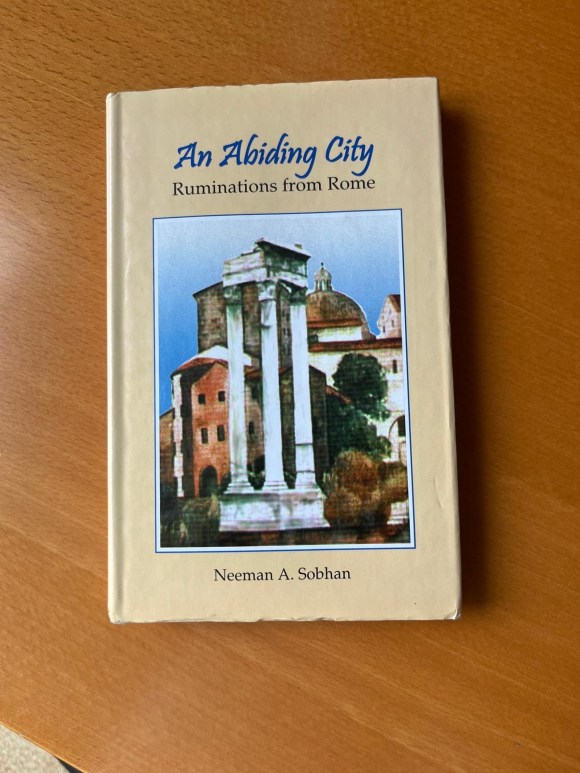
However, in the preface I said: “I must remind that the scope of the book, as suggested in the title, is ‘Ruminations FROM Rome’ not ‘Ruminations ON Rome’ with a tacit emphasis on ‘from’ because the writing relates to matters not just concerning ROME but also encompasses reflections of a more general kind. This is a collection of writings from a columnist who, within her journey through the Eternal City, also attempts to share with her readers her passage through life. I wish my fellow travellers a smooth sojourn into my abiding city, the one WITHIN and WITHOUT.”

I know that had I not lived in Rome but, say, Timbuctoo, I would find something to inspire me to write about. Of course, I am privileged to have lived in Rome and Italy, but nature is beautiful everywhere, in its own way, and there are other civilisations with rich cultures, histories, arts, cuisines, poetry and philosophy that can inspire the sensitive observer and writer.

My elder son lives in Jakarta, my younger son in Bangkok and in all the years of visiting them, I am blown away by the culture and beauty of the Indonesian and Thai worlds, and I have a notebook full of unwritten essays. And there is still so much of the world I have not seen, yet every part of this wondrous earth including my backyard is a chapter in the book of human knowledge. So, had I never left Bangladesh I would still have written. Perhaps “Doodlings from Dhaka!”

What inspires you to write?        

Many things. A face at a window, a whiff of a familiar perfume, an overheard conversation, a memory, a sublime view…. anything can set the creative machine running. Plus, if I’m angry or sad or joyous or confused, I write. It could become a poem, fiction, or a column.

The writer in me is my inner twin that defines my essential self. I am a contented wife of 52 years of marriage, a mother of two sons, and a grandmother of four grandsons (aged 8-7-6-5). These roles give me joy and help me grow as a human being. But my writer-self continues on its solitary journey of self-actualisation. 

Yet, I write not just for myself, I write to communicate with others. I write to transmit the nuances of my Bengali culture and its complex history to my non-Bengali and foreign readers and students, but more importantly to my own sons, born and brought up in Italy, and my grandchildren, whose mothers (my daughters-in-law) are from multi-cultural backgrounds, one a Chinese, and the other a combination of English, French and Thai. I write also for the younger generation of Bengalis, born or raised abroad, who understand and even speak Bangla, but often cannot read the language, yet are curious about their parents’ world and their own cultural heritage.

What started you on your writerly journey? When did you start writing? 

I have always written. As an adolescent, I wrote mostly poetry, and also kept a journal, which I enjoyed reading later. It created out of my own life a story, in which I was a character enacting my every day. It clarified my life for me. Interpreted my emotions, explained my fears and joys, reinforced my hopes and desires. Writing about myself helped me grow. 

My columnist avatar is connected to this kind of self-referral writing, but in real life it emerged by accident when I was invited to write by the editor of the Daily Star. The act of producing a weekly column was a learning experience, teaching me creative discipline and the ability to marshal my life experiences for an audience. I learnt to sift the relevant from the irrelevant and to edit reality. What better training for fiction writing? For almost two decades my experience as a columnist was invaluable to my writer’s identity.

Soon I concentrated on fiction, especially short stories that were published in various anthologies edited by others in Bangladesh, Pakistan and India. I now realised that while column writing was about my life in the present tense and about the daily world around me, my fiction could finally involve the past. The result was my collection of short stories: Piazza Bangladesh.

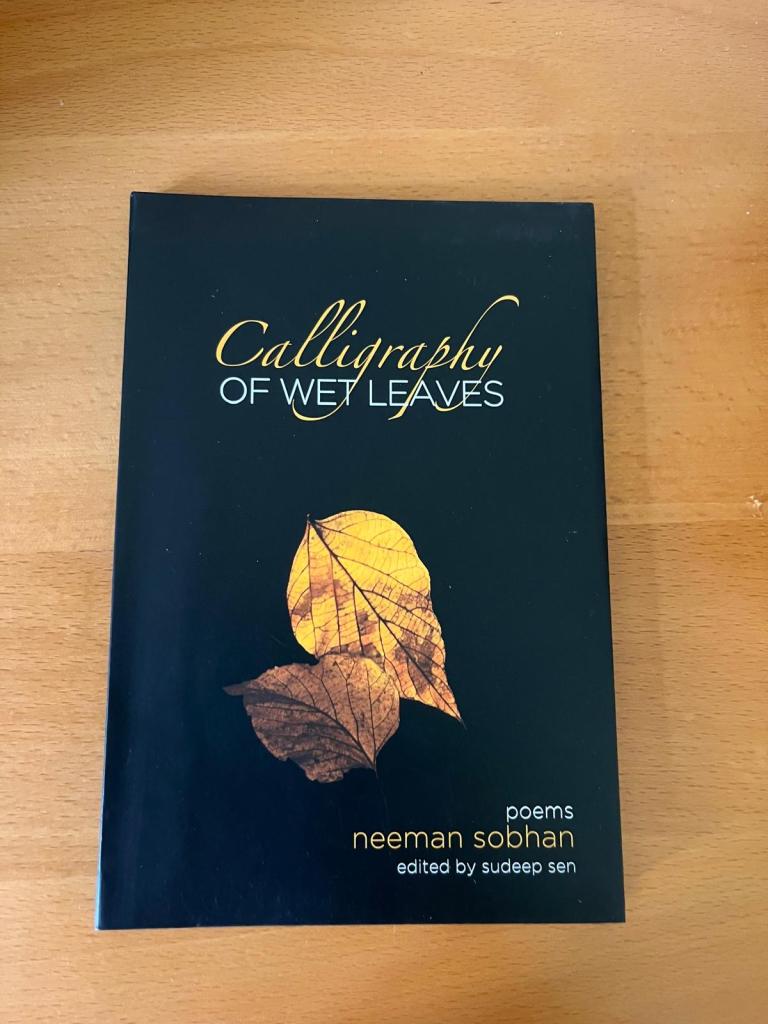
Ironically, it was my book of poems, Calligraphy of Wet Leaves that was the last to be published.

Your short stories were recently translated to Italian. Have you found acceptance in Rome as a writer? Or do you have a stronger reader base in Bangladesh? Please elaborate. 

Without a doubt, as an anglophone writer, my reader base is better not just in Bangladesh, but wherever there is an English readership. However, books today are sold not in bookshops but online, so these days readers live not in particular cities or countries but in cyberspace.      

But living in Italy as a writer of English has not been easy. The problem in Italy is that English is still a foreign and not a global language, so very few people read books in the original English. Every important or best-selling writer is read in translation. This is unlike the Indian subcontinent where most educated people, apart from reading in their mother tongues, read books, magazines and newspapers in English as well.   

This is why I was thrilled to finally have at least one of my books translated into Italian, and published by the well-known publishing house, Armando Curcio, who have made my book available at all the important Italian bookstore chains, like Mondadori or Feltrinelli. Also, through reviews and social media promotion by agents and friends, and exposure through book events and literary festivals in Rome, including a well-known book festival in Lucca, it has gained a fair readership.

That’s all I wish for all my books, for all my writing, that they be read. For me, writing or being published is not about earning money or fame but about reaching readers. In that sense, I am so happy that now finally, most of my Italian friends and colleagues understand this important aspect of my life.

 You were teaching too in Rome? Tell us a bit about your experience. Have you taught elsewhere. Are the cultures similar or different in the academic circles of different countries? 

I taught Bengali and English for almost a decade at the Institute of Oriental Studies of the University of Rome, La Sapienza., till I retired, and it was an enriching experience.

I studied for a year at the University of Dhaka before I got married and came to the US in 1973, where I continued my studies at the University of Maryland, earning my B.A in Comparative Literature and M.A in English Literature. I mention this because these experiences gave me the basis to compare the academic cultures in the Bangladeshi, American and Italian contexts.

I discovered more in common between the Bangladeshi and Italian academic worlds, especially regarding the deferential attitudes of students towards their teachers. In Italy, a teacher is always an object of reverence. In contrast, I recall my shock at the casual relationships in the American context, with students smoking in front of their teachers, or stretching their leg over the desk, shoes facing the professor. Of course, there was positivity in the informality and camaraderie too, between student and teacher. But with our eastern upbringing we cannot disregard our traditional veneration of the Guru and Master by the pupil.

In Italy it was rewarding for me to have received respect as a ‘Professoressa’ while teaching, and even now whenever I meet my old students. However, some of the negative aspects of the academic world in Italy linked to the political policies that affect the way old institutions are run, cause students to take longer to graduate than at universities in the UK or US for example.

Are you planning more books? What’s on the card next? 

I have a novel in the pipeline, a fusion of fiction and memoir, that has been in gestation for more than a decade. Provisionally titled ‘The Hidden Names of Things’, it’s about Bangladesh, an interweaving of personal and national history. It’s almost done, and I hope to be looking for a publisher for it soon. Perhaps, it has taken so long to write it because over the years while the human story did not change much, the political history of the country, which is still evolving through political crises kept shifting its goal posts, impacting the plot.

Most of my writings illustrate, consciously or inadvertently, my belief that as against political history our shared humanity provides the most satisfying themes for literature.

To share my stories with a readership beyond the anglophone one, my collection of stories ‘Piazza Bangladesh’ was translated into Italian and published recently in Italy, as ‘Cuore a Metà’ (A Heart in Half) which underlines the dilemma of modern-day global citizens pulled between two worlds, or multiple homes.

Meanwhile, my short stories, poems and columns will be translated into Bengali to be published in Dhaka, hopefully, in time for the famous book fair in February, Ekushey Boimela. Then my journey as an itinerant Italian-Bangladeshi writer will come full circle and return home.

(This online interview is by Mitali Chakravarty)

Click here to read an excerpt from An Abiding City: Ruminations from Rome

PLEASE NOTE: ARTICLES CAN ONLY BE REPRODUCED IN OTHER SITES WITH DUE ACKNOWLEDGEMENT TO BORDERLESS JOURNAL

Click here to access the Borderless anthology, Monalisa No Longer Smiles

Click here to access Monalisa No Longer Smiles on Kindle Amazon International

Categories
Stories

The Untold Story

By Neeman Sobhan

She is wondering how to enter the story, if she were to write it. The story she has been circumambulating in the last few days, ever since the encounter at the Bar in her piazza.

Was it possible to enter any story directly, as if through a front door? It occurs to Naureen that there might be as many doors and windows to a tale, as there actually were in any house. Her own, for example, here in a suburb of Rome, as also in all those houses she had inhabited in her childhood and growing years, all over undivided Pakistan before 1971.

In West Pakistan, there was the red brick colonial house in Multan of the late fifties, the modern bungalow in Nazimabad colony in Karachi of the early sixties, or in East Pakistan, the pink and grey two-storey house next to a boys’ school in Dhaka Cantonment, when the city was still written as Dacca, and the school was owned by the powerful Adamjees of West Pakistan and not a college yet, and the momentous seventies had not started. East Pakistan was not Bangladesh yet, and still yoked to its bullying Western half.

Naureen brushes off her thoughts about the past and returns to the story nagging her, which was not about houses. But wasn’t every story like a house? The house of an amnesiac who enters it as if it were an unfamiliar space, till certain things made him realise that this might be a place he knew well: a piece of furniture, a smell, a view, adding up to a sensation of déjà vu.

Or it could be an oddly familiar face. Or a voice, husky and wounded, whispering, even laughing, hiding its unspeakable pain.

*

A week ago, Naureen adjusted her mask and entered the Bar in the piazza near her house.

Un caffè Americano, a tavolo.” She ordered her coffee at the counter and went outside to sit under the striped awning. The August heat, like clockwork, had turned after the middle of the month and it was cool in the shade. She opened her laptop but her eyes scanned the streets of her neighbourhood. Things were almost normal now, more people were out and about, wearing masks. Since the lockdown in Rome in March, her university had shut physically, but till June, Naureen had taught on-line her classes of English and Bengali to her Italian students. Now, finally, she was free.

A writer friend in Dhaka, editing an anthology dedicated to the fiftieth anniversary of Bangladesh’s independence had requested her to translate into English a Bengali story submission, and Naureen had been happy to return to the world of fiction.

The story, based on facts, the editor friend mentioned in his email, concerned the experience during the war of liberation in 1971 of a teenage girl abducted from a high school in a district town by collaborators and brought to a military camp. A rape camp. A harrowing, yet ultimately redeeming story. How could such a cruel fate end in redemption? Naureen started to read.

She had barely finished reading the first page of the story when she heard a voice across the street from the Bar.

Apu[1]!” Naureen turned around. On the pavement, under the Nespole fruit tree stood Sadia with a pram. She looked plump since the birth of her baby. The last time she had seen her young compatriot was the year before, when Sadia had regretfully announced that due to her pregnancy, she could not continue the lessons of Italian and English that she loved taking with Naureen. Those two hours once a week were something even Nareen had enjoyed. Then came Covid. So, they had not seen each other for a long time, even though they lived in the same zone, different neighbourhoods.

Standing beside Sadia was another Bengali woman, in shalwar-kameez. Despite the mask, and her head loosely covered in a scarf, Naureen could see she was an older person, Naureen’s age, or a bit more. Possibly in her late sixties. Sadia waved with genuine delight at Naureen and whispered to her companion, who took off her mask and nodded in Naureen’s direction.

The woman looked strangely familiar. Where had she seen her? Naureen knit her brows, before she produced a polite smile. Meanwhile, Sadia left the pram with the other lady and crossed over. She walked up to Naureen’s table and beamed.

Apu, how have you been? You never came to see my baby.”

“I know, Sadia. But with this Corona virus situation…” Naureen rose saying, “But let me see the baby now.”

“Oh! Stay where you are, Apu. Let them walk over. I’ll introduce you to my mother.” She signalled and the mother ambled over pushing the pram. Naureen cooed appropriately and forced a fifty euro note into Sadia’s reluctant hands.

“It’s for the baby,” Naureen said.

“Your blessings would have been enough, Apu,” Sadia protested.

The lady kept a smiling but dignified distance. They exchanged formalities, and the mother said: “My daughter has mentioned you often. How special you are, your home…”

Naureen kept looking at her, not listening to her words but absorbing that husky, bruised voice. “When did you come from Dhaka? Didn’t you have problems with the visa, and with quarantine?” Naureen asked.

“Oh! I don’t live in Bangladesh. I live in London. I have a small tailoring shop there in a Bengali neighbourhood. Brick Lane. I came to Rome early this year, before the corona problem started. I am now stuck here. But happily, of course, with the baby….”

Naureen was only half listening.

Somewhere, through a cloudy window she peeked into another era. Dacca, 1972, the year after Bangladesh’s tumultuous birth. Naureen and her young aunt Fahmida, a doctor and social activist, had gone to the Dhanmandi Rehabilitation Centre to interview some of the rescued rape victims….

The baby was getting cranky. Sadia was saying “Apu, you have to come over to my flat and have tea with us one day.”

“I will,” Naureen said, then turned slowly to the mother. “Is your name by any chance, Shopna?”

Sadia laughed, “No, her name is Shamima Akhtar Begum, Shumi.”

The lady turned placid eyes to Naureen, a glint of recognition surfacing. They locked eyes for a second. She said, “Sadia, you can’t just ask your teacher to drop by. Invite her for a meal.”

Sadia joined her effusively. Naureen said, “You should bring your mother to my place, too. But I will come over for tea very soon.”

After they left, Naureen sat over her coffee, her laptop, and the world of stories waiting to be uncovered. She was thinking, after fifty years, everything becomes fiction: our past, our lives, our dreams, our struggles and pains, our joys and triumphs. It all transforms into story.

Story. History. His-story. Her-story. Everyone’s story. All we could do was to preserve it by narrating and transmitting it to each other.

*

Why the hell was she talking so much? The bitch. Spawn of bloody Hindus, or sister of some ‘Mukti’ for sure. Traitors! Bastards all

“Shut the hell up!” He didn’t want to hear her voice, especially her pleading, broken Urdu. Nor look at those limpid, fraught eyes. Already it was diluting his rage, his fire.

No. He had been told while being posted to Jessore, these Bengalis needed to be a taught a lesson. . .  His slap knocked her down, her head hitting the floor.

“Oof! Allah!” She cried out, and instead of terror she looked up at him with wild, angry eyes, as if she would jump up to his throat, kick and slap him back. Just the way his younger sister, Laali, would as a kid. Lalarukh, far away in Quetta.

Instinctively, he was on his knee. “Oh! God, I’m sorry.”

In a flash the expression in the girl’s eyes changed from anger back to fear. Her cracked lips trembled and so did her hand as it lifted to wipe a trickle of blood from her forehead.

But before he could pull her up, they froze on the floor listening to heavy footsteps coming up the corridor outside. The boots stopped at the door next to their room. The door handle rattled as voices jeered.

‘Oye yaar! Let us in. Why is the door locked?”

“How many do you have there? Come on, give us a share.” There were thuds, sounds of laughter interjected with the sharp notes of women’s screams and wails.

He pulled her up. She was shaking and clung to him. He held her for an instant then moved her away and said, “Listen, see that door at the back. It leads out. Just go.”

She looked at him blankly.

He repeated, “Go!”

“Go where?”

He shrugged, “Kaheen bhi. . . wherever. Just leave. Now.”

She turned her face away. “Yes, and have a whole battalion of grizzly animals descend on me. I’d rather be protected by someone decent like you.”

“I can’t protect you and I am not decent. In war, we are all barbarians.” He sat down on a chair, face in hand. She stood before him her shoulders sagging, her dupatta pooled at her feet. 

*

“And then? What happened?” Seventeen-year-old Naureen asked.

Shopna gazed unseeing outside the windows of the Dhanmondi Rehab Centre and let out a shuddering sigh.

Fahmida said. “It’s okay. Shopna, you don’t have to tell us more, if you don’t want to.”

“It’s not that.” The dark eyes were strained but tearless. Her voice was low and scratchy. “It’s just that this is not a ‘story’ but things that actually happened to me, so in my mind it’s all jumbled up. Some parts are erased, others sharp as a knife. What we saw and endured…no language has words to describe these. . .”  

Shopna started to sway from side to side. “We were a dozen women, all herded like cattle in that room…. One woman was fortunate and died after being assaulted repeatedly. Her body was hauled away like a sack of rice . . .” Her voice was thin and low as a keening.

Fahmida stroked Shopna’s head. “It’s okay, dear. We don’t want you to dig into anything you don’t want to. Unless it helps you.”

Naureen wiped her eyes and whispered to her aunt, “Khala, I just can’t process what she went through! Imagine, her husband brought her, a newlywed bride, to be safe with her parents in Dacca and went to join the guerrillas, and a neighbour betrayed her!”

Shopna raised stony eyes to them and muttered, “Yes. I will never forget that morning. It started as any morning. How was I to know what destiny had in store for me by day’s end?”

*

Yet the girl knew how lucky she was not to have been herded into the other crowded rooms where they took the rest of the girls brought in military trucks. She was deemed more educated and pretty, so reserved for officers. Thus, she was in a separate room. 

And she survived to narrate her story.

Early the next morning, it was still dark when the officer opened the back door and smuggled her out to the compound outside. She hid behind a drum while he went and got a jeep. He backed to where she was. She scrambled in and lay low at the back. There was only one sentry at the check post at that hour, who saluted and then they were out.

She stayed hidden till he stopped the jeep. It was near a road edged with paddy fields. This was the road going out of the cantonment. He asked her to sit up. She peeked out and saw in the distance two figures: old men, farmers, watching them from the field. Nearer to them, across the road and beside a ditch stood a little boy.

O Ma! Military!” She heard him say as he ran into the grove of thatched houses. She hid her face in her hands. He observed her reaction and understood. It would not be safe for either of them. He drove further off to a more isolated spot, took his jeep down the earth track and stopped under a tree. He let her out. She barely had time to utter her gratitude before he turned the jeep sharply around, said, “‘Forgive me.” and drove off.

*

Teenaged Naureen let out her breath. She felt she had aged since she entered the Rehab Centre that morning.

Fahmida whispered, “I wonder what happened to him.”

Shopna was far away, silent. And within the silence, each moved further into the untold story.

*

A month later the girl was in her uncle’s village home. It was a safe zone, far away from Jessore, near a Mukti Bahini training camp. Some freedom fighters including her brother and cousins had come to stash arms. She was in the kitchen boiling rice and dal for a quick khichuri for the men when she heard shouts. Then grunts, groans and sounds of jostling and kicking came from the courtyard. Her brother and his group of freedom fighters had captured a Pakistani soldier.

They dragged him to the inner courtyard and were beating him with the butt of a rifle. One of the men held up his head by his forelock. She glimpsed his terrorized, bewildered eyes in his bloodied face. In an instant, she ran outside leaving the pot simmering on the fire.

“Stop. Oh! Please stop.” She screamed and dashed between the attackers and the prone body. “Let him go.” She shouted, beating at the others.

“What?” Her brother motioned the others to stop.

“Don’t touch him. Please! He… saved my life. A month ago, in Jessore. . . before I came here.” She sank to her knees and started to weep. The soldier’s left eye was puffed, a side of his face bloated and bruised. He looked at her blankly.

The beating had stopped. “What the hell do you mean?” her brother shouted.

The girl wiped her tears and said, “Bhaiyya[2]. You have not been in touch with our mother, and when I came here, I only told you that I was with my friend Mubina at her aunt’s house outside Jessore and had come here directly to be safe. That’s true, and I told Uncle to tell Amma that also. But there was one day and night, earlier in Jessore town, when Amma was desperately searching for me since I did not return from school.” Her lips trembled. “Bhaiyya! I was abducted and taken to a military camp by someone. . .”

Her brother yelled, “Which haramjada bastard did this…? I’ll rip out his. . .”

“Bhaiyya! Listen. Nothing happened to me. It was the new chowkidar of the school. He said that Amma was seriously ill and had asked me to come home quickly. He whisked me away in a three-wheeler. With his beard and prayer cap, I trusted him Bhaiyya!” Instead of tears, her eyes are aflame with loathing.

She continued steadily, “Luckily, I was spared, because this soldier saved my honour. He helped me escape. I recognised him.” The brother, still breathing heavily kept his rifle pointed at the soldier but told the others they needed to discuss. The others turned away, all shouting and gesticulating, and motioned the brother to follow. “Lies!” One of them spat on the soldier’s boots before he left. They stood not too far away, keeping an eye on the soldier. When they came back, they told the girl that they had decided to tie his hands and feet, blindfold him and set him adrift on a boat.

“He will die,” she cried.

“Oh! Don’t you worry. Every village, every riverbank is crawling with collaborators. Some bloody razakar[3] will find him and help him get back to his camp. It’s only important that we obliterate our tracks.”               

While the freedom fighters discussed the proceedings among themselves, the Pakistani soldier turned to whisper to the girl in Urdu. ‘I don’t know why you saved my life. I can never repay you for your humanity.”

She put a warning finger to her lips and muttered. “This is what I owe someone.”

He looked at her baffled. “You said I saved your life. I don’t understand. But God bless you, my sister.”

The men came back with a bundle of rope and a thin, chequered gamchha[4]. Before they dragged him away, he turned to the girl and said, “Khuda hafez[5].”

“You too. God be with you. . . and with him,” she whispered.

*

Naureen opened the windows of her study room wide to get some air to dispel the August heat and sat down at her desk computer to look at her translation so far. The rawness, the immediacy in the Bengali narrative was not coming through in English. It was sounding trite. The fault was hers. She could not improve it, because another story was fidgeting within her. She wished she could write that: Shopna’s untold story that Naureen could not even begin to imagine.

Still, she was wondering how she could enter that tale, if she were to write the story. Not through doors or windows, but possibly by burrowing through like animals, tunnelling underground, and re-imagining the trench of captivity. The grave-like penumbra, the women not knowing if it was night or day, summer or winter. A dozen half-naked ravaged females with unseeing eyes lying like corpses, wishing they were properly dead and buried, and not awaiting the shame of light, of discovery, the world outside.

Naureen got up. She needed to talk to Sadia’s mother. Not to Shamima Akhter Begum, Shumi, but to Shopna.

*       

Naureen calls Sadia for directions. Her flat is near the Viale dei Caduti per la Resistenza — “The Street of Those Who Fell during the Resistance.” — the Italian struggle against the enemies during the Second World War. Naureen finds these long street names both musical and moving. How painful must have been the path of those who fell during any struggle, whether men or women. But in Italy, the “Fallen” had been elevated and preserved in public memory, and they had shady avenues dedicated to them, lined with pine trees and flowering oleander bushes.

In 1971, the struggle for freedom was fought not just by men; countless women had made sacrifices. Remembering and honouring them was of fundamental importance. Naureen feels excited that today, this peaceful street named for the spirit of resistance was leading her to Shopna. For her Italian students of Bengali, she could translate that name as “she who dreams.” But how would she tell the story of dreams mutating into nightmares?

*

Sadia’s flat is on the third floor of a well-maintained, middle-class apartment block between a supermercato[6] and a shady children’s park. 

Naureen is welcomed by Sadia and ushered directly into the main bedroom.

Apu, the room at the front, we have rented to two Bengali bachelors who work in a restaurant nearby. We hardly see them.”

The bedroom Naureen enters is well lit and airy. Next to the neatly made-up bed is a two-seater sofa facing a TV on a laminated bureau. Once Naureen is settled on the sofa, Sadia goes to the kitchen to make tea. Naureen watches Sadia’s mother put the baby in her cot in another room.

“I keep the baby in my room,” she says coming back to sit on the bed.

Without preliminaries, Naureen says, “So, Shopna, tell me your story since we last met.”

Shopna’s head is uncovered today. She takes time to knot her loose hair into a bun. There are some grey strands. “Sister, I am no longer the person you met with your aunt that day in Dhaka, fifty years ago. That Shopna died in 1971 and was reborn since then. A cruel rebirth. Still, here I am, sitting before you, smiling.” She looks out at the view of the distant hills.

Sadia returns with a mug of milky tea. It’s sweet. Naureen only drinks black sugarless tea. But she sips it to not make a fuss.

“Have you taken your mother to the hills?”

“What’s there to see, Apu?”

“You have never been there?”

“Well, my husband is so busy all week working at the petrol station that on Sundays our only outing is to go shopping.” Sadia laughs.

“Those hills that you see in the horizon, that’s where the Pope’s summer palace is. You know, the Pope? The Vatican? Anyway, in summer he lives there, overlooking a volcanic lake . . .”

Sadia is listening gravely, trying to absorb all the information.

Naureen rushes on. “Anyway, it’s a scenic place. Go there sometime.” Naureen ends, feeling slightly foolish.

Sadia says eagerly, “Apu, please write down the name of the place. I will ask my husband to take us next week. I always learn so much from you.”

Shopna smiles. “Actually, even in London, I hardly go anywhere. Once a nephew took me on the bus and showed me the Queen’s palace. Otherwise, I only know Wembley and my area.”

They are quiet for a while. Sadia goes to check on her baby, saying, “Apu, it’s her feeding time. I hope you don’t mind. It takes a while. You two chat.”

After Sadia leaves, Shopna says, “Sadia’s father, my present husband, was a widower when I met him. He married me after my first husband abandoned me. Another day, I will tell you about my life. I had thought, the ordeal I went through with the army animals during 1971 was hell. But another fiery dozakh[7]awaited me when my husband came to see me at the Rehabilitation Centre. He and his family could not accept me. To be fair, they tried at first, but could not when they found out I was pregnant. I, too, wanted to die, but failed. I recovered from the abortion. And the day after your aunt and you came to the Rehabilitation Centre, I joined a sewing course and decided to live in a women’s hostel. I started to work as a seamstress. One day, I met Sadia’s father. He had a small business in London…”

Shopna pauses and looks towards the open window. “Some might consider Sadia’s father to be an ugly man. But I only saw a beautiful heart. He came like a fereshta, an angel who took me away. I was granted a new life.”

Naureen follows Shopna’s gaze, directed, she realizes now, not at the lofty faraway hills. Shopna, a smile like a tremor on her lips, is looking nearby, at a shard of sunlight on the open windowpanes, one of them reflecting a tiny balcony with baby clothes drying on a stand.

*

That long ago February winter morning in Dacca was not as chilly as Shopna’s eyes were, as she recounted her ordeal, in bits and pieces. The room at the back of the Dhanmandi Rehabilitation Centre was quiet at this time.

Fahmida put her hand on Shopna’s head and said, “You must allow the tears to come.”

Shopna let out a hysterical laugh. “I watched my parents being shot dead in front of me, my mother’s blood and father’s brain splattered on the verandah by the military. I was dragged away to the hellhole of the army camp. For months we women underwent torture. All my tears dried up. Forever. Even on the day we heard ‘Joy Bangla’ shouted all around us and we were released and rescued by some Bengali brothers and kind Indian officers who wrapped us in blankets, I had no tears of joy. And the day my husband sent me the message to not return home, I had no tears of sorrow.”

Suddenly Shopna burst into tears. Wild tears. She howled in fury. Her eyes were molten lava: “If only one day I could find that razakar, the neighbour who betrayed my family, led the military to our house as the family of freedom fighters, thrust me into hell fire…. and if I could avenge myself, that day I would find peace.”

“Do you know his name, where he lives?”

Shopna sighed. “Yes. But he’s not there. He escaped.”

Naureen blinked back tears and let out her breath.

Fahmida said, “I wonder what happened to him…and to other devils like him….”

Shopna was silent. And each of them burrowed into the silence of untold, unspeakable stories.

[1] Elder sister

[2] Brother

[3] Vernacular, mercenary soldiers

[4] A lightweight cotton towel

[5] Vernacular, goodbye. Persian word for ‘May God be your Guardian’

[6] Supermarket, Italian

[7] Hell

Neeman Sobhan, Italy based Bangladeshi writer, poet, columnist and translator. Till recently she taught Bengali and English at the University of Rome Publications: an anthology of columns, An Abiding City: Ruminations from Rome; fiction collection: Piazza Bangladesh; Poetry: Calligraphy of Wet Leaves. Armando Curcio Editore is publishing her stories in Italian. This short story was first published in When the Mango Tree Blossomed, edited by Niaz Zaman, for the 50th anniversary of Bangladesh.

.

PLEASE NOTE: ARTICLES CAN ONLY BE REPRODUCED IN OTHER SITES WITH DUE ACKNOWLEDGEMENT TO BORDERLESS JOURNAL

Click here to access the Borderless anthology, Monalisa No Longer Smiles

Click here to access Monalisa No Longer Smiles on Kindle Amazon International

Categories
Interview

At Home Across Continents

In Conversation with Neeman Sobhan

Neeman Sobhan is an expat who shuttles between Italy and Bangladesh and writes. She has a knack of making herself at home in all cultures and all spheres. Having grown up partly in Pakistan (prior to the Liberation War in 1971), Bangladesh and completed her studies in United States, she has good words about time spent in all places. Her background has been and continues to be one of privilege as are that of many Anglophone writers across Asia. Her stories have been part of collections brought out to celebrate the fiftieth anniversary of Bangladesh.

One of her most memorable stories from her short story collection Piazza Bangladesh, located around the 1971 war takes on an unusual angle, where the personal seems to sweep the reader away from the historic amplitude of the event into the heart-rending cries of women at having lost their loved ones in a way that it transcends all borders of politics, anger and hate. The emotional trajectory finds home in a real-world event in the current war. The fate of innocent youngsters dying while not being entrenched in the hatred and violence wrings hearts as reports of such events do even now. I find parallels in the situation with the young Russian soldier whose mother did not know he was in Ukraine and who was killed while WhatsApping his mother his own distress at being there. And yet her stories stay within certain echelons which, as she tells us in the interview, are the spheres that move her muse.

When and how did you pick up a pen to write?

I have always written. The written word has always held a powerful fascination for me, which has not dimmed at all. From my childhood through my teens, I was a voracious and precociously advanced reader, as well as a passionate writer of poetry, and a keeper of a daily journal. My poetry was regularly published in The Pakistan Observer’s Junior page.  I don’t dare look at them now to even assess whether they were embarrassingly bad or surprisingly good enough to be salvaged and resurrected now! I preserved them as the earliest evidence of my continuing evolution as a writer and a poet today.

During those early days, I also won the first prize in a national essay writing competition sponsored by the newspaper. The Pear’s Encyclopedia I won still holds a precious place on my bookshelf.

English was my favourite subject in school and college, and I knew I would study English literature at university. I started out at Dhaka University in 1972 but by some perverse logic, I actually enrolled in the newly opened International Relations department and not the English Department (in which I had applied and been accepted). The reason, I now recall is because the English department was over-flowing with students, while the International Relations department was something exclusive and admitted a handful of students. However, after a few months I realised I had made a disastrous choice.

Meantime, my marriage was arranged, and I was whisked away to Marlyland, U.S. My husband, Iqbal, an ex-CSP officer (the Civil Service of Pakistan) was a Ph.d student of Economics at the University of Maryland, and in no time I enrolled as an undergraduate student and blissfully went on to study English and Comparative Literature, graduating eventually with a Masters in English Literature.

That I was going to be a writer was for me, even as a teenager, like a pre-ordained and much desired fate. I never wanted to pursue any other vocation.

What gets your muse going? 

Anything, and everything.  A view, a scent, an overheard conversation, a line of poetry, a memory……If I’m angry and seething, I write; if I’m sad or grieving, I write; if I’m joyous or ecstatic, I write; if I feel aa surge of spiritual bliss, I write; if I’m confused, I write. What form that writing takes is unpredictable. It could become a poem, or a paragraph in my notebook, which later could be part of my fiction, or a column. I wrote a regular column for the Daily Star of Bangladesh.

Writing is my food and nourishment, my therapy, my best friend, my passion. The writer-Me is the twin that lives inside me. It’s my muse and guide that defines my essential self. I am a contented wife of almost 50 years of marriage, a mother of two sons, and a grandmother of four grandsons (aged 5-4-3 & 2). These gratifying roles nourish my spirit, give me joy and inspiration, teach me lessons that help me grow as a human being. But my writer-self exists in its own orbit, proceeding on its solitary journey of self-actualisation, following its inner muse.

You have written of Italy, US and Bangladesh. How many countries have you lived in? 

Yes, I have lived in Italy, US and Bangladesh, which makes 3 countries. But, in fact, I have lived in 4 countries.

Remember that I was born not just in the undivided Pakistan of pre-71, when present day Bangladesh was East Pakistan, but I was actually born in West Pakistan, present day Pakistan, in the cantonment town of Bannu, near the borders of the Khyber Pass and Afghanistan, (formerly, the NWFP or NorthWest Frontier Province, presently KPK or Khyber Pakhtun-Khwa). Although my parents were Bengalis from Dhaka, my father’s government job (not in the army but under the Defence department, ‘Military Lands and Cantonments Services’) meant being posted in both wings of the then Pakistan. So, during my childhood and girlhood, I grew up in Karachi (Sindh), Multan and Kharian (Punjab) and Quetta (Balochistan). As a family of five siblings and our adventurous mother, we always accompanied our father on his official tours, by car or train, over the length and breadth of that country.

In the English medium school I was enrolled in, I had to choose Urdu as the vernacular subject, since Bengali was not taught in West Pakistani schools, though the opposite was not true! Anyway, I have no regrets. I am proficient in both Urdu and my mother tongue Bangla/Bengali, which I learnt at home from my mother, who in Quetta actually set up a small Bengali learning school for Bengali Army officers’ children. I am proud of the fact that I carried my mother’s tradition when I taught Bengali to Italians at the University of Rome, many decades later!   

What is it like being an immigrant writer? Which part of the world makes you feel most at home? Why? 

To start with, and to be honest, I do not really consider myself a true immigrant — someone who bravely and definitively leaves his familiar world and migrates  to another land because he has no other options nor the chance or means to return; rather, I feel lucky to be an ex-patriate — someone who chooses to make a foreign country her home, with the luxury of being able to revisit her original land, and, perhaps, move back one day. In fact, I have dual nationality, and am both an Italian citizen, and continue to hold a Bangladeshi passport. I might be considered to be an Italian-Bangladeshi writer. I consider myself a writer without borders.

I feel equally at home in Italy and in Bangladesh. Before the pandemic, my husband and I would make an annual trip to Dhaka for two months from December to February end, since my classes started in early March. Presently, I am back in Dhaka, after two almost apocalyptic years.

Despite the continuing hurdles of mastering the Italian language and trying to improve it constantly, we love our Roman home as much as our Dhaka home. Still, living away from ones’ original land, whether as an expatriate or an immigrant, is never easy, beset by nostalgia for what was left behind and the struggle to create a new identity of cultural fusion within the dominant and pervasive culture of a foreign land. But in this global age, it’s quite usual to live in a mix of cultures and live in a borderless world where ones national or cultural identity is not so clear cut. (I have a daughter-in-law who is Chinese, and another who is half-English, half-Thai! And my grandchildren are the heirs to a cornucopia of cultures and are true global citizens). Nevertheless, in the four and a half decades of my living away from Bangladesh, the eternal quest for that illusory place called home has shaped the sensibility that nourishes my creativity and compels me to write. Often, it’s the pervasive and underlying theme in my columns, stories and poetry. There is a poem of mine, “False Homecoming” which underlines the poignant sense of displacement a person can feel, not in a foreign land but in ones’ own motherland, or the version from the past. After all, many people who live away, exist in a time-warp.So, no matter which part of the world you feel at home in, it’s temporary. For me, as a writer between countries and homes, it is an external and internal odyssey.

It is the endless journey of a writer in constant evolution.

Tell us a bit about your journey. 

I realised early on that our real world being increasingly borderless, it’s not a tract of land that makes me feel at home. It’s my writing. The Mexican poet Octavio Paz once said, “Words became my dwelling place.” This has always resonated deeply with me, because for me, too, language and literature have been my sanctuary and true homeland. I have lived in that comfort zone at the heart of my creativity, imagination and writing: my dwelling place of words.

Of course, there are as many shapes to the sheltering place of language as there are literary forms. My nest of words was also feathered by my particular exigencies, followed a particular route and journey.

Though I speak various languages, my mother tongue is Poetry. For as far back as I can remember I have always written poetry, like writing in a journal, considering it to be the shorthand of my heart, a secret language. I am a reticent person, and there are writers like me who are content to use writing, whether poetry or prose, as a tool for self-exploration, self-knowledge, self-definition, with no thought of being published. At least, not my personal poems.

Yet with poetic irony, despite being a private person, my career as a writer started when I was jettisoned into that most public form of literary expression: the world of weekly column writing. At the urging of a friend, the editor of the Bangladeshi national daily The Daily Star, I turned into a public chronicler of the minutiae of my world, my life and times. Now I discovered my professional language, my father tongue if you will, the language of prose and my journey as a writer started.

When one reads your writing, it is steeped in a number of cultures. Which culture is most comfortable for you while writing and which one for living? 

There’s no place as beautiful and pleasurable to live in as Italy. Except for two or three months of winter, the climate during the rest of the year is perfect; the natural beauty and historical and artistic richness are unsurpassable, the food is delectable whether it’s based on nature’s bounty or the simple elegance of its distinctive cuisine. But for a writer who is also a housewife, the most comfortable country to write in, for me, is Bangladesh. With the culture of household helps abounding, I often get more writing done in two months of living in my Dhaka apartment than a whole year in Rome. My domestic staff are like family to us, and valued parts of our life. They sustain us and we sustain them, helping them educate their children to stand on their own feet. I miss this support network in Italy.

What are your favourite themes and your favourite genre? Expand on that a bit. 

My favourite genre to both read and write is the short story, poetry, humorous essays, travel writing and insightful book reviews. I read fewer novels now, and I have been writing and struggling to finish my first novel for years. I suspect, this is because I am temperamentally more attuned to the short sprint dash of producing a discrete work of imagination than the long-distance run of a lengthy work. But I am determined to conclude this opus before it becomes an unfinished relic.

I never approach fiction-writing through themes. But in non-fiction prose writings, like essays and articles for columns, I love to write about certain topics, or about books, places, and people, from all walks of life. I also love to write about nature, food, history and traditions, about how to improve our world, our lives and our relationships; and the happy, hopeful moments of life. As far as reading goes, I love reading about travel, love and friendship, human compassion, and anything with a happy ending.

You seem to have centred much of your work on people who are affluent. What about the rest — especially the huge population who serve the affluent? Have you written on them? Tell us why or why not.

That is an incomplete picture, and a wrong perception of my writing. To start with, as a writer I am more interested in the richness of the inner lives of human beings, and less so in the outward, economic and class differences. To me, no one is merely affluent or poor, but human and worthy of a compassionate gaze. The diversity and motivations of characters, whichever strata of society they belong to moves my imagination. I do not write to either preach or disseminate ideas of social justice or to right wrongs, but to explore and present the world we live in, in all its complexities and subtleties, the joys and ugliness, the small dreams and grand passions, the disappointments and triumphs of individuals and generations. I like to delve into the psychological or political motivations of human behaviour, especially within the domestic sphere, the family, an ethnic community.

I have many stories about those who serve or are not from privileged classes. My story ‘A Sprig of Jasmine’ is about a sweeper woman at a school in Bangladesh. Then there is the story ‘The Farewell Party’ about a temporary domestic help in a Bangladeshi home in Rome, suspected of stealing. I also have a sequel to that which explores the life of the same Bengali help now working as a nurse-companion to an old Italian woman.  These and many more are awaiting to be published soon in another collection.

But I never consciously choose a subject or set out specifically to tell the story of an under-privileged, oppressed, or marginalised person. It can happen that the story turns out to be about them, but for me a story reveals itself randomly, through an image or scent or a view or an overheard conversation, once I witnessed a slap being delivered, etc, and I follow its trail till it leads me to an interesting bend where it starts to shape into a story. I never know how a story will start or end. It grows in organic but unpredictable way. That is the challenge, and adventure of writing a story.

For example, one of my most newest stories, titled ‘The Untold Story’, (published in a recent anthology for Bangladesh’s 50th anniversary, When the Mango Tree Blossomed, edited by Niaz Zaman), is two parallel tales of two Birangonas (‘war heroines’ or raped victims during the Bangladesh liberation war ), but it came to me more as a way to explore the craft of storytelling, which is something that always engages me: how a story is narrated, as much as what the narrative is about.

By and large, I like to write stories about the world I know, and the people in my own milieu because no one writes about the expat society of Europe. I like to write about my world in all its details and extrapolate from its larger truths about humanity in general.

Jane Austen wrote about the landed gentry and her corner of England, but the stories ultimately reach our hearts not merely as stories of the affluent but of human foibles. John Updike wrote about his American suburban world. Annie Proulx writes about Wyoming. Alice Munro about the middle-class world of her neck of the Canadian world. Henry James focused on American aristocrats. But what is human and vulnerable, or worthy or unworthy, transcends class barriers. People are interesting, subtle, unpredictable, noble or wicked, no matter whether they are affluent or of straitened means. Tagore’s tales of women trapped in their roles in rich households are just as moving as those among the poor and underprivileged.

There are plenty of writers with a sociologist’s background who can chronicle the lives of the downtrodden whom they meet. I applaud them. My younger son works with the Rohingyas; my brother-in-law, a doctor worked for years with children of addicts. They have their stories to tell. I have mine. I’m interested in humanity, wherever I find them.

In the little I have read of your stories, Bangladesh is depicted in a darker light in your narratives — that it is backward in values, in lifestyles etc. Why? 

I don’t know which particular story or stories you have in mind where you felt that this impression was consciously created. Unless the story was indeed about a backward area, like the dingy alleys and neighbourhoods of old Dhaka in the 60’s and 70’s. Or, the murky values resulting from the explosion of wealth and the rise of corruption, undermining civic and ethical values in the rampantly urbanised zones.

In which case, it’s an unavoidable fact and not a depiction.

However, since I write more in a nostalgic light about Dhaka past rather than the reality of the present, I actually have not really written about the darker sides of the country; and which country or society does not have its seamy side. A good question would have been why I have not depicted Bangladesh in a darker light as contemporary writers of Bengali fiction do, dealing courageously with sinister aspects of politics and corrupt moral values at every level of society.

There is much in the Bangladeshi culture that we are proud of, beautiful traditions, and so much beauty in our natural world. I like to weave these into my narrative. So, I’m surprised that you found my stories to be dark.

 What are your future plans?

One of my most urgent projects is to get my novel-in-progress published.

I’m also planning to come out with another collection of stories, and a collection of my columns on travel, and an Italian and Bengali translation of my fiction.

So far, my three published books, and all the stories that have appeared in various anthologies are just a few milestones but do not define my journey as a writer. Daily I grapple with the insecurities of a writer, and daily I learn new things that help me grow towards being the writer I aspire to be. It’s still a long way to a full flowering, but each passing day I dabble in words, I feel the creative petals unfolding, slowly but surely.

Thank you for your time.

(This is an online interview conducted by Mitali Chakravarty.)

PLEASE NOTE: ARTICLES CAN ONLY BE REPRODUCED IN OTHER SITES WITH DUE ACKNOWLEDGEMENT TO BORDERLESS JOURNAL