Categories
Conversation

‘Home has been a Process of Lifelong Search’

In Conversation with Kirpal Singh

Dr Kirpal Singh

 “Singapore is intimately linked with home and, yet for me, home has always been a process of lifelong search. Partly because of the early months of my birth. The record says I was born in March 1949, but the time was not certain as I do not have a birth certificate. My father forgot to register my birth,” reminisces Dr Kirpal Singh, an internationally recognised scholar. Born in the Straits Settlement of Singapore, before the island emerged as an independent entity, he has lived through much of history. He tells a story of multi-racial, multi-cultural growth that the island afforded him.  

His father, he tells us, was “well known throughout Malaya — Jeswant Singh nicknamed as ‘Just One’ — a boxer who would knock people down with his left hook. In 1954, he left boxing when he killed someone during a match.” His mother, a Jewish Scot who he cannot recollect, he tells us, “ might have been David Marshall’s sister according to my stepsister but no one else has said that.”  Marshall[1] was the first Chief Minister of Singapore from 1955 to 1956 and then Singapore’s Ambassador to France, Portugal, Spain, and Switzerland 1978 to 1993. He is the founder of the Worker’s Party. His parents had emigrated from Baghdad to Singapore in 1908 according to current resources.

How did Singh’s parents come to be in Singapore? Were they immigrants or colonials?

He responds with what he knows: “My grandfather and grandmother came to Singapore on board a ship in 1900. They left Jullunder, Punjab, in 1899. By the time they reached Singapore, it was the end of 1900. They left to seek their fortune. They were from the farming community. My grandfather was only sixteen and my grandmother was about twelve. They were in transit in Penang for six months. They came to Singapore in 1901. Actually, it was all Malaya — Singapore was part of the Straits Settlement. They came to Singapore by train. Trains were just starting out. It was around August 1901.
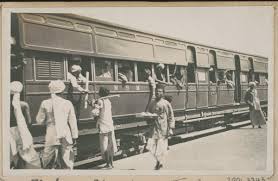
Trains in Malaya

“My uncle was conceived during this journey. They halted in Singapore for only two or three weeks. My grandfather’s cousin was in Perak[2], in Malaya. So, he wanted to be with his cousin. His cousin had cattle. Most of the Sikhs were cattle farmers. They settled in Pahang[3], an area which eventually became a nuclear dump[4] for Australia. It is closed to public now. There was a stone that proclaimed the land was a nuclear dump when I went with my son a few years ago.

“My father moved to Singapore as his prospects were better here as a boxer. This is where he met my mother. I was born here. He actually met mum because my mother’s two brothers had invited her to come from Glasgow. My mother is Scottish, from an industrial background. Her brothers came to the Far East to make money.  She finished her school leaving exams and came to visit her brothers during her vacation. She would go with her bothers to watch boxing, where she saw my father, the champ. She was only fifteen or sixteen. The next thing the brothers knew was she was pregnant with me.”

Jeswant Singh was popular with colonials. Kirpal Singh tells us: “Some Europeans saw him box and offered him a job then in the Base Ordinance Depot. This was the British Military camps in the Far East. There were three bases in Singapore: the naval base, Kranji and one in the South. He worked there for thirty years and retired after that. In 1972[5], after the final British withdrawal from Singapore, dad’s formal employment status ended. After that he just did odd jobs, ending up as a security guard, looking after the factories in Jurong, earning about two to three hundred dollars a month.”

Kirpal Singh spent his childhood with his grandmother and uncle. Before he started schooling, his father left him with his grandmother and divorced his mother in favour of a new bride. Dr Singh tells us the story of how he returned to Singapore: “I was basically in Perak with my grandmother. My uncle, who was the first Sikh to become a Christian in Southeast Asia, left home because his father gave him a beating for changing his religion. My uncle was an Anglican. His conversion saved him from the Great Depression as the clergy was very well looked after. From 1929 to 1933, the church looked after him because he was the priest in Seramban. My father was still young. My uncle was born in 1911 and my dad in 1923. My grandmother bore eighteen children. Five of the infants passed away before they were one month old. But thirteen survived. She passed away at 95… I knew when I left for my doctorate programme in Adelaide that that was the last time I would see her. I had a hunch and was crying on the plane. Six weeks later, I got a letter with the news of her death.”

He adds: “Dad was in not in a position to look after me. The responsibility fell on his brother William. His full name was William Massa Singh s/o Deva Singh. He had studied at the Ipoh Chinese school, topped the school, eventually worked as an insurance agent. He was very good in English. The principal of his school, a New Zealander, arranged for my uncle to move to Singapore. Then my father moved there too. Singapore was the metropolis even then. It was the centre of English education. Penang was the other one. In 1956, I was sent to Singapore from Perak on a train — a one-and-a-half-day journey to my uncle.”

His grandmother joined them within a few months as his uncle was, he says, “more interested in aiding Lee Kuan Yew get rid of the colonials. Lee Kuan Yew was a self-made man. He met Goh Keng Swee[6] and Rajaratnam[7] as students in England. They became buddies and wanted to move out of colonial rule and be independent.”

Then, how did a young child survive? Dr Singh tells us: “I used to earn my pocket money from age five six by watering gardens. I have had very interesting experiences. When I was in primary two, I used to give tuition to primary one students. With enough gumption, you can survive in this world.”

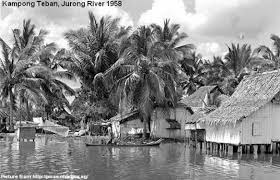
“I grew up with my uncle’s wards, who were brought home to be educated. There was even one who was a Chinese-Japanese mix. So, I grew up being familiar cross-cultural marriages and in a multicultural home. I grew up in the kampong with a Chinese boy and we became friends from the age of seven-and-a-half when we were in primary two. His name is Tan Jwee Song — I call him Jwee, ‘my good saint’.  He told me after O-levels he would support me to study further and took to teaching. At that time, you could become a teacher after completing your O level. I joined Raffles late during my time in high school because it was too expensive for me. I taught in night classes started by Lee Kuan Yew and studied. I owed Jwee $80,000 dollars and I wanted to pay his widow back — but she would not accept it. When I graduated in 1973 with an honours’ degree, I was $44 thousand in debt. Then, I was given a scholarship.”

And slowly, Kirpal Singh came to his own. When television came into being, he tells us: “I was often on TV in 1970s — days of early television — debates and interviews as a guest.” Kirpal Singh grew into an intellectual of repute as he worked and studied with the support of the many races and many people who, often like him, were migrants to Singapore.

As time moves forward, these stories — that are almost as natural as the sand, the wind and the sea — ask to be caught in words and stored for posterity, stories from life that show how narrow borders drawn by human constructs cannot come in the way of those with ‘gumption’.

(Written by Mitali Chakravarty based on a face to face conversation with Kirpal Singh. Published with permission of Kirpal Singh)

[1] https://www.roots.gov.sg/stories-landing/stories/david-marshall/story

[2] Now in Malaysia

[3] Now in Malaysia

[4] https://buletinonlines.net/v7/index.php/lynas-radioactive-waste-to-be-dumped-in-pahang-tax-free-while-australia-gets-a18-million-in-taxes-2/

[5] The British armed forces were scheduled to withdraw from Singapore by 1971. https://eresources.nlb.gov.sg/infopedia/articles/SIP_1001_2009-02-10.html#:~:text=On%2018%20July%201967%2C%20Britain,Singapore%27s%20defence%20and%20economic%20security.

[6] Deputy Prime Minister of Singapore, 1973-1980, one of the founding members of the ruling PAP (People’s Action Party) https://www.roots.gov.sg/stories-landing/stories/goh-keng-swee/story

[7] Deputy Prime Minister of Singapore from 1980 to 1985, one of the founding members of the ruling PAP https://www.roots.gov.sg/stories-landing/stories/sinnathamby-rajaratnam/story

PLEASE NOTE: ARTICLES CAN ONLY BE REPRODUCED IN OTHER SITES WITH DUE ACKNOWLEDGEMENT TO BORDERLESS JOURNAL. 

Click here to access the Borderless anthology, Monalisa No Longer Smiles

Click here to access Monalisa No Longer Smiles on Kindle Amazon Internation


Categories
Musings

Migrating to Myself from Kolkata to Singapore

By Asad Latif

Sir Stamford Raffles (1781-1826). Courtesy: Creative Commons

May I be so bold as to claim that I travelled in the footsteps of Sir Stamford Raffles? That agent of the East Indian Company’s visit to Calcutta (as it was known then, and for much later, till it resumed the phonetic spelling of its original name), led him to set up Singapore as an English trading settlement in 1819. “Footsteps” would be the wrong metaphor, of course. “Seasteps” would have been accurate, since Raffles travelled to Calcutta by sea and arrived water-borne to Singapura (as it was known then). In my case, however, I arrived in Singapore sky-borne, in an aircraft that conveyed me from what was then home to what would become home. Footsteps, seasteps or airsteps, I arrived in Singapore. The year was 1984. I was 27.

Today, at 65, I remember my passage from back home to this home as if it occurred yesterday. I had worked in Hong Kong briefly in 1984 and had been exposed to life in a successful British colony that was in the throes of its return to Chinese rule. Singapore was different. It had merged with the Malaysian Federation in 1963, had separated from it in 1965, and had gone on to carve out an extremely successful space for itself in the international sphere.

Prime Minister Lee Kuan Yew was a household word in Singapore. Not everyone loved him, but no one could deny his singular agency in having created a magnificent city-state that could sustain its independence in spite of its lack of natural resources. To arrive in Singapore was to embrace the possibilities of time.

Calcutta, too, was a historical city par excellence, but its rundown buildings and potholed streets, to say nothing of its potbellied children living on homeless streets, belied the promise of the future. To arrive in Singapore, it appeared, was to have exchanged failure for success.

That was an illusion, of course. All expatriates suffer from a global disease: They latch on to what they love in their countries of arrival by trying to erase what had loved them in their countries of departure. Take the potholed streets of Calcutta, for example. They had conveyed me to College Street on that glad day in 1974 when I joined the English Department of Presidency College. Without that first footfall in the corridors of the greats, I might never have come to Singapore, never got my Chevening Scholarship to Cambridge, my father’s university, and never won the Fulbright to Harvard. The potholes of Calcutta are not as numerous as the culturally blind allege them to be. Nevertheless, they led me on the way to be myself, wherever on earth I would ultimately be.

The way I see it, no matter how far or close wanderings might lead, one migrates ultimately to oneself. Hence, when I left my Calcutta for what would become my Singapore, I did no more than search for a version of my selfhood that would extend my material and imaginative boundaries. In the course of my journey, I discovered that the only borders lie within, borders between being and becoming. In the process of becoming by winnowing the unwanted aspects of being, one returns to a renewed if only autumnal sense of being. Time passes. One passes with it, letting go of the distant past as much as one does the receding immediate past. To live is to gather the passage of time within oneself, hoping that all borders will merge into a lasting apprehension of oneself in the expanding fullness of a single world.  

Calcutta and Singapore are two sides of me. These two great imperial cities have outlived their provenance. Calcutta was once the capital city of colonial India: Today it remains the nation’s cultural capital but political power resides in Delhi (naturally) and there are at least two economic capitals, Mumbai and Chennai. This is why I, along with many of my hapless fellow-Bengalis, suffer from an incurable cultural fetish for the past. That was when the Almighty spoke Bengali – He appears to be switching increasingly to Hindi – and was busy creating top-class poets and formidable social reformers in Bengal. The divine supply of poets and composers has not ebbed but the demand-side having moved to Mumbai, many of the best composers have shifted there and to make a name for themselves. Never mind. Their names remain Bengali, and their fame spreads the vintage mystique of Calcutta like a lingering perfume in India and beyond. I feel happy for the Calcutta part of me.

Singapore, a great trading post, is a now a city-state. Statehood has allowed the nascent nationalism of the colonial era to flourish and grow into a genuine sense of political self. Sovereign Singapore was not expected to survive, but it has done so with a definitiveness that makes the prognoses of the 1960s laughable today.  The national self-confidence of Singapore gives me confidence in my decision to take up Singapore citizenship in 1999. It had not been an easy decision, but I took it when I realised that I would be giving up my Indian citizenship but not my Indian-ness. My Singapore Identity Card records my race as Indian. I could keep the Calcutta part of me intact while adding to it a new Singaporean me.

So, yes, I am grateful that Raffles travelled to Calcutta to set up Singapore. Obviously, he did not do so with my fortunes in mind, but the umbilical connection that he created between the two great port cities has made it easier for me to migrate from India to Singapore. Ultimately, I have done nothing more than migrate to me.  

    .


 Asad Latif is a Singapore-based journalist. He can be contacted at badiarghat@borderlesssg1

PLEASE NOTE: ARTICLES CAN ONLY BE REPRODUCED IN OTHER SITES WITH DUE ACKNOWLEDGEMENT TO BORDERLESS JOURNAL. 

Click here to access the Borderless anthology, Monalisa No Longer Smiles

Click here to access Monalisa No Longer Smiles on Kindle Amazon International

Categories
Musings

The ‘New Kid on the Block’ Celebrates…

Dr Kirpal Singh, an eminent academic and writer, takes a nostalgic journey back in time to recall the start of Singapore as an individual entity.

The years 1964-66 were very interesting– not only because on 9 August 1965 we became the Republic of Singapore but also because of the events (some may even term these as “shenanigans”) surrounding to the lead-up to our final independence. I was a little more than fifteen years old and though not fully in the know or swing of things, it was pretty obvious real changes were afoot. The racial riots of 1964 left a deep impression– some may call it a “scar”—and many of us were truly worried and even frightened at what prospects lay in wait.

Nerves were running high and tension was palpable. Much as our teachers tried to hide hard truths, it was abundantly obvious that major changes were bound to usher a new and different ethos. My late Uncle was in the thick of things and though he did his best not to display anxiety, the various insinuations in the media– coming as they did from a variety of differing personalities with radically different perspectives — did not assure much comfort in what was to come. The hubbub left many wondering and many others questioning what had gone wrong. They demanded the “truth” be revealed.

And so it was. Mr Lee Kuan Yew addressed the nation and in-between wiping his clearly moist eyes told us that we had been kicked out of Malaysia! The shock took minutes even hours to sink home. Neighbours chatted across fences just to confirm what they had heard. But it was too late to do much by way of not accepting our fate: Singapore was now out of Malaysia and had to embrace the future alone, without the larger community that had formed in the two preceding years. It was the start of a new chapter in our short history– and a new beginning.

The new chapter in our history began with a clear glimpse of Lee Kuan Yew wiping his eyes. After all his long-cherished dream of a “Malaysian Malaysia” was now, in a sense, shattered. Whatever the details of that critical meeting that is said to have taken place in Cameron Highlands between the Tengku Abdur Rahman and Lee Kuan Yew one fact emerged: Singapore was on its own — no longer a part or partner of Malaysia.

Thus began the slow and arduous journey of our independent Republic of Singapore. In 1965, I was fifteen and though still a teen it was abundantly evident that a truly historic transition had taken place.

Whether it was Lee Kuan Yew’s oratory or his emotional self that made the impact, it was clear that most Singaporeans rallied behind him and resolved to ensure that we survived. Survival was our prime and major consideration, and all endeavours were directed to realising this goal. Crucial to this was the daily recitation of our National Pledge- “We the citizens of Singapore pledge ourselves as one united people…”. Whatever people may say our National Pledge remains sacred and sacrosanct.

As I look back at the tumultuous tensions and uncertainties we faced in those early years of our Republic’s nationhood, I can never state that we were despondent or unable to push forward. Yes, it will be folly to try and claim that everything was hunky-dory. No, far from it. But one thing was totally clear and universally accepted, as Mr Lee Kuan Yew said, we were now on our own and we had to shape our own destiny. All the doubts and unpredictable consequences notwithstanding Singapore was now the youngest new nation on planet Earth and her citizens were committed to ensure the nation survived.

And she did. Indeed, Singapore gloriously more than survived! She soared and within less than a decade of Independence– by 1975– we were showing ample signs of “earned success”, a reward that even opponents of Lee Kuan Yew had to acknowledge as “ real”.

There’s not much need for me to go into all the many new legislations and policies and rules and regulations that were mooted and passed in Parliament and embraced by all branches of our young Republic. The Legislature, the Executive and the Judiciary had to be built on strong and impartial foundations without regard to race or language or religion. It was for the young an exciting and sometimes bewildering phase of history. But Mr Lee kept sharing his vision of a thriving young nation bent upon making a mark in history. Slowly but surely, said Mr Lee, Singapore would build her muscles and demonstrate what is achievable when citizen and together in order not so much to “show off” but essentially to survive. Survival was the foremost goal– all else could come afterwards.

And so we worked hard– very hard — and despite all the trauma and pain, we pushed and pushed and soon began to experience for ourselves the fruits of our determination. More and more nations began to realise that there was indeed a new kid on the block in Southeast Asia and that this kid was unrelenting in its efforts to succeed and succeed with distinction.

And so, today, as we celebrate our 57th year of Independence we can proudly claim to have surpassed all expectations and put to paid any misgivings anyone might have harboured.

Before Mr Lee Kuan Yew passed on, he said, movingly, while strolling through our Gardens By the Bay, that looking around he was glad we did what we did. He felt all his sacrifices were more than worth.

And so here we are celebrating our National Day in joy and even glee.

But we cannot ever forget or ignore the harsh lessons we learned along our journey to full and complete Independence. We live in a world crippled by numerous setbacks — the pandemic just being one.

It remains for others to evaluate the progress and strides our young and tiny island nation has taken. For my generation our Singapore is a miracle — a miracle realised through hard sacrifice and unwavering faith.

Kirpal Singh is a poet and a literary critic from Singapore. An internationally recognised scholar,  Singh has won research awards and grants from local and foreign universities. He was one of the founding members of the Centre for Research in New Literatures, Flinders University, Australia in 1977; the first Asian director for the Commonwealth Writers’ Prize in 1993 and 1994, and chairman of the Singapore Writers’ Festival in the 1990s. He retired the Director of the Wee Kim Wee Centre.

PLEASE NOTE: ARTICLES CAN ONLY BE REPRODUCED IN OTHER SITES WITH DUE ACKNOWLEDGEMENT TO BORDERLESS JOURNAL

Categories
National Day Special

Vive La Singapore

Singapore is a tiny country connected to the bigger land mass of Malaysia with two causeways. It started out as a small island inhabited by pirates and legends. Sir Stamford Raffles (1781-1826), a British East Indian administrator, thought it strategic and relocated some of the trade routes through the island. Migrants from many countries merged here — some looked for a better life and some served as coolies and prisoners of the colonials. When Malaya threw off the colonial yoke in 1963, Singapore continued part of the country till it gained sovereignty in 1965.

Lee Kuan Yew, the first Prime Minister envisioned a multicultural society where people of different cultures lived as one people. He said in one of his moving speeches in 1965: ” We will prosper, and a multi-racial society will take roots here. And it will do so because when you don’t allow people to play communalism, or racial bigotry, or religious bigotry, you breed an atmosphere of tolerance.”

Fifty-six years later, Prime Minister Brigadier Lee in his National Day speech clearly took the bull by the horns and said, while social media highlights the negative altercations of race and religion, it fails to highlight the positive ones. “Many more happy interactions happen every day but these seldom go viral.” He added these were values that needed to be reinforced with every passing generation. Read to find out what some Singapore residents feel about the outcome of Lee Kuan Yew’s vision, not just of race and religion but of living in a city state which hopes to continue as ” one united people“.

Poetry

Poetry of Kirpal Singh 

Fifty-six years down the line, eminent academic and litterateur, Dr Kirpal Singh, comments on the dream of the first Prime Minister of Singapore. Click here to read.

Unaccompanied Baggage 

Marc Nair, a multifaceted artiste who moves from photography to writing to music with equal elan, reflects on life in Singapore. Click here to savour his work.

Prose

Interview

Dr Kirpal Singh talks of his life and times through colonial rule, as part of independent Malaya, and the current Singapore. Click here to read.

Flash Fiction: Horizon

Tan Kaiyi, a young vibrant writer, evokes the spirit of the Singapore National Day amidst the darkness spread by a deadly virulence. Click here to read.

Singapore’s Secret Recipe

A recent immigrant, Aysha Baqir takes us through the flavours of life here on the tiny island during the lockdown. Click here to read.

The island state continues a home for many immigrants — some came early and some late. As a first generation immigrant, to me the little red dot is Asia’s gateway to the rest of the world. I enjoy its sand and seas very much. We conclude our ensemble with a little poem to the green islet that nestles between the Indian Ocean and South China Sea rippling with notes of harmony…

Anointing with Love 
By Mitali Chakravarty

Listen to the swish of the waves.
Feel the breeze whisper caresses. 
See the mangroves stretch 

their roots above the ground, 
in a siesta during lazy sunrises 
and sunsets. Murmurs from the 

ocean come wafting as 
coconut fronds sing in the
fringes where the sand 

welcomes the surf. It is a 
party at the beach with
differences woven to 

harmonise into a melody 
sung in tune. A crescendo
that anoints with love. 


First published in Daily Star, Bangladesh