Categories
Nazrul Translations Tagore Translations

Love Songs by Tagore and Nazrul: Translated by Fakrul Alam

From Public Domain

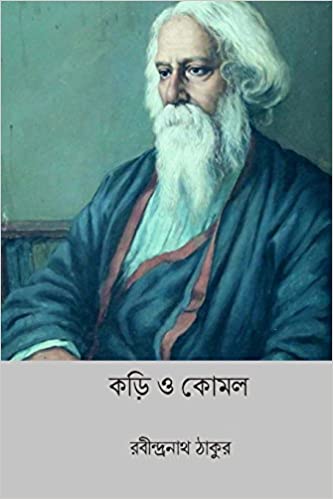
Tumi Kon Kanoner Phul ( From whose garden could you be) by Tagore was published in the collection called Kori O Komal (Sharp and Flat) in 1886.

From whose garden could you be
And in which sky were you a star?
Where could I have seen you before
And in what dream did you last appear?
When was it that you had last sung,
And when did you last look at my eyes?
I’ve forgotten it all!
All that I can remember now
Is that you were my eyes’ star!
Hush—don’t say anything now—
Just take a look and go your way
In this moonlight just smile and melt away!
Overcome with sleep, I look at the moon
With an enraptured heart
Like your eyes, let the twin stars in the sky
Keep streaming their rays.
Renderred by well-known contemporary singer, Srikanto Acharya

Anjali Loho Mor (Take my Offerings) was written and composed by Nazrul (1899-1976)


Take my offerings melodically, musically
Like a flaming lamp, my soul flickers
Captivated by you, O lovely one;
What feeling of bliss is this, making the body sway
And dance before you melodically, musically?
In ecstasy unfolds love’s petals,
Full of beauty, fragrance and love
Looking at your face, I’d like to say to you:
“Fall down like petals of flower will do
And colour your feet’s soles, melodically, musically”
Renderred by the legendary Feroza Begum (1930-2014)

.

Fakrul Alam is an academic, translator and writer from Bangladesh. He has translated works of Jibanananda Das and Rabindranath Tagore into English and is the recipient of Bangla Academy Literary Award (2012) for translation and SAARC Literary Award (2012).

.

PLEASE NOTE: ARTICLES CAN ONLY BE REPRODUCED IN OTHER SITES WITH DUE ACKNOWLEDGEMENT TO BORDERLESS JOURNAL

Click here to access the Borderless anthology, Monalisa No Longer Smiles

Click here to access Monalisa No Longer Smiles on Amazon International

Categories
Tagore Translations

Pran or Life by Rabindranath

Pran or Life by Tagore was published in 1886 as part of his collection called, Kori O Komal (Sharp and Flat). The book featured 83 poems by him.

Art by Sohana Manzoor
LIFE 

I do not desire death in this resplendent universe. 
I want to live amidst the ocean of humanity.
In this radiant sunny garden of floral swirls,
I yearn for acceptance from hearts filled with vitality. 
Life on Earth ebbs and flows in transient waves. 
Partings and meetings are filled with tears and joys. 
I want to bead these emotions into melodic strains,
To create songs that will be eternal and spirits buoy. 
If I cannot achieve that, then as long as I live, 
Let me find shelter in your midst. 
Let me, every morning and evening, give
Lyrics that bloom like flowers waiting for a tryst. 
Pluck the blossoms happily, and then, without a sigh, 
Throw them away, alas, if they wilt or dry. 

A recitation of the original poem in Bengali by Swati

(This poem has been translated by Mitali Chakravarty with editorial support from Sohana Manzoor)

PLEASE NOTE: ARTICLES CAN ONLY BE REPRODUCED IN OTHER SITES WITH DUE ACKNOWLEDGEMENT TO BORDERLESS JOURNAL

Click here to access the Borderless anthology, Monalisa No Longer Smiles

Click here to access Monalisa No Longer Smiles on Kindle Amazon International

Categories
Tagore Translations

Ocean by Rabindranath

Somudro or Ocean by Tagore was first published in 1886 in a collection called Kori O Komal (Sharp and Flat)

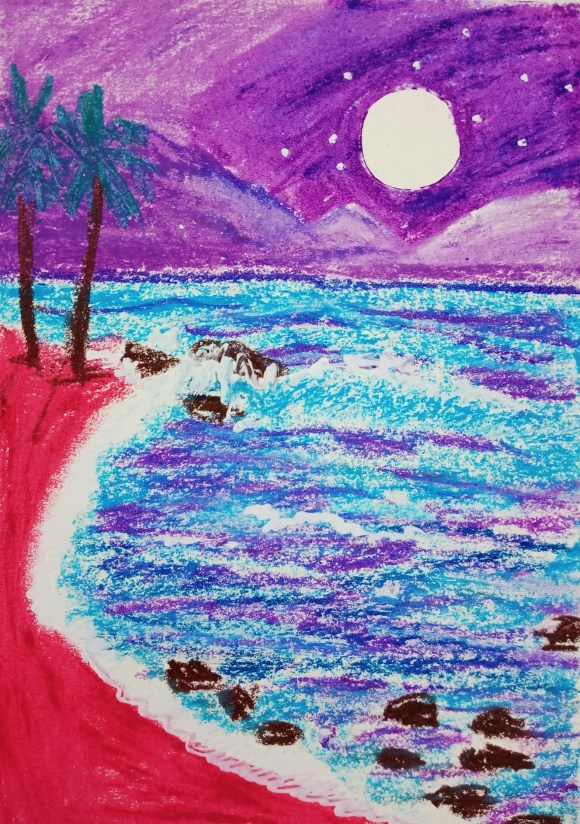
Painting By Sohana Manzoor
Why is the vast ocean restless?
What bonds does it want to sunder? 
It howls like a child in distress.
With incomprehensible words, it blusters. 
Over eons, it rises, it soars,
It swells with an exhilarated gait —
Turbulent and huge, it roars.
The calm sky silently hears it reverberate.
Crushing its heart, it flays, it beats, 
Against the rocky seaside. At high tide, its waves
Rise to smash, heralding apocalyptic feats. 
Yet as the tide ebbs, the ocean gently laves
The dark core of nature, bordered by mud. 
The ocean of tears continues to sway.
Each moment, desires staunched at the bud
Want to cry and drench the world away. 
I yearn to be the scribe who translates
The ocean’s upheaves for humankind,
Calm the eternal unrest that agitates
The sea breeze to swish, shush and pine. 
I yearn that my song rings day and night
Harmonising tunes with the Earth’s infinite…

This poem has been translated by Mitali Chakravarty with editorial input from Sohana Manzoor and Anasuya Bhar & Art by Sohana Manzoor

PLEASE NOTE: ARTICLES CAN ONLY BE REPRODUCED IN OTHER SITES WITH DUE ACKNOWLEDGEMENT TO BORDERLESS JOURNAL

Click here to access the Borderless anthology, Monalisa No Longer Smiles

Categories
Tagore Translations

Morichika or Mirage by Tagore

Morichika or ‘Mirage’ is one on Tagore’s early poems. It was first published in 1886 in a collection called Kori O Komal (Sharp and Flat).

Mirage
Come, leave your bed of flowers, O friend —
Beat the hard ground with your foot. 
How long will you isolate yourself weaving 
Dreams of starry blooms in an unreal sky!
Look, a storm is brewing in the distance —
Your world will be washed away with tears.
Flames of God’s lightning jinx will ignite the 
Fires of purity to arouse you from stupor. 
Come let us both go and live with people,
Enlightened by their joys and sorrows —
Let us share their laughter and sadness
Holding hands, stay fearless when in doubt. 
Let us not dwell in this redolent mirage as
It terrorises with its transient evanescence. 
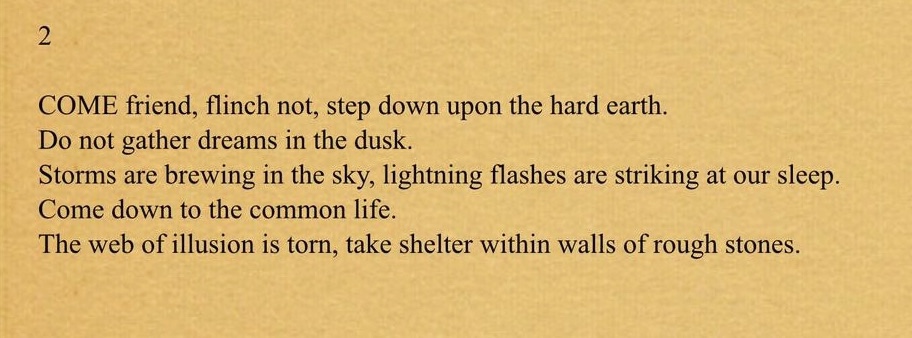
Tagore’s translation on ‘Morichika’ in Poems. Source: Bichitra

Later Tagore translated this poem to English himself. That was published in 1942 by a collection entitled Poems edited by Krishna Kripalalni, Amiya Chakravarty, Nirmal Chandra Chattopadhyay and Pulinbehari Sen published after his death by Visva Bharati.

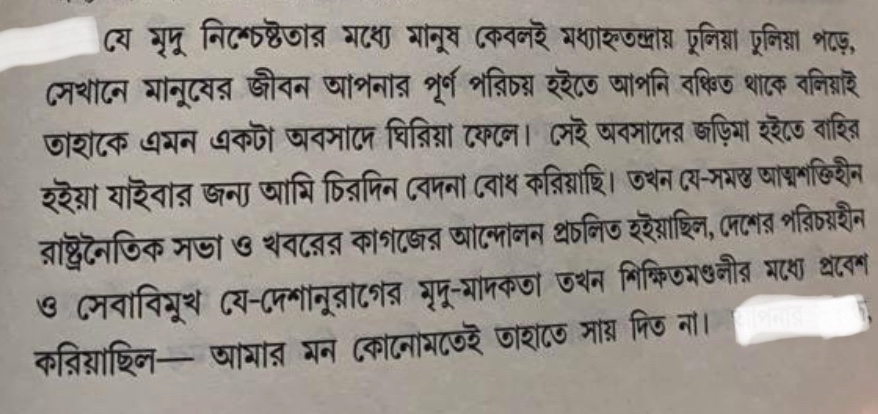
Here is an excerpt of what Tagore wrote about Kori O Komal in his Jibonsmriti (1912, autobiographical memoirs by the poet) which reflects his outlook and the mood of the poem.

Translation: Man falls into a stupor when due to his own reluctance to make an effort, he can neither understand himself nor face reality. I have always struggled to emerge out of this stupor. I cannot reconcile myself to the current situation where nameless intellectuals are inebriated with patriotism and are involved in spineless political rallies and news campaigns which exhibit both the lack of a national identity and concern for mass welfare. (Excerpted from a screenshot of Jibonsmriti sent by Anasuya Bhar)

(These translations for Borderless Journal are by Mitali Chakravarty, edited by Sohana Manzoor and Anasuya Bhar. Also, thanks to Anasuya Bhar for the images from Bichitra and Jibonsmriti and the extensive research on the poem.)

.

PLEASE NOTE: ARTICLES CAN ONLY BE REPRODUCED IN OTHER SITES WITH DUE ACKNOWLEDGEMENT TO BORDERLESS JOURNAL