Categories
Slices from Life

Honeymoon Homecoming

By Meredith Stephens

“Please show me your international driver’s licence.”

“Certainly!”

Alex produced the licence.

“This is out of date! I’m sorry but we can’t hand over the car.”

“No! It’s current! It’s valid for five years.”

We scrutinized the licence. The start date was prominently displayed, but not the expiration date. As we squinted to decipher the fine print on page three, we discovered that it had expired three years ago. Alex had thought it would be valid for five years, but it was only valid for one. We attributed it to his light-heartedly referred to “OCD Deficit Disorder”. And that is how a one-week road trip suddenly became a public transport and taxi trip.

This was my first visit back to Japan after having left at the beginning of the pandemic. Alex and I had been deliberating where to spend our honeymoon, and we agreed that the island of Shikoku in western Japan where I had spent over twenty years would be our first choice.
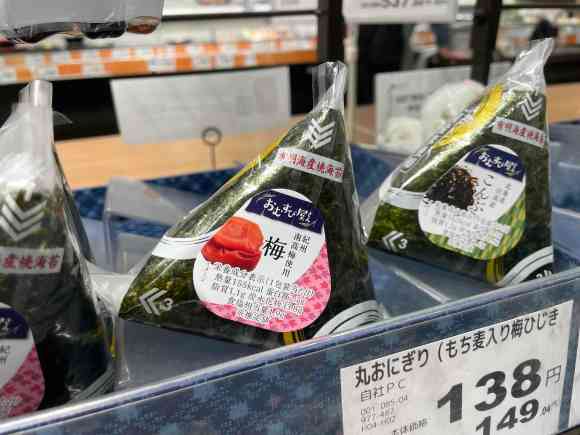
Onigiri. Photo courtesy:
Mariko Hisamatsu

There were so many things to look forward to. The first thing I did, before even leaving Kansai Airport, was rush into the convenience store and buy an onigiri flavoured with an umeboshi pickled plum. An onigiri is a triangle of rice, with a choice of flavours in the centre such as fish, seaweed, or the aforementioned umeboshi. It is wrapped in a crisp sheet of seaweed. Before eating it you gently pull away a thin layer of wrapping which protects the outer seaweed from absorbing the moisture of the rice. As you bite into it you can enjoy the three distinct textures and flavours – the piquant centre, the contrasting bland rice, and the crisp outer layer of seaweed. Next, I purchased a mugwort daifuku. This is a Japanese sweet, consisting of a layer of pounded mugwort-flavoured rice around a centre of sweet azuki bean paste. All of this was washed down with a bottle of green tea.

From the above account, it might sound like I was returning to Japan to indulge in simple culinary delights from a convenience store, and maybe this is a possibility I am unwilling to admit to myself. Of course, the main purpose was to reconnect with old friends, the second to reconnect with old pleasures, such as the aforementioned onigiri and daifuku, and the third, to stay in a traditional Japanese house.

After having been refused permission to drive our hire car, we headed back towards the terminal and searched for the railway station. We caught trains out to the UNESCO heritage listed site of Koyasan to enjoy the autumn leaves, and then seven trains and two buses later, to Wakayama station. Finally, we caught a taxi to our accommodation, which turned out to be a house that was over two hundred years ago, dating from the end of the Edo Period.

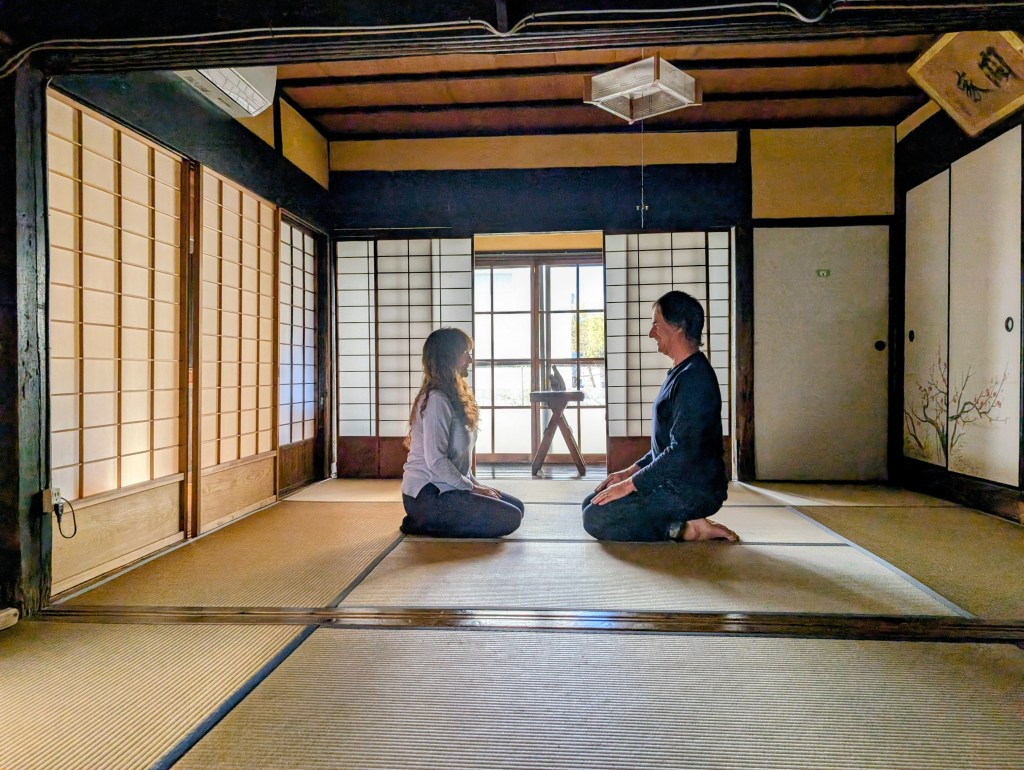
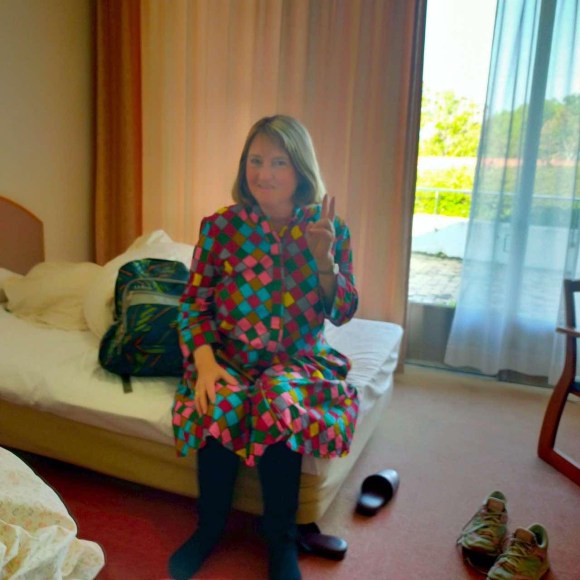
The door slid open to reveal an earthen floor. We walked down the hall to the kitchen, left our shoes in the sunken area, and donned the provided slippers. The kitchen opened onto two traditional tatami rooms, with fusuma sliding cupboards, and latticed paper shoji screens leading onto the garden. Beyond the shoji was a narrow hall known as an engawa, with a small wooden table and chair where you could enjoy sipping a drink while looking out over the garden. This was the kind of room I had been longing for during my five years away from Japan.

But we hadn’t had dinner yet and I was longing to ride to a local supermarket to purchase a ready meal.

‘“Do you have any bicycles?” I asked the host.

“Certainly. We have mountain bikes too!”

“You don’t want to go cycling in the dark?” queried Alex. “Not after a long-distance flight, seven trains, two buses, and a taxi ride? Surely not!”

I insisted, and Alex gave up persuading me otherwise. Rather than a mountain bike I chose the mamachari, a vintage bike replete with a shopping basket attached to the front handlebars.

We cycled to the supermarket, as I had done almost daily during my twenty years of living in Shikoku. There we bought sushi and sashimi ready meals, and cycled home, scanning to avoid roadside ditches with sheer drops and no guard rails. Once safely home, we indulged in the much longed for sushi and sashimi, enjoyed the traditional deep Japanese bath, spread out the futons on the tatami, and luxuriated in a deep sleep.

The next morning, we woke to a gentle light streaming through the latticed paper shoji screens. We cycled to Wakayama castle, Alex on the mountain bike and me on the mamachari. We strolled around the traditional garden before entering the castle and then completed it with a visit to the adjacent tearoom, where we enjoyed green tea and a sweet bean paste confectionery.

The following day, we bid farewell to our Edo Period home, and our kind host drove us to the ferry terminal. As soon as I saw the sign in Japanese for Tokushima, I could feel the colour rising to my cheeks. This had been my home in Japan for fifteen of my twenty years in Shikoku, until the day I departed for a routine visit to Australia, just before the international borders were closed due to COVID. Little did I know that the pandemic would prevent me from returning to Japan. I boarded the ferry as I had so many other times after returning from various work trips, but this time I was visiting on my honeymoon. The two-hour crossing readied me for the arrival in my old stomping ground and was heralded by the sentimental music played to signal a homecoming. Alex and I exited the ferry to be met by my old friend and writing mentor, Suzanne. Overcome with emotion, I covered my face with my hands to spare her the sight of my crumpled features and then gave her a hug. Then I went back to covering my swollen eyes and gave her another hug.
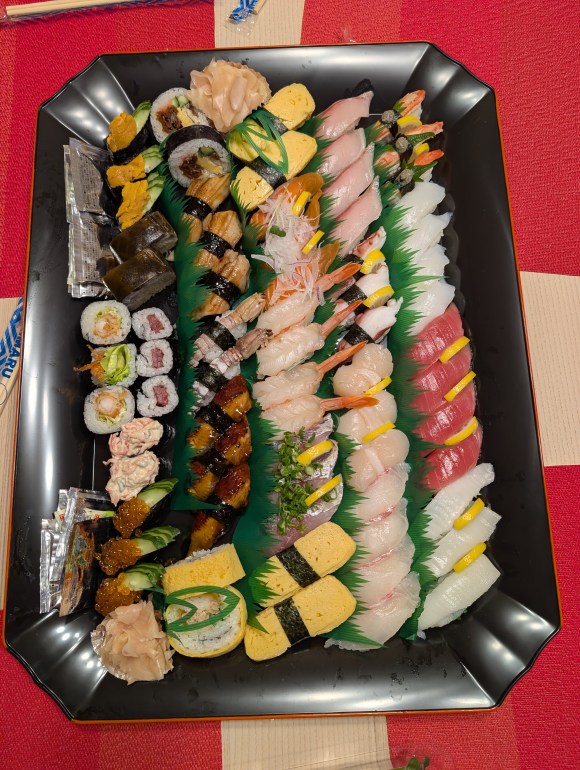
Platter of Sushi at Sally’s home. Photo courtesy: Alan Noble

Suzanne drove us to the home of the son of another old friend, Sally, who had kindly offered us a couple of nights’ accommodation. That evening a subset of old friends dropped in to see us and eat sushi. I braced myself for the entry of each friend into the house, trying to compose my features, after an unanticipated five-year interval. My eyes, however, betrayed me. I caught the expressions of those who returned by gaze, and they could sense my relief and excitement of meeting them again. Over five years people’s appearances were a little different. Those who had long hair now wore it shorter. Those with shorter hair had grown it. Those who were curvaceous were now svelte, and those who were svelte were now curvaceous. A child had now become a lanky teenager. I’m sure I must have looked different to them too. What had not changed was people’s smiles, conversation and sense of humour. People who I would normally see a few times over a month were now all present in the same room in the space of a few hours.

A few days later, we took the bus across Shikoku to Matsuyama, where another happy reunion took place of eight friends from six different countries. I was freshly aware of the joys of the expat life, where you can make friends from a greater range of countries, and a greater range of ages, than you would at home.

Ranma Carvings in a traditional room. Photo Courtesy: Alan Noble

I had been craving another stay in a traditional house, and we savoured a room with ranma carvings suspended from the ceiling, letting in light and air flow from the adjacent room. We sat at the kotatsu low heated table on the tatami, and slept on futon, in a room featuring shoji paper screens facing outside and fusuma cupboards where futons were stored. Features which had once seemed so ordinary were now infused with nostalgia.

Family obligations called us back to Australia after only one week of our Japanese honeymoon. A taxi was followed by a bus which took us on the long trek back across Shikoku, driving through impossibly long tunnels, crossing elegant bridges, with views of the sea and mountains. Once we crossed the final bridge onto the largest main island of Honshu, the landscape was transformed into high rise apartments, and dense traffic. We alighted from the bus at Kobe’s Sannomiya Station.

There we asked directions to the airport limousine bus and made a final purchase of onigiri. My favourite umeboshi pickled plum one was not on sale, so I had to make do with a tuna mayonnaise one and a pickled seaweed one. We ran to the bus stop, purchased tickets, and skipped into the bus holding our luggage. There was no time to store the luggage in the hold. Once the bus pulled into the traffic, we knew we could relax after our long and complicated journey. I gently pulled away the wrapping separating the layers of the tuna mayonnaise onigiri and savoured the contrasting flavours and textures. Our fleeting trip to Japan was punctuated by savouring onigiri on both arrival and departure. We bade farewell to this land of delectable tastes, exquisite arts, historic houses, hair-raising bicycle rides, and precious friends.

.

Meredith Stephens is an applied linguist from South Australia. Her recent work has appeared in Syncopation Literary Journal, Continue the Voice, Micking Owl Roost blog, The Font – A Literary Journal for Language Teachers, and Mind, Brain & Education Think Tank. In 2024, her story Safari was chosen as the Editor’s Choice for the June edition of All Your Stories.

PLEASE NOTE: ARTICLES CAN ONLY BE REPRODUCED IN OTHER SITES WITH DUE ACKNOWLEDGEMENT TO BORDERLESS JOURNAL

Click here to access the Borderless anthology, Monalisa No Longer Smiles

Click here to access Monalisa No Longer Smiles on Amazon International
Categories
Notes from Japan

Feeling Anxious in Happy Village

Narratives and photographs by Suzanne Kamata

A few weeks ago, my daughter invited me to go on an outing with her and her helper. My daughter, who is deaf and uses a wheelchair, lives in a group home in Osaka. She is becoming more and more independent, but she does have kind people around her to give her support, including a helper who is also deaf and uses Japanese Sign Language.

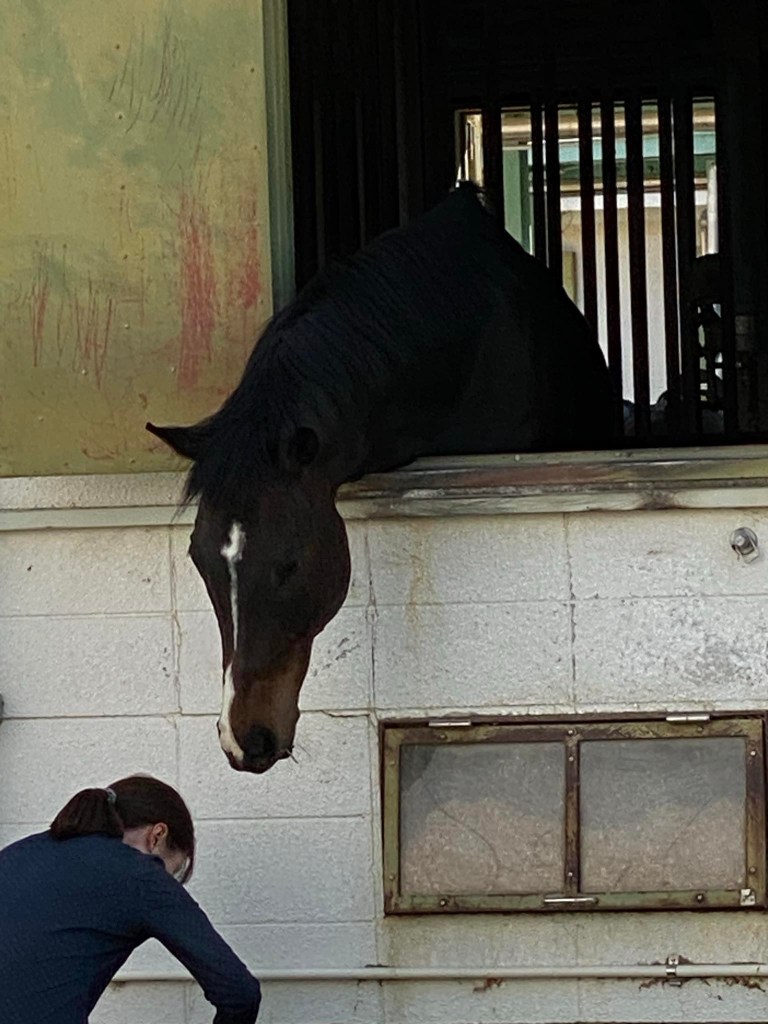
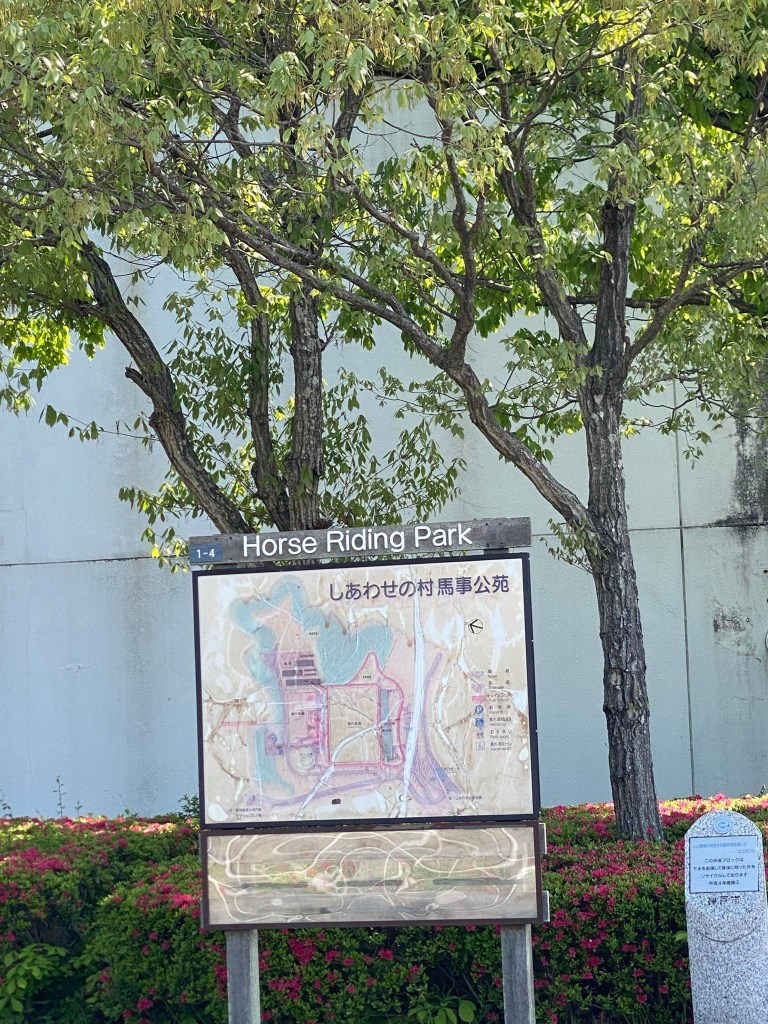
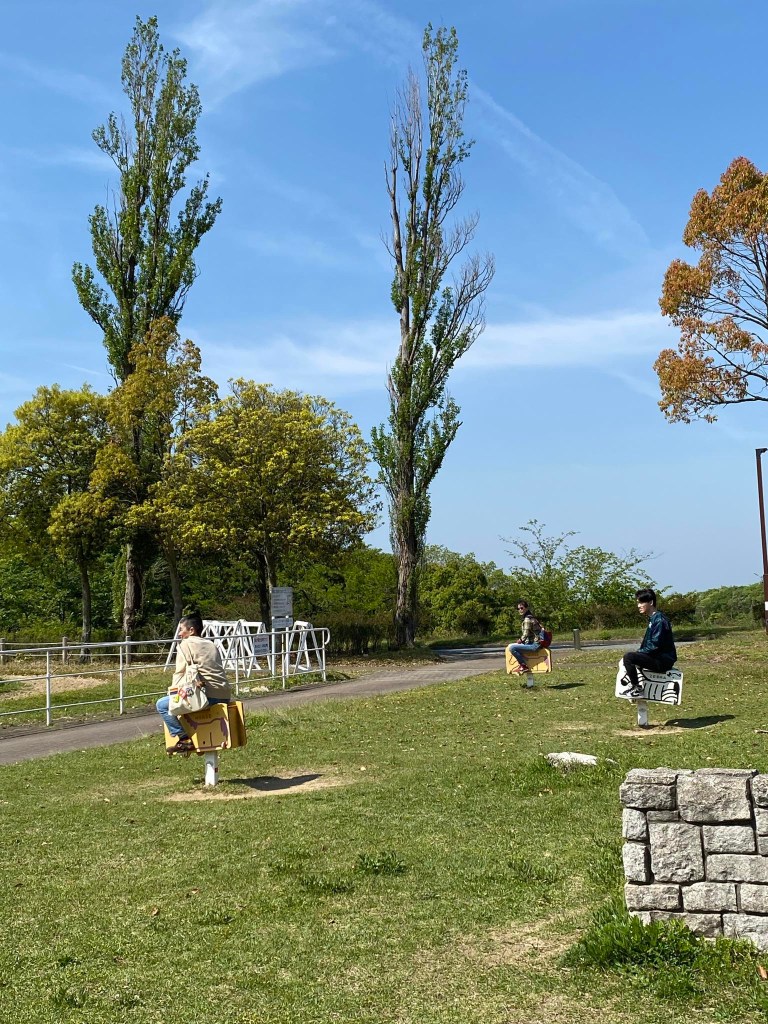
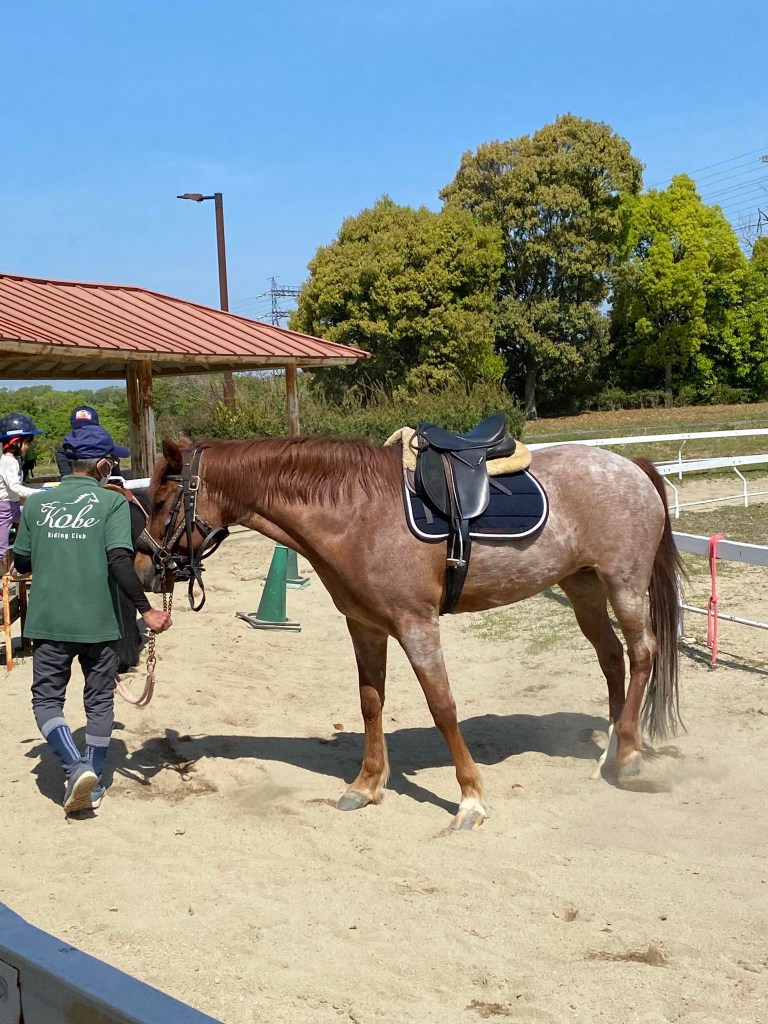
Actually, my daughter invited our entire family to accompany her and her helper on a weekend to Happy Village, a recreational facility in Kobe especially for persons with disabilities. We had visited the onsite stables years ago, and our twins had ridden around a ring on ponies. Having such pleasant memories of the place, I looked forward to visiting again.

My husband declined due to a golf tournament, and my son, who had just entered college as a graduate student, was concerned that he would have too much homework. My daughter informed me that her brother would meet us for a meal.

Although I was looking forward to seeing my daughter and getting to know her helper, I did have a few concerns. For one, I don’t have the confidence to drive in the megapolises of Japan. Kobe, for example, is a confusing city with many ramps, overpasses, and one-way streets, not to mention the traffic. I knew that Happy Village was on the outskirts, however, and I thought that maybe I could get myself there by car. I could have gone by bus or train, but it would have taken me two or three times as long to get there.

In addition, I was a bit worried about communication. I can converse with my daughter, more or less, in Japanese Sign Language, but my signing is not perfect. Since leaving home, my daughter’s vocabulary has expanded, and her signing has sped up. When among fluent JSL users, I can’t always follow the flurry of their fingers. Nevertheless, I know that my daughter often struggles to keep up with what hearing people are saying, and I thought it would be a valuable experience.

A couple days before, my daughter sent me a Google Maps link to the restaurant where we would meet. We would have a meal and then proceed to Happy Village. On the day of, I packed a bag, filled my car with gas, and set out. I had no idea what we would be doing. On trips with my husband, every hour was pre-planned. I thought it would be nice to just go with the flow. I was looking forward to seeing my two kids.

I managed to arrive at the restaurant with ten minutes to spare. I staked out a table and sat down to wait. While perusing my phone, I came across a link that I thought would interest my son. I sent it to him. He replied with a laughing emoji, followed by “Are you coming to Kobe tomorrow?”

A cold sweat broke out over me. “Tomorrow? I thought it was today.”

“She told me tomorrow,” he texted back.

“Oh, no.” I quickly scrolled through our communications and confirmed that we were indeed meeting him the following day. It was now ten minutes after the time I had agreed to rendezvous with my daughter at this restaurant. Or so I thought. Was I supposed to meet her tomorrow? Would I have to find a hotel for the night?

Panicking, I sent my daughter a text and a photo of the restaurant. “I’m here!”

She texted back that they would be a little late, and that there would be six of them.

Six! I had thought that there would only be the three of us. Now I was feeling really intimidated. I am an introvert, and I know my limits. The more people there are around me, the more I retreat into myself. Plus, there was the issue of communication.

Finally, my daughter and her entourage arrived. I met her helper, the helper’s husband, the helper’s twin sister, an older woman with cropped hair and rainbow socks, and a young man about my daughter’s age. We got down to the business of ordering food via the tablet on the table, and sorting our basic facts, such as my age, and that we would be meeting my son the following day at Sannomiya Station.

Sannomiya Station! That was in a busy district in the heart of Kobe. I hadn’t known that we were actually going into the city. I managed to sign that I was scared of driving in such an unfamiliar place. I was beginning to realise that I should have pried more details about this trip out of my daughter beforehand.

Three hours later, I followed the others in my car to Happy Village. My daughter and I were in one room, the others in their own rooms. By this time, my social battery was waning. I was ready to take a bath and curl up in bed with a book. My daughter, who is an extrovert, went down the hall for a couple more hours of JSL conversation and cake with her friends.

The next morning, we checked out of the hotel and stopped by the stables. Just as before, children rode ponies around the ring. My daughter zoomed around in her wheelchair, and the rest of us tried to keep up.

Next, we dropped by the helper’s apartment. I was invited to leave my car in the parking garage, and ride in the car with the others, for which I was very grateful. As we headed toward Kobe, I noted how quiet it was inside the car. No one tried to talk or sign. It would have been dangerous for the driver to take his hands off the wheel to form words, or to look away from the road for too long.

We finally connected with my son, and went to a restaurant. Because there were so many of us, we split up. My kids and I sat at one table, and the others sat at another. I brought my son up in English, and it remains our lingua franca. After my son and daughter exchanged a few words in sign language, my son and I talked a bit about the recent political situation in the United States. Although my daughter was curious, I couldn’t quite explain to her what we were talking about in JSL. I encouraged her to write notes to her brother. They communicated by pen and paper for a while.

After lunch, my son went back to his apartment to prepare a PowerPoint for his class the next day. The rest of us wandered around the city, window-shopping, until it was time for me to leave. My daughter wasn’t ready to go home, so the helper’s husband offered to give me a ride back to my car.

On the way, he said, “When you were talking to your son, your daughter didn’t understand.”

“That’s true,” I conceded. “We were speaking in English.” Although I had wanted to bring up my daughter in English, circumstances made it too difficult. Yet, my son was the only one in our family that I could freely communicate with in my native language.

“I felt sorry for her,” the helper’s husband continued.

I nodded. I had an idea of how my daughter felt. Although I had lived in Japan for many years, I often didn’t fully understand what people were saying around me.

He activated an app on his smartphone, which was affixed to the dashboard, which rendered spoken words into text. He suggested that my daughter could use such an app. I tried to explain that she already knew how to use the app, but for some reason she hadn’t tried to employ it in the restaurant.

I guess I could have been offended by his words, but instead I was moved. I was happy that my daughter was surrounded by people who cared so much about her, who were looking out for her best interests. How wonderful that she had finally found her tribe.

Suzanne Kamata was born and raised in Grand Haven, Michigan. She now lives in Japan with her husband and two children. Her short stories, essays, articles and book reviews have appeared in over 100 publications. Her work has been nominated for the Pushcart Prize five times, and received a Special Mention in 2006. She is also a two-time winner of the All Nippon Airways/Wingspan Fiction Contest, winner of the Paris Book Festival, and winner of a SCBWI Magazine Merit Award.

PLEASE NOTE: ARTICLES CAN ONLY BE REPRODUCED IN OTHER SITES WITH DUE ACKNOWLEDGEMENT TO BORDERLESS JOURNAL

Click here to access the Borderless anthology, Monalisa No Longer Smiles

Click here to access Monalisa No Longer Smiles on Amazon International
Categories
Notes from Japan

A Sombre Start

By Suzanne Kamata

Unlike the rowdy reveling in my native US, the New Year’s holiday in Japan is usually a solemn and sedate affair, spent quietly with family. Usually, schools and businesses allow a holiday of a few days.

My adult children had returned home from Kyoto and Tokyo, and we enjoyed an American holiday meal complete with roast chicken, mashed potatoes, lemon-flavored squash, and cranberry sauce. The next day, New Year’s Eve, we started in on the o-sechi ryori, the food traditionally eaten on January 1, and the following days. In the past, the woman of the house spent days preparing these special foods, each with a particular meaning. For example, fish eggs are meant to encourage fertility, and sweetened black beans signify good health. The food is beautifully arranged in lacquer boxes.

In our family, my Japanese husband has been in charge of the New Year’s cooking in recent years, sometimes with help from our children. This year, however, we opted to buy already-made o-sechi ryori. We gathered at the table and sampled the various delicacies, then watched a music competition show on TV — another traditional Japanese activity. All across Japan, many other families were doing the same.

According to the Chinese zodiac, 2024 is the year of the wood dragon. In dragon years, it is said that people can harness the creature’s powers to unleash creativity, passion, courage and confidence. It is thought to be the ideal time to achieve one’s dreams, a time of hope and opportunity.

My family and I awoke on January 1st, feeling renewed and refreshed, ready to continue pursuing our dreams. However, our moods changed when an earthquake occurred that afternoon in Ishikawa Prefecture. TV broadcasts were interrupted by frantic voices telling those in the affected area to evacuate immediately and to take cover. All across Japan, we were reminded of the devastating earthquake and tsunami of the Great East Japan Earthquake on March 11, 2011 which claimed nearly 20,000 souls (with many more remaining missing). I remembered, as well, being shaken awake in our fifth-floor apartment by the Great Hanshin Earthquake of January 17, 1995, during which 6,434 people were killed.  

Although the loss of life in Ishikawa (still being tallied as I write this) has not been quite so severe, the devastation displayed on TV, in newspapers, and online is heartbreaking. We have heard of middle-aged parents who lost their two daughters who were home for the holidays, of thousands whose home were reduced to rubble, of hundreds of people in an evacuation center with only two toilets. The day after the initial earthquake, a Japan Airlines plane crashed into a smaller Coast Guard plane on the runway at Haneda airport. The latter was preparing to carry supplies to earthquake victims in Ishikawa. Again, my family was glued to the TV, unable to look away as the jet burned to the ground. We were relieved to learn that all crew and passengers escaped from the plane, but saddened by the deaths of five Coast Guard members who were seeking to help others.

The foreign media often celebrates the resilience of the Japanese people: all those earthquakes and landslides and floods, and still they get on with their lives! However, Japan ranks only 54th on the 2022 Happiness Report, and suicide is the leading cause of death for men between the ages of 20-44 and women 15-34. The Japan Times reported in 2019 that according to a survey conducted by The Policy Institute and King’s College, London, only 24% of respondents in Japan agreed that “seeing a mental health professional is a sign of strength.”

Two of the first expressions that I learned when I first came to Japan were, “gaman wo suru” (“be patient”/ “endure”) and “shikata ga nai” (“it can’t be helped”). I came to understand that many Japanese have a sense of fatalism and helplessness, which might account for the general malaise in spite of Japan being a safe, peaceful, prosperous, orderly country with an excellent education system and exemplary healthcare.

During this past week, however, I have also been reflecting upon the changes wrought in response to disasters. After the 1995 earthquake in Kobe, schools stepped up their earthquake drills, and a disaster prevention center was established in our town. The school my daughter attended held a workshop on how to make dishes out of newspapers in the event of a disaster and began holding “disaster camps” simulating evacuation centers in the summer. Neighbourhood-wide disaster drills also increased, and signs were put up indicating sea levels and designated evacuation centers. Although it has been reported that evacuation centers in Ishikawa do not support those with disabilities, at least there is now an awareness of what needs to be changed.

Earthquakes and other natural disasters are unavoidable, but I admire the effort that the Japanese people put into mitigating their effects. My hope is that more and more people here will begin to understand that it is okay to cry, to mourn, to grieve, and to talk about our suffering. My wish for the Japanese people in the new year is happiness and the achievement of dreams.

Suzanne Kamata was born and raised in Grand Haven, Michigan. She now lives in Japan with her husband and two children. Her short stories, essays, articles and book reviews have appeared in over 100 publications. Her work has been nominated for the Pushcart Prize five times, and received a Special Mention in 2006. She is also a two-time winner of the All Nippon Airways/Wingspan Fiction Contest, winner of the Paris Book Festival, and winner of a SCBWI Magazine Merit Award.

PLEASE NOTE: ARTICLES CAN ONLY BE REPRODUCED IN OTHER SITES WITH DUE ACKNOWLEDGEMENT TO BORDERLESS JOURNAL

Click here to access the Borderless anthology, Monalisa No Longer Smiles

Click here to access Monalisa No Longer Smiles on Kindle Amazon International

Categories
Notes from Japan

Bridging Cultures Through Music

Suzanne Kamata brings to us people, experiences and cultures from Japan

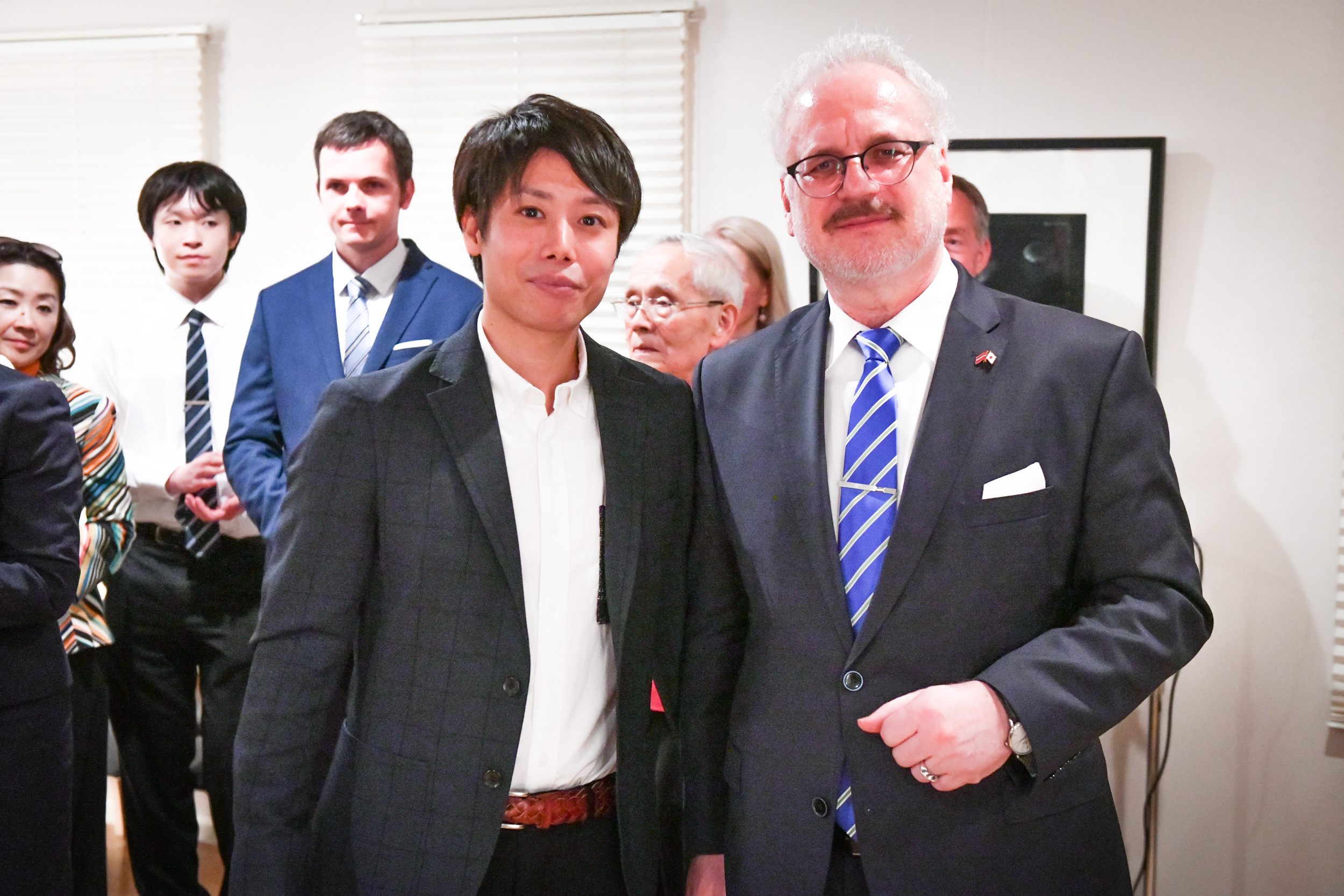
Masaki Nakagawa. Photo provided by Suzanne Kamata

For Kobe native and YouTube sensation, Masaki Nakagawa, a university trip to Latvia turned out to be a life-changing experience.

Nakagawa was a student of international culture in the Integrated Arts and Sciences Department at Tokushima University. By his own admission, he wasn’t a great student – his TOEIC (Test of English for International Communication) score was around 200 – but he had an avid interest in other cultures. He first studied abroad in Korea, where he improved his English language skills, and later, in 2014, went with a Tokushima University professor to Riga for a summer seminar. He felt an immediate connection with the small, European country.

“I felt like this is the country I will live in in my future,” he says via webcam. From the very beginning, he loved the people, the language, the atmosphere, the many historical buildings, the food, and the drinks.

“Someone told me that maybe I was Latvian in a past life,” he jokes.

Although the university did not have an official exchange program with any Latvian university at that time, he decided that he would go there for foreign study. During his seven months abroad as a student at the University of Latvia, he discovered that while most Latvians knew quite a bit about Japan, few Japanese people had any idea about them. He made it his goal to create more links between the two countries. Kobe is already the sister city of Riga, but he created a project to promote a sister city relationship between Tokushima and Jelgava, which is ongoing.

From a young age, Nakagawa has also been a musician. His mother was a piano teacher, so naturally he began playing the piano at the age of three. However, when he was fourteen-years-old, he bought his first guitar. “I still have it,” he says. “It is my important thing.” In high school, he played guitar and sang vocals in a band.

During his visit to Latvia, he discovered the importance of music in that country. “Latvia is a musical country,” he says. “They love dancing with music, eating with nice music. The Latvian language is quite beautiful, and Latvian songs are very, very beautiful.” He also found that singing in Latvian was an effective way to study.

After graduating from university, he got a job at Mercedes, where he continues to work as a store manager, however his passion for Latvia remained. He decided to combine his loves for Latvia and music. “As a musician, I can connect countries,” he says.

In 2017, he learned “Mana dziesma” (“My song”), which was originally performed by Brainstorm, one Latvia’s most famous bands, and made a recording of himself singing it while playing the guitar. Then, he uploaded it to YouTube. The video received an astonishing 150,000 views. Nakagawa realized that he was onto something, and he continued to record and upload videos.

In some videos, he sings in Latvian against a Japanese background, such as along a river in Kyoto. In others, he sings in a combination of Latvian and Japanese in a Latvian setting. Recently, he has begun to add Japanese subtitles. While he continues to record Latvian favorites, he has also written and recorded original songs in both languages.

His popularity has continued to grow, leading to interviews in magazines, on the radio, and on Latvian television. By his estimate, he has appeared on television in that country “twenty or thirty times.”

When asked if he is perhaps the most famous Japanese person in Latvia, he laughs. “Maybe.”

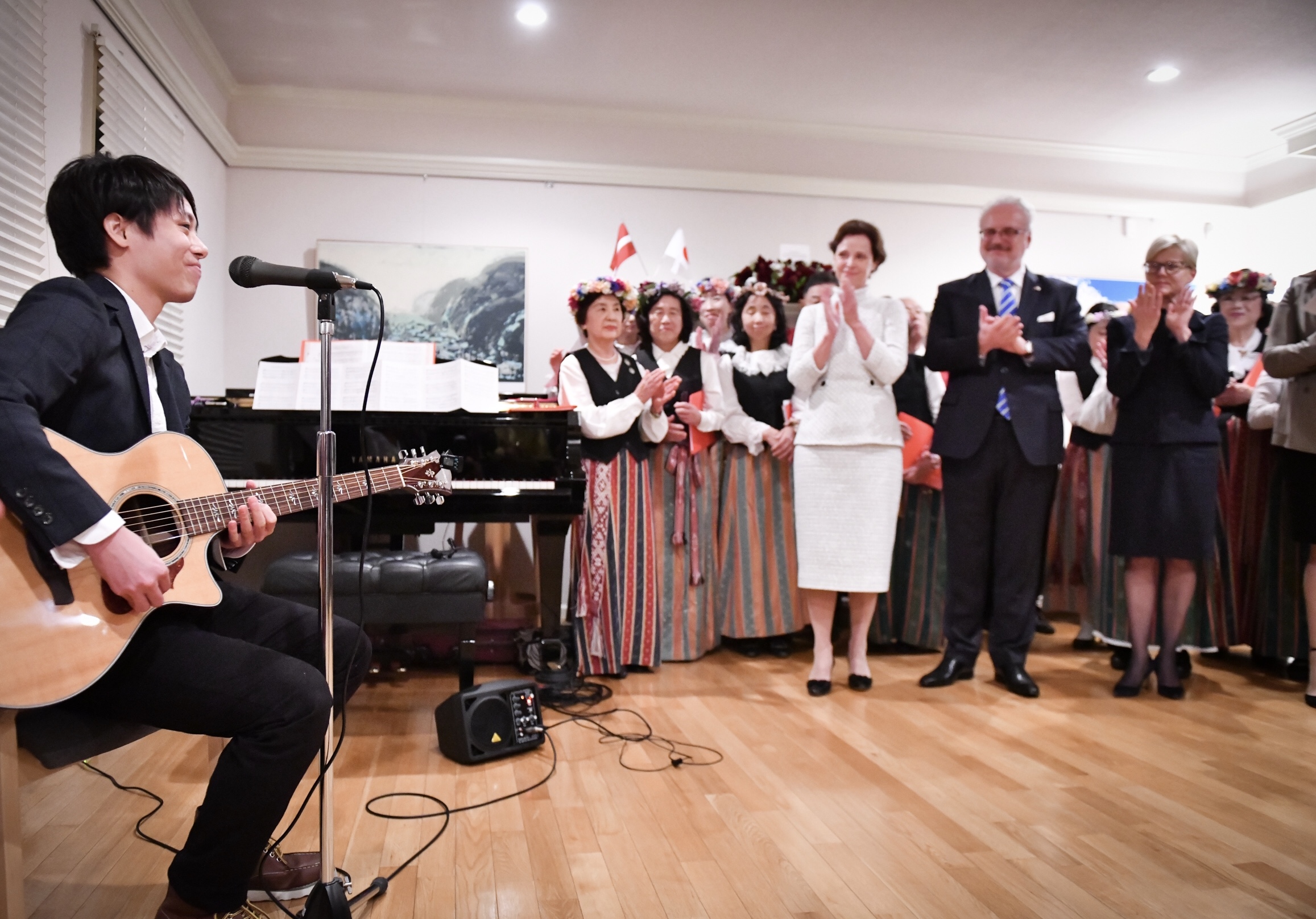
When the president of Latvia visited Japan for the coronation of the new emperor, Nakagawa was invited to perform at a closed reception at the Latvian Embassy in Tokyo. He had a chance to talk to the president and the first lady, who, as it turned out, was a big fan.

His most recent TV appearance, via Zoom, marked the occasion of his one millionth view on YouTube, the 100th year of Latvian-Japanese friendship, and of his latest single, “Es Lepojos Ar Tevi,” recorded with German musician Joran Steinhauer, another lover of Latvia. A few years ago, the two friends collaborated on a YouTube series called “Masaki Learns Latvian” in which Steinhauer taught Nakagawa two or three phrases per episode. “Es lepojos ar tevi”, which means “I’m proud of you,” is the first phrase that Nakagawa learned. This song in Latvian, uniquely created by two foreigners, premiered on the TV show “900 Seconds” in April of this year.

Nakagawa has been branching out a bit in his musical career, writing songs for aspiring idol groups in Japan, and singing on Japanese anime soundtracks. His vocals can be heard in the theme song for the anime “Dark Hero Yoshitsune” which will be released nationwide in Japan in fall 2021. Fans can follow his activities via Instagram at https://www.instagram.com/masaki.lv/.

He maintains, however, that developing relations between Latvia and Japan is his main priority. “As a musician, I really would love for people to know about Latvian culture.”


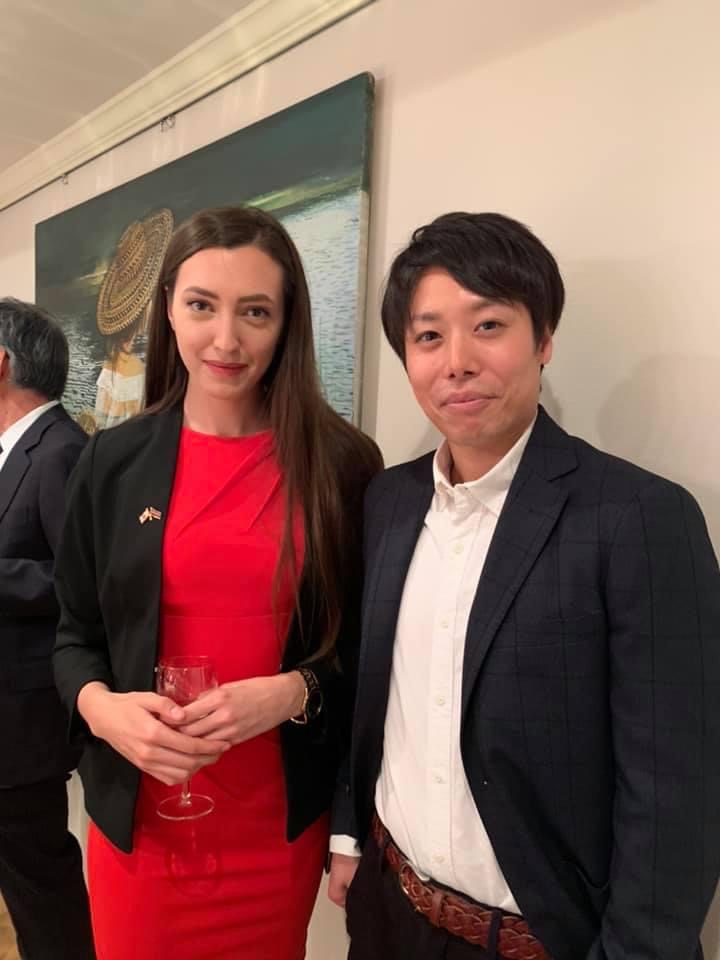
Nakagawa with his girlfriend Arta Voicehovska, who works as Coordinator for International Relations Latvia-Japan at Higashikawa Town Hall in Hokkaido

Suzanne Kamata was born and raised in Grand Haven, Michigan. She now lives in Japan with her husband and two children. Her short stories, essays, articles and book reviews have appeared in over 100 publications. Her work has been nominated for the Pushcart Prize five times, and received a Special Mention in 2006. She is also a two-time winner of the All Nippon Airways/Wingspan Fiction Contest, winner of the Paris Book Festival, and winner of a SCBWI Magazine Merit Award.

.

PLEASE NOTE: ARTICLES CAN ONLY BE REPRODUCED IN OTHER SITES WITH DUE ACKNOWLEDGEMENT TO BORDERLESS JOURNAL